• About Me
  • Other Writings
  • Interview Clips
  • All About Me: American Racism, American Narcissism, and the Conversation America Can’t Have
  • Video Clips
  • Boy @ The Window Pictures
  • Boy @ The Window Theme Music

Notes from a Boy @ The Window

~

Notes from a Boy @ The Window

Tag Archives: Disillusionment

MVHS and Memorial Day Weekend Decisions

25 Monday May 2015

Posted by decollins1969 in 1, Boy @ The Window, culture, Eclectic, eclectic music, Jimme, Mount Vernon High School, Mount Vernon New York, music, My Father, Pop Culture, race, Youth

≈ Leave a comment

Tags

"Voices Carry" (1985), 616, 616 East Lincoln Avenue, Angst, Barron's Regents Exam Test Prep Books, Carol Buckley, Chemistry, DiFeo, Disillusionment, Humanities, Joey Chestnut, Keyboarding, Martino, Mary Zini, Meltzer, MVHS, New York State Regents Exams, Paul Lewis, Self-, Takeru Kobayashi, Teaching and Learning, Teenage Angst, Til Tuesday, Trigonometry, Viggiano


Laurence Fishburne yelling "Wake up!" at end of movie School Daze (1988), December 9, 2009. (screenshot via Tumblr.com). Qualifies as fair use due to low resolution and clarity of picture.

Laurence Fishburne yelling “Wake up!” at end of movie School Daze (1988), December 9, 2009. (screenshot via Tumblr.com). Qualifies as fair use due to low resolution of picture.

Thirty years ago this weekend, I made a couple of decisions that I would take with me for the rest of my days of formal schooling, and still keep in mind for myself when I’m in the classroom as a professor. The decisions I made about my teachers came out of a sense of both malaise and desperation. You see, I was near the end of tenth grade in May ’85, and had figured out months earlier that I had hit the mediocre-and-apathetic-teacher-lottery at Mount Vernon High School that year.

That my Humanities teachers were underwhelming shouldn’t have been a surprise, really. Yet it was. I’ve written here and in Boy @ The Window already about two teachers — Zini for history and Lewis for Chemistry — who either “got on my last nerves” or as an “unimaginative instructor” who lived in “a chain-smoking world.” But I also had an Italian teacher who lost his job in April because of the distractions of owning a car dealership, a Trig teacher who could screw up an equation for me faster than I could quip, “Yeah, right!,” and an English teacher in Carol Buckley who spent most our eighth periods together lying on a couch and asking us to water her plants! The best teacher I had that year was my keyboarding instructor, who spent most of the year congratulating the women in the class who came in typing sixty or ninety-five words per minute.

It wasn’t all their fault. I was fifteen as well, more than a bit rebellious, as nearly every adult authority figure in my life had either abused or neglected me in some way. Yeah, maybe I did take my teenage angst, my lack of belonging, and my troubles at 616 with my Mom, my idiot ex-stepfather and my father Jimme out on them from time to time. I’m sure that’s true. It’s also true that I distracted myself with Humanities and school. I used that forty-two weeks out of each year to throw down academically, to work, to grind, to use my Jedi-mind tricks to take music and movies, arts and sports to absorb knowledge like Takeru Kobayashi and ‎Joey Chestnut at a hot dog eating competition. Those teachers, with their lack of nuance, or in some cases, actual lack of knowledge (and in at least one case, lack of teaching acumen), ruined my standard operating mode.
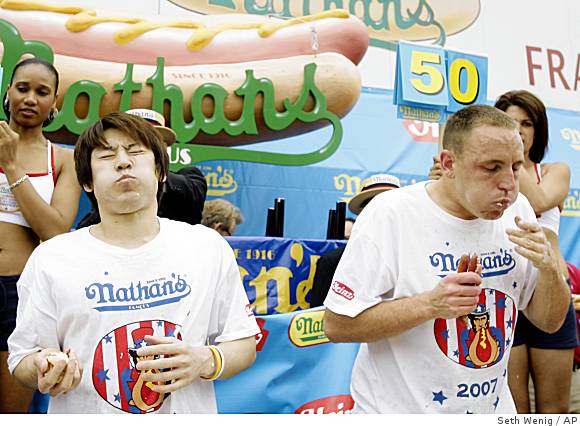
Takeru Kobayashi and Joey Chestnut battle it out at the 2007 Nathan's Famous Fourth of July Hot Dog Eating Contest, Coney Island, Brooklyn, NY, July 4, 2007. (Seth Wenig/AP; http://philly.com).

Takeru Kobayashi and Joey Chestnut battle it out at the 2007 Nathan’s Famous Fourth of July Hot Dog Eating Contest, Coney Island, Brooklyn, NY, July 4, 2007. (Seth Wenig/AP; http://philly.com).

My Memorial Day Weekend ’85 decisions actually began in February. I decided after another week of watching Viggiano mess up another sine, cosine and tangent lecture that I needed to learn how to do Trig properly, which meant on my own. I went to Mount Vernon Public Library, checked out the best Trig textbook I could find, and began working on angles and equations whenever I could squeeze in a spare moment. I bought the Barron’s Trig Regents Exam test preparation book at the end of February, and started working on practice exams in April.

It wasn’t until the week going into Memorial Day Weekend, though, that I had an epiphany about my tenth-grade teachers. Lewis made it so with yet another stream of nonsense.

Lewis went as far as to say, “There’s nothing to worry about” on the subject of organic chemistry. “There will be hardly any organic chemistry on the exam, anyway,” he said. After eight months of listening to his blathering, I thought “That’s it! Whatever he says to do, I’m doing the opposite!” The next time I got money from Jimme, I went out and bought the Barron’s Chemistry Regents exam prep book. It was just before Memorial Day, and I had a month before the exam.

That wasn’t all I decided and did. I really did think that my teachers were incompetent, lazy and arrogant. I simply could no longer trust them, even as I was desperate to trust someone at fifteen. I decided that ultimately, I was my own best teacher and own best barometer of what I needed to learn and why I needed to learn it. I decided that teachers had to earn my trust as a student, that I was no longer going to automatically entrust them with my educational enrichment, no questions asked. I decided that if I really was going to be going to college in a couple of years, that I had to keep my eyes open for individuals I could trust, because by the end of tenth grade, I didn’t trust Humanities as a program and MVHS as a school.

Those decisions turned out to be good ones, even though it also meant few new friends and only a couple of mentors after tenth grade. Luckily there was Meltzer, luckily there was Martino, and luckily, I was only two years from graduating.
The Long Road Home

19 Tuesday May 2015

Posted by decollins1969 in 1, Academia, Boy @ The Window, Carnegie Mellon University, culture, Eclectic, Jimme, Pittsburgh, Politics, Pop Culture, race, Work, Youth

≈ Leave a comment

Tags

"Thriving as a Freelance Academic", Academia, Academic Writing, Bruce Anthony Jones, Career, Career Decisions, Career Development, Career Options, CMU, Disillusionment, Joe William Trotter Jr., Katie Rose Guest Pryal, Peter Stearns, Politics of Academia, Politics of the Foundation World, Self-Awareness, Self-Determination, Self-Discovery, Social Justice, Teaching and Learning, The Chronicle of Higher Education, Troublemaker, Writing


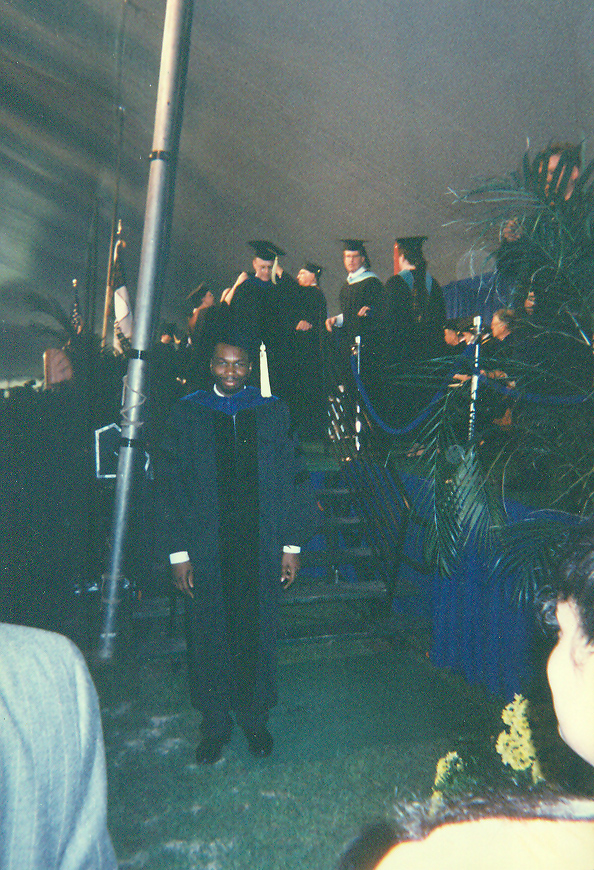
My stressed-out PhD walk photo, Carnegie Mellon University, May 18, 1997. (Angelia N. Levy).

My stressed-out PhD walk photo, Carnegie Mellon University, May 18, 1997. (Angelia N. Levy).

It’s been eighteen years and nearly a day since I had to shake then Carnegie Mellon Dean Peter Stearns’ hand on stage as part of the PhD portion of the 100th commencement ceremony for graduates, that third sweltering Sunday in May ’97. I’ve talked about the ceremony, my Mom’s jealousy and issues about my degree, Peter Stearns, Joe Trotter, Bruce Anthony Jones, and what happened before and after the degree ceremonies on that fateful day.

But time and enlightenment — especially the latter — has allowed me to take a step back from the events leading to a new wave of disillusionment in my life. If I really think about it, my struggles with where I wanted to go with my career go as far back as ’81, in the months after my first accolades as a writer, to the time when at eleven, I already had an encyclopedic knowledge of history, basic science, and technology. Heck, I already knew some of the historiography around World War II, the Cold War, American slavery and civil rights, long before I ever knew the definition for historiography. Not to mention, I was already living what we now call migration studies, thanks to my Mom and dad.

But my Boy @ The Window years did their damage to me. By the time I turned twenty at the end of the ’80s, I wasn’t fully clear of the array of choices I had for a career or set of careers. I knew I could write, and often write well. Yet I had stopped seeing myself as a writer by the time I went through my summer of abuse in ’82. I knew that I was a historian, because I asked the kinds of questions about history that only trained historians would. Yet I hated the idea that I was supposed to write only one way, using words like synergistic and interstitial (at an esoteric minimum) along the way. I toyed with the idea of going to law school in ’90, even going so far as to take the LSAT, scoring a then-50th percentile 31 on the exam in my one-and-only try.

Arthur Wesley Dow (1857-1922), The Long Road--Argilla Road, Ipswich, circa 1898, April 28, 2010. (BrooklynMuseumBot via Wikipedia). In public domain.

Arthur Wesley Dow (1857-1922), The Long Road–Argilla Road, Ipswich, circa 1898, April 28, 2010. (BrooklynMuseumBot via Wikipedia). In public domain.

I struggled for years with my fundamental question: “Am I an academic historian who’s also a writer? Am I a writer who’s also a historian? Can I be both?” I realized about a decade ago the question was moot. I am both. The real question really has been, will the working world allow me to operate as both without giving me grief and a hard way to go? (By the way, if I ever were to do a second, post-Boy @ The Window memoir, this would be one of that book’s big themes.)

I can safely say as a mildly successful freelance writer that the answer for many in this world of singularities is no. The working world puts up a fight, has and will continue to try to force me and others with multiple talents to choose one path, to do one thing, and one thing only, ideally for all time.

Academicians only think about each other via teaching duties or well-placed articles and books in scholarly journals and scholarly publishing houses. Higher education administrators believe that the only way to understand their work is through the lens of their specific university, as if universities and colleges aren’t similar from a management standpoint. Nonprofit organizations

A male mallard duck, a bird's triple threat (can walk, swim under water and fly), Saint-Eustache, Quebec, Canada, November 19, 2007. (Acarpentier via Wikipedia). Released to public domain via CC-SA-3.0.

A male mallard duck, a bird’s triple threat (can walk, swim under water and fly), Saint-Eustache, Quebec, Canada, November 19, 2007. (Acarpentier via Wikipedia). Released to public domain via CC-SA-3.0.

discount teaching and higher education administrator positions because finding money or managing students isn’t exactly the same as managing staff. Foundations who use your salary history instead of your scope of programs developed, people reached, and money raised as a barometer for even granting you an interview. All would prefer that you be quiet about injustices, especially ones in which their institution, organization, or foundation might well be complicit.

For me in the past couple of decades, though, I’ve worked in and with academicians, higher education administrators, nonprofit organizations, and private foundations. I’ve helped raise $3 million over the years, managed as many as twenty-five staff members, organized four-day conferences with a couple hundred attendees, worked with as many as 500 students at any given time, and taught undergraduate and graduate courses. I’ve written scholarly articles, published in scholarly journals, presented at a couple dozen conferences, and consulted for nonprofit organizations and foundations. To think of myself as only one thing is beyond ridiculous given my by-necessity-and-neglect careers so far.

Yesterday, The Chronicle of Higher Education posted the article “Thriving as a Freelance Academic” by Katie Rose Guest Pryal. In it, Pryal interviewed three White women about their experiences freelancing in the academic world. The women interviewed found a singular niche, found steady work through that niche, and otherwise didn’t question the idea of freelancing in a world in which freelancing is a rare career choice.

A square peg hammered into a round hole, May 2014. (http://joshbrahm.com/).

A square peg hammered into a round hole, May 2014. (http://joshbrahm.com/).

All that is fine. Except there was little soul-searching in Pryal’s piece. The women interviewed might as well have decided to go on a global trek or rock climbing, given their lack of ambivalence about academia or deliberate lack of specifics and dryness about the work they actually do. I don’t doubt that one can freelance in academia. I doubt, though, that one can do it without personal relationships with a specific university or alma mater, or with a specific higher education administrator or prominent professor. Why pick on this piece? Because there are far more people like me in and out of academia, who’ve consulted and freelanced and worked and stitched together a career, then there are the people represented in Pryal’s boutique article.

There is a lesson here besides the reality that life is a journey, and to get it right, we need to understand that it can and will be a roller-coaster-ride of a journey. The lesson, for me at least, is that while being true to myself has sometimes had consequences in terms of immediate victories and easy financial gains, it does mean I get to have success, and sometimes, even lasting success.

Why Boston U Isn’t For Me, and Shouldn’t Be For You

26 Sunday Apr 2015

Posted by decollins1969 in 1, Academia, Carnegie Mellon University, culture, Eclectic, High Rise Buildings, Jimme, Mount Vernon New York, My Father, New York City, Politics, Pop Culture, race, Upper East Side, Upper West Side, Work, Youth

≈ Leave a comment

Tags

616, 616 East Lincoln Avenue, Academic-Speak, Boston U, Boston University, BU, Checkbox, CMU, Cosmetic Diversity, Disillusionment, Institutional Racism, Jimme, Linda Sarsour, Meritocracy, Nepotism, Office of the Provost, Racism, Rev. Dr. Martin Luther King Jr., Righteous Indignation, Robert Turri Vise, Structural Racism, Suzanne C. Kennedy, Timothy Barbari, Tokenism


The main classroom buildings for the College of Arts and Sciences at Boston University, with the BU East 'T' stop in the foreground, July 18, 2010. (Fletcher6 via Wikipedia). Released to the public domain via CC-SA-3.0.

The main classroom buildings for the College of Arts and Sciences at Boston University, with the BU East ‘T’ stop in the foreground, July 18, 2010. (Fletcher6 via Wikipedia). Released to the public domain via CC-SA-3.0.

Since my first job working for my father in Manhattan in ’84, I’ve probably done over 200 interviews. By telephone, through Skype or WebEx or Adobe Connect, at conferences and in person. Probably about a third of those interviews have occurred with colleges and universities, for academic and administrator-level positions. For the most part, whether the interviews went well or when I didn’t have my “A-game,” my experiences have been pleasant ones. But, after two different interview processes five years apart with Boston University — one in October ’10, the other last month — there is a higher education institution that I will not work for, will not send my son, and will not recommend for anyone I know, under nearly any circumstances.

There are only a few institutions that have been so bad that they’ve moved from my [expletive] list to my permanently-banned-from-my-life list. Even Carnegie Mellon isn’t on the latter list, and I’ve talked about their conservatism and weirdness around diversity before here. But Boston University’s treatment of me as a potential employee, well, it took my breath away without putting me in an NYPD chokehold.

Round 1, Boston University, August-October 2010

Let me rephrase. I was never a “potential employee,” because on the two occasions I interviewed for jobs there, Boston University in the end treated me as a checkmark interviewee. In the fall of ’10, I emerged for them as a candidate for the director of their Washington, DC program. They interviewed me three times: at the American Political Science Association conference in DC in August, at their old DC program headquarters (while also showing me their new one, still under construction) in September, and in person on the main Boston University campus in late October.

For that last interview, they pulled out all the stops. They flew me in, put me up in a nearby hotel the night before, and even took me to lunch. Of course, they also had someone give me a two-hour guided tour of the campus that morning, after one morning meeting, on a day with thirty mile-per-hour winds coming off the Charles River as we walked from one end of the campus to the other. It’s funny. Up until then, I never thought of a campus tour as sinister. But then I realized, if I’m spending two hours during the heart of the workday doing a campus tour with a twenty-four year-old BU grad in forty-five degree weather, what did that mean for my real chances at that job?

My final meeting was with a professor who advised political science and history major in the DC program. That meeting ended at 5 pm on October 22, with which I knew that they were supposed to make a final decision in a week or so. Despite a thank-you email and two follow-up emails, I didn’t hear from Boston University again until November 29. Roberta Turri Vise, the point person for my interview process, didn’t explain why the final decision took more than five weeks. Nor did she explain why after six weeks of correspondence, no response from my requests were returned by her or anyone else in her office.

Round 2, Boston University, January-March 2015

I decided that this was a one-off thing, that with our generation of job searches occurring in a buyer’s market, that some folks really don’t care about being professionals in their dealing with interviewees. Boy was I wrong! Even in a market where people ignore applicant materials and send mass rejection emails without a candidate’s name on it (or worse, with someone else’s name), Boston University claimed a unique crown.

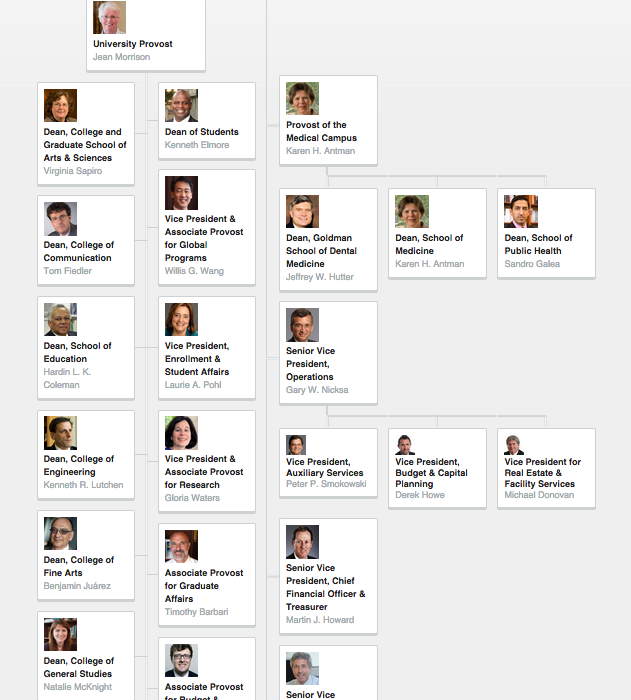
Hierarchy tree of Boston University's leadership team via the Provost's Office, April 26, 2015. (http://www.bu.edu/info/about/admin/).

Hierarchy tree of Boston University’s leadership team via the Provost’s Office, April 26, 2015. (http://www.bu.edu/info/about/admin/).

I interviewed with them again in January and at the beginning of March. This was for a position in their provost’s office, a director position managing undergraduate and graduate fellowship opportunities and advising students via those opportunities. The position was a bit beneath my experience, but they seemed interested, and I already knew from some initial research that it was a new position, so I went ahead and applied for it. My first interview was by telephone, with Suzanne Kennedy, the assistant provost for academic affairs at Boston University. It was a pleasant but underwhelming interview, and I actually didn’t expect a call back. So I kept up with my usual work of teaching, consulting, and looking for more consulting opportunities.

I received an email five weeks later asking me to come up to Boston for a second, in-person interview. I gave it the go-ahead, although the length of time between first interview and correspondence concerned me. So too, did my back and forth with Kennedy’s assistant over travel, as she had initially booked me at times that were very inconvenient for interviewing purposes. Not to mention, the major snow issues that Boston experienced in February.

The interview on March 4 was honestly one of the worst experiences I’ve ever had interviewing for any job. I’m including an interview in which I discovered the place was a sweatshop in Chinatown, during my summer of unemployment in New York in ’88. I had three meetings in all, one over lunch with Kennedy, and two with the two associate provosts at Boston University in academic affairs (one undergraduate, one graduate). Over lunch, the conversation was going well, until I asked the question about the level of diversity with applicant pools for Fulbrights, Trumans, Borens, and Rhodes’ scholarships and fellowships. I kid you not, Kennedy’s eyes literally glazed over as soon as I asked about diversity. Keep in mind, I had asked about socioeconomic diversity — I hadn’t touched racial or gender diversity yet. After lunch, I didn’t see Kennedy again for the rest of the interview process.

My second sign came from my third meeting. I met with Timothy Barbari, associate provost for graduate affairs. It was obvious that Barbari hadn’t even looked at my CV before I walked into his office. The first thing Barbari says to me, with him pushing his body into the back of his chair so far that his attempt to be at ease looked more like a rocket revving to take off — “so, you have a rather interesting CV.” I may not have earned all of my money as an academician, but I’ve been around academic-speak long enough to know that interesting can mean a lot of different things, mostly bad. In this context, interesting meant “not straightforward, not linear in progression, not typical in terms of whom we typically hire.”

I was already feeling a bit like a checkmark or token interviewee by the time I left Barbari’s office for Logan. But after USAirways canceled all their flights to DC that evening due to a snowstorm that wouldn’t drop a snowflake for another twelve hours, it got worse. I notified Kennedy through her assistant that I was stuck in Boston overnight from Logan, and left a message the next morning that the Amtrak to DC was my only option, as more flights had been canceled. No word, not even a “I’m sorry that you have to go through this” response. It wasn’t until mid-afternoon that Friday, nearly a day after I returned to DC, and after a third message about them needing to reimburse me, that I heard from Kennedy’s assistant.

At that point, I wouldn’t have taken the job even if they had offered it to me. As it was, I didn’t hear from Kennedy again until April 7, five weeks after a second interview, and despite a check-in to find out what happened with this director position. It’s this kind of calloused approach that leaves folks shaking their head.

Shaking Off The Dirt

I’ve made a few determinations based on these experiences. For one, if this is the way that treat job candidates who look like me, how well do they pay and treat their service staff, the most vulnerable people on their campus? Not well, at least from what I saw and have experienced. For two, the fact that for both interviews, their top concern seemed to be about competing with “schools across the Charles River” — i.e., Harvard, MIT, Tufts — was somewhere between disconcerting and ridiculous.

An elephant shaking off the dirt, circa 2012. JD Rucker via Pinterest.com).

An elephant shaking off the dirt, circa 2012. (JD Rucker via Pinterest.com).

The fact that with tuition, books, and room and board it would run the average BU student $60,000 per year also told me what I needed to know. Boston University is a place that wants elite status and elite students, and in pursuit of this Pollyanna goal, wants to hire people they feel fit the bill. As long as those people look like everyone else running the university — mostly White, with a few people of color lightly sprinkled in leading positions at the institution. Because Boston University has what activist Linda Sarsour (Twitter, @lsarsour) calls cosmetic diversity, a genuine attempt at diversity across socioeconomic, racial and gender lines is unnecessary, at least for the powers whom run the institution.

Aside from Martin Luther King, Jr., who earned his doctorate in divinity at Boston University in the early 1950s, I’ve known or known of only one person of color with a degree from BU. She was a neighbor at 616 East Lincoln, a few years younger. Based on her description of more than two decades ago, I’d have to say that Boston University has changed for the worst. Like most universities, they seem more interested in prestige and raising money than in fulfilling their mission.

And with that being the case, why send your kid to Boston University? Especially when, for the same amount of money or less, every other school in the Boston area is either better, or at least, cares more about diversity and learning beyond the cosmetic.

Malcolm X, “Make It Plain”

21 Saturday Feb 2015

Posted by decollins1969 in 1, Academia, Boy @ The Window, culture, Eclectic, Mount Vernon New York, New York City, Pittsburgh, Politics, Pop Culture, race, Religion, University of Pittsburgh, Work, Youth

≈ Leave a comment

Tags

Afrocentricity, Alex Haley, Assassination, Audubon Ballroom, Autobiography of Malcolm X, Bill O"Reilly, Contradictions, Cornel West, Dichotomy, Disillusionment, Geraldo Rivera, Malcolm X, Malcolm X Assassination, Manning Marable, MLK, Murder, Nation of Islam, Nonviolence, Pitt, Respectability Politics, Rev. Dr. Martin Luther King Jr., Rudy Giuliani, Self-Aggrandizement, Self-Defense, Self-Discovery, Self-Revelation, Tavis Smiley


Plain Conscious Chocolate, February 21, 2015. (http://www.ethical-treats.co.uk/).

Plain Conscious Chocolate, February 21, 2015. (http://www.ethical-treats.co.uk/).

I’d be a terrible historian to not comment on the fact that today marks fifty years since some Nation of Islam malcontents — with support from J. Edgar Hoover’s FBI — murdered Malcolm X at the Audubon Ballroom (now the Shabazz Center) in Washington Heights in Upper Manhattan. I wasn’t around for the event, or any of the tumultuous events that defined “The ’60s.” All I know was I didn’t learn about Malcolm Little or Malcolm X until the summer between my undergraduate and graduate years at Pitt, the summer of ’91. Although the year before, I’d gone to a Malcolm X birthday celebration at the Homewood-Brushton branch of Carnegie Library of Pittsburgh. There, I saw poets performing their work, got to listen to some good jazz and rap, and saw the Afrocentric set out in full force.

Audubon Ballroom, where Malcolm X was murdered (now the Shabazz Center, with the Columbia University Medical Center's Mary Woodard Lasker Biomedical Research Building in the background), Washington Heights, New York, June 4, 2014. (Beyond My Ken via Wikipedia). Release to the public domain via GNU Free Documentation License, Version 1.2.

Audubon Ballroom, where Malcolm X was murdered (now the Shabazz Center), Washington Heights, New York, June 4, 2014. (Beyond My Ken via Wikipedia). Release to the public domain via GNU Free Documentation License, Version 1.2.

You’d think after three years as a Hebrew-Israelite and years around children of Nation of Islam members as a kid that I would’ve heard all about Malcolm. Nope, hardly a peep about him growing up in Mount Vernon. Mostly, I got questions like, “Yo, you a “five percenter”?,” which for me translated into the chosen few living in the midst of the end times. Other than that, there was always the dichotomy trope of Martin versus Malcolm laid on us real thick through school and the newspapers. Dr. King was respectable, nonviolent, a true representative of the race. Malcolm was a street thug, a leading member of a heathen religion, a violent man who hated White people.

My Mom, who normally rejected mainstream White ways of thinking about Black folks, had bought this trope and tried to sell it to me and my older brother growing up. But as with so many things my Mom attempted to instill in me growing up, I wouldn’t make any decisions about Malcolm the person (as opposed to the icon) until I got around to reading, in this case about him and the Nation of Islam, as an adult.

The Five Percenter logo (apparently popular among the rapper set), January 8, 2013. (http://assets.vice.com)

The Five Percenter logo (apparently popular among the rapper set), January 8, 2013. (http://assets.vice.com)

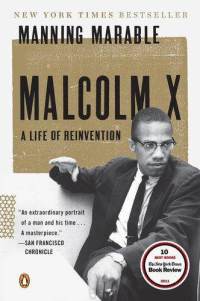
The one thing I realized after reading the Afrocentric, mainstream and Alex Haley interpretations of Malcolm in the early ’90s is that just like with King, we could make Malcolm X represent whatever we wanted. He could be nonviolent and a militant at the same time, or a thug and an ambassador of peace at the same time. Yes, as the late Manning Marable’s book shows, Malcolm — like most of us — was a walking, breathing contradiction of convictions (literal and figurative) and beliefs. For the purposes of my post today, though, he was a social justice activist, acting on the part of those poor, Black and discarded, plain and simple.

Which is why I think anyone who thinks Malcolm X brought murder to his own pulpit in February 1965 is an idiot. The idea that teaching others self-defense in opposition to White mobs, lynching, and blatant police brutality deserved a violent death. Really, now? So, if that’s the case, then Dr. King should have died of natural causes about three or four years ago, since his was the path of nonviolence, right? Yet, you still hear the likes of Rudy Giuliani, Bill O’Reilly and Geraldo de Stupido slinging this shit (and similar crap playing on such respectability politics themes) as if it were McDonald’s hash browns on sale for half-price.

Manning Marable's Malcolm X: Life of Reinvention (2011) cover (Marable died four days before his last book dropped), May 28, 2012. (Malik Shabazz via Wikipedia).  Qualifies as fair use under copyright laws (relevant subject matter, low resolution).

Manning Marable’s Malcolm X: Life of Reinvention (2011) cover (Marable died four days before his last book dropped), May 28, 2012. (Malik Shabazz via Wikipedia). Qualifies as fair use under copyright laws (relevant subject matter, low resolution).

Speaking of that lot, I don’t wonder what Malcolm X would say about our racist, plutocratic democracy these days. Anyone whose read his words would know what he’d say. That what happened with Michael Brown and Eric Garner and Rashida McBride and so many others should be resisted “by any means necessary.” That we should unmask those powerful people lurking in the shadows but pulling the strings that keep the systems of oppression working 24/7 in our world. He would’ve supported Occupy Wall Street when and where few Black leaders had in 2010 and 2011, called Islamic State or IS (that’s what they are called outside the US, where we can’t get our acronyms straight) a “chickens coming home to roost” scenario, and put Tavis Smiley and Cornel West in the same self-aggrandizing bag as Giuliani and Rivera.

I get why it took Malcolm Little so long to transform himself into Malcolm X, and still, until after his thirty-ninth birthday, for him to find himself and his purpose in the world. It’s taken me nearly four and half decades to do the same. It’s hard to “make it plain,” especially to ourselves. It’s scary to be in a constant state of disillusionment, about family and friends, about your identity, about your religion and beliefs. But it also allows you to see yourself and everyone around you fresh for the first time, to know who people really are.

My First Adult Job Interview, Teachers College

12 Monday May 2014

Posted by decollins1969 in 1, Academia, Boy @ The Window, Carnegie Mellon University, culture, Eclectic, eclectic music, Mount Vernon New York, New York City, Pittsburgh, Politics, Pop Culture, race, Upper West Side, Work, Youth

≈ Leave a comment

Tags

Barnes & Noble, Beacon Theater, Calling, CMU, Disillusionment, Finishing Second, Hotel Beacon, job interview, Job Talk, Joe William Trotter Jr., PTSD, Racial Harassment, Rage, Steven Schlossman, Teachers College, Walking While Black, Writer, Writing


Teachers College today, West 120th (between Broadway and Amsterdam), New York, NY, April 15, 2014. (http://ccnmtl.columbia.edu/).

Teachers College today, West 120th (between Broadway and Amsterdam), New York, NY, April 15, 2014. (http://ccnmtl.columbia.edu/).

Seventeen years ago this week (check the calendar – the days and dates coincide with the week of May 12-18, ’97) was perhaps one of the most euphoric and bitterly disappointing weeks in my entire adult life. It was such a strange week that it forced me into second guessing myself and my path in life for many years afterward.

But it didn’t start out that way. On Monday, May 12th, I did my very first post-doctoral interview, for an assistant professor position at Teachers College (Columbia’s school of education) in Morningside Heights (West Harlem, really). I’d flown in from Pittsburgh the evening before, and stayed at the Hotel Beacon at Teachers College’s expense, because Monday was going to be a very long day. It was loud that Sunday night, as there was some event at the Beacon Theater. But somehow, I had just enough discipline and memories of New York’s smells and sounds to fall asleep comfortably.

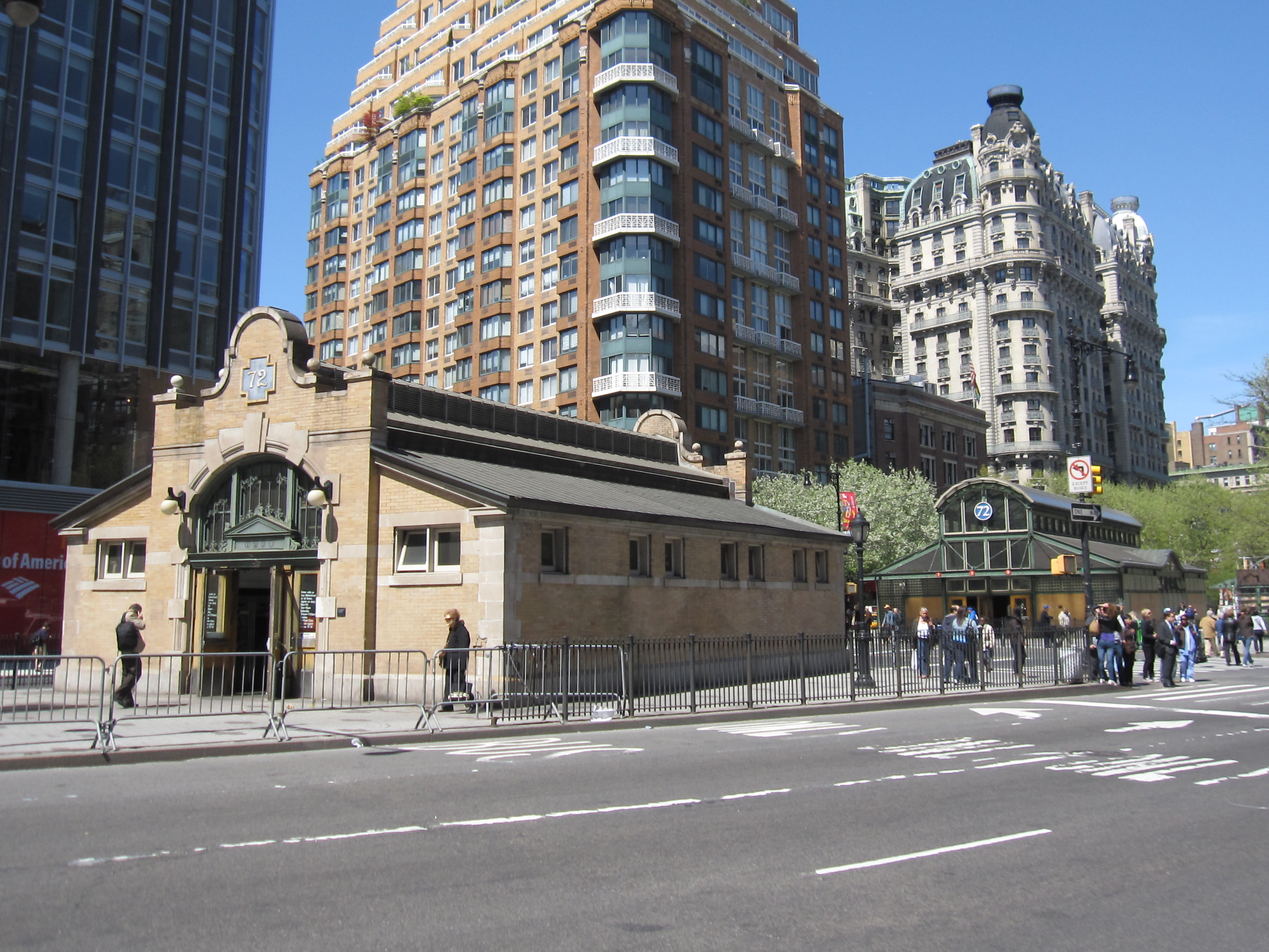
My day started at 8:30 am, so of course, I was up before seven. I put on my one and only suit — at least, the only suit I owned that fit my six-three, 215-pound frame — went over my job talk on multiculturalism, and went on my pensive way to the 72nd Street Subway entrance on Broadway. It was a meat-packed ride to 125th Street, where I had to get off (I had forgotten to walk down to 66th Street to catch the local 1 instead of the express 2 train) and walk the six or so blocks to Teachers College.

Original control house (left) and newer control house, on opposite sides of 72nd Street  (IRT Broadway – Seventh Avenue Line), New York, NY, April 13, 2010. (Gryffindor via Wikipedia). Released to public domain via CC-SA-3.0.

Original control house (left) and newer control house, on opposite sides of 72nd Street (IRT Broadway – Seventh Avenue Line), New York, NY, April 13, 2010. (Gryffindor via Wikipedia). Released to public domain via CC-SA-3.0.

After that, my day was an eight-hour blur, meeting with faculty, grad students and deans. Making sure not to eat too much while being grilled with questions over lunch. Giving my job talk and making sure to tell jokes, to bring up facts relevant to this history of education job, and, of course, to smile. Talking with grad students about how I finished my 505-page dissertation in twenty-seven months, about my teaching style and about growing up in Mount Vernon. It was as intense a process as I had expected it to be, but I felt at the end that I’d done everything possible to get the job.

I knew that I was one out of only five candidates invited to interview, out of over 500 applicants. I even had the chair of the History Department, Steve Schlossman, lobby on my behalf for the job, prior to my interview. And, despite my former advisor in Joe Trotter, I’d managed to put together a group of letters from folks that should’ve passed muster. All I could do after the interview was wait.

But life didn’t wait to intervene. After leaving the interview for the hotel, I changed into my more casual clothing, jeans and a long-sleeve t-shirt, and went off to Tower Records and Barnes & Noble on 66th and Broadway, and later, Haagan Dazs (that last one was a big gastrointestinal mistake!).  

From the moment I walked in the door at Barnes & Noble until I left a half-hour later, a Latino security guard tailed me as I perused books in the African American nonfiction, Cultural Studies and Music sections of the store, across three floors. As I walked out, I walked up to the guard and said

“While you were stalking me, you probably let half a dozen White folks slip out of here with books and CDs. Did you learn anything while you were watching me?”

“I was just doing my job,” the dumb-ass security guard said in response.

“Well, if following a Black guy around for thirty minutes is part of your job, you deserve to lose your job,” I said to him as I walked out.

It was a bit of a harbinger of things to come. I was more pissed off about these everyday slights — or, rather, microaggressions — than I’d been before Trotter and my doctorate. And I was less patient about waiting for what I wanted than I’d been as a grad student.

What your second-place prize often looks like, May 12, 2014. (http://www.wmciu.org.uk/).

What your second-place prize often looks like, May 12, 2014. (http://www.wmciu.org.uk/).

Three weeks later, I received a reimbursement check for my travel and other expenses, and within twenty-four hours, a call from the search committee chair. I’d finished second for the job. Second! To whom, I still don’t know. The chair kept telling me, “you didn’t do anything wrong…you did a very good set of interviews,” as if those compliments would pay my rent next month. I was disappointed, hopeful, but disappointed. It was my first shot, my best shot, and I’d given my best effort. “What now?,” I thought.

It’s a question that I still must ask seventeen years, two books and two careers later. I’ve long since realized that the question of what my life would’ve been like if I’d gotten the Teachers College job was moot, because my issues were about more than finding work. I still would’ve been unhappy, with a New York-esque rage to go with it.

So I counted my blessings, and I count them still. Not getting this particular job bought me the time and energy I needed. I needed that time, to see myself as the writer I also wanted to be, not just the educator and thinker I already knew I was. A better, more personable, more revealing and feeling writer than the cold and metallic one that grad school and Trotter helped turn me into by the end of ’96.

Muggers’ Delight and The Aftermath

05 Thursday Dec 2013

Posted by decollins1969 in 1, Boy @ The Window, culture, Eclectic, Jimme, Mount Vernon High School, Mount Vernon New York, Pop Culture, race, Youth

≈ 1 Comment

Tags

Abuse, Bullying, Channeling Emotions, Classmates, Depression, Disillusionment, Emotional Disconnect, Family, Friendships, Human Contact, Human Interaction, Muggers, Mugging, Poverty, Self-Awareness, Suicidal Thoughts, Suicide


Champagne popping, December 5, 2013. ( ).

Champagne popping, May 2011. (Brian Freedman via http://www.uncorklife.com).

I was mugged for the last time on this date thirty years ago, the first Monday in December ’83. I’ve talked about this before, the experience of being jumped by four teenagers, who in the end, made away with $13 and change, the dumb asses. It was the beginning of a long and emotional month for me, mostly because of how my classmates responded to finding out about it.

From Boy @ The Window:

The first person who came up to me to ask what happened was Craig. He saw me as I was leaving Carapella’s office, on my way to gym. We talked for several minutes about what had happened. He gave me a high-five, which completely surprised me. It was maybe the second or third time in three years that anyone cared to ask me about what was going on with me outside of school.

It wasn’t just Craig. From Phyllis and Wendy to Joe and Danny, they all seemed to care that I was all right. It was the first time in three years that I knew anyone actually cared about me even in the most basic sense. That whole twenty-four-hour period was overwhelming. Fighting off four muggers and chasing them for over a mile, Mom responding by taking me to the police and their tracking down of Corey, to my classmates’ genuine concern left me emotionally exhausted. I spent most of that evening at 616 asleep.

It was the last of four muggings and robberies in four years, at ages nine and twelve, and two at thirteen. People said that Harlem was rough, and from my trips on the Subway through and times in Harlem with Jimme, it was. It didn’t mean that Mount Vernon was soft or a place for only wannabe-thugs. Within a couple of months, Corey and his gang had all gone to juvenile detention for what they had done to me.

It would also be the last straw for me as far as my identifying myself as a Hebrew-Israelite. The fifth and sixth of December had taught me a lot about the human condition. My classmates had shown me their maturity upon learning about my mugging. Mom took more initiative on my behalf in taking me to the police than I’d seen her take in years. The police actually cared about my case and didn’t play around in tracking down my assailants. It took about three weeks, but I tracked Jimme down, and, after collecting some money for the holiday season, gave Maurice his thirteen dollars.

I guess I also learned a small lesson in redemption. The fact that I had even a teaspoonful of support was very different from the way my classmates might’ve treated me if Corey and company had gone after me two years before. I must’ve done something right in middle school and in ninth grade, enough to where I redeemed myself as a decent human being in the eyes of my classmates. Despite this, I didn’t trust it, not completely. I realized that things would get back to normal in a week or two, and I’d go back to my loner role. And while I was happy that Mom came to my aid, I knew that this was a rare event. Expecting Mom to be there to support me was really too much to ask.

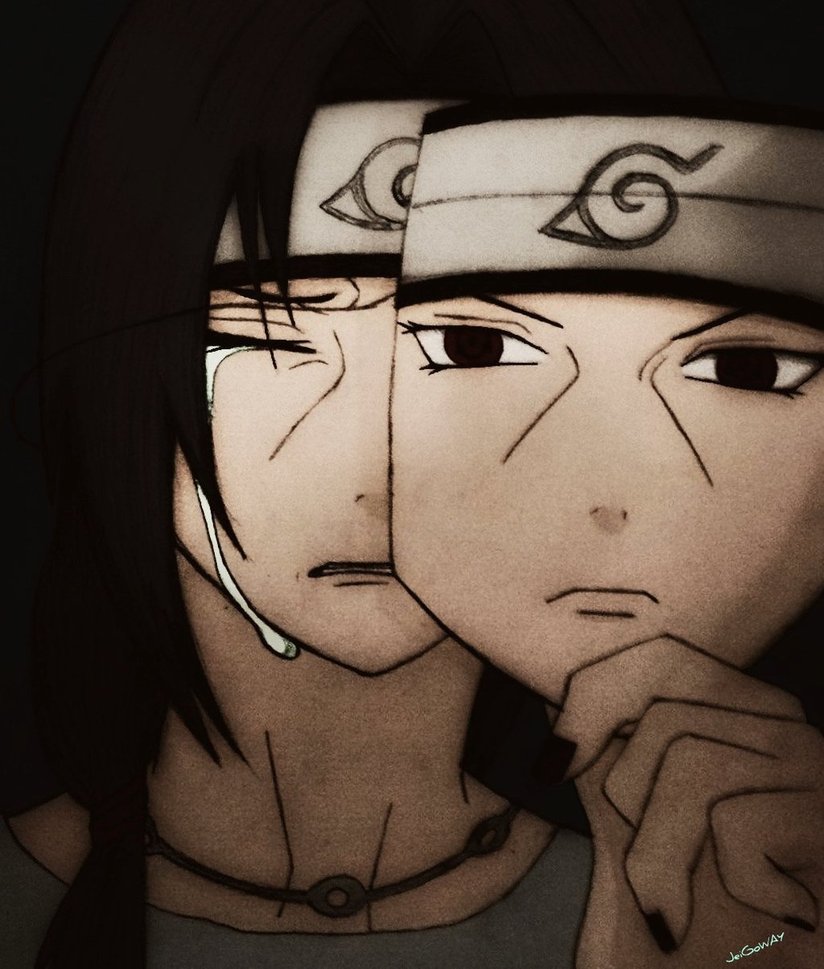
Behind the emotionless mask based on Itachi Uchiha, a ninja from the Village Hidden In The Leaves (Konohagure) of the anime, Naruto, January 25, 2013. (http://sites.psu.edu).

Behind the emotionless mask based on Itachi Uchiha, a ninja from the Village Hidden In The Leaves (Konohagure) of the anime, Naruto, January 25, 2013. (JeiGoWay via http://sites.psu.edu).

Emotionally, it was as if someone had uncorked a bottle half-filled with warm champagne. I had gotten used to my role as nerdy loner at school and blank, unemotional eldest child in resistance to my idiot stepfather’s abuse at home. My classmates’ positive expressions toward me caused a psychological systems error, one that meant I could no longer avoid a simple truth. That it had been more than two and a half years since the last time I’d felt any connections to any person in my life. I had no friends, no family with which I shared an emotional or psychological bond. I hadn’t had a hug in at least two years. At least, until the day after my mugging.

After years of being weird and odd, of being made fun of (luckily Facebook, Twitter and cyber-bullying didn’t exist in ’83) and beaten up (with the constant threat of abuse to boot), and our plunge into welfare poverty, I wasn’t sure if I wanted to make it to be fourteen, much less become a full-grown adult. I was approaching a crossroads, where my previously bottled-up emotions of the period between April ’81 and the mugging were coming directly into contact with my emotionless persona. It was an explosive mix, leaving me to question my very need to exist at all.

On Maturity and Writing In Text Message Form

11 Monday Nov 2013

Posted by decollins1969 in 1, Boy @ The Window, culture, Eclectic, eclectic music, Mount Vernon High School, Mount Vernon New York, music, Pop Culture, race, University of Pittsburgh, Youth

≈ 1 Comment

Tags

"I Would Die 4 U" (1984), Anger, Black Masculinity, Crush #1, Crush #2, Depression, Disillusionment, Emasculation, Maturity, Objectification, Obsession, Pedestal, Phyllis, Pitt, Prince, Rejection, Sexism, Text Messaging, Wendy, White Plains Galleria


Dulcesita, "i would die for you," November 11, 2013. (http://www.myxer.com).

Dulcesita, “i would die for you,” November 11, 2013. (http://www.myxer.com).

In Boy @ The Window, I have a chapter on my first year at Pitt and the baggage I carried from my last months in Mount Vernon, New York, Phyllis (a.k.a., Crush #2) included. I haven’t discussed Phyllis much in the six and a half years I’ve been running this blog on all things related to my memoir. Mostly because once I got over my crush-turned-internalized-obsession, I realized that she wasn’t really all that as a person. Still, given the number of posts I’ve done on my Mom, my late idiot ex-stepfather Maurice and Wendy (a.k.a., Crush #1), Phyllis does deserve some mention, along with my stumbled-filled transition to manhood that went with the years between December ’85 and August ’88.

A key point for me in this transition was in October and early November ’87. I finally worked up the courage to write Phyllis a note about an incident earlier that summer, one in which she all but emasculated me at the White Plains Galleria. As I wrote in Boy @ The Window:

Crushing walnuts in plastic bag, November 11, 2013. (http://2.bp.blogspot.com/).

Crushing walnuts in plastic bag, November 11, 2013. (http://2.bp.blogspot.com/).

I got the address, bought her a card for her eighteenth birthday, and sat down and wrote her. About how I liked her and wanted to know if she “ever liked me.” I needed to know if she and her sister really were talking about me at the bus stop that day, “one way or the other.” I wanted to know what she thought I needed in order to impress someone like her in the future. Then I added “Happy 18th Birthday!” I sent the card off on the second week in October, just a few days before her birthday.

On the second of November, I got her response. It was in purple ink, with heart shapes and circles for dots over “i”s. Reading her letter was like reading the liner notes off of a Prince album. Like the song “I Would Die 4 U,” Phyllis had decided to limit her English skills to the ’80s equivalent of sign language on paper, a real “revolution” on both their parts. I remember she started, “Thank U 4 your card 2day,” an insult to my intelligence. She would’ve been better off with, “Yo nigga, ’s up wit’ ya sweatin’ me?” She wrote indirectly that she did like me at one point in time, but added “but we’re in college now . . . around lots of nu people” She admitted that I was her and Claudia’s topic of conversation that day, but “I needed 2 get over that.” She hinted that I shouldn’t write her again, and that was it. No apologies, no attempt to understand how I felt…

After Phyllis’ wonderful response, I all but stopped going to class. I missed most of my classes the month of November, only showing up for exams or if my mood had let up long enough to allow me to function like normal. The weekend before Thanksgiving, I allowed my dorm mates to cheer me up by getting a couple of cases of Busch Beer. These were the Pounder type, sixteen-ounce cans. After getting Mike to get us the cases, we went back to Aaron’s room and started drinking. I downed four cans in fifteen minutes, and was drunk within a half hour. I started throwing around the word “bitch.” Anytime anyone mentioned Phyllis’ name – or any woman’s name for that matter — one of us said the B-word and we’d guzzle down some beer.

In today’s world of text messaging, I would’ve found Phyllis’ response so ridiculous that I probably would’ve shared it with close friends and laughed about it for weeks afterward. But as someone with the emotional and psychological maturity of a twelve-year-old in the fall of ’87, Phyllis’ response really, really, really hurt. Her letter shattered the pedestal on which I had placed her, and reaffirmed every negative thing I’d felt about myself for the previous half decade.

Depression image, Carroll College, Counseling Services, November 11, 2013. (http://www.carroll.edu).

Depression image, Carroll College, Counseling Services, November 11, 2013. (http://www.carroll.edu).

It also left me so depressed that I finished that semester with a 2.63 GPA. That, and spending the holidays at 616, made me determined to use the anger I felt toward myself and Phyllis as fuel for the next semester. And even though that worked so well that I made Dean’s List, I still hadn’t really gotten over Phyllis’ rejection by the time the school year was over in April ’88.

It took one last look at that letter — that unbelievably trifling and simple letter — to realize that even under the best of circumstances, Phyllis and I would’ve been a match made only in a mad scientist’s laboratory. I’d never be interested in a human being who talked down to me, as if I was unworthy of anything other than some simple shorthand language. Or in any woman whose expectations of men were about as objectifying as Mike Tyson’s views of women. I realized that I had finally gotten to know the real Phyllis, and in the process, had begun to know the real me, and what I needed to change about myself in order to build a better, 2.0 version of me. With that, like so much from my freshman dorm at Lothrop Hall, Phyllis’ letter became part of my garbage pile.

← Older posts
Newer posts →

Boy @ The Window: A Memoir

Boy @ The Window: A Memoir

Places to Buy/Download Boy @ The Window

There's a few ways in which you can read excerpts of, borrow and/or purchase and download Boy @ The Window. There's the trade paperback edition of Boy @ The Window, available for purchase via Amazon.com at http://www.amazon.com/Boy-Window-Donald-Earl-Collins/dp/0989256138/

There's also a Kindle edition on Amazon.com. The enhanced edition can be read only with Kindle Fire, an iPad or a full-color tablet. The links to the enhanced edition through Apple's iBookstore and the Barnes & Noble NOOK edition are below. The link to the Amazon Kindle version is also immediately below:

scr2555-proj697-a-kindle-logo-rgb-lg

Boy @ The Window on Amazon.com: http://www.amazon.com/Boy-The-Window-Memoir-ebook/dp/B00CD95FBU/

iBookstore-logo-300x100

Boy @ The Window on Apple's iBookstore: https://itunes.apple.com/us/book/boy-the-window/id643768275?ls=1

Barnes & Noble (bn.com) logo, June 26, 2013. (http://www.logotypes101.com).

Boy @ The Window on Barnes & Noble: http://www.barnesandnoble.com/w/boy-the-window-donald-earl-collins/1115182183?ean=2940016741567

You can also add, read and review Boy @ The Window on Goodreads.com. Just click on the button below:

Boy @ The Window

Twitter Updates

Tweets by decollins1969
  • RSS - Posts
  • RSS - Comments

Archives

  • June 2025
  • April 2023
  • September 2022
  • August 2022
  • July 2022
  • June 2022
  • May 2022
  • April 2022
  • March 2022
  • January 2022
  • December 2021
  • November 2021
  • October 2021
  • September 2021
  • August 2021
  • July 2021
  • June 2021
  • April 2021
  • March 2021
  • February 2021
  • January 2021
  • December 2020
  • November 2020
  • October 2020
  • September 2020
  • August 2020
  • July 2020
  • May 2020
  • April 2020
  • March 2020
  • January 2020
  • December 2019
  • November 2019
  • August 2019
  • July 2019
  • June 2019
  • May 2019
  • April 2019
  • March 2019
  • February 2019
  • January 2019
  • December 2018
  • November 2018
  • October 2018
  • September 2018
  • August 2018
  • July 2018
  • June 2018
  • May 2018
  • March 2018
  • February 2018
  • January 2018
  • December 2017
  • November 2017
  • October 2017
  • September 2017
  • August 2017
  • July 2017
  • June 2017
  • May 2017
  • April 2017
  • March 2017
  • February 2017
  • January 2017
  • December 2016
  • November 2016
  • October 2016
  • September 2016
  • August 2016
  • July 2016
  • June 2016
  • May 2016
  • April 2016
  • March 2016
  • February 2016
  • January 2016
  • December 2015
  • November 2015
  • October 2015
  • September 2015
  • August 2015
  • July 2015
  • June 2015
  • May 2015
  • April 2015
  • March 2015
  • February 2015
  • January 2015
  • December 2014
  • November 2014
  • October 2014
  • September 2014
  • August 2014
  • July 2014
  • June 2014
  • May 2014
  • April 2014
  • March 2014
  • February 2014
  • January 2014
  • December 2013
  • November 2013
  • October 2013
  • September 2013
  • August 2013
  • July 2013
  • June 2013
  • May 2013
  • April 2013
  • March 2013
  • February 2013
  • January 2013
  • December 2012
  • November 2012
  • October 2012
  • September 2012
  • August 2012
  • July 2012
  • June 2012
  • May 2012
  • April 2012
  • March 2012
  • February 2012
  • January 2012
  • December 2011
  • November 2011
  • October 2011
  • September 2011
  • August 2011
  • July 2011
  • June 2011
  • May 2011
  • April 2011
  • March 2011
  • February 2011
  • January 2011
  • December 2010
  • November 2010
  • October 2010
  • September 2010
  • August 2010
  • July 2010
  • June 2010
  • May 2010
  • April 2010
  • March 2010
  • February 2010
  • January 2010
  • December 2009
  • November 2009
  • October 2009
  • September 2009
  • August 2009
  • July 2009
  • June 2009
  • May 2009
  • April 2009
  • March 2009
  • February 2009
  • January 2009
  • December 2008
  • November 2008
  • October 2008
  • September 2008
  • August 2008
  • July 2008
  • June 2008
  • May 2008
  • April 2008
  • March 2008
  • February 2008
  • January 2008
  • December 2007
  • November 2007
  • October 2007
  • September 2007
  • August 2007
  • July 2007
  • June 2007

Recent Comments

decollins1969's avatardecollins1969 on No Good Teaching Deed Goes…
Mary Rose O’Connell's avatarMary Rose O’Connell on No Good Teaching Deed Goes…
Lyndah McCaskill's avatarLyndah McCaskill on The Raunchiest of Them Al…

NetworkedBlogs on Facebook

NetworkedBlogs
Blog:
Notes From a Boy @ The Window
Topics:
My Life, Culture & Education, Politics & Goofyness
 
Follow my blog

616 616 East Lincoln Avenue A.B. Davis Middle School Abuse Academia Academy for Educational Development AED Afrocentricity American Narcissism Authenticity Bigotry Blackness Boy @ The Window Carnegie Mellon University Child Abuse Class of 1987 CMU Coping Strategies Crush #1 Crush #2 Death Disillusionment Diversity Domestic Violence Economic Inequality Education Family Friendship Friendships Graduate School Hebrew-Israelites High-Stakes Testing Higher Education History Homelessness Humanities Humanities Program Hypocrisy Internalized Racism Jealousy Joe Trotter Joe William Trotter Jr. K-12 Education Love Manhood Maurice Eugene Washington Maurice Washington Misogyny Mother-Son Relationship Mount Vernon High School Mount Vernon New York Mount Vernon public schools Multiculturalism MVHS Narcissism NFL Pitt Pittsburgh Politics of Education Poverty President Barack Obama Race Racial Stereotypes Racism Relationships Self-Awareness Self-Discovery Self-Reflection Sexism Social Justice Teaching and Learning University of Pittsburgh Violence Whiteness Writing

Top Rated

Blog at WordPress.com.

  • Subscribe Subscribed
    • Notes from a Boy @ The Window
    • Join 103 other subscribers
    • Already have a WordPress.com account? Log in now.
    • Notes from a Boy @ The Window
    • Subscribe Subscribed
    • Sign up
    • Log in
    • Report this content
    • View site in Reader
    • Manage subscriptions
    • Collapse this bar
 

Loading Comments...