• About Me
  • Other Writings
  • Interview Clips
  • All About Me: American Racism, American Narcissism, and the Conversation America Can’t Have
  • Video Clips
  • Boy @ The Window Pictures
  • Boy @ The Window Theme Music

Notes from a Boy @ The Window

~

Notes from a Boy @ The Window

Category Archives: Hebrew-Israelite

About That Time at Van Cortlandt Park, and Other Bricks in the Wall…

28 Monday Sep 2020

Posted by decollins1969 in 1, Boy @ The Window, Christianity, culture, Eclectic, eclectic music, Hebrew-Israelite, High Rise Buildings, Jimme, Marriage, Mount Vernon New York, music, My Father, New York City, Politics, Pop Culture, race, Religion, Youth

≈ Leave a comment

Tags

"And The Beat Goes On" (1979), "Another Brick In The Wall (Part 2)", "Good Times", "Love To Love You Baby", "Rapper's Delight", "Take Your Time (Do It Right)", 616, 616 East Lincoln Avenue, Autocracy, Barbra Streisand, Chic, Donna Summer, Frank Sinatra, Friendships, Kool and The Gang, Luther Vandross, New York, Oppression, Pink Floyd, Queen, Repression, SOS Band, Stephanie Mills, Sugar Hill Gang, Teddy Pendergrass, The Clear View School, The Whispers, Tré


Van Cortlandt Park screen shot (parade grounds, cropped), June 4, 2020. (https://www.thisisthebronx.info/a-van-cortlandt-park-living-room-picnic/).

I don’t consider myself to be a seer. Not exactly. I might have gotten a thing or 1,000 predictions correct in my life. But since I usually prefer to expect good outcomes, I do not indulge the dreams I have of destruction, or the muses who conjure the possibilities of apocalypse, whether for me, my family, or at larger scales.

But the last half of 1980 was different for me. I’d come into my own as a kid. I finally had a posse of classmates and friends, between the two Joes, Starling, Chris, Ronald, Vanessa, Eric, Ray Ray, Sean, Lajuan, and Dahlia, among others. I was kicking ass academically, and was on the verge of discovering other talents, including writing. After my last summer camp with Darren at Clear View, and rereading the late Lerone Bennett Jr.’s Ebony Pictorial History of Black America, I understood my Blackness, really and truly, for the first time.

But I chose to see the glass as half full, both for myself and for Black folk in the US. Why wouldn’t I have? Somehow, in the middle of what I call “deep summer,” when the previous school year and the start of the first day of the next school year are about equally far away, it happened. My stepfather Maurice got a call from his music-obsessed friend Dennis (who was also a professional musician, by the way) in the middle of a Sunday afternoon in mid-August about going to some concert in the park in the Bronx. There was no mention of who the headliners were. I just remember playing Peanuts Land with my Matchbox cars and driving down along the shoppes in the nightlife district of the city underneath my bed when Maurice came in and rushed us to get dressed.

Mom, Maurice, Darren, little Maurice, and me. We piled into a cab over to Van Cortlandt Park, where we met Maurice’s friend Dennis. He knew a couple of the headlining people who were playing. I don’t recall tickets, but I do remember flyers everywhere. It seemed like this was a spontaneous gathering, where people somehow knew where to go and where to gather. I remember it being sometime around 7 or 8 pm when the jamming began, with all the music of the late-1970s and 1980. It was mostly an MC mixing a string a songs together, between Chic and “Good Times”, The Whispers’ “And The Beat Goes On,” and Michael’s “Off The Wall.”

But maybe 45 minutes in, three guys got on the stage to do their performance, Sugar Hill Gang, and the crowd of hundreds erupted into a roar as they rapped to “Rapper’s Delight.” They did a bunch of songs beyond the “a hip, hop/the hippie, the hippie/To the hip hip hop/a you don’t stop…” I was into it like everyone else, doing my terrible version of a Michael Jackson dance routine while clapping my hands to the beat. Sometime between 10 and 11, we left, I think, between a cab and Dennis giving Maurice and Mom and little Maurice a ride home. Even Mom looked like she had a good time. It would be just about the last good time we would have as a sort-of-family.

But the music didn’t stop with Van Cortlandt Park or the Sugar Hill Gang. The spring and summer of 1980 was the transition to a new decade of music, as homophobes from New York to Detroit and L.A. had spent the past year killing disco by smashing vinyl and smashing in Toyota Corollas and Datsun Zs. (By the way, for those who are still kicking and screaming over Cardi B and Megan Thee Stallion’s “WAP,” go on YouTube and listen to the late Donna Summer’s “Love To Love You Baby“. It’ll probably make you question the meaning of your false sense of morality.)

Kool and The Gang had crossed over with “Ladies Night,” and were about to walk the fine line between success and selling out with “Celebration.” All summer on the bus back and forth from Clear View with Darren, SOS Band’s “Take Your Time (Do It Right)” was on at least once a day. There was also Teddy Pendergrass, the one, the only, and emerging, Luther Vandross’ “Searching” (yes, not his official solo debut, but), and of course Stephanie Mills with “Never Knew Love Like This Before”. And all that because my father had introduced us to Toni, a new drinking budding of his, herself a professional singer. Not to mention, a couple of bartenders in Mount Vernon and in the Bronx who didn’t mind a 12 and a 10-year-old sitting around on off nights in July and August.

On the AM side of things with 770 AM WABC radio, there was still Billy Joel, Kenny Loggins, Barbra Streisand and her collabs with The Bee Gees, “Guilty” and “Woman In Love.” Frank Sinatra’s “New York, New York” was the second half of the summer of 1980, old and yet new, at least to me.

But as that summer moved into fall and 6th grade, I sensed something was changing, and not for the better. I sensed it in music, more than I did with Jimme’s alcohol abuse and fewer visits, more that even in Mom’s inability to keep food in our stomachs or in her failing marriage with Maurice. The music seemed more sinister, less hopeful, darker somehow. Queen’s “Another One Bites The Dust” somehow conjured “No mas! No mas!” and Roberto Duran giving up against Sugar Ray Leonard that November, the same month Reagan beat a beat down, haggard Jimmy Carter in the 1980 election. The beginning of four decades’ worth of hollow promises to White Americans, millions willing to sell the rest of us to Hell for their macabre pleasure and some tax breaks.

But no song signified the transition of the US for me in 1980 more than Pink Floyd’s “Another Brick in the Wall”. It was likely the first true music video I ever saw, courtesy of my 616 friend Tré, who lived on the second floor. I spent a lot of time hanging with Tré, his older sister Renee, and her friend Stephanie (who I had the tiniest of crushes on, but I digress). It was during the months after Maurice and Mom had separated, with him taking the TV and a month’s supply of mail-ordered meats out of our two freezers. Tré, Renee, and their mother made me feel welcome between that first Saturday in October and when the Hebrew-Israelite bullshit began six months later.

“We don’t need no education. We don’t need no thought control…” It was about much more than strict teachers and social control over students. It was a prediction of a future, my future, our collective futures. That’s what I thought about this time 40 years ago. I had conversations with my classmates about this, about Reagan, about double-digit inflation and unemployment, about the Iran hostage crisis, about the rumors that the US had given Israel nukes, and Israel had, in turn given nukes to apartheid South Africa. “You’re so weird!” they’d say. Or, more often, “You worry too much, Donald!” Only Starling understood. But he expected me to “become one with Jesus,” as if Jesus alone could stop me from worrying about the future.

In short order, the Reagan Years came and gutted the relative economic security of the US, disrupting the shaky gains Blacks had made in the years between 1946 and 1980. Mark David Chapman murdered John Lennon to ring in the holidays, and Blondie’s Debbie Harry badly rapped her way through their January 1981 hit “Rapture” while Mom began to talk about being raptured up for the first time. My family was at the edge of an abyss, a mini-apocalypse that would ultimately transform all of us. It would certainly sidetrack me from my calling as a writer for years to come.

But the world didn’t stop spinning. Nor did life stop handing me days of happiness, of contentment, of miracles and even some joy. It just meant that I would be more cautious, anxious, depressed, worried, on edge. Because America believes itself above reproach, even as it deals in shit and blood, and drags the rest of us into the burgundy-soaked muck with it. The distance between 1980 and 2020 might be 40 years, but with Trump and his army of minions, I might as well be in the same moment. Only, I’m 50 now, and I know much better about listening to my inner voice and my muses.

Intermittent Starvation

22 Sunday Mar 2020

Posted by decollins1969 in 1, Boy @ The Window, Carnegie Mellon University, culture, Eclectic, Hebrew-Israelite, Jimme, Mount Vernon New York, My Father, New York City, Pittsburgh, Politics, Pop Culture, Religion, University of Pittsburgh, Work, Youth

≈ Leave a comment

Tags

COVID-19, Food, Food Security, Intermittent Fasting, Malnourishment, Pandemic, Preparation, Starvation


Empty fruit and vegetable section shelves, Asda store, London, UK, March 14, 2020. (Yui Mok/PA via AP; https://www.washingtontimes.com/news/2020/mar/15/trump-tells-people-stop-hoarding-and-buy-normal-am/).

A fair number of people I know have gotten into this trend we collectively call intermittent fasting. It’s the idea that you reduce your caloric intake by either reducing you total number of meals per day or take a set of days to not eat at all. When combined with rest, sleep, and exercise, one can become healthier, lose weight, and roll one’s body back to the days of normal blood pressure and glucose numbers. In the somewhat Apocalyptic times in which we live, some have said that intermittent fasting may be the new normal. Especially if or when stores and supermarkets begin to run out of foodstuffs. We will see what we will see come May, June, and the summer.

In the department of limited food intake, I have years of experience. Between the fall of 1980 and the winter of 1999, there isn’t a year where I didn’t have to scramble for scraps. I unknowingly made the lack of food at 616 part of my escapism in those earlier years, especially in Peanuts Land, where I used empty styrofoam McDonald’s and Burger King containers to construct the eatery sections of my imaginary capital city. It was partly why I liked it when my father would show up every third Saturday between April 1979 and April 1981 to take me and my brother Darren out for a few hours or even the whole weekend, sober or drunk. It didn’t really matter to me. Being able to eat fast food was a godsend this time four decades ago. Arthur Treacher’s Chicken and Chips, Mickey D’s, Carvel’s soft-serve ice cream, Papaya’s hot dogs, Wakefield’s brownies and greasy-spoon diners. Once, I even ordered and ate three Big Macs in one sitting at the one-time McDonald’s on the Avenue in South Side Mount Vernon. I was ten in 1980! Ah, those were great days!

But those days came after many days of well-balanced but often meager food options that Mom provided. Chicken and dumplings, pinto beans or black-eyed peas with rice, pork neck bones, and corn bread, and cabbage, cabbage, cabbage! By the end of 1980, cereal was no longer a regular household staple, and snacks were a rarity. Heck, when Mom and my idiot stepfather Maurice separated for six months that October, he cleaned out weeks’ worth of pork chops, lamb shanks, chicken, ground beef, and steaks on his way out of our apartment.

Then, the Hebrew-Israelite years came, and with it, intermittent fasting. That is, with extreme urban poverty. With the start of middle school in September 1981 came days at a time where I didn’t eat or ate very little. Our conservative take on Judaism meant that we would all have to fast for three days prior to Rosh Hashanah, Yom Kippur, and Passover. Since Darren and I weren’t adults, we were supposed to fruit and juice fast. That would have worked if there had been fruit juice and fruit in the house regularly! Our first Rosh Hashanah was the only time in those three years where I ate oranges, apples, grapes, and bananas for all three days. But with my family’s economic decline came days where I simply went to school and did not eat at all, upcoming high-holy day or otherwise.

So many days I watched my classmates eat full lunches while my stomach growled from drinking water. Pride and watching the older students clown others for being on free and reduced lunch kept me from picking up and filling out the application. And even if I hadn’t been raised to not expect handouts and to not see free-lunch as a sign of familial failure, the Hebrew-Israelite years complicated matters for me. Most Fridays at school, the cafeteria served grilled ham-and-cheese sandwiches with French fries.

It got way worse before it got better. From October 1981 through April 1984, we went between seven and 10 days every single month with little or no food at 616. After the 20th of any given month, I knew I’d miss meals, or it would be cabbage and corn bread or Great Northern beans and rice again. Keep in mind, Mom worked at Mount Vernon Hospital for most of that time as a dietary supervisor, so she worked around food while often hungry herself. One weekend in October 1982, all we had in the kitchen was some dried up cabbage, sugar, a little bit of flour, and a one-year-old box of Duncan Hines Devil’s Food cake mix. Things were so bad the summer and fall of 1982 that Mom was bringing home scraps from her job for us to eat. I got sick of days’ old Boston Creme Pie, hospital version.

Life improved slightly when Mom went on welfare after my late sister Sarai’s birth in 1983. But the food shortages continued into 1985, when Darren and I began working with my father regularly, and then began getting our own jobs. But while the malnourishment and starvation left me scarred, they also left me prepared for future crises that for many would have been calamities. Homelessness, malnourishment, and no money while at Pitt in 1988. Difficulties with rent, bills, and food in 1990 and 1991, when I graduated from Pitt. Summers looking for work and living off fumes in 1992, 1993, and 1997, when I was in grad school and after I finished my doctorate at Carnegie Mellon. The beginning of 1999, when me and soon-to-be-wife stretched $20 over ten days, eating makeshift gravy with instant mashed potatoes while teaching nearly every day for a week at Duquesne.

Maybe that explains why I once thought about becoming a chef while growing up. Maybe that’s why I took so quickly to cooking family-sized meals when I was 14. Maybe that’s the reason I made a point of cleaning off every plate of food I fixed or someone else put in front of me until I was 31. It’s certainly the reason behind my OCD around shopping, cooking, storing, and giving food, for myself, my family, and for others, for so many of my 50 years. It very well could explain my G-I tract issues and IBS for much of my adult life.

But with this COVID-19 pandemic could come food and other shortages. The land of endless plenty could have pockets of starvation if millions get sick and stay sick for too long. I have thought for years about buying a composite bow and some arrows with which I could shoot a deer in the neck. I already know I can do it, having killed two dozen mice and rats over the years — some with a broom handle, a hammer, and my bare hands. I have beheaded and gutted fish, chickens, and turkeys. I have eaten venison and rabbit stew before. Or, I could hop on down to Home Depot and buy some seeds to grow snap peas, green beans, maybe even squash or potatoes. We do have a back yard!

Maybe this is all overblown. Maybe this isn’t the Apocalypse. We still have electricity, cable, and wi-fi, after all. Yet the Romans still had gladiatorial games at the Coliseum during two years of siege and starvation at the Visigoths’ hands before it fell in 410 CE. Thousands and perhaps a few million could go without food, even if the power plants and Comcast and Verizon never shut down.

So, intermittent fasting may well work for many. As for me, I’ve tried it, and I still do it from time to time. But you cannot fast your way out of a crisis. You can hunt and grow your way out of one, though.

“On the Next Episode of ‘Dumb MFers’…”

04 Saturday Jan 2020

Posted by decollins1969 in 1, Boy @ The Window, Christianity, culture, Eclectic, Hebrew-Israelite, Mount Vernon New York, Movies, My Father, New York City, Patriotism, Politics, Pop Culture, race, Religion, University of Pittsburgh, Youth

≈ Leave a comment

Tags

45, American Imperialism, American Narcissism, American Racism, Evangelicals, Fandom, Gospel of Prosperity, Idris Elba, Impeachment, Internalized Racism, Iran, MF, Motherfucker, Pitt, Qasem Soleimani, Reality TV, The Wire, Trump, White Supremacy, Whiteness


Pre-speech prayers over President Donald J. Trump (led by Pastors Paula White-Cain — laying on hands — and Guillermo Maldonado), Evangelicals for Trump coalition rally,, El Rey Jesús International Ministry, West Kendall neighborhood, Miami, January 3, 2020. (Tom Brenner/Reuters via https://nationalpost.com/).

My wife can attest to this. Since the days of HBO’s The Wire (2002-2008), I have had the idea of Idris Elba doing a voice over leading into the next episode of an alternative television series. But instead of Elba narrating in his smooth American Russell “Stringer” Bell baritone, “On the next episode of The Wire,” I’d have him say, “On the next episode of Dumb Muthafuckas,” said exactly the way I’ve spelt it here. Then, the no-so-happy highlights from the next episode would ensue!

On the use of the MF word. I grew up around folx who didn’t use the n-word (with the notable exception of my idiot ex-stepfather, who said and wrote the n-word as “niggah” or “nigguh,” such were the influences of the late-1960s and 1970s on him). My mom would either say “Ns” or “Ens” (depending on spelling), or would grunt “un-un” in reference to Black folk she felt were assholes or fucking up in some way. But motherfucker, particularly the AAVE (African American Vernacular English) way of saying it as muthafucka? That could flow freely like the Hudson River after a spring or summer rainstorm, even during the Hebrew-Israelite years, though less so since we went evangelical Christian in the late-1980s! It could start a sentence and end a sentence, and in heated, violent arguments, often at the same time.

Screenshot of a younger Idris Elba as Stringer Bell in HBO’s The Wire (2002-2008), January 4, 2020. (https://hbo.com).

But it wasn’t just Mom. My father said “muddafucka” when he was in drinking mode growing up. I once played a game in my head, and counted up the number of times he used it at a bar in the Bronx to describe the other drunks, the barkeep, and other folks in the city. I lost count after 50, between “po’ ass muddafucka,” dumb muddafucka,” “git out of here, muddafucka,” and “Suck my dict, muddafucka!” And that was all in 45 minutes!

Their friends, their kids, and so many others I was around in Mount Vernon, the Bronx, and in Manhattan growing up all used variations of MF. I didn’t become regularly acquainted with the n-word outside of Roots or A Soldier’s Story until I went off to college and Pittsburgh. But when Bruce Willis said the line to Alan Rickman’s character Hans Gruber in Diehard (1988), “Yippee-ki-yay, muthafucka!,” he said it the way the Black and Brown folk I grew up around said it, and not the wimpy ways most Whites tend to use it. And every Black who was in the theater with me that night audibly gasped with delight

So when I use MF here, I am being tongue-in-cheek and as serious as a muthafucka. Especially when it comes to America’s daily reality TV show, 45 and his cabal of mostly obese in body, mind, and spirit privileged White man hell-bent on making America a blatantly White supremacist country again (see Mike Pompeo, William Barr, and Rudy Giuliani here, among a legion of others). They are stunningly craven, which also makes them stunningly stupid. They collectively are the person who comes along and knocks down the Jenga tower you have carefully constructed and deconstructed over several hours with a sledgehammer, and then burp in your face immediately afterward. All while not knowing the chain of events they have set off for themselves and for you. They are too orgasmically high on power and drunk off of spreading lies and fear to contemplate playing checkers, much less picking up a bishop to play chess.

And that’s why the show should be titled Dumb Motherfuckers. Because the 45 thesis is to destroy all of former President Barack Obama’s proverbial statues, statues, paintings, treaties, deals, orders, and obelisks in order to restore Whiteness in the White House. The problem is, the Obamas merely brought their Blackness to the White House. The government remained steeped in Whiteness in policies and in attitude the entire time Obama wore the trappings of American imperial power. But when your racism and narcissism is so great as to think that the first Black president was an affront to millions of Whites and some footsoldiers-for-racism Black and Brown folx, being a bunch of dumb motherfuckers lighting up the US and the world with tiki-torches is the result.

Screenshot of ancient Egypt’s Sphinx, complete with closeup of its smashed nose, January 4, 2020. (https://education.abc.net.au).

Now America enters season four of Dumb Motherfuckers. Season three ended with a cliffhanger, as the House of Representatives voted in favor of impeaching 45 on two counts. But, what will Nancy Pelosi do next? Will Mitch McConnell continue his pledge to march “in lockstep with the White House,” like a jackbooted SS officer in a parade at Nuremberg? Will 45 continue to play golf while the US continues its march toward full-on corporate plutocratic fascism? Stay tuned!

As of 36 hours ago, Dumb Motherfuckers‘ producers threw us a plot twist, assassinating Iran’s leading general, Qasem Soleimani, a sort of declaration of war, and certainly a violation of the Geneva Convention. Sure, this plot twist is a distraction from impeachment and the 2020 election cycle. But it is also another drumbeat toward a war that will cost hundreds of thousands of Black and Brown lives, and displace millions of people from their homes and their possible futures. But that doesn’t matter, right? Ratings, a.k.a., votes, do.

45 and his minions of motherfuckers don’t care about all that. Nor are they smart enough to know where this new plot direction will take them or the rest of the US and the world. What they do know is that there are roughly 60 million Americans who are down for anything that 45 does. If 45 ran over a White family with a steamroller, killing three children under the age of five and their Scottish terrier in the process, his fans would find an excuse, say he’s “making America great again,” call me a racist, and threaten me and my life. So know that they would support, “Bomb bomb bomb/Bomb bomb Iran,” just like the late Sen. John McCain did during his 2008 election run. And apparently, through prayers and supplications, through megachurches and the Gospel of Prosperity.

This is what makes watching Dumb Motherfuckers so frustrating, because it is all so predictable. The thinly-veiled imperialism, the rank anti-Black, anti-Brown, anti-Jewish racism, xenophobia as World War Z, and Islamophobia, the obvious women-are-meat misogyny, and the wicked hoarding of wealth. The use of blind patriotism and Christianity to rally Whiteness and White folk into supporting utter stupidity. Just like in 1968-1969, 1973, 1983, 1989, 1991, 2001, and 2002-03, from Vietnam and Grenada to Panama, the First Gulf War, and Afghanistan. Dumb Motherfuckers isn’t dumb just because the characters are dumb. It’s dumb because it will eventually leave the Whites who want to be rich and want Black and Brown people to suffer thoroughly and lethally screwed as well. But give the (White and internalized racism Black and Brown) public what it wants, right? Dumb muthafuckas — it’s a shame and a pitiful!

My Whole Self At 50

27 Friday Dec 2019

Posted by decollins1969 in 1, Academia, Boy @ The Window, Carnegie Mellon University, Christianity, culture, Eclectic, Hebrew-Israelite, Mount Vernon High School, Mount Vernon New York, My Father, New York City, Pittsburgh, Politics, Pop Culture, race, Religion, University of Pittsburgh, Work, Youth

≈ Leave a comment

Tags

Academic Writing, Achievements, Betrayal, Calling, CMU, Crew, Domestic Violence, DV, Failures, Family, Fears, Love, Misfits, Misogynoir, Ostracism, Patriarchy, Pitt, Purpose, Self-Reflection, Setbacks, Toxic Masculinity, Turning 50, Writing


Selfie of me at 50, December 27, 2019. (Donald Earl Collins)

The title could just as easily be, “Confessions From an Educated Fool.” After all, I am highly educated, and have done more than my share of dumb-ass bullshit over the years to avoid certain truths about myself.

I have no idea what turning 50 really means. For Black men, the average life expectancy of 64.5 years makes me worry about every ache and every anomaly. Based on my family genetics, I have at least 30 years where my age will in no way be reflected in my height, weight, athleticism, sex drive, or other general health issues. My mind should remain sharp until I am in my late-80s or early 90s, if not longer. As of now, I know I am in better overall shape than I was this time 10 years ago, but lack the running stamina I developed during most of my 40s. On the other hand, my knees have been thanking me for the past 17 months since I stopped running 300-plus miles a year.

Depending on how I look at my life, I am a scrambler who has turned an Olympic-size swimming pool full of diarrhea with turd chunks into two kilos of gold. Or, I am a once brilliant and talented young Black man whose temper and impatience fucked up his future. Two things can be true, sometimes equally so, and at the same time. That is, if I don’t account for upbringing, systemic racism, extreme poverty, the violence of misogynoir and toxic masculinity, and a host of other burdens that my differential equation mind could not factor into my life’s calculus. Much less control or counteract with respectability or kindness or the Golden Rules of Christianity.

Some context. When I was 11, I participated in my first writing contest and came in second place among the dozens of K-12 students who submitted to the local newspaper, the Mount Vernon Daily Argus. By then, I had long buried the sexual assault I endured and the subsequent suicide attempt from five years earlier. I graduated 14th in a class of 509 in 1987, only to spend my last days of high school and the year after my enrollment at Pitt treated as if I were an invisible ghost by many of my former classmates. At 25, I earned a Spencer Foundation Dissertation Fellowship. But the entire time I was in commune with “my fellow Fellows,” as I used to say, I was ambivalent about my prospects, in and out of academia. At 26, in part because of the Spencer fellowship, I completed my dissertation. Yet my advisor’s petty jealousies and psychological abuse burned me out, just as my dissertation committee’s subsequent abandonment of me once I graduated left me feeling burned.

I was a young prospect with a doctorate from Carnegie Mellon, but with little in financial support or connections to continue to spin shit into gold. After two years, I left the wonderful world of adjunct teaching for a civic education job with the center-right organization Presidential Classroom. My boss was both extremely paranoia about terrorist attacks on DC and openly racist, referring to Asians as “Orientals” and making comments like “Slavery was a hoax.” After seven job interviews for academic positions over three years, Howard University offered me a tenure-stream assistant professorship in June 2000. I said no. At the time, I told my significant other, two months into our marriage, “I do not like working for racists, but at least I know where I stand. With Howard’s constant elitism, I’d likely lose it and pop one of my colleagues in the mouth for saying something elitist and stupid.” I was averaging 100-to-110 hours of work per week and about five hours of broken sleep at night when I made this decision.

Sometimes I think it’s the dumbest adult decision I ever made. Most of time, though, I think about the broom closet that they offered me as an office. I remember the urinals in the Founders Library that dated back to the tenure of Mordecai Johnson (1926-1960). I ruminate on rough attitudes of my one-time colleagues (I eventually taught there as an adjunct in 2007). And through all this, I remind myself that it was okay to say no. Especially to colorism, respectability politics, and a campus that has been in need of a total gutting and a top-down renovation at least since I began visiting in 1993.

My career has been one of wandering by necessity. I have never been a complete fit anywhere. Damn sure not in academia. Definitely not in the nonprofit world. Certainly not in consulting. And not quite as a freelance writer and author. I have had to bend and break so many rules and norms, just to survive, that to mold and shape myself like a shapeshifter would nearly always lead to me feeling at constant war, with myself and my work.

Selfie of me post-workout, December 24, 2019. (Donald Earl Collins).

Especially since so much of this war was over who I am. I am a writer, damn it! I love teaching — most of the time. I like managing projects, and was fairly good at raising money. I am an excellent cook (just ask anyone other than my Mom). I am a pretty good basketball player even now, and could’ve made a D1 college squad back in the day. I once considered stripping to make ends meet after finishing my doctorate (my eventual wife talked me out of it, a lot, while I gunned for a six-pack). But since at least the spring of 1981 (maybe, with Peanuts Land, the spring of 1979), I have been a storytelling, introspective, imagining-of-alternative-worlds-and-lives, mixing-fictional-techniques-with-my-real-life writer. It took me 21 years to admit that I was a writer, another decade to see myself as a writer first and foremost. That no matter the job or my roles in that job, that I was, am, and will always be a writer.

That was what motivated me to write Fear of a “Black” America and Boy @ The Window and then self-publish them, even as the process of researching and writing Boy @ The Window led me to uncover so many uncomfortable truths about me, my family, and the people I grew up around. Including the truth about my greatest failure, my refusal to dig out the splinter in my mind. The dual decision to not see myself as a writer and then to not dedicate myself spirit, soul, and body to my craft and calling until after turning 45. That’s my biggest regret, my daily frustration, my constant companion, buried just a few millimeters between my flesh and my bones.

Even when I finally push through, break through, blow up, and have any modest level of success as an author of x-number of books — and I will, because, me — I will continue to carry this deep well of what coulda and shoulda been. My need to credential myself, to make up for the loss of my childhood to poverty and domestic violence and child abuse, my desire for worth and work, my simple arrogance of youth. It nearly squeezed out the divine voice of purpose in my mind. More than once, it all drove me to the edge of the galaxy, where rage against the world, a lust for lust and self-destruction, and the sheer drop into the abyss of depression all intersect into a nebula of desperate insanity.

This is precisely why it is so important to have a crew, a group of folx who will not jump into the void with you, but instead will support you with critique and encouragement, and yes, love. Of course, I could not have transitioned from the burnout of the nonprofit world and the constant search for money to “change the world” into the constant search for income through freelance writer and teaching social justice through history and education without my wife. After years of watching bosses and co-workers get down on their knees to beg for money while they morphed the grassroots and systemic social justice work they really wanted to do into inchworm-paced “social change” models, I wanted out. I figured, consulting, occasionally teaching, and doing the work I truly wanted to do would be better.

Then, the Great Recession hit, and did a number on my permanent job prospects and consulting work. If someone had told me on verge of my 40th birthday that I would spend the next decade primarily working as contingent faculty at not one but two universities, I would have laughed until I cried. I would’ve also predicted that my wife would’ve handed me divorce papers. I didn’t die from woeful laughter, and my beloved did not demand that I move on.

But we did argue. One of those arguments led me to a “Fuck It” realization at the end of 2014. No one would ever offer me a permanent position at a university as faculty, not without offering me an administrator position first. And since the unofficial rules of the academy have never really applied to me and my writing, I had the right to publish anywhere, on any topic, even if and when other academicians — including some whom I had trained — looked at me like I was some tragic figure.

Along with some counterintuitive thinking about my eclectic writing skills and queer approaches to understanding the application of history and education in mainstream journalism, this new truth has been my resurrection and insurrection as a writer. Between The Guardian and Seven Scribes, The Atlantic, Huffington Post, and The Washington Post, and especially Al Jazeera English, I have come closest to being my truest and whole self outside of marriage, friendship, parenting, and my many moments in prayer.

I owe my wife for allowing me the space necessary to finally access my calling. But I also owe my small inner circle of folx who may not have always understood my journey and the decisions I made that led me to where I am at half-century. They’ve read my horrific drafts, heard my most hare-brained ideas, smiled through my most ludicrous of plans both before and during this bitter slog of a rollercoaster ride. I’m more than sure that some in my circle still don’t understand my end game. Mostly because there is some aspect of my whole self that I haven’t shared with them. Not only my desire as a writer. But my general desire to be excellent at everything, my quest to know everything, and my contradictory default of being scared of nearly everything, especially of whatever good moments I have had. Too many times, I have seen the anvil drop on or near me all too soon after drilling a three.

I think I have one more big run in me left. The proverbial they say that life is a marathon and not a sprint. They are wrong. Life is like a continuous basketball game, where one can be overmatched, but can take timeouts and make a series of 12-0 or 30-13 runs to tie the game or take the lead. I am in the midst of a run right now, as unexpected as living past the age of 30 was for me when I almost jumped off a bridge on my 14th birthday, 36 years ago.

I need the crew I have, and I could use some help from a few more folx who may want to join me on my journey into decade six. I’m gunning for a book contract for my American narcissism and American racism work. I’m looking for some career stability that takes advantage of my work in academia, in nonprofits, and in freelance writing. I’m looking to make sure that my son becomes the whole person he needs to be without spending the next 20 or 30 years kvetching about everything in the universe. I’m looking forward to spending more time traveling outside the US with him, with my wife, with others, and with myself. It’s time. It’s been time for 50 years.

My Alex and America’s 45, Bullies with Fan Boys on the March

05 Monday Aug 2019

Posted by decollins1969 in 1, Boy @ The Window, culture, Eclectic, eclectic music, Hebrew-Israelite, Mount Vernon High School, Mount Vernon New York, Politics, Pop Culture, race, Religion, Youth

≈ Leave a comment

Tags

45, A.B. Davis Middle School, Alex, American Narcissism, Bullies, Bullying, Captain Zimbabwe, Dayton, Demagogue, El Paso, Fascism, Humanities, Italian Club, Mass Murder, Mass Violence, Misogyny, President Donald J. Trump, Racism, Xenophobia


45’s fans at campaign rally, Greenville, North Carolina, July 17, 2019. (Carolyn Kaster/AP; https:/usatoday.com).

At least one person will undoubtedly find my latest post unfair and offensive this time around. My Humanities classmate Alex, whom I interviewed as part of my book Boy @ The Window, will likely not be too happy with me this week. So Alex, if you do find yourself feeling this is unfair and my post offensive, I apologize in advance.

But either way, that’s okay, because the comparison between the person he once was and the person who is 45, America’s usurper-in-chief, is apt. Not because Alex was ever a malignant narcissist in need of constant adulation from his entourage. But because even small-d demagoguery around putting down so-called others out of insecurity, racism, xenophobia, misogyny, religion, a sense of superiority, and/or willful ignorance will still lead to violence and bullying. On a societal level, that is mass violence, that is fascism within a democracy, and nation-state sanctioned. No matter what the College Board and ETS says.

The thing I didn’t really allow myself to understand, even after I interviewed Alex in 2007, even after writing my first eight drafts of Boy @ The Window regarding Alex and the “Italian Club,” was this. That people like having leaders, folks they can relate to, even as preteens. In our times, that means someone who’s cool, or at least, pulls off the cool aesthetic well. Alex did. Whether you liked him or despised him at A. B. Davis Middle School in Humanities in seventh or eighth grade, Alex had a certain prepubescent charm. He was playful, goofy, corny, and fully engaged in pop culture as an up-with-everything 12 and 13-year-old.

And that attracted a specific group of folks into Alex’s solar system. Some of them knew him from their mutual time together at Columbus ES, but several in his entourage were from other schools prior to Davis. All of them were disaffected boys in some way or another, mostly Italian (or at least in one case, half-Italian), but almost to a person, not comfortable with the multicultural pressure cooker of relative uncoolness that was our magnet middle school program.

Alex led his “Italian Club” in acting out. Like a wolf pack, they looked for prey in the classroom to pick on, to call the wittiest names, to occasionally get physical with. Many times, they messed around with corny lines for girls like Sandra and Marianna. But I ended up on their radar early on. Between my kufi, my big but slow-talking mouth, and my fight with Brandie, I was ripe for Alex and his band of predators.

On November 2, 1981, the bullying started in earnest, as Alex and his band jumped me after school in the area near the side door exit from Davis. About a third of my classmates watched as the “Italian Club” knocked me to the ground, punched and kicked me until I began to cry. Alex himself never put his hands on me, but watched with glee as his fanboys did the dirty work.

But that wasn’t all. I had to endure seven months of being “dumb,” “stupid,” and a “monkey” from Alex’s band of brothers. It was topped off by a month of “Captain Zimbabwe” chants in May and June 1982, typically in Mrs. Sesay’s homeroom, but after counter-protests from other classmates, it moved to Ms. Fleming’s Italian class.

Eighth grade was nowhere near as bad, partly because I grew four inches over the summer, and partly because they likely sensed my rage from my summer of abuse with my idiot stepfather. Still, this didn’t stop Alex from messing with me or other vulnerable classmates that year or in ninth grade. I remember him greeting Josh a couple of times with the refrain from The Beatles “Hey Jude,” except it was, “Na, Na, Na, Na-Na-Na-Na, Na-Na-Na-Na, Hey Jew.” I remember him and his entourage calling my other classmates “monkey.” He once went after our class’ eventual valedictorian, “she’s a brainiac, a brainiac,” adapting a song from the Flashdance soundtrack.

This was the Alex I knew between the ages of 12 and 15. Comparing him to a 73-year-old who has the impulse control of a nine-year-old hopped up on crystal meth is somewhat unfair, as Alex isn’t that teenager anymore. Still, what 45 has done on a far larger stage than Davis’ Humanities program is essentially the same thing. Except that there are millions of folks — especially White men — attracted to his intersectional message of “this is our [read, ‘A White Man’s’] country.” And anyone not for White men first, second, and always needs to get out, or at least, get out of the way.

There’s a video clip making its social media rounds via Bloomberg editor Tim O’Brien from 45’s rally in Panama City, Florida on May 9. In it, you have 45 and many in his audience laughing at the idea of shooting “illegals” coming in from Mexico as a solution for stemming the tide of “invasion” from Central America.

This is hardly the only blunt signal 45 has sent to his anti-Black, anti-Muslim, and anti-Latinx fanboys and footsoldiers-for-the-patriarchy (thank you for the truth, Mona Eltahawy) fangirls over the years that their intersectional -isms are justified. But it is one direct example that those who really believe a race war is coming can use to take up arms and shoot to kill Black and Brown folks for existing in the US. That’s what Patrick Crusius and Connor Betts did this weekend in El Paso and Dayton, Ohio to their dozens of dead and injured victims. That’s what 45’s entourage has been doing with increasing frequency over the past decade. This is what demagogue bullies do. They build a following. They jizz their racism, misogyny, xenophobia, and homophobia all over their followers. Those most predisposed to lap up such vitriol and act on it then do the not-so-subtle calls for violent action and take it out on truly random marginalized people.

For a variety of reasons, not the least of which, attending a majority-Black-and-Brown high school and perhaps recognizing his own racism and misogyny, Alex wasn’t the same Billy Idol-worshipper I’d known in eighth grade. By our senior year, he even seemed like-able, and spend way more time with a group of Black and Latino friends than he did with his one-time entourage. I assumed he matured. Good for him. Really.

But it’s way too late for 45 to grow out of his -isms. It’s way too late for millions in his entourage to grow out of their violent fantasies for mastery over vulnerable others. We have to disarm them, with the repeal of the 2nd Amendment. We have to disarm them, by calling them out for the bullies and intersectional terrorists they are. We have to, if we’re going to survive them.

Leaving Mom and Dad Behind

13 Thursday Jun 2019

Posted by decollins1969 in 1, Academia, Boy @ The Window, Christianity, culture, Eclectic, Hebrew-Israelite, Jimme, Marriage, Mount Vernon New York, My Father, New York City, Pittsburgh, Politics, Pop Culture, race, Religion, University of Pittsburgh, Work, Youth

≈ Leave a comment

Tags

Cleaving From Parents, Embracing Weakness, Heterosexism, Homophobia, Hotepism, Interdependence, Misogynoir, Misogyny, Needing Help, Parenting, Pitt, Respectability Politics, Teaching and Learning, UMUC, Willful Ignorance


Woodstock Leaving Home (cropped), June 13, 2019. (http://pinterest.com).

There are so many ways to write about the idea that if one is to be a grown-ass adult in this world, it requires, actually requires leaving your mother and/or father and/or any other parents and legal guardians behind. At least, dropping their worldview, their ideologies and disciplines, their ideas about life and relationships, their marital and parenting advice, the loads of abuse, baggage, and bullshit that one learned from spending so much time with them.

Yes, we should all be grateful about whatever good our parents did on our behalf to get us to adulthood and beyond. But that gratefulness should not mean a lifetime’s supply of unquestioning everything that any of us learned from those who raised us. Otherwise, any of us are but carbon copies of imperfect beings at best, total fuckups at world. Yet, somehow, so many of us present our parents to the world as if they are marble statues set on top of alabaster pedestals.

For me, it’s taken 30 years to unlearn much of the lessons and baggage I took on under my parents and legal guardian’s tutelage. My Mom “didn’t take no handouts from no one” and saw labor unions as “them bloodsuckers.” My father Jimme asked about “gettin’ [my] dict wet” from the time I was 14 until I turned 18, and called me a “faggat” everything I told him I didn’t. My idiot late ex-stepfather Maurice/Judah ben Israel talked about “making…men” out of me and Darren. He implored us to “honor thy father and thy mother, that ye may take possession of the land that the Lord thy God hath giveth thee.” Otherwise, he was “gonna whup” our “ass, jus’ like a car burn gas!” So many lessons about manliness, Black hyper-masculinity, heterosexism, homophobia, misogyny and misogynoir, about religion and child abuse, about working and self-reliance. But so many more lessons around willful ignorance as well.

By the time I went off to the University of Pittsburgh in 1987, I figured the simplest thing I could do to break free from the thinking of Mary, Maurice, and Jimme was to “just do the opposite of whatever they would do.” That’s what I would say to myself or think about whenever I had a tough-ish decision to make.

But life was never that simple. Those five days of homelessness I had at the beginning of my second year at Pitt in 1988 proved that I needed to scramble and act, and not just think differently from my parents. The most immediate lesson I learned was about needing help and learning how to ask for it. The bigger and most important lesson that took decades for me to learn was how to embrace asking for help, to not be begrudging about the process, and to be gracious when folks who could and should be helpful are not. I am still learning how to be better at embracing help and being graciousness, because, well, people are involved.

Not so with begrudging, though. We are not all on our own deserted island, each expecting to have to do everything on our own. That’s what capitalists steeped in Western individualism and my Mom would expect me to believe. We all need help, for nearly everything we want to do in life. There’s no shame in it, and there’s nothing but success, humility, being grateful and feeling recognized and loved as a result of this help.

This week is underrated in its significance to my past three decades of living this truth. This is the week my Mom and Maurice broke up for good back in 1989. The date of this year’s Father’s Day (it was a Friday in 1989) will be 30 years since the idiot feverishly packed his bags, stole some towels and frozen meats, and moved out of 616. I saw him as he packed up the last of his gear in a suitcase and an army bag. He looked scared, and looked at me with fear and shame. It was probably the only time in the nearly eleven years we lived in the same space (not counting my two years at Pitt and his separations from my Mom) where he showed how lost a person he was. Between that, and my Mom’s post-marriage spin a few months later about how Maurice had “fooled us all,” and I knew. I absolutely knew, spirit, mind, and body, that I needed to craft my own worldview, my own ideas, my own way to deal with ideology, discipline, parenting, marriage, and so many things much more complicated than putting the right amount of seasoning on my fried chicken.

Over the years, this ultimate lesson of leaving behind most of my Mom’s, Jimme’s, and Maurice ways of thinking, doing, and being in the world has made its way into my teaching and writing. It’s why I uphold no sacred cows, and can literally interrogate and question even the most cherished ideas and people in my classrooms and in my pieces. (And yes, in prayer, in between my hallelujahs and my amens, I even question God.) Which may be also why more than a few of my students might cling harder to the lessons of their parents.

A few years ago, I had a young student in one of my UMUC classes who pushed back on a lecture I gave on de-centering Western Europe from the early modern period in world history while taking a closer look at India, China, and the Ottoman Empire.

“That’s not what my parents taught me,” she said.

“Well, maybe it’s time to realize that not everything your parents taught you is true. It’s been three decades, and I’m still learning to unlearn all the things my parents taught me,” I retorted. Most of my over-24-year-old students nodded in agreement, but the not-quite 20-year-old wasn’t receptive. It showed in her evaluation of me at the end of the course.

My soon-to-be 16-year-old son, thankfully, is learning this lesson now. Although that means he will make tons of mistakes and constantly frustrates my efforts at helping him, it also means he can reach out to me and my spouse when he needs help. Being independent requires acknowledging one’s limits and one’s need for help, community, and interdependence. Learning from whom, at what time, for how much, and how deep one can go in all this is a lifelong journey. But none of it can begin without questioning one’s parent or parents, without cutting bait from their baggage and bullshit. Even if it means that we sometimes screw up in the process.

How Did I Know I Was Heterosexual?

09 Saturday Mar 2019

Posted by decollins1969 in 1, Boy @ The Window, Christianity, culture, Eclectic, eclectic music, Hebrew-Israelite, Jimme, Mount Vernon New York, music, My Father, New York City, Pop Culture, race, Religion, Upper East Side, Upper West Side, Work, Youth

≈ Leave a comment

Tags

Asexuality, Attraction, Bible, Chastity, Colorism, Evangelical Christianity, Heterosexism, Hypermasculinity, Misogynoir, Misogyny, Self-Realization, Self-Reflection, Sexual Orientation, Sexuality, Teenage Angst


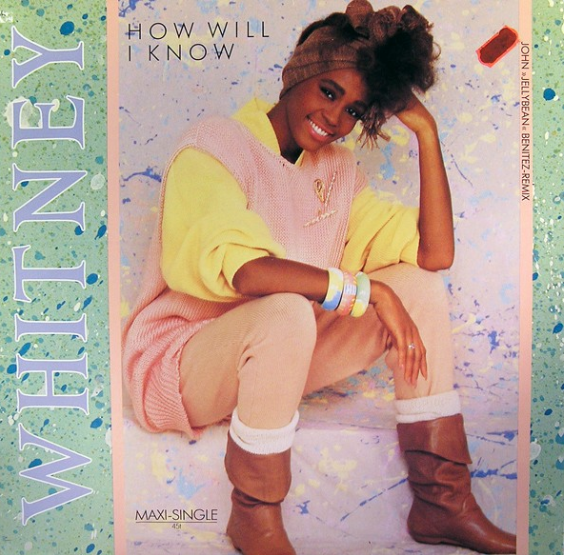
Whitney Houston’s “How Will I Know” 45 single sleeve, circa 1986. (https://medium.com)

This is more than just whether I knew I liked teenage girls and women by the time I was my son’s current age of fifteen, though. Between humping older women’s legs when I was three or four years old (too much information, I suppose), me and Diana slobbering on each other in first grade, and my crush on Ms. Shannon in third grade, that would be enough for most kids to know their orientation. But because I wasn’t “hard” like the boys I lived around at 616 and 630 East Lincoln and the young Turks who lived in public housing on Pearsall Drive, I was often the neighborhood “pussy” or “faggot.” I was mugged four times between April 1979 and the end of 1983. I spent more than one weekend dodging a hail of pebbles and rocks that the neighborhood kids pelted me with. That, and the then buried sexual assault I endured when I was six left me questioning my own sexuality, and with that, my place in the world in terms of friendships and relationships.

The whole Hebrew-Israelite thing, and the additional layers of abuse, hypermasculinity, and misogyny that came with it didn’t help my evolution one bit. One would think that a months-long crush on — really, love for — Wendy in the spring of 1982 would once and for all settle this issue. It didn’t. It didn’t because even I recognized that my love for Wendy was for the version of her who took up space in my imagination. She had become ethereal, and was detached from the flesh-and-blood human being with whom I shared little more than the confines of the classroom in the years between 1981 and 1987. I found her attractive, but had already judged myself unworthy.

Puberty, rebellion, and my switch to Christianity in 1984, and the contradictions that came with this switch over the next year, would tell me more about who I was. This was the beginning of my years of relative asexuality, at least as I presented myself in public. Since I dedicated my life to Jesus, every potential carnal thought I had or action I could take was met with self-doubt and loathing. Mostly, though, I feared for my newborn soul. I feared that somehow, I would go back to being suicidal, Hebrew-Israelite-and-going-to-Hell Donald, the one that got clowned and stoned before reaching six-foot-one.

One of my many attempts at being chaste between September 1984 and May 1985 involved toting my Bible everywhere and breaking it out to read during every idle moment. At school, which got me in trouble with my 10th grade history teacher, Ms. Zini. At home, when I wasn’t distracted by music, my younger siblings, or our fucked up living arrangement with one Balkis Makeda. As sanctimonious as it was, I was really trying to learn, to receive revelation, to understand how this 66-book, 1300-page document could transform me and my mini-apocalyptic world.

I also rode the buses and subways around the city with my red-covered Bible in hand. On many Fridays and Saturdays, whether working for my dad or hunting him down for money, or just because I needed to get away, I’d take the 2 from East 241st in the Bronx to 72nd in Manhattan, or further down, to Times Square, or sometimes, all the way out to Flatbush in Brooklyn.

No matter where I or we (when my older brother Darren would tag along) went, the most interesting part of these outings usually were the people who would be in the cars with me/us. Drunkards who reminded me of Jimme. Older Jamaican women on their way to do domestic work. Middle-aged, haggard-looking White guys who dressed twenty years too young for their faces.

Screenshot from “I Wonder If I Take You Home” video, Lisa Lisa & Cult Jam (1984/85). (https://imgue.com).

Frequently, Nuyorican or Dominican girls and young women would board somewhere between 180th and East Tremont and 149th and Grand Concourse (though because of the ethnic tensions I didn’t understand at the time, certainly not at the same time). I would look up from reading II Chronicles or Esther or Ephesians, and before I could comprehend the people my eyes took in, my dick responded. At 15, I already knew that even a mildly warm breeze was enough for me to get a hard on. I didn’t know that four or six young Latinas on a train wearing bright, tight clothes, makeup, lipstick, and perfume, and heels that would accentuate their breasts, hips, and round butts would completely counter my asexual front. Luckily for me, the Bible-toting phase of my life was during wintertime, and I could cover up my woody with my jacket.

Of course, it felt sinful, and I felt ashamed, that a second and a half of staring up from my Bible would lead to carnal stirrings. But it also gave me a sense of who I was and wasn’t attracted to, really and truly. When White girls with their voluminous ’80s hair got on the train, I hardly noticed. They were trying too hard, and their flat butts did nothing for me. When single Black women in their twenties and thirties would board, I noticed, too. I didn’t have what I would learn later to be colorism issues.

Of course, I learned that I was heterosexual, which I knew would please my Mom to no end. Which actually pissed me off. So, if I had discovered I was gay, she wouldn’t accept me? Wow!, I thought one April Saturday on way back to East 241st. At that point, my evangelical zeal for setting myself apart from the rest of world with my Bible as a baseball bat had waned. I was nowhere near ready to be involved in any kind of relationship that would lead to sex. But, I was ready to drop the idea that my eternal life completely depended on me ignoring both women and my attraction to women. I would remain publicly asexual for a few more years and endure f-bombs from my dad. Truly, it took until I was twenty to understand that whatever my orientation, no one has the right to tell me that my sexuality was anathema to my Christianity.

← Older posts
Newer posts →

Boy @ The Window: A Memoir

Boy @ The Window: A Memoir

Places to Buy/Download Boy @ The Window

There's a few ways in which you can read excerpts of, borrow and/or purchase and download Boy @ The Window. There's the trade paperback edition of Boy @ The Window, available for purchase via Amazon.com at http://www.amazon.com/Boy-Window-Donald-Earl-Collins/dp/0989256138/

There's also a Kindle edition on Amazon.com. The enhanced edition can be read only with Kindle Fire, an iPad or a full-color tablet. The links to the enhanced edition through Apple's iBookstore and the Barnes & Noble NOOK edition are below. The link to the Amazon Kindle version is also immediately below:

scr2555-proj697-a-kindle-logo-rgb-lg

Boy @ The Window on Amazon.com: http://www.amazon.com/Boy-The-Window-Memoir-ebook/dp/B00CD95FBU/

iBookstore-logo-300x100

Boy @ The Window on Apple's iBookstore: https://itunes.apple.com/us/book/boy-the-window/id643768275?ls=1

Barnes & Noble (bn.com) logo, June 26, 2013. (http://www.logotypes101.com).

Boy @ The Window on Barnes & Noble: http://www.barnesandnoble.com/w/boy-the-window-donald-earl-collins/1115182183?ean=2940016741567

You can also add, read and review Boy @ The Window on Goodreads.com. Just click on the button below:

Boy @ The Window

Twitter Updates

Tweets by decollins1969
  • RSS - Posts
  • RSS - Comments

Archives

  • June 2025
  • April 2023
  • September 2022
  • August 2022
  • July 2022
  • June 2022
  • May 2022
  • April 2022
  • March 2022
  • January 2022
  • December 2021
  • November 2021
  • October 2021
  • September 2021
  • August 2021
  • July 2021
  • June 2021
  • April 2021
  • March 2021
  • February 2021
  • January 2021
  • December 2020
  • November 2020
  • October 2020
  • September 2020
  • August 2020
  • July 2020
  • May 2020
  • April 2020
  • March 2020
  • January 2020
  • December 2019
  • November 2019
  • August 2019
  • July 2019
  • June 2019
  • May 2019
  • April 2019
  • March 2019
  • February 2019
  • January 2019
  • December 2018
  • November 2018
  • October 2018
  • September 2018
  • August 2018
  • July 2018
  • June 2018
  • May 2018
  • March 2018
  • February 2018
  • January 2018
  • December 2017
  • November 2017
  • October 2017
  • September 2017
  • August 2017
  • July 2017
  • June 2017
  • May 2017
  • April 2017
  • March 2017
  • February 2017
  • January 2017
  • December 2016
  • November 2016
  • October 2016
  • September 2016
  • August 2016
  • July 2016
  • June 2016
  • May 2016
  • April 2016
  • March 2016
  • February 2016
  • January 2016
  • December 2015
  • November 2015
  • October 2015
  • September 2015
  • August 2015
  • July 2015
  • June 2015
  • May 2015
  • April 2015
  • March 2015
  • February 2015
  • January 2015
  • December 2014
  • November 2014
  • October 2014
  • September 2014
  • August 2014
  • July 2014
  • June 2014
  • May 2014
  • April 2014
  • March 2014
  • February 2014
  • January 2014
  • December 2013
  • November 2013
  • October 2013
  • September 2013
  • August 2013
  • July 2013
  • June 2013
  • May 2013
  • April 2013
  • March 2013
  • February 2013
  • January 2013
  • December 2012
  • November 2012
  • October 2012
  • September 2012
  • August 2012
  • July 2012
  • June 2012
  • May 2012
  • April 2012
  • March 2012
  • February 2012
  • January 2012
  • December 2011
  • November 2011
  • October 2011
  • September 2011
  • August 2011
  • July 2011
  • June 2011
  • May 2011
  • April 2011
  • March 2011
  • February 2011
  • January 2011
  • December 2010
  • November 2010
  • October 2010
  • September 2010
  • August 2010
  • July 2010
  • June 2010
  • May 2010
  • April 2010
  • March 2010
  • February 2010
  • January 2010
  • December 2009
  • November 2009
  • October 2009
  • September 2009
  • August 2009
  • July 2009
  • June 2009
  • May 2009
  • April 2009
  • March 2009
  • February 2009
  • January 2009
  • December 2008
  • November 2008
  • October 2008
  • September 2008
  • August 2008
  • July 2008
  • June 2008
  • May 2008
  • April 2008
  • March 2008
  • February 2008
  • January 2008
  • December 2007
  • November 2007
  • October 2007
  • September 2007
  • August 2007
  • July 2007
  • June 2007

Recent Comments

decollins1969's avatardecollins1969 on No Good Teaching Deed Goes…
Mary Rose O’Connell's avatarMary Rose O’Connell on No Good Teaching Deed Goes…
Lyndah McCaskill's avatarLyndah McCaskill on The Raunchiest of Them Al…

NetworkedBlogs on Facebook

NetworkedBlogs
Blog:
Notes From a Boy @ The Window
Topics:
My Life, Culture & Education, Politics & Goofyness
 
Follow my blog

616 616 East Lincoln Avenue A.B. Davis Middle School Abuse Academia Academy for Educational Development AED Afrocentricity American Narcissism Authenticity Bigotry Blackness Boy @ The Window Carnegie Mellon University Child Abuse Class of 1987 CMU Coping Strategies Crush #1 Crush #2 Death Disillusionment Diversity Domestic Violence Economic Inequality Education Family Friendship Friendships Graduate School Hebrew-Israelites High-Stakes Testing Higher Education History Homelessness Humanities Humanities Program Hypocrisy Internalized Racism Jealousy Joe Trotter Joe William Trotter Jr. K-12 Education Love Manhood Maurice Eugene Washington Maurice Washington Misogyny Mother-Son Relationship Mount Vernon High School Mount Vernon New York Mount Vernon public schools Multiculturalism MVHS Narcissism NFL Pitt Pittsburgh Politics of Education Poverty President Barack Obama Race Racial Stereotypes Racism Relationships Self-Awareness Self-Discovery Self-Reflection Sexism Social Justice Teaching and Learning University of Pittsburgh Violence Whiteness Writing

Top Rated

Blog at WordPress.com.

  • Subscribe Subscribed
    • Notes from a Boy @ The Window
    • Join 103 other subscribers
    • Already have a WordPress.com account? Log in now.
    • Notes from a Boy @ The Window
    • Subscribe Subscribed
    • Sign up
    • Log in
    • Report this content
    • View site in Reader
    • Manage subscriptions
    • Collapse this bar
 

Loading Comments...