• About Me
  • Other Writings
  • Interview Clips
  • All About Me: American Racism, American Narcissism, and the Conversation America Can’t Have
  • Video Clips
  • Boy @ The Window Pictures
  • Boy @ The Window Theme Music

Notes from a Boy @ The Window

~

Notes from a Boy @ The Window

Category Archives: Jimme

Aside

“Back In The Summer of ’85”

04 Saturday Jul 2015

Posted by decollins1969 in 1, Boy @ The Window, culture, Eclectic, eclectic music, High Rise Buildings, Jimme, Mount Vernon New York, music, My Father, New York City, Pop Culture, race, Sports, Upper East Side, Upper West Side, Work, Youth

≈ Leave a comment

Tags

"Summer of '69" (1985), All-Nighter, Atlanta Braves, Back To The Future (1985), Bryan Adams, Darryl Strawberry, Davey Johnson, Dwight Gooden, Eleanor Bumpurs, Escapism, Fireworks, Gary Carter, Howard Johnson, Independence Day, It Takes A Nation of Millions To Hold Us Back (1988), Jesse Orosco. Cy Young Award, Keith Hernandez, Lenny Dystra, Michael Stewart, Mookie Wilson, New York Mets, Public Enemy, Rafael Santana, Ron Darling, Tom Gorman, Wally Backman


Dwight Gooden in 1985, 24-4, 1.53 ERA, 268Ks, Cy Young Award winner, intimidator. (Ronald C. Modra/Getty Images; http://espn.go.com).
Dwight Gooden in 1985, 24-4, 1.53 ERA, 268Ks, Cy Young Award winner, intimidator. (Ronald C. Modra/Getty Images; http://espn.go.com).

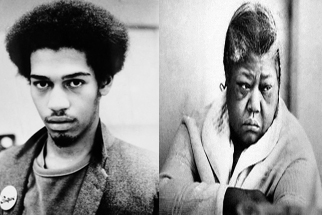
Michael Stewart (1958-1983) and Eleanor Bumpurs (1918-1984) had me thinking about police brutality long before my first Walking While Black encounter, July 4, 2015 (via Adobe Photoshop).

Michael Stewart (1958-1983) and Eleanor Bumpurs (1918-1984) had me thinking about police brutality long before my first Walking While Black encounter, July 4, 2015 (via Adobe Photoshop).

Since this is Independence Day Weekend, it makes thirty years since the official release of Back To The Future. And with me beyond the forty-five-and-a-half year mark, I am officially middle-aged. Funny, though. I don’t feel that different. My knees ached when I was fifteen sometimes, and so also did my feet. We had gas-guzzling cars in ’85, and we still have plenty of them on the road in ’15. White Americans treated Black lives cheaper than manure in ’85 (e.g., Michael Stewart in ’83 and Eleanor Bumpurs in ’84), and evidence from the police shootings and acts of White terrorism — especially in South Carolina — in recent years/days show that it still “takes a nation of millions to hold” Blacks back because of their indifference in ’15.
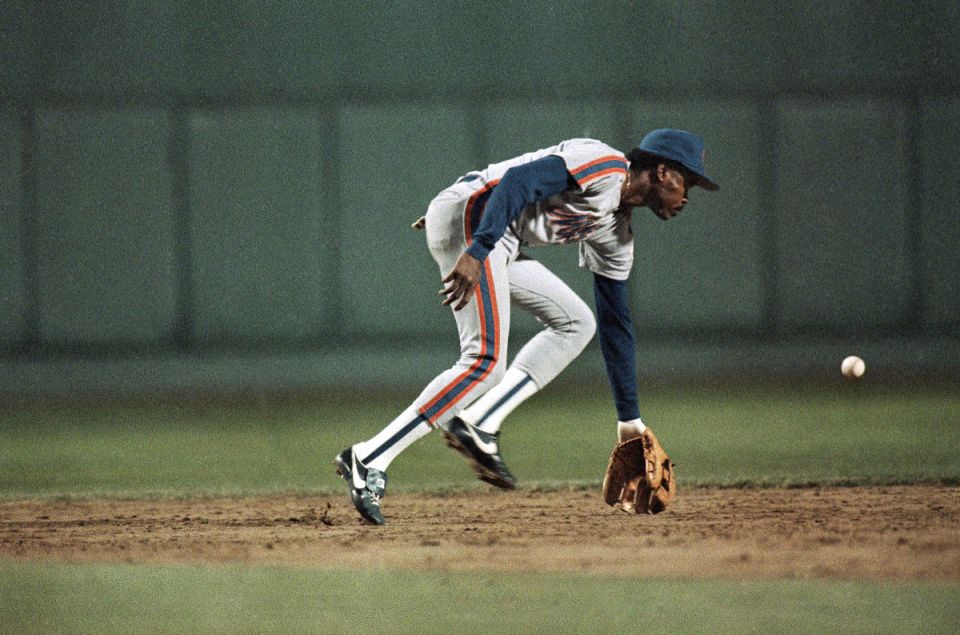
Rafael Santana, Mets shortstop from 1984-87, 1986 World Series, Boston's Fenway Park. (AP; http://www.newsday.com/ ).

Rafael Santana, Mets shortstop from 1984-87, 1986 World Series, Boston’s Fenway Park. (AP; http://www.newsday.com/ ).

One thing that has changed in the past three decades has been me as a fan. I loved — I mean, LOVED — the New York Metropolitans in ’85. I was a baseball fan through and through, and had become a diehard Mets fans by the time I finished my first stage of pubescent growth in the spring of ’84. I read the Daily News for box scores. I would get peeved hearing bad commentary on WABC-AM 770 — from listening to the late Art Rust, Jr.’s show — about the terrible hitting of shortstop Rafael Santana or the constant criticism of Darryl Strawberry (they were the Yankees radio station). I’d schedule my spring and summer afternoons and evenings around whomever the Mets played that day.

The summer of ’85 didn’t truly start for me until June 11, when the Mets proceeded to lose a game to the Phillies by the score of 26-7. I’d been working with my older brother Darren for my father down in the city, and was on the 2 Subway and on my way home before I learned of the news. They were down 16-0 after two innings, with Mike Schmidt, Juan Samuel, Von Hayes and company having had as many as three or four at-bats in those couple of innings. The Mets managed seven runs in the third, fourth and fifth innings but with our then weak bullpen, had no chance to hold the Phillies the rest of the way. “If only I’d been home to listen to the game from the beginning,” I thought. “Then maybe they wouldn’t have been down so many runs.” Those are the thoughts of a fan whom lived and died with his team. I’m sure my blood pressure went up to 135/80 (mind you, I was fifteen, still a teenager) on days like that day.

But as I wrote in Boy @ The Window, that was hardly the end of my second full summer of Mets, Mets, and more Mets.

After the hungry end to tenth grade and three weeks of torture with my father, I had more important things to do. Watching Dwight Gooden pitch the Mets into a pennant race they’d almost fallen out of, for starters. I either listened to or watched Gooden win sixteen straight decisions between May and the end of August. And the Mets…made the ’85 season one to remember. Despite working nights, I managed to watch a rain-delayed Independence Day game with the Mets playing the Braves in Atlanta at the old Fulton County Stadium. The Mets won in nineteen innings, 19-16. The game ended at 4:05 am on the fifth of July, and the Braves still set off their fireworks at the end of the game.

Actually, the final score was 16-13 in nineteen innings (will correct in an eventual new edition). Originally scheduled for a 7:35 pm start, the game had been delayed by thunderstorms in Atlanta for nearly an hour and a half. There were at least two other rain delays during the game. Gooden was the Mets original starter that Thursday, but after two and a third innings, had stiffness in his throwing arm, had left some runners on, and left the game. The rest of the game was a roller coaster ride, as the Mets jumped out to a 7-4 lead thanks to Keith Hernandez’s cycle, then Jesse Orosco, our shutdown closer, gave up four runs in the bottom of the eighth to yield the lead to the Braves. Then the Mets scored a run in the top of the ninth to send the game to extra innings.

Scoring runs in the 13th and 18th innings didn’t help, as the Braves matched the Mets run for run, thanks in part to a pitcher with a .060 career batting average who hit a home run. When I saw Ron Darling (whom had started two nights earlier) warming up in the bullpen around 3:30 am, I knew this game had been on too long. I stayed up just long enough to watch the Mets score five more runs in the 19th inning, then dozed up until the fireworks went off at the end of the game.

(Note: just watch the first four minutes, including Marv Albert’s ’80s hair while still doing sports anchor work for WNBC-4 in New York)

Bryan Adams, "Summer of '69" (1985), December 6, 2006. (Purdy via Wikipedia, originally A&M Records). Qualifies as fair use, as image is low-resolution and for illustrative purposes only.

Bryan Adams, “Summer of ’69” (1985), December 6, 2006. (Purdy via Wikipedia, originally A&M Records). Qualifies as fair use, as image is low-resolution and for illustrative purposes only.

I’d never been up that late into the next day before. Since no one at 616 was up with me, I’d been able to do for once what I’ve done most nights as an adult in the nearly three decades since. I thought about the future, and laid down some plans to ensure it. In this case, I planned to keep working for my father so that I could escape more into the world of the diehard Mets fan. I hoped that Bryan Adams was wrong, that the days of my Mom’s second trimester with me, the “Summer of ’69,” (a bit hit in the summer of ’85) weren’t “the best days of my life.”

But, as I correctly wrote in the memoir

Yeah, you could say that my summer was going better than expected, having worked and watched my Mets play quality baseball in July and into August. I had my usual set of chores to be sure, runs to the store, weekly washings of clothes and watching after the kids. I took Maurice and Yiscoc out for walks, would sometimes respond to the occasional bill collector on Mom’s behalf, would check the mail and give Sarai and Eri baths. I’d cook weekend brunches of fried beef bologna, scrambled eggs and grits and occasional spaghetti and broccoli dinners for my siblings. I’d long since known that I’d become the first-born of the family, in that I was filling Darren’s role on so many levels.

Hence, the welcome relief of Gary Carter, Keith Hernandez, Howard Johnson, Gooden, Strawberry, Fernandez, and the rest of the ’85 Mets crew. While I may not like everything going on in my life and world now, I don’t need to escape it through baseball — or any other form of entertainment, really — to deal these days. At least there’s that.

 

MVHS and Memorial Day Weekend Decisions

25 Monday May 2015

Posted by decollins1969 in 1, Boy @ The Window, culture, Eclectic, eclectic music, Jimme, Mount Vernon High School, Mount Vernon New York, music, My Father, Pop Culture, race, Youth

≈ Leave a comment

Tags

"Voices Carry" (1985), 616, 616 East Lincoln Avenue, Angst, Barron's Regents Exam Test Prep Books, Carol Buckley, Chemistry, DiFeo, Disillusionment, Humanities, Joey Chestnut, Keyboarding, Martino, Mary Zini, Meltzer, MVHS, New York State Regents Exams, Paul Lewis, Self-, Takeru Kobayashi, Teaching and Learning, Teenage Angst, Til Tuesday, Trigonometry, Viggiano


Laurence Fishburne yelling "Wake up!" at end of movie School Daze (1988), December 9, 2009. (screenshot via Tumblr.com). Qualifies as fair use due to low resolution and clarity of picture.

Laurence Fishburne yelling “Wake up!” at end of movie School Daze (1988), December 9, 2009. (screenshot via Tumblr.com). Qualifies as fair use due to low resolution of picture.

Thirty years ago this weekend, I made a couple of decisions that I would take with me for the rest of my days of formal schooling, and still keep in mind for myself when I’m in the classroom as a professor. The decisions I made about my teachers came out of a sense of both malaise and desperation. You see, I was near the end of tenth grade in May ’85, and had figured out months earlier that I had hit the mediocre-and-apathetic-teacher-lottery at Mount Vernon High School that year.

That my Humanities teachers were underwhelming shouldn’t have been a surprise, really. Yet it was. I’ve written here and in Boy @ The Window already about two teachers — Zini for history and Lewis for Chemistry — who either “got on my last nerves” or as an “unimaginative instructor” who lived in “a chain-smoking world.” But I also had an Italian teacher who lost his job in April because of the distractions of owning a car dealership, a Trig teacher who could screw up an equation for me faster than I could quip, “Yeah, right!,” and an English teacher in Carol Buckley who spent most our eighth periods together lying on a couch and asking us to water her plants! The best teacher I had that year was my keyboarding instructor, who spent most of the year congratulating the women in the class who came in typing sixty or ninety-five words per minute.

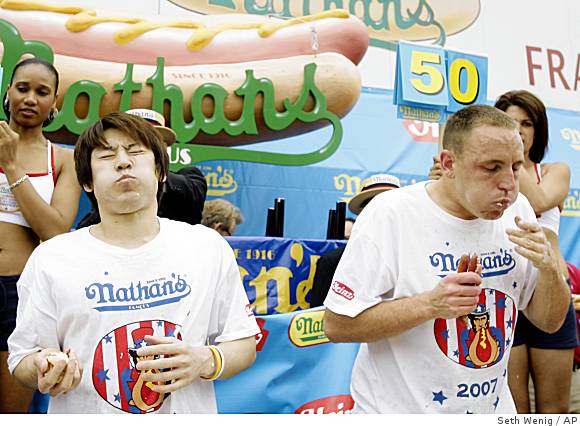
It wasn’t all their fault. I was fifteen as well, more than a bit rebellious, as nearly every adult authority figure in my life had either abused or neglected me in some way. Yeah, maybe I did take my teenage angst, my lack of belonging, and my troubles at 616 with my Mom, my idiot ex-stepfather and my father Jimme out on them from time to time. I’m sure that’s true. It’s also true that I distracted myself with Humanities and school. I used that forty-two weeks out of each year to throw down academically, to work, to grind, to use my Jedi-mind tricks to take music and movies, arts and sports to absorb knowledge like Takeru Kobayashi and ‎Joey Chestnut at a hot dog eating competition. Those teachers, with their lack of nuance, or in some cases, actual lack of knowledge (and in at least one case, lack of teaching acumen), ruined my standard operating mode.

Takeru Kobayashi and Joey Chestnut battle it out at the 2007 Nathan's Famous Fourth of July Hot Dog Eating Contest, Coney Island, Brooklyn, NY, July 4, 2007. (Seth Wenig/AP; http://philly.com).

Takeru Kobayashi and Joey Chestnut battle it out at the 2007 Nathan’s Famous Fourth of July Hot Dog Eating Contest, Coney Island, Brooklyn, NY, July 4, 2007. (Seth Wenig/AP; http://philly.com).

My Memorial Day Weekend ’85 decisions actually began in February. I decided after another week of watching Viggiano mess up another sine, cosine and tangent lecture that I needed to learn how to do Trig properly, which meant on my own. I went to Mount Vernon Public Library, checked out the best Trig textbook I could find, and began working on angles and equations whenever I could squeeze in a spare moment. I bought the Barron’s Trig Regents Exam test preparation book at the end of February, and started working on practice exams in April.

It wasn’t until the week going into Memorial Day Weekend, though, that I had an epiphany about my tenth-grade teachers. Lewis made it so with yet another stream of nonsense.

Lewis went as far as to say, “There’s nothing to worry about” on the subject of organic chemistry. “There will be hardly any organic chemistry on the exam, anyway,” he said. After eight months of listening to his blathering, I thought “That’s it! Whatever he says to do, I’m doing the opposite!” The next time I got money from Jimme, I went out and bought the Barron’s Chemistry Regents exam prep book. It was just before Memorial Day, and I had a month before the exam.

That wasn’t all I decided and did. I really did think that my teachers were incompetent, lazy and arrogant. I simply could no longer trust them, even as I was desperate to trust someone at fifteen. I decided that ultimately, I was my own best teacher and own best barometer of what I needed to learn and why I needed to learn it. I decided that teachers had to earn my trust as a student, that I was no longer going to automatically entrust them with my educational enrichment, no questions asked. I decided that if I really was going to be going to college in a couple of years, that I had to keep my eyes open for individuals I could trust, because by the end of tenth grade, I didn’t trust Humanities as a program and MVHS as a school.

Those decisions turned out to be good ones, even though it also meant few new friends and only a couple of mentors after tenth grade. Luckily there was Meltzer, luckily there was Martino, and luckily, I was only two years from graduating.

The Long Road Home

19 Tuesday May 2015

Posted by decollins1969 in 1, Academia, Boy @ The Window, Carnegie Mellon University, culture, Eclectic, Jimme, Pittsburgh, Politics, Pop Culture, race, Work, Youth

≈ Leave a comment

Tags

"Thriving as a Freelance Academic", Academia, Academic Writing, Bruce Anthony Jones, Career, Career Decisions, Career Development, Career Options, CMU, Disillusionment, Joe William Trotter Jr., Katie Rose Guest Pryal, Peter Stearns, Politics of Academia, Politics of the Foundation World, Self-Awareness, Self-Determination, Self-Discovery, Social Justice, Teaching and Learning, The Chronicle of Higher Education, Troublemaker, Writing


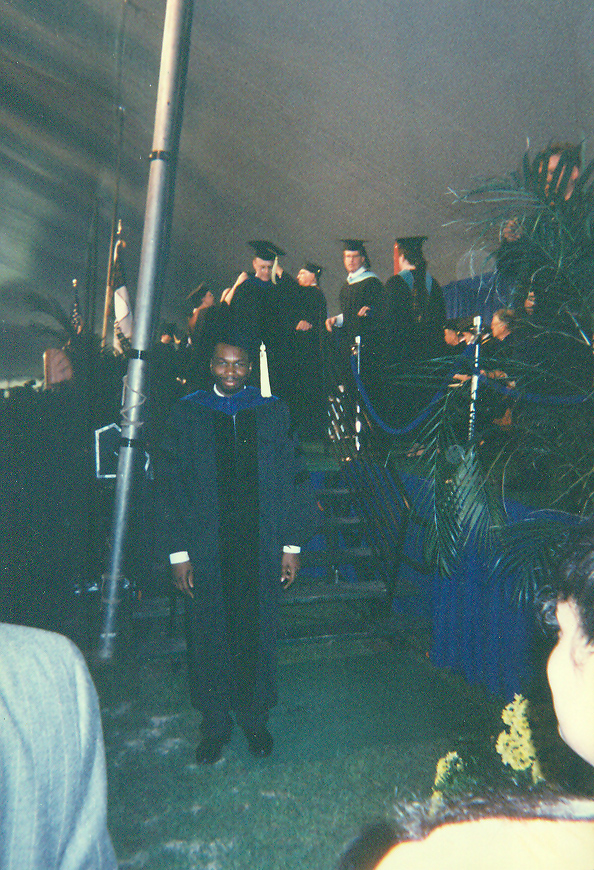
My stressed-out PhD walk photo, Carnegie Mellon University, May 18, 1997. (Angelia N. Levy).

My stressed-out PhD walk photo, Carnegie Mellon University, May 18, 1997. (Angelia N. Levy).

It’s been eighteen years and nearly a day since I had to shake then Carnegie Mellon Dean Peter Stearns’ hand on stage as part of the PhD portion of the 100th commencement ceremony for graduates, that third sweltering Sunday in May ’97. I’ve talked about the ceremony, my Mom’s jealousy and issues about my degree, Peter Stearns, Joe Trotter, Bruce Anthony Jones, and what happened before and after the degree ceremonies on that fateful day.

But time and enlightenment — especially the latter — has allowed me to take a step back from the events leading to a new wave of disillusionment in my life. If I really think about it, my struggles with where I wanted to go with my career go as far back as ’81, in the months after my first accolades as a writer, to the time when at eleven, I already had an encyclopedic knowledge of history, basic science, and technology. Heck, I already knew some of the historiography around World War II, the Cold War, American slavery and civil rights, long before I ever knew the definition for historiography. Not to mention, I was already living what we now call migration studies, thanks to my Mom and dad.

But my Boy @ The Window years did their damage to me. By the time I turned twenty at the end of the ’80s, I wasn’t fully clear of the array of choices I had for a career or set of careers. I knew I could write, and often write well. Yet I had stopped seeing myself as a writer by the time I went through my summer of abuse in ’82. I knew that I was a historian, because I asked the kinds of questions about history that only trained historians would. Yet I hated the idea that I was supposed to write only one way, using words like synergistic and interstitial (at an esoteric minimum) along the way. I toyed with the idea of going to law school in ’90, even going so far as to take the LSAT, scoring a then-50th percentile 31 on the exam in my one-and-only try.

Arthur Wesley Dow (1857-1922), The Long Road--Argilla Road, Ipswich, circa 1898, April 28, 2010. (BrooklynMuseumBot via Wikipedia). In public domain.

Arthur Wesley Dow (1857-1922), The Long Road–Argilla Road, Ipswich, circa 1898, April 28, 2010. (BrooklynMuseumBot via Wikipedia). In public domain.

I struggled for years with my fundamental question: “Am I an academic historian who’s also a writer? Am I a writer who’s also a historian? Can I be both?” I realized about a decade ago the question was moot. I am both. The real question really has been, will the working world allow me to operate as both without giving me grief and a hard way to go? (By the way, if I ever were to do a second, post-Boy @ The Window memoir, this would be one of that book’s big themes.)

I can safely say as a mildly successful freelance writer that the answer for many in this world of singularities is no. The working world puts up a fight, has and will continue to try to force me and others with multiple talents to choose one path, to do one thing, and one thing only, ideally for all time.

Academicians only think about each other via teaching duties or well-placed articles and books in scholarly journals and scholarly publishing houses. Higher education administrators believe that the only way to understand their work is through the lens of their specific university, as if universities and colleges aren’t similar from a management standpoint. Nonprofit organizations

A male mallard duck, a bird's triple threat (can walk, swim under water and fly), Saint-Eustache, Quebec, Canada, November 19, 2007. (Acarpentier via Wikipedia). Released to public domain via CC-SA-3.0.

A male mallard duck, a bird’s triple threat (can walk, swim under water and fly), Saint-Eustache, Quebec, Canada, November 19, 2007. (Acarpentier via Wikipedia). Released to public domain via CC-SA-3.0.

discount teaching and higher education administrator positions because finding money or managing students isn’t exactly the same as managing staff. Foundations who use your salary history instead of your scope of programs developed, people reached, and money raised as a barometer for even granting you an interview. All would prefer that you be quiet about injustices, especially ones in which their institution, organization, or foundation might well be complicit.

For me in the past couple of decades, though, I’ve worked in and with academicians, higher education administrators, nonprofit organizations, and private foundations. I’ve helped raise $3 million over the years, managed as many as twenty-five staff members, organized four-day conferences with a couple hundred attendees, worked with as many as 500 students at any given time, and taught undergraduate and graduate courses. I’ve written scholarly articles, published in scholarly journals, presented at a couple dozen conferences, and consulted for nonprofit organizations and foundations. To think of myself as only one thing is beyond ridiculous given my by-necessity-and-neglect careers so far.

Yesterday, The Chronicle of Higher Education posted the article “Thriving as a Freelance Academic” by Katie Rose Guest Pryal. In it, Pryal interviewed three White women about their experiences freelancing in the academic world. The women interviewed found a singular niche, found steady work through that niche, and otherwise didn’t question the idea of freelancing in a world in which freelancing is a rare career choice.

A square peg hammered into a round hole, May 2014. (http://joshbrahm.com/).

A square peg hammered into a round hole, May 2014. (http://joshbrahm.com/).

All that is fine. Except there was little soul-searching in Pryal’s piece. The women interviewed might as well have decided to go on a global trek or rock climbing, given their lack of ambivalence about academia or deliberate lack of specifics and dryness about the work they actually do. I don’t doubt that one can freelance in academia. I doubt, though, that one can do it without personal relationships with a specific university or alma mater, or with a specific higher education administrator or prominent professor. Why pick on this piece? Because there are far more people like me in and out of academia, who’ve consulted and freelanced and worked and stitched together a career, then there are the people represented in Pryal’s boutique article.

There is a lesson here besides the reality that life is a journey, and to get it right, we need to understand that it can and will be a roller-coaster-ride of a journey. The lesson, for me at least, is that while being true to myself has sometimes had consequences in terms of immediate victories and easy financial gains, it does mean I get to have success, and sometimes, even lasting success.

Why Boston U Isn’t For Me, and Shouldn’t Be For You

26 Sunday Apr 2015

Posted by decollins1969 in 1, Academia, Carnegie Mellon University, culture, Eclectic, High Rise Buildings, Jimme, Mount Vernon New York, My Father, New York City, Politics, Pop Culture, race, Upper East Side, Upper West Side, Work, Youth

≈ Leave a comment

Tags

616, 616 East Lincoln Avenue, Academic-Speak, Boston U, Boston University, BU, Checkbox, CMU, Cosmetic Diversity, Disillusionment, Institutional Racism, Jimme, Linda Sarsour, Meritocracy, Nepotism, Office of the Provost, Racism, Rev. Dr. Martin Luther King Jr., Righteous Indignation, Robert Turri Vise, Structural Racism, Suzanne C. Kennedy, Timothy Barbari, Tokenism


The main classroom buildings for the College of Arts and Sciences at Boston University, with the BU East 'T' stop in the foreground, July 18, 2010. (Fletcher6 via Wikipedia). Released to the public domain via CC-SA-3.0.

The main classroom buildings for the College of Arts and Sciences at Boston University, with the BU East ‘T’ stop in the foreground, July 18, 2010. (Fletcher6 via Wikipedia). Released to the public domain via CC-SA-3.0.

Since my first job working for my father in Manhattan in ’84, I’ve probably done over 200 interviews. By telephone, through Skype or WebEx or Adobe Connect, at conferences and in person. Probably about a third of those interviews have occurred with colleges and universities, for academic and administrator-level positions. For the most part, whether the interviews went well or when I didn’t have my “A-game,” my experiences have been pleasant ones. But, after two different interview processes five years apart with Boston University — one in October ’10, the other last month — there is a higher education institution that I will not work for, will not send my son, and will not recommend for anyone I know, under nearly any circumstances.

There are only a few institutions that have been so bad that they’ve moved from my [expletive] list to my permanently-banned-from-my-life list. Even Carnegie Mellon isn’t on the latter list, and I’ve talked about their conservatism and weirdness around diversity before here. But Boston University’s treatment of me as a potential employee, well, it took my breath away without putting me in an NYPD chokehold.

Round 1, Boston University, August-October 2010

Let me rephrase. I was never a “potential employee,” because on the two occasions I interviewed for jobs there, Boston University in the end treated me as a checkmark interviewee. In the fall of ’10, I emerged for them as a candidate for the director of their Washington, DC program. They interviewed me three times: at the American Political Science Association conference in DC in August, at their old DC program headquarters (while also showing me their new one, still under construction) in September, and in person on the main Boston University campus in late October.

For that last interview, they pulled out all the stops. They flew me in, put me up in a nearby hotel the night before, and even took me to lunch. Of course, they also had someone give me a two-hour guided tour of the campus that morning, after one morning meeting, on a day with thirty mile-per-hour winds coming off the Charles River as we walked from one end of the campus to the other. It’s funny. Up until then, I never thought of a campus tour as sinister. But then I realized, if I’m spending two hours during the heart of the workday doing a campus tour with a twenty-four year-old BU grad in forty-five degree weather, what did that mean for my real chances at that job?

My final meeting was with a professor who advised political science and history major in the DC program. That meeting ended at 5 pm on October 22, with which I knew that they were supposed to make a final decision in a week or so. Despite a thank-you email and two follow-up emails, I didn’t hear from Boston University again until November 29. Roberta Turri Vise, the point person for my interview process, didn’t explain why the final decision took more than five weeks. Nor did she explain why after six weeks of correspondence, no response from my requests were returned by her or anyone else in her office.

Round 2, Boston University, January-March 2015

I decided that this was a one-off thing, that with our generation of job searches occurring in a buyer’s market, that some folks really don’t care about being professionals in their dealing with interviewees. Boy was I wrong! Even in a market where people ignore applicant materials and send mass rejection emails without a candidate’s name on it (or worse, with someone else’s name), Boston University claimed a unique crown.

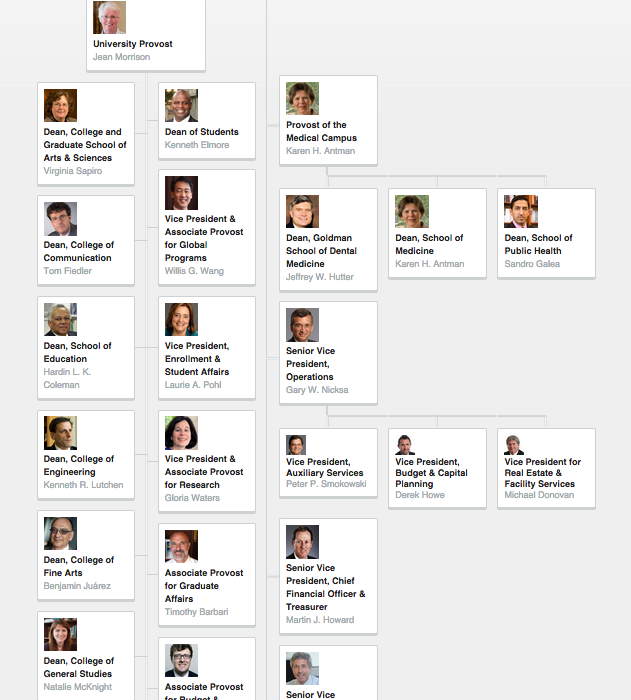
Hierarchy tree of Boston University's leadership team via the Provost's Office, April 26, 2015. (http://www.bu.edu/info/about/admin/).

Hierarchy tree of Boston University’s leadership team via the Provost’s Office, April 26, 2015. (http://www.bu.edu/info/about/admin/).

I interviewed with them again in January and at the beginning of March. This was for a position in their provost’s office, a director position managing undergraduate and graduate fellowship opportunities and advising students via those opportunities. The position was a bit beneath my experience, but they seemed interested, and I already knew from some initial research that it was a new position, so I went ahead and applied for it. My first interview was by telephone, with Suzanne Kennedy, the assistant provost for academic affairs at Boston University. It was a pleasant but underwhelming interview, and I actually didn’t expect a call back. So I kept up with my usual work of teaching, consulting, and looking for more consulting opportunities.

I received an email five weeks later asking me to come up to Boston for a second, in-person interview. I gave it the go-ahead, although the length of time between first interview and correspondence concerned me. So too, did my back and forth with Kennedy’s assistant over travel, as she had initially booked me at times that were very inconvenient for interviewing purposes. Not to mention, the major snow issues that Boston experienced in February.

The interview on March 4 was honestly one of the worst experiences I’ve ever had interviewing for any job. I’m including an interview in which I discovered the place was a sweatshop in Chinatown, during my summer of unemployment in New York in ’88. I had three meetings in all, one over lunch with Kennedy, and two with the two associate provosts at Boston University in academic affairs (one undergraduate, one graduate). Over lunch, the conversation was going well, until I asked the question about the level of diversity with applicant pools for Fulbrights, Trumans, Borens, and Rhodes’ scholarships and fellowships. I kid you not, Kennedy’s eyes literally glazed over as soon as I asked about diversity. Keep in mind, I had asked about socioeconomic diversity — I hadn’t touched racial or gender diversity yet. After lunch, I didn’t see Kennedy again for the rest of the interview process.

My second sign came from my third meeting. I met with Timothy Barbari, associate provost for graduate affairs. It was obvious that Barbari hadn’t even looked at my CV before I walked into his office. The first thing Barbari says to me, with him pushing his body into the back of his chair so far that his attempt to be at ease looked more like a rocket revving to take off — “so, you have a rather interesting CV.” I may not have earned all of my money as an academician, but I’ve been around academic-speak long enough to know that interesting can mean a lot of different things, mostly bad. In this context, interesting meant “not straightforward, not linear in progression, not typical in terms of whom we typically hire.”

I was already feeling a bit like a checkmark or token interviewee by the time I left Barbari’s office for Logan. But after USAirways canceled all their flights to DC that evening due to a snowstorm that wouldn’t drop a snowflake for another twelve hours, it got worse. I notified Kennedy through her assistant that I was stuck in Boston overnight from Logan, and left a message the next morning that the Amtrak to DC was my only option, as more flights had been canceled. No word, not even a “I’m sorry that you have to go through this” response. It wasn’t until mid-afternoon that Friday, nearly a day after I returned to DC, and after a third message about them needing to reimburse me, that I heard from Kennedy’s assistant.

At that point, I wouldn’t have taken the job even if they had offered it to me. As it was, I didn’t hear from Kennedy again until April 7, five weeks after a second interview, and despite a check-in to find out what happened with this director position. It’s this kind of calloused approach that leaves folks shaking their head.

Shaking Off The Dirt

I’ve made a few determinations based on these experiences. For one, if this is the way that treat job candidates who look like me, how well do they pay and treat their service staff, the most vulnerable people on their campus? Not well, at least from what I saw and have experienced. For two, the fact that for both interviews, their top concern seemed to be about competing with “schools across the Charles River” — i.e., Harvard, MIT, Tufts — was somewhere between disconcerting and ridiculous.

An elephant shaking off the dirt, circa 2012. JD Rucker via Pinterest.com).

An elephant shaking off the dirt, circa 2012. (JD Rucker via Pinterest.com).

The fact that with tuition, books, and room and board it would run the average BU student $60,000 per year also told me what I needed to know. Boston University is a place that wants elite status and elite students, and in pursuit of this Pollyanna goal, wants to hire people they feel fit the bill. As long as those people look like everyone else running the university — mostly White, with a few people of color lightly sprinkled in leading positions at the institution. Because Boston University has what activist Linda Sarsour (Twitter, @lsarsour) calls cosmetic diversity, a genuine attempt at diversity across socioeconomic, racial and gender lines is unnecessary, at least for the powers whom run the institution.

Aside from Martin Luther King, Jr., who earned his doctorate in divinity at Boston University in the early 1950s, I’ve known or known of only one person of color with a degree from BU. She was a neighbor at 616 East Lincoln, a few years younger. Based on her description of more than two decades ago, I’d have to say that Boston University has changed for the worst. Like most universities, they seem more interested in prestige and raising money than in fulfilling their mission.

And with that being the case, why send your kid to Boston University? Especially when, for the same amount of money or less, every other school in the Boston area is either better, or at least, cares more about diversity and learning beyond the cosmetic.

Degrees of Fakery

17 Tuesday Mar 2015

Posted by decollins1969 in 1, Academia, Boy @ The Window, Carnegie Mellon University, culture, Eclectic, Jimme, Mount Vernon High School, Mount Vernon New York, My Father, New York City, Politics, Pop Culture, race, University of Pittsburgh, Upper West Side, Youth

≈ Leave a comment

Tags

616 East Lincoln Avenue, Advanced Degrees, Ben Carson, Bill Cosby, Brian Williams, Chevy Citation, CMU, Cynicism, Doctor, Doctorate, Dr. Steve Perry, Expertise, Experts, Fake Degrees, Fakery, Father-Son Relationship, Hard Work, Henry Kissinger, Honorary Degrees, Lawyer, Maurice Eugene Washington, Michelle Malkin, Newt Gingrich, Obsequious, Opinions, PhD, William Kristol


Anne-Marie Johnson in Im Gonna Git You Sucka (1988), March 17, 2015. (http://cdn5.movieclips.com/). Qualifies as fair use under US copyright laws (low resolution and relevance to subject matter).

Anne-Marie Johnson in Im Gonna Git You Sucka (1988), March 17, 2015. (http://cdn5.movieclips.com/). Qualifies as fair use under US copyright laws (low resolution and relevance to subject matter).

All too often, there are Americans high and low who believe they can say, “That’s just your opinion!” to anyone about anything. It doesn’t matter if the person they say this to is an expert in, say, climate change or American history or twentieth-century education policy. Or, for that matter, if the person they question is a total bullshit artist. All opinions are equal, and equally discountable.

But it does matter if the opinion comes from someone rich and famous. or at least, someone Americans see on TV and/or hear on the radio nearly every day, someone they like, someone they could see themselves sharing a laugh or cry with. That’s why opinions like those of Rudy Giuliani, Bill Cosby, Michelle Malkin, even Brian Williams seem to have mattered more over the years than the expert interpretations of many a scholar, scientist or public intellectual.

On the scale of those experts, those in the media likely view me as a middle-of-the-pack expert. I went to graduate school for five and a half years, earning two advanced degrees with a focus on twentieth-century US and African American history, with an even sharper focus on history of American education, African American identity and multiculturalism.

Front and left-side view of Chevrolet Citation II (1980-1985), Clinton, MD, August 28, 2008. (IFCAR via Wikipedia). Released to public domain.

Front and left-side view of Chevrolet Citation II (1980-1985), Clinton, MD, August 28, 2008. (IFCAR via Wikipedia). Released to public domain.

Despite what my Mom, my dad and some of my more cynical former high school classmates may think, earning a PhD in history wasn’t nearly as simple as answering 1,000 Final Jeopardy questions correctly before getting a stamp of approval. Twenty-three masters and doctoral courses, more than forty paper assignments of twenty pages or more, two years as a teaching assistant, one year as an undergraduate student advisor, two summers as a research assistant, and twenty-seven months of single-minded focus researching and writing a 505-page dissertation with more citations than the number of Citations Chevrolet made between 1980 and 1985. Oh, and did I mention, nineteen months of burnout afterward?

Yet, when I take the years I’ve spent researching, writing, learning, teaching, publishing and working in the fields of history and education, and express views based on that, I get told what anyone else on the street could say. “That’s just your opinion!” Unbelievable!

I think, too, about those from a time not too long ago who could’ve and should’ve earned a doctorate, a medical degree, or a JD, yet the structures of socioeconomic privilege, racism and sexism prevent them from earning these most expert of degrees. Yet, at many an HBCU, in many a segregated classroom, in so many barbershops, we still called them “Doc,” a sign of respect, for their abilities, for their experience, for their — dare I say — expertise.

We still do this now, even for people who don’t deserve the nickname “Doc.” My father and my idiot, late ex-stepfather both at one point in their lives or another laid claim to being doctors and/or lawyers. For the first two years I knew my then stepfather Maurice, between ’77 and ’79, he carried a monogramed briefcase, always full of his “important papers,” telling me and anyone else he bumped into on the streets of Mount Vernon, New York that he was a “doctor” or a “lawyer.” When drunk, my father sometimes took it a step further, telling strangers on the Subway that he was a “big-shot doctor an’ a lawyer” on his Friday-evening paydays. Maurice drove a Reliable taxicab during his delusions-of-grandeur years, and my father was janitorial supervisor.

Given the history of education and our society’s denial of quality education to people of color and the poor in the US, though, I didn’t entirely hold it against them then, and I don’t now. What I do have much bigger problems with, though, are the people who should know better, and yet don’t do any better. Just in my lifetime alone, people with Dr. in front of their names without having earned a doctorate or a four-year medical degree. Like “Dr.” Henry Kissinger, “Dr.” Bill Cosby, and of late, “Dr.” Steve Perry (not to be confused with the former lead singer for Journey, I guess). And no, honorary doctorates for giving money to Harvard, Temple, or the University of Massachusetts don’t count! Nor does starting an outline for a dissertation without actually finishing one. Still, they insist on the “Dr.,” even when it’s obvious I could’ve sat on the stoop at 616 East Lincoln Avenue thirty years ago to get the same half-baked opinions from one of my hydro-smoking neighbors.

Stock photo of former NYC mayor Rudolph Giuliani, August 2013. (AP/New York Post).

Stock photo of former NYC mayor Rudolph Giuliani, August 2013. (AP/New York Post).

Then again, numbskulls like William Kristol and Newt Gingrich have earned doctorates from Harvard and Tulane University respectively, and Ben Carson was once one of the most respected pediatric neurosurgeons in the world! Yet, for some dumb reason, our media and most Americans think that their opinions are somehow more valuable, more consumable, than those of people who’ve spent decades understanding education, American culture, racial, gender and socioeconomic inequality, and government corruption. Or maybe, we just like listening to fake opinions from people with fake degrees and/or fake expertise on a subject in which they know nothing. Because nothing is exactly what Americans want to hear.

On Kicking My Damsel-in-Distress Syndrome

07 Saturday Mar 2015

Posted by decollins1969 in 1, Boy @ The Window, Christianity, culture, Eclectic, Hebrew-Israelite, Jimme, Marriage, Mount Vernon New York, My Father, Pittsburgh, Politics, Pop Culture, Religion, Youth

≈ Leave a comment

Tags

"Ballerina Wendy", Atlas, Burdens, Child Abuse, Chivalry, Crush #1, Damsel-in-Distress, Damsel-in-Distress Syndrome, Domestic Violence, Father-Son Relationship, Feminism, Love, Misogyny, Misty Copeland, Mother-Son Relationship, Pitt, Resentment, Sexism, Wendy, Womanism


Chivalry with a suit blazer,   March 7, 2015. (http://genius.com)/

Chivalry with a suit blazer, March 7, 2015. (http://genius.com)/

This week marked thirty-three years since the fight that led to a crush that led to me falling in love for the first time, via a ballerina in training. The three-month period between March and June ’82 shaped how I dealt with teenage girls and women between the time I turned twelve and my mid-thirties. The crush on “Ballerina Wendy” and its mutation because of my stepfather’s knocking out of my Mom in front of me helped shaped my feminism, my womanism and my sexist damsel-in-distress syndrome.

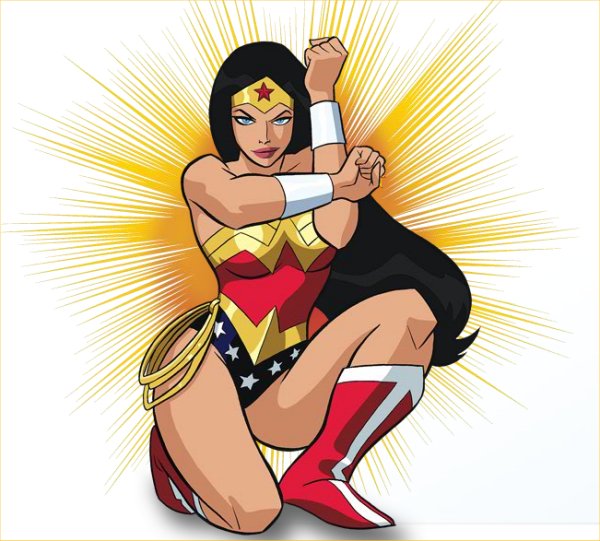
Wonder Woman, October 30, 2012. (http://tvequals.com).

Wonder Woman, October 30, 2012. (http://tvequals.com).

It was the beginning of my damsel-in-distress syndrome. Though it was triggered by the Memorial Day incident, my damsel-in-distress syndrome had been latent for years. I was in fact a mama’s boy, tempered by living at 616 and in Mount Vernon. I’d always been enamored by strong, athletic women (or at least, actresses with that role), going back to Lynda Carter as Wonder Woman. Yet I’d also been surrounded by sexism and misogyny, from my father calling my Mom a “Black bit'” since I was four to my stepfather’s constant quoting of the Torah to justify his laying of violent hands and feet on my Mom.

What I did in response was to help my Mom in every way I could, and in ways I never should’ve. Calling up Con Ed and Ma Bell to pay the electric and telephone bills. Listening to years of conversations about her failed marriages, about my father’s alcoholic failings, about her bills, about the burdens we as her children had put on her. Washing clothes for the house every weekend from October ’82 through August ’87 and anytime I was home for the summer and for the holidays once I went off to college. Going to the store as many as five times in a single afternoon and evening because my Mom forgot that she needed diapers or cigarettes. Hunting my father down for money even on weekends I didn’t want to be bothered because we were out of food for my younger siblings. Taking a fist-filled beating here or there from my stepfather to take the pressure off of my Mom. Promising my Mom that after I finished my degree, I’d come back to New York to work and help her out financially.

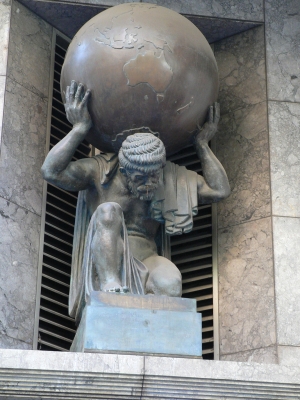
Atlas supports the terrestrial globe on a building in Collins Street, Melbourne, Australia, October 9, 2006. (Biatch via Wikipedia). Released to the public domain.

Atlas supports the terrestrial globe on a building in Collins Street, Melbourne, Australia, October 9, 2006. (Biatch via Wikipedia). Released to the public domain.

On that last promise especially, I reneged. I changed my major from computer science to history, and decided to stay at Pitt, to go to graduate school, to earn a PhD, to start writing, both in the academic world and a bit as a freelancer, to teach for a living. It was the basis, I think, for her falling out with me in ’97, and why our relationship remains limited.

My Mom was hardly the only woman in my life in which I wanted to assist. Some of my Pitt friends can certainly attest to this fact, that sometimes I was there to help too often. To the point where once I realized I was overburdened or when that other person had become too reliant on me, it pretty much killed that friendship. Either way, I was angry, and sometimes felt used, while some of my Pitt friends were either confused or angry themselves.

I’ve had to learn over the years to say no, even to my wife, when I realized that one too many logs on the fire will actually put that fire out. It started with everything high-tech. Every computer glitch, every printer error, every Internet issue, and I was there like Clark Kent, ready to help. But by the time I hit thirty-five, I was just too tired and felt too burdened to be that on all the time. I finally stopped helping my wife with her tech issues. I stopped offering to help, and have only interjected when the issue actually affects all of our equipment.

The irony is, my wife is a stronger person than my Mom, stronger in many ways than how I perceived Wendy as a person so many years ago. It’s not as if my wife doesn’t need or appreciate the help. But, as I’ve learned over the years, too, sometimes, help is just emotional support, a hug or a joke. Or, when I’m ready to, simply listening without feeling the need to use a quadratic equation to solve the problem.

American Ballet Theater soloist Misty Copeland in a promotional photo via her Under Armour ad deal, January 30, 2014. (Under Arnour via Huffington Post).

American Ballet Theater soloist Misty Copeland in a promotional photo (cropped) via her Under Armour ad deal, January 30, 2014. (Under Arnour via Huffington Post).

Damsel-in-distress syndrome, as chivalrous as it is, can also be extremely sexist, for both women and men and girls and boys. It means constantly attempting to help people who may or may not want your help, especially in cases where it is clear that they may need help. It means taking on emotional and psychological burdens that otherwise should only belong to the person you’re trying to support. It means, sadly, providing advice and knowing answers and solutions that may not be answers or solutions at all.

The Memorial Day ’82 incident with my mother changed what was an otherwise innocent crush and love into something contradictory even as it became more meaningful. It made me appreciate women who could and can kick some ass, whose strength would be obvious to all. And it made me think women who weren’t like that — women like my Mom — needed constant help from people like me. Wendy defended herself thirty-three years ago. My Mom tried and couldn’t. Life and strength for us, male and female and transgender, though, has never been that simple. And though I have saved quite a few damsels in distress over the years, it isn’t my eternal burden to carry.

Vicarious Valentine’s Day

14 Saturday Feb 2015

Posted by decollins1969 in 1, Boy @ The Window, Christianity, culture, Eclectic, Jimme, Mount Vernon High School, Mount Vernon New York, Movies, My Father, New York City, Politics, Pop Culture, race, Religion, Youth

≈ Leave a comment

Tags

616, 616 East Lincoln Avenue, Capitalism, Christian Persecution, Commercialism, Crush #1, Interracial Relationships, JD, Love, Lust, Martyrs, Observation Mode, Rita Moreno, Romance, St. Valentine, The Contrarian One, Transactional Relationships, Valentine's Day, Vicarious Living, Wendy, West Side Story (1961)


Fringe Observer 'September,' played by Michael Cerveris, circa 2013. (John Milton via Pinterest.com).

Fringe Observer ‘September,’ played by Michael Cerveris, circa 2013. (John Milton via Pinterest.com).

A couple of alternate titles could be “A Little Ditty About ‘Jack and Diane’,” or “The Legend of Crush #1 and The Contrarian One.” Really, though, I’ve never given much thought to Valentine’s Day, even in dating and marriage, mostly because until I turned twenty-five, I never had money to waste on such an aimless, unbelievably overhyped and commercialized “holiday.”

Few understand that the Catholic holy day of St. Valentine was about a Christian martyred in the midst of a period of Roman persecution under the emperor Aurelian, outside Rome, on February 14, 273 CE. Or that when combined with the St. Valentine’s Day massacre on February 14, 1929, the only heart truly associated with the day has been one punctured by a sword or a bullet, a blood-soaked one. Plus, it’s not as if I need capitalism to tell me whom to show my romantic side, with cards and flowers and chocolate, no less. Still, as a married man, I participate, although not with Western ideals of masculinity and romance in my head, if only to ensure my wife doesn’t feel left out.

But I must rewind about three decades, because while I don’t appreciate the fakery that comes with celebrating some candy-coated version of romance without actually celebrating St. Valentine, I did learn a thing or two about watching relationships bloom from afar. It was around this time thirty years ago that I noticed that Wendy and the contrarian one were dating, whatever that term means in the context of high school. Both would tell me that their relationship only began in high school, but my own recollections dispute that somewhat, if only because they shared roughly the same level of dislike for me during seventh grade!

Bloody woodchipper scene from Fargo (1996), February 14, 2015. (http://youtube.com).

Bloody woodchipper scene from Fargo (1996), February 14, 2015. (http://youtube.com).

The main point is, while for most of my classmates, it would’ve only been obvious in our junior year that Crush #1 and JD were together, I sensed it by the middle of tenth grade. If I’d been the exact same person I’d been during seventh and eighth grade, one head-over-heels in love with Wendy, I would’ve put my heart in a woodchipper, shot it all over a field, gathered it up again, and then put it into a mortar shell to explode into the sky to rain down all over Mount Vernon.

But I wasn’t that person in 7S, and hadn’t been for quite a while. My focus for most of tenth grade had been on living a sin-free Christian life, a transactional relationship with God that consisted of making good things happen for myself by prayer, fasting, and reading my Bible everywhere I went. Between that and my routine of watching younger siblings, washing clothes, tracking down my father Jimme, surviving another year of Humanities, running to the store two or three times every day, and so many other tasks, romance and dating might as well have been in an alternate universe. Even if I did feel envious, it would’ve been over not having money or a car or good food in my belly. Pining over Wendy — or any other girl or woman, for that matter — didn’t fit with any coping strategy that I had to get out of Mount Vernon as soon as my high school diploma and a college acceptance would allow me. At least prior to Crush #2.

What was more interesting to me, and what I knew was more interesting to my classmates, was the fact that Wendy and the contrarian one were dating, and in fact, an interracial couple, one a Black female (or, as some classmates still believed, biracial), the other a White male. I was interested only as an observer of people, because by tenth grade I’d actually grown to like JD and could be around Crush #1 without being conscious of the fact that she used to be my crush. I was interested in that the reactions of the folks at MVHS varied from my own “no surprise here” to dagger-eyed intolerance or head-shaking shame expressed by students across all cliques and most racial lines.

Black and White shortbread (or what President Barack Obama coined a "Unity Cookie" in 2008), July 23, 2007. (Punkitra via http://commons.wikimedia.org). Released to public domain.

Black and White shortbread (or what President Barack Obama coined a “Unity Cookie” in 2008), July 23, 2007. (Punkitra via http://commons.wikimedia.org). Released to public domain.

I’ve certainly known and know plenty of other people involved in interracial relationships and marriages since the spring of ’85. Some where only racial politics and stereotypes mattered, some where love and social justice mattered much more. In the case of my class’ Juliet and Romeo, maybe my crush took advantage of some of the racial politics involved with dating someone White, while my contrarian friend obviously doesn’t prefer blondes, and hasn’t in the years since. From my observer’s perch, though, there was much more to their relationship than racial preferences.

It was the first time I’d seen or heard about any interracial coupling beyond movies like West Side Story (I still love Rita Moreno, even at eighty-three) or in others telling me about them third-hand, after it was already over. To me, it was always a good fit and fitting, despite the racial politics playing out at school, not to mention the identity issues that had to be playing out between Wendy and JD, even unconsciously. What I gleaned from two and a half years of the two of them dating, though, was that they had found a world unto themselves, one which must’ve made MVHS a much easier hellhole to navigate, if nothing else.

← Older posts
Newer posts →

Boy @ The Window: A Memoir

Boy @ The Window: A Memoir

Places to Buy/Download Boy @ The Window

There's a few ways in which you can read excerpts of, borrow and/or purchase and download Boy @ The Window. There's the trade paperback edition of Boy @ The Window, available for purchase via Amazon.com at http://www.amazon.com/Boy-Window-Donald-Earl-Collins/dp/0989256138/

There's also a Kindle edition on Amazon.com. The enhanced edition can be read only with Kindle Fire, an iPad or a full-color tablet. The links to the enhanced edition through Apple's iBookstore and the Barnes & Noble NOOK edition are below. The link to the Amazon Kindle version is also immediately below:

scr2555-proj697-a-kindle-logo-rgb-lg

Boy @ The Window on Amazon.com: http://www.amazon.com/Boy-The-Window-Memoir-ebook/dp/B00CD95FBU/

iBookstore-logo-300x100

Boy @ The Window on Apple's iBookstore: https://itunes.apple.com/us/book/boy-the-window/id643768275?ls=1

Barnes & Noble (bn.com) logo, June 26, 2013. (http://www.logotypes101.com).

Boy @ The Window on Barnes & Noble: http://www.barnesandnoble.com/w/boy-the-window-donald-earl-collins/1115182183?ean=2940016741567

You can also add, read and review Boy @ The Window on Goodreads.com. Just click on the button below:

Boy @ The Window

Twitter Updates

Tweets by decollins1969
  • RSS - Posts
  • RSS - Comments

Archives

  • June 2025
  • April 2023
  • September 2022
  • August 2022
  • July 2022
  • June 2022
  • May 2022
  • April 2022
  • March 2022
  • January 2022
  • December 2021
  • November 2021
  • October 2021
  • September 2021
  • August 2021
  • July 2021
  • June 2021
  • April 2021
  • March 2021
  • February 2021
  • January 2021
  • December 2020
  • November 2020
  • October 2020
  • September 2020
  • August 2020
  • July 2020
  • May 2020
  • April 2020
  • March 2020
  • January 2020
  • December 2019
  • November 2019
  • August 2019
  • July 2019
  • June 2019
  • May 2019
  • April 2019
  • March 2019
  • February 2019
  • January 2019
  • December 2018
  • November 2018
  • October 2018
  • September 2018
  • August 2018
  • July 2018
  • June 2018
  • May 2018
  • March 2018
  • February 2018
  • January 2018
  • December 2017
  • November 2017
  • October 2017
  • September 2017
  • August 2017
  • July 2017
  • June 2017
  • May 2017
  • April 2017
  • March 2017
  • February 2017
  • January 2017
  • December 2016
  • November 2016
  • October 2016
  • September 2016
  • August 2016
  • July 2016
  • June 2016
  • May 2016
  • April 2016
  • March 2016
  • February 2016
  • January 2016
  • December 2015
  • November 2015
  • October 2015
  • September 2015
  • August 2015
  • July 2015
  • June 2015
  • May 2015
  • April 2015
  • March 2015
  • February 2015
  • January 2015
  • December 2014
  • November 2014
  • October 2014
  • September 2014
  • August 2014
  • July 2014
  • June 2014
  • May 2014
  • April 2014
  • March 2014
  • February 2014
  • January 2014
  • December 2013
  • November 2013
  • October 2013
  • September 2013
  • August 2013
  • July 2013
  • June 2013
  • May 2013
  • April 2013
  • March 2013
  • February 2013
  • January 2013
  • December 2012
  • November 2012
  • October 2012
  • September 2012
  • August 2012
  • July 2012
  • June 2012
  • May 2012
  • April 2012
  • March 2012
  • February 2012
  • January 2012
  • December 2011
  • November 2011
  • October 2011
  • September 2011
  • August 2011
  • July 2011
  • June 2011
  • May 2011
  • April 2011
  • March 2011
  • February 2011
  • January 2011
  • December 2010
  • November 2010
  • October 2010
  • September 2010
  • August 2010
  • July 2010
  • June 2010
  • May 2010
  • April 2010
  • March 2010
  • February 2010
  • January 2010
  • December 2009
  • November 2009
  • October 2009
  • September 2009
  • August 2009
  • July 2009
  • June 2009
  • May 2009
  • April 2009
  • March 2009
  • February 2009
  • January 2009
  • December 2008
  • November 2008
  • October 2008
  • September 2008
  • August 2008
  • July 2008
  • June 2008
  • May 2008
  • April 2008
  • March 2008
  • February 2008
  • January 2008
  • December 2007
  • November 2007
  • October 2007
  • September 2007
  • August 2007
  • July 2007
  • June 2007

Recent Comments

MaryPena's avatarMaryPena on My Day of Atonement/Bitter Hat…
decollins1969's avatardecollins1969 on No Good Teaching Deed Goes…
Mary Rose O’Connell's avatarMary Rose O’Connell on No Good Teaching Deed Goes…

NetworkedBlogs on Facebook

NetworkedBlogs
Blog:
Notes From a Boy @ The Window
Topics:
My Life, Culture & Education, Politics & Goofyness
 
Follow my blog

616 616 East Lincoln Avenue A.B. Davis Middle School Abuse Academia Academy for Educational Development AED Afrocentricity American Narcissism Authenticity Bigotry Blackness Boy @ The Window Carnegie Mellon University Child Abuse Class of 1987 CMU Coping Strategies Crush #1 Crush #2 Death Disillusionment Diversity Domestic Violence Economic Inequality Education Family Friendship Friendships Graduate School Hebrew-Israelites High-Stakes Testing Higher Education History Homelessness Humanities Humanities Program Hypocrisy Internalized Racism Jealousy Joe Trotter Joe William Trotter Jr. K-12 Education Love Manhood Maurice Eugene Washington Maurice Washington Misogyny Mother-Son Relationship Mount Vernon High School Mount Vernon New York Mount Vernon public schools Multiculturalism MVHS Narcissism NFL Pitt Pittsburgh Politics of Education Poverty President Barack Obama Race Racial Stereotypes Racism Relationships Self-Awareness Self-Discovery Self-Reflection Sexism Social Justice Teaching and Learning University of Pittsburgh Violence Whiteness Writing

Top Rated

Blog at WordPress.com.

  • Subscribe Subscribed
    • Notes from a Boy @ The Window
    • Join 103 other subscribers
    • Already have a WordPress.com account? Log in now.
    • Notes from a Boy @ The Window
    • Subscribe Subscribed
    • Sign up
    • Log in
    • Report this content
    • View site in Reader
    • Manage subscriptions
    • Collapse this bar
 

Loading Comments...