• About Me
  • Other Writings
  • Interview Clips
  • All About Me: American Racism, American Narcissism, and the Conversation America Can’t Have
  • Video Clips
  • Boy @ The Window Pictures
  • Boy @ The Window Theme Music

Notes from a Boy @ The Window

~

Notes from a Boy @ The Window

Tag Archives: Teaching and Learning

Mrs. Shannon

25 Saturday Jun 2016

Posted by decollins1969 in 1, Boy @ The Window, culture, Eclectic, Jimme, Marriage, Mount Vernon New York, My Father, New York City, Politics, Pop Culture, race, Youth

≈ Leave a comment

Tags

Affection, Crush, Daydreaming, Demographics, Discipline, Expectations, Mrs. Shannon, Nathan Hale Elementary, Neighborhood Schooling, North Side, Puppy Love, South Side, Teaching and Learning, Traphagen Elementary, William H. Holmes Elementary
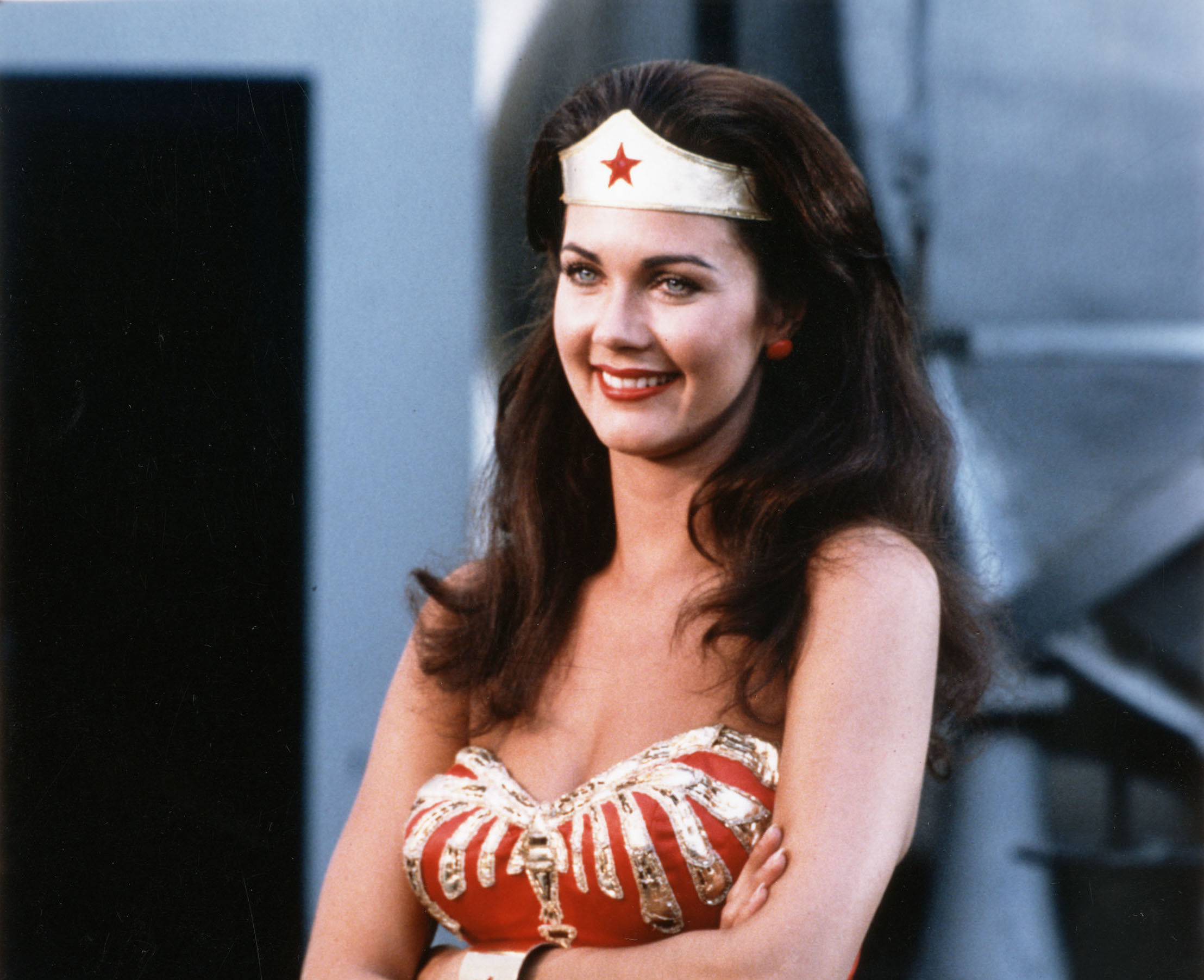

Lynda Carter as Wonder Woman, circa 1976, June 25, 2016. (http://www.moviepilot.com).

Lynda Carter as Wonder Woman, circa 1976, June 25, 2016. (http://www.moviepilot.com).

It’s been nearly four decades since my first teacher crush, maybe really, my only teacher crush. Of course there were a number of teachers I came to adore and love, but not in a child-like, puppy-love way. Ms. Griffin, Ms. Martino, Harold Meltzer, even that tough old bird in Mrs. O’Daniel (R.I.P.) were a few of my favorite teachers before college. (And as a professor, I do make the distinction between teachers and professors, since the former [mostly] work with students more closely, and at a more impressionable age.)

For me it was Mrs. Shannon and third grade at William H. Holmes Elementary, the 1977-78 school year. She was my real-life Wonder Woman, with none of the skills but all of the passion of that goofy ’70s show. Beyond that, she really set me on the path to make education my weapon, my equalizer, even though it would be years before I realized the untruth of this ideal for so many.

Third grade was my transition year from Nathan Hale to Holmes. The two elementary schools were at the opposite ends of Mount Vernon, with Nathan Hale on the predominantly Black and more impoverished South Side, and Holmes on the more middle class and Whiter North Side. Though one school veered toward Pelham and the other toward the Bronx, both were similarly composed of mostly Black and some Latino kids. Interestingly, Mostly White Traphagen ES was technically a closer walk than the seven blocks between 616 and Holmes, but the Board of Education cut off the neighborhood zone right at the northern corner of the East Lincoln-Sheridan Avenue intersection.
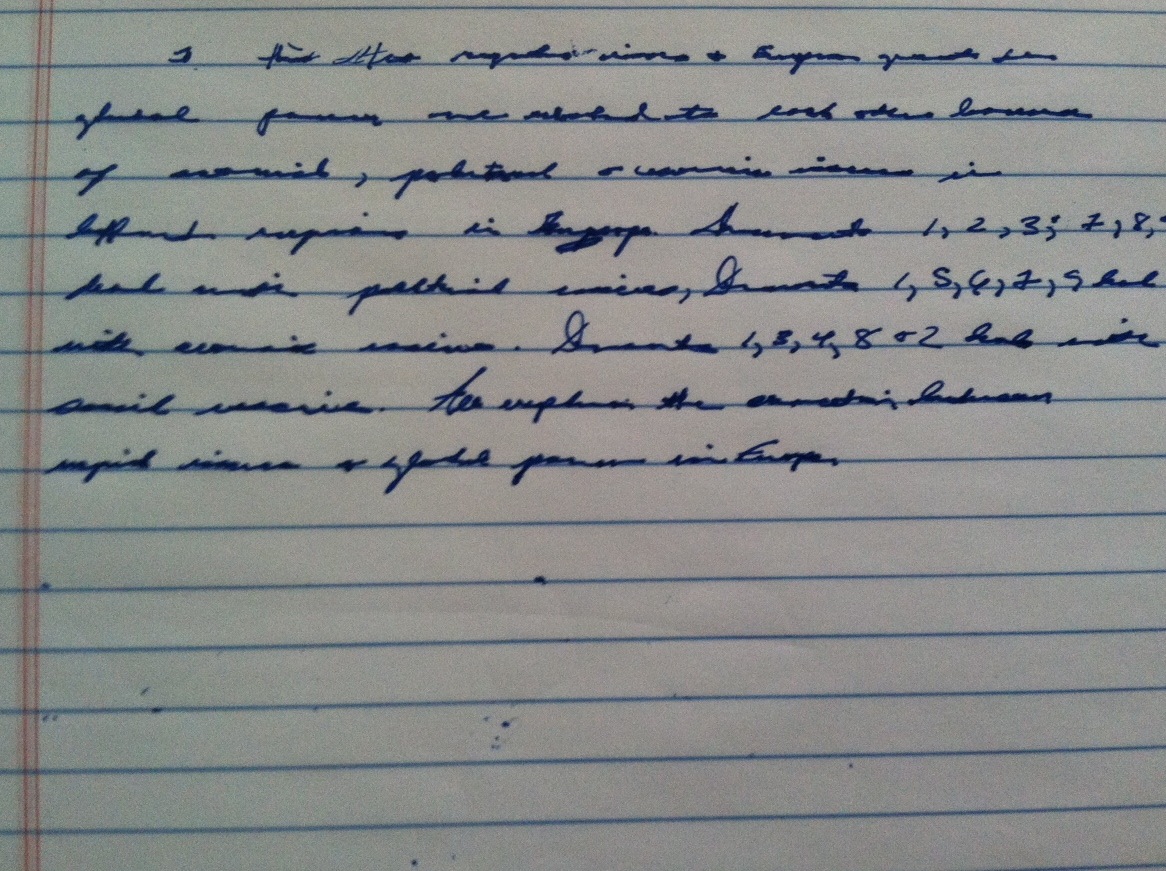
My pretend version of an introduction to a documents-based question essay for AP World History (in my best-worst handwriting), June 21, 2013. (Donald Earl Collins).

My pretend version of an introduction to a documents-based question essay for AP World History (in my best-worst handwriting), June 21, 2013. (Donald Earl Collins).

Despite this zoning, I lucked out. Mrs. Shannon was a young Black veteran teacher, probably between twenty-eight and thirty-three years old at the time. She was full of energy and ideas, and kept all of us on our toes. She even made my first grade teacher Ms. Griffin look lethargic by comparison (and Ms. Griffin was a bundle of energy herself!). She gave out tons of homework, drilled us on spelling, grammar, and all but beat my fingers with a ruler to improve my penmanship (my handwriting is still horrific).

In that year of learning about my new school, my new classmates, and my new neighborhood, I learned a lot from Mrs. Shannon. For one, I learned to read about more than Peanuts comic strips in short picture book form that year. I began to see books not as a burden, but as a window to new worlds, to worlds better than the one in which I lived. I learned, too, the power of multimedia. Mrs. Shannon used the latest in technology, the compact short film strip projector, to show us everything from current events to the rise and fall of ancient Mayan civilization. The screams that came from the tape recorder that came with the film strip made the fall of civilizations scary for me.

But really, after a year of unacknowledged abuse, Mom’s divorce from my dad, moving to 616, and a terrible teacher in Ms. Hirsch, I found myself healing a bit in Mrs. Shannon’s class. She actually hugged us, hugged me even, when it looked like we could use one. She was tough, though, too. I daydreamed so hard during one math lesson that I fell out of my desk chair. I ended up standing in the corner for fifteen minutes while balancing my textbook.

I daydreamed a lot in those days. I usually daydreamed about food, usually Hostess Suzy-Qs (back when they were made with lard) or what we’d have for dinner that evening. As the year progressed, a good portion of my daydreaming was about Mrs. Shannon. I was eight, so mostly it would have been about her face, her smile, her smell, maybe a kiss here, or a hug there. (Back then, I even loved the smell of her lunches, which mostly comprised of cans of tuna fish with the occasional crackers.) She would get frustrated with me, too, because I coasted for most of the year with B’s and C+’s. Mrs. Shannon asked me one, “What are you daydreaming about?” There was no way I could say, “Why, you of course!”

Ice Capades 1978 brochure (with Dorothy Hamill near middle right), June 22, 2016. (http://www.retrospace.org).

Ice Capades 1978 brochure (with Dorothy Hamill near middle right), June 22, 2016. (http://www.retrospace.org).

Still, without Mrs. Shannon, Mom doesn’t go out and spend $300 on the ’78 edition of the World Book Encyclopedia. It was the path that led to my cosmic leap of academic development and use of near photographic memory power. With Mrs. Shannon, I saw the world beyond Mount Vernon and 1978. I could see New York beyond subway and Metro-North rides with my drunk father. I went to the Statue of Liberty and to Madison Square Garden for Ice Capades with her. Without Mrs. Shannon, I wouldn’t have recognized that I had within me any intellectual capabilities to develop. Without Mrs. Shannon, the lessons I barely knew I learned — from Roots to multiplication tables — would have disappeared from my memories.

By the end of third grade, I didn’t want to go to fourth grade and Holmes’ second floor, where the fourth, fifth, and sixth grade classrooms were. I felt like I would never see Mrs. Shannon again. On my way out of her classroom, I gave her one last hug, while she reminded me that I could “always do better” academically. I went home that morning, went into the bedroom I shared with my older brother Darren, and walked into our small walk-in closet. Once there, I shut the door, and cried like a little baby for at least a half hour. The good news was, no one was home that Friday. I cried as if I’d never see Mrs. Shannon again, even though I knew I would. That was thirty-eight years ago this week.


My Nuanced History as a Historian

16 Monday May 2016

Posted by decollins1969 in 1, Academia, Boy @ The Window, Carnegie Mellon University, culture, Eclectic, Mount Vernon High School, Mount Vernon New York, Pittsburgh, Politics, Pop Culture, race, Youth

≈ Leave a comment

Tags

Ambivalence, AP US History, Career Decisions, Career Development, CMU, Commitment, Editors, Graduate School, Historian, History, Nonprofit World, Nuance, PhD, Self-Discovery, Self-Reflection, Teaching and Learning, UMUC, Writer, Writing


The Road Less Traveled quote, via Robert Frost (with me adding, "but it's not always good to get lost in the woods"), May 16, 2016. (http://www.chicagonow.com).

The Road Less Traveled quote, via Robert Frost (with me adding, “but it’s not always good to get lost in the woods”), May 16, 2016. (http://www.chicagonow.com).

Right now I sit between two important dates in my life. One was a few days ago, the thirtieth anniversary of my triumph on the AP US History exam in eleventh grade. Two will be in two days, the nineteenth anniversary me of graduating from Carnegie Mellon with my PhD in History. Both are signifiers of my achievements, my ambitions, and of my becoming a professional historian. But in the decade after earning my first college credits and the nearly two decades since earning my doctorate, I’ve still had a few lingering questions about where and who I am professionally.

One of those questions I’ve discussed ad nauseam here. Am I a writer who’s also an academically trained historian, or am I a historian first and a writer second? Or, can I be both at the same time? For better and worse, I am always both, but can emphasize one or the other at random, depending on context.

Sliced onion layers, May 7, 2015. (http://www.medicaldaily.com).

Sliced onion layers, May 7, 2015. (http://www.medicaldaily.com).

Other questions, though, have lingered even after spending more than a decade in the nonprofit world and another eight years teaching a full slate of undergraduate history courses. Do I still enjoy teaching history? Does my experience working on real world issues in civic education, social justice, and educational equity cloud how I see myself when I’m lecturing on the Agricultural Revolution or the Middle Passage? How is it possible for me to reconcile myself as a freelance writer who wants to take my academic historian experience, combine it with my other professional and personal experiences, and write about it for editors with little clue about the roads I’ve traveled? Is it even possible to un-layer the onion of my life and write about it to my or anyone else’s satisfaction? And if so, am I still a historian when doing so?

To that next to last question, I think that’s already a yes-no answer. Since 2013, I’ve written articles for publication with newspapers and magazines, and am working on my first new scholarly piece in six years. It’s difficult, to say the least, to explain to an editor what in academia or even among US or African American historians is a settled issue. Editors always believe that any story has two equal and opposing sides, because that’s how most ordinary people see most stories. As an academic historian, I’m trained to see nuance, to know when one side has a stockpile of evidence, while another one has a stockpile of bullshit.

Or, more often, to know that the no man’s land of gray present several or even multiple perspectives on issues like racism, poverty, college retention and graduation, American individualism, or the rigging of the federal election process. That no man’s land, I have found, more often than not scares away an editor, even ones working for intellectual magazines. They think their audience is incapable of getting nuance, when I think that they often reflect their own narrow and elitist view of the world.

Timeline of Europe and the US, March 2015. (http://www.worldhistorycharts.com).

Timeline of Europe and the US, March 2015. (http://www.worldhistorycharts.com).

As for teaching history, I find myself literally bored with the basic facts of any survey or even upper-level history course. To me, history is a panoramic lens through which students and experts can study human beliefs and behaviors in all its glory, ugliness, and ordinary-ness. Understanding how and why a person or a group of people did x, y, or z is much, much, much more important than knowing the exact date a specific event took place or coming up with some interesting but irrelevant fact in the process.

Which was why I began to teach my undergraduate courses with far more discussion and less lecturing than I did when I taught history as a grad student. (I taught a bunch of graduate-level education foundations courses in between my various nonprofit stints between 1997 and 2008.) I decided it didn’t matter if my students had done the readings, hated history, or were tired and ready to nap through three hours of lecture. I will facilitate discussion. I will make sure to make this process one about human interaction. Even when the lack of independent thinking among my students has me near ready to strangle a few of them. Why? Because understanding how people think and why they draw the conclusions they do can be as eye-opening as the knowledge they pull from one of my classes, maybe more so.

So, do I still see myself as a historian, or more as a psychologist or sociologist? Does it really matter how I see myself? Probably not. I just know that after years of teaching, writing, and all of my ups and downs professionally, that I remain two things most of all — a writer and a learner. Those two callings fuel my ability to raise my game, to want to be a better professor, a more expert historian, and an insightful writer. That, I hope, won’t change as I continue my long march toward fifty.

Montgomery County Public Schools’ World Studies Mythology

29 Tuesday Sep 2015

Posted by decollins1969 in 1, Academia, culture, Eclectic, Politics, Pop Culture, race, Religion, Youth

≈ Leave a comment

Tags

Comfort Food, Common Core, Common Core State Standards, Crock, Curriculum 2.0, Curriculum Development, Eurocentric Perspective, Eurocentrism, Falsehoods, Latin America, Maryland, MCPS, Middle Ages, Middle School, Montgomery County Public Schools, Multicultural Education, Multiculturalism, Mythology, Teaching and Learning, Technocrats, Western Civilization, Western Dominance, World History, World Studies


Satirical cartoon of Rudyard Kipling's The White (?) Man's Burden ("white" colonial powers being carried as the burden of their "colored" subjects), Life Magazine, March 16, 1899. (Travb via Wikipedia). In public domain.

Satirical cartoon of Rudyard Kipling’s The White (?) Man’s Burden (“white” colonial powers being carried as the burden of their “colored” subjects), Life Magazine, March 16, 1899. (Travb via Wikipedia). In public domain.

My son is taking Advanced World Studies in seventh grade this year. As a historian — and one that’s taught World History fifteen times over the years — I thought it was a good thing that he would have exposure to world history and cultures before engaging in US history in eighth grade and in high school. Once again, the technocrats in K-12 education have proven me dead wrong. While there may be some exposure to the rest of the world, the frame for the curriculum is one that not-so-subtly implies that world studies, advanced or otherwise, cannot exist without a European or Western frame to tell students how to think about the non-Western part of the globe.

I noticed it the first week, but didn’t pay much attention to the brief synopsis (what teachers call their “syllabus”) of the course until Back to School Night last week. The four units for my son’s course are

  • Unit One: The Foundation of Modern Political Systems: Europe in the Middle Ages
  • Unit Two: The Influence of Culture in Africa: The Middle Ages and Today
  • Unit Three: Geography Shapes Latin America
  • Unit Four: The Impact of Economics: One World Past and Present

When I finally read through it, I was incensed. It sunk in with my experiences with AP World History and with World History at the college level why so many of my own students were almost completely ignorant of world history that wasn’t about ancient Greece, the Roman Empire, or Western Europe. School districts, even ones as above par as MCPS, have helped lull students into a false sense of security through the exchange of knowledge as comfort food, rather than a higher protein diet of actual history.Screen Shot 2015-09-29 at 7.12.09 AM

Unit One is fine, for the most part, although the idea of a nation-state or some sort of constitutional democracy doesn’t entirely come from Europe. But it’s downhill from there. Culture, Africa and the Middle Ages for Africa? Really? The Middle Ages is a specifically Western and Central European experience, as no civilization from the classical world experienced a greater decline or collapse than Rome in the fifth century CE. To just take that term and paste it unto another continent, another group of people, and their different history is just plain wrong. How about Culture and Africa, 1000-1500 CE? You don’t need the frame of Europe’s Middle Ages to discuss Africa, unless your point is to embed some sense of Western dominance as a subliminal theme within the curriculum.

Or unless the curriculum developers in Rockville were thinking about making the Age of European Discovery and the Transatlantic Slave Trade Africa’s “Middle Ages.” The period between 1450 and 1800, in which the Portuguese, the Dutch, the Spanish, the English, and the French helped stoke the fires of intertribal and cross-kingdom warfare to obtain millions of slaves for their colonies in the Western Hemisphere. That’s probably too much for the advanced twelve-year-old, though, no?

Storming of the Teocalli by Hernán Cortez and His Troops (1848), painting by Emanuel Leutze, January 11, 2012. (Penelope37 via Wikipedia). In public domain.

Storming of the Teocalli by Hernán Cortez and His Troops (1848), painting by Emanuel Leutze, January 11, 2012. (Penelope37 via Wikipedia). In public domain.

Unit Three and the term “Latin America?” Seriously? It covers the Maya, the Mexica (or rather, Aztecs), and the Inca, all prior to European contact in the sixteenth century. So technically, there’s no Latin in the Americas before 1500. MCPS, ever heard of the Americas, the Western Hemisphere, Mesoamerica, and Andean civilizations, all terms that are more accurate alternatives to Latin America in the time before Columbus and conquistadors? Unless, again, the point of curriculum designers here was to bake into the recipe for this course a sense of inevitability. That is, that the pre-Columbian cultures of the Western Hemisphere, no matter how sophisticated, were doomed to fall by the wayside in the wake of Western dominance over the globe.

Unit Four and “One World Past and Present” in the context of trade, economic systems, and communication bring the themes of European dominance together in the period since 1450. The MCPS curriculum designers do hint that “the cultural diffusion between many ‘worlds’ had both positive and negative consequences.” But for the most part, the technocrats provide a sense of progress to market-based economies and positive globalization in this unit, as Europeans led the charge to make the world one and whole.

Stainless steel Crock-Pot, September 29, 2015. (http://amazon.com).

Stainless steel Crock-Pot, September 29, 2015. (http://amazon.com).

This is a crock of a curriculum, MCPS, a shameful attempt at world studies. The course might as well be called, Advanced and Expanded Western Civilization, How Europeans Went From the Middle Ages to Dominating the World. The point of any world history or world studies course is supposed to be the study of specific bits of history of the world, without imposing a Western model, frame, or sense of progress and comparison on the rest of the world in the process. Otherwise, what’s the point? You might as well teach Western Civ in middle school, then, and save world history to teachers and curriculum designers who understand that the world is a bigger place than Western-culture-navel-gazing.

Though the pressures of Common Core may have birthed this new curriculum as part of MCPS’s Curriculum 2.0 efforts, it’s not specifically a Common Core-inspired curriculum. One of the problems with Common Core State Standards and PARCC assessments is that they mask the problems that existed in America’s K-12 education long before. One of which is fake efforts at diversity and a multicultural curriculum, of which MCPS’s World Studies is but one example. It may well be true that virtually all world history curriculum is bs, however. But that is an article for another day.

Aside

Thank You, Ms. Griffin

22 Tuesday Sep 2015

Posted by decollins1969 in 1, Boy @ The Window, culture, Eclectic, Jimme, Marriage, Mount Vernon New York, My Father, Pop Culture, race, Youth

≈ Leave a comment

Tags

#BlackWomenAreMagic, 616 East Lincoln Avenue, Angels, Dedication, Demons, Heroes, Hugs, Mom, Ms. Griffin, Nathan Hale Elementary, Nurturer, Parent-Teacher Conference, Teacher-Student Relationship, Teaching and Learning


My report card from 1st grade, Nathan Hale ES, 1975-76, and close-up of Ms. Griffin's signature, September 22, 2015. (Donald Earl Collins).

My report card from 1st grade, Nathan Hale ES, 1975-76, and close-up of Ms. Griffin’s signature, September 22, 2015. (Donald Earl Collins).

I have spent a ton of space in the blogosphere thanking teachers like Harold Meltzer for making me the thinker and writer I am today, flaws and all. Meltzer, though, was not the first teacher who ever took a deep interest in me. My elementary school teachers deserve just as much credit, if not more. For if it weren’t for the likes of Ms. Griffin at Nathan Hale ES, and Mrs. Shannon, Mrs. O’Daniel, and Mrs. Bryant at William H. Holmes ES — Black teachers all — I would’ve never made it to have Meltzer as my eleventh grade AP US History teacher in the first place.

But it all really started with Ms. Griffin. My passion for being right. My adrenaline rush with As, and eschewing of Bs and B+s. My wanting to learn more about what I getting wrong and then fixing those things. That all began for me in first grade, in September ’75.

Cecil Parker Elementary School (formerly Nathan Hale ES), Mount Vernon, NY, November 23, 2006. (Donald Earl Collins).

Cecil Parker Elementary School (formerly Nathan Hale ES), Mount Vernon, NY, November 23, 2006. (Donald Earl Collins).

At this middle-age stage of life, I don’t exactly remember every detail about Ms. Griffin, our classroom, or most of my classmates. I was five-going-on-six. Still, there were more than a few things that stood out. Ms. Griffin seemed like a tall woman to me, I mean, nearly as tall as my six-foot Mom, with similar skin tone and other features. That’s where the similarities ended. Ms. Griffin was always nice to me, very patient. Even when one of us got rowdy, she didn’t scream or holler or demean to get us to settle down. Everything with her was a teaching lesson, so even when one of us would act up, it was a teaching and learning moment.

Ms. Griffin decorated her first-floor classroom to communicate the world to us, not just to make the room pretty for a bunch of first-graders. I remember pictures of MLK and maybe Harriet Tubman on the wall. Along with standard colored digits, basic addition and subtraction problems, and lots of words to spell, read, and write neatly. From day one, Ms. Griffin was always on me for my bad penmanship (if only she had seen my father’s chicken scratch!).

I remember Ms. Griffin mostly for two things. One, she was always available for me emotionally. Once, the class had a birthday party for one of the students, which included a Pin-The-Tail-On-The-Donkey game. Ms. Griffin dutifully blindfolded me, had a couple of my classmates spin me around, and I missed pinning the tail on the donkey’s butt by a full meter. The kids all laughed. I didn’t. I got mad, balled up my fists, walked over to Ms. Griffin, and made a small kicking gesture, where I nicked her on the side of her left calf. Her response was to tug me by my right arm, tell me she understood why I was upset, but also explain with both kindness and sternness how my reaction was unacceptable. I would have to stand in the corner for five minutes after school before going home. And at the end of that day, she still gave me a hug.

Snoopy hugging Woodstock, 2011 downloaded September 22, 2015. (http://pinterest.com; © Peanuts Worldwide).

Snoopy hugging Woodstock, 2011 downloaded September 22, 2015. (http://pinterest.com; © Peanuts Worldwide).

Two, Ms. Griffin was available in ways that most teachers who would make themselves this available now would likely burnout in four or five years. I had zero chance of getting away with anything in her classroom, including kissing my girlfriend Diana in the middle of a lesson a few times. She would actually call my Mom to tell her about it! One time my father found out about me being upset about a B+ on a spelling test because Ms. Griffin bumped into him at a bar one weekend! Ms. Griffin had at least one parent-teacher conference with my parents every single marking period. It wasn’t that she just took an unusual interest in me. Ms. Griffin was interested in all of us, in wanting all of us to be prepared for the next step.

Sadly, I didn’t see much of Ms. Griffin after first grade, and completely lost touch with her once Mom and my father broke up and we moved to 616 East Lincoln. I had my own demons to deal with, so much so that only in the past year have I found them all. Ms. Griffin, thankfully, was an angel of a teacher in the midst of two big waves of hurt growing up. I’m almost certain that without her, I wouldn’t have made it through educationally or psychologically to the preteen years at all.

MVHS and Memorial Day Weekend Decisions

25 Monday May 2015

Posted by decollins1969 in 1, Boy @ The Window, culture, Eclectic, eclectic music, Jimme, Mount Vernon High School, Mount Vernon New York, music, My Father, Pop Culture, race, Youth

≈ Leave a comment

Tags

"Voices Carry" (1985), 616, 616 East Lincoln Avenue, Angst, Barron's Regents Exam Test Prep Books, Carol Buckley, Chemistry, DiFeo, Disillusionment, Humanities, Joey Chestnut, Keyboarding, Martino, Mary Zini, Meltzer, MVHS, New York State Regents Exams, Paul Lewis, Self-, Takeru Kobayashi, Teaching and Learning, Teenage Angst, Til Tuesday, Trigonometry, Viggiano


Laurence Fishburne yelling "Wake up!" at end of movie School Daze (1988), December 9, 2009. (screenshot via Tumblr.com). Qualifies as fair use due to low resolution and clarity of picture.

Laurence Fishburne yelling “Wake up!” at end of movie School Daze (1988), December 9, 2009. (screenshot via Tumblr.com). Qualifies as fair use due to low resolution of picture.

Thirty years ago this weekend, I made a couple of decisions that I would take with me for the rest of my days of formal schooling, and still keep in mind for myself when I’m in the classroom as a professor. The decisions I made about my teachers came out of a sense of both malaise and desperation. You see, I was near the end of tenth grade in May ’85, and had figured out months earlier that I had hit the mediocre-and-apathetic-teacher-lottery at Mount Vernon High School that year.

That my Humanities teachers were underwhelming shouldn’t have been a surprise, really. Yet it was. I’ve written here and in Boy @ The Window already about two teachers — Zini for history and Lewis for Chemistry — who either “got on my last nerves” or as an “unimaginative instructor” who lived in “a chain-smoking world.” But I also had an Italian teacher who lost his job in April because of the distractions of owning a car dealership, a Trig teacher who could screw up an equation for me faster than I could quip, “Yeah, right!,” and an English teacher in Carol Buckley who spent most our eighth periods together lying on a couch and asking us to water her plants! The best teacher I had that year was my keyboarding instructor, who spent most of the year congratulating the women in the class who came in typing sixty or ninety-five words per minute.

It wasn’t all their fault. I was fifteen as well, more than a bit rebellious, as nearly every adult authority figure in my life had either abused or neglected me in some way. Yeah, maybe I did take my teenage angst, my lack of belonging, and my troubles at 616 with my Mom, my idiot ex-stepfather and my father Jimme out on them from time to time. I’m sure that’s true. It’s also true that I distracted myself with Humanities and school. I used that forty-two weeks out of each year to throw down academically, to work, to grind, to use my Jedi-mind tricks to take music and movies, arts and sports to absorb knowledge like Takeru Kobayashi and ‎Joey Chestnut at a hot dog eating competition. Those teachers, with their lack of nuance, or in some cases, actual lack of knowledge (and in at least one case, lack of teaching acumen), ruined my standard operating mode.

Takeru Kobayashi and Joey Chestnut battle it out at the 2007 Nathan's Famous Fourth of July Hot Dog Eating Contest, Coney Island, Brooklyn, NY, July 4, 2007. (Seth Wenig/AP; http://philly.com).

Takeru Kobayashi and Joey Chestnut battle it out at the 2007 Nathan’s Famous Fourth of July Hot Dog Eating Contest, Coney Island, Brooklyn, NY, July 4, 2007. (Seth Wenig/AP; http://philly.com).

My Memorial Day Weekend ’85 decisions actually began in February. I decided after another week of watching Viggiano mess up another sine, cosine and tangent lecture that I needed to learn how to do Trig properly, which meant on my own. I went to Mount Vernon Public Library, checked out the best Trig textbook I could find, and began working on angles and equations whenever I could squeeze in a spare moment. I bought the Barron’s Trig Regents Exam test preparation book at the end of February, and started working on practice exams in April.

It wasn’t until the week going into Memorial Day Weekend, though, that I had an epiphany about my tenth-grade teachers. Lewis made it so with yet another stream of nonsense.

Lewis went as far as to say, “There’s nothing to worry about” on the subject of organic chemistry. “There will be hardly any organic chemistry on the exam, anyway,” he said. After eight months of listening to his blathering, I thought “That’s it! Whatever he says to do, I’m doing the opposite!” The next time I got money from Jimme, I went out and bought the Barron’s Chemistry Regents exam prep book. It was just before Memorial Day, and I had a month before the exam.

That wasn’t all I decided and did. I really did think that my teachers were incompetent, lazy and arrogant. I simply could no longer trust them, even as I was desperate to trust someone at fifteen. I decided that ultimately, I was my own best teacher and own best barometer of what I needed to learn and why I needed to learn it. I decided that teachers had to earn my trust as a student, that I was no longer going to automatically entrust them with my educational enrichment, no questions asked. I decided that if I really was going to be going to college in a couple of years, that I had to keep my eyes open for individuals I could trust, because by the end of tenth grade, I didn’t trust Humanities as a program and MVHS as a school.

Those decisions turned out to be good ones, even though it also meant few new friends and only a couple of mentors after tenth grade. Luckily there was Meltzer, luckily there was Martino, and luckily, I was only two years from graduating.

The Long Road Home

19 Tuesday May 2015

Posted by decollins1969 in 1, Academia, Boy @ The Window, Carnegie Mellon University, culture, Eclectic, Jimme, Pittsburgh, Politics, Pop Culture, race, Work, Youth

≈ Leave a comment

Tags

"Thriving as a Freelance Academic", Academia, Academic Writing, Bruce Anthony Jones, Career, Career Decisions, Career Development, Career Options, CMU, Disillusionment, Joe William Trotter Jr., Katie Rose Guest Pryal, Peter Stearns, Politics of Academia, Politics of the Foundation World, Self-Awareness, Self-Determination, Self-Discovery, Social Justice, Teaching and Learning, The Chronicle of Higher Education, Troublemaker, Writing


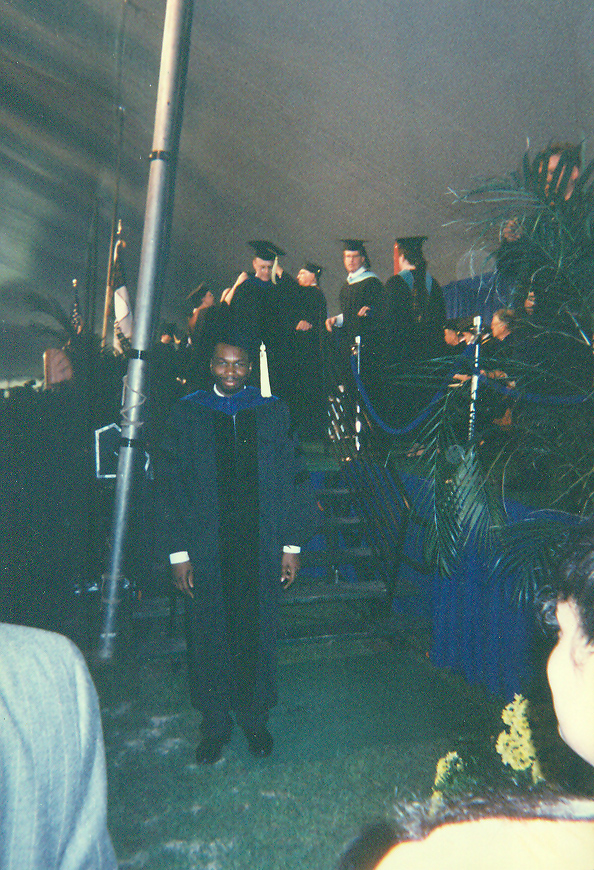
My stressed-out PhD walk photo, Carnegie Mellon University, May 18, 1997. (Angelia N. Levy).

My stressed-out PhD walk photo, Carnegie Mellon University, May 18, 1997. (Angelia N. Levy).

It’s been eighteen years and nearly a day since I had to shake then Carnegie Mellon Dean Peter Stearns’ hand on stage as part of the PhD portion of the 100th commencement ceremony for graduates, that third sweltering Sunday in May ’97. I’ve talked about the ceremony, my Mom’s jealousy and issues about my degree, Peter Stearns, Joe Trotter, Bruce Anthony Jones, and what happened before and after the degree ceremonies on that fateful day.

But time and enlightenment — especially the latter — has allowed me to take a step back from the events leading to a new wave of disillusionment in my life. If I really think about it, my struggles with where I wanted to go with my career go as far back as ’81, in the months after my first accolades as a writer, to the time when at eleven, I already had an encyclopedic knowledge of history, basic science, and technology. Heck, I already knew some of the historiography around World War II, the Cold War, American slavery and civil rights, long before I ever knew the definition for historiography. Not to mention, I was already living what we now call migration studies, thanks to my Mom and dad.

But my Boy @ The Window years did their damage to me. By the time I turned twenty at the end of the ’80s, I wasn’t fully clear of the array of choices I had for a career or set of careers. I knew I could write, and often write well. Yet I had stopped seeing myself as a writer by the time I went through my summer of abuse in ’82. I knew that I was a historian, because I asked the kinds of questions about history that only trained historians would. Yet I hated the idea that I was supposed to write only one way, using words like synergistic and interstitial (at an esoteric minimum) along the way. I toyed with the idea of going to law school in ’90, even going so far as to take the LSAT, scoring a then-50th percentile 31 on the exam in my one-and-only try.

Arthur Wesley Dow (1857-1922), The Long Road--Argilla Road, Ipswich, circa 1898, April 28, 2010. (BrooklynMuseumBot via Wikipedia). In public domain.

Arthur Wesley Dow (1857-1922), The Long Road–Argilla Road, Ipswich, circa 1898, April 28, 2010. (BrooklynMuseumBot via Wikipedia). In public domain.

I struggled for years with my fundamental question: “Am I an academic historian who’s also a writer? Am I a writer who’s also a historian? Can I be both?” I realized about a decade ago the question was moot. I am both. The real question really has been, will the working world allow me to operate as both without giving me grief and a hard way to go? (By the way, if I ever were to do a second, post-Boy @ The Window memoir, this would be one of that book’s big themes.)

I can safely say as a mildly successful freelance writer that the answer for many in this world of singularities is no. The working world puts up a fight, has and will continue to try to force me and others with multiple talents to choose one path, to do one thing, and one thing only, ideally for all time.

Academicians only think about each other via teaching duties or well-placed articles and books in scholarly journals and scholarly publishing houses. Higher education administrators believe that the only way to understand their work is through the lens of their specific university, as if universities and colleges aren’t similar from a management standpoint. Nonprofit organizations

A male mallard duck, a bird's triple threat (can walk, swim under water and fly), Saint-Eustache, Quebec, Canada, November 19, 2007. (Acarpentier via Wikipedia). Released to public domain via CC-SA-3.0.

A male mallard duck, a bird’s triple threat (can walk, swim under water and fly), Saint-Eustache, Quebec, Canada, November 19, 2007. (Acarpentier via Wikipedia). Released to public domain via CC-SA-3.0.

discount teaching and higher education administrator positions because finding money or managing students isn’t exactly the same as managing staff. Foundations who use your salary history instead of your scope of programs developed, people reached, and money raised as a barometer for even granting you an interview. All would prefer that you be quiet about injustices, especially ones in which their institution, organization, or foundation might well be complicit.

For me in the past couple of decades, though, I’ve worked in and with academicians, higher education administrators, nonprofit organizations, and private foundations. I’ve helped raise $3 million over the years, managed as many as twenty-five staff members, organized four-day conferences with a couple hundred attendees, worked with as many as 500 students at any given time, and taught undergraduate and graduate courses. I’ve written scholarly articles, published in scholarly journals, presented at a couple dozen conferences, and consulted for nonprofit organizations and foundations. To think of myself as only one thing is beyond ridiculous given my by-necessity-and-neglect careers so far.

Yesterday, The Chronicle of Higher Education posted the article “Thriving as a Freelance Academic” by Katie Rose Guest Pryal. In it, Pryal interviewed three White women about their experiences freelancing in the academic world. The women interviewed found a singular niche, found steady work through that niche, and otherwise didn’t question the idea of freelancing in a world in which freelancing is a rare career choice.

A square peg hammered into a round hole, May 2014. (http://joshbrahm.com/).

A square peg hammered into a round hole, May 2014. (http://joshbrahm.com/).

All that is fine. Except there was little soul-searching in Pryal’s piece. The women interviewed might as well have decided to go on a global trek or rock climbing, given their lack of ambivalence about academia or deliberate lack of specifics and dryness about the work they actually do. I don’t doubt that one can freelance in academia. I doubt, though, that one can do it without personal relationships with a specific university or alma mater, or with a specific higher education administrator or prominent professor. Why pick on this piece? Because there are far more people like me in and out of academia, who’ve consulted and freelanced and worked and stitched together a career, then there are the people represented in Pryal’s boutique article.

There is a lesson here besides the reality that life is a journey, and to get it right, we need to understand that it can and will be a roller-coaster-ride of a journey. The lesson, for me at least, is that while being true to myself has sometimes had consequences in terms of immediate victories and easy financial gains, it does mean I get to have success, and sometimes, even lasting success.

Middle School Teachers, Middle School Memories

14 Thursday May 2015

Posted by decollins1969 in 1, Academia, Boy @ The Window, culture, Eclectic, eclectic music, Mount Vernon New York, music, Pittsburgh, Politics, Pop Culture, race, Work, Youth

≈ 1 Comment

Tags

A.B. Davis Middle School, Algebra, Bad Teaching Habits, Duquesne University College of Education, Good Teaching Habits, Humanities, Humanities Program, Life Lessons, MCPS, Middle Schools, Montgomery County MD, Montgomery County Public Schools, Mrs. Mignone, Ms. Jeanne Longerano, Research, Science, Silver Spring Maryland, Sligo Middle School, Teacher Expectations, Teaching and Learning


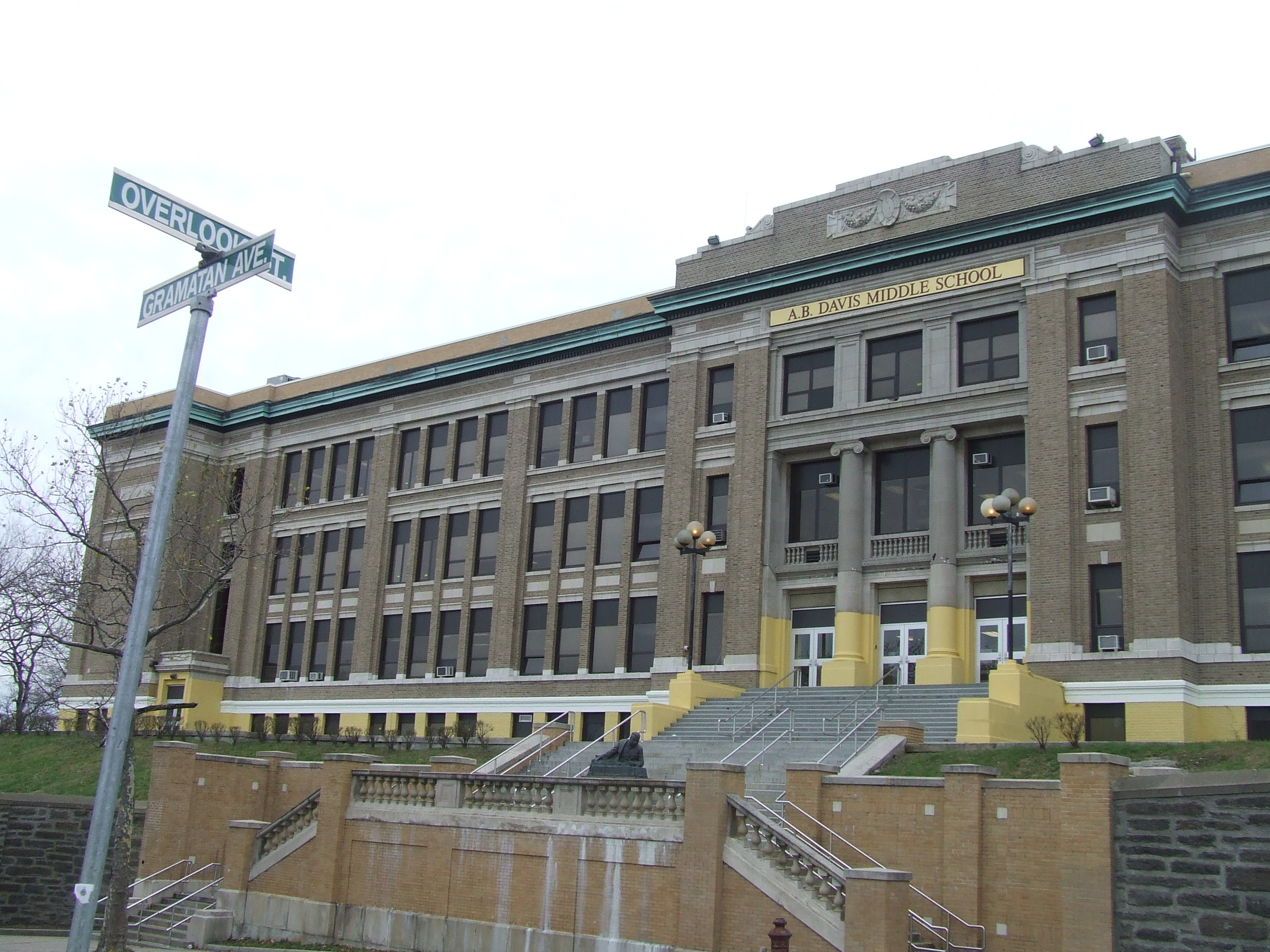
A.B. Davis Middle School, Mount Vernon, NY, November 21, 2006. (Donald Earl Collins). Built in 19226, it used to be Mount Vernon High School before Black migration, the Brown decision and ending some discriminatory ability grouping practices forced the school board to build a new high school after 1954.

A.B. Davis Middle School, Mount Vernon, NY, November 21, 2006. (Donald Earl Collins). Built in 1926, it used to be Mount Vernon High School before Black migration, the Brown decision and ending some discriminatory ability grouping practices forced the school board to build a new high school after 1954.

There’s a reason why much of the recent research on middle schools has called for the elimination of middle schools long-term, that instead, K-5 or K-6 ought to become K-8. It’s a transitional period for kids, one that even with the best of parents, most preteens face mostly unprepared. It’s based on a system that educators and policy makers designed a century ago, when the average student completed their formal education in seventh or eighth grade (only one in five students living in the early twentieth century went on to high school).

The teachers traditionally prepared by schools of education really aren’t prepared specifically for sixth, seventh or eighth grade, but for secondary education. Meaning, teachers either have higher social and emotional expectations of 10-to-14-year-olds than they have prepared for, or they have higher academic expectation of their students than the students have been prepared for, or both. These are among the reasons why middle schools can easily become a black hole for students too young to be dealing with teachers trained really for high school, and a black hole for teachers who simply aren’t as prepared for tweeners and thirteen-year-olds as they like to pretend.

Sligo Middle School, Silver Spring, MD, August 2014. (http://montgomeryschoolsmd.org/).

Sligo Middle School, Silver Spring, MD, August 2014. (http://montgomeryschoolsmd.org/).

Despite the advances in teacher preparation in the past couple of decades, this reality still exists at most middle schools, including my son’s Sligo Middle School in Silver Spring. Common Core, PAARC assessments, a wide variety of fatty lunch options, all make students feel that education matters and yet it really doesn’t. My son has already had a couple of teachers whose first and second instinct for controlling their classrooms has been to yell early and often, to the point where I’m convinced that at least one of his teachers this year had Tourette’s (at least, until we had the school move him out of that class). At least two others could be accused of unconsciously labeling their students, as their expectations of their students have gone unmet.

Through meeting these teachers, I’ve re-recognized something that used to be wrong in my own teaching, back when I first started teaching in Duquesne University’s College of Education in the late-1990s. To have high expectations and standards of conduct isn’t enough. Teachers need to communicate it, through examples, through their lessons, through a rubric, quite frankly, and not just a laundry list of expectation. Simply put, given the age of the students, teachers need to positively and consistently encourage students to meet those expectations, and lay out why these expectations will help them, academically and practically.

I had precisely two teachers at A.B. Davis Middle School in Mount Vernon, New York in the early 1980s who did exactly that. My eighth-grade science teacher, Mrs. Mignone, and my first-year, eighth-grade Algebra teacher, Ms. Jeanne Longerano were the best two teachers I had in two years of middle school Humanities-style. Both were committed to the idea that every student in the classroom deserved their undivided attention, which meant that we as students — even us fidgety ones — had to give our maximum preteen attention to what was happening in the classroom as well. Both had high expectations of us, academically and otherwise. I don’t think I got away with much of anything in their classrooms that 1982-83 school year, not even as much as scratching my pubescent balls because the hair was coming in that year.

I learned a life lesson about internalized racism and having high standards for human decency from Mrs. Mignone at the end of eighth grade. Not to mention, the applications of math to science, and science to history, which I carry with me to this day. From Ms. Longerano, I renewed my love for math, began my technical understanding of computer science (we had a computer science club that she started that year), and had a neighbor that I talked to from time to time. Ms. Longerano had given us such a strong foundation in Algebra that it wasn’t until AP Calculus in twelfth grade when I ran into any serious math troubles again.

In all, though, I had twelve different teachers in two years of middle school. I had an art teacher who was also the Humanities coordinator for A.B. Davis in Doris Mann who graded us on the quality of our art, “not just for trying,” to use her words. I had a seventh-grade science teacher whom I’d based some of the nutty stories I told my son over the years, about him eating raw clams in class or coming in after being sprayed by a skunk that same morning. I had a music teacher in Mrs. Mallory for two years who was flat-out goofy to the point of seriously immature, only to find out years later that she had done her same song-and-dance when she taught second-graders. I had a seventh-grade social studies teacher in Mr. Court who was the teacher who probably made his class the most fun, but not necessarily the most educational.

In contrast, Ms. Simmons (seventh-grade math), Ms. Fleming (Italian), and Dr. Demon Travel (eighth-grade social studies), were teachers who cared more about discipline and/or quick-and-dirty rote memorization than anything else. Simmons actually intimidated me, until one day near the end of the school year, I stood next to her. Only to find that I’d grown two inches, to five-foot-four, and that I was now at least an inch taller than her curly mini-fro. Mrs. Sesay, my homeroom and seventh-grade English teacher, was the opposite, a teacher who had little control over her classroom. Almost every incident of taunting and humiliation I experienced in seventh grade had its origins in 7S homeroom or English first period.

Still, I survived, mostly because of a crush in seventh grade, more maturity in eighth, and two really wonderful teachers in that latter year. I don’t want my son, though, to look back at his middle school years and go “Meh.” Unfortunately, he can already do that for sixth grade. Seventh and eighth will have to be better, even if it means I have to home-school him.

← Older posts
Newer posts →

Boy @ The Window: A Memoir

Boy @ The Window: A Memoir

Places to Buy/Download Boy @ The Window

There's a few ways in which you can read excerpts of, borrow and/or purchase and download Boy @ The Window. There's the trade paperback edition of Boy @ The Window, available for purchase via Amazon.com at http://www.amazon.com/Boy-Window-Donald-Earl-Collins/dp/0989256138/

There's also a Kindle edition on Amazon.com. The enhanced edition can be read only with Kindle Fire, an iPad or a full-color tablet. The links to the enhanced edition through Apple's iBookstore and the Barnes & Noble NOOK edition are below. The link to the Amazon Kindle version is also immediately below:

scr2555-proj697-a-kindle-logo-rgb-lg

Boy @ The Window on Amazon.com: http://www.amazon.com/Boy-The-Window-Memoir-ebook/dp/B00CD95FBU/

iBookstore-logo-300x100

Boy @ The Window on Apple's iBookstore: https://itunes.apple.com/us/book/boy-the-window/id643768275?ls=1

Barnes & Noble (bn.com) logo, June 26, 2013. (http://www.logotypes101.com).

Boy @ The Window on Barnes & Noble: http://www.barnesandnoble.com/w/boy-the-window-donald-earl-collins/1115182183?ean=2940016741567

You can also add, read and review Boy @ The Window on Goodreads.com. Just click on the button below:

Boy @ The Window

Twitter Updates

Tweets by decollins1969
  • RSS - Posts
  • RSS - Comments

Archives

  • June 2025
  • April 2023
  • September 2022
  • August 2022
  • July 2022
  • June 2022
  • May 2022
  • April 2022
  • March 2022
  • January 2022
  • December 2021
  • November 2021
  • October 2021
  • September 2021
  • August 2021
  • July 2021
  • June 2021
  • April 2021
  • March 2021
  • February 2021
  • January 2021
  • December 2020
  • November 2020
  • October 2020
  • September 2020
  • August 2020
  • July 2020
  • May 2020
  • April 2020
  • March 2020
  • January 2020
  • December 2019
  • November 2019
  • August 2019
  • July 2019
  • June 2019
  • May 2019
  • April 2019
  • March 2019
  • February 2019
  • January 2019
  • December 2018
  • November 2018
  • October 2018
  • September 2018
  • August 2018
  • July 2018
  • June 2018
  • May 2018
  • March 2018
  • February 2018
  • January 2018
  • December 2017
  • November 2017
  • October 2017
  • September 2017
  • August 2017
  • July 2017
  • June 2017
  • May 2017
  • April 2017
  • March 2017
  • February 2017
  • January 2017
  • December 2016
  • November 2016
  • October 2016
  • September 2016
  • August 2016
  • July 2016
  • June 2016
  • May 2016
  • April 2016
  • March 2016
  • February 2016
  • January 2016
  • December 2015
  • November 2015
  • October 2015
  • September 2015
  • August 2015
  • July 2015
  • June 2015
  • May 2015
  • April 2015
  • March 2015
  • February 2015
  • January 2015
  • December 2014
  • November 2014
  • October 2014
  • September 2014
  • August 2014
  • July 2014
  • June 2014
  • May 2014
  • April 2014
  • March 2014
  • February 2014
  • January 2014
  • December 2013
  • November 2013
  • October 2013
  • September 2013
  • August 2013
  • July 2013
  • June 2013
  • May 2013
  • April 2013
  • March 2013
  • February 2013
  • January 2013
  • December 2012
  • November 2012
  • October 2012
  • September 2012
  • August 2012
  • July 2012
  • June 2012
  • May 2012
  • April 2012
  • March 2012
  • February 2012
  • January 2012
  • December 2011
  • November 2011
  • October 2011
  • September 2011
  • August 2011
  • July 2011
  • June 2011
  • May 2011
  • April 2011
  • March 2011
  • February 2011
  • January 2011
  • December 2010
  • November 2010
  • October 2010
  • September 2010
  • August 2010
  • July 2010
  • June 2010
  • May 2010
  • April 2010
  • March 2010
  • February 2010
  • January 2010
  • December 2009
  • November 2009
  • October 2009
  • September 2009
  • August 2009
  • July 2009
  • June 2009
  • May 2009
  • April 2009
  • March 2009
  • February 2009
  • January 2009
  • December 2008
  • November 2008
  • October 2008
  • September 2008
  • August 2008
  • July 2008
  • June 2008
  • May 2008
  • April 2008
  • March 2008
  • February 2008
  • January 2008
  • December 2007
  • November 2007
  • October 2007
  • September 2007
  • August 2007
  • July 2007
  • June 2007

Recent Comments

MaryPena's avatarMaryPena on My Day of Atonement/Bitter Hat…
decollins1969's avatardecollins1969 on No Good Teaching Deed Goes…
Mary Rose O’Connell's avatarMary Rose O’Connell on No Good Teaching Deed Goes…

NetworkedBlogs on Facebook

NetworkedBlogs
Blog:
Notes From a Boy @ The Window
Topics:
My Life, Culture & Education, Politics & Goofyness
 
Follow my blog

616 616 East Lincoln Avenue A.B. Davis Middle School Abuse Academia Academy for Educational Development AED Afrocentricity American Narcissism Authenticity Bigotry Blackness Boy @ The Window Carnegie Mellon University Child Abuse Class of 1987 CMU Coping Strategies Crush #1 Crush #2 Death Disillusionment Diversity Domestic Violence Economic Inequality Education Family Friendship Friendships Graduate School Hebrew-Israelites High-Stakes Testing Higher Education History Homelessness Humanities Humanities Program Hypocrisy Internalized Racism Jealousy Joe Trotter Joe William Trotter Jr. K-12 Education Love Manhood Maurice Eugene Washington Maurice Washington Misogyny Mother-Son Relationship Mount Vernon High School Mount Vernon New York Mount Vernon public schools Multiculturalism MVHS Narcissism NFL Pitt Pittsburgh Politics of Education Poverty President Barack Obama Race Racial Stereotypes Racism Relationships Self-Awareness Self-Discovery Self-Reflection Sexism Social Justice Teaching and Learning University of Pittsburgh Violence Whiteness Writing

Top Rated

Blog at WordPress.com.

  • Subscribe Subscribed
    • Notes from a Boy @ The Window
    • Join 103 other subscribers
    • Already have a WordPress.com account? Log in now.
    • Notes from a Boy @ The Window
    • Subscribe Subscribed
    • Sign up
    • Log in
    • Report this content
    • View site in Reader
    • Manage subscriptions
    • Collapse this bar
 

Loading Comments...