• About Me
  • Other Writings
  • Interview Clips
  • All About Me: American Racism, American Narcissism, and the Conversation America Can’t Have
  • Video Clips
  • Boy @ The Window Pictures
  • Boy @ The Window Theme Music

Notes from a Boy @ The Window

~

Notes from a Boy @ The Window

Tag Archives: Mother-Son Relationship

Didn’t We Never Have It All

04 Thursday Jun 2015

Posted by decollins1969 in 1, Boy @ The Window, Christianity, culture, Eclectic, eclectic music, Hebrew-Israelite, Marriage, Mount Vernon New York, My Father, New York City, Pop Culture, race, Religion, Work, Youth

≈ Leave a comment

Tags

"Why Women Still Can't Have It All", Anne-Marie Slaughter, Arkansas, Black Migration, Bradley Arkansas, Conservatism, Evangelical Christianity, Hats, Judah ben Israel, Maurice Eugene Washington, Melissa Harris-Perry, Mother-Son Relationship, Mount Vernon Hospital, MSNBC, Perfectionism, Self-Awareness, Self-Loathing, Self-Sufficiency, Self-Worth, Strikebreaker, Tenant Farming, Vanity, Wear and Tear, Welfare, Welfare Poverty, Xenophobia
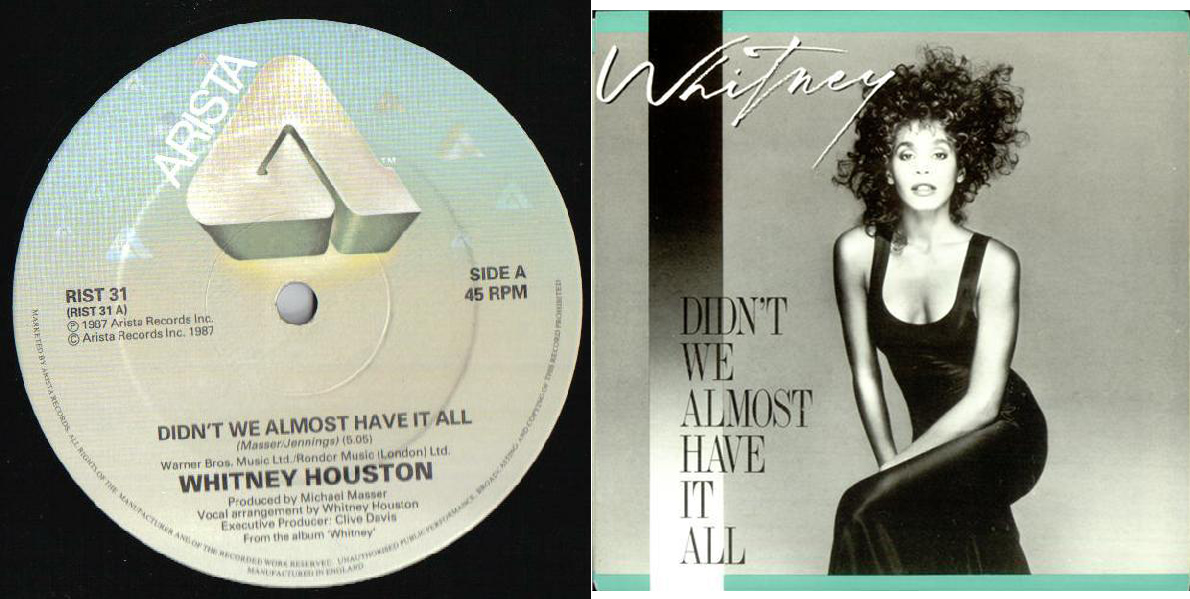

Whitney Houston, "Didn't We Almost Have It All" (released August 1987) Single 45rpm, from 2nd Whitney album (not exactly a favorite), June 4, 2015. (combined/cropped by Donald Earl Collins; http://musicstack.com and http://rapgenius.com).

Whitney Houston, “Didn’t We Almost Have It All” (released August 1987) Single 45rpm, from 2nd Whitney album (not exactly a favorite), June 4, 2015. (combined/cropped by Donald Earl Collins; http://musicstack.com and http://rapgenius.com).

I’ve been thinking about this for nearly a year. It started for me last August. Melissa Harris-Perry had a segment on her MSNBC show regarding the multiple hats women of color have worn over the years in taking care of their families, immediate, extended and non-biological. In response to Anne-Marie Slaughter’s July/August 2012 piece in The Atlantic about “Why Women Still Can’t Have It All,” Harris-Perry and her guests made the point that feminism for women of color has been about far more than having a successful, sexist-free career. That throughout American history, women of color have found themselves wearing multiple hats as primary breadwinners, primary caretakers and primary childrearers, often in ways that traditional feminists don’t discuss or recognize. All without fanfare and with many setback along the way.

What I’ve witnessed and been a part of in my own life reflects much of the conversation that Harris-Perry led on her show. The physical, mental and psychological scars from caring for family, friends and children, while struggling financially and dealing with racism and misogyny often manifests in disease and depression for so many women of color. There’s so much more, though, in terms of how my own mother’s multiple hats and habits led me to so many of my own. All initially to help her, but in the end, helping myself become self-sufficient. Not to mention making myself more understanding of where all the wear, tear and lack of care that wearing so much for so long can lead.

My Mom’s Hats and Habits:

The Anne-Marie Slaughter image of multitasking/wearing multiple hats (just think what this is like for poor, low-income, women of color), February 4, 2015. (ALAMY; http://telegraph.co.uk).

The Anne-Marie Slaughter image of multitasking/wearing multiple hats (just think what this is like for poor, low-income, women of color), February 4, 2015. (ALAMY; http://telegraph.co.uk).

Before I turned thirteen years old, my mother had been far more than my Mom. She’d been a dietary supervisor at Mount Vernon Hospital, just outside New York City, since 1968, the year before I was born. She had been a high school basketball player, a caregiver to her eleven brothers and sisters, and a cotton-picking breadwinner for her family in segregated southwestern Arkansas, an area located in the Red River Valley, part of the larger Mississippi Delta region. She had become our family’s primary breadwinner in the years after she gave birth to my older brother and me. Not to mention a married young woman now living a thirty-minute train ride from Midtown Manhattan, between the Hudson and Hutchinson Rivers, on the border between affluent Westchester County and the Bronx.

Life didn’t treat my Mom too kindly once she married my alcoholic father in 1971. And it actually went from bad to worse as she divorced him for my stepfather in 1978. By then, she had become a cigarette smoker, a one-time adulterer, and an abuse survivor. My Mom did everything she could to shield my older brother and me from her habits and the realities of our tough life in Mount Vernon in the 1970s and early 1980s. But by the end 1982, as I turned thirteen, all the hats my Mom had worn began to fall to the ground. In taking on the role of a strikebreaker, all of our lives would change forever.

In response to concessions made to the union, who left her unprotected, Mount Vernon Hospital cut her from full-time to part-time. My Mom became the besieged one. She was the old woman in the shoe, with six kids — including four under the age of five — and a cheating, abusive, unemployed, sometimes-at-home husband. It was my Mom’s job to take care of us all. Yet no longer was she a breadwinner. My Mom had become one of Reagan’s alleged welfare queens, pulling in $16,600 in AFDC payments per year from April 1983 until I left for college in August 1987. With all of that, I became a hat juggler myself.

Once Her Hats Became My Own:

For a while during my teenage years, my Mom had been my friend, one in which I could usually confide, albeit out of anger and frustration. All while taking on more and more of what had been her duties, including the brunt of her second husband’s rage and fists. I’d become an everyday grocery shopper, a frequent family cook, and a sometimes provider, the last mostly through tracking down my own father for a few extra dollars every Friday or Saturday at one of his favorite bars. Or, by the time I was sixteen, through working part-time. I provided childcare on afternoons, evenings and weekends. I washed clothes with my older brother on Saturdays or Sundays every week without fail from October 1982 on.

Hat stall at a Sunday fair, Amsterdam, The Netherlands, August 31, 2008. (Jorgeroyan via Wikipedia). Released to public domain via CC BY-SA 3.0.

Hat stall at a Sunday fair, Amsterdam, The Netherlands, August 31, 2008. (Jorgeroyan via Wikipedia). Released to public domain via CC BY-SA 3.0.

By the end of high school, I realized too who my Mom wasn’t, maybe for the first time. She wasn’t an encourager, a person who pushed her kids to pursue their dreams. With so many “Are you sure…?” questions my last two years of high school, it’s a wonder I applied to any colleges at all. Mom wasn’t a nurturer either, especially after I became a teenager. My Mom had only said “I love you” to me two times between my twelfth and nineteenth birthdays, including at my high school graduation ceremony in June 1987. She also wasn’t easygoing. Any mistake with money or my time would get a “Serves you right…” sermon about never screwing up.

The Toll Caring For Others Can Take:

All of this has made my Mom a conservatively cautious perfectionist, one living with depression and in constant denial about our shared past. I guess that it was all too much for her, like reaching the Jordan River, but not being allowed to cross it. Our shared experiences had also made me cautious and perfectionistic in my dealings with myself and the world, as I had to wear so many of my Mom’s hats and cross so many of those rivers with her. My mother tried to be all things to me and my older brother especially, and failed more than she succeeded in the process. For that and so many other reasons, despite her mistakes, I love her very much.

It’s been more than twenty-seven years since I moved away for the greener pastures of the University of Pittsburgh. Yet it’s only been in the past decade that I’ve learned to stop striving for perfection in all the things I say and do. It ultimately takes a lifetime to unlearn all the bad habits and prejudices and give up on juggling all the ideas and roles that our parents have put on us. My journey with and without my Mom has been no different. Now that my Mom’s in her late sixties, I just hope that the only hat she tries to wear these days is one to keep her head warm on the coldest of days.

On Kicking My Damsel-in-Distress Syndrome

07 Saturday Mar 2015

Posted by decollins1969 in 1, Boy @ The Window, Christianity, culture, Eclectic, Hebrew-Israelite, Jimme, Marriage, Mount Vernon New York, My Father, Pittsburgh, Politics, Pop Culture, Religion, Youth

≈ Leave a comment

Tags

"Ballerina Wendy", Atlas, Burdens, Child Abuse, Chivalry, Crush #1, Damsel-in-Distress, Damsel-in-Distress Syndrome, Domestic Violence, Father-Son Relationship, Feminism, Love, Misogyny, Misty Copeland, Mother-Son Relationship, Pitt, Resentment, Sexism, Wendy, Womanism


Chivalry with a suit blazer,   March 7, 2015. (http://genius.com)/

Chivalry with a suit blazer, March 7, 2015. (http://genius.com)/

This week marked thirty-three years since the fight that led to a crush that led to me falling in love for the first time, via a ballerina in training. The three-month period between March and June ’82 shaped how I dealt with teenage girls and women between the time I turned twelve and my mid-thirties. The crush on “Ballerina Wendy” and its mutation because of my stepfather’s knocking out of my Mom in front of me helped shaped my feminism, my womanism and my sexist damsel-in-distress syndrome.

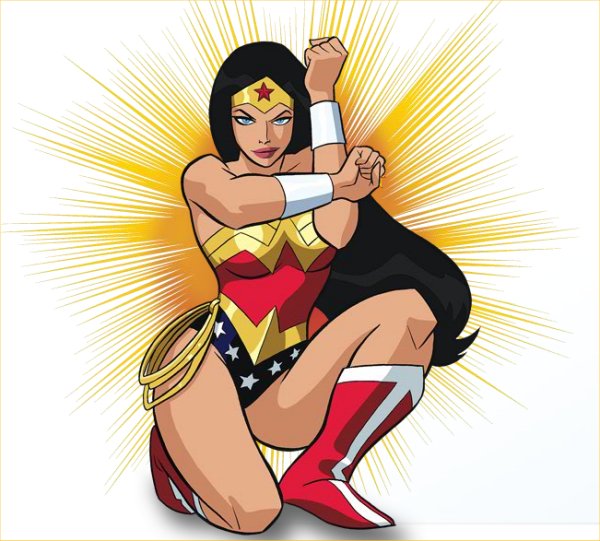
Wonder Woman, October 30, 2012. (http://tvequals.com).

Wonder Woman, October 30, 2012. (http://tvequals.com).

It was the beginning of my damsel-in-distress syndrome. Though it was triggered by the Memorial Day incident, my damsel-in-distress syndrome had been latent for years. I was in fact a mama’s boy, tempered by living at 616 and in Mount Vernon. I’d always been enamored by strong, athletic women (or at least, actresses with that role), going back to Lynda Carter as Wonder Woman. Yet I’d also been surrounded by sexism and misogyny, from my father calling my Mom a “Black bit'” since I was four to my stepfather’s constant quoting of the Torah to justify his laying of violent hands and feet on my Mom.

What I did in response was to help my Mom in every way I could, and in ways I never should’ve. Calling up Con Ed and Ma Bell to pay the electric and telephone bills. Listening to years of conversations about her failed marriages, about my father’s alcoholic failings, about her bills, about the burdens we as her children had put on her. Washing clothes for the house every weekend from October ’82 through August ’87 and anytime I was home for the summer and for the holidays once I went off to college. Going to the store as many as five times in a single afternoon and evening because my Mom forgot that she needed diapers or cigarettes. Hunting my father down for money even on weekends I didn’t want to be bothered because we were out of food for my younger siblings. Taking a fist-filled beating here or there from my stepfather to take the pressure off of my Mom. Promising my Mom that after I finished my degree, I’d come back to New York to work and help her out financially.

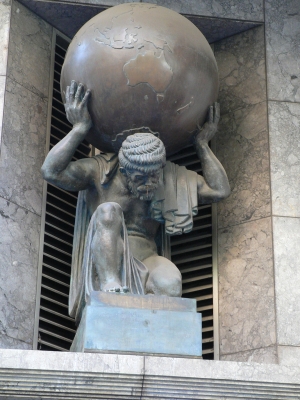
Atlas supports the terrestrial globe on a building in Collins Street, Melbourne, Australia, October 9, 2006. (Biatch via Wikipedia). Released to the public domain.

Atlas supports the terrestrial globe on a building in Collins Street, Melbourne, Australia, October 9, 2006. (Biatch via Wikipedia). Released to the public domain.

On that last promise especially, I reneged. I changed my major from computer science to history, and decided to stay at Pitt, to go to graduate school, to earn a PhD, to start writing, both in the academic world and a bit as a freelancer, to teach for a living. It was the basis, I think, for her falling out with me in ’97, and why our relationship remains limited.

My Mom was hardly the only woman in my life in which I wanted to assist. Some of my Pitt friends can certainly attest to this fact, that sometimes I was there to help too often. To the point where once I realized I was overburdened or when that other person had become too reliant on me, it pretty much killed that friendship. Either way, I was angry, and sometimes felt used, while some of my Pitt friends were either confused or angry themselves.

I’ve had to learn over the years to say no, even to my wife, when I realized that one too many logs on the fire will actually put that fire out. It started with everything high-tech. Every computer glitch, every printer error, every Internet issue, and I was there like Clark Kent, ready to help. But by the time I hit thirty-five, I was just too tired and felt too burdened to be that on all the time. I finally stopped helping my wife with her tech issues. I stopped offering to help, and have only interjected when the issue actually affects all of our equipment.

The irony is, my wife is a stronger person than my Mom, stronger in many ways than how I perceived Wendy as a person so many years ago. It’s not as if my wife doesn’t need or appreciate the help. But, as I’ve learned over the years, too, sometimes, help is just emotional support, a hug or a joke. Or, when I’m ready to, simply listening without feeling the need to use a quadratic equation to solve the problem.

American Ballet Theater soloist Misty Copeland in a promotional photo via her Under Armour ad deal, January 30, 2014. (Under Arnour via Huffington Post).

American Ballet Theater soloist Misty Copeland in a promotional photo (cropped) via her Under Armour ad deal, January 30, 2014. (Under Arnour via Huffington Post).

Damsel-in-distress syndrome, as chivalrous as it is, can also be extremely sexist, for both women and men and girls and boys. It means constantly attempting to help people who may or may not want your help, especially in cases where it is clear that they may need help. It means taking on emotional and psychological burdens that otherwise should only belong to the person you’re trying to support. It means, sadly, providing advice and knowing answers and solutions that may not be answers or solutions at all.

The Memorial Day ’82 incident with my mother changed what was an otherwise innocent crush and love into something contradictory even as it became more meaningful. It made me appreciate women who could and can kick some ass, whose strength would be obvious to all. And it made me think women who weren’t like that — women like my Mom — needed constant help from people like me. Wendy defended herself thirty-three years ago. My Mom tried and couldn’t. Life and strength for us, male and female and transgender, though, has never been that simple. And though I have saved quite a few damsels in distress over the years, it isn’t my eternal burden to carry.

Carnegie Library of Pittsburgh and My Own Prison

16 Monday Feb 2015

Posted by decollins1969 in 1, Academia, Boy @ The Window, Carnegie Mellon University, Christianity, culture, Eclectic, eclectic music, music, Pittsburgh, Politics, Pop Culture, race, Religion, Work, Youth

≈ Leave a comment

Tags

"My Own Prison" (1998), Bill & Melinda Gates Foundation, Carnegie Library of Pittsburgh, CMU, Creed, Dissertation, Dissertation Committee, Duquesne University College of Education, Foundation World, God's Lessons, Humble, Humiliation, Humility, Joblessness, Joe Trotter, Legacy, Mother-Son Relationship, Nonprofit World, Self-Reflection, Sycophants, Underemployment, unemployment


East Library branch of Carnegie Library of Pittsburgh, before (the version I worked in) and after renovation, October 4, 2006 and September 25, 2011. (http://popcitymedia.com and http://eastliberty.org).

East Library branch of Carnegie Library of Pittsburgh, before (the version I worked in) and after renovation, October 4, 2006 and September 25, 2011. (http://popcitymedia.com and http://eastliberty.org).

On February 17th seventeen years ago, we opened one of the first community-based computer labs in the US at the East Liberty branch of the Carnegie Library of Pittsburgh. What was once known as the Microsoft Library Fund (which later became the Gates Library Foundation, and then became part of the Bill & Melinda Gates Foundation) had provided the initial $110,000 to place this computer lab in one of the East Library branches resource rooms. I guess it could’ve been a proud moment for me. If I hadn’t earned my PhD the year before, only to face unemployment for three months during the summer of ’97 and underemployment in the five months since taking the Carnegie Library job. But this was a humiliating moment, not one of pride or, at least, taking comfort in a job done well. It was a learning moment at a time when I thought I already knew what I need to move forward with my career and life.

The dissertation process, my battles with Joe Trotter, the truth about my relationship with my Mom, had all taken a heavy toll on my heart and mind by the time Memorial Day ’97 rolled around. So much so that I lived between moments of humility (which is different from humiliation) and moments of rage in the sixteen months between May ’97 and the fall of ’98. I was living on fumes from my last Carnegie Mellon paycheck when I began working for Carnegie Library the day after Labor Day that year. I’d been conditioned, though, to think that everything happens for a reason. So I assumed that God was attempting to teach me a lesson, that I needed to give more out of the needs I had in my life in order for the things I thought I deserved to come my way.

John Wooden saying on being humble, February 16, 2015. (https://pbs.twimg.com).

John Wooden saying on being humble, February 16, 2015. (https://pbs.twimg.com).

There was a bit of a flaw in my logic around God’s lessons. For one, the idea that I wasn’t finding work in academia because I hadn’t been a giver was ridiculous. Between volunteering for soup kitchens, tutoring high school students, tithing at church, and so many other things, it was dumb to think that not enough humility was the reason I didn’t get the job at Teachers College or had trouble finding adjunct work in the fall of ’97. Or rather, it was dumb not to think that bigger issues — like my dissertation committee abandoning me when I needed them the most — played a greater role in my not finding full-time work in my chosen profession than any inability to serve others.

The Carnegie Library job provided a part-time stop-gap for my income while I attempted to figure out how to move forward without my advisor and my committee and move on with the knowledge that my relationship with my Mom would never be the same. I figured that the job gave me the opportunity to help others and to do good, and that it was a good first foray into the nonprofit world, especially with money from the world of Microsoft.

Boy, I couldn’t have been more wrong! I had a co-worker who was jealous of my degree and attempted to undermine the work of putting together the lab and the class materials for teaching patrons how to use the computers at every turn. I figured out that the bosses at the central branch in Oakland had essentially pocketed some of the funding for the lab to cover the costs of new computers for their own personal use, and had underfunded both my position and my co-worker’s position as part of the grant.

Album cover for Creed's My Own Prison (includes title track), released August 26, 1997. (Jasper the Friendly Punk via Wikipedia). Qualifies as fair use under US copyright laws to illustrate title and theme of this blog post.

Album cover for Creed’s My Own Prison (includes title track), released August 26, 1997. (Jasper the Friendly Punk via Wikipedia). Qualifies as fair use under US copyright laws to illustrate title and theme of this blog post.

But I didn’t learn all of this until June. By February ’98, I began to realize that, more than anything else, I needed to free myself from my own prison of an idea, that I’d done anything wrong or sinful to end up running a computer lab project at twenty-eight when I had done much of this same work at nineteen years old. I had to begin to find prominent people in my field(s) to support me in finding work, even if none of them were on my dissertation committee. I still needed to apply for academic jobs, even if my status meant than some would reject me because of my issues with my advisor. I even needed to explore the idea of jobs outside academia, in the nonprofit and foundation worlds, where my degrees and my ideas about education policy and equity might still matter.

It definitely helped when Duquesne hired me in April to teach graduate-level education foundations courses in History of American Education and Multicultural Education. It helped even more, though, when I decided in August to quit the Carnegie Library job. Between the Microsoft folks and the sycophants at Carnegie Library who were willing to do almost anything for a few extra dollars — anything other than serve their neighborhoods, that is — I’d had enough of duplicitous people. Who knew that my first job with sycophants and Gates money would come back to haunt me in the seventeen years since!

Pictures and Records

11 Wednesday Feb 2015

Posted by decollins1969 in 1, Boy @ The Window, culture, Eclectic, eclectic music, Hebrew-Israelite, Jimme, Marriage, Mount Vernon New York, music, My Father, New York City, Pop Culture, race, Religion, Upper West Side, Youth

≈ Leave a comment

Tags

"Method of Modern Love" (1984), "Roxanne, 45 Singles, 616, 616 East Lincoln Avenue, Brothers, Cassette Tapes, Darren, Doug E. Fresh, Father-Son Relationships, Hall & Oates, Jimme, Live Aid, Mother-Son Relationship, Nathan Hale Elementary, Photos, Pictures, Play Fighting, Polaroid, Record Player, Roxanne" (1984), Turntable, Vinyl Records, Walkman


Me & Darren at gate to  Nathan Hale ES playground, Mount Vernon, NY, February 1975. [At 425 South Sixth, we lived just two doors down from Nathan Hale and its playground area/parking lot.]  (My Mom).

Me & Darren at gate to Nathan Hale ES playground, Mount Vernon, NY, February 1975. [At 425 South Sixth, we lived just two doors down from Nathan Hale and its playground area/parking lot.] (My Mom).

There are some things that most folks — at least most in the US — take for granted that I had very little of growing up and into adulthood. Certainly love was one of those things, but I’ve told that story as a running theme many times over the past seven years and eight months. On a more materialistic note, the things that provide pleasant memories of childhood even in the midst of suffering and sorrow, like pictures and records, were also rarities for me as well. As I said in the Preface to Boy @ The Window, photos “are among those smallest and most awesome of things. Perhaps because so few of mine survived to childhood.” This lack of evidence of my existence and importance prior to college is a story of poverty, of course. But it’s also a story of what’s important to do and feel and say, even in the midst of poverty, abuse and domestic violence.

One of the five surviving photos in my possession from my childhood is a picture of me with my older brother Darren covering my mouth as we stood at the playground gate right next to Nathan Hale Elementary School. It was February ’75, and I was in the second half of kindergarten. We took this picture on a Saturday, with both our Mom and our father Jimme there. Believe it or not, we were on our way to play on the asphalt playground and basketball court, walking around the neighborhood that was Nathan Hale and South Sixth Avenue on Mount Vernon, New York’s South Side. This was a memorable event only because it was also a very rare event. That our Mom took us somewhere that didn’t have anything to do with grocery shopping, clothes’ buying or laundry washing.  That our father was also along for the event, actually sober and not arguing with or threatening our Mom.

A better picture of Darren and me, taken in April 1975, Sears, Mount Vernon, NY, July 6, 2006. (Donald Earl Collins).

A better picture of Darren and me, taken in April 1975, Sears, Mount Vernon, NY, July 6, 2006. (Donald Earl Collins).

It was also an outing where Darren and I had been horsing around, calling each other names. Just before our Mom started snapping pictures with her old Polaroid, Darren had put me in a headlock and punched me in my forehead for calling him a “dummy.” He then covered my mouth as I kept calling him a dummy, all while our Mom snapped the first picture. “Y’all keep it up, you’re gonna get your asses whupped,” Mom said to get us to stop. And we did stop fighting just long enough to snap a better picture, although it didn’t survive very long.

As far as I can remember, this was the next to last time all four of us were out together as a family. The last time came in June ’76, when my Mom introduced me to basketball, only to tell me she would “never show me how to play basketball again” because I became frustrated with getting the ball high enough to the hoop. I was six years old at the time.

Ten years after we took the Nathan Hale playground picture, Darren and I had become enamored with music to begin consuming it. Darren had bought himself a turntable at the end of ’84, for the wonderful price of $15 (it would probably be $175 in today’s money because of today’s lopsided supply and demand for vinyl in an mp3 age). But we had zero experience buying records, and our Mom’s limited collection of Al Green, Diana Ross and The Supremes and Gladys Knight and The Pips had been destroyed long ago in the midst of her breakup with our father. Our idiot stepfather Maurice had 8-track and vinyl collections (especially The Commodores and The Ohio Players) that he had given away when he converted to the Hebrew-Israelite cult in 1980-81.

Darryl Hall & John Oates, "Method of Modern Love" 45, circa 1984-85, February 11, 2015. (http://www.thespacebar.co.uk/).

Darryl Hall & John Oates, “Method of Modern Love” 45, circa 1984-85, February 11, 2015. (http://www.thespacebar.co.uk/).

So we bought whatever we heard on WBLS-107.5 or WPLJ-95.5 FM, without the benefit of music videos or without the influence of parents and classmates. Darren bought Doug E. Fresh, Grandmaster Flash, UTFO’s “Roxanne, Roxanne,” and Lisa Lisa and Cult Jam. My first purchases were to support Live Aid’s anti-famine work in Ethiopia, via “Do They Know It’s Christmas.” The first 45 I bought for us to play on Darren’s turntable, though, was Hall & Oates’ “Method of Modern Love,” which reached number five on Billboard’s pop charts about this time thirty years ago. It was an interesting foray into music beyond the radio, at least for me. Darren would tell me how “wack” my music was, and I’d say, “you don’t even like rap. You’re just listenin’ to it because you like girls now!”

This first effort at consuming music didn’t last long. It took money and weekly trips to the city to find vinyl to support it, and in early ’85, we simply didn’t have enough money to shop at Tower Records and Crazy Eddie’s for the stuff we wanted every week. At least not yet. Plus, we broke the turntable that spring, and with the rise of the Sony Walkman and cheap cassette tapes, we were on our way to truly getting into the ’80s before the ’90s arrived.

I no longer have that Hall & Oates single (although I do have it on my iPod). But I do have memories of my brother Darren, memories where we were still actually brothers to each other. Memories of rivalry, jealousy, fighting, even love. All in the time of choking poverty and emotional neglect.

The Comedy of a Tragic Upbringing

10 Saturday Jan 2015

Posted by decollins1969 in 1, Academia, Boy @ The Window, Christianity, culture, Eclectic, Hebrew-Israelite, Jimme, Mount Vernon High School, Mount Vernon New York, Movies, My Father, New York City, Politics, Pop Culture, race, Religion, Youth

≈ Leave a comment

Tags

616, 616 East Lincoln Avenue, Alchemy, Alcoholism, Autobiography, Child Abuse, Comedy, D.L. Hughley, Dave Chappelle, Domestic Violence, Eddie Murphy, Evangelical Christianity, Father-Son Relationships, Fatism, Ghetto Klown (2014), John Leguizamo, Lewis Black, Mother-Son Relationship, Neglect, Physical Violence, Playwright, Poverty, Psychological Abuse, Respectability Politics, Richard Pryor, Rodney Dangerfield, Routines, Stand-Up Comedy, Tragedy, Transmutation


John Leguizamo playing 'Abuelo' in Tales from a Ghetto Klown, PBS Arts Festival, July 2012. (http://www.pbs.org).

John Leguizamo playing ‘Abuelo’ in Tales from a Ghetto Klown, PBS Arts Festival, July 2012. (http://www.pbs.org).

Over New Year’s weekend, I watched John Leguizamo’s HBO comedy special Ghetto Klown (2014), based on one of his one-man autobiographical Broadway shows. I don’t think of Leguizamo as funny in the same way I think of Lewis Black or Dave Chappelle or Eddie Murphy. The sweet spot for me in terms of what is funny or not funny is a routine that makes me think for a second or two, not just laugh out of sheer expectations for a funny delivery or line. Otherwise, I’d think of D.L. Hughley as a great comedian, instead of as a vile one with equally vile opinions on race and culture.

Leguizamo’s hardly the funniest comedian. But then again, he’s always been more than one thing. He’s essentially a playwright, an actor, and comedian, which means Leguizamo’s a very elaborate storyteller. In most of his work, a nonfiction storyteller. I’ve seen some of his other one-man work before. With Ghetto Klown, though, I saw and felt the sense of tragedy and regret that I hadn’t seen in his other plays and specials. Especially when it came to his family — specifically his father — and his closest friends.

When Leguizamo went through his routine about how his mother and father were upset with him about he had portrayed them in his plays as somewhat selfish and oftentimes neglectful and abusive, I understood. I’ve only written one book about my life, and my Mom and dad have both been offended by the idea that I could write about them without their permission or blessings. Leguizamo used them as bits for his comedy and Broadway stage routines for years. That’s a lot of courage, and it’s a lot of tragedy to expose, too.

Transmutation of lead bars into gold, March 2013. (http://quazoo.com).

Transmutation of lead bars into gold, March 2013. (http://quazoo.com).

I’ve thought about it a few times over the past fifteen years. What if I decided to do a stand-up routine that included elements of my upbringing? How would I do that? How would I make domestic violence and child abuse and poverty funny?

I’d start with my father, who I’d call Jimme and my father interchangeably, since that’s been the nature of our relationship for forty-five years. I’ve been able to imitate his language, his drunken stupor, his evil meanness and off-kilter mannerisms since I was fifteen. It would be easy enough to do all of his “po’ ass muddafucka…” insults in bar scenes, all while getting robbed and beaten up by other alcoholics.

I could also do my now deceased ex-stepfather Maurice, especially his constant threats to put me in the hospital or kill me. “Watch dat base in yo’ voice, boy, ‘fore I cave yo’ chest in!,” he started saying to me once my voice changed with puberty. I could imitate Maurice when he weighed over 400 pounds and wore size-54 Fruit-of-the-Loom briefs around 616, with enough fat and dinginess to make me wanna puke.

I could even imitate my Mom, at least on the threatening front. If I argued with her too long about something important that she didn’t want to talk about (like paying bills, for instance), she’d tell me, “Shut up o’ I’ma gonna cut the piss out of you.” Or I could run around a stage singing at the top of my lungs to evangelical Christian music while also acting like my younger brothers, who’d get into knockdown fights in the living room while my Mom was in her spiritual zone.

The fact is, some of the best comedy grows out of tragedy. It may not be funny to the respectable middle class types or the respectability politics types. They both would prefer people “forget about” their pasts and “just move on,” as if these issues are taboo. But you can’t be a very good comedian or writer without confronting your upbringing in some way.

Richard Pryor doing stand up, posted August 11, 2014. (http://deadline.com).

Richard Pryor doing stand up, posted August 11, 2014. (http://deadline.com).

I attempted at times in Boy @ The Window to inject some sarcasm or comedy in many of the tragic scenes in the book. Because they reflecting my thinking in the moments in which they occurred, whether in ’82 or ’88. The few people who commented on this aspect of the memoir didn’t like the comedy or the language. It was because they couldn’t reconcile the mild-mannered version of myself that I presented to the world in high school or in academia with the way in which I grew up.

Watching Leguizamo in Ghetto Klown reminded me of what I learned in watching Rodney Dangerfield (who himself was sexually abused and neglected by his parents growing up) and Richard Pryor (the son of an active and neglectful prostitute) over the years. We all have baggage and demons to deal with every day of our lives. We ignore that past and those evils at risk to ourselves and every person we’ve ever loved. We must turn the tragedy of our upbringing into something that isn’t just a cancer of pain. Be it through storytelling, autobiography, even the kind of comedy that those whose lives were much more stable growing up can appreciate but can never fully understand.

Out There In The World

13 Saturday Dec 2014

Posted by decollins1969 in 1, Boy @ The Window, culture, Eclectic, eclectic music, Jimme, Mount Vernon New York, music, My Father, New York City, Pop Culture, University of Pittsburgh, Youth

≈ Leave a comment

Tags

616, 616 East Lincoln Avenue, Alcoholism, Camping, Camping Trip, Drug Abuse, Drugs, Father-Son Relationships, Mother-Son Relationship, Overnight Stays, Pam, Walks


Last week, my son went with his classmates on his first overnight trip without me or his mother, a middle school “camping” trip in the forests of Montgomery County, Maryland. He was gone fifty-two hours, just a bit more than two days, checking out wildlife and sitting around a campfire. My son came back on his bus, worn out with equally worn out sneakers and clothes, smelling of river and bad cafeteria food. Boy did I miss him. But at least I knew where he was, more or less.

Some of the dorms at Lathrop E. Smith Environmental Education Center, Rockville, MD, December 12, 2014. (http://www.montgomeryschoolsmd.org/).

Some of the dorms at Lathrop E. Smith Environmental Education Center, Rockville, MD, December 12, 2014. (http://www.montgomeryschoolsmd.org/).

I did no such trips like the one my son did until the day I went off to Pittsburgh and college, some twenty-seven years ago. Let me repeat. Not one overnight trip on my own or with my classmates growing up. The closest I came to being out in the world, other than my 10,000 walks to the store or up Route 22 or down in the Bronx, was in the years my father Jimme would take me and my older brother Darren for a day, only for it to turn into a weekend. With a couple of exceptions, all of these extended excursions occurred before we started working with our father in the city in the fall of ’84. Most of them happened before I turned thirteen and had to resort to hunting down my father every Friday or Saturday for a few extra dollars, for me and for helping out my Mom.

At least a dozen times between April ’79 and September ’84, we ended up with Jimme overnight. In the days without cellphones and with my father never having his own landline, he’d and we’d have to call my Mom from a pay phone to let her know how we were. There were plenty of those nights in which I didn’t want to call my Mom or go home.

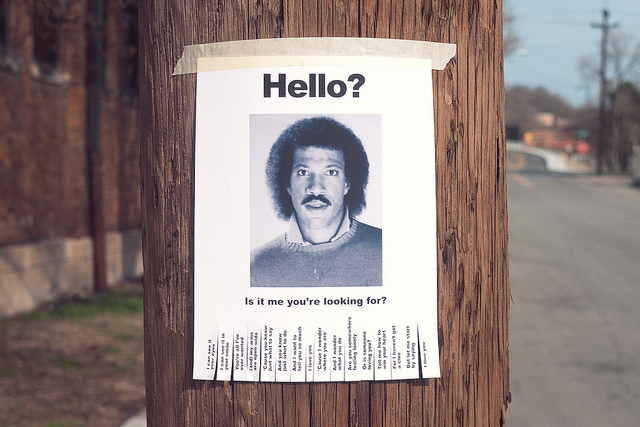
Lionel Richie on a mock-missing-person's flyer, March 20, 2011. (Chris Glass/Flickr.com).

Lionel Richie on a mock-missing-person’s flyer, March 20, 2011. (Chris Glass/Flickr.com).

This despite the fact that every time we did an overnight or, on three occasions, back-to-back overnights, Jimme was lit. How it happened depended on at what point during the weekend he’d pick us up. If my father came over early enough on a Friday evening to take us out for a pizza or Mickey D’s or a movie, he’s sometimes have a Miller or a Schlitz with him, in his coat pocket, ready to drink after the sober version of himself had picked us up from 616. Or, much more often, Jimme would fulfill his Saturday fatherly duties by picking us up, usually between 10 am and 1 pm, take us out to eat, and then swing by one or more of his drinking buddy’s places, where he could get his fill of beer or malt liquor, move on to stronger stuff, and lose track of time.

Ida’s place, Lo’s stoop, Pam’s den, it really didn’t seem to matter to our father. These were his easy places to drink, to hang out, to tell the world how much of “a big shot” he was. All the while, money would spill out of his pocket, scooped up by his hosts to cover groceries, rent, mortgages, car notes, and street drugs. But we didn’t really notice that until I hit thirteen.

Our last extended weekend with Jimme was in August ’84, right after my j.v. football tryouts, just before the start of tenth grade. We went over to Pam’s apartment off South Fulton, just a couple of blocks away from Adams Street, where we had lived as a family before I started kindergarten. Those days were long off by now. Instead, I saw my father in a completely sloshed state, really, for the first time, with the mind of an adult. Pam, for her part, was wasted, on some form of cocaine, crack or powdered, I didn’t know for sure.

Daniel Day-Lewis in There Will Be Blood (2009), screen shot of him drinking, drooling, December 3, 2010 (http://dudleydoody.com).

Daniel Day-Lewis in There Will Be Blood (2007), screen shot of him drinking, drooling, December 3, 2010 (http://dudleydoody.com).

By the end of the day that last Saturday in August, he could barely stand up. Pam had some music on, Lionel Richie’s “Hello,” as it was in the middle of the bridge portion. While it was playing, Jimme tried to dance to it, with a thick string of drool hanging from him bottom lip and all the way to his right pant leg. He stumbled to his left, then his right, as the song went, “dun-dun-dun, dun-dun-dun, du-du-dat-dat-dun-dun-dun,” via a guitar string and a synthesizer. We had to sit him down on Pam’s ’70-style couch to let him snore and drool for an hour and a half before taking him back to his place that Saturday evening. On the way out, we bumped into my classmate Dahlia and her grandmother. They lived in an apartment complex across the street. How embarrassing!

We didn’t call my Mom to let her know what was going on. So when we came home late that Sunday afternoon, she was pissed. But she didn’t seem that concerned about her safety. Instead, it was all about, “What? You think Jimme’s a good father now?” and “I need someone around here to go to the store.”

As much as I loved my Mom, she didn’t realize that we needed moments to escape, even if it meant being with our alcoholic father and being around his equally drug-addled friends. Those were our overnights before we reached adulthood.

A Weak Legacy: The Acts of the Civil Rights Apostles at 50

24 Friday Oct 2014

Posted by decollins1969 in 1, Academia, Boy @ The Window, culture, Eclectic, eclectic music, Mount Vernon New York, Politics, Pop Culture, race, Work, Youth

≈ Leave a comment

Tags

"The Way It Is" (1986), AERA, American Educational Research Association, Brown Lecture, Brown v. Board of Education (1954), Bruce Hornsby and The Range, Civil Rights Act of 1964, Class Inequality, Color Bar, Derrick Bell, Inequality, Jesse B. Semple, Legacy, Mother-Son Relationship, Poverty, Racial Inequality, Racism, Symbols, The Acts of the Apostles, Voter Disenfranchisement, Voting Rights Act of 1965


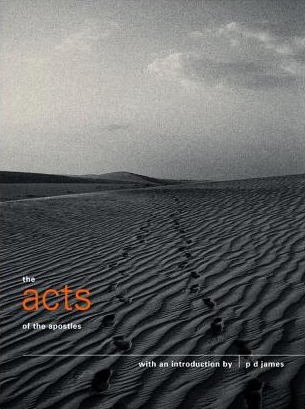
The Acts of the Apostles (book cover), 1999. (http://books.google.com).

The Acts of the Apostles (book cover), 1999. (http://books.google.com).

Yesterday evening, I attended the eleventh annual Brown lecture hosted by the American Educational Research Association at the Ronald Reagan Building here in DC. The great scholar James Anderson talked for about an hour about the connections between voter disenfranchisement and state policies that created systems of educational inequality for Blacks as part of the Jim Crow era. Anderson wondered aloud that with the recent efforts to restrict voting and with the Supreme striking down Section 4(b) (and essentially Section 5) of the Voting Rights Act of 1965 if this meant a return of gross educational inequality on the basis of race and class in 2014. As if the trends of inequality only rise and fall with well protected or unprotected voting rights. Voting rights enforcement is a good barometer, but hardly the only one. The last twenty years of high-stakes testing and corporate education reform provide evidence of a trend of educational inequality that has occurred despite and (in many cases) precisely because of voter participation across all racial lines.

The following, though, is my full response, to Anderson, AERA and all of those in legacy-celebration mode with the Brown decision and the Acts in 2014 and 2015. What was true in 1964 and 1965 remains true fifty years later. The Civil Rights and Voting Rights Acts have been much more lightbulbs on a symbol of real progress — the Civil Rights Movement — than it has been an actual marker of progress. At least for those poor, Black and of color. For Whites, though, the Acts have been the sign of a post-racial America without having to work at it or talk about it. But for the adults I grew up around in Mount Vernon, New York in the 1970’s, there was a lingering hopefulness about race relations and racial equality in America that is absent these days. I don’t know if I felt it because of Archie Bunker and All In The Family or because of all those reproductions I saw of the late Martin Luther King, John F. Kennedy and Robert F. Kennedy together in the same painting over so many living-room mantles when I was six years old. Yet no matter how down or how out, so many poorer Blacks I knew back then had hope for a brighter present and future.

Jesse Jackson, an Obama election sign, and the American flag -- three symbols in one picture, July 2008. (http://plus.google.com).

Jesse Jackson, an Obama election sign, and the American flag — three symbols in one picture, July 2008. (http://plus.google.com).

It wasn’t as if they contemplated Title VII of the Civil Rights Act or Section 2 of the Voting Rights Act at the disco house parties my mother would take me and my older brother to, playing with other kids while the adults danced away their troubles. No, it was the idea that finally, Blacks who looked like us could pry open a door and get an opportunity to succeed in America. Or, to quote The Jeffersons‘ theme song, to “gettin’ our turn at bat.” It didn’t matter to them that the Civil Rights Act, even with all its enforcement teeth, would benefit White women and those lucky enough to be part of Black middle class more than us poor Black folk. Or if the Voting Rights Act could be thwarted by gerrymandering and state decisions to make voting harder for us. The Acts crystallized hope, symbolized a chance, however small, for a better education, a better job, and a better life, for themselves and their families.

The adults in my life were putting on a good face, though, as I came to realize when I was a preteen. My mother had once held the hope that me and my older brother would “make it” by going to college and finding “good-paying jobs.” But by the start of the Reagan Revolution, she no longer spoke in such lofty terms. My mother was hardly alone. By 1979, Blacks like Florence Grier in Bob Blauner’s oral history book Black Lives, White Lives (1989) were saying, to “tell you the truth, I’m not hopeful that we’re going to progress in the eighties as fast as we progressed from the sixties to the seventies.”

Polling back then also reflected this sense of frustration about race and over racial discrimination among Blacks, in contrast to the White sentiment that America had move beyond its racist past. In March 1981, ABC News and The Washington Post conducted their first combined poll on the state of race relations in the US. While 73 percent of Blacks in the poll saw “deep rooted continuing racial problems and blame them on discrimination…only 46 percent of the Whites agreed.”

First page of the Civil Rights Act of 1964 (bent and warped), July 8, 1964. (http://www.ourdocuments.gov/document_data/pdf/doc_097.pdf). In public domain.

First page of the Civil Rights Act of 1964 (bent and warped), July 8, 1964. (http://www.ourdocuments.gov/document_data/pdf/doc_097.pdf). In public domain.

The hopes and aspirations that the Civil Rights Act symbolized have eroded with the Act itself, and are all but absent for younger generations of Americans. An MTV and David Binder Research poll from early 2014 found that 48 percent of White millennials believe anti-White discrimination is as significant as discrimination against people of color, while 65 percent of the people of color they polled believe that Whites have more opportunities for success. Even my own eleven-year-old son reflects this trend. “People were more stupid back then,” my son said to me recently while we talked about the Civil Rights Movement and White resistance to integration, as if racial inequality ended with the movement.Thanks in no small part to the success of the neoconservative movement in declaring the death of racism in the 1980s and 1990s, the generation born after 1981 does not see the federal government as the catalyst for a better life or as a leveler of any playing field.

Bruce Hornsby and The Range’s lyrics from their hit “The Way It Is” summed up the weaknesses of the Civil Rights Act and its legacy well, for us in 1986 as well as today:

Well, they passed a law in ’64

To give those who ain’t got a little more

But it only goes so far

Cause the law don’t change another’s mind…

Nor, apparently, does it create a lasting legacy of racial equality and social mobility.

← Older posts
Newer posts →

Boy @ The Window: A Memoir

Boy @ The Window: A Memoir

Places to Buy/Download Boy @ The Window

There's a few ways in which you can read excerpts of, borrow and/or purchase and download Boy @ The Window. There's the trade paperback edition of Boy @ The Window, available for purchase via Amazon.com at http://www.amazon.com/Boy-Window-Donald-Earl-Collins/dp/0989256138/

There's also a Kindle edition on Amazon.com. The enhanced edition can be read only with Kindle Fire, an iPad or a full-color tablet. The links to the enhanced edition through Apple's iBookstore and the Barnes & Noble NOOK edition are below. The link to the Amazon Kindle version is also immediately below:

scr2555-proj697-a-kindle-logo-rgb-lg

Boy @ The Window on Amazon.com: http://www.amazon.com/Boy-The-Window-Memoir-ebook/dp/B00CD95FBU/

iBookstore-logo-300x100

Boy @ The Window on Apple's iBookstore: https://itunes.apple.com/us/book/boy-the-window/id643768275?ls=1

Barnes & Noble (bn.com) logo, June 26, 2013. (http://www.logotypes101.com).

Boy @ The Window on Barnes & Noble: http://www.barnesandnoble.com/w/boy-the-window-donald-earl-collins/1115182183?ean=2940016741567

You can also add, read and review Boy @ The Window on Goodreads.com. Just click on the button below:

Boy @ The Window

Twitter Updates

Tweets by decollins1969
  • RSS - Posts
  • RSS - Comments

Archives

  • June 2025
  • April 2023
  • September 2022
  • August 2022
  • July 2022
  • June 2022
  • May 2022
  • April 2022
  • March 2022
  • January 2022
  • December 2021
  • November 2021
  • October 2021
  • September 2021
  • August 2021
  • July 2021
  • June 2021
  • April 2021
  • March 2021
  • February 2021
  • January 2021
  • December 2020
  • November 2020
  • October 2020
  • September 2020
  • August 2020
  • July 2020
  • May 2020
  • April 2020
  • March 2020
  • January 2020
  • December 2019
  • November 2019
  • August 2019
  • July 2019
  • June 2019
  • May 2019
  • April 2019
  • March 2019
  • February 2019
  • January 2019
  • December 2018
  • November 2018
  • October 2018
  • September 2018
  • August 2018
  • July 2018
  • June 2018
  • May 2018
  • March 2018
  • February 2018
  • January 2018
  • December 2017
  • November 2017
  • October 2017
  • September 2017
  • August 2017
  • July 2017
  • June 2017
  • May 2017
  • April 2017
  • March 2017
  • February 2017
  • January 2017
  • December 2016
  • November 2016
  • October 2016
  • September 2016
  • August 2016
  • July 2016
  • June 2016
  • May 2016
  • April 2016
  • March 2016
  • February 2016
  • January 2016
  • December 2015
  • November 2015
  • October 2015
  • September 2015
  • August 2015
  • July 2015
  • June 2015
  • May 2015
  • April 2015
  • March 2015
  • February 2015
  • January 2015
  • December 2014
  • November 2014
  • October 2014
  • September 2014
  • August 2014
  • July 2014
  • June 2014
  • May 2014
  • April 2014
  • March 2014
  • February 2014
  • January 2014
  • December 2013
  • November 2013
  • October 2013
  • September 2013
  • August 2013
  • July 2013
  • June 2013
  • May 2013
  • April 2013
  • March 2013
  • February 2013
  • January 2013
  • December 2012
  • November 2012
  • October 2012
  • September 2012
  • August 2012
  • July 2012
  • June 2012
  • May 2012
  • April 2012
  • March 2012
  • February 2012
  • January 2012
  • December 2011
  • November 2011
  • October 2011
  • September 2011
  • August 2011
  • July 2011
  • June 2011
  • May 2011
  • April 2011
  • March 2011
  • February 2011
  • January 2011
  • December 2010
  • November 2010
  • October 2010
  • September 2010
  • August 2010
  • July 2010
  • June 2010
  • May 2010
  • April 2010
  • March 2010
  • February 2010
  • January 2010
  • December 2009
  • November 2009
  • October 2009
  • September 2009
  • August 2009
  • July 2009
  • June 2009
  • May 2009
  • April 2009
  • March 2009
  • February 2009
  • January 2009
  • December 2008
  • November 2008
  • October 2008
  • September 2008
  • August 2008
  • July 2008
  • June 2008
  • May 2008
  • April 2008
  • March 2008
  • February 2008
  • January 2008
  • December 2007
  • November 2007
  • October 2007
  • September 2007
  • August 2007
  • July 2007
  • June 2007

Recent Comments

MaryPena's avatarMaryPena on My Day of Atonement/Bitter Hat…
decollins1969's avatardecollins1969 on No Good Teaching Deed Goes…
Mary Rose O’Connell's avatarMary Rose O’Connell on No Good Teaching Deed Goes…

NetworkedBlogs on Facebook

NetworkedBlogs
Blog:
Notes From a Boy @ The Window
Topics:
My Life, Culture & Education, Politics & Goofyness
 
Follow my blog

616 616 East Lincoln Avenue A.B. Davis Middle School Abuse Academia Academy for Educational Development AED Afrocentricity American Narcissism Authenticity Bigotry Blackness Boy @ The Window Carnegie Mellon University Child Abuse Class of 1987 CMU Coping Strategies Crush #1 Crush #2 Death Disillusionment Diversity Domestic Violence Economic Inequality Education Family Friendship Friendships Graduate School Hebrew-Israelites High-Stakes Testing Higher Education History Homelessness Humanities Humanities Program Hypocrisy Internalized Racism Jealousy Joe Trotter Joe William Trotter Jr. K-12 Education Love Manhood Maurice Eugene Washington Maurice Washington Misogyny Mother-Son Relationship Mount Vernon High School Mount Vernon New York Mount Vernon public schools Multiculturalism MVHS Narcissism NFL Pitt Pittsburgh Politics of Education Poverty President Barack Obama Race Racial Stereotypes Racism Relationships Self-Awareness Self-Discovery Self-Reflection Sexism Social Justice Teaching and Learning University of Pittsburgh Violence Whiteness Writing

Top Rated

Blog at WordPress.com.

  • Subscribe Subscribed
    • Notes from a Boy @ The Window
    • Join 103 other subscribers
    • Already have a WordPress.com account? Log in now.
    • Notes from a Boy @ The Window
    • Subscribe Subscribed
    • Sign up
    • Log in
    • Report this content
    • View site in Reader
    • Manage subscriptions
    • Collapse this bar
 

Loading Comments...