• About Me
  • Other Writings
  • Interview Clips
  • All About Me: American Racism, American Narcissism, and the Conversation America Can’t Have
  • Video Clips
  • Boy @ The Window Pictures
  • Boy @ The Window Theme Music

Notes from a Boy @ The Window

~

Notes from a Boy @ The Window

Category Archives: Hebrew-Israelite

As A Former Hebrew-Israelite…

21 Thursday Feb 2019

Posted by decollins1969 in 1, Boy @ The Window, culture, Eclectic, Hebrew-Israelite, Marriage, Mount Vernon New York, Politics, Pop Culture, race, Religion, Youth

≈ Leave a comment

Tags

Abuse, Bigotry, Black Israelites, Covington Catholic High School (Kentucky), Domestic Violence, Edomites, Hebrew-Israelite Years, Hebrew-Israelites, Henry VIII, Hyper-Masculinity, Jonathan Rhys Meyers, Kufi, Lepers, Misogynoir, Misogyny, Natalie Dormer, Patriarchy, Polygamy, The Tudors (2007-10)
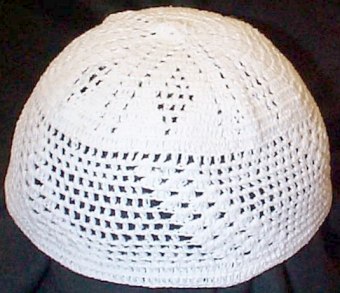

The Kufi, cute on some, a symbol of a curse for people like me, April 3, 2010.

I’m a month late with this post about the Covington Catholic High School White boys and their -isms-filled excursion across DC, including their well-filmed smirk and Native American-stereotyping confrontation with Nathan Phillips. The part of the confrontation that produced the most hype but little substance was the nearly two-hour period around the Lincoln Memorial, in which some of the privileged White-privileged-males made taunting runs the handful of people the media called “Black Hebrew-Israelites.” Clearly this was a misnomer, as if there were such a thing as White Hebrew-Israelites!

That these Black Israelites or Hebrew-Israelites could call these White boys “Edomites,” the descendants of Jacob’s suckered and inferior pink-skinned twin brother Esau, was apparently shocking for many Whites. But within a day or two, the “Black Hebrew Israelites” narrative went away, as the focus shifted to White boys shouldn’t have their lives ruined over a little bit of March for Life misogyny, racism, and intimidation.

The media dropped this line of inquiry, likely because it didn’t play to any of their typical tropes and other two-sided themes. As someone who spent three years of my life wearing kufis and yarmulke, eating kosherized meats, and understanding the meaning behind “unclean issues of blood,” I can tell you that the Hebrew-Israelites likely didn’t start the confrontation, but once taunted, were going to give as much as they got from the privileged White males from Kentucky. I can tell you that Black hyper-masculinity, misogyny, and a sort of anti-Whiteness was all part of my experience with the Shalom Aleichem crowd. White folks were either Edomites — the descendants of the less-favored Esau from Genesis, the first book of the Torah — or were “healed lepers.” Either way, Hebrew-Israelites saw Whites as a somewhere between a curse of God or God’s not-quite-as-chosen people.

To call Hebrew-Israelites a “hate group” — putting them on the same plane as the Ku Klux Klan and neo-Nazi groups — is astoundingly ridiculous and a waste of time. As a rule, Hebrew-Israelites may preach the fiery end times, but they’re not working particularly hard to make them happen. They especially want as little to do with White folk of any stripe as they can get away with. Now, at least for the sect of Hebrew-Israelites my family belonged to in the 1980s, there was support for Israel, and many certainly saw a certain degree of commonality with our Levite and Judahite brothers in Palestine, many also saw these European Jews as Edomites. To be both pro-Israel while also harboring some anti-European-Jews-as-Whites-in-disguise -isms, well, it all made sense to me sometime between October 1981 and March 1983 (no, not really).

What made more sense to me, though, was the connection between the ancient Israelites of the land of Canaan and the Ten Lost Tribes living in the US and reclaiming their birthright. Not just a homeland in Palestine, though. They claimed the practices of the ancient Israelites as well, including especially polygamy. Never mind that this practice could only work “in practice” if the man involved had the material means to provide for all of his women and for his progeny. That so many of the men didn’t possess the means but attempted this practice anyway speaks to the fact that being a Hebrew-Israelite for them merely meant easy access to women, sex, and reproduction via their sperm in a way that justified their misogynoiristic view of the world.

Jonathan Rhys Meyers as Henry VIII and Natalie Dormer as Anne Boleyn, circa 2008. (http://www.famousbirthdays.com).

My stepfather Maurice, er, “Judah ben Israel,” gleefully used the temple teachings of proper polygamy as permission to act like he was living in the time of Saul, David, and Solomon. Maurice’s was some of the worst misogyny I have ever witnessed this side of Henry the Eighth as Jonathan Rhys Meyers portrayed the portly king in Showtime’s The Tudors. He was with at least two other women in the months between January 1982 and June 1984, all while having knocked my Mom up with my two youngest siblings. All while also knocking my Mom around their master bedroom like she was a six-foot piñata. Keep in mind, for a three-year period between May 1979 and August 1982, my idiot stepfather didn’t work at all, and held down a part-time security job guarding an abandoned Vicks factory between August 1982 and October 1986.

I pretty much thought that the man was a piece of shit by the time I learned that my younger siblings has siblings of their own around the same age, sometime in 1984 or 1985. But that was the thing about a religion like this one. It attracted and still attracts a sector of Black men who otherwise feel emasculated, like strangers among strangers in a strange land, and hands them hyper-masculinity in return. It draws in Black women in search of a Yahweh, a stern and often unforgiving god who sees them as they see themselves, as unworthy of anything other than what can be drawn from family, from the men and the children and kindred sistahs in their lives.

So it’s not hard for me to believe the folks on my Twitter timeline who live in New York and in Philly feeling like they were on display at a butcher’s shop in the middle of Grand Central or Reading Terminal Market when encountering the kufi-wearing, Shalom-Aleichem set. But it’s also hard for me to believe that these privileged White boys fully comfortable with their White supremacy didn’t stoke and anger a group of Hebrew-Israelites as part of their -isms-laden tour of DC. There was enough White patriarchy and testosterone involved in these confrontations to make a lea full of sheep bald and barren.

Still, I thank God for every day I’ve had since surviving those Hebrew-Israelite years, those years of doubt, and all of that self-loathing and misogynoir. I can only hope that there are others who’ve made their way out of that malignancy.

What If You’ve Never Really Had a Crew?

01 Friday Feb 2019

Posted by decollins1969 in 1, Academia, Boy @ The Window, Carnegie Mellon University, culture, Eclectic, Hebrew-Israelite, Mount Vernon High School, Pittsburgh, Politics, Pop Culture, race, Religion, University of Pittsburgh, Work, Youth

≈ Leave a comment

Tags

#ThickTheBook, Academia, CMU, Collaborations, Community, Crew, Envy, Family, Friendships, Hebrew-Israelite Years, Homies, Loneliness, Loner, Misfit, Nonprofit World, Pitt, Posse, Starling, Support Systems, Tressie McMillan Cottom


My copy of Tressie McMillan Cottom’s #ThickTheBook, January 12, 2019 (Donald Earl Collins)

Tressie McMillan Cottom’s book Thick: And Other Essays, like so many of the books I’ve chosen to read over the past six years, will stay with me a while. She is brilliant, period. I feel blessed having been on the journey of reading about her experiences, her views of the world, and her Blackness and Black feminism. There are so many nuggets and witticisms in Cottom’s Thick that I should sit down and plan out a way to mine her book for actual gold and platinum. It’s rich and thick like hot chocolate with hits of cinnamon and nutmeg, something to imbibe while taking a bite of a New York-style blondie (which I specialize in cooking-wise) or slice of chocolate torte cake here and there.

But there was one sentence that stood out, before I even began reading the book in earnest. As I randomly flipped through the pages after first getting Thick, this sentence hit me hard, dazing me like the day my one-time stepfather punched me in the jaw for the first time. “Everybody needs a crew,” Cottom wrote to start her “The Price of Fabulousness” essay, adding that she has “many because I am extremely fortunate.” Yeah, no kidding!, I thought immediately after reading that sentence. For a moment, maybe even 0.68 seconds, I was envious. Not like, “Oh my God, the arrogance of this one here!” kind of jealous. Nor was I the “I wish I was her!” green-eyed monster, either. I realized that since the last weeks of sixth grade and the beginning of three and a half years as a Hebrew-Israelite, I hadn’t really had a crew as Cottom defined it at all. That was the spring of 1981, when I was eleven years old, nearly 38 years ago, by the way.

From the day I let my one-time best friend Starling beat me in a fight over my alleged decision to join the Hebrew-Israelite cult and walk into William H. Holmes ES with a white kufi on my head, I had no crew. There’s a reason I consistently refer to my middle school and high school Humanities classmates as either “classmates” or “acquaintances.” They weren’t my friends, some were genuine bullies and assholes to me and to each other, and lacked in most forms of what grown folk would call social graces. They were my academic and (sometimes) athletic competitors, they were friends with each other, but only to a point. But one thing they could never, ever be was my crew or posse or homies or anything close to what Cottom meant. That Wu-Tang Clan-level of professional collaboration and possibly personal friendship didn’t exist in the cauldron that was that magnet program within an even more hostile public school system in Mount Vernon, New York.

College at the University of Pittsburgh was where I’d find friendships again, and maybe at times, the primordial beginnings of a crew. But these proto-crews never quite came together for more than a night on the town here or there. Quite frankly, the other thing my eclectic groups of friends and acquaintances had in common was knowing me. At least, the parts of me I was willing to show folks at the time. I knew most of them weren’t ready for the real me, because I wasn’t ready for the real me. Not at nineteen, twenty, or twenty-one.

Spencer Foundation Dissertation Fellows Retreat, Berkeley, CA, February 17, 1996. (Donald Earl Collins)

Graduate school me, though, was more ready. My times at Pitt and Carnegie Mellon earning my doctorate were the closest I got to having a crew. At one point in 1994-95, I probably knew at least half of the Blacks, Africans, Afro-Caribbeans, and Latinxs on Pitt’s campus, and all of the Black diaspora students at CMU (the latter because there were so few of us there). But despite the common interests around campus climate, student and faculty diversity, mistreatment on the basis of race, class, gender, and sexual orientation, the fact remained that my crews were eclectic and transitory ones. Masters students would be gone in two or three years. My warp-drive, single-minded race toward the doctorate made certain that any bonds I forged during those years wouldn’t last. There would be no collaborations or calls for career help or advice with these disparate groups. Not even when I lived off the fumes of my last grad school stipend check the summer of 1997.

Working in the nonprofit world and as contingent faculty has often meant being on the inside, but still feeling like an outsider, anyway. Or really, a fraud, because I never fully embraced the norms of nonprofit capitalism or academia as intellectual capitalism and exploitation. I became friends with a fairly eclectic bunch in these spaces, too. But none of them shared my passion for creative nonfiction writing, or have wanted an alignment between career goals and social justice fights, or even, have had a taste for basketball as a spectator or player.

I guess one could say that my wife and son and two of my closest friends are my crew, but that’s not how a crew works. They are family, a very supportive family to be sure, but family is muck thicker than blood or a crew.

So, maybe Cottom is right. I really, really, really need a crew. I’ve made it pretty far in parts of my life without one. I’m not sure how much more Sisyphus I can do on my own, though.

The Sweet Consolation of Suicide

27 Thursday Dec 2018

Posted by decollins1969 in 1, Academia, Boy @ The Window, Carnegie Mellon University, Christianity, culture, Eclectic, eclectic music, Hebrew-Israelite, Mount Vernon High School, Mount Vernon New York, music, Pittsburgh, Pop Culture, race, Religion, University of Pittsburgh, Youth

≈ Leave a comment

Tags

"I Still Haven't Found What I'm Looking For" (1987), Birthday, Brittney Cooper, Contemplation, Darnell Moore, Depression, Eloquent Rage (2018), God, Heavy (2018), Kiese Laymon, Living, No Ashes in the Fire (2017), Questioning, Self-Policiing, Self-Reflection, Self-Revelation, Suicidal Ideations, Suicide, Suicide Attempt, The Joshua Tree (1987), U2


Sweet-and-sour-chicken, 2011. Source: http://www.foodnetwork.com

Well, not exactly sweet to be thinking about what you have thought about and attempted to act out in the past. In the next few hours, I turn 49, which is to say that I begin year fifty on Planet Earth. “Yay me!,” right?

Not so much this time 35 years ago. My suicidal ideations had gone on in December 1983 for nearly three weeks before my fourteenth birthday, in the aftermath of my fourth mugging in four years. That Tuesday, December 27, at 2:30 pm, coming home from C-Town in Pelham, standing on the parapet of that stone bridge overlooking the Hutchinson River Parkway, I had every intention of jumping. I played it out in my head all the different possibilities. At first, it was going to be like the second between taking a deep breath plunging myself underwater and holding my breath while feeling the pressure build up all around my head, eyes, and ears. Except that I imagined a screech, a pop of a hit, and the world turning into stars before I escaped into eternal darkness.

But then, I thought about the plausibility of surviving the 13-foot jump, only to get hit by a car or truck flying down the parkway at 60 or more. Paralyzed, brain-damaged, trapped for days, months, years, decades even, in a body that defied me once again. At this point, my knees were already bent, pretty much ready to push off the stones I stood upon anyway. The possibility of survival and suffering, though, stopped me short of taking that leap. That, and wanting sweet revenge on the stepfather and others who had driven me to this moment.

It’s all in Boy @ The Window. What isn’t in the book is that I couldn’t imagine living past my thirtieth birthday, much less to 49. What isn’t in the book is that I have had other episodes where I either attempted to take my own life via car accident or had suicidal ideations (anywhere between 1982 and 1988, as well as in the late-1990s). This isn’t the same as contemplating my own mortality or considering how much more I may be worth dead than alive (at least I think it isn’t the same, anyway). If someone had put a gun to my head, and asked me why I should keep living, I probably would’ve told them to pull the trigger. I really didn’t have any answers when I got low enough to consider best suicidal practices.

Sure, in the process of working through my own trauma while in progress, I found God, I found Jesus, I read my Bible, I embraced the Holy Spirit. But as the U2 song goes, “I still haven’t found what I’m looking for,” at least not during my Boy @ The Window years, or in the years after my doctorate, or even after a decade in the nonprofit world. Heck, I’m still a work in progress, and not quite sure what’s around the corner for me (although I’m cautiously hopeful, with fingers and toes crossed, and knocking on wood in my mind’s eye as I type this). But a focus on escape isn’t enough. Striving for perfection — including perfect chastity — wasn’t enough. Even writing my fifty-to-100-pages-too-long memoir wasn’t enough.

Two things in the past decade have been enough. One was to admit, and not for the first time, that I controlled nothing, not even my own body, and certainly not all of my thoughts. For a person who’s policed himself as much as I have over the years, this was a hard truth to finally and fully accept, and that was a little more than four years ago. Two was that I needed to let out my thoughts and feelings, no matter how fucked up or how revealing or embarrassing they could be for me. Some of that has worked through this blog and Boy @ The Window. The rest has been as a result of social media, freelance writing, and otherwise remembering that though I may be truly weird, I am also truly human.

Maybe that’s why in the past couple of years I’ve mostly read Black women writers on their trauma and intersectional experiences, between Brittney Cooper, Morgan Jerkins, Roxane Gay, Crystal Fleming, Patricia J. Williams, and a host of others. Maybe that’s why I found more solace in Kiese Laymon’s Heavy than I ever did with any of my history monographs. Maybe this is why I’m convinced that to be a better writer, I had to become an even better reader, and read across genres and disciplines like I never had before. Maybe, too, this is why I as an educator have committed to use a wider variety of materials to reach my students, even if one or two want to only read mainstream history texts and don’t want to engage in “literary analysis.”

I finished Darnell Moore’s No Ashes in the Fire two days ago. Despite his stepping out of narrative to preach “Black radical love” at least three too many times, Moore’s book reminded me of what all the other wonderful books I’ve read in the past three years have told me. Share your truth, so that others may see, hear, or react to it. Tell your story, ‘cuz ain’t no one else gonna tell it for ya. Talk about it, if only to yourself, so that you know you’re not crazy. There’s bravery in putting in words your pain, your joy, your sense of the world and sense of self, your need for a higher power (or lack thereof). There’s courage in pointing to your unique sameness relative to humanity, and your need to crystallize the dominance of systemic racism, heteronormative patriarchy, and narcissistic worshipping of dollars and billionaire elitism that is this warped-assed world.

None of this may convince someone from taking their own life. I don’t pretend that I have any specific answers, because I don’t. But many times, living begins with one question, then another, then another. Living for me is about finding the best questions to answer, to turn the embers of what was once a wall of bullshit into a forest fire of questions, for me and others. This world will never give us the right to question it, which is why we who might want to live another day must wrest that right for ourselves, every single day.

Chanukah, Christmas, My Birthdays, and No Gifting Traditions

04 Tuesday Dec 2018

Posted by decollins1969 in 1, Boy @ The Window, Christianity, culture, earth, wind & fire, Eclectic, Hebrew-Israelite, Jimme, Marriage, Mount Vernon New York, My Father, Pop Culture, race, Religion, Youth

≈ Leave a comment

Tags

Birthday Cakes, Chanukah, Christmas, Depression, Gifts, Hebrew-Israelites, Macabre Comedy, Maurice Eugene Washington, My Birthdays, No Gifts, Pittsburgh, Tragic Upbringing


A contemporary Candelabrum in the style of a traditional Menorah. United Kingdom, Chanukah service, December 2014. (Gil Dekel; http://www.poeticmind.co.uk; via 39james via Wikipedia). Released to public domain via CC-SA-4.0.

The truth is, the only holiday traditions I have come either from my wife or her family or were born out of my circumstances. Like making super-sweet, two-packs of Fruit Punch Kool-Aid and mixing it with either ginger ale or Sierra Mist for either Thanksgiving or Christmas. Or getting our son’s Christmas presents ready for him without him knowing the night before. Or me making some holiday/birthday cake for me and us (since my birthday is two days after Christmas). And often going to a soup kitchen, homeless shelter or other venue to give away clothes, toys, money, my time in knowing that no matter how I might feel about my life, plenty others have it much worse.

The truth is also more complicated than simple poverty. Up until my eighth birthday in ’77, my Mom and me and Darren (with either my father or my idiot stepfather) celebrated Darren’s birthday, Christmas and my birthday as separate or nearly separate events. Some of my best times growing up were those days. Then, when the hyperinflation of the late-1970s kicked in — along with a second marriage and two more mouths to feed — Christmases ’78 and ’79 consisted of a fake two-foot table tree, a new shirt or sweater and a new pair of slacks. There were no birthday celebrations for me.

Between Christmas ’80 and Christmas ’88, we didn’t even have the fake dwarf tree. Of course, four of those years we were Hebrew-Israelites. But see, there is this holiday known as Chanukah that also occurs in December, in which Torah believers celebrate the Festival of Lights with eight days of gifts and giving. But these were also the worst of our poverty-stricken years, and we could barely afford one candle for the menorah, much less eight or nine. The best gift I got those years was my idiot stepfather being out the apartment at 616 and on the prowl for other victims for his fast-talking nonsense about making money and living a godly way-of-life. I also attempted suicide on my fourteen birthday, not exactly a tradition worth repeating.

My running away in response to my Mom’s marriage to my stepfather Maurice on Saturday, December 2, 1978 was the start of eight consecutive years without an acknowledgement of my born day (that was part of my punishment for taking $16 in my and my older brother Darren’s savings with me). Even when the drought ended on Friday, December 27, 1985 (my 16th birthday), I had to get my own cake, with my idiot stepfather’s money, a Carvel ice cream cake on a cloudy 15-degree day. That and my father attempting to hook me up with a sex worker in ’86 was how my family reintroduced me to gifts during my last two Decembers before my 18th birthday. This was when and how I decided to celebrate my birthdays by making my own cakes. If I screwed up the cake, at least it was my screwup, and I’d still be able to eat my own screwup! 

But, in December ’89, we had our first Christmas at 616 with my Mom having divorced my now idiot ex-stepfather. She bought a fake full-sized tree. I bought my four younger siblings gifts big and small for the holiday. My mom even made me a Duncan Hines chocolate cake with vanilla icing for my twentieth birthday that year. We didn’t have much, but what we did that year meant so much as we moved into the 1990s.

In all of my adult Christmases, I’ve actually only done two in Pittsburgh. One was Christmas ’98. That week, perhaps the only important tradition I’ve ever been a part of began. I moved in with my then girlfriend Angelia, mostly as a cost-cutting measure, partly out of love and concern for our respective futures. We’ve been living together and celebrating the holidays ever since!

The other one was Christmas ’15, one of the worst Xmases and birthdays I’ve ever had. It included four days of my wife and son not being able to endure my now persistent snoring, even with a divided room. It included a Xmas in one of the most culturally boring-ass White towns in the US (not counting places like Indy, Cincinnati, and Buffalo, which are even more culturally White than the ‘Burgh). It included my 46th birthday-Sunday, one that began with a summer-like rain at 68ºF. The unusually warm and wet weather helped a spark plug in our Honda Element explode out of its cylinder as I started the car so that I could pick up my mother-in-law on the way to her church. The weather then immediately turned cold, as the rainstorm turned into an ice storm and temps dropped to 33 degrees by 4 pm that day. We were stuck in Pittsburgh an additional night, as we got by on Five Guys and The O that evening.

No cake, no celebration, no gifts on my first day of year 47, my first year of middle age. Just like my Hebrew-Israelite years. Someone light a candle for me!

Where Am I Now?

28 Sunday Oct 2018

Posted by decollins1969 in 1, Academia, Boy @ The Window, Christianity, culture, Eclectic, Hebrew-Israelite, Marriage, Mount Vernon New York, New York City, Pop Culture, race, Religion, Youth

≈ Leave a comment

Tags

Birthday Cards, Child Abuse, Damsel-in-Distress Syndrome, Denial, Domestic Violence, Grinding Poverty, Limited Choices, Mama's Boy, Maurice Eugene Washington, Misogynoir, Mom, Mother-as-Best Friend, Mother-Son Relationship, Systemic Racism


Mom with my son Noah at 616, August 4, 2014. (Donald Earl Collins).

This has been a month of months, teaching three classes at two different universities with two very different models for their everyday operations. Not to mention, another Al Jazeera article taking up my time, working on my latest “book” idea, and so many familial and parental events to attend and issues to address. Where did I have the time for all this when I worked full-time in the nonprofit world? Oh yeah, that’s right — I didn’t have the time for all this back then!

But this October’s also been a historic month. Forty years ago, my Mom married my one-time stepfather Maurice Washington. Thirty years ago, I broke free from my Mom’s mantra of practicality and from being first-born son/mama’s boy/younger brother/friend/husband substitute when I changed majors from computer science to history at the University of Pittsburgh. I still feel that becoming a historian has been a mixed blessing over the years. My retirement account and bank account think so as well.

And of course, there’s today, my Mom’s 71st birthday (Happy Birthday, Mom!). I’ve written plenty about Mom on this blog over the years. Lots of what I’ve written has been in the negative, and even eye-opening to me at times. My relationship with Mom has always been complicated, because our respective lives together were hard and horrible, with few moments of joy in between. There were so many moments of boredom, of wishing for a prosperity that never came, along with stacks of violence and threats of violence. Mom was abusive and vain, could be caring and defiant, and was prayerful and profane, all while I was growing up.

So when I say I love Mom, but I don’t like her, I hope it’s something folks can understand, even relate to. Mind you, this isn’t an expectation, because I write often for two people: myself, and that random person one of my posts might help. But in the past few months, on this issue, my friends and Twitter folk have let me down a bit. At least two people I’ve gotten to know pretty well have told me that to discuss my Mom warts and all is a no-go zone. “You can’t be talmabout yo’ mama like that! Hell wrong witchu, boy? That yo’ mama, fool!” Or, the more sophisticated approach: “Your mother is a victim of systemic racism and misgynoir, Donald, so cut her some slack!”

Hmm. It’s funny having folks who otherwise don’t believe in any sacred idols (cows or otherwise) tell me how I should view Mom, as if they were in the same room with me when she beat me with an extension cord at eight years old. Or as if I haven’t spent most of my adult life as a historian and writer involved in understanding human behavior and systems that exploit race, class, gender, sexual orientation in favor of cisgender heterosexual rich White males who feign Christianity as capitalism. Hello! I absolute do get it.

Two things, three things, heck, an infinity of things can be true at the same time, even and especially if they contradict each other. Quantum theory dictates that an electron or some other subatomic particle can be in two places at once and spin in sync with each other at opposite ends of the multiverse. So too it can be true that Mom is a victim of systemic racism, misogynoir, and domestic violence. And it can be equally true that she made some of the most messed up decisions (out of a limited set of choices) a young Black woman with two kids could make in 1978. Including marrying my idiot stepfather, partly in order to “make” me and my older brother Darren “men.”

Folks, if we are to truly understand the people in our lives, we have to grant them the fulness of their humanity. That means acknowledging that the people we love are imperfect, flawed, cracked and broken, maybe even fucked up human beings. That certainly describes me in full, then and now. I think it’s fair to say much of this about Mom as well.

As for whether I love Mom or not, whether I should ever discuss Mom in terms of my growing-up and adulthood times with her or not, it’s really not for anyone to approve or disapprove. After all, so many of you flaunt your wonderful and great relationships with your moms. It’s so sweet and syrupy and sugary and sticky that it’s almost disgusting. How your mama’s your best friend. How folks best be keepin’ your mama’s name outta their mouths before you get ready to throw down. About the oceans of support and love your mamas deluged you with from the moment of conception to this very nanosecond. It’s a truly wonderful thing. I don’t question it, I nearly always applaud it. I also lament it, because even when I thought I had that kind of relationship with Mom, it was in my head, not in reality. That truth hit me harder than a bullet train on its way to Kyoto running at full speed on my PhD graduation day.

And I do love Mom. I do. At times, she did the absolute best she could. Early on, she did tell me she loved me, ever so often. She never wanted the world of racism and evil to hurt me or leave me dead. I’ve long forgiven her for her vanity, her imperfections, and her many, many tragic mistakes as a parent. (Trust me, as a father, I’ve made my own mistakes, but I’ve made a point of always owning up to them.) But I am not God, and with this long memory of mine — usually but not always a blessing — I cannot forget everything that happened on Mom’s watch. Nor can I forget the denials of such from her throughout most of my adult life.

So where am I now? In a state of constant awkwardness on the subject of Mom, especially around her birthday. It’s really difficult to find a birthday card that says “I love you” but doesn’t go into “You’re the greatest, Mom!” or “You’re the reason for every good thing that’s happened in my life” mode. So folks, please just grant me my truth. Just listen without denial, deflection, defense, justification, or excuse. And I’ll promise to keep my envy of your love-enveloping relationship with yo’ moms to a minimum.

The End of Peanuts Land

14 Tuesday Aug 2018

Posted by decollins1969 in 1, Boy @ The Window, culture, Eclectic, Hebrew-Israelite, Mount Vernon New York, Pop Culture, race, Religion, Youth

≈ Leave a comment

Tags

616, 616 East Lincoln Avenue, Child Abuse, Comic Books, Comics, crime, Darren, Judah ben Israel, Marvel Comics, Masturbation, Maurice, Maurice Eugene Washington, Molestation, Mystery, Peanuts, Peanuts Gang, Peanuts Land, Rage, Sexual Assault, She-Hulk


Six Flags New Orleans, abandoned post-Katrina, 2017. (http://www.destinationamerica.com/).

I’ve told the story of how my imaginative version of Peanuts Land began, in the wake of my six weeks of punishment for running away from home the month of my ninth birthday in December 1978. The inclusion of so many World Book Encyclopedia and Scholastic Weekly Reader facts to create this alternate reality, one in which Charlie Brown was very much of flesh and bone. The creation of a utopia with few of the world’s deeply entrenched problems, one in which nuclear war wasn’t a worry. From roughly January 1979 until August 1981, I continued building on my knowledge of history, technology, geography, topography, economics, sociology, psychology, sexuality, and militarism to construct this land that never was and never will be.

This was also a time, though, in which my older brother Darren and I read comics. The Marvel and DC universes were a part of my reading in 1980 and 1981 as well. Whether it was Justice League or Spider-Man or The Incredible Hulk or The Avengers, all of them gave me ideas for potential bad guys to have on the streets of Peanuts Land City (the chief of police in this scenario was Snoopy, by the way), or enemies for Peanuts Land’s military to fight.

That world of child-like imagination with real world and comic book elements got warped like a vinyl album on a hot radiator the summer of ’82. Maurice beating me up or whuppin’ my ass once every three days between July 6 and August 1 might have had something to do with the rage and loss of any sense of control I had during my summer of abuse. My mom’s role as strikebreaker at Mount Vernon Hospital in the middle of all that abuse didn’t help. Nor did the weeks throughout July where my toddler siblings had more food to eat than me or my mom.

But that wasn’t all. One day, in between my idiot stepfather’s beatdowns, I had come from the store with a small bag of groceries. This time around, instead of walking up the fourth flights of stairs to our 616 apartment, I took the elevator. 616’s A-section elevator was and remains one of the slowest and noisiest elevators I’ve ever ridden. Guys pissed on its floor regularly. I’d seen everything from cigarette butts to dog shit on this elevator over the years. As a result, I only took this elevator whenever the groceries had gotten to be too heavy or because I was simply too tired to walk up the stairs yet again.

A broken pencil (cropped), January 2014. (http://associationsnow.com)

On this day near the end of my ordeals with Maurice, a teenage neighbor from across the hall from our third-floor flat joined me on the elevator on the first floor. As soon as the elevator door closed, she pushed me up against the elevator’s back wall and then attempted to reach into my pants for my penis. I dropped the groceries, and with my right hand, grabbed her arm while shoving her to the other side of the elevator with my left arm in a criss-cross sort of motion. It didn’t dawn on me until that moment that I was now a few inches taller than her. She couldn’t have been more than five-foot-four at the time.

“What are you doing?,” I remember yelling, just as the elevator reached the third floor.

“I was just playin’. Why you gotta be a faggot?,” I remember her responding with her fake grin.

I was already emotionally out of sorts. But this was a neighbor, someone I actually did find attractive. She was either sixteen or seventeen at the time, and I was twelve. As a result of the spring that was all about Wendy, I really didn’t find anyone even emotionally arousing. Sexual arousal was so new to me I couldn’t have described it in 1982 if the dictionary definition had been stamped on my penis.

So I did what I always did when I got really, really stressed, at least since I was three. I went into my and Darren’s bedroom, with my idiot stepfather snoring away, my mom at work, Darren in summer camp, and my younger siblings taking afternoon naps, and I humped a pillow. In this case, Darren’s brown stop-light pillow, one that he had made in art class at The Clear View School a year or two before. Except, for the second time in eight months, instead of stopping because I simply tired out, semen shot out unexpectedly from my penis, and onto the side of Darren’s artwork. Boy did I do my best to clean up the pillow, at least this time around!

Out of that experience came my last Peanuts Land run. Off and on over the next three weeks, I had created a story in which a serial rapist was on the loose. The rapist was a Black woman, an older version of my 616 neighbor. She raped men at gun point or knife point. Her signature was her super-powered vagina (think She-Hulk here). When she sensed physical arousal from the men after she forced them to penetrate her, she used her vaginal muscles to rip off their penises. A number of the men she raped had bled to death as a result.

Detective Snoopy, Woodstock and pal birds attempting to solve a crime (cropped), August 14, 2018. (http://pinterest.com.au).

Despite weeks of searching Peanuts Land’s capital, Snoopy and an army of police couldn’t find the rapist. She managed to get away with killing at least a dozen men in this way.

By the time I reached the end of this story, I was in trouble again, this time with my mom. The stuffing from Darren’s stop-light pillow had started spilling out, with big rifts in at least two places. Between that and the damage from me drowning it in water to wipe up my semen stains, I’d ruined Darren’s artwork. Of course I got an ass-whuppin’! Compared to Maurice, my mom’s use of the belt might as well have been a compassionate smack on the butt for a two-year old, though.

After that, I decided to give up Peanuts Land once and for all. Even then, I knew I wanted to slice my stepfather’s balls off, and that I despised the fact that felt any attraction to anyone besides Wendy at all. Especially to someone willing to molest a preteen.

Looking even further back, I know now that some of my reaction was a residue of the sexual assault I experienced when I was six. But since that memory was a buried jumble in the summer of ’82, all I could think of to do was to do a better job of hiding my masturbatory episodes in the future.

Mrs. Bryant and the Beginning of Donald 1.5

03 Sunday Jun 2018

Posted by decollins1969 in 1, Boy @ The Window, Christianity, culture, Eclectic, Hebrew-Israelite, Mount Vernon New York, Politics, Pop Culture, race, Religion, Youth

≈ Leave a comment

Tags

Diversity, Education, K-12 Education, Lessons, Mrs. Bryant, Mrs. Della Bryant, Public Speaking, Self-Determination, Self-Doubt, Sixth Grade, Teaching and Learning, William H. Holmes Elementary, Writing


A bright blue sky, just before the long storm, February 19, 2011. (http://www.photos-public-domain.com). In public domain.

We’ve reached the end of yet another school year, number 32 for me overall, between my twenty-two years between kindergarten and doctorate and my son’s ten years of K-9 (this doesn’t included the 13 years of overlap, in which my primary job has been as an instructor, or my wife’s two years of grad school). The end of sixth grade was not particularly violent. But it was a rough transition to nearly eight years of bumps, bruises, grinding poverty and psychological torture, and a constant struggle for my true self.

The one strong and calming influence in the midst of this gathering storm system was my sixth grade teacher at William H. Holmes ES, Mrs. Della Bryant. She was the fourth of my four Black teachers between first grade and middle school. Mrs. Bryant was as important to me on the cusp of becoming a teenager as Ms. Griffin was to my grounding as a student in first grade, and the crush I had on Mrs. Shannon in third. Because Mrs. Bryant didn’t just aspire for us to do well and get A’s. She wanted us to think big picture, and not just about high school or college. Mrs. Bryant encouraged us to think in larger, worldly terms, to take politics and religion and literature and the stuff of intellectuals seriously.

She indulged us, especially me and my then best friend Starling. So many times that year, Mrs. Bryant allowed us to debate current event topics in class, whether we had sufficient facts or not. The Iran hostage crisis, the 1980 election cycle and why Ronald Reagan would be worse than President Jimmy Carter (no one in our class played devil’s advocate), the legality of Israel unilaterally bombing an Iraqi nuclear weapons centrifuge site.

Those were among the moments I lived for in Mrs. Bryant’s class that school year. I lived for them not just because I liked showing off my knowledge. I already knew I was smart. I spent the following year saying “I am the smartest kid in the whole world!” to myself, and occasionally, to Humanities classmates who made me feel inferior.

No, those debates weren’t about my raw analytic power and great ability to remember. They were about discovering what I thought I knew about a topic, understanding what I didn’t know, and being able to articulate it all without losing my thoughts in the ether. And in all that, I discovered parts of myself. My forthrightness. My New York-style sarcasm. My sense of righteous anger. My ability to summarize a situation in order to derive or intuit possible responses, even solutions.

That was what Mrs. Bryant with her light but steady touch helped me get to in sixth grade. A sense of enlightenment that could survive the false gods of Hebrew-Israelite-ism, the false father of my then idiot stepfather “Judah ben Israel” née Maurice Washington, and the fallacy that I had any control over my world.

But that wasn’t all Mrs. Bryant helped me do that year. She encouraged me to take on other projects, especially contests. Like posters for Dental Health Month, or participating in Election 1980 activities, and journaling and writing down my thoughts about virtually everything. Mrs. Bryant did me the honor of having me introduce our graduation speaker at the end of sixth grade, nearly 37 years ago. It was a two-minute speech, but it was also in front of a couple hundred people. I don’t think I’ve even been as nervous being on radio or television. Most of that stuck with me for years, somehow surviving through years of crumpled neglect.

Mrs. Bryant was the one who shepherded me into the Humanities Program, something that I’d only heard about once before, inadvertently through Brandie Weston (who was a student at Pennington-Grimes) the year before. With my grades and test scores, I probably could’ve made into the Grimes Center a year or two earlier. That is, if my teachers Ms. Pierce and Mrs. O’Daniel had thought of me that way. But in the big scheme, it wasn’t that important. Mrs. Bryant did think of me that way, and went out of her way to say as much. “Mrs. Bryant’s encouragement, her insistence that I was ‘one of the best students’ she ‘ever had,’ made sixth grade a joyful time,” I wrote in my memoir.

Now, despite Mrs. Bryant, I wasn’t prepared for going to school every day with 150 other know-it-all’s, many of whom would never have to worry about Con Edison bills being overdue or having no food to eat for three or four days at time. Or, the constant threat of domestic violence and abuse at home. Heck, between Humanities’ decided demographic affluence and ideological Whiteness, I doubt that most of my eventual classmates worried about anything other than getting A’s until puberty took full hold.

As I wrote in Boy @ The Window, “Mrs. Bryant never warned me that Humanities would be overwhelming because my social skills outside of Holmes were as well developed as a spoiled seven-year old’s.” I simply didn’t handle the transition from a 98-percent-Black elementary school to the mostly White Humanities program very well. Then again, with so much going wrong at home, I didn’t handle much of anything well in the 16 months after sixth grade.

But one thing I carried from my year with Mrs. Bryant was that I could survive and succeed despite it all. To observe and listen, and not just speak off the cuff. To be patient, and keep working. Frankly, it was likely because of teachers like Mrs. Bryant that I discovered my first superpower, my ability to think, remember, and write. And in that discovery, bury the pains of earlier abuses that would’ve surely killed me (or at least, led to a successful suicide) by the time I turned fourteen. Mrs. Bryant, wherever you are, and whatever you’re up to, I say, with love, many, many thanks!

← Older posts
Newer posts →

Boy @ The Window: A Memoir

Boy @ The Window: A Memoir

Places to Buy/Download Boy @ The Window

There's a few ways in which you can read excerpts of, borrow and/or purchase and download Boy @ The Window. There's the trade paperback edition of Boy @ The Window, available for purchase via Amazon.com at http://www.amazon.com/Boy-Window-Donald-Earl-Collins/dp/0989256138/

There's also a Kindle edition on Amazon.com. The enhanced edition can be read only with Kindle Fire, an iPad or a full-color tablet. The links to the enhanced edition through Apple's iBookstore and the Barnes & Noble NOOK edition are below. The link to the Amazon Kindle version is also immediately below:

scr2555-proj697-a-kindle-logo-rgb-lg

Boy @ The Window on Amazon.com: http://www.amazon.com/Boy-The-Window-Memoir-ebook/dp/B00CD95FBU/

iBookstore-logo-300x100

Boy @ The Window on Apple's iBookstore: https://itunes.apple.com/us/book/boy-the-window/id643768275?ls=1

Barnes & Noble (bn.com) logo, June 26, 2013. (http://www.logotypes101.com).

Boy @ The Window on Barnes & Noble: http://www.barnesandnoble.com/w/boy-the-window-donald-earl-collins/1115182183?ean=2940016741567

You can also add, read and review Boy @ The Window on Goodreads.com. Just click on the button below:

Boy @ The Window

Twitter Updates

Tweets by decollins1969
  • RSS - Posts
  • RSS - Comments

Archives

  • June 2025
  • April 2023
  • September 2022
  • August 2022
  • July 2022
  • June 2022
  • May 2022
  • April 2022
  • March 2022
  • January 2022
  • December 2021
  • November 2021
  • October 2021
  • September 2021
  • August 2021
  • July 2021
  • June 2021
  • April 2021
  • March 2021
  • February 2021
  • January 2021
  • December 2020
  • November 2020
  • October 2020
  • September 2020
  • August 2020
  • July 2020
  • May 2020
  • April 2020
  • March 2020
  • January 2020
  • December 2019
  • November 2019
  • August 2019
  • July 2019
  • June 2019
  • May 2019
  • April 2019
  • March 2019
  • February 2019
  • January 2019
  • December 2018
  • November 2018
  • October 2018
  • September 2018
  • August 2018
  • July 2018
  • June 2018
  • May 2018
  • March 2018
  • February 2018
  • January 2018
  • December 2017
  • November 2017
  • October 2017
  • September 2017
  • August 2017
  • July 2017
  • June 2017
  • May 2017
  • April 2017
  • March 2017
  • February 2017
  • January 2017
  • December 2016
  • November 2016
  • October 2016
  • September 2016
  • August 2016
  • July 2016
  • June 2016
  • May 2016
  • April 2016
  • March 2016
  • February 2016
  • January 2016
  • December 2015
  • November 2015
  • October 2015
  • September 2015
  • August 2015
  • July 2015
  • June 2015
  • May 2015
  • April 2015
  • March 2015
  • February 2015
  • January 2015
  • December 2014
  • November 2014
  • October 2014
  • September 2014
  • August 2014
  • July 2014
  • June 2014
  • May 2014
  • April 2014
  • March 2014
  • February 2014
  • January 2014
  • December 2013
  • November 2013
  • October 2013
  • September 2013
  • August 2013
  • July 2013
  • June 2013
  • May 2013
  • April 2013
  • March 2013
  • February 2013
  • January 2013
  • December 2012
  • November 2012
  • October 2012
  • September 2012
  • August 2012
  • July 2012
  • June 2012
  • May 2012
  • April 2012
  • March 2012
  • February 2012
  • January 2012
  • December 2011
  • November 2011
  • October 2011
  • September 2011
  • August 2011
  • July 2011
  • June 2011
  • May 2011
  • April 2011
  • March 2011
  • February 2011
  • January 2011
  • December 2010
  • November 2010
  • October 2010
  • September 2010
  • August 2010
  • July 2010
  • June 2010
  • May 2010
  • April 2010
  • March 2010
  • February 2010
  • January 2010
  • December 2009
  • November 2009
  • October 2009
  • September 2009
  • August 2009
  • July 2009
  • June 2009
  • May 2009
  • April 2009
  • March 2009
  • February 2009
  • January 2009
  • December 2008
  • November 2008
  • October 2008
  • September 2008
  • August 2008
  • July 2008
  • June 2008
  • May 2008
  • April 2008
  • March 2008
  • February 2008
  • January 2008
  • December 2007
  • November 2007
  • October 2007
  • September 2007
  • August 2007
  • July 2007
  • June 2007

Recent Comments

decollins1969's avatardecollins1969 on No Good Teaching Deed Goes…
Mary Rose O’Connell's avatarMary Rose O’Connell on No Good Teaching Deed Goes…
Lyndah McCaskill's avatarLyndah McCaskill on The Raunchiest of Them Al…

NetworkedBlogs on Facebook

NetworkedBlogs
Blog:
Notes From a Boy @ The Window
Topics:
My Life, Culture & Education, Politics & Goofyness
 
Follow my blog

616 616 East Lincoln Avenue A.B. Davis Middle School Abuse Academia Academy for Educational Development AED Afrocentricity American Narcissism Authenticity Bigotry Blackness Boy @ The Window Carnegie Mellon University Child Abuse Class of 1987 CMU Coping Strategies Crush #1 Crush #2 Death Disillusionment Diversity Domestic Violence Economic Inequality Education Family Friendship Friendships Graduate School Hebrew-Israelites High-Stakes Testing Higher Education History Homelessness Humanities Humanities Program Hypocrisy Internalized Racism Jealousy Joe Trotter Joe William Trotter Jr. K-12 Education Love Manhood Maurice Eugene Washington Maurice Washington Misogyny Mother-Son Relationship Mount Vernon High School Mount Vernon New York Mount Vernon public schools Multiculturalism MVHS Narcissism NFL Pitt Pittsburgh Politics of Education Poverty President Barack Obama Race Racial Stereotypes Racism Relationships Self-Awareness Self-Discovery Self-Reflection Sexism Social Justice Teaching and Learning University of Pittsburgh Violence Whiteness Writing

Top Rated

Blog at WordPress.com.

  • Subscribe Subscribed
    • Notes from a Boy @ The Window
    • Join 103 other subscribers
    • Already have a WordPress.com account? Log in now.
    • Notes from a Boy @ The Window
    • Subscribe Subscribed
    • Sign up
    • Log in
    • Report this content
    • View site in Reader
    • Manage subscriptions
    • Collapse this bar
 

Loading Comments...