• About Me
  • Other Writings
  • Interview Clips
  • All About Me: American Racism, American Narcissism, and the Conversation America Can’t Have
  • Video Clips
  • Boy @ The Window Pictures
  • Boy @ The Window Theme Music

Notes from a Boy @ The Window

~

Notes from a Boy @ The Window

Tag Archives: Child Abuse

Fights and Friendships

05 Thursday May 2016

Posted by decollins1969 in 1, Boy @ The Window, Christianity, culture, Eclectic, eclectic music, Hebrew-Israelite, Mount Vernon New York, Politics, Pop Culture, race, Religion, Youth

≈ 2 Comments

Tags

"Friends" (1984), "Scream" (1995), 616, 616 East Lincoln Avenue, Child Abuse, Ego Inflation, Friendships, Hip-Hop, Hubris, Humanities, Intolerance, Janet Jackson, Michael Jackson, Rap, Salvation, Shunning, Starling Churn, Teenage Angst, Whodini, William H. Holmes Elementary


My friendship with my one-time best friend Starling ended on this week thirty-five years ago. It was a friendship that “began with a fight and ended with a fight,” as I wrote in Boy @ The Window. The second fight had as much to do with inflated preteen egos as it did with intolerance and ignorance. But that couldn’t be helped, given the way we were, the way our families had been back in the first days of the Reagan Years.

We’d been friends since the last third of fourth grade at William H. Holmes Elementary Most of our conversations the first year or so of our friendship had been about music, politics, history, and other things related to school or pop culture. By the time we reached Mrs. Bryant and sixth grade, a good portion of our conversations turned to Christianity. I guess that this was inevitable. Starling was the “son of a preacher man,” a Southern Baptist pastor. Starling wanted to see me become an official child of God and brother in Christ. My search was one of truth and God, and if Jesus was the one who could get me there then so be it. I didn’t feel the same sense of urgency for water immersion and John 3:16 as Starling did for me.

Back area behind William H. Holmes ES (where my two fights with Starling occurred), Mount Vernon, NY, November 22, 2006 (Donald Earl Collins).

Back area behind William H. Holmes ES (where my two fights with Starling occurred), Mount Vernon, NY, November 22, 2006 (Donald Earl Collins).

The return of my prodigal stepfather Maurice Washington/Judah ben Israel and his bringing the whole Hebrew-Israelite thing to 616 put a temporary end to my Christian enlightenment in April ’81. Him and my Mom had been separated for about six months. During that time, my idiot stepfather had discovered the ways of Yahweh and Torah and alleged that he was a changed man. So we all had to change, to stop eating pork and bloody meats, to start wearing kufis, and to somehow see this fool as our dad.

Starling stopped speaking to me immediately and entirely when I showed up on a mid-April Monday with a white kufi on my head. on the last Friday in March. Our friendship was suddenly over. This was what our second fight was about, our friendship, my bizarre religion and my acceptance of it. At least it was for me.

As I wrote in the memoir,

I guess that Starling at twelve was definitely his father’s son. I could certainly understand Starling’s perspective on this. I’d betrayed him when I came to school and professed that I was a Hebrew-Israelite. Starling had been talking to me for months about becoming a Christian, a Baptist, and now here I was embracing Afrocentric Judaism, similar in many ways to the Nation of Islam and its variants in terms of its racial politics. The practitioners I’d been around tended to see Black Christians as “weak,” out of touch with “their heritage,” and as “worshiping the wrong God.” Starling couldn’t accept this. We ended up in our second and final fight. I was fighting for our friendship, literally. Starling beat me to end it.

I felt betrayed myself. Starling had turned his back on me at a time in which I needed his input the most. I still cared about the same things, thought about the same issues, and wanted someone whom I could banter with about music and politics and religion. But given Starling’s background, even back then I realized that he thought that I was well on my way to hell. Starling and I saw ourselves as adults in many ways, so he assumed that I had made a free-will adult decision for becoming a Hebrew-Israelite when I walked into Mrs. Bryant’s class with a kufi on my head. He had no idea how much I was struggling with my mother and stepfather’s decision to make our family a Hebrew-Israelite one.
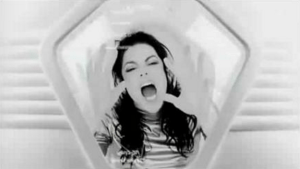
Screen Shot from Michael Jackson and Janet Jackson's "Scream" (1995) video, May 5, 2016. (http://www.vidivodo.com).

Screen Shot from Michael Jackson and Janet Jackson’s “Scream” (1995) video, May 5, 2016. (http://www.vidivodo.com).

So I projected the outward appearance of supreme confidence and faith in Jehovah and this slant on the ten Lost Tribes of Israel, to protect myself from being hurt and to see if this whole Hebrew-Israelite thing really was for me. Not a good move going into middle school and the Humanities Program later that year. I had no idea how much worse my life was about to become in the two years between the end of my friendship with Starling and my family’s fall into welfare poverty, bumps, bruises, babies and concussions along the way.

It wasn’t until the end of eighth grade that Starling and I began exchanging “Hi’s” again. Even then, this was often forced. The only conversation I had with Starling after our fight was at the end of ninth grade, with him letting me know that he was moving with his family down South. Starling Churn left with his family for Wilmington, North Carolina in the summer of ’84, still believing I was well on my way to eternal damnation.

That friendship’s rise and fall has helped me understand who friends really are. Ultimately a friend is someone who isn’t a relative but you gravitate toward and have shared interests with, a person who has sympathy and empathy for you and your life. A person who isn’t afraid to tell you when you’re fucking up and who doesn’t shun you when you lose your way. That’s a real friend. I’ve had and still have, thankfully, a core group of ride-and-thrive friends who fit (or at least come close to it) this definition.

Starling and I couldn’t. We were tweeners, after all, and pseudo-intellectual ones with inflated egos from straight-As at that. And in a country that barely tolerates anything other than blind, unthinking Christianity and a false sense of patriotism, maintaining a friendship in the midst of a major religious shift — even a childhood one — was and is nearly impossible.

Afrocentrists, Evangelicals, Hebrew-Israelites and the False Revolution

28 Monday Mar 2016

Posted by decollins1969 in 1, Academia, Boy @ The Window, Carnegie Mellon University, Christianity, culture, Eclectic, Hebrew-Israelite, Mount Vernon New York, Patriotism, Pittsburgh, Politics, Pop Culture, race, Religion, University of Pittsburgh, Youth

≈ Leave a comment

Tags

Afrocentric, Afrocentricity, Authentic Blackness, Authority Figures, Black Action Society, Child Abuse, Covenant Church of Pittsburgh, Cross of Gold (1896), Dick Oestriecher, Domestic Violence, Estelle Abel, Evangelical Christianity, Frances Cress Welsing, Frederick K.C. Price, Gospel of Prosperity, Hoteps, Jack Van Impe, Judah ben Israel, Karl Marx, Kenneth Copeland, Kufi, Marxism, Maurice Eugene Washington, Molefi Asante, Neo-Marxists, Ostracism, Prosperity Gospel, Racism, Rapture, Religion, Wendy Goldman, William Jennings Bryan


Kenneth and Gloria Copeland, Believer's Voice of Victory television broadcast, November 23, 2011. (Carpetsmoker via Wikipedia). Released to public domain via CC-SA-3.0.

Kenneth and Gloria Copeland, Believer’s Voice of Victory television broadcast, November 23, 2011. (Carpetsmoker via Wikipedia). Released to public domain via CC-SA-3.0.

For nearly all of my life folks with even a kernel of authority have tried to convince me that there was one right way to live, one true path to liberation. Mostly religion has been the means through which others have attempted to box me in, although ideologues around Marxism, Afrocentricity, and Capitalism have all been in my figurative kitchen over the years. And like any well-meaning human being, at times I tried real hard to adapt myself to these right ways of thinking, of living out the one correct way to live. Only to fail, or rather, to recognize that none of these ways are the one right way, unless you are a closet right-winger, a conservative (non-ideological) wearing revolution-esque clothing.

My introduction to this madness began with my years as a Hebrew-Israelite, from April ’81 to April ’84 (although I wore my kufi until September ’84). That any parent could suddenly impose a new religion on their kids without explanation is abusive enough. When combined with vague notions about the Lost Tribes of ancient Israel and the wearing of clothes that set us apart culturally while in the middle of puberty, it was a forced societal ostracism. Even still, I tried to live by these strictures. “Remember the Sabbath day and keep it holy.” Eat kosher food, don’t use Ivory soap, shop only at Black or Hebrew-Israelite stores, avoid “unclean issues of blood.” But the physical abuse and poverty that came with being a Hebrew-Israelite in the Judah ben Israel madhouse of contradictions at 616 made me despise anything involving Hebrew-Israelite pretty much for all time.

Molefi Asante speech, Philadelphia, PA, September 13, 2014. (AP photo/file).

Molefi Asante speech, Philadelphia, PA, September 13, 2014. (AP photo/file).

Fast-forward a few years to the early 1990s, to the rise of Afrocentricity and the Afrocentric ethos. After three and a half years of being around Hebrew-Israelites, these kente-cloth wearing fools made me weary more times than not of their exclusionary our-way-or-no-way Blackness. Molefi Asante and the late Frances Cress Welsing were just the tip of a much larger iceberg in search of revolutionary “authentic” Blackness. From the Afrocentric undergrads who hijacked the Black Action Society leadership at the University of Pittsburgh in 1991 to folks who picked arguments with me for “sounding White” while I was in grad school, I saw them the same way I saw my now idiot ex-stepfather and the obnoxious Estelle Abel from my high school days. They were well-meaning but stupid. As far as I was concerned, they thought that their words alone would foster a revolution, that being Black meant turning one’s back on the world while also indirectly embracing an ethnocentric capitalism. Or at least, a Black American collective individualism, otherwise known as an “Afrocentric cool.”  I could not, I would not, exchange one form of oppressive uplift in Hebrew-Israelites for the shiny fool’s gold that mostly represented the Afrocentrists.

The neo-Marxists I met in Pittsburgh throughout the 1990s were no better. For all their revolutionary rhetoric, theirs was a world of theoretical activism, of scholarly examples of past oppression. Most of them didn’t know poverty and didn’t comprehend oppression beyond their own limited experience. Most of all, they couldn’t find a connection between American racism and class oppression if I gave them an industrial strength magnet. The fact that most of them hadn’t read Franz Fanon, W. E. B. Du Bois, Eric Williams, C. L. R. James, Anna Julia Cooper, Zora Neale Hurston, Derrick Bell, Angela Davis — but could quote Karl Marx the way Hebrew-Israelites could quote the Torah and Afrocentrists could quote Asante and Welsing — I found troubling. That’s putting it nicely. I found it contemptuous that folks who didn’t know my experience or who would all but refuse to read folks who written about experiences like mine would expect my allegiance to an ideology that was never meant for people who look like me.

The evangelical Christian part of my life was literally the last of the major dogmas to go. It was the hardest for me because I literally had given my life to Jesus in the midst of the whole Hebrew-Israelite crisis, Easter Sunday ’84. With my Mom coming down the same path by the late-1980s, it made it easier to not interrogate my Christianity as thoroughly as I would excoriate Afrocentrists and Marxists in graduate classes and in articles and papers a decade later. But even at nineteen, I realized that the Van Impe’s weekly predictions of the Apocalypse were as ridiculous as Welsing’s exulting of the magical properties of melanin. Or, for that matter, a fake Balkis Makeda cautioning against the use of Ivory Soap among her Hebrew-Israelite flock because of a dream she had.

Grant Hamilton cartoon for Judge Magazine on William Jennings Bryan's "Cross of Gold" speech, Democratic National Convention, Chicago, July 9, 1896. (Wikipedia). In public domain.

Grant Hamilton cartoon for Judge Magazine on William Jennings Bryan’s “Cross of Gold” speech, Democratic National Convention, Chicago, July 9, 1896. (Wikipedia). In public domain.

I went along to get along for years, until the hypocrisy of evangelical Christianity’s Gospel of Prosperity became too much. They took the metaphor of William Jennings Bryan’s cross of gold and actually went literal and nuclear with it. Somehow being Christian now meant blind patriotic allegiance to anything US and fully supporting capitalism, and yet an exclusionary separation between “true” evangelical Christians and the rest of the world. Especially on Rapture Day.

The last time I sat comfortably in a pew was in January ’97, although I’ve been to churches of various denominations dozens of times since. I still believe in Jesus, the life and the death and even the resurrection. But I don’t believe in most who claim to represent him, yet turn around and ignore the vulnerable standing right in front of them, making weak claims around individualism and poverty in the process.

In so many ways, evangelicals, Marxists, Afrocentrists, and Hebrew-Israelites are more alike than different. They all insist on a singular path, a quintessential truth. While some aspects of their thinking are appealing, I find accepting their bullshit in entirety poisonous to my spirit, mind, and gastrointestinal tract. There still may well be a revolution or even a rapture, but it won’t be because of any of these groups.

Aside

Leaving Mount Vernon

26 Wednesday Aug 2015

Posted by decollins1969 in 1, Boy @ The Window, Christianity, culture, Eclectic, eclectic music, High Rise Buildings, Jimme, Mount Vernon High School, Mount Vernon New York, music, My Father, New York City, Pittsburgh, Politics, Pop Culture, race, Religion, University of Pittsburgh, Work, Youth

≈ Leave a comment

Tags

"Emotion (Ain't Nobody)" Remix (2014), "Swimming Pools (Drank)" (2012), Child Abuse, College, Domestic Violence, Emotions, Family, Kendrick Lamar, Leaving, Loneliness, Maverick Sabre, Moving, Pitt, Politics of Respectability, Poverty, Respectability Politics, Self-Awareness, Self-Discovery


I left for Pittsburgh and for the University of Pittsburgh on this day/date twenty-eight years ago, my first trip on my own. It was my first trip out-of-state since my Mom took me and my brother Darren on a bus trip to Pennsylvania Amish country in June ’78, nine years earlier. At 5:51 am on the last Wednesday in August ’87, with my older brother Darren’s help — and with my Mom and three of four younger siblings watching us from the living room window — I packed my luggage, Army sack, and two boxes of bedding and materials into a Reliable Taxi. We headed for East 241st to meet up with my dad. From there, we took the 2 Subway all the way to Penn Station, with enough time to board and get all of my stuff on the 7:50 am Pennsylvanian train to the ‘Burgh. For the second time in a row, my dad was sober, and gave me a glassy-eyed hug and shoulder squeeze. Darren was both sad and happy to see me go.

Amtrak's Pennsylvanian train pulling out of Altoona, PA station, heading east for Philly, NYC, uploaded February 2013. (Dustin F.; http://www.northeastrailfans.com/).

Amtrak’s Pennsylvanian train pulling out of Altoona, PA station, heading east for Philly, NYC, uploaded February 2013. (Dustin F.; http://www.northeastrailfans.com/).

I’ve gone over the trip to Pittsburgh and my transformation from a seventeen-year-old with the pent-up emotions of someone who hadn’t left May 31, 1982 behind throughout my eight years of blogging and through my memoir. I’ve written about moving on to Pittsburgh before. What I haven’t really written about fully is how I thought and felt in leaving Mount Vernon, New York behind. The short answer is, I was somewhere between terrified, joyous, embittered, and sad to go, and all at once.

I was terrified. It was my first trip on my own, to a city I’d never been to before, to a university I never visited prior to saying yes. I could meet people who might catch on that I was someone who had spent the previous six years with few acquaintances, much less friends. I was hopeful, but had zero idea what to expect.

But I really was happy to leave. Between my decade living at 616, the abuse, the poverty, the Hebrew-Israelite years, the constant ridicule, the years in Humanities, the constant work of watching after Mom, my dad, my siblings, I was through. Throw in a summer of obsession with and emasculation by Phyllis, and five years of realizing that I needed to get out, and going to Pittsburgh was a no-brainer. Heck, if I’d been a bit smarter about my application process, I could’ve just as easily applied to the University of Washington, Stanford, Northwestern, Georgetown, Michigan, University of Toronto and UPenn and almost certainly gotten in. It didn’t matter where I was going, really. I just needed to go and find my myself, and my education with that.

That last year or so in Mount Vernon had let me know that even with an academic scholarship (after a private investigation) from Columbia, staying would’ve been a huge mistake. Between the silent disdain and snickering of Black teachers at Mount Vernon High School around my sullen presence and the whole Estelle Abel episode at the end of four years of torment. Add to that the years of Black middle class folk talking at me about how my life was so much better because they marched or protested somewhere before I was conceived, or because they prayed for me. Add to that this insistence that I “give back to the community.” As if Black Mount Vernon had given me anything but a hard way to go since I was knee-high to a boil weevil.

Viewing and wake service for Heavy D, Grace Baptist Church, Mount Vernon, NY, November 17, 2011. (Mike Coppola/Getty Images; https://cbsnewyork.files.wordpress.com/).

Viewing and wake service for Heavy D, Grace Baptist Church, Mount Vernon, NY, November 17, 2011. (Mike Coppola/Getty Images; https://cbsnewyork.files.wordpress.com/).

As I saw it, the only difference between the vapid, seething facade of White liberalism among paternalistic White Mount Vernonites and the false smiles and frequent excoriations of Mount Vernon’s Black middle class was skin color. They drank deep from swimming pools full of what we now call respectability politics, born out of a need to be good examples to the world, like Kendrick Lamar described in “Swimming Pools” (2012). (Pour up [drank], head shot [drank]…faded [drank]). This isn’t the same as doing the right thing at the right time or speaking truth to power. You make money, wear nice clothes, drive a nice car, stand up straight, look a White man in the eye while firmly grasping his hand. And apologize for not being as assimilable as you pretend. It was 100%, USDA-approved bullshit, and it smelled like it a lot of days, too.

I was sad to leave, too. There was a part of me that still wanted to fit in, out of loneliness, if nothing else. I still liked Clover Donuts and some of the breakfast places on the South Side. I longed for some sort of acceptance, an acknowledgment that I was a real person, even though that would’ve required being around real people at 616, and in Humanities, and in the rest of Mount Vernon. I knew that I’d miss the close proximity to The City. I’d put my hopes and dreams in a place in which I knew I couldn’t afford to stay, literally and figuratively. That longing would come to haunt me in the coming year, but I’d eventually learn, I could always visit New York.

Aside

Finding A Memory, Knowing the Whole Truth

16 Thursday Jul 2015

Posted by decollins1969 in 1, Boy @ The Window, culture, Eclectic, Jimme, Marriage, Mount Vernon New York, My Father, New York City, Patriotism, Politics, Pop Culture, Youth

≈ Leave a comment

Tags

1976, 425 South Sixth Avenue, 616, 616 East Lincoln Avenue, Bicentennial, Big Wheel, Child Abuse, Child Neglect, Diana, Eidetic Memory, First Grade, Mother-Son Relationship, Mount Vernon Hospital, Nathan Hale Elementary, Photographic Memory, Playground, Repressed Memories, Sarai Washington, Sexual Abuse, Sexual Assault


From Cam Jansen Mysteries, a series of children's books about a girl with a photographic memory who would solve mysteries and take pictures in her mind of the clues, August 9, 2012. (http://appraisingpages.com).

From Cam Jansen Mysteries, a series of children’s books about a girl with a photographic memory who would solve mysteries and take pictures in her mind of the clues, August 9, 2012. (http://appraisingpages.com).

No one’s memories — even those whom are eidetic or whose memories can be near photographic — are perfect, especially over the long haul. As far as the scientific community knows, there are no exceptions. I include myself in that category. This despite having a memory cycle that has seldom let me down. Since August 8, 1974, there have been only a few gaps of any major significance. I might not be able to tell you exactly what I had for dinner on July 16, ’85, but my guess would include either chicken and dumplings or $5 spaghetti with meat sauce and frozen chopped broccoli, both courtesy of my shopping at C-Town in Pelham, New York almost every day (it was a welcome relief from the heat of sitting home at 616, anyway).

One area where my memory had let me down was parts of the summer of ’76, the bicentennial summer. I could vague remember being down in the city for some of the festivities that July 4th, followed by a long sleep on the free Metro-North ride that day, only to end up in New Haven, CT because my father had been drinking and sleeping on the train, too. I remembered my Mom buying a Polaroid and taking pictures of herself and us and her new furniture at 425 South Sixth at the beginning of the month.

And I remembered that this had occurred a couple of weeks later:

My first memories playing with a group of Black males in Mount Vernon, New York are all negative. When I was six in ’76, a group of preteens on the neighborhood playground near Nathan Hale Elementary on South 6th Avenue tried to force me into sucking one of their dicks, practically sticking it in my face to do so. I got away before being truly scarred for life.

But I knew that I couldn’t remember what occurred beyond that, not only for the rest of that day, but for the next three weeks afterward. It had bothered me for years that I couldn’t remember beyond the flash of images I did write down.

Even in writing Boy @ The Window (which thankfully wasn’t about my earliest years growing up), as much as I drilled down into my past, I couldn’t fully conjure the memory of this incident. And when I did try, I ended up inducing headaches.

It was the year after publishing my memoir that I realized my headaches weren’t just because I needed new pillows for my neck. I had a repressed memory, maybe even more than one. I didn’t try to find a way to un-repress the memory, though. I figured that if I concentrated on other memories from the spring and summer of ’76, it would manifest itself, one way or the other. The key was my Big Wheel, the only toy I truly loved growing up, and my first “girlfriend” in Diana, who moved away at the end of first grade. Those memories helped me conjure up the buried memories I needed to fill in the blanks.

Cecil Parker Elementary School (formerly Nathan Hale ES), Mount Vernon, NY,  November 23, 2006. (Donald Earl Collins).

Cecil Parker Elementary School (formerly Nathan Hale ES), Mount Vernon, NY, November 23, 2006. (Donald Earl Collins).

Over the course of a couple of weeks between Thanksgiving and Christmas last year, I either had dreams or wide-awake flashbacks that filled in my blanks. I was in fact sexually assaulted, by a light-skinned thirteen or fourteen-year-old. With the help of two of his friends, he had gotten his penis in my mouth while I was being held down to the ground on the rain-soaked, asphalt, Nathan Hale playground. I only got away because his friends were laughing after I spit his penis out of my mouth, laughing so hard that they were no longer holding me down.

I did a bit of digging into July ’76. I already knew from my memories it had rained on a Tuesday or Wednesday the week after July 4th. Turns out on that Wednesday, July 14, a quarter-inch of rain fell on the New York City area, as there was thundershower activity and high winds that afternoon, with a high of 78°F. That, unfortunately, confirmed everything.

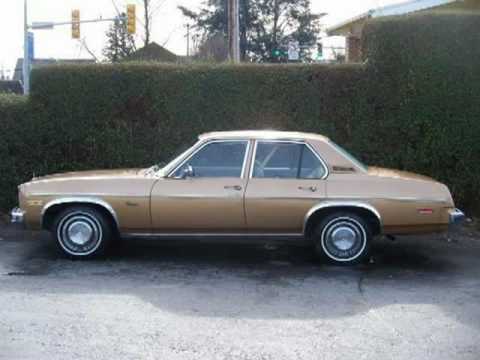
1976 Chevrolet Nova, Seattle, WA area (not the right color, but the right model), July 16, 2015. (http://youtube.com).

1976 Chevrolet Nova, Seattle, WA area (not the right color, but the right model), July 16, 2015. (http://youtube.com).

What I remembered next after was probably just as horrific. I didn’t tell my Mom about my incident for weeks, because I was supposed to stay home while she went to work at Mount Vernon Hospital that day. I did tell her, though, about three weeks later, on the first Saturday in August, as she and my father were arguing as usual. And, my Mom being my Mom, she didn’t believe me, leading to my first attempt at taking my own life. I ran out of 425 South Sixth, straight into the street, and waited to be run down by an older Black guy in a Chevy Nova (more on that at a later date).

But maybe what triggered these repressed memories in the first place was the trauma of losing my sister Sarai in July ’10. After all, that’s also the week I learned that one of my younger brothers had been raped by a short Black guy in his early twenties while pursuing his video game addiction via arcades at the age of nine. As traumatic as that revelation was, it was my Mom’s response that was the most chilling. “It serves you right. I told you to stay away from that man,” my Mom said in response.

Maybe it was too much for my Mom to hear on the same week as her only daughter’s death. Then again, from what I’ve come to remember now, finding out about any one of her children being abused was always too much for my Mom to bear. As for me, knowing the whole truth has made sleeping much easier, my dreams more peaceful, and my headaches all about stress and neck tension.

On Kicking My Damsel-in-Distress Syndrome

07 Saturday Mar 2015

Posted by decollins1969 in 1, Boy @ The Window, Christianity, culture, Eclectic, Hebrew-Israelite, Jimme, Marriage, Mount Vernon New York, My Father, Pittsburgh, Politics, Pop Culture, Religion, Youth

≈ Leave a comment

Tags

"Ballerina Wendy", Atlas, Burdens, Child Abuse, Chivalry, Crush #1, Damsel-in-Distress, Damsel-in-Distress Syndrome, Domestic Violence, Father-Son Relationship, Feminism, Love, Misogyny, Misty Copeland, Mother-Son Relationship, Pitt, Resentment, Sexism, Wendy, Womanism


Chivalry with a suit blazer,   March 7, 2015. (http://genius.com)/

Chivalry with a suit blazer, March 7, 2015. (http://genius.com)/

This week marked thirty-three years since the fight that led to a crush that led to me falling in love for the first time, via a ballerina in training. The three-month period between March and June ’82 shaped how I dealt with teenage girls and women between the time I turned twelve and my mid-thirties. The crush on “Ballerina Wendy” and its mutation because of my stepfather’s knocking out of my Mom in front of me helped shaped my feminism, my womanism and my sexist damsel-in-distress syndrome.

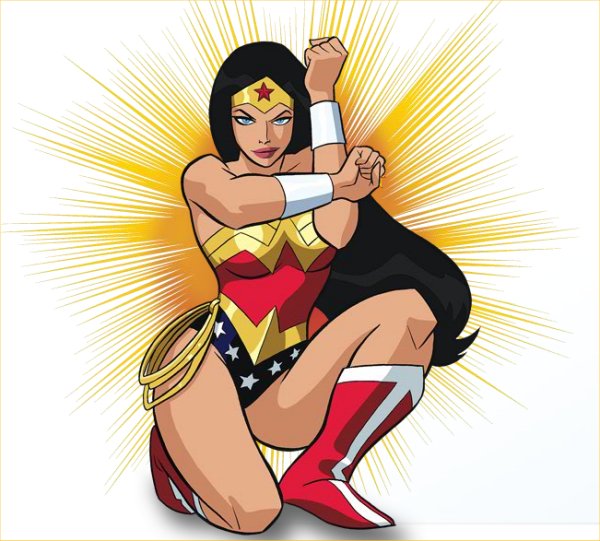
Wonder Woman, October 30, 2012. (http://tvequals.com).

Wonder Woman, October 30, 2012. (http://tvequals.com).

It was the beginning of my damsel-in-distress syndrome. Though it was triggered by the Memorial Day incident, my damsel-in-distress syndrome had been latent for years. I was in fact a mama’s boy, tempered by living at 616 and in Mount Vernon. I’d always been enamored by strong, athletic women (or at least, actresses with that role), going back to Lynda Carter as Wonder Woman. Yet I’d also been surrounded by sexism and misogyny, from my father calling my Mom a “Black bit'” since I was four to my stepfather’s constant quoting of the Torah to justify his laying of violent hands and feet on my Mom.

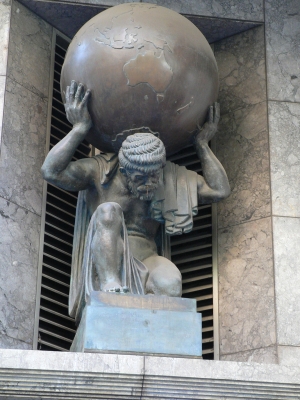
What I did in response was to help my Mom in every way I could, and in ways I never should’ve. Calling up Con Ed and Ma Bell to pay the electric and telephone bills. Listening to years of conversations about her failed marriages, about my father’s alcoholic failings, about her bills, about the burdens we as her children had put on her. Washing clothes for the house every weekend from October ’82 through August ’87 and anytime I was home for the summer and for the holidays once I went off to college. Going to the store as many as five times in a single afternoon and evening because my Mom forgot that she needed diapers or cigarettes. Hunting my father down for money even on weekends I didn’t want to be bothered because we were out of food for my younger siblings. Taking a fist-filled beating here or there from my stepfather to take the pressure off of my Mom. Promising my Mom that after I finished my degree, I’d come back to New York to work and help her out financially.

Atlas supports the terrestrial globe on a building in Collins Street, Melbourne, Australia, October 9, 2006. (Biatch via Wikipedia). Released to the public domain.

Atlas supports the terrestrial globe on a building in Collins Street, Melbourne, Australia, October 9, 2006. (Biatch via Wikipedia). Released to the public domain.

On that last promise especially, I reneged. I changed my major from computer science to history, and decided to stay at Pitt, to go to graduate school, to earn a PhD, to start writing, both in the academic world and a bit as a freelancer, to teach for a living. It was the basis, I think, for her falling out with me in ’97, and why our relationship remains limited.

My Mom was hardly the only woman in my life in which I wanted to assist. Some of my Pitt friends can certainly attest to this fact, that sometimes I was there to help too often. To the point where once I realized I was overburdened or when that other person had become too reliant on me, it pretty much killed that friendship. Either way, I was angry, and sometimes felt used, while some of my Pitt friends were either confused or angry themselves.

I’ve had to learn over the years to say no, even to my wife, when I realized that one too many logs on the fire will actually put that fire out. It started with everything high-tech. Every computer glitch, every printer error, every Internet issue, and I was there like Clark Kent, ready to help. But by the time I hit thirty-five, I was just too tired and felt too burdened to be that on all the time. I finally stopped helping my wife with her tech issues. I stopped offering to help, and have only interjected when the issue actually affects all of our equipment.

The irony is, my wife is a stronger person than my Mom, stronger in many ways than how I perceived Wendy as a person so many years ago. It’s not as if my wife doesn’t need or appreciate the help. But, as I’ve learned over the years, too, sometimes, help is just emotional support, a hug or a joke. Or, when I’m ready to, simply listening without feeling the need to use a quadratic equation to solve the problem.

American Ballet Theater soloist Misty Copeland in a promotional photo via her Under Armour ad deal, January 30, 2014. (Under Arnour via Huffington Post).

American Ballet Theater soloist Misty Copeland in a promotional photo (cropped) via her Under Armour ad deal, January 30, 2014. (Under Arnour via Huffington Post).

Damsel-in-distress syndrome, as chivalrous as it is, can also be extremely sexist, for both women and men and girls and boys. It means constantly attempting to help people who may or may not want your help, especially in cases where it is clear that they may need help. It means taking on emotional and psychological burdens that otherwise should only belong to the person you’re trying to support. It means, sadly, providing advice and knowing answers and solutions that may not be answers or solutions at all.

The Memorial Day ’82 incident with my mother changed what was an otherwise innocent crush and love into something contradictory even as it became more meaningful. It made me appreciate women who could and can kick some ass, whose strength would be obvious to all. And it made me think women who weren’t like that — women like my Mom — needed constant help from people like me. Wendy defended herself thirty-three years ago. My Mom tried and couldn’t. Life and strength for us, male and female and transgender, though, has never been that simple. And though I have saved quite a few damsels in distress over the years, it isn’t my eternal burden to carry.

The Comedy of a Tragic Upbringing

10 Saturday Jan 2015

Posted by decollins1969 in 1, Academia, Boy @ The Window, Christianity, culture, Eclectic, Hebrew-Israelite, Jimme, Mount Vernon High School, Mount Vernon New York, Movies, My Father, New York City, Politics, Pop Culture, race, Religion, Youth

≈ Leave a comment

Tags

616, 616 East Lincoln Avenue, Alchemy, Alcoholism, Autobiography, Child Abuse, Comedy, D.L. Hughley, Dave Chappelle, Domestic Violence, Eddie Murphy, Evangelical Christianity, Father-Son Relationships, Fatism, Ghetto Klown (2014), John Leguizamo, Lewis Black, Mother-Son Relationship, Neglect, Physical Violence, Playwright, Poverty, Psychological Abuse, Respectability Politics, Richard Pryor, Rodney Dangerfield, Routines, Stand-Up Comedy, Tragedy, Transmutation


John Leguizamo playing 'Abuelo' in Tales from a Ghetto Klown, PBS Arts Festival, July 2012. (http://www.pbs.org).

John Leguizamo playing ‘Abuelo’ in Tales from a Ghetto Klown, PBS Arts Festival, July 2012. (http://www.pbs.org).

Over New Year’s weekend, I watched John Leguizamo’s HBO comedy special Ghetto Klown (2014), based on one of his one-man autobiographical Broadway shows. I don’t think of Leguizamo as funny in the same way I think of Lewis Black or Dave Chappelle or Eddie Murphy. The sweet spot for me in terms of what is funny or not funny is a routine that makes me think for a second or two, not just laugh out of sheer expectations for a funny delivery or line. Otherwise, I’d think of D.L. Hughley as a great comedian, instead of as a vile one with equally vile opinions on race and culture.

Leguizamo’s hardly the funniest comedian. But then again, he’s always been more than one thing. He’s essentially a playwright, an actor, and comedian, which means Leguizamo’s a very elaborate storyteller. In most of his work, a nonfiction storyteller. I’ve seen some of his other one-man work before. With Ghetto Klown, though, I saw and felt the sense of tragedy and regret that I hadn’t seen in his other plays and specials. Especially when it came to his family — specifically his father — and his closest friends.

When Leguizamo went through his routine about how his mother and father were upset with him about he had portrayed them in his plays as somewhat selfish and oftentimes neglectful and abusive, I understood. I’ve only written one book about my life, and my Mom and dad have both been offended by the idea that I could write about them without their permission or blessings. Leguizamo used them as bits for his comedy and Broadway stage routines for years. That’s a lot of courage, and it’s a lot of tragedy to expose, too.

Transmutation of lead bars into gold, March 2013. (http://quazoo.com).

Transmutation of lead bars into gold, March 2013. (http://quazoo.com).

I’ve thought about it a few times over the past fifteen years. What if I decided to do a stand-up routine that included elements of my upbringing? How would I do that? How would I make domestic violence and child abuse and poverty funny?

I’d start with my father, who I’d call Jimme and my father interchangeably, since that’s been the nature of our relationship for forty-five years. I’ve been able to imitate his language, his drunken stupor, his evil meanness and off-kilter mannerisms since I was fifteen. It would be easy enough to do all of his “po’ ass muddafucka…” insults in bar scenes, all while getting robbed and beaten up by other alcoholics.

I could also do my now deceased ex-stepfather Maurice, especially his constant threats to put me in the hospital or kill me. “Watch dat base in yo’ voice, boy, ‘fore I cave yo’ chest in!,” he started saying to me once my voice changed with puberty. I could imitate Maurice when he weighed over 400 pounds and wore size-54 Fruit-of-the-Loom briefs around 616, with enough fat and dinginess to make me wanna puke.

I could even imitate my Mom, at least on the threatening front. If I argued with her too long about something important that she didn’t want to talk about (like paying bills, for instance), she’d tell me, “Shut up o’ I’ma gonna cut the piss out of you.” Or I could run around a stage singing at the top of my lungs to evangelical Christian music while also acting like my younger brothers, who’d get into knockdown fights in the living room while my Mom was in her spiritual zone.

The fact is, some of the best comedy grows out of tragedy. It may not be funny to the respectable middle class types or the respectability politics types. They both would prefer people “forget about” their pasts and “just move on,” as if these issues are taboo. But you can’t be a very good comedian or writer without confronting your upbringing in some way.

Richard Pryor doing stand up, posted August 11, 2014. (http://deadline.com).

Richard Pryor doing stand up, posted August 11, 2014. (http://deadline.com).

I attempted at times in Boy @ The Window to inject some sarcasm or comedy in many of the tragic scenes in the book. Because they reflecting my thinking in the moments in which they occurred, whether in ’82 or ’88. The few people who commented on this aspect of the memoir didn’t like the comedy or the language. It was because they couldn’t reconcile the mild-mannered version of myself that I presented to the world in high school or in academia with the way in which I grew up.

Watching Leguizamo in Ghetto Klown reminded me of what I learned in watching Rodney Dangerfield (who himself was sexually abused and neglected by his parents growing up) and Richard Pryor (the son of an active and neglectful prostitute) over the years. We all have baggage and demons to deal with every day of our lives. We ignore that past and those evils at risk to ourselves and every person we’ve ever loved. We must turn the tragedy of our upbringing into something that isn’t just a cancer of pain. Be it through storytelling, autobiography, even the kind of comedy that those whose lives were much more stable growing up can appreciate but can never fully understand.

Last Gasps, Anita Baker’s “Sweet Love,” and My ’86 Mets

26 Sunday Oct 2014

Posted by decollins1969 in 1, Boy @ The Window, culture, Eclectic, eclectic music, Mount Vernon High School, Mount Vernon New York, music, My Father, New York City, Pittsburgh, Pop Culture, race, Sports, University of Pittsburgh, Youth

≈ 1 Comment

Tags

"Sweet Love" (1986), 1986 World Series, Alcoholism, Anita Baker, Bill Buckner, Billboard Pop Chart, Cameo, Child Abuse, Club Nouveau, Coping Strategies, Domestic Violence, Drug Abuse, Giants, Grammys, Hip-Hop, Joe Morris, Living Vicariously, Mets, Mookie Wilson, R&B, Rap, Rapture album, Singing, Super Bowl XXI, WFAN


The Mookie Wilson-Bill Buckner connection, Game 6, 1986 World Series, Bottom 10th, Shea Stadium, Queens, NY, October 25, 1986. (http://halloffamememorabilia.net).

The Mookie Wilson-Bill Buckner connection, Game 6, 1986 World Series, Bottom 10th, Shea Stadium, Queens, NY, October 25, 1986. (http://halloffamememorabilia.net).

Sunday, October 26, 1986 was part of a great three days for me, perhaps the three best days during my Boy @ The Window years. My Mets had pulled off a miracle. They survived being within a strike of losing the ’86 World Series because Mookie Wilson put a ball between Boston Red Sox 1st baseman Bill Buckner’s rickety legs the night before. Anita Baker’s “Sweet Love” was #1 or #2 on the R&B charts and was near the top of Billboard’s Top 40 on this day twenty-eight years ago. Within the next thirty-eight hours, my Mets would complete the comeback, and win their second (and last, to this point anyway) World Series after falling behind 3-0 through the first six innings. Meanwhile, my Giants would run through the Deadskins at home in East Rutherford, NJ, as Joe Morris rushed for 185 yards in a 27-21 victory, on their own march to a championship title.

GoGurt, Yoplait's squeeze -in-mouth, portable yogurt, October 26, 2014. (http://freehotsamples.com).

GoGurt, Yoplait’s squeeze -in-mouth, portable yogurt, October 26, 2014. (http://freehotsamples.com).

My coping mechanisms were at their peaks, though, and had nothing else to do but crash down into the Earth. It was also my senior year in high school, a time of too many AP courses, too many college-going pressures, too many haters and doubters among my classmates, and too much of the grinding poverty and chaos that was living at 616. Within two weeks of my Mets, my Giants and Anita Baker’s first big hits, I’d discover my idiot stepfather’s pornography collection, nearly got set up with a prostitute because of my father, and face humiliation at the hands of my AP Physics teacher David Wolf and his boss Estelle Abel for the first time.

It took me almost two years to recover from the happenings of the mid-fall of ’86. In the process, I faced betrayal, ostracism, humiliation, broken-heartedness, and homelessness, but somehow managed to not make every song and every Mets and Giants (and Knicks and Rangers) victory a vicarious signpost for my own life. It helped that I started to think of Pitt — if not Pittsburgh — as my home, with concerns beyond living and dying with my New York teams and with relatively unknown but talented music artists.

Giants' RB Joe Morris running through Deadskins again, RFK Stadium, Washington, DC, December 7, 1986. (http://sikids.com).

Giants’ RB Joe Morris running through Deadskins again, RFK Stadium, Washington, DC, December 7, 1986. (http://sikids.com).

I learned other things along the way, too. That my Mets and Giants weren’t the perfect teams I thought they were. Between the alcohol and drug issues of Darryl Strawberry, Dwight Gooden, Len Dykstra, Lawrence Taylor, Kevin Mitchell, not to mention their and other teammates’ domestic violence issues, it was obvious to me that talent and winning were more important than living by a consistent code. Listening to the new 24/7 sports radio station WFAN when it began its run in the summer of ’87 showed me the hearts and minds of most fans. They obviously weren’t using sports as a coping strategy for dealing with the emotional grind of poverty and threats of abuse and domestic violence at home. Mostly White and male, their constant barrage of vitriol and disparaging racial commentary about my favorite athletes at that time — Mike Tyson in particular — actually made me wary of White sports fans for years afterward.

I also learned that with artists like Anita Baker and Luther was really the last gasp of R&B as I’d known it to be in the US. R&B was already too much like ’80s pop and a bit too mixed up with rock at times, but with Cameo’s “Word Up” and Club Nouveau’s cover of Bill Withers’ “Lean On Me,” R&B was already beginning its merge with hip-hop, and not in a good way, either. Yeah, there were some exceptions, like Levert, or Regina Belle, but the process of R&B devolving into some Yoplait GoGurt version of itself — with Autotunes, bad rap lyrics and worse rhyme spitters, and assembly-line hip-hop beats — had already begun.

Anita Baker, Rapture phase, circa 1986. (http://projects.latimes.com).

Anita Baker, Rapture phase, circa 1986. (http://projects.latimes.com).

Some of you may say, R&B’s still alive in the US, specifically in our churches, but that’s not true, thanks in large measure to Kirk Franklin. His work in the ’90s made it so that it’s taken longer for jazz to catch on in bands and choirs than rap and hip-hop. No, if you want to find R&B with actual singers these days, try the United Kingdom of Great Britain, try France, try Senegal, try Nigeria. But don’t try the US. Nicki Minaj is no Aretha, no matter how imaginative her videos and her clothes. For that matter, Iggy Azalea’s no Teena Marie, as the former doesn’t understand the difference between cultural appropriation and authenticity. Hip-hop sprang in part from the roots and branches of R&B, but like a parasitic vine, it has cannibalized those roots.

Still, it’s good to remember days like the ones I lived through twenty-eight years ago, with Anita Baker in my ear, my Mets in victory formation, my Giants lined up right beside them. Those days are gone, like the coping strategies I used to get through every one of those days. Not to mention the R&B that was more a part of my life than the hip-hop that my contemporaries were supposedly raised on.

← Older posts
Newer posts →

Boy @ The Window: A Memoir

Boy @ The Window: A Memoir

Places to Buy/Download Boy @ The Window

There's a few ways in which you can read excerpts of, borrow and/or purchase and download Boy @ The Window. There's the trade paperback edition of Boy @ The Window, available for purchase via Amazon.com at http://www.amazon.com/Boy-Window-Donald-Earl-Collins/dp/0989256138/

There's also a Kindle edition on Amazon.com. The enhanced edition can be read only with Kindle Fire, an iPad or a full-color tablet. The links to the enhanced edition through Apple's iBookstore and the Barnes & Noble NOOK edition are below. The link to the Amazon Kindle version is also immediately below:

scr2555-proj697-a-kindle-logo-rgb-lg

Boy @ The Window on Amazon.com: http://www.amazon.com/Boy-The-Window-Memoir-ebook/dp/B00CD95FBU/

iBookstore-logo-300x100

Boy @ The Window on Apple's iBookstore: https://itunes.apple.com/us/book/boy-the-window/id643768275?ls=1

Barnes & Noble (bn.com) logo, June 26, 2013. (http://www.logotypes101.com).

Boy @ The Window on Barnes & Noble: http://www.barnesandnoble.com/w/boy-the-window-donald-earl-collins/1115182183?ean=2940016741567

You can also add, read and review Boy @ The Window on Goodreads.com. Just click on the button below:

Boy @ The Window

Twitter Updates

Tweets by decollins1969
  • RSS - Posts
  • RSS - Comments

Archives

  • June 2025
  • April 2023
  • September 2022
  • August 2022
  • July 2022
  • June 2022
  • May 2022
  • April 2022
  • March 2022
  • January 2022
  • December 2021
  • November 2021
  • October 2021
  • September 2021
  • August 2021
  • July 2021
  • June 2021
  • April 2021
  • March 2021
  • February 2021
  • January 2021
  • December 2020
  • November 2020
  • October 2020
  • September 2020
  • August 2020
  • July 2020
  • May 2020
  • April 2020
  • March 2020
  • January 2020
  • December 2019
  • November 2019
  • August 2019
  • July 2019
  • June 2019
  • May 2019
  • April 2019
  • March 2019
  • February 2019
  • January 2019
  • December 2018
  • November 2018
  • October 2018
  • September 2018
  • August 2018
  • July 2018
  • June 2018
  • May 2018
  • March 2018
  • February 2018
  • January 2018
  • December 2017
  • November 2017
  • October 2017
  • September 2017
  • August 2017
  • July 2017
  • June 2017
  • May 2017
  • April 2017
  • March 2017
  • February 2017
  • January 2017
  • December 2016
  • November 2016
  • October 2016
  • September 2016
  • August 2016
  • July 2016
  • June 2016
  • May 2016
  • April 2016
  • March 2016
  • February 2016
  • January 2016
  • December 2015
  • November 2015
  • October 2015
  • September 2015
  • August 2015
  • July 2015
  • June 2015
  • May 2015
  • April 2015
  • March 2015
  • February 2015
  • January 2015
  • December 2014
  • November 2014
  • October 2014
  • September 2014
  • August 2014
  • July 2014
  • June 2014
  • May 2014
  • April 2014
  • March 2014
  • February 2014
  • January 2014
  • December 2013
  • November 2013
  • October 2013
  • September 2013
  • August 2013
  • July 2013
  • June 2013
  • May 2013
  • April 2013
  • March 2013
  • February 2013
  • January 2013
  • December 2012
  • November 2012
  • October 2012
  • September 2012
  • August 2012
  • July 2012
  • June 2012
  • May 2012
  • April 2012
  • March 2012
  • February 2012
  • January 2012
  • December 2011
  • November 2011
  • October 2011
  • September 2011
  • August 2011
  • July 2011
  • June 2011
  • May 2011
  • April 2011
  • March 2011
  • February 2011
  • January 2011
  • December 2010
  • November 2010
  • October 2010
  • September 2010
  • August 2010
  • July 2010
  • June 2010
  • May 2010
  • April 2010
  • March 2010
  • February 2010
  • January 2010
  • December 2009
  • November 2009
  • October 2009
  • September 2009
  • August 2009
  • July 2009
  • June 2009
  • May 2009
  • April 2009
  • March 2009
  • February 2009
  • January 2009
  • December 2008
  • November 2008
  • October 2008
  • September 2008
  • August 2008
  • July 2008
  • June 2008
  • May 2008
  • April 2008
  • March 2008
  • February 2008
  • January 2008
  • December 2007
  • November 2007
  • October 2007
  • September 2007
  • August 2007
  • July 2007
  • June 2007

Recent Comments

decollins1969's avatardecollins1969 on No Good Teaching Deed Goes…
Mary Rose O’Connell's avatarMary Rose O’Connell on No Good Teaching Deed Goes…
Lyndah McCaskill's avatarLyndah McCaskill on The Raunchiest of Them Al…

NetworkedBlogs on Facebook

NetworkedBlogs
Blog:
Notes From a Boy @ The Window
Topics:
My Life, Culture & Education, Politics & Goofyness
 
Follow my blog

616 616 East Lincoln Avenue A.B. Davis Middle School Abuse Academia Academy for Educational Development AED Afrocentricity American Narcissism Authenticity Bigotry Blackness Boy @ The Window Carnegie Mellon University Child Abuse Class of 1987 CMU Coping Strategies Crush #1 Crush #2 Death Disillusionment Diversity Domestic Violence Economic Inequality Education Family Friendship Friendships Graduate School Hebrew-Israelites High-Stakes Testing Higher Education History Homelessness Humanities Humanities Program Hypocrisy Internalized Racism Jealousy Joe Trotter Joe William Trotter Jr. K-12 Education Love Manhood Maurice Eugene Washington Maurice Washington Misogyny Mother-Son Relationship Mount Vernon High School Mount Vernon New York Mount Vernon public schools Multiculturalism MVHS Narcissism NFL Pitt Pittsburgh Politics of Education Poverty President Barack Obama Race Racial Stereotypes Racism Relationships Self-Awareness Self-Discovery Self-Reflection Sexism Social Justice Teaching and Learning University of Pittsburgh Violence Whiteness Writing

Top Rated

Blog at WordPress.com.

  • Subscribe Subscribed
    • Notes from a Boy @ The Window
    • Join 103 other subscribers
    • Already have a WordPress.com account? Log in now.
    • Notes from a Boy @ The Window
    • Subscribe Subscribed
    • Sign up
    • Log in
    • Report this content
    • View site in Reader
    • Manage subscriptions
    • Collapse this bar
 

Loading Comments...