• Spinning Sage’s Gold: Allegories on the Western-Dominated Present and a Possible Post-Western Future (2025)
  • About Me
  • Other Writings
  • Interview Clips
  • Video Clips
  • Boy @ The Window Pictures
  • Boy @ The Window Theme Music

Notes from a Boy @ The Window

~

Notes from a Boy @ The Window

Category Archives: Boy @ The Window

From One Starving Writer to Another

19 Sunday Mar 2017

Posted by decollins1969 in 1, Boy @ The Window, culture, Eclectic, Mount Vernon High School, Mount Vernon New York, Pop Culture, University of Pittsburgh, Youth

≈ Leave a comment

Tags

"The Raven", AP English, Columbia, Crush #2, Edgar Allen Poe, MVHS, Phyllis, Poverty, Rosemary Martino, Self-Discovery, Teaching and Learning, The Starving Artist, UMUC, Writing Career


Raven eating a hand (in my case, the writer’s dead hand), March 19, 2017. (creativeuncut.stfi.re via http://pinterest.com).

Six years ago, a student of mine made a reference that very much reminded me of, well, me, the person I was my senior year at Mount Vernon High School. It was as part of a conversation about looking for work. She didn’t want to be another starving artist, living in some basement apartment somewhere, “smearing paint on a canvas” while waiting for a big break. I thought at the time that the idea of a starving artist had all but died out in the era of bling-bling.

But it made me think for a while about the choices I’ve made with my life and career in the years since the middle of my senior year at MVHS. I once said to my AP English teacher Rosemary Martino that I didn’t want to be a starving artist “like Edgar Allen Poe” all those years ago. Now a student had made a similar — although better developed — reference. I think I understood better the momentary look of shock on my former teacher’s face after that conversation.

My student made me think about what Martino saw in my writing so many years ago. I certainly wasn’t focused on it. The same week she commented on making myself into a writer was also the week I had my Ivy League dilemma, between Columbia and the University of Pittsburgh for undergrad. I was waist-deep into my obsession with Phyllis, or really, my obsession with my crush on Phyllis. So much so that I wrote my creative writing assignment for Martino about me and my Crush #2, switching the names to “Donna” and “Phil” to barely cover up the truth of this otherwise short fictional work. Martino returned it without comment. She did comment heavily, though, on my assessment of Henrik Ibsen’s A Doll’s House, a series of redundant paragraphs in search for a coherent sentence.

But my wack “The Way It Is” title was as much an indication that I was as far away from seeing myself as a writer as Earth is for Alpha Centauri without a faster-than-light-speed vehicle. And I was starving on so many levels back then. For food. For attention. For love. For a connection with anything or anyone who didn’t remind me of my poverty. Martino’s encouragement, though she obviously meant well, sent me scurrying in my mind for something a bit more comfortable than Poe’s indebted and untimely death.

My own student’s commentary made me wonder if the quality of my life and career would be better these days if I had embraced the promise Martino saw in my writing back then. I mean, I was already a slightly malnourished six-foot-one and 160-pounder at that point anyway. The inner struggle to put thoughts to paper creatively would’ve been much easier at seventeen than it is as a married forty-seven year-old with a contrarian teenager and bills to pay.

Maybe so. But until Noah or one of his progeny designs a time machine, I can’t rewrite my history in order to make me embrace what I now see as my calling. All I know is that those words I uttered in March ’87 have stayed with me for three decades. The question of finding and following my calling has always been juxtaposed with my need to eat and pay the rent and other bills. How do I do both without dropping one of the balls that I’m juggling?

The issue for more than half of my adult life was finding my calling. Along the way, I spent the summer of ’88 unemployed, the first week of my sophomore year at Pitt homeless and three weeks in May ’91 losing sixteen pounds for lack of food. Not to mention six weeks of unemployment in ’93, walking to Carnegie Mellon many a time in the snow with holes in my sneakers in ’94, and two and a half years of underemployment from December ’96 to June ’99. I was a starving writer long before I saw myself foremost as one. In all, I’ve probably made about $2,500 in direct net income as an author and writer since 2003 (half through Fear of a “Black” America, the other half in the past two years), not counting consultancies or giving talks based on my writing. If I depended on my writing income, I maybe could pay the cable bill or treat us to a night of Cheesecake Factory and a movie. Two or three times a year. When one doesn’t follow their calling and doesn’t follow a typical path to making a buck, the tendency is insufficient funds.

Creative abilities, even genius, may well drive people mad, but most folks in pursuit of their calling aren’t fools. No one, including the starving artist, wants to starve. Some of us, though, have a desire for much more than the ability to get a job, any job, and hold one long enough to see our own kids graduate from college and meet someone they truly love. Even with the responsibilities of adulthood, we shouldn’t give up on our own aspirations, for it’s those things that we reach for (although not at all costs) that will help others — including the most important folks — in our lives pursue their own calling.

Michael Clayton, My Writing, and 20 Years of Sinai-Wandering

16 Thursday Mar 2017

Posted by decollins1969 in 1, Academia, Boy @ The Window, Carnegie Mellon University, culture, Eclectic, Pittsburgh, Pop Culture, race, Religion, University of Pittsburgh, Work, Youth

≈ 2 Comments

Tags

Academia, Academic Writing, CMU, Dan Resnick, Falsehoods, Gene Clayton, George Clooney, Lies, Michael Clayton, Michael Clayton (2007), Mythology, Pitt, Politics of Academia, Publish-or-Perish, Richard J. Altenbaugh, Scholarship, Sean Cullen, Unwritten Rules, Writing, Writing Career


George Clooney and Sean Cullen in Michael Clayton (2007), March 15, 2017. (http://bbc.co.uk).

My favorite scene from Michael Clayton (2007) is when the title character’s brother Gene (played by Sean Cullen) confronts Michael (played by George Clooney) about the past seventeen years of his career as a fixer.

You got these cops thinking you’re a lawyer. You got these lawyers thinking you’re a cop. You got everybody fooled, don’t you? Everybody but you. You know exactly what you are.

About a year and a half ago, I figured I could insert the words “writer” and “scholar” in those lines, with twenty years of my career(s) for context, and maybe some of the meaning would be correct. I am a writer’s version of Michael Clayton. I’ve got academicians thinking I’m a unscholarly writer, and journalists and editors who think I’ve only written for scholarly audiences. What a mess!

Last year, after receiving a rejection for a version of my article about American narcissism, American racism, and why real conversations on race (whether through Clinton’s Race Initiative or via Ferguson) are all but impossible, I decided no more. I will not seek to submit another scholarly piece to a peer-reviewed scholarly journal ever again. And if asked, unless it’s something I truly feel passionate about, I will say no.

Do not think of this as sour grapes. I have published two full-length journal articles in my career, not to mention a bunch of the standard book reviews, and an op-ed for Teachers College Record in the past. Technically, I am 3-for-11 in publishing academic articles over the past two decades, not great, but hardly abysmal.

My issue is with the elitism and implicit bias that is rampant in the publish-or-perish world of academia. While some folks could argue it is the same in publishing in general, it really isn’t. The unwritten rules in publishing, if not followed, may well still lead to published articles, even if a person is starving and homeless in between. In academic publishing, not following the rules leads to ostracism, and a career dead before it ever begins.

Keep in mind, no scholarly journal pays authors for their articles. It takes about two years to go from submission to publication in most history and education journals. If twenty people read your article, that’s icing on a protein-powder cake. If you aren’t in the tenure-stream, though, it really doesn’t matter how many articles you publish, because it doesn’t provide job stability or security. As a former nonprofit administrator, it scared most of my supervisors whenever and wherever I published, so no benefits there either. For those in tenure-stream positions, it does matter, no matter how crappy the research or how densely unreadable the writing.

After twenty years in the publishing struggle, it’s time to face the truth. I simply wasn’t good enough to publish in academic journals. I’m not talking about my writing ability or research skills. I’m pointing out my eclectic career path, my lack of tenure at an elite university, with few to vouch for me when I was younger and an up-and-comer. My interdisciplinary research on race, on multiculturalism, on education, meant that I was a misfit from day one. Heck, I know for sure in at least one case, a journal editor held my race and age against me.

Sinai Desert, where Moses, the Israelites (and I) wandered for a generation, Egypt, March 9, 2010. (Tommy from Arad via Wikipedia). Released to public domain via CC-BY-SA 2.0.

I know most of the academic writing rat-race is a system of exploitation based in part on fears of joblessness, loss of prestige, and elitism based on class, race, gender, and whether one teaches at an elite university or at a community college. It is based on an academician’s ability to blame themselves and themselves alone for their failings, and not the oppressive publishing system itself. Kind of like the poor blaming themselves for their poverty. Or Whites and Blacks blaming other Blacks for a degenerative culture instead of looking at systemic racism as the real culprit for racial inequality. Academia is very much in and of this wider world of social injustice and oppression, no matter how university presidents attempt to spin it.

Truly, I find the idea of a cold, objective, dispassionate, dense writing style as more serious and scholarly than any other form to be high-grade bullshit. It’s what folks in academia tell each other. Just like many a journalist and editor is a frustrated writer looking for creative and book manuscript-length outlets, many a writer in academia believes their writing (and as often as not, their research) to be much more than it is.

But the biggest issue for me was my elitist and naive attempt to straddle the fence between academic publishing and writing for wider audiences. This living in two worlds began for me during my heady days, my grad school years at both the University of Pittsburgh and Carnegie Mellon. Some of my history professors, like Paula Baker, Kate Lynch, and Joe Trotter, all tried with a considerable amount of frustration to get me to write in more scholarly tones. Others seemed to be fine with my writing style. I had a tone that was too “journalistic,” according to my racial paternalistic professor Dan Resnick, who meant it as an insult.

Between 1997 and 2002, I churned out eight full-length pieces (in the 20-35-page-range) on multiculturalism and Black education/history meant for peer-reviewed scholarly journals, four of them between February and December 1997 alone. None of them were ever published. One, an admittedly ambitious state-of-the-subfield piece on multicultural education and its history in American education, elicited a response from the History of Education Quarterly’s editor-in-chief. He was my one-time professor during my first year of graduate school at Pitt, Dick Altenbaugh. Him and his managing editor met with me for nearly an hour and a half in March 1998.

Some of the meeting was about the deficiencies in my article and in my argument. But most of the time was about my writing style, my ambitiousness, and quite frankly, my age and race. I wrote about some of this in Fear of a “Black” America. Apparently, at twenty-eight, I needed to be in my mid-40s to write a grand essay on multicultural education. Allegedly, I needed long-retired (and in one case, dying) White scholars to support my arguments, no matter what evidence I brought to bear. I needed, most of all, to stop being so ambitious about my work, and stick to more objective, run-of-mill, 181-variations-on-a-theme topics in the education field. Like what Karl Marx or John Dewey would have to say about ability grouping.

I gave up on academic publishing in 2002, at least on the topic of Black education/history and multiculturalism. I tried to write articles on everything from social justice movements to the fallacies of the liberal-conservative construct, on education, poverty and mythology of American social mobility, even on intersectionality. Only, I had worked so hard to make myself more of a scholarly writer. So much so that I now had to relearn how to write for more than fifteen people, and really, to write for myself. It took about a year to drop the 40, 50, and 60-word compound sentences, the use of inappropriately complex language, and the mask of dispassionate objectivity in my writing. Ironically, this was also when I published my first scholarly piece, on multicultural conservatism and Derrick Bell’s “Rules of Racial Standing,” in 2003. I also published my first solo op-ed, in the Washington Post, around the same time.

By this time, I saw myself as a recovering academic. I also had some unfinished personal business, around how I got to my mid-thirties, to this place in my life where I had “made it,” sort of, but I hadn’t escaped my past. This was where the story of Boy @ The Window took over, and why I have a memoir and nearly ten years of blog posts.

But because of my nonprofit work on college access and retention, two professors invited me and my team to submit a piece for publication in their journal. It was a four-person piece with me as the primary author (I wrote about 90 percent of it, so there’s that). The original invite was in June 2007, and the article came out in mid-October 2009. I had stopped working for the Academy for Educational Development, and found writing the article like a strait-jacket and a time-gobbler.

Michael Clayton (George Clooney) and a horse, a moment of truth, screen shot and crop, 2007. (http://chud.com).

After Boy @ The Window in 2013, I decided to write articles for a broader audience again. This time, I made the decision to take my memoir-writing experiences and apply them to my writing. I started writing about K-12 and corporate education reform, the problems in higher education, about racism in the Obama era, about poverty and its connections to race, gender, and current issues. And over the past two years, I’ve published more and reached more people than I could ever have done with an award-winning article in the Journal of American History.

So academia, you win. I give up.

How Libraries Got Me Through

07 Tuesday Mar 2017

Posted by decollins1969 in 1, Academia, Boy @ The Window, Christianity, culture, Eclectic, Hebrew-Israelite, Mount Vernon New York, Pittsburgh, Pop Culture, race, Religion, University of Pittsburgh, Youth

≈ Leave a comment

Tags

Books, Carnegie Library of Pittsburgh, Charles Schulz, Hillman Library, Learning, Libraries, Montgomery County Public Libraries, Mount Vernon Public Library, MVPL, New York Public Library, NYPL, Peanuts, Pitt, Self-Discovery, Transformation


Mount Vernon Public Library’s east entrance, Mount Vernon, NY, July 2, 2016. (http://maps.google.com).

I’ve been enthralled with books since my brother Darren helped me decipher the code of the English language during Christmas ’74. Going to the library for most of my life — especially my growing up years — was always a break from the Grade II bone bruise that my life often seemed to be. I remember the first time my Mom took us to Mount Vernon Public Library, in August ’74. It was only a few blocks from our old place, 48 Adams Street, and about seven blocks from 425 South Sixth. I was too young to get a library card, though, and I started complaining. “May-wa! May-wa!” — that’s what I used to call my Mom (a combination of her name Mary and Mama) — “Why can’t I get a card?,” I cried on my way out the door.

A New Rochelle Public Library card (a close approximation to my first card from 1975), March 1987. (http://flickr.com).

I got my first library card in first grade. It was a class trip, as me and the rest of Ms. Griffin’s class walked to and from Nathan Hale ES to Mount Vernon Public Library. The librarians gave us a tour, during which a thunderstorm erupted. It was sometime in September ’75, a Friday I think. But feeling that small, round-edged MVPL card in my hand with that stamped metal plate on it made my otherwise rainy day. That it had my name typed on it helped as well.

I spend many hours at Mount Vernon Public Library over the years. I needed to. I had so much to learn, more than the 28-volume World Book Encyclopedia set from 1978 could teach me. And certainly more than what my parents and idiot ex-stepfather Maurice knew, much less what they decided not to share. MVPL got me through my spiritual crisis of 1983-84, because I had access to the Qur’an, Torah, and other spiritual texts from which I could make a decision and move on from the cultish Hebrew-Israelites in my family and life. I wouldn’t have considered majoring in history if I hadn’t been able to check out dozens of dusty World War II books between 1980 and 1982. My love for all things Charles Schulz and Peanuts couldn’t have developed without the help of MVPL’s weekly Bookmobile visits at Nathan Hale on Tuesdays or William H. Holmes ES on Wednesdays, usually between 1:30 and 2 pm.

But by the summer of ’80, I began to realize that not all libraries were like the enormity of Mount Vernon’s. Nearby Pelham Library was on the ground floor of Hutchinson Elementary School. It was the size of a small bookstore, with maybe two tables and six chairs to sit in (they didn’t move into their own building until 1995). New Rochelle’s library was 1970s-style modern, with ugly shapes and colors. But both had more air conditioning and bathrooms that didn’t smell or weren’t under repair half the time.

From high school on, I used libraries mostly as a form of escape from my then-idiot stepfather and a gaggle of younger siblings. Or to escape the desperate poverty and chaos that enveloped my life at 616, and to a lesser extent, parts of Mount Vernon and other parts of the New York area. I first got the courage to go into the vastness that was the New York Public Library’s main branch on 42nd and Fifth in the fall of ’84. I infrequently went to White Plains’ public library. At least once between 1984 and 1988, I went to nearly all of the libraries between Wakefield in the Bronx and the various tiny libraries in southern Westchester County. But no library outside of NYPL’s main branch had both the collection and as easy access to the stacks as the one in Mount Vernon.

Carnegie Library of Pittsburgh, Oakland (Main) Branch, front entrance, Pittsburgh, PA, April 5, 2008. (HoboJones via Wikipedia). Released to public domain via CC-BY-SA-3.0.

I had more appreciation for one of the few pleasures offered by my original hometown during my twelve years in Pittsburgh. Within 230 yards of each other were the University of Pittsburgh’s Hillman Library and Carnegie Library of Pittsburgh’s main Oakland branch. If it weren’t for their extensive collections and my alumni status after the spring of ’91, I couldn’t have attended graduate school. Pitt’s policies toward alumni alone saved me $3,000 in book and printing costs, as well as from an additional year of dissertation research. And as many times I could pick up a book, any book, go to the African American Literature section of Hillman, put two lounge chairs together, read, fall asleep, and read some more? The only other thing I could’ve asked for was a blanket and room service!

Since moving to suburban Maryland and DC in ’99, I have been struck by the lack of in libraries around here. Lack of books, lack of extensive interlibrary networks, and a lack of substances over style. The Montgomery County library system had two new ones built in Silver Spring and in Rockville. Each has enough space for a half million volumes, it seems as if their designers built them on the assumption that everyone uses a tablet or an iPhone to read books these days. If it’s nonfiction and a bestseller, they likely don’t have it. Though DC Public Library’s main branch in Gallery Place — the Martin Luther King, Jr. Library — has an extensive collection of DC artifacts and histories, and African American nonfiction and scholarly volumes, patrons cannot borrow these volumes at all. Like the Library of Congress, the MLK library is mostly a museum with books. And by the way, the main branch is now closed for the next three years for modernization, leaving the homeless, researchers, and book lovers like me with even fewer DC area options.

Silver Spring Air & Space Museum, er, Public Library, Silver Spring, MD, June 2016 (http://www.adtekengineers.com/).

Georgetown and Johns Hopkins both have wonderful main libraries with friendly security guards and extra-helpful librarians. But they’re not Hillman. Even as a professor, if I fell asleep in a lounge chair, I’d likely get kicked out. Plus, in our era of smartphones and tablets, most patrons are stuck in social media in between hectic moments for exam cramming and last-minute paper writing. This, though, is still way better than George Washington’s main library, or NYU’s and Columbia’s, for that matter. You can’t walk into either without a form from a staff or faculty member giving you permission to walk through the door.

The building that houses MVPL, built interestingly enough with Andrew Carnegie’s money between 1897 and 1904, is in serious disrepair. The men’s bathroom is nearly always out-of-order, and the collection of Mount Vernon history materials has been closed for years. A friend recently commented on the fact that an older man relieved himself in the snow after leaving the library before going back in to do his whatevers. The money is simply not there to build a brand-new home for one of the largest collections in New York State.

Still, I know how good a library Mount Vernon has. It carries the first three of my former advisor Joe Trotter’s books. I have to go to a university library for that around here. It also has my memoir, and it may have Fear of a “Black” America as well (not so sure about that). I just know that the affluent of Montgomery County have never put that much in resources into the library system I frequent now. I hope and pray that the folks raising the money MVPL so desperately needs for a major renovation, maybe even a new building, are able to meet their goals before my son is old enough to remember when libraries actually held bound books in their collections.

Seasons Change for Us

08 Wednesday Feb 2017

Posted by decollins1969 in 1, Boy @ The Window, Carnegie Mellon University, culture, Eclectic, Marriage, Youth

≈ Leave a comment

Tags

Angelia, Happy 50th Birthday, My Wife, Through the Years, Turning 50


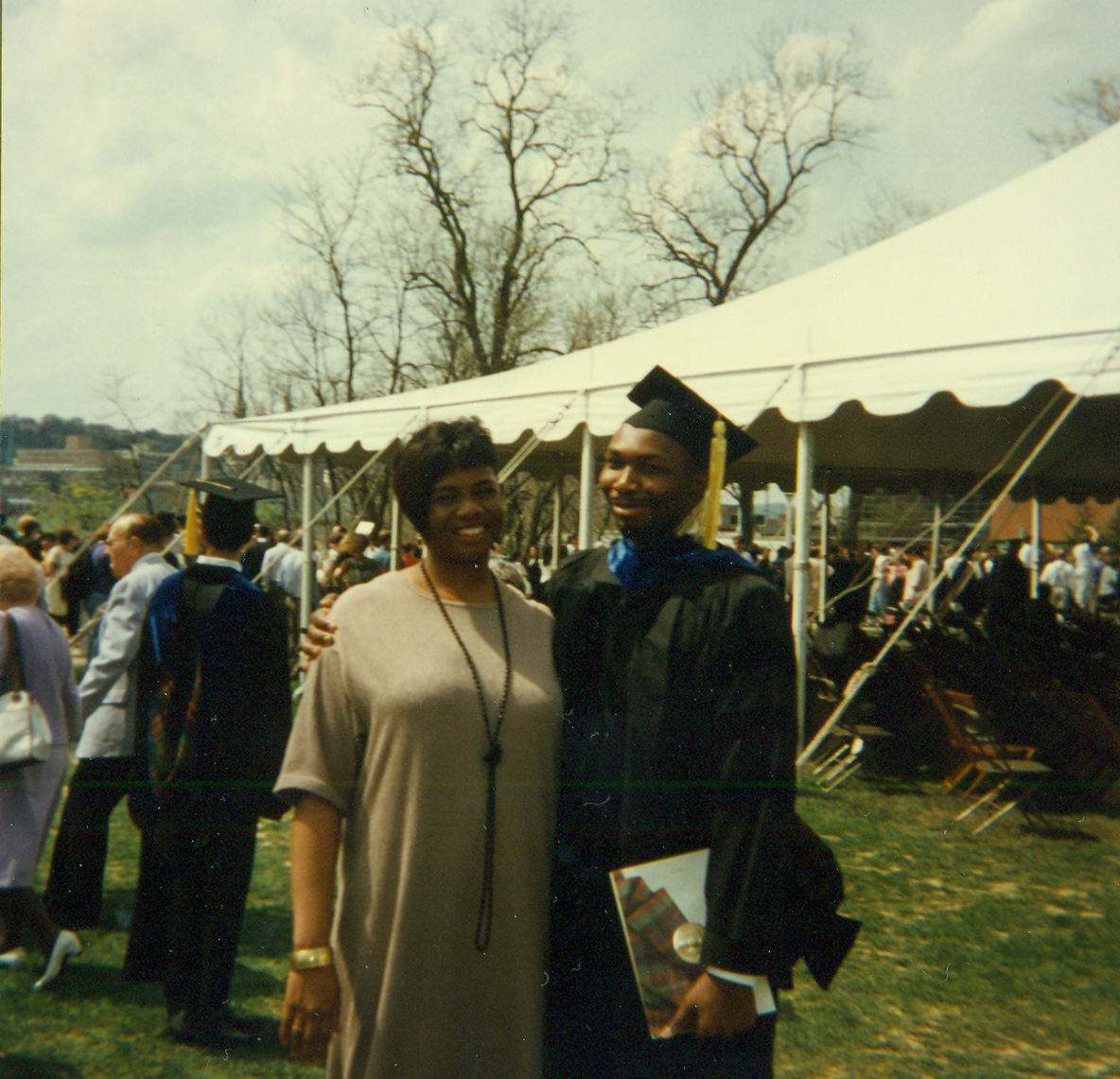
Angelia & me at my PhD graduation, Carnegie Mellon University, Pittsburgh, PA, May 18, 1997.

Angelia & me at my PhD graduation, Carnegie Mellon University, Pittsburgh, PA, May 18, 1997.

Yesterday, my wife of nearly seventeen years turned fifty years old (Happy Birthday! Love you! Mwah!). I still have nearly three years before I’ll be able to say the same. Yet through her, I can experience fifty at forty-seven. I have known of my wife since a month after her twenty-third birthday, met her for the first time in April ’90, became friends with her in May ’95, and began dating in December ’95. Sure, I have friends and family I’ve known longer. With my Mom being only twenty-two years older than me, I have memories of her from her late-20s onward. But I didn’t marry my Mom, thankfully.

Angelia at road stop in South Carolina during vacation, August 30, 2007. (Donald Earl Collins).

Angelia at road stop in South Carolina during vacation, August 30, 2007. (Donald Earl Collins).

I don’t have much to say here. I just want to share a few pictures of my better half from the 7s – 1997 (the year of her at 30), 2007 (when she was 40), and ~2017 (she wouldn’t let me take a photo of her yesterday for number 50). The problem with still looking young is that people seldom take your aging seriously. Whether it’s people just a few years older telling you your knees can’t hurt from years of basketball, running, and other sports because you’re “still young.” Or it’s doctors telling you your ailments are minor because you don’t look like you’re anemic or going through menopause. For my wife, though, the biggest bugaboo about how she looks at fifty is that she still gets carded at liquor stores or when ordering a drink at a restaurant. Oh well!

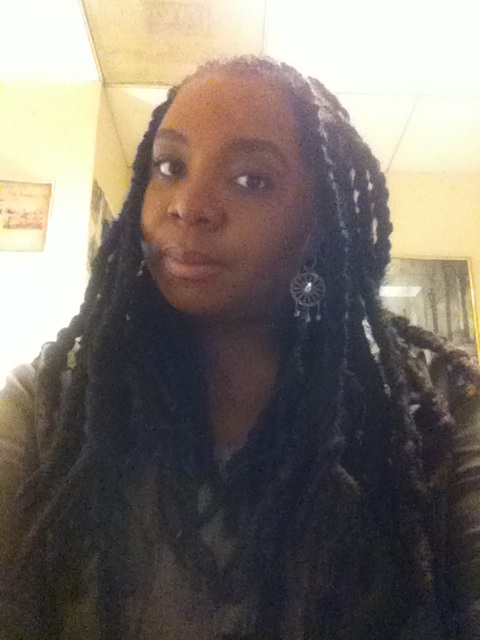
Angelia in year 50 (selfie), May 2016.

Angelia in year 50 (selfie), May 2016.

Lit on Moonlight

16 Monday Jan 2017

Posted by decollins1969 in 1, Boy @ The Window, culture, Eclectic, Hebrew-Israelite, Jimme, Marriage, Mount Vernon High School, Mount Vernon New York, Movies, My Father, New York City, Politics, Pop Culture, race, Religion, Sports, Youth

≈ Leave a comment

Tags

A.B. Davis Middle School, Barry Jenkins, Black Males, Black Masculinity, Bullying, Chiron, Coming-of-Age, Faggot, Hypermasculinity, Italian Club, Mahershala Ali, Manhood, Moonlight (2016), Mount Vernon High School, MVHS, Rage, Sexual Orientation


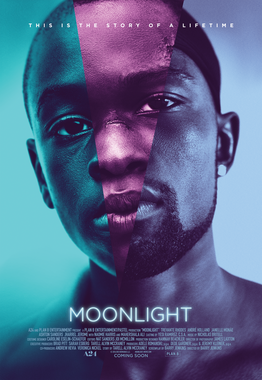
Moonlight (2016) poster, October 2016. (Film Fan via Wikipedia; orig. A24). Qualifies as fair use under US copyright law as illustration of subject/review of film.

Moonlight (2016) poster, October 2016. (Film Fan via Wikipedia; orig. A24). Qualifies as fair use under US copyright law as illustration of subject/review of film.

I finally, finally saw Moonlight with the wife and son at AFI Silver Spring yesterday, months after the in-crowd had already seen it and attempted to spoil it for the rest of us. It was excellent. The cinematography, the loud and incredible silences, the small moments, when actors just being in the moment with their facial expressions did more than any dialogue could to move me and anyone else watching. Mahershala Ali was only in five scenes. But his first scene set the tone for the whole movie. As Juan, Ali channeled both the need for hard hypermasculinity and the vulnerable fragility of such in just one scene. His time with the youngest version of Chiron made me laugh, cry, sad, and angry, and left me wondering if I’ve seen this much intimacy between Black man and Black boy on screen before. I know I have (Antwone Fisher, The Wire, even Roots comes to mind), but on-screen doesn’t reflect this anti-stereotypical slice of truth nearly as often as it should.

Moonlight snap shot (cropped), Mahershala Ali and Alex Hibbert, October 23, 2015. (http://variety.com).

Moonlight snap shot (cropped), Mahershala Ali and Alex Hibbert, October 23, 2015. (http://variety.com).

Yet I was also not as impressed as I expected to be. Not because I didn’t like the performances — I loved them. I thought every actor in the film was legit, every scene was moving in some way. Naomie Harris I’ve been fond of for years, André Holland and Janelle Monáe’s work I already knew, and Trevante Rhodes and Barry Jenkins, well, the two need bigger platforms for doing more great work. Moonlight wasn’t a film. It was a collage, a kaleidoscope of precious moments, blood-churning episodes, and tender images. Jenkins’ treatment of coming-of-age, Black boyhood into manhood, and Black masculinity, hypermasculinity, and vulnerability was avant-garde.

Still, I felt like I’d seen Moonlight before. Or, really, lived parts of Moonlight in my own past. No, I did not befriend an older, Afro-Cuban crack dealer in 1990s Miami, have a drug-addicted, abusive mother, or have a group of kids chase me around and beat me up off and on for ten years. But I didn’t look at the world the same way as my peers. I didn’t sound like a Noo Yawker, walk and talk and code switch like Denzel Washington, or try to fit in like so many of my 616 neighbors and my Mount Vernon school mates during my growing up years. And I paid for it, dearly, with few friends before I turned eleven, and no friends in the six years before I went off to the University of Pittsburgh.

But on Chiron and that most pernicious issue of hypermasculinity, the need to be hard all the time, I’ve been there too. I’d been called “faggot” (or in my father’s case, “faggat”) enough times to occasionally question my own sexual orientation growing up. My senior year at MVHS one day, I hit a three-run homer during a softball game in gym class. It wasn’t the first time I’d done that. But for one Jamaican dude, me drilling a ball 350 feet off his slow fastball was an affront. He called me a “faggot” after the game, and threatened to wait for me after school with a machete to chop me, adding “bumbaclot mon” at the end of his threat. I left school as normal and waited for him. He was lucky he didn’t show up that day.

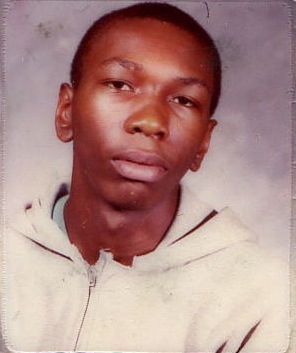
Me at 16, Mount Vernon High School ID, Mount Vernon, New York, November 1985, March 21, 2012. (Donald Earl Collins).

Me at 16, Mount Vernon High School ID, Mount Vernon, New York, November 1985, March 21, 2012. (Donald Earl Collins).

You see, my rage didn’t need years to build up. All before I’d finally lose it one day, and take out a bully with a wooden chair and break it across his back, like the way Chiron did at the end of II of Moonlight. I didn’t have bullies at school per se. There were a couple I dealt with at 616, but they weren’t regular. Many folks would make a crack, but generally left me along. Any bullying I faced in high school was completely random and momentary, because I stood up for myself. Because if I could face down a six-foot-one, Isshin-ryn black belt of an abuser in my idiot stepfather Maurice, a stupid football player was gonna get hurt trying to hurt me.

No, the bullying I faced was in middle school, from a bunch of overwhelmed and racist Italian classmates in Humanities. I’ve named them in Boy @ The Window and here in this blog before. Alex, Anthony N., Andrew, Anthony Z., etc, the Italian Club. That things were much, much worse at home meant that I saw them as background noise. There was always a part of me, though, that had enough rage, even in seventh grade, to take a desk and smash Anthony N.’s head in with it until his fuckin’ Italian brains spread out all over the floor and walls!

I ended up beating up a wannabe bully in JD that year instead. I won kufi battles in eighth and ninth grade. I wore a blank face that most of my more dumb ass classmates interpreted as a smile. I made plans to get out, because I never wanted to fit in. I was already awake, coping with the day-to-day, but in it for the long-term. I had that President Barack Obama, audacity-of-hope-beyond-failure, beyond reality thing goin’. When I saw Chiron as played by Ashton Sanders, I wanted to hug him, beat up his bullies for him, and tell him that you can love who you want to love, even if they never love you back. And to always, always be your best self, and not some “I don’t want to feel pain again” version.

Too Close for Comfort

30 Friday Dec 2016

Posted by decollins1969 in 1, Boy @ The Window, culture, Eclectic, Mount Vernon High School, Mount Vernon New York, New York City, Pittsburgh, Pop Culture, race, University of Pittsburgh, Youth

≈ Leave a comment

Tags

616, 616 East Lincoln Avenue, Code Switching, Embarrassment, Family Dysfunction, Humanities, JD, Laurell, Mom, Mother-Son Relationship, Pitt, Poverty, Self-Awareness, Self-Realization, The Bold and the Beautiful, The Gill Family, The Price is Right, Uncle Sam


Skyline of downtown Houston from Sabine Park, Houston, Texas, July 15, 2010. (Jujutacular via Wikipedia). Permission granted via GNU Free Documentation License.

Skyline of downtown Houston from Sabine Park, Houston, Texas, July 15, 2010. (Jujutacular via Wikipedia). Permission granted via GNU Free Documentation License.

My Mom and my Uncle Sam are in Houston, Texas/Bradley, Arkansas this week, burying their father and my grandfather, who died ten days ago, just three weeks after his 97th birthday. Given what they’ve told me so far, it seems like they’ve been treated as outsiders by my extended family of uncles, aunts, grand uncles and aunts, and cousins that I barely know or whom I’ve never met. They’ve learned some embarrassing stuff as well, details that I will not go into here. I had been conflicted about going versus not going, especially given that I’d only met my grandfather once, in June 2001, and that wasn’t a pleasant visit, at least environmentally speaking. After the past few days, I’m definitely glad I didn’t go.

My Mom and my Uncle Sam Gill, Jr., Mount Vernon, NY, November 23, 2006. (Donald Earl Collins).

My Mom and my Uncle Sam Gill, Jr., Mount Vernon, NY, November 23, 2006. (Donald Earl Collins).

I do feel bad for my Mom and Uncle Sam, though. And not just the natural empathy of feeling for your kin when their father passes away either. I feel for them because they are part of a family dynamic that has gone on for nearly a half-century without their input and with a limited bit of shunning as well. Some of this may well be deliberate, but most of this is natural, as time and distance has meant limited understanding and inclusion between my uncles and aunts with the New York Gills since the time of my birth in 1969. But some of this is about embarrassment, too. My Mom and my Uncle Sam’s lives haven’t exactly been a bowl of pitted cherries with whipped cream, either.

This is a topic that I’ve known all too well with my own family over the past three decades. One example would be the next to last day of 1988, the first year in which I rediscovered myself as someone other than an emotionally wounded twelve-year-old. It was a day of both eye-opening lies and hidden truths, a moment of unexpected boldness and moments of seeing familiar faces and places with different eyes.

It was the day my friend and former high school classmate Laurell decided to pick me up from 616 to spend time with her, as well as her friend Nicole, our former eighth-grade Algebra teacher Jeanne Longerano, and eventually, our mutual acquaintances JD and Josh. It was a day I was forced to code switch, to traverse my 616 world, my former Humanities world, and maintain my new conception of myself at the same time. It wasn’t exactly my Miles Davis moment:

screen-shot-2016-12-30-at-11-01-32-am

What I discuss in different parts of Boy @ The Window, but not in this particular scene, was the exact nature of “too disgusting” at 616. Let’s see. Blotches of gray and black stains on a salmon-colored area rug around a 19-inch television set in the living room. On top of the rug was my then stepfather Maurice who was laid out in nothing but his size-54 underwear. This meant that most of his 400-plus pound fatty bulk was exposed for anyone to see. A cobble of broken down sofas, busted chairs, and a

Deepwater Horizon oil spill aerial, Gulf of Mexico, May 6, 2010. (Reuters/Daniel Beltra via Flickr, http://motherjones.com).

Deepwater Horizon oil spill aerial, Gulf of Mexico, May 6, 2010 (same color as area rug with stains). (Reuters/Daniel Beltra via Flickr, http://motherjones.com).

kitchen table with hanger wire connecting each of its three remaining legs to the tabletop. Kitchen, hallway, and bathroom walls stained with grape jelly, crayons, and even feces. Dust balls the size of Matchbox cars in the hallway, lined up as if in rush-hour traffic. And the never-ending smell of cigarette smoke, overused cooking oil, and farts from eight human beings between the ages of four and forty-one. Seriously, what would anyone else have done under the circumstances, especially now that I was a fully awake college-aged student? I wasn’t acting just out of embarrassment or just to protect my Mom from embarrassment. I was acting to protect Laurell as well.

Contrast 616 with what happened next on December 30, 1988, between The Price is Right’s first Showcase Showdown and the end of The Bold and the Beautiful on CBS (roughly, between 11:25 am and 2 pm):

screen-shot-2016-12-30-at-10-05-18-am

Afterward, we went down the street to the nearest pizza shop, and hung out until midafternoon, telling each other what we thought would be the best thing to say. Even me. I didn’t talk about homelessness, or a semester without money for food, or living in a deathtrap in the South Oakland section of Pittsburgh. Laurell did give me a heartfelt hug after dropping me off at 616, still puzzled about why I wouldn’t let her and Nicole visit with my family. Hopefully, after years as a high school math teacher, she understands better now.

Biohazard symbol (orange), May 29, 2009. (Nandhp via Wikipedia). In public domain.

Biohazard symbol (orange), May 29, 2009. (Nandhp via Wikipedia). In public domain.

Even though my Mom and Uncle Sam are obviously just as much Gill as the rest of my extended family in Texas, Arkansas (and Washington State, Louisiana, and elsewhere), they’re not part of the everyday that my other uncles, aunts, grand aunts and uncles, and cousins have had with each other for decades. So the extended Gills cannot see my Mom and my uncle and their struggles the same way they see their own. Nor can my extended Gills see those things that may be embarrassing to my Mom and my uncle the same way either. It makes for a bewildering family dynamic. And this in many ways explains well why so many families have a hard time being families, in the closeness (and closest) meaning of the word.

Dysfunction is so much a part of families these days. but even in dysfunction, you can learn truths about yourself, especially in moments of life, death, and in my case, rebirth.

Yes, I’m A Sexist Feminist

27 Tuesday Dec 2016

Posted by decollins1969 in 1, Academia, Boy @ The Window, Christianity, culture, Eclectic, eclectic music, Hebrew-Israelite, High Rise Buildings, Jimme, Marriage, Mount Vernon New York, My Father, Politics, Pop Culture, race, Religion, Youth

≈ Leave a comment

Tags

Black Masculinity, Chivalry, Contradictions, Dahlia, Damsel-in-Distress Syndrome, Father-Son Relationship, Feminism, Masculinity, Misogyny, Mother-Son Relationship, Nice Guy, Owning Imperfection, Patriarchy, Phyllis, Sexism, Womanism


Hostile vs. Benevolent Sexism, March 10, 2015. (http://www.dailymail.co.uk).

Hostile vs. Benevolent Sexism, March 10, 2015. (http://www.dailymail.co.uk).

I finished up a chapter in Boy @ The Window with the closest approximation to my contemporaneous thoughts about Phyllis (a.k.a., “Crush #2” at times on this blog) in August 1988:

screen-shot-2016-12-27-at-7-43-51-am

I must’ve rewritten these two paragraphs at least a half-dozen times before putting the book out for limited consumption. The thought process that I went through at eighteen years old bothered me then, and looking at the words even today leaves me wanting. Probably because there is more than a bit of sexism contained within these words.

But I wasn’t wrong, of course, not in ’88, not when I wrote and rewrote these paragraphs between 2007 and 2011, and not now, at least in terms of how I perceived things then. While I believed in reproductive rights, in equal pay for equal work, and in passing the Equal Rights Amendment growing up, I also believed in saving damsels from distress and in distinguishing between “ladies” and “bitches.” Or, as my father put it when he argued with my Mom in front of me when I was four years old, “You’s a black bit’!” Or, my contradiction could’ve fully formed when my father tried to set me up with a prostitute a couple of weeks before my seventeenth birthday, in December 1986.

There was no way in 1988 I could’ve understood the contradictions between the idea of feminism (in any form) and the notion of “being a nice guy.” I hadn’t been exposed, or, rather, exposed myself to Paula Giddings, Elsa Barkley Brown, Evelyn Brooks Higginbotham, bell hooks, Maya Angelou, Angela Davis, and Zora Neale Hurston. I hadn’t yet been engaged in the hundreds of conversations I’d eventually have with women folk I’d become friends with, people with whom I bonded because of their suffering, people from whom I’d hidden my own suffering during those years. Date rape, physical abuse, the more typical abuse of serial cheating, among other issues. With many of these women, I recognized the sexism and misogyny I saw in myself in 1988, and saw them again when I wrote down my contemporaneous thoughts in Boy @ The Window. It didn’t occur to me until the mid-1990s that women could be just as sexist and misogynistic as men, and often could pass down their notions of masculinity and patriarchy to their children. And that thought scared me.

Imprisoned brain (or, maybe, Culture Club and "Church of the Poison Mind" [1983]), December 27, 2016. (http://mdjunction.com).

Imprisoned brain (or, maybe, Culture Club and “Church of the Poison Mind” [1983]), December 27, 2016. (http://mdjunction.com).

It scared me because I realized I may have learned more of my contradictions from my Mom than from my father or idiot ex-stepfather. After all, she was the one constant in my parenting, the one person who engaged me in ideas like chivalry and manliness, who through her acquiescence to Maurice might have made it okay for me to see women, especially Black women (and to a lesser extent, Latina women) as ones in need of help, even when they decide not to take it.

And it may have made it okay for me to see myself as the victim in my incident with Dahlia in June 1987, when I accidentally (the first time), and later deliberately smacked her on her left butt cheek. Maybe I was the victim in a way, at least of my own deluded thought process. And there hasn’t been a time in the past twenty-nine and a half years in which I haven’t regretted that second, deliberate slap, in response to Dahlia accusing of thoughts I didn’t have, because my only obsession in 1987 was Phyllis. I’ve said and written this before, including in Boy @ The Window. To Dahlia, I am so sorry.

Beijing smog alert, Beijing, China, December 6, 2016. (http://ibtimes.com).

Beijing smog alert, Beijing, China, December 6, 2016. (http://ibtimes.com).

I may never be the perfect intersectional womanist feminist I’ve tried to be since I told my Mom to abort my future (and since deceased) sister in 1982. I still believe that professional women’s tennis players should play best-of-five-set matches at the Gram Slam tournaments. I think more women — particularly White women — should stop calling themselves feminists if their feminism stops when dealing with women of color or poor women in general. I think that most men who aren’t feminists are assholes. But I also know that, just like with racism (as now well noted by Ibram Kendi) and with narcissism (my next project, maybe), sexist ideas are as pervasive as smog in L.A. and Beijing. I don’t have to like it or accept it, but I do have to accept that I am a man, and I will make mistakes, including sexist ones. I will have to own up, and keep trying to do better.

← Older posts
Newer posts →

Boy @ The Window: A Memoir

Boy @ The Window: A Memoir

Places to Buy/Download Boy @ The Window

There's a few ways in which you can read excerpts of, borrow and/or purchase and download Boy @ The Window. There's the trade paperback edition of Boy @ The Window, available for purchase via Amazon.com at http://www.amazon.com/Boy-Window-Donald-Earl-Collins/dp/0989256138/

There's also a Kindle edition on Amazon.com. The enhanced edition can be read only with Kindle Fire, an iPad or a full-color tablet. The links to the enhanced edition through Apple's iBookstore and the Barnes & Noble NOOK edition are below. The link to the Amazon Kindle version is also immediately below:

scr2555-proj697-a-kindle-logo-rgb-lg

Boy @ The Window on Amazon.com: http://www.amazon.com/Boy-The-Window-Memoir-ebook/dp/B00CD95FBU/

iBookstore-logo-300x100

Boy @ The Window on Apple's iBookstore: https://itunes.apple.com/us/book/boy-the-window/id643768275?ls=1

Barnes & Noble (bn.com) logo, June 26, 2013. (http://www.logotypes101.com).

Boy @ The Window on Barnes & Noble: http://www.barnesandnoble.com/w/boy-the-window-donald-earl-collins/1115182183?ean=2940016741567

You can also add, read and review Boy @ The Window on Goodreads.com. Just click on the button below:

Boy @ The Window

Twitter Updates

Tweets by decollins1969
  • RSS - Posts
  • RSS - Comments

Archives

  • June 2025
  • April 2023
  • September 2022
  • August 2022
  • July 2022
  • June 2022
  • May 2022
  • April 2022
  • March 2022
  • January 2022
  • December 2021
  • November 2021
  • October 2021
  • September 2021
  • August 2021
  • July 2021
  • June 2021
  • April 2021
  • March 2021
  • February 2021
  • January 2021
  • December 2020
  • November 2020
  • October 2020
  • September 2020
  • August 2020
  • July 2020
  • May 2020
  • April 2020
  • March 2020
  • January 2020
  • December 2019
  • November 2019
  • August 2019
  • July 2019
  • June 2019
  • May 2019
  • April 2019
  • March 2019
  • February 2019
  • January 2019
  • December 2018
  • November 2018
  • October 2018
  • September 2018
  • August 2018
  • July 2018
  • June 2018
  • May 2018
  • March 2018
  • February 2018
  • January 2018
  • December 2017
  • November 2017
  • October 2017
  • September 2017
  • August 2017
  • July 2017
  • June 2017
  • May 2017
  • April 2017
  • March 2017
  • February 2017
  • January 2017
  • December 2016
  • November 2016
  • October 2016
  • September 2016
  • August 2016
  • July 2016
  • June 2016
  • May 2016
  • April 2016
  • March 2016
  • February 2016
  • January 2016
  • December 2015
  • November 2015
  • October 2015
  • September 2015
  • August 2015
  • July 2015
  • June 2015
  • May 2015
  • April 2015
  • March 2015
  • February 2015
  • January 2015
  • December 2014
  • November 2014
  • October 2014
  • September 2014
  • August 2014
  • July 2014
  • June 2014
  • May 2014
  • April 2014
  • March 2014
  • February 2014
  • January 2014
  • December 2013
  • November 2013
  • October 2013
  • September 2013
  • August 2013
  • July 2013
  • June 2013
  • May 2013
  • April 2013
  • March 2013
  • February 2013
  • January 2013
  • December 2012
  • November 2012
  • October 2012
  • September 2012
  • August 2012
  • July 2012
  • June 2012
  • May 2012
  • April 2012
  • March 2012
  • February 2012
  • January 2012
  • December 2011
  • November 2011
  • October 2011
  • September 2011
  • August 2011
  • July 2011
  • June 2011
  • May 2011
  • April 2011
  • March 2011
  • February 2011
  • January 2011
  • December 2010
  • November 2010
  • October 2010
  • September 2010
  • August 2010
  • July 2010
  • June 2010
  • May 2010
  • April 2010
  • March 2010
  • February 2010
  • January 2010
  • December 2009
  • November 2009
  • October 2009
  • September 2009
  • August 2009
  • July 2009
  • June 2009
  • May 2009
  • April 2009
  • March 2009
  • February 2009
  • January 2009
  • December 2008
  • November 2008
  • October 2008
  • September 2008
  • August 2008
  • July 2008
  • June 2008
  • May 2008
  • April 2008
  • March 2008
  • February 2008
  • January 2008
  • December 2007
  • November 2007
  • October 2007
  • September 2007
  • August 2007
  • July 2007
  • June 2007

Recent Comments

MaryPena's avatarMaryPena on My Day of Atonement/Bitter Hat…
decollins1969's avatardecollins1969 on No Good Teaching Deed Goes…
Mary Rose O’Connell's avatarMary Rose O’Connell on No Good Teaching Deed Goes…

NetworkedBlogs on Facebook

NetworkedBlogs
Blog:
Notes From a Boy @ The Window
Topics:
My Life, Culture & Education, Politics & Goofyness
 
Follow my blog

616 616 East Lincoln Avenue A.B. Davis Middle School Abuse Academia Academy for Educational Development AED Afrocentricity American Narcissism Authenticity Bigotry Blackness Boy @ The Window Carnegie Mellon University Child Abuse Class of 1987 CMU Coping Strategies Crush #1 Crush #2 Death Disillusionment Diversity Domestic Violence Economic Inequality Education Family Friendship Friendships Graduate School Hebrew-Israelites High-Stakes Testing Higher Education History Homelessness Humanities Humanities Program Hypocrisy Internalized Racism Jealousy Joe Trotter Joe William Trotter Jr. K-12 Education Love Manhood Maurice Eugene Washington Maurice Washington Misogyny Mother-Son Relationship Mount Vernon High School Mount Vernon New York Mount Vernon public schools Multiculturalism MVHS Narcissism NFL Pitt Pittsburgh Politics of Education Poverty President Barack Obama Race Racial Stereotypes Racism Relationships Self-Awareness Self-Discovery Self-Reflection Sexism Social Justice Teaching and Learning University of Pittsburgh Violence Whiteness Writing

Top Rated

Blog at WordPress.com.

  • Subscribe Subscribed
    • Notes from a Boy @ The Window
    • Join 103 other subscribers
    • Already have a WordPress.com account? Log in now.
    • Notes from a Boy @ The Window
    • Subscribe Subscribed
    • Sign up
    • Log in
    • Report this content
    • View site in Reader
    • Manage subscriptions
    • Collapse this bar
 

Loading Comments...