• About Me
  • Other Writings
  • Interview Clips
  • All About Me: American Racism, American Narcissism, and the Conversation America Can’t Have
  • Video Clips
  • Boy @ The Window Pictures
  • Boy @ The Window Theme Music

Notes from a Boy @ The Window

~

Notes from a Boy @ The Window

Category Archives: Academia

Boy @ The Window Origins: Meltzer Conversations

14 Saturday Mar 2015

Posted by decollins1969 in 1, Academia, Boy @ The Window, Carnegie Mellon University, Christianity, culture, Eclectic, Hebrew-Israelite, Mount Vernon High School, Mount Vernon New York, Pittsburgh, Politics, Pop Culture, race, Religion, Youth

≈ Leave a comment

Tags

Benetton Group, Black Elites, Black Identity, Black Masculinity, Black Migration, Black Washington, CMU, Colorism, Dissertation, Doctoral Thesis, Harold Meltzer, Harper Stewart, Humanities, Hypermasculinity, Inequality, Internalized Racism, Logic, Manhood, Multiculturalism, Personal Insights, Race, Racial Identity, Rationalism, Self-Discovery, Social Injustice, Taye Diggs, The Best Man (1999), Washington DC, X-Men Origins: Wolverine (2009)


X-Men Origins: Wolverine (2009) scene, where Wolverine frees mutants kept as experiments by Colonel William Stryker , March 13, 2015. (http://cdn.collider.com/).

X-Men Origins: Wolverine (2009) scene, where Wolverine frees mutants kept as experiments by Colonel William Stryker , March 13, 2015. (http://cdn.collider.com/).

Of all the tangents I took related to writing Boy @ The Window, the most direct path that got me to write a memoir about the most painful period in my life was through several conversations with my dear teacher, friend and mentor in the late Harold Meltzer. I’ve discussed bits and pieces of some of those conversations here and in longer form in Boy @ The Window. It’s still worth rehashing some of those conversations, at least in terms of what was and wasn’t good advice, as well as in explaining how some of the main themes of the memoir developed over time.

As I wrote in Boy @ The Window, though my “first interview with him was in August ’02,” the first time “we discussed the possibility of me doing Boy @ The Window went back to February ’95.” Meltzer had been retired from teaching about a year and a half, while I was beginning the heavy lifting phase of my doctoral thesis, “living in DC for a couple of months while hitting the archives and libraries up for dusty information. In need of a writing break, I gave him a call on one cold and boring Saturday afternoon.”

It was in response to a letter he sent congratulating me. I’d recently published an op-ed in my hometown and county newspaper, “Solving African American Identity Crisis.” I was writing about issues like using the n-word, hypermasculinity, and internalized racism in the short and, for me at least, dummied down piece. Somehow our discussion of that piece led to a discussion of my classmate Sam. Did I really want to spend an hour and a half talking with Meltzer about Sam and some of my other Humanities classmates and their possible identity issues, considering some of my own serious growing pains — the Hebrew-Israelite years, my suicide attempt, my Black masculinity and manhood issues? Absolutely not!

But I learned quite a bit about how I might want to approach writing Boy @ The Window through that phone call. Not because Meltzer had given me any sage advice, which he didn’t, or because he revealed things to me that I shouldn’t have come to learn during our conversation, which he definitely did.
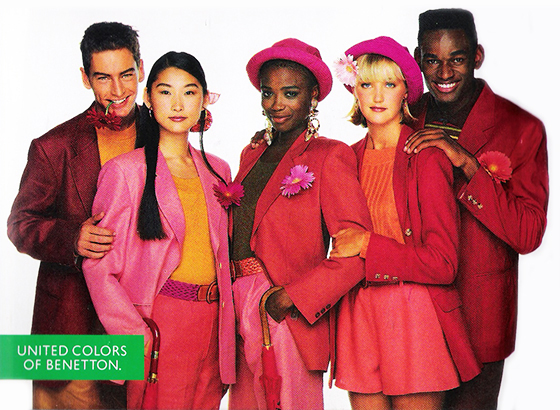
Benetton ad, 1980s, January 2013. (http://fashionfollower.com/).

Benetton ad, 1980s, January 2013. (http://fashionfollower.com/).

No, it was the idea that a lot of the things that I had pursued as a historian and researcher were things that came out of my experiences growing up. Multiculturalism as a historical phenomenon (at least if one linked it to cultural pluralism)? Can anyone say Humanities Program, or, what I used to call “Benetton Group” when we were at A.B. Davis Middle School? Writing about African American identity issues? Obviously related to living in Mount Vernon, the land where any hint of weakness translated into me being called a “faggot” or a “pussy.”

And what about any scholarly concerns with racial and socioeconomic inequality and Black migration? Anyone ever meet my Mom and my father Jimme, 1960s-era migrants from Arkansas and Georgia/Florida respectively? An examination of the Black Washingtonian elite and their looking down upon ordinary Blacks because of their own colorism or the latter’s lack of education? Come on down, Estelle Abel and any number of well-established Black Mount Vernon-ites who never gave me the time of day! As much as academia had been an escape for me, into a world of rationalism and logic, a place of dispassionate scholarship, it was all personal for me, without realizing it until that phone conversation with Meltzer.

Fast-forward to November ’02, the last interview I did with Meltzer before his death two months later. We spent the last couple of hours on that brisk fall Thursday discussing the book idea that would become Boy @ The Window. Meltzer thought that it should be a work of fiction, “based on the real flesh and blood folks in my life, but with different names of course to protect me from any potential lawsuits. He did make me rethink the project from a simple research study of my high school years into narrative nonfiction or a memoir.” 

Screen shot of fictional character Harper Stewart's bestselling novel nfinished Business, from The Best Man (1999), March 14, 2015. (hitchdied via http://s785.photobucket.com/).

Screen shot of fictional character Harper Stewart’s bestselling novel Unfinished Business, from The Best Man (1999), March 14, 2015. (hitchdied via http://s785.photobucket.com/).

Was Meltzer correct? Should I have done a Harper Stewart — played by actor Taye Diggs in The Best Man (1999)? Should I have fictionalized all of my experiences and those of my family, teachers, administrators and classmates? I’m not sure if it would’ve made a difference. Stories of fiction tend to have a tight symmetry to them. Or, the theme of “what goes around comes around” is usually a big one in any novel. You can’t leave too many loose threads or unresolved issues, even if the novel is part of a series. For my purposes, since my life remains a work in progress, a story of relative — not obvious or absolute — success, telling it as fiction would hardly ring true to me, much less to any group of readers.

Whatever else anyone wants to say about the late Harold Meltzer, the dude got me to think about difficult things until I was no longer comfortable in leaving my uncomfortable experiences and assumptions unchallenged. The very definition of a mentor, the very purpose of Boy @ The Window.

ETS Using Test Results To Justify Its Test-Filled Vision

04 Wednesday Mar 2015

Posted by decollins1969 in 1, Academia, culture, Eclectic, Politics, Pop Culture, race, Youth

≈ 5 Comments

Tags

"America's Skills Challenge: Millennials and the Future", Closing the Achievement Gap, Common Core State Standards, ETS, High-Stakes Testing, Income Inequality, Meritocracy, Millennials, OECD, PARCC, PIAAC, SAT, STEM Fields, Testing


America's Skills Challenge: Millennials and the Future (cover), February 17, 2015. (ETS).

America’s Skills Challenge: Millennials and the Future (cover), February 17, 2015. (ETS).

I actually like the Educational Testing Service (ETS). I’ve done work for them as a consultant and as an AP Reader over the years. I enjoyed most of my testing experiences with them, especially the AP US History Exam of 1986. I like many of the conferences that they host and sponsor, and they beat almost all with the spreads of food that they provide at their events. Yet even with all that, ETS’ agenda is one of promoting the ideal of a meritocratic society with a repressive regime of testing that shows beyond a shadow of a doubt the socioeconomic determinism of standardized assessments. Or, in plain English, tests that favor the life advantages of the middle class and affluent over the poor, Whites and assimilated East Asians over Blacks, Latinos, and only partially assimilated immigrants of color.

Such is the case with a nearly unreported new report from ETS. They had scheduled a press release for the “America’s Skills Challenge: Millennials and the Future” on Tuesday, February 17th at the National Press Club in Washington, DC. The organizers postponed the event, though, because of the phantom snow storm that was really a typical snow shower. So I didn’t get to ask my preliminary questions about the findings of researchers Madeline J. Goodman, Anita M. Sands, and Richard J. Coley, that despite the educational gains of the generation born after 1980, they sorely lack the skills they need for life and work in the twenty-first century. My questions? How could anyone have expected millennials to develop independent thinking, critical thinking, innovative thinking, writing and other analytical skills if they spend precious little time in their education actually doing any of these things? How would the constant barrage of high-stakes tests from kindergarten to twelfth grade have been able to instill in students ways to think outside the box, to look at issues with more than one perspective, to stand in opposition to policies based on evidence, and not just based on their gut or something they picked up from a test?

Mass of students taking high-stakes test, September 4, 2014. (http://newrepublic.com via Shutterstock).

Mass of students taking high-stakes test, September 4, 2014. (http://newrepublic.com via Shutterstock).

Well, the report is worse than I thought. Goodman, Sands and Coley put together an argument that makes circular reasoning look like a Thomas the Tank Engine episode. The authors produced this first in a series of reports for ETS, relying solely on “data from the Programme for the International Assessment of Adult Competencies (PIAAC).” The PIAAC, developed by the Organisation for Economic Co-operation and Development (OECD), is a survey that assesses the skill levels of a broad spectrum of people between the ages of sixteen and sixty-five, the primary working population in most developed countries (meaning the US and Canada, the EU, the Baltic states, Australia, Japan and South Korea). ETS and the authors claim that this survey instrument is better at assessing how far behind millennials in particular are when compared to “their international peers in literacy, numeracy, and problem solving in technology-rich environments (PS-TRE)” than the international testing of high school students alone. And as such, the authors concluded that

PIAAC results for the United States depict a nation burdened by contradictions. While the U.S. is the wealthiest nation among the OECD countries, it is also among the most economically unequal. A nation that spends more per student on primary through tertiary education than any other OECD nation systematically scores low on domestic and international assessments of skills. A nation ostensibly based on the principles of meritocracy ranks among the highest in terms of the link between social background and skill level. And a nation with some of the most prestigious institutions of higher learning in the world houses a college-educated population that scores among the lowest of the participating OECD nations in literacy and numeracy.

I don’t about anyone who reads my blog, but I find these conclusions smack of so much hypocrisy that they’re stomach-ache-inducing. Really? Years of promoting testing at every level of K-12 education, everything from state and district-level assessments to PARCC and Smarter Balanced Assessments, and it’s only because of growing economic inequality that US students-turned-adults don’t score well in the super-advanced, highly skilled categories? Not to mention, the SAT, AP exams, GREs, LSATs, GMATs, MCATs, Praxis I, Praxis II, and so many other ETS exams that it would cause the average psychometrician’s head to explode? Seriously?

Terrier dog chasing its own tail, March 3, 2015. (http://webmd.com).

Terrier dog chasing its own tail, March 3, 2015. (http://webmd.com).

This is yet another case of the dog chasing its own tail. A case where the $3-billion-per-year nonprofit just outside Princeton, New Jersey is sounding a clarion call for a crisis that it helped create. Not the one on the rapid rise of inequality, though its promoting of a false meritocracy through constant testing has served to lull affluent America into an intellectual coma. But in the cutting of history and social studies, literature and art, theater and music classes, from kindergarten really all the way through a bachelor’s degree program.

In the promotion of testing as the way to address achievement gaps, to deal with the so-called education crisis, so much of what was good about K-12 and even higher education has fallen away. Reading for the sake of reading and learning has drifted away, with more English and less literature in schools and at many colleges and universities than ever. Want to teach someone how to express themselves in writing, to express their numeracy in proofs? That thinking runs counter to what goes on in the Common Core school systems of 2015, meaning most people will either never develop these skills, or, if lucky, might develop them somewhere between their junior year of college and in finishing a master’s degree or doctorate. We emphasize STEM fields with billions of STEM dollars without realizing that great STEM is much more than equations and formulas. It’s also imagination, applying the ability to break down pictures, ideas, words and sentences contextually to the world of numbers and algorithms.

And don’t give me this whole “the SAT now has an essay section on it” spiel! Fact is, everyone knows that expressing their words on paper, on a screen or in speech is critical in modern societies. After almost seven decades of testing, ETS figured this out, too? What they haven’t figure out yet, though, is how to make standardized high-stakes testing a necessary for the entire working adult population in the US. Believe me, that’s where they want to head next.

Malcolm X, “Make It Plain”

21 Saturday Feb 2015

Posted by decollins1969 in 1, Academia, Boy @ The Window, culture, Eclectic, Mount Vernon New York, New York City, Pittsburgh, Politics, Pop Culture, race, Religion, University of Pittsburgh, Work, Youth

≈ Leave a comment

Tags

Afrocentricity, Alex Haley, Assassination, Audubon Ballroom, Autobiography of Malcolm X, Bill O"Reilly, Contradictions, Cornel West, Dichotomy, Disillusionment, Geraldo Rivera, Malcolm X, Malcolm X Assassination, Manning Marable, MLK, Murder, Nation of Islam, Nonviolence, Pitt, Respectability Politics, Rev. Dr. Martin Luther King Jr., Rudy Giuliani, Self-Aggrandizement, Self-Defense, Self-Discovery, Self-Revelation, Tavis Smiley


Plain Conscious Chocolate, February 21, 2015. (http://www.ethical-treats.co.uk/).

Plain Conscious Chocolate, February 21, 2015. (http://www.ethical-treats.co.uk/).

I’d be a terrible historian to not comment on the fact that today marks fifty years since some Nation of Islam malcontents — with support from J. Edgar Hoover’s FBI — murdered Malcolm X at the Audubon Ballroom (now the Shabazz Center) in Washington Heights in Upper Manhattan. I wasn’t around for the event, or any of the tumultuous events that defined “The ’60s.” All I know was I didn’t learn about Malcolm Little or Malcolm X until the summer between my undergraduate and graduate years at Pitt, the summer of ’91. Although the year before, I’d gone to a Malcolm X birthday celebration at the Homewood-Brushton branch of Carnegie Library of Pittsburgh. There, I saw poets performing their work, got to listen to some good jazz and rap, and saw the Afrocentric set out in full force.

Audubon Ballroom, where Malcolm X was murdered (now the Shabazz Center, with the Columbia University Medical Center's Mary Woodard Lasker Biomedical Research Building in the background), Washington Heights, New York, June 4, 2014. (Beyond My Ken via Wikipedia). Release to the public domain via GNU Free Documentation License, Version 1.2.

Audubon Ballroom, where Malcolm X was murdered (now the Shabazz Center), Washington Heights, New York, June 4, 2014. (Beyond My Ken via Wikipedia). Release to the public domain via GNU Free Documentation License, Version 1.2.

You’d think after three years as a Hebrew-Israelite and years around children of Nation of Islam members as a kid that I would’ve heard all about Malcolm. Nope, hardly a peep about him growing up in Mount Vernon. Mostly, I got questions like, “Yo, you a “five percenter”?,” which for me translated into the chosen few living in the midst of the end times. Other than that, there was always the dichotomy trope of Martin versus Malcolm laid on us real thick through school and the newspapers. Dr. King was respectable, nonviolent, a true representative of the race. Malcolm was a street thug, a leading member of a heathen religion, a violent man who hated White people.

My Mom, who normally rejected mainstream White ways of thinking about Black folks, had bought this trope and tried to sell it to me and my older brother growing up. But as with so many things my Mom attempted to instill in me growing up, I wouldn’t make any decisions about Malcolm the person (as opposed to the icon) until I got around to reading, in this case about him and the Nation of Islam, as an adult.

The Five Percenter logo (apparently popular among the rapper set), January 8, 2013. (http://assets.vice.com)

The Five Percenter logo (apparently popular among the rapper set), January 8, 2013. (http://assets.vice.com)

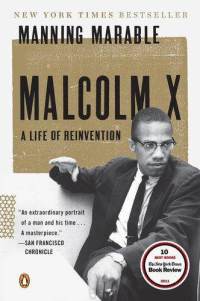
The one thing I realized after reading the Afrocentric, mainstream and Alex Haley interpretations of Malcolm in the early ’90s is that just like with King, we could make Malcolm X represent whatever we wanted. He could be nonviolent and a militant at the same time, or a thug and an ambassador of peace at the same time. Yes, as the late Manning Marable’s book shows, Malcolm — like most of us — was a walking, breathing contradiction of convictions (literal and figurative) and beliefs. For the purposes of my post today, though, he was a social justice activist, acting on the part of those poor, Black and discarded, plain and simple.

Which is why I think anyone who thinks Malcolm X brought murder to his own pulpit in February 1965 is an idiot. The idea that teaching others self-defense in opposition to White mobs, lynching, and blatant police brutality deserved a violent death. Really, now? So, if that’s the case, then Dr. King should have died of natural causes about three or four years ago, since his was the path of nonviolence, right? Yet, you still hear the likes of Rudy Giuliani, Bill O’Reilly and Geraldo de Stupido slinging this shit (and similar crap playing on such respectability politics themes) as if it were McDonald’s hash browns on sale for half-price.

Manning Marable's Malcolm X: Life of Reinvention (2011) cover (Marable died four days before his last book dropped), May 28, 2012. (Malik Shabazz via Wikipedia).  Qualifies as fair use under copyright laws (relevant subject matter, low resolution).

Manning Marable’s Malcolm X: Life of Reinvention (2011) cover (Marable died four days before his last book dropped), May 28, 2012. (Malik Shabazz via Wikipedia). Qualifies as fair use under copyright laws (relevant subject matter, low resolution).

Speaking of that lot, I don’t wonder what Malcolm X would say about our racist, plutocratic democracy these days. Anyone whose read his words would know what he’d say. That what happened with Michael Brown and Eric Garner and Rashida McBride and so many others should be resisted “by any means necessary.” That we should unmask those powerful people lurking in the shadows but pulling the strings that keep the systems of oppression working 24/7 in our world. He would’ve supported Occupy Wall Street when and where few Black leaders had in 2010 and 2011, called Islamic State or IS (that’s what they are called outside the US, where we can’t get our acronyms straight) a “chickens coming home to roost” scenario, and put Tavis Smiley and Cornel West in the same self-aggrandizing bag as Giuliani and Rivera.

I get why it took Malcolm Little so long to transform himself into Malcolm X, and still, until after his thirty-ninth birthday, for him to find himself and his purpose in the world. It’s taken me nearly four and half decades to do the same. It’s hard to “make it plain,” especially to ourselves. It’s scary to be in a constant state of disillusionment, about family and friends, about your identity, about your religion and beliefs. But it also allows you to see yourself and everyone around you fresh for the first time, to know who people really are.

Carnegie Library of Pittsburgh and My Own Prison

16 Monday Feb 2015

Posted by decollins1969 in 1, Academia, Boy @ The Window, Carnegie Mellon University, Christianity, culture, Eclectic, eclectic music, music, Pittsburgh, Politics, Pop Culture, race, Religion, Work, Youth

≈ Leave a comment

Tags

"My Own Prison" (1998), Bill & Melinda Gates Foundation, Carnegie Library of Pittsburgh, CMU, Creed, Dissertation, Dissertation Committee, Duquesne University College of Education, Foundation World, God's Lessons, Humble, Humiliation, Humility, Joblessness, Joe Trotter, Legacy, Mother-Son Relationship, Nonprofit World, Self-Reflection, Sycophants, Underemployment, unemployment


East Library branch of Carnegie Library of Pittsburgh, before (the version I worked in) and after renovation, October 4, 2006 and September 25, 2011. (http://popcitymedia.com and http://eastliberty.org).

East Library branch of Carnegie Library of Pittsburgh, before (the version I worked in) and after renovation, October 4, 2006 and September 25, 2011. (http://popcitymedia.com and http://eastliberty.org).

On February 17th seventeen years ago, we opened one of the first community-based computer labs in the US at the East Liberty branch of the Carnegie Library of Pittsburgh. What was once known as the Microsoft Library Fund (which later became the Gates Library Foundation, and then became part of the Bill & Melinda Gates Foundation) had provided the initial $110,000 to place this computer lab in one of the East Library branches resource rooms. I guess it could’ve been a proud moment for me. If I hadn’t earned my PhD the year before, only to face unemployment for three months during the summer of ’97 and underemployment in the five months since taking the Carnegie Library job. But this was a humiliating moment, not one of pride or, at least, taking comfort in a job done well. It was a learning moment at a time when I thought I already knew what I need to move forward with my career and life.

The dissertation process, my battles with Joe Trotter, the truth about my relationship with my Mom, had all taken a heavy toll on my heart and mind by the time Memorial Day ’97 rolled around. So much so that I lived between moments of humility (which is different from humiliation) and moments of rage in the sixteen months between May ’97 and the fall of ’98. I was living on fumes from my last Carnegie Mellon paycheck when I began working for Carnegie Library the day after Labor Day that year. I’d been conditioned, though, to think that everything happens for a reason. So I assumed that God was attempting to teach me a lesson, that I needed to give more out of the needs I had in my life in order for the things I thought I deserved to come my way.

John Wooden saying on being humble, February 16, 2015. (https://pbs.twimg.com).

John Wooden saying on being humble, February 16, 2015. (https://pbs.twimg.com).

There was a bit of a flaw in my logic around God’s lessons. For one, the idea that I wasn’t finding work in academia because I hadn’t been a giver was ridiculous. Between volunteering for soup kitchens, tutoring high school students, tithing at church, and so many other things, it was dumb to think that not enough humility was the reason I didn’t get the job at Teachers College or had trouble finding adjunct work in the fall of ’97. Or rather, it was dumb not to think that bigger issues — like my dissertation committee abandoning me when I needed them the most — played a greater role in my not finding full-time work in my chosen profession than any inability to serve others.

The Carnegie Library job provided a part-time stop-gap for my income while I attempted to figure out how to move forward without my advisor and my committee and move on with the knowledge that my relationship with my Mom would never be the same. I figured that the job gave me the opportunity to help others and to do good, and that it was a good first foray into the nonprofit world, especially with money from the world of Microsoft.

Boy, I couldn’t have been more wrong! I had a co-worker who was jealous of my degree and attempted to undermine the work of putting together the lab and the class materials for teaching patrons how to use the computers at every turn. I figured out that the bosses at the central branch in Oakland had essentially pocketed some of the funding for the lab to cover the costs of new computers for their own personal use, and had underfunded both my position and my co-worker’s position as part of the grant.

Album cover for Creed's My Own Prison (includes title track), released August 26, 1997. (Jasper the Friendly Punk via Wikipedia). Qualifies as fair use under US copyright laws to illustrate title and theme of this blog post.

Album cover for Creed’s My Own Prison (includes title track), released August 26, 1997. (Jasper the Friendly Punk via Wikipedia). Qualifies as fair use under US copyright laws to illustrate title and theme of this blog post.

But I didn’t learn all of this until June. By February ’98, I began to realize that, more than anything else, I needed to free myself from my own prison of an idea, that I’d done anything wrong or sinful to end up running a computer lab project at twenty-eight when I had done much of this same work at nineteen years old. I had to begin to find prominent people in my field(s) to support me in finding work, even if none of them were on my dissertation committee. I still needed to apply for academic jobs, even if my status meant than some would reject me because of my issues with my advisor. I even needed to explore the idea of jobs outside academia, in the nonprofit and foundation worlds, where my degrees and my ideas about education policy and equity might still matter.

It definitely helped when Duquesne hired me in April to teach graduate-level education foundations courses in History of American Education and Multicultural Education. It helped even more, though, when I decided in August to quit the Carnegie Library job. Between the Microsoft folks and the sycophants at Carnegie Library who were willing to do almost anything for a few extra dollars — anything other than serve their neighborhoods, that is — I’d had enough of duplicitous people. Who knew that my first job with sycophants and Gates money would come back to haunt me in the seventeen years since!

My Washington Mission

06 Friday Feb 2015

Posted by decollins1969 in 1, Academia, Boy @ The Window, Carnegie Mellon University, culture, Eclectic, High Rise Buildings, Mount Vernon High School, Mount Vernon New York, Movies, New York City, Pittsburgh, Politics, Pop Culture, race, Work, Youth

≈ Leave a comment

Tags

"A Substance of Things Hoped For", Archives, CMU, Columbia Historical Society, Columbiana Division, DC Public Schools, DCPL, DCPS, Dissertation Research, Esme Bhan, Howard University, Joe Trotter, Laurell, Library of Congress, Living Arrangements, Marya McQuirter, Mission Driven, Moorland-Spingarn, Roxanna Dean, Shepherd Park, Single-Minded, Spencer Crew, Student Loans, Valedictorian


Martin L

Martin Luther King, Jr. Memorial Library, DC Public Library’s main branch, Washington, DC, November 2013 (never looked this nice in 1995). (http://popville.com).

Twenty years ago this week I began the official phase of my doctoral thesis research. But it was much more than reading monographs and finding old papers at the Library of Congress and the Moorland-Spingarn Research Center at Howard University. It was also a long trip, where I would spend the next two months living in Washington, DC, to do my research on multiculturalism and multicultural education, and to find evidence of both in Black Washington, DC and in the segregated DC Public Schools. It was also the first time I’d lived away from Pittsburgh or the New York City area, meaning that I had a new city to get to know.

The trip truly involved my past, present and future, all at once. I spent my first five days visiting with my friend Laurell and her family in Arlington while looking for some temporary housing of my own. I’d eventually run into two Pitt friends and two Carnegie Mellon friends while in DC, and develop at least one new friendship between February 2 and March 24. I talked with my favorite teach in Harold Meltzer during that trip, learning more than I ever wanted to know about some of my classmates and Mount Vernon High School in the process.

7800 block of 12th Street, NW, Washington, DC, July 2014. (http://maps.google.com).

7800 block of 12th Street, NW, Washington, DC, July 2014. (http://maps.google.com).

Mostly though, I split my Washington mission into three phases. Phase one was to find a cheap place to stay. After a day of dealing with Howard University professors-turned-slum-lords in LeDroit Park, I went through the Washington Post to find a series of rented rooms with shared bathrooms and kitchens. Finally, I found a place in Shepherd Park, two blocks south of the DC-Silver Spring, Maryland border. It was a three-story house in a decent neighborhood on 12th Street, NW, with Blair Park, the Silver Spring Metro, and a corner KFC within walking distance. The landlord seemed decent enough, and my basement room came to $95/week with a $100 deposit. Those were the days, before gentrification and the housing boom sent the cost of shelter through the roof!

Phase two of my trip began Wednesday, February 8. I organized my schedule based on going to a number of archives and collecting materials first. I started with the Moorland-Spingarn Collection, which had been picked pretty clean by Henry Louis Gates (via buying collections) and by other, less reputable researchers (many who stole materials). I got to meet and talk with the archivist Esme Bhan about my research, which was wonderful. Still, I wondered how much longer Moorland-Spingarn could stay a reputable venue for scholarly research, with its lack of funding and lack of security from vultures emptying records.

The following week I split between the Columbiana Division at DC Public Library’s main branch, Martin Luther King, Jr. Library between Chinatown and downtown, and the DC Public School Archives on 17th and M. The DCPL portion of my work was an experiment in filtering out the smells and the sights of the homeless and mentally disabled. Not to mention the ability to not use the bathrooms in the building for eight hours at a time. The men’s stalls didn’t have doors, by the way. I spent only three days there, and rushed through gathering background on interviews of Black Washingtonians that the library had conducted back in the early 1980s. It didn’t help I had to deal with a peeping Tom at the old Hecht’s department store, where the bathrooms were much nicer.

Charles Sumner School Museum and Archives, Washington, DC, February 6, 2015. (http://dc.about.com).

Charles Sumner School Museum and Archives, Washington, DC, February 6, 2015. (http://dc.about.com).

I found a gold mine of materials on formal and unofficial education policies regarding DC Public Schools during the Jim Crow period — especially between 1920 and 1950 — at the DCPS archives. But because they didn’t have a working copier, the archivist there allowed me to take original records going back seven decades to the Sir Speedy on M Street to make my own copies. This was in contrast to my three days Presidents’ Day week at the Madison Building of the Library of Congress, where security was tighter in ’95 than at most airports in 2015.

The Library of Congress part of my data gathering was intriguing. If only because their rubber chicken lunches were expensive ($7), and because I found more material on W.E.B. Du Bois, Carter G. Woodson, Kelly Miller, Alain Locke, Anna J. Cooper and Mary Church Terrell there than I did at Moorland-Spingarn. Finally, I ended phase two with the Columbia Historical Society in Dupont Circle and a two-day expedition of finding nothing at the National Archives in DC and in Greenbelt, Maryland.

I spent most of March figuring out what to do with two big boxes’ worth of new materials and writing what would be parts of Chapter 2 and Chapter 3 of my dissertation. In between, I did find time to hang out. With my new friend Marya, who was from DC, but was working on her history doctorate from the University of Michigan. In addition to being plied with vegan options for my delicate gastrointestinal tract and talking about our research, we did joke a bit about the idea of my Joe Trotter and her Earl Lewis actually being friends in any real sense of the word. There was also time to go out to dinner with Laurell, take in a couple of bad movies with my Carnegie Mellon friend Tracie (like Losing Isaiah), and even have a quick lunch with Trotter during his own quick visit to DC.

Terrell Owens hauls in 'The Catch II' from 49ers QB Steve Young, Candlestick Park, San Francisco, CA, January 3, 1999. (Getty files via Toronto Sun, January 10, 2013).

Terrell Owens hauls in ‘The Catch II’ from 49ers QB Steve Young, Candlestick Park, San Francisco, CA, January 3, 1999. (Getty files via Toronto Sun, January 10, 2013).

After seven weeks of living in DC, I took the train up to New York to go visit my family in Mount Vernon for a few days. What was great about those two months was how peaceful everything was. I was three weeks away from becoming a Spencer Fellow and somehow earning the ire of my doctoral advisor. My family was a month away from becoming homeless for the next two and a half years. My borrowing to cover the costs of this first major research trip, I’m probably still paying interest on today. But without this trip, I wouldn’t have begun the process of questioning the direction of my career and life, and I wouldn’t have had the opportunity to finish my doctorate. Being single-minded about a mission isn’t bad or good. It just means ignoring small stuff, some of which can occasionally turn into a festering cesspool.

Technocrats, Journalists, and Statistical Orgies

25 Sunday Jan 2015

Posted by decollins1969 in 1, Academia, Boy @ The Window, culture, Eclectic, eclectic music, High Rise Buildings, Politics, Pop Culture, race, Work, Youth

≈ Leave a comment

Tags

Black-White Wealth Gap, Closing the Achievement Gap, Culture of Poverty, Journalists, Michael A. Fletcher, Misery Statistics, Objectivity, Orgy, Poverty, Prince George's County, Racial Disparities, Racism, Rich-Poor Wealth Gap, Statistical Orgy, Statistics, Technocrats, The Washington Post


Front page of The Washington Post, January 25, 2015. (http://newseum.org).

Front page of The Washington Post, January 25, 2015. (http://newseum.org).

There are times when I wonder if exposing racial and socioeconomic disparities is really an eye-opening and life-changing exercise. Or, does the exposure merely serve to confirm the racial and socioeconomic stereotypes that Americans hold against each other? In today’s Washington Post, on the front page and above the fold, there’s an article titled “A Shattered Foundation,” with the smaller type “African Americans who bought homes in Prince George’s [County] have watched their wealth vanish.”

Above the title and subtitle are a series of charts and statistics noting the national chasm of a gap in total wealth accumulation between Black families ($95,300) and White families ($678,800). The theme here is that since the housing bust and subsequent Great Recession, the burgeoning Black middle class of PG County has fallen on desperate times, as home equity — their main means for accumulating wealth — for tens of thousands of these families caved in on them.

Michael A. Fletcher’s article is pretty even-handed. But this is kind of tangential to my larger point. In any given three-month period of my life, for nearly as long as the forty years and two months I’ve known how to read in full sentences, I could’ve scanned at least one article or book about the cruelties of structural racism and capitalism. Even if I’d never grown up in poverty or experienced racial discrimination, there have been enough articles, op-eds, books, book chapters, poems, short stories, plays, letters to the editor and scripts written about disparities to cover the US a mile deep in paper. The fact is, no statistics on growing wealth gaps and persistent racial gaps in wealth and education have led to lasting changes in policies, politics or institutional structures substantial enough to end poverty or ameliorate the most vicious forms of racism in this country.

Hand reaches out from big heap of crumpled papers, January 25, 2015. (http://galleryhip.com).

Hand reaches out from big heap of crumpled papers, January 25, 2015. (http://galleryhip.com).

Then again, there are some folks whose business depends on mantras like the “growing wealth gap” or “closing the achievement gap…as the civil rights issue of our time.” Technocrats in corporate education reform, social scientists in the world of conservative and “libertarian” think-tanks, neoliberals and so-called American liberals in search of compromises to strengthen the American middle class. They all turn to these statistics to tell their stories, to sell their experiments and their research, to promote their politics. It’s as if the statistics on racial and socioeconomic gaps in wealth and education provided a high, like crystal meth or a speedball. In some ways, for these groups, a five-story brothel in which they practiced S&M would be more appropriate for their use of misery statistics.

I am hardly suggesting The Washington Post‘s Fletcher or I or any other journalist, academician or writer should cease making their points with statistics about racial and socioeconomic disparities. But America’s poor and poor people of color or falling-through-the-cracks middle class are far more than “statistics on a government chart” (to quote The Police’s “Invisible Sun“). These are real people with families and lives, people who represent generations of lives in which this construct of racial capitalism has limited their choices and their opportunities, whether they believe in fate or not. So-called objectivity has never been sufficient, and neither have been statistics. What we need is a revolution in thought and in action, quiet or otherwise.

In Finally Seeing Selma

24 Saturday Jan 2015

Posted by decollins1969 in 1, Academia, culture, Eclectic, Movies, Patriotism, Politics, Pop Culture, race

≈ Leave a comment

Tags

Academy Awards, American Sniper (2014), Ava DuVernay, Bill Moyers, Carmen Ejogo, Civil Rights Act of 1964, Coretta Scott King, David Oyelowo, Double Standards, Film Making, Historical Accuracy, Hypocrisy, LBJ, MLK, Oprah Winfrey, Oscar, President Lyndon Baines Johnson, Racial Quotas, Racism, Rev. Dr. Martin Luther King Jr., Selma, Voting Rights Act of 1965


Selma movie poster, January 2015. (http://www.freakinawesomenetwork.com).

Selma movie poster, January 2015. (http://www.freakinawesomenetwork.com).

My son had an extra day off from school this week, the day after MLK Day. To give him a break from his daily dose of manga and anime, I took him to the downtown Silver Spring cineplex to see Selma. I hadn’t planned to see it until after Selma had come out on DVD or streaming via Netflix or Comcast, because I knew my son would have questions. And he did — lots of them!

But I was also curious. Not about the history. As the historian I am, I really didn’t need to see Selma to confirm the brutality of Jim Crow racism and violence, that I’d in fact seen and lived much worse. I wanted to see how Ava DuVernay’s treatment of Dr. King, Coretta Scott King, President Lyndon B. Johnson, Bayard Rustin, George Wallace, J. Edgar Hoover and so many others would stack up against years of research, writings, lectures and discussions (some of which are my own) on the period. I wanted to know if the staunchest critics of the film were in any way accurate in their criticisms, or if they were just holding DuVernay and Selma to a double-standard.

Billy Drago as Frank Nitti in The Untouchables (1987), falling to his fictitious death at Elliott Ness' hands in 1931 (he actually died from a self-inflicted gunshot wound in 1943). (http://youtube.com).

Billy Drago as Frank Nitti in The Untouchables (1987), falling to his fictitious death at Elliott Ness’ hands in 1931 (he actually died from a self-inflicted gunshot wound in 1943). (http://youtube.com).

In light of so many other films, from Mississippi Burning (1988) to Remember the Titans (2000), from The Untouchables (1987) to The Hurricane (1999), it’s obvious the art of film-making isn’t as exact as a scalpel. This may well be sacrilege, but I as a historian and educator do not expect movies to be 100 percent accurate depictions of historical events. A great film can educate as well as entertain, but education is far more than getting all the facts correct because some folks want to hold a “Black” film to a higher standard than Zero Dark Thirty (2012) or Schindler’s List (1993). Making a very good movie requires the right context for facts, whether the accuracy level is 50 percent or 98 percent. It requires the right language and words, the right intonations and inflections, the correct mood and emotions, not just accuracy levels only a scholar with 800 endnotes and 1,200 sources could meet.

Knowing this, I dismiss nearly all the critics who’ve been pissed that LBJ was portrayed as a racist. Well, he was! He grew up in rural Texas, ran as part of an anti-Black Democratic machine for Congress and the Senate. Still, he also cared about people, about eliminating poverty, and even about providing federal civil rights protections for Blacks. This may be a contradiction, but what else is new in human nature? We’re not simply black or white, evil or good. We’re gray and mercurial, obsequious and hypocritical. So yes, LBJ was a racist and a progressive and a warmonger, and as far as I am concerned, the best president since FDR.

The idea that we should completely discount Selma because DuVernay didn’t make rabbis obvious in the film is ridiculous. That argument has been based on the exclusion of one Rabbi Abraham Heschel, who was front and center in the third Selma march on March 19, 1965, from the images in the film. As one person who actually saw the film, however, it seemed no single actor portrayed Heschel or any other yarmulke and robe-wearing rabbi. There were at least two scenes, though, in which David Oyelowo (who played Dr. King) appeared to interact with men of Jewish faith. They were rabbis, but not dressed obviously so.

Co-Executive Producer Oprah Winfrey, Oscar Nominee David Oyelowo, and Director Ava DuVernay at AFI Fest premiere for Selma, November 12, 2014. (Alberto E. Rodriguez/Getty Images, via http://variety.com).

Co-Executive Producer Oprah Winfrey, Oscar Nominee David Oyelowo, and Director Ava DuVernay at AFI Fest premiere for Selma, November 12, 2014. (Alberto E. Rodriguez/Getty Images, via http://variety.com).

So let’s put Selma right up there with Howard the Duck (1986)! Except that this outrage over historical accuracy is as false as American Sniper‘s (2014) depiction of Arab Muslims as blood-thirsty caricatures of real human beings. Long-ago released tapes (now at the Johnson Presidential Library) indicate that LBJ regularly used the n-word, and that he wanted to wait on the Voting Rights Act, with it coming so soon after the Civil Rights Act.

To complain about the lack of religious Jewish garb in Selma, though, would be like Blacks complaining about film directors not portraying them as liberators in holocaust films. And yes, there are at least two confirmed instances in which segregated Black Army units did in fact help liberate concentration camps in western Germany in the final weeks of World War II. When that film comes out about the segregated 761st Tank Battalion’s exploits and participation in liberating camps, then I will take much more seriously complaints about the lack of yarmulkes and tzitzits in Selma. As in, not seriously at all.

The only complaints about Selma that have made sense to me have come from Bill Moyers, press secretary under LBJ from 1965 to 1967. Moyers recently refuted the idea that President Johnson gave the go-ahead to J. Edgar Hoover to release the so-called sex tape to Coretta Scott King during the Selma march period, contrary to how this DuVernay portrayed this segment in Selma. Wow! Two minutes out of a two-hour movie! (The interplay between Oyelowo and Carmen Ejogo as Dr. and Mrs. King over the tape was as engrossing as it was gut-wrenching).

Preview clip screen shot of American Sniper (2014) with lead actor Bradley Cooper, January 23, 2014. (http://huffingtonpost.com).

Preview clip screen shot of American Sniper (2014) with lead actor Bradley Cooper, January 23, 2014. (http://huffingtonpost.com).

I did enjoy the movie, found Oyelowo’s portrayal of Dr. King Oscar-worthy (if not as perfect as some believe), and actually found nearly all the characters real and truly representative of the times. It should be said, though, that excuses of inaccuracy are always made by those who really have no excuses for snubbing really well done films. Especially ones that aren’t White clichés. Like American Sniper. No question that the Academy Awards committee should’ve nominated Ava DuVernay for best director, but for their faux liberal racial sensibilities.

← Older posts
Newer posts →

Boy @ The Window: A Memoir

Boy @ The Window: A Memoir

Places to Buy/Download Boy @ The Window

There's a few ways in which you can read excerpts of, borrow and/or purchase and download Boy @ The Window. There's the trade paperback edition of Boy @ The Window, available for purchase via Amazon.com at http://www.amazon.com/Boy-Window-Donald-Earl-Collins/dp/0989256138/

There's also a Kindle edition on Amazon.com. The enhanced edition can be read only with Kindle Fire, an iPad or a full-color tablet. The links to the enhanced edition through Apple's iBookstore and the Barnes & Noble NOOK edition are below. The link to the Amazon Kindle version is also immediately below:

scr2555-proj697-a-kindle-logo-rgb-lg

Boy @ The Window on Amazon.com: http://www.amazon.com/Boy-The-Window-Memoir-ebook/dp/B00CD95FBU/

iBookstore-logo-300x100

Boy @ The Window on Apple's iBookstore: https://itunes.apple.com/us/book/boy-the-window/id643768275?ls=1

Barnes & Noble (bn.com) logo, June 26, 2013. (http://www.logotypes101.com).

Boy @ The Window on Barnes & Noble: http://www.barnesandnoble.com/w/boy-the-window-donald-earl-collins/1115182183?ean=2940016741567

You can also add, read and review Boy @ The Window on Goodreads.com. Just click on the button below:

Boy @ The Window

Twitter Updates

Tweets by decollins1969
  • RSS - Posts
  • RSS - Comments

Archives

  • June 2025
  • April 2023
  • September 2022
  • August 2022
  • July 2022
  • June 2022
  • May 2022
  • April 2022
  • March 2022
  • January 2022
  • December 2021
  • November 2021
  • October 2021
  • September 2021
  • August 2021
  • July 2021
  • June 2021
  • April 2021
  • March 2021
  • February 2021
  • January 2021
  • December 2020
  • November 2020
  • October 2020
  • September 2020
  • August 2020
  • July 2020
  • May 2020
  • April 2020
  • March 2020
  • January 2020
  • December 2019
  • November 2019
  • August 2019
  • July 2019
  • June 2019
  • May 2019
  • April 2019
  • March 2019
  • February 2019
  • January 2019
  • December 2018
  • November 2018
  • October 2018
  • September 2018
  • August 2018
  • July 2018
  • June 2018
  • May 2018
  • March 2018
  • February 2018
  • January 2018
  • December 2017
  • November 2017
  • October 2017
  • September 2017
  • August 2017
  • July 2017
  • June 2017
  • May 2017
  • April 2017
  • March 2017
  • February 2017
  • January 2017
  • December 2016
  • November 2016
  • October 2016
  • September 2016
  • August 2016
  • July 2016
  • June 2016
  • May 2016
  • April 2016
  • March 2016
  • February 2016
  • January 2016
  • December 2015
  • November 2015
  • October 2015
  • September 2015
  • August 2015
  • July 2015
  • June 2015
  • May 2015
  • April 2015
  • March 2015
  • February 2015
  • January 2015
  • December 2014
  • November 2014
  • October 2014
  • September 2014
  • August 2014
  • July 2014
  • June 2014
  • May 2014
  • April 2014
  • March 2014
  • February 2014
  • January 2014
  • December 2013
  • November 2013
  • October 2013
  • September 2013
  • August 2013
  • July 2013
  • June 2013
  • May 2013
  • April 2013
  • March 2013
  • February 2013
  • January 2013
  • December 2012
  • November 2012
  • October 2012
  • September 2012
  • August 2012
  • July 2012
  • June 2012
  • May 2012
  • April 2012
  • March 2012
  • February 2012
  • January 2012
  • December 2011
  • November 2011
  • October 2011
  • September 2011
  • August 2011
  • July 2011
  • June 2011
  • May 2011
  • April 2011
  • March 2011
  • February 2011
  • January 2011
  • December 2010
  • November 2010
  • October 2010
  • September 2010
  • August 2010
  • July 2010
  • June 2010
  • May 2010
  • April 2010
  • March 2010
  • February 2010
  • January 2010
  • December 2009
  • November 2009
  • October 2009
  • September 2009
  • August 2009
  • July 2009
  • June 2009
  • May 2009
  • April 2009
  • March 2009
  • February 2009
  • January 2009
  • December 2008
  • November 2008
  • October 2008
  • September 2008
  • August 2008
  • July 2008
  • June 2008
  • May 2008
  • April 2008
  • March 2008
  • February 2008
  • January 2008
  • December 2007
  • November 2007
  • October 2007
  • September 2007
  • August 2007
  • July 2007
  • June 2007

Recent Comments

MaryPena's avatarMaryPena on My Day of Atonement/Bitter Hat…
decollins1969's avatardecollins1969 on No Good Teaching Deed Goes…
Mary Rose O’Connell's avatarMary Rose O’Connell on No Good Teaching Deed Goes…

NetworkedBlogs on Facebook

NetworkedBlogs
Blog:
Notes From a Boy @ The Window
Topics:
My Life, Culture & Education, Politics & Goofyness
 
Follow my blog

616 616 East Lincoln Avenue A.B. Davis Middle School Abuse Academia Academy for Educational Development AED Afrocentricity American Narcissism Authenticity Bigotry Blackness Boy @ The Window Carnegie Mellon University Child Abuse Class of 1987 CMU Coping Strategies Crush #1 Crush #2 Death Disillusionment Diversity Domestic Violence Economic Inequality Education Family Friendship Friendships Graduate School Hebrew-Israelites High-Stakes Testing Higher Education History Homelessness Humanities Humanities Program Hypocrisy Internalized Racism Jealousy Joe Trotter Joe William Trotter Jr. K-12 Education Love Manhood Maurice Eugene Washington Maurice Washington Misogyny Mother-Son Relationship Mount Vernon High School Mount Vernon New York Mount Vernon public schools Multiculturalism MVHS Narcissism NFL Pitt Pittsburgh Politics of Education Poverty President Barack Obama Race Racial Stereotypes Racism Relationships Self-Awareness Self-Discovery Self-Reflection Sexism Social Justice Teaching and Learning University of Pittsburgh Violence Whiteness Writing

Top Rated

Blog at WordPress.com.

  • Subscribe Subscribed
    • Notes from a Boy @ The Window
    • Join 103 other subscribers
    • Already have a WordPress.com account? Log in now.
    • Notes from a Boy @ The Window
    • Subscribe Subscribed
    • Sign up
    • Log in
    • Report this content
    • View site in Reader
    • Manage subscriptions
    • Collapse this bar
 

Loading Comments...