• About Me
  • Other Writings
  • Interview Clips
  • All About Me: American Racism, American Narcissism, and the Conversation America Can’t Have
  • Video Clips
  • Boy @ The Window Pictures
  • Boy @ The Window Theme Music

Notes from a Boy @ The Window

~

Notes from a Boy @ The Window

Tag Archives: Self-Reflection

Black Women, Feminism, and Writing on My Mind

25 Saturday Aug 2018

Posted by decollins1969 in 1, Academia, Boy @ The Window, Christianity, culture, Eclectic, Politics, Pop Culture, race, Religion, Youth

≈ Leave a comment

Tags

Black Feminism, Brittney Cooper, Chimamanda Ngozi Adichie, Colson Whitehead, Derrick A. Bell, Erica Armstrong Dunbar, Ijeoma Oluo, Interrogation, Intersectionality, Kiese Laymon, Misogynoir, Misogyny, Mona Eltahawy, Morgan Jerkins, Ona Judge, Patricia J. Williams, Roxane Gay, Self-Reflection, Social Justice, Tressie McMillan Cottom, Women of Color, Writing


“This is what a Black Feminist looks like” t-shirt, August 24, 2018. (http://youtube.com).

It’s been a different last year and a half for me as a reader. With the exception of Colson Whitehead’s Underground Railroad, a woman of color has been the author of every book I’ve read since January 2017. Keep in mind, Cora is the main character in Whitehead’s latest masterpiece, so it’s been since Walter Mosley’s last Leonid McGill mystery that I’ve read a book with a Black man as a protagonist.

This wasn’t a deliberate decision, at least at first. It started with me catching up on law professor Patricia J. Williams‘ critical race theory works from the 1990s, especially The Alchemy of Race and Rights (1992). I fell in love with the book, and found it in so many ways better than anything I’ve ever read from Derrick Bell. Williams is simply a better writer and storyteller, even as Bell hit all the right notes in his incredible allegories. Both have informed my Al Jazeera and Washington Post articles over the past year.

Then I started reading Roxane Gay at the end of last summer. I was going to do both Bad Feminist and Hunger, but after reading through the first chapters of Hunger, my wife ended up reading it and telling me about it in detail. I did the same for her with Bad Feminist. There was quite a bit of overlap on the personal side of things from both books. But boy can Gay write, and edit, and edit, and edit some more! Every word she must’ve put through an acid test, quenched in cold water like a samurai sword, then reheated, cooled, and polished for months on end. In recent years, only Whitehead and Kiese Laymon have polished sentences the way Gay does in her books. I felt her hurt, disappointment, anger, laughter, and intellect throughout. After reading it, even in places where I disagreed, I felt like Gay left me with so much to chew on as a sexist feminist heterosexual Black man.

I picked up Brittney Cooper’s Eloquent Rage in May. It was after reading Tressie McMillan Cottom’s Lower Ed and Chimamanda Ngozi Adichie’s Americanah in early 2018. Cottom’s book is so important, especially in understanding that higher education is far from some idealistic and lofty intellectual enterprise. It is lightly regulated capitalism, plain and simple, and not just among the for-profits, either (more on this at some future date). Cottom makes a generous use of rational-choice theory in her assessment of the limited range of decisions poor Black men and especially African American women living with poverty have in choosing for-profits for certificates and degrees, and for borrowing tens of thousands of dollars.

The book shines when Cottom touches on the journeys of the students she interviewed as part of her research. But like most scholars, Cottom’s writing didn’t bridge the divide between important work and compelling writing. I’m sure that this is an unfair assessment. But given the importance of Cottom’s sociology of education work and the stories involved in it, I wanted more direct interrogation of the systemic sexism and misogyny (even misogynoir) embedded in the enrollment practices of for-profit colleges and universities. I wanted more of Cottom’s personal journey (and not just her professional one). I’m sure, though, that Cottom gave her best, and it was more than what I could typically get out of text genuinely attempting to move beyond the academic’s gaze.

Adichie’s work was disappointing. Not because Americanah isn’t reasonably well written. It’s just too long, too centered on Ifemelu (about ninety percent of the book is from her perspective, when the blurbs make it seem a bit more even between Ifemelu and Obinze), and too self-centered, smug, and elitist. I felt all of the meanings of outsider embedded in Americanah to be sure. As a American Black man, I’ve been an outsider even among other heterosexual Black males most of my life. Adichie doesn’t allow for her main character to interrogate her outsider status, though. As a result, Ifemelu related to her American boyfriends in the most superficial of ways, as if they were perfect robotic representations of neurotic Americans. She related to the world as if she was somehow above it all, both in the US and Nigerian contexts. I guess heterosexism was as acceptable in Ifemelu’s world as it has been in Adichie’s comments in the past couple of years. I must admit, though. Adichie can write sex scenes and scenes of trauma in emotionally demanding and touching ways. But not with the precision of Whitehead and Gay, and not with the intellectual awareness of Cottom.

So when I picked up Cooper’s Eloquent Rage, I was expecting to be fighting with myself over boredom and a glut of words. I was so happy to be so wrong! Right from the first paragraph, Cooper was throwing fastball’s like Nolan Ryan and Vida Blue, or rather, hitting first-serve aces like Serena and Venus Williams. Cooper had me at “[t]his is a book by a grown-ass woman written for other grown-ass women. This is a book for women who expect to be taken seriously and for men who take grown women seriously. This is a book for women who know shit is fucked up.” She welcomed me in and said, “hit this 130 mph serve, brotha!” I couldn’t stop reading until I finished the book. I understood so much the struggles she described and the choices she and others made as Black women. I felt her pain, her joy, her anger, and yes, her rage throughout. I regularly interrogate my -isms as is. But Cooper helped me reach another level in Eloquent Rage (all premature hints at Beyoncé’s superhero feminism aside).

After Cooper, I made the deliberate decision to read more feminists of color this summer. I read Morgan Jerkins‘ This Will Be My Undoing and found her a wonderful writer on her coming of age with her own Black feminism, if a bit too young (I am middle-aged, after all). I finally read Mona Eltahawy’s Headscarves and Hymens and wanted to beat up every man she and the women she interviewed encountered over the years. It was compelling (if at times uneven) reading, and it left everything in question regarding the West, Islam, the Arab world and misogyny. There were no sacred cows with Eltahawy. She even addressed her relative privilege in addressing the latticework of gender, LGBT, and sexual oppression in Egypt, Saudi Arabia, the UK, the US, and elsewhere in the world. I wish I had gotten to her book three years ago, when it first came out.

I snuck in Erica Armstrong Dunbar’s book on Ona Judge, Never Caught. I’d been wanting to read it since I heard Dunbar talk about it on WAMU’s The Kojo Nmandi Show Valentine’s Day 2017. Plus, I decided to assign it for my upcoming African American History to 1877 this semester at American University. Dunbar puts the use of narrative nonfiction writing to the test in Never Caught. I can only imagine what my academic historian colleagues would think, as most of their writing is the equivalent of a pressed protein bar made of unflavored soy powder and coated with ground mealworms. Although Dunbar provides many more questions than answers around the inner thoughts and everyday actions of George and Martha Washington eventual escaped slave, I did sense that Dunbar was converting research into a form of textual humanity. So much so that when the moment for Judge to escape came, I said, “Yes! Yes! Yes!” Dunbar compelled me not to be too excited, though. For “Judge knew that…She would transform from a trusted house slave for the most powerful American family to a criminal, guilty of stealing her own body away from her owners.” (p. 112).

Embedded in Dunbar’s narration are the issues I’d been reading about for the past year. Misogyny, misogynoir, enslavement, rights to one’s own body, intersectionality, American history and its mythologies, and the long legacy of American racism, still very much alive in 2018, as it was in 1789 and 1796. To be sure, Dunbar lacks Gay’s precision, and the passion found everywhere with Cooper and Eltahawy is more subdued in Dunbar’s work. But the latter is only true if readers choose to ignore the smoldering billows throughout.

I finished up this month with Ijeoma Oluo’s So you want to talk about race, a primer on basic do’s, don’ts, and don’t-give-ups, regarding starting and sustaining conversations on race and racism in an American context. After the previous reads, I hoped for more, but there wasn’t any more for me to mine as a reader. There were several points, though, where a more careful edit would have made this a clearer read. As a blogger for the past eleven years, I have no room to talk regarding editing. Then again, I presently do not have an agent or editors looking over my work, either.

My biggest criticism (which actually isn’t a criticism) is that the book is geared toward the White man or White woman who believes themselves to be a liberal, colorblind non-racist. Because this is Oluo’s stated intent, her book reads as if I’m an outsider to my own topic. The compelling personal issues with which Oluo contends around race and intersectionality (specifically, Black feminism and relative privilege) aren’t well treated until the last quarter of the book. As someone who once help manage a national social justice fellowship program, I wasn’t expecting to learn anything particularly new about starting and sustaining conversations on race and racism. I hoped, though, to learn more about Oluo, to find her writing more impassioned, to see her use real punch in bringing to bear the reasons that race conversations quickly devolve into White accusations of “reverse racism.” The elements are there, but weren’t mined in sufficient quantities to make this book more than a “Race/Racism Conversations for Dummies,” I’m afraid, for me.

That’s not to say that nothing resonated at all. Oluo early on hits at a theme common to everyone I’ve read over the past eighteen months. That need to find one’s true, authentic voice. Those moments when the people you know now find your writer’s voice too loud, too demanding, and too impractical.

I also started writing. I…started saying all the things that everybody around me had always said were ‘too negative,’ ‘too abrasive,’ and ‘too confrontational.’ It did not go over well. My white friends…some of whom I’d known since high school, were not happy with the real me. This was not the deal they had struck. Yes, they would rage over global warming and yell about Republican shenanigans, but they would not say a word about the racial oppression and brutality facing people of color in this country.

I’ve found this and so much more to be true in my own writing journey. Thanks to all of you who’ve helped make me feel younger, my feminism fresher, and confirmed so much I’ve found wrong (and right) with myself and the world.

My Mom’s Milestone

30 Monday Oct 2017

Posted by decollins1969 in 1, Boy @ The Window, Christianity, culture, Eclectic, Hebrew-Israelite, Marriage, Mount Vernon New York, New York City, Pop Culture, race, Religion, Work, Youth

≈ Leave a comment

Tags

70th Birthday, Bad Mothers, decisions, Good Mothers, Mom, Mother-Son Relationship, Self-Reflection


Orange roses in a garden, February 2014. (https://hdwallsource.com/).

This past weekend, Mom turned seventy years old. 70! Wow! I sent her a plant with orange blossom roses, a vase and a candle setting, which arrived on time for her birthday on Saturday. We had a good phone conversation about the gift and about her day. When I turned the conversation to what she planned to do for her big day, she said she might “go to the Red Lobster at Cross County [Mall].” That was disappointing, but also somewhat expected. After a lifetime of drama, abuse, and pain, maybe a relatively peaceful weekend of phone calls, well wishes, and a table for one at Red Lobster is really all Mom can aspire to seven decades in.

I’ve thought a lot about Mom the last few days. Especially in light of my mother-in-law’s last two years of dementia and decline. Mom’s been a hard worker in her life, but not a strategic one. Mom dedicated a good portion of her life to relationships with men, to two abysmal marriages, and to the basic provisions for raising six kids. None of which she did with inspiration and passion, for none of this was what she dreamed for herself. Mom, when focused, could and did learn, but she’s not a particularly curious person, or a person devoted to learning new things. Mom was also one of the most vain persons I knew growing up. Despite $16,600/year for eight in most of the ’80s, would preen and primp for going on The Avenue (South Side Mount Vernon’s shopping district, Fourth Avenue) like it was an evening gala at the Met.

The good news and bad news about only being a bit more than 22 years younger than my Mom is that I have observed her growth and lack thereof for so many years. Some people say that to have a younger mother is to have someone who grows up with you while you’re growing up. No, not really. I was Mom’s second kid. My brother Darren came two years and eighteen days before me. Between my alcoholic, losing-one-good-job-after-another, seventh-grade-education dad and a full-time job at Mount Vernon Hospital, where was the time for Mom to grow as a young adult?

At the same time, I know this. At twenty, I had barely begun to know myself as a history student, writer, and human being. I had tons of thoughts, but often couldn’t find a way to articulate them fully. At 22, I was better at all these things, but not so much better that I could determine how I would raise one child, much less two. And before my wife of now more than seventeen years, I never saw myself getting married. Heck, I didn’t start regularly having sex until I was twenty-one!

Mom made a lot of decisions in her younger years by letting men and friends and circumstances — and really, fear — decide for her. Then, she played increasingly bad hands, each more laughable as they were more oppressive to all of us. Domestic violence, child abuse, grinding poverty, being Hebrew-Israelites. These barely scratch the surface of the emotional, psychological, and even spiritual torture Mom endured until she was 42.

Mom with my son Noah at 616, August 4, 2014. (Donald Earl Collins).

But you know something? I endured all of this as well. Because, when you are a keenly aware son of a Black woman going through all this, and you decide that you must help, that you must act, you take on the same burdens and the same pains. Being keenly aware isn’t the same thing as knowing what I signed up for, though. Certainly not at twelve, not at twenty, not even at 32. I only knew that I had taken on too much growing up after my son was born fourteen years ago.

Someone on my Twitter feed said recently that he couldn’t believe the cats who would get on Twitter to criticize their moms. I’m not arguing that grown-ass men should criticize their mothers on Twitter. Nor should that put them on pedestals. If we are doing too much of either of those, we’re not seeing our mothers as real human beings, ordinary and flawed like most others. Except that they carried us in their wombs, birthed us, and even under circumstances as crushing as mine, attempted to raise and nurture.

My relationship with Mom will always be complicated by the fact that I know more than most people ought to know about their mothers. Mom couldn’t hide, Mom couldn’t protect, even on the many occasions she did try. Since I couldn’t hide or protect, I just went out and did all I could to help her help herself. Only that by the time we’d driven off my idiot stepfather in ’89, the damage, the depression, the PTSD, was already fully manifest. The fire at 616 and having the burden of my younger siblings made it worse.

Now that Mom is a septuagenarian, it would be interesting to know how she looks back at her life, to see how she sees her years spent on Earth. I wonder because for so many years, the only thing Mom desired was for “the Rapture to come and take her up.” I wonder because nearly all of her southern Black migrant friends from her first decade in the Bronx and in Mount Vernon are dead. I wonder because I’m not sure how it is that she’s managed to make it to 70 under the constant strain that has been most of her life.

I have no idea if Mom has ever read or will ever read my blog. I know others around her have. If she is reading, I want her to know that I do love her, and want for her seventies to be her best decade ever. I want her to want to learn, to finally find herself, to take up projects, to travel and explore a bit, even if it’s only Manhattan. I want her to find some meaning in life, even if it’s only the size of a speck.

When Enough Isn’t Close to Enough

23 Sunday Jul 2017

Posted by decollins1969 in 1, Boy @ The Window, culture, Eclectic, eclectic music, Marriage, Mount Vernon High School, Mount Vernon New York, New York City, Pop Culture, race, Religion, University of Pittsburgh, Work, Youth

≈ Leave a comment

Tags

616, 616 East Lincoln Avenue, Addictions, Death, Domestic Violence, Happy Birthday, Homelessness, Mother-Son Relationship, Parenting, Parenting Lessons, Poverty, Running Away, Self-Reflection, Soul-Searching, Vanity, Welfare Poverty, Yiscoc Washington


Yiscoc Washington, July 5, 2017. (http://facebook.com).

“I took care of my kids! I put food on the table, put a roof over y’all’s heads, put clothes on yo’ back! I did the best that I could, and none of y’all can tell me different…” That’s what my Mom yelled at us the day before Sarai’s funeral seven Julys ago. It was an excited utterance, after she had spent five days in a trance, unable to do as much as eat a piece of toast. We were in the living room of Mom’s flat at 616, me, Mom, Maurice, Yiscoc and Eri, being yelled at over a lifetime of disappointment and frustration. Ours and hers.

Today is my brother Yiscoc’s thirty-sixth birthday. That he’s here at all is a bit of a miracle. Especially with the number of times he ran away from 616 between 1989 (when he was eight years old) and 1994, with his one-time video game addiction, and with muggers and pedophiles out there and all too willing to take advantage of a vulnerable preteen.

I started with Mom, though, for a reason. Her yelling at us was probably meant for me, but it was in response to Yiscoc, who shared a personal secret with her for the first time. Mom’s response was to defend her record as a parent, to tell us that we had no right to judge, critique, or assess her record. That she added, “That’s what you get for…” in response to Yiscoc’s tearful sharing session was shameful and disgusting.

“You’re So Vain” (1972), by Carly Simon, 45 cover, cropped, July 23, 2017. (http://avclub.com).

“But you don’t understand, your Mom was mourning the loss of her only daughter,” would be the response of Mom-defenders everywhere. To which I say, really? Your Mom’s response is to push four of your five living children away with a tirade? One where she says, “this fucked up, piece of shit life I helped set up for all of you was the best I could do, and if you don’t like it, that’s on you, and you can kiss my Black ass!” Would that really be acceptable under any circumstances, much less during a week of mourning?

Yiscoc ran away from home, hung out with several wrong crowds, and dropped out of Mount Vernon High School a year and a half before he could have completed his coursework. Seventeen years later, and Yiscoc still doesn’t have his GED (the last two times, he failed the social studies portion of the exam — ain’t that a kicker!). I’m not laying all of this at my Mom’s feet. But Yiscoc’s adult life wasn’t exactly set up for success by his growing up years. The normative permanence of systemic racism on the one hand, and domestic violence, welfare poverty, and the 616 fire of 1995 that left Yiscoc and my other younger siblings temporarily homeless on the other, would make any kid itching to run away.

A second younger brother has now reached the second half of his thirties. Yiscoc’s the same age I was eleven and a half years ago, when I began working on Boy @ The Window in earnest. One of the things I figured out in writing such a torturous book was that I blamed myself for so many of my parents’/legal guardian’s failures and sins. I had blamed myself for not putting an end to the domestic violence at 616 since I was twelve, for not doing enough to support Mom and my younger siblings since I went away to college at Pitt in 1987. I also came to understand how much Mom deflected, defended, and denied when it came to her parenting, especially when we called on her to do more than find temporary shelter, meager food options, and threadbare clothing. Mom was and remains one of the vainest and unaffectionate people I have ever known — vain, insecure, and likely clinically depressed.

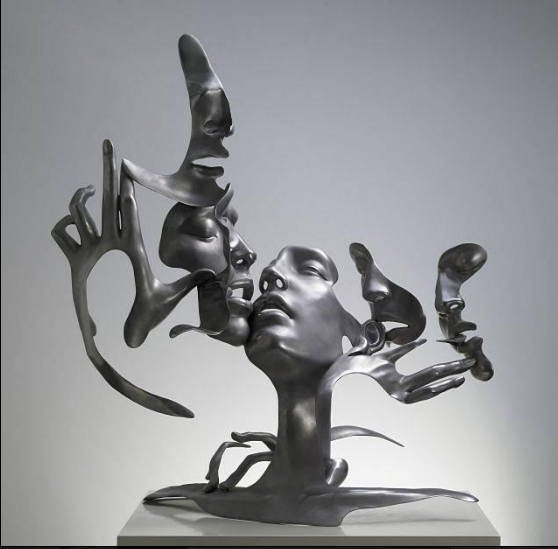
“Flash Memory #2” (an unmasking), in stainless steel, by Liu Zhan, Kuang Jun, and Tan Tianwei, 2009. (http://elhurgador.blogspot.com/2012/05/unmask-group-escultura.html; H.T. Gallery, Beijing, China).

I also know that Mom has passed these traits down to each of us. I’ve been dealing directly with them for three decades. I’m not sure Yiscoc has ever peered behind his mask long enough to see Mom lurking in the shadows, warts and all. If he has or ever will, it has been or will be an ugly sight. But if we are truly attempting to rebuild and remake ourselves, it is a sight we must endure. A painful process of honesty, soul-searching, revelation, and admitting that on some level, we’ve fucked up, and been fucked up, by life, oppression, and parenting.

Happy Birthday, Yiscoc. Know that despite everything, I do love you. I hope that this next year brings you closer to the person you want and need to be.

The Yoke of Student Loans

18 Tuesday Jul 2017

Posted by decollins1969 in 1, Academia, Boy @ The Window, Carnegie Mellon University, culture, Eclectic, Mount Vernon High School, Mount Vernon New York, Movies, Pittsburgh, Politics, Pop Culture, race, University of Pittsburgh, Work, Youth

≈ Leave a comment

Tags

Adult Learners, American Individualism, CMU, Debt Peonage, Financial Aid, Financial Literacy, First-Generation Students, HSBC, In Time (2011), Interest Rates, Loan Payments, Marine Midland Bank, Navient, Nontraditional Students, Perkins Loans, Pitt, Poverty, Sallie Mae, Self-Reflection, Stafford Loans, Student Loans


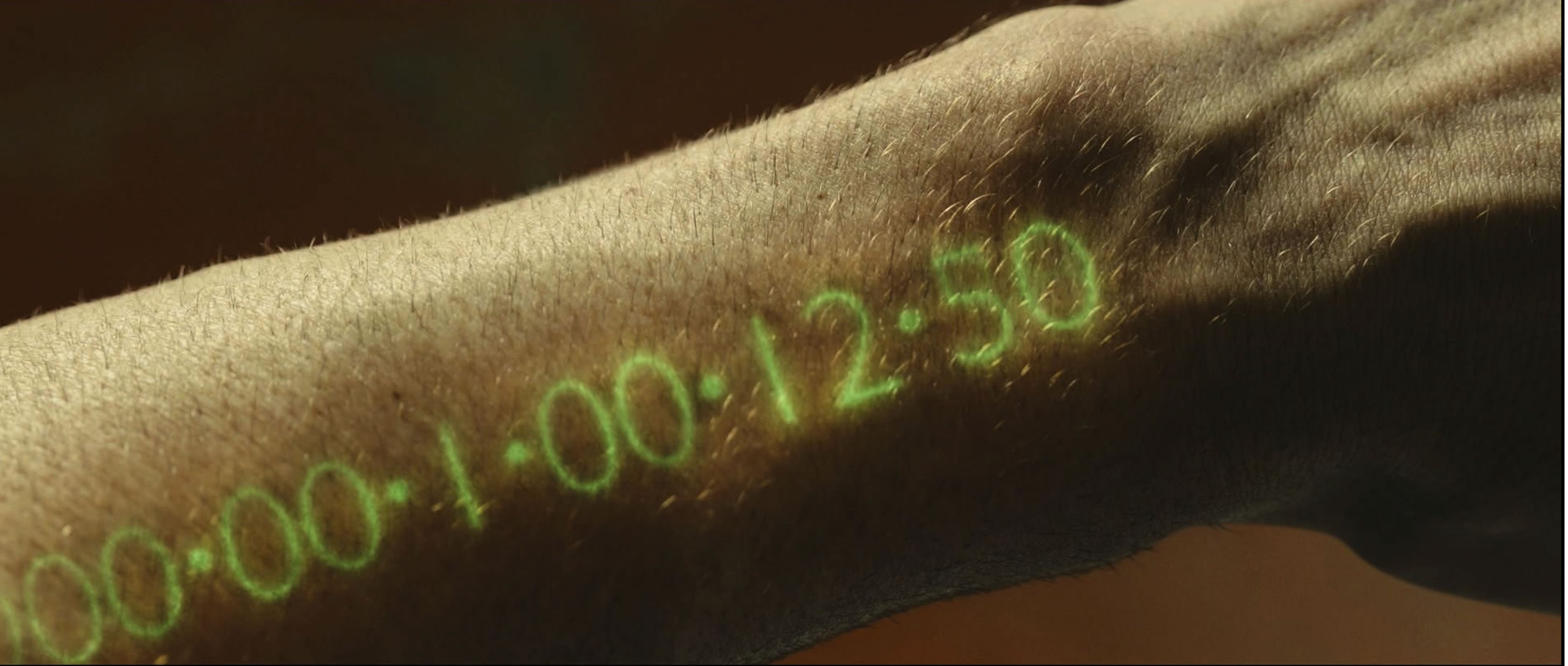
Time, money, debt, yoke = same difference, from screen short from movie In Time (2011), October 27, 2011. (http://collider.com/in-time-review/).

This week in July thirty years ago, I took out the first of what would be a series of student loans. Loans that would help cover eight of my ten years of undergraduate and graduate studies at the University of Pittsburgh and Carnegie Mellon University. In three-and-a-half-months, I will be ending my twentieth year paying off those loans. If I had to do it all over again, I may have stayed in New York State to take advantage of the TAP award (need-based financial aid). That way, I wouldn’t have needed to borrow for my undergrad. But given my near desperation for wanting to escape grinding poverty, 616 and my family, Mount Vernon, New York, and the stigma that was my life living there among hostile and indifferent classmates, teachers, and neighbors, borrowing $2,625 on July 16 of ’87 didn’t seem so bad.

Yep, my first subsidized/unsubsidized Stafford student loan was a modest one. It was a set maximum based on the old laws limiting student borrowing (especially for college freshmen) three decades ago. I remember thinking to myself, “How the heck am I gonna pay this back?,” as I went through an hour of phone calls between Pitt’s financial aid office and Marine Midland Bank (now part of HSBC). The latter was where I had my first bank account, where I had deposited $500 of scholarship money from Mount Vernon’s Afro-Caribbean Club. That’s how little I knew about the process – I went with a bank that didn’t exist outside of New York State to work with a school in Western Pennsylvania!

Pact with the Devil, July 18, 2017. (http://evil.wikia.com/wiki/Pact_with_the_Devil)

Because I wasn’t yet eighteen, I needed my Mom to co-sign my loan. Because my Mom didn’t have collateral, she needed to add two relatives who did have assets to my first loan. In the end, Mom chose my maternal grandmother Beulah and my great-great-aunt in Seattle Inez (who just happened to be Johnny Gill’s great or great-great grandmother — didn’t know it at the time) as relatives with collateral who could be on the hook if I or she ever defaulted on our future payments. Of course, Mom didn’t actually seek permission from my then sixty-year-old grandma in rural Arkansas or my better-off, octogenarian, great-great aunt for this sign-off. Apparently, Marine Midland didn’t care, either. And that’s how it was for the next four years, having relatives whom I had never met (and in the case of great-great aunt Inez, who died at 101 years old in the early ’00s, would never meet) as collateral for my loans.

I’d also take out the smaller Perkins Loan for my undergraduate time at Pitt, an additional $2,000 per year, for three of my four years there. In all, I’d borrow more than $16,000 in four years, with a high of $4,000 in Stafford Loans in my junior year, 1989-90.

It bothered me every time I had to re-up for student loans. Not just because of the false notion of American individualism, the idea that I shouldn’t need anyone’s help to go earn a degree. It bothered me because I feared, sometimes to the point of nightmares, that I’d never be able to pay this money back.

Graduate school at Carnegie Mellon and the loosening of the student loan rules and amounts under President Clinton in 1994 made things better and worse. I barely borrowed my first two and a half years of grad school at both Pitt and CMU, to the tune of $1,800 in all. CMU paid me so little as a grad student that I had little choice if I ever planned on eating more than one meal a day but to borrow. And that’s how most of my borrowing occurred between January 1994 and January 1997, to either have to supplement my meager stipend (before the year of my Spencer Dissertation fellowship). Or, to use the funds to help support my dissertation research, the travel to/from and living arrangements while in DC in 1994 and 1995. Unlike many of my graduate school colleagues (especially the ones working on professional master’s degrees or a law degree), I didn’t use my loans to go on extended weekends to Bermuda or to take summer vacations in the Grand Caymans.

Of course, I graduated in May ’97, and lo and behold, I couldn’t find full-time work. And with the exception of the months of July, August, and September 1998, I wouldn’t have full-time or full-time equivalent work until I left Pittsburgh for work in the DC area in the summer of 1999. But, my consolidated student loans through the dispensations of Sallie Mae never took that into account when my first payment became due Thanksgiving Week 1997. I was able to get a reduced payment of $20 per month for the first two years. I didn’t default, but it made paying off my student loans that much harder. It didn’t help that Sallie Mae had locked in my interest rate at eight percent, retroactive to July 1987, and unchangeable under any circumstances. Even with consumer interest rates the way they have been for the past decade.

Relationship between lenders and payees, July 27, 2015. (http://forbes.com).

Flush or not, full-time or underemployed or somewhere in between, the student loan payments, deferments, and forebearances have been non-stop for two decades. Even credit card companies will leave folks alone if they make regular minimum payments. Not so with student loans or with Sallie Mae (now Navient, which must mean assholes in financial aid-speak). Despite everything I’ve been through financially over the years, I finally paid off the original principal of my consolidated student loans about two years ago. Great. It still means that I have left another decade of payments on accumulated interest before I can be forever free of this nearly endless cycle.

Here’s the real thing that I think I’d do over again, that should be done about this corrupt and serfdom-like process. Sixteen, seventeen, or eighteen years old is way too young to be making financial decisions that I or anyone else will have to live with for four decades or more. Even deciding to serve in the military isn’t a decades’ long commitment (unless one chooses to re-up or goes to officer’s school). At the very least, no one under twenty-one should have to commit themselves to debt peonage, including student loans. As for me, working thirty hours a week on or off campus between 1987 and 1997 to cover costs and necessities would’ve been preferable to this iron collar.

The real problem, of course, is that adult learners are taking out many of these loans these days. Even though they may be old enough to know better, they aren’t experienced enough. Lumina Foundation and other organizations have concentrated on “financial literacy” as the way out. This is wrong-headed, as it does nothing to change this financially enslaving system. Really, it would take free and significantly-reduced undergraduate tuition to do the trick. But where’s the fun, profit, and human misery in that?

If I Could Redo Time…

18 Thursday May 2017

Posted by decollins1969 in 1, Academia, Boy @ The Window, Carnegie Mellon University, Christianity, culture, Eclectic, Mount Vernon New York, New York City, Pittsburgh, Politics, Pop Culture, race, University of Pittsburgh, Upper West Side, Work, Youth

≈ Leave a comment

Tags

Alternative History, Angelia, Barbara B. Lazarus, Betrayal, CMU, Graduation Ceremony, Job Talk, Joe William Trotter Jr., Laurell, Mother-Son Relationship, Peter Stearns, PhD Graduation, Pitt, Self-Reflection, Steve Schlossman, Teachers College, Triumph, Westchester Business Institute


Show art from SyFy’s 12 Monkeys (the home of alternative timelines), March 2016. (http://syfy.com).

Mother’s Day Week 1997 was one of triumph, betrayal, and deep self-reflection, helping to shape my last two decades. On that fateful Sunday, I finished preparing my transparencies for the overhead projector that I would need to use for my job talk on multiculturalism, race, and education at Teachers College the next day. My then-girlfriend Angelia came over around 1 pm, helped me pack as we talked about the job, my research, her missing me for the next few days, and my wishing I could take her with me to New York. Then we called a cab, went out to Pittsburgh International Airport, and I boarded my 6 pm flight bound for La Guardia.

The next day, that second Monday in May 1997, went well despite barely six hours of sleep (a typical night for me now). I met with Teachers College faculty, graduate students, a department chair, an assistant dean, and the dean. I gave my all-important job talk, fielded questions, and otherwise felt that I brought my heat in this potentially life-changing interview. By 4 pm, it was over, I was exhausted, but I was more than content. I figured I made myself a tough out at worst, and gave myself a real chance at this assistant professor job at best.

I spent the night in Manhattan at the Hotel Beacon, and ordered room service, instead of going out to Barnes & Noble or Tower Records. I had to rest up before going to see my family at their temporary apartment in Yonkers. Refreshed and with my old blank-faced-Donald mask on, I checked out and took the 1 train up to Van Cortlandt, then the Bee-Line bus into Yonkers, where my Mom and younger siblings had been living for a year and a half.

My sister Sarai (1983-2010) in Mom’s cap-and-gown, May 14, 1997. (Donald Earl Collins).

Tuesday was Mom’s graduation day from Westchester Business Institute. After ten years of on-and-off-again enrollment, Mom had finished her associate’s degree in accounting. I was really happy for her. That day from 10 am on was about getting Mom and Maurice, Yiscoc, Sarai, and Eri cleaned up and ready for the long bus trip up Broadway to White Plains, Westchester County Center, and hundreds of other WBI graduates. Of all of us, I think my sister Sarai had the best time. After Mom tossed her cap in the air (and caught it), Sarai begged to put on Mom’s graduation digs. My fourteen-year-old sister walked around for the rest of the night as if she had graduated from college!

Wednesday was a difficult day. I had a noon-ish flight to catch out of La Guardia back to the ‘Burgh, as my own PhD graduation was four days away. Though Mom and I agreed that I didn’t have the funds to fly her out and put her up in Pittsburgh, I didn’t agree that my teenager siblings (all between nearly eighteen and thirteen at this point) couldn’t watch over themselves for two or three days. “Are you kiddin’?,” Mom said when I suggested this, and added, “the kids would tear this mutha up while I’m gone.”

But then, as I was getting packed up to do the Bee-Line Bus, 1 train to Times Square, Shuttle to Grand Central, and cab to LGA, Mom said something that made me happy we decided she wouldn’t be at my graduation. “You know, you were in school so long, you could’ve had another high school diploma.” The scorn with which she said it, it was like someone suddenly stabbed me in the stomach. It was the first time I truly saw Mom’s vanity, possibly even, her jealousy. After I said my goodbyes, promising my brother Maurice that I’d come to his Mount Vernon High School graduation in June, Mom’s sentence of sneering envy was all I thought about on the trip back.

“Maybe it’s a good thing you didn’t invite your mom,” Angelia said after I told her about Mom and her brooding behavior Wednesday evening. “But, this means she will have never seen me at any graduation, seen where I’ve lived the past ten years, seen how hard I worked,” I cried. Angelia got up from her dining room table, walked around to my side, sat in my lap, and gave me a hug. I’m so glad she didn’t let go, and let me cry myself out on her shoulder and chest for a few minutes.

I woke up in Angelia’s bed Thursday morning, having slept past 9 am. It was the most sleep I’d had in five days. I was remarkably refreshed. I rarely stayed over at Angelia’s because the back of her third-floor flat was practically an urban wildlife reserve, between the raccoons, squirrels, pigeons, cardinals, blue jays, rabbits, and the occasional deer. Not this morning. They seemed to know I needed not to hear them that morning.

The next three days were a blur. I ran around Pittsburgh and Carnegie Mellon and Pitt saying formal goodbyes to a few colleagues and former professors, something I wouldn’t have had time for if Mom had been in Pittsburgh with me. Angelia and I spend most of Saturday with her mommy, and then with my friend Laurell, Laurell’s sister Naomi, and their charge Archie. It would be the only time anyone from my Humanities days would witness me graduate with one of my Pittsburgh degrees.

That Sunday, May 18, was going to be a scorcher of a day. I was to be on stage as part of the tent-revival-as-graduation ceremony at CMU (as they did for all the PhD graduates). But there was no way I’d wear a full suit. So I compromised. I put on a shirt and tie under my gown, wore my baggy basketball shorts for bottoms, and put on shoes and dress socks to complete this goofy yet comfortable picture. I marched across the stage and shook Peter Stearns‘ hand, as he was the dean of humanities and social sciences at CMU then. Too bad I didn’t say what I thought about his fast food approach to teaching and learning to him in that moment.

But, after that first ceremony, the individual and group pictures, a bunch of folks had to leave. Laurell, Naomi, and Archie had to get back to Virginia for yet another week of school — that’s what happens between two school teachers and an eighth-grader for graduation attendees. My friends Ed and James had errands to run, and Angelia’s mom had some church-related affairs to get to. So, for the moment, it was just me and Angelia, walking from CMU to The University Club, by Pitt’s Thackeray Hall.

We get there, in this quiet room, with seven burgundy diploma holders, sitting on a table that staff had covered in this dark blue velvet cloth. My now former advisor, Joe Trotter, arrived a few minutes later. I’d only seen him once in the six months since he finally approved my dissertation, ending what had been a two-year ordeal of betrayal, slights, and threats while writing my 505-page tome. Yet, all I was thinking was, “Why are we doing the departmental ceremony in a building in the middle of Pitt’s campus?”

CMU leather diploma album, May 17, 2017. (Donald Earl Collins).

Steve Schlossman, the history department chair, was this ceremony’s emcee. He introduced each of us, our research, any awards we may have won, and our dissertation advisors, all as he handed us our doctorates. I was second on the list to go up and receive my diploma, shake hands with Schlossman and Trotter. I did say a few words, mostly about hard work and perseverance. “With God and faith, and of course, my girlfriend Angelia, even though that word ‘girlfriend’ hardly defines who you are to me, I wouldn’t be standing here right now. Thank you.” That was how I ended my three-and-a-half minute speech.

There was a small reception afterward, and like most CMU ceremonies I’d been a part of since 1993, this one was nearly blindly boring. Except that my friend James did show up and gave me a pat on the back and a handshake. Except that my dear friend and mentor Barbara Lazarus came and gave me a big hug. Except that Angelia had insisted on taking pictures of me from the time I got up to get my degree until the moment we left.

We were out around 6:30 pm. It had rained and poured, as thunderstorms had rolled through during the second ceremony. I wish Mom could’ve been there, seen what I had seen, felt what I was feeling. But, knowing what I knew now, the personal triumph that this graduation day was couldn’t be diminished. I had long since stopped living for what Mom wanted me to be — a sounding board, a babysitter, an extra source of income. For the first time, I no longer felt guilt about not going back to New York after my undergraduate years at Pitt, ready to bail my family out of poverty on a $25,000-a-year salary. For the first time, I realize Mom’s burdens were never mine to carry.

My Mom’s Migration Story, 50 Years Later

23 Tuesday Aug 2016

Posted by decollins1969 in 1, Boy @ The Window, Christianity, culture, Eclectic, Hebrew-Israelite, Jimme, Marriage, Mount Vernon New York, My Father, New York City, Pittsburgh, Politics, race, Religion, Work, Youth

≈ Leave a comment

Tags

Black Migrants, Black Migration, Bradley Arkansas, Child Abuse, Domestic Violence, Education, Highs and Lows, Insecurities, Intervention, Mary Louise Gill, Mother-Son Relationship, Mount Vernon Hospital, Self-Defense, Self-Reflection, Southern Stigmas, Welfare Poverty


I would be a pretty terrible son and historian to not discuss the fact that this July and August marks fifty years since my mother moved to New York from little ol’ Bradley, Arkansas. For those who think fifty years on anything revolving around race and class is “a long time ago” or “ancient history,” consider the following. At the time Mom moved across the country to Gotham, the Civil Rights Movement had entered its northern, splintered phase, the Voting Rights Act of 1965 was barely a year old, and the very first episode of Star Trek with William Shatner and Leonard Nimoy would air that September.

Bus route my mother took from Bradley, Arkansas to New York City in late-July 1966, August 23, 2016. (http://maps.google.com).

Bus route my mother took from Bradley, Arkansas to New York City in late-July 1966 (highlighted in blue with yellow dots), August 23, 2016. (http://maps.google.com).

On balance, with any neutral but fair eye at all, I’d have to say that Mom’s transition has been more failure than success. Five decades of crisis after crisis, of having a handful of fleeting moments of peace and progress followed by years of abuse, misery, poverty, and sorrow. That could be the summary I’d write about Mom’s fifty years of post-migration experiences in New York and in Mount Vernon.

But, let’s start from the top, through Boy @ The Window:

After drifting a bit after her high school graduation, one of Mom’s first cousins came for a visit to Arkansas in the summer of ’66 and told her that there was good-paying work in New York City. Her cousin lived in the [170s, the Tremont section of the] Bronx, a hotbed of Black migration and West Indian immigration in those years. Without much thought, Mom took a four-day bus trip from Texarkana to New York to what she hoped would be a new life. Given the alternative of tenant farming and generational poverty, New York must’ve seemed like going to heaven.

Mom had it rough long before my father and my older brother Darren and I had come along to be a burden. She lived with her cousin for nearly a year in the Bronx, paying $15 a week for a one-bedroom flat, before good luck turned to bad and then back to wonderful. They had both lost jobs at some factory, but had heard through the other late Black arrivals in the Bronx and Mount Vernon about good paying jobs at Mount Vernon Hospital. When Mount Vernon Hospital hired Mom to be a cook in their dietary department, she and her first cousin went their separate ways living-together-wise. They’d stay in touch until ’78, when Mom’s first cousin moved to Virginia, presumably for work with the Navy.

In the interim, Mom met my father at a juke joint on Mount Vernon’s South Side. It was a place where only Southern Black migrants would be comfortable. They didn’t have to pretend to like the grime, the hustle, the noise, and the taunts that New York and New Yawkers threw at them every day. They could be themselves. They could be shy, apprehensive, even, about their time in a place where everyone joked about their Southern accents and their slow ways. I think that’s what made my father attractive to Mom. Here was someone who made Mom sound much less Southern by comparison. At the same time, my father worked in the city, had a job as a janitor with the Federal Reserve Bank, and knew the Subway better than she knew the route from her one-room flat on Adams Street to Mount Vernon Hospital.

My Mom at 48 years old, Yonkers, NY, December 23, 1995. (Donald Earl Collins).

My Mom at 48 years old, Yonkers, NY, December 23, 1995. (Donald Earl Collins).

Within a year of meeting, Mom gave birth to my older brother Darren. Mom often said that she “wasn’t a teenager” when Darren was born in December ’67, as she had turned twenty six weeks earlier. Yet as I finally pointed out during the intervention fourteen years ago, “But you got pregnant when you were nineteen,” all to let Mom know that the stigma of teenage pregnancy was more about her and her insecurities than it was about what White folks thought, especially back then.

I came along two years later, Mom married my father in ’70, and things started falling apart soon after. Mom never gave herself a chance to live the city, and not just work in it. Mom never gave herself time to grow beyond her insecurities and her vanity about her looks. She never really tried to make her aspirations for joining the Navy or going to college happen. The latter, at least until after I went off to the University of Pittsburgh in ’87.

As I wrote about Mom’s/our family’s fall into welfare poverty by ’83 in Boy @ The Window,

Sixteen years, a dead-end job and two abusive husbands later, Mom must’ve been thinking that Mount Vernon was a hellish pit that got hotter every time she tried to make her and our lives better. With a fourteen-year-old kid in a school for the retarded, a twelve-year-old getting beat up by the second husband, a three-year-old who all but refused to speak because of his abuse, a one-year-old and another one on its way, it was little wonder that she showed about as much affection as an NYPD police officer. The ‘I love you, Donald’ faucet, which was an occasional drip prior to the summer of ’82, was pretty much turned off after that.

Yes, this is all truly sad. There was way too much too soon for Mom. Family, marriage, abuse, poverty, and internalized issues around race, sexism, misogyny, Black masculinity, evangelical Christianity (and the whole Hebrew-Israelite debacle), and all in New York. It would’ve been overwhelming for anyone whose income never saw $20,000 in any year prior to temp work in ’99, and $30,000 until working for Westchester County Medical Center in 2003.

There are so many mistakes Mom made, with me, my siblings older and younger, in choosing mates, and with work. I’ve written about roughly half of them. But, awful or awesome, without Mom’s momentary hope and courage — often the very definition of Black migration, especially to New York — I wouldn’t be here to tell the tale.

How I Met My Son

31 Sunday Jul 2016

Posted by decollins1969 in 1, Boy @ The Window, Christianity, culture, Eclectic, Hebrew-Israelite, Jimme, Marriage, Mount Vernon New York, Politics, Pop Culture, race, Religion, Youth

≈ Leave a comment

Tags

616 East Lincoln Avenue, 9/11, Abuse, Amadou Diallo, Baggage, Black Masculinity, Burden of Success, Child Abuse, Darren Gill, Domestic Violence, Eri, Family Intervention, Father-Son Relationship, Humanities, Maurice, Maurice Eugene Washington, Misogyny, Mother-Son Relationship, Noah, Parenting, Penguins, Poverty, Self-Reflection, Siblings, Teenager, Yiscoc


Noah's birthday cake, Cheesecake Factory Original Cheesecake, adorned with candles, July 30, 2016. (Donald Earl Collins).

Noah’s birthday cake, Cheesecake Factory Original Cheesecake, adorned with candles, July 30, 2016. (Donald Earl Collins).

My son turned thirteen yesterday. That sentence by itself speaks volumes. That I have a son, that he’s reached an age where he’s in the midst of puberty, with a discernible personality, with a set of abilities and potential for developing more talents. Wow! Noah loves art, anime, and apples. He’s a classic contrarian who’s just beginning to realize that he has academic and athletic talents. He’s mostly observant, thoughtful, and independent thinking enough to deal with this crazy world outside our home. That he’s managed to get to this point without me messing him up with my own baggage as his father. To me, that’s not just amazing. That’s a miracle.

As late as the early spring of ’02, a half-year before me and my wife conceived our one and only egg, I had some doubts about ever being a dad. But those small doubts mattered little compared to where I’d been the summer and fall of ’01. I wasn’t dead set against becoming a parent. I just felt that in this dangerous, chaotic, racist, oppressive world, how could I be so selfish as to bring a child into this life?

Daddy Emperor Penguin with baby penguin, accessed July 31, 2016. (National Geographic via http://pinterest.com).

Daddy Emperor Penguin with baby penguin, accessed July 31, 2016. (National Geographic via http://pinterest.com).

I wasn’t just thinking of Amadou Diallo or the aftermath of 9/11. This wasn’t just about the expense of raising a kid. Mostly, it had to do with growing up as the second of six, but with ALL of the responsibilities of a first-born Gen-Xer watching over four siblings ten to fourteen years younger than me, not to mention my wayward older brother. It was the trauma of living through eight years of abject, unrelenting poverty with an abusive asshole of a bully who frequently threatened my and my Mom’s existence. It was having to swallow shit from all of my legal guardians about my lack of observable Black testosterone coursing through my brain cells. Add going through a magnet program from middle school to high school and going to the University of Pittsburgh to this baggage. What I was by twenty was a hopeful but yet emotionally exhausted human being.

So, I was never someone who had this American evangelical desire to get married or have kids (which is also a passion connected to Whiteness, by the way, to propagate their numbers, but not just). Even when it was obvious that me and my wife were heading toward marriage by 1998, I was more against having kids than in favor of the idea. I was still occasionally sending money to my Mom and my siblings to help them out, and taking trips to 616 to put out figurative fires. I had changed enough diapers, made enough bottles, dressed, lunched, dinnered, and laundered enough for my siblings to say “I’m good” when it came to having my own child.

But when my youngest brother Eri beat me to the punch by siring his own kid with his high school girlfriend at seventeen in the spring of ’01, I lost it. I couldn’t sleep soundly for months. I listened to my Mom complain week after week about him and his post-high school dropout future. My brothers Maurice and Yiscoc weren’t doing much better. My family was a cyclone of a disaster, and nothing I had done to blaze a trail for them since 1982 had done much good.

This was when I decided to do my intervention, to go after both my Mom and my siblings. Not so much out of anger, and yes, I had enough anger to keep my current iPhone powered for three days. No, this was a combination of righteous indignation and, well, love. I did my due diligence to dig into my Mom’s life with a few questions that I already knew the answers to, about when and how it all went so wrong for us all. And then I did the intervention, in January ’02, right after the birth of my only nephew.

Only later did I realize the intervention I did was really for me. Only later did I figure out that the 616 intervention had freed me from my self-imposed burden to help lift my family out of poverty. The constant anguish and exhaustion I felt when dealing with my family went away in the weeks after the intervention, and I was able to get a good night’s sleep for the first time in months, maybe years.

Noah in portrait, May 16, 2016. (Donald Earl Collins)

Noah in portrait, May 16, 2016. (Donald Earl Collins)

That’s when I was ready to do my part in the miracle of conception, childbirth, and parenting. Giving myself that permission and then having the recognition of the baggage I carried going in has made fatherhood and parenting much easier (not easy, just much easier) than it would’ve been if I had done like Eri or followed Phil Knight’s “Just Do It” advice.

It’s hard to really be passionate about having a child when nearly all your free time with family between the ages of twelve and thirty-one has been to participate in raising kids. Since my little egg arrived thirteen years ago, though, I’ve reserved my parenting for him. I’m the father penguin in -100°F temps, braving blizzards in eighty-mile-an-hour winds to see my son through. I think it’s paid off so far.

← Older posts
Newer posts →

Boy @ The Window: A Memoir

Boy @ The Window: A Memoir

Places to Buy/Download Boy @ The Window

There's a few ways in which you can read excerpts of, borrow and/or purchase and download Boy @ The Window. There's the trade paperback edition of Boy @ The Window, available for purchase via Amazon.com at http://www.amazon.com/Boy-Window-Donald-Earl-Collins/dp/0989256138/

There's also a Kindle edition on Amazon.com. The enhanced edition can be read only with Kindle Fire, an iPad or a full-color tablet. The links to the enhanced edition through Apple's iBookstore and the Barnes & Noble NOOK edition are below. The link to the Amazon Kindle version is also immediately below:

scr2555-proj697-a-kindle-logo-rgb-lg

Boy @ The Window on Amazon.com: http://www.amazon.com/Boy-The-Window-Memoir-ebook/dp/B00CD95FBU/

iBookstore-logo-300x100

Boy @ The Window on Apple's iBookstore: https://itunes.apple.com/us/book/boy-the-window/id643768275?ls=1

Barnes & Noble (bn.com) logo, June 26, 2013. (http://www.logotypes101.com).

Boy @ The Window on Barnes & Noble: http://www.barnesandnoble.com/w/boy-the-window-donald-earl-collins/1115182183?ean=2940016741567

You can also add, read and review Boy @ The Window on Goodreads.com. Just click on the button below:

Boy @ The Window

Twitter Updates

Tweets by decollins1969
  • RSS - Posts
  • RSS - Comments

Archives

  • June 2025
  • April 2023
  • September 2022
  • August 2022
  • July 2022
  • June 2022
  • May 2022
  • April 2022
  • March 2022
  • January 2022
  • December 2021
  • November 2021
  • October 2021
  • September 2021
  • August 2021
  • July 2021
  • June 2021
  • April 2021
  • March 2021
  • February 2021
  • January 2021
  • December 2020
  • November 2020
  • October 2020
  • September 2020
  • August 2020
  • July 2020
  • May 2020
  • April 2020
  • March 2020
  • January 2020
  • December 2019
  • November 2019
  • August 2019
  • July 2019
  • June 2019
  • May 2019
  • April 2019
  • March 2019
  • February 2019
  • January 2019
  • December 2018
  • November 2018
  • October 2018
  • September 2018
  • August 2018
  • July 2018
  • June 2018
  • May 2018
  • March 2018
  • February 2018
  • January 2018
  • December 2017
  • November 2017
  • October 2017
  • September 2017
  • August 2017
  • July 2017
  • June 2017
  • May 2017
  • April 2017
  • March 2017
  • February 2017
  • January 2017
  • December 2016
  • November 2016
  • October 2016
  • September 2016
  • August 2016
  • July 2016
  • June 2016
  • May 2016
  • April 2016
  • March 2016
  • February 2016
  • January 2016
  • December 2015
  • November 2015
  • October 2015
  • September 2015
  • August 2015
  • July 2015
  • June 2015
  • May 2015
  • April 2015
  • March 2015
  • February 2015
  • January 2015
  • December 2014
  • November 2014
  • October 2014
  • September 2014
  • August 2014
  • July 2014
  • June 2014
  • May 2014
  • April 2014
  • March 2014
  • February 2014
  • January 2014
  • December 2013
  • November 2013
  • October 2013
  • September 2013
  • August 2013
  • July 2013
  • June 2013
  • May 2013
  • April 2013
  • March 2013
  • February 2013
  • January 2013
  • December 2012
  • November 2012
  • October 2012
  • September 2012
  • August 2012
  • July 2012
  • June 2012
  • May 2012
  • April 2012
  • March 2012
  • February 2012
  • January 2012
  • December 2011
  • November 2011
  • October 2011
  • September 2011
  • August 2011
  • July 2011
  • June 2011
  • May 2011
  • April 2011
  • March 2011
  • February 2011
  • January 2011
  • December 2010
  • November 2010
  • October 2010
  • September 2010
  • August 2010
  • July 2010
  • June 2010
  • May 2010
  • April 2010
  • March 2010
  • February 2010
  • January 2010
  • December 2009
  • November 2009
  • October 2009
  • September 2009
  • August 2009
  • July 2009
  • June 2009
  • May 2009
  • April 2009
  • March 2009
  • February 2009
  • January 2009
  • December 2008
  • November 2008
  • October 2008
  • September 2008
  • August 2008
  • July 2008
  • June 2008
  • May 2008
  • April 2008
  • March 2008
  • February 2008
  • January 2008
  • December 2007
  • November 2007
  • October 2007
  • September 2007
  • August 2007
  • July 2007
  • June 2007

Recent Comments

MaryPena's avatarMaryPena on My Day of Atonement/Bitter Hat…
decollins1969's avatardecollins1969 on No Good Teaching Deed Goes…
Mary Rose O’Connell's avatarMary Rose O’Connell on No Good Teaching Deed Goes…

NetworkedBlogs on Facebook

NetworkedBlogs
Blog:
Notes From a Boy @ The Window
Topics:
My Life, Culture & Education, Politics & Goofyness
 
Follow my blog

616 616 East Lincoln Avenue A.B. Davis Middle School Abuse Academia Academy for Educational Development AED Afrocentricity American Narcissism Authenticity Bigotry Blackness Boy @ The Window Carnegie Mellon University Child Abuse Class of 1987 CMU Coping Strategies Crush #1 Crush #2 Death Disillusionment Diversity Domestic Violence Economic Inequality Education Family Friendship Friendships Graduate School Hebrew-Israelites High-Stakes Testing Higher Education History Homelessness Humanities Humanities Program Hypocrisy Internalized Racism Jealousy Joe Trotter Joe William Trotter Jr. K-12 Education Love Manhood Maurice Eugene Washington Maurice Washington Misogyny Mother-Son Relationship Mount Vernon High School Mount Vernon New York Mount Vernon public schools Multiculturalism MVHS Narcissism NFL Pitt Pittsburgh Politics of Education Poverty President Barack Obama Race Racial Stereotypes Racism Relationships Self-Awareness Self-Discovery Self-Reflection Sexism Social Justice Teaching and Learning University of Pittsburgh Violence Whiteness Writing

Top Rated

Blog at WordPress.com.

  • Subscribe Subscribed
    • Notes from a Boy @ The Window
    • Join 103 other subscribers
    • Already have a WordPress.com account? Log in now.
    • Notes from a Boy @ The Window
    • Subscribe Subscribed
    • Sign up
    • Log in
    • Report this content
    • View site in Reader
    • Manage subscriptions
    • Collapse this bar
 

Loading Comments...