• About Me
  • Other Writings
  • Interview Clips
  • All About Me: American Racism, American Narcissism, and the Conversation America Can’t Have
  • Video Clips
  • Boy @ The Window Pictures
  • Boy @ The Window Theme Music

Notes from a Boy @ The Window

~

Notes from a Boy @ The Window

Category Archives: University of Pittsburgh

A “Living-In” Experiment With My Future Wife

22 Wednesday Apr 2015

Posted by decollins1969 in 1, Academia, culture, Eclectic, Marriage, Pittsburgh, Politics, Pop Culture, University of Pittsburgh, Work, Youth

≈ Leave a comment

Tags

Angelia, Bachelor's Degree, Finishing, Full-Time Work, Hot Pockets, Lean Pockets, Living Together, Pitt, Relationships, Ron Slater, Starbucks Frappuccino, Task Master


Mexican Jalapeno Hot Pockets, April 22, 2015. (http://couponnetworks.net/).

Mexican Jalapeno Hot Pockets, April 22, 2015. (http://couponnetworks.net/).

I met Angelia, my wife of nearly fifteen years, on this date, Earth Night 1990, twenty-five years ago. I’ve known quite a few people longer, and have muses and crushes that seem to go back to the womb. But there’s no one that I learned more about and know better. To think that our one-time friend Bryan Freehling attempted to put his two tallest Black friends together, only for us to not date for five and a half years, and then get married a decade later? Life is a universe of journeys!

This post, though, isn’t about that first meeting between an at-peace but somewhat cocky college junior and a statuesque, hard-working yet weird woman who would’ve been “too much car” for most people in our circles. It’s about after we began to date, after we decided that this relationship of ours was a bit more than just gettin’ our grind on. It was serious by the time I walked down the steps of Thackeray Hall with my Carnegie Mellon PhD degree in my hands, ready to pummel both Joe Trotter and my Mom with the leather case that held it.

That fall, Angelia decided that it was beyond time for her to complete her degree. For as long as I’d known her, she had been a full-time worker and a part-time to no-time student. Angelia had worked at Campos Market Research (where I worked briefly for two weeks before quitting in May ’90), at Atlantic Books, at Blockbuster, really, at anything that could pay bills and help her and her family out while she lived at home in the no-longer-nice section of Homewood in Pittsburgh.

After taking another job with another market research firm in September ’97, Angelia finally went for it. She sent a letter to the University of Pittsburgh’s ombudsman, Ron Slater, to get reinstated at Pitt to finish her degree, as she still owed $3,000 in tuition and other fees from previous semesters, going back seven years. Slater and Pitt did give her the spring semester of ’98 to take some courses while paying down her bill.

“Some courses!” That’s LOL, considering what Angelia did next. She went ahead and registered for six courses that spring in order to finish her degree. Her courses were Monday night, Tuesday night, Wednesday night, Thursday night, Saturday morning, and an extension learning course (which meant she decided the pace of her work in that class), in communications, political science, and a general writing course she had to retake from nearly a decade earlier. Keep in mind,Angelia was also working a forty-hour-a-week job recruiting staff and clients for a market research firm while running this gauntlet. I thought she was crazy just for registering for so much.

Overloaded and overwhelmed, November 15, 2011. (http://www.alamy.com; http://theguardian.com).

Overloaded and overwhelmed, November 15, 2011. (http://www.alamy.com; http://theguardian.com).

It turned into a four-month-long experiment in sleep deprivation, bottled Starbucks Frappuccinos, and box after box of Hot Pockets “sandwiches” (with “Lean Pockets, too!”). When I’d see her on Saturday evenings and Sundays, and on the occasional after-class weekday evening, Angelia was almost always ready to go to bed. She kept at it, though, reminding herself that this was her last semester at Pitt, that it was do-or-die.

When April ’98 rolled around, I could tell that Angelia was pretty worn out, especially now that she’d finally started doing the work for her extension course. So I offered to help. From Friday, April 10 through April 24, I essentially moved in with Angelia at her East Liberty flat on North Negley. Only “essentially,” because I did occasionally change clothes or check the mail back at my place, and I still had my own job at Carnegie Library in East Liberty to work. But for a bit more than two weeks, I served as Angelia’s advisor, tutor, professor, boyfriend, and taskmaster.

I tried to keep Angelia on a schedule that would give her about five or six hours a sleep every day, even if it meant a two-hour nap after class and only four hours of sleep at night. By finals week, this week seventeen years ago, even that wasn’t working for Angelia anymore.

That week, I became in charge of the food for the two of us for the first time. I didn’t just throw two Hot Pockets in the microwave for Angelia (I never ate the stuff myself — the broccoli and ham and cheese pocket looked disgusting enough). I started cooking sweet and sour chicken, hamburgers and other, more nutritious food for her to eat. I put her on a full schedule, telling her when to go to work, when to work on her communications papers, when to study for her poli sci exam, read over her papers to tell her what she needed to revise. Managing Angelia became a second job.

Starbucks bottled Frappuccinos, three flavors, April 22, 2015. (http://queenbeecoupons.com/).

Starbucks bottled Frappuccinos, three flavors, April 22, 2015. (http://queenbeecoupons.com/).

She had two papers to finish by the next to last day of finals week, a communications paper for her extensions course, and some dumb paper assignment for her General Writing class. The communications paper was nearly twenty pages. It was done, but it needed a conclusion. After I read it, around 3 am, I woke Angelia up. “You can’t end your paper as if you’re driving over a cliff – you need a conclusion,” I said. Angelia started to cry. ” I’m tired!,” she whined, stretching the word tired out like” tttttiiiiirrrrrr’dddd.” So I worked with her, poured another vanilla Frappuccino down her throat, and talked through her conclusion with her.

When she turned in her two papers that Thursday afternoon, April 23, ’98, I was so proud of Angelia. She was about to be done with her bachelor’s degree, a journey that had taken up thirteen years of her life. After two weeks of living together under emergency circumstances, I knew that I wanted more of that for us. Just not with the boring classes, lack of sleep and processed food. Angelia, to her credit, hasn’t had a Hot Pocket (or a Lean Pocket) since that day, having vomited up one a week after finishing her degree.

Merit-hypocrisy in the Air

18 Saturday Apr 2015

Posted by decollins1969 in 1, Academia, Boy @ The Window, Carnegie Mellon University, Christianity, culture, Eclectic, Mount Vernon New York, Movies, Pittsburgh, Politics, Pop Culture, race, Religion, University of Pittsburgh, Work, Youth

≈ Leave a comment

Tags

"Who-You-Know" World, Academia, Ageism, Bruce Anthony Jones, Daniel P. Resnick, Dick Oestreicher, Envy, Hard Work, Hypocrisy, Jay Wickliff, Jealousy, Jelani Cobb, Joe William Trotter Jr., Ken Williams, Meritocracy, Nepotism, New Voices, New Voices Fellowship Program, Nonprofit World, Presidential Classroom, Racism, Wendy Goldman


Meritocracy cartoon, October 29, 2010 (Josh C. Lyman via http://www.clibsy.com/).

Meritocracy cartoon, October 29, 2010 (Josh C. Lyman via http://www.clibsy.com/).

One of the hardest ideals for me to give up on in all of my life has been the idea of meritocracy. Even when I couldn’t spell the word, much less define it or use it in a sentence, I believed in this ideal. It was the driving force behind my educational progression from the middle of fourth grade in January ’79 until I finished my doctorate in May ’97. The meritocratic ideal even guided me in my career, in both academia and in the nonprofit world. Only to realize by the end of ’09 what I suspected, but ignored, for many years. My ideal of a meritocracy is shared by only a precious few, and the rest give lip service to it before wiping it off their mouths, concealing their split lips and forked tongue with nepotism instead.

Being the historian I am — whom people like Jelani Cobb joked about on Twitter as a curse — I am programmed to look back at situations in my own life to look for root causes, to understand what I can do to not repeat my own mistakes, my not-so-well-planned decisions. I’ve thought about my advisor Joe Trotter and my dissertation committee of Trotter, Dan Resnick (husband of education researcher Lauren Resnick) and Bruce Anthony Jones. The biggest mistake I made was in putting this hodgepodge committee of a HNIC advisor, racial determinist and closeted wanderer together to help guide me through my dissertation and then into my first postdoctoral job.

Aaron Eckhart as main character in movie I, Frankenstein (2014), August 12, 2013. (http://sciencefiction.com/).

Aaron Eckhart as main character in movie I, Frankenstein (2014), August 12, 2013. (http://sciencefiction.com/).

Of course, I didn’t know enough about these men to describe them this way, certainly not until I’d graduated and couldn’t find full-time work for more than two years. The signs, though, were there. Trotter’s unwillingness to recommend me for any job before my completed first draft of my dissertation was really complete (it took me two weeks to revise my dissertation from first to final draft). Resnick calling my dissertation writing “journalistic” and saying that my nearly 2,000 endnotes and thirty pages of sources was “insufficient.” Bruce pulling back on his schedule with me even before taking the job at University of Missouri at Columbia in July ’96.

None of this had anything to with my work. It was about me, whether I as a twenty-six year-old had suffered enough, had gone through enough humiliation, to earn a simple letter of recommendation for a job. When Trotter finally decided it was time to write me a letter of recommendation, it was December ’96, and the job was University of Nebraska-Omaha, “subject to budget considerations,” meaning that it could (and it did) easily fall through. Resnick flat-out refused to share anything he wanted to write about me, with all his “confidentiality” concerns, while I wrote all my letters for myself for Bruce. It was a disaster, and none of it had anything to do with the quality of my work as a historian, educator, or academic writer.

The work I ended up getting after Carnegie Mellon was the result of my dissertation, my teaching experiences, and my networking. The idea that I’d earned my spot, though, was still lacking in the places in which I worked. Particularly at Presidential Classroom, where I was the token highly-educated Negro on staff, and working at Academy for Educational Development with the New Voices Fellowship Program. In both cases, I had bosses whose racial biases only became clear once I began working with them. The then executive director Jay Wickliff never cared about the quality of my work or my degrees. Wickliff’s only concern was that I should keep my mouth shut when he acted or spoke in a racist manner.

My immediate supervisor Ken, on the other hand, wanted all the credit for work I did under him, except in cases when he deemed my methods “not diplomatic enough.” Even before his bipolar disorder led him to a psychological breakdown, Ken regularly accused me of gunning for his position, sometimes turning red whenever he heard about my latest publication, teaching assignment or conference presentation. I had to fight to keep my job and to move on within AED in those final months of ’03 and early ’04, a fight that had zero to do with merit.

Dixie Biggs, Lip Service teapot, April 19, 2015. (http://pinterest.com).

Dixie Biggs, Lip Service teapot, April 19, 2015. (http://pinterest.com).

I say all this because the one thing that every one of these folks had in common is their lip service to the belief that hard work and results are the keys to success and career advancement. Yet for every one of them, the merit that I had earned didn’t matter. My relative youth, my age, my race, my heterosexual orientation, even my achievements, either scared them or gave them reason to have contempt for me.

I say all of this because in the past eleven years, I have been very careful about the company I keep, about the mentors I seek, about the friends I make, personally and professionally. I went from not trusting anyone as a preteen and teenager to trusting a few too many folks in my twenties and early thirties. All because I believed that my hard working nature and talent mattered more than anything else. What has always mattered more is who you know, especially in high places like academia and with large nonprofits and foundations. So, please, please, please be careful about the supposedly great people you meet. Many of them aren’t so great at all.

That’s why the idea that academia is a place full of progressive leftists is ridiculous. Yes, people like Dick Oestreicher, Wendy Goldman, Joe Trotter and so many others wrote and talked about progressive movements and ideals while I was their student. But fundamentally, they couldn’t have cared less about the actual human beings they worked with and advised, particularly my Black ass. Their ideals stopped the moment they ended their talk at a conference or wrote the last sentence of a particular book. They only cared about people that they could shape and mold into their own image. And that’s not meritocracy. That’s the ultimate form of nepotism.

Degrees of Fakery

17 Tuesday Mar 2015

Posted by decollins1969 in 1, Academia, Boy @ The Window, Carnegie Mellon University, culture, Eclectic, Jimme, Mount Vernon High School, Mount Vernon New York, My Father, New York City, Politics, Pop Culture, race, University of Pittsburgh, Upper West Side, Youth

≈ Leave a comment

Tags

616 East Lincoln Avenue, Advanced Degrees, Ben Carson, Bill Cosby, Brian Williams, Chevy Citation, CMU, Cynicism, Doctor, Doctorate, Dr. Steve Perry, Expertise, Experts, Fake Degrees, Fakery, Father-Son Relationship, Hard Work, Henry Kissinger, Honorary Degrees, Lawyer, Maurice Eugene Washington, Michelle Malkin, Newt Gingrich, Obsequious, Opinions, PhD, William Kristol


Anne-Marie Johnson in Im Gonna Git You Sucka (1988), March 17, 2015. (http://cdn5.movieclips.com/). Qualifies as fair use under US copyright laws (low resolution and relevance to subject matter).

Anne-Marie Johnson in Im Gonna Git You Sucka (1988), March 17, 2015. (http://cdn5.movieclips.com/). Qualifies as fair use under US copyright laws (low resolution and relevance to subject matter).

All too often, there are Americans high and low who believe they can say, “That’s just your opinion!” to anyone about anything. It doesn’t matter if the person they say this to is an expert in, say, climate change or American history or twentieth-century education policy. Or, for that matter, if the person they question is a total bullshit artist. All opinions are equal, and equally discountable.

But it does matter if the opinion comes from someone rich and famous. or at least, someone Americans see on TV and/or hear on the radio nearly every day, someone they like, someone they could see themselves sharing a laugh or cry with. That’s why opinions like those of Rudy Giuliani, Bill Cosby, Michelle Malkin, even Brian Williams seem to have mattered more over the years than the expert interpretations of many a scholar, scientist or public intellectual.

On the scale of those experts, those in the media likely view me as a middle-of-the-pack expert. I went to graduate school for five and a half years, earning two advanced degrees with a focus on twentieth-century US and African American history, with an even sharper focus on history of American education, African American identity and multiculturalism.

Front and left-side view of Chevrolet Citation II (1980-1985), Clinton, MD, August 28, 2008. (IFCAR via Wikipedia). Released to public domain.

Front and left-side view of Chevrolet Citation II (1980-1985), Clinton, MD, August 28, 2008. (IFCAR via Wikipedia). Released to public domain.

Despite what my Mom, my dad and some of my more cynical former high school classmates may think, earning a PhD in history wasn’t nearly as simple as answering 1,000 Final Jeopardy questions correctly before getting a stamp of approval. Twenty-three masters and doctoral courses, more than forty paper assignments of twenty pages or more, two years as a teaching assistant, one year as an undergraduate student advisor, two summers as a research assistant, and twenty-seven months of single-minded focus researching and writing a 505-page dissertation with more citations than the number of Citations Chevrolet made between 1980 and 1985. Oh, and did I mention, nineteen months of burnout afterward?

Yet, when I take the years I’ve spent researching, writing, learning, teaching, publishing and working in the fields of history and education, and express views based on that, I get told what anyone else on the street could say. “That’s just your opinion!” Unbelievable!

I think, too, about those from a time not too long ago who could’ve and should’ve earned a doctorate, a medical degree, or a JD, yet the structures of socioeconomic privilege, racism and sexism prevent them from earning these most expert of degrees. Yet, at many an HBCU, in many a segregated classroom, in so many barbershops, we still called them “Doc,” a sign of respect, for their abilities, for their experience, for their — dare I say — expertise.

We still do this now, even for people who don’t deserve the nickname “Doc.” My father and my idiot, late ex-stepfather both at one point in their lives or another laid claim to being doctors and/or lawyers. For the first two years I knew my then stepfather Maurice, between ’77 and ’79, he carried a monogramed briefcase, always full of his “important papers,” telling me and anyone else he bumped into on the streets of Mount Vernon, New York that he was a “doctor” or a “lawyer.” When drunk, my father sometimes took it a step further, telling strangers on the Subway that he was a “big-shot doctor an’ a lawyer” on his Friday-evening paydays. Maurice drove a Reliable taxicab during his delusions-of-grandeur years, and my father was janitorial supervisor.

Given the history of education and our society’s denial of quality education to people of color and the poor in the US, though, I didn’t entirely hold it against them then, and I don’t now. What I do have much bigger problems with, though, are the people who should know better, and yet don’t do any better. Just in my lifetime alone, people with Dr. in front of their names without having earned a doctorate or a four-year medical degree. Like “Dr.” Henry Kissinger, “Dr.” Bill Cosby, and of late, “Dr.” Steve Perry (not to be confused with the former lead singer for Journey, I guess). And no, honorary doctorates for giving money to Harvard, Temple, or the University of Massachusetts don’t count! Nor does starting an outline for a dissertation without actually finishing one. Still, they insist on the “Dr.,” even when it’s obvious I could’ve sat on the stoop at 616 East Lincoln Avenue thirty years ago to get the same half-baked opinions from one of my hydro-smoking neighbors.

Stock photo of former NYC mayor Rudolph Giuliani, August 2013. (AP/New York Post).

Stock photo of former NYC mayor Rudolph Giuliani, August 2013. (AP/New York Post).

Then again, numbskulls like William Kristol and Newt Gingrich have earned doctorates from Harvard and Tulane University respectively, and Ben Carson was once one of the most respected pediatric neurosurgeons in the world! Yet, for some dumb reason, our media and most Americans think that their opinions are somehow more valuable, more consumable, than those of people who’ve spent decades understanding education, American culture, racial, gender and socioeconomic inequality, and government corruption. Or maybe, we just like listening to fake opinions from people with fake degrees and/or fake expertise on a subject in which they know nothing. Because nothing is exactly what Americans want to hear.

Malcolm X, “Make It Plain”

21 Saturday Feb 2015

Posted by decollins1969 in 1, Academia, Boy @ The Window, culture, Eclectic, Mount Vernon New York, New York City, Pittsburgh, Politics, Pop Culture, race, Religion, University of Pittsburgh, Work, Youth

≈ Leave a comment

Tags

Afrocentricity, Alex Haley, Assassination, Audubon Ballroom, Autobiography of Malcolm X, Bill O"Reilly, Contradictions, Cornel West, Dichotomy, Disillusionment, Geraldo Rivera, Malcolm X, Malcolm X Assassination, Manning Marable, MLK, Murder, Nation of Islam, Nonviolence, Pitt, Respectability Politics, Rev. Dr. Martin Luther King Jr., Rudy Giuliani, Self-Aggrandizement, Self-Defense, Self-Discovery, Self-Revelation, Tavis Smiley


Plain Conscious Chocolate, February 21, 2015. (http://www.ethical-treats.co.uk/).

Plain Conscious Chocolate, February 21, 2015. (http://www.ethical-treats.co.uk/).

I’d be a terrible historian to not comment on the fact that today marks fifty years since some Nation of Islam malcontents — with support from J. Edgar Hoover’s FBI — murdered Malcolm X at the Audubon Ballroom (now the Shabazz Center) in Washington Heights in Upper Manhattan. I wasn’t around for the event, or any of the tumultuous events that defined “The ’60s.” All I know was I didn’t learn about Malcolm Little or Malcolm X until the summer between my undergraduate and graduate years at Pitt, the summer of ’91. Although the year before, I’d gone to a Malcolm X birthday celebration at the Homewood-Brushton branch of Carnegie Library of Pittsburgh. There, I saw poets performing their work, got to listen to some good jazz and rap, and saw the Afrocentric set out in full force.

Audubon Ballroom, where Malcolm X was murdered (now the Shabazz Center, with the Columbia University Medical Center's Mary Woodard Lasker Biomedical Research Building in the background), Washington Heights, New York, June 4, 2014. (Beyond My Ken via Wikipedia). Release to the public domain via GNU Free Documentation License, Version 1.2.

Audubon Ballroom, where Malcolm X was murdered (now the Shabazz Center), Washington Heights, New York, June 4, 2014. (Beyond My Ken via Wikipedia). Release to the public domain via GNU Free Documentation License, Version 1.2.

You’d think after three years as a Hebrew-Israelite and years around children of Nation of Islam members as a kid that I would’ve heard all about Malcolm. Nope, hardly a peep about him growing up in Mount Vernon. Mostly, I got questions like, “Yo, you a “five percenter”?,” which for me translated into the chosen few living in the midst of the end times. Other than that, there was always the dichotomy trope of Martin versus Malcolm laid on us real thick through school and the newspapers. Dr. King was respectable, nonviolent, a true representative of the race. Malcolm was a street thug, a leading member of a heathen religion, a violent man who hated White people.

My Mom, who normally rejected mainstream White ways of thinking about Black folks, had bought this trope and tried to sell it to me and my older brother growing up. But as with so many things my Mom attempted to instill in me growing up, I wouldn’t make any decisions about Malcolm the person (as opposed to the icon) until I got around to reading, in this case about him and the Nation of Islam, as an adult.

The Five Percenter logo (apparently popular among the rapper set), January 8, 2013. (http://assets.vice.com)

The Five Percenter logo (apparently popular among the rapper set), January 8, 2013. (http://assets.vice.com)

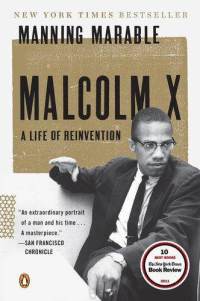
The one thing I realized after reading the Afrocentric, mainstream and Alex Haley interpretations of Malcolm in the early ’90s is that just like with King, we could make Malcolm X represent whatever we wanted. He could be nonviolent and a militant at the same time, or a thug and an ambassador of peace at the same time. Yes, as the late Manning Marable’s book shows, Malcolm — like most of us — was a walking, breathing contradiction of convictions (literal and figurative) and beliefs. For the purposes of my post today, though, he was a social justice activist, acting on the part of those poor, Black and discarded, plain and simple.

Which is why I think anyone who thinks Malcolm X brought murder to his own pulpit in February 1965 is an idiot. The idea that teaching others self-defense in opposition to White mobs, lynching, and blatant police brutality deserved a violent death. Really, now? So, if that’s the case, then Dr. King should have died of natural causes about three or four years ago, since his was the path of nonviolence, right? Yet, you still hear the likes of Rudy Giuliani, Bill O’Reilly and Geraldo de Stupido slinging this shit (and similar crap playing on such respectability politics themes) as if it were McDonald’s hash browns on sale for half-price.

Manning Marable's Malcolm X: Life of Reinvention (2011) cover (Marable died four days before his last book dropped), May 28, 2012. (Malik Shabazz via Wikipedia).  Qualifies as fair use under copyright laws (relevant subject matter, low resolution).

Manning Marable’s Malcolm X: Life of Reinvention (2011) cover (Marable died four days before his last book dropped), May 28, 2012. (Malik Shabazz via Wikipedia). Qualifies as fair use under copyright laws (relevant subject matter, low resolution).

Speaking of that lot, I don’t wonder what Malcolm X would say about our racist, plutocratic democracy these days. Anyone whose read his words would know what he’d say. That what happened with Michael Brown and Eric Garner and Rashida McBride and so many others should be resisted “by any means necessary.” That we should unmask those powerful people lurking in the shadows but pulling the strings that keep the systems of oppression working 24/7 in our world. He would’ve supported Occupy Wall Street when and where few Black leaders had in 2010 and 2011, called Islamic State or IS (that’s what they are called outside the US, where we can’t get our acronyms straight) a “chickens coming home to roost” scenario, and put Tavis Smiley and Cornel West in the same self-aggrandizing bag as Giuliani and Rivera.

I get why it took Malcolm Little so long to transform himself into Malcolm X, and still, until after his thirty-ninth birthday, for him to find himself and his purpose in the world. It’s taken me nearly four and half decades to do the same. It’s hard to “make it plain,” especially to ourselves. It’s scary to be in a constant state of disillusionment, about family and friends, about your identity, about your religion and beliefs. But it also allows you to see yourself and everyone around you fresh for the first time, to know who people really are.

What A Fool (Make) Believes

31 Saturday Jan 2015

Posted by decollins1969 in 1, Boy @ The Window, culture, Eclectic, eclectic music, Mount Vernon High School, Mount Vernon New York, music, Pop Culture, Religion, Sports, University of Pittsburgh, Youth

≈ Leave a comment

Tags

"Born In The U.S.A.", "What A Fool Believes" (1979), Black Masculinity, Blocked Shot, Bruce Springsteen, Crush #1, Crush #2, Disillusion, Doobie Brothers, Emasculation, Fantasy, Inception (2010), Kenny Loggins, Make Believe, Manchild, Michael McDonald, MVHS, Naivete, Nightmare, Patrick Ewing, Pitt, Reality, Romantic Crushes, Self-Discovery, Self-Reflection, Sentimental Fool, Stupidity


Inception (2010) movie wallpaper (scene of falling  too deep in a dream to come out of it), January 31, 2015. (http://www.alphatucana.co.uk/).

Inception (2010) movie wallpaper (scene of falling too deep in a dream to come out of it), January 31, 2015. (http://www.alphatucana.co.uk/).

I am a firm believer in the idea that just about everything in our lives happens for a reason, even if the reason involves multiple layers of chance adding up to a certainty. Meaning even the unexplainable, given enough time, study and webs of connections, can add up to a certain amount of truth, even if we as humans cannot except that limited truth.

Orange Crush can crushed, June 8, 2012. (Susan Murtaugh via Flickr.com).

Orange Crush can crushed, June 8, 2012. (Susan Murtaugh via Flickr.com).

The beginning of ’87 put me in the middle of that scenario regarding my masculinity and my relationships with everyone in my life. I knew that at seventeen that I’d already been an adult of sorts, with everything that was going on with my family at 616. But while I might have been an overburdened high school senior with adult responsibilities and adult-level decisions to make, psychologically and emotionally, I was still a twelve-year-old. One damaged by bearing witness to my stepfather beating up my Mom on Memorial Day ’82, the abuse I’d suffered at his hands afterward, and my ostracism my first years in Humanities in seventh and eighth grade. I was “a dog that been beat too much” by my senior year at Mount Vernon High School, and I’d started wondering if I had stayed one year too long before heading off to college, because my last year of K-12 wasn’t going so well either.

I was also in the middle of my second classmate crush in five years. I was more than three years removed from my most intense feelings for Crush #1 (outed at Wendy in Boy @ The Window), only to feel stomach flutters for the young woman who’d been my Crush #2 (Phyllis) for about thirteen months. Except I was too scared to tell anyone, including myself, of how I felt about her.

Nor did I really understand why I felt the way I did when I was around her. With Wendy, I could point to personality, intellect, quirkiness, among other attributes, and the fact that prior to seventh grade, I’d never met anyone like her. Phyllis, though, I’d known for more than five years, and while she was attractive and smart, it wasn’t as if she was so unique.

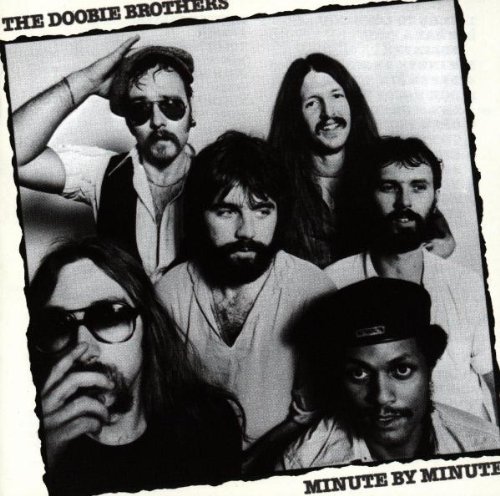
Doobie Brothers, Minute By Minute (1979) album (with "What A Fool Believes" on Track 2), January 31, 2015. (http://amazon.com).

Doobie Brothers, Minute By Minute (1979) album (with “What A Fool Believes” on Track 2), January 31, 2015. (http://amazon.com).

Still, even in the back of my more mature and emotionally cold part of my mind, I knew what it really was. Phyllis had made this beaten and abused dog feel better about himself in the worst of times, between seventh and tenth grade, back in his Hebrew-Israelite days. Even if that emotional altruism was more about saving me from hell in this life and the next, and less about liking me, her actions tugged my deeply bruised heart strings. Not Phyllis’ fault by any stretch. Just a reality. I was a “sentimental fool…tryin’ hard to recreate what had yet to be created,” like the fictional man in Doobie Brothers’ “What A Fool Believes” (1979).

By my senior year, I thought about Phyllis from afar, just like I’d done with Wendy nearly five years earlier. With my imagination, I could almost imagine anything. Including all of the indicators of romance, from dating and joking to kissing, to getting together during holiday and summer breaks during college. Everything, except anything sexual. It wasn’t because I didn’t know how. It was because in the conscious side of my mind in which my emotional age remained at twelve, I couldn’t see any young woman my age as having a carnal side, of being anything other than a near-perfect being. Phyllis may as well have been a nymph or angel, and not a real person.

Somehow I knew I was setting myself up for a year of hurt. I knew that I had to grow up, to “be a man,” to find a way to actually say that I liked Phyllis, if only for myself to hear. And I did tell it, to myself, to her, to people I came for a time to trust. I even sent a letter to Phyllis after the fact, only to be hurt even more, just like the dumb ass Michael McDonald and Kenny Loggins described in “What A Fool Believes.” “As he rises to her apology, anybody else would surely know…,” as the song goes. Only in my case, to crash and burn like the Hindenburg in New Jersey did in 1938.

Patrick Ewing blocking a Scottie Pippen shot, United Center, Chicago, March 14, 1996. (http://chicago.cbslocal.com).

Patrick Ewing blocking a Scottie Pippen shot, United Center, Chicago, March 14, 1996. (http://chicago.cbslocal.com).

By the end of ’88, though, I realized the truth. That my crush on Crush #2 wasn’t a real crush at all. It was my crutch, my coping strategy to deal with the fact that I really hadn’t felt anything about anyone in my life since those heady Wendy days. Those were my final days of childhood, those days before I’d learn for the second time in my first twelve and a half years how little control I had over my life, how little love and affection there was to find. As the song of that phase of my life went, I “never came near what [I] wanted to say, only to realize it never really was.” I never made Crush #1 “think twice,” and made Crush #2 reject me like Patrick Ewing in his prime smacking a basketball into the fifth row of Madison Square Garden.

I suppose that this happens to all boys and girls, men and women and transgender at some point or another in their lives. At twelve, it felt glorious, while at seventeen, it was painful and embarrassing. I’m just glad that I made it through that year, 1987 — though hardly happy to go and grow through the process — and came out on the other side of it ready to grow, risk and protect my heart again.

Can There Ever Be Too Much Race In A US History Course?

05 Monday Jan 2015

Posted by decollins1969 in 1, Academia, culture, Eclectic, Politics, Pop Culture, race, University of Pittsburgh, Work, Youth

≈ Leave a comment

Tags

African Slaves, Capitalism, Carnegie Mellon, CMU, Course Evaluations, Critical Thinking, Democracry, Duquesne University College of Education, George Washington University, History as Trivia, Independent Thinking, Native Americans, Pitt, Racism, Slavery, US History


ODing on chocolate via a hypodermic needle, January 5, 2015. (http://buzzfeed.com).

ODing on chocolate via a hypodermic needle, January 5, 2015. (http://buzzfeed.com).

For nearly every semester in which I have taught a US history course — and I’ve been teaching them on and off since ’92 — one or two students have complained in their course evaluations that we “spent too much time on race.” Pitt, Carnegie Mellon, Duquesne, George Washington, UMUC, the refrain from this small but vocal minority has been the same. It was no different this past semester, as two students complained that there was too much about race in the course. But over the years, I’ve never seen any of these students ask themselves the question, “How do you define ‘too much race’ in a US history course?”

I guess I could look at it this way. That a small minority of my students like their US history the way most Americans like their churches — segregated and unequal. US history for them is supposed to be about the building of the greatest nation on Earth/in the history of humanity, preordained by God to dominate the world with its military, its capitalism and its brand of democracy. US history for them is the history of how Europeans escaped political persecution and religious oppression for the pristine wilderness of the New World, broke free of the chains of absolute monarchy and tyranny, and built this great country from the basement up.

John Gast's Spirit of the Frontier (aka American Progress), with American personified by Columbia in a toga, 1872. (Jeff G. via Wikipedia). In public domain.

John Gast’s Spirit of the Frontier (aka American Progress), with American personified by Columbia in a toga, 1872. (Jeff G. via Wikipedia). In public domain.

I guess I could teach a US history like this. A course that completely ignores the existence of Native Americans, numbering in the neighborhood of 10-15 million in what would become British North America (now the US and Canada) at the time of Jamestown settlement in 1607. A class that could gloss over the diseases, wars, starvation and constant encroachments that reduced this population by ninety percent within a century of the real British invasion. I could skip over the economic imperatives — really greed — that led to the use of White indentured servants and West Africans as indentured servants and slaves to make the colonies profitable through growing tobacco, rice and indigo. I could obfuscate the eventual creation of an institution that made permanent the connections between African skin and slavery in what would become the US, codified in law and in the US Constitution (albeit indirectly).

I guess this US history course could focus mostly on the genius of the great White men that made this a great nation, slave owners like George Washington, Thomas Jefferson, James Madison and Andrew Jackson. I could then focus less on the crucial reliance of the US economy on the profits and products of slavery that made industrialization possible. A system that supplied the US and the UK with the cotton that would make modern capitalism — with its multinational banks, international commerce and movements of large numbers of people to cities for work — a reality. A system that so contradicted American ideals that it led to a civil war that killed and maimed nearly 1.2 million people.

Original Trivial Pursuit, Master Game, Genus Edition, 1981, January 5, 2015.  (http://epicrapbattlesofhistory.wikia.com/).

Original Trivial Pursuit, Master Game, Genus Edition, 1981, January 5, 2015. (http://epicrapbattlesofhistory.wikia.com/).

And all this only gets us to 1865. There’s also Indian removal, Mexican-turned-Americans in the Southwest, Southern and Eastern European immigrants and Social Darwinism, Jim Crow segregation and lynchings, race riots, Black migration, Mexican migration, Whiteness and the assimilation of White ethnics, the early Civil Rights Movements, the Civil Rights Movement, the post-Civil Rights era. This is hardly an exhaustive list of the topics that are key ones in any US history course.

So short of deciding to only teach a US history that only focuses on great, rich White males, I have to discuss race. If only to teach this history properly and well enough to give all of my students food for thought and thought for food. Otherwise, I might as well be teaching Trivial Pursuit or change my name to Alex Trebek.

A Few Thoughts About Stuart Scott

05 Monday Jan 2015

Posted by decollins1969 in 1, Carnegie Mellon University, culture, Eclectic, Pittsburgh, Politics, Pop Culture, race, Sports, University of Pittsburgh, Youth

≈ Leave a comment

Tags

Cancer, Death, ESPN, Hip-Hop, Marc Hopkins, Sports Anchor, Sportscenter, Stuart Scott


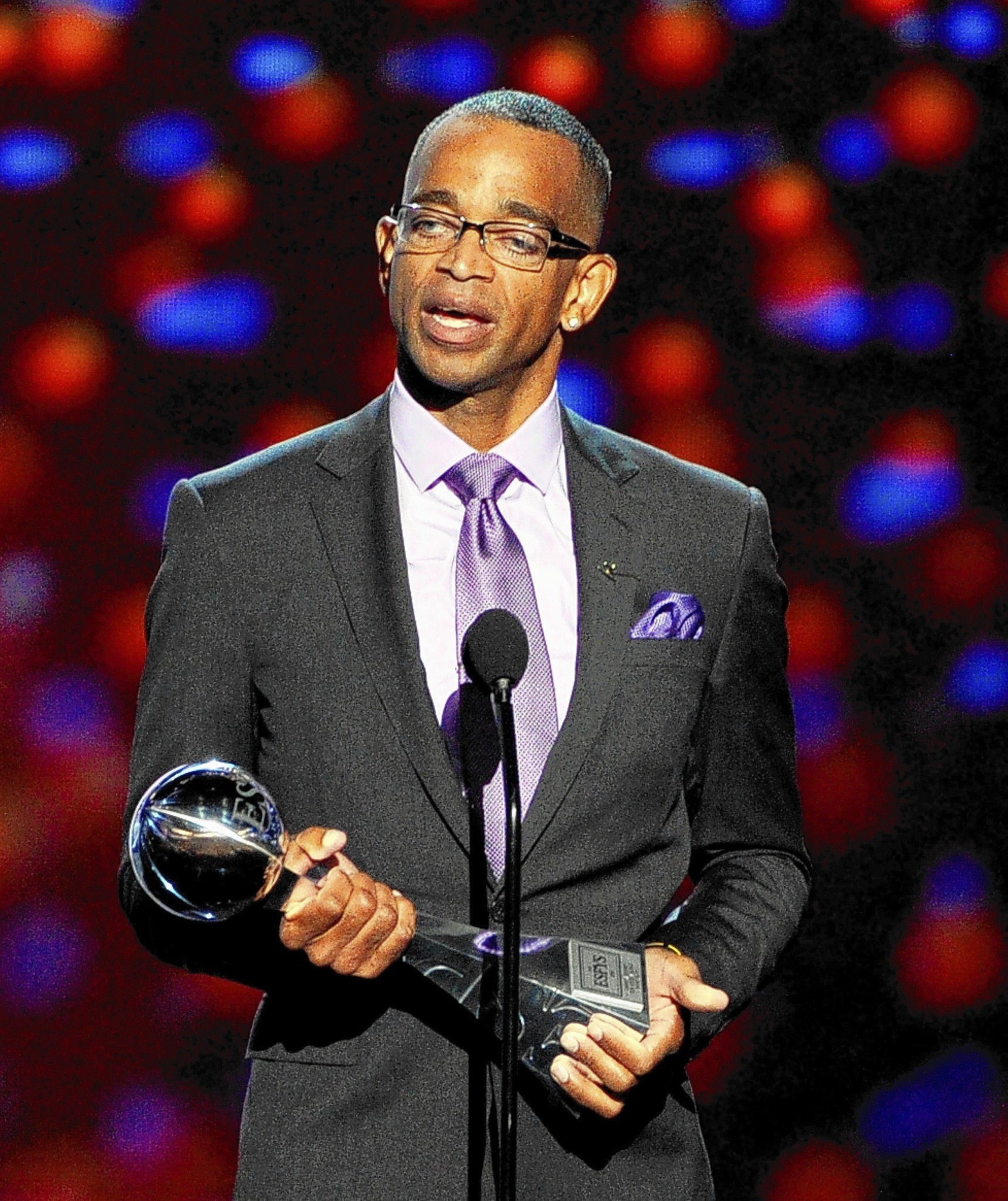
Stuart Scott accepting the 2014 Jimmy V Perseverance Award  during the 2014 ESPYS, Nokia Theatre, Los Angeles, CA, July 16, 2014. (Kevin Winter/Getty Images via http://plus.google.com)

Stuart Scott accepting the 2014 Jimmy V Perseverance Award during the 2014 ESPYS, Nokia Theatre, Los Angeles, CA, July 16, 2014. (Kevin Winter/Getty Images via http://plus.google.com)

A piece of my second childhood (i.e., graduate school, sports, and dating in the 1990s) died yesterday morning with Stuart Scott. He was the best that ESPN had to offer for a long time, a sports anchor who brought it with style every single broadcast. Or, as Scott would’ve put it, from day one, he “just called himself butter, ‘cuz he was on a roll.”

I could analyze his impact on sport and entertainment, on sports in and as pop culture, on Scott’s infusion of hip-hop and other forms of “being Black” on the Seinfeld-esque SportsCenter. I could also talk about race and sports and Scott more broadly, and how Scott’s style may have taken some of the edge off of the everyday racial undertones that are so clearly a part of college and professional sports in the US. I leave that for people who are more expert on sports and sports journalism in popular culture than me. At least for now.

I have an dear old friend whom Scott always reminded me of when I watched SportsCenter or when Scott hosted NFL or NBA shows on ESPN. My friend Marc, whom I’ve talked about before on my blog, whom I’ve known now for nearly twenty-seven years. I’ve often thought over the years, if Marc did TV instead of writing or print journalism, he’d be Stuart Scott. I’m not sure if Marc would take this as a compliment or a criticism, but for me, it’s definitely the former.

But so many bouts with cancer over the course of a decade would be dire for anyone. I feel for Scott’s daughters and girlfriend and ex-wife, for his extended family and friends, and for a sports world without someone that positive, someone on the presentation side with serious dap. Here’s to you, Mr. Scott, one more voice of “Boo-yah!” to add to the mix.

← Older posts
Newer posts →

Boy @ The Window: A Memoir

Boy @ The Window: A Memoir

Places to Buy/Download Boy @ The Window

There's a few ways in which you can read excerpts of, borrow and/or purchase and download Boy @ The Window. There's the trade paperback edition of Boy @ The Window, available for purchase via Amazon.com at http://www.amazon.com/Boy-Window-Donald-Earl-Collins/dp/0989256138/

There's also a Kindle edition on Amazon.com. The enhanced edition can be read only with Kindle Fire, an iPad or a full-color tablet. The links to the enhanced edition through Apple's iBookstore and the Barnes & Noble NOOK edition are below. The link to the Amazon Kindle version is also immediately below:

scr2555-proj697-a-kindle-logo-rgb-lg

Boy @ The Window on Amazon.com: http://www.amazon.com/Boy-The-Window-Memoir-ebook/dp/B00CD95FBU/

iBookstore-logo-300x100

Boy @ The Window on Apple's iBookstore: https://itunes.apple.com/us/book/boy-the-window/id643768275?ls=1

Barnes & Noble (bn.com) logo, June 26, 2013. (http://www.logotypes101.com).

Boy @ The Window on Barnes & Noble: http://www.barnesandnoble.com/w/boy-the-window-donald-earl-collins/1115182183?ean=2940016741567

You can also add, read and review Boy @ The Window on Goodreads.com. Just click on the button below:

Boy @ The Window

Twitter Updates

Tweets by decollins1969
  • RSS - Posts
  • RSS - Comments

Archives

  • June 2025
  • April 2023
  • September 2022
  • August 2022
  • July 2022
  • June 2022
  • May 2022
  • April 2022
  • March 2022
  • January 2022
  • December 2021
  • November 2021
  • October 2021
  • September 2021
  • August 2021
  • July 2021
  • June 2021
  • April 2021
  • March 2021
  • February 2021
  • January 2021
  • December 2020
  • November 2020
  • October 2020
  • September 2020
  • August 2020
  • July 2020
  • May 2020
  • April 2020
  • March 2020
  • January 2020
  • December 2019
  • November 2019
  • August 2019
  • July 2019
  • June 2019
  • May 2019
  • April 2019
  • March 2019
  • February 2019
  • January 2019
  • December 2018
  • November 2018
  • October 2018
  • September 2018
  • August 2018
  • July 2018
  • June 2018
  • May 2018
  • March 2018
  • February 2018
  • January 2018
  • December 2017
  • November 2017
  • October 2017
  • September 2017
  • August 2017
  • July 2017
  • June 2017
  • May 2017
  • April 2017
  • March 2017
  • February 2017
  • January 2017
  • December 2016
  • November 2016
  • October 2016
  • September 2016
  • August 2016
  • July 2016
  • June 2016
  • May 2016
  • April 2016
  • March 2016
  • February 2016
  • January 2016
  • December 2015
  • November 2015
  • October 2015
  • September 2015
  • August 2015
  • July 2015
  • June 2015
  • May 2015
  • April 2015
  • March 2015
  • February 2015
  • January 2015
  • December 2014
  • November 2014
  • October 2014
  • September 2014
  • August 2014
  • July 2014
  • June 2014
  • May 2014
  • April 2014
  • March 2014
  • February 2014
  • January 2014
  • December 2013
  • November 2013
  • October 2013
  • September 2013
  • August 2013
  • July 2013
  • June 2013
  • May 2013
  • April 2013
  • March 2013
  • February 2013
  • January 2013
  • December 2012
  • November 2012
  • October 2012
  • September 2012
  • August 2012
  • July 2012
  • June 2012
  • May 2012
  • April 2012
  • March 2012
  • February 2012
  • January 2012
  • December 2011
  • November 2011
  • October 2011
  • September 2011
  • August 2011
  • July 2011
  • June 2011
  • May 2011
  • April 2011
  • March 2011
  • February 2011
  • January 2011
  • December 2010
  • November 2010
  • October 2010
  • September 2010
  • August 2010
  • July 2010
  • June 2010
  • May 2010
  • April 2010
  • March 2010
  • February 2010
  • January 2010
  • December 2009
  • November 2009
  • October 2009
  • September 2009
  • August 2009
  • July 2009
  • June 2009
  • May 2009
  • April 2009
  • March 2009
  • February 2009
  • January 2009
  • December 2008
  • November 2008
  • October 2008
  • September 2008
  • August 2008
  • July 2008
  • June 2008
  • May 2008
  • April 2008
  • March 2008
  • February 2008
  • January 2008
  • December 2007
  • November 2007
  • October 2007
  • September 2007
  • August 2007
  • July 2007
  • June 2007

Recent Comments

MaryPena's avatarMaryPena on My Day of Atonement/Bitter Hat…
decollins1969's avatardecollins1969 on No Good Teaching Deed Goes…
Mary Rose O’Connell's avatarMary Rose O’Connell on No Good Teaching Deed Goes…

NetworkedBlogs on Facebook

NetworkedBlogs
Blog:
Notes From a Boy @ The Window
Topics:
My Life, Culture & Education, Politics & Goofyness
 
Follow my blog

616 616 East Lincoln Avenue A.B. Davis Middle School Abuse Academia Academy for Educational Development AED Afrocentricity American Narcissism Authenticity Bigotry Blackness Boy @ The Window Carnegie Mellon University Child Abuse Class of 1987 CMU Coping Strategies Crush #1 Crush #2 Death Disillusionment Diversity Domestic Violence Economic Inequality Education Family Friendship Friendships Graduate School Hebrew-Israelites High-Stakes Testing Higher Education History Homelessness Humanities Humanities Program Hypocrisy Internalized Racism Jealousy Joe Trotter Joe William Trotter Jr. K-12 Education Love Manhood Maurice Eugene Washington Maurice Washington Misogyny Mother-Son Relationship Mount Vernon High School Mount Vernon New York Mount Vernon public schools Multiculturalism MVHS Narcissism NFL Pitt Pittsburgh Politics of Education Poverty President Barack Obama Race Racial Stereotypes Racism Relationships Self-Awareness Self-Discovery Self-Reflection Sexism Social Justice Teaching and Learning University of Pittsburgh Violence Whiteness Writing

Top Rated

Blog at WordPress.com.

  • Subscribe Subscribed
    • Notes from a Boy @ The Window
    • Join 103 other subscribers
    • Already have a WordPress.com account? Log in now.
    • Notes from a Boy @ The Window
    • Subscribe Subscribed
    • Sign up
    • Log in
    • Report this content
    • View site in Reader
    • Manage subscriptions
    • Collapse this bar
 

Loading Comments...