• About Me
  • Other Writings
  • Interview Clips
  • All About Me: American Racism, American Narcissism, and the Conversation America Can’t Have
  • Video Clips
  • Boy @ The Window Pictures
  • Boy @ The Window Theme Music

Notes from a Boy @ The Window

~

Notes from a Boy @ The Window

Category Archives: University of Pittsburgh

Afrocentrists, Evangelicals, Hebrew-Israelites and the False Revolution

28 Monday Mar 2016

Posted by decollins1969 in 1, Academia, Boy @ The Window, Carnegie Mellon University, Christianity, culture, Eclectic, Hebrew-Israelite, Mount Vernon New York, Patriotism, Pittsburgh, Politics, Pop Culture, race, Religion, University of Pittsburgh, Youth

≈ Leave a comment

Tags

Afrocentric, Afrocentricity, Authentic Blackness, Authority Figures, Black Action Society, Child Abuse, Covenant Church of Pittsburgh, Cross of Gold (1896), Dick Oestriecher, Domestic Violence, Estelle Abel, Evangelical Christianity, Frances Cress Welsing, Frederick K.C. Price, Gospel of Prosperity, Hoteps, Jack Van Impe, Judah ben Israel, Karl Marx, Kenneth Copeland, Kufi, Marxism, Maurice Eugene Washington, Molefi Asante, Neo-Marxists, Ostracism, Prosperity Gospel, Racism, Rapture, Religion, Wendy Goldman, William Jennings Bryan


Kenneth and Gloria Copeland, Believer's Voice of Victory television broadcast, November 23, 2011. (Carpetsmoker via Wikipedia). Released to public domain via CC-SA-3.0.

Kenneth and Gloria Copeland, Believer’s Voice of Victory television broadcast, November 23, 2011. (Carpetsmoker via Wikipedia). Released to public domain via CC-SA-3.0.

For nearly all of my life folks with even a kernel of authority have tried to convince me that there was one right way to live, one true path to liberation. Mostly religion has been the means through which others have attempted to box me in, although ideologues around Marxism, Afrocentricity, and Capitalism have all been in my figurative kitchen over the years. And like any well-meaning human being, at times I tried real hard to adapt myself to these right ways of thinking, of living out the one correct way to live. Only to fail, or rather, to recognize that none of these ways are the one right way, unless you are a closet right-winger, a conservative (non-ideological) wearing revolution-esque clothing.

My introduction to this madness began with my years as a Hebrew-Israelite, from April ’81 to April ’84 (although I wore my kufi until September ’84). That any parent could suddenly impose a new religion on their kids without explanation is abusive enough. When combined with vague notions about the Lost Tribes of ancient Israel and the wearing of clothes that set us apart culturally while in the middle of puberty, it was a forced societal ostracism. Even still, I tried to live by these strictures. “Remember the Sabbath day and keep it holy.” Eat kosher food, don’t use Ivory soap, shop only at Black or Hebrew-Israelite stores, avoid “unclean issues of blood.” But the physical abuse and poverty that came with being a Hebrew-Israelite in the Judah ben Israel madhouse of contradictions at 616 made me despise anything involving Hebrew-Israelite pretty much for all time.

Molefi Asante speech, Philadelphia, PA, September 13, 2014. (AP photo/file).

Molefi Asante speech, Philadelphia, PA, September 13, 2014. (AP photo/file).

Fast-forward a few years to the early 1990s, to the rise of Afrocentricity and the Afrocentric ethos. After three and a half years of being around Hebrew-Israelites, these kente-cloth wearing fools made me weary more times than not of their exclusionary our-way-or-no-way Blackness. Molefi Asante and the late Frances Cress Welsing were just the tip of a much larger iceberg in search of revolutionary “authentic” Blackness. From the Afrocentric undergrads who hijacked the Black Action Society leadership at the University of Pittsburgh in 1991 to folks who picked arguments with me for “sounding White” while I was in grad school, I saw them the same way I saw my now idiot ex-stepfather and the obnoxious Estelle Abel from my high school days. They were well-meaning but stupid. As far as I was concerned, they thought that their words alone would foster a revolution, that being Black meant turning one’s back on the world while also indirectly embracing an ethnocentric capitalism. Or at least, a Black American collective individualism, otherwise known as an “Afrocentric cool.”  I could not, I would not, exchange one form of oppressive uplift in Hebrew-Israelites for the shiny fool’s gold that mostly represented the Afrocentrists.

The neo-Marxists I met in Pittsburgh throughout the 1990s were no better. For all their revolutionary rhetoric, theirs was a world of theoretical activism, of scholarly examples of past oppression. Most of them didn’t know poverty and didn’t comprehend oppression beyond their own limited experience. Most of all, they couldn’t find a connection between American racism and class oppression if I gave them an industrial strength magnet. The fact that most of them hadn’t read Franz Fanon, W. E. B. Du Bois, Eric Williams, C. L. R. James, Anna Julia Cooper, Zora Neale Hurston, Derrick Bell, Angela Davis — but could quote Karl Marx the way Hebrew-Israelites could quote the Torah and Afrocentrists could quote Asante and Welsing — I found troubling. That’s putting it nicely. I found it contemptuous that folks who didn’t know my experience or who would all but refuse to read folks who written about experiences like mine would expect my allegiance to an ideology that was never meant for people who look like me.

The evangelical Christian part of my life was literally the last of the major dogmas to go. It was the hardest for me because I literally had given my life to Jesus in the midst of the whole Hebrew-Israelite crisis, Easter Sunday ’84. With my Mom coming down the same path by the late-1980s, it made it easier to not interrogate my Christianity as thoroughly as I would excoriate Afrocentrists and Marxists in graduate classes and in articles and papers a decade later. But even at nineteen, I realized that the Van Impe’s weekly predictions of the Apocalypse were as ridiculous as Welsing’s exulting of the magical properties of melanin. Or, for that matter, a fake Balkis Makeda cautioning against the use of Ivory Soap among her Hebrew-Israelite flock because of a dream she had.

Grant Hamilton cartoon for Judge Magazine on William Jennings Bryan's "Cross of Gold" speech, Democratic National Convention, Chicago, July 9, 1896. (Wikipedia). In public domain.

Grant Hamilton cartoon for Judge Magazine on William Jennings Bryan’s “Cross of Gold” speech, Democratic National Convention, Chicago, July 9, 1896. (Wikipedia). In public domain.

I went along to get along for years, until the hypocrisy of evangelical Christianity’s Gospel of Prosperity became too much. They took the metaphor of William Jennings Bryan’s cross of gold and actually went literal and nuclear with it. Somehow being Christian now meant blind patriotic allegiance to anything US and fully supporting capitalism, and yet an exclusionary separation between “true” evangelical Christians and the rest of the world. Especially on Rapture Day.

The last time I sat comfortably in a pew was in January ’97, although I’ve been to churches of various denominations dozens of times since. I still believe in Jesus, the life and the death and even the resurrection. But I don’t believe in most who claim to represent him, yet turn around and ignore the vulnerable standing right in front of them, making weak claims around individualism and poverty in the process.

In so many ways, evangelicals, Marxists, Afrocentrists, and Hebrew-Israelites are more alike than different. They all insist on a singular path, a quintessential truth. While some aspects of their thinking are appealing, I find accepting their bullshit in entirety poisonous to my spirit, mind, and gastrointestinal tract. There still may well be a revolution or even a rapture, but it won’t be because of any of these groups.

The Grad School Maze

22 Tuesday Mar 2016

Posted by decollins1969 in 1, Academia, Boy @ The Window, culture, Eclectic, Pittsburgh, Politics, Pop Culture, race, University of Pittsburgh, Work, Youth

≈ Leave a comment

Tags

Acceptance Letters, African American History, Applications, Dr. Jack L. Daniel, GPA, Graduate School, GRE Scores, History, Howard University, Incompetence, Lessons, MA Programs, NYU, Pitt, Rejection Letters, UC Berkeley, University of Maryland College Park, US History, UVA


An endless maze, May 24, 2014. (http://turbosquid.com/).

An endless maze, May 24, 2014. (http://turbosquid.com/).

It’s been a quarter-century since I had to choose my academic path post-bachelor’s degree. That statement in itself is proof that I am no longer young, seeing that I was barely smart enough at twenty-one to decide on my advanced degree path in the first place.

In the fall of ’90, I had applied to six schools to do master’s degree (and potentially PhD) work in the history field: University of Pittsburgh, UC-Berkeley, University of Maryland-College Park, Howard University, University of Virginia, and New York University. I had briefly considered law schools, but decided against a year or torts and contracts for something a bit more relevant to my interests. Beyond the master’s, I still wasn’t sure if I wanted to do a doctorate, teach, write, work outside academia, or just find a job that enabled me to buy my first car. Such are the issues with a student too close to his former life of grinding poverty making decisions about an ill-defined path to his future. I could’ve been my eleven-year-old self applying to Humanities for middle school for the first time, almost as naive, and nearly as myopic.

My GPA at the time of my applications in October ’90 was a 3.28 (I’d reach a 3.4 by the end of the spring semester ’91), with a 3.8 as a history major, and my one GRE test had me in the 64th percentile in reading, 54th in math, and 78th in analytical. The analytical section was new and — as I sensed at the time (and would learn for sure a few years later) — the most relevant part of the GRE for anyone planning on a humanities or social sciences graduate degree. But I couldn’t convince either Berkeley or UVA of that. Berkeley rejected me in January ’91, saying that the GRE scores of their typical students were in the 80th and 90th percentiles in math and reading. UVA sent me a one-page rejection a month later. As I learned later on, my post-1900 focus on US and Black history — UVA’s main specializations were pre-1900 US and African American history — was the biggest reason for my rejection.

University of Virginia Cavaliers' sabers logo, March 21, 2016. (http://www.southwesttimes.com).

University of Virginia Cavaliers’ sabers logo, March 21, 2016. (http://www.southwesttimes.com).

By March, I started to hear more positive news. NYU had accepted me into their program just before Pitt’s mid-March Spring Break, and Pitt’s acceptance followed soon after. I had been back and forth with Howard’s graduate admissions office, who had acknowledged receipt of my application packet before losing it for two months, finding it and sending it back to me because I missed one checkbox on the first page, and then losing it again in February. By the time Howard found my packet again and then accepted me, I had already moved on in my mind.

The main sticking points in most of these acceptances were around my GRE scores or what aid or fellowships I qualified for. Not one school knew what to do with my GRE analytical score, but they seemed quick to jump on my math score as cause for concern. Seriously, unless I had planned to be a statistician or engineer, why would my math score matter in earning an MA in History? Wouldn’t my ability to do broader analysis beyond numbers matter more?

As for aid and fellowships, this was where the University of Maryland became part of the story. They had also accepted me initially in March, but somehow managed to “lose” my application packet for more than a month. I say “lose,” because the admissions office and the history department at College Park lost my application just long enough for all the deadlines to grant fellowships and departmental aid to pass. Not exactly a coincidence.

Afterward, the folks at College Park contacted me to let me know that I was a “provisional status” grad student if I wanted to do my master’s work at UMD. I was “provisional” because of my GRE math score, thus making me ineligible for aid, and requiring a minimum GPA of 3.25 my first semester before being granted any aid. NYU, for its part, wanted me to sign a letter of commitment to the university and the history program before revealing to me any financial aid or fellowship options at all. Even I knew that this was ridiculous, especially after my experience with Columbia four years earlier.

This week twenty-five years ago, I began saying no. I said no to NYU’s heavy-handed slight-of-hand acceptance, and I’d say no to College Park’s deceit seventeen days later. I never actually responded to Howard at all, figuring that my packet was gathering dust bunnies in a dry-as-dust room in Founders Hall.

New York University logo, March 21, 2016. (http://pinoyespressoshots.com).

New York University logo, March 21, 2016. (http://pinoyespressoshots.com).

That left Pitt as my only choice, a place that despite its nurturing, was now lukewarm to me as a student they accepted into their master’s program. It would take a small miracle, in the form of Pitt’s assistant provost Jack Daniel, for me to have the money I needed to earn my master’s degree.

What are the lessons here? That I should’ve worked full-time for a year after graduation, taken some more courses to raise my GPA to a 3.5 and my history GPA to a 3.9? That given my interests, I should’ve also applied to schools of education for an MA in education with a focus in history? That the change to add the analytical section of the GRE was a waste of money and time? That admissions officers and departmental selection committees in the pre-Internet era were even more incompetent in 1991 than they are today?

The most important lesson for me was that grad school wasn’t completely about merit. Just because I had the grades and other achievements and intangibles didn’t mean that admissions offices and departmental committees would recognize them. People play favorites, provide aid and opportunities to some and not others equally deserving, out of spite, because of narrow-mindedness, or because of their -isms. That applying to graduate school was no safe haven, that there were folks who not only didn’t want me to success, but who would actually actively work to make sure I didn’t succeed.

That was a sobering reality. The kind of disillusionment that was the stuff of success for me over the subsequent six years.

My Inevitable Walkman Era

05 Saturday Mar 2016

Posted by decollins1969 in 1, Academia, Boy @ The Window, Christianity, culture, Eclectic, eclectic music, High Rise Buildings, Jimme, Mount Vernon New York, music, My Father, New York City, Pittsburgh, Pop Culture, race, Religion, University of Pittsburgh, Work, Youth

≈ Leave a comment

Tags

616, 616 East Lincoln Avenue, Black Masculinity, Coping Strategies, Disillusionment, Escape, Escapism, Manhood, Masculinity, Self-Discovery, Sony Walkman, Walking, Walkman


This version was my first Sony Walkman (between May 1987 and June 1988), posted August 28, 2013. (http://ebay.ie).

This version was my first Sony Walkman (between May 1987 and June 1988), posted August 28, 2013. (http://ebay.ie).

This week marks three decades since I finally entered the ’80s technologically, buying my first portable radio/cassette player with headphones. It wasn’t the Sony Walkman — I’d get my first one of those a year later. No, it was a Taiwan-made knockoff that I got at Crazy Eddie’s on 46th and Fifth in Manhattan, on sale for $22, that was my jump into the era of the Walkman. After a year and a half of carrying around a plug-in radio, playing with records on cheap $15 turntables (that cost $130 and much more in 2016), contemplating boom boxes, and having no control over what music I listened to outside of laundromat runs and 616, I found a new way to escape.

As I wrote in my memoir, this new toy was

my passport to another world, a world where I could make anything happen and no one could hurt me. Taking the Subway to go to The Wiz or Crazy Eddie’s or Tower Records was as much a part of mine and Darren’s Saturday ritual as our tracking down of Jimme. I no longer had to wait for WPLJ or Z-100 or WBLS to play the music I wanted to hear. I could buy a cassette tape for as little as six dollars. In the month after I’d bought my Walkman I’d gone out and bought more than twenty tapes. Whitney Houston, Simple Minds, Phil Collins, Sting, The Police, Mr. Mister, Mike + The Mechanics, Tears for Fears, even Sade. All were welcome who could contribute to my all-consuming effort at conquering my courses.

I was tough on my first Walkman, though. I must’ve dropped it a dozen times in two months, as it barely made it to Memorial Day ’86. My second one was a $42 Panasonic, which I bought with my Technisort earnings, and it lasted from July 4th until the end of October. I bought a decent Aiwa knockoff of the Sony Walkman in December, and that one made it to April ’87. before I finally found the $60 I needed for my Sony Walkman the month before high school graduation.

In a span of a year, I would accumulate more than seventy tapes, covering everything from pop and hard rock to rap and R&B, new age and jazz. As anyone who knew me in the spring of ’87 could attest, I carried my tapes with me in my book bag to have at the ready, the same way in which I had toted my Bible everywhere when I became a Christian three years earlier.

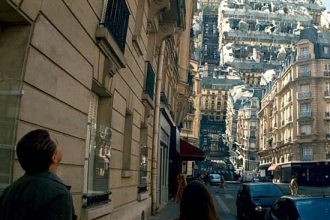
I walked everywhere in the Upper Bronx and Southern Westchester County for nearly three and a half years before I bought a Walkman of any kind. But in that window between March ’86 and my college move to Pittsburgh seventeen months later, my walks became much more frequently and much more eventful. I was walking to escape, to find mental space away from the gang of under-five-year-olds that ruled the too-small, two-bedroom space of pain in which I had grown up. I walked to figure out who I was and who I wasn’t, to be angry at my family, at the world, and at myself. I walked to find meaning in a chaotic life and world. I walked because I could wear myself out with warp speed, spin moves and high-falsetto highs, with questions and emotions and sometimes even, some answers, before coming back to 616 and grabbing some sleep. I must’ve have gone on 100 or 150 walks of five miles or more in that year and a half before college.

Inception (2010), Paris dream construct screen shot, April 27, 2012. (http://dpmlicious.com). Qualifies as fair use under US Copyright laws because of poor resolution of shot, not intended for distribution.

Inception (2010), Paris dream construct screen shot, April 27, 2012. (http://dpmlicious.com). Qualifies as fair use under US Copyright laws because of poor resolution of shot, not intended for distribution.

That doesn’t even count my more frequent forays into the city, not to do anything or be anything. I wasn’t working for my father anymore, and after he repeatedly called me a “Faggat” in August ’86 and tried to set me up with a prostitute in December ’86, I hardly went to see him at all until the last few weeks before leaving for Pitt. I didn’t even take Darren down to Midtown Manhattan, the Upper West Side, Harlem or Flatbush with me. That’s what I did with the spare hours I started stealing from my Mom on weekends during that year. I’d go down to the city, maybe buy a few tapes at Tower Records on 66th and Broadway (usually not, since most of my tapes came via Terra Haute, Indiana). Sometimes if I had a few dollars, I’d go to MOMA or Radio City or some other place and go into escape/observation mode there. Mostly, I walked and people watched for an hour or so, and then take the long way home between the 2 train, 241st Street and the heart of Mount Vernon.

All the while, my music was on, often at full blast. It was a coping strategy, a pain and stress reliever, my sword and my shield. It took my Phyllis obsession and my freshman year at the University of Pittsburgh to break the link between music, Walkman, and the need to escape. It took the pain of rejection, removal from an anti-Donald environment, and a bout of homelessness to make music about enjoyment and education. When that happened, sometime in ’88, I knew I couldn’t escape anymore.


Second Semester Crunch Time

21 Thursday Jan 2016

Posted by decollins1969 in 1, Academia, Boy @ The Window, culture, Eclectic, Mount Vernon High School, Mount Vernon New York, Pittsburgh, Pop Culture, race, University of Pittsburgh, Work, Youth

≈ 2 Comments

Tags

Academic Preparation, Affirmative Action, Challenge Scholarship, College Board, College Retention, Coursework, ETS, Friendships, Internalized Racism, Internalized Sexism, Perseverance, Pitt, Predictability, Righteous Indignation, SAT, Self-Determination, Self-Discovery, Single-Minded


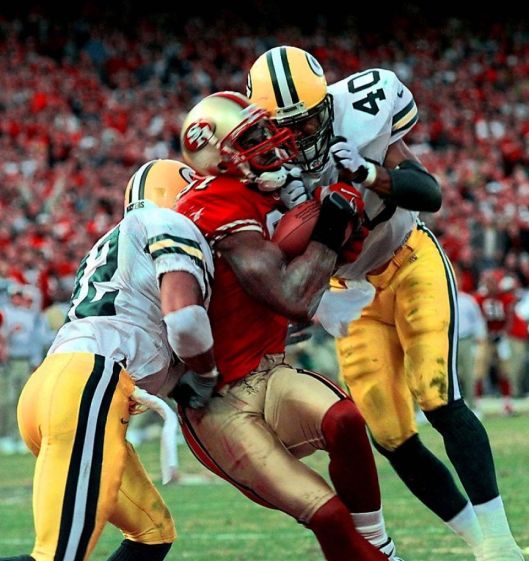
Maybe not a HOF, but a great crunch time catch (literal and figurative) by Terrell Owens, San Francisco 49ers vs. Green Bay Packers, Wildcard Game, Candlestick Park, January 3, 1999. (http://sfgate.com).

Maybe not a HOF, but a great crunch time catch (literal and figurative) by Terrell Owens, San Francisco 49ers vs. Green Bay Packers, Wildcard Game, Candlestick Park, January 3, 1999. (http://sfgate.com).

As this spring semester begins for me at UMUC — a cruel euphemism in January with a windchill around -10°C and a major winter storm approaching the Mid-Atlantic — I’ve reminded myself of the same calendar twenty-eight years ago. As I’ve already noted through my blog and through Boy @ The Window, this was to be a make-or-break semester for me. I had to step up my game at the University of Pittsburgh or go home. And by home, I mean to 616, a place in Mount Vernon, New York that might as well been my burial plot if I had managed to lose my Challenge Scholarship after that Winter Term 1988.

As I wrote in my book

Despite my advisor, I decided to take a full load of classes, balancing two math courses with two history ones, with “rocks for jocks” Geology being the fifth one. The others were Western Civ II, Roman History, Calculus II (the regular one, not Honors), and Logic.

It was to be a sixteen-credit semester. My advisor, a one-time PhD candidate in the History Department at Pitt (talk about life have no coincidences, past, present or future), thought that after my 2.63 first semester, that I had no business making my college schedule more difficult. But after four years of Sylvia Fasulo at Mount Vernon High School, I decided I was through taking advice about taking it easy. I might’ve not known much about my inner self in January ’88, but I knew this much. I was never the guy to take the easy, path-of-least-resistance road in my education. Fact is, I never had the choice of an easy road at any point in my life.

The only obviously easy course of the five I took was Geology 89, and it was only easy because it was a lecture hall course with three multiple choice exams and one textbook. Calc II — with its focus on integrals, volumes, spheres, and other pre-differential calculations — I figured would be easier than Honors Calc I, partly because I excelled on this part of the AP Calculus course the year before (I probably earned my 3 on the AP Calc BC exam on the strength of that work), and partly because this wasn’t an Honors course.

Advanced logic equations, January 20, 2016. (http://www.galilean-library.org).

Advanced logic equations, January 20, 2016. (http://www.galilean-library.org).

Then there was Logic. An ironic choice of a title, since the course didn’t make sense to me from day one. Inductive and deductive reasoning, so the British-born professor told us the first day. With so many symbols and few numbers, how could I consistently deduce an answer to any logic equation? And, what the heck did any of this have to do with being a Computer Science major, anyway?

As for Western Civ II and Roman History, I was surprised how easy I found both courses by the third week, especially after my debacle in East Asian History the month before. But then again, I didn’t miss a single class, I stayed ahead on my readings — and though I knew nearly half of the material going in — and studied as if I’d never been an A student in a history course before.

I had taken the shame of the first semester, the embarrassment of my internalized -isms and imperfections, the anger I directed toward myself, my family, and my idiot dorm mates and let it fuel me. I was on a righteous path of academic vengeance. At least that’s what I thought at the time.

A Planters Peanut Bar, April 25, 2011. (Evan-Amos via Wikipedia). Released to public domain via Creative Commons CC0 1.0 Universal Public Domain Dedication.

A Planters Peanut Bar, April 25, 2011. (Evan-Amos via Wikipedia). Released to public domain via Creative Commons CC0 1.0 Universal Public Domain Dedication.

That sober, almost single-minded focus got me noticed, even though it was my attempt at trying to lay low. I made quite a few friends that semester, most of whom I still call friend today. All of them anywhere between one and twenty years older than me. Call it a sense of maturity, my angered march toward my future, or the sense that I needed to be around folks whose lives had taken at least half as many twists and turns as my own. Whatever it was, I ended up on a path where having a social life would play as much a role in saving my educational future as showing up to all but four lectures in a sixteen-week semester.

I finished that second semester on the Dean’s List with a 3.33 GPA, and a first-year GPA of 3.02. Two A’s (my history classes), an A- in Geology, a B in Calc II, and a C+ in Logic (I did learn a few things even in that course). By the end of April, I was already thinking about switching majors to History. Of more immediate importance was my saving my scholarship for year number two. Not to mention, having friends of any significance for the first time since elementary school.

====================================================

Affirmative action opponents from Supreme Court Justices Antonio Scalia, Clarence Thomas, and Chief Justice John Roberts — as well as Allan Bakke, Jennifer Gratz, Barbara Gruttinger, and Abigail Fisher — all claim that efforts to use the admissions process to bring racial (and gender and socioeconomic) diversity to college campuses is discriminatory. The College Board and ETS cite their statistics to show that the SAT is especially predictive of a student’s performance in the first semester or first year. Anyone working on college retention — especially for underrepresented students — recognizes that nearly half of all students who drop out of college do so after the first two semesters.

Orange Crush can crushed, June 8, 2012. (Susan Murtaugh via Flickr.com).

Orange Crush can crushed, June 8, 2012. (Susan Murtaugh via Flickr.com).

I knew none of this my second semester at Pitt. No one could’ve predicted my first semester’s depression or the single-minded channeling of anger and intellectual resources my second, least of all me. And no, Justice Scalia, college at a school of the stature of the University of Pittsburgh wasn’t too hard for me. It wouldn’t have been too hard for me at any other university for that matter. Life was. And yes, Ms. Gratz and Ms. Fisher, race played a significant role in where I was, where I wanted to be, and how I got there. Just not to your entitled, narcissistic disadvantage.

As for ETS and the College Board, your predictions of my struggles and triumphs based on my 65th percentile 1120 score from October ’86 were more than a bit premature. And not just mine. Fact is, the vast majority of people like me attending predominantly White institutions graduate, whether the campus climate is welcoming or not. However, having a welcoming climate, just as the one I began to discover my second semester, really helps. I guess you couldn’t predict that.

The Cold Light of Grades

05 Tuesday Jan 2016

Posted by decollins1969 in 1, Academia, Boy @ The Window, culture, earth, wind & fire, Eclectic, Jimme, Mount Vernon High School, Mount Vernon New York, My Father, Pittsburgh, Pop Culture, race, University of Pittsburgh, Work, Youth

≈ Leave a comment

Tags

Ann Jannetta, Challenge Scholarship, Continental Airlines, Crush #2, Dean's List, Disillusionment, East Asian History, Financial Aid, General Foods, Grades, Grinding, Homesickness, Humanities, Internalized Racism, Masculinity, Mom, Mother-Son Relationship, MVHS, Newark International Airport, Phyllis, Pitt, Racism, Self-Discovery, Sexism, Stereotype Threat, Travel


University of Pittsburgh after a snow storm, Cathedral of Learning, downloaded January 5, 2016. (http://www.everystockphoto.com).

University of Pittsburgh after a snow storm, Cathedral of Learning, downloaded January 5, 2016. (http://www.everystockphoto.com).

Dateline, Tuesday, January 5, 2016. Exactly twenty-eight years ago on this day and date, I left Mount Vernon and New York for my second semester at the University of Pittsburgh. I sensed, but did not know, that this was a make-or-break time for me as a student and as a person. At least when that day began. I had a 5 pm Continental Airlines flight out of Newark (my last time flying out of there, thank God!), and had plenty of time to kill before catching a cab to East 241st at 2 pm to catch the 2 Subway to 42nd, the Shuttle to Grand Central, and then the Carey Bus to New Jersey.

Then the mailman arrived a bit earlier than I expected, around 12:30 pm. I’d been anticipating and dreading this moment for seventeen days, since Saturday, December 19, the morning of my last final in Pascal.

The day I was scheduled to go back to Pittsburgh was also the day I finally received my grades. I earned an easy A in Astronomy, a B- in Pascal, and a C in Honors Calc. All three of those grades I expected. The C in East Asian History was completely unexpected. My grade point average for the semester gave me a 2.63 to start my postsecondary career. That might’ve been good enough for most folks. But of course not for me. My Challenge Scholarship absolutely depended on me maintaining a minimum 3.0 average at the end of every school year in order for me to stay eligible. That was my wake up call to what I’d allowed Phyllis, and my thoughts of her and me — and of her with me — to do to me. I didn’t even give Mom the chance to see my grades.

Because I was seventeen when my first semester began, my Mom was still the responsible adult and my Mom’s address the primary address for my academic records. This was the first and last time I received my Pitt grades this way.

I was so mad. But I was more disillusioned than angry, especially with myself and my view of the world. I knew I had no margin for error this Winter/Spring semester at Pitt. I needed to raise my overall GPA to a 3.0 or higher in order to keep my academic scholarship for my sophomore year. I could barely afford Pitt as it was, between room and board and books. It wasn’t as if I could depend on Mom and my father to keep sending me money. They had sent a total of $480 my way that first semester. I was still $1,200 behind on my Pitt bill, even with student loans and me working sixteen hours a week.

The days after I got back to my dorm I spent assessing my situation and what to do about it. The first decision I made was to consolidate the funds I managed to secure at the end of December. I had General Foods cover my remaining room and board payments for the school year, increased my Stafford Loan amount for the semester, and marched down to Thackeray Hall. I waited all day to take care of my bills, get my few hundred dollars of leftover cash from all of my aid — all of which I needed for books — and registered for classes. The last part took the most time, and was the hardest to do. The low the second morning of the semester was two below zero, and the high that day was eight above. Fahrenheit, not Celsius. I stood in line outside for over an hour in that weather surrounded by two feet of snow with the occasional winds and snow drifts before getting inside at nine that morning.

But in the moments I had that week, between some quiet time for myself and in discussing my performance with two of my professors (I just couldn’t believe I earned a C in East Asian History!), I realized two or three things. One was that I over-performed, given how depressed I was the last seven weeks of the semester. I missed nearly three out of every four classes in November, and nearly forty percent of my East Asian History class during the entire semester. I went without a textbook for Honors Calc I after someone stole it from my job in the computer labs in the Cathedral of Learning at the end of October. I managed a solid C in the course anyway. It could’ve been much worse.

Two was that my East Asian History professor Ann Jannetta was right. I really was “lucky” to have managed a C in an upper-level history course my first semester of college. I still acted as if I was in Humanities at A.B. Davis Middle School or MVHS, that a C was some indication of low IQ or confirmation that Whites had bigger brains or something. Jannetta was very encouraging. It was the first time any of my professors had made me feel like I belonged in college.

The most important thing I realized, though, was that I couldn’t let anyone or anything get in the way of me bringing my A-game (or A- game, maybe) every semester and in every course. Phyllis didn’t matter. My internalized sexism or what others though of me because of their racism didn’t matter. My idiot classmates or parents didn’t matter. Heck, being hungry, cold, and short on money didn’t matter. All that mattered was my ability to do what I did best back then. Get A’s in bunches when I needed to.

Of course, all these things really did matter. I merely decided to play the game of college that semester with a combination of fear and anger, arrogance and obliviousness. To the tune of a 3.33 and the Dean’s List! Yay me!

But when that semester ended on Saturday, April 30, those demons and distractions resurfaced. Oh, the days before I spent five days homeless and weeks eating tuna fish and pork neck bones!

Fisher v. University of Texas: Supreme Court Takes Up Affirmative Action (Again!)

09 Wednesday Dec 2015

Posted by decollins1969 in 1, Academia, Boy @ The Window, culture, Eclectic, Mount Vernon High School, Politics, Pop Culture, race, University of Pittsburgh, Youth

≈ Leave a comment

Tags

Affirmative Action, Bakke v. University of California at Davis (1978), Delusions of Grandeur, Fisher v. University of Texas (2015; 2012), Gratz v. Bollinger (2003), Grutter v. Bollinger (2003), Justice Antonin Scalia, Justice Clarence Thomas, Narcissism, Plessy v. Ferguson (1896), Racism, Social Darwinism, Stereotype Threat, Supreme Court, Supreme Court decisions


Abigail Fisher, second from right, listens as her lawyer Bert Rein, center, speaks with reporters, Supreme Court, Washington, DC, December 9, 2015. (J. Scott Applewhite/AP; http://msnbc.com).

Abigail Fisher, second from right, listens as her lawyer Bert Rein, center, speaks with reporters, Supreme Court, Washington, DC, December 9, 2015. (J. Scott Applewhite/AP; http://msnbc.com).

I wrote this a bit more than three years ago, when the Supreme Court first heard the case of one Abigail Fisher against the University of Texas admissions policy in October 2012:

Abigail Fisher has joined Allan Bakke, Jennifer Gratz/Patrick Hamacher and Barbara Grutter as part of a list of Whites who have used race as an excuse because they faced a road block for maybe the only time in their lives. The idea that we should have race-neutral college and graduate school admissions policies in a country that’s far from race-neutral shows an enormous sense of unacknowledged entitlement and privilege.

Here’s why. Using myself as an example, I graduated Mount Vernon HS (NY) in 1987, 14th out of 545 students (the top 3% of my class), with a 3.83 GPA on a 4.0 scale, with an 1120 SAT (a 1220 on today’s SAT). I didn’t get into Yale, but was accepted at Columbia and the University of Pittsburgh. Money was an issue, as I ended up going to Pitt because they offered me an academic scholarship, while Columbia offered a private investigator into my father’s finances. Still, my grades would’ve easily knocked Fisher out of contention at UT-Austin, as well as Gratz and Hamacher.

I also think about the two decades I’ve spent teaching high school, college and graduate students. The most consistently obstinate students I’ve taught have been White students who thought they knew more than me. They didn’t get that context always matters when interpreting history, especially something like affirmative action. For those students, for Fisher, et al., and for the Supreme Court, entitlement matters more than context. Facts, circumstances be damned.
Read the Article at HuffingtonPost

I was wrong about one thing in my earlier post. I based my comparison of my SAT score from 1986 on revisions to the standardized test in the 1990s, not in the 2000s, when they added a third section. Based on that, my educated guess for a score in that period would’ve been between a 1850 and 2000 (between the 60th and 70th percentile).

Today, the Supreme Court heard from Fisher’s and the University of Texas’ lawyers — again, about the efficacy of using race as part of a larger formula for achieving demographic diversity in the state higher education system. During today’s oral arguments, the ever-brilliantly racist Justice Antonin Scalia pressed the University of Texas on why they needed to account for race (and apparently, for class as well) in their admissions plan at all, considering the academic issues many Black student face.

Scalia said, “it does not benefit African-Americans to — to get them into the University of Texas where they do not do well, as opposed to having them go to a less-advanced school, a less — a slower-track school where they do well.” He added that “most of the black scientists in this country don’t come from schools like the University of Texas. They come from lesser schools where they do not feel that they’re — that they’re being pushed ahead in — in classes that are too — too fast for them.”

It is fairly obvious that Scalia and at least three other justices (including his intellectual puppet Justice Clarence Thomas) would do away with affirmative action sooner than Scalia and Thomas could suck down two one-gallon tubs of rocky road ice cream. But the veneer of racism, the assumption that Blacks are “too slow” for elite public universities, the Social Darwinist interpretation of higher education? Or assuming that Blacks who go to lesser known institutions, particularly HBCUs are getting a lesser and slower education as a result? Scalia doesn’t know his history, and doesn’t care to know the history of Blacks in higher education at all.

Given the direction the Supreme Court is leaning, it may take a burgeoning Black Lives Matter movement of the scope of the Civil Rights Movement of fifty years ago to reverse this court’s attempt at a twenty-first century version of Plessy v. Ferguson (1896). Let’s not forget, though. There are millions of Scalias and Thomases out there who firmly believe that African Americans — even those with excellent grades, high test scores, and lots of passion and intellectual drive — deserve nothing more than a jail cell, a janitor job, or a bullet to the brain.

But what makes their perspective worse is that Scalia, et. al, are cutting off their collective noses to spite the country’s face. It won’t be just high-achieving African American students losing out if the court curtails or renders race-based admissions policies unconstitutional. A decision like that will hurt millions of White students as well. Not just because segregated higher education could eliminate a diversity of ideas and thinking and will poison the wealth of knowledge and efforts toward a better American society through the benefits of the college experience. It will also mean that Whites like Abigail Fisher will no longer have an easy and vulnerable scapegoat for their educational failures. The Abigail Fishers will be experiencing their own form of stereotype threat. Oh, how will they hold on to their narcissism, their intellectual delusions of grandeur then?

My One Drunk Moment, An Un-Sober Mind

21 Saturday Nov 2015

Posted by decollins1969 in 1, Academia, Boy @ The Window, culture, Eclectic, High Rise Buildings, Jimme, Mount Vernon High School, Mount Vernon New York, My Father, Pittsburgh, Politics, Pop Culture, race, University of Pittsburgh, Youth

≈ Leave a comment

Tags

Antisocial Behavior, Authentic Blackness, Black Masculinity, Blackness, Busch Beer, Coping Strategies, Crush #2, Disidentification Hypothesis, Drunk, Internalized Racism, Invisibility, Jealousy, Lothrop Hall, Misogyny, MVHS, Phyllis, Pitt, Self-Discovery, Self-Loathing, Self-Reflection, Sexism, Underage Drinking


16-ounce "Pounder" can of Busch Beer, November 19, 2012. (http://price2watch.com)

16-ounce “Pounder” can of Busch Beer, November 19, 2012. (http://price2watch.com)

As the son of an alcoholic father (the latter who’s been on the wagon for more than seventeen years now), I have almost always maintained control over my own alcohol intake. I’m always the designated driver, and rarely will I have three beers in one year, much less in one evening. My favorite drink is cranapple juice mixed with Disaronno, followed by Angry Orchard hard apple cider.

I have also always believed that I should be the same person, sober, buzzed, drunk and otherwise. If I’m generally a feminist on my best behavior in the classroom or at work, then I should be the same way at a dive bar on my second screwdriver. My low tolerance for bullshit — including and especially my own — should always be on display.

Both of these strands of how I’ve lived my life met a weekend of contradictions on this day/date twenty-eight years ago. In the wake of my Phyllis (Crush#2) crash-and-burn obsession and subsequent depression, I began hanging out with dorm mates at Lothrop Hall who were already dropping out of college socially by Week 11 of the Fall ’87 semester. That was a mistake of epic proportions.

Lothrop Hall (we lived on the fourth floor in 1987-88), University of Pittsburgh, June 8, 2008. (TheZachMorrisExperience via Wikipedia). Released to the public domain via CC-SA-3.0.

Lothrop Hall (we lived on the fourth floor in 1987-88), University of Pittsburgh, June 8, 2008. (TheZachMorrisExperience via Wikipedia). Released to the public domain via CC-SA-3.0.

My downward spiral was made worse a week earlier with a burglary on a Monday night at the end of October. While I took a bathroom break at the computer lab, someone stole my Calculus textbook. I felt violated, especially since it happened at work. It made me more distrustful of the people I worked with and of Pitt students in general. And after Phyllis’ wonderful response, I all but stopped going to class. I missed most of my classes the month of November, only showing up for exams or if my mood had let up long enough to allow me to function like normal. The weekend before Thanksgiving, I allowed my dorm mates to cheer me up by getting a couple of cases of Busch Beer. These were the Pounder type, sixteen-ounce cans. After getting Mike to get us the cases, we went back to Aaron’s room and started drinking. I downed four cans in fifteen minutes, and was drunk within a half hour. I started throwing around the word “bitch.” Anytime anyone mentioned Phyllis’ name — or any woman’s name for that matter — one of us said the B-word and we’d guzzle down some beer. I was drunk, but not so drunk I didn’t know what was going on around me. That night, my geeky acquaintances started calling me “Don” and “Don Ho,” since I was the life of that illegal party. I would’ve been better off smoking some cheap herb with Todd and Ollie. I recovered from my bender in time to go home for Thanksgiving, but I was in a fog for the rest of the semester.

This was how the end of my 2.63 first semester at Pitt unfolded. But that was hardly the only thing that came out of last weeks of ’87. For a long time, I was angry with myself. About Phyllis. About allowing Phyllis, my dorm mates — anyone, really — affect my emotions, my thinking, and actions over any significant period of time. So for about three months, I put everyone in my life into two categories. Men were “assholes, women were “bitches,” and I was done with humanity. And all by my eighteenth birthday.

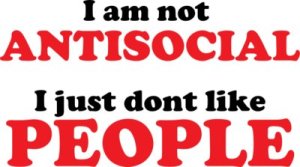
I wasn’t just being sexist. I was being downright antisocial. I had internalized issues, about where I fit in this new world of college. I would never be man enough, Black enough, “White” enough, smart enough, athletic enough, or cool enough. At least that’s what I thought in late-November ’87.

Antisocial bumper sticker, November 21, 2015. (http://www.quotationof.com/).

Antisocial bumper sticker, November 21, 2015. (http://www.quotationof.com/).

I look back at that time and realize how stupid I was twenty-eight years ago. To think that I could go out in the world, attend a four-year institution, and not have my assumptions about the world, about people, and about myself challenged. That’s like going overseas to visit some ruins, but never meeting the people who live there (Or, in this case, like rich White Americans doing Sandals and other brown-skinned service-based vacations).

Phyllis and my dorm mates at Lothrop Hall weren’t even the first step of that process. They were the last step of a process of controlling and protecting myself from my years of living in the shadows in Mount Vernon, New York. The coping strategies I had honed for five years to survive 616 and Humanities and MVHS had barely worked. By the end of my first semester, they were completely useless. I came to realize that a strategy to seal myself up from all criticism and praise, to keep humanity out of my life, was doomed to fail. There was no way to keep the world from forming a first impression of me, no matter how many layers of invisibility I attempted to wear. But there was a way to reshape how I saw myself and the world.

← Older posts
Newer posts →

Boy @ The Window: A Memoir

Boy @ The Window: A Memoir

Places to Buy/Download Boy @ The Window

There's a few ways in which you can read excerpts of, borrow and/or purchase and download Boy @ The Window. There's the trade paperback edition of Boy @ The Window, available for purchase via Amazon.com at http://www.amazon.com/Boy-Window-Donald-Earl-Collins/dp/0989256138/

There's also a Kindle edition on Amazon.com. The enhanced edition can be read only with Kindle Fire, an iPad or a full-color tablet. The links to the enhanced edition through Apple's iBookstore and the Barnes & Noble NOOK edition are below. The link to the Amazon Kindle version is also immediately below:

scr2555-proj697-a-kindle-logo-rgb-lg

Boy @ The Window on Amazon.com: http://www.amazon.com/Boy-The-Window-Memoir-ebook/dp/B00CD95FBU/

iBookstore-logo-300x100

Boy @ The Window on Apple's iBookstore: https://itunes.apple.com/us/book/boy-the-window/id643768275?ls=1

Barnes & Noble (bn.com) logo, June 26, 2013. (http://www.logotypes101.com).

Boy @ The Window on Barnes & Noble: http://www.barnesandnoble.com/w/boy-the-window-donald-earl-collins/1115182183?ean=2940016741567

You can also add, read and review Boy @ The Window on Goodreads.com. Just click on the button below:

Boy @ The Window

Twitter Updates

Tweets by decollins1969
  • RSS - Posts
  • RSS - Comments

Archives

  • June 2025
  • April 2023
  • September 2022
  • August 2022
  • July 2022
  • June 2022
  • May 2022
  • April 2022
  • March 2022
  • January 2022
  • December 2021
  • November 2021
  • October 2021
  • September 2021
  • August 2021
  • July 2021
  • June 2021
  • April 2021
  • March 2021
  • February 2021
  • January 2021
  • December 2020
  • November 2020
  • October 2020
  • September 2020
  • August 2020
  • July 2020
  • May 2020
  • April 2020
  • March 2020
  • January 2020
  • December 2019
  • November 2019
  • August 2019
  • July 2019
  • June 2019
  • May 2019
  • April 2019
  • March 2019
  • February 2019
  • January 2019
  • December 2018
  • November 2018
  • October 2018
  • September 2018
  • August 2018
  • July 2018
  • June 2018
  • May 2018
  • March 2018
  • February 2018
  • January 2018
  • December 2017
  • November 2017
  • October 2017
  • September 2017
  • August 2017
  • July 2017
  • June 2017
  • May 2017
  • April 2017
  • March 2017
  • February 2017
  • January 2017
  • December 2016
  • November 2016
  • October 2016
  • September 2016
  • August 2016
  • July 2016
  • June 2016
  • May 2016
  • April 2016
  • March 2016
  • February 2016
  • January 2016
  • December 2015
  • November 2015
  • October 2015
  • September 2015
  • August 2015
  • July 2015
  • June 2015
  • May 2015
  • April 2015
  • March 2015
  • February 2015
  • January 2015
  • December 2014
  • November 2014
  • October 2014
  • September 2014
  • August 2014
  • July 2014
  • June 2014
  • May 2014
  • April 2014
  • March 2014
  • February 2014
  • January 2014
  • December 2013
  • November 2013
  • October 2013
  • September 2013
  • August 2013
  • July 2013
  • June 2013
  • May 2013
  • April 2013
  • March 2013
  • February 2013
  • January 2013
  • December 2012
  • November 2012
  • October 2012
  • September 2012
  • August 2012
  • July 2012
  • June 2012
  • May 2012
  • April 2012
  • March 2012
  • February 2012
  • January 2012
  • December 2011
  • November 2011
  • October 2011
  • September 2011
  • August 2011
  • July 2011
  • June 2011
  • May 2011
  • April 2011
  • March 2011
  • February 2011
  • January 2011
  • December 2010
  • November 2010
  • October 2010
  • September 2010
  • August 2010
  • July 2010
  • June 2010
  • May 2010
  • April 2010
  • March 2010
  • February 2010
  • January 2010
  • December 2009
  • November 2009
  • October 2009
  • September 2009
  • August 2009
  • July 2009
  • June 2009
  • May 2009
  • April 2009
  • March 2009
  • February 2009
  • January 2009
  • December 2008
  • November 2008
  • October 2008
  • September 2008
  • August 2008
  • July 2008
  • June 2008
  • May 2008
  • April 2008
  • March 2008
  • February 2008
  • January 2008
  • December 2007
  • November 2007
  • October 2007
  • September 2007
  • August 2007
  • July 2007
  • June 2007

Recent Comments

MaryPena's avatarMaryPena on My Day of Atonement/Bitter Hat…
decollins1969's avatardecollins1969 on No Good Teaching Deed Goes…
Mary Rose O’Connell's avatarMary Rose O’Connell on No Good Teaching Deed Goes…

NetworkedBlogs on Facebook

NetworkedBlogs
Blog:
Notes From a Boy @ The Window
Topics:
My Life, Culture & Education, Politics & Goofyness
 
Follow my blog

616 616 East Lincoln Avenue A.B. Davis Middle School Abuse Academia Academy for Educational Development AED Afrocentricity American Narcissism Authenticity Bigotry Blackness Boy @ The Window Carnegie Mellon University Child Abuse Class of 1987 CMU Coping Strategies Crush #1 Crush #2 Death Disillusionment Diversity Domestic Violence Economic Inequality Education Family Friendship Friendships Graduate School Hebrew-Israelites High-Stakes Testing Higher Education History Homelessness Humanities Humanities Program Hypocrisy Internalized Racism Jealousy Joe Trotter Joe William Trotter Jr. K-12 Education Love Manhood Maurice Eugene Washington Maurice Washington Misogyny Mother-Son Relationship Mount Vernon High School Mount Vernon New York Mount Vernon public schools Multiculturalism MVHS Narcissism NFL Pitt Pittsburgh Politics of Education Poverty President Barack Obama Race Racial Stereotypes Racism Relationships Self-Awareness Self-Discovery Self-Reflection Sexism Social Justice Teaching and Learning University of Pittsburgh Violence Whiteness Writing

Top Rated

Blog at WordPress.com.

  • Subscribe Subscribed
    • Notes from a Boy @ The Window
    • Join 103 other subscribers
    • Already have a WordPress.com account? Log in now.
    • Notes from a Boy @ The Window
    • Subscribe Subscribed
    • Sign up
    • Log in
    • Report this content
    • View site in Reader
    • Manage subscriptions
    • Collapse this bar
 

Loading Comments...