• About Me
  • Other Writings
  • Interview Clips
  • All About Me: American Racism, American Narcissism, and the Conversation America Can’t Have
  • Video Clips
  • Boy @ The Window Pictures
  • Boy @ The Window Theme Music

Notes from a Boy @ The Window

~

Notes from a Boy @ The Window

Category Archives: race

Boy @ The Window Origins: Meltzer Conversations

14 Saturday Mar 2015

Posted by decollins1969 in 1, Academia, Boy @ The Window, Carnegie Mellon University, Christianity, culture, Eclectic, Hebrew-Israelite, Mount Vernon High School, Mount Vernon New York, Pittsburgh, Politics, Pop Culture, race, Religion, Youth

≈ Leave a comment

Tags

Benetton Group, Black Elites, Black Identity, Black Masculinity, Black Migration, Black Washington, CMU, Colorism, Dissertation, Doctoral Thesis, Harold Meltzer, Harper Stewart, Humanities, Hypermasculinity, Inequality, Internalized Racism, Logic, Manhood, Multiculturalism, Personal Insights, Race, Racial Identity, Rationalism, Self-Discovery, Social Injustice, Taye Diggs, The Best Man (1999), Washington DC, X-Men Origins: Wolverine (2009)


X-Men Origins: Wolverine (2009) scene, where Wolverine frees mutants kept as experiments by Colonel William Stryker , March 13, 2015. (http://cdn.collider.com/).

X-Men Origins: Wolverine (2009) scene, where Wolverine frees mutants kept as experiments by Colonel William Stryker , March 13, 2015. (http://cdn.collider.com/).

Of all the tangents I took related to writing Boy @ The Window, the most direct path that got me to write a memoir about the most painful period in my life was through several conversations with my dear teacher, friend and mentor in the late Harold Meltzer. I’ve discussed bits and pieces of some of those conversations here and in longer form in Boy @ The Window. It’s still worth rehashing some of those conversations, at least in terms of what was and wasn’t good advice, as well as in explaining how some of the main themes of the memoir developed over time.

As I wrote in Boy @ The Window, though my “first interview with him was in August ’02,” the first time “we discussed the possibility of me doing Boy @ The Window went back to February ’95.” Meltzer had been retired from teaching about a year and a half, while I was beginning the heavy lifting phase of my doctoral thesis, “living in DC for a couple of months while hitting the archives and libraries up for dusty information. In need of a writing break, I gave him a call on one cold and boring Saturday afternoon.”

It was in response to a letter he sent congratulating me. I’d recently published an op-ed in my hometown and county newspaper, “Solving African American Identity Crisis.” I was writing about issues like using the n-word, hypermasculinity, and internalized racism in the short and, for me at least, dummied down piece. Somehow our discussion of that piece led to a discussion of my classmate Sam. Did I really want to spend an hour and a half talking with Meltzer about Sam and some of my other Humanities classmates and their possible identity issues, considering some of my own serious growing pains — the Hebrew-Israelite years, my suicide attempt, my Black masculinity and manhood issues? Absolutely not!

But I learned quite a bit about how I might want to approach writing Boy @ The Window through that phone call. Not because Meltzer had given me any sage advice, which he didn’t, or because he revealed things to me that I shouldn’t have come to learn during our conversation, which he definitely did.
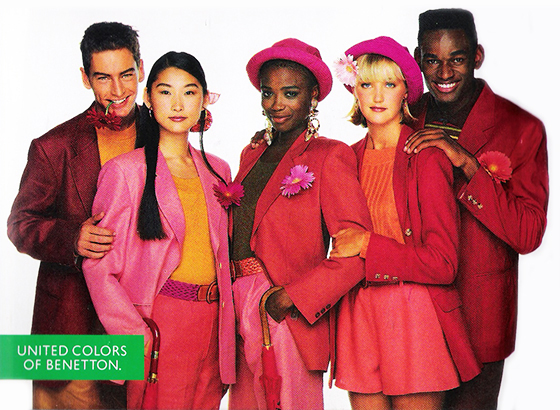
Benetton ad, 1980s, January 2013. (http://fashionfollower.com/).

Benetton ad, 1980s, January 2013. (http://fashionfollower.com/).

No, it was the idea that a lot of the things that I had pursued as a historian and researcher were things that came out of my experiences growing up. Multiculturalism as a historical phenomenon (at least if one linked it to cultural pluralism)? Can anyone say Humanities Program, or, what I used to call “Benetton Group” when we were at A.B. Davis Middle School? Writing about African American identity issues? Obviously related to living in Mount Vernon, the land where any hint of weakness translated into me being called a “faggot” or a “pussy.”

And what about any scholarly concerns with racial and socioeconomic inequality and Black migration? Anyone ever meet my Mom and my father Jimme, 1960s-era migrants from Arkansas and Georgia/Florida respectively? An examination of the Black Washingtonian elite and their looking down upon ordinary Blacks because of their own colorism or the latter’s lack of education? Come on down, Estelle Abel and any number of well-established Black Mount Vernon-ites who never gave me the time of day! As much as academia had been an escape for me, into a world of rationalism and logic, a place of dispassionate scholarship, it was all personal for me, without realizing it until that phone conversation with Meltzer.

Fast-forward to November ’02, the last interview I did with Meltzer before his death two months later. We spent the last couple of hours on that brisk fall Thursday discussing the book idea that would become Boy @ The Window. Meltzer thought that it should be a work of fiction, “based on the real flesh and blood folks in my life, but with different names of course to protect me from any potential lawsuits. He did make me rethink the project from a simple research study of my high school years into narrative nonfiction or a memoir.” 

Screen shot of fictional character Harper Stewart's bestselling novel nfinished Business, from The Best Man (1999), March 14, 2015. (hitchdied via http://s785.photobucket.com/).

Screen shot of fictional character Harper Stewart’s bestselling novel Unfinished Business, from The Best Man (1999), March 14, 2015. (hitchdied via http://s785.photobucket.com/).

Was Meltzer correct? Should I have done a Harper Stewart — played by actor Taye Diggs in The Best Man (1999)? Should I have fictionalized all of my experiences and those of my family, teachers, administrators and classmates? I’m not sure if it would’ve made a difference. Stories of fiction tend to have a tight symmetry to them. Or, the theme of “what goes around comes around” is usually a big one in any novel. You can’t leave too many loose threads or unresolved issues, even if the novel is part of a series. For my purposes, since my life remains a work in progress, a story of relative — not obvious or absolute — success, telling it as fiction would hardly ring true to me, much less to any group of readers.

Whatever else anyone wants to say about the late Harold Meltzer, the dude got me to think about difficult things until I was no longer comfortable in leaving my uncomfortable experiences and assumptions unchallenged. The very definition of a mentor, the very purpose of Boy @ The Window.

ETS Using Test Results To Justify Its Test-Filled Vision

04 Wednesday Mar 2015

Posted by decollins1969 in 1, Academia, culture, Eclectic, Politics, Pop Culture, race, Youth

≈ 5 Comments

Tags

"America's Skills Challenge: Millennials and the Future", Closing the Achievement Gap, Common Core State Standards, ETS, High-Stakes Testing, Income Inequality, Meritocracy, Millennials, OECD, PARCC, PIAAC, SAT, STEM Fields, Testing


America's Skills Challenge: Millennials and the Future (cover), February 17, 2015. (ETS).

America’s Skills Challenge: Millennials and the Future (cover), February 17, 2015. (ETS).

I actually like the Educational Testing Service (ETS). I’ve done work for them as a consultant and as an AP Reader over the years. I enjoyed most of my testing experiences with them, especially the AP US History Exam of 1986. I like many of the conferences that they host and sponsor, and they beat almost all with the spreads of food that they provide at their events. Yet even with all that, ETS’ agenda is one of promoting the ideal of a meritocratic society with a repressive regime of testing that shows beyond a shadow of a doubt the socioeconomic determinism of standardized assessments. Or, in plain English, tests that favor the life advantages of the middle class and affluent over the poor, Whites and assimilated East Asians over Blacks, Latinos, and only partially assimilated immigrants of color.

Such is the case with a nearly unreported new report from ETS. They had scheduled a press release for the “America’s Skills Challenge: Millennials and the Future” on Tuesday, February 17th at the National Press Club in Washington, DC. The organizers postponed the event, though, because of the phantom snow storm that was really a typical snow shower. So I didn’t get to ask my preliminary questions about the findings of researchers Madeline J. Goodman, Anita M. Sands, and Richard J. Coley, that despite the educational gains of the generation born after 1980, they sorely lack the skills they need for life and work in the twenty-first century. My questions? How could anyone have expected millennials to develop independent thinking, critical thinking, innovative thinking, writing and other analytical skills if they spend precious little time in their education actually doing any of these things? How would the constant barrage of high-stakes tests from kindergarten to twelfth grade have been able to instill in students ways to think outside the box, to look at issues with more than one perspective, to stand in opposition to policies based on evidence, and not just based on their gut or something they picked up from a test?

Mass of students taking high-stakes test, September 4, 2014. (http://newrepublic.com via Shutterstock).

Mass of students taking high-stakes test, September 4, 2014. (http://newrepublic.com via Shutterstock).

Well, the report is worse than I thought. Goodman, Sands and Coley put together an argument that makes circular reasoning look like a Thomas the Tank Engine episode. The authors produced this first in a series of reports for ETS, relying solely on “data from the Programme for the International Assessment of Adult Competencies (PIAAC).” The PIAAC, developed by the Organisation for Economic Co-operation and Development (OECD), is a survey that assesses the skill levels of a broad spectrum of people between the ages of sixteen and sixty-five, the primary working population in most developed countries (meaning the US and Canada, the EU, the Baltic states, Australia, Japan and South Korea). ETS and the authors claim that this survey instrument is better at assessing how far behind millennials in particular are when compared to “their international peers in literacy, numeracy, and problem solving in technology-rich environments (PS-TRE)” than the international testing of high school students alone. And as such, the authors concluded that

PIAAC results for the United States depict a nation burdened by contradictions. While the U.S. is the wealthiest nation among the OECD countries, it is also among the most economically unequal. A nation that spends more per student on primary through tertiary education than any other OECD nation systematically scores low on domestic and international assessments of skills. A nation ostensibly based on the principles of meritocracy ranks among the highest in terms of the link between social background and skill level. And a nation with some of the most prestigious institutions of higher learning in the world houses a college-educated population that scores among the lowest of the participating OECD nations in literacy and numeracy.

I don’t about anyone who reads my blog, but I find these conclusions smack of so much hypocrisy that they’re stomach-ache-inducing. Really? Years of promoting testing at every level of K-12 education, everything from state and district-level assessments to PARCC and Smarter Balanced Assessments, and it’s only because of growing economic inequality that US students-turned-adults don’t score well in the super-advanced, highly skilled categories? Not to mention, the SAT, AP exams, GREs, LSATs, GMATs, MCATs, Praxis I, Praxis II, and so many other ETS exams that it would cause the average psychometrician’s head to explode? Seriously?

Terrier dog chasing its own tail, March 3, 2015. (http://webmd.com).

Terrier dog chasing its own tail, March 3, 2015. (http://webmd.com).

This is yet another case of the dog chasing its own tail. A case where the $3-billion-per-year nonprofit just outside Princeton, New Jersey is sounding a clarion call for a crisis that it helped create. Not the one on the rapid rise of inequality, though its promoting of a false meritocracy through constant testing has served to lull affluent America into an intellectual coma. But in the cutting of history and social studies, literature and art, theater and music classes, from kindergarten really all the way through a bachelor’s degree program.

In the promotion of testing as the way to address achievement gaps, to deal with the so-called education crisis, so much of what was good about K-12 and even higher education has fallen away. Reading for the sake of reading and learning has drifted away, with more English and less literature in schools and at many colleges and universities than ever. Want to teach someone how to express themselves in writing, to express their numeracy in proofs? That thinking runs counter to what goes on in the Common Core school systems of 2015, meaning most people will either never develop these skills, or, if lucky, might develop them somewhere between their junior year of college and in finishing a master’s degree or doctorate. We emphasize STEM fields with billions of STEM dollars without realizing that great STEM is much more than equations and formulas. It’s also imagination, applying the ability to break down pictures, ideas, words and sentences contextually to the world of numbers and algorithms.

And don’t give me this whole “the SAT now has an essay section on it” spiel! Fact is, everyone knows that expressing their words on paper, on a screen or in speech is critical in modern societies. After almost seven decades of testing, ETS figured this out, too? What they haven’t figure out yet, though, is how to make standardized high-stakes testing a necessary for the entire working adult population in the US. Believe me, that’s where they want to head next.

Malcolm X, “Make It Plain”

21 Saturday Feb 2015

Posted by decollins1969 in 1, Academia, Boy @ The Window, culture, Eclectic, Mount Vernon New York, New York City, Pittsburgh, Politics, Pop Culture, race, Religion, University of Pittsburgh, Work, Youth

≈ Leave a comment

Tags

Afrocentricity, Alex Haley, Assassination, Audubon Ballroom, Autobiography of Malcolm X, Bill O"Reilly, Contradictions, Cornel West, Dichotomy, Disillusionment, Geraldo Rivera, Malcolm X, Malcolm X Assassination, Manning Marable, MLK, Murder, Nation of Islam, Nonviolence, Pitt, Respectability Politics, Rev. Dr. Martin Luther King Jr., Rudy Giuliani, Self-Aggrandizement, Self-Defense, Self-Discovery, Self-Revelation, Tavis Smiley


Plain Conscious Chocolate, February 21, 2015. (http://www.ethical-treats.co.uk/).

Plain Conscious Chocolate, February 21, 2015. (http://www.ethical-treats.co.uk/).

I’d be a terrible historian to not comment on the fact that today marks fifty years since some Nation of Islam malcontents — with support from J. Edgar Hoover’s FBI — murdered Malcolm X at the Audubon Ballroom (now the Shabazz Center) in Washington Heights in Upper Manhattan. I wasn’t around for the event, or any of the tumultuous events that defined “The ’60s.” All I know was I didn’t learn about Malcolm Little or Malcolm X until the summer between my undergraduate and graduate years at Pitt, the summer of ’91. Although the year before, I’d gone to a Malcolm X birthday celebration at the Homewood-Brushton branch of Carnegie Library of Pittsburgh. There, I saw poets performing their work, got to listen to some good jazz and rap, and saw the Afrocentric set out in full force.

Audubon Ballroom, where Malcolm X was murdered (now the Shabazz Center, with the Columbia University Medical Center's Mary Woodard Lasker Biomedical Research Building in the background), Washington Heights, New York, June 4, 2014. (Beyond My Ken via Wikipedia). Release to the public domain via GNU Free Documentation License, Version 1.2.

Audubon Ballroom, where Malcolm X was murdered (now the Shabazz Center), Washington Heights, New York, June 4, 2014. (Beyond My Ken via Wikipedia). Release to the public domain via GNU Free Documentation License, Version 1.2.

You’d think after three years as a Hebrew-Israelite and years around children of Nation of Islam members as a kid that I would’ve heard all about Malcolm. Nope, hardly a peep about him growing up in Mount Vernon. Mostly, I got questions like, “Yo, you a “five percenter”?,” which for me translated into the chosen few living in the midst of the end times. Other than that, there was always the dichotomy trope of Martin versus Malcolm laid on us real thick through school and the newspapers. Dr. King was respectable, nonviolent, a true representative of the race. Malcolm was a street thug, a leading member of a heathen religion, a violent man who hated White people.

My Mom, who normally rejected mainstream White ways of thinking about Black folks, had bought this trope and tried to sell it to me and my older brother growing up. But as with so many things my Mom attempted to instill in me growing up, I wouldn’t make any decisions about Malcolm the person (as opposed to the icon) until I got around to reading, in this case about him and the Nation of Islam, as an adult.

The Five Percenter logo (apparently popular among the rapper set), January 8, 2013. (http://assets.vice.com)

The Five Percenter logo (apparently popular among the rapper set), January 8, 2013. (http://assets.vice.com)

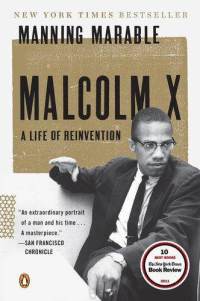
The one thing I realized after reading the Afrocentric, mainstream and Alex Haley interpretations of Malcolm in the early ’90s is that just like with King, we could make Malcolm X represent whatever we wanted. He could be nonviolent and a militant at the same time, or a thug and an ambassador of peace at the same time. Yes, as the late Manning Marable’s book shows, Malcolm — like most of us — was a walking, breathing contradiction of convictions (literal and figurative) and beliefs. For the purposes of my post today, though, he was a social justice activist, acting on the part of those poor, Black and discarded, plain and simple.

Which is why I think anyone who thinks Malcolm X brought murder to his own pulpit in February 1965 is an idiot. The idea that teaching others self-defense in opposition to White mobs, lynching, and blatant police brutality deserved a violent death. Really, now? So, if that’s the case, then Dr. King should have died of natural causes about three or four years ago, since his was the path of nonviolence, right? Yet, you still hear the likes of Rudy Giuliani, Bill O’Reilly and Geraldo de Stupido slinging this shit (and similar crap playing on such respectability politics themes) as if it were McDonald’s hash browns on sale for half-price.

Manning Marable's Malcolm X: Life of Reinvention (2011) cover (Marable died four days before his last book dropped), May 28, 2012. (Malik Shabazz via Wikipedia).  Qualifies as fair use under copyright laws (relevant subject matter, low resolution).

Manning Marable’s Malcolm X: Life of Reinvention (2011) cover (Marable died four days before his last book dropped), May 28, 2012. (Malik Shabazz via Wikipedia). Qualifies as fair use under copyright laws (relevant subject matter, low resolution).

Speaking of that lot, I don’t wonder what Malcolm X would say about our racist, plutocratic democracy these days. Anyone whose read his words would know what he’d say. That what happened with Michael Brown and Eric Garner and Rashida McBride and so many others should be resisted “by any means necessary.” That we should unmask those powerful people lurking in the shadows but pulling the strings that keep the systems of oppression working 24/7 in our world. He would’ve supported Occupy Wall Street when and where few Black leaders had in 2010 and 2011, called Islamic State or IS (that’s what they are called outside the US, where we can’t get our acronyms straight) a “chickens coming home to roost” scenario, and put Tavis Smiley and Cornel West in the same self-aggrandizing bag as Giuliani and Rivera.

I get why it took Malcolm Little so long to transform himself into Malcolm X, and still, until after his thirty-ninth birthday, for him to find himself and his purpose in the world. It’s taken me nearly four and half decades to do the same. It’s hard to “make it plain,” especially to ourselves. It’s scary to be in a constant state of disillusionment, about family and friends, about your identity, about your religion and beliefs. But it also allows you to see yourself and everyone around you fresh for the first time, to know who people really are.

Carnegie Library of Pittsburgh and My Own Prison

16 Monday Feb 2015

Posted by decollins1969 in 1, Academia, Boy @ The Window, Carnegie Mellon University, Christianity, culture, Eclectic, eclectic music, music, Pittsburgh, Politics, Pop Culture, race, Religion, Work, Youth

≈ Leave a comment

Tags

"My Own Prison" (1998), Bill & Melinda Gates Foundation, Carnegie Library of Pittsburgh, CMU, Creed, Dissertation, Dissertation Committee, Duquesne University College of Education, Foundation World, God's Lessons, Humble, Humiliation, Humility, Joblessness, Joe Trotter, Legacy, Mother-Son Relationship, Nonprofit World, Self-Reflection, Sycophants, Underemployment, unemployment


East Library branch of Carnegie Library of Pittsburgh, before (the version I worked in) and after renovation, October 4, 2006 and September 25, 2011. (http://popcitymedia.com and http://eastliberty.org).

East Library branch of Carnegie Library of Pittsburgh, before (the version I worked in) and after renovation, October 4, 2006 and September 25, 2011. (http://popcitymedia.com and http://eastliberty.org).

On February 17th seventeen years ago, we opened one of the first community-based computer labs in the US at the East Liberty branch of the Carnegie Library of Pittsburgh. What was once known as the Microsoft Library Fund (which later became the Gates Library Foundation, and then became part of the Bill & Melinda Gates Foundation) had provided the initial $110,000 to place this computer lab in one of the East Library branches resource rooms. I guess it could’ve been a proud moment for me. If I hadn’t earned my PhD the year before, only to face unemployment for three months during the summer of ’97 and underemployment in the five months since taking the Carnegie Library job. But this was a humiliating moment, not one of pride or, at least, taking comfort in a job done well. It was a learning moment at a time when I thought I already knew what I need to move forward with my career and life.

The dissertation process, my battles with Joe Trotter, the truth about my relationship with my Mom, had all taken a heavy toll on my heart and mind by the time Memorial Day ’97 rolled around. So much so that I lived between moments of humility (which is different from humiliation) and moments of rage in the sixteen months between May ’97 and the fall of ’98. I was living on fumes from my last Carnegie Mellon paycheck when I began working for Carnegie Library the day after Labor Day that year. I’d been conditioned, though, to think that everything happens for a reason. So I assumed that God was attempting to teach me a lesson, that I needed to give more out of the needs I had in my life in order for the things I thought I deserved to come my way.

John Wooden saying on being humble, February 16, 2015. (https://pbs.twimg.com).

John Wooden saying on being humble, February 16, 2015. (https://pbs.twimg.com).

There was a bit of a flaw in my logic around God’s lessons. For one, the idea that I wasn’t finding work in academia because I hadn’t been a giver was ridiculous. Between volunteering for soup kitchens, tutoring high school students, tithing at church, and so many other things, it was dumb to think that not enough humility was the reason I didn’t get the job at Teachers College or had trouble finding adjunct work in the fall of ’97. Or rather, it was dumb not to think that bigger issues — like my dissertation committee abandoning me when I needed them the most — played a greater role in my not finding full-time work in my chosen profession than any inability to serve others.

The Carnegie Library job provided a part-time stop-gap for my income while I attempted to figure out how to move forward without my advisor and my committee and move on with the knowledge that my relationship with my Mom would never be the same. I figured that the job gave me the opportunity to help others and to do good, and that it was a good first foray into the nonprofit world, especially with money from the world of Microsoft.

Boy, I couldn’t have been more wrong! I had a co-worker who was jealous of my degree and attempted to undermine the work of putting together the lab and the class materials for teaching patrons how to use the computers at every turn. I figured out that the bosses at the central branch in Oakland had essentially pocketed some of the funding for the lab to cover the costs of new computers for their own personal use, and had underfunded both my position and my co-worker’s position as part of the grant.

Album cover for Creed's My Own Prison (includes title track), released August 26, 1997. (Jasper the Friendly Punk via Wikipedia). Qualifies as fair use under US copyright laws to illustrate title and theme of this blog post.

Album cover for Creed’s My Own Prison (includes title track), released August 26, 1997. (Jasper the Friendly Punk via Wikipedia). Qualifies as fair use under US copyright laws to illustrate title and theme of this blog post.

But I didn’t learn all of this until June. By February ’98, I began to realize that, more than anything else, I needed to free myself from my own prison of an idea, that I’d done anything wrong or sinful to end up running a computer lab project at twenty-eight when I had done much of this same work at nineteen years old. I had to begin to find prominent people in my field(s) to support me in finding work, even if none of them were on my dissertation committee. I still needed to apply for academic jobs, even if my status meant than some would reject me because of my issues with my advisor. I even needed to explore the idea of jobs outside academia, in the nonprofit and foundation worlds, where my degrees and my ideas about education policy and equity might still matter.

It definitely helped when Duquesne hired me in April to teach graduate-level education foundations courses in History of American Education and Multicultural Education. It helped even more, though, when I decided in August to quit the Carnegie Library job. Between the Microsoft folks and the sycophants at Carnegie Library who were willing to do almost anything for a few extra dollars — anything other than serve their neighborhoods, that is — I’d had enough of duplicitous people. Who knew that my first job with sycophants and Gates money would come back to haunt me in the seventeen years since!

Fifty Shades of White People’s Imaginations

15 Sunday Feb 2015

Posted by decollins1969 in 1, culture, Eclectic, Movies, Politics, Pop Culture, race

≈ Leave a comment

Tags

9½ Weeks (1985), Aggrandizement, Body Heat (1981), Bondage, E.L. James, Fifty Shades of Grey book (2011), Fifty Shades of Grey movie (2015), Movie Reviews, Power Trip, Relationships, Self-Glorification, Sex, Symbolism, Whiteness


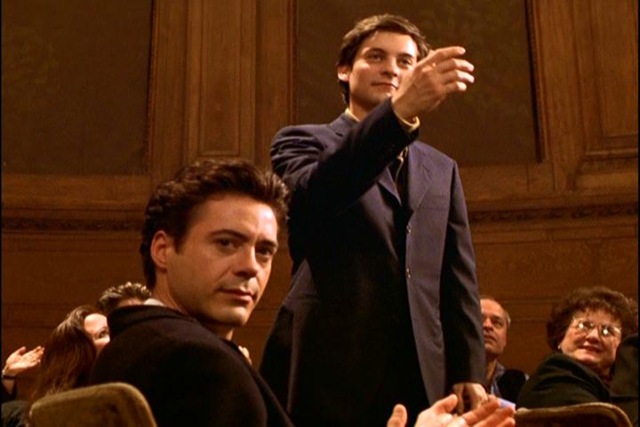
"Take a bow, James" screen shot from Wonder Boys (2000), starring Michael Douglas, Tobey Maguire, Katie Holmes, and Robert Downey, Jr., September 29, 2009. (http://rosekohl.tumblr.com/).

“Take a bow, James!” screen shot from Wonder Boys (2000), starring Michael Douglas, Tobey Maguire, Katie Holmes, and Robert Downey, Jr., September 29, 2009. (http://rosekohl.tumblr.com/).

So far this Valentine’s Day/Presidents Day weekend, Fifty Shades of Grey is making a killing at the box office, over $30 million on its official release on Friday alone. A movie with an estimated twenty-minutes’ worth of sex scenes, coming on the heels of the most successful self-published book in history? Take a bow, E.L. James, take a bow!

Oops, I didn’t mean to go there, Ms. James! Submitting to a bow would likely conform too much to one of the big themes of your book and movie. The idea that a college-educated millennial would play the role of submissive to a business magnate and engage in an unworkable romance, is, well, a theme straight out of Hollywood producer’s ass. Or, rather, a Hollywood porn producer’s average shoot!

Really, between the book, the movie and the reviews, it seems that Fifty Shades of Grey is really about affluent White folks all over the world attempting to be comfortable with what some would call “taboo sex” in the early twenty-first century. It’s like a whole generation of British Commonwealth and American Whites haven’t taken the time to see 9½ Weeks (1985) or Body Heat (1981), or at least, like to pretend that everything that is new is actually new when it’s not. At best, the book is like eating too much cotton candy at an amusement park while drink a fifth of vodka, getting on a roller coaster, and then vomiting on your five year-old (luckily, I didn’t spend money to read it). But really, Fifty Shades of Grey is a symbol of Whiteness played out in power fantasies, hardly sexual at all.

Most Americans (and many affluent Brits and Aussies as well) celebrate books and movies that aggrandize their ability to experience orgasms and overpower each other in relationships. It’s a reflection of a world without consequences, because everyone in James’ world is already on top, and need not fear falling into the real world. Where love, sex, struggle and self-discovery are about much more that belts and chains.

Vicarious Valentine’s Day

14 Saturday Feb 2015

Posted by decollins1969 in 1, Boy @ The Window, Christianity, culture, Eclectic, Jimme, Mount Vernon High School, Mount Vernon New York, Movies, My Father, New York City, Politics, Pop Culture, race, Religion, Youth

≈ Leave a comment

Tags

616, 616 East Lincoln Avenue, Capitalism, Christian Persecution, Commercialism, Crush #1, Interracial Relationships, JD, Love, Lust, Martyrs, Observation Mode, Rita Moreno, Romance, St. Valentine, The Contrarian One, Transactional Relationships, Valentine's Day, Vicarious Living, Wendy, West Side Story (1961)


Fringe Observer 'September,' played by Michael Cerveris, circa 2013. (John Milton via Pinterest.com).

Fringe Observer ‘September,’ played by Michael Cerveris, circa 2013. (John Milton via Pinterest.com).

A couple of alternate titles could be “A Little Ditty About ‘Jack and Diane’,” or “The Legend of Crush #1 and The Contrarian One.” Really, though, I’ve never given much thought to Valentine’s Day, even in dating and marriage, mostly because until I turned twenty-five, I never had money to waste on such an aimless, unbelievably overhyped and commercialized “holiday.”

Few understand that the Catholic holy day of St. Valentine was about a Christian martyred in the midst of a period of Roman persecution under the emperor Aurelian, outside Rome, on February 14, 273 CE. Or that when combined with the St. Valentine’s Day massacre on February 14, 1929, the only heart truly associated with the day has been one punctured by a sword or a bullet, a blood-soaked one. Plus, it’s not as if I need capitalism to tell me whom to show my romantic side, with cards and flowers and chocolate, no less. Still, as a married man, I participate, although not with Western ideals of masculinity and romance in my head, if only to ensure my wife doesn’t feel left out.

But I must rewind about three decades, because while I don’t appreciate the fakery that comes with celebrating some candy-coated version of romance without actually celebrating St. Valentine, I did learn a thing or two about watching relationships bloom from afar. It was around this time thirty years ago that I noticed that Wendy and the contrarian one were dating, whatever that term means in the context of high school. Both would tell me that their relationship only began in high school, but my own recollections dispute that somewhat, if only because they shared roughly the same level of dislike for me during seventh grade!

Bloody woodchipper scene from Fargo (1996), February 14, 2015. (http://youtube.com).

Bloody woodchipper scene from Fargo (1996), February 14, 2015. (http://youtube.com).

The main point is, while for most of my classmates, it would’ve only been obvious in our junior year that Crush #1 and JD were together, I sensed it by the middle of tenth grade. If I’d been the exact same person I’d been during seventh and eighth grade, one head-over-heels in love with Wendy, I would’ve put my heart in a woodchipper, shot it all over a field, gathered it up again, and then put it into a mortar shell to explode into the sky to rain down all over Mount Vernon.

But I wasn’t that person in 7S, and hadn’t been for quite a while. My focus for most of tenth grade had been on living a sin-free Christian life, a transactional relationship with God that consisted of making good things happen for myself by prayer, fasting, and reading my Bible everywhere I went. Between that and my routine of watching younger siblings, washing clothes, tracking down my father Jimme, surviving another year of Humanities, running to the store two or three times every day, and so many other tasks, romance and dating might as well have been in an alternate universe. Even if I did feel envious, it would’ve been over not having money or a car or good food in my belly. Pining over Wendy — or any other girl or woman, for that matter — didn’t fit with any coping strategy that I had to get out of Mount Vernon as soon as my high school diploma and a college acceptance would allow me. At least prior to Crush #2.

What was more interesting to me, and what I knew was more interesting to my classmates, was the fact that Wendy and the contrarian one were dating, and in fact, an interracial couple, one a Black female (or, as some classmates still believed, biracial), the other a White male. I was interested only as an observer of people, because by tenth grade I’d actually grown to like JD and could be around Crush #1 without being conscious of the fact that she used to be my crush. I was interested in that the reactions of the folks at MVHS varied from my own “no surprise here” to dagger-eyed intolerance or head-shaking shame expressed by students across all cliques and most racial lines.

Black and White shortbread (or what President Barack Obama coined a "Unity Cookie" in 2008), July 23, 2007. (Punkitra via http://commons.wikimedia.org). Released to public domain.

Black and White shortbread (or what President Barack Obama coined a “Unity Cookie” in 2008), July 23, 2007. (Punkitra via http://commons.wikimedia.org). Released to public domain.

I’ve certainly known and know plenty of other people involved in interracial relationships and marriages since the spring of ’85. Some where only racial politics and stereotypes mattered, some where love and social justice mattered much more. In the case of my class’ Juliet and Romeo, maybe my crush took advantage of some of the racial politics involved with dating someone White, while my contrarian friend obviously doesn’t prefer blondes, and hasn’t in the years since. From my observer’s perch, though, there was much more to their relationship than racial preferences.

It was the first time I’d seen or heard about any interracial coupling beyond movies like West Side Story (I still love Rita Moreno, even at eighty-three) or in others telling me about them third-hand, after it was already over. To me, it was always a good fit and fitting, despite the racial politics playing out at school, not to mention the identity issues that had to be playing out between Wendy and JD, even unconsciously. What I gleaned from two and a half years of the two of them dating, though, was that they had found a world unto themselves, one which must’ve made MVHS a much easier hellhole to navigate, if nothing else.

Pictures and Records

11 Wednesday Feb 2015

Posted by decollins1969 in 1, Boy @ The Window, culture, Eclectic, eclectic music, Hebrew-Israelite, Jimme, Marriage, Mount Vernon New York, music, My Father, New York City, Pop Culture, race, Religion, Upper West Side, Youth

≈ Leave a comment

Tags

"Method of Modern Love" (1984), "Roxanne, 45 Singles, 616, 616 East Lincoln Avenue, Brothers, Cassette Tapes, Darren, Doug E. Fresh, Father-Son Relationships, Hall & Oates, Jimme, Live Aid, Mother-Son Relationship, Nathan Hale Elementary, Photos, Pictures, Play Fighting, Polaroid, Record Player, Roxanne" (1984), Turntable, Vinyl Records, Walkman


Me & Darren at gate to  Nathan Hale ES playground, Mount Vernon, NY, February 1975. [At 425 South Sixth, we lived just two doors down from Nathan Hale and its playground area/parking lot.]  (My Mom).

Me & Darren at gate to Nathan Hale ES playground, Mount Vernon, NY, February 1975. [At 425 South Sixth, we lived just two doors down from Nathan Hale and its playground area/parking lot.] (My Mom).

There are some things that most folks — at least most in the US — take for granted that I had very little of growing up and into adulthood. Certainly love was one of those things, but I’ve told that story as a running theme many times over the past seven years and eight months. On a more materialistic note, the things that provide pleasant memories of childhood even in the midst of suffering and sorrow, like pictures and records, were also rarities for me as well. As I said in the Preface to Boy @ The Window, photos “are among those smallest and most awesome of things. Perhaps because so few of mine survived to childhood.” This lack of evidence of my existence and importance prior to college is a story of poverty, of course. But it’s also a story of what’s important to do and feel and say, even in the midst of poverty, abuse and domestic violence.

One of the five surviving photos in my possession from my childhood is a picture of me with my older brother Darren covering my mouth as we stood at the playground gate right next to Nathan Hale Elementary School. It was February ’75, and I was in the second half of kindergarten. We took this picture on a Saturday, with both our Mom and our father Jimme there. Believe it or not, we were on our way to play on the asphalt playground and basketball court, walking around the neighborhood that was Nathan Hale and South Sixth Avenue on Mount Vernon, New York’s South Side. This was a memorable event only because it was also a very rare event. That our Mom took us somewhere that didn’t have anything to do with grocery shopping, clothes’ buying or laundry washing.  That our father was also along for the event, actually sober and not arguing with or threatening our Mom.

A better picture of Darren and me, taken in April 1975, Sears, Mount Vernon, NY, July 6, 2006. (Donald Earl Collins).

A better picture of Darren and me, taken in April 1975, Sears, Mount Vernon, NY, July 6, 2006. (Donald Earl Collins).

It was also an outing where Darren and I had been horsing around, calling each other names. Just before our Mom started snapping pictures with her old Polaroid, Darren had put me in a headlock and punched me in my forehead for calling him a “dummy.” He then covered my mouth as I kept calling him a dummy, all while our Mom snapped the first picture. “Y’all keep it up, you’re gonna get your asses whupped,” Mom said to get us to stop. And we did stop fighting just long enough to snap a better picture, although it didn’t survive very long.

As far as I can remember, this was the next to last time all four of us were out together as a family. The last time came in June ’76, when my Mom introduced me to basketball, only to tell me she would “never show me how to play basketball again” because I became frustrated with getting the ball high enough to the hoop. I was six years old at the time.

Ten years after we took the Nathan Hale playground picture, Darren and I had become enamored with music to begin consuming it. Darren had bought himself a turntable at the end of ’84, for the wonderful price of $15 (it would probably be $175 in today’s money because of today’s lopsided supply and demand for vinyl in an mp3 age). But we had zero experience buying records, and our Mom’s limited collection of Al Green, Diana Ross and The Supremes and Gladys Knight and The Pips had been destroyed long ago in the midst of her breakup with our father. Our idiot stepfather Maurice had 8-track and vinyl collections (especially The Commodores and The Ohio Players) that he had given away when he converted to the Hebrew-Israelite cult in 1980-81.

Darryl Hall & John Oates, "Method of Modern Love" 45, circa 1984-85, February 11, 2015. (http://www.thespacebar.co.uk/).

Darryl Hall & John Oates, “Method of Modern Love” 45, circa 1984-85, February 11, 2015. (http://www.thespacebar.co.uk/).

So we bought whatever we heard on WBLS-107.5 or WPLJ-95.5 FM, without the benefit of music videos or without the influence of parents and classmates. Darren bought Doug E. Fresh, Grandmaster Flash, UTFO’s “Roxanne, Roxanne,” and Lisa Lisa and Cult Jam. My first purchases were to support Live Aid’s anti-famine work in Ethiopia, via “Do They Know It’s Christmas.” The first 45 I bought for us to play on Darren’s turntable, though, was Hall & Oates’ “Method of Modern Love,” which reached number five on Billboard’s pop charts about this time thirty years ago. It was an interesting foray into music beyond the radio, at least for me. Darren would tell me how “wack” my music was, and I’d say, “you don’t even like rap. You’re just listenin’ to it because you like girls now!”

This first effort at consuming music didn’t last long. It took money and weekly trips to the city to find vinyl to support it, and in early ’85, we simply didn’t have enough money to shop at Tower Records and Crazy Eddie’s for the stuff we wanted every week. At least not yet. Plus, we broke the turntable that spring, and with the rise of the Sony Walkman and cheap cassette tapes, we were on our way to truly getting into the ’80s before the ’90s arrived.

I no longer have that Hall & Oates single (although I do have it on my iPod). But I do have memories of my brother Darren, memories where we were still actually brothers to each other. Memories of rivalry, jealousy, fighting, even love. All in the time of choking poverty and emotional neglect.

← Older posts
Newer posts →

Boy @ The Window: A Memoir

Boy @ The Window: A Memoir

Places to Buy/Download Boy @ The Window

There's a few ways in which you can read excerpts of, borrow and/or purchase and download Boy @ The Window. There's the trade paperback edition of Boy @ The Window, available for purchase via Amazon.com at http://www.amazon.com/Boy-Window-Donald-Earl-Collins/dp/0989256138/

There's also a Kindle edition on Amazon.com. The enhanced edition can be read only with Kindle Fire, an iPad or a full-color tablet. The links to the enhanced edition through Apple's iBookstore and the Barnes & Noble NOOK edition are below. The link to the Amazon Kindle version is also immediately below:

scr2555-proj697-a-kindle-logo-rgb-lg

Boy @ The Window on Amazon.com: http://www.amazon.com/Boy-The-Window-Memoir-ebook/dp/B00CD95FBU/

iBookstore-logo-300x100

Boy @ The Window on Apple's iBookstore: https://itunes.apple.com/us/book/boy-the-window/id643768275?ls=1

Barnes & Noble (bn.com) logo, June 26, 2013. (http://www.logotypes101.com).

Boy @ The Window on Barnes & Noble: http://www.barnesandnoble.com/w/boy-the-window-donald-earl-collins/1115182183?ean=2940016741567

You can also add, read and review Boy @ The Window on Goodreads.com. Just click on the button below:

Boy @ The Window

Twitter Updates

Tweets by decollins1969
  • RSS - Posts
  • RSS - Comments

Archives

  • June 2025
  • April 2023
  • September 2022
  • August 2022
  • July 2022
  • June 2022
  • May 2022
  • April 2022
  • March 2022
  • January 2022
  • December 2021
  • November 2021
  • October 2021
  • September 2021
  • August 2021
  • July 2021
  • June 2021
  • April 2021
  • March 2021
  • February 2021
  • January 2021
  • December 2020
  • November 2020
  • October 2020
  • September 2020
  • August 2020
  • July 2020
  • May 2020
  • April 2020
  • March 2020
  • January 2020
  • December 2019
  • November 2019
  • August 2019
  • July 2019
  • June 2019
  • May 2019
  • April 2019
  • March 2019
  • February 2019
  • January 2019
  • December 2018
  • November 2018
  • October 2018
  • September 2018
  • August 2018
  • July 2018
  • June 2018
  • May 2018
  • March 2018
  • February 2018
  • January 2018
  • December 2017
  • November 2017
  • October 2017
  • September 2017
  • August 2017
  • July 2017
  • June 2017
  • May 2017
  • April 2017
  • March 2017
  • February 2017
  • January 2017
  • December 2016
  • November 2016
  • October 2016
  • September 2016
  • August 2016
  • July 2016
  • June 2016
  • May 2016
  • April 2016
  • March 2016
  • February 2016
  • January 2016
  • December 2015
  • November 2015
  • October 2015
  • September 2015
  • August 2015
  • July 2015
  • June 2015
  • May 2015
  • April 2015
  • March 2015
  • February 2015
  • January 2015
  • December 2014
  • November 2014
  • October 2014
  • September 2014
  • August 2014
  • July 2014
  • June 2014
  • May 2014
  • April 2014
  • March 2014
  • February 2014
  • January 2014
  • December 2013
  • November 2013
  • October 2013
  • September 2013
  • August 2013
  • July 2013
  • June 2013
  • May 2013
  • April 2013
  • March 2013
  • February 2013
  • January 2013
  • December 2012
  • November 2012
  • October 2012
  • September 2012
  • August 2012
  • July 2012
  • June 2012
  • May 2012
  • April 2012
  • March 2012
  • February 2012
  • January 2012
  • December 2011
  • November 2011
  • October 2011
  • September 2011
  • August 2011
  • July 2011
  • June 2011
  • May 2011
  • April 2011
  • March 2011
  • February 2011
  • January 2011
  • December 2010
  • November 2010
  • October 2010
  • September 2010
  • August 2010
  • July 2010
  • June 2010
  • May 2010
  • April 2010
  • March 2010
  • February 2010
  • January 2010
  • December 2009
  • November 2009
  • October 2009
  • September 2009
  • August 2009
  • July 2009
  • June 2009
  • May 2009
  • April 2009
  • March 2009
  • February 2009
  • January 2009
  • December 2008
  • November 2008
  • October 2008
  • September 2008
  • August 2008
  • July 2008
  • June 2008
  • May 2008
  • April 2008
  • March 2008
  • February 2008
  • January 2008
  • December 2007
  • November 2007
  • October 2007
  • September 2007
  • August 2007
  • July 2007
  • June 2007

Recent Comments

MaryPena's avatarMaryPena on My Day of Atonement/Bitter Hat…
decollins1969's avatardecollins1969 on No Good Teaching Deed Goes…
Mary Rose O’Connell's avatarMary Rose O’Connell on No Good Teaching Deed Goes…

NetworkedBlogs on Facebook

NetworkedBlogs
Blog:
Notes From a Boy @ The Window
Topics:
My Life, Culture & Education, Politics & Goofyness
 
Follow my blog

616 616 East Lincoln Avenue A.B. Davis Middle School Abuse Academia Academy for Educational Development AED Afrocentricity American Narcissism Authenticity Bigotry Blackness Boy @ The Window Carnegie Mellon University Child Abuse Class of 1987 CMU Coping Strategies Crush #1 Crush #2 Death Disillusionment Diversity Domestic Violence Economic Inequality Education Family Friendship Friendships Graduate School Hebrew-Israelites High-Stakes Testing Higher Education History Homelessness Humanities Humanities Program Hypocrisy Internalized Racism Jealousy Joe Trotter Joe William Trotter Jr. K-12 Education Love Manhood Maurice Eugene Washington Maurice Washington Misogyny Mother-Son Relationship Mount Vernon High School Mount Vernon New York Mount Vernon public schools Multiculturalism MVHS Narcissism NFL Pitt Pittsburgh Politics of Education Poverty President Barack Obama Race Racial Stereotypes Racism Relationships Self-Awareness Self-Discovery Self-Reflection Sexism Social Justice Teaching and Learning University of Pittsburgh Violence Whiteness Writing

Top Rated

Blog at WordPress.com.

  • Subscribe Subscribed
    • Notes from a Boy @ The Window
    • Join 103 other subscribers
    • Already have a WordPress.com account? Log in now.
    • Notes from a Boy @ The Window
    • Subscribe Subscribed
    • Sign up
    • Log in
    • Report this content
    • View site in Reader
    • Manage subscriptions
    • Collapse this bar
 

Loading Comments...