
• About Me
  • Other Writings
  • Interview Clips
  • All About Me: American Racism, American Narcissism, and the Conversation America Can’t Have
  • Video Clips
  • Boy @ The Window Pictures
  • Boy @ The Window Theme Music

Notes from a Boy @ The Window

~

Notes from a Boy @ The Window

Category Archives: Mount Vernon New York

I Was Never Good at the Popularity Contest

17 Tuesday Nov 2020

Posted by decollins1969 in 1, Academia, Boy @ The Window, culture, Eclectic, Hebrew-Israelite, Mount Vernon New York, New York City, Pittsburgh, Politics, Pop Culture, race, Religion, University of Pittsburgh, Work, Youth

≈ Leave a comment

Tags

616 East Lincoln Avenue, Afrocentric Education, Afrocentricity, Authentic Blackness, Authenticity, Black Action Society, Marc, Molefi Asante, Multicultural Education, Multiculturalism, Pitt, Popularity Contests, Temple University, Writing
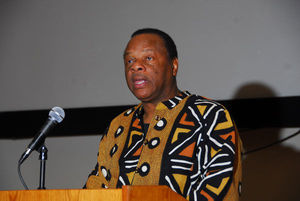

Molefi Asante speech, Philadelphia, PA, September 13, 2014. (AP photo/file).

If I so chose, I could be a jealous-hearted bastard, and look at every achievement of all the folk in my life as, “Well, good for you, asshole!” But I learned a long time ago, maybe even when I was at high school’s end, that the main person I have to compete and contend with is me, that I am exhausting enough. Vying for popularity, kudos, or power was never a big thing for me. It was a game I’d almost always lose, for enough reasons to make my pre-Christian and depressed self actually jump off that bridge and end it all. What I learned by my mid-twenties was to allow myself a moment or two of envy, to feel like life was easier for those who achieved what seemed like cheap and easy success and fame. And then I’d think, But that’s not what I want for me. That’s their path, not mine, no matter how many parallels and similarities there may be between them and me.

What helped me get there is a story of plagiarism, of ideas, if not of actual words. It’s a story of my first attempt to publish an article as an adult, my first foray into the world of popularity, of ideas, of writing, and of extreme disappointment. It began the summer before grad school at Pitt in 1991. My friend Elaine egged me into this work, after a long and hard final semester of undergrad and three weeks on a starvation diet while working full time that April and May (I stretched $30 over 20 days). I began work on what I hoped would be my first article, comparing ideas around Afrocentric education with the broader idea of multicultural education.

The piece was originally to be her and my response to what was then a major controversy involving research into the revision of New York State’s social studies curriculum. The New York State Department of Education had given a committee the task of figuring out how to make the state’s K-12 curriculum more inclusive and representative of the state’s tremendous racial, ethnic and other forms of diversity. 

By July, I had gone from disinterested to fully engaged, minus the young woman in whom I no longer had an interest, now working on a piece that had become much more academic than we had originally intended. By then, I’d already learned the names Leonard Jeffries, Asa Hilliard III and Arthur Schlesinger, Jr. I’d read articles from the New York Times and The Wall Street Journal about Jeffries’ name-calling, Schlesinger’s incredulousness about calling slaves “enslaved persons,” and about the committee in general getting along like hyenas tearing at a dead wildebeest.

By the end of September, they would produce One Nation, Many Peoples: A Curriculum of Inclusion: Report of the Commissioner’s Task Force on Minorities: Equity and Excellence. With all my revisions out of the way, I’d produce my first publishable document since elementary school. I titled it “Comparing Afrocentric and Multicultural Education: Why American Education Needs Both.” I had reviewed much of the leading literature in the field at that point, between James A. Banks, Cherry McGee Banks, Christine Sleeter, Robert Slavin, Maulana Karenga, Frances Cress Welsing, 

I mailed it to three journals, including the Journal of Black Studies. It was then that I realized that one of the folks whose writing and research I had referred to in my review was also the editor of the journal. It was the one and only Molefi Kete Asante. He was also the founder and chair of the Department of Afro-American Studies (now Africology and African American Studies) at Temple University in Philadelphia. His The Afrocentric Idea (1987) was half the basis for my understanding what Afrocentricity could look like as pedagogy at the K-12 level.

But I had problems with that pedagogy. I chafed at the idea that there was any litmus test to what was and was not authentically Black or African. No, I’m not sure if “chafed” is the right word. The idea that anyone — including folks like Asante, Karenga, Welsing, Jeffries, and John Henry Clarke — could arbitrarily decided that ragtime isn’t authentically Black or African, while say, rap and hip-hop was definitively so? It seemed like a bunch of bullshit to me.

I knew why reading Asante’s work made me feel that way, too. Those three-and-a-half years spent living in a Hebrew-Israelite household. Those times were with a man who claimed to be my stepfather, the one who could quote the Torah. All while eating squid and crabs and lobster tails, cheating on my Mom while begetting other kids he never fed, and beating on his “womens”, too.

That’s ultimately what I saw in Asante’s work, hell, in the work of the Afrocentric set across the board. That none of them grew up in Accra, Lagos, Dar es Salaam, Gaborone, Nairobi, or Jo’Burg or were Africanists who spent years and years living somewhere on the continent before committing to this litmus test. Intellectually, it made as much sense as a “reincarnated” Balkis Makeda in her 70s living in my Mom’s master bedroom at 616 in 1984 while we eight lived by rules like me cooking for the family at 14 because Mom had “unclean issues of blood.” Or, this fake-ass Balkis Makeda telling us that we could no longer use Ivory soap because she dreamt about rats gnawing on it. Authenticity has its costs, no?    

I didn’t write all this in my essay, though. I merely wrote that between an authentic African-centered education and an authentic multicultural curriculum, the latter made the most sense in a multicultural nation like the US, in a multicultural state like New York. I justified this because I only grew up in New York State, in and around New York City. I justified it because the fact was and remains, American Black folx are, well, Americans, who have cobbled together a culture of resistance, and joy within that, both multicultural American with shards and pieces of African Blackness, and all at the same time.

Nearly two months pass. The Black Action Society at Pitt had brought in Asante to speak, a week and a half before Thanksgiving. The ballroom BAS used in William Pitt Union was jam-packed. BAS heads Justin and Doug looked so proud of themselves that evening. And Asante was just as full of himself. He spoke for between 45 minutes and an hour, about Eurocentricity, about Afrocentricity, about creating a path where Black boys (and sometimes, girls) could become proud Afrocentric men (and sometimes women). Really, it wasn’t much different than anything I heard from temple during my Hebrew-Israelite years.

Then, he turned to multiculturalism and the controversy over the revisions to the New York State global studies curriculum. Unbeknown to the nearly 300 students in the room — aside from yours truly — he began parroting my submitted article. Not quite word-for-word, though. You see, he used my arguments as fodder for sarcasm while on stage, to point to “how the poison” of Eurocentricity “flows” in multicultural curriculum across the US. Asante believed that multicultural education was a mere euphemism to disguise the “Eurocentric in the multicultural.”

“He stole my ideas. He quoted me to crush me,” I told my friend Marc, who attended the talk with me that evening. Marc thought I was wrong, that Asante wasn’t quoting me at all. Yeah, sure Marc, I thought.

Two months later, I received my first article rejection. It was a week after I finally got my driver’s license, and two weeks before I published my first piece, a book review for a small scholarly journal. It was from Journal of Black Studies. I do not remember what the rejection letter said, but I read it as, “Nice try, but you’re not Black enough for this publication.”

This was my first foray — but hardly my last — into this world, where popularity mattered more than reality, perception more than evidence, and power more than anything.

But I do consider myself lucky. A few months later, I presented another paper at a conference at Lincoln University. Bettye Collier-Thomas was in attendance, and we ended up in a conversation. She invited me to apply for the PhD program in history, where I could work with her and esteemed people like Asante. I listened and respectfully declined. 

A year later was my joint article with Marc about the pitfalls of Afrocentricity. And with it, two months of Asante’s sycophants, er, students sitting in seminar rooms writing scathing rebuttal letters questioning if between the two of us we had enough brainpower to spell Black. To learn from one of his former students in 2007 that my imaginations of what could have happened in Asante’s seminars was actually true? Well, I was so glad he had used my words as a baseball bat to my head back in 1991.

I grew up with phony proselytizers. I didn’t need to follow another one. Plus, where’s my Afrocentric gravy? Does it go with my Jollof and Brussels sprouts, too?


The Fight of the (Buick) Century

31 Saturday Oct 2020

Posted by decollins1969 in 1, Boy @ The Window, Christianity, culture, High Rise Buildings, Marriage, Mount Vernon New York, Movies, New York City, Pop Culture, Religion, Sports, Youth

≈ Leave a comment

Tags

45, 616, 616 East Lincoln Avenue, Anti-Bullying, Bullies, Bulling, Darren, Defending Oneself, Election 2020, Mugging, Muhammad Ali, Pearsall Drive, Reckoning, Reggie, Robbery


Mike Tyson slamming his right fist into Michael Spinks’ left cheek and jaw, knocking him down and out (screen shot), Atlantic City, NJ, June 27, 1988. (https://www.gentside.co.uk/).

I hate bullies. There, I wrote it. There aren’t too many things I hate more than bullies. Because bullies are the ultimate liars. Their presumed strength is a mask for the same insecurities the rest of us humans have. Only, they’ve decided that beating up on others physically, verbally, and emotionally as the solution to their fears. The only way really to deal with bullies is to stand your ground and beat them into submission. Or, if you can’t win the fight, to make the fight so vicious and bloody that the bully would rather die than fight you again.

I was robbed four times growing up between age nine and a few weeks before my 14th birthday, all in Mount Vernon, New York (so much for my parents’ worries about me being out late at night in the Bronx or Manhattan!). Two of the four robberies were full-fledged muggings, where I had to fight. Two of the four robberies, my older brother Darren abandoned me with bags of groceries (April 1979) or three bags of laundered clothes in a laundry cart — seven people’s worth — (October 1983).

That next-to-last robbery was a calculated one. I was literally walking uphill near the Hutchinson River, about to cross the bridge over the parkway of the same name, with an overloaded cart and no help from Darren. As I strained with between 60 and 70 pounds of clothes in the cold and dank fall weather on this rickety cart that I had to pull from behind (no front facing wheels), Darren walked back toward me. Two wanna-be-hard-asses were a few steps behind. “They want you to give ’em five dollars,” Darren said, as if I was in the charity business.

Now the taller one was behind Darren, the shrimp to my left. After years of basic Isshin-ryu karate training and two years of taking my everyday bully, er, stepfather Maurice’s punches, kicks, and chokes, I could have easily taken the shrimp. But Darren, as he had done in my first mugging four years earlier, had fled the scene. My  choices were to fight and risk scattering and ruining six weeks’ worth of clean clothes for me, Darren, Mom, Maurice, and my three younger siblings, or give them the five dollars. I did the latter. “That’s the last five dollars you’re ever gonna get from me,” I said to the shrimp while gritting my teeth. He sneered, but when I stepped toward him as if I was going to hit him, he stepped back.

I never expected Darren to help me with anything after that. This was when I began to say, to anyone who asked about my positioning in the family, that I was the oldest brother by default. “Well, I’m actually the second oldest, but my older brother abdicated the throne when I was 12 or 13,” I said with sarcasm for the next 20 years after that day. Including on my college essays!

That shrimp’s name was Reggie. He was among a group of roving bullies from 616 and 630 East Lincoln and the Pearsall Drive projects in those not-so-long-ago days. Reggie had been robbing folks for years, stealing money and candy from ten and eleven-olds, trying to crack on boys for being “ugly,” talking shit to girls like they would give his Vasoline-needin’ ass the time of day.

I’m not going to lie. People like Reggie scared me when we first moved to the roughest part of North Side Mount Vernon in 1977. After being sexually assaulted the year before, pretty much everything scared seven-year-old-me. But that was before the Reagan Years, the Hebrew-Israelite years, before getting my head caved in and my ribs cracked and bruised by a 32-year-old bully, a fourth-degree black belt in leeching off a welfare-poor family, my mother’s second husband. It was before puberty had shot me up from five-two to six-feet even, and with a recognition that I had some physical skills. So no, my biggest fear that day wasn’t being robbed, mugged, or even standing up for myself. It was dealing with Maurice afterward.

Five or six months after I handed him an Abe, Reggie finally got his. It was after school, sometime in late March or April 1984. The Reggie incident was now long forgotten under a pile of high school assignments, my post-suicide attempt conversion to Christianity, and plotting another round of resistance against my idiot stepfather. As I stared out the second bedroom window on the third floor, toward the northwest corner of the A block of 616, a mob of preteens and teenagers, between 20 and 30 in all, surrounded Reggie the shrimp and another, lighter-skinned kid who had also shot up in height in the past year. It dawned on me later that the older Reggie was either still stuck in middle school or a high school dropout, but it wouldn’t have mattered to me if his mama dropped him on his head when he was three.

Words turned into fists as the crowd swelled into a rough circle. I could hear the taller kid’s (lets call him KJ) fists land hard on Reggie’s cheeks and the left side of Reggie’s jaw, as KJ threw what we would now call an MMA combination that landed Reggie’s short ass in the dirt and sparse grass of 616’s front yard. KJ then pounced on Reggie and beat him in the face and torso until the shrimp curled up. I don’t remember what the freshly-minted teen yelled at Reggie as he stood over him like Ali over Sonny Liston, but whatever he said, the crowd of kids cheered and celebrated.

UFC 207 between Amanda Nunes and Ronda Rousey (screenshot; a full KO beatdown administered by Nunes in 48 seconds), T-Mobile Arena, Las Vegas, December 30, 2016. (https://youtube.com).

Reggie, bloodied lip, bruised from forehead to belly, with dirt and grass and straw in his hair and all over his clothes, all but cried as he stood up a moment later. By then, the crowd had followed KJ to 630, or gone home somewhere between 616, 630, or to their single-family dwellings on the other side of the street, or to the Pearsall Drive projects at the end of the long block. He somehow looked even darker, shorter, and more diminished than he did when I jerked at him as if to hit him five or six months earlier. As much empathy as I can have for the vanquished, I had zero empathy for Reggie at all. The only wish I had at that moment was that I had joined in with KJ and swung-kicked some teeth down Reggie’s mf-ing throat.

This is how we should all deal with bullies, like 45 and his minions. Not with empathy or with regard to what in their backgrounds helped make them this way. That comes later, when we have a chance to implement for the long-term. No, the immediate threat is a bully who taunts and grifts and threatens. You beat the shit out of that person, or make it so that their victory costs them so much that it feels like a defeat. After all, this is about self-preservation, survival, and harm reduction. Or to quote Val Kilmer’s Doc Holliday from Tombstone (1993), “it’s not revenge that [we’re] after, it’s a reckonin’.” We need a reckoning this time around. Thanks, KJ, for showing the way.

About That Time at Van Cortlandt Park, and Other Bricks in the Wall…

28 Monday Sep 2020

Posted by decollins1969 in 1, Boy @ The Window, Christianity, culture, Eclectic, eclectic music, Hebrew-Israelite, High Rise Buildings, Jimme, Marriage, Mount Vernon New York, music, My Father, New York City, Politics, Pop Culture, race, Religion, Youth

≈ Leave a comment

Tags

"And The Beat Goes On" (1979), "Another Brick In The Wall (Part 2)", "Good Times", "Love To Love You Baby", "Rapper's Delight", "Take Your Time (Do It Right)", 616, 616 East Lincoln Avenue, Autocracy, Barbra Streisand, Chic, Donna Summer, Frank Sinatra, Friendships, Kool and The Gang, Luther Vandross, New York, Oppression, Pink Floyd, Queen, Repression, SOS Band, Stephanie Mills, Sugar Hill Gang, Teddy Pendergrass, The Clear View School, The Whispers, Tré


Van Cortlandt Park screen shot (parade grounds, cropped), June 4, 2020. (https://www.thisisthebronx.info/a-van-cortlandt-park-living-room-picnic/).

I don’t consider myself to be a seer. Not exactly. I might have gotten a thing or 1,000 predictions correct in my life. But since I usually prefer to expect good outcomes, I do not indulge the dreams I have of destruction, or the muses who conjure the possibilities of apocalypse, whether for me, my family, or at larger scales.

But the last half of 1980 was different for me. I’d come into my own as a kid. I finally had a posse of classmates and friends, between the two Joes, Starling, Chris, Ronald, Vanessa, Eric, Ray Ray, Sean, Lajuan, and Dahlia, among others. I was kicking ass academically, and was on the verge of discovering other talents, including writing. After my last summer camp with Darren at Clear View, and rereading the late Lerone Bennett Jr.’s Ebony Pictorial History of Black America, I understood my Blackness, really and truly, for the first time.

But I chose to see the glass as half full, both for myself and for Black folk in the US. Why wouldn’t I have? Somehow, in the middle of what I call “deep summer,” when the previous school year and the start of the first day of the next school year are about equally far away, it happened. My stepfather Maurice got a call from his music-obsessed friend Dennis (who was also a professional musician, by the way) in the middle of a Sunday afternoon in mid-August about going to some concert in the park in the Bronx. There was no mention of who the headliners were. I just remember playing Peanuts Land with my Matchbox cars and driving down along the shoppes in the nightlife district of the city underneath my bed when Maurice came in and rushed us to get dressed.

Mom, Maurice, Darren, little Maurice, and me. We piled into a cab over to Van Cortlandt Park, where we met Maurice’s friend Dennis. He knew a couple of the headlining people who were playing. I don’t recall tickets, but I do remember flyers everywhere. It seemed like this was a spontaneous gathering, where people somehow knew where to go and where to gather. I remember it being sometime around 7 or 8 pm when the jamming began, with all the music of the late-1970s and 1980. It was mostly an MC mixing a string a songs together, between Chic and “Good Times”, The Whispers’ “And The Beat Goes On,” and Michael’s “Off The Wall.”

But maybe 45 minutes in, three guys got on the stage to do their performance, Sugar Hill Gang, and the crowd of hundreds erupted into a roar as they rapped to “Rapper’s Delight.” They did a bunch of songs beyond the “a hip, hop/the hippie, the hippie/To the hip hip hop/a you don’t stop…” I was into it like everyone else, doing my terrible version of a Michael Jackson dance routine while clapping my hands to the beat. Sometime between 10 and 11, we left, I think, between a cab and Dennis giving Maurice and Mom and little Maurice a ride home. Even Mom looked like she had a good time. It would be just about the last good time we would have as a sort-of-family.

But the music didn’t stop with Van Cortlandt Park or the Sugar Hill Gang. The spring and summer of 1980 was the transition to a new decade of music, as homophobes from New York to Detroit and L.A. had spent the past year killing disco by smashing vinyl and smashing in Toyota Corollas and Datsun Zs. (By the way, for those who are still kicking and screaming over Cardi B and Megan Thee Stallion’s “WAP,” go on YouTube and listen to the late Donna Summer’s “Love To Love You Baby“. It’ll probably make you question the meaning of your false sense of morality.)

Kool and The Gang had crossed over with “Ladies Night,” and were about to walk the fine line between success and selling out with “Celebration.” All summer on the bus back and forth from Clear View with Darren, SOS Band’s “Take Your Time (Do It Right)” was on at least once a day. There was also Teddy Pendergrass, the one, the only, and emerging, Luther Vandross’ “Searching” (yes, not his official solo debut, but), and of course Stephanie Mills with “Never Knew Love Like This Before”. And all that because my father had introduced us to Toni, a new drinking budding of his, herself a professional singer. Not to mention, a couple of bartenders in Mount Vernon and in the Bronx who didn’t mind a 12 and a 10-year-old sitting around on off nights in July and August.

On the AM side of things with 770 AM WABC radio, there was still Billy Joel, Kenny Loggins, Barbra Streisand and her collabs with The Bee Gees, “Guilty” and “Woman In Love.” Frank Sinatra’s “New York, New York” was the second half of the summer of 1980, old and yet new, at least to me.

But as that summer moved into fall and 6th grade, I sensed something was changing, and not for the better. I sensed it in music, more than I did with Jimme’s alcohol abuse and fewer visits, more that even in Mom’s inability to keep food in our stomachs or in her failing marriage with Maurice. The music seemed more sinister, less hopeful, darker somehow. Queen’s “Another One Bites The Dust” somehow conjured “No mas! No mas!” and Roberto Duran giving up against Sugar Ray Leonard that November, the same month Reagan beat a beat down, haggard Jimmy Carter in the 1980 election. The beginning of four decades’ worth of hollow promises to White Americans, millions willing to sell the rest of us to Hell for their macabre pleasure and some tax breaks.

But no song signified the transition of the US for me in 1980 more than Pink Floyd’s “Another Brick in the Wall”. It was likely the first true music video I ever saw, courtesy of my 616 friend Tré, who lived on the second floor. I spent a lot of time hanging with Tré, his older sister Renee, and her friend Stephanie (who I had the tiniest of crushes on, but I digress). It was during the months after Maurice and Mom had separated, with him taking the TV and a month’s supply of mail-ordered meats out of our two freezers. Tré, Renee, and their mother made me feel welcome between that first Saturday in October and when the Hebrew-Israelite bullshit began six months later.

“We don’t need no education. We don’t need no thought control…” It was about much more than strict teachers and social control over students. It was a prediction of a future, my future, our collective futures. That’s what I thought about this time 40 years ago. I had conversations with my classmates about this, about Reagan, about double-digit inflation and unemployment, about the Iran hostage crisis, about the rumors that the US had given Israel nukes, and Israel had, in turn given nukes to apartheid South Africa. “You’re so weird!” they’d say. Or, more often, “You worry too much, Donald!” Only Starling understood. But he expected me to “become one with Jesus,” as if Jesus alone could stop me from worrying about the future.

In short order, the Reagan Years came and gutted the relative economic security of the US, disrupting the shaky gains Blacks had made in the years between 1946 and 1980. Mark David Chapman murdered John Lennon to ring in the holidays, and Blondie’s Debbie Harry badly rapped her way through their January 1981 hit “Rapture” while Mom began to talk about being raptured up for the first time. My family was at the edge of an abyss, a mini-apocalypse that would ultimately transform all of us. It would certainly sidetrack me from my calling as a writer for years to come.

But the world didn’t stop spinning. Nor did life stop handing me days of happiness, of contentment, of miracles and even some joy. It just meant that I would be more cautious, anxious, depressed, worried, on edge. Because America believes itself above reproach, even as it deals in shit and blood, and drags the rest of us into the burgundy-soaked muck with it. The distance between 1980 and 2020 might be 40 years, but with Trump and his army of minions, I might as well be in the same moment. Only, I’m 50 now, and I know much better about listening to my inner voice and my muses.

Who’s Afraid of the Big, Bad P(Vagina)y? Men, in a Word

13 Sunday Sep 2020

Posted by decollins1969 in 1, Boy @ The Window, culture, Eclectic, eclectic music, Mount Vernon New York, music, Politics, Pop Culture, race, Religion, University of Pittsburgh, Youth

≈ Leave a comment

Tags

"WAP", 616 East Lincoln Avenue, Black Feminism, Cardi B, Coming-of-Age, Feminism, Human Anatomy, Hypermasculinity, Masculinity, Maurice Eugene Washington, Megan Thee Stallion, Misogynoir, Patriarchy, Pussy, Self-Awareness, Self-Reflection, Stepfather, Vagine, Vulnerability, Weakness, William H. Holmes Elementary


Layered anatomy of the anatomical male and anatomical female body, June 5, 2016. (https://naturopathicdoctorwizangwira.wordpress.com/).

The first time I became self-aware of myself as a male with male parts was when I was five. At our second-floor flat on South Sixth in South Side Mount Vernon, New York, sometime in the summer of 1975, I walked in on my mother in the bathroom. She had just finished peeing and was wiping herself. All I could do was stare at her vagina area, seeing mostly what wasn’t there. “Maywa,” I said (a mash of my mother’s name Mary with Mom) “what happened to your pee-pee?” My mother explained that she didn’t “have a pee-pee” — without explaining why she didn’t have one. “When I get some money, I’m gonna go to the pee-pee store and buy you one,” I responded.

There are maybe 20 stories growing up where it seems me and my mother both share and end up smiling, with a sense of real warmth and affection, and not just base-level love, and without irony or a hidden sense of jealousy or disdain. The pee-pee story is one of them.

But this is more than just about the time before sexual assault, domestic violence, child abuse, neglect, and a massive slide into poverty changed my sense of the world. It’s about how men learn to fear all things vagina and vagina-related, and how that fear so easily turns us into misogynists and misogynoirists. It’s about how we as men fail to educate ourselves about women, about patriarchy, and ultimately, about who we are and who we need to be to end patriarchy.

A few years after discovering the differences between the anatomically male and the anatomically female, I knew a bit more, in both an intellectual and social sense. I no longer accidentally danced under my mother’s and other older women’s dresses at the parties my mother took us to when I was five and six years old. I guess if you get slapped upside the head enough times, you recognize why acting like you’re playing hide-and-seek with your mother’s dress as a prop might be socially inappropriate.

But that’s not all. By 1978 and 1979, we had World Book Encyclopedia at 616. Once I began plowing through it to learn all I could — and not just as a way to punish my mother for punishing me — I learned even more about the body than any eight or nine-year-old ought to learn on their own. The “Human Body” section contained celluloid slices of the male and female body, which would layer together to form a full body. From bones to muscles, from muscles to blood vessels, from blood vessels to nerves and organs and systems, and then to derma and coverings for orifices.

I remember the reproductive system either being the last or among the last of the sectional celluloids to form a male or female body. I learned about ovaries, testes, scrota, urethras, and vaginas long before I could say these words correctly. This also meant that I understood where babies come from, without fully understanding the drive that led to human reproduction.

A year later, near the end of fifth grade at William H. Holmes ES (I think it was the third week of May 1980), me and my classmate Joe were on our way home (we both lived in the A section of 616). We were talking shit about girls, about boys, about life in general, maybe with a few “yo’ mama” jokes thrown in. Suddenly, Joe hits me with the question, “Have you ever seen a pussy before?” “No!,” I lied, and loudly too. Joe teased me about it, saying, “You can’t even say ‘pussy,’ can you?” I just laughed it off, not knowing what to say, really. Even at ten, I knew enough to know I couldn’t reveal I’d seen my mother’s vagina at five or that I had seen the encyclopedia’s White female rendering of one.

I didn’t use the word at all until June 1988. It was after I escaped yet another attempt by my idiot stepfather Maurice to make me see him as my father through the use of his fists. He ended up falling into a tub of bathwater meant for my youngest siblings Sarai and Eri. What made this even more ridiculous? This was after my first year at Pitt, a year where I knew more than enough about the world, about the predicament at 616, and about myself to recognize I didn’t have to put up with this bullshit. But I slid back into my old role as teenaged man-child anyway.

This was what happened afterward, via Boy @ The Window

All I kept muttering to myself was, ‘I’m a pussy,’ because I still could’ve gone to the cops for his attempted assault. After a couple of minutes, he said, ‘Get this through your head, boy. Me and your mother are happy together, and we’re gonna be together long after you leave here and go out in the world. The world’s a dangerous place, and we’re just gettin’ you ready for it.’
Huh? What? I knew not to laugh right then, but I was laughing at him on the inside. I knew right then that him and Mom would be over sooner rather than later.

Even in that moment, it felt weird to call myself “a pussy.” I never saw myself as weak, or women in general as weak. It didn’t occur to me that I was afraid, not of getting beat up or of being weak. I was afraid that I would never become the person I wanted to become. I was afraid that mfs like Maurice would continue to come at me because they saw the version of me that I presented at 616, the shell that seemed weak, just like how they saw women, just like how they saw anyone with a vagina.

This is the fear of all boys and men unknowingly or fully conscious of the patriarchy, masculinity, and the world, of folks on the verge of misogyny, misogynoir, and hypermasculinity. The fear of being seen by other men and women-as-patriarchy’s-footsoldiers as pussies, weak in body, mind, and spirit, and therefore as exploitable to the point of being used as a punching bag.

This was why there was such a ludicrous outcry over Cardi B and Megan Thee Stallion’s “WAP” last month. The responses weren’t about Christianity and morality. Not really. They were about the need to keep women from freeing themselves and their vaginas from the clutches of patriarchy. The angry gasbags on Instagram and Twitter venting their spleens were expressing their need to keep women and their pussies in a locked box, fully under the control of men and women-as-patriarchy’s-footsoldiers, for use only in case of wanting to make a sanctified baby (especially White ones). Anything short of this total control weakens men, weakens patriarchy, and makes us vulnerable to questioning ourselves.

The truth is, heterosexual men especially are scared because we as a group cannot be as strong as women, queer/transgender women included. None of us can be strong when we refuse ourselves the right of vulnerability, the need to feel feelings aside from anger, rage, and bravado, the courage of solidarity and love, and the humanity of affection with and for others — including for the men in our lives. This isn’t just about men needing to cry when in each other’s presence (although I am more than sure that would be helpful for millions). It’s about the need to connect with the parts of ourselves that we refuse to acknowledge. For most men, it’s as if we are all M1 Abrams tanks, ready to kill and destroy at a moment’s notice.

But as so many Black feminists in my life have reminded me over the years, the vagina is a really strong muscle. After all, the vast majority of humanity has passed through one on the way to being born. It is a muscle that can be strengthened, stretched, and even repaired, something we as a species and world so desperately need. Try as men might, there are no dick exercises in which any anatomical male can do reps with his penis and build strength. At least not yet.

Death and Debt

11 Saturday Jul 2020

Posted by decollins1969 in 1, Boy @ The Window, culture, Eclectic, Mount Vernon New York, New York City, race, Youth

≈ Leave a comment

Tags

Death, Debt, Life, Life Decisions, Sarai, Sarai Washington, Student Loans


Sarai & Noah, November 2003. (Donald Earl Collins).

My post today will be short. Today marks a full decade since the Sunday morning my youngest brother Eri called me, waking me up with the news that my only sister Sarai had died overnight at Mount Vernon Hospital. It was due to complications from sickle cell anemia, the disease that denies the body sufficient oxygen for carrying out it functions, ever debilitating and ever more painful as one grows older with it, as anyone with the disease can attest. Too many blood transfusions, too many invasive procedures, not enough healing. Sarai Adar Washington, who did live, and did try her damnedest to live her life her way, died at 27 years young.

Yes, I love her, and miss her still. There isn’t a week that goes by where I don’t think about her and the life that she didn’t get to have, the life that she did live, and how my life was affected by her existing. It causes me, Sarai’s older brother — one 13-plus-years older than her when my mother gave birth to her, one at one point argued for abortion to save us and her the anguish of the disease — to let out the occasional tear or feel a sense of loss. I can only imagine how much deeper the loss is for my mom, of course, and for my three younger brothers, who truly grew up with her. My only solace today is that Sarai isn’t here to try to survive the pandemic, because she most surely would not have made it if she had contracted COVID-19.

On the other end is the week that reminds me of one of the worst best decisions I have ever made. To take out the first $2,625 of what would be over $41,000 in loans between July 1987 and October 1996. I paid out the principal of my loans at least three years ago. But Sallie Mae (and PHEAA and Marine Midland Bank before that) set the interest rates back when those rates were much higher. Eight percent on a series of loans taken out between 24 and 33 years ago would be incalculable to a 17-year-old in July 1987. But as a 50-year-old, it translates to debt peonage, more than double the actual loans themselves. Except that I know that one way or another, this debt will go away, if only because I will stop living this life, eventually.

The proverbial “they” say the only two constants in life are death and taxes. No, there are at least three constants — death, debt, and taxes. Maybe in my death I can finally see my sister again, and see my debt and taxes burn in the fiery pit in the event horizon of a black hole.

A List of the Unwritten Rules I Wish I Had Known, in 1990, 2000, and 2010

19 Tuesday May 2020

Posted by decollins1969 in 1, Academia, Boy @ The Window, Carnegie Mellon University, culture, Eclectic, Mount Vernon New York, New York City, Pittsburgh, Politics, Pop Culture, race, University of Pittsburgh, Work, Youth

≈ Leave a comment

Tags

Academia, CMU, Educated Fool, Failure, Pitt, Self-Reflection, Success, Teaching and Learning, Unwritten Rules


Me, 23 years after my PhD graduation, May 18, 2020. (Donald Earl Collins).

As a confessed educated fool, I readily admit that there are a ton of things I understood but did not act on. But I also know that there are solar system loads of unwritten rules that I didn’t and couldn’t possibly have known going into my professional future toward the end of my undergrad days at the University of Pittsburgh. And, there’s the stuff that falls in between. The rules that are not hard rules, ones that can be bent, twisted into pretzels, and/or broken or even shattered. The things that I didn’t know I knew, the ideas and principles that are ingrained or splinters in my mind, but not quite accessible until the moment I needed them, or, even worse, right after I really could’ve used that extra bit of knowledge and wisdom.

This list is merely the beginning of the most important rules I could impart to my younger self, at 20, 30, and yes, 40 years old. Donald’s 1.0, 1.5, 2.0, and 2.5 all believed that his mind, his imagination, his hard work and achievements would all carry the day, would win him a slice of prosperity, a sliver of intellectual respectability, a piece of popularity, even. All to have moments and flashes of all three, but not usually at the same time, and all to realize that talent and hard work for Black folx in a Whiteness world matter not. Not even among most Black elites. I could list 1,000 unwritten rules and other ideas that I wish I had known or — if I did somehow already know — taken advantage of. But the real theme here is that the meritocracy is a lie. Whether in the form of rugged individualism or a belief in K-16 education as a social mobility equalizer, merit through talent and hard work is an American mythology like Abraham Lincoln “freeing the slaves” and America as always good and righteous.

1. You are a writer. Whatever the job, whatever the career path, whatever the familial and relationship and marital responsibilities, you are a writer. Yes, despite it all, your calling is to write about it all. Period. It does not matter if you think most of your writing is crap. All writers think their writing is crap. It does not matter if you’re really good at organizing conferences, retreats, and learning institutes. Or, if you are excellent at curriculum design, a tough but caring history and education professor, a science nerd and a talented computer science geek. Nearly every writer has another set of jobs and careers besides writing. Just because your co-workers, colleagues, and even family might not see you as a writer first, does not mean that you are not a writer.

And, here’s the real deal. Not everyone needs to know that you are a writer. Some dumb muthafuckas will use your expressed calling against you, especially if and when they do find out about your creative side and your one troy ounce of success. Some of your enemies, nemeses, and family members and friends will literally laugh in your face when you discuss your aspirations with them. You have to know whom to trust and not trust with this truth about yourself. You will learn, in time, to keep your own counsel, to not let everyone in your world in on your not-so-secret secret.

And you will learn that to write is not just putting pen to paper or fingers and thumbs to a MacBook keyboard. It’s reading, beyond the academic tome, beyond the occasional novel or Walter Mosley detective mystery. It’s reading folx who’ve struggled with writing just like you. It’s people-watching on trains and the Metro. It’s listening in Univision or Telemundo programs while folding clothes at a laundromat with a mostly Salvadoran, Nicaraguan, Nuyorican or Dominicanyorka audience. It’s thinking of an idea while cleaning chicken thighs for dinner or on the occasions you end up jacking off for lack of sleep. It’s all the vivid dreams and nightmares — really, visions — that you’ve had of present, future, past, past-future, future-present, and ever-present, about escape, about overcoming, about being trapped. That’s all a part of the process.

2. Degrees matter, and yet, degrees don’t matter for shit. I cannot believe that your dumb-ass self believed for years that getting the “PhD would be a passport for doing what [you] wanted to do in [your] life.” You must have said this to 50 of your closest friends, acquaintances, and even a couple of folks who you eventually realized were your enemies back between 1990 and 1997. At your most stressed times, those sudden, bolting-upright-in-the-bed-at-3am moments, with your heart thumping like you were Bugs Bunny ogling Lola Bunny, you believed the doctorate was the ticket. You kept telling yourself this, even as you had doubts about what the degree meant as you finished your coursework in 1994. You cast yourself atop this hill, especially after becoming a Spencer Dissertation Fellow in 1995, even though you and many in your cohort were all obvious misfits in the grad school system.

Yes, in the narrow sense of job qualifications, degrees matter. But, you earned your master’s degrees in History in April 1992. At 22 years old! You were all-but-dissertation at 24. 24! You could’ve taken time off, earned a teaching certificate in a year, gone on to teach at public, private, or parochial school, or even earned a degree in a more practical field, like psychology, social work, education, journalism, creative nonfiction, or sociology. So admit it, damn you! You were attracted to some aspects of the tenured faculty lifestyle. Not most of it, to be sure. Yet the idea of having a schedule where you spent lots of time doing research and writing. You secretly craved being paid to write whatever you wanted to write. Even though you already knew that you could only do this if you willing to write like a cold, dispassionate White guy well-off enough to not care about reaching an audience outside of his extremely narrow field.

So you convinced yourself for nearly two decades that you could do and be both. A writer for mainstream organs and readers and a writer for academe. You weren’t wrong. Your eclectic writing style can accommodate complex scholarly ideas and personal tales and dramas, even creative techniques to transition between them. But the world of the privileged rarely allows for the crossover-dribble equivalent for writers. With a doctorate, you are an egg-headed scholar to the average editor, and cannot possibly write in any other way. For journal editors, your style was never gonna be scholarly enough. For newspaper and magazine editors, your style was always too cerebral. And, despite your degree, you had a hard time convincing others of your expertise. You only earned a PhD in History from Carnegie Mellon University, okay? Not from UCLA or Berkeley or Stanford, or certainly not from Harvard, Yale, or Princeton, or even UPenn, Georgetown, or Columbia. Your years of published works and a couple of self-published books would be barely enough to convince Ebony to take a look at your work when you hit your mid-40s. Forget about trying to bifurcate and make your degrees work for you. Get a good job, and just find more and more ways to keep writing, and hopefully, you won’t be dead before people start reading your stuff.

3. Academia, the nonprofit world, and the writing world only make room for Blacks and other people of color when then either completely conform to its -isms (tokens), or when we prove ourselves to at least be moderately successful mavericks. There is no in between, there is no best-of-both-worlds, or straddling the fence, or finding yourself as the Emissary that can cross between worlds. You are not Avatar Aang, the Last Airbender or Captain Benjamin Sisko of DS9. Even among other Black folks, like when I was offered a tenure-stream position in the Department of Africana Studies (née Afro-American Studies) at Howard University in 2000, it came with the implicit stipulation that I needed to conform, to always respect my elders — no matter how elitist and exclusionary I thought they were. At nearly every job I have held since 1996, I have been hired as a token toward diversity with the added benefit of my degree and/or specific expertise, or because I went against the grain to do or write something counterintuitively.

But if that were all, you may have figured some aspect of this out during the Reagan years. The layers of intersectional elitism, from whole institutions like lily-White, College Republican, and two-comma-kid Carnegie Mellon, to department-level beliefs of assuming that you as someone who grew up with poverty would somehow survive summer after summer without financial support. There were also the professors, who to a person assumed that “a few years of hazing will be good for you,” as if you grew up without a material care in the world. After all, how could a Black guy from Mount Vernon, New York with your familial and socioeconomic background find themselves in the hallowed halls of major universities?

Yeah, man. There are almost as many layers of elitism in the working world as there are folds in the gray matter of an alleged Mensa genius. Racial paternalistic elitism, neo-Marxist elitism, misogynist elitism, Marxist elitism, socialist elitism, misogynoir elitism, White feminist elitism, Afrocentric elitism, corporate elitism, technocratic elitism. There’s also Ivy League elitism, HBCU elitism, country-club elitism, affluent Black elitism, African Black elitism, Afro-Caribbean elitism, Puerto Rican elitism, and biracial elitism. And lest I forget, there’s that from-the-5-boroughs-New Yorker elitism, served-in-the-Peace-Corps elitism, revolutionary elitism, anti-revolutionary elitism, and even contrarian elitism. Cutting through all these layers over several decades might leave you in a rage, ready to holler at a moment’s notice, and with some bouts of exhaustion and high blood pressure. But the truth is, none of these dumb asses know how deep in The Matrix they are, putting on enough airs to crush entire cities into oblivion.

4. You will have moments of serious doubt. You will have days, weeks, months where you will be depressed. You will have “waiting for the other shoe to drop” emotions, even when everything is going well professionally. You will feel that you do not belong. Not in academia. Not in the nonprofit world. Not as a writer. Not as an American. Sometimes, not even as a Black American. You will have bouts with what we call imposter syndrome. And yes, you do not fit in easily anywhere, because you have spent so much of your life trying to learn how to cope in places and spaces that never wanted you. Your experiences with millennialist religions, with poverty, with Blackness, with growing up in Mount Vernon/New York City, will help you cope. But you will never be a fit in any place you inhabit in this lifetime.

And, you need to know that this will be perfectly fine. Fitting in never brings you the material and psychological benefits you will seek for yourself and your loved ones. Fitting in only brings you headaches on the regular, endless cycles of diarrhea and constipation, a nearly permanent insomnia. Fitting in makes you almost forget your training as an African American historian and your expertise in understanding the human condition. Fitting in nearly kills the writer you so desperately need to become before you even fully acknowledge that you are one.

So, do not ever fit in. Do not even try. Be you. Be your best you. If that isn’t enough, that’s the problem of a world full of bullies, Head-Negro-in-Charge micromanagers, White moderates, paternalistic White women, and other who would prefer brown-nosers to free thinkers. Not to mention, the armies of sycophants these assholes tend to hire.

So, the meritocracy is a neoliberal lie, and a debt-ridden deadly one. You might never break through as a writer in all the ways that matter to you. Or you just might. Or, you may fully break through, only to find out that you are so much more than the writer you will eventually become. But do not look for approval. Especially not from the US academic and literati set. Let them continue to eat their shitty cake.

Revealing in Cloaked Blindness/I Heart Kendzior’s Work

30 Thursday Apr 2020

Posted by decollins1969 in 1, Academia, Boy @ The Window, culture, Eclectic, eclectic music, Mount Vernon New York, music, New York City, Pittsburgh, Politics, Pop Culture, race, Religion, Work, Youth

≈ Leave a comment

Tags

American Dream, American Nightmare, Autocracy, Book Review, Both-And, Critique, George W. Bush, Glide Path, Great Writing, Hiding in Plain Sight (2020), History, Kleptocracy, Political Analysis, President Donald J. Trump, Sarah Kendzior


Front cover of Hiding in Plain Sight: The Invention of Donald Trump and the Erosion of America (2020), by Sarah Kendzior, April 30, 2020. (Donald Earl Collins).

In the past four years, I have read so many good and great books, fiction, nonfiction, and mixed genre. Black and Brown writers — especially Black women and Latinas — have written nearly all of them. Brittney Cooper (crunk, crunk!), Chimamanda Ngozi Adichie, Colson Whitehead (masterclass!), Crystal Marie Fleming, Darnell Moore, Bassey Ikpi (poetic masterclass!), Erica Armstrong Dunbar (literally brought together the academic with creative nonfiction) , Ijeoma Oluo, Kiese Laymon (Black abundance and excellence, of course!), Mona Eltahawy, Morgan Jerkins, Patricia J. Williams, the ever-great Roxane Gay,  Tressie McMillan Cottom, Raquel Cepeda (a New Yorker after my own heart!), Imani Perry (3 books in two years — this woman has range!), Leta Hong Fincher, Jose Antonio Vargas, Alondra Nelson, Mycheal Denzel Smith, and likely another ten or fifteen I can’t remember by name.

All of them (really, all of y’all, since I have had conversations with you all in person, on social media, or in my head since 2016) have confirmed so many of my ideas around racism and narcissism, about the use of the interdisciplinary, about the hard-nosed work of writing. They have strengthened my voice around Black feminism, critical race theory, Afrofuturism (a term I was chagrin to use about my own writing this time seven years ago), and queer studies. They all have shown what I have been teaching since I was a PhD student in 1993 — the connections between -isms-laden ideas and deliberately punitive policies meant to cower the ordinary and crush the marginalized.

Sarah Kendzior has done so much on this last theme, uncloaking the connections between the ambitions of brazenly craven rich White guys (and some women) to enrich and empower themselves while destroying the US that came to be with FDR, the New Deal, and the post-World War II superpower boom. And Kendzior does so unassumingly, with bits of memoir that parallels the US glide path toward naked autocracy since the mid-1970s.

I’ve been reading Kendzior since her freelancing days with Al Jazeera, so, somewhere around 2012 or 2013. So many of the themes in Hiding in Plain Sight are familiar, if only because those themes of a hollowed-out St. Louis, a systemically racist and autocratic government, where corrupt and unaccountable leaders are front and center in nearly everything that Kendzior writes. Plus, I am a half-century old Black man and historian who grew up in malnourished welfare poverty and around eschatological cults in Mount Vernon, New York and in New York City. Everything Kendzior has written over the years, I know down to my bones and veins.

Because of that, I wasn’t sure if I wanted to buy Hiding in Plain Sight, forget about reading it. But Kendzior uses her book to build a case better than Perry Mason and Jack McCoy (of Law & Order lore, played by Sam Waterston) could on their best days. Kendzior’s thesis is that Trump as POTUS was inevitable, as the “elite criminal network” of which Trump is a part “has been building for decades.” This network includes “right-wing Republican extremists, apocalyptic religious movements of varied faiths, social media corporations, advocacy groups like the National Rifle Association, and part of the mainstream media.” According to Kendzior, what makes them new and lethal to the US is their “transactional nature and reliance on non-state actors.” Ultimately, this cabal “will take your money, they will steal your freedom, and if they are clever, they will eliminate any structural protections you had before the majority realizes the extent of the damage.” Along the way, they are transitioning the US “from a flawed democracy to a burgeoning autocracy” (pp. 8-9).

Kendzior skillfully uses her own growing up and adult experiences and the places she’s inhabited in building the interconnections between Trump’s lifetime of enabled narcissism and criminality and the rise of the American autocracy. She starts where she usually does, in Missouri, “the bellwether state turned corruption capital, the broken heartland that got the sneak preview to the national shitshow” (p. 20). Kendzior makes the case that Missouri and St. Louis even more specifically represents well the erosion of democracy all over the US with the infusion of dark money and out-of-state money and operators in state and local elections. I do think that she oversells the assumption of Missourian and Rust Belt irrelevance here, if only because every White American actor attempts a Missourah or Midwestern accent in the standard movie, TV show, or internet series not centered in New York.

But I digress. The gutting of Missouri and the rest of the Midwest between St. Louis and Pittsburgh (although so many cities outside the Rust Belt could say the same, like my own original hometown) was a deliberate one, meant to destroy unions, to line politicians’ pockets, and to enrich already filthy-rich folk. People like one Donald J. Trump.

Kendzior again builds a Mayan-step-pyramid-of-evidence to show how Trump had aspirations toward the presidency at least since the 1980s, and had gotten away with grifting projects and Ponzi schemes since the 1970s. And with those twin motivations, how Trump could easily become comrades with Russian mobsters and the likes of the infamous Roy Cohn, with Paul Manafort, with Roger Stone, and the rest of this crew of the craven. And Kenzior ties this one up with a macabre dystopian bow, bracketing Trump’s almost inevitable rise with the story of how her mother taught her about George Orwell’s 1984, a timeline her “mother laughingly assured [her] did not exist” (p. 76). “We are living in the future Orwell warmed about” now, Kendzior wrote.

Among the more heartbreaking vignettes in Hiding in Plain Sight is the story of Kendzior’s own personal experience with the new normal of constant job and financial insecurity born from a false Great Recession recovery in the years after 2008. The collective we have often looked back at the Obama years with fondness. But all the while, the US kept rolling down the same road to autocratic perdition, chewing up everyone not affluent along the way. Kendzior’s experience is no different from my own, and no different from at least 150 million others.

For over a year I would wake up shaking. The economic nightmare I had documented for years as a journalist had finally gotten me, like a monster I had tracked but failed to slay…It made no difference what we could offer the world. We only knew what the world could take away…The rage, though — that stays with you. (pp. 133-135).

Kendzior wrote a book that few who truly understand the nature of the evil that has infected the US since the 1970s could argue is incorrect. Her analysis is nearly as excellent as the prose, to be sure.

I do have a few bones to pick. Mostly because I had a hard time figuring out the audience Kendzior was attempting to reach. Was it other journalists? The broader American public? Anyone who needs a Laurence Fishburne-style “Wake up!!!” call from School Daze?

I landed on nearly-disillusioned-White-Americans as Kendzior’s audience, the ones still clinging to the hope of the American Dream with their fingernails, the ones who all but realize that the Dream is a lie and a nightmare for almost all of us. “I am trying to show them [her children] our country was always vulnerable, always flawed, but that people fought back. We’ve survived as long as we have due to self-criticism and sacrifice, a willingness to examine our faults and try to fix them,” Kendzior wrote (p. 213).

I’m sorry, but this is the America I read about in a Harcourt, Brace and Jovanovich textbook from fifth grade in 1980, not the America in which I have lived for 50 years, worked in since I was 14, and studied for three decades. This is a part of the American mythology, this idea of self-correction. The only times the US has changed to mete out symbolic half-measures toward its ideals has been when the marginalized through years and even decades of resistance have forced it to. Full stop. To suggest otherwise would be to suggest a land that believes in anti-racism, Black feminism, reproductive rights, non-binary sexuality, and democratic socialism. Where is this US? I am still looking.

Another criticism is around Trump himself, and about the arc of the autocratic glide path of the US since 1968. Yes, just as Kendzior and others have written, I have also written that Trump was an inevitable consequence of rampant criminality and grifting, of lying in the same bed with mobsters and autocrats from Russia, Israel, Saudi Arabia, and the US. But really, in a country as racist, misogynistic, and narcissistic as the US has always been, someone like Trump was always the danger, and has happened on some level in the past (see Andrew Jackson, see James Buchanan, see Teddy Roosevelt, see even FDR’s four terms in office, as good as his New Deal policies were). The US is just two months removed from Mike “will get it done” Bloomberg running for president, a much more competent billionaire and grifter, with his own ideas for autocratic rule. It ended up being Trump, but it could have been any of a dozen aspirants we’ve seen from the top 1% over the past three decades, starting with Ross Perot.

Kendzior’s centering of Trump is disturbing because the “burgeoning autocracy” has always been an autocracy for Blacks and for indigenous Americans, going back to the days before the US even existed. In modern politics, the dividing line isn’t Trump or the Great Recession. It’s Vietnam and Richard Nixon and his “Southern Strategy” in 1968. It’s the Reaganomics and the corporate deregulation of the 1980s, followed up with gutting the social welfare state that has occurred with every president since Reagan, including Mr. “Mend it, don’t end it” himself, Bill Clinton. As Malcolm X said in his “The Ballot or the Bullet” speech at King Solomon Baptist Church in Detroit, Michigan in 1964, “Oh, I say you been misled. You been had. You been took.” But not by Trump, at least not just. Trump was the one Kendzior and so many others saw coming, but could do nothing about, because Trump wasn’t the first.

“The Bush Legacy” editorial cartoon, Nate Beeler, January 13, 2009. (https://www.dailykos.com/stories/2010/11/13/919739/-; Washington Examiner). Fair use applies due to low resolution of screen shot and subject matter.

And if Trump was inevitable, then what does that say about our first family of autocrats, George H. W. Bush and George W. Bush? The amount of international meddling in which these two presidents engaged? The trillions spent on wars, all for more access to Saudi Arabian oil, their autocracy, and their money, and all to line their pockets and the pockets of cronies, especially those within the military-industrial complex? Dubya and Cheney used 9/11 to push the Patriot Act in Congress, the single biggest autocratic move in American history since the Electoral College? The players on the US side of the table may be different in 2020, but the evidence gathered in the years since 2000 show significant foreign interference and at least one rigged election. But I’m supposed to believe that Trump’s version of autocracy is worse because his corruption is much more obvious and because his flaunts it with buffoonery and a deluge of lies? Anyone remember a Dubya presser between 2000 and 2009?

I am a big believer in both-ands. Binary either-or explanations may be simple, but they are usually incomplete. Kendzior argues that Trump’s a master of using buffoonery and deception to bamboozle an audience and distract them from his daily crimes. Most of the rest of us think Trump is as dumb as shit. But why can’t he be both? Mussolini, Stalin, and Hitler are all proof-positive that one does not need great analytical power to be savvy, brazen, and bullying enough to make one’s stupidity work for them. And when someone like Trump comes from money, it is that much easier.

There’s this song “Silent Running” by the ensemble pop/rock group Mike + The Mechanics — with Mike Rutherford of Genesis, Paul Carrack of Squeeze, B. A. Robertson, et al. — from 1985-86. Kendzior may have heard it growing up. The music is eerie and an homage to resisting totalitarianism. The lyrics, though, so poignant, both to Hiding in Plain Sight and to where my mindset has been about the US since the 1980s.

Take the children and yourself
And hide out in the cellar
By now the fighting will be close at hand
Don’t believe the church and state
And everything they tell you
Believe in me, I’m with the high command…

Swear allegiance to the flag
Whatever flag they offer
Never hint at what you really feel
Teach the children quietly
For some day sons and daughters
Will rise up and fight while we stand still

That’s what I hope my descendants (literal and figurative) will take with them, and that’s what I hope for Kendzior’s children. Anything about a primrose American past in the time before cronyism and Coronavirus, though, would belie this “Silent Running” truth. I strongly urge everyone I know to read Kendzior’s book. Just be sure to find the words “Bush,” “Dubya,” and “both-and” along the way.

← Older posts
Newer posts →

Boy @ The Window: A Memoir

Boy @ The Window: A Memoir

Places to Buy/Download Boy @ The Window

There's a few ways in which you can read excerpts of, borrow and/or purchase and download Boy @ The Window. There's the trade paperback edition of Boy @ The Window, available for purchase via Amazon.com at http://www.amazon.com/Boy-Window-Donald-Earl-Collins/dp/0989256138/

There's also a Kindle edition on Amazon.com. The enhanced edition can be read only with Kindle Fire, an iPad or a full-color tablet. The links to the enhanced edition through Apple's iBookstore and the Barnes & Noble NOOK edition are below. The link to the Amazon Kindle version is also immediately below:

scr2555-proj697-a-kindle-logo-rgb-lg

Boy @ The Window on Amazon.com: http://www.amazon.com/Boy-The-Window-Memoir-ebook/dp/B00CD95FBU/

iBookstore-logo-300x100

Boy @ The Window on Apple's iBookstore: https://itunes.apple.com/us/book/boy-the-window/id643768275?ls=1

Barnes & Noble (bn.com) logo, June 26, 2013. (http://www.logotypes101.com).

Boy @ The Window on Barnes & Noble: http://www.barnesandnoble.com/w/boy-the-window-donald-earl-collins/1115182183?ean=2940016741567

You can also add, read and review Boy @ The Window on Goodreads.com. Just click on the button below:

Boy @ The Window

Twitter Updates

Tweets by decollins1969
  • RSS - Posts
  • RSS - Comments

Archives

  • June 2025
  • April 2023
  • September 2022
  • August 2022
  • July 2022
  • June 2022
  • May 2022
  • April 2022
  • March 2022
  • January 2022
  • December 2021
  • November 2021
  • October 2021
  • September 2021
  • August 2021
  • July 2021
  • June 2021
  • April 2021
  • March 2021
  • February 2021
  • January 2021
  • December 2020
  • November 2020
  • October 2020
  • September 2020
  • August 2020
  • July 2020
  • May 2020
  • April 2020
  • March 2020
  • January 2020
  • December 2019
  • November 2019
  • August 2019
  • July 2019
  • June 2019
  • May 2019
  • April 2019
  • March 2019
  • February 2019
  • January 2019
  • December 2018
  • November 2018
  • October 2018
  • September 2018
  • August 2018
  • July 2018
  • June 2018
  • May 2018
  • March 2018
  • February 2018
  • January 2018
  • December 2017
  • November 2017
  • October 2017
  • September 2017
  • August 2017
  • July 2017
  • June 2017
  • May 2017
  • April 2017
  • March 2017
  • February 2017
  • January 2017
  • December 2016
  • November 2016
  • October 2016
  • September 2016
  • August 2016
  • July 2016
  • June 2016
  • May 2016
  • April 2016
  • March 2016
  • February 2016
  • January 2016
  • December 2015
  • November 2015
  • October 2015
  • September 2015
  • August 2015
  • July 2015
  • June 2015
  • May 2015
  • April 2015
  • March 2015
  • February 2015
  • January 2015
  • December 2014
  • November 2014
  • October 2014
  • September 2014
  • August 2014
  • July 2014
  • June 2014
  • May 2014
  • April 2014
  • March 2014
  • February 2014
  • January 2014
  • December 2013
  • November 2013
  • October 2013
  • September 2013
  • August 2013
  • July 2013
  • June 2013
  • May 2013
  • April 2013
  • March 2013
  • February 2013
  • January 2013
  • December 2012
  • November 2012
  • October 2012
  • September 2012
  • August 2012
  • July 2012
  • June 2012
  • May 2012
  • April 2012
  • March 2012
  • February 2012
  • January 2012
  • December 2011
  • November 2011
  • October 2011
  • September 2011
  • August 2011
  • July 2011
  • June 2011
  • May 2011
  • April 2011
  • March 2011
  • February 2011
  • January 2011
  • December 2010
  • November 2010
  • October 2010
  • September 2010
  • August 2010
  • July 2010
  • June 2010
  • May 2010
  • April 2010
  • March 2010
  • February 2010
  • January 2010
  • December 2009
  • November 2009
  • October 2009
  • September 2009
  • August 2009
  • July 2009
  • June 2009
  • May 2009
  • April 2009
  • March 2009
  • February 2009
  • January 2009
  • December 2008
  • November 2008
  • October 2008
  • September 2008
  • August 2008
  • July 2008
  • June 2008
  • May 2008
  • April 2008
  • March 2008
  • February 2008
  • January 2008
  • December 2007
  • November 2007
  • October 2007
  • September 2007
  • August 2007
  • July 2007
  • June 2007

Recent Comments

decollins1969's avatardecollins1969 on No Good Teaching Deed Goes…
Mary Rose O’Connell's avatarMary Rose O’Connell on No Good Teaching Deed Goes…
Lyndah McCaskill's avatarLyndah McCaskill on The Raunchiest of Them Al…

NetworkedBlogs on Facebook

NetworkedBlogs
Blog:
Notes From a Boy @ The Window
Topics:
My Life, Culture & Education, Politics & Goofyness
 
Follow my blog

616 616 East Lincoln Avenue A.B. Davis Middle School Abuse Academia Academy for Educational Development AED Afrocentricity American Narcissism Authenticity Bigotry Blackness Boy @ The Window Carnegie Mellon University Child Abuse Class of 1987 CMU Coping Strategies Crush #1 Crush #2 Death Disillusionment Diversity Domestic Violence Economic Inequality Education Family Friendship Friendships Graduate School Hebrew-Israelites High-Stakes Testing Higher Education History Homelessness Humanities Humanities Program Hypocrisy Internalized Racism Jealousy Joe Trotter Joe William Trotter Jr. K-12 Education Love Manhood Maurice Eugene Washington Maurice Washington Misogyny Mother-Son Relationship Mount Vernon High School Mount Vernon New York Mount Vernon public schools Multiculturalism MVHS Narcissism NFL Pitt Pittsburgh Politics of Education Poverty President Barack Obama Race Racial Stereotypes Racism Relationships Self-Awareness Self-Discovery Self-Reflection Sexism Social Justice Teaching and Learning University of Pittsburgh Violence Whiteness Writing

Top Rated

Blog at WordPress.com.

  • Subscribe Subscribed
    • Notes from a Boy @ The Window
    • Join 103 other subscribers
    • Already have a WordPress.com account? Log in now.
    • Notes from a Boy @ The Window
    • Subscribe Subscribed
    • Sign up
    • Log in
    • Report this content
    • View site in Reader
    • Manage subscriptions
    • Collapse this bar
 

Loading Comments...