• About Me
  • Other Writings
  • Interview Clips
  • All About Me: American Racism, American Narcissism, and the Conversation America Can’t Have
  • Video Clips
  • Boy @ The Window Pictures
  • Boy @ The Window Theme Music

Notes from a Boy @ The Window

~

Notes from a Boy @ The Window

Category Archives: High Rise Buildings

Why Boston U Isn’t For Me, and Shouldn’t Be For You

26 Sunday Apr 2015

Posted by decollins1969 in 1, Academia, Carnegie Mellon University, culture, Eclectic, High Rise Buildings, Jimme, Mount Vernon New York, My Father, New York City, Politics, Pop Culture, race, Upper East Side, Upper West Side, Work, Youth

≈ Leave a comment

Tags

616, 616 East Lincoln Avenue, Academic-Speak, Boston U, Boston University, BU, Checkbox, CMU, Cosmetic Diversity, Disillusionment, Institutional Racism, Jimme, Linda Sarsour, Meritocracy, Nepotism, Office of the Provost, Racism, Rev. Dr. Martin Luther King Jr., Righteous Indignation, Robert Turri Vise, Structural Racism, Suzanne C. Kennedy, Timothy Barbari, Tokenism


The main classroom buildings for the College of Arts and Sciences at Boston University, with the BU East 'T' stop in the foreground, July 18, 2010. (Fletcher6 via Wikipedia). Released to the public domain via CC-SA-3.0.

The main classroom buildings for the College of Arts and Sciences at Boston University, with the BU East ‘T’ stop in the foreground, July 18, 2010. (Fletcher6 via Wikipedia). Released to the public domain via CC-SA-3.0.

Since my first job working for my father in Manhattan in ’84, I’ve probably done over 200 interviews. By telephone, through Skype or WebEx or Adobe Connect, at conferences and in person. Probably about a third of those interviews have occurred with colleges and universities, for academic and administrator-level positions. For the most part, whether the interviews went well or when I didn’t have my “A-game,” my experiences have been pleasant ones. But, after two different interview processes five years apart with Boston University — one in October ’10, the other last month — there is a higher education institution that I will not work for, will not send my son, and will not recommend for anyone I know, under nearly any circumstances.

There are only a few institutions that have been so bad that they’ve moved from my [expletive] list to my permanently-banned-from-my-life list. Even Carnegie Mellon isn’t on the latter list, and I’ve talked about their conservatism and weirdness around diversity before here. But Boston University’s treatment of me as a potential employee, well, it took my breath away without putting me in an NYPD chokehold.

Round 1, Boston University, August-October 2010

Let me rephrase. I was never a “potential employee,” because on the two occasions I interviewed for jobs there, Boston University in the end treated me as a checkmark interviewee. In the fall of ’10, I emerged for them as a candidate for the director of their Washington, DC program. They interviewed me three times: at the American Political Science Association conference in DC in August, at their old DC program headquarters (while also showing me their new one, still under construction) in September, and in person on the main Boston University campus in late October.

For that last interview, they pulled out all the stops. They flew me in, put me up in a nearby hotel the night before, and even took me to lunch. Of course, they also had someone give me a two-hour guided tour of the campus that morning, after one morning meeting, on a day with thirty mile-per-hour winds coming off the Charles River as we walked from one end of the campus to the other. It’s funny. Up until then, I never thought of a campus tour as sinister. But then I realized, if I’m spending two hours during the heart of the workday doing a campus tour with a twenty-four year-old BU grad in forty-five degree weather, what did that mean for my real chances at that job?

My final meeting was with a professor who advised political science and history major in the DC program. That meeting ended at 5 pm on October 22, with which I knew that they were supposed to make a final decision in a week or so. Despite a thank-you email and two follow-up emails, I didn’t hear from Boston University again until November 29. Roberta Turri Vise, the point person for my interview process, didn’t explain why the final decision took more than five weeks. Nor did she explain why after six weeks of correspondence, no response from my requests were returned by her or anyone else in her office.

Round 2, Boston University, January-March 2015

I decided that this was a one-off thing, that with our generation of job searches occurring in a buyer’s market, that some folks really don’t care about being professionals in their dealing with interviewees. Boy was I wrong! Even in a market where people ignore applicant materials and send mass rejection emails without a candidate’s name on it (or worse, with someone else’s name), Boston University claimed a unique crown.
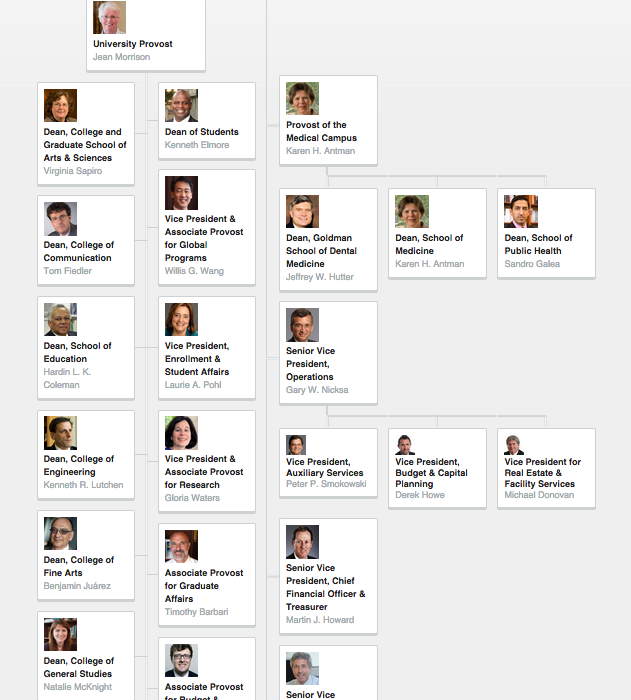
Hierarchy tree of Boston University's leadership team via the Provost's Office, April 26, 2015. (http://www.bu.edu/info/about/admin/).

Hierarchy tree of Boston University’s leadership team via the Provost’s Office, April 26, 2015. (http://www.bu.edu/info/about/admin/).

I interviewed with them again in January and at the beginning of March. This was for a position in their provost’s office, a director position managing undergraduate and graduate fellowship opportunities and advising students via those opportunities. The position was a bit beneath my experience, but they seemed interested, and I already knew from some initial research that it was a new position, so I went ahead and applied for it. My first interview was by telephone, with Suzanne Kennedy, the assistant provost for academic affairs at Boston University. It was a pleasant but underwhelming interview, and I actually didn’t expect a call back. So I kept up with my usual work of teaching, consulting, and looking for more consulting opportunities.

I received an email five weeks later asking me to come up to Boston for a second, in-person interview. I gave it the go-ahead, although the length of time between first interview and correspondence concerned me. So too, did my back and forth with Kennedy’s assistant over travel, as she had initially booked me at times that were very inconvenient for interviewing purposes. Not to mention, the major snow issues that Boston experienced in February.

The interview on March 4 was honestly one of the worst experiences I’ve ever had interviewing for any job. I’m including an interview in which I discovered the place was a sweatshop in Chinatown, during my summer of unemployment in New York in ’88. I had three meetings in all, one over lunch with Kennedy, and two with the two associate provosts at Boston University in academic affairs (one undergraduate, one graduate). Over lunch, the conversation was going well, until I asked the question about the level of diversity with applicant pools for Fulbrights, Trumans, Borens, and Rhodes’ scholarships and fellowships. I kid you not, Kennedy’s eyes literally glazed over as soon as I asked about diversity. Keep in mind, I had asked about socioeconomic diversity — I hadn’t touched racial or gender diversity yet. After lunch, I didn’t see Kennedy again for the rest of the interview process.

My second sign came from my third meeting. I met with Timothy Barbari, associate provost for graduate affairs. It was obvious that Barbari hadn’t even looked at my CV before I walked into his office. The first thing Barbari says to me, with him pushing his body into the back of his chair so far that his attempt to be at ease looked more like a rocket revving to take off — “so, you have a rather interesting CV.” I may not have earned all of my money as an academician, but I’ve been around academic-speak long enough to know that interesting can mean a lot of different things, mostly bad. In this context, interesting meant “not straightforward, not linear in progression, not typical in terms of whom we typically hire.”

I was already feeling a bit like a checkmark or token interviewee by the time I left Barbari’s office for Logan. But after USAirways canceled all their flights to DC that evening due to a snowstorm that wouldn’t drop a snowflake for another twelve hours, it got worse. I notified Kennedy through her assistant that I was stuck in Boston overnight from Logan, and left a message the next morning that the Amtrak to DC was my only option, as more flights had been canceled. No word, not even a “I’m sorry that you have to go through this” response. It wasn’t until mid-afternoon that Friday, nearly a day after I returned to DC, and after a third message about them needing to reimburse me, that I heard from Kennedy’s assistant.

At that point, I wouldn’t have taken the job even if they had offered it to me. As it was, I didn’t hear from Kennedy again until April 7, five weeks after a second interview, and despite a check-in to find out what happened with this director position. It’s this kind of calloused approach that leaves folks shaking their head.

Shaking Off The Dirt

I’ve made a few determinations based on these experiences. For one, if this is the way that treat job candidates who look like me, how well do they pay and treat their service staff, the most vulnerable people on their campus? Not well, at least from what I saw and have experienced. For two, the fact that for both interviews, their top concern seemed to be about competing with “schools across the Charles River” — i.e., Harvard, MIT, Tufts — was somewhere between disconcerting and ridiculous.

An elephant shaking off the dirt, circa 2012. JD Rucker via Pinterest.com).

An elephant shaking off the dirt, circa 2012. (JD Rucker via Pinterest.com).

The fact that with tuition, books, and room and board it would run the average BU student $60,000 per year also told me what I needed to know. Boston University is a place that wants elite status and elite students, and in pursuit of this Pollyanna goal, wants to hire people they feel fit the bill. As long as those people look like everyone else running the university — mostly White, with a few people of color lightly sprinkled in leading positions at the institution. Because Boston University has what activist Linda Sarsour (Twitter, @lsarsour) calls cosmetic diversity, a genuine attempt at diversity across socioeconomic, racial and gender lines is unnecessary, at least for the powers whom run the institution.

Aside from Martin Luther King, Jr., who earned his doctorate in divinity at Boston University in the early 1950s, I’ve known or known of only one person of color with a degree from BU. She was a neighbor at 616 East Lincoln, a few years younger. Based on her description of more than two decades ago, I’d have to say that Boston University has changed for the worst. Like most universities, they seem more interested in prestige and raising money than in fulfilling their mission.

And with that being the case, why send your kid to Boston University? Especially when, for the same amount of money or less, every other school in the Boston area is either better, or at least, cares more about diversity and learning beyond the cosmetic.

Before and After Spencer

14 Tuesday Apr 2015

Posted by decollins1969 in 1, Academia, Boy @ The Window, Carnegie Mellon University, Christianity, culture, Eclectic, High Rise Buildings, Pittsburgh, Politics, Pop Culture, race, Religion, Work, Youth

≈ Leave a comment

Tags

Academia, Ambivalence, Barbara B. Lazarus, Catherine Lacey, CMU, Faith, Hypocrisy, Joe William Trotter Jr., John Hinshaw, Multiculturalism, Selection Committee, Self-Discovery, Self-Reflection, Sign from God, Spencer Foundation, Spencer Foundation Dissertation Fellowship Program


Seattle Seahawks' Jerome Kearse making great catch off tipped ball while on the ground on final drive of Super Bowl XLIV, Tucson, AZ, February 2, 2015. (http://reddit.com).

Seattle Seahawks’ Jerome Kearse making great catch off tipped ball while on the ground on final drive of Super Bowl XLIV, Tucson, AZ, February 2, 2015. (http://reddit.com).

This week marks twenty years since the now-retired Catherine Lacey called me up on a Friday morning while I was brushing my teeth to tell me that I’d been selected to be a Spencer Foundation Dissertation Fellow for the 1995-96 year.  I’d hoped and prayed for that day for more than twenty months, after my fellowship and teaching plans for the summer of ’93 fell through. But I’ve talked about Catherine Lacey and some of my Spencer experiences already, as well as about the reaction of Joe Trotter and some of my Carnegie Mellon grad school mates to this news.

This post is about the days before I received Lacey’s call, before I knew that I would be on the fast track to a doctorate. Because before I’d been selected for the Spencer Dissertation Fellowship, the selection committee had rejected me, with a 6-1-1 vote (that’s six in favor, one not in favor, and one abstaining). I knew this because Catherine had sent me a rejection letter with a handwritten note at the bottom of it, one that I received after two months away in DC doing my dissertation research. My suspicion was that most of the Fellows had received an 8-0 or 7-1 selection vote.

That was all on March 31, ’95. Catherine’s note, though, was encouraging. She said to “stay tuned,” that she was “looking into other alternatives.” So there was still a chance that I’d get the fellowship. Still, I didn’t want to do what I did two years earlier, when assumptions and hope led me to six weeks of joblessness and an eviction notice.

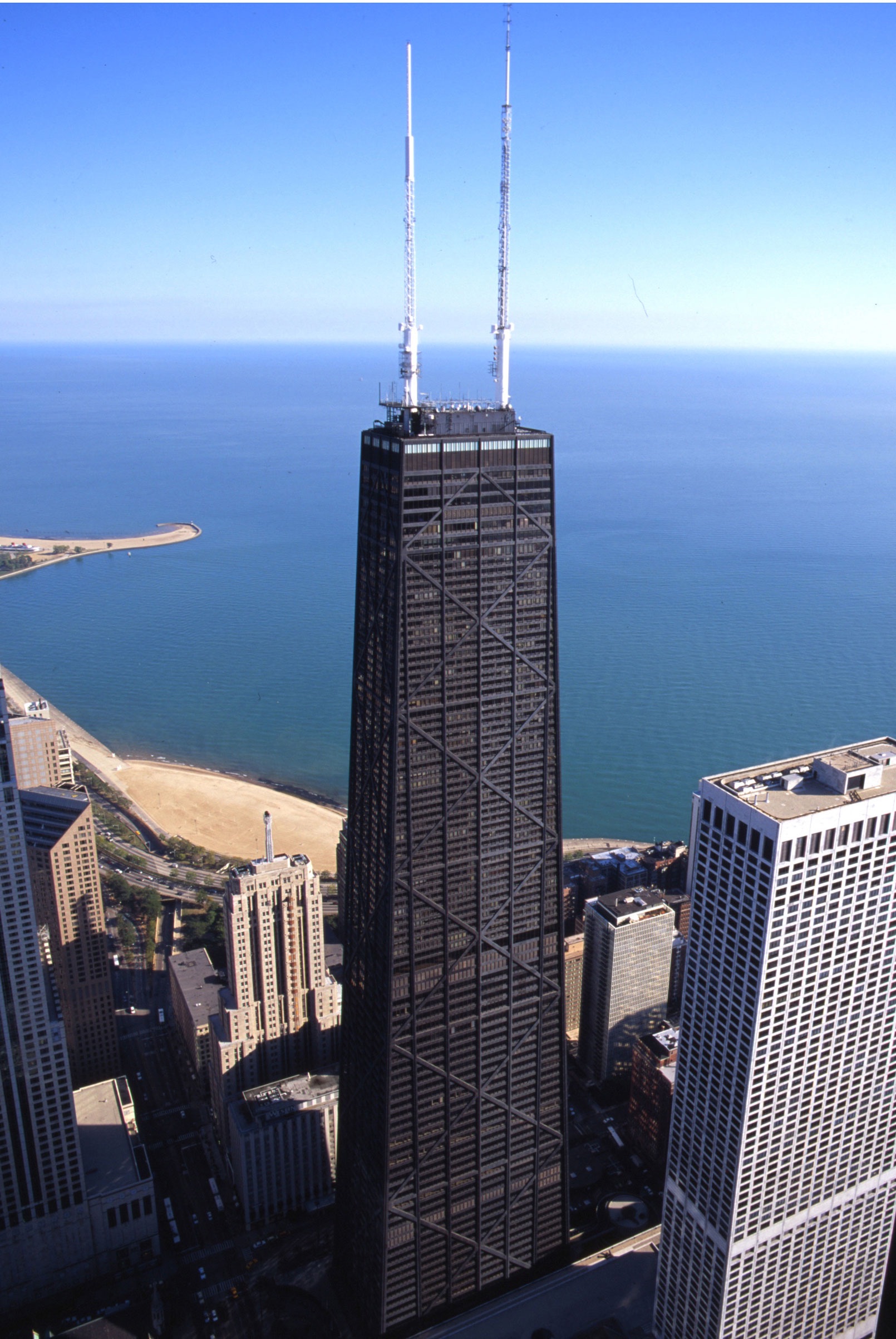
John Hancock Center, Downtown Chiicago - The Spencer Foundation is on the 39th Floor, April 14, 2015. (http://milenorthhotel.com).

John Hancock Center, Downtown Chiicago – The Spencer Foundation is on the 39th Floor, April 14, 2015. (http://milenorthhotel.com).

So I did what I’ve done best throughout my work experiences. I scrambled to make sure I had work during the summer and upcoming school year. I didn’t want to be stuck borrowing more in student loans or teaching more of Peter Stearns’ version of World History courses — really, World Stereotypes — for entitled CMU freshmen.

I talked with both then associate provost (and also an eventual) mentor) Barbara Lazarus and fellow but further along grad student in John Hinshaw about me taking his job as a part-time assistant to Barbara. John really wanted to finish his dissertation and move on (who could blame him, given that Trotter was his advisor as well), and Barbara would’ve liked me for the job. So I gave them both a tentative yes, knowing that the job was contingent on John’s timetable for leaving it and finding an academic job elsewhere, all while completing his dissertation.

The thought occurred to me, though, that I may need more than a 15-20-hour-per-week job to get through the dissertation stage. Especially if I was to avoid teaching for the mercurial Stearns again. So I scheduled a meeting with Trotter to see if he any research project he needed help with.

We met at 2 pm on Thursday, April 13. Trotter was as excited about us meeting as he had been when I first decided to transfer to Carnegie Mellon to work with him as my advisor two and a half years earlier. He had at least three migration studies projects with which he wanted my labor. All the projects were about extending his grand proletarianization thesis. All would be dreadfully boring drudgery compared to my dissertation, but would keep me in additional pay checks for a year or two. I faked a smile, and tentatively said yes to Trotter as well.

Dikembe Mutumbo putting the wood to the. LA Laker Andrew Bynum, April 14, 2015. (http://fortheloveofgif.tumblr.com).

Dikembe Mutumbo putting the wood to the. LA Laker Andrew Bynum, April 14, 2015. (http://fortheloveofgif.tumblr.com).

Eighteen hours later came Catherine’s call about me being offered the Spencer Fellowship! I took it as a sign from God, that at the very least, I’d finish my dissertation and my doctorate without the need for working on it an extra two or three years. Unfortunately, neither John Hinshaw nor Joe Trotter saw my great fortune the way I did. When John found out, which was a week later, he didn’t talk to me for nearly three years. And from reading my previous blog posts, you all already know how my work with Trotter devolved after the Spencer award announcement.

The one thing that fellowship did for me as a person — and not just as an academician, researcher or education — was to give me the space to question academia and my role in it. Even two decades later, I’m still ambivalent about the academic method of obtaining tenure, of the publish-or-perish paradigm, of the hypocrisy that exists in such a cloistered world. Even as I still hold a job and play a role in this world.

What I’ve come to learn is that hypocrisy is everywhere, in the nonprofit world, in romance, and in academia, too. We could all start with, “Did you hear the one joke about how merit and hard work alone can lead to a prosperous life?” That’s the hypocrisy that I had to learn to see in academia, and began to, thanks to the space that the Spencer Dissertation Fellowship gave me that year. More on that later.

My Washington Mission

06 Friday Feb 2015

Posted by decollins1969 in 1, Academia, Boy @ The Window, Carnegie Mellon University, culture, Eclectic, High Rise Buildings, Mount Vernon High School, Mount Vernon New York, Movies, New York City, Pittsburgh, Politics, Pop Culture, race, Work, Youth

≈ Leave a comment

Tags

"A Substance of Things Hoped For", Archives, CMU, Columbia Historical Society, Columbiana Division, DC Public Schools, DCPL, DCPS, Dissertation Research, Esme Bhan, Howard University, Joe Trotter, Laurell, Library of Congress, Living Arrangements, Marya McQuirter, Mission Driven, Moorland-Spingarn, Roxanna Dean, Shepherd Park, Single-Minded, Spencer Crew, Student Loans, Valedictorian


Martin L

Martin Luther King, Jr. Memorial Library, DC Public Library’s main branch, Washington, DC, November 2013 (never looked this nice in 1995). (http://popville.com).

Twenty years ago this week I began the official phase of my doctoral thesis research. But it was much more than reading monographs and finding old papers at the Library of Congress and the Moorland-Spingarn Research Center at Howard University. It was also a long trip, where I would spend the next two months living in Washington, DC, to do my research on multiculturalism and multicultural education, and to find evidence of both in Black Washington, DC and in the segregated DC Public Schools. It was also the first time I’d lived away from Pittsburgh or the New York City area, meaning that I had a new city to get to know.

The trip truly involved my past, present and future, all at once. I spent my first five days visiting with my friend Laurell and her family in Arlington while looking for some temporary housing of my own. I’d eventually run into two Pitt friends and two Carnegie Mellon friends while in DC, and develop at least one new friendship between February 2 and March 24. I talked with my favorite teach in Harold Meltzer during that trip, learning more than I ever wanted to know about some of my classmates and Mount Vernon High School in the process.

7800 block of 12th Street, NW, Washington, DC, July 2014. (http://maps.google.com).

7800 block of 12th Street, NW, Washington, DC, July 2014. (http://maps.google.com).

Mostly though, I split my Washington mission into three phases. Phase one was to find a cheap place to stay. After a day of dealing with Howard University professors-turned-slum-lords in LeDroit Park, I went through the Washington Post to find a series of rented rooms with shared bathrooms and kitchens. Finally, I found a place in Shepherd Park, two blocks south of the DC-Silver Spring, Maryland border. It was a three-story house in a decent neighborhood on 12th Street, NW, with Blair Park, the Silver Spring Metro, and a corner KFC within walking distance. The landlord seemed decent enough, and my basement room came to $95/week with a $100 deposit. Those were the days, before gentrification and the housing boom sent the cost of shelter through the roof!

Phase two of my trip began Wednesday, February 8. I organized my schedule based on going to a number of archives and collecting materials first. I started with the Moorland-Spingarn Collection, which had been picked pretty clean by Henry Louis Gates (via buying collections) and by other, less reputable researchers (many who stole materials). I got to meet and talk with the archivist Esme Bhan about my research, which was wonderful. Still, I wondered how much longer Moorland-Spingarn could stay a reputable venue for scholarly research, with its lack of funding and lack of security from vultures emptying records.

The following week I split between the Columbiana Division at DC Public Library’s main branch, Martin Luther King, Jr. Library between Chinatown and downtown, and the DC Public School Archives on 17th and M. The DCPL portion of my work was an experiment in filtering out the smells and the sights of the homeless and mentally disabled. Not to mention the ability to not use the bathrooms in the building for eight hours at a time. The men’s stalls didn’t have doors, by the way. I spent only three days there, and rushed through gathering background on interviews of Black Washingtonians that the library had conducted back in the early 1980s. It didn’t help I had to deal with a peeping Tom at the old Hecht’s department store, where the bathrooms were much nicer.

Charles Sumner School Museum and Archives, Washington, DC, February 6, 2015. (http://dc.about.com).

Charles Sumner School Museum and Archives, Washington, DC, February 6, 2015. (http://dc.about.com).

I found a gold mine of materials on formal and unofficial education policies regarding DC Public Schools during the Jim Crow period — especially between 1920 and 1950 — at the DCPS archives. But because they didn’t have a working copier, the archivist there allowed me to take original records going back seven decades to the Sir Speedy on M Street to make my own copies. This was in contrast to my three days Presidents’ Day week at the Madison Building of the Library of Congress, where security was tighter in ’95 than at most airports in 2015.

The Library of Congress part of my data gathering was intriguing. If only because their rubber chicken lunches were expensive ($7), and because I found more material on W.E.B. Du Bois, Carter G. Woodson, Kelly Miller, Alain Locke, Anna J. Cooper and Mary Church Terrell there than I did at Moorland-Spingarn. Finally, I ended phase two with the Columbia Historical Society in Dupont Circle and a two-day expedition of finding nothing at the National Archives in DC and in Greenbelt, Maryland.

I spent most of March figuring out what to do with two big boxes’ worth of new materials and writing what would be parts of Chapter 2 and Chapter 3 of my dissertation. In between, I did find time to hang out. With my new friend Marya, who was from DC, but was working on her history doctorate from the University of Michigan. In addition to being plied with vegan options for my delicate gastrointestinal tract and talking about our research, we did joke a bit about the idea of my Joe Trotter and her Earl Lewis actually being friends in any real sense of the word. There was also time to go out to dinner with Laurell, take in a couple of bad movies with my Carnegie Mellon friend Tracie (like Losing Isaiah), and even have a quick lunch with Trotter during his own quick visit to DC.

Terrell Owens hauls in 'The Catch II' from 49ers QB Steve Young, Candlestick Park, San Francisco, CA, January 3, 1999. (Getty files via Toronto Sun, January 10, 2013).

Terrell Owens hauls in ‘The Catch II’ from 49ers QB Steve Young, Candlestick Park, San Francisco, CA, January 3, 1999. (Getty files via Toronto Sun, January 10, 2013).

After seven weeks of living in DC, I took the train up to New York to go visit my family in Mount Vernon for a few days. What was great about those two months was how peaceful everything was. I was three weeks away from becoming a Spencer Fellow and somehow earning the ire of my doctoral advisor. My family was a month away from becoming homeless for the next two and a half years. My borrowing to cover the costs of this first major research trip, I’m probably still paying interest on today. But without this trip, I wouldn’t have begun the process of questioning the direction of my career and life, and I wouldn’t have had the opportunity to finish my doctorate. Being single-minded about a mission isn’t bad or good. It just means ignoring small stuff, some of which can occasionally turn into a festering cesspool.

Technocrats, Journalists, and Statistical Orgies

25 Sunday Jan 2015

Posted by decollins1969 in 1, Academia, Boy @ The Window, culture, Eclectic, eclectic music, High Rise Buildings, Politics, Pop Culture, race, Work, Youth

≈ Leave a comment

Tags

Black-White Wealth Gap, Closing the Achievement Gap, Culture of Poverty, Journalists, Michael A. Fletcher, Misery Statistics, Objectivity, Orgy, Poverty, Prince George's County, Racial Disparities, Racism, Rich-Poor Wealth Gap, Statistical Orgy, Statistics, Technocrats, The Washington Post


Front page of The Washington Post, January 25, 2015. (http://newseum.org).

Front page of The Washington Post, January 25, 2015. (http://newseum.org).

There are times when I wonder if exposing racial and socioeconomic disparities is really an eye-opening and life-changing exercise. Or, does the exposure merely serve to confirm the racial and socioeconomic stereotypes that Americans hold against each other? In today’s Washington Post, on the front page and above the fold, there’s an article titled “A Shattered Foundation,” with the smaller type “African Americans who bought homes in Prince George’s [County] have watched their wealth vanish.”

Above the title and subtitle are a series of charts and statistics noting the national chasm of a gap in total wealth accumulation between Black families ($95,300) and White families ($678,800). The theme here is that since the housing bust and subsequent Great Recession, the burgeoning Black middle class of PG County has fallen on desperate times, as home equity — their main means for accumulating wealth — for tens of thousands of these families caved in on them.

Michael A. Fletcher’s article is pretty even-handed. But this is kind of tangential to my larger point. In any given three-month period of my life, for nearly as long as the forty years and two months I’ve known how to read in full sentences, I could’ve scanned at least one article or book about the cruelties of structural racism and capitalism. Even if I’d never grown up in poverty or experienced racial discrimination, there have been enough articles, op-eds, books, book chapters, poems, short stories, plays, letters to the editor and scripts written about disparities to cover the US a mile deep in paper. The fact is, no statistics on growing wealth gaps and persistent racial gaps in wealth and education have led to lasting changes in policies, politics or institutional structures substantial enough to end poverty or ameliorate the most vicious forms of racism in this country.

Hand reaches out from big heap of crumpled papers, January 25, 2015. (http://galleryhip.com).

Hand reaches out from big heap of crumpled papers, January 25, 2015. (http://galleryhip.com).

Then again, there are some folks whose business depends on mantras like the “growing wealth gap” or “closing the achievement gap…as the civil rights issue of our time.” Technocrats in corporate education reform, social scientists in the world of conservative and “libertarian” think-tanks, neoliberals and so-called American liberals in search of compromises to strengthen the American middle class. They all turn to these statistics to tell their stories, to sell their experiments and their research, to promote their politics. It’s as if the statistics on racial and socioeconomic gaps in wealth and education provided a high, like crystal meth or a speedball. In some ways, for these groups, a five-story brothel in which they practiced S&M would be more appropriate for their use of misery statistics.

I am hardly suggesting The Washington Post‘s Fletcher or I or any other journalist, academician or writer should cease making their points with statistics about racial and socioeconomic disparities. But America’s poor and poor people of color or falling-through-the-cracks middle class are far more than “statistics on a government chart” (to quote The Police’s “Invisible Sun“). These are real people with families and lives, people who represent generations of lives in which this construct of racial capitalism has limited their choices and their opportunities, whether they believe in fate or not. So-called objectivity has never been sufficient, and neither have been statistics. What we need is a revolution in thought and in action, quiet or otherwise.

A Diarrhea Football Sunday

23 Sunday Nov 2014

Posted by decollins1969 in 1, Boy @ The Window, culture, earth, wind & fire, Eclectic, High Rise Buildings, Jimme, Mount Vernon New York, My Father, New York City, Pop Culture, Sports, Work, Youth

≈ Leave a comment

Tags

616, 616 East Lincoln Avenue, Come-From-Behind Victory, Coping Strategies, Diarrhea, East Rutherford New Jersey, Football, G/I Tract, Gastrointestinal Illness, Giants, Giants Stadium, Kansas City Chiefs, New York Giants, NFL, Phil Simms, Pizza Shop, Pressures, Sicilian Pizza Pie, Stress, Stressors, Zeke Mowatt


Porthcawl, Wales takes a battering from a fierce Atlantic storm, February 5, 2014. (Getty Images, via http://www.express.co.uk).

Porthcawl, Wales takes a battering from a fierce Atlantic storm, February 5, 2014. (Getty Images, via http://www.express.co.uk).

I’m probably going to disgust a few of you who read this post. I promise I won’t go into a slurry of detail about this particular experience. It’s just that after years of gastrointestinal issues, I’ve learned a thing or two about triggers and coping strategies that may be helpful to folks.

Haagen-Dazs specialty milkshakes (my son had the $7 cookies and cream yesterday), November 23, 2014 (posted June 10, 2011). (http://www.qsrmagazine.com/).

Haagen-Dazs specialty milkshakes (my son had the $7 cookies and cream yesterday), November 23, 2014 (posted June 10, 2011). (http://www.qsrmagazine.com/).

This weekend thirty years ago, I learned for the first time that my body handled stress in a unique and painful way. I should’ve been aware of this much sooner than a month before my fifteenth birthday, and should’ve figured out how to counteract this long before my mid-thirties. I’d seen signs of it. The mugging I suffered from when I was nine in ’79. The recent broken toilet incident at 616. My inability to drink a chocolate milkshake from Carvel’s without the need to find a bathroom within forty-five minutes of my first sip.

But it wasn’t until the Sunday after Thanksgiving ’84, November 25th, that I recognized the link between the constant stress I felt and my G/I tract issues. It was a brisk late November day, like so many that time of year. The Giants were playing a big game in East Rutherford, against the Kansas City Chiefs. With a 7-5 record at the time, the Giants were fighting with both the Cowboys and Redskins for playoff position. They’d been on a roll of late, having won three of their previous four, including one on the road against Danny White’s Cowboys.

That’s what I thought about as the 1 pm game time approached. It wasn’t the only thing on my mind, though. It had been a long and stressful couple of months prior to this semi-break of a Thanksgiving weekend. This stretch included arguments with my Mom, including one in which I almost moved out. It included incidents with my teachers, especially Ms. Zini. It also included too many weekends of tracking down my father for money — including money that he owed us for working down in the city with him since the end of September. And washing clothes, and grocery shopping, and watching after Maurice, Yiscoc, Sarai and Eri, and cleaning the apartment.

Somewhere in all of this, I must’ve picked up a stomach bug, from either my younger siblings or from something I ate. At least that’s what I thought at the time. The toilet became my constant companion throughout that afternoon, as a stepfather-free Sunday gave me and my older brother Darren the opportunity to watch the Giants game without interruption. That was, except from my stomach.

Flour water in a jar, November 23, 2014. (Donald Earl Collins).

Flour water in a jar, November 23, 2014. (Donald Earl Collins).

I really didn’t know why I’d been on the toilet five times in two hours, but between that and Phil Simms’ lousy play in the first three quarters of the game (three interceptions, no touchdown passes), I felt really ill. My Mom suggested that I should drink flour water to settle my stomach. “Yuck” was the only thing I thought of her idea. The flour water thought had crossed my own mind, too though.

After Kansas City scored to take a 27-14 lead with a bit more than ten minutes left, I finally had an idea much more pleasant than flour water. I hadn’t eaten all day, and barely anything the night before. So I took five dollars of my Jimme money and went down the street to the local pizza shop. I order a slice of Sicilian with extra cheese. As thick as this shop made their Sicilians, I figured that would plug up my intestines.

While I waited for them to warm up my slice, I listened to the Giants game, which they had on their TV in the back of the shop. Simms had rallied the team and driven them down the field for a touchdown by the time I paid for my Sicilian slice. That actually lifted my spirits a bit.

I was hurting, so I didn’t wait. After I walked out of the shop, I took two big bites of my slice to see if it would help. By the time I made it to the front of 616, I let out a gigantic belch, and then my stomach, which had felt like a nor’easter in the middle of the Atlantic Ocean for hours, had finally calmed.

A good-looking Sicilian slice (my shop would've wrapped it in aluminum, though), November 23, 2014. (http://slice.seriouseats.com).

A good-looking Sicilian slice (my shop would’ve wrapped it in aluminum, though), November 23, 2014. (http://slice.seriouseats.com).

After I made it back upstairs to our place, the Giants had the ball again with less than three minutes in the game. They were driving on the Chiefs’ side of the field, in a two-minute drill. As I sat, ate and belched, Simms actually drove all the way down field for game-winning touchdown, a short pass to Zeke Mowatt. They won the game 28-27! I was stunned!

I learned a lot on that diarrhea football Sunday. For me, even watching a football game was stress-inducing. That sleeplessness and running myself down, the pressures of 616 and school, the pressure I put on myself, all manifested physiologically in my G/I tract. Sometimes escaping into comfort food, being pleasantly surprised by success, even someone’s else success, could calm my stomach. Sometimes not. Becoming fully aware of how my body responded to stress, though, would turn out to be a blessing, saving me from many moments of embarrassment over the years.

Teaching Migration, In Song

17 Friday Oct 2014

Posted by decollins1969 in 1, Academia, Boy @ The Window, culture, Eclectic, eclectic music, High Rise Buildings, Jimme, Marriage, Mount Vernon New York, music, My Father, New York City, Politics, Pop Culture, race, Religion, Upper East Side, Upper West Side, Work, Youth

≈ Leave a comment

Tags

"(Sittin' On) The Dock of the Bay" (1968), "Living For The City" (1973), African American History, Africana Studies, Arrested Development, Black Boy (1945), Black History, Black Migration, Bruce Springsteen, Cities, Gil Scott-Heron, Gladys Knights and The Pips, Great Migration, Isabel Wilkerson, James Grossman, Joblessness, John Mellencamp, Kate Bush, Land of Hope (1989), Marvin Gaye, Mary Patillo, Migration, Nas, Nicholas Lemann, Nina Simone, Otis Redding, Peter Gabriel, Poverty, Richard Wright, Stevie Wonder, Teaching and Learning, The Promised Land (1991), The Warmth of Other Suns (2010), Tracy Chapman, Tupac, Urban America, urban blight


Stevie Wonder and Wonderlove, live performance of "Living For The City," circa 1974.  (http://youtube.com).

Stevie Wonder and Wonderlove, live performance of “Living For The City,” circa 1974. (http://youtube.com).

If I ever had the chance to teach a course specifically on the history of Black migration in America, I already know what books I’d use. Isabel Wilkerson’s The Warmth of Other Suns (2010); Nicholas Lemann’s The Promised Land (1991); James Grossman’s Land of Hope (1989); Mary Patillo’s Black Picket Fences (1999); even Richard Wright’s Black Boy (1945) and Maya Angelou’s I Know Why the Caged Bird Sings (1969). All have moved beyond the statistics of some seven or eight million Blacks moving from the rural Jim Crow South to America’s cities, North, Midwest, West and South for the first three-quarters of the twentieth century.

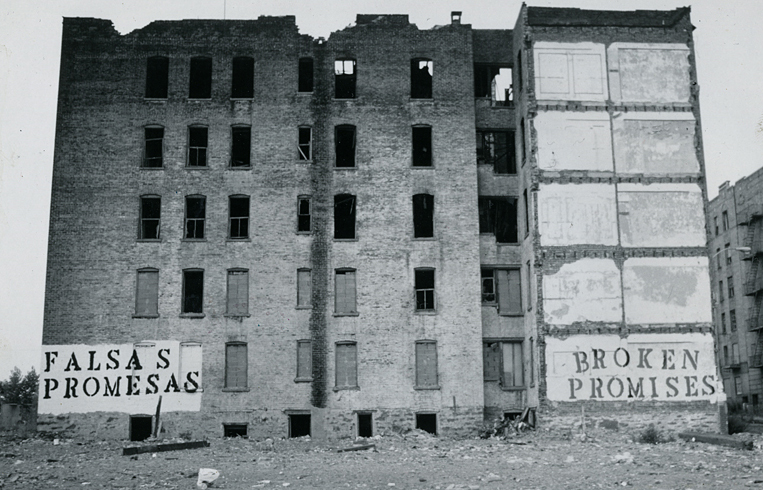
Falsas Promesas Broken Promises, taken by John Fekner, Charlotte Street Stencils, South Bronx, New York. 1980. (Liftarn via Wikipedia). Released to public domain via CC-SA-3.0.

Falsas Promesas Broken Promises, taken by John Fekner, Charlotte Street Stencils, South Bronx, New York. 1980. (Liftarn via Wikipedia). Released to public domain via CC-SA-3.0.

But that wouldn’t be near enough to communicate the range of emotions, the psychological states and the pressures that these people faced in leaving their homes for the not-so-bright lights of America’s big cities, not to mention what they faced in the days and years after they arrived. I should know. I’m the nearly forty-five year-old son of a mother originally from Bradley, Arkansas (population 500) and a father from Harrison, Georgia. They moved to New York City in the ’60s (specifically, the Tremont section of the Bronx), then to the South Side of Mount Vernon, New York (just outside the Bronx), hooked up, and sired me and my older brother Darren between December 1967 and January 1970.

That short summary is hardly the story, though. For me — like with so many other things in my life — music tells the story, emotions and psychology beyond what words on a page alone can approximate, but not fully duplicate. Music communicates the stories, emotions and psychology of those who migrated and stayed (or didn’t) in cities across the US better than Census data or a hypothesis on proletarianization. I wanted music from my own lifetime (or at least, within a few years of it) — not just folk songs or Blind Willie Johnson or Duke Ellington — music that fit my family’s transition from migration to our current times of racism and urban poverty.

Easily the top two songs on my list to play in class would be:

Trade ad for Otis Redding's single "Try a Little Tenderness," January 7, 1967. (Viniciusmc via Wikipedia/Billboard Magazine, page 7). In public domain).

Trade ad for Otis Redding’s single “Try a Little Tenderness,” January 7, 1967. (Viniciusmc via Wikipedia/Billboard Magazine, page 7). In public domain).

1. Otis Redding, “(Sittin’ On) the Dock of the Bay,” (1968), released after Redding’s death in a plane crash in Madison, Wisconsin; and

2. Stevie Wonder, “Living For The City,” (1973).

Both songs run the full emotional and psychological gamut. From hopefulness to oblivion, from delusion to despair, from rage and anger to resignation. The melancholy of Redding’s “It’s two thousand miles I roamed/Just to make this dock my home” (in reference to the distance from Georgia to San Francisco Bay) juxtaposed with Wonder’s bitterness and anger:

“His hair is long, his feet are hard and gritty
He spends his life walkin’ the streets of New York City
He’s almost dead from breathin’ in air pollution
He tried to vote but to him there’s no solution…”

It communicates so much beyond the lyrics and liner notes, a reminder for those of us who find America and its cities unforgiving today just how relentless it must’ve been for our parents and uncles and aunts and grandparents forty or more years ago.

There are other songs that I’d put on this playlist. Some are directly related to Black migration, some try to bridge the gap between the abundance of music on “the ghetto” and urban poverty and chaos and the lack of music from my own lifetime on migration.

3. Gladys Knight and the Pips, “Midnight Train to Georgia” (1973).
4. Marvin Gaye, “Inner City Blues” (1971).
5. Gil Scott-Heron, “95 South (All of The Places We’ve Been)” (1977).
6. Tracy Chapman, “Fast Car” (1987).
7. Nas (featuring Olu Dara, his father), “Bridging the Gap” (2004).

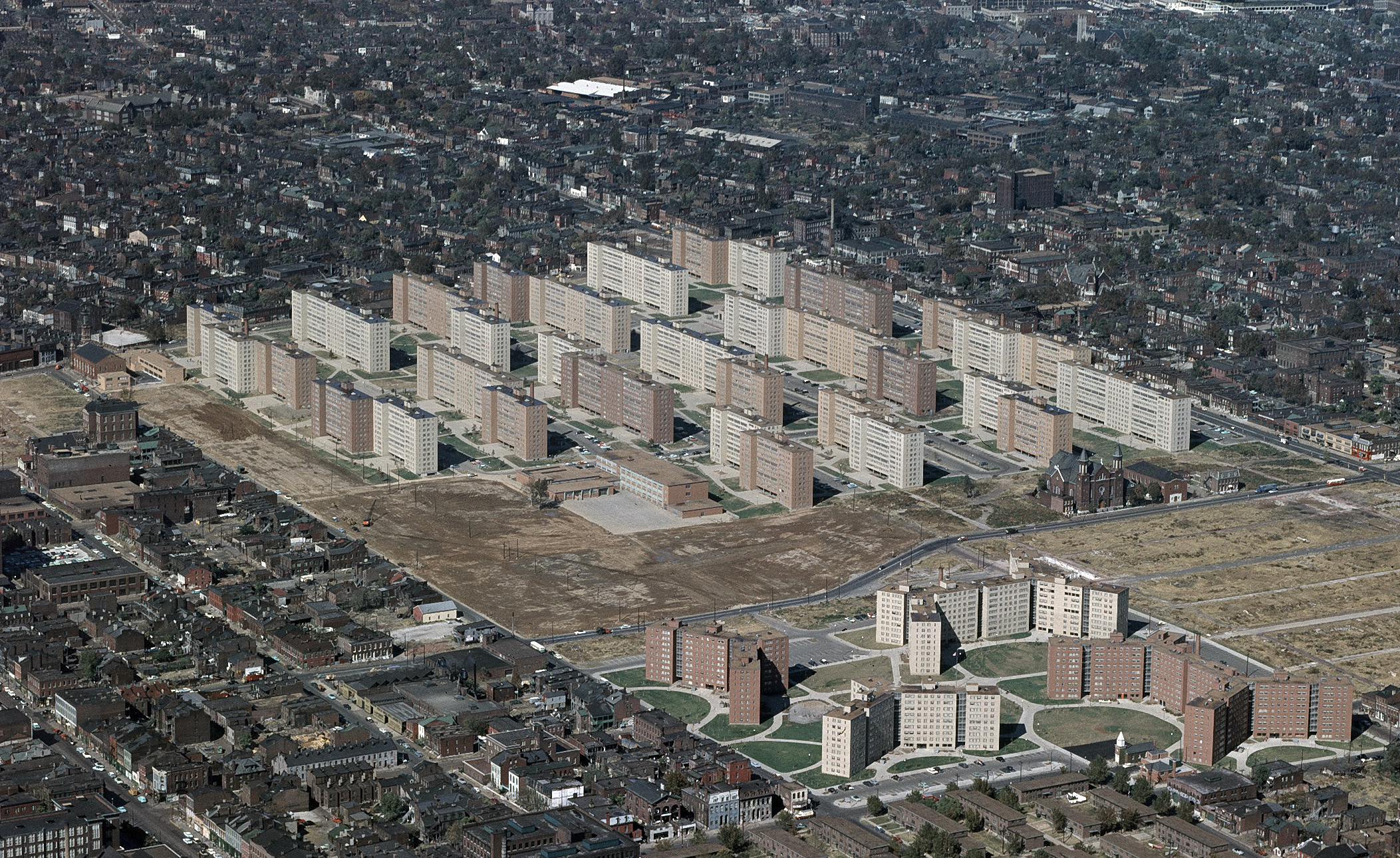
Pruitt–Igoe public housing projects, St. Louis, Missouri, circa 1967. This late-1950s "urban renewal" project was built, but  failed and was razed in the 1970s. (Cadastral via Wikipedia/US Geological Survey). In public domain.

Pruitt–Igoe public housing projects, St. Louis, Missouri, circa 1967. This late-1950s “urban renewal” project was built, but failed and was razed in the 1970s. (Cadastral via Wikipedia/US Geological Survey). In public domain.

That most of these songs come from the period between 1967 and 1974 isn’t an accident. It was the height of the Civil Rights Movement, combined with the Black Power Movement and the “Black is Beautiful” campaign, the beginning of the White backlash against civil rights — including Dr. Martin Luther King, Jr.’s assassination — and the Anti-War Movement was in full swing. It was a good time to take a look at the present and recent past to reconnect with hopes and dreams in the midst of the nightmare of urban poverty.

After ’73 was the beginning of the dance and disco era, as well as a focus on the urban, on crime, on drugs, on poverty  — but not in a “let’s try to solve it” kind of way. This was where rap, hip-hop, some R&B and early forms of what we now call neo-soul picked up, with little reflection on this once prominent past.

Still, there would be some honorable mentions for this migration course, music that could evoke some aspect of the Black migration, of the hope that took a downward turn, of the poverty and joblessness that have permeated America, Black and White and Brown, since the ’70s.

8.  Arrested Development, “Tennessee” (1992).
9. Tina and Ike Turner (and Credence Clearwater Revival), “Proud Mary” (1970).
10. Nina Simone, “The Backlash Blues” (1967).
11. NWA, “Straight Outta Compton” (1989).
12. Tupac, “Cradle 2 the Grave” (1994).
13. John Mellencamp, “Pink Houses” (1983).
14. Bruce Springsteen, “Born In The U.S.A..” (1984). [the song’s release was thirty years ago this month, by the way]
15. Peter Gabriel and Kate Bush, “Don’t Give Up” (1986)

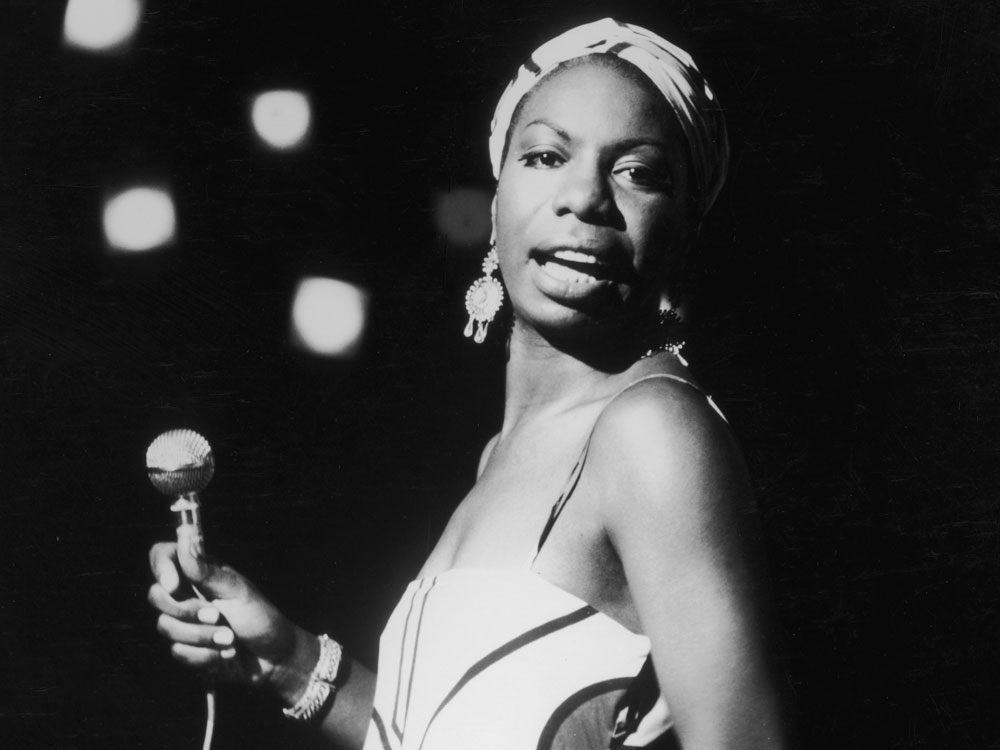
Nina Simone performs at a concert in 1964. (http://npr.org, via Hulton Archive/Stringer/Getty Images).

Nina Simone performs at a concert in 1964. (http://npr.org, via Hulton Archive/Stringer/Getty Images).

Through music, I’d hope to have a course and discussion about Black migration that reaches beyond the words origin and destination, that migration has merely been a physical manifestation of a difficult and seemingly unending cultural and spiritual journey in the US. That Black migration can also easily include the parallel journeys of those of the African or Afro-Caribbean diaspora, not to mention those from Latin America.

For me, though, a course like this would be a personal foray into all the things that have made me who I’ve been for nearly four and a half decades — a person better than the sum of America’s parts and racist, sexist, homophobic and evangelical assumptions.

The Poverty of One Toilet Bowl For Eight

20 Saturday Sep 2014

Posted by decollins1969 in 1, Boy @ The Window, culture, Eclectic, High Rise Buildings, Jimme, Marriage, Mount Vernon New York, My Father, New York City, Youth

≈ 1 Comment

Tags

616, 616 East Lincoln Avenue, Alcoholism, Apartment Super, Balkis Makeda, Cesspool, Chores, Clear View School, Clogged Toilet, Drain Snake, Feces, Mount Vernon Public Library, MVHS, Poverty, Sewage, Stopped up Toilet, Toilet, Toilet Bowl


A post-1994 environmental friendly toilet, September 20, 2014. (http://greeleygov.com).

A post-1994 environmental friendly toilet, September 20, 2014. (http://greeleygov.com).

It was during the Balkis Makeda phase at 616 thirty years ago where I realized not only that we were in serious poverty, but that we as a family, as part of 616 and part of Mount Vernon, New York lived with a poverty of ideas. Not just ideas about changing the world or other grand concerns. I’m talking about simple stuff, about how to get from Point A to Point B, about how to fix things, about the idea that help can always be found when things go wrong.

It started and ended with our one toilet the third weekend in September ’84. That Friday evening, during my standard early weekend search for my father Jimme and at least $50 after school, my three-year-old brother Yiscoc managed to drop a toy into the toilet and then attempted to flush it and his waste down it at the same time. The result by the time I returned home was a stopped up toilet.

With the Hebrew-Israelite matriarch living with us, eight out of the nine humans in the apartment would need to use the one toilet at some point. Early Saturday morning, Makeda left, presumably for temple, but didn’t return to resume her occupation of my Mom and Maurice’s master bedroom until Tuesday afternoon. So much for the power of prayer!

I must’ve gone down to the bowels of 616 to search out our alcoholic Latino super a half-dozen times between Saturday morning and Sunday evening, in between all of my other more typical weekend chores. Not only wasn’t he around the entire weekend. The stench back in the apartment got worse as the weekend progressed, as my Mom, Maurice, and my younger siblings Maurice and Yiscoc continued to try to use a toilet that went from fifty-percent clogged to eighty-percent backed up.

Ancient Greek child seat and chamber pot, early 6th century BCE, Agora Museum, Athens, March 14, 2009. (Sharon Mollerus via Flickr/Wikipedia). Released to public domain.

Ancient Greek child seat and chamber pot, early 6th century BCE, Agora Museum, Athens, March 14, 2009. (Sharon Mollerus via Flickr/Wikipedia). Released to public domain.

My Mom even tried to have me plunger out this nearly overflowing cesspool Saturday evening, after another walk over to Jimme’s place for money and relief. “What, you never touch shit in a toilet before?” my Mom asked after seeing my face turn toward absolute disgust. I managed to get the sewage water down temporarily, found a way to scoop out a turd without gloves and without throwing up, and pledged to not go in the bathroom again until after the super came to fix the problem. Maurice, my idiot stepfather, left 616 that evening, most likely to carouse and for a working toilet, also not to return until Tuesday afternoon.

There weren’t any good options for toilet use beyond home. That was the Mount Vernon and New York area in which I grew up. Pelham Library and Mount Vernon Public Library were the only decent options where the public restrooms worked and the homeless and careless hadn’t ruined the toilets. Everything else required me buying food or was closed. I used Mount Vernon Public Library before it closed Saturday afternoon, back when stayed open until 5 pm on Saturdays, at least (I think it only stays open until 1 pm on Saturdays now).

I split that Sunday between washing clothes with the little bit of money we had left from my Jimme-run the previous weekend and then searching for Jimme that afternoon. I couldn’t be at 616 for another round of virtual typhoid and dysentery while splashing around in deadly toilet water and using a cleaning bucket as a chamber pot.

We reached Jimme’s, my older brother Darren and me, by 2 pm that Sunday afternoon. He was home, hung over from another weekend of gettin’ to’ up, moaning as usual about how he “cain’ do dis no mo’. Nex’ week. Gotta stop drinkin’ nex’ week.” I didn’t care what my father had left of his money that Sunday. We stayed there until after 7 pm, watched the Jets beat up on the then sucky post-Ken Anderson Cincinnati Bengals, ate a few snacks and some golden delicious apples and pears, and used the functioning attic toilet to our bowels’ content.

Electric drain cleaner with a 100-foot snake, aka, Roto-Rooter, February 7, 2010. (Pgdp123 via Wikipedia). Released to public domain via CC.SA.3.0.

Electric drain cleaner with a 100-foot snake, aka, Roto-Rooter, February 7, 2010. (Pgdp123 via Wikipedia). Released to public domain via CC.SA.3.0.

I did manage to get $30 out of Jimme, with promises of more by that Tuesday. It came with the caveat that we’d start earning our money by working for him down in the City again. But that wasn’t a big concern.

Me and Darren went to MVHS and Clear View School school that Monday morning with a still stopped up toilet and no sign of the super. So, before I came back to the apartment after school, I tracked down the man, yelled at him for not being available all weekend, and then asked politely for him to bring up his snake machine. Which he immediately did.

It took between forty-five minutes and an hour for him to clear the pipe and pull out the toy truck that Yiscoc had somehow managed to get down in the toilet on Friday. The super laughed through his mask, said something about kids in his combination of broken English and Dominican Spanish, and left us with a working toilet once again. I still didn’t sit on it to take a dump for nearly a week after the whole ordeal, though.

← Older posts
Newer posts →

Boy @ The Window: A Memoir

Boy @ The Window: A Memoir

Places to Buy/Download Boy @ The Window

There's a few ways in which you can read excerpts of, borrow and/or purchase and download Boy @ The Window. There's the trade paperback edition of Boy @ The Window, available for purchase via Amazon.com at http://www.amazon.com/Boy-Window-Donald-Earl-Collins/dp/0989256138/

There's also a Kindle edition on Amazon.com. The enhanced edition can be read only with Kindle Fire, an iPad or a full-color tablet. The links to the enhanced edition through Apple's iBookstore and the Barnes & Noble NOOK edition are below. The link to the Amazon Kindle version is also immediately below:

scr2555-proj697-a-kindle-logo-rgb-lg

Boy @ The Window on Amazon.com: http://www.amazon.com/Boy-The-Window-Memoir-ebook/dp/B00CD95FBU/

iBookstore-logo-300x100

Boy @ The Window on Apple's iBookstore: https://itunes.apple.com/us/book/boy-the-window/id643768275?ls=1

Barnes & Noble (bn.com) logo, June 26, 2013. (http://www.logotypes101.com).

Boy @ The Window on Barnes & Noble: http://www.barnesandnoble.com/w/boy-the-window-donald-earl-collins/1115182183?ean=2940016741567

You can also add, read and review Boy @ The Window on Goodreads.com. Just click on the button below:

Boy @ The Window

Twitter Updates

Tweets by decollins1969
  • RSS - Posts
  • RSS - Comments

Archives

  • June 2025
  • April 2023
  • September 2022
  • August 2022
  • July 2022
  • June 2022
  • May 2022
  • April 2022
  • March 2022
  • January 2022
  • December 2021
  • November 2021
  • October 2021
  • September 2021
  • August 2021
  • July 2021
  • June 2021
  • April 2021
  • March 2021
  • February 2021
  • January 2021
  • December 2020
  • November 2020
  • October 2020
  • September 2020
  • August 2020
  • July 2020
  • May 2020
  • April 2020
  • March 2020
  • January 2020
  • December 2019
  • November 2019
  • August 2019
  • July 2019
  • June 2019
  • May 2019
  • April 2019
  • March 2019
  • February 2019
  • January 2019
  • December 2018
  • November 2018
  • October 2018
  • September 2018
  • August 2018
  • July 2018
  • June 2018
  • May 2018
  • March 2018
  • February 2018
  • January 2018
  • December 2017
  • November 2017
  • October 2017
  • September 2017
  • August 2017
  • July 2017
  • June 2017
  • May 2017
  • April 2017
  • March 2017
  • February 2017
  • January 2017
  • December 2016
  • November 2016
  • October 2016
  • September 2016
  • August 2016
  • July 2016
  • June 2016
  • May 2016
  • April 2016
  • March 2016
  • February 2016
  • January 2016
  • December 2015
  • November 2015
  • October 2015
  • September 2015
  • August 2015
  • July 2015
  • June 2015
  • May 2015
  • April 2015
  • March 2015
  • February 2015
  • January 2015
  • December 2014
  • November 2014
  • October 2014
  • September 2014
  • August 2014
  • July 2014
  • June 2014
  • May 2014
  • April 2014
  • March 2014
  • February 2014
  • January 2014
  • December 2013
  • November 2013
  • October 2013
  • September 2013
  • August 2013
  • July 2013
  • June 2013
  • May 2013
  • April 2013
  • March 2013
  • February 2013
  • January 2013
  • December 2012
  • November 2012
  • October 2012
  • September 2012
  • August 2012
  • July 2012
  • June 2012
  • May 2012
  • April 2012
  • March 2012
  • February 2012
  • January 2012
  • December 2011
  • November 2011
  • October 2011
  • September 2011
  • August 2011
  • July 2011
  • June 2011
  • May 2011
  • April 2011
  • March 2011
  • February 2011
  • January 2011
  • December 2010
  • November 2010
  • October 2010
  • September 2010
  • August 2010
  • July 2010
  • June 2010
  • May 2010
  • April 2010
  • March 2010
  • February 2010
  • January 2010
  • December 2009
  • November 2009
  • October 2009
  • September 2009
  • August 2009
  • July 2009
  • June 2009
  • May 2009
  • April 2009
  • March 2009
  • February 2009
  • January 2009
  • December 2008
  • November 2008
  • October 2008
  • September 2008
  • August 2008
  • July 2008
  • June 2008
  • May 2008
  • April 2008
  • March 2008
  • February 2008
  • January 2008
  • December 2007
  • November 2007
  • October 2007
  • September 2007
  • August 2007
  • July 2007
  • June 2007

Recent Comments

MaryPena's avatarMaryPena on My Day of Atonement/Bitter Hat…
decollins1969's avatardecollins1969 on No Good Teaching Deed Goes…
Mary Rose O’Connell's avatarMary Rose O’Connell on No Good Teaching Deed Goes…

NetworkedBlogs on Facebook

NetworkedBlogs
Blog:
Notes From a Boy @ The Window
Topics:
My Life, Culture & Education, Politics & Goofyness
 
Follow my blog

616 616 East Lincoln Avenue A.B. Davis Middle School Abuse Academia Academy for Educational Development AED Afrocentricity American Narcissism Authenticity Bigotry Blackness Boy @ The Window Carnegie Mellon University Child Abuse Class of 1987 CMU Coping Strategies Crush #1 Crush #2 Death Disillusionment Diversity Domestic Violence Economic Inequality Education Family Friendship Friendships Graduate School Hebrew-Israelites High-Stakes Testing Higher Education History Homelessness Humanities Humanities Program Hypocrisy Internalized Racism Jealousy Joe Trotter Joe William Trotter Jr. K-12 Education Love Manhood Maurice Eugene Washington Maurice Washington Misogyny Mother-Son Relationship Mount Vernon High School Mount Vernon New York Mount Vernon public schools Multiculturalism MVHS Narcissism NFL Pitt Pittsburgh Politics of Education Poverty President Barack Obama Race Racial Stereotypes Racism Relationships Self-Awareness Self-Discovery Self-Reflection Sexism Social Justice Teaching and Learning University of Pittsburgh Violence Whiteness Writing

Top Rated

Blog at WordPress.com.

  • Subscribe Subscribed
    • Notes from a Boy @ The Window
    • Join 103 other subscribers
    • Already have a WordPress.com account? Log in now.
    • Notes from a Boy @ The Window
    • Subscribe Subscribed
    • Sign up
    • Log in
    • Report this content
    • View site in Reader
    • Manage subscriptions
    • Collapse this bar
 

Loading Comments...