• About Me
  • Other Writings
  • Interview Clips
  • All About Me: American Racism, American Narcissism, and the Conversation America Can’t Have
  • Video Clips
  • Boy @ The Window Pictures
  • Boy @ The Window Theme Music

Notes from a Boy @ The Window

~

Notes from a Boy @ The Window

Category Archives: Carnegie Mellon University

On Anachronistic Bullshit

12 Monday Oct 2015

Posted by decollins1969 in 1, Academia, Carnegie Mellon University, Christianity, culture, Eclectic, Movies, Patriotism, Politics, Pop Culture, race, Work, Youth

≈ 2 Comments

Tags

Afrocentricity, Anachronisms, Anachronistic, Beating a Dead Horse, Black Nationalism, Bullshit, Burnout, Conference Presentations, Fear of a "Black" America (2004), Jesus, Journal of American History, Mental Exhaustion, Multicultural Education, Multiculturalism, Nat Turner, OAH, Politics of Academia, Politics of Education, Socialism, Toronto


Kirsten Dunst and Jason Schwartzman get anachronistic between shots on set of Marie Antoinette (2006), September 2012. (Pinterest via http://buzzfeed.com).

Kirsten Dunst and Jason Schwartzman get anachronistic between shots on set of Marie Antoinette (2006), September 2012. (Pinterest via http://buzzfeed.com).

It’s that time of year in academia, folks. The heart of the fall scholarly conference schedule, between the beginning of October and mid-November (American Political Science Association conference as an exception, though). For the first time in a few years, I’m part of the schedule, as part of a panel on American imperialism and narcissism this weekend at the Society of U.S. Intellectual Historians conference here in DC.

The topic is a departure for me. In the couple of dozen or so conference presentations I’ve done since the mid-1990s, I have discussed two interrelated topics. Multiculturalism in the contexts of US history, African American history, and education policy was one, and covered every presentation I did between 1992 and 2003. Education reform in the context of college access, retention, and diversity was the other, and covered every conference presentation or other talk I did from 2004 through 2009.

Bokeem Woodbine, October 12, 2015.

Bokeem Woodbine, October 12, 2015. (http://imdb.com)

I never wanted to be wedded to one topic my whole career. It was the academic equivalent of being typecast, like Bokeem Woodbine (thug) or Anthony Azizi (terrorist). But in the spring of 2003, there I was, doing conferences as “Dr. Multiculturalism,” either for the benefit of eager grad students or to the chagrin of more senior scholars.

No one really discusses this issue in academia. The idea that any of us can decide to move on to a completely different topic as a scholar, become engrossed in it, even become an expert and present and write on that topic, and then move on to the next one (yes, there are consequences, but…). At best, most scholars in academia have variations-on-a-theme careers, covering sports history and society, moving from baseball to football to tennis. Or from Black migration in the early 20th century to gentrification and its impact on Black families in the ’90s and ’00s. (It’s not as if many academicians can’t find the time to pick up another idea!)

What’s even worse are the ways in which we in academia beat up on each other’s work at conferences, and not in a constructively critical way, either (that would be refreshing). The key for me moving on from multiculturalism began at the 1999 Organization of American Historians conference in Toronto. I presented on “The Black Brahmins of Harvard: W. E. B. Du Bois, Carter G. Woodson, and Alain L. Locke on
Multiculturalism, 1890-1940.” Admittedly, there were a few issues with the paper. I didn’t include any Black women in my consideration (although, given Harvard’s institutional racism and sexism in this period, Black women were almost nonexistent, including at the doctoral level). I had to deal with the Afrocentricity sect, who didn’t see multiculturalism as a fellow traveler, but instead as a Eurocentric “feel-good” understanding of US and Black culture.

Most importantly, I was being “anachronistic.” I had applied a term that hadn’t become commonplace until the 1970s to a previous period in history, one in which the term hadn’t been conceived. It didn’t matter that cultural pluralism had existed as a term since the 1890s and that many in the philosophy and education fields had used cultural pluralism and multiculturalism interchangeably. For this group of cultural and education historians, multiculturalism in my work equalled a no-go zone.

Jesus was a Socialist bumper sticker, an anachronism, October 12, 2015. (http://plus.google.com).

Jesus was a Socialist bumper sticker, an anachronism, October 12, 2015. (http://plus.google.com).

Though I managed a few short articles and a chapter on multiculturalism, time and time again, the question of anachronism came up. And despite all of my documented evidence, more senior scholars at journals refused to accept multiculturalism and Black history in the same sentence. “Surely you must be referring to Afrocentricity or Black Nationalism,” one reviewer for the Journal of American History wrote on a manuscript that he rejected in 2002.

It never occurred to me to call them directly on this bullshit. These same folks will write articles with titles like, “Was Jesus a Socialist?” or “a Marxist?,” or “Nat Turner’s Rebellion and the Birth of Black Nationalism.” Talk about anachronistic! Jesus and Karl Marx are roughly 1,800 years apart, and Black Nationalism is a specifically mid-to-late-twentieth century term. Yet this was much more all right than my early-thirties-self yammering about something as complex as multiculturalism and its role in the thinking and education of African Americans.

Beating a dead horse cartoon, September 2012. (Marc Cortez, http://marccortez.com).

Beating a dead horse cartoon, September 2012. (Marc Cortez, http://marccortez.com).

I’m hardly arguing that academicians who didn’t like my work should have seen my brilliance and allowed me to publish or present more on multiculturalism. Heck, by 1999, I was tired of my former dissertation topic already! A bit more honesty about what really bothered them, though, would’ve been helpful. The idea that ordinary people could be unconsciously participating in multiculturalist activities, in this case, ordinary Black folk, some academicians found unacceptable. The idea that I could write this was unacceptable to quite a few. The fact that my former patron in Joe Trotter wasn’t out there opening up doors for me on my topic left me in a bad place politically as well. I wasn’t supposed to be in academia, after all, at conferences or in scholarly journals. I know now that part of the point was to thin out the herd of competition, to anoint some and shun so many others, me included.

The constant rejection on fairly hypocritical grounds just made it easier for me to publish Fear of a “Black” America in ’04 and move on. Since I am at the beginning of the process of thinking through a new topic, I don’t have mental exhaustion as an excuse for crumbling in the face of soul-destroying, narcissistic opposition. I also have at least one thing going for me these days. I feel I’m old enough now to call numbskulls on their bullshit.

My Private Aftermath of the O.J. Simpson Verdict 20 Years Ago

01 Thursday Oct 2015

Posted by decollins1969 in 1, Academia, Boy @ The Window, Carnegie Mellon University, culture, Eclectic, Pittsburgh, Politics, Pop Culture, race, University of Pittsburgh, Work, Youth

≈ Leave a comment

Tags

Carl, CMU, Drama, James, Media Coverage, Murder, O.J. Simpson, O.J. Simpson Trial, O.J. Simpson Verdict, OJ Simpson, Race Riots, Racial Divide, Racism, Trial, White Bronco, Whiteness


 O.J. Simpson with his attorneys F. Lee Bailey (left) and the late Johnnie Cochran (right) after being found not guilty, October 3 1995. (Myung J. Chun/Los Angeles Daily News/AP, via http://theguardian.com)

O.J. Simpson with his attorneys F. Lee Bailey (left) and the late Johnnie Cochran (right) after being found not guilty, October 3 1995. (Myung J. Chun/Los Angeles Daily News/AP, via http://theguardian.com)

To think that it’s only been two decades since the overhyped “Trial of the Century” came to a close with a clerk’s initial mispronunciation of Orenthal James Simpson’s first name. And of course, with O.J. Simpson’s acquittal. It’s amazing to think that so many would become so emotionally caught up in a double-homicide case involving what at one time was one of the world’s most recognizable faces. But it did happen, all of it in a sixteen-month span, and the reaction was as predictable as the sunrise, racial profiling, and police harassment.

During the Ford Bronco chase on I-5 on Friday, June 17 (during my Knicks’ Game 5 of the NBA Finals against the Houston Rockets), I hoped that the police wouldn’t shoot Simpson before he had a chance to go to trial. The L.A. riots were just two years before. I feared that the issue of race would be front and center, with Simpson’s issues with his now dead White ex-wife.

O.J. Simpson on the covers of Newsweek and Time Magazine, (the picture on right altered to make Simpson appear darker and caused an outcry), June 27, 1994. (Theo's Little Bot via Wikipedia). Qualifies as fair use due to low resolution of image and relevance to subject matter.

O.J. Simpson on the covers of Newsweek and Time Magazine, (the picture on right altered to make Simpson appear darker and caused an outcry), June 27, 1994. (Theo’s Little Bot via Wikipedia). Qualifies as fair use due to low resolution of image and relevance to subject matter.

I was naive, thinking that our world of ’94 would simply attempt to determine if Simpson was guilty or innocent. Instead what I saw within ten days of the Bronco chase was an artificially darkened Simpson on the cover of Time. I saw Blacks who became angrier about the coverage, even as Whites grew more confident about Simpson being convicted, losing his fortune and fame, and possibly getting the death penalty (or at least, life imprisonment). My Mom proclaimed that O.J. was innocent long before the prosecution botched the trial. Some of my grad school colleagues — all White, mind you — made all kinds of assumptions about where I stood on O.J. They didn’t like the fact that I was willing to wait until the trial to make up my mind.

When the verdict came down on Tuesday, October 3, 1995, it was stunning to watch ecstatic Blacks and angry, dejected Whites react to the “Not Guilty” verdict. And not just on TV, although it was obvious newsrooms were actively looking for a racial divide. My friend James (who’s Black, by the way) from my Pitt grad school days spent his lunch break in my apartment gritting his teeth in anger as the verdict was read. I was more shocked than anything else. I smiled, but it was one of bewilderment observing the reactions, as if we all had some deeply personal stake in the trial and verdict.

That smile disappeared as I went through my day editing and printing out chapter drafts of my dissertation. That was my real focus, not the soap opera enveloping the rest of the country. Late that afternoon, I went to Carnegie Mellon to drop off a draft of a couple of those chapters for my thesis advisor Joe Trotter. Carl, a colleague of mine, one who I had called a friend up to this point, immediately started in on me about the verdict when I reached the grad student cubicles in the History Department. He kept literally spewing the media’s line about an all-Black jury, about jury nullification, about Johnnie Cochran. Carl was in a rage, belligerent, possibly drunk, and seemingly ready to throw down. Seriously, aside from showing up to drop off dissertation chapters, what did I do?

I politely pointed out that the jury was mostly, but not all Black (at least three members were White or Latino), and that the prosecution led by Marcia Clark and Christopher Darden left the door wide open for an acquittal. Carl assumed wrongly that I wanted O.J. free regardless of his “obvious guilt.” I asked my colleague what else could the jury do, given the compelling defense put together by the late Johnnie Cochran, the mistakes with forensics, with the glove, with putting Mark Fuhrman on the stand? I said that “I don’t represent all thirty million African Americans in this country,” and that “our conversation is over.”

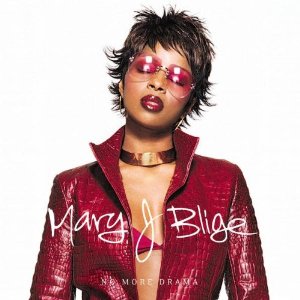
Mary J. Blige, No More Drama (with extra tracks) album cover, 2002. (http://amazon.com).

Mary J. Blige, No More Drama (with extra tracks) album cover, 2002. (http://amazon.com).

That reminded me of how irrational supposedly rational, forward-thinking Whites often are on race matters. They either ignore, deny, or when compelled by some betrayal or injustice, badger, threaten and retaliate in response. Carl that day was no exception. I found that incident unsettling because this supposed friend was one of the few folks at Carnegie Mellon who had earned my trust. It reminded me if I were to ever date or marry someone White (not exactly my plan), there would be hell to pay. I had a grand total of three conversations with Carl after that between October 3, 1995 and August 6, 1999, the latter the week before I left Pittsburgh to live in suburban DC/Maryland.

I’m sure that I wasn’t the only Black person who had to confront Whiteness in all of its angry, hurt and juvenile forms in those first two weeks of October ’95. I’m equally sure that if the O.J. Simpson trial’s verdict occurred in 2015, Carl and his like-minded ilk would’ve set off race riots the likes of which this country hasn’t seen since Detroit in 1943, Tulsa in 1921, and Chicago in 1919. You know, the kind where Whites go into segregated Black communities and rape, kill, steal and destroy as much as they can. To me, Carl just represented the White privilege and resentment of millions, smoldering yet ready to erupt at a moment’s notice. Not that many haven’t benefited from the O.J. Simpson effect in the years since.

Carl has a professorship somewhere in New York these days, and we are professional colleagues who maybe exchange an email one or twice a decade now. I’m sure, though, that he avoids the topic of race in US history like most would want to avoid catching Ebola. Especially given his reaction to one jury verdict twenty years ago.

Aside

Past Labor’s Opportunities Lost

07 Monday Sep 2015

Posted by decollins1969 in 1, Academia, Boy @ The Window, Carnegie Mellon University, culture, Eclectic, Pittsburgh, Politics, Pop Culture, race, Work, Youth

≈ Leave a comment

Tags

Advisor-Student Relationships, Anger, CMU, Dissertation Completion, Howard University, Jealousy, job search, Joe William Trotter Jr., Labor Day, Mentoring, NYU, Post-Docs, Rage, Running Interference, Spencer Foundation, Spencer Foundation Dissertation Fellowship Program, Steven Schlossman, University of Maryland, University of Wisconsin-Madison


Title page of the first quarto of William Shakespeare's Love's Labour's Lost (1598), uploaded May 2, 2011 (Tom Reedy via Wikipedia). In public domain.

Title page of the first quarto of William Shakespeare’s Love’s Labour’s Lost (1598), uploaded May 2, 2011 (Tom Reedy via Wikipedia). In public domain.

One of the more gut-wrenching periods of my career began right after Labor Day 1995. In some respects, that period of my career has left a stain over the past two decades. Not so much in terms of what I have done or in what I’m doing now, as much as in setting limits on the range of possible outcomes with which I could’ve begun my career.

Right after Labor Day, I saw an ad in The Chronicle of Higher Education for an open-ranked (tenured or tenure-stream) position at NYU’s school of education in US education history. I hadn’t thought about teaching in a school of education before, but after meeting my friend Cath and having received my Spencer Foundation fellowship, I understood that this was likely a better choice for me than a history department. I wasn’t the only one who thought so. My department chair Steven Schlossman had received a letter and a telephone call from his equivalent peer at NYU asking if there were any graduate students in the pipeline who could apply for the position. Schlossman apparently told that department chair about me and my multiculturalism dissertation, and caught up with me that same week to give me a copy of the letter and encouraged me to apply for the job.

I was two-and-a-half chapters into my planned eight-chapter dissertation, and I still had some US Census data to look at and interviews to conduct as part of the process. I knew that my advisor Joe Trotter wouldn’t be happy about the idea of me applying for a job so soon into the process, but Schlossman and I also knew that the job — if I somehow got it — wouldn’t start for eleven months. That was more than enough time for me to write, revise, revise again, polish up and defend my dissertation. I was on a Spencer fellowship, after all!

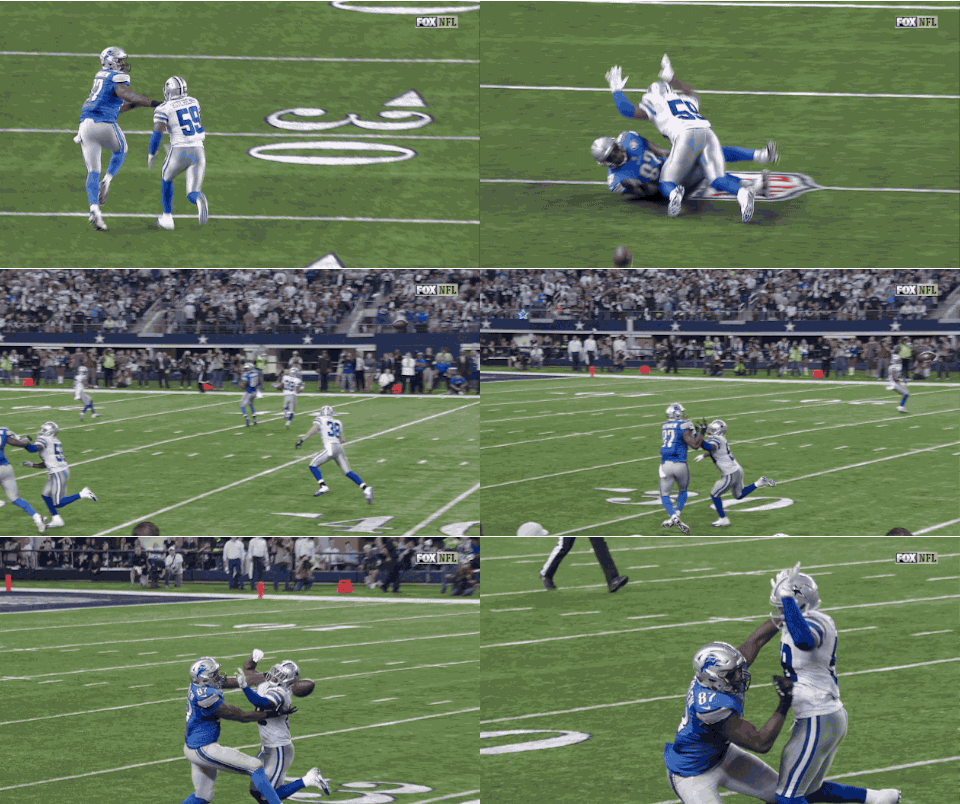
A defensive pass interference penalty not called, Detroit Lions v. Dallas Cowboys Wildcard Game, January 4, 2015. (http://bleacherreport.com/articles/2319198-refs-pick-up-flag-after-pass-interference-on-cowboys-in-4th-quarter; FOX Sports).

A defensive pass interference penalty not called, Detroit Lions v. Dallas Cowboys Wildcard Game, January 4, 2015. (http://bleacherreport.com/articles/2319198-refs-pick-up-flag-after-pass-interference-on-cowboys-in-4th-quarter; FOX Sports).

Of course Trotter thought otherwise. He was incensed that Schlossman had discussed the NYU job with me, that I hadn’t talked with him about the position first. Of course Trotter said that he needed to “run interference” on my behalf, to protect me and my career. By “running interference,” Trotter meant that he would not write a letter of recommendation on my behalf. He told me to put the job out of my mind, to focus on my dissertation, and that we could revisit the prospect of apply for jobs when I was much further along.

A few months later, in February ’96, I saw another job ad in the Chronicle, this one for a history of education assistant professorship at University of Wisconsin-Milwaukee. Schlossman saw that ad as well, but I was still the dutiful ABD student with Trotter as my patron. I decided this time to approach Trotter before meeting with Schlossman about the job. Trotter flipped out again, telling me, “you’re not ready,” that he had seen too many of his own peers not finish dissertations when taking jobs, only to end up unemployed. Keep in mind, I had written six of my eight chapters at this point, and had started working on number seven that month.

Trotter’s “you’re not ready” pronouncements rang even more hollow in March, when I requested a letter from him to apply for a post-doctoral fellowship in African American Studies at University of Maryland, College Park. He refused at first, then agreed, with the caveat that he would write in his letter his belief that  I wouldn’t complete my dissertation in time to begin the fellowship at the end of August ’96. With that kind of endorsement, of course I didn’t apply!

When we finally had our blow-out argument that April 4th, I was frustrated, he was actually angry, for reasons I didn’t put together until I considered my age and his HNIC status and age later on. Most of Trotter’s stonewalling occurred after he found out that I was still only about to turn twenty-six at the time of the NYU job prospect. Between that and the limited mileage remaining in his proletarianization hypothesis, I was working for and with an advisor who was giving me mixed signals and mediocre advice. Both were based in part on jealousy, and in part on Trotter’s own bad experiences at University of Minnesota and on the job front in the 1970s and early 1980s.

Danger Bad Advice Ahead fake sign, September 7, 2015. (http://wordspicturesweb.com).

Danger Bad Advice Ahead fake sign, September 7, 2015. (http://wordspicturesweb.com).

Trotter didn’t understand that in blocking my first attempts to begin my career, he had helped set up a struggle for me to have even a semblance of a career before I had completed the first draft of my dissertation. As it was, I finished the first draft in June ’96, the second at the end of July, and polished it up before Labor Day Weekend ’96. That fact that I was done with all major revisions to my dissertation in time for any job that year made ready to strangle Trotter at that point.

Still, it would be only fair to say that my career moves — good and bad, smart and stupid — have mainly been of my own making. It would also be unfair to blame Trotter for any moves that I have made or didn’t make that didn’t work out after 1996-97. But every career has a beginning. And in the beginning, Trotter was there, making a mess of my first steps. It took until the spring of 2000 before Howard University offered me a tenure-track position in Afro-American Studies, to which I did say no. I didn’t need any more Joe Trotter’s in my life at that point, and working in the nonprofit world paid my bills better than teaching at that time.

My overall advice would be to make damn sure that you choose an advisor who cares about your whole career and about you as a person. Don’t choose someone to advise and mentor you out of convenience, and make sure that your advisor isn’t someone who just wants to mold you into a mediocre version of themselves. After all, it’s not their career trajectory or reputation that’s on the line. It’s yours.

Aside

RIP Sister, Sarai Adar Washington (February 9, 1983-July 11, 2010)

11 Saturday Jul 2015

Posted by decollins1969 in 1, Boy @ The Window, Carnegie Mellon University, Christianity, culture, Eclectic, Mount Vernon High School, Mount Vernon New York, Pop Culture, race, Work, Youth

≈ Leave a comment

Tags

616, 616 East Lincoln Avenue, Brother-Sister Relationship, Death, Dread, Eri Washington, Father Figures, Growing Up, Independence, Life, Mazza Gallerie, Sarai Washington, Sickle Cell Anemia, The Matrix Revolutions (2003)


Sarai Washington, circa 2003.

Sarai Washington, circa 2009.

It’s been five years since I received my brother Eri’s call telling me what I had known and dreaded would come for nearly thirty years. That my only sister Sarai had died from complications stemming from sickle-cell anemia.

As soon as I picked up the phone five years ago, I knew. Sarai had been in and out the hospital for months since she had returned to New York at the tail end of ’09. Before then, she had lived either on her own or with two of her high school friends in Huntsville, Alabama since ’05. The skin and bone bruises, the constant blood transfusions, the always-there pain of sickled red blood cells circulating through her body. The average life expectancy for anyone with the disease is thirty-three years. That I had Sarai in my life for 82 percent of that life expectancy was still a minor miracle in the midst of what to me seemed completely unnecessary pain.

We weren’t as close in her later years, though. I mean, Sarai saw me as a bit of a father-figure when she was growing up. I had thirteen years and six weeks on her, so that’s how it goes. Between the 616 fire and homelessness for her and my other younger siblings in ’95, though — not to mention puberty — Sarai no longer treated me as her hero. That was fine by me. I already had too many people in my life who thought of me as some sort of hero or saint.

I think, though, that my sister enjoyed not really having to think about her future, about not feeling the need to grow up, since, what would be the point, really? I thought that because she knew more about her disease than anyone, it was her responsibility to grow up and find the best care possible to manage her disease, to bring some meaning to her life. That’s where our closeness became less so. I have a way of expecting more out of people than most people are willing to expect of themselves.

Sarai & Noah, November 2003. (Donald Earl Collins).

Sarai & Noah, November 2003. (Donald Earl Collins).

When Sarai came to live with me and my wife Angelia in ’03, to help us out with our then newborn son Noah, it was obvious that my sister was doing little to take care of herself. When I finally confronted her about her poor diet and unwillingness to watch over her disease, Sarai yelled, “You’re not my father!,” right in front of Mazza Gallerie, on the DC-Chevy Chase border (we had gone to see The Matrix Revolutions, much more for her than for me). Of course she was right. But of course, I was right also.

Sarai decided the next day to pack up her stuff and move back home to 616 and Mount Vernon, “where no one told her what to do,” she wrote as part of her going away letter. She also said that I “don’t know anything about the streets” as yet another familial “Just because you have a Ph.D…” coup de grace. I thought, “If I didn’t know anything about the streets, you and the rest of the younger siblings would’ve gotten your asses kicked through the early ’90s.”

But I knew Sarai’s letter wasn’t about the streets. It was about her living her life the way she wanted, without me or anyone else telling her how to take care of herself. That’s why she went away to Alabama for nearly four years.

Luckily I did get to talk to her a couple of times after that. Though we weren’t close, I loved her, and I know she loved me. The sad truth was, though, Sarai never had enough time to take charge over her life, and I couldn’t make her take that precious little time.

Kiss From A Rose – 20 Years On

20 Wednesday May 2015

Posted by decollins1969 in 1, Boy @ The Window, Carnegie Mellon University, culture, Eclectic, eclectic music, Marriage, Movies, music, Pittsburgh, Pop Culture, race, Work, Youth

≈ Leave a comment

Tags

"Kiss From A Rose" (1994/1995), 71B, Angelia, Angelia N. Levy, Batman Forever (1995), Bruce Willis, Carnegie Library of Pittsburgh, CMU, Dating, Die Hard With A Vengeance (1995), Friendships, PAT Transit, Romance, Samuel L. Jackson, Spencer Fellowship, Val Kilmer


Twenty years ago on this date, I re-met the woman who’s now my wife of fifteen years, Angelia on a PAT-Transit bus in Pittsburgh, the old 71B-Highland Park into Oakland. It was an eighty-five degree Saturday afternoon in the ‘Burgh. I decided to treat myself to a movie, Batman Forever (1995), mostly because I knew Val Kilmer was in it. After seeing him act as well as he did in Tombstone, I figured I needed to give it a try. I needed a break, between the euphoria of the Spencer Fellowship and the depression from the fire at 616 that had rendered my family homeless.

So here it was, 3:15 in the afternoon, with me dressed in a blue t-shirt with blue basketball shorts and sneaks. I was standing at the corner of Highland Avenue and Penn Circle South, across from my apartment building, waiting for a bus. The 71B showed up first. I jumped on, sat down on the right-hand side in a front-facing seat. As soon as I sat down, I saw her, sitting right in front of me. It was “Angela with an ‘i’,” Angelia, like that Richard Marx song from ’90.

Seal's second album/CD, Seal (1994): "Kiss From A Rose" re-released as part of Batman Forever (1995) soundtrack in June/July 1995. (http://www.allmusic.com).

Seal’s second album/CD, Seal (1994): “Kiss From A Rose” re-released as part of Batman Forever (1995) soundtrack in June/July 1995. (http://www.allmusic.com).

The thing was, I had a dream that she showed up in the Saturday before this one. I hadn’t seen Angelia in more than two years, hadn’t given her any thought. But it seemed weird that she would just show up a week later in the flesh.

So I said, “Hi Angelia!,” excitedly, wondering what she was doing on the bus. She paused, said “Hi” with the heaviest, stop-bothering-me sigh I’d heard since my high school days. That didn’t deter me. I coaxed out of her the fact that she was pissed off with Carnegie Library because a book she was looking for at the East Liberty branch wasn’t there, even though the catalog said it was. It was a conversation that was one-sided, with Angelia doing most of the complaining.

I listened, and thought, “Yep, same Angelia, same weird Angelia.” But since I was weird also, I kept listening. Finally, she asked me what I was up to. I told her about school, my Spencer Fellowship, my family’s homelessness situation. I kept it brief. I mean, I hadn’t seen her in two years.

By the time we reached Oakland — me to catch one of the 61s to Squirrel Hill to catch the movie, Angelia to walk over to the main branch of Carnegie Library — we exchanged numbers, with Angelia saying, “It was really good talking to you.” I wasn’t so sure about that myself, but at least, she didn’t seem as weird as the woman she was five years earlier.

Screen with Samuel L. Jackson and Bruce Willis from Die Hard With A Vengeance (1995), posted February 28, 2013. (http://chud.com).

Screen with Samuel L. Jackson and Bruce Willis from Die Hard With A Vengeance (1995), posted February 28, 2013. (http://chud.com).

I went to see the movie, but it turned out that it wasn’t out yet. It wasn’t due out for another month! I ended up seeing Die Hard With a Vengeance with Bruce Willis and Samuel L. Jackson. Though much better than Die Hard 2 (1990; one shouldn’t really watch any feature film with John Amos taking up significant screen time, it still sucked, because Willis and Jackson spent half the movie yelling, and Jeremy Irons’ performance didn’t have Alan Rickman’s sense of social irony. I walked home, got together some grub, and through all preconceptions out the window. I gave her a call to tell her about the film mix-up. We ended up talking for more than three hours! It was the first time in a long time I had talked to a woman who wanted to hear what I thought about, well, anything, at least anything outside of sex. It was the start of a beautiful friendship.

A month later, we went to see Batman Forever, and it sucked, just like Angelia said it would. But Seal’s “Kiss From A Rose” didn’t. I bought his CD, though, and not the movie soundtrack!

The Long Road Home

19 Tuesday May 2015

Posted by decollins1969 in 1, Academia, Boy @ The Window, Carnegie Mellon University, culture, Eclectic, Jimme, Pittsburgh, Politics, Pop Culture, race, Work, Youth

≈ Leave a comment

Tags

"Thriving as a Freelance Academic", Academia, Academic Writing, Bruce Anthony Jones, Career, Career Decisions, Career Development, Career Options, CMU, Disillusionment, Joe William Trotter Jr., Katie Rose Guest Pryal, Peter Stearns, Politics of Academia, Politics of the Foundation World, Self-Awareness, Self-Determination, Self-Discovery, Social Justice, Teaching and Learning, The Chronicle of Higher Education, Troublemaker, Writing


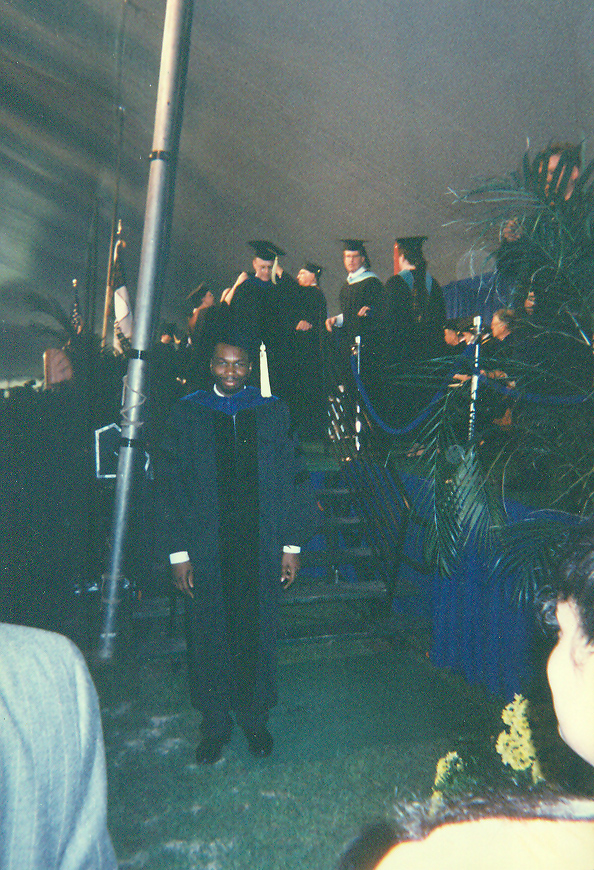
My stressed-out PhD walk photo, Carnegie Mellon University, May 18, 1997. (Angelia N. Levy).

My stressed-out PhD walk photo, Carnegie Mellon University, May 18, 1997. (Angelia N. Levy).

It’s been eighteen years and nearly a day since I had to shake then Carnegie Mellon Dean Peter Stearns’ hand on stage as part of the PhD portion of the 100th commencement ceremony for graduates, that third sweltering Sunday in May ’97. I’ve talked about the ceremony, my Mom’s jealousy and issues about my degree, Peter Stearns, Joe Trotter, Bruce Anthony Jones, and what happened before and after the degree ceremonies on that fateful day.

But time and enlightenment — especially the latter — has allowed me to take a step back from the events leading to a new wave of disillusionment in my life. If I really think about it, my struggles with where I wanted to go with my career go as far back as ’81, in the months after my first accolades as a writer, to the time when at eleven, I already had an encyclopedic knowledge of history, basic science, and technology. Heck, I already knew some of the historiography around World War II, the Cold War, American slavery and civil rights, long before I ever knew the definition for historiography. Not to mention, I was already living what we now call migration studies, thanks to my Mom and dad.

But my Boy @ The Window years did their damage to me. By the time I turned twenty at the end of the ’80s, I wasn’t fully clear of the array of choices I had for a career or set of careers. I knew I could write, and often write well. Yet I had stopped seeing myself as a writer by the time I went through my summer of abuse in ’82. I knew that I was a historian, because I asked the kinds of questions about history that only trained historians would. Yet I hated the idea that I was supposed to write only one way, using words like synergistic and interstitial (at an esoteric minimum) along the way. I toyed with the idea of going to law school in ’90, even going so far as to take the LSAT, scoring a then-50th percentile 31 on the exam in my one-and-only try.

Arthur Wesley Dow (1857-1922), The Long Road--Argilla Road, Ipswich, circa 1898, April 28, 2010. (BrooklynMuseumBot via Wikipedia). In public domain.

Arthur Wesley Dow (1857-1922), The Long Road–Argilla Road, Ipswich, circa 1898, April 28, 2010. (BrooklynMuseumBot via Wikipedia). In public domain.

I struggled for years with my fundamental question: “Am I an academic historian who’s also a writer? Am I a writer who’s also a historian? Can I be both?” I realized about a decade ago the question was moot. I am both. The real question really has been, will the working world allow me to operate as both without giving me grief and a hard way to go? (By the way, if I ever were to do a second, post-Boy @ The Window memoir, this would be one of that book’s big themes.)

I can safely say as a mildly successful freelance writer that the answer for many in this world of singularities is no. The working world puts up a fight, has and will continue to try to force me and others with multiple talents to choose one path, to do one thing, and one thing only, ideally for all time.

Academicians only think about each other via teaching duties or well-placed articles and books in scholarly journals and scholarly publishing houses. Higher education administrators believe that the only way to understand their work is through the lens of their specific university, as if universities and colleges aren’t similar from a management standpoint. Nonprofit organizations

A male mallard duck, a bird's triple threat (can walk, swim under water and fly), Saint-Eustache, Quebec, Canada, November 19, 2007. (Acarpentier via Wikipedia). Released to public domain via CC-SA-3.0.

A male mallard duck, a bird’s triple threat (can walk, swim under water and fly), Saint-Eustache, Quebec, Canada, November 19, 2007. (Acarpentier via Wikipedia). Released to public domain via CC-SA-3.0.

discount teaching and higher education administrator positions because finding money or managing students isn’t exactly the same as managing staff. Foundations who use your salary history instead of your scope of programs developed, people reached, and money raised as a barometer for even granting you an interview. All would prefer that you be quiet about injustices, especially ones in which their institution, organization, or foundation might well be complicit.

For me in the past couple of decades, though, I’ve worked in and with academicians, higher education administrators, nonprofit organizations, and private foundations. I’ve helped raise $3 million over the years, managed as many as twenty-five staff members, organized four-day conferences with a couple hundred attendees, worked with as many as 500 students at any given time, and taught undergraduate and graduate courses. I’ve written scholarly articles, published in scholarly journals, presented at a couple dozen conferences, and consulted for nonprofit organizations and foundations. To think of myself as only one thing is beyond ridiculous given my by-necessity-and-neglect careers so far.

Yesterday, The Chronicle of Higher Education posted the article “Thriving as a Freelance Academic” by Katie Rose Guest Pryal. In it, Pryal interviewed three White women about their experiences freelancing in the academic world. The women interviewed found a singular niche, found steady work through that niche, and otherwise didn’t question the idea of freelancing in a world in which freelancing is a rare career choice.

A square peg hammered into a round hole, May 2014. (http://joshbrahm.com/).

A square peg hammered into a round hole, May 2014. (http://joshbrahm.com/).

All that is fine. Except there was little soul-searching in Pryal’s piece. The women interviewed might as well have decided to go on a global trek or rock climbing, given their lack of ambivalence about academia or deliberate lack of specifics and dryness about the work they actually do. I don’t doubt that one can freelance in academia. I doubt, though, that one can do it without personal relationships with a specific university or alma mater, or with a specific higher education administrator or prominent professor. Why pick on this piece? Because there are far more people like me in and out of academia, who’ve consulted and freelanced and worked and stitched together a career, then there are the people represented in Pryal’s boutique article.

There is a lesson here besides the reality that life is a journey, and to get it right, we need to understand that it can and will be a roller-coaster-ride of a journey. The lesson, for me at least, is that while being true to myself has sometimes had consequences in terms of immediate victories and easy financial gains, it does mean I get to have success, and sometimes, even lasting success.

Why Boston U Isn’t For Me, and Shouldn’t Be For You

26 Sunday Apr 2015

Posted by decollins1969 in 1, Academia, Carnegie Mellon University, culture, Eclectic, High Rise Buildings, Jimme, Mount Vernon New York, My Father, New York City, Politics, Pop Culture, race, Upper East Side, Upper West Side, Work, Youth

≈ Leave a comment

Tags

616, 616 East Lincoln Avenue, Academic-Speak, Boston U, Boston University, BU, Checkbox, CMU, Cosmetic Diversity, Disillusionment, Institutional Racism, Jimme, Linda Sarsour, Meritocracy, Nepotism, Office of the Provost, Racism, Rev. Dr. Martin Luther King Jr., Righteous Indignation, Robert Turri Vise, Structural Racism, Suzanne C. Kennedy, Timothy Barbari, Tokenism


The main classroom buildings for the College of Arts and Sciences at Boston University, with the BU East 'T' stop in the foreground, July 18, 2010. (Fletcher6 via Wikipedia). Released to the public domain via CC-SA-3.0.

The main classroom buildings for the College of Arts and Sciences at Boston University, with the BU East ‘T’ stop in the foreground, July 18, 2010. (Fletcher6 via Wikipedia). Released to the public domain via CC-SA-3.0.

Since my first job working for my father in Manhattan in ’84, I’ve probably done over 200 interviews. By telephone, through Skype or WebEx or Adobe Connect, at conferences and in person. Probably about a third of those interviews have occurred with colleges and universities, for academic and administrator-level positions. For the most part, whether the interviews went well or when I didn’t have my “A-game,” my experiences have been pleasant ones. But, after two different interview processes five years apart with Boston University — one in October ’10, the other last month — there is a higher education institution that I will not work for, will not send my son, and will not recommend for anyone I know, under nearly any circumstances.

There are only a few institutions that have been so bad that they’ve moved from my [expletive] list to my permanently-banned-from-my-life list. Even Carnegie Mellon isn’t on the latter list, and I’ve talked about their conservatism and weirdness around diversity before here. But Boston University’s treatment of me as a potential employee, well, it took my breath away without putting me in an NYPD chokehold.

Round 1, Boston University, August-October 2010

Let me rephrase. I was never a “potential employee,” because on the two occasions I interviewed for jobs there, Boston University in the end treated me as a checkmark interviewee. In the fall of ’10, I emerged for them as a candidate for the director of their Washington, DC program. They interviewed me three times: at the American Political Science Association conference in DC in August, at their old DC program headquarters (while also showing me their new one, still under construction) in September, and in person on the main Boston University campus in late October.

For that last interview, they pulled out all the stops. They flew me in, put me up in a nearby hotel the night before, and even took me to lunch. Of course, they also had someone give me a two-hour guided tour of the campus that morning, after one morning meeting, on a day with thirty mile-per-hour winds coming off the Charles River as we walked from one end of the campus to the other. It’s funny. Up until then, I never thought of a campus tour as sinister. But then I realized, if I’m spending two hours during the heart of the workday doing a campus tour with a twenty-four year-old BU grad in forty-five degree weather, what did that mean for my real chances at that job?

My final meeting was with a professor who advised political science and history major in the DC program. That meeting ended at 5 pm on October 22, with which I knew that they were supposed to make a final decision in a week or so. Despite a thank-you email and two follow-up emails, I didn’t hear from Boston University again until November 29. Roberta Turri Vise, the point person for my interview process, didn’t explain why the final decision took more than five weeks. Nor did she explain why after six weeks of correspondence, no response from my requests were returned by her or anyone else in her office.

Round 2, Boston University, January-March 2015

I decided that this was a one-off thing, that with our generation of job searches occurring in a buyer’s market, that some folks really don’t care about being professionals in their dealing with interviewees. Boy was I wrong! Even in a market where people ignore applicant materials and send mass rejection emails without a candidate’s name on it (or worse, with someone else’s name), Boston University claimed a unique crown.

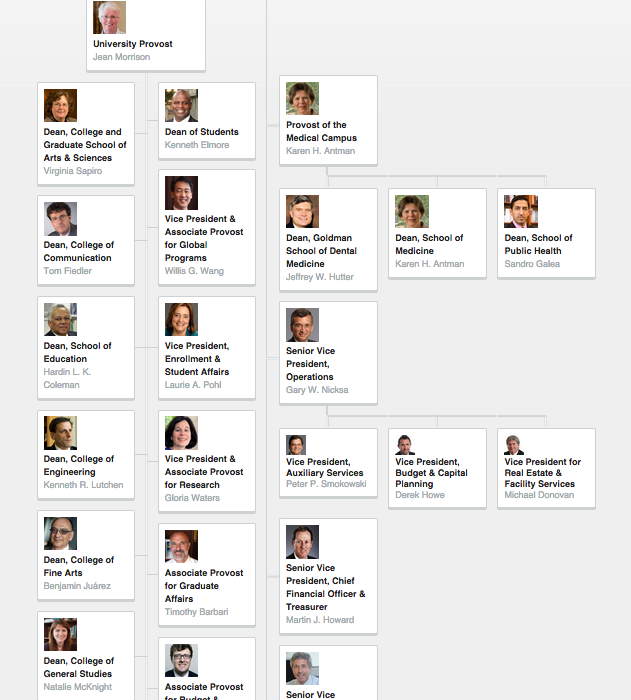
Hierarchy tree of Boston University's leadership team via the Provost's Office, April 26, 2015. (http://www.bu.edu/info/about/admin/).

Hierarchy tree of Boston University’s leadership team via the Provost’s Office, April 26, 2015. (http://www.bu.edu/info/about/admin/).

I interviewed with them again in January and at the beginning of March. This was for a position in their provost’s office, a director position managing undergraduate and graduate fellowship opportunities and advising students via those opportunities. The position was a bit beneath my experience, but they seemed interested, and I already knew from some initial research that it was a new position, so I went ahead and applied for it. My first interview was by telephone, with Suzanne Kennedy, the assistant provost for academic affairs at Boston University. It was a pleasant but underwhelming interview, and I actually didn’t expect a call back. So I kept up with my usual work of teaching, consulting, and looking for more consulting opportunities.

I received an email five weeks later asking me to come up to Boston for a second, in-person interview. I gave it the go-ahead, although the length of time between first interview and correspondence concerned me. So too, did my back and forth with Kennedy’s assistant over travel, as she had initially booked me at times that were very inconvenient for interviewing purposes. Not to mention, the major snow issues that Boston experienced in February.

The interview on March 4 was honestly one of the worst experiences I’ve ever had interviewing for any job. I’m including an interview in which I discovered the place was a sweatshop in Chinatown, during my summer of unemployment in New York in ’88. I had three meetings in all, one over lunch with Kennedy, and two with the two associate provosts at Boston University in academic affairs (one undergraduate, one graduate). Over lunch, the conversation was going well, until I asked the question about the level of diversity with applicant pools for Fulbrights, Trumans, Borens, and Rhodes’ scholarships and fellowships. I kid you not, Kennedy’s eyes literally glazed over as soon as I asked about diversity. Keep in mind, I had asked about socioeconomic diversity — I hadn’t touched racial or gender diversity yet. After lunch, I didn’t see Kennedy again for the rest of the interview process.

My second sign came from my third meeting. I met with Timothy Barbari, associate provost for graduate affairs. It was obvious that Barbari hadn’t even looked at my CV before I walked into his office. The first thing Barbari says to me, with him pushing his body into the back of his chair so far that his attempt to be at ease looked more like a rocket revving to take off — “so, you have a rather interesting CV.” I may not have earned all of my money as an academician, but I’ve been around academic-speak long enough to know that interesting can mean a lot of different things, mostly bad. In this context, interesting meant “not straightforward, not linear in progression, not typical in terms of whom we typically hire.”

I was already feeling a bit like a checkmark or token interviewee by the time I left Barbari’s office for Logan. But after USAirways canceled all their flights to DC that evening due to a snowstorm that wouldn’t drop a snowflake for another twelve hours, it got worse. I notified Kennedy through her assistant that I was stuck in Boston overnight from Logan, and left a message the next morning that the Amtrak to DC was my only option, as more flights had been canceled. No word, not even a “I’m sorry that you have to go through this” response. It wasn’t until mid-afternoon that Friday, nearly a day after I returned to DC, and after a third message about them needing to reimburse me, that I heard from Kennedy’s assistant.

At that point, I wouldn’t have taken the job even if they had offered it to me. As it was, I didn’t hear from Kennedy again until April 7, five weeks after a second interview, and despite a check-in to find out what happened with this director position. It’s this kind of calloused approach that leaves folks shaking their head.

Shaking Off The Dirt

I’ve made a few determinations based on these experiences. For one, if this is the way that treat job candidates who look like me, how well do they pay and treat their service staff, the most vulnerable people on their campus? Not well, at least from what I saw and have experienced. For two, the fact that for both interviews, their top concern seemed to be about competing with “schools across the Charles River” — i.e., Harvard, MIT, Tufts — was somewhere between disconcerting and ridiculous.

An elephant shaking off the dirt, circa 2012. JD Rucker via Pinterest.com).

An elephant shaking off the dirt, circa 2012. (JD Rucker via Pinterest.com).

The fact that with tuition, books, and room and board it would run the average BU student $60,000 per year also told me what I needed to know. Boston University is a place that wants elite status and elite students, and in pursuit of this Pollyanna goal, wants to hire people they feel fit the bill. As long as those people look like everyone else running the university — mostly White, with a few people of color lightly sprinkled in leading positions at the institution. Because Boston University has what activist Linda Sarsour (Twitter, @lsarsour) calls cosmetic diversity, a genuine attempt at diversity across socioeconomic, racial and gender lines is unnecessary, at least for the powers whom run the institution.

Aside from Martin Luther King, Jr., who earned his doctorate in divinity at Boston University in the early 1950s, I’ve known or known of only one person of color with a degree from BU. She was a neighbor at 616 East Lincoln, a few years younger. Based on her description of more than two decades ago, I’d have to say that Boston University has changed for the worst. Like most universities, they seem more interested in prestige and raising money than in fulfilling their mission.

And with that being the case, why send your kid to Boston University? Especially when, for the same amount of money or less, every other school in the Boston area is either better, or at least, cares more about diversity and learning beyond the cosmetic.

← Older posts
Newer posts →

Boy @ The Window: A Memoir

Boy @ The Window: A Memoir

Places to Buy/Download Boy @ The Window

There's a few ways in which you can read excerpts of, borrow and/or purchase and download Boy @ The Window. There's the trade paperback edition of Boy @ The Window, available for purchase via Amazon.com at http://www.amazon.com/Boy-Window-Donald-Earl-Collins/dp/0989256138/

There's also a Kindle edition on Amazon.com. The enhanced edition can be read only with Kindle Fire, an iPad or a full-color tablet. The links to the enhanced edition through Apple's iBookstore and the Barnes & Noble NOOK edition are below. The link to the Amazon Kindle version is also immediately below:

scr2555-proj697-a-kindle-logo-rgb-lg

Boy @ The Window on Amazon.com: http://www.amazon.com/Boy-The-Window-Memoir-ebook/dp/B00CD95FBU/

iBookstore-logo-300x100

Boy @ The Window on Apple's iBookstore: https://itunes.apple.com/us/book/boy-the-window/id643768275?ls=1

Barnes & Noble (bn.com) logo, June 26, 2013. (http://www.logotypes101.com).

Boy @ The Window on Barnes & Noble: http://www.barnesandnoble.com/w/boy-the-window-donald-earl-collins/1115182183?ean=2940016741567

You can also add, read and review Boy @ The Window on Goodreads.com. Just click on the button below:

Boy @ The Window

Twitter Updates

Tweets by decollins1969
  • RSS - Posts
  • RSS - Comments

Archives

  • June 2025
  • April 2023
  • September 2022
  • August 2022
  • July 2022
  • June 2022
  • May 2022
  • April 2022
  • March 2022
  • January 2022
  • December 2021
  • November 2021
  • October 2021
  • September 2021
  • August 2021
  • July 2021
  • June 2021
  • April 2021
  • March 2021
  • February 2021
  • January 2021
  • December 2020
  • November 2020
  • October 2020
  • September 2020
  • August 2020
  • July 2020
  • May 2020
  • April 2020
  • March 2020
  • January 2020
  • December 2019
  • November 2019
  • August 2019
  • July 2019
  • June 2019
  • May 2019
  • April 2019
  • March 2019
  • February 2019
  • January 2019
  • December 2018
  • November 2018
  • October 2018
  • September 2018
  • August 2018
  • July 2018
  • June 2018
  • May 2018
  • March 2018
  • February 2018
  • January 2018
  • December 2017
  • November 2017
  • October 2017
  • September 2017
  • August 2017
  • July 2017
  • June 2017
  • May 2017
  • April 2017
  • March 2017
  • February 2017
  • January 2017
  • December 2016
  • November 2016
  • October 2016
  • September 2016
  • August 2016
  • July 2016
  • June 2016
  • May 2016
  • April 2016
  • March 2016
  • February 2016
  • January 2016
  • December 2015
  • November 2015
  • October 2015
  • September 2015
  • August 2015
  • July 2015
  • June 2015
  • May 2015
  • April 2015
  • March 2015
  • February 2015
  • January 2015
  • December 2014
  • November 2014
  • October 2014
  • September 2014
  • August 2014
  • July 2014
  • June 2014
  • May 2014
  • April 2014
  • March 2014
  • February 2014
  • January 2014
  • December 2013
  • November 2013
  • October 2013
  • September 2013
  • August 2013
  • July 2013
  • June 2013
  • May 2013
  • April 2013
  • March 2013
  • February 2013
  • January 2013
  • December 2012
  • November 2012
  • October 2012
  • September 2012
  • August 2012
  • July 2012
  • June 2012
  • May 2012
  • April 2012
  • March 2012
  • February 2012
  • January 2012
  • December 2011
  • November 2011
  • October 2011
  • September 2011
  • August 2011
  • July 2011
  • June 2011
  • May 2011
  • April 2011
  • March 2011
  • February 2011
  • January 2011
  • December 2010
  • November 2010
  • October 2010
  • September 2010
  • August 2010
  • July 2010
  • June 2010
  • May 2010
  • April 2010
  • March 2010
  • February 2010
  • January 2010
  • December 2009
  • November 2009
  • October 2009
  • September 2009
  • August 2009
  • July 2009
  • June 2009
  • May 2009
  • April 2009
  • March 2009
  • February 2009
  • January 2009
  • December 2008
  • November 2008
  • October 2008
  • September 2008
  • August 2008
  • July 2008
  • June 2008
  • May 2008
  • April 2008
  • March 2008
  • February 2008
  • January 2008
  • December 2007
  • November 2007
  • October 2007
  • September 2007
  • August 2007
  • July 2007
  • June 2007

Recent Comments

MaryPena's avatarMaryPena on My Day of Atonement/Bitter Hat…
decollins1969's avatardecollins1969 on No Good Teaching Deed Goes…
Mary Rose O’Connell's avatarMary Rose O’Connell on No Good Teaching Deed Goes…

NetworkedBlogs on Facebook

NetworkedBlogs
Blog:
Notes From a Boy @ The Window
Topics:
My Life, Culture & Education, Politics & Goofyness
 
Follow my blog

616 616 East Lincoln Avenue A.B. Davis Middle School Abuse Academia Academy for Educational Development AED Afrocentricity American Narcissism Authenticity Bigotry Blackness Boy @ The Window Carnegie Mellon University Child Abuse Class of 1987 CMU Coping Strategies Crush #1 Crush #2 Death Disillusionment Diversity Domestic Violence Economic Inequality Education Family Friendship Friendships Graduate School Hebrew-Israelites High-Stakes Testing Higher Education History Homelessness Humanities Humanities Program Hypocrisy Internalized Racism Jealousy Joe Trotter Joe William Trotter Jr. K-12 Education Love Manhood Maurice Eugene Washington Maurice Washington Misogyny Mother-Son Relationship Mount Vernon High School Mount Vernon New York Mount Vernon public schools Multiculturalism MVHS Narcissism NFL Pitt Pittsburgh Politics of Education Poverty President Barack Obama Race Racial Stereotypes Racism Relationships Self-Awareness Self-Discovery Self-Reflection Sexism Social Justice Teaching and Learning University of Pittsburgh Violence Whiteness Writing

Top Rated

Blog at WordPress.com.

  • Subscribe Subscribed
    • Notes from a Boy @ The Window
    • Join 103 other subscribers
    • Already have a WordPress.com account? Log in now.
    • Notes from a Boy @ The Window
    • Subscribe Subscribed
    • Sign up
    • Log in
    • Report this content
    • View site in Reader
    • Manage subscriptions
    • Collapse this bar
 

Loading Comments...