• About Me
  • Other Writings
  • Interview Clips
  • All About Me: American Racism, American Narcissism, and the Conversation America Can’t Have
  • Video Clips
  • Boy @ The Window Pictures
  • Boy @ The Window Theme Music

Notes from a Boy @ The Window

~

Notes from a Boy @ The Window

Tag Archives: Writing

Michael Clayton, My Writing, and 20 Years of Sinai-Wandering

16 Thursday Mar 2017

Posted by decollins1969 in 1, Academia, Boy @ The Window, Carnegie Mellon University, culture, Eclectic, Pittsburgh, Pop Culture, race, Religion, University of Pittsburgh, Work, Youth

≈ 2 Comments

Tags

Academia, Academic Writing, CMU, Dan Resnick, Falsehoods, Gene Clayton, George Clooney, Lies, Michael Clayton, Michael Clayton (2007), Mythology, Pitt, Politics of Academia, Publish-or-Perish, Richard J. Altenbaugh, Scholarship, Sean Cullen, Unwritten Rules, Writing, Writing Career


George Clooney and Sean Cullen in Michael Clayton (2007), March 15, 2017. (http://bbc.co.uk).

My favorite scene from Michael Clayton (2007) is when the title character’s brother Gene (played by Sean Cullen) confronts Michael (played by George Clooney) about the past seventeen years of his career as a fixer.

You got these cops thinking you’re a lawyer. You got these lawyers thinking you’re a cop. You got everybody fooled, don’t you? Everybody but you. You know exactly what you are.

About a year and a half ago, I figured I could insert the words “writer” and “scholar” in those lines, with twenty years of my career(s) for context, and maybe some of the meaning would be correct. I am a writer’s version of Michael Clayton. I’ve got academicians thinking I’m a unscholarly writer, and journalists and editors who think I’ve only written for scholarly audiences. What a mess!

Last year, after receiving a rejection for a version of my article about American narcissism, American racism, and why real conversations on race (whether through Clinton’s Race Initiative or via Ferguson) are all but impossible, I decided no more. I will not seek to submit another scholarly piece to a peer-reviewed scholarly journal ever again. And if asked, unless it’s something I truly feel passionate about, I will say no.

Do not think of this as sour grapes. I have published two full-length journal articles in my career, not to mention a bunch of the standard book reviews, and an op-ed for Teachers College Record in the past. Technically, I am 3-for-11 in publishing academic articles over the past two decades, not great, but hardly abysmal.

My issue is with the elitism and implicit bias that is rampant in the publish-or-perish world of academia. While some folks could argue it is the same in publishing in general, it really isn’t. The unwritten rules in publishing, if not followed, may well still lead to published articles, even if a person is starving and homeless in between. In academic publishing, not following the rules leads to ostracism, and a career dead before it ever begins.

Keep in mind, no scholarly journal pays authors for their articles. It takes about two years to go from submission to publication in most history and education journals. If twenty people read your article, that’s icing on a protein-powder cake. If you aren’t in the tenure-stream, though, it really doesn’t matter how many articles you publish, because it doesn’t provide job stability or security. As a former nonprofit administrator, it scared most of my supervisors whenever and wherever I published, so no benefits there either. For those in tenure-stream positions, it does matter, no matter how crappy the research or how densely unreadable the writing.

After twenty years in the publishing struggle, it’s time to face the truth. I simply wasn’t good enough to publish in academic journals. I’m not talking about my writing ability or research skills. I’m pointing out my eclectic career path, my lack of tenure at an elite university, with few to vouch for me when I was younger and an up-and-comer. My interdisciplinary research on race, on multiculturalism, on education, meant that I was a misfit from day one. Heck, I know for sure in at least one case, a journal editor held my race and age against me.

Sinai Desert, where Moses, the Israelites (and I) wandered for a generation, Egypt, March 9, 2010. (Tommy from Arad via Wikipedia). Released to public domain via CC-BY-SA 2.0.

I know most of the academic writing rat-race is a system of exploitation based in part on fears of joblessness, loss of prestige, and elitism based on class, race, gender, and whether one teaches at an elite university or at a community college. It is based on an academician’s ability to blame themselves and themselves alone for their failings, and not the oppressive publishing system itself. Kind of like the poor blaming themselves for their poverty. Or Whites and Blacks blaming other Blacks for a degenerative culture instead of looking at systemic racism as the real culprit for racial inequality. Academia is very much in and of this wider world of social injustice and oppression, no matter how university presidents attempt to spin it.

Truly, I find the idea of a cold, objective, dispassionate, dense writing style as more serious and scholarly than any other form to be high-grade bullshit. It’s what folks in academia tell each other. Just like many a journalist and editor is a frustrated writer looking for creative and book manuscript-length outlets, many a writer in academia believes their writing (and as often as not, their research) to be much more than it is.

But the biggest issue for me was my elitist and naive attempt to straddle the fence between academic publishing and writing for wider audiences. This living in two worlds began for me during my heady days, my grad school years at both the University of Pittsburgh and Carnegie Mellon. Some of my history professors, like Paula Baker, Kate Lynch, and Joe Trotter, all tried with a considerable amount of frustration to get me to write in more scholarly tones. Others seemed to be fine with my writing style. I had a tone that was too “journalistic,” according to my racial paternalistic professor Dan Resnick, who meant it as an insult.

Between 1997 and 2002, I churned out eight full-length pieces (in the 20-35-page-range) on multiculturalism and Black education/history meant for peer-reviewed scholarly journals, four of them between February and December 1997 alone. None of them were ever published. One, an admittedly ambitious state-of-the-subfield piece on multicultural education and its history in American education, elicited a response from the History of Education Quarterly’s editor-in-chief. He was my one-time professor during my first year of graduate school at Pitt, Dick Altenbaugh. Him and his managing editor met with me for nearly an hour and a half in March 1998.

Some of the meeting was about the deficiencies in my article and in my argument. But most of the time was about my writing style, my ambitiousness, and quite frankly, my age and race. I wrote about some of this in Fear of a “Black” America. Apparently, at twenty-eight, I needed to be in my mid-40s to write a grand essay on multicultural education. Allegedly, I needed long-retired (and in one case, dying) White scholars to support my arguments, no matter what evidence I brought to bear. I needed, most of all, to stop being so ambitious about my work, and stick to more objective, run-of-mill, 181-variations-on-a-theme topics in the education field. Like what Karl Marx or John Dewey would have to say about ability grouping.

I gave up on academic publishing in 2002, at least on the topic of Black education/history and multiculturalism. I tried to write articles on everything from social justice movements to the fallacies of the liberal-conservative construct, on education, poverty and mythology of American social mobility, even on intersectionality. Only, I had worked so hard to make myself more of a scholarly writer. So much so that I now had to relearn how to write for more than fifteen people, and really, to write for myself. It took about a year to drop the 40, 50, and 60-word compound sentences, the use of inappropriately complex language, and the mask of dispassionate objectivity in my writing. Ironically, this was also when I published my first scholarly piece, on multicultural conservatism and Derrick Bell’s “Rules of Racial Standing,” in 2003. I also published my first solo op-ed, in the Washington Post, around the same time.

By this time, I saw myself as a recovering academic. I also had some unfinished personal business, around how I got to my mid-thirties, to this place in my life where I had “made it,” sort of, but I hadn’t escaped my past. This was where the story of Boy @ The Window took over, and why I have a memoir and nearly ten years of blog posts.

But because of my nonprofit work on college access and retention, two professors invited me and my team to submit a piece for publication in their journal. It was a four-person piece with me as the primary author (I wrote about 90 percent of it, so there’s that). The original invite was in June 2007, and the article came out in mid-October 2009. I had stopped working for the Academy for Educational Development, and found writing the article like a strait-jacket and a time-gobbler.

Michael Clayton (George Clooney) and a horse, a moment of truth, screen shot and crop, 2007. (http://chud.com).

After Boy @ The Window in 2013, I decided to write articles for a broader audience again. This time, I made the decision to take my memoir-writing experiences and apply them to my writing. I started writing about K-12 and corporate education reform, the problems in higher education, about racism in the Obama era, about poverty and its connections to race, gender, and current issues. And over the past two years, I’ve published more and reached more people than I could ever have done with an award-winning article in the Journal of American History.

So academia, you win. I give up.

My Nuanced History as a Historian

16 Monday May 2016

Posted by decollins1969 in 1, Academia, Boy @ The Window, Carnegie Mellon University, culture, Eclectic, Mount Vernon High School, Mount Vernon New York, Pittsburgh, Politics, Pop Culture, race, Youth

≈ Leave a comment

Tags

Ambivalence, AP US History, Career Decisions, Career Development, CMU, Commitment, Editors, Graduate School, Historian, History, Nonprofit World, Nuance, PhD, Self-Discovery, Self-Reflection, Teaching and Learning, UMUC, Writer, Writing


The Road Less Traveled quote, via Robert Frost (with me adding, "but it's not always good to get lost in the woods"), May 16, 2016. (http://www.chicagonow.com).

The Road Less Traveled quote, via Robert Frost (with me adding, “but it’s not always good to get lost in the woods”), May 16, 2016. (http://www.chicagonow.com).

Right now I sit between two important dates in my life. One was a few days ago, the thirtieth anniversary of my triumph on the AP US History exam in eleventh grade. Two will be in two days, the nineteenth anniversary me of graduating from Carnegie Mellon with my PhD in History. Both are signifiers of my achievements, my ambitions, and of my becoming a professional historian. But in the decade after earning my first college credits and the nearly two decades since earning my doctorate, I’ve still had a few lingering questions about where and who I am professionally.

One of those questions I’ve discussed ad nauseam here. Am I a writer who’s also an academically trained historian, or am I a historian first and a writer second? Or, can I be both at the same time? For better and worse, I am always both, but can emphasize one or the other at random, depending on context.

Sliced onion layers, May 7, 2015. (http://www.medicaldaily.com).

Sliced onion layers, May 7, 2015. (http://www.medicaldaily.com).

Other questions, though, have lingered even after spending more than a decade in the nonprofit world and another eight years teaching a full slate of undergraduate history courses. Do I still enjoy teaching history? Does my experience working on real world issues in civic education, social justice, and educational equity cloud how I see myself when I’m lecturing on the Agricultural Revolution or the Middle Passage? How is it possible for me to reconcile myself as a freelance writer who wants to take my academic historian experience, combine it with my other professional and personal experiences, and write about it for editors with little clue about the roads I’ve traveled? Is it even possible to un-layer the onion of my life and write about it to my or anyone else’s satisfaction? And if so, am I still a historian when doing so?

To that next to last question, I think that’s already a yes-no answer. Since 2013, I’ve written articles for publication with newspapers and magazines, and am working on my first new scholarly piece in six years. It’s difficult, to say the least, to explain to an editor what in academia or even among US or African American historians is a settled issue. Editors always believe that any story has two equal and opposing sides, because that’s how most ordinary people see most stories. As an academic historian, I’m trained to see nuance, to know when one side has a stockpile of evidence, while another one has a stockpile of bullshit.

Or, more often, to know that the no man’s land of gray present several or even multiple perspectives on issues like racism, poverty, college retention and graduation, American individualism, or the rigging of the federal election process. That no man’s land, I have found, more often than not scares away an editor, even ones working for intellectual magazines. They think their audience is incapable of getting nuance, when I think that they often reflect their own narrow and elitist view of the world.

Timeline of Europe and the US, March 2015. (http://www.worldhistorycharts.com).

Timeline of Europe and the US, March 2015. (http://www.worldhistorycharts.com).

As for teaching history, I find myself literally bored with the basic facts of any survey or even upper-level history course. To me, history is a panoramic lens through which students and experts can study human beliefs and behaviors in all its glory, ugliness, and ordinary-ness. Understanding how and why a person or a group of people did x, y, or z is much, much, much more important than knowing the exact date a specific event took place or coming up with some interesting but irrelevant fact in the process.

Which was why I began to teach my undergraduate courses with far more discussion and less lecturing than I did when I taught history as a grad student. (I taught a bunch of graduate-level education foundations courses in between my various nonprofit stints between 1997 and 2008.) I decided it didn’t matter if my students had done the readings, hated history, or were tired and ready to nap through three hours of lecture. I will facilitate discussion. I will make sure to make this process one about human interaction. Even when the lack of independent thinking among my students has me near ready to strangle a few of them. Why? Because understanding how people think and why they draw the conclusions they do can be as eye-opening as the knowledge they pull from one of my classes, maybe more so.

So, do I still see myself as a historian, or more as a psychologist or sociologist? Does it really matter how I see myself? Probably not. I just know that after years of teaching, writing, and all of my ups and downs professionally, that I remain two things most of all — a writer and a learner. Those two callings fuel my ability to raise my game, to want to be a better professor, a more expert historian, and an insightful writer. That, I hope, won’t change as I continue my long march toward fifty.

The Long Road Home

19 Tuesday May 2015

Posted by decollins1969 in 1, Academia, Boy @ The Window, Carnegie Mellon University, culture, Eclectic, Jimme, Pittsburgh, Politics, Pop Culture, race, Work, Youth

≈ Leave a comment

Tags

"Thriving as a Freelance Academic", Academia, Academic Writing, Bruce Anthony Jones, Career, Career Decisions, Career Development, Career Options, CMU, Disillusionment, Joe William Trotter Jr., Katie Rose Guest Pryal, Peter Stearns, Politics of Academia, Politics of the Foundation World, Self-Awareness, Self-Determination, Self-Discovery, Social Justice, Teaching and Learning, The Chronicle of Higher Education, Troublemaker, Writing


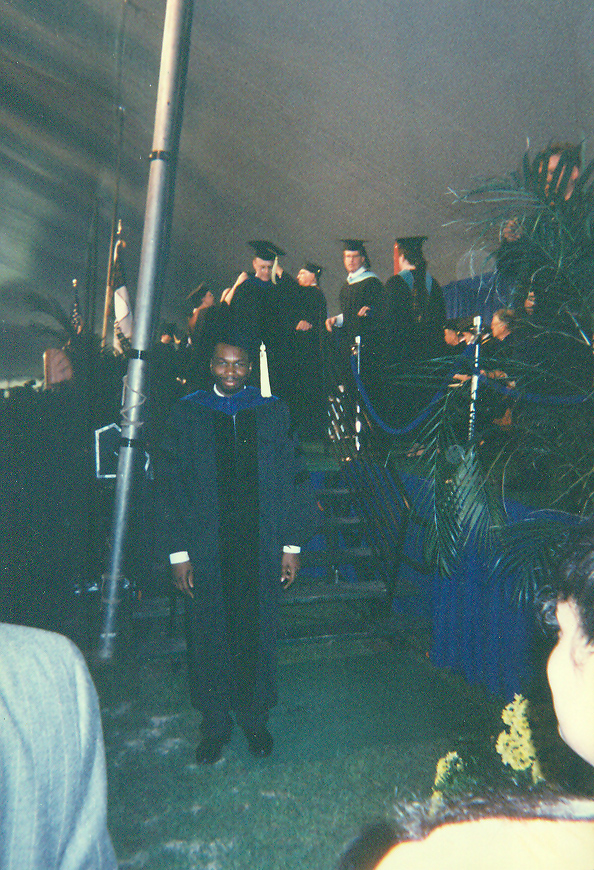
My stressed-out PhD walk photo, Carnegie Mellon University, May 18, 1997. (Angelia N. Levy).

My stressed-out PhD walk photo, Carnegie Mellon University, May 18, 1997. (Angelia N. Levy).

It’s been eighteen years and nearly a day since I had to shake then Carnegie Mellon Dean Peter Stearns’ hand on stage as part of the PhD portion of the 100th commencement ceremony for graduates, that third sweltering Sunday in May ’97. I’ve talked about the ceremony, my Mom’s jealousy and issues about my degree, Peter Stearns, Joe Trotter, Bruce Anthony Jones, and what happened before and after the degree ceremonies on that fateful day.

But time and enlightenment — especially the latter — has allowed me to take a step back from the events leading to a new wave of disillusionment in my life. If I really think about it, my struggles with where I wanted to go with my career go as far back as ’81, in the months after my first accolades as a writer, to the time when at eleven, I already had an encyclopedic knowledge of history, basic science, and technology. Heck, I already knew some of the historiography around World War II, the Cold War, American slavery and civil rights, long before I ever knew the definition for historiography. Not to mention, I was already living what we now call migration studies, thanks to my Mom and dad.

But my Boy @ The Window years did their damage to me. By the time I turned twenty at the end of the ’80s, I wasn’t fully clear of the array of choices I had for a career or set of careers. I knew I could write, and often write well. Yet I had stopped seeing myself as a writer by the time I went through my summer of abuse in ’82. I knew that I was a historian, because I asked the kinds of questions about history that only trained historians would. Yet I hated the idea that I was supposed to write only one way, using words like synergistic and interstitial (at an esoteric minimum) along the way. I toyed with the idea of going to law school in ’90, even going so far as to take the LSAT, scoring a then-50th percentile 31 on the exam in my one-and-only try.

Arthur Wesley Dow (1857-1922), The Long Road--Argilla Road, Ipswich, circa 1898, April 28, 2010. (BrooklynMuseumBot via Wikipedia). In public domain.

Arthur Wesley Dow (1857-1922), The Long Road–Argilla Road, Ipswich, circa 1898, April 28, 2010. (BrooklynMuseumBot via Wikipedia). In public domain.

I struggled for years with my fundamental question: “Am I an academic historian who’s also a writer? Am I a writer who’s also a historian? Can I be both?” I realized about a decade ago the question was moot. I am both. The real question really has been, will the working world allow me to operate as both without giving me grief and a hard way to go? (By the way, if I ever were to do a second, post-Boy @ The Window memoir, this would be one of that book’s big themes.)

I can safely say as a mildly successful freelance writer that the answer for many in this world of singularities is no. The working world puts up a fight, has and will continue to try to force me and others with multiple talents to choose one path, to do one thing, and one thing only, ideally for all time.

Academicians only think about each other via teaching duties or well-placed articles and books in scholarly journals and scholarly publishing houses. Higher education administrators believe that the only way to understand their work is through the lens of their specific university, as if universities and colleges aren’t similar from a management standpoint. Nonprofit organizations

A male mallard duck, a bird's triple threat (can walk, swim under water and fly), Saint-Eustache, Quebec, Canada, November 19, 2007. (Acarpentier via Wikipedia). Released to public domain via CC-SA-3.0.

A male mallard duck, a bird’s triple threat (can walk, swim under water and fly), Saint-Eustache, Quebec, Canada, November 19, 2007. (Acarpentier via Wikipedia). Released to public domain via CC-SA-3.0.

discount teaching and higher education administrator positions because finding money or managing students isn’t exactly the same as managing staff. Foundations who use your salary history instead of your scope of programs developed, people reached, and money raised as a barometer for even granting you an interview. All would prefer that you be quiet about injustices, especially ones in which their institution, organization, or foundation might well be complicit.

For me in the past couple of decades, though, I’ve worked in and with academicians, higher education administrators, nonprofit organizations, and private foundations. I’ve helped raise $3 million over the years, managed as many as twenty-five staff members, organized four-day conferences with a couple hundred attendees, worked with as many as 500 students at any given time, and taught undergraduate and graduate courses. I’ve written scholarly articles, published in scholarly journals, presented at a couple dozen conferences, and consulted for nonprofit organizations and foundations. To think of myself as only one thing is beyond ridiculous given my by-necessity-and-neglect careers so far.

Yesterday, The Chronicle of Higher Education posted the article “Thriving as a Freelance Academic” by Katie Rose Guest Pryal. In it, Pryal interviewed three White women about their experiences freelancing in the academic world. The women interviewed found a singular niche, found steady work through that niche, and otherwise didn’t question the idea of freelancing in a world in which freelancing is a rare career choice.

A square peg hammered into a round hole, May 2014. (http://joshbrahm.com/).

A square peg hammered into a round hole, May 2014. (http://joshbrahm.com/).

All that is fine. Except there was little soul-searching in Pryal’s piece. The women interviewed might as well have decided to go on a global trek or rock climbing, given their lack of ambivalence about academia or deliberate lack of specifics and dryness about the work they actually do. I don’t doubt that one can freelance in academia. I doubt, though, that one can do it without personal relationships with a specific university or alma mater, or with a specific higher education administrator or prominent professor. Why pick on this piece? Because there are far more people like me in and out of academia, who’ve consulted and freelanced and worked and stitched together a career, then there are the people represented in Pryal’s boutique article.

There is a lesson here besides the reality that life is a journey, and to get it right, we need to understand that it can and will be a roller-coaster-ride of a journey. The lesson, for me at least, is that while being true to myself has sometimes had consequences in terms of immediate victories and easy financial gains, it does mean I get to have success, and sometimes, even lasting success.

Can Family and Friends Ever Understand The Why Behind a Memoir?

20 Monday Oct 2014

Posted by decollins1969 in 1, Boy @ The Window, culture, Eclectic, Jimme, Mount Vernon New York, My Father, Pop Culture, race, Religion, Work, Youth

≈ Leave a comment

Tags

"Dirty Laundry", Catharsis, Charles M. Blow, Child Abuse, Core Friends, Extended Family, Family, Father-Son Relationships, Fire Shut Up in My Bones (2014), Friends, Memoirs, Mother-Son Relationship, Neglect, Poverty, Sexual Assault, Sexuality, Writing


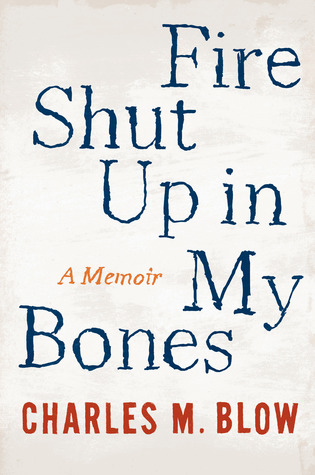
Front cover, Fire Shut Up in My Bones, Charles M. Blow, September 23, 2014. (http://goodreads.com).

Front cover, Fire Shut Up in My Bones, Charles M. Blow, September 23, 2014. (http://goodreads.com).

I started reading New York Times columnist Charles M. Blow’s memoir Fire Shut Up In My Bones two weeks ago. Like many who have read it, I have found it a good read, a revealing read, even a powerful read at times. I have been able to put it down, though. Mostly because as someone who’s recently written a memoir about my own painful and trying experiences with abuse and neglect, about confusion, distrust and occasional rage, Blow’s book has been a reminder of how difficult it was for me to relive those experiences enough to write them down in words and revise them into a book of my own.

Still, as I do intend to finish Fire before the holidays, I do have a couple of questions. One is really basic. Had Blow ever heard of the Kinsey Report (1948), the first one about the sexual experiences and habits of men, particularly gay and bisexual men, prior to turning thirty? The one thing I learned from reading this report twenty years ago is that there’s a lot of gray between heterosexual, gay and bisexual. That you can be heterosexual, and still have a small level of attraction to those of your same gender simultaneously.

256 shades of gray (cropped), October 20, 2014. (http://cs.dartmouth.edu).

256 shades of gray (cropped), October 20, 2014. (http://cs.dartmouth.edu).

But this is a minor question, more about his curious road to understanding his sexuality — not to mention my own road — than it is about Fire itself. My second question is a much more important one. How have Blow’s family and friends received his book since he decided to write it? How have they received Fire in the months since he announced it was coming out in September? How have they received him and Fire since it officially hit the shelves last month?

If his immediate and extended family was/is anything like mine (and from reading Fire so far, it is), then my best guess is their reaction’s been mixed at best. In the year since I released Boy @ The Window in paperback, my siblings have liked the book, but my mother and father haven’t exactly been happy about me writing it. My mother hasn’t said one word about Boy @ The Window since I put it out last year. Nor did she ask any questions about the book in the six and half years that I toiled in writing and rewriting it.

My father, meanwhile, showed interest in the book right from the moment I told him I planned to write Boy @ The Window. That was, until the paperback edition came out during the holidays last year. At that point, he said, “I don’t wanna talk to you no more.” We’ve talked several times since, but he’s still pissed with me about including him in my memoir, even though I never hid this from him at any point in the process.

Among my friends, most of my core group has bought and read Boy @ The Window. Most have given me positive feedback, some very extensive. Yet I found myself mildly surprised how few friends outside of this core group have bought or read the book. I take that back. Actually, I’m surprised by the negative feedback I’ve gotten from folks who’ve claimed to be friends of mine, who’ve never read a word of Boy @ The Window. But this feedback hasn’t been about the memoir. It’s really about their wanting to deny facts about me or about them that they’ve assumed are in Boy @ The Window, as if my job in this instance was to only be truthful when it felt good for them.

Dirty laundry in a basket, October 20, 2014. (http://plus.google.com).

Dirty laundry in a basket, October 20, 2014. (http://plus.google.com).

My platform is tiny when compared with Blow’s, so I imagine that the reaction to Fire in terms of both praise and condemnation has been more extreme, even as the praise has been much more public. I suppose if I was the perpetrator whom sexually assaulted Blow, I’d likely want to shut him up. I’m not so sure that anyone in his family, proud of him as they may be, wants what they’d likely consider “dirty laundry” out there for anyone to read. You don’t grow up in a family as traditional as Blow’s and expect everyone to be alright with their character’s characterization in a bestseller.

This I do know, and I suspect Blow has known for a while, too. That writing a memoir like Fire isn’t about seeking revenge or outing family secrets per se. Bottom line — it ain’t about the proverbial you! In some respects, as cathartic as writing a memoir like my Boy @ The Window or Blow’s Fire may be, it’s not so much about the authors,’ really, at least after the tenth edit.

There are so many stories that never see the light of day, because the fire for telling them burned out a long time ago. Or the window became a rubber room or a jail cell. It’s about telling a story that needs to be told, regardless of whether family’s happy about it, or whether some of your friends can relate to it or not. Because there’s always, always, an audience who needs to read it, hear it, see it and learn from it themselves.


When Those Close Put Up Roadblocks

07 Saturday Jun 2014

Posted by decollins1969 in 1, Academia, Boy @ The Window, Carnegie Mellon University, culture, Eclectic, Mount Vernon New York, New York City, Pittsburgh, Politics, Pop Culture, race, University of Pittsburgh, Youth

≈ Leave a comment

Tags

Coming-of-Age, Detours, Dr. Don, Dreams, Faith, Forgive and Forget, Forgiveness, History, Internalized Racism, Jealousy, Memoir, Past, PAT Transit, PhD, PhD process, Pitt, Roadblocks, Self-Discovery, Self-Loathing, Sellout, Writing


Detours vs. roadblocks, June 1, 2012. (http://www.ideaarchitects.org).

Detours vs. roadblocks, June 1, 2012. (http://www.ideaarchitects.org).

This was the best title I could come up with, since it’s about folks in my life with whom I’ve shared some affinity over the years, beyond family, and to a lesser extent, friendships. This isn’t about haters or crabs-in-the-barrel mentality per se. It’s simply the observation that as I pursue dreams and push through goals in life that some whom have the choice between being supportive or actively working against my interests, how more than a few have chosen to do the latter.

That this has occurred in my life mostly as I pursued my doctorate and pressed on as a writer isn’t a coincidence. The things I’ve worked the hardest for in life, the dreams most difficult to achieve, the amount of energy and pressing through needed to overcome my own doubts in the process — all came with an audience of detractors. A bit more than twenty years ago, some of my Pitt friends started falling by the wayside as I pursued my grad degrees, which is normal, but there were some pretty weird conversations I had with them as they did. One insisted on calling me “Dr. Don” about a dozen times during a PAT Transit bus ride one day in September ’92, laughing to the point of hilarity while doing it. I thought that he was going to choke on his own spit all the while, he was laughing so hard. Or that I was going to choke him myself if he said “Dr. Don” one more time!

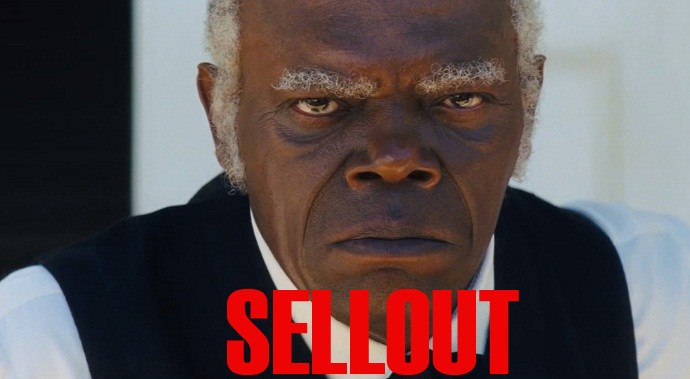
Screen shot of character played by Samuel L. Jackson in Django Unchained (2012) with "Sellout" addition (not an endorsement, by the way), October 31, 2013. (http://forwardtimesonline.com/2013/).

Screen shot of character played by Samuel L. Jackson in Django Unchained (2012) with “Sellout” addition (not an endorsement, by the way), October 31, 2013. (http://forwardtimesonline.com/2013/).

Another guy — who eventually committed suicide in ’98 — told me straight up that people like me were “sellouts,” that “The Man” wasn’t going to accept people like me or him “no matta how many degrees we get” or don’t get. That was six weeks before my committee approved my dissertation, in October ’96. Luckily, I learned not to bring up my education to folks unless it was for professional purposes or unless someone asked.

That these were Black acquaintances from my days as an undergrad at the University of Pittsburgh was a bit surprising, considering that my tendency is to always encourage folks to pursue their dreams. I’d always assumed the worst of the folks — Black, White, Afro-Caribbean and Latino — that I grew up with in Mount Vernon, New York, precisely because their encouragement literally made me suicidal by the time I turned fourteen. By the late-90s, I realized this was more than a New-York-area-social-etiquette-disorder.

With writing and books over the past decade — especially with Boy @ The Window — I’ve experienced some of those same headwinds from folks who seemed to think they had a better idea for the direction of my life than I. When I first started working on my memoir at the end of ’06, I had a conversation with my Pitt and AED colleague Stacey, whom I’d known for sixteen years. Upon telling her about my project, she said, “You need to wait on that,” that I should “publish a few more books,” be in my fifties, before “writin’ a biography.” So I knew that she wasn’t going to buy a copy when it came out. Oh well!

Last fall, at an African American Alumni Council event at Pitt, it was one of my first opportunities to discuss the now published Boy @ The Window, which was immediately followed by public criticism. Right after I talked about the book, an older alumna walked right up to me, and got within a foot or so of my face — close enough to hug. “You’re too young to have a memoir,” she said with a smile on her face, and then walked away as if her’s was the final say on the topic.

At the least, it showed that most don’t know the difference between a memoir (on one period or aspect of one’s life, often with a look at the world beyond) and an autobiography (the story of my entire life). Boy, understand the genre before criticizing it or my role in it already!

One foot in the grave (apparently), June 7, 2014. (http://www.virginmedia.com/).

One foot in the grave (apparently), June 7, 2014. (http://www.virginmedia.com/).

And, yes, I know. I see my Facebook friends especially posting other people’s sayings every single day. About letting go, moving on, forgetting the past, pushing past the haters, sitting in a lotus position, meditating and praying, and then drinking a wheat-grass smoothie. I do let go, I do forgive, and I don’t let the naysayers in my life have the final say. But letting go doesn’t mean I don’t get to highlight some truth, point out hypocrisy, and that I should just be quiet for the sake of being quiet.

It hasn’t been lost on me that most of these specific, potentially dream-destroying microaggressions have come from Black folk, male and female, well-off and immersed in poverty. Do I put these people in the same category as White literary agents who’ve said things to me like, “Oh no, not another abuse story!” or “There are too many black coming-of-age stories in the market?” Of course not. Gate keepers practicing ignorance in the midst of structural racism isn’t the same as people who may have internalized racism.

Or in the latter case, it could just be that my pursuit of what I’ve wanted and finally come to know for my life brought attention to dreams deferred, delayed and denied, by others and by their own fears of failure and success. If I’d let this stand in my way, I’d still be living in Mount Vernon, undoubtedly living in grinding poverty, wondering how could I let everything I wanted out of life get away from me.

If Eri’s Now 30, What Does That Mean For Me/Us?

22 Thursday May 2014

Posted by decollins1969 in 1, Boy @ The Window, Christianity, culture, Eclectic, Hebrew-Israelite, Marriage, Mount Vernon New York, Pop Culture, race, Religion, Youth

≈ Leave a comment

Tags

30th Birthdays, 616, 616 East Lincoln Avenue, Birth, Birthdays, Cooking, Dreams, Eri Washington, Family, Rebirth, Self-Discovery, Writing


Eri’s 30th

Eri’s 30th

Really, I’ve written about this before, five years ago, right after Eri turned twenty-five. Everything I wrote about Eri in “The Meaning of Eri’s 25th” is still applicable today. I only have a few things to add to that earlier post. First, Happy Birthday, Bro!!! Welcome to the second tier of youth, the one for folks over thirty, but not yet middle-aged! For the first time ever, we’re in the same general age category, until I turn forty-six, a year and seven months from now – yay!

Second, the fact that you’re thirty today is a reminder of how long I’ve been doing certain things. Like the fact that I’ve been cooking for myself, for family and for other people for thirty years. And that I’ve been at least six feet tall for a bit more than thirty years. And that I’d turned to Christianity a couple of months before Eri’s birth, a bit more than thirty years ago. All of it serves as a reminder that Donald 1.0 had been in the midst of evolution right around your birth.

Third and maybe just as important, the fact that it’s never too late in life to achieve your dreams. That I’m able to writer about my experiences — and our family — these days with commitment was something I couldn’t even conceive as a dream thirty years ago. By May ’84, I’d buried that knowledge of myself as a writer deep within my spirit and soul, so much so that I rarely thought about writing anything again until I was nearly twenty. Imagine a situation so deep that an aspiring writer can’t articulate the words necessary in which to write. I didn’t have to imagine it, though.

I hope that you Eri — in fact, our other brothers Maurice, Yiscoc and Darren, too — will find the strength and energy to do your dreams, to harness what remains of our dwindling youth before our hair is completely gray. I will do the same.

My First Adult Job Interview, Teachers College

12 Monday May 2014

Posted by decollins1969 in 1, Academia, Boy @ The Window, Carnegie Mellon University, culture, Eclectic, eclectic music, Mount Vernon New York, New York City, Pittsburgh, Politics, Pop Culture, race, Upper West Side, Work, Youth

≈ Leave a comment

Tags

Barnes & Noble, Beacon Theater, Calling, CMU, Disillusionment, Finishing Second, Hotel Beacon, job interview, Job Talk, Joe William Trotter Jr., PTSD, Racial Harassment, Rage, Steven Schlossman, Teachers College, Walking While Black, Writer, Writing


Teachers College today, West 120th (between Broadway and Amsterdam), New York, NY, April 15, 2014. (http://ccnmtl.columbia.edu/).

Teachers College today, West 120th (between Broadway and Amsterdam), New York, NY, April 15, 2014. (http://ccnmtl.columbia.edu/).

Seventeen years ago this week (check the calendar – the days and dates coincide with the week of May 12-18, ’97) was perhaps one of the most euphoric and bitterly disappointing weeks in my entire adult life. It was such a strange week that it forced me into second guessing myself and my path in life for many years afterward.

But it didn’t start out that way. On Monday, May 12th, I did my very first post-doctoral interview, for an assistant professor position at Teachers College (Columbia’s school of education) in Morningside Heights (West Harlem, really). I’d flown in from Pittsburgh the evening before, and stayed at the Hotel Beacon at Teachers College’s expense, because Monday was going to be a very long day. It was loud that Sunday night, as there was some event at the Beacon Theater. But somehow, I had just enough discipline and memories of New York’s smells and sounds to fall asleep comfortably.

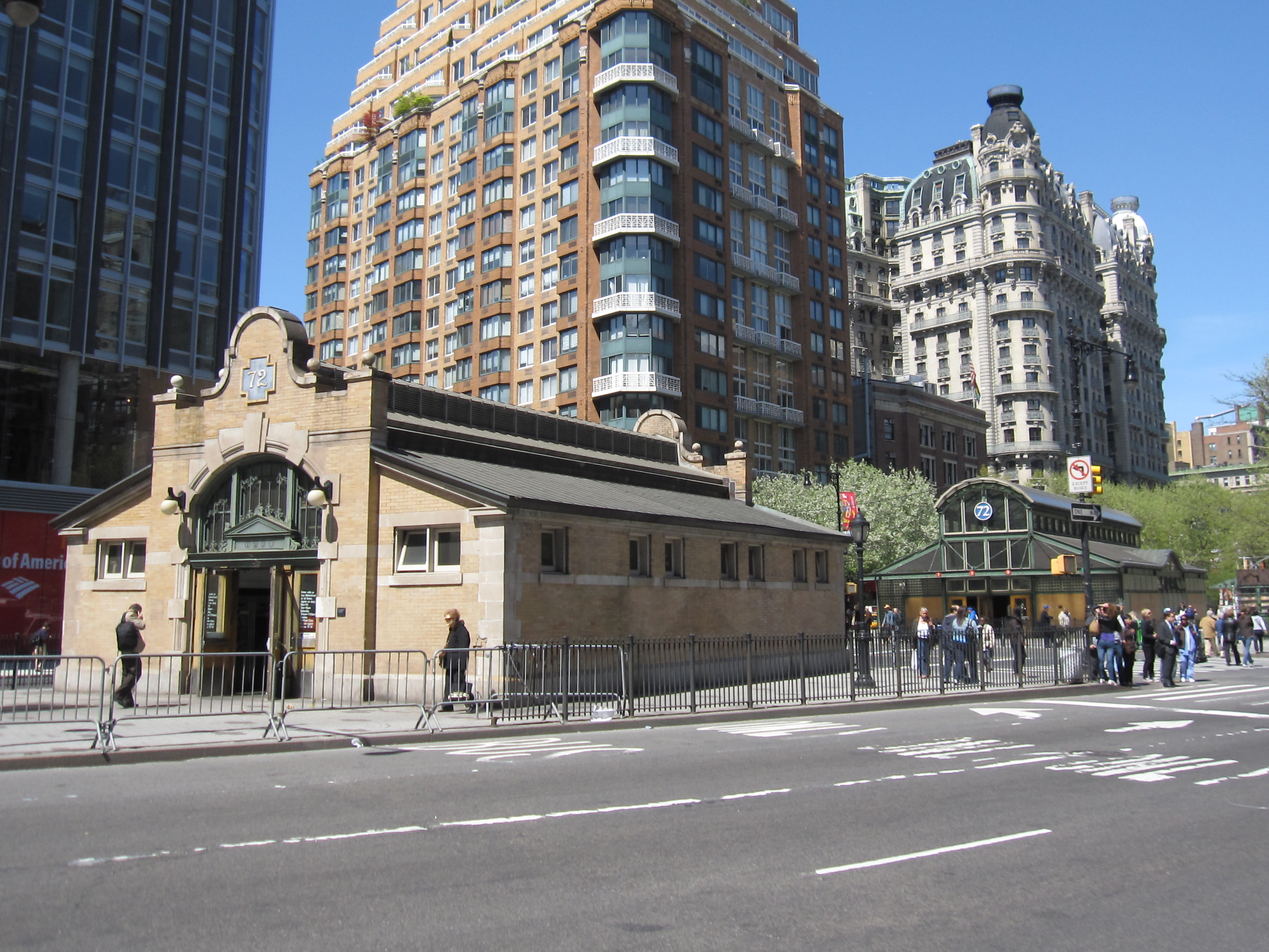
My day started at 8:30 am, so of course, I was up before seven. I put on my one and only suit — at least, the only suit I owned that fit my six-three, 215-pound frame — went over my job talk on multiculturalism, and went on my pensive way to the 72nd Street Subway entrance on Broadway. It was a meat-packed ride to 125th Street, where I had to get off (I had forgotten to walk down to 66th Street to catch the local 1 instead of the express 2 train) and walk the six or so blocks to Teachers College.

Original control house (left) and newer control house, on opposite sides of 72nd Street  (IRT Broadway – Seventh Avenue Line), New York, NY, April 13, 2010. (Gryffindor via Wikipedia). Released to public domain via CC-SA-3.0.

Original control house (left) and newer control house, on opposite sides of 72nd Street (IRT Broadway – Seventh Avenue Line), New York, NY, April 13, 2010. (Gryffindor via Wikipedia). Released to public domain via CC-SA-3.0.

After that, my day was an eight-hour blur, meeting with faculty, grad students and deans. Making sure not to eat too much while being grilled with questions over lunch. Giving my job talk and making sure to tell jokes, to bring up facts relevant to this history of education job, and, of course, to smile. Talking with grad students about how I finished my 505-page dissertation in twenty-seven months, about my teaching style and about growing up in Mount Vernon. It was as intense a process as I had expected it to be, but I felt at the end that I’d done everything possible to get the job.

I knew that I was one out of only five candidates invited to interview, out of over 500 applicants. I even had the chair of the History Department, Steve Schlossman, lobby on my behalf for the job, prior to my interview. And, despite my former advisor in Joe Trotter, I’d managed to put together a group of letters from folks that should’ve passed muster. All I could do after the interview was wait.

But life didn’t wait to intervene. After leaving the interview for the hotel, I changed into my more casual clothing, jeans and a long-sleeve t-shirt, and went off to Tower Records and Barnes & Noble on 66th and Broadway, and later, Haagan Dazs (that last one was a big gastrointestinal mistake!).  

From the moment I walked in the door at Barnes & Noble until I left a half-hour later, a Latino security guard tailed me as I perused books in the African American nonfiction, Cultural Studies and Music sections of the store, across three floors. As I walked out, I walked up to the guard and said

“While you were stalking me, you probably let half a dozen White folks slip out of here with books and CDs. Did you learn anything while you were watching me?”

“I was just doing my job,” the dumb-ass security guard said in response.

“Well, if following a Black guy around for thirty minutes is part of your job, you deserve to lose your job,” I said to him as I walked out.

It was a bit of a harbinger of things to come. I was more pissed off about these everyday slights — or, rather, microaggressions — than I’d been before Trotter and my doctorate. And I was less patient about waiting for what I wanted than I’d been as a grad student.

What your second-place prize often looks like, May 12, 2014. (http://www.wmciu.org.uk/).

What your second-place prize often looks like, May 12, 2014. (http://www.wmciu.org.uk/).

Three weeks later, I received a reimbursement check for my travel and other expenses, and within twenty-four hours, a call from the search committee chair. I’d finished second for the job. Second! To whom, I still don’t know. The chair kept telling me, “you didn’t do anything wrong…you did a very good set of interviews,” as if those compliments would pay my rent next month. I was disappointed, hopeful, but disappointed. It was my first shot, my best shot, and I’d given my best effort. “What now?,” I thought.

It’s a question that I still must ask seventeen years, two books and two careers later. I’ve long since realized that the question of what my life would’ve been like if I’d gotten the Teachers College job was moot, because my issues were about more than finding work. I still would’ve been unhappy, with a New York-esque rage to go with it.

So I counted my blessings, and I count them still. Not getting this particular job bought me the time and energy I needed. I needed that time, to see myself as the writer I also wanted to be, not just the educator and thinker I already knew I was. A better, more personable, more revealing and feeling writer than the cold and metallic one that grad school and Trotter helped turn me into by the end of ’96.

← Older posts
Newer posts →

Boy @ The Window: A Memoir

Boy @ The Window: A Memoir

Places to Buy/Download Boy @ The Window

There's a few ways in which you can read excerpts of, borrow and/or purchase and download Boy @ The Window. There's the trade paperback edition of Boy @ The Window, available for purchase via Amazon.com at http://www.amazon.com/Boy-Window-Donald-Earl-Collins/dp/0989256138/

There's also a Kindle edition on Amazon.com. The enhanced edition can be read only with Kindle Fire, an iPad or a full-color tablet. The links to the enhanced edition through Apple's iBookstore and the Barnes & Noble NOOK edition are below. The link to the Amazon Kindle version is also immediately below:

scr2555-proj697-a-kindle-logo-rgb-lg

Boy @ The Window on Amazon.com: http://www.amazon.com/Boy-The-Window-Memoir-ebook/dp/B00CD95FBU/

iBookstore-logo-300x100

Boy @ The Window on Apple's iBookstore: https://itunes.apple.com/us/book/boy-the-window/id643768275?ls=1

Barnes & Noble (bn.com) logo, June 26, 2013. (http://www.logotypes101.com).

Boy @ The Window on Barnes & Noble: http://www.barnesandnoble.com/w/boy-the-window-donald-earl-collins/1115182183?ean=2940016741567

You can also add, read and review Boy @ The Window on Goodreads.com. Just click on the button below:

Boy @ The Window

Twitter Updates

Tweets by decollins1969
  • RSS - Posts
  • RSS - Comments

Archives

  • June 2025
  • April 2023
  • September 2022
  • August 2022
  • July 2022
  • June 2022
  • May 2022
  • April 2022
  • March 2022
  • January 2022
  • December 2021
  • November 2021
  • October 2021
  • September 2021
  • August 2021
  • July 2021
  • June 2021
  • April 2021
  • March 2021
  • February 2021
  • January 2021
  • December 2020
  • November 2020
  • October 2020
  • September 2020
  • August 2020
  • July 2020
  • May 2020
  • April 2020
  • March 2020
  • January 2020
  • December 2019
  • November 2019
  • August 2019
  • July 2019
  • June 2019
  • May 2019
  • April 2019
  • March 2019
  • February 2019
  • January 2019
  • December 2018
  • November 2018
  • October 2018
  • September 2018
  • August 2018
  • July 2018
  • June 2018
  • May 2018
  • March 2018
  • February 2018
  • January 2018
  • December 2017
  • November 2017
  • October 2017
  • September 2017
  • August 2017
  • July 2017
  • June 2017
  • May 2017
  • April 2017
  • March 2017
  • February 2017
  • January 2017
  • December 2016
  • November 2016
  • October 2016
  • September 2016
  • August 2016
  • July 2016
  • June 2016
  • May 2016
  • April 2016
  • March 2016
  • February 2016
  • January 2016
  • December 2015
  • November 2015
  • October 2015
  • September 2015
  • August 2015
  • July 2015
  • June 2015
  • May 2015
  • April 2015
  • March 2015
  • February 2015
  • January 2015
  • December 2014
  • November 2014
  • October 2014
  • September 2014
  • August 2014
  • July 2014
  • June 2014
  • May 2014
  • April 2014
  • March 2014
  • February 2014
  • January 2014
  • December 2013
  • November 2013
  • October 2013
  • September 2013
  • August 2013
  • July 2013
  • June 2013
  • May 2013
  • April 2013
  • March 2013
  • February 2013
  • January 2013
  • December 2012
  • November 2012
  • October 2012
  • September 2012
  • August 2012
  • July 2012
  • June 2012
  • May 2012
  • April 2012
  • March 2012
  • February 2012
  • January 2012
  • December 2011
  • November 2011
  • October 2011
  • September 2011
  • August 2011
  • July 2011
  • June 2011
  • May 2011
  • April 2011
  • March 2011
  • February 2011
  • January 2011
  • December 2010
  • November 2010
  • October 2010
  • September 2010
  • August 2010
  • July 2010
  • June 2010
  • May 2010
  • April 2010
  • March 2010
  • February 2010
  • January 2010
  • December 2009
  • November 2009
  • October 2009
  • September 2009
  • August 2009
  • July 2009
  • June 2009
  • May 2009
  • April 2009
  • March 2009
  • February 2009
  • January 2009
  • December 2008
  • November 2008
  • October 2008
  • September 2008
  • August 2008
  • July 2008
  • June 2008
  • May 2008
  • April 2008
  • March 2008
  • February 2008
  • January 2008
  • December 2007
  • November 2007
  • October 2007
  • September 2007
  • August 2007
  • July 2007
  • June 2007

Recent Comments

MaryPena's avatarMaryPena on My Day of Atonement/Bitter Hat…
decollins1969's avatardecollins1969 on No Good Teaching Deed Goes…
Mary Rose O’Connell's avatarMary Rose O’Connell on No Good Teaching Deed Goes…

NetworkedBlogs on Facebook

NetworkedBlogs
Blog:
Notes From a Boy @ The Window
Topics:
My Life, Culture & Education, Politics & Goofyness
 
Follow my blog

616 616 East Lincoln Avenue A.B. Davis Middle School Abuse Academia Academy for Educational Development AED Afrocentricity American Narcissism Authenticity Bigotry Blackness Boy @ The Window Carnegie Mellon University Child Abuse Class of 1987 CMU Coping Strategies Crush #1 Crush #2 Death Disillusionment Diversity Domestic Violence Economic Inequality Education Family Friendship Friendships Graduate School Hebrew-Israelites High-Stakes Testing Higher Education History Homelessness Humanities Humanities Program Hypocrisy Internalized Racism Jealousy Joe Trotter Joe William Trotter Jr. K-12 Education Love Manhood Maurice Eugene Washington Maurice Washington Misogyny Mother-Son Relationship Mount Vernon High School Mount Vernon New York Mount Vernon public schools Multiculturalism MVHS Narcissism NFL Pitt Pittsburgh Politics of Education Poverty President Barack Obama Race Racial Stereotypes Racism Relationships Self-Awareness Self-Discovery Self-Reflection Sexism Social Justice Teaching and Learning University of Pittsburgh Violence Whiteness Writing

Top Rated

Blog at WordPress.com.

  • Subscribe Subscribed
    • Notes from a Boy @ The Window
    • Join 103 other subscribers
    • Already have a WordPress.com account? Log in now.
    • Notes from a Boy @ The Window
    • Subscribe Subscribed
    • Sign up
    • Log in
    • Report this content
    • View site in Reader
    • Manage subscriptions
    • Collapse this bar
 

Loading Comments...