• About Me
  • Other Writings
  • Interview Clips
  • All About Me: American Racism, American Narcissism, and the Conversation America Can’t Have
  • Video Clips
  • Boy @ The Window Pictures
  • Boy @ The Window Theme Music

Notes from a Boy @ The Window

~

Notes from a Boy @ The Window

Category Archives: Religion

High School, When 30 Makes You Old(ish)

18 Sunday Jun 2017

Posted by decollins1969 in 1, Boy @ The Window, Christianity, culture, Eclectic, Jimme, Mount Vernon High School, Mount Vernon New York, My Father, Politics, Pop Culture, race, Religion, Youth

≈ Leave a comment

Tags

"I Grew Up In Mount Vernon", Facebook Page, Father's Day, Fatherhood, Graduation Ceremony, High School Graduation, High School Reunions, Humanities, Memorial Field, MVHS, Ostracism, Self-Awareness


Réunion Island’s (French department, off Madagascar) Piton de la Fournaise, lava flow, February 26, 2005. (Samuel A. Hoarau via Wikipedia). Released to public domain via CC-SA-3.0.

Today I am thirty years removed from my Mount Vernon High School graduation. Yay me (and 500+ others, I suppose)! But at forty-seven and a half years old, this also means I’m in my late forties, older than the age of many of my teachers on the day I wore my cap and gown on Memorial Field.

What I am still young and old enough to remember is the distance between me and my classmates, acquaintances (since I really didn’t have any friends back then), and family. Putting up a good front, a mostly blank front with an occasional laugh or smile, was what I did in public back then, enough to make it appear I wasn’t an outcast. Except that I was. But it wasn’t just the silent-treatment folks who reminded me that I was nothing and meant nothing to them within days of the MVHS graduation. I felt it, knew it, and wanted to escape it, every single day back in ’87.

There have been at least two high school reunions since Thursday, June 18, 1987. One was in September 1997, way too early to do a get-together from where I sit. Not to mention, I was coming off of three months of post-PhD unemployment, and wouldn’t have wanted to spend money I didn’t have to impress people with whom I could’ve never shared good times a decade earlier. The other was five years ago, a more appropriate frame for a reunion, but it was part of a group of reunions between 1985 and 1989 (or more even). I barely knew half my classmates in the Class of ’87, a couple dozen from ’86, and a few from ’85 and ’88. All together, it would’ve felt like a room full of strangers to me.

But at thirty or more years, would I want to go to a reunion now or in the future? I really don’t know. Part of the problem with reunions is the same problem I had in Humanities and in MVHS. I would have to fit someone’s predetermined mold or role. If I went in as Donald Earl Collins, would anyone actually remember me or acknowledge me as my true self? Could I be Donald Earl Collins the writer or historian or educator? Could I be the disillusioned Christian, the anti-racist American, or the middle-aged athlete who does yoga and can still hit threes despite my IT-band issues? Or, will I just fall into my role as the super-smart but enigmatic loser, the wack-ass weird mofo that scores saw me as three decades ago?

I know one thing my ex-mates wouldn’t see me as — a father (after all, today is Father’s Day). I guarantee you, some of the folks in my class took bets as to whether I was straight, gay, asexual, or if I’d have sex with another human before the Rapture! Yet I’ve been married for more than seventeen years, and a father for almost fourteen. Much longer than I was ever in high school, Humanities, or Mount Vernon’s public schools. This is what makes me old and keeps me young. Family, love, parenting, and making pancakes, bacon, and eggs for Sunday brunch.

Memorial Field in complete disrepair, locked up (and like me in 1987, locked out), April 2, 2017. (Mark Lungariello/The Journal News).

The day of graduation in 1987 was a trip in itself, between an 87-year-old graduating with our class, the sudden hugs and immediate ostracisms that occurred, the triple-H evening in polyester in the middle of Memorial Field, and my father’s drunken attendance. It was a clash of White Italian Mount Vernon, Black elite Mount Vernon, and stereotypically ghetto Mount Vernon, with a splash of affluence, Afro-Caribbean, and other Mount Vernons. That’s what made it a strange ceremony, a last look at my hometown’s population as a teenager, good and bad.

There’s someone on Facebook who runs the page “I grew up in Mount Vernon.” My former classmate frequently blocks or admonishes participants for negative posts or negative portrayals of Mount Vernon. His defense: he wants the page to be “a place of positivity.” It’s his page, and he should be able to do what he wants with it (within reason). However, “positivity” is not the same thing as “positive posts only.” You should be able to generally like Mount Vernon and occasionally discuss issues affecting people in town that aren’t positive ones. Like poverty. Like the need for more social justice activism and more political participation. Like the need for a donut shop on par with the former Clover Donuts.

Bill Cosby in midst of his “Pound Cake” speech (with Rev. Jesse Jackson in background), NAACP 50th Anniversary of Brown decision gala, Washington, DC, May 17, 2004. (http://blackpast.com).

Really, I find this “I grew up in Mount Vernon” Facebook page yet another example of how a privileged group of folk get to frame a conversation for people who can’t or won’t speak for themselves. Middle-class, one-way-thinking, Black respectability politics folk whose Christian ethics blind them to history, racism, poverty, misogyny, homophobia/heterosexism, and other -isms and -obias that affect their neighbors. The page is smug, elitist, and exclusionary. I rarely look at the page, and I’ve posted to it maybe three times in seven or eight years. “I grew up in Mount Vernon” is a reminder that I share little in common with these Mount Vernonites, even as my socioeconomic and educational status has changed over the years.

As a father, though, I am reminded about the need to protect and to nurture, balanced with the need to give my son room to grow and learn. I may not be able to stop a cop from exercising his/her lethal racism with a badge, but I can prepare my son as best I can to be in public anyway. When it comes to Mount Vernon, MVHS, or any future reunion I may decide to attend, maybe, just maybe, my ex-classmates should be as ready to see all sides of me. At least as much as I have granted that their version of Mount Vernon is one that is real for them, if not for me and many others.

I’ve Been Blogging For a Decade, And…

06 Tuesday Jun 2017

Posted by decollins1969 in 1, Boy @ The Window, culture, Eclectic, Pittsburgh, Politics, Pop Culture, race, Religion, Work, Youth

≈ Leave a comment

Tags

10 Years, Blogger, Blogging, Fear of a "Black" America, Giving, Highlights, Stats, Teaching and Learning, What's Next, WordPress, Writing


Me comatose on my MacBook keyboard, March 29, 2013. (Donald Earl Collins).

This was what I wrote for my first blog post on my former Fear of a “Black” America website on Monday, June 4, 2007.

It had taken me a month of brushing up on my HTML and a week of negotiating the code between Blogger.com and my former website (hosted by Earthlink) to embed my blog page. All so that I could post for the first time.

I was transitioning from being the writer and “recovering academician” on multiculturalism to the writer I am now, I guess. But I didn’t want to lose a website I’d spent months of self-taught HTML time and energy developing, and years of additions to attract views, comments, and the occasional interview. At the time, FearofaBlackAmerica.com averaged 1,200 unique visitors a month, after a high of 4,000 per month through 2004 and 2005, mostly the result of pumping my first book. Or possibly, the confusion between my book title and PE’s 1990 album, Fear of a Black Planet, but given the feedback, it was much more the former than the latter.

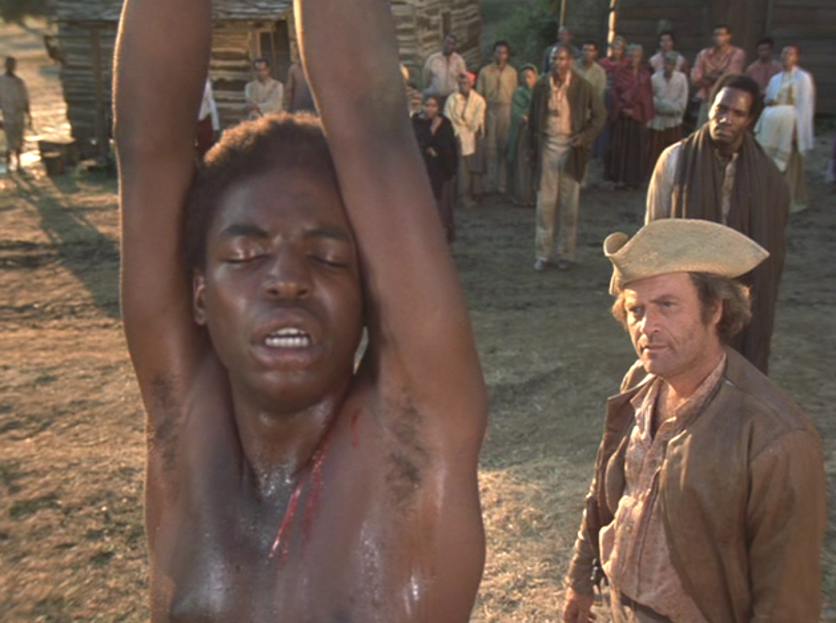
Kunta Kinte being whipped, Roots (1977) screenshot, July 6, 2012. (http://irvine.wikis.gdc.georgetown.edu). Qualifies as fair use under US Copyright laws because of screenshot’s low resolution.

So I went for it, not knowing if anyone would read any of my words, feel any of my emotions, or ever express a thought in support, solidarity, or disagreement. Once I started writing about poverty, racism, and child abuse while growing up in Mount Vernon, New York, though, it didn’t take long for random folks to start sending me missives about how I “deserved” my stepfather beating me up, or how grateful I should be for growing up in a city where Denzel Washington once lived. The kind of respectability politics bullshit that writing about a childhood full of pain tends to attract.

It wasn’t until I moved my blog to WordPress in 2010 that the work of writing and adding multimedia to my musings really took off. It helped that I managed to use contemporary events to tell my story, to provide commentary on human depravity beyond the world of research. By 2012, I was averaging more than 12,000 views a month, and had more comments from folks about my blogs than I could respond to in a timely manner. Excerpts from some of my blogs even made it into social and mainstream media.

Overall, there have been over 250,000 unique visitors to and 300,000 views of my blog off both the Blogger and WordPress platforms over the past decade. With this one, I’ve written 944 total posts, about 900,000 words since June 2007. Among my most popular are

  • Ex-Stepfather’s Balance Sheet (August 2010), 23,741 views
  • A Baseball Bat and a Father’s Absence (July 2011), 7,634 views
  • Why Ferengi Are Jewish & The Maquis Are Latino (January 2011), 4,961 views
  • World Book Encyclopedia’s Insidious Effect (March 2011), 3,555 views
  • Larry Glasco and the Suzy-Q Hypothesis (August 2011), 2,668 views

Standing ovation, opera house unknown, May 21, 2012.(http://www.thelmagazine.com).

I think that this is a good representation of what my blog has offered me as a writer and, hopefully, the tens of thousands of folks who read my musings every year. I have no idea what this blog will turn into over the next couple of years, as I continue to pursue more and more freelance writing projects, and maybe even, another book. But I thank all of you for your support, your criticisms, and your reads and views over the years. May I never take this for granted.

The #45 Mix Tape

28 Sunday May 2017

Posted by decollins1969 in 1, Academia, Boy @ The Window, Christianity, culture, Eclectic, eclectic music, music, Patriotism, Politics, Pop Culture, race, Religion, Youth

≈ Leave a comment

Tags

"White Discussion", #45MixTape, Capone-N-Noreaga, Destruction, Drake, En Vogue, Fleetwood Mac, Greed, Islamophobia, James Blunt, Lies, Live, Madonna, Misogyny, Narcissism, President Donald J. Trump, Racism, Russia, Sarcasm, Sting, Trump Supporters, Xenophobia


Then candidate 45 hugging US flag at campaign rally (remember, he’s the anti-Midas, everything he touches turns to crap), Tampa, FL, June 11, 2016. (Chris O’Meara/AP, Times Free Press).

I’m changing it up a bit this weekend. With so much focus on the apocalypse that is 45 and his band of greedy, racist, misogynistic, Islamophobia, and Russia-helping yes-men, I have something goofy and meaningful to say. There are already several comprehensive syllabi on Donald J. Trump out, though, so adding my scholarly musings and sources to this almost inexhaustible topic would be a futile exercise. Instead, I have a mix tape (sort of), one that highlights the changes in my music tastes over time and a group of songs that I mostly despise. Just like I loath most of America’s knee-jerk arguments over 45 and his minions from the past two years.

1. “Little Lies” (Fleetwood Mac, 1987). From their Tango In The Night album. Christine McVie sounds like a shot dog on this song (and Lindsey Buckingham doesn’t sound much better). But this was a Top-5 hit on Billboard in 1987, around the same time Trump was likely being turned by Vladimir Putin and the KGB in the former USSR. And, the song’s theme is pretty obvious.

2. “Live to Tell” (Madonna, 1986). Not exactly my favorite artist, but a one-time favorite song from the one-time “Material Girl” for me three decades ago. After several sources quoting the deposed Michael Flynn, “he has a story to tell,” I remembered Madonna’s lyrics, “I have a tale to tell.” Come to think of it, doesn’t Jared Kushner have a tale to tell about his and 45’s “thousand lies?”

3. “Spies Like Us” (Paul McCartney, 1985-86). Proof positive that Baby Boomers will vote for anything, this piece of poop was a Top-10 hit in January 1986. It’s also emblematic of the theme of ineptitude and macabre humor that runs through the song, representing the movie by the same title, and Flynn, Kushner, Carter Page, Roger Stone, and the rest of the monolithic bloc of 45’s White men.

4. “Russians” (Sting, 1985-86). Why? Because Russians (maybe with the exception of Josef Stalin and Putin) “love their children too” — didn’t you know? But they love messing with our corrupt democracy even more.

5. “Oops!…I Did It Again” (Britney Spears, 2000). God, I have no idea why anyone would’ve ever liked this zit-popper. But the then-eighteen-year-old Spears was prescient with the line “I’m not that innocent.” Neither is 45. He made be a narcissistic buffoon who can’t put two coherent sentences together with a pen, two pieces of paper, Scotch tape, and a flashlight. But he knows where his money’s coming from, no?

6. “Just A Friend” (really, “Jus’ a Friend,” Biz Markie, 1989-90). Same theme as Britney Spears’, with a twist of crossover appeal, a ridiculous baroque get-up, and off-key singing that could only be topped by NBA Hall-of-Famer (and internalized racist) Charles Barkley. But it captures perfectly the love affair between ditto-headed supremacist Americans and 45 (it doesn’t go the other way, of course).

7. “White, Discussion” (Live, 1994). A bit of my favorite grunge, which I have used before. It applies to the folks, the so-called American liberals ready to blame non-voters, third-party voters, and Trump supporters for the rise of 45. Still, many of them are to blame also, because most of them aren’t liberal. If you supported Hillary Clinton in 2016 based on principles, and not out of pragmatism, you are not a liberal, and have been voting in center-right candidates for decades. As the song goes, “look where all this talking got us, baby.”

8. “Stranger In Moscow” (Michael Jackson, 1996-97). Jackson’s introspective song applies here as well, because, well, he uses Russia and the theme of isolation throughout. Except in 45’s case, he likes it that way. And apparently, so does Russia.

9. “Lies” (En Vogue, 1990). Trust me, it fits! (s/o to Dawn Robinson).

10. “Thug Paradise” (Capone-N-Noreaga/Tragedy Khadafi, 1997). The lyrics below say it all:

I twist the truth, I rule the world, my crown is called deceit
I am the emperor of lies, you grovel at my feet
I rob you and I slaughter you, your downfall is my gain
And still you play the sycophant and revel in my pain
And all my promises are lies, all my love is hate
I am the politician, and I decide your fate

Supporters and sycophants beware: 45 is coming for you, in a steamroller with a 700-horsepower engine going one hundred.

11. “Fake Love” (Drake, 2017). I’m a Aubrey Graham fan. I can’t stand Drake. Still, this release from More Life should be required listening from 45 supporters who think they’re not racist, misogynistic, xenophobic, or narcissistic. He also has a song on this album titled “Portland,” though I seriously doubt he was thinking about this weekend or Richard Collins III.

12. “Waterfalls” (TLC, 1995). Yep, yep, yep. Both 45 and MAGA-types have been chasing illusory rainbows and torrents off jagged edges, and damning everyone who they perceive as a threat along the way. And they’re both on a one-way trip.

13. “Don’t Forget Me When I’m Gone” (Glass Tiger, 1986). This is the song 45 should play whenever he finally leaves office, whether by resignation, impeachment, and/or force. As everything 45 touches turns into crap, Glass Tiger’s Top-10 schlock cannot be made any worse. Plus, not even Glass Tiger would complain about 45 using their crappy music.

14. (Bonus Track) “No Bravery” (James Blunt, 2006). 45 is part of a continuum, one that stretches through all of American history. On the international stage, though, it has been one of constant chest-thumping while killing innocents in the name of freedom or national security. Though Blunt’s was about fighting for the UK, the song has much more applicability in the US. We have so much blood on our hands, and 45 means to add to this fetid river on the domestic and international frThe #45 Mix Tapeonts.

If I Could Redo Time…

18 Thursday May 2017

Posted by decollins1969 in 1, Academia, Boy @ The Window, Carnegie Mellon University, Christianity, culture, Eclectic, Mount Vernon New York, New York City, Pittsburgh, Politics, Pop Culture, race, University of Pittsburgh, Upper West Side, Work, Youth

≈ Leave a comment

Tags

Alternative History, Angelia, Barbara B. Lazarus, Betrayal, CMU, Graduation Ceremony, Job Talk, Joe William Trotter Jr., Laurell, Mother-Son Relationship, Peter Stearns, PhD Graduation, Pitt, Self-Reflection, Steve Schlossman, Teachers College, Triumph, Westchester Business Institute


Show art from SyFy’s 12 Monkeys (the home of alternative timelines), March 2016. (http://syfy.com).

Mother’s Day Week 1997 was one of triumph, betrayal, and deep self-reflection, helping to shape my last two decades. On that fateful Sunday, I finished preparing my transparencies for the overhead projector that I would need to use for my job talk on multiculturalism, race, and education at Teachers College the next day. My then-girlfriend Angelia came over around 1 pm, helped me pack as we talked about the job, my research, her missing me for the next few days, and my wishing I could take her with me to New York. Then we called a cab, went out to Pittsburgh International Airport, and I boarded my 6 pm flight bound for La Guardia.

The next day, that second Monday in May 1997, went well despite barely six hours of sleep (a typical night for me now). I met with Teachers College faculty, graduate students, a department chair, an assistant dean, and the dean. I gave my all-important job talk, fielded questions, and otherwise felt that I brought my heat in this potentially life-changing interview. By 4 pm, it was over, I was exhausted, but I was more than content. I figured I made myself a tough out at worst, and gave myself a real chance at this assistant professor job at best.

I spent the night in Manhattan at the Hotel Beacon, and ordered room service, instead of going out to Barnes & Noble or Tower Records. I had to rest up before going to see my family at their temporary apartment in Yonkers. Refreshed and with my old blank-faced-Donald mask on, I checked out and took the 1 train up to Van Cortlandt, then the Bee-Line bus into Yonkers, where my Mom and younger siblings had been living for a year and a half.

My sister Sarai (1983-2010) in Mom’s cap-and-gown, May 14, 1997. (Donald Earl Collins).

Tuesday was Mom’s graduation day from Westchester Business Institute. After ten years of on-and-off-again enrollment, Mom had finished her associate’s degree in accounting. I was really happy for her. That day from 10 am on was about getting Mom and Maurice, Yiscoc, Sarai, and Eri cleaned up and ready for the long bus trip up Broadway to White Plains, Westchester County Center, and hundreds of other WBI graduates. Of all of us, I think my sister Sarai had the best time. After Mom tossed her cap in the air (and caught it), Sarai begged to put on Mom’s graduation digs. My fourteen-year-old sister walked around for the rest of the night as if she had graduated from college!

Wednesday was a difficult day. I had a noon-ish flight to catch out of La Guardia back to the ‘Burgh, as my own PhD graduation was four days away. Though Mom and I agreed that I didn’t have the funds to fly her out and put her up in Pittsburgh, I didn’t agree that my teenager siblings (all between nearly eighteen and thirteen at this point) couldn’t watch over themselves for two or three days. “Are you kiddin’?,” Mom said when I suggested this, and added, “the kids would tear this mutha up while I’m gone.”

But then, as I was getting packed up to do the Bee-Line Bus, 1 train to Times Square, Shuttle to Grand Central, and cab to LGA, Mom said something that made me happy we decided she wouldn’t be at my graduation. “You know, you were in school so long, you could’ve had another high school diploma.” The scorn with which she said it, it was like someone suddenly stabbed me in the stomach. It was the first time I truly saw Mom’s vanity, possibly even, her jealousy. After I said my goodbyes, promising my brother Maurice that I’d come to his Mount Vernon High School graduation in June, Mom’s sentence of sneering envy was all I thought about on the trip back.

“Maybe it’s a good thing you didn’t invite your mom,” Angelia said after I told her about Mom and her brooding behavior Wednesday evening. “But, this means she will have never seen me at any graduation, seen where I’ve lived the past ten years, seen how hard I worked,” I cried. Angelia got up from her dining room table, walked around to my side, sat in my lap, and gave me a hug. I’m so glad she didn’t let go, and let me cry myself out on her shoulder and chest for a few minutes.

I woke up in Angelia’s bed Thursday morning, having slept past 9 am. It was the most sleep I’d had in five days. I was remarkably refreshed. I rarely stayed over at Angelia’s because the back of her third-floor flat was practically an urban wildlife reserve, between the raccoons, squirrels, pigeons, cardinals, blue jays, rabbits, and the occasional deer. Not this morning. They seemed to know I needed not to hear them that morning.

The next three days were a blur. I ran around Pittsburgh and Carnegie Mellon and Pitt saying formal goodbyes to a few colleagues and former professors, something I wouldn’t have had time for if Mom had been in Pittsburgh with me. Angelia and I spend most of Saturday with her mommy, and then with my friend Laurell, Laurell’s sister Naomi, and their charge Archie. It would be the only time anyone from my Humanities days would witness me graduate with one of my Pittsburgh degrees.

That Sunday, May 18, was going to be a scorcher of a day. I was to be on stage as part of the tent-revival-as-graduation ceremony at CMU (as they did for all the PhD graduates). But there was no way I’d wear a full suit. So I compromised. I put on a shirt and tie under my gown, wore my baggy basketball shorts for bottoms, and put on shoes and dress socks to complete this goofy yet comfortable picture. I marched across the stage and shook Peter Stearns‘ hand, as he was the dean of humanities and social sciences at CMU then. Too bad I didn’t say what I thought about his fast food approach to teaching and learning to him in that moment.

But, after that first ceremony, the individual and group pictures, a bunch of folks had to leave. Laurell, Naomi, and Archie had to get back to Virginia for yet another week of school — that’s what happens between two school teachers and an eighth-grader for graduation attendees. My friends Ed and James had errands to run, and Angelia’s mom had some church-related affairs to get to. So, for the moment, it was just me and Angelia, walking from CMU to The University Club, by Pitt’s Thackeray Hall.

We get there, in this quiet room, with seven burgundy diploma holders, sitting on a table that staff had covered in this dark blue velvet cloth. My now former advisor, Joe Trotter, arrived a few minutes later. I’d only seen him once in the six months since he finally approved my dissertation, ending what had been a two-year ordeal of betrayal, slights, and threats while writing my 505-page tome. Yet, all I was thinking was, “Why are we doing the departmental ceremony in a building in the middle of Pitt’s campus?”

CMU leather diploma album, May 17, 2017. (Donald Earl Collins).

Steve Schlossman, the history department chair, was this ceremony’s emcee. He introduced each of us, our research, any awards we may have won, and our dissertation advisors, all as he handed us our doctorates. I was second on the list to go up and receive my diploma, shake hands with Schlossman and Trotter. I did say a few words, mostly about hard work and perseverance. “With God and faith, and of course, my girlfriend Angelia, even though that word ‘girlfriend’ hardly defines who you are to me, I wouldn’t be standing here right now. Thank you.” That was how I ended my three-and-a-half minute speech.

There was a small reception afterward, and like most CMU ceremonies I’d been a part of since 1993, this one was nearly blindly boring. Except that my friend James did show up and gave me a pat on the back and a handshake. Except that my dear friend and mentor Barbara Lazarus came and gave me a big hug. Except that Angelia had insisted on taking pictures of me from the time I got up to get my degree until the moment we left.

We were out around 6:30 pm. It had rained and poured, as thunderstorms had rolled through during the second ceremony. I wish Mom could’ve been there, seen what I had seen, felt what I was feeling. But, knowing what I knew now, the personal triumph that this graduation day was couldn’t be diminished. I had long since stopped living for what Mom wanted me to be — a sounding board, a babysitter, an extra source of income. For the first time, I no longer felt guilt about not going back to New York after my undergraduate years at Pitt, ready to bail my family out of poverty on a $25,000-a-year salary. For the first time, I realize Mom’s burdens were never mine to carry.

Psalm 23 and Christian-isms I Don’t Understand

14 Friday Apr 2017

Posted by decollins1969 in 1, Boy @ The Window, Christianity, culture, Eclectic, eclectic music, music, Patriotism, Politics, Pop Culture, race, Religion, Youth

≈ Leave a comment

Tags

American Christians, American Narcissism, Bono, Christianity, God's Politics (2005), Hypocrisy, Jim Wallis, Psalm 23, Social Control, Social Justice, Social Revolution, U2


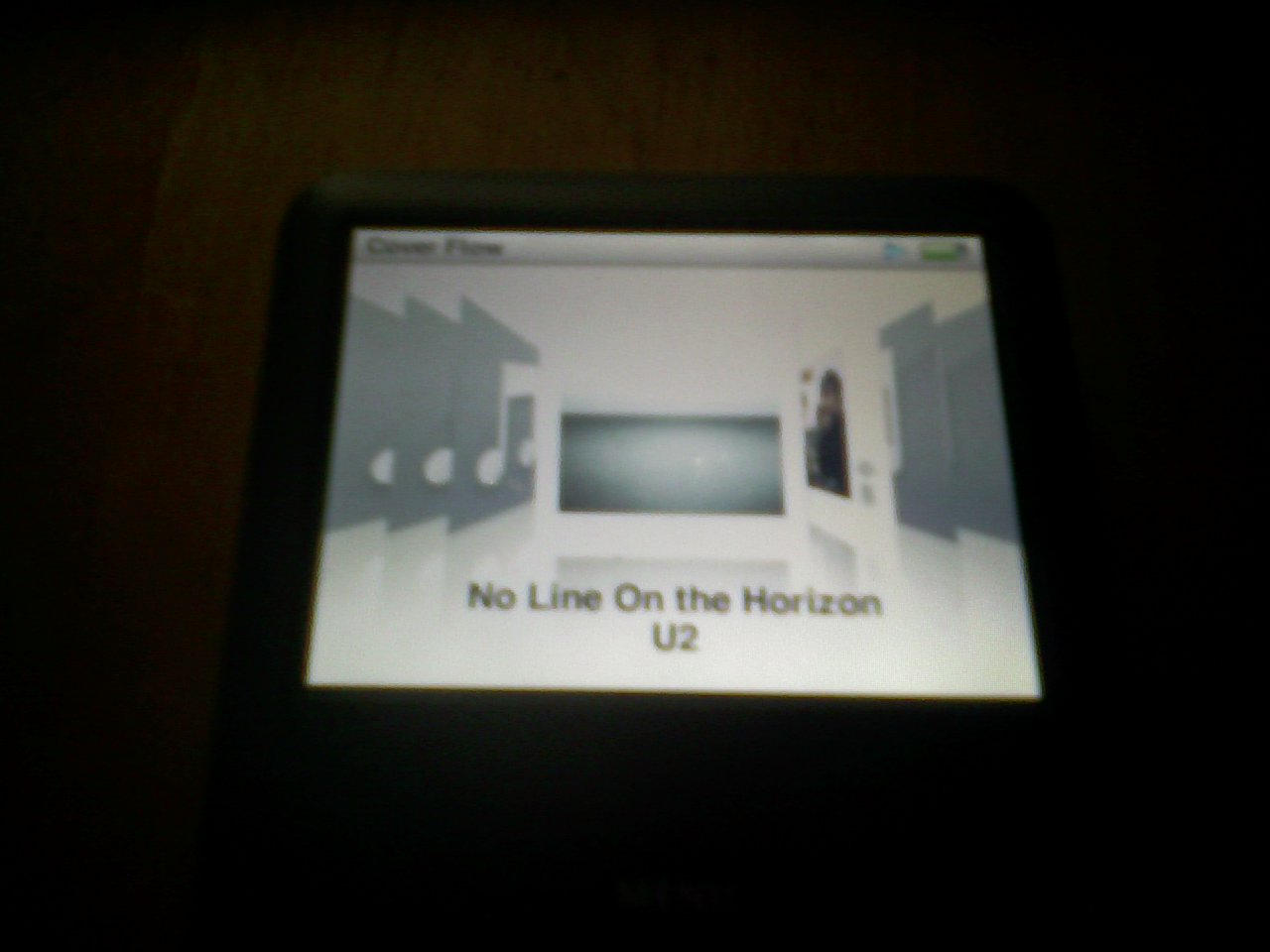
My iPod w/ U2, November 13, 2010. (Donald Earl Collins)

It’s Easter Week for 2017, and year 33 since I became a follower of Christ. I’ve written at length about my conversion and my evolution as a Christian. I’ve also posted about my problems with Christians and the way many impose — or at least, attempt to impose — their racism, sexism, misogyny, hyper-masculinity, heterosexism, homophobia, transphobia, Islamophobia, and anti-Black respectability politics on the world.

For me, it shows most American Christians to be hypocrites as best, and full of shit at worse, when it comes to following the two most basic rules of Christianity. To have “no other gods but God,” and “to do unto others as you would have others do unto you.” For most American Christians (if not Western Christians in general), money is god, Whiteness is god, and the two go together better than the chocolate and peanut butter in a Reese’s peanut butter cup. Both assert that others are but dirty pieces of gum on one’s shoe, that hatred, violence, and permanent superiority in the name of these gods supersedes following any important teaching or practice of Jesus and his disciples.

But that’s not all. After all these years, I still don’t quite get even some of the more mundane Christian practices and assumptions. The most basic one is Psalm 23. For the life of me, I don’t understand why pastors, priests, and parishioners seem to only read the psalm after a person has died. The psalm reads as:

The Lord is my shepherd; I shall not want.
He maketh me to lie down in green pastures; He leadeth me beside the still waters.
He restoreth my soul; He leadeth me in the paths of righteousness for His name’s sake.
Yea, though I walk through the valley of the shadow of death, I will fear no evil; for Thou art with me; Thy rod and Thy staff, they comfort me.
Thou preparest a table before me in the presence of mine enemies; Thou anointest my head with oil; my cup runneth over.
Surely goodness and mercy shall follow me all the days of my life; and I will dwell in the house of the Lord for ever.

The Bajoran Wormhole screenshot (or the entrance to the Celestial Temple), Star Trek DS9. June 18, 2011. (Donald Earl Collins).

It has always seemed to me that the living have needed the verses around “I shall not want,” lying down “in green pastures,” and walking “through the valley of the shadow of death” far more than the dead. No one has explained what Psalm 23 has to do with wakes and funerals to my satisfaction. The way people use Psalm 23 assumes so much about what occurs after we die — something none of us could ever fully comprehend — and completely neglects the reality that the living need rest, peace, and strength in our walk through a corrupt world. Kind of like the way many American Christians value embryos, cats, and dogs over Black and Brown babies, toddlers, and adults.

In 2005, I picked up evangelical Jim Wallis’ book God’s Politics in an attempt to expand my knowledge of the intersection between social justice activism and Christianity. Wallis’ book was supposed to be a primer on how to fight for the rights of the most vulnerable while also standing for “traditional” American Christian values. The book was a hot mess, as it did little more than insist on the right of those who weren’t Christian or following evangelical values (e.g., openly LGBT, pro-choice, womanist, and anti-racist) to exist and to be tolerated. Wallis wasn’t exactly calling for a revolution in God’s Politics. Certainly not when he insisted that many Black play “the race card” in identifying American racism in its myriad forms.

Where I stopped reading, though, was in Wallis’ description of U2 lead singer Bono’s activism and religiosity. Wallis saw Bono as someone “who has become a serious and well-informed activist,” and as a “spiritual man, though not a churchy person.” That was a back-handed compliment. But then Wallis expressed surprise to learn that Bono would get “on his knees” to pray for guidance, as this image of this rock superstar for Wallis was “humbling and heartening.” That came from pages 198-99 of God’s Politics, and that was where I stopped reading. The self-aggrandizement and name-dropping. The assumption that Bono couldn’t possibly be thinking in both social justice and Christian terms because of his profession. And the most obvious fact of all: Wallis likely had never listened to or read a single verse of a U2 song going back to the October album (1980). There are enough Christian and biblical allusions in U2’s catalog to keep most preachers in sermons for a generation. But yeah, let’s assume that anyone other than a devout evangelical Christian is living in sin or isn’t serious about combating Whiteness or poverty or any host of manmade plagues!

Religion in general isn’t the issue. Christianity at its heart is a belief system based on forgiveness, reconciliation, embracing of diverse peoples and differences, and of course, eternal salvation. What people do with religion is what they do with everything else. It can occasionally become a catalyst for spiritual freedom and social change, even revolution. But, much more often, institutionalized religion is a spiritual yoke, a way to control the way multitudes of millions see themselves and the world around them. Funny, then, that American Christianity represents everything that America is, and very little of the basic tenets of Jesus’ teachings in practice. Promoting blind patriotism, a lover’s embrace of money changers — a.k.a., capitalism, a hatred of vulnerable populations, and a tendency to racially self-segregate. This is the American way.

American Christians have let me down in so many ways. We have let our individual -isms and individualism overwhelm whatever it is that supposedly makes us Christian in the first place. If evangelicals want to look for someone to blame for America’s decline since the 1970s, they need only to stand fully unclothed in front of a full-length mirror. Maybe Bono as quoted by Wallis was right when he said that maybe “God [was] on his knees praying” for us to get it together in eradicating poverty, systemic racism, homophobia, HIV-AIDS, and climate change. Too bad most of us aren’t listening.

Forty Years of 616

10 Monday Apr 2017

Posted by decollins1969 in 1, Boy @ The Window, culture, Eclectic, High Rise Buildings, Jimme, Marriage, Mount Vernon New York, My Father, Pop Culture, race, Religion, University of Pittsburgh, Youth

≈ Leave a comment

Tags

425 South Sixth Avenue, 48 Adams Street, 616, 616 East Lincoln Avenue, Child Abuse, Darren, Jimme, Maurice Eugene Washington, Mother-Son Relationship, Neighborhood, Neighbors, Parental Neglect, Sexual Abuse


Screen shot of 616 East Lincoln Avenue, Mount Vernon, NY, June 2016. (http://maps.google.com)

This past weekend marked four decades since my Mom and my late one-time stepfather (though not quite in 1977) Maurice moved me and my older brother from South Side Mount Vernon to an apartment complex three blocks from the Mount Vernon-Pelham border. This is much more a memorial of remembrance than of anything to celebrate.

For me, it was part of an endless series of storms. Mom had filed for divorce with my father and had decided to move in with her allegedly new boyfriend Maurice (who wasn’t so new, as I’d learn years later). My father Jimme’s alcoholism had gotten worse. He had drowned my Mom’s clothes in a bathtub, thrown a color TV out of our second-floor window, and stomped in a glass coffee table during dinner after my seventh birthday in response to the cheating and the divorce. My Mom ended up in the hospital for two months due to the stress and her kidneys, which had almost shut down due to her nonexistent diet. Add to all this the sexual abuse that I had suffered while Mom and Jimme were going at it during the centennial summer of ’76. My world was upside down, in shambles, as shattered as glass blown out of a skyscraper by well-placed plastic explosives.

A week ago, my thirteen-year-old son asked me, “Did you ever live in a house?” Even though I had talked about my life before the move to 616 East Lincoln Avenue before, it had been a few years. I think my son asked because of our plans to move out of our “luxury” high-rise after fourteen years. The truth is, I have lived in four homes over the years. But in my first seven years (with 240 East Third as a notable exception during my Mom’s illness), I grew up in three houses: 24 Adams Street, 48 Adams Street, and 425 South Sixth Avenue. We lived in one-bedroom flats in the first two homes, where we shared a kitchen and a bathroom with one other family. I have memories of playing in the front yards of both, of older neighbors (by toddler standards) hosing down their cars, of older kids and teenagers at the Adams Street Park on monkey bars and shooting hoops. I even remember the day my Mom told me we were moving to 425 South Sixth, August 12, 1974. It was the same week I burned my knee on an over door, the same week Richard Nixon announced his resignation from the presidency.

48 Adams Street, Mount Vernon, NY, November 22, 2006. (Donald Earl Collins)

At 425, we had a two-bedroom, one-bath flat, on the second floor, with a separate entrance. It was as close to owning a home as we got during those years. And boy did my Mom and Jimme blow it! Between the sexual abuse incident and my unconscious attempts at self-erasure, even suicide, 425 never quite felt like home.

The move to 616 occurred about a week after my Uncle Sam clotheslined my father like he was the late Deacon Jones and Jimme was a running back whose career was coming to a crashing halt. I remember it being the second Friday in April, near Easter Sunday time. It had warmed up from the frozen winter of ’77 to the light chills of early spring. But I didn’t feel particularly warmed up inside.

It didn’t help that where we end up moving didn’t look at all like the newer — if more impoverished — series of apartment complexes down the street on Pearsall Drive. It wasn’t the first time I’d been in an apartment building. But from the first time I walked into the A section of 616, I didn’t like it. The vestibule was too dark, the elevator too slow, and the building too smelly for my tastes. Plus, because of the haste of the move and the damage my father had done to our furniture, me and my older brother Darren didn’t even have a bed. From April to December ’77, we slept on the floor or on the couch in the new living room or in our eventual bedroom, with Mom and Maurice staying up sometimes until Johnny Carson time watching sitcoms and the news. So many times in those first months, I felt like I was a rag doll that had been hurriedly thrown into a box marked “Miscellaneous.” I was along for whatever ride Mom and Maurice were on, a permanent reminder of yesterday’s marital storms, a yoke on whatever future they had in mind.

I acted out repeatedly the first twenty months after the move. I chewed on a red-and-blue-striped t-shirt until I had swallowed about a third of it. I began biting and eating my nails until I made the skin underneath bleed. I stuffed sandwiches into the holes I made in my coats, and ate every booger my nose could expel as a substitute for lunch. That’s how much I hated Mom, Maurice, myself, my life, and 616 forty years ago.

Mom and Maurice tried to explain it away as simple selfish jealousy, that as a soft mama’s boy, I wanted Mom to myself. That’s only about twenty or twenty-five percent accurate. What I did know was that Maurice wasn’t my dad, yet Mom foisted him on us as if Jimme had died and none of us had any other choice. What I did know was that I was hurting, and since I was getting an ass-whuppin’ about once a week, I couldn’t lash out. What I did know was that not a single neighbor or kid in the building, especially the Bagleys, welcomed our presence in the building or my existence at 616.

Danger Keep Out sign, April 9, 2017. (http://www.safetysign.com/).

With what I’ve learned about Mom, Maurice, Jimme, myself, and my neighbors since ’77, it’s a wonder I didn’t go up to the roof and just throw myself off it those first two years, or in ’82, ’83, or ’84. God knows I ran away enough, got beat up enough times, and was called “faggot” often enough to see slamming myself into the slate sidewalk leading to 616’s front stairs as a better alternative to living. College was the first opportunity I got to get away from this living hell, and I took full advantage.

Mom and my two youngest siblings still live at 616. The youngest barely remembers the end of the abuse and chaos that I lived through and Mom put up with. The other sibling has horrible memories of his own. After the fire at 616 in ’95, when Mom asked me for advice about where to move after the renovations, I told her, “Anywhere but back to 616.” Mom, as nearly always, didn’t listen to me. I guess misery is as addicting as anything else.

Michael Clayton, My Writing, and 20 Years of Sinai-Wandering

16 Thursday Mar 2017

Posted by decollins1969 in 1, Academia, Boy @ The Window, Carnegie Mellon University, culture, Eclectic, Pittsburgh, Pop Culture, race, Religion, University of Pittsburgh, Work, Youth

≈ 2 Comments

Tags

Academia, Academic Writing, CMU, Dan Resnick, Falsehoods, Gene Clayton, George Clooney, Lies, Michael Clayton, Michael Clayton (2007), Mythology, Pitt, Politics of Academia, Publish-or-Perish, Richard J. Altenbaugh, Scholarship, Sean Cullen, Unwritten Rules, Writing, Writing Career


George Clooney and Sean Cullen in Michael Clayton (2007), March 15, 2017. (http://bbc.co.uk).

My favorite scene from Michael Clayton (2007) is when the title character’s brother Gene (played by Sean Cullen) confronts Michael (played by George Clooney) about the past seventeen years of his career as a fixer.

You got these cops thinking you’re a lawyer. You got these lawyers thinking you’re a cop. You got everybody fooled, don’t you? Everybody but you. You know exactly what you are.

About a year and a half ago, I figured I could insert the words “writer” and “scholar” in those lines, with twenty years of my career(s) for context, and maybe some of the meaning would be correct. I am a writer’s version of Michael Clayton. I’ve got academicians thinking I’m a unscholarly writer, and journalists and editors who think I’ve only written for scholarly audiences. What a mess!

Last year, after receiving a rejection for a version of my article about American narcissism, American racism, and why real conversations on race (whether through Clinton’s Race Initiative or via Ferguson) are all but impossible, I decided no more. I will not seek to submit another scholarly piece to a peer-reviewed scholarly journal ever again. And if asked, unless it’s something I truly feel passionate about, I will say no.

Do not think of this as sour grapes. I have published two full-length journal articles in my career, not to mention a bunch of the standard book reviews, and an op-ed for Teachers College Record in the past. Technically, I am 3-for-11 in publishing academic articles over the past two decades, not great, but hardly abysmal.

My issue is with the elitism and implicit bias that is rampant in the publish-or-perish world of academia. While some folks could argue it is the same in publishing in general, it really isn’t. The unwritten rules in publishing, if not followed, may well still lead to published articles, even if a person is starving and homeless in between. In academic publishing, not following the rules leads to ostracism, and a career dead before it ever begins.

Keep in mind, no scholarly journal pays authors for their articles. It takes about two years to go from submission to publication in most history and education journals. If twenty people read your article, that’s icing on a protein-powder cake. If you aren’t in the tenure-stream, though, it really doesn’t matter how many articles you publish, because it doesn’t provide job stability or security. As a former nonprofit administrator, it scared most of my supervisors whenever and wherever I published, so no benefits there either. For those in tenure-stream positions, it does matter, no matter how crappy the research or how densely unreadable the writing.

After twenty years in the publishing struggle, it’s time to face the truth. I simply wasn’t good enough to publish in academic journals. I’m not talking about my writing ability or research skills. I’m pointing out my eclectic career path, my lack of tenure at an elite university, with few to vouch for me when I was younger and an up-and-comer. My interdisciplinary research on race, on multiculturalism, on education, meant that I was a misfit from day one. Heck, I know for sure in at least one case, a journal editor held my race and age against me.

Sinai Desert, where Moses, the Israelites (and I) wandered for a generation, Egypt, March 9, 2010. (Tommy from Arad via Wikipedia). Released to public domain via CC-BY-SA 2.0.

I know most of the academic writing rat-race is a system of exploitation based in part on fears of joblessness, loss of prestige, and elitism based on class, race, gender, and whether one teaches at an elite university or at a community college. It is based on an academician’s ability to blame themselves and themselves alone for their failings, and not the oppressive publishing system itself. Kind of like the poor blaming themselves for their poverty. Or Whites and Blacks blaming other Blacks for a degenerative culture instead of looking at systemic racism as the real culprit for racial inequality. Academia is very much in and of this wider world of social injustice and oppression, no matter how university presidents attempt to spin it.

Truly, I find the idea of a cold, objective, dispassionate, dense writing style as more serious and scholarly than any other form to be high-grade bullshit. It’s what folks in academia tell each other. Just like many a journalist and editor is a frustrated writer looking for creative and book manuscript-length outlets, many a writer in academia believes their writing (and as often as not, their research) to be much more than it is.

But the biggest issue for me was my elitist and naive attempt to straddle the fence between academic publishing and writing for wider audiences. This living in two worlds began for me during my heady days, my grad school years at both the University of Pittsburgh and Carnegie Mellon. Some of my history professors, like Paula Baker, Kate Lynch, and Joe Trotter, all tried with a considerable amount of frustration to get me to write in more scholarly tones. Others seemed to be fine with my writing style. I had a tone that was too “journalistic,” according to my racial paternalistic professor Dan Resnick, who meant it as an insult.

Between 1997 and 2002, I churned out eight full-length pieces (in the 20-35-page-range) on multiculturalism and Black education/history meant for peer-reviewed scholarly journals, four of them between February and December 1997 alone. None of them were ever published. One, an admittedly ambitious state-of-the-subfield piece on multicultural education and its history in American education, elicited a response from the History of Education Quarterly’s editor-in-chief. He was my one-time professor during my first year of graduate school at Pitt, Dick Altenbaugh. Him and his managing editor met with me for nearly an hour and a half in March 1998.

Some of the meeting was about the deficiencies in my article and in my argument. But most of the time was about my writing style, my ambitiousness, and quite frankly, my age and race. I wrote about some of this in Fear of a “Black” America. Apparently, at twenty-eight, I needed to be in my mid-40s to write a grand essay on multicultural education. Allegedly, I needed long-retired (and in one case, dying) White scholars to support my arguments, no matter what evidence I brought to bear. I needed, most of all, to stop being so ambitious about my work, and stick to more objective, run-of-mill, 181-variations-on-a-theme topics in the education field. Like what Karl Marx or John Dewey would have to say about ability grouping.

I gave up on academic publishing in 2002, at least on the topic of Black education/history and multiculturalism. I tried to write articles on everything from social justice movements to the fallacies of the liberal-conservative construct, on education, poverty and mythology of American social mobility, even on intersectionality. Only, I had worked so hard to make myself more of a scholarly writer. So much so that I now had to relearn how to write for more than fifteen people, and really, to write for myself. It took about a year to drop the 40, 50, and 60-word compound sentences, the use of inappropriately complex language, and the mask of dispassionate objectivity in my writing. Ironically, this was also when I published my first scholarly piece, on multicultural conservatism and Derrick Bell’s “Rules of Racial Standing,” in 2003. I also published my first solo op-ed, in the Washington Post, around the same time.

By this time, I saw myself as a recovering academic. I also had some unfinished personal business, around how I got to my mid-thirties, to this place in my life where I had “made it,” sort of, but I hadn’t escaped my past. This was where the story of Boy @ The Window took over, and why I have a memoir and nearly ten years of blog posts.

But because of my nonprofit work on college access and retention, two professors invited me and my team to submit a piece for publication in their journal. It was a four-person piece with me as the primary author (I wrote about 90 percent of it, so there’s that). The original invite was in June 2007, and the article came out in mid-October 2009. I had stopped working for the Academy for Educational Development, and found writing the article like a strait-jacket and a time-gobbler.

Michael Clayton (George Clooney) and a horse, a moment of truth, screen shot and crop, 2007. (http://chud.com).

After Boy @ The Window in 2013, I decided to write articles for a broader audience again. This time, I made the decision to take my memoir-writing experiences and apply them to my writing. I started writing about K-12 and corporate education reform, the problems in higher education, about racism in the Obama era, about poverty and its connections to race, gender, and current issues. And over the past two years, I’ve published more and reached more people than I could ever have done with an award-winning article in the Journal of American History.

So academia, you win. I give up.

← Older posts
Newer posts →

Boy @ The Window: A Memoir

Boy @ The Window: A Memoir

Places to Buy/Download Boy @ The Window

There's a few ways in which you can read excerpts of, borrow and/or purchase and download Boy @ The Window. There's the trade paperback edition of Boy @ The Window, available for purchase via Amazon.com at http://www.amazon.com/Boy-Window-Donald-Earl-Collins/dp/0989256138/

There's also a Kindle edition on Amazon.com. The enhanced edition can be read only with Kindle Fire, an iPad or a full-color tablet. The links to the enhanced edition through Apple's iBookstore and the Barnes & Noble NOOK edition are below. The link to the Amazon Kindle version is also immediately below:

scr2555-proj697-a-kindle-logo-rgb-lg

Boy @ The Window on Amazon.com: http://www.amazon.com/Boy-The-Window-Memoir-ebook/dp/B00CD95FBU/

iBookstore-logo-300x100

Boy @ The Window on Apple's iBookstore: https://itunes.apple.com/us/book/boy-the-window/id643768275?ls=1

Barnes & Noble (bn.com) logo, June 26, 2013. (http://www.logotypes101.com).

Boy @ The Window on Barnes & Noble: http://www.barnesandnoble.com/w/boy-the-window-donald-earl-collins/1115182183?ean=2940016741567

You can also add, read and review Boy @ The Window on Goodreads.com. Just click on the button below:

Boy @ The Window

Twitter Updates

Tweets by decollins1969
  • RSS - Posts
  • RSS - Comments

Archives

  • June 2025
  • April 2023
  • September 2022
  • August 2022
  • July 2022
  • June 2022
  • May 2022
  • April 2022
  • March 2022
  • January 2022
  • December 2021
  • November 2021
  • October 2021
  • September 2021
  • August 2021
  • July 2021
  • June 2021
  • April 2021
  • March 2021
  • February 2021
  • January 2021
  • December 2020
  • November 2020
  • October 2020
  • September 2020
  • August 2020
  • July 2020
  • May 2020
  • April 2020
  • March 2020
  • January 2020
  • December 2019
  • November 2019
  • August 2019
  • July 2019
  • June 2019
  • May 2019
  • April 2019
  • March 2019
  • February 2019
  • January 2019
  • December 2018
  • November 2018
  • October 2018
  • September 2018
  • August 2018
  • July 2018
  • June 2018
  • May 2018
  • March 2018
  • February 2018
  • January 2018
  • December 2017
  • November 2017
  • October 2017
  • September 2017
  • August 2017
  • July 2017
  • June 2017
  • May 2017
  • April 2017
  • March 2017
  • February 2017
  • January 2017
  • December 2016
  • November 2016
  • October 2016
  • September 2016
  • August 2016
  • July 2016
  • June 2016
  • May 2016
  • April 2016
  • March 2016
  • February 2016
  • January 2016
  • December 2015
  • November 2015
  • October 2015
  • September 2015
  • August 2015
  • July 2015
  • June 2015
  • May 2015
  • April 2015
  • March 2015
  • February 2015
  • January 2015
  • December 2014
  • November 2014
  • October 2014
  • September 2014
  • August 2014
  • July 2014
  • June 2014
  • May 2014
  • April 2014
  • March 2014
  • February 2014
  • January 2014
  • December 2013
  • November 2013
  • October 2013
  • September 2013
  • August 2013
  • July 2013
  • June 2013
  • May 2013
  • April 2013
  • March 2013
  • February 2013
  • January 2013
  • December 2012
  • November 2012
  • October 2012
  • September 2012
  • August 2012
  • July 2012
  • June 2012
  • May 2012
  • April 2012
  • March 2012
  • February 2012
  • January 2012
  • December 2011
  • November 2011
  • October 2011
  • September 2011
  • August 2011
  • July 2011
  • June 2011
  • May 2011
  • April 2011
  • March 2011
  • February 2011
  • January 2011
  • December 2010
  • November 2010
  • October 2010
  • September 2010
  • August 2010
  • July 2010
  • June 2010
  • May 2010
  • April 2010
  • March 2010
  • February 2010
  • January 2010
  • December 2009
  • November 2009
  • October 2009
  • September 2009
  • August 2009
  • July 2009
  • June 2009
  • May 2009
  • April 2009
  • March 2009
  • February 2009
  • January 2009
  • December 2008
  • November 2008
  • October 2008
  • September 2008
  • August 2008
  • July 2008
  • June 2008
  • May 2008
  • April 2008
  • March 2008
  • February 2008
  • January 2008
  • December 2007
  • November 2007
  • October 2007
  • September 2007
  • August 2007
  • July 2007
  • June 2007

Recent Comments

MaryPena's avatarMaryPena on My Day of Atonement/Bitter Hat…
decollins1969's avatardecollins1969 on No Good Teaching Deed Goes…
Mary Rose O’Connell's avatarMary Rose O’Connell on No Good Teaching Deed Goes…

NetworkedBlogs on Facebook

NetworkedBlogs
Blog:
Notes From a Boy @ The Window
Topics:
My Life, Culture & Education, Politics & Goofyness
 
Follow my blog

616 616 East Lincoln Avenue A.B. Davis Middle School Abuse Academia Academy for Educational Development AED Afrocentricity American Narcissism Authenticity Bigotry Blackness Boy @ The Window Carnegie Mellon University Child Abuse Class of 1987 CMU Coping Strategies Crush #1 Crush #2 Death Disillusionment Diversity Domestic Violence Economic Inequality Education Family Friendship Friendships Graduate School Hebrew-Israelites High-Stakes Testing Higher Education History Homelessness Humanities Humanities Program Hypocrisy Internalized Racism Jealousy Joe Trotter Joe William Trotter Jr. K-12 Education Love Manhood Maurice Eugene Washington Maurice Washington Misogyny Mother-Son Relationship Mount Vernon High School Mount Vernon New York Mount Vernon public schools Multiculturalism MVHS Narcissism NFL Pitt Pittsburgh Politics of Education Poverty President Barack Obama Race Racial Stereotypes Racism Relationships Self-Awareness Self-Discovery Self-Reflection Sexism Social Justice Teaching and Learning University of Pittsburgh Violence Whiteness Writing

Top Rated

Blog at WordPress.com.

  • Subscribe Subscribed
    • Notes from a Boy @ The Window
    • Join 103 other subscribers
    • Already have a WordPress.com account? Log in now.
    • Notes from a Boy @ The Window
    • Subscribe Subscribed
    • Sign up
    • Log in
    • Report this content
    • View site in Reader
    • Manage subscriptions
    • Collapse this bar
 

Loading Comments...