• About Me
  • Other Writings
  • Interview Clips
  • All About Me: American Racism, American Narcissism, and the Conversation America Can’t Have
  • Video Clips
  • Boy @ The Window Pictures
  • Boy @ The Window Theme Music

Notes from a Boy @ The Window

~

Notes from a Boy @ The Window

Category Archives: Mount Vernon High School

Aside

RIP Sister, Sarai Adar Washington (February 9, 1983-July 11, 2010)

11 Saturday Jul 2015

Posted by decollins1969 in 1, Boy @ The Window, Carnegie Mellon University, Christianity, culture, Eclectic, Mount Vernon High School, Mount Vernon New York, Pop Culture, race, Work, Youth

≈ Leave a comment

Tags

616, 616 East Lincoln Avenue, Brother-Sister Relationship, Death, Dread, Eri Washington, Father Figures, Growing Up, Independence, Life, Mazza Gallerie, Sarai Washington, Sickle Cell Anemia, The Matrix Revolutions (2003)



Sarai Washington, circa 2003.

Sarai Washington, circa 2009.

It’s been five years since I received my brother Eri’s call telling me what I had known and dreaded would come for nearly thirty years. That my only sister Sarai had died from complications stemming from sickle-cell anemia.

As soon as I picked up the phone five years ago, I knew. Sarai had been in and out the hospital for months since she had returned to New York at the tail end of ’09. Before then, she had lived either on her own or with two of her high school friends in Huntsville, Alabama since ’05. The skin and bone bruises, the constant blood transfusions, the always-there pain of sickled red blood cells circulating through her body. The average life expectancy for anyone with the disease is thirty-three years. That I had Sarai in my life for 82 percent of that life expectancy was still a minor miracle in the midst of what to me seemed completely unnecessary pain.

We weren’t as close in her later years, though. I mean, Sarai saw me as a bit of a father-figure when she was growing up. I had thirteen years and six weeks on her, so that’s how it goes. Between the 616 fire and homelessness for her and my other younger siblings in ’95, though — not to mention puberty — Sarai no longer treated me as her hero. That was fine by me. I already had too many people in my life who thought of me as some sort of hero or saint.

I think, though, that my sister enjoyed not really having to think about her future, about not feeling the need to grow up, since, what would be the point, really? I thought that because she knew more about her disease than anyone, it was her responsibility to grow up and find the best care possible to manage her disease, to bring some meaning to her life. That’s where our closeness became less so. I have a way of expecting more out of people than most people are willing to expect of themselves.

Sarai & Noah, November 2003. (Donald Earl Collins).

Sarai & Noah, November 2003. (Donald Earl Collins).

When Sarai came to live with me and my wife Angelia in ’03, to help us out with our then newborn son Noah, it was obvious that my sister was doing little to take care of herself. When I finally confronted her about her poor diet and unwillingness to watch over her disease, Sarai yelled, “You’re not my father!,” right in front of Mazza Gallerie, on the DC-Chevy Chase border (we had gone to see The Matrix Revolutions, much more for her than for me). Of course she was right. But of course, I was right also.

Sarai decided the next day to pack up her stuff and move back home to 616 and Mount Vernon, “where no one told her what to do,” she wrote as part of her going away letter. She also said that I “don’t know anything about the streets” as yet another familial “Just because you have a Ph.D…” coup de grace. I thought, “If I didn’t know anything about the streets, you and the rest of the younger siblings would’ve gotten your asses kicked through the early ’90s.”

But I knew Sarai’s letter wasn’t about the streets. It was about her living her life the way she wanted, without me or anyone else telling her how to take care of herself. That’s why she went away to Alabama for nearly four years.

Luckily I did get to talk to her a couple of times after that. Though we weren’t close, I loved her, and I know she loved me. The sad truth was, though, Sarai never had enough time to take charge over her life, and I couldn’t make her take that precious little time.

Aside

Part of My Real-Life Hunger Games

24 Wednesday Jun 2015

Posted by decollins1969 in 1, Boy @ The Window, Christianity, culture, Eclectic, eclectic music, Mount Vernon High School, Mount Vernon New York, music, Pop Culture, race, Religion, Youth

≈ Leave a comment

Tags

"Things Can Only Get Better" (1985), 10th Grade, 616, 616 East Lincoln Avenue, Addie Viggiano, Authority Figures, Chemistry, Disillusionment, Harold Meltzer, Howard Jones, Humanities, hunger, Iced Fudge Nut Brownie, Italian, MVHS, New York State Regents Exams, Paul Lewis, Poverty, Sara Lee, Trigonometry


Consequences of hunger in schools, NOKID Hunger, January 2015. (http://www.youthonassignment.org/).

Consequences of hunger in schools, NOKID Hunger, January 2015. (http://www.youthonassignment.org/).

This time three decades ago I’d started to recover from a week of seemingly endless tests and Regents exams at Mount Vernon High School, which couldn’t have come at a worse time for me. The cupboards and fridge at 616 were as bare as they had been since the days before my Mom had gone on welfare. There was only enough milk for my younger siblings, and besides cornbread and cabbage, we were SOL. That Monday we had our exams in World History and English. Tuesday was the Trig Regents, which I started preparing for at the end of February because our teacher Ms. Viggiano didn’t know the difference between sine, cosine and tangent. All of those went pretty well.

Then we ran out of food Tuesday night. I woke up the next morning with water, milk, ice and freeze-dried meat as my choices for breakfast and 50 cents in my pocket. I chose water and only water for the morning. And Wednesday was the busiest day of all. There were two Regents exams, one that morning in Italian, the other in Chemistry. I went to school feeling like I could overcome my hunger and do decently on the test. After all, I had been taking Italian since seventh grade, and I already knew I had scored an eight out of ten on the oral part of this exam. But deep down, I knew I just didn’t have the energy to get through the exam. I had a headache from the lack of food, which grew worse as I started to forget the difference between Italian in past, present, future and present perfect tense. I finished the exam and found myself just hoping for a 70 (anything below a 65 was an F, and the exam counted for a third of my total grade for the course).

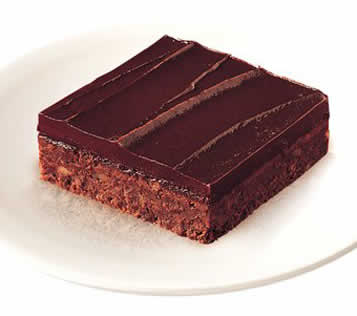
Sara Lee Iced Fudge Nut Brownie (yes, they still make them), 2014. (http://saraleefoodservice.com/).

Sara Lee Iced Fudge Nut Brownie (yes, they still make them), 2014. (http://saraleefoodservice.com/).

I went to lunch and walked over to Chester Heights (Eastchester) to a deli and bought the only thing I could think of to eat: one Sara Lee Brownie. It cost 45 cents, and it was probably the best investment I had made up to this point in my life. I walked back to MVHS, slowly ate the brownie to make it last, and had just enough time to drink some more water before we sat down to take the Chemistry Regents.

When I opened up the exam booklet I started laughing. Our idiot Chemistry teacher Mr. Lewis had told us the month before to “not worry” about organic chemistry as part of the Regents exam even though he had never covered it in class. Listening to him had me averaging a C in his class all year, with my highest exam grade an 87. So I bought a Barron’s Chemistry Regents test prep book the weekend after his pronouncement, and did nothing but study organic chemistry for this exam. It turned out that the first ten questions on the exam were organic chemistry ones, and something like thirty-five out of 100 total covered organic chem. With my brownie digesting, I was ready to kick some butt. I left that afternoon knowing that I did pretty well. But after that shaky morning, I found myself still wondering, did I do well, or was my malnourished mind playing tricks on me?

I found out on Friday, June 21st that I had failed the Italian Regents, with a total score of 45 — I’d only earned a 37 out of 90 on the written party of the exam (I’d taken the oral part with Ms. Maldonado a couple of weeks earlier). On the Chemistry Regents, I had the third highest score in the school — a 95 out of 100. I was bummed, ecstatic, pissed and disillusioned with my teachers and with myself, all at the same time. The goofy-assed Howard Jones tune “Things Can Only Get Better,” a hit at that time, popped into my head from that morning and off and on for the rest of June.

Luckily on the Friday we found out our scores was also the same day we were to meet our AP US History teacher. I’ve already described my late friend and mentor in a previous post. But it’s worth mentioning again how he broke down my protective wall to talk to me about things I’d never discuss with my classmates or my Mom or Jimme. One of those issues was hunger. Not just my constant need for food even when there was food at 616. My hunger, my drive for something better in life. Meltzer noticed it, and gradually got me to exhibit that side of myself in class.

NO KID Hungry campaign logo, Share Our Strength, June 24, 2015. (https://www.nokidhungry.org/).

NO KID Hungry campaign logo, Share Our Strength, June 24, 2015. (https://www.nokidhungry.org/).

For years after AP, Meltzer would say, over and over again, “You know, I never worried about you.” I guess it was because I didn’t take the world around me at face value. I had a healthy disdain for authority figures and the daily bullshit that the world attempted to feed my mind with every day. I wasn’t intimidated by my classmates, and I wasn’t going to allow myself to engage in worrying about grades and pleasing teachers the ways in which they did.

Meltzer picked up on this, and laughed about it all the time. He said that I had that one-of-a-kind look of a student who wasn’t just hungry for good grades, but hungry for knowledge, hungry for something to make sense of a senseless world. I guess that this is all true. Boy, it’s remembering days of hunger past that I miss people like Meltzer the most.

Not Finding My Musical Center

16 Tuesday Jun 2015

Posted by decollins1969 in 1, Boy @ The Window, culture, Eclectic, eclectic music, Mount Vernon High School, Mount Vernon New York, music, My Father, New York City, Politics, Pop Culture, race, Religion, Youth

≈ 1 Comment

Tags

616, 616 East Lincoln Avenue, Authentic Blackness, Authenticity, Bad Ideas, Bad Music, Black Masculinity, Columbia House, Coping Strategies, Crush #2, Dahlia, David Wolf, Escapism, Estelle Abel, Glass Tiger, Honors Convocation 1987, MVHS, Phyllis, Richard Capozzola, Self-Discovery, Silent Treatment, Sylvia Fasulo, Terre Haute, Thompson Twins, Tower Records


Glass Tiger, The Thin Red Line (1986) album cover, June 6, 2015. (http://www.amazon.ca).

Glass Tiger, The Thin Red Line (1986) album cover, June 6, 2015. (http://www.amazon.ca).

June ’15’s calendar is exactly the same as the one I lived through in June ’81, June ’87, June ’98, and June ’09 (you can look it up). But June ’87’s the month I graduated from Mount Vernon High School. At seventeen, my Blackness, my authenticity as a young man and as a Black man, my place in the world, all were question marks. Between Black administrators like Estelle Abel and Brenda Smith (not to mention White ones like Richard Capozzola and Carapella), teachers like David Wolf and my guidance counselor Sylvia Fasulo, plus the fifty or so “cool” kids with their ’80s pre-Nu Jack Swing/post-Purple Rain Prince look, I might as well have been an alien from another planet. That’s not even counting my strange and out-of-character incident with Dahlia, the humiliation of the Sam and Laurell Awards Show, the dissonance of dealing with Mom, my idiot stepfather Maurice and my siblings at 616, my father Jimme’s drinking, and the run-ins with not-so-normal Crush #2 in Phyllis.

The day I realized most how differently the world outside of Mount Vernon viewed me from how I viewed myself came the day after graduation at Tower Records on West 66th and Broadway. I’ve told this story before, here and in Boy @ The Window, about how some NYPD officers working security there accosted me and accused me of stealing tapes that I had bought the previous week. What I have left out, though, was my state of mind in the two-week period prior to this incident. As I said in the memoir

I had my latest Walkman, my first Sony Walkman, actually, and my book bag with my recent tape investments, including a few I’d bought at Tower Records the previous Friday. Investments like Fleetwood Mac’s Tango In The Night, Genesis’ Invisible Touch, Whitney Houston’s Whitney and Glass Tiger. Glass Tiger, by the way, was a good indication of my state of mind. Boy was I pathetic!

Here I was, attempting to discover myself through what was then my normal coping strategy of escapism via eclectic music. Given my long periods of deprivation from pop culture between religion, abuse and poverty, I’d really only been at this discovering music thing for a little more than three years. I was basically a preteen in terms of pop culture and musical development outside of choir in elementary and middle school and playing the trombone and fife.

Seriously, I look at this Canadian group Glass Tiger’s ’86 album cover The Thin Red Line now and think, “this stuff isn’t even Michael Bolton worthy!” Songs like “Don’t Forget Me (When I’m Gone)” and “Someday” were actual Billboard chart-toppers in ’87, though, and because I had no friends in whom I placed trust, I trusted my coping strategies and Casey Kasem.

That, and Columbia Record Club, which I signed up for off and on between ’86 and ’89, with my high point for using their Terra Haute, Indiana mailing operation being the spring and summer of ’87. I could use them to find music I wouldn’t dare buy even at Tower Records or Crazy Eddie’s. I bought new age music by Phillip Glass, took a hand at jazz with Dizzy Gillespie, bought Van Halen’s 1984 and 5150 (California-crazy me), and went for it with Big Daddy Kane, MC Lyte and Salt ‘n Pepa.

Thompson Twins, Here's to Future Days (1985) album cover, June 6, 2015. (http://audiokarma.com).

Thompson Twins, Here’s to Future Days (1985) album cover, June 6, 2015. (http://audiokarma.com).

But for every Simple Minds‘ Once Upon A Time (1985), there was Toto’s The Seventh One (1988), or Thompson Twins’ anything, really. For every song that stuck with me, like Sting’s “Be Still My Beating Heart” (1987) or Anita Baker’s “No One In The World” (1986), there was Whitney Houston’s “Love Is A Contact Sport” (1987) — one of the worst songs I’ve ever heard a voice as awesome as Whitney’s sing — and Howard Jones’ “Things Can Only Get Better” (1985). “Things Can Only Get Better,” by the way, is in my iPod’s random rotation, as I have come around to it again in the past decade.

I was trying to figure out what I liked and didn’t like musically on the fly, having lost a significant amount of time growing up for the triviality of enjoying music. This was hard to do, though, in a world in which my peers and many adults assumed that I knew myself well at the ripe old age of seventeen. No matter what my IQ score was in ’87 (about a 130, for the eugenicists out there), my emotional and psychological development probably put me about five years behind my now former classmates.

So my music tastes varied from genius to God-awful. They still do. The difference is, I recognize I may be the only one who listens to DMX for comic relief, because there’s no way to take him or his rap seriously. Or that I find Tupac and Eminem equally compelling and equally problematic. I still

Taco Bell's Waffle Taco w/ syrup, sausage, eggs and cheese, March 27, 2014. (http://vice.com).

Taco Bell’s Waffle Taco w/ syrup, sausage, eggs and cheese, March 27, 2014. (http://vice.com).

don’t understand the genius of Miles Davis, no matter how many times jazz enthusiasts like my friend Marc try to convince me to keep listening. Still, half of my music comes from the period between May ’87 and October ’97, and the rest crosses boundaries in time, genre, race and language (Deep Forest, anyone?).

I also recognize complete schlock, too. Unfortunately, commercial music these days is about as emotionally and mentally nutritious as a McDonald’s Big Mac and a Taco Bell Gordita combined. I try every few weeks to find out about the latest artists, just in case my son ever becomes interested in music again. Thank goodness, though, there’s no Lil’ Wayne, Rick Ross, or Iggy Izalea in our house! I’ll take my Glass Tiger (not really) any day over that!

MVHS and Memorial Day Weekend Decisions

25 Monday May 2015

Posted by decollins1969 in 1, Boy @ The Window, culture, Eclectic, eclectic music, Jimme, Mount Vernon High School, Mount Vernon New York, music, My Father, Pop Culture, race, Youth

≈ Leave a comment

Tags

"Voices Carry" (1985), 616, 616 East Lincoln Avenue, Angst, Barron's Regents Exam Test Prep Books, Carol Buckley, Chemistry, DiFeo, Disillusionment, Humanities, Joey Chestnut, Keyboarding, Martino, Mary Zini, Meltzer, MVHS, New York State Regents Exams, Paul Lewis, Self-, Takeru Kobayashi, Teaching and Learning, Teenage Angst, Til Tuesday, Trigonometry, Viggiano


Laurence Fishburne yelling "Wake up!" at end of movie School Daze (1988), December 9, 2009. (screenshot via Tumblr.com). Qualifies as fair use due to low resolution and clarity of picture.

Laurence Fishburne yelling “Wake up!” at end of movie School Daze (1988), December 9, 2009. (screenshot via Tumblr.com). Qualifies as fair use due to low resolution of picture.

Thirty years ago this weekend, I made a couple of decisions that I would take with me for the rest of my days of formal schooling, and still keep in mind for myself when I’m in the classroom as a professor. The decisions I made about my teachers came out of a sense of both malaise and desperation. You see, I was near the end of tenth grade in May ’85, and had figured out months earlier that I had hit the mediocre-and-apathetic-teacher-lottery at Mount Vernon High School that year.

That my Humanities teachers were underwhelming shouldn’t have been a surprise, really. Yet it was. I’ve written here and in Boy @ The Window already about two teachers — Zini for history and Lewis for Chemistry — who either “got on my last nerves” or as an “unimaginative instructor” who lived in “a chain-smoking world.” But I also had an Italian teacher who lost his job in April because of the distractions of owning a car dealership, a Trig teacher who could screw up an equation for me faster than I could quip, “Yeah, right!,” and an English teacher in Carol Buckley who spent most our eighth periods together lying on a couch and asking us to water her plants! The best teacher I had that year was my keyboarding instructor, who spent most of the year congratulating the women in the class who came in typing sixty or ninety-five words per minute.

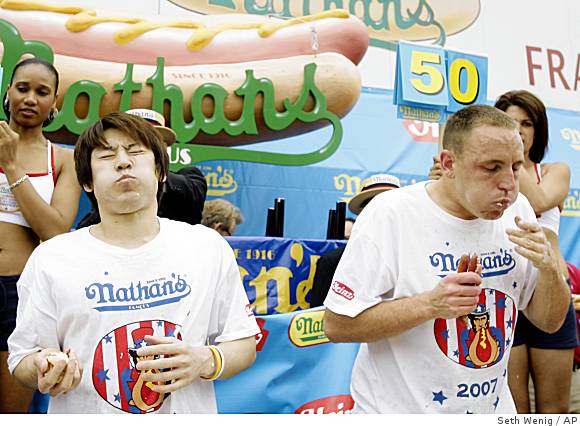
It wasn’t all their fault. I was fifteen as well, more than a bit rebellious, as nearly every adult authority figure in my life had either abused or neglected me in some way. Yeah, maybe I did take my teenage angst, my lack of belonging, and my troubles at 616 with my Mom, my idiot ex-stepfather and my father Jimme out on them from time to time. I’m sure that’s true. It’s also true that I distracted myself with Humanities and school. I used that forty-two weeks out of each year to throw down academically, to work, to grind, to use my Jedi-mind tricks to take music and movies, arts and sports to absorb knowledge like Takeru Kobayashi and ‎Joey Chestnut at a hot dog eating competition. Those teachers, with their lack of nuance, or in some cases, actual lack of knowledge (and in at least one case, lack of teaching acumen), ruined my standard operating mode.

Takeru Kobayashi and Joey Chestnut battle it out at the 2007 Nathan's Famous Fourth of July Hot Dog Eating Contest, Coney Island, Brooklyn, NY, July 4, 2007. (Seth Wenig/AP; http://philly.com).

Takeru Kobayashi and Joey Chestnut battle it out at the 2007 Nathan’s Famous Fourth of July Hot Dog Eating Contest, Coney Island, Brooklyn, NY, July 4, 2007. (Seth Wenig/AP; http://philly.com).

My Memorial Day Weekend ’85 decisions actually began in February. I decided after another week of watching Viggiano mess up another sine, cosine and tangent lecture that I needed to learn how to do Trig properly, which meant on my own. I went to Mount Vernon Public Library, checked out the best Trig textbook I could find, and began working on angles and equations whenever I could squeeze in a spare moment. I bought the Barron’s Trig Regents Exam test preparation book at the end of February, and started working on practice exams in April.

It wasn’t until the week going into Memorial Day Weekend, though, that I had an epiphany about my tenth-grade teachers. Lewis made it so with yet another stream of nonsense.

Lewis went as far as to say, “There’s nothing to worry about” on the subject of organic chemistry. “There will be hardly any organic chemistry on the exam, anyway,” he said. After eight months of listening to his blathering, I thought “That’s it! Whatever he says to do, I’m doing the opposite!” The next time I got money from Jimme, I went out and bought the Barron’s Chemistry Regents exam prep book. It was just before Memorial Day, and I had a month before the exam.

That wasn’t all I decided and did. I really did think that my teachers were incompetent, lazy and arrogant. I simply could no longer trust them, even as I was desperate to trust someone at fifteen. I decided that ultimately, I was my own best teacher and own best barometer of what I needed to learn and why I needed to learn it. I decided that teachers had to earn my trust as a student, that I was no longer going to automatically entrust them with my educational enrichment, no questions asked. I decided that if I really was going to be going to college in a couple of years, that I had to keep my eyes open for individuals I could trust, because by the end of tenth grade, I didn’t trust Humanities as a program and MVHS as a school.

Those decisions turned out to be good ones, even though it also meant few new friends and only a couple of mentors after tenth grade. Luckily there was Meltzer, luckily there was Martino, and luckily, I was only two years from graduating.

Degrees of Fakery

17 Tuesday Mar 2015

Posted by decollins1969 in 1, Academia, Boy @ The Window, Carnegie Mellon University, culture, Eclectic, Jimme, Mount Vernon High School, Mount Vernon New York, My Father, New York City, Politics, Pop Culture, race, University of Pittsburgh, Upper West Side, Youth

≈ Leave a comment

Tags

616 East Lincoln Avenue, Advanced Degrees, Ben Carson, Bill Cosby, Brian Williams, Chevy Citation, CMU, Cynicism, Doctor, Doctorate, Dr. Steve Perry, Expertise, Experts, Fake Degrees, Fakery, Father-Son Relationship, Hard Work, Henry Kissinger, Honorary Degrees, Lawyer, Maurice Eugene Washington, Michelle Malkin, Newt Gingrich, Obsequious, Opinions, PhD, William Kristol


Anne-Marie Johnson in Im Gonna Git You Sucka (1988), March 17, 2015. (http://cdn5.movieclips.com/). Qualifies as fair use under US copyright laws (low resolution and relevance to subject matter).

Anne-Marie Johnson in Im Gonna Git You Sucka (1988), March 17, 2015. (http://cdn5.movieclips.com/). Qualifies as fair use under US copyright laws (low resolution and relevance to subject matter).

All too often, there are Americans high and low who believe they can say, “That’s just your opinion!” to anyone about anything. It doesn’t matter if the person they say this to is an expert in, say, climate change or American history or twentieth-century education policy. Or, for that matter, if the person they question is a total bullshit artist. All opinions are equal, and equally discountable.

But it does matter if the opinion comes from someone rich and famous. or at least, someone Americans see on TV and/or hear on the radio nearly every day, someone they like, someone they could see themselves sharing a laugh or cry with. That’s why opinions like those of Rudy Giuliani, Bill Cosby, Michelle Malkin, even Brian Williams seem to have mattered more over the years than the expert interpretations of many a scholar, scientist or public intellectual.

On the scale of those experts, those in the media likely view me as a middle-of-the-pack expert. I went to graduate school for five and a half years, earning two advanced degrees with a focus on twentieth-century US and African American history, with an even sharper focus on history of American education, African American identity and multiculturalism.

Front and left-side view of Chevrolet Citation II (1980-1985), Clinton, MD, August 28, 2008. (IFCAR via Wikipedia). Released to public domain.

Front and left-side view of Chevrolet Citation II (1980-1985), Clinton, MD, August 28, 2008. (IFCAR via Wikipedia). Released to public domain.

Despite what my Mom, my dad and some of my more cynical former high school classmates may think, earning a PhD in history wasn’t nearly as simple as answering 1,000 Final Jeopardy questions correctly before getting a stamp of approval. Twenty-three masters and doctoral courses, more than forty paper assignments of twenty pages or more, two years as a teaching assistant, one year as an undergraduate student advisor, two summers as a research assistant, and twenty-seven months of single-minded focus researching and writing a 505-page dissertation with more citations than the number of Citations Chevrolet made between 1980 and 1985. Oh, and did I mention, nineteen months of burnout afterward?

Yet, when I take the years I’ve spent researching, writing, learning, teaching, publishing and working in the fields of history and education, and express views based on that, I get told what anyone else on the street could say. “That’s just your opinion!” Unbelievable!

I think, too, about those from a time not too long ago who could’ve and should’ve earned a doctorate, a medical degree, or a JD, yet the structures of socioeconomic privilege, racism and sexism prevent them from earning these most expert of degrees. Yet, at many an HBCU, in many a segregated classroom, in so many barbershops, we still called them “Doc,” a sign of respect, for their abilities, for their experience, for their — dare I say — expertise.

We still do this now, even for people who don’t deserve the nickname “Doc.” My father and my idiot, late ex-stepfather both at one point in their lives or another laid claim to being doctors and/or lawyers. For the first two years I knew my then stepfather Maurice, between ’77 and ’79, he carried a monogramed briefcase, always full of his “important papers,” telling me and anyone else he bumped into on the streets of Mount Vernon, New York that he was a “doctor” or a “lawyer.” When drunk, my father sometimes took it a step further, telling strangers on the Subway that he was a “big-shot doctor an’ a lawyer” on his Friday-evening paydays. Maurice drove a Reliable taxicab during his delusions-of-grandeur years, and my father was janitorial supervisor.

Given the history of education and our society’s denial of quality education to people of color and the poor in the US, though, I didn’t entirely hold it against them then, and I don’t now. What I do have much bigger problems with, though, are the people who should know better, and yet don’t do any better. Just in my lifetime alone, people with Dr. in front of their names without having earned a doctorate or a four-year medical degree. Like “Dr.” Henry Kissinger, “Dr.” Bill Cosby, and of late, “Dr.” Steve Perry (not to be confused with the former lead singer for Journey, I guess). And no, honorary doctorates for giving money to Harvard, Temple, or the University of Massachusetts don’t count! Nor does starting an outline for a dissertation without actually finishing one. Still, they insist on the “Dr.,” even when it’s obvious I could’ve sat on the stoop at 616 East Lincoln Avenue thirty years ago to get the same half-baked opinions from one of my hydro-smoking neighbors.

Stock photo of former NYC mayor Rudolph Giuliani, August 2013. (AP/New York Post).

Stock photo of former NYC mayor Rudolph Giuliani, August 2013. (AP/New York Post).

Then again, numbskulls like William Kristol and Newt Gingrich have earned doctorates from Harvard and Tulane University respectively, and Ben Carson was once one of the most respected pediatric neurosurgeons in the world! Yet, for some dumb reason, our media and most Americans think that their opinions are somehow more valuable, more consumable, than those of people who’ve spent decades understanding education, American culture, racial, gender and socioeconomic inequality, and government corruption. Or maybe, we just like listening to fake opinions from people with fake degrees and/or fake expertise on a subject in which they know nothing. Because nothing is exactly what Americans want to hear.

Boy @ The Window Origins: Meltzer Conversations

14 Saturday Mar 2015

Posted by decollins1969 in 1, Academia, Boy @ The Window, Carnegie Mellon University, Christianity, culture, Eclectic, Hebrew-Israelite, Mount Vernon High School, Mount Vernon New York, Pittsburgh, Politics, Pop Culture, race, Religion, Youth

≈ Leave a comment

Tags

Benetton Group, Black Elites, Black Identity, Black Masculinity, Black Migration, Black Washington, CMU, Colorism, Dissertation, Doctoral Thesis, Harold Meltzer, Harper Stewart, Humanities, Hypermasculinity, Inequality, Internalized Racism, Logic, Manhood, Multiculturalism, Personal Insights, Race, Racial Identity, Rationalism, Self-Discovery, Social Injustice, Taye Diggs, The Best Man (1999), Washington DC, X-Men Origins: Wolverine (2009)


X-Men Origins: Wolverine (2009) scene, where Wolverine frees mutants kept as experiments by Colonel William Stryker , March 13, 2015. (http://cdn.collider.com/).

X-Men Origins: Wolverine (2009) scene, where Wolverine frees mutants kept as experiments by Colonel William Stryker , March 13, 2015. (http://cdn.collider.com/).

Of all the tangents I took related to writing Boy @ The Window, the most direct path that got me to write a memoir about the most painful period in my life was through several conversations with my dear teacher, friend and mentor in the late Harold Meltzer. I’ve discussed bits and pieces of some of those conversations here and in longer form in Boy @ The Window. It’s still worth rehashing some of those conversations, at least in terms of what was and wasn’t good advice, as well as in explaining how some of the main themes of the memoir developed over time.

As I wrote in Boy @ The Window, though my “first interview with him was in August ’02,” the first time “we discussed the possibility of me doing Boy @ The Window went back to February ’95.” Meltzer had been retired from teaching about a year and a half, while I was beginning the heavy lifting phase of my doctoral thesis, “living in DC for a couple of months while hitting the archives and libraries up for dusty information. In need of a writing break, I gave him a call on one cold and boring Saturday afternoon.”

It was in response to a letter he sent congratulating me. I’d recently published an op-ed in my hometown and county newspaper, “Solving African American Identity Crisis.” I was writing about issues like using the n-word, hypermasculinity, and internalized racism in the short and, for me at least, dummied down piece. Somehow our discussion of that piece led to a discussion of my classmate Sam. Did I really want to spend an hour and a half talking with Meltzer about Sam and some of my other Humanities classmates and their possible identity issues, considering some of my own serious growing pains — the Hebrew-Israelite years, my suicide attempt, my Black masculinity and manhood issues? Absolutely not!

But I learned quite a bit about how I might want to approach writing Boy @ The Window through that phone call. Not because Meltzer had given me any sage advice, which he didn’t, or because he revealed things to me that I shouldn’t have come to learn during our conversation, which he definitely did.

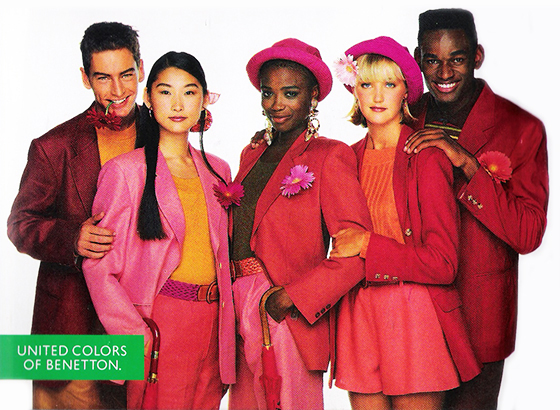
Benetton ad, 1980s, January 2013. (http://fashionfollower.com/).

Benetton ad, 1980s, January 2013. (http://fashionfollower.com/).

No, it was the idea that a lot of the things that I had pursued as a historian and researcher were things that came out of my experiences growing up. Multiculturalism as a historical phenomenon (at least if one linked it to cultural pluralism)? Can anyone say Humanities Program, or, what I used to call “Benetton Group” when we were at A.B. Davis Middle School? Writing about African American identity issues? Obviously related to living in Mount Vernon, the land where any hint of weakness translated into me being called a “faggot” or a “pussy.”

And what about any scholarly concerns with racial and socioeconomic inequality and Black migration? Anyone ever meet my Mom and my father Jimme, 1960s-era migrants from Arkansas and Georgia/Florida respectively? An examination of the Black Washingtonian elite and their looking down upon ordinary Blacks because of their own colorism or the latter’s lack of education? Come on down, Estelle Abel and any number of well-established Black Mount Vernon-ites who never gave me the time of day! As much as academia had been an escape for me, into a world of rationalism and logic, a place of dispassionate scholarship, it was all personal for me, without realizing it until that phone conversation with Meltzer.

Fast-forward to November ’02, the last interview I did with Meltzer before his death two months later. We spent the last couple of hours on that brisk fall Thursday discussing the book idea that would become Boy @ The Window. Meltzer thought that it should be a work of fiction, “based on the real flesh and blood folks in my life, but with different names of course to protect me from any potential lawsuits. He did make me rethink the project from a simple research study of my high school years into narrative nonfiction or a memoir.” 

Screen shot of fictional character Harper Stewart's bestselling novel nfinished Business, from The Best Man (1999), March 14, 2015. (hitchdied via http://s785.photobucket.com/).

Screen shot of fictional character Harper Stewart’s bestselling novel Unfinished Business, from The Best Man (1999), March 14, 2015. (hitchdied via http://s785.photobucket.com/).

Was Meltzer correct? Should I have done a Harper Stewart — played by actor Taye Diggs in The Best Man (1999)? Should I have fictionalized all of my experiences and those of my family, teachers, administrators and classmates? I’m not sure if it would’ve made a difference. Stories of fiction tend to have a tight symmetry to them. Or, the theme of “what goes around comes around” is usually a big one in any novel. You can’t leave too many loose threads or unresolved issues, even if the novel is part of a series. For my purposes, since my life remains a work in progress, a story of relative — not obvious or absolute — success, telling it as fiction would hardly ring true to me, much less to any group of readers.

Whatever else anyone wants to say about the late Harold Meltzer, the dude got me to think about difficult things until I was no longer comfortable in leaving my uncomfortable experiences and assumptions unchallenged. The very definition of a mentor, the very purpose of Boy @ The Window.

Vicarious Valentine’s Day

14 Saturday Feb 2015

Posted by decollins1969 in 1, Boy @ The Window, Christianity, culture, Eclectic, Jimme, Mount Vernon High School, Mount Vernon New York, Movies, My Father, New York City, Politics, Pop Culture, race, Religion, Youth

≈ Leave a comment

Tags

616, 616 East Lincoln Avenue, Capitalism, Christian Persecution, Commercialism, Crush #1, Interracial Relationships, JD, Love, Lust, Martyrs, Observation Mode, Rita Moreno, Romance, St. Valentine, The Contrarian One, Transactional Relationships, Valentine's Day, Vicarious Living, Wendy, West Side Story (1961)


Fringe Observer 'September,' played by Michael Cerveris, circa 2013. (John Milton via Pinterest.com).

Fringe Observer ‘September,’ played by Michael Cerveris, circa 2013. (John Milton via Pinterest.com).

A couple of alternate titles could be “A Little Ditty About ‘Jack and Diane’,” or “The Legend of Crush #1 and The Contrarian One.” Really, though, I’ve never given much thought to Valentine’s Day, even in dating and marriage, mostly because until I turned twenty-five, I never had money to waste on such an aimless, unbelievably overhyped and commercialized “holiday.”

Few understand that the Catholic holy day of St. Valentine was about a Christian martyred in the midst of a period of Roman persecution under the emperor Aurelian, outside Rome, on February 14, 273 CE. Or that when combined with the St. Valentine’s Day massacre on February 14, 1929, the only heart truly associated with the day has been one punctured by a sword or a bullet, a blood-soaked one. Plus, it’s not as if I need capitalism to tell me whom to show my romantic side, with cards and flowers and chocolate, no less. Still, as a married man, I participate, although not with Western ideals of masculinity and romance in my head, if only to ensure my wife doesn’t feel left out.

But I must rewind about three decades, because while I don’t appreciate the fakery that comes with celebrating some candy-coated version of romance without actually celebrating St. Valentine, I did learn a thing or two about watching relationships bloom from afar. It was around this time thirty years ago that I noticed that Wendy and the contrarian one were dating, whatever that term means in the context of high school. Both would tell me that their relationship only began in high school, but my own recollections dispute that somewhat, if only because they shared roughly the same level of dislike for me during seventh grade!

Bloody woodchipper scene from Fargo (1996), February 14, 2015. (http://youtube.com).

Bloody woodchipper scene from Fargo (1996), February 14, 2015. (http://youtube.com).

The main point is, while for most of my classmates, it would’ve only been obvious in our junior year that Crush #1 and JD were together, I sensed it by the middle of tenth grade. If I’d been the exact same person I’d been during seventh and eighth grade, one head-over-heels in love with Wendy, I would’ve put my heart in a woodchipper, shot it all over a field, gathered it up again, and then put it into a mortar shell to explode into the sky to rain down all over Mount Vernon.

But I wasn’t that person in 7S, and hadn’t been for quite a while. My focus for most of tenth grade had been on living a sin-free Christian life, a transactional relationship with God that consisted of making good things happen for myself by prayer, fasting, and reading my Bible everywhere I went. Between that and my routine of watching younger siblings, washing clothes, tracking down my father Jimme, surviving another year of Humanities, running to the store two or three times every day, and so many other tasks, romance and dating might as well have been in an alternate universe. Even if I did feel envious, it would’ve been over not having money or a car or good food in my belly. Pining over Wendy — or any other girl or woman, for that matter — didn’t fit with any coping strategy that I had to get out of Mount Vernon as soon as my high school diploma and a college acceptance would allow me. At least prior to Crush #2.

What was more interesting to me, and what I knew was more interesting to my classmates, was the fact that Wendy and the contrarian one were dating, and in fact, an interracial couple, one a Black female (or, as some classmates still believed, biracial), the other a White male. I was interested only as an observer of people, because by tenth grade I’d actually grown to like JD and could be around Crush #1 without being conscious of the fact that she used to be my crush. I was interested in that the reactions of the folks at MVHS varied from my own “no surprise here” to dagger-eyed intolerance or head-shaking shame expressed by students across all cliques and most racial lines.

Black and White shortbread (or what President Barack Obama coined a "Unity Cookie" in 2008), July 23, 2007. (Punkitra via http://commons.wikimedia.org). Released to public domain.

Black and White shortbread (or what President Barack Obama coined a “Unity Cookie” in 2008), July 23, 2007. (Punkitra via http://commons.wikimedia.org). Released to public domain.

I’ve certainly known and know plenty of other people involved in interracial relationships and marriages since the spring of ’85. Some where only racial politics and stereotypes mattered, some where love and social justice mattered much more. In the case of my class’ Juliet and Romeo, maybe my crush took advantage of some of the racial politics involved with dating someone White, while my contrarian friend obviously doesn’t prefer blondes, and hasn’t in the years since. From my observer’s perch, though, there was much more to their relationship than racial preferences.

It was the first time I’d seen or heard about any interracial coupling beyond movies like West Side Story (I still love Rita Moreno, even at eighty-three) or in others telling me about them third-hand, after it was already over. To me, it was always a good fit and fitting, despite the racial politics playing out at school, not to mention the identity issues that had to be playing out between Wendy and JD, even unconsciously. What I gleaned from two and a half years of the two of them dating, though, was that they had found a world unto themselves, one which must’ve made MVHS a much easier hellhole to navigate, if nothing else.

← Older posts
Newer posts →

Boy @ The Window: A Memoir

Boy @ The Window: A Memoir

Places to Buy/Download Boy @ The Window

There's a few ways in which you can read excerpts of, borrow and/or purchase and download Boy @ The Window. There's the trade paperback edition of Boy @ The Window, available for purchase via Amazon.com at http://www.amazon.com/Boy-Window-Donald-Earl-Collins/dp/0989256138/

There's also a Kindle edition on Amazon.com. The enhanced edition can be read only with Kindle Fire, an iPad or a full-color tablet. The links to the enhanced edition through Apple's iBookstore and the Barnes & Noble NOOK edition are below. The link to the Amazon Kindle version is also immediately below:

scr2555-proj697-a-kindle-logo-rgb-lg

Boy @ The Window on Amazon.com: http://www.amazon.com/Boy-The-Window-Memoir-ebook/dp/B00CD95FBU/

iBookstore-logo-300x100

Boy @ The Window on Apple's iBookstore: https://itunes.apple.com/us/book/boy-the-window/id643768275?ls=1

Barnes & Noble (bn.com) logo, June 26, 2013. (http://www.logotypes101.com).

Boy @ The Window on Barnes & Noble: http://www.barnesandnoble.com/w/boy-the-window-donald-earl-collins/1115182183?ean=2940016741567

You can also add, read and review Boy @ The Window on Goodreads.com. Just click on the button below:

Boy @ The Window

Twitter Updates

Tweets by decollins1969
  • RSS - Posts
  • RSS - Comments

Archives

  • June 2025
  • April 2023
  • September 2022
  • August 2022
  • July 2022
  • June 2022
  • May 2022
  • April 2022
  • March 2022
  • January 2022
  • December 2021
  • November 2021
  • October 2021
  • September 2021
  • August 2021
  • July 2021
  • June 2021
  • April 2021
  • March 2021
  • February 2021
  • January 2021
  • December 2020
  • November 2020
  • October 2020
  • September 2020
  • August 2020
  • July 2020
  • May 2020
  • April 2020
  • March 2020
  • January 2020
  • December 2019
  • November 2019
  • August 2019
  • July 2019
  • June 2019
  • May 2019
  • April 2019
  • March 2019
  • February 2019
  • January 2019
  • December 2018
  • November 2018
  • October 2018
  • September 2018
  • August 2018
  • July 2018
  • June 2018
  • May 2018
  • March 2018
  • February 2018
  • January 2018
  • December 2017
  • November 2017
  • October 2017
  • September 2017
  • August 2017
  • July 2017
  • June 2017
  • May 2017
  • April 2017
  • March 2017
  • February 2017
  • January 2017
  • December 2016
  • November 2016
  • October 2016
  • September 2016
  • August 2016
  • July 2016
  • June 2016
  • May 2016
  • April 2016
  • March 2016
  • February 2016
  • January 2016
  • December 2015
  • November 2015
  • October 2015
  • September 2015
  • August 2015
  • July 2015
  • June 2015
  • May 2015
  • April 2015
  • March 2015
  • February 2015
  • January 2015
  • December 2014
  • November 2014
  • October 2014
  • September 2014
  • August 2014
  • July 2014
  • June 2014
  • May 2014
  • April 2014
  • March 2014
  • February 2014
  • January 2014
  • December 2013
  • November 2013
  • October 2013
  • September 2013
  • August 2013
  • July 2013
  • June 2013
  • May 2013
  • April 2013
  • March 2013
  • February 2013
  • January 2013
  • December 2012
  • November 2012
  • October 2012
  • September 2012
  • August 2012
  • July 2012
  • June 2012
  • May 2012
  • April 2012
  • March 2012
  • February 2012
  • January 2012
  • December 2011
  • November 2011
  • October 2011
  • September 2011
  • August 2011
  • July 2011
  • June 2011
  • May 2011
  • April 2011
  • March 2011
  • February 2011
  • January 2011
  • December 2010
  • November 2010
  • October 2010
  • September 2010
  • August 2010
  • July 2010
  • June 2010
  • May 2010
  • April 2010
  • March 2010
  • February 2010
  • January 2010
  • December 2009
  • November 2009
  • October 2009
  • September 2009
  • August 2009
  • July 2009
  • June 2009
  • May 2009
  • April 2009
  • March 2009
  • February 2009
  • January 2009
  • December 2008
  • November 2008
  • October 2008
  • September 2008
  • August 2008
  • July 2008
  • June 2008
  • May 2008
  • April 2008
  • March 2008
  • February 2008
  • January 2008
  • December 2007
  • November 2007
  • October 2007
  • September 2007
  • August 2007
  • July 2007
  • June 2007

Recent Comments

decollins1969's avatardecollins1969 on No Good Teaching Deed Goes…
Mary Rose O’Connell's avatarMary Rose O’Connell on No Good Teaching Deed Goes…
Lyndah McCaskill's avatarLyndah McCaskill on The Raunchiest of Them Al…

NetworkedBlogs on Facebook

NetworkedBlogs
Blog:
Notes From a Boy @ The Window
Topics:
My Life, Culture & Education, Politics & Goofyness
 
Follow my blog

616 616 East Lincoln Avenue A.B. Davis Middle School Abuse Academia Academy for Educational Development AED Afrocentricity American Narcissism Authenticity Bigotry Blackness Boy @ The Window Carnegie Mellon University Child Abuse Class of 1987 CMU Coping Strategies Crush #1 Crush #2 Death Disillusionment Diversity Domestic Violence Economic Inequality Education Family Friendship Friendships Graduate School Hebrew-Israelites High-Stakes Testing Higher Education History Homelessness Humanities Humanities Program Hypocrisy Internalized Racism Jealousy Joe Trotter Joe William Trotter Jr. K-12 Education Love Manhood Maurice Eugene Washington Maurice Washington Misogyny Mother-Son Relationship Mount Vernon High School Mount Vernon New York Mount Vernon public schools Multiculturalism MVHS Narcissism NFL Pitt Pittsburgh Politics of Education Poverty President Barack Obama Race Racial Stereotypes Racism Relationships Self-Awareness Self-Discovery Self-Reflection Sexism Social Justice Teaching and Learning University of Pittsburgh Violence Whiteness Writing

Top Rated

Blog at WordPress.com.

  • Subscribe Subscribed
    • Notes from a Boy @ The Window
    • Join 103 other subscribers
    • Already have a WordPress.com account? Log in now.
    • Notes from a Boy @ The Window
    • Subscribe Subscribed
    • Sign up
    • Log in
    • Report this content
    • View site in Reader
    • Manage subscriptions
    • Collapse this bar
 

Loading Comments...