• About Me
  • Other Writings
  • Interview Clips
  • All About Me: American Racism, American Narcissism, and the Conversation America Can’t Have
  • Video Clips
  • Boy @ The Window Pictures
  • Boy @ The Window Theme Music

Notes from a Boy @ The Window

~

Notes from a Boy @ The Window

Category Archives: Carnegie Mellon University

The Sweet Consolation of Suicide

27 Thursday Dec 2018

Posted by decollins1969 in 1, Academia, Boy @ The Window, Carnegie Mellon University, Christianity, culture, Eclectic, eclectic music, Hebrew-Israelite, Mount Vernon High School, Mount Vernon New York, music, Pittsburgh, Pop Culture, race, Religion, University of Pittsburgh, Youth

≈ Leave a comment

Tags

"I Still Haven't Found What I'm Looking For" (1987), Birthday, Brittney Cooper, Contemplation, Darnell Moore, Depression, Eloquent Rage (2018), God, Heavy (2018), Kiese Laymon, Living, No Ashes in the Fire (2017), Questioning, Self-Policiing, Self-Reflection, Self-Revelation, Suicidal Ideations, Suicide, Suicide Attempt, The Joshua Tree (1987), U2


Sweet-and-sour-chicken, 2011. Source: http://www.foodnetwork.com

Well, not exactly sweet to be thinking about what you have thought about and attempted to act out in the past. In the next few hours, I turn 49, which is to say that I begin year fifty on Planet Earth. “Yay me!,” right?

Not so much this time 35 years ago. My suicidal ideations had gone on in December 1983 for nearly three weeks before my fourteenth birthday, in the aftermath of my fourth mugging in four years. That Tuesday, December 27, at 2:30 pm, coming home from C-Town in Pelham, standing on the parapet of that stone bridge overlooking the Hutchinson River Parkway, I had every intention of jumping. I played it out in my head all the different possibilities. At first, it was going to be like the second between taking a deep breath plunging myself underwater and holding my breath while feeling the pressure build up all around my head, eyes, and ears. Except that I imagined a screech, a pop of a hit, and the world turning into stars before I escaped into eternal darkness.

But then, I thought about the plausibility of surviving the 13-foot jump, only to get hit by a car or truck flying down the parkway at 60 or more. Paralyzed, brain-damaged, trapped for days, months, years, decades even, in a body that defied me once again. At this point, my knees were already bent, pretty much ready to push off the stones I stood upon anyway. The possibility of survival and suffering, though, stopped me short of taking that leap. That, and wanting sweet revenge on the stepfather and others who had driven me to this moment.

It’s all in Boy @ The Window. What isn’t in the book is that I couldn’t imagine living past my thirtieth birthday, much less to 49. What isn’t in the book is that I have had other episodes where I either attempted to take my own life via car accident or had suicidal ideations (anywhere between 1982 and 1988, as well as in the late-1990s). This isn’t the same as contemplating my own mortality or considering how much more I may be worth dead than alive (at least I think it isn’t the same, anyway). If someone had put a gun to my head, and asked me why I should keep living, I probably would’ve told them to pull the trigger. I really didn’t have any answers when I got low enough to consider best suicidal practices.

Sure, in the process of working through my own trauma while in progress, I found God, I found Jesus, I read my Bible, I embraced the Holy Spirit. But as the U2 song goes, “I still haven’t found what I’m looking for,” at least not during my Boy @ The Window years, or in the years after my doctorate, or even after a decade in the nonprofit world. Heck, I’m still a work in progress, and not quite sure what’s around the corner for me (although I’m cautiously hopeful, with fingers and toes crossed, and knocking on wood in my mind’s eye as I type this). But a focus on escape isn’t enough. Striving for perfection — including perfect chastity — wasn’t enough. Even writing my fifty-to-100-pages-too-long memoir wasn’t enough.

Two things in the past decade have been enough. One was to admit, and not for the first time, that I controlled nothing, not even my own body, and certainly not all of my thoughts. For a person who’s policed himself as much as I have over the years, this was a hard truth to finally and fully accept, and that was a little more than four years ago. Two was that I needed to let out my thoughts and feelings, no matter how fucked up or how revealing or embarrassing they could be for me. Some of that has worked through this blog and Boy @ The Window. The rest has been as a result of social media, freelance writing, and otherwise remembering that though I may be truly weird, I am also truly human.

Maybe that’s why in the past couple of years I’ve mostly read Black women writers on their trauma and intersectional experiences, between Brittney Cooper, Morgan Jerkins, Roxane Gay, Crystal Fleming, Patricia J. Williams, and a host of others. Maybe that’s why I found more solace in Kiese Laymon’s Heavy than I ever did with any of my history monographs. Maybe this is why I’m convinced that to be a better writer, I had to become an even better reader, and read across genres and disciplines like I never had before. Maybe, too, this is why I as an educator have committed to use a wider variety of materials to reach my students, even if one or two want to only read mainstream history texts and don’t want to engage in “literary analysis.”

I finished Darnell Moore’s No Ashes in the Fire two days ago. Despite his stepping out of narrative to preach “Black radical love” at least three too many times, Moore’s book reminded me of what all the other wonderful books I’ve read in the past three years have told me. Share your truth, so that others may see, hear, or react to it. Tell your story, ‘cuz ain’t no one else gonna tell it for ya. Talk about it, if only to yourself, so that you know you’re not crazy. There’s bravery in putting in words your pain, your joy, your sense of the world and sense of self, your need for a higher power (or lack thereof). There’s courage in pointing to your unique sameness relative to humanity, and your need to crystallize the dominance of systemic racism, heteronormative patriarchy, and narcissistic worshipping of dollars and billionaire elitism that is this warped-assed world.

None of this may convince someone from taking their own life. I don’t pretend that I have any specific answers, because I don’t. But many times, living begins with one question, then another, then another. Living for me is about finding the best questions to answer, to turn the embers of what was once a wall of bullshit into a forest fire of questions, for me and others. This world will never give us the right to question it, which is why we who might want to live another day must wrest that right for ourselves, every single day.

A Christmas Eve Night In 4.5 Parts

24 Sunday Dec 2017

Posted by decollins1969 in 1, Academia, Boy @ The Window, Carnegie Mellon University, culture, Eclectic, Jimme, Mount Vernon New York, My Father, New York City, Politics, Pop Culture, race, Youth

≈ Leave a comment

Tags

616, 616 East Lincoln, 7 Bus, Bee-Line Bus, Christmas Eve, CMU, Cross County Mall, Drunkeness, Eri, Jimme, Maurice, Mom, Sarai, Toys, Toys "R" Us, Yiscoc, Yonkers


Main entrance to the Cross County Mall, Yonkers, NY, January 2017. (Ernie Garcia/The Journal News).

For so many years before marriage and parenthood, my Christmas’ and Christmas Eves were about as memorable as having surgery while under general anesthesia. As in “wake me up when it’s either my birthday [two days after Christmas] or New Year’s Day.” But not Christmas Eve 1994, especially that dreary night. It wasn’t all bad. It definitely wasn’t good. It was ugly here and there. Mostly it was a confluence of my life before I became more of the person I am right now than it was of the person I had to be growing up.

I was in Mount Vernon and at 616 for my second-longest holiday break ever (my longest break had been the year before), one of the few benefits of attending Carnegie Mellon for my doctoral work. But unlike the previous year, I had money to work with. I had borrowed to cover my dissertation research trips to DC for that fall, and had money left over. God knows my CMU teaching stipend was barely enough to cover my basic expenses!

By now, my 616 visits were accompanied with my sister Sarai literally holding her hand out for extra dollars, of store trips to help Mom stock up on non-perishables, and to buy appliances that everyone needed. This Christmas season, it was obvious. The used TV I had bought for everyone in ’89 was done for. I bought a new 27-inch Toshiba for everyone just before Christmas Eve, along with some games for the kids to play. I was set for a relaxing Christmas Eve.

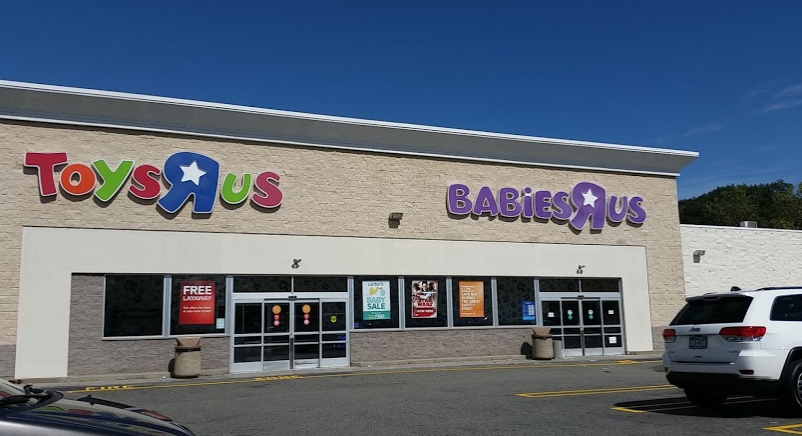
My father Jimme came over that night. I was the last person he expected to greet him at Mom’s apartment door. “Bo’, didn’t know you was here!,” he said, all surprised. As soon as I looked at my dad, I knew he was drunk. He was standing atilt, and his breath reeked of cheap alcohol and cheaper mints. Mom almost went off on him. Jimme, though, wasn’t there for me or Mom. He was there to impress my younger siblings. At first he was going to give them money. Then Eri and Sarai suggested the grand idea of going to Toys “R” Us to get more games and toys for Christmas. Jimme said yes, and they were all ready to leave within ten minutes, before Mom and I knew what was happening.

Mom agreed to go, but not without reservations. “If you mess up, I’m leaving yo’ ass in the street,” she said to my dad. I went with my four siblings and Mom because I knew my dad would mess up. He was already too far into his drinking routine to do anything other than act abnormal.

The 7 Bee-Line Bus from Yonkers to New Rochelle, via Mount Vernon, Yonkers, NY, September 11, 2007. (Adam E. Moreira via Wikimedia). Released to public domain via CC-BY-SA 3.0.

We made the last 7 Bee-Line bus to Yonkers, around 8 pm. It was packed with parents who were shopping late for toys and Christmas trees, along with a host of younger adults ready to find a club or some other partying spot. Some had been drinking too, so my dad wasn’t a complete oddball in this crowd. Jimme being Jimme, he started in on the diverse human sardine can of “Jamaicans” and “Spanish people” with his “po’ ass muddafuccas” and other favorite Jimme-isms. At one point I squeezed next to him and said, “You need to stop this, or I’m taking you off this bus myself.”

Jimme was so drunk that he fell over on some people on the bus once, and fell into the rear stairwell one other time. With so many on the bus in a partying mood, the group around us just laughed it off. I helped him up both times. I wasn’t embarrassed as much as I was disappointed and saddened to see my 54-year-old dad so old and so out of it. I’m sure Mom was embarrassed. This was her ex-husband, after all.

Toys “R” Us/Babies “R” Us, Yonkers, NY (the newest version), September 2017. (Sam Samsonov/Google Photos).

We got to Toys “R” Us and the Cross County Mall around 9:30, and it became a nearly two-hour free-for-all. My siblings went nuts, because Jimme said, “I buy you anythin’ you want. I buy the whole sto’!” I agreed with Mom to chip in if it turned out Jimme’s mouth was bigger than his cash wad. Maurice, Yiscoc, Sarai, and Eri found almost $200 worth of toys in the course of an hour. Kids and babies were screaming and hollering everywhere, along with their parents. At least two kids got ass-whuppins while we were in line. Eri and Yiscoc nearly had a fight while in the store. Jimme’s alcohol-fuel was on empty, and he was ready to fall asleep standing up. And, I had a headache.

We left the store at 11:30 pm, and walked out into cold, damp darkness. The drizzle that was the weather when we left 616 was now a full-on downpour, unusual for late December. It took us twenty minutes to get a taxi, and almost ten minutes to get our wet asses into the cab. My siblings were sitting on top of each other, with Jimme squished in between them. Me and Mom were up front with the cabbie, with my left butt cheek on the cigarette tray between the two bucket seats. We dropped Jimme off first, before cutting across Mount Vernon back to 616. It was 12:30 am Christmas Day by the time we walked through the apartment door, soaked, tired, and with me ready to start 1995.

It would be the last time I’d see my dad until I went to visit him sober and in Jacksonville in January 2002. It was my next to last trip to visit my younger siblings and Mom before the 616 fire of April 1995. It was the last time I came to Mount Vernon as someone who could so easily shed my persona as academic historian and single-minded professional for the loner and super-responsible eldest child I once was. But more than anything else, it was the last time I’d ever go shopping on the night before Christmas. That was just too crazy for me.

The Politics of the Apolitical

09 Wednesday Aug 2017

Posted by decollins1969 in 1, Academia, Boy @ The Window, Carnegie Mellon University, culture, Eclectic, eclectic music, Mount Vernon High School, Movies, Patriotism, Politics, Pop Culture, race, Religion, Sports, Youth

≈ Leave a comment

Tags

Apolitical, Blackballed, Blacklisted, Colin Kaepernick, Laurell, NFL, Political Animals, Politics, Politics and Sports, Politics of Everything, Rough Night (2017), Willful Ignorance


Mimi and Eunice comic strip, July 27, 2012. (Nina Paley via http://mimiandeunice.com/category/politics/).

In late-October 1994, I had a wonderful steak dinner with my friend and former high school classmate Laurell in DC. It was during my first ABD (all-but-dissertation) visit to the area to conduct some official initial research on my multiculturalism-in-Black-Washington, DC-doctoral thesis. It was also a couple of weeks before the midterm elections, the cycle that would sweep in Newt Gingrich as Speaker of the House and the rest of his cronies as part of the Contract With (really, on) America, the gift that has kept on giving for the past twenty-three years.

As part of our three-and-a-half hour dinner and dessert, we talked about the Clintons, their failed attempt at universal healthcare, the Contract With America, and the ongoing politics of racial resentment. Laurell said, not for the first or last time, that she was “apolitical,” that she didn’t “adhere” to “either party’s platform.” This was because she was “fiscally conservative” and “socially liberal.”

Even in ’94, I could’ve picked apart Laurell’s hair-splitting with a hot hair comb. But here’s the part that got me then and really irks me now. Being apolitical is a political stance and perspective. Being apolitical is like being agnostic. You may not believe in someone or something exactly the way most people in the crowd do. You may have some serious doubts. But you are still a human being. And since you are human, and have beliefs, you also have a political point of view. Otherwise, your apolitical stance is the equivalent of selling bullshit to others and lying to yourself.

The politics of steak, August 8, 2017. (http://zeenews.india.com).

A few weeks ago, I watched BBC World News and saw a young White actress on the telly promoting her new summer film, declaring it “apolitical” as it delved into serious issues around feminism and potentially other -isms. Here’s a news flash, folks. Every movie, piece of art, song, poem, every article, book, or TV show, contains a hidden agenda, a specific set of beliefs, an ideology. By definition, every piece of entertainment or art has a political message, no matter how gentle or subtle. Even if a movie like, say, Rough Night is just about women “laughing at themselves” and “having a good time,” the idea that White women have the right to both feminism and femininity is embedded in these otherwise rather banal phrases. And that’s a political statement, whether people are willing to see it or not.

But the realm of politics goes well beyond the world of entertainment and leisure. Politics is everywhere, in everything, and with everyone, all the time. Calling yourself “apolitical” doesn’t change this truth. If you eat steak and potatoes, you obviously aren’t a vegan, and that reflects your personal politics around food. When you buy clothes, wear perfume or cologne, take a vacation overseas, call a young person in your neighborhood an “all-American boy” or “all-American girl,” you are unwittingly expressing your politics. Even in declaring yourself a Christian, atheist, Muslim, Buddhist, or Jew, this isn’t just an admission of your love for God, Yahweh, Allah, or a lack of belief in a higher power at all. It is a worldview with political implications, one that colors how you see the world, humanity, and governance. We are all political animals, no matter how little some of us pay attention to the machinations of the Democrats and Republicans.

Time Magazine cover (cropped) Colin Kaepernick, October 3, 2016. (http://facebook.com). Qualifies as fair use due to cropped nature and subject matter.

This is also why the common refrain among racist sports junkies about not combining sports and politics is also total bullshit. Of course the political implications of sport are intertwined with the actual sport in question! How else can you explain the blackballing of former 49er quarterback Colin Kaepernick for his Black Lives Matter kneel-downs during the National Anthem at NFL games in 2016? It’s certainly not based on Kaep’s performance or merely about a kneel-down. The politics of American racism, of faux-hyper-patriotism, of money and fandom, were and remain in play here. That some continue to doubt this is yet another example of the penchant of millions to crave willful ignorance of anything that would make them think beyond their own perceived superiority and simplistic views of an always political world.

So no, you can’t away from politics in this world. One would have to take a time machine back to before the Agricultural Revolution to find humans in a world without politics. But even then, there would be domestic politics, gender politics, tribal politics, and food/water politics. Not to mention, religion and the politics thereof. But, keep believing that you’re apolitical, and see how that works out as your worldview comes crashing down.

The Yoke of Student Loans

18 Tuesday Jul 2017

Posted by decollins1969 in 1, Academia, Boy @ The Window, Carnegie Mellon University, culture, Eclectic, Mount Vernon High School, Mount Vernon New York, Movies, Pittsburgh, Politics, Pop Culture, race, University of Pittsburgh, Work, Youth

≈ Leave a comment

Tags

Adult Learners, American Individualism, CMU, Debt Peonage, Financial Aid, Financial Literacy, First-Generation Students, HSBC, In Time (2011), Interest Rates, Loan Payments, Marine Midland Bank, Navient, Nontraditional Students, Perkins Loans, Pitt, Poverty, Sallie Mae, Self-Reflection, Stafford Loans, Student Loans


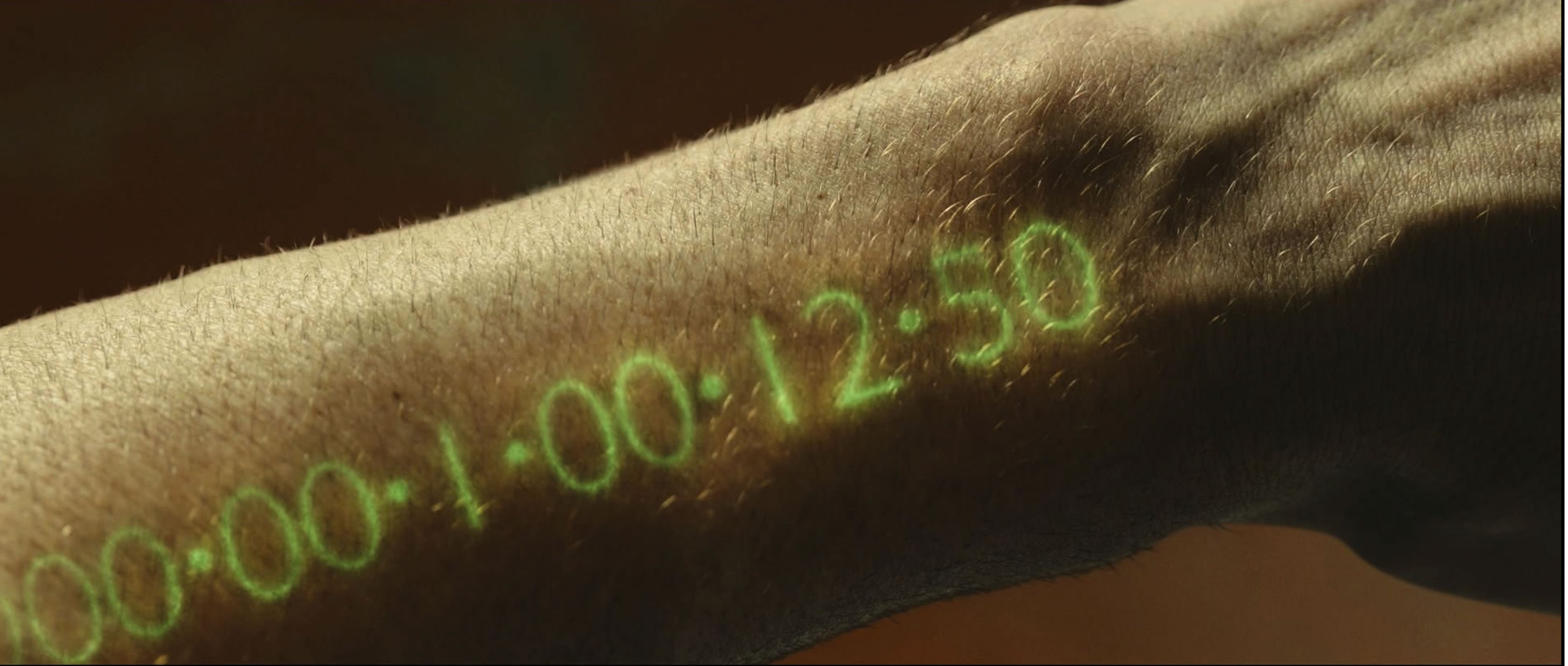
Time, money, debt, yoke = same difference, from screen short from movie In Time (2011), October 27, 2011. (http://collider.com/in-time-review/).

This week in July thirty years ago, I took out the first of what would be a series of student loans. Loans that would help cover eight of my ten years of undergraduate and graduate studies at the University of Pittsburgh and Carnegie Mellon University. In three-and-a-half-months, I will be ending my twentieth year paying off those loans. If I had to do it all over again, I may have stayed in New York State to take advantage of the TAP award (need-based financial aid). That way, I wouldn’t have needed to borrow for my undergrad. But given my near desperation for wanting to escape grinding poverty, 616 and my family, Mount Vernon, New York, and the stigma that was my life living there among hostile and indifferent classmates, teachers, and neighbors, borrowing $2,625 on July 16 of ’87 didn’t seem so bad.

Yep, my first subsidized/unsubsidized Stafford student loan was a modest one. It was a set maximum based on the old laws limiting student borrowing (especially for college freshmen) three decades ago. I remember thinking to myself, “How the heck am I gonna pay this back?,” as I went through an hour of phone calls between Pitt’s financial aid office and Marine Midland Bank (now part of HSBC). The latter was where I had my first bank account, where I had deposited $500 of scholarship money from Mount Vernon’s Afro-Caribbean Club. That’s how little I knew about the process – I went with a bank that didn’t exist outside of New York State to work with a school in Western Pennsylvania!

Pact with the Devil, July 18, 2017. (http://evil.wikia.com/wiki/Pact_with_the_Devil)

Because I wasn’t yet eighteen, I needed my Mom to co-sign my loan. Because my Mom didn’t have collateral, she needed to add two relatives who did have assets to my first loan. In the end, Mom chose my maternal grandmother Beulah and my great-great-aunt in Seattle Inez (who just happened to be Johnny Gill’s great or great-great grandmother — didn’t know it at the time) as relatives with collateral who could be on the hook if I or she ever defaulted on our future payments. Of course, Mom didn’t actually seek permission from my then sixty-year-old grandma in rural Arkansas or my better-off, octogenarian, great-great aunt for this sign-off. Apparently, Marine Midland didn’t care, either. And that’s how it was for the next four years, having relatives whom I had never met (and in the case of great-great aunt Inez, who died at 101 years old in the early ’00s, would never meet) as collateral for my loans.

I’d also take out the smaller Perkins Loan for my undergraduate time at Pitt, an additional $2,000 per year, for three of my four years there. In all, I’d borrow more than $16,000 in four years, with a high of $4,000 in Stafford Loans in my junior year, 1989-90.

It bothered me every time I had to re-up for student loans. Not just because of the false notion of American individualism, the idea that I shouldn’t need anyone’s help to go earn a degree. It bothered me because I feared, sometimes to the point of nightmares, that I’d never be able to pay this money back.

Graduate school at Carnegie Mellon and the loosening of the student loan rules and amounts under President Clinton in 1994 made things better and worse. I barely borrowed my first two and a half years of grad school at both Pitt and CMU, to the tune of $1,800 in all. CMU paid me so little as a grad student that I had little choice if I ever planned on eating more than one meal a day but to borrow. And that’s how most of my borrowing occurred between January 1994 and January 1997, to either have to supplement my meager stipend (before the year of my Spencer Dissertation fellowship). Or, to use the funds to help support my dissertation research, the travel to/from and living arrangements while in DC in 1994 and 1995. Unlike many of my graduate school colleagues (especially the ones working on professional master’s degrees or a law degree), I didn’t use my loans to go on extended weekends to Bermuda or to take summer vacations in the Grand Caymans.

Of course, I graduated in May ’97, and lo and behold, I couldn’t find full-time work. And with the exception of the months of July, August, and September 1998, I wouldn’t have full-time or full-time equivalent work until I left Pittsburgh for work in the DC area in the summer of 1999. But, my consolidated student loans through the dispensations of Sallie Mae never took that into account when my first payment became due Thanksgiving Week 1997. I was able to get a reduced payment of $20 per month for the first two years. I didn’t default, but it made paying off my student loans that much harder. It didn’t help that Sallie Mae had locked in my interest rate at eight percent, retroactive to July 1987, and unchangeable under any circumstances. Even with consumer interest rates the way they have been for the past decade.

Relationship between lenders and payees, July 27, 2015. (http://forbes.com).

Flush or not, full-time or underemployed or somewhere in between, the student loan payments, deferments, and forebearances have been non-stop for two decades. Even credit card companies will leave folks alone if they make regular minimum payments. Not so with student loans or with Sallie Mae (now Navient, which must mean assholes in financial aid-speak). Despite everything I’ve been through financially over the years, I finally paid off the original principal of my consolidated student loans about two years ago. Great. It still means that I have left another decade of payments on accumulated interest before I can be forever free of this nearly endless cycle.

Here’s the real thing that I think I’d do over again, that should be done about this corrupt and serfdom-like process. Sixteen, seventeen, or eighteen years old is way too young to be making financial decisions that I or anyone else will have to live with for four decades or more. Even deciding to serve in the military isn’t a decades’ long commitment (unless one chooses to re-up or goes to officer’s school). At the very least, no one under twenty-one should have to commit themselves to debt peonage, including student loans. As for me, working thirty hours a week on or off campus between 1987 and 1997 to cover costs and necessities would’ve been preferable to this iron collar.

The real problem, of course, is that adult learners are taking out many of these loans these days. Even though they may be old enough to know better, they aren’t experienced enough. Lumina Foundation and other organizations have concentrated on “financial literacy” as the way out. This is wrong-headed, as it does nothing to change this financially enslaving system. Really, it would take free and significantly-reduced undergraduate tuition to do the trick. But where’s the fun, profit, and human misery in that?

Americans, Frequently Polite, But Almost Never Nice

04 Tuesday Jul 2017

Posted by decollins1969 in 1, Boy @ The Window, Carnegie Mellon University, Christianity, culture, Eclectic, Patriotism, Politics, Pop Culture, race, Religion, Youth

≈ Leave a comment

Tags

4th of July, American Culture, American Narcissism, American Politics, Callousness, Damsel-in-Distress, Economic Inequality, Empty Gestures, Joe Trotter, Military, Misogyny, Nice, Obligatory, Polite, Racism, Sexism, Social Justice


Shaking Hands clipart, July 4, 2017. (http://hiveminer.com).

On this July 4th, I want to challenge the idea that Americans consider themselves a good-natured, warm-hearted, giving people. Or a wonderfully nice people, in other words. This, like so many other accepted clichés about American society, is nearly complete bullshit. Sure, many Americans are polite, or at least try to be. My former dissertation advisor Joe Trotter was very polite. Many of his colleagues and students said as much. But, as my couple dozen blog posts about Trotter can attest, he was hardly a nice person, or warm-hearted, or giving, or caring. Heck, at times, especially in my final year as a student and PhD candidate, Trotter wasn’t even professional or polite.

Polite is when a person doesn’t comment on one’s sudden fall into poverty or homelessness. Polite is holding open a door for someone loaded down with bags of groceries. Polite is an important person availing themselves to meeting with another important person for networking purposes. None of these things are nice, indicative of a good nature, a warm heart, or a giving person. Because, being polite is an obligation, and in American customs and laws, even obligatory. Four cars stopping at all four all-way stop signs at an intersection and going in the order of which one stopped the soonest is both polite and a traffic law. One may smile at another driver as one passes through the intersection, but this is a polite nicety, and not really a sign of a nice American at all.

Here’s where the difference between American politeness and truly being nice hits a brick wall. Our culture, our politics, our religious beliefs, our proclaiming of every holiday as a celebration of military personnel allegedly “fighting for our freedom.” They reflect this obligatory American politeness. As a nation, Americans claim to want to do something about poverty, and want to wish away racism, sexism, and homophobia. Yet in how Americans vote and in the music Americans listen to, there is almost nothing nice about Americans in action.

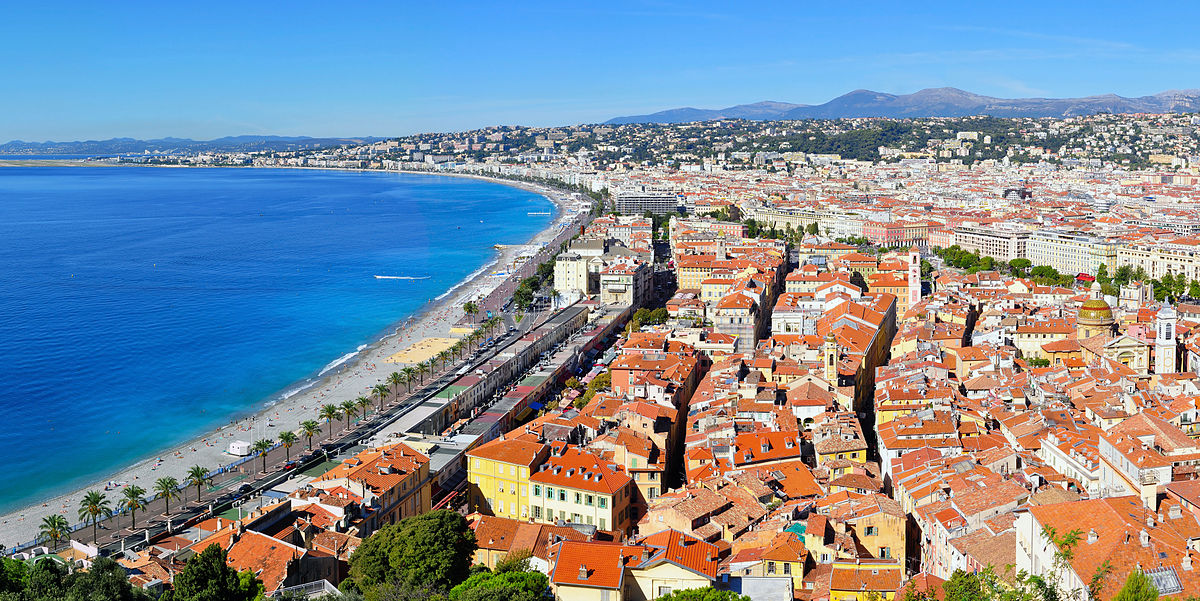
Nice, France is a city on the French Riviera (and not an American practice), September 21, 2011. (Tobi 87 via Wikipedia). Released to public domain via CC-SA-3.0.

This is not just about 45 and the GOP majorities in Congress. In locale after locale, actions like acquitting police officers for murdering Black men and women, reducing the number of abortion clinics, and cutting taxes so the poor and homeless don’t have enough food, shows how un-nice the American people are. American un-niceness exists in the policies drawn up or enacted by those for whom millions voted, from repealing Obamacare to the Muslim Ban. These policies may reflect an American politeness, but they also reflect a cruelty that has all too often been a part of American culture.

As someone who once considered himself “a nice guy,” I recognize that the correct term was always polite. For being “a nice guy” merely meant not revealing my true thoughts toward and about women, all while being polite enough to hold a door open or to try to help a damsel-in-distress. What I was being was a sexist asshole, having not yet challenged my assumptions about women and about myself and my views about women and the rampant sexism and misogyny in American culture.

There are far too many Americans who think that their Christian politeness is so much more than obligatory and vapid gestures that mean little-to-nothing in reality. For this July 4th, the idea of honoring the military with absolutist statements about freedom as so automatic that it sickens me. Especially considering the number of active duty service people and veterans suffering from PTSD, addiction, or whom commit domestic violence. Americans don’t act nice around these ugly issues. Americans don’t volunteer, don’t call 911, and don’t pressure city councils, county commissioners, and state legislatures enough to deal with these issues holistically. It would be nice if more Americans did.

Americans ought to ban being polite. Polite perpetuates racism and economic inequalities. But being nice means doing something about it, protesting, volunteering, speaking truth to power, using America’s alleged freedoms to confront folks in one’s life about their comfortability with various forms of oppression. How nice would that be!

If I Could Redo Time…

18 Thursday May 2017

Posted by decollins1969 in 1, Academia, Boy @ The Window, Carnegie Mellon University, Christianity, culture, Eclectic, Mount Vernon New York, New York City, Pittsburgh, Politics, Pop Culture, race, University of Pittsburgh, Upper West Side, Work, Youth

≈ Leave a comment

Tags

Alternative History, Angelia, Barbara B. Lazarus, Betrayal, CMU, Graduation Ceremony, Job Talk, Joe William Trotter Jr., Laurell, Mother-Son Relationship, Peter Stearns, PhD Graduation, Pitt, Self-Reflection, Steve Schlossman, Teachers College, Triumph, Westchester Business Institute


Show art from SyFy’s 12 Monkeys (the home of alternative timelines), March 2016. (http://syfy.com).

Mother’s Day Week 1997 was one of triumph, betrayal, and deep self-reflection, helping to shape my last two decades. On that fateful Sunday, I finished preparing my transparencies for the overhead projector that I would need to use for my job talk on multiculturalism, race, and education at Teachers College the next day. My then-girlfriend Angelia came over around 1 pm, helped me pack as we talked about the job, my research, her missing me for the next few days, and my wishing I could take her with me to New York. Then we called a cab, went out to Pittsburgh International Airport, and I boarded my 6 pm flight bound for La Guardia.

The next day, that second Monday in May 1997, went well despite barely six hours of sleep (a typical night for me now). I met with Teachers College faculty, graduate students, a department chair, an assistant dean, and the dean. I gave my all-important job talk, fielded questions, and otherwise felt that I brought my heat in this potentially life-changing interview. By 4 pm, it was over, I was exhausted, but I was more than content. I figured I made myself a tough out at worst, and gave myself a real chance at this assistant professor job at best.

I spent the night in Manhattan at the Hotel Beacon, and ordered room service, instead of going out to Barnes & Noble or Tower Records. I had to rest up before going to see my family at their temporary apartment in Yonkers. Refreshed and with my old blank-faced-Donald mask on, I checked out and took the 1 train up to Van Cortlandt, then the Bee-Line bus into Yonkers, where my Mom and younger siblings had been living for a year and a half.

My sister Sarai (1983-2010) in Mom’s cap-and-gown, May 14, 1997. (Donald Earl Collins).

Tuesday was Mom’s graduation day from Westchester Business Institute. After ten years of on-and-off-again enrollment, Mom had finished her associate’s degree in accounting. I was really happy for her. That day from 10 am on was about getting Mom and Maurice, Yiscoc, Sarai, and Eri cleaned up and ready for the long bus trip up Broadway to White Plains, Westchester County Center, and hundreds of other WBI graduates. Of all of us, I think my sister Sarai had the best time. After Mom tossed her cap in the air (and caught it), Sarai begged to put on Mom’s graduation digs. My fourteen-year-old sister walked around for the rest of the night as if she had graduated from college!

Wednesday was a difficult day. I had a noon-ish flight to catch out of La Guardia back to the ‘Burgh, as my own PhD graduation was four days away. Though Mom and I agreed that I didn’t have the funds to fly her out and put her up in Pittsburgh, I didn’t agree that my teenager siblings (all between nearly eighteen and thirteen at this point) couldn’t watch over themselves for two or three days. “Are you kiddin’?,” Mom said when I suggested this, and added, “the kids would tear this mutha up while I’m gone.”

But then, as I was getting packed up to do the Bee-Line Bus, 1 train to Times Square, Shuttle to Grand Central, and cab to LGA, Mom said something that made me happy we decided she wouldn’t be at my graduation. “You know, you were in school so long, you could’ve had another high school diploma.” The scorn with which she said it, it was like someone suddenly stabbed me in the stomach. It was the first time I truly saw Mom’s vanity, possibly even, her jealousy. After I said my goodbyes, promising my brother Maurice that I’d come to his Mount Vernon High School graduation in June, Mom’s sentence of sneering envy was all I thought about on the trip back.

“Maybe it’s a good thing you didn’t invite your mom,” Angelia said after I told her about Mom and her brooding behavior Wednesday evening. “But, this means she will have never seen me at any graduation, seen where I’ve lived the past ten years, seen how hard I worked,” I cried. Angelia got up from her dining room table, walked around to my side, sat in my lap, and gave me a hug. I’m so glad she didn’t let go, and let me cry myself out on her shoulder and chest for a few minutes.

I woke up in Angelia’s bed Thursday morning, having slept past 9 am. It was the most sleep I’d had in five days. I was remarkably refreshed. I rarely stayed over at Angelia’s because the back of her third-floor flat was practically an urban wildlife reserve, between the raccoons, squirrels, pigeons, cardinals, blue jays, rabbits, and the occasional deer. Not this morning. They seemed to know I needed not to hear them that morning.

The next three days were a blur. I ran around Pittsburgh and Carnegie Mellon and Pitt saying formal goodbyes to a few colleagues and former professors, something I wouldn’t have had time for if Mom had been in Pittsburgh with me. Angelia and I spend most of Saturday with her mommy, and then with my friend Laurell, Laurell’s sister Naomi, and their charge Archie. It would be the only time anyone from my Humanities days would witness me graduate with one of my Pittsburgh degrees.

That Sunday, May 18, was going to be a scorcher of a day. I was to be on stage as part of the tent-revival-as-graduation ceremony at CMU (as they did for all the PhD graduates). But there was no way I’d wear a full suit. So I compromised. I put on a shirt and tie under my gown, wore my baggy basketball shorts for bottoms, and put on shoes and dress socks to complete this goofy yet comfortable picture. I marched across the stage and shook Peter Stearns‘ hand, as he was the dean of humanities and social sciences at CMU then. Too bad I didn’t say what I thought about his fast food approach to teaching and learning to him in that moment.

But, after that first ceremony, the individual and group pictures, a bunch of folks had to leave. Laurell, Naomi, and Archie had to get back to Virginia for yet another week of school — that’s what happens between two school teachers and an eighth-grader for graduation attendees. My friends Ed and James had errands to run, and Angelia’s mom had some church-related affairs to get to. So, for the moment, it was just me and Angelia, walking from CMU to The University Club, by Pitt’s Thackeray Hall.

We get there, in this quiet room, with seven burgundy diploma holders, sitting on a table that staff had covered in this dark blue velvet cloth. My now former advisor, Joe Trotter, arrived a few minutes later. I’d only seen him once in the six months since he finally approved my dissertation, ending what had been a two-year ordeal of betrayal, slights, and threats while writing my 505-page tome. Yet, all I was thinking was, “Why are we doing the departmental ceremony in a building in the middle of Pitt’s campus?”

CMU leather diploma album, May 17, 2017. (Donald Earl Collins).

Steve Schlossman, the history department chair, was this ceremony’s emcee. He introduced each of us, our research, any awards we may have won, and our dissertation advisors, all as he handed us our doctorates. I was second on the list to go up and receive my diploma, shake hands with Schlossman and Trotter. I did say a few words, mostly about hard work and perseverance. “With God and faith, and of course, my girlfriend Angelia, even though that word ‘girlfriend’ hardly defines who you are to me, I wouldn’t be standing here right now. Thank you.” That was how I ended my three-and-a-half minute speech.

There was a small reception afterward, and like most CMU ceremonies I’d been a part of since 1993, this one was nearly blindly boring. Except that my friend James did show up and gave me a pat on the back and a handshake. Except that my dear friend and mentor Barbara Lazarus came and gave me a big hug. Except that Angelia had insisted on taking pictures of me from the time I got up to get my degree until the moment we left.

We were out around 6:30 pm. It had rained and poured, as thunderstorms had rolled through during the second ceremony. I wish Mom could’ve been there, seen what I had seen, felt what I was feeling. But, knowing what I knew now, the personal triumph that this graduation day was couldn’t be diminished. I had long since stopped living for what Mom wanted me to be — a sounding board, a babysitter, an extra source of income. For the first time, I no longer felt guilt about not going back to New York after my undergraduate years at Pitt, ready to bail my family out of poverty on a $25,000-a-year salary. For the first time, I realize Mom’s burdens were never mine to carry.

In·ter·sec·tion·al·i·ty

24 Monday Apr 2017

Posted by decollins1969 in 1, Academia, Carnegie Mellon University, culture, Eclectic, New York City, Pittsburgh, Politics, Pop Culture, race, University of Pittsburgh, Youth

≈ Leave a comment

Tags

Academic Conferences, Afrocentricity, bell hooks, CMU, Critical Race Theory, Diversity, Elsa Barkley Brown, Evelyn Brooks Higginbotham, Intersectionality, Kimberlè Crenshaw, Marginalization, Misogyny, Multiculturalism, OAH, Organization of American Historians, Patricia J. Williams, Paula Giddings, Pitt, Presidential Classroom, Racism, Sexism, Tera Hunter


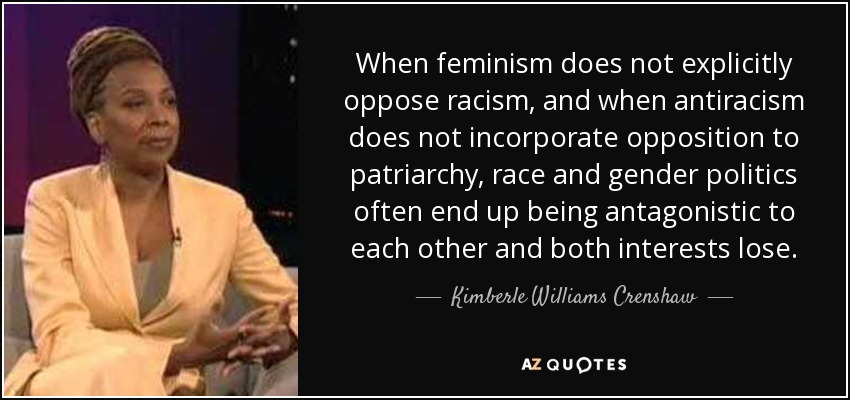
Kimberlè Crenshaw quote, from “Whose Story Is It Anyway?: Feminist and Anti-Racist Appropriations of Anita Hill,” in Toni Morrison’s Race-ing Justice, En-gendering Power, 1992, p. 403. (http://azquotes.com).

In truth, I’ve considered the issue of intersectionality as a historian and writer since 1993, when I wrote my quantitative methods requirement-fulfilling paper, “The Dying of Black Women’s Children.” Except that, for me and for most of my colleagues, the term was barely in use. Matter of fact, in five and half years of graduate school and in my first three years after finishing the doctorate, I may have heard the term used only once or twice. It’s not like I didn’t think about the unique issues facing women of color — especially Black women — in the context of US history and African American history. Sometimes as a historian, how leading Black men and White women marginalized African American women in education movements, in the suffrage movement, and in the Civil Rights Movement was all I could think about. In the context of understanding American education and the role of Black women as teachers and education, it made me reconsider the notion of education as a form of social control versus it as a form of social liberation as an and-both, and not an either-or proposition.

But, as with all other issues, I’m not perfect. I remember getting into an argument with an African American women at a joint Carnegie Mellon-University of Pittsburgh conference on diversity in 1992. She was a second-year master’s student in the public policy program at CMU’s Heinz School (now Heinz College) to my second year as a grad student and first as a PhD student. I had talked about my initial research on multiculturalism and Black education, and what that research could mean in terms of diversity in higher education. Over lunch, I barely got three sentences out about the implications before this student pounced on me for not taking a more Afrocentric approach to my research, all but calling me an Uncle Tom. She also pointed out that while I had accounted for race and gender in my work, I hadn’t accounted for them together. I was already used to middle class Black folk who only radicalized at the ripe young age of twenty-two telling me that my research was too conservative and too White. But on the second part, not accounting enough for Black women in my research, I did take to heart.

In 1999, at my “Black Brahmins” presentation on W. E. B. Du Bois, Carter G. Woodson, and Alain Locke and their ideas around multiculturalism and connections to Harvard at the Organization of American Historians conference in Toronto, I got a cold shoulder from the panel’s moderator, Stephanie Shaw. She barely said a word to me the entire time, and barely commented on my paper. I figured that Shaw thought I should’ve found a way to make the paper more inclusive of Black women graduates of Harvard and multiculturalism, even though Harvard didn’t allow any women to attend. I could’ve included Black women who attended Radcliffe College around the turn of the twentieth century, but even then, those women did not earn graduate degrees or become proponents of pluralism or what we’d call multiculturalism today. I followed up at OAH in Los Angeles in 2001 with my “Multicultural Sisters” paper, but by then, I no longer had an interest in multiculturalism as a historian.

Times Square intersection time-lapse, August 2014. (http://shutterstock.com).

On this day and date in 2000, though, was the argument I had with a colleague at Presidential Classroom, one that would keep me conscious about intersectionality and womanism from that point on. Sev had been brought on by my racist boss Jay Wickliff to help out with the international recruitment for the weekly civic education programs we had for high school juniors and seniors. Sev was Canadian, had been an intern with the program the summer before, and had recently finished up a master’s in history. She had stopped by my office to ask about some revisions I’d been making to parts of our upcoming summer programs, especially the one on media and democracy, which was a new program for Presidential Classroom. Somehow the conversation swung toward women’s rights and issues that Sev thought were important to women. I kept correcting her, saying that some of these issues were “only important to White women.” She took offense, telling me that I shouldn’t be correcting her, that her master’s made her as much an expert on the topic as me. I remember actually chuckling at that assertion, which miffed Sev even more. The common refrain, “Just because you have a PhD…,” was how she responded.

But I did take a few minutes to break down the differences between second-wave and third-wave feminism (or womanism). I went on about the history of exclusion that Black women in particular had faced from Black men in civil rights movements and White women around suffrage and reproductive rights. I said, “maybe it’s because you’re Canadian, but here in the US, these issues you’re bringing up mostly concern middle class White women.” She didn’t like that at all. Before Sev responded, Wickliff, having overheard our argument, came by and said, “Slavery was a hoax” as a joke. That was the moment I knew my days working for this group of Whiteness folks were numbered.

A few months later, in my new job at AED with New Voices, I picked up and read Kimberlè Crenshaw’s essay “Demarginalizing the Intersection of Race and Sex” (1989) for the first time. I knew that I already understood intersectionality for Black women, how misogyny, sexism, and racism constantly confer a double marginalization, discrimination, and violation on Black women. Now, between Crenshaw and my own experiences, I also realized that I could experience intersectionality as a Black man, between White men and White women. Especially middle class ones, where their well-meaning color-blind racism had served to put me in a box as well. It was an and-both box, where I was a historian who didn’t write about intersectionality enough and a professional who had also experienced race and gender-based marginalization, albeit differently from women or color. What I did learn, finally, was that the intersection of race, class, and gender made Times Square look like Walden Pond by comparison.

← Older posts
Newer posts →

Boy @ The Window: A Memoir

Boy @ The Window: A Memoir

Places to Buy/Download Boy @ The Window

There's a few ways in which you can read excerpts of, borrow and/or purchase and download Boy @ The Window. There's the trade paperback edition of Boy @ The Window, available for purchase via Amazon.com at http://www.amazon.com/Boy-Window-Donald-Earl-Collins/dp/0989256138/

There's also a Kindle edition on Amazon.com. The enhanced edition can be read only with Kindle Fire, an iPad or a full-color tablet. The links to the enhanced edition through Apple's iBookstore and the Barnes & Noble NOOK edition are below. The link to the Amazon Kindle version is also immediately below:

scr2555-proj697-a-kindle-logo-rgb-lg

Boy @ The Window on Amazon.com: http://www.amazon.com/Boy-The-Window-Memoir-ebook/dp/B00CD95FBU/

iBookstore-logo-300x100

Boy @ The Window on Apple's iBookstore: https://itunes.apple.com/us/book/boy-the-window/id643768275?ls=1

Barnes & Noble (bn.com) logo, June 26, 2013. (http://www.logotypes101.com).

Boy @ The Window on Barnes & Noble: http://www.barnesandnoble.com/w/boy-the-window-donald-earl-collins/1115182183?ean=2940016741567

You can also add, read and review Boy @ The Window on Goodreads.com. Just click on the button below:

Boy @ The Window

Twitter Updates

Tweets by decollins1969
  • RSS - Posts
  • RSS - Comments

Archives

  • June 2025
  • April 2023
  • September 2022
  • August 2022
  • July 2022
  • June 2022
  • May 2022
  • April 2022
  • March 2022
  • January 2022
  • December 2021
  • November 2021
  • October 2021
  • September 2021
  • August 2021
  • July 2021
  • June 2021
  • April 2021
  • March 2021
  • February 2021
  • January 2021
  • December 2020
  • November 2020
  • October 2020
  • September 2020
  • August 2020
  • July 2020
  • May 2020
  • April 2020
  • March 2020
  • January 2020
  • December 2019
  • November 2019
  • August 2019
  • July 2019
  • June 2019
  • May 2019
  • April 2019
  • March 2019
  • February 2019
  • January 2019
  • December 2018
  • November 2018
  • October 2018
  • September 2018
  • August 2018
  • July 2018
  • June 2018
  • May 2018
  • March 2018
  • February 2018
  • January 2018
  • December 2017
  • November 2017
  • October 2017
  • September 2017
  • August 2017
  • July 2017
  • June 2017
  • May 2017
  • April 2017
  • March 2017
  • February 2017
  • January 2017
  • December 2016
  • November 2016
  • October 2016
  • September 2016
  • August 2016
  • July 2016
  • June 2016
  • May 2016
  • April 2016
  • March 2016
  • February 2016
  • January 2016
  • December 2015
  • November 2015
  • October 2015
  • September 2015
  • August 2015
  • July 2015
  • June 2015
  • May 2015
  • April 2015
  • March 2015
  • February 2015
  • January 2015
  • December 2014
  • November 2014
  • October 2014
  • September 2014
  • August 2014
  • July 2014
  • June 2014
  • May 2014
  • April 2014
  • March 2014
  • February 2014
  • January 2014
  • December 2013
  • November 2013
  • October 2013
  • September 2013
  • August 2013
  • July 2013
  • June 2013
  • May 2013
  • April 2013
  • March 2013
  • February 2013
  • January 2013
  • December 2012
  • November 2012
  • October 2012
  • September 2012
  • August 2012
  • July 2012
  • June 2012
  • May 2012
  • April 2012
  • March 2012
  • February 2012
  • January 2012
  • December 2011
  • November 2011
  • October 2011
  • September 2011
  • August 2011
  • July 2011
  • June 2011
  • May 2011
  • April 2011
  • March 2011
  • February 2011
  • January 2011
  • December 2010
  • November 2010
  • October 2010
  • September 2010
  • August 2010
  • July 2010
  • June 2010
  • May 2010
  • April 2010
  • March 2010
  • February 2010
  • January 2010
  • December 2009
  • November 2009
  • October 2009
  • September 2009
  • August 2009
  • July 2009
  • June 2009
  • May 2009
  • April 2009
  • March 2009
  • February 2009
  • January 2009
  • December 2008
  • November 2008
  • October 2008
  • September 2008
  • August 2008
  • July 2008
  • June 2008
  • May 2008
  • April 2008
  • March 2008
  • February 2008
  • January 2008
  • December 2007
  • November 2007
  • October 2007
  • September 2007
  • August 2007
  • July 2007
  • June 2007

Recent Comments

MaryPena's avatarMaryPena on My Day of Atonement/Bitter Hat…
decollins1969's avatardecollins1969 on No Good Teaching Deed Goes…
Mary Rose O’Connell's avatarMary Rose O’Connell on No Good Teaching Deed Goes…

NetworkedBlogs on Facebook

NetworkedBlogs
Blog:
Notes From a Boy @ The Window
Topics:
My Life, Culture & Education, Politics & Goofyness
 
Follow my blog

616 616 East Lincoln Avenue A.B. Davis Middle School Abuse Academia Academy for Educational Development AED Afrocentricity American Narcissism Authenticity Bigotry Blackness Boy @ The Window Carnegie Mellon University Child Abuse Class of 1987 CMU Coping Strategies Crush #1 Crush #2 Death Disillusionment Diversity Domestic Violence Economic Inequality Education Family Friendship Friendships Graduate School Hebrew-Israelites High-Stakes Testing Higher Education History Homelessness Humanities Humanities Program Hypocrisy Internalized Racism Jealousy Joe Trotter Joe William Trotter Jr. K-12 Education Love Manhood Maurice Eugene Washington Maurice Washington Misogyny Mother-Son Relationship Mount Vernon High School Mount Vernon New York Mount Vernon public schools Multiculturalism MVHS Narcissism NFL Pitt Pittsburgh Politics of Education Poverty President Barack Obama Race Racial Stereotypes Racism Relationships Self-Awareness Self-Discovery Self-Reflection Sexism Social Justice Teaching and Learning University of Pittsburgh Violence Whiteness Writing

Top Rated

Blog at WordPress.com.

  • Subscribe Subscribed
    • Notes from a Boy @ The Window
    • Join 103 other subscribers
    • Already have a WordPress.com account? Log in now.
    • Notes from a Boy @ The Window
    • Subscribe Subscribed
    • Sign up
    • Log in
    • Report this content
    • View site in Reader
    • Manage subscriptions
    • Collapse this bar
 

Loading Comments...