• About Me
  • Other Writings
  • Interview Clips
  • All About Me: American Racism, American Narcissism, and the Conversation America Can’t Have
  • Video Clips
  • Boy @ The Window Pictures
  • Boy @ The Window Theme Music

Notes from a Boy @ The Window

~

Notes from a Boy @ The Window

Tag Archives: Joe William Trotter Jr.

My First Adult Job Interview, Teachers College

12 Monday May 2014

Posted by decollins1969 in 1, Academia, Boy @ The Window, Carnegie Mellon University, culture, Eclectic, eclectic music, Mount Vernon New York, New York City, Pittsburgh, Politics, Pop Culture, race, Upper West Side, Work, Youth

≈ Leave a comment

Tags

Barnes & Noble, Beacon Theater, Calling, CMU, Disillusionment, Finishing Second, Hotel Beacon, job interview, Job Talk, Joe William Trotter Jr., PTSD, Racial Harassment, Rage, Steven Schlossman, Teachers College, Walking While Black, Writer, Writing


Teachers College today, West 120th (between Broadway and Amsterdam), New York, NY, April 15, 2014. (http://ccnmtl.columbia.edu/).

Teachers College today, West 120th (between Broadway and Amsterdam), New York, NY, April 15, 2014. (http://ccnmtl.columbia.edu/).

Seventeen years ago this week (check the calendar – the days and dates coincide with the week of May 12-18, ’97) was perhaps one of the most euphoric and bitterly disappointing weeks in my entire adult life. It was such a strange week that it forced me into second guessing myself and my path in life for many years afterward.

But it didn’t start out that way. On Monday, May 12th, I did my very first post-doctoral interview, for an assistant professor position at Teachers College (Columbia’s school of education) in Morningside Heights (West Harlem, really). I’d flown in from Pittsburgh the evening before, and stayed at the Hotel Beacon at Teachers College’s expense, because Monday was going to be a very long day. It was loud that Sunday night, as there was some event at the Beacon Theater. But somehow, I had just enough discipline and memories of New York’s smells and sounds to fall asleep comfortably.

My day started at 8:30 am, so of course, I was up before seven. I put on my one and only suit — at least, the only suit I owned that fit my six-three, 215-pound frame — went over my job talk on multiculturalism, and went on my pensive way to the 72nd Street Subway entrance on Broadway. It was a meat-packed ride to 125th Street, where I had to get off (I had forgotten to walk down to 66th Street to catch the local 1 instead of the express 2 train) and walk the six or so blocks to Teachers College.
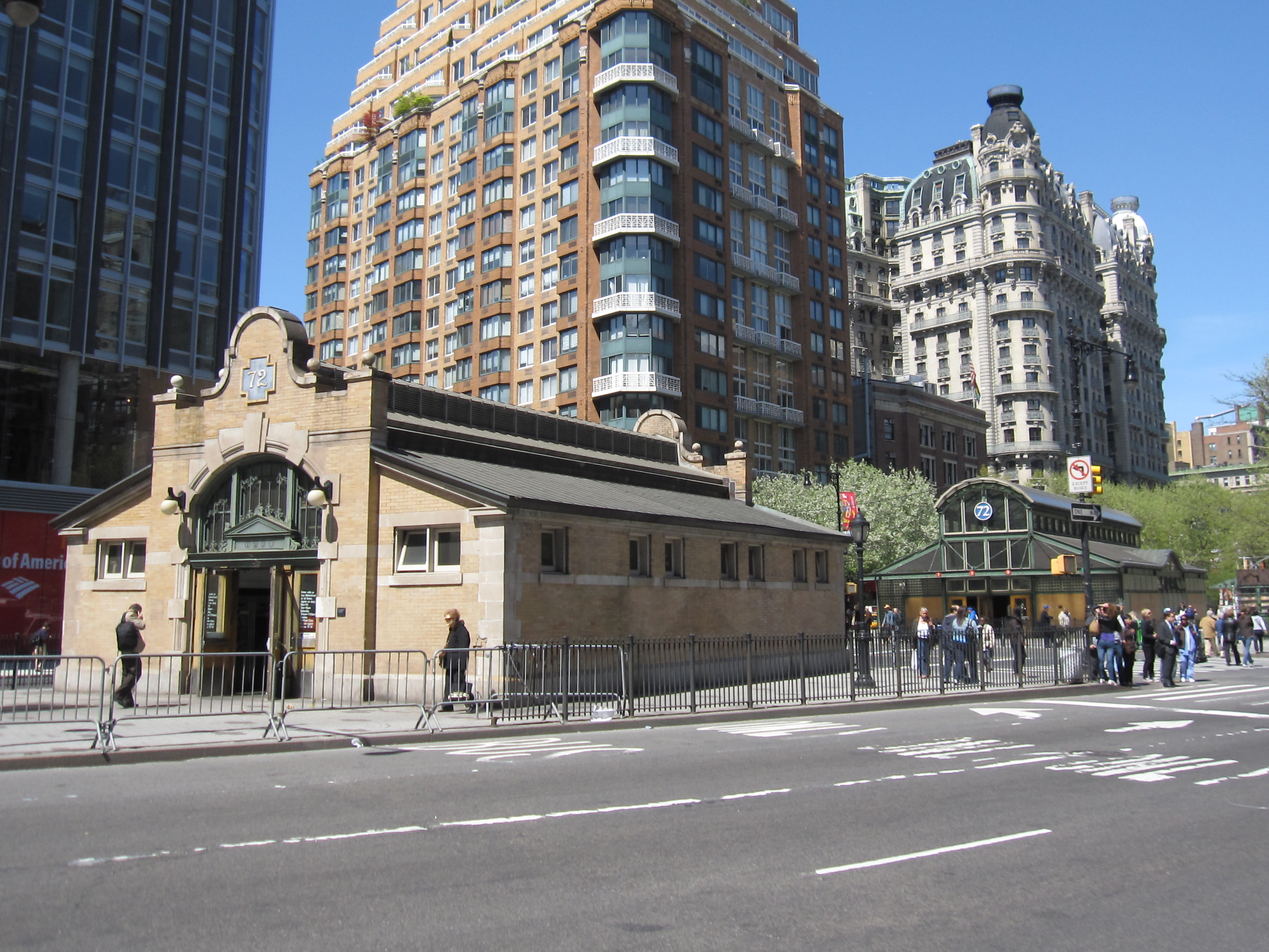
Original control house (left) and newer control house, on opposite sides of 72nd Street  (IRT Broadway – Seventh Avenue Line), New York, NY, April 13, 2010. (Gryffindor via Wikipedia). Released to public domain via CC-SA-3.0.

Original control house (left) and newer control house, on opposite sides of 72nd Street (IRT Broadway – Seventh Avenue Line), New York, NY, April 13, 2010. (Gryffindor via Wikipedia). Released to public domain via CC-SA-3.0.

After that, my day was an eight-hour blur, meeting with faculty, grad students and deans. Making sure not to eat too much while being grilled with questions over lunch. Giving my job talk and making sure to tell jokes, to bring up facts relevant to this history of education job, and, of course, to smile. Talking with grad students about how I finished my 505-page dissertation in twenty-seven months, about my teaching style and about growing up in Mount Vernon. It was as intense a process as I had expected it to be, but I felt at the end that I’d done everything possible to get the job.

I knew that I was one out of only five candidates invited to interview, out of over 500 applicants. I even had the chair of the History Department, Steve Schlossman, lobby on my behalf for the job, prior to my interview. And, despite my former advisor in Joe Trotter, I’d managed to put together a group of letters from folks that should’ve passed muster. All I could do after the interview was wait.

But life didn’t wait to intervene. After leaving the interview for the hotel, I changed into my more casual clothing, jeans and a long-sleeve t-shirt, and went off to Tower Records and Barnes & Noble on 66th and Broadway, and later, Haagan Dazs (that last one was a big gastrointestinal mistake!).  

From the moment I walked in the door at Barnes & Noble until I left a half-hour later, a Latino security guard tailed me as I perused books in the African American nonfiction, Cultural Studies and Music sections of the store, across three floors. As I walked out, I walked up to the guard and said

“While you were stalking me, you probably let half a dozen White folks slip out of here with books and CDs. Did you learn anything while you were watching me?”

“I was just doing my job,” the dumb-ass security guard said in response.

“Well, if following a Black guy around for thirty minutes is part of your job, you deserve to lose your job,” I said to him as I walked out.

It was a bit of a harbinger of things to come. I was more pissed off about these everyday slights — or, rather, microaggressions — than I’d been before Trotter and my doctorate. And I was less patient about waiting for what I wanted than I’d been as a grad student.

What your second-place prize often looks like, May 12, 2014. (http://www.wmciu.org.uk/).

What your second-place prize often looks like, May 12, 2014. (http://www.wmciu.org.uk/).

Three weeks later, I received a reimbursement check for my travel and other expenses, and within twenty-four hours, a call from the search committee chair. I’d finished second for the job. Second! To whom, I still don’t know. The chair kept telling me, “you didn’t do anything wrong…you did a very good set of interviews,” as if those compliments would pay my rent next month. I was disappointed, hopeful, but disappointed. It was my first shot, my best shot, and I’d given my best effort. “What now?,” I thought.

It’s a question that I still must ask seventeen years, two books and two careers later. I’ve long since realized that the question of what my life would’ve been like if I’d gotten the Teachers College job was moot, because my issues were about more than finding work. I still would’ve been unhappy, with a New York-esque rage to go with it.

So I counted my blessings, and I count them still. Not getting this particular job bought me the time and energy I needed. I needed that time, to see myself as the writer I also wanted to be, not just the educator and thinker I already knew I was. A better, more personable, more revealing and feeling writer than the cold and metallic one that grad school and Trotter helped turn me into by the end of ’96.

Bow Down to Isabel Wilkerson

27 Thursday Mar 2014

Posted by decollins1969 in 1, Academia, Boy @ The Window, Carnegie Mellon University, culture, Eclectic, Jimme, Marriage, Mount Vernon New York, My Father, New York City, Politics, Pop Culture, race, Youth

≈ Leave a comment

Tags

Academic Writing, Black Migration, Book Review, Creative Nonfiction Writing, Great Migration, Isabel Wilkerson, Joe William Trotter Jr., Proletarianization Thesis, The Warmth of Other Suns (2011)


Isabel Wilkerson, The Warmth of Other Suns, front cover (2011), Random House.

Isabel Wilkerson, The Warmth of Other Suns, front cover (2011), Random House.

I’ve finally read Isabel Wilkerson’s book The Warmth of Other Suns (2011) this month, just as I finished teaching a mini-course in post-1865 African American history. If I ever have the opportunity again to choose my own books for a survey-level course in African American history, this would be one of my cornerstone books. I know I stand at the back of a very long list when I say this, but this is a wonderfully powerful and insightful book, with language and a writing style equally as tender.

This was what I wrote regarding my first impressions on Goodreads.com:

My God – this book is a masterpiece! Wilkerson has done what historians and writers as diverse and groundbreaking as Kenneth Kusmer, David Levering Lewis, Joe William Trotter, Jr., Nicholas Lemann, Thomas Sugrue and James Grossman couldn’t (and in a couple of cases, wouldn’t) do. She put flesh, blood and bones on the Black individuals and families who migrated “up North” and out West throughout the bulk of the twentieth century. She didn’t distract with neo-Marxist, post-modern, post-structural, proletarian, or other overly academic theories for understanding the “hows” and “whys” behind Black migration between 1915 and the 1970s.

Reading Wilkerson’s The Warmth of Other Suns (2011) was like reading into my own family’s pasts (my mother and father came to New York City — specifically, the Bronx (Pelham Parkway and Wakefield) — during the 1960s from Arkansas and Georgia/Florida before moving to Mount Vernon). She captured so well the aspirations, the inspirations and the trepidations of the people who migrated, and the things they faced upon arrival. Wilkerson, most of all, grounded herself in the scholarly, but weaved it into a story that was nothing less than literary. If you’re a US or African American historian, a Black Studies, Black Women’s Studies or American Studies scholar, you must incorporate in your curriculum if you haven’t already. If you’re a writer who aspires to tell an important story — one that educates as it entertains — then The Warmth of Other Suns is a great place to start and Wilkerson a great writer to emulate.

Wilkerson called the Great Migration one of the great events of the twentieth century. But it was more than that. It was one of the great events in American history, a silent and gradual revolution on par with westward expansion and more significant than the second wave of immigration from Southern and Eastern Europe to the US between 1870 and 1914. I and millions of others like me should know. I wouldn’t be writing at all if I wasn’t a child of two Black migrants who left farms in the South for New York City.

Carnegie Mellon Stamp of Approval

17 Monday Mar 2014

Posted by decollins1969 in 1, Academia, Boy @ The Window, Carnegie Mellon University, culture, Eclectic, Pittsburgh, Pop Culture, race, University of Pittsburgh, Work, Youth

≈ Leave a comment

Tags

Advice, Barbara Lazarus, Book Reviews, CMU, Coursework, Doctoral Completion, Graduate School, Hazing, Joe William Trotter Jr., John Modell, Oral Comprehensive Exams, PhD, Pitt, Politics of Academia, Prayer, Stamp of Approval, Steve Schlossman, Sycophants, Torture


Approved rubbed stamp in green, March 17, 2014. (http://depositphotos.com).

Approved rubbed stamp in green, March 17, 2014. (http://depositphotos.com).

Two decades ago on this date, I took my oral PhD comprehensive exam. It was on a cloudy Thursday, a day after a late afternoon shower had left a rainbow over the otherwise dreary campus. Like the day after that rainbow, the exam was anticlimactic, more indicative of what I’d learned in two years as a grad student at Pitt than in my two semesters at Carnegie Mellon.

Getting to this exam was sheer torture. Not because I didn’t understand historiography, or hadn’t read at least 230 books and countless articles since my first day of grad school. No, it was torturous because the powers that were had insisted to make my schedule more like the one of a first-semester grad student the previous fall.

I ended up with two courses that I didn’t want and didn’t need, especially since the History Department at CMU had told me that they had accepted all of my master’s and PhD credits from the University of Pittsburgh. Though I had taken four grad seminars in US history (not to mention CMU Professor Joe Trotter’s grad seminar in African American history the year before), I was taking a first-year student’s grad seminar in US history – again! I also had to take comparative working-class history seminar with a combination of anti-race Marxists and brown-nosing sycophants more interested in an A than in actual evidence-based historical interpretation.

Prostate exam from Family Guy (1999-2003, 2005-present) screen shot, July 17, 2013. (http://chattanoogaradiotv.com).

Prostate exam from Family Guy (1999-2003, 2005-present) screen shot, July 17, 2013. (http://chattanoogaradiotv.com).

That, and being broke for most of the ’93-’94 school year — I took what amounted to a $2,000 stipend cut in my transfer from Pitt to CMU — made me pretty cranky my first six months at the home of elitist lily-Whiteness. There were days in those courses where I wanted to literally strangle some of my fellow grad students for being so dense (in the case of first-years) or for being so obviously fake in their praise of a given professor’s argument (in the case of two sycophants in particular). Only the late Barbara Lazarus and Trotter kept me grounded enough so that I didn’t spend every moment of Fall ’93 making voodoo dolls out of Steve Schlossman and John Modell for putting me through the hazing process.

Somewhere around the beginning of November ’93 — after some much-needed time in prayer — I began to realize a few things. One, that I’d already done so much reading on topics like immigration, industrialization, slavery and the connections between race and class (and race, class and gender). So much so that unless it was an author of major interest, I could skim or skip the reading, or even find a few book reviews and compare them to my extensive library of notes on the other authors in a given subfield or field.

Two, that my time outside of class was still my time. I knew that I wanted to do multiculturalism as a dissertation topic, and that I wanted to do it in the context of Black Washington, DC. So I began ordering microfilm of Black weekly newspapers like the Washington Tribune and Washington Bee (going back as far as 1915) to look at as much material as possible. It calmed me to know that I was working on my dissertation topic nearly a year before Trotter and my committee would official approve it.

Three, I knew by January ’94 that Schlossman, et al. had agreed that the Spring ’94 semester would be my last one in coursework. I still had to take Modell’s goofy Historical Methodologies course, but having to do things like my oral comprehensives made going to class just bearable enough.

Acting a part quotes from actors, March 17, 2014. (http://thepeopleproject.com/actors/quotes).

Acting a part quotes from actors, March 17, 2014. (http://thepeopleproject.com/actors/quotes).

Finally, I took out a loan. I’d only taken out one student loan since finishing undergrad in ’91, but it was obvious I couldn’t live off of a $7,500-per-year stipend. Really, no one could, not without rooming with another student or having a spouse with a real income. The money came in at the beginning of March, making my march to become ABD that year that much easier.

By the time I walked into the second-floor conference room in Baker Hall to take my orals, I knew there wasn’t a question about what I knew and how well I knew it. It was about whether I could show the folks at CMU that I could play along with them in their version of grad school, which wasn’t any different from any other history doctoral program’s version. And I did play along, for two hours, more than long enough to move on to the dissertation proposal round.

When I said years later to my friend Laurell that Humanities and Mount Vernon High School had prepared me more for grad school than it did for undergrad at Pitt, this was what I meant!

In Denigration of the Black and Accomplished

20 Monday Jan 2014

Posted by decollins1969 in 1, Academia, Carnegie Mellon University, culture, Eclectic, Pittsburgh, Politics, Pop Culture, race, University of Pittsburgh, Work

≈ 1 Comment

Tags

Abuse, Academic Culture, Academic Politics, Accomplishments, Achievements, Black Milwaukee, CMU, Denigration, Joe Trotter, Joe William Trotter Jr., Larry Glasco, Laurence Glasco, Meritocracy, Neglect, Pitt, Richard Oestreicher, Running Interference, Scholarship, Whiteness


Screenshot of Richard Sherman post-game interview with Erin Andrews, NFC Championship Game, Seattle, WA, January 19, 2014. (http://msn.foxsports.com).

Screenshot of Richard Sherman post-game interview with Erin Andrews, NFC Championship Game, Seattle, WA, January 19, 2014. (http://msn.foxsports.com).

I plan half of my blog posts in advance. At the beginning of every year, I make up a list of topics that I intend to cover, listed by month, and then go through that list. For the other half, I take advantage of relevant news stories or sudden life experiences that also seem relevant. Screen shot 2014-01-20 at 9.25.25 AM

Today’s post is a combination of planning and the impromptu. I’d already planned to write about the tightrope of being Black and accomplished — actually, more like the noose of it. But thanks to @profragsdale’s tweet, aka, Rhonda Ragsdale, an Associate Professor of History at Lone Star College-North Harris (Houston, Texas) and a PhD candidate at Rice University, I started on this topic a day early. Her tweet was the kick-off to eight hours of tweets about the cold and often cold-shoulder reception women — and Black male and LGBT — faculty and grad students receive when bringing up, discussing or even promoting themselves and their accomplishments.

Only to see more of these tweets and thoughts confirmed in another arena. The response of the racist, George-Zimmerman-set to Richard Sherman’s post-game interview with Erin Andrews on FOX within a couple of moments after he made the play to seal the game for his Seattle Seahawks to go play in Super Bowl XLVIII. You, Black man, can’t have a flash of anger and moment of passion on TV after playing in the NFC Championship Game, for then your accomplishments will be used against you. (Sarcasm aside, Sherman’s taunting will likely result in a fine, but that’s the NFL).

Single Drum Rollers with Rock Crushing Drum crushing soil and rocks (similar to how Whiteness can crush Black accomplishments), January 20, 2014. (http://bomag.com).

Single Drum Rollers with Rock Crushing Drum crushing soil and rocks (similar to how Whiteness can crush Black accomplishments), January 20, 2014. (http://bomag.com).

My post is much, much closer to home. I had the blessing and the curse of having two Black males as my official advisors while in grad school at Pitt and Carnegie Mellon, Larry Glasco for two years at Pitt, and Joe Trotter for four years at CMU. My gripes and complaints about their neglect, selective attentions to my development, and, in Trotter’s case, harassment and psychological torture I’ve already documented well here. What I haven’t discussed is that they were part of a cycle of academic abuse that they passed down to my generation of grad students, and likely some of my colleagues are passing on to their grad students as I write today.

My best example of how denigration in academia works was a conversation I had with Dick Oestreicher, a Pitt professor for my grad seminar in American Working-Class History in Fall ’92. I was in Trotter’s African American History seminar at CMU at the same time. Oestreicher asked me what else I was taking that semester, I guess because I’d proven resistant to the idea that social class had primacy over all forms of inequality, even in the US (a neo-Marxist to the core, I guessed).

When I told him I was in Trotter’s seminar, Oestreicher said, “Oh, I’ve heard of him,” with the disdain a fashion designer usually reserved for suits off Sears’ rack. You’ve “heard of him?” Really? Trotter, an award-winner scholar and author with a groundbreaking book on Black migration, urbanization and class formation in Black Milwaukee: The Making of an Industrial Proletariat, 1915-1945 (1985; 2007), and you’ve heard of him? A colleague only three blocks and one bridge away, and you’ve heard of him? Even now, the only word I have to that is, “Wow!”

If Oestreicher was the only one to do that, and only to Trotter, then my observations here would be suspect. But I witnessed this same kind of thing from other White history professors at Pitt and CMU toward Trotter and Glasco during my grad school years. Heck, one of the reasons I left for CMU in the first place was because I knew several of the most powerful professors in the Pitt history department didn’t respect Glasco’s work, and by extension, my own progress and work.

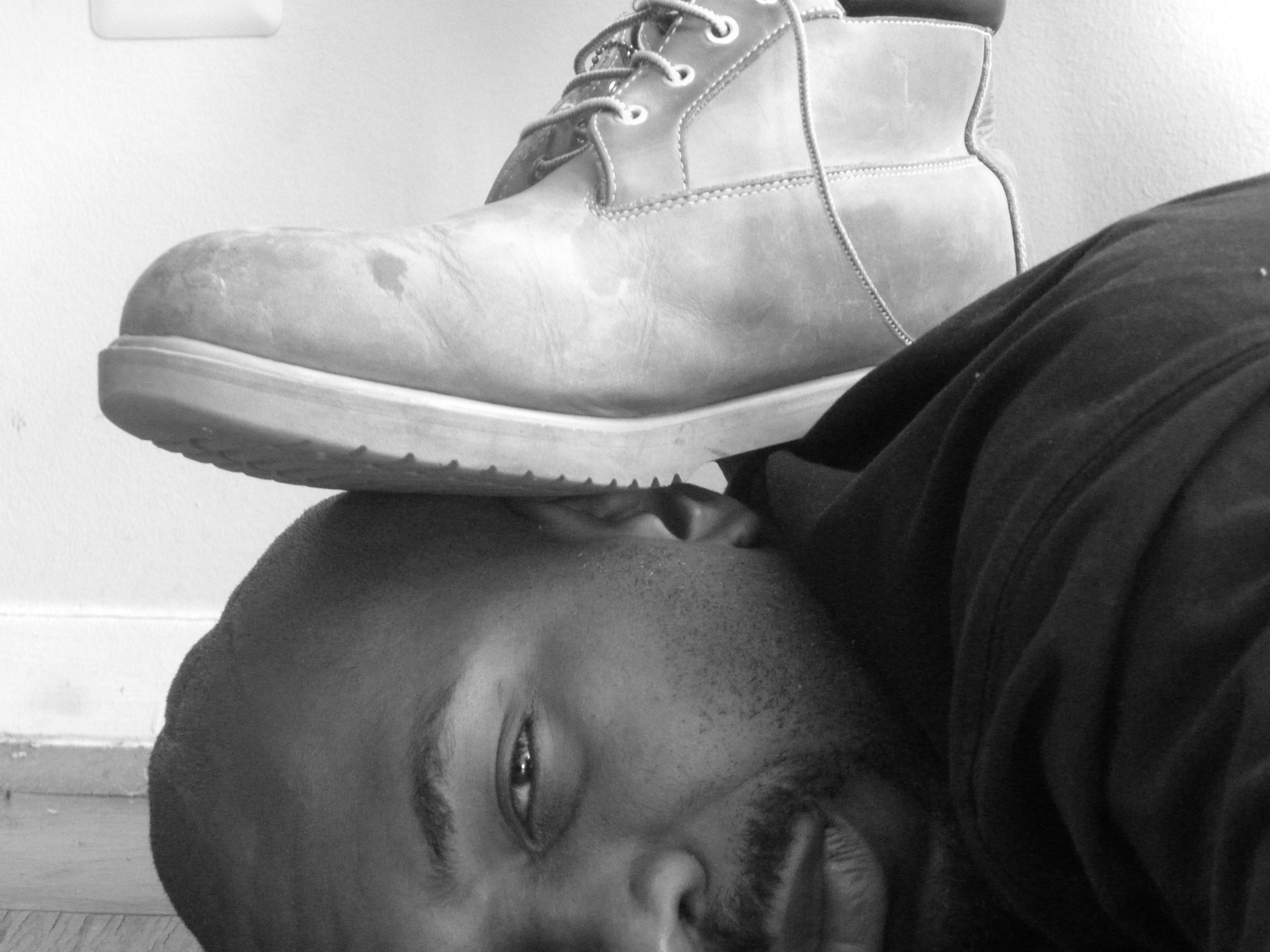
Foot On My Neck & Head, symbolic of my years as a Hebrew-Israelite (also of grad school), April 18, 2011. (Donald Earl Collins).

Foot On My Neck & Head, symbolic of my years as a Hebrew-Israelite (also of grad school), April 18, 2011. (Donald Earl Collins).

Maybe that was part of the reason why Trotter would constantly “run interference” on my behalf, to protect my “interests” during my four years there. Because, despite all the long hours, the sweat, tears and blood, there were folks at CMU who just saw him as a mere Black man, not a colleague or scholar every bit their equal. Given the books, the articles, the grants and so many other accomplishments, Trotter was easily the most productive professor in the department.

None of this justified how Trotter treated me when I was his student. I was semi-aware of the racial politics of accomplishment denial that folks around us practiced. I often chalked it up to jealousy or stress, thinking that the quality of my work or — to use Trotter’s terminology — my scholarship would show the academic world my worth. What White disdain toward Glasco and Trotter — and Trotter’s harassment of me — taught me, though, is that I’d have to be White in order for my accomplishments to seriously matter in academia, and I wasn’t planning on being White in my lifetime. And, that intellectual Whiteness can be nurtured and grown into Black professors.

In the years since finishing my own PhD, I’ve faced my own dilemmas around my achievements. I’ve at times attempted to fit in by downplaying my publications, by not bringing up my degrees, by not talking about my fellowship awards. What have I learned? To deny myself of my own accomplishments is like making a fine wine but not even daring to take a sip. White accomplishment deniers be damned.

What I Didn’t Know (in ’81, in ’97, in ’13)…

18 Saturday May 2013

Posted by decollins1969 in 1, Academia, Boy @ The Window, Carnegie Mellon University, Christianity, culture, Eclectic, eclectic music, Hebrew-Israelite, Mount Vernon New York, Movies, music, Pittsburgh, Politics, Pop Culture, race, Religion, University of Pittsburgh, Work, Youth

≈ Leave a comment

Tags

616 East Lincoln Avenue, Anticipation, Back Stabbers, Bruce Anthony Jones, Child Abuse, CMU, Domestic Violence, Family, Hustling, Joe Trotter, Joe William Trotter Jr., Not Knowing, O'Jays, Pitt, Poverty, Publishing, Success, The Matrix (1999), Welfare Poverty, Wisdom, Writing


Noah with me, January 3, 2004 [he was five months old]. (Angelia N. Levy).

Noah with me, February 28, 2004 [he was seven months old]. (Angelia N. Levy).

What I didn’t know across the past thirty-two years could be another book for me. I assume that would be the case for anyone would could look back across their life and second-guess themselves over that long a period of time. For me, though, the significance of today comes out of my mathematics background. You see, today’s my sixteenth PhD graduation anniversary. Not all that significant, I suppose. Except that I’m as far away from the end of my graduate school days at Carnegie Mellon today as I was from the first days of being a Hebrew-Israelite and watching my family fall into welfare poverty when I graduated in ’97.

100th Commencement Ceremony program, Carnegie Mellon University, May 18, 1997. (Donald Earl Collins).

100th Commencement Ceremony program, Carnegie Mellon University, May 18, 1997. (Donald Earl Collins).

Two things will hurt your success in this life. One is not acting on the things you know you should or must do. I learned that hard lesson from watching my mother make the decision to not make any decisions until it was too late, all while growing up at 616. Two is the enormous danger of not knowing, and therefore, not being able to act or respond to new or damaging situations as they arise. I’ve learned that lesson pretty well, too. Sometimes the hard way, through really bad experiences or decisions I didn’t play out like a game of eleventh-dimension chess. Sometimes through insight, foresight, even divine inspiration, anticipating what I didn’t know ahead of time.

And even with anticipation, you still might not be able to do anything about what you do and don’t know, simply because you’re not in any position to change things. That was especially true in ’81. I knew that my now deceased idiot ex-stepfather Maurice Washington was no good. But when my Mom decided to end her six months’ separation from him, there was nothing I could really do about it. I knew that with inflation rates of 14.5 percent in ’79 and 11.8 percent in ’80 (thank you, Scholastic Weekly Reader) and my Mom income of roughly $15,000 per year that we had less and less to work with at home. Again, not much I could do about that, either. Even paper boy jobs were drying up by the time I turned twelve!

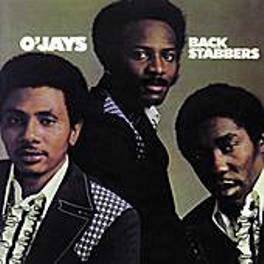
O'Jays Back Stabbers (1972) album cover, November 10, 2011. (Dan56 via Wikipedia). Qualifies as fair use as low-resolution illustration of subject matter.

O’Jays Back Stabbers (1972) album cover, November 10, 2011. (Dan56 via Wikipedia). Qualifies as fair use as low-resolution illustration of subject matter.

What I didn’t know was how quick and violent the shift into poverty would be. What I didn’t know was that Maurice would use his/our conversion as Hebrew-Israelites as justification for abusing my Mom and me. What I didn’t know was that my Mom would have three more kids by this man between July ’81 and May ’84. What I didn’t know was that I would feel so low about the loss of my best friend and my sense of self that I’d attempt to take my own life on my fourteenth birthday, at the end of ’83.

But when I looked back on this in ’97, I mostly thought about the good things that had occurred in the fifteen years between the domestic violence my Mom endured on Memorial Day ’82 and my doctoral graduation ceremony. My independent conversion to Christianity in ’84. Knocking out a 5 on my AP US History exam without ever cracking open Morison and Commager. Overcoming poverty and my lack of self-esteem to build a life at Pitt and in Pittsburgh between ’88 and ’97.

Still, I’d already been wounded, badly. By the things I knew but did nothing about. By those things I could’ve anticipated but my efforts to counteract were insufficient. By those things I couldn’t have known at all. I knew I’d have problems with my “running interference” advisor Joe Trotter coming down the dissertation stretch. Yet because of departmental politics and my need to be done sooner rather than later, I did nothing about this until I was six chapters into an eight-chapter dissertation. I knew my mentor and committee member Bruce Anthony Jones could sometimes be unreliable. Yet I had no idea that he would completely abandon me and his other doctoral students the moment he signed his name to my and their dissertations.

My dissertation's signature page, May 18, 2013. (Donald Earl Collins),

My dissertation’s signature page, May 18, 2013. (Donald Earl Collins),

Most of all, I never anticipated that my Mom would actually be jealous of me, and would spend a whole week with me at 616 and in Pittsburgh doing and saying things to completely disparage what I’d worked so hard for. For me, for her, for my family. That was hard to get over. There are times I’m not sure if I’m entirely over this yet.

What I’m sure of in ’13, though, is what I do know, don’t know, and can only anticipate with the wisdom of experience and wisdom beyond my experience. I know that I love my wife, that there’s a lot in common between her and Crush #1 (for those of you who’ve read Boy @ The Window so far, the implications should be obvious), real and from my own imagination. I didn’t know that I’d have a kid, a son who at nearly ten is both wonderful and perplexing, and hopefully, off to a much better start in life than I ever got. I suspect that one of my references for jobs and consulting gigs has been undermining my efforts over the past five years, and have thus removed her as a reference.

What I don’t know — but can only hope and work like a dog toward — is whether Boy @ The Window will be a success. I’m not sure if quantifying it would help. I sold a thousand copies of Fear of a “Black” America between August ’04 and January ’07, without the benefit of this blog, Twitter, Facebook or the e-book platforms. How long before I sell my first hundred, thousand, 5,000 or more? I have no idea. But as they say, I “must walk the path, not just know it.”

“The Dying of Black Women’s Children”

27 Wednesday Mar 2013

Posted by decollins1969 in 1, Academia, Boy @ The Window, Carnegie Mellon University, culture, Eclectic, eclectic music, music, Pittsburgh, Politics, Pop Culture, race, University of Pittsburgh, Youth

≈ Leave a comment

Tags

"A Substance of Things Hoped For", "Sittin' on the Dock of the Bay", "The Evidence of Things Not Seen", Black Migrants, Black Migration, C. Matthew Hawkins, Census Data, Child Mortality, Child Mortality Rates, Correlation, Infant Mortality, Infant Mortality Rates, Joe William Trotter Jr., Julie Saville, Larry Glasco, Laurence Glasco, Lotus 1-2-3, Otis Redding, Pitt Honors Convocation 1994, Public Health Records, Quantitative Analysis, Quantitative Methods, SPSS, University of Chicago, Women Studies Program Award


Infant mortality rates by country (2004), March 27, 2013. (http://www.mchb.hrsa.gov/). In public domain.

Infant mortality rates by country (2004), March 27, 2013. (http://www.mchb.hrsa.gov/). In public domain.

That was the title of a research paper I wrote for an independent study course I did with my former Pitt advisor Larry Glasco. It was a paper I wrote during my last semester at the University of Pittsburgh, undergrad and grad school. It was the last paper I would write for any professor at Pitt. But it was a paper that would address a bunch of common themes about me as a historian and scholar knowingly, and a writer unknowingly.

I began this paper without a course and on my own time in the Fall ’92 semester (see my post “December Doctoral Decisions” from last year). I had to fulfill a quantitative methods requirement in order to take my PhD comprehensive examinations at the end of my coursework, which at my pace would’ve meant taking them in the fall of ’93 at Pitt. Why they never included a qualitative methods requirement, I’ll never know. Of course, this digital humanities movement of quantifying the heretofore unquantifiable was but an embryo in the early ’90s.

With my language requirement taken care of the year before, I had no choice but to build on my existing statistical knowledge. Luckily, I’d inadvertently minored in mathematics and had been a computer science major before switching to history. I’d already decided on the topic of comparing infant/child mortality rates among White and Black Pittsburghers between 1900 and 1920, coinciding with the Great Migration period for Blacks. This meant census data from 1900, 1910 and 1920. This meant public health records from the same twenty-year stretch. It meant looking at neighborhoods like the Lower Hill District and Bloomfield, the occupations of the men and (in the case of Blacks) women living in these communities.

And it meant that I had to learn how to use SPSS, the most powerful number-crunching statistical software package on the planet. At least as far as I was concerned. It took me from September ’92 until the end of January ’93 to get comfortable enough with SPSS to plot and correlate different points of data. By then, I could generate reports and make sense of them. I knew that race, poverty/neighborhood and occupation (in that order) correlated best to the 2.5 to 1 ratio between infant/child mortality (death between child birth and the age of five) rates for Black families versus White families.

I used Lotus 1-2-3 to construct the tables, charts and graphs for my statistical correlations and data. Why Lotus 1-2-3? Their charts and graphs looked like “arts and crafts,” to steal a phrase from David Letterman. SPSS’s visuals were boring. Between the numbers crunching, the translation of correlation data into Lotus, and the actual writing of this paper, I completed my work for this independent study and quantitative methods requirement at the end of February ’93.

By then, I had two issues. One, I didn’t know what to title my paper. Most of my titles were inspired by cultural references from music, sports, TV shows, catch commercial jingles. I’d titled one paper “‘Sittin’ On The Dock of The Bay’,” an homage to Otis Redding and in reference to the topic of Black migrants finding permanent economic degradation after leaving the Jim Crow South for places like New York, Chicago and L.A. Another one, which I’d presented at several conferences, was “‘The Evidence of Things Not Seen’,” a prelude to my “‘A Substance of Things Hoped For'” dissertation (thanks to Hebrews 11:1 and James Baldwin).

Pitt Honors Convocation program, (March 1, 1994), March 27, 2013. [Ironic, given that I received this honor when I was at CMU]. (Donald Earl Collins).

Pitt Honors Convocation program, (March 1, 1994), March 27, 2013. [Ironic, given that I received this honor when I was at CMU]. (Donald Earl Collins).

I solved this title problem while simultaneously dealing with the second issue, which was that I knew I was about to transfer to Carnegie Mellon to complete the doctorate. Joe Trotter had invited me to attend the job talks of a young professor who had recently earned tenure at the University of Chicago, I believe. I remember her being fairly attractive and found her work interesting, if not fascinating. While we walked up and down the factory floor, um, second-floor corridors of Baker Hall, I walked by a flyer for an upcoming talk on “The Dying of Young Women’s Children.” I decided that this would be the scaffolding for my paper’s title, right then and there. Only, I’d change “Young” to “Black” and give a footnote of credit to the flyer title.

I submitted my paper to Larry for my independent study, which I was now taking purely as pass/fail (or satisfactory/unsatisfactory), and not for a specific grade. After Larry learned of my departure, he never gave me feedback on the paper. As the end of the semester approached — and I became short on cash — I submitted the paper to the Women’s Studies Program’s Student Research (undergraduate and graduate) contest.

Pitt's Women's Studies Program Annual Prize for Student Research on Women and Gender, June 1993, March 27, 2013. (Donald Earl Collins).

Pitt’s Women’s Studies Program Annual Prize for Student Research on Women and Gender, June 1993, March 27, 2013. (Donald Earl Collins).

Two months later, in June ’93, I learned that I’d finished second in the graduate student category, and earned a check for $75, a week’s worth of groceries! My friend Matt, upon learning of my good fortune, said, “You won that prize because of that title,” adding that I “stole it” from a flyer.

Matt was right, of course. But I also learned something important through “The Dying of Black Women’s Children.” That all writers borrow from others’ words and ideas, and then make them their own.

Meeting Joe Trotter

10 Thursday May 2012

Posted by decollins1969 in 1, Academia, Boy @ The Window, culture, Eclectic, Mount Vernon New York, Politics, Pop Culture, race, Youth

≈ Leave a comment

Tags

African American History, Afrocentricity, Black History in Pennsylvania, Carnegie Mellon University, HBCUs, Horace Mann Bond, Intercultural Education, Joe Trotter, Joe William Trotter Jr., Julian Bond, Lincoln University, Molefi Asante, Multicultural Education, Multiculturalism, Pitt, Road Trip, Self-Discovery, Trust, University of Pittsburgh, V. P. Franklin, Vincent P. Franklin


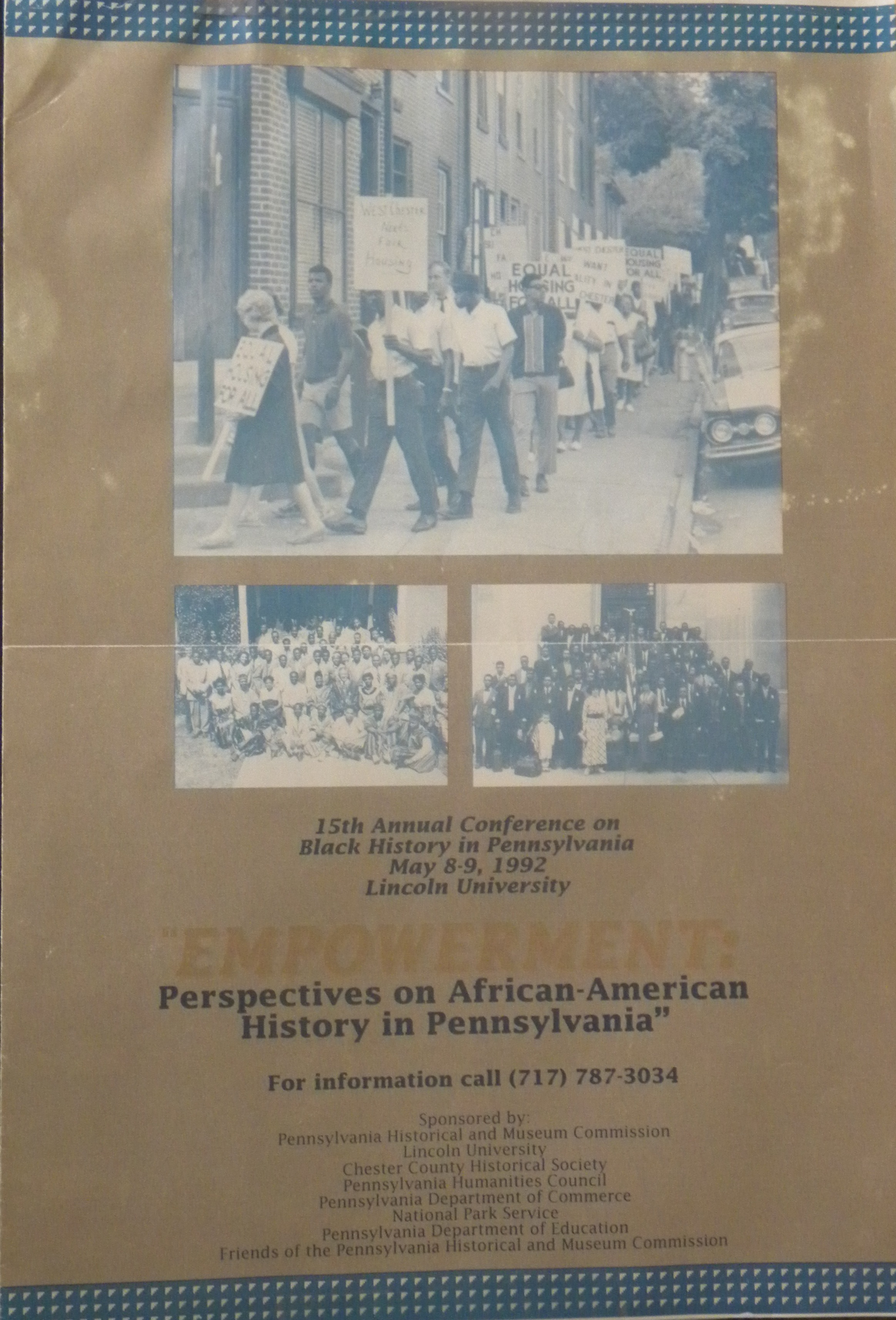
Conference agenda, 15th Annual Conference on Black History in Pennsylvania, Lincoln University (May 8/9 1992), May 10, 2012. (Donald Earl Collins).

This time two decades ago, I was driving my way home from a conference at Lincoln University in southeastern Pennsylvania. It was a week of more firsts that had become a small sample of a year of many firsts for me since getting into graduate school at the University of Pittsburgh in April ’91. It was my first road trip anywhere, and the first time I’d been in a car since earning my driver’s license in January ’92 (see my post “Taking the Long Road: Driver’s Delight” from January ’12). It was part of my first visit to NYC, Mount Vernon, and 616 since finishing my master’s degree.

That’s where my road trip began, Mount Vernon, as I’d wind my way to Yonkers, the Bronx, the GW Bridge, New Jersey and Philly (where I got lost twice) before ending up on the bucolic HBCU campus. I was at Lincoln University to present at my first academic conference, the 15th Annual Conference on Black History in Pennsylvania. The theme for that year’s conference was “Empowerment: Perspectives on African-American History in Pennsylvania. Somehow, the conference organizers approved me to present my paper comparing elements of intercultural education, multicultural education and Afrocentric education in Pittsburgh and Philadelphia during the 1930s and early 1990s.

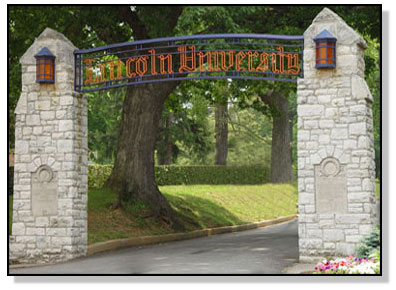
Lincoln University entrance and alumni arch, dedicated in 1921, May 10, 2012. (http://lincoln.edu).

If the road trip and the presentation were the only things important about this conference, that would’ve been plenty for me in May ’92. But there was so much more to this first conference for me than driving a Ford Escort in North Philly or getting on stage for the first time since sixth grade (see my post “Peaking As A Sixth Grader” from June ’11). It was my first time around a large number of Black academicians and activists. I met Julian Bond for the first time (his father, Horace Mann Bond, by the way, had served as president of Lincoln University from 1945 to 1957). Folks from the African American studies department at Temple University attempted to recruit me for their doctoral program. Knowing that Molefi Asante was there, I respectfully declined.

Above all else, I came away with two valuable experiences that would have an effect on me for years to come. One was being in the audience for a presentation from V.P. (or Vincent P.) Franklin, whose work on Black education in Philadelphia in the 1920s and 1930s I already knew. His was an extemporaneous presentation that lasted for well over twenty minutes. It was full of quotes, links between different historians’ research, and stories. It was extremely entertaining, delivered in an engrossing public speaking style, though not like some Southern Baptist preacher, either.

I was blown away by Franklin’s presentation. Especially in comparison to the one that I’d deliver some

Conference agenda (inside pages), 15th Annual Conference on Black History in Pennsylvania, Lincoln University (1992), May 10, 2012 (Donald Earl Collins).

twenty hours later. Mine was a well-studied delivery of ten pages of excerpts from my original paper. It was okay, not exactly a winner compared to anything that I’ve done in the two decades since. For it was with Franklin’s presentation and style from the day before that stuck with me. I decided immediately after my lackluster performance to always present my work extemporaneously, to work on my public speaking skills, to understand that presenting one’s work was a very different task than simply reading from it.

The second takeaway was in meeting my eventual dissertation advisor, Joe William Trotter, Jr. I met him after the first set of presentations on Friday morning, and ended up sitting with him for part of the Friday luncheon. I learned a few things in that first meeting. Up until that day, the only Black historians I knew in the Pittsburgh area were at Pitt or somehow affiliated with Pitt, including my then advisor Larry Glasco. The fact that Joe was across the way at Carnegie Mellon meant that there was at least the hope of gaining a different perspective on African American history than the stiff responses to Whites misconstruing the Black experience.

What made this first meeting even more intriguing was that Joe was in the process of putting together a graduate seminar for the Fall ’92 semester in African American history. It would be the first time that one had been taught at Carnegie Mellon. No such course existed at Pitt, either, at least as a graduate seminar. It meant that I could expect to get something out of my second year of graduate school (and first year as a PhD student) after all. “Where do I sign up?,” I asked after hearing what seemed like wonderful news at the time.

I returned to 616 twenty years ago on this date recharged and ready for another year of intellectual growth. But I should’ve also returned with far more insight into the politics of race, academia, trust, and academic competition than I actually had. The dynamics within the conference were extremely subtle, like an ultrasonic pulse undetected by most human hearing, but there driving the subconscious crazy anyway.

I didn’t see Joe’s invite to his classroom as a competition for me initially because I was obviously all-too-desperate to move on from Pitt, but not desperate enough to join Asante’s Temple of Afrocentricity (see my post “Writer’s Start” from August ’10 for more). Joe got me, all right. I just didn’t know it yet.

← Older posts
Newer posts →

Boy @ The Window: A Memoir

Boy @ The Window: A Memoir

Places to Buy/Download Boy @ The Window

There's a few ways in which you can read excerpts of, borrow and/or purchase and download Boy @ The Window. There's the trade paperback edition of Boy @ The Window, available for purchase via Amazon.com at http://www.amazon.com/Boy-Window-Donald-Earl-Collins/dp/0989256138/

There's also a Kindle edition on Amazon.com. The enhanced edition can be read only with Kindle Fire, an iPad or a full-color tablet. The links to the enhanced edition through Apple's iBookstore and the Barnes & Noble NOOK edition are below. The link to the Amazon Kindle version is also immediately below:

scr2555-proj697-a-kindle-logo-rgb-lg

Boy @ The Window on Amazon.com: http://www.amazon.com/Boy-The-Window-Memoir-ebook/dp/B00CD95FBU/

iBookstore-logo-300x100

Boy @ The Window on Apple's iBookstore: https://itunes.apple.com/us/book/boy-the-window/id643768275?ls=1

Barnes & Noble (bn.com) logo, June 26, 2013. (http://www.logotypes101.com).

Boy @ The Window on Barnes & Noble: http://www.barnesandnoble.com/w/boy-the-window-donald-earl-collins/1115182183?ean=2940016741567

You can also add, read and review Boy @ The Window on Goodreads.com. Just click on the button below:

Boy @ The Window

Twitter Updates

Tweets by decollins1969
  • RSS - Posts
  • RSS - Comments

Archives

  • June 2025
  • April 2023
  • September 2022
  • August 2022
  • July 2022
  • June 2022
  • May 2022
  • April 2022
  • March 2022
  • January 2022
  • December 2021
  • November 2021
  • October 2021
  • September 2021
  • August 2021
  • July 2021
  • June 2021
  • April 2021
  • March 2021
  • February 2021
  • January 2021
  • December 2020
  • November 2020
  • October 2020
  • September 2020
  • August 2020
  • July 2020
  • May 2020
  • April 2020
  • March 2020
  • January 2020
  • December 2019
  • November 2019
  • August 2019
  • July 2019
  • June 2019
  • May 2019
  • April 2019
  • March 2019
  • February 2019
  • January 2019
  • December 2018
  • November 2018
  • October 2018
  • September 2018
  • August 2018
  • July 2018
  • June 2018
  • May 2018
  • March 2018
  • February 2018
  • January 2018
  • December 2017
  • November 2017
  • October 2017
  • September 2017
  • August 2017
  • July 2017
  • June 2017
  • May 2017
  • April 2017
  • March 2017
  • February 2017
  • January 2017
  • December 2016
  • November 2016
  • October 2016
  • September 2016
  • August 2016
  • July 2016
  • June 2016
  • May 2016
  • April 2016
  • March 2016
  • February 2016
  • January 2016
  • December 2015
  • November 2015
  • October 2015
  • September 2015
  • August 2015
  • July 2015
  • June 2015
  • May 2015
  • April 2015
  • March 2015
  • February 2015
  • January 2015
  • December 2014
  • November 2014
  • October 2014
  • September 2014
  • August 2014
  • July 2014
  • June 2014
  • May 2014
  • April 2014
  • March 2014
  • February 2014
  • January 2014
  • December 2013
  • November 2013
  • October 2013
  • September 2013
  • August 2013
  • July 2013
  • June 2013
  • May 2013
  • April 2013
  • March 2013
  • February 2013
  • January 2013
  • December 2012
  • November 2012
  • October 2012
  • September 2012
  • August 2012
  • July 2012
  • June 2012
  • May 2012
  • April 2012
  • March 2012
  • February 2012
  • January 2012
  • December 2011
  • November 2011
  • October 2011
  • September 2011
  • August 2011
  • July 2011
  • June 2011
  • May 2011
  • April 2011
  • March 2011
  • February 2011
  • January 2011
  • December 2010
  • November 2010
  • October 2010
  • September 2010
  • August 2010
  • July 2010
  • June 2010
  • May 2010
  • April 2010
  • March 2010
  • February 2010
  • January 2010
  • December 2009
  • November 2009
  • October 2009
  • September 2009
  • August 2009
  • July 2009
  • June 2009
  • May 2009
  • April 2009
  • March 2009
  • February 2009
  • January 2009
  • December 2008
  • November 2008
  • October 2008
  • September 2008
  • August 2008
  • July 2008
  • June 2008
  • May 2008
  • April 2008
  • March 2008
  • February 2008
  • January 2008
  • December 2007
  • November 2007
  • October 2007
  • September 2007
  • August 2007
  • July 2007
  • June 2007

Recent Comments

decollins1969's avatardecollins1969 on No Good Teaching Deed Goes…
Mary Rose O’Connell's avatarMary Rose O’Connell on No Good Teaching Deed Goes…
Lyndah McCaskill's avatarLyndah McCaskill on The Raunchiest of Them Al…

NetworkedBlogs on Facebook

NetworkedBlogs
Blog:
Notes From a Boy @ The Window
Topics:
My Life, Culture & Education, Politics & Goofyness
 
Follow my blog

616 616 East Lincoln Avenue A.B. Davis Middle School Abuse Academia Academy for Educational Development AED Afrocentricity American Narcissism Authenticity Bigotry Blackness Boy @ The Window Carnegie Mellon University Child Abuse Class of 1987 CMU Coping Strategies Crush #1 Crush #2 Death Disillusionment Diversity Domestic Violence Economic Inequality Education Family Friendship Friendships Graduate School Hebrew-Israelites High-Stakes Testing Higher Education History Homelessness Humanities Humanities Program Hypocrisy Internalized Racism Jealousy Joe Trotter Joe William Trotter Jr. K-12 Education Love Manhood Maurice Eugene Washington Maurice Washington Misogyny Mother-Son Relationship Mount Vernon High School Mount Vernon New York Mount Vernon public schools Multiculturalism MVHS Narcissism NFL Pitt Pittsburgh Politics of Education Poverty President Barack Obama Race Racial Stereotypes Racism Relationships Self-Awareness Self-Discovery Self-Reflection Sexism Social Justice Teaching and Learning University of Pittsburgh Violence Whiteness Writing

Top Rated

Blog at WordPress.com.

  • Subscribe Subscribed
    • Notes from a Boy @ The Window
    • Join 103 other subscribers
    • Already have a WordPress.com account? Log in now.
    • Notes from a Boy @ The Window
    • Subscribe Subscribed
    • Sign up
    • Log in
    • Report this content
    • View site in Reader
    • Manage subscriptions
    • Collapse this bar
 

Loading Comments...