• About Me
  • Other Writings
  • Interview Clips
  • All About Me: American Racism, American Narcissism, and the Conversation America Can’t Have
  • Video Clips
  • Boy @ The Window Pictures
  • Boy @ The Window Theme Music

Notes from a Boy @ The Window

~

Notes from a Boy @ The Window

Tag Archives: Humanities

A Friendship Changing Lanes

03 Monday Oct 2011

Posted by decollins1969 in 1, Boy @ The Window, Christianity, Eclectic, Mount Vernon High School, Mount Vernon New York, My Father, race, Religion

≈ Leave a comment

Tags

Education, Family, Friendship, Friendships, Humanities, Ideology, Johns Hopkins University, Mount Vernon High School, Mount Vernon New York, MVHS, Politics, Race, Religion, University of Pittsburgh, Valedictorian


Changing Lanes (Movie, 2002) Screen Shot, March 2008. (Source/http://swedenborgiancommunity.org).

Part of the problem of being me is the fact that my close friends change as I change. Meaning that there have been transitional periods throughout my life that my old friends fall away. Oftentimes I make new ones, and sometimes, like during my six years in Humanities, my best friend was my imagination. Ironically, the best friendship I had from my Humanities days came with a classmate that I hadn’t become close to until my last couple of years at Mount Vernon High School. More ironically, that friendship didn’t truly become such until we both went away for college in ’87.

I’ve written about her before, the valedictorian of my class, whom I called “V” in a previous post (see Valedictorian Blues from July ’09). To be honest, I’m not sure how our acquaintanceship ever became a friendship. Somewhere between having circumstances in which our fathers weren’t around consistently, or at least being able to relate to Billy Joel, or both of us scoring “5”s on the AP US History exam.

But really, it might’ve just come down to both of us not belonging, or facing a small degree of ostracism from our Humanities and MVHS classmates overall. I wasn’t Black and cool enough, and V, well, she was a classic White nerd, a grinder who had the gall to finish ahead of our Black male salutatorian, at least from the perspective of some authority figures and the school’s popular crowd.

The fact that we went our respective ways, to Pitt and Johns Hopkins, helped. The fact that we wrote each other about some of our social triumphs and challenges helped more. Most importantly, it helped a lot that we both were more honest about our family troubles. Everything from my mother’s need to divorce my idiot stepfather and the issues with my younger siblings to V’s mother and her health issues and struggling with burnout trying to watch over her family while going to school.

So, by the time I began my second year of grad school, we’d become fairly close. I visited her and her family in the DC area eight times during the ’90s, and went to her mother’s funeral and wake in ’96. V came to my PhD graduation ceremony the following year. By ’97, me and V had been friends for ten years, and known each other more than fifteen. For more than six years, she’d really been the only person from my Humanities and high school days with whom I’d been in regular contact.

Changing lanes, Las Vegas Strip, December 12, 2010. (Source/Bjørn Giesenbauer - http://Flickr.com).

Who knew that within four years of marching for my doctorate that our friendship would become a distant one? I think that our approaches to life was so different that we couldn’t help but become distant friends. I am one who refuses to take life on its own terms. If I had taken V’s approach, I’d still be living in Mount Vernon, New York, only with a nine-dollar-an-hour job sorting mail or flipping carcinogenic burgers. V’s was based on some sort of realism that mixed with a sense of eugenic inevitability. That one’s slot in life should remain such, and if one does make it, one must do so without ruffling any feathers.

Besides that, it was obvious that things about who we had been since the early ’80s had evolved, and was changing even more rapidly as we reached our late twenties. I was no longer the blank-faced, closed-mouthed, socially-awkward kid I was in ’82. V was no longer responsible for watching over her mother and her younger sister. We agreed to disagree on so many things. Our politics diverged. Our views on race and racism were growing further apart, as if I was Michael Eric Dyson and she was Ann Coulter.

But even with all of that, I think the seeds of it began when I started dating my future wife at the end of ’95. Something about being in a serious relationship has changed the dynamics of every friendship I had then and have now. I never thought that my friendship with V would be affected. But of course it was. We live in a world where a man and a woman can’t be close friends without it being made into something more than friendship.

Like the seasons, people change, and even if they change for the better, our change will cause our friendships to change as well. It’s just too bad that V couldn’t adapt to all of the good changes in my life like I adapted to hers.
The Audacity of Low Expectations/Jealousy

19 Monday Sep 2011

Posted by decollins1969 in 1, Academia, Boy @ The Window, culture, Mount Vernon High School, Mount Vernon New York, Politics, race, Work, Youth

≈ 2 Comments

Tags

Boy @ The Window, Envy, Exceeding Expectations, Humanities, Jealousy, Low Expectations, Mount Vernon High School, Mount Vernon New York, Setting Standards, Success


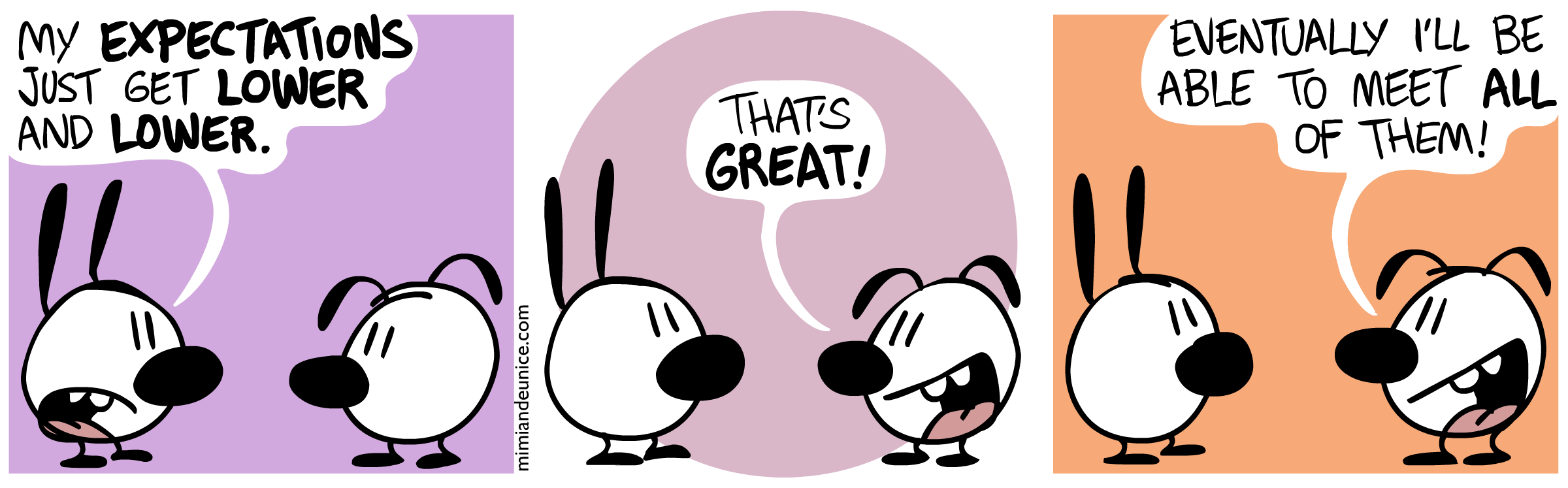
Mimi and Eunice, “Low Expectations,” September 19, 2011. (Source/http://mimiandeunice.com). Qualifies as fair use under US copyright laws because of image’s low resolution and without the intent to reproduce or distribute for profit.

It seems to me that I’ve spent a lot of time over the past three decades overcoming other people’s psychological issues. Regarding race, race and gender, race, gender and class, not to mention performance issues, success, jealousy and envy, and other psychoses that had little or nothing to do with me. It’s something that most folks who aren’t Black, male, grew up in poverty and had some success (however one defines that) really can’t understand unless they have parents who’ve told them every single day that they “weren’t good enough to live.”

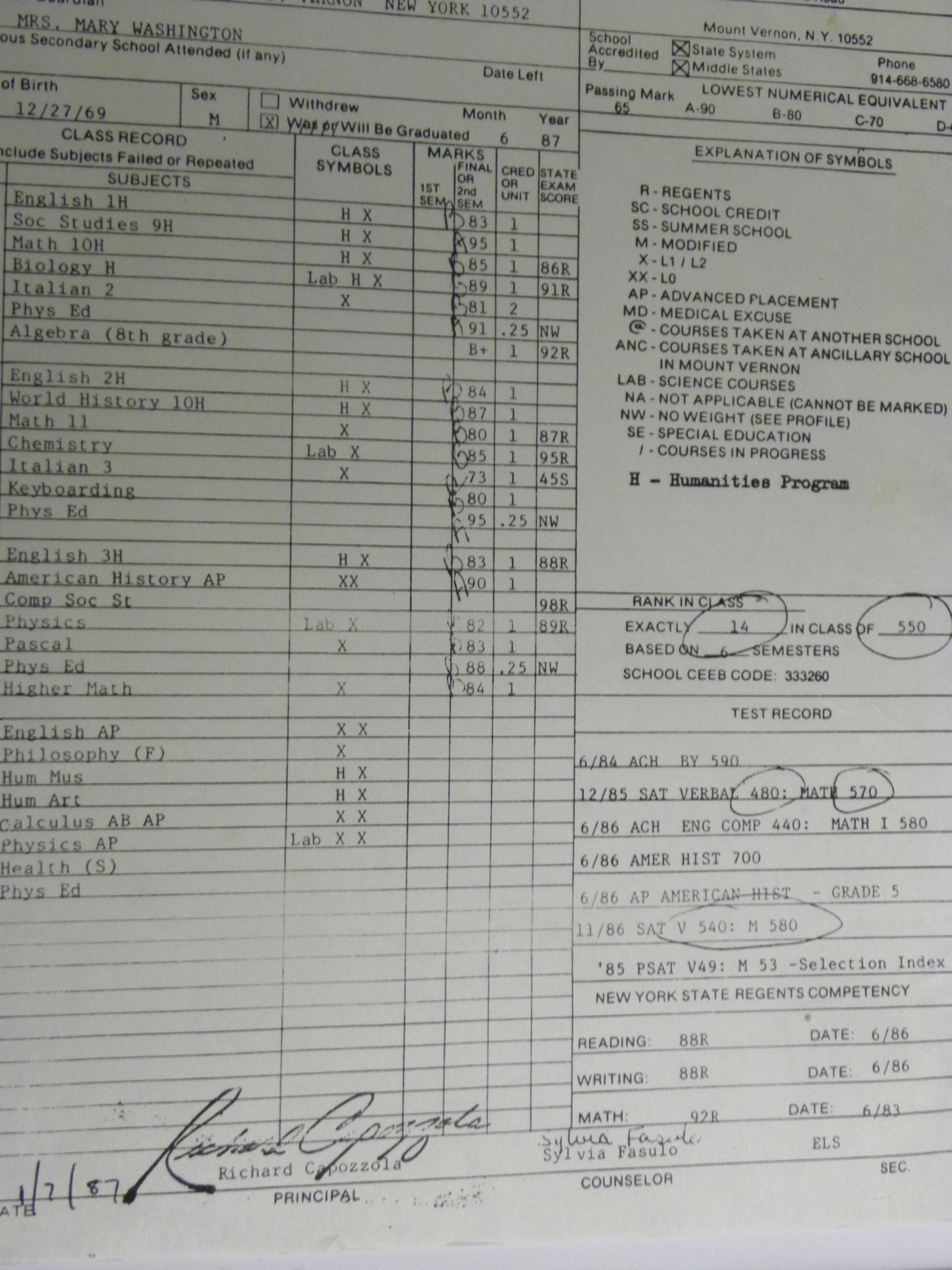
Still, these issues have mostly cropped up for me when I’ve experienced what most people would recognize as success, as if the only role I was ever supposed to play in life was that of a doormat. The first time I went through this process of blowing up other people’s low expectations of me was at the beginning of my senior year at Mount Vernon High School, about this time twenty-five years ago. A couple of weeks into the school year, MVHS released our class rankings. Out of the 545 or so students eligible to graduate as part of the Class of ’87, I was ranked fourteenth with a 3.83 average.

My MVHS trascript, courtesy of University of Pittsburgh Admissions Office, January 7, 1987. (Source/Donald Earl Collins). Note the circles from the admissions officer all over the transcript.

I understood that this was pretty good, but I was also disappointed that I hadn’t cracked the top ten. In fact, the top twelve students in our class all had GPAs above a 4.0, all because of our weighted Level 0 and Level 1 courses. Crush #1 finished just ahead of me, thirteenth in our rankings, something I saw as ironic. Despite this sign of academic success, I hoped and wished for more, and spent several late-night walks over the next few weeks second-guessing my work in tenth grade.

My classmates started to show their darker sides, some for the first time since the days of 7S. One came up to me after my AP Calculus class soon after the rankings were posted. “The only reason you’re in the top twenty’s because of history!,” implying that I was an average student in all of my other subjects. Another, much shorter and much more condescending classmate chimed in a few days later, saying that “the only thing you can do with history is play Jeopardy.” I wasn’t exactly walking around school celebrating my good fortune. I chalked it up to the stress of years of academic competition, the boiling over of senioritis and the rage associated with college preparations. The possibility that jealousy was involved didn’t cross my mind until much later. I didn’t think that anyone could be envious of my standing.

Fast-forward four years to the fall of ’90, as I prepared in earnest for grad school. Not only had I endured a short conversation at the beginning of that year with the great Sylvia Fasulo and her attempts to discourage me from pursuing grad school, law school or a career in law (see my “The Legend of Sylvia Fasulo” from September ’09). I had two professors from Pitt who told me that they weren’t sure about my chances for getting into grad school, and Reid Andrews, who flat-out told me that he didn’t think that I was “graduate school material.”

I have no doubt that if these yahoos were jealous of me at all, it was because of my age, and not my potential. They simply didn’t see how a 3.4 GPA and a 3.82 in my history major would be good enough to get me into a master’s — much less a doctoral — program. The fact that I completed my master’s degree in two semesters within twenty months of essentially being told that I was a fool left Andrews, at least, at a loss for words.

There are so many other instances in which a grad student, a professor, a supervisor, even my siblings, have expressed their low expectations and jealousy over my tiny little crumbs of success that it has left my head spinning on a broom handle. I mean, what did I really do to earn or deserve that kind of attention? I don’t own a house or have a million dollars in gold lying around. I have yet to publish an article in Rolling Stone or in The Atlantic Monthly. I don’t exactly have LeBron James or President Obama on speed dial.

So what is it about me, I’ve asked myself so many times? And then, I’ve reminded myself of something I figured out about twenty-one years ago. That the only expectations that I ultimately need to meet or exceed are my own. That what other people say about me, no matter how distasteful, really doesn’t matter, for those folks were never going to be there for me anyway.

Maybe it’s my refusal to live under someone else’s low expectations, to not allowing myself the luxury of envy, that irks those around me. Or maybe, just maybe, it’s as simple as misery loving company, and not loving mine. Either way, it’s ironic that we live in a time in which we prefer to tear each other down rather than help each other get going in our lives. Which makes my relationship with the rest of humanity so bittersweet. I guess I really am a writer!

Humanities: First Contact, Full Circle

09 Friday Sep 2011

Posted by decollins1969 in 1, Academia, Boy @ The Window, culture, Eclectic, Hebrew-Israelite, Mount Vernon New York, New York City, Patriotism, Politics, Pop Culture, race, Religion, Youth

≈ Leave a comment

Tags

616, 616 East Lincoln Avenue, 7S, 9/11, A.B. Davis Middle School, American Arrogance, Arrogance, Creme de la Creme, Cultural Divide, Diversity, Elistism, First Contact, Gifted Track, Hebrew-Israelite, Humanities, Humanities Program, Hyper-Patriotism, Middle School, Mount Vernon New York, Mount Vernon public schools, Naivete, Patriotism, Preteen, Racial Strife, Racial Undercurrents


Creme Anglaise in a pitcher next to a ladle, the closest thing I could find to represent my foodie image of "creme de la creme," the mantra of Humanities administrators during my six years of travails, September 9, 2011. (Source/http://recipetips.com).

It’s been thirty years exactly since I made the most horrible set of first impressions in my forty-one years of life. My first day of seventh grade at A.B. Davis Middle School in Mount Vernon, New York was also my first day in the Humanities Program, a magnet program for the gifted track (and also the way the powers that were decided to desegregate the school district in ’76).

But it was so much more than that, for better and certainly for worse, at least for me. It was the flip side of a coin that represented the worst six years of my life (the coin’s other side being my life at 616 with what can only be loosely called my family). But it was also the six years of my life that made the past three decades of success, struggle, more success, and more struggles possible.

Humanities: First Contact, Lessons

Humanities: First Contact, Lessons

After putting together Boy @ The Window — in which a large measure of text was devoted to what occurred with and around me during my time in Humanities, one question still remains. Did my time in Humanities, with my classmates, teachers, counselors and principals have to be as difficult as they were — and not just for me? There’s no real way to answer that question, because “of course” is a cold and callous answer, while “of course not” belies the important psychological changes that made me a better thinker, student, writer and person as a result. But if I could, I’d build a time machine, jump into my eleven-year-old version of myself, and make sure to have my dumb ass take my kufi off for my first day of school in 7S. At least then, I would’ve been normal-weird, instead of standoff-ish weird.

My main problem, though, was that I arrogantly believed I was the smartest person in the world. I paid dearly for having that kind of naiveté, to the point where certain classmates still see me as that idiotic preteen, and refuse to see me any other kind of way. Too bad for them, for I know I’ve long since changed.

That day, at least for the past decade, has also reminded me of another beautifully warm, powder-blue sky day that turned tragic. With two days before we reach ten years since 9/11, I think about the way I used to be, and see so many similarities to how we see ourselves as a nation. “We’re #1,” we love to say, even though we’ve long since stopped being #1 in so many respects. We have the largest economy and military, the largest debt, make the largest contribution to climate change and pollution, and complain the most about how the rest of the world isn’t like us.

Like me three decades ago, America is naive and arrogant. And unfortunately, it faces competitors — some as unfeeling as my more entitled or more unscrupulous classmates — who are clobbering us in education, economic growth, health care, social welfare, even in protecting their citizens and their citizen’s freedoms. It’s sad, because there are millions of people now experiencing the severe fall into poverty — and all of the pressures that places on marriages, parenting and children — that I faced, very unsuccessfully at first, thirty years ago.

Humanities: Full Circle, Thoughts

Humanities: Full Circle, Thoughts

I’ve come full circle. Between the struggle to find a home for Boy @ The Window and my struggle to continue to do meaningful work as a writer and educator, I find that even on my worst days, my best days thirty years ago were a thousand times worse.  My first contact with academic competition, Whiteness and diversity, racial strife, religious differences and straight-up elitism is what has given me a greater appreciation for who I’ve become since that sunny day so many years ago. As well as how much I’ve gained.

When Being An American Equals Never Having to Say Sorry

08 Friday Jul 2011

Posted by decollins1969 in 1, Academia, Boy @ The Window, culture, Eclectic, Mount Vernon High School, Politics, race, Religion

≈ Leave a comment

Tags

"Another E", A Curriculum of Inclusion, Academia, Afrocentricity, Arthur Schlesinger Jr., Asa Hilliard III, Blackness, Commissioner's Task Force on Minorities: Equity and Excellence, Cultural Pluralism, Culture Wars, Davis Middle School, Diane Ravitch, Diversity, Ethnic Studies, Ethnicity, Humanities, Humanities Program, K-12 Curriculum, K-12 Educaiton, Leonard Jeffries, Mount Vernon High School, Multicultural Education, Multiculturalism, New York State Department of Education, Race, University of Pittsburgh, Whiteness, Writing


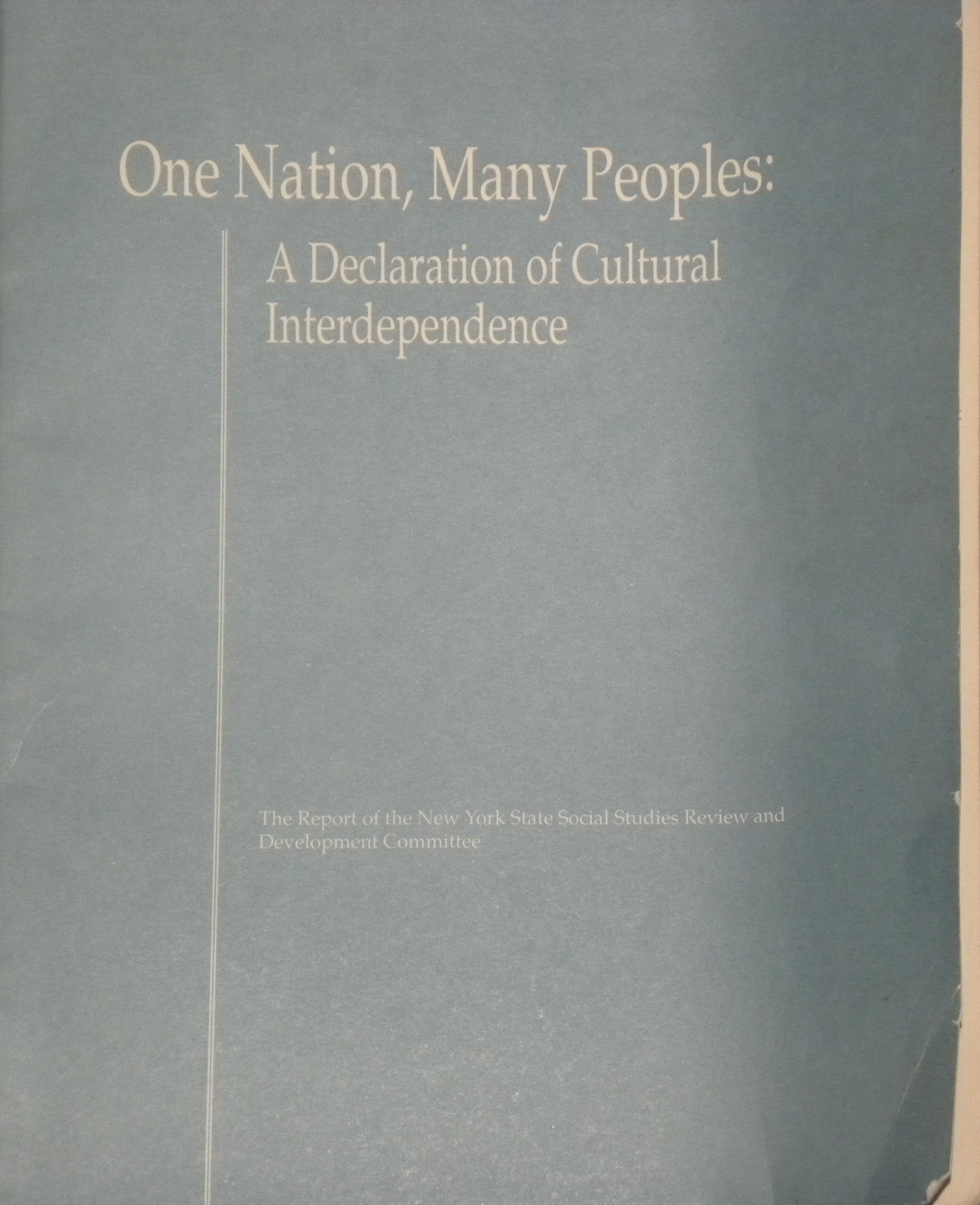
New York State Social Studies Review and Development Committee Report, June 1991 (Picture/Donald Earl Collins). One of several reports produced for the New York State Education Department and Commissioner, as part of the Commissioner's Task Force on Minorities: Equity and Excellence

Twenty years ago this week, I began writing an academic piece that would lead to my dissertation topic, doctorate and first book Fear of a “Black” America (2004). It was a topic that I’d fall in and then out of love with. Ironically, I pursued this topic because of my academic experiences in Humanities at Davis Middle and Mount Vernon High School. The topic was multiculturalism, and more specifically, multicultural education, and how to achieve this kind of curriculum reform in K-12 education. Just writing these words makes me feel both young and naive at the same time.

This whole quest started with a girl. Actually, with the young woman “Another E” (see “The Power of Another E” from April ’09 and “Beyond the Asexual Me” from last month”). She wanted to put an article together for publication, in response to what was then a major controversy involving research into the revision of New York State’s social studies and other curricula. The New York State Department of Education had given a committee the task of figuring out how to make the state’s K-12 curriculum more inclusive and representative of the state’s tremendous racial, ethnic and other forms of diversity.

By the end of September ’91, it would produce A Curriculum of Inclusion: Report of the Commissioner’s Task Force on Minorities: Equity and Excellence. But that deliverable was far from my mind when, tired from my weeks of near starvation post-graduation that April (see “Sometimes Starvation” from May ’11), I reluctantly said okay to working on this article.

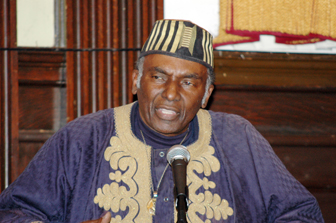
Leonard Jeffries, Newark Public Library, February 1, 2007. (http://npl.org)

Now here I was, minus the young woman in whom I no longer had an interest, now working on a piece that had become more academic than either of us had originally intended. By the time I’d written my first words on multiculturalism, I’d already learned the names Leonard Jeffries, Asa Hilliard III and Arthur Schlesinger, Jr. I’d read articles from the New York Times and the Wall Street Journal about Jeffries’ name-calling, Schlesinger’s incredulousness about calling slaves “enslaved persons,” and about the committee in general getting along like hyenas tearing at a dead wildebeest.

If I’d been just a tad bit smarter, I would’ve done an investigative piece and called and emailed the people on this task force. I would’ve asked them to divulge to me what they would eventually tell the world about their dislike of each other and of anything “multicultural,” which was in quotes for them. For Schlesinger, multicultural was the equivalent of bad ethnic studies or a kind of Afrocentrism that blamed Whites for all that has ailed America and the world for the past 500 years. For Jeffries, it was a racist attempt at appeasing Blacks and other groups of color while maintaining the main theme of Whites on top.

Although this is an oversimplification, it’s not by much. There really wasn’t anyone from the task force, the

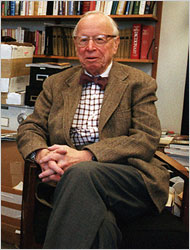
Arthur Schlesinger, Jr., CUNY, circa 2006, months before his death on February 28, 2007. (http://www.nytimes.com)

NYS Department of Education, or anyone who spoke on the Himalayas-out-of-a-termite-mound controversy over a more inclusive K-12 curriculum without taking one of those two views. That’s what interested me the most. Schlesinger, and eventually, folks like Diane Ravitch, Mario Cuomo and others completely against revision that even approached cultural pluralism, versus Jeffries, Hilliard and others arguing beyond what they called a White multiculturalism.

I didn’t have the capacity at that stage of my life to see myself as a writer or a journalist in any way. Just two years removed from the end of my mother’s marriage to my now idiot ex-stepfather, I only saw the piece that I’d turn into a Master’s research paper, doctoral thesis and first book as an academic exercise, one where I found the philosophical middle. I hadn’t a clue as to how to make myself part of the Ground Zero issue of the first seven years of the ’90s, the Culture Wars.

But I did have one experience that provided unique insight into multiculturalism and the arguments made by scholars and pols on all sides. Six years in Humanities in Mount Vernon, New York’s public schools. A place where cultural diversity and how to deal with it within the curriculum was the elephant in the classroom. Some teachers and classes addressed it, and many didn’t, to the detriment of what was a solid program, not to mention me and the others who were my classmates.

Either way, I saw more issues of diversity crop up where a multiculturalist approach would’ve been helpful all during my time in Humanities, including with my kufi and my Hebrew-Israelite years. It was a missed opportunity, one that I unconsciously wanted to address with my research of and writing on multiculturalism.

Elephant in School, retrieved July 7, 2011. (http://teachhub.com)

Peaking As A Sixth Grader

24 Friday Jun 2011

Posted by decollins1969 in 1, Boy @ The Window, Eclectic, race, Religion, Youth

≈ Leave a comment

Tags

616, 616 East Lincoln Avenue, 6th Grade, Ana Gasteyer, Arrogance, Celine Dion, Dental Award, Graduation Day, Hebrew-Israelites, Humanities, Humanities Program, Kufi, Mount Vernon New York, Mount Vernon public schools, Naivete, Reggie Jackson, Sixth Grade, Starling Churn, Straight-A Student, William H. Holmes Elementary, Writing


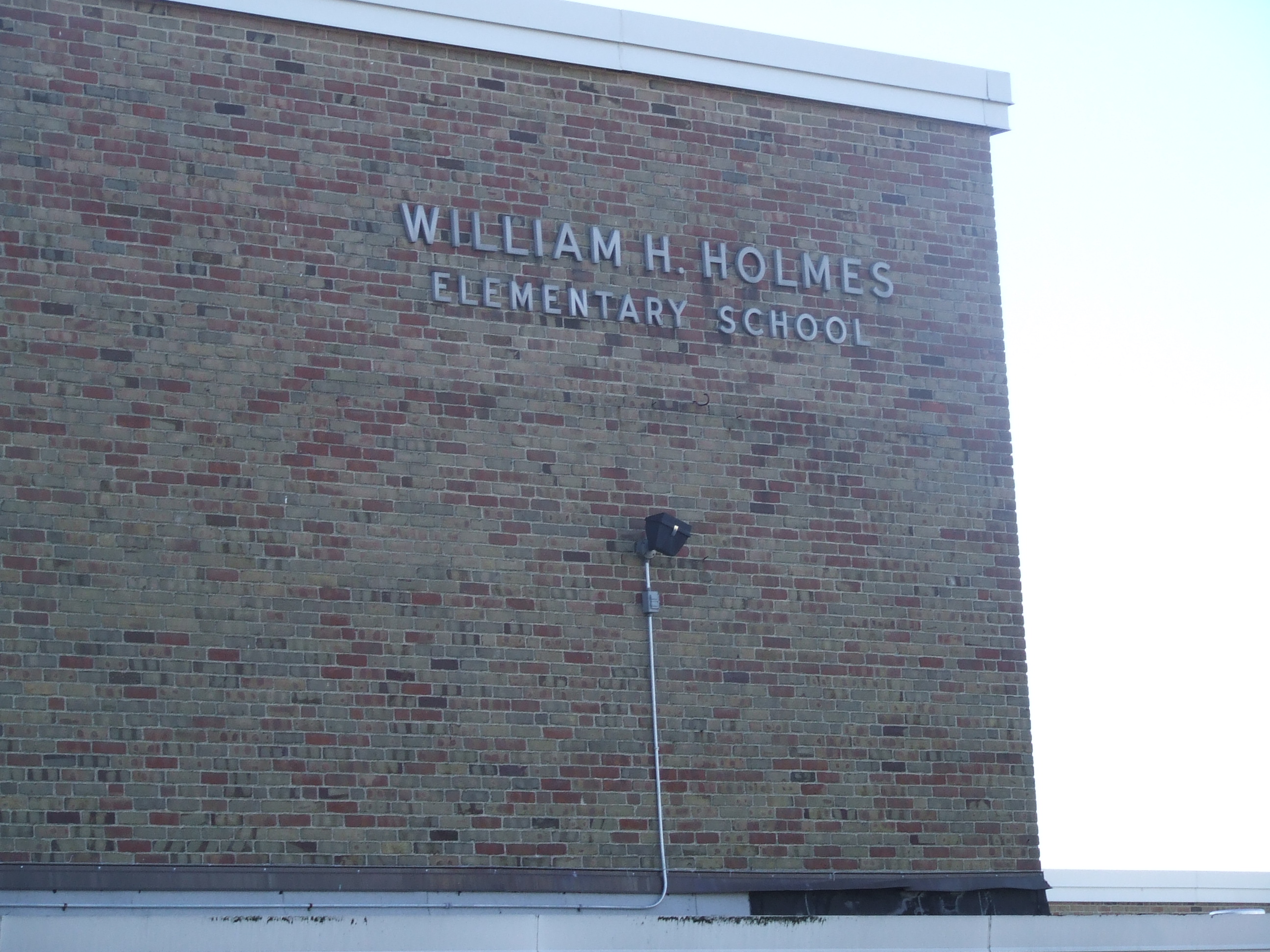
William H. Holmes Elementary, Mount Vernon, NY, November 23, 2006. Donald Earl Collins

I can’t believe that this Sunday’s the thirtieth anniversary of me and my cohort finishing sixth grade. Thirty years since I first felt that feeling of reaching the mountaintop, as if I’d accomplished something in my life. Three decades since the last time I was unknowingly naive and unnecessarily arrogant.

Combined with having become a part of a bizarre religion, I had a new point of view on my life by the time graduation day on Friday, June 26 of ’81 rolled around. My family was now two months into our serving Yahweh, and I was six weeks removed from losing my best friend Starling because of this nutty religion. It was a time in which I felt overwhelmed about my present and immediate future. Yet I acted as if I’d published a book that was both a New York Times Bestseller and a Pulitzer Prize winner. I couldn’t have been more pumped up if I’d been on Walter White’s blue crystal meth from Breaking Bad.

But I had some basis for seeing myself as great. As far as I was concerned, I was the unofficial valedictorian of my elementary school class at William H. Holmes Elementary, the ’50s structure next to the big Presbyterian church on North Columbus and East Lincoln Avenue. My teachers had chosen me out of all of my classmates to speak at our graduation ceremony. On that last Friday in June ’81, I served as the opening speaker, introducing the city councilman who served as our keynote. I even wrote the short introduction that I delivered on that wonderful day.

I firmly believed that no one in the world was smarter than me. In the three years prior to graduation, I had straight A’s. Still, that paled in comparison to my performance my last year of elementary school. I figured out that I earned an A on forty-eight out of fifty-two quizzes and tests in sixth grade. The lowest grade I earned that year was an 88 on a spelling quiz. I’d won a Dental Awareness Month award for Best Poster and came in second in a city-wide writing contest that included essays from high school students. If anyone had known how big my head had grown that year, they would’ve stuck a pin in my temple just to let the air out.

It wouldn’t have been any funnier if I’d pretended I was Mr. October himself, Reggie Jackson, saying his

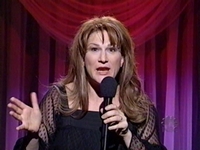
Ana Gasteyer as Celine Dion, SNL, April 6, 2002. Source: http://snl.jt.org

words, “Sometimes I underestimate the magnitude of me.” Or, really, Ana Gasteyer (of SNL fame) playing Celine Dion and calling herself the “greatest singer in the world.” I wanted so badly to see myself and to be seen by others as special that I forgot about the work it had taken to move my reading and writing skills up seven grade levels in a little more than two and a half years.

It was a great day, sunny and low-eighties with cumulus clouds and low humidity. But knowing what life at 616, Mount Vernon and Humanities had in store for me over the next eight years, I should’ve smelled the ozone in the air. I should’ve looked more closely at my sky, to see the flocks of seagulls flying away from the shoreline. I should’ve sensed — and did, on a very low-frequency — the hurricane gaining strength in my life. I chose to ignore it, hoping that I could fake my way through it while resting on my laurels.

To think that it would’ve been another nine years before I felt like I could take on the world again. If someone had told me in June ’81 that I’d have to wait until my junior year at Pitt to have a straight-A semester, I would’ve grabbed a gun and shot myself through the heart with a Colt .45. And I would’ve made sure that the bullet I used had a hollow tip. If I’d known that I’d have to wait a full decade to be comfortable with myself as myself in all of my goofy-ness again, I probably would’ve cried on the spot.

All I can hope these days is that I can help my son strike a balance between being cool and being cool with himself, especially once he approaches his teenage years. I don’t want him spending a decade trying to figure himself out all by himself.

A One-Year Sooner “What If?”

18 Saturday Jun 2011

Posted by decollins1969 in 1, Academia, Boy @ The Window, Eclectic, Mount Vernon High School, New York City, Work, Youth

≈ Leave a comment

Tags

616, 616 East Lincoln Avenue, Class of 1987, Graduating Early, High School Graduation, Humanities, Humanities Program, Mount Vernon High School, Mount Vernon New York, New York Giants, New York Mets, Super Bowl XXI, Technisort, Time Traveling, University of Pittsburgh, Working, World Series


Through The Wormhole, Star Trek DS9 Style, June 18, 2011. Donald Earl Collins

Today’s twenty-four years since I graduated from Mount Vernon High School in Mount Vernon, New York as part of the Class of ’87. I’ve talked about the events immediately before and after that milestone. I’ve spent a bit of time on the day of the ceremony itself, and will again when I hit the quarter-century anniversary mark next year. Today, though, I want to hypothesize about what would’ve happened if I had decided to graduate one year earlier. I can’t help it. I’m a historian and intellectual, and not just a scholar who cares about research, so I often speculate in order to find answers that are a little outside of the box.

Because of Humanities and AP, many of the best of the best and brightest had or nearly had enough credits to graduate by the end of our junior year, in June ’86. A dozen or more members of the projected Class of ’87 actually took the option of graduating without a senior year. I could’ve myself. I was a quarter-credit short of graduation, and could’ve gone to summer school to take PE or health class to graduate no later than August ’86.

Back To The Future Photo Clip, May 7, 2009. Source: http://gilka.co.uk

What would’ve happened or not happened isn’t all that easy to figure out with any degree of certainty. But I can make a few educated guesses based on the kind of person I was twenty-five years ago. I hadn’t made any definitive decisions about what college to go to because my plans by April ’86 were for the fall of ’87, and not sooner. I had taken the AP US History exam that May, and all but knew that I’d earned a “5” and six college credits because of my score. The thought of graduating early had crossed my mind in the weeks after the exam.

The reality of life at 616, meanwhile, would’ve been harder to manage. With me out of school in ’86 instead of ’87, I suddenly would’ve found myself with more time on my hands for resentment and anger than I had before. Especially once my Technisort job came to an end at the beginning of August of that year. Sure, I would’ve filled my afternoons with watching or listening to Mets games from August to the World Series win on October 27th, and my fall/winter Sundays with Giants games as they marched to their first Super Bowl. But in between, I would’ve been looking for work, or would’ve found part-time work.

I know for sure that I would’ve spent even more time watching over my younger siblings, washing clothes, running to the grocery store, cooking meals, and so many other things that I ended up doing during my summers at home from my studies at the University of Pittsburgh. That would’ve made me resentful, given the lack of emotional support I had from my Mom.

I would’ve had to endure more weekend searches for my alcoholic father Jimme in order to have enough money to get away from 616 while waiting to start college in ’87. I probably would’ve seen a bit more of my idiot (ex) stepfather between September and November ’86 and March through May ’87, not an easy task considering I sometimes imagined myself stabbing him in the neck.

Or would I? If I know anything about space, time and history, if you change one decision, no matter how small, you change almost everything that comes afterward, even if some events on the surface look the same. I would’ve thought about taking some college courses at Westchester Community College, Pace University, perhaps even Fordham or one of the CUNY schools, like Hunter College. I still would’ve explored applying for schools outside of the NYC area, including the University of Pittsburgh. A couple of extra months at home would’ve made me more weary of being at 616 and in Mount Vernon than I actually was at the beginning of my senior year at MVHS.

Still, there was so much I would’ve missed learning my senior year. About the pitfalls of liking a girl whose only goal in life besides pleasing her parents was in pulling away from them by being cool (read Crush #2 and cruel, actually). All of the friendships and relationships that failed to endure the year. The difference between a great teacher like the late Harold Meltzer and someone in need of a career change like an Estelle Abel or a David Wolf. And that taking three AP courses in one year with teachers of varying abilities and with senioritis in full bloom was a terrible idea.

Those lessons wouldn’t have been learned for at least a year, and made my transition to college harder. Without those bitter lessons, I probably wouldn’t be a historian and a writer. For all I know, I probably would’ve ended up a bartender making the best daiquiris in Westchester County.

Humanities Origins: Goofball

05 Thursday May 2011

Posted by decollins1969 in 1, Boy @ The Window, culture, Eclectic, race, Religion, Youth

≈ Leave a comment

Tags

Academic Identity, Class, Della Bryant, Friendships, Growing Pains, Hebrew-Israelites, Humanities, Humanities Program, Identity, Italian, Languages, Mount Vernon New York, Mount Vernon public schools, Ostracism, Preteen, Race, Sixth Grade, SRA Test, Straight-A Student, William H. Holmes Elementary


X-Men Origins: Wolverine Poster, May 12, 2009. http://movies.yahoo.com/photos/movie-stills/gallery/1263/xmen-origins-wolverine#photo41

This week marks thirty years since I learned that my sixth grade teacher Mrs. Della Bryant had recommended me and two other classmates into Mount Vernon public schools’ Humanities Program. It was a great achievement, but it felt bittersweet at the same time. For it came a week after the end of my friendship to Starling, and three weeks into the bizarre-ness of being a Hebrew-Israelite. It was the beginning of six long years of learning life’s lessons the hard way, like a soft-shelled crab in the middle of a hailstorm.

====================

Mrs. Bryant had pushed for my acceptance into Mount Vernon’s Humanities Program at the beginning of May. Between my SRA scores (Reading, 12th grade level; Math, 11th grade level), three years as a straight-A student and her recommendation, it was pretty much a slam dunk. This meant that I could spend as much as the next six years taking accelerated courses with the brightest students in Mount Vernon. When Mrs. Bryant told me about her recommendation, I bounced the seven blocks home to tell Mom about the opportunity. Mom asked, “Are you sure about this?,” as if I was planning to become a Catholic priest. I responded with an emphatic, sportscaster Marv Albert-esque “Yes!”

Of all the things that I was first asked to do after Mrs. Bryant told me that I was in, I had to pick a language of study — for the next four years! I didn’t think much past the next couple of weeks, except when waxing philosophic, so four years might as well have been forty. I opted for Italian over Spanish and French, mostly because of my love for spaghetti and pizza and Italian cheeses, a desire to visit Little Italy, and because the other six Holmes School classmates who had been accepted into Humanities chose the other languages.

====================

But with the loss of Starling as my best friend, it was hard to celebrate without feeling lost and loss. I hoped that, at the least, that I could connect with the other kids that would make up Humanities at A.B. Davis Middle School in seventh grade. I hoped that I would do as well as I’d done between fourth and sixth grade, that I could prove myself as among the smartest — if not the smartest — kid in the program. Most of all, I hoped that I’d be challenged in ways that fourth, fifth and sixth grade hadn’t.

A.B. Davis Middle School, Humanities Wing, November 21, 2006. Donald Earl Collins.

As it turned out, I was challenged. Thoroughly. My future and now former classmates challenged all of my assumptions about people and life, about how the world works, about relationships, tolerance and acceptance. I faced challenges that I couldn’t have possibly anticipated three decades ago.

I attended William H. Holmes Elementary, a school that was 99.8 Black and Latino, with high number of kids from poor and low-income backgrounds. I assumed that with a greater degree of intelligence came a greater degree of acceptance, but I hadn’t learned anything about eugenics or Nazism as an intellectual practice yet. (Not that Humanities was an incubator of Nazism, but it shows how poor my assumptions were.) I was arguably the highest performing student in my class, but that’s like saying that I’d won a hot-dog eating contest against a two-year-old.

But that was all to come with the transition to middle school, the economic collapse of my family and the puberty process. In the moment of origin in May ’81, I was on an academic high that I wouldn’t achieve again until my junior year at the University of Pittsburgh. I was a newborn baby, beautiful yet naive, not yet ready for the torture of the growing pains that would follow.

← Older posts
Newer posts →

Boy @ The Window: A Memoir

Boy @ The Window: A Memoir

Places to Buy/Download Boy @ The Window

There's a few ways in which you can read excerpts of, borrow and/or purchase and download Boy @ The Window. There's the trade paperback edition of Boy @ The Window, available for purchase via Amazon.com at http://www.amazon.com/Boy-Window-Donald-Earl-Collins/dp/0989256138/

There's also a Kindle edition on Amazon.com. The enhanced edition can be read only with Kindle Fire, an iPad or a full-color tablet. The links to the enhanced edition through Apple's iBookstore and the Barnes & Noble NOOK edition are below. The link to the Amazon Kindle version is also immediately below:

scr2555-proj697-a-kindle-logo-rgb-lg

Boy @ The Window on Amazon.com: http://www.amazon.com/Boy-The-Window-Memoir-ebook/dp/B00CD95FBU/

iBookstore-logo-300x100

Boy @ The Window on Apple's iBookstore: https://itunes.apple.com/us/book/boy-the-window/id643768275?ls=1

Barnes & Noble (bn.com) logo, June 26, 2013. (http://www.logotypes101.com).

Boy @ The Window on Barnes & Noble: http://www.barnesandnoble.com/w/boy-the-window-donald-earl-collins/1115182183?ean=2940016741567

You can also add, read and review Boy @ The Window on Goodreads.com. Just click on the button below:

Boy @ The Window

Twitter Updates

Tweets by decollins1969
  • RSS - Posts
  • RSS - Comments

Archives

  • June 2025
  • April 2023
  • September 2022
  • August 2022
  • July 2022
  • June 2022
  • May 2022
  • April 2022
  • March 2022
  • January 2022
  • December 2021
  • November 2021
  • October 2021
  • September 2021
  • August 2021
  • July 2021
  • June 2021
  • April 2021
  • March 2021
  • February 2021
  • January 2021
  • December 2020
  • November 2020
  • October 2020
  • September 2020
  • August 2020
  • July 2020
  • May 2020
  • April 2020
  • March 2020
  • January 2020
  • December 2019
  • November 2019
  • August 2019
  • July 2019
  • June 2019
  • May 2019
  • April 2019
  • March 2019
  • February 2019
  • January 2019
  • December 2018
  • November 2018
  • October 2018
  • September 2018
  • August 2018
  • July 2018
  • June 2018
  • May 2018
  • March 2018
  • February 2018
  • January 2018
  • December 2017
  • November 2017
  • October 2017
  • September 2017
  • August 2017
  • July 2017
  • June 2017
  • May 2017
  • April 2017
  • March 2017
  • February 2017
  • January 2017
  • December 2016
  • November 2016
  • October 2016
  • September 2016
  • August 2016
  • July 2016
  • June 2016
  • May 2016
  • April 2016
  • March 2016
  • February 2016
  • January 2016
  • December 2015
  • November 2015
  • October 2015
  • September 2015
  • August 2015
  • July 2015
  • June 2015
  • May 2015
  • April 2015
  • March 2015
  • February 2015
  • January 2015
  • December 2014
  • November 2014
  • October 2014
  • September 2014
  • August 2014
  • July 2014
  • June 2014
  • May 2014
  • April 2014
  • March 2014
  • February 2014
  • January 2014
  • December 2013
  • November 2013
  • October 2013
  • September 2013
  • August 2013
  • July 2013
  • June 2013
  • May 2013
  • April 2013
  • March 2013
  • February 2013
  • January 2013
  • December 2012
  • November 2012
  • October 2012
  • September 2012
  • August 2012
  • July 2012
  • June 2012
  • May 2012
  • April 2012
  • March 2012
  • February 2012
  • January 2012
  • December 2011
  • November 2011
  • October 2011
  • September 2011
  • August 2011
  • July 2011
  • June 2011
  • May 2011
  • April 2011
  • March 2011
  • February 2011
  • January 2011
  • December 2010
  • November 2010
  • October 2010
  • September 2010
  • August 2010
  • July 2010
  • June 2010
  • May 2010
  • April 2010
  • March 2010
  • February 2010
  • January 2010
  • December 2009
  • November 2009
  • October 2009
  • September 2009
  • August 2009
  • July 2009
  • June 2009
  • May 2009
  • April 2009
  • March 2009
  • February 2009
  • January 2009
  • December 2008
  • November 2008
  • October 2008
  • September 2008
  • August 2008
  • July 2008
  • June 2008
  • May 2008
  • April 2008
  • March 2008
  • February 2008
  • January 2008
  • December 2007
  • November 2007
  • October 2007
  • September 2007
  • August 2007
  • July 2007
  • June 2007

Recent Comments

MaryPena's avatarMaryPena on My Day of Atonement/Bitter Hat…
decollins1969's avatardecollins1969 on No Good Teaching Deed Goes…
Mary Rose O’Connell's avatarMary Rose O’Connell on No Good Teaching Deed Goes…

NetworkedBlogs on Facebook

NetworkedBlogs
Blog:
Notes From a Boy @ The Window
Topics:
My Life, Culture & Education, Politics & Goofyness
 
Follow my blog

616 616 East Lincoln Avenue A.B. Davis Middle School Abuse Academia Academy for Educational Development AED Afrocentricity American Narcissism Authenticity Bigotry Blackness Boy @ The Window Carnegie Mellon University Child Abuse Class of 1987 CMU Coping Strategies Crush #1 Crush #2 Death Disillusionment Diversity Domestic Violence Economic Inequality Education Family Friendship Friendships Graduate School Hebrew-Israelites High-Stakes Testing Higher Education History Homelessness Humanities Humanities Program Hypocrisy Internalized Racism Jealousy Joe Trotter Joe William Trotter Jr. K-12 Education Love Manhood Maurice Eugene Washington Maurice Washington Misogyny Mother-Son Relationship Mount Vernon High School Mount Vernon New York Mount Vernon public schools Multiculturalism MVHS Narcissism NFL Pitt Pittsburgh Politics of Education Poverty President Barack Obama Race Racial Stereotypes Racism Relationships Self-Awareness Self-Discovery Self-Reflection Sexism Social Justice Teaching and Learning University of Pittsburgh Violence Whiteness Writing

Top Rated

Blog at WordPress.com.

  • Subscribe Subscribed
    • Notes from a Boy @ The Window
    • Join 103 other subscribers
    • Already have a WordPress.com account? Log in now.
    • Notes from a Boy @ The Window
    • Subscribe Subscribed
    • Sign up
    • Log in
    • Report this content
    • View site in Reader
    • Manage subscriptions
    • Collapse this bar
 

Loading Comments...