On Anachronistic Bullshit

Tags

, , , , , , , , , , , , , , , , , , ,


Kirsten Dunst and Jason Schwartzman get anachronistic between shots on set of Marie Antoinette (2006), September 2012. (Pinterest via http://buzzfeed.com).

Kirsten Dunst and Jason Schwartzman get anachronistic between shots on set of Marie Antoinette (2006), September 2012. (Pinterest via http://buzzfeed.com).

It’s that time of year in academia, folks. The heart of the fall scholarly conference schedule, between the beginning of October and mid-November (American Political Science Association conference as an exception, though). For the first time in a few years, I’m part of the schedule, as part of a panel on American imperialism and narcissism this weekend at the Society of U.S. Intellectual Historians conference here in DC.

The topic is a departure for me. In the couple of dozen or so conference presentations I’ve done since the mid-1990s, I have discussed two interrelated topics. Multiculturalism in the contexts of US history, African American history, and education policy was one, and covered every presentation I did between 1992 and 2003. Education reform in the context of college access, retention, and diversity was the other, and covered every conference presentation or other talk I did from 2004 through 2009.

Bokeem Woodbine, October 12, 2015.

Bokeem Woodbine, October 12, 2015. (http://imdb.com)

I never wanted to be wedded to one topic my whole career. It was the academic equivalent of being typecast, like Bokeem Woodbine (thug) or Anthony Azizi (terrorist). But in the spring of 2003, there I was, doing conferences as “Dr. Multiculturalism,” either for the benefit of eager grad students or to the chagrin of more senior scholars.

No one really discusses this issue in academia. The idea that any of us can decide to move on to a completely different topic as a scholar, become engrossed in it, even become an expert and present and write on that topic, and then move on to the next one (yes, there are consequences, but…). At best, most scholars in academia have variations-on-a-theme careers, covering sports history and society, moving from baseball to football to tennis. Or from Black migration in the early 20th century to gentrification and its impact on Black families in the ’90s and ’00s. (It’s not as if many academicians can’t find the time to pick up another idea!)

What’s even worse are the ways in which we in academia beat up on each other’s work at conferences, and not in a constructively critical way, either (that would be refreshing). The key for me moving on from multiculturalism began at the 1999 Organization of American Historians conference in Toronto. I presented on “The Black Brahmins of Harvard: W. E. B. Du Bois, Carter G. Woodson, and Alain L. Locke on
Multiculturalism, 1890-1940.” Admittedly, there were a few issues with the paper. I didn’t include any Black women in my consideration (although, given Harvard’s institutional racism and sexism in this period, Black women were almost nonexistent, including at the doctoral level). I had to deal with the Afrocentricity sect, who didn’t see multiculturalism as a fellow traveler, but instead as a Eurocentric “feel-good” understanding of US and Black culture.

Most importantly, I was being “anachronistic.” I had applied a term that hadn’t become commonplace until the 1970s to a previous period in history, one in which the term hadn’t been conceived. It didn’t matter that cultural pluralism had existed as a term since the 1890s and that many in the philosophy and education fields had used cultural pluralism and multiculturalism interchangeably. For this group of cultural and education historians, multiculturalism in my work equalled a no-go zone.

Jesus was a Socialist bumper sticker, an anachronism, October 12, 2015. (http://plus.google.com).

Jesus was a Socialist bumper sticker, an anachronism, October 12, 2015. (http://plus.google.com).

Though I managed a few short articles and a chapter on multiculturalism, time and time again, the question of anachronism came up. And despite all of my documented evidence, more senior scholars at journals refused to accept multiculturalism and Black history in the same sentence. “Surely you must be referring to Afrocentricity or Black Nationalism,” one reviewer for the Journal of American History wrote on a manuscript that he rejected in 2002.

It never occurred to me to call them directly on this bullshit. These same folks will write articles with titles like, “Was Jesus a Socialist?” or “a Marxist?,” or “Nat Turner’s Rebellion and the Birth of Black Nationalism.” Talk about anachronistic! Jesus and Karl Marx are roughly 1,800 years apart, and Black Nationalism is a specifically mid-to-late-twentieth century term. Yet this was much more all right than my early-thirties-self yammering about something as complex as multiculturalism and its role in the thinking and education of African Americans.

Beating a dead horse cartoon, September 2012. (Marc Cortez, http://marccortez.com).

Beating a dead horse cartoon, September 2012. (Marc Cortez, http://marccortez.com).

I’m hardly arguing that academicians who didn’t like my work should have seen my brilliance and allowed me to publish or present more on multiculturalism. Heck, by 1999, I was tired of my former dissertation topic already! A bit more honesty about what really bothered them, though, would’ve been helpful. The idea that ordinary people could be unconsciously participating in multiculturalist activities, in this case, ordinary Black folk, some academicians found unacceptable. The idea that I could write this was unacceptable to quite a few. The fact that my former patron in Joe Trotter wasn’t out there opening up doors for me on my topic left me in a bad place politically as well. I wasn’t supposed to be in academia, after all, at conferences or in scholarly journals. I know now that part of the point was to thin out the herd of competition, to anoint some and shun so many others, me included.

The constant rejection on fairly hypocritical grounds just made it easier for me to publish Fear of a “Black” America in ’04 and move on. Since I am at the beginning of the process of thinking through a new topic, I don’t have mental exhaustion as an excuse for crumbling in the face of soul-destroying, narcissistic opposition. I also have at least one thing going for me these days. I feel I’m old enough now to call numbskulls on their bullshit.

My Private Aftermath of the O.J. Simpson Verdict 20 Years Ago

Tags

, , , , , , , , , , , , , , ,


 O.J. Simpson with his attorneys F. Lee Bailey (left) and the late Johnnie Cochran (right) after being found not guilty, October 3 1995. (Myung J. Chun/Los Angeles Daily News/AP, via http://theguardian.com)

O.J. Simpson with his attorneys F. Lee Bailey (left) and the late Johnnie Cochran (right) after being found not guilty, October 3 1995. (Myung J. Chun/Los Angeles Daily News/AP, via http://theguardian.com)

To think that it’s only been two decades since the overhyped “Trial of the Century” came to a close with a clerk’s initial mispronunciation of Orenthal James Simpson’s first name. And of course, with O.J. Simpson’s acquittal. It’s amazing to think that so many would become so emotionally caught up in a double-homicide case involving what at one time was one of the world’s most recognizable faces. But it did happen, all of it in a sixteen-month span, and the reaction was as predictable as the sunrise, racial profiling, and police harassment.

During the Ford Bronco chase on I-5 on Friday, June 17 (during my Knicks’ Game 5 of the NBA Finals against the Houston Rockets), I hoped that the police wouldn’t shoot Simpson before he had a chance to go to trial. The L.A. riots were just two years before. I feared that the issue of race would be front and center, with Simpson’s issues with his now dead White ex-wife.

O.J. Simpson on the covers of Newsweek and Time Magazine, (the picture on right altered to make Simpson appear darker and caused an outcry), June 27, 1994. (Theo's Little Bot via Wikipedia). Qualifies as fair use due to low resolution of image and relevance to subject matter.

O.J. Simpson on the covers of Newsweek and Time Magazine, (the picture on right altered to make Simpson appear darker and caused an outcry), June 27, 1994. (Theo’s Little Bot via Wikipedia). Qualifies as fair use due to low resolution of image and relevance to subject matter.

I was naive, thinking that our world of ’94 would simply attempt to determine if Simpson was guilty or innocent. Instead what I saw within ten days of the Bronco chase was an artificially darkened Simpson on the cover of Time. I saw Blacks who became angrier about the coverage, even as Whites grew more confident about Simpson being convicted, losing his fortune and fame, and possibly getting the death penalty (or at least, life imprisonment). My Mom proclaimed that O.J. was innocent long before the prosecution botched the trial. Some of my grad school colleagues — all White, mind you — made all kinds of assumptions about where I stood on O.J. They didn’t like the fact that I was willing to wait until the trial to make up my mind.

When the verdict came down on Tuesday, October 3, 1995, it was stunning to watch ecstatic Blacks and angry, dejected Whites react to the “Not Guilty” verdict. And not just on TV, although it was obvious newsrooms were actively looking for a racial divide. My friend James (who’s Black, by the way) from my Pitt grad school days spent his lunch break in my apartment gritting his teeth in anger as the verdict was read. I was more shocked than anything else. I smiled, but it was one of bewilderment observing the reactions, as if we all had some deeply personal stake in the trial and verdict.

That smile disappeared as I went through my day editing and printing out chapter drafts of my dissertation. That was my real focus, not the soap opera enveloping the rest of the country. Late that afternoon, I went to Carnegie Mellon to drop off a draft of a couple of those chapters for my thesis advisor Joe Trotter. Carl, a colleague of mine, one who I had called a friend up to this point, immediately started in on me about the verdict when I reached the grad student cubicles in the History Department. He kept literally spewing the media’s line about an all-Black jury, about jury nullification, about Johnnie Cochran. Carl was in a rage, belligerent, possibly drunk, and seemingly ready to throw down. Seriously, aside from showing up to drop off dissertation chapters, what did do?

I politely pointed out that the jury was mostly, but not all Black (at least three members were White or Latino), and that the prosecution led by Marcia Clark and Christopher Darden left the door wide open for an acquittal. Carl assumed wrongly that I wanted O.J. free regardless of his “obvious guilt.” I asked my colleague what else could the jury do, given the compelling defense put together by the late Johnnie Cochran, the mistakes with forensics, with the glove, with putting Mark Fuhrman on the stand? I said that “I don’t represent all thirty million African Americans in this country,” and that “our conversation is over.”

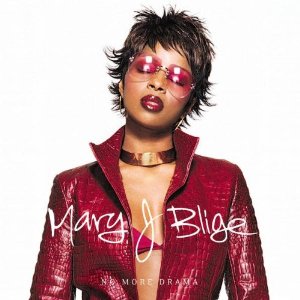
Mary J. Blige, No More Drama (with extra tracks) album cover, 2002. (http://amazon.com).

Mary J. Blige, No More Drama (with extra tracks) album cover, 2002. (http://amazon.com).

That reminded me of how irrational supposedly rational, forward-thinking Whites often are on race matters. They either ignore, deny, or when compelled by some betrayal or injustice, badger, threaten and retaliate in response. Carl that day was no exception. I found that incident unsettling because this supposed friend was one of the few folks at Carnegie Mellon who had earned my trust. It reminded me if I were to ever date or marry someone White (not exactly my plan), there would be hell to pay. I had a grand total of three conversations with Carl after that between October 3, 1995 and August 6, 1999, the latter the week before I left Pittsburgh to live in suburban DC/Maryland.

I’m sure that I wasn’t the only Black person who had to confront Whiteness in all of its angry, hurt and juvenile forms in those first two weeks of October ’95. I’m equally sure that if the O.J. Simpson trial’s verdict occurred in 2015, Carl and his like-minded ilk would’ve set off race riots the likes of which this country hasn’t seen since Detroit in 1943, Tulsa in 1921, and Chicago in 1919. You know, the kind where Whites go into segregated Black communities and rape, kill, steal and destroy as much as they can. To me, Carl just represented the White privilege and resentment of millions, smoldering yet ready to erupt at a moment’s notice. Not that many haven’t benefited from the O.J. Simpson effect in the years since.

Carl has a professorship somewhere in New York these days, and we are professional colleagues who maybe exchange an email one or twice a decade now. I’m sure, though, that he avoids the topic of race in US history like most would want to avoid catching Ebola. Especially given his reaction to one jury verdict twenty years ago.

Montgomery County Public Schools’ World Studies Mythology

Tags

, , , , , , , , , , , , , , , , , , , , , , ,


Satirical cartoon of Rudyard Kipling's The White (?) Man's Burden ("white" colonial powers being carried as the burden of their "colored" subjects), Life Magazine, March 16, 1899. (Travb via Wikipedia). In public domain.

Satirical cartoon of Rudyard Kipling’s The White (?) Man’s Burden (“white” colonial powers being carried as the burden of their “colored” subjects), Life Magazine, March 16, 1899. (Travb via Wikipedia). In public domain.

My son is taking Advanced World Studies in seventh grade this year. As a historian — and one that’s taught World History fifteen times over the years — I thought it was a good thing that he would have exposure to world history and cultures before engaging in US history in eighth grade and in high school. Once again, the technocrats in K-12 education have proven me dead wrong. While there may be some exposure to the rest of the world, the frame for the curriculum is one that not-so-subtly implies that world studies, advanced or otherwise, cannot exist without a European or Western frame to tell students how to think about the non-Western part of the globe.

I noticed it the first week, but didn’t pay much attention to the brief synopsis (what teachers call their “syllabus”) of the course until Back to School Night last week. The four units for my son’s course are

  • Unit One: The Foundation of Modern Political Systems: Europe in the Middle Ages
  • Unit Two: The Influence of Culture in Africa: The Middle Ages and Today
  • Unit Three: Geography Shapes Latin America
  • Unit Four: The Impact of Economics: One World Past and Present

When I finally read through it, I was incensed. It sunk in with my experiences with AP World History and with World History at the college level why so many of my own students were almost completely ignorant of world history that wasn’t about ancient Greece, the Roman Empire, or Western Europe. School districts, even ones as above par as MCPS, have helped lull students into a false sense of security through the exchange of knowledge as comfort food, rather than a higher protein diet of actual history.Screen Shot 2015-09-29 at 7.12.09 AM

Unit One is fine, for the most part, although the idea of a nation-state or some sort of constitutional democracy doesn’t entirely come from Europe. But it’s downhill from there. Culture, Africa and the Middle Ages for Africa? Really? The Middle Ages is a specifically Western and Central European experience, as no civilization from the classical world experienced a greater decline or collapse than Rome in the fifth century CE. To just take that term and paste it unto another continent, another group of people, and their different history is just plain wrong. How about Culture and Africa, 1000-1500 CE? You don’t need the frame of Europe’s Middle Ages to discuss Africa, unless your point is to embed some sense of Western dominance as a subliminal theme within the curriculum.

Or unless the curriculum developers in Rockville were thinking about making the Age of European Discovery and the Transatlantic Slave Trade Africa’s “Middle Ages.” The period between 1450 and 1800, in which the Portuguese, the Dutch, the Spanish, the English, and the French helped stoke the fires of intertribal and cross-kingdom warfare to obtain millions of slaves for their colonies in the Western Hemisphere. That’s probably too much for the advanced twelve-year-old, though, no?

Storming of the Teocalli by Hernán Cortez and His Troops (1848), painting by Emanuel Leutze, January 11, 2012. (Penelope37 via Wikipedia). In public domain.

Storming of the Teocalli by Hernán Cortez and His Troops (1848), painting by Emanuel Leutze, January 11, 2012. (Penelope37 via Wikipedia). In public domain.

Unit Three and the term “Latin America?” Seriously? It covers the Maya, the Mexica (or rather, Aztecs), and the Inca, all prior to European contact in the sixteenth century. So technically, there’s no Latin in the Americas before 1500. MCPS, ever heard of the Americas, the Western Hemisphere, Mesoamerica, and Andean civilizations, all terms that are more accurate alternatives to Latin America in the time before Columbus and conquistadors? Unless, again, the point of curriculum designers here was to bake into the recipe for this course a sense of inevitability. That is, that the pre-Columbian cultures of the Western Hemisphere, no matter how sophisticated, were doomed to fall by the wayside in the wake of Western dominance over the globe.

Unit Four and “One World Past and Present” in the context of trade, economic systems, and communication bring the themes of European dominance together in the period since 1450. The MCPS curriculum designers do hint that “the cultural diffusion between many ‘worlds’ had both positive and negative consequences.” But for the most part, the technocrats provide a sense of progress to market-based economies and positive globalization in this unit, as Europeans led the charge to make the world one and whole.

Stainless steel Crock-Pot, September 29, 2015. (http://amazon.com).

Stainless steel Crock-Pot, September 29, 2015. (http://amazon.com).

This is a crock of a curriculum, MCPS, a shameful attempt at world studies. The course might as well be called, Advanced and Expanded Western Civilization, How Europeans Went From the Middle Ages to Dominating the World. The point of any world history or world studies course is supposed to be the study of specific bits of history of the world, without imposing a Western model, frame, or sense of progress and comparison on the rest of the world in the process. Otherwise, what’s the point? You might as well teach Western Civ in middle school, then, and save world history to teachers and curriculum designers who understand that the world is a bigger place than Western-culture-navel-gazing.

Though the pressures of Common Core may have birthed this new curriculum as part of MCPS’s Curriculum 2.0 efforts, it’s not specifically a Common Core-inspired curriculum. One of the problems with Common Core State Standards and PARCC assessments is that they mask the problems that existed in America’s K-12 education long before. One of which is fake efforts at diversity and a multicultural curriculum, of which MCPS’s World Studies is but one example. It may well be true that virtually all world history curriculum is bs, however. But that is an article for another day.

Aside

Thank You, Ms. Griffin

Tags

, , , , , , , , , , , , ,


My report card from 1st grade, Nathan Hale ES, 1975-76, and close-up of Ms. Griffin's signature, September 22, 2015. (Donald Earl Collins).

My report card from 1st grade, Nathan Hale ES, 1975-76, and close-up of Ms. Griffin’s signature, September 22, 2015. (Donald Earl Collins).

I have spent a ton of space in the blogosphere thanking teachers like Harold Meltzer for making me the thinker and writer I am today, flaws and all. Meltzer, though, was not the first teacher who ever took a deep interest in me. My elementary school teachers deserve just as much credit, if not more. For if it weren’t for the likes of Ms. Griffin at Nathan Hale ES, and Mrs. Shannon, Mrs. O’Daniel, and Mrs. Bryant at William H. Holmes ES — Black teachers all — I would’ve never made it to have Meltzer as my eleventh grade AP US History teacher in the first place.

But it all really started with Ms. Griffin. My passion for being right. My adrenaline rush with As, and eschewing of Bs and B+s. My wanting to learn more about what I getting wrong and then fixing those things. That all began for me in first grade, in September ’75.

Cecil Parker Elementary School (formerly Nathan Hale ES), Mount Vernon, NY, November 23, 2006. (Donald Earl Collins).

Cecil Parker Elementary School (formerly Nathan Hale ES), Mount Vernon, NY, November 23, 2006. (Donald Earl Collins).

At this middle-age stage of life, I don’t exactly remember every detail about Ms. Griffin, our classroom, or most of my classmates. I was five-going-on-six. Still, there were more than a few things that stood out. Ms. Griffin seemed like a tall woman to me, I mean, nearly as tall as my six-foot Mom, with similar skin tone and other features. That’s where the similarities ended. Ms. Griffin was always nice to me, very patient. Even when one of us got rowdy, she didn’t scream or holler or demean to get us to settle down. Everything with her was a teaching lesson, so even when one of us would act up, it was a teaching and learning moment.

Ms. Griffin decorated her first-floor classroom to communicate the world to us, not just to make the room pretty for a bunch of first-graders. I remember pictures of MLK and maybe Harriet Tubman on the wall. Along with standard colored digits, basic addition and subtraction problems, and lots of words to spell, read, and write neatly. From day one, Ms. Griffin was always on me for my bad penmanship (if only she had seen my father’s chicken scratch!).

I remember Ms. Griffin mostly for two things. One, she was always available for me emotionally. Once, the class had a birthday party for one of the students, which included a Pin-The-Tail-On-The-Donkey game. Ms. Griffin dutifully blindfolded me, had a couple of my classmates spin me around, and I missed pinning the tail on the donkey’s butt by a full meter. The kids all laughed. I didn’t. I got mad, balled up my fists, walked over to Ms. Griffin, and made a small kicking gesture, where I nicked her on the side of her left calf. Her response was to tug me by my right arm, tell me she understood why I was upset, but also explain with both kindness and sternness how my reaction was unacceptable. I would have to stand in the corner for five minutes after school before going home. And at the end of that day, she still gave me a hug.

Snoopy hugging Woodstock, 2011 downloaded September 22, 2015. (http://pinterest.com; © Peanuts Worldwide).

Snoopy hugging Woodstock, 2011 downloaded September 22, 2015. (http://pinterest.com; © Peanuts Worldwide).

Two, Ms. Griffin was available in ways that most teachers who would make themselves this available now would likely burnout in four or five years. I had zero chance of getting away with anything in her classroom, including kissing my girlfriend Diana in the middle of a lesson a few times. She would actually call my Mom to tell her about it! One time my father found out about me being upset about a B+ on a spelling test because Ms. Griffin bumped into him at a bar one weekend! Ms. Griffin had at least one parent-teacher conference with my parents every single marking period. It wasn’t that she just took an unusual interest in me. Ms. Griffin was interested in all of us, in wanting all of us to be prepared for the next step.

Sadly, I didn’t see much of Ms. Griffin after first grade, and completely lost touch with her once Mom and my father broke up and we moved to 616 East Lincoln. I had my own demons to deal with, so much so that only in the past year have I found them all. Ms. Griffin, thankfully, was an angel of a teacher in the midst of two big waves of hurt growing up. I’m almost certain that without her, I wouldn’t have made it through educationally or psychologically to the preteen years at all.

Aside

Cable, Anyone?

Tags

, , , , , , , , , , , , , , , , , , ,


1980s-style MTV logo, accessed September 11, 2015. (http://dogoodmediamix.weebly.com/).

1980s-style MTV logo, accessed September 11, 2015. (http://dogoodmediamix.weebly.com/).

The platform of multimedia access via paid cable subscriptions through the monopolies of Time-Warner, Verizon FiOS, and Comcast Xfinity is so normal that it would be hard for anyone under twenty-five to imagine the world that existed beforehand.

Yet on the first Friday in September ’85, my family at 616 didn’t have cable the morning I left for my second day of eleventh grade. We had the channels we always had: WCBS2, WNBC-4, WNEW-5 (which had just been bought by Rupert Murdoch via 20th Century FOX), WABC-7, WOR-9, WPIX-11, and WNET-13. The MTV revolution was more than six years old, and the hype from Michael Jackson’s classic Thriller album videos had come and gone. Though I was now current enough to be up with pop music, some rap, and some R&B — not to mention my Mets — so many cultural references went over my head at Mount Vernon High School that many of my classmates thought I was stupid and weird. (Don’t worry – I felt exactly the same way about many of them).

I came home from school that Friday afternoon to a platform I’d never seen before. A long, thick white wire and a couple of coaxial cables linking to a box next to our TV in the living room. The TV set was off, and my Mom was out picking up Maurice from Holmes Elementary (he had just started first grade). I turned it on, looked at the cable guide, and punched in the numbers to MTV for the very first time. Heart’s “What About Love” video had just started on the channel. To think that this would be my first direct experience with MTV, for the few moments I had to myself in the transition to yet another weekend of kids, laundromat duty, and hunting down my father Jimme at one of a dozen of his watering holes between Wakefield and The Bronx and Midtown.

It was actually, um, uplifting. I felt goofy. I didn’t mind hearing the overwrought band from the Pacific Northwest. I enjoyed the video that followed it, Mr. Mister’s “Broken Wings.” I even had time to flip over to BET to watch part of a Sade video (I think it was “Sweetest Taboo”) before my Mom and my four younger siblings came in, making me feel like watching these videos was really taboo. I didn’t want them to know what I was watching, so I dialed in either CNN or Headline News for the first time.

That afternoon would be one of only a handful of times I’d have clear access to cable TV without the cognitive dissonance of siblings and family and arguments and constant fighting and abuse. If first impressions really meant anything, then MTV and BET on September 6, 1985 pretty much reinforced my music eclecticism over a twelve-minute span. That was reinforced further in the coming weeks, with good, bad, and awful videos from a-ha, Eddie Murphy (with Rick James), Phil Collins, Billy Ocean, Journey, Lionel Richie, Lisa Lisa, and Run-D.M.C.

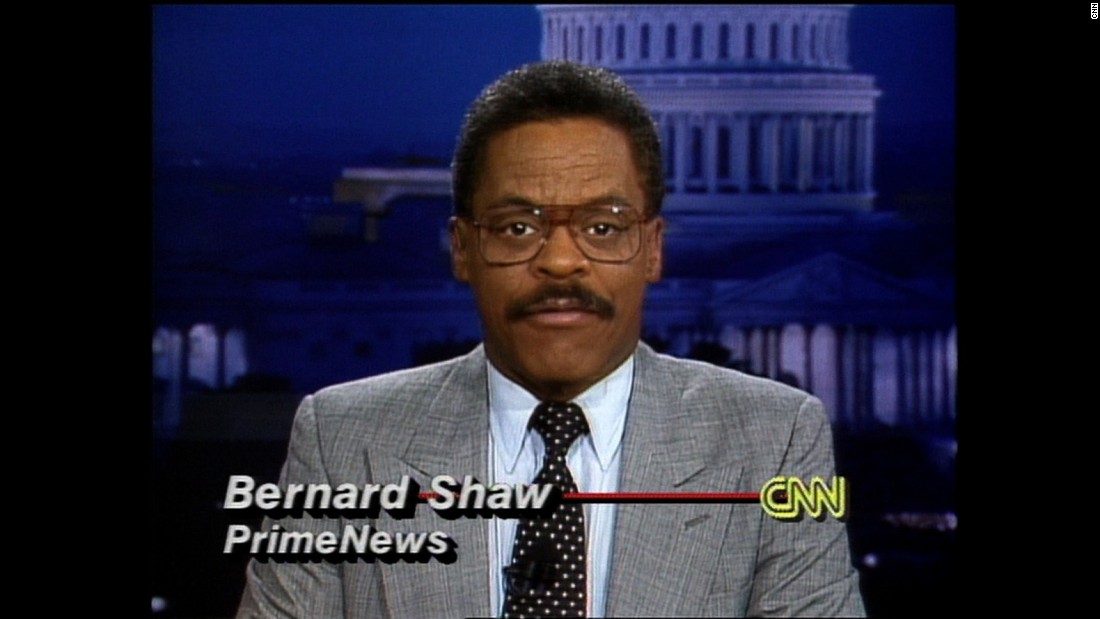
The great Bernard Shaw, CNN news anchor from 1980 to 2001, accessed September 11, 2015. (http://cnn.com).

The great Bernard Shaw, CNN news anchor from 1980 to 2001, accessed September 11, 2015. (http://cnn.com).

Getting news from beyond the local sources, Tom Brokaw, Peter Jennings and Dan Rather was pretty important too. Bernard Shaw, Lynne Russell, and Chuck Roberts became new news names for me that fall. Catching movies within six months of their release — instead of three to five years later (if ever) — like Aliens or Platoon was new to me. And getting more accurate data from The Weather Channel made me more aware of chilly spring mornings that would turn into summer-esque afternoons as ’85 turned into ’86 and then ’87.

It wasn’t until 1994 that I got cable on my own in Pittsburgh for the first time, otherwise having to go to bars or William Pitt Union’s TV room to catch moments that weren’t on network or independent television. To think that there was a time when information moved slower, when I listened to 1010 (AM) WINS, “you give us 22 minutes, we’ll give you the world” instead of watching BBC News or hitting Twitter for the latest news. Can’t wait for the streaming/mobile news and music revolution. Oh, wait a second…

Aside

Past Labor’s Opportunities Lost

Tags

, , , , , , , , , , , , , , , , , ,


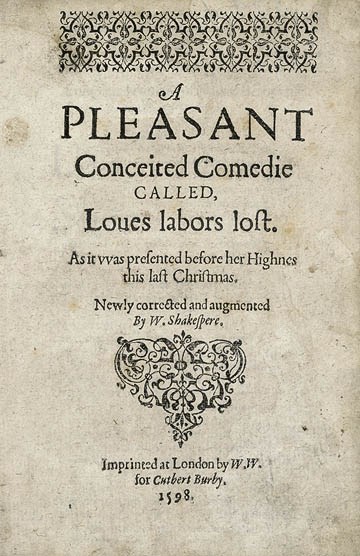
Title page of the first quarto of William Shakespeare's Love's Labour's Lost (1598), uploaded May 2, 2011 (Tom Reedy via Wikipedia). In public domain.

Title page of the first quarto of William Shakespeare’s Love’s Labour’s Lost (1598), uploaded May 2, 2011 (Tom Reedy via Wikipedia). In public domain.

One of the more gut-wrenching periods of my career began right after Labor Day 1995. In some respects, that period of my career has left a stain over the past two decades. Not so much in terms of what I have done or in what I’m doing now, as much as in setting limits on the range of possible outcomes with which I could’ve begun my career.

Right after Labor Day, I saw an ad in The Chronicle of Higher Education for an open-ranked (tenured or tenure-stream) position at NYU’s school of education in US education history. I hadn’t thought about teaching in a school of education before, but after meeting my friend Cath and having received my Spencer Foundation fellowship, I understood that this was likely a better choice for me than a history department. I wasn’t the only one who thought so. My department chair Steven Schlossman had received a letter and a telephone call from his equivalent peer at NYU asking if there were any graduate students in the pipeline who could apply for the position. Schlossman apparently told that department chair about me and my multiculturalism dissertation, and caught up with me that same week to give me a copy of the letter and encouraged me to apply for the job.

I was two-and-a-half chapters into my planned eight-chapter dissertation, and I still had some US Census data to look at and interviews to conduct as part of the process. I knew that my advisor Joe Trotter wouldn’t be happy about the idea of me applying for a job so soon into the process, but Schlossman and I also knew that the job — if I somehow got it — wouldn’t start for eleven months. That was more than enough time for me to write, revise, revise again, polish up and defend my dissertation. I was on a Spencer fellowship, after all!

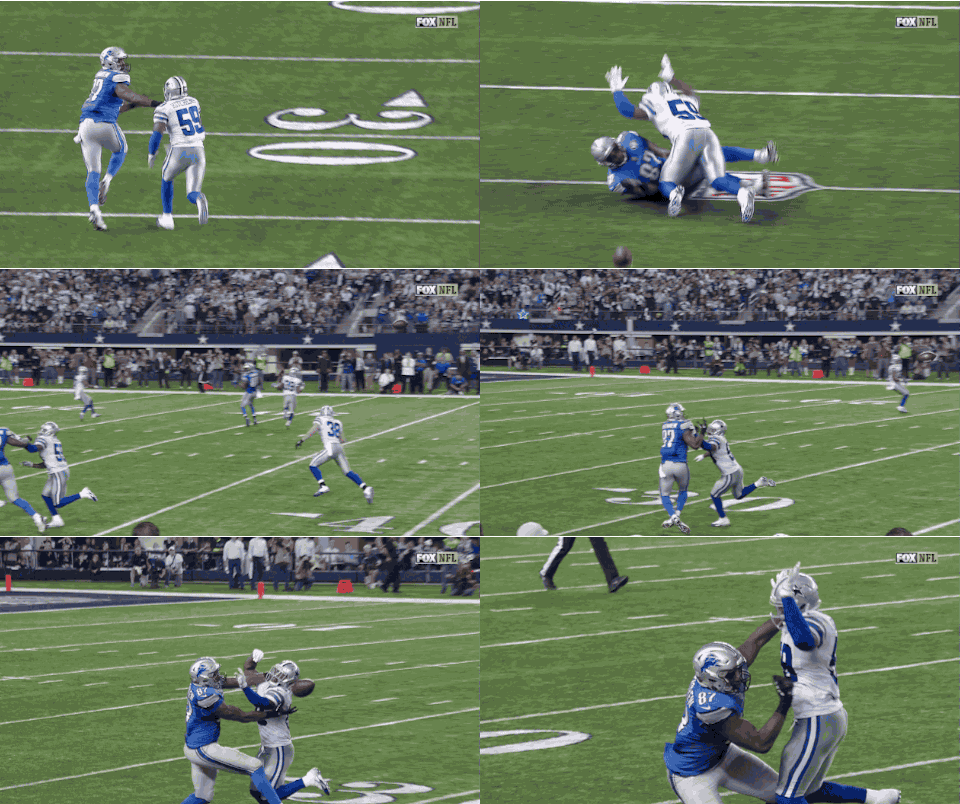
A defensive pass interference penalty not called, Detroit Lions v. Dallas Cowboys Wildcard Game, January 4, 2015. (http://bleacherreport.com/articles/2319198-refs-pick-up-flag-after-pass-interference-on-cowboys-in-4th-quarter; FOX Sports).

A defensive pass interference penalty not called, Detroit Lions v. Dallas Cowboys Wildcard Game, January 4, 2015. (http://bleacherreport.com/articles/2319198-refs-pick-up-flag-after-pass-interference-on-cowboys-in-4th-quarter; FOX Sports).

Of course Trotter thought otherwise. He was incensed that Schlossman had discussed the NYU job with me, that I hadn’t talked with him about the position first. Of course Trotter said that he needed to “run interference” on my behalf, to protect me and my career. By “running interference,” Trotter meant that he would not write a letter of recommendation on my behalf. He told me to put the job out of my mind, to focus on my dissertation, and that we could revisit the prospect of apply for jobs when I was much further along.

A few months later, in February ’96, I saw another job ad in the Chronicle, this one for a history of education assistant professorship at University of Wisconsin-Milwaukee. Schlossman saw that ad as well, but I was still the dutiful ABD student with Trotter as my patron. I decided this time to approach Trotter before meeting with Schlossman about the job. Trotter flipped out again, telling me, “you’re not ready,” that he had seen too many of his own peers not finish dissertations when taking jobs, only to end up unemployed. Keep in mind, I had written six of my eight chapters at this point, and had started working on number seven that month.

Trotter’s “you’re not ready” pronouncements rang even more hollow in March, when I requested a letter from him to apply for a post-doctoral fellowship in African American Studies at University of Maryland, College Park. He refused at first, then agreed, with the caveat that he would write in his letter his belief that  I wouldn’t complete my dissertation in time to begin the fellowship at the end of August ’96. With that kind of endorsement, of course I didn’t apply!

When we finally had our blow-out argument that April 4th, I was frustrated, he was actually angry, for reasons I didn’t put together until I considered my age and his HNIC status and age later on. Most of Trotter’s stonewalling occurred after he found out that I was still only about to turn twenty-six at the time of the NYU job prospect. Between that and the limited mileage remaining in his proletarianization hypothesis, I was working for and with an advisor who was giving me mixed signals and mediocre advice. Both were based in part on jealousy, and in part on Trotter’s own bad experiences at University of Minnesota and on the job front in the 1970s and early 1980s.

Danger Bad Advice Ahead fake sign, September 7, 2015. (http://wordspicturesweb.com).

Danger Bad Advice Ahead fake sign, September 7, 2015. (http://wordspicturesweb.com).

Trotter didn’t understand that in blocking my first attempts to begin my career, he had helped set up a struggle for me to have even a semblance of a career before I had completed the first draft of my dissertation. As it was, I finished the first draft in June ’96, the second at the end of July, and polished it up before Labor Day Weekend ’96. That fact that I was done with all major revisions to my dissertation in time for any job that year made ready to strangle Trotter at that point.

Still, it would be only fair to say that my career moves — good and bad, smart and stupid — have mainly been of my own making. It would also be unfair to blame Trotter for any moves that I have made or didn’t make that didn’t work out after 1996-97. But every career has a beginning. And in the beginning, Trotter was there, making a mess of my first steps. It took until the spring of 2000 before Howard University offered me a tenure-track position in Afro-American Studies, to which I did say no. I didn’t need any more Joe Trotter’s in my life at that point, and working in the nonprofit world paid my bills better than teaching at that time.

My overall advice would be to make damn sure that you choose an advisor who cares about your whole career and about you as a person. Don’t choose someone to advise and mentor you out of convenience, and make sure that your advisor isn’t someone who just wants to mold you into a mediocre version of themselves. After all, it’s not their career trajectory or reputation that’s on the line. It’s yours.

Aside

We’re Talking About Plutonomics

Tags

, , , , , , , ,


"The Logic of the 'Haves'" cartoon illustration, November 20, 2010. (Chan Lowe/Florida Sun-Sentinel; http://blogs.trb.com/0.

“The Logic of the ‘Haves'” cartoon illustration, November 20, 2010. (Chan Lowe/Florida Sun-Sentinel; http://blogs.trb.com/).

On my iPod (yes, iPod, where I can still store thousands of songs and not have to make a phone call and check my email, I listened to Simply Red’s version “Money’s Too Tight (To Mention)” (released in the US in 1986) this morning. At one point, lead singer Mick Hucknall croons, “We’re talking ’bout Reagan’omic’s,” and after hearing this song off and on for twenty-nine years (my life story’s in most of those lyrics), it hit me. Reaganomics really doesn’t do justice to what Congress and the GOP and conservatives and neocons and corporate/wealthy interests have done to the US economy in my lifetime.

It’s been the culmination of the plutocrats’ ultimate fantasy – tricking Americans into thinking that the marriage between the federal, state and local governments and rigged capitalism doesn’t actually exist. All while garnering hero status in the eyes of the majority of Americans. They now have their narcissism, and can eat it with caviar and champagne, too.

It doesn’t matter if the unemployment rate is 5.1 percent as of today. Fewer people are in the workforce now than there were when the economy cratered in 2008. Real income is 25 percent lower in 2015 than its peak in 1973. College graduates must take a job at Costco (if they are really lucky) or Starbucks to make anywhere near a living wage. There is simply not enough skilled work to employ a highly educated workforce in a nation that has moved heavily toward lower-tiered service industry work.

Yet, we continue to call this state of affairs capitalism, or unbridled capitalism, or something akin to capitalism run amok. Of course that’s true, especially for card-carrying Marxists. But psychologically, given the ability of the wealthy and the corporations they own to profit regardless of the Dow Jones or the socioeconomic status of ordinary Americans, it’s not enough to say that this is capitalism. It’s Plutonomics, the economic screwing of the bottom ninety percent (or especially, the bottom three-fifths) of Americans for the benefit of the top ten and especially the top one-percent. Plutocrats have such a hold on the American psyche, that even now, most Americans believe that Donald Trump became a billionaire through hard work. Most Americans take in the prosperity gospel the way a thirsty person drinks water after a day in the desert.

And Plutonomics has been around much, much, much longer than capitalism. Think Rome, think Han China, think slavery and the Western Hemisphere.