• About Me
  • Other Writings
  • Interview Clips
  • All About Me: American Racism, American Narcissism, and the Conversation America Can’t Have
  • Video Clips
  • Boy @ The Window Pictures
  • Boy @ The Window Theme Music

Notes from a Boy @ The Window

~

Notes from a Boy @ The Window

Category Archives: Christianity

Before and After Spencer

14 Tuesday Apr 2015

Posted by decollins1969 in 1, Academia, Boy @ The Window, Carnegie Mellon University, Christianity, culture, Eclectic, High Rise Buildings, Pittsburgh, Politics, Pop Culture, race, Religion, Work, Youth

≈ Leave a comment

Tags

Academia, Ambivalence, Barbara B. Lazarus, Catherine Lacey, CMU, Faith, Hypocrisy, Joe William Trotter Jr., John Hinshaw, Multiculturalism, Selection Committee, Self-Discovery, Self-Reflection, Sign from God, Spencer Foundation, Spencer Foundation Dissertation Fellowship Program


Seattle Seahawks' Jerome Kearse making great catch off tipped ball while on the ground on final drive of Super Bowl XLIV, Tucson, AZ, February 2, 2015. (http://reddit.com).

Seattle Seahawks’ Jerome Kearse making great catch off tipped ball while on the ground on final drive of Super Bowl XLIV, Tucson, AZ, February 2, 2015. (http://reddit.com).

This week marks twenty years since the now-retired Catherine Lacey called me up on a Friday morning while I was brushing my teeth to tell me that I’d been selected to be a Spencer Foundation Dissertation Fellow for the 1995-96 year.  I’d hoped and prayed for that day for more than twenty months, after my fellowship and teaching plans for the summer of ’93 fell through. But I’ve talked about Catherine Lacey and some of my Spencer experiences already, as well as about the reaction of Joe Trotter and some of my Carnegie Mellon grad school mates to this news.

This post is about the days before I received Lacey’s call, before I knew that I would be on the fast track to a doctorate. Because before I’d been selected for the Spencer Dissertation Fellowship, the selection committee had rejected me, with a 6-1-1 vote (that’s six in favor, one not in favor, and one abstaining). I knew this because Catherine had sent me a rejection letter with a handwritten note at the bottom of it, one that I received after two months away in DC doing my dissertation research. My suspicion was that most of the Fellows had received an 8-0 or 7-1 selection vote.

That was all on March 31, ’95. Catherine’s note, though, was encouraging. She said to “stay tuned,” that she was “looking into other alternatives.” So there was still a chance that I’d get the fellowship. Still, I didn’t want to do what I did two years earlier, when assumptions and hope led me to six weeks of joblessness and an eviction notice.

John Hancock Center, Downtown Chiicago - The Spencer Foundation is on the 39th Floor, April 14, 2015. (http://milenorthhotel.com).

John Hancock Center, Downtown Chiicago – The Spencer Foundation is on the 39th Floor, April 14, 2015. (http://milenorthhotel.com).

So I did what I’ve done best throughout my work experiences. I scrambled to make sure I had work during the summer and upcoming school year. I didn’t want to be stuck borrowing more in student loans or teaching more of Peter Stearns’ version of World History courses — really, World Stereotypes — for entitled CMU freshmen.

I talked with both then associate provost (and also an eventual) mentor) Barbara Lazarus and fellow but further along grad student in John Hinshaw about me taking his job as a part-time assistant to Barbara. John really wanted to finish his dissertation and move on (who could blame him, given that Trotter was his advisor as well), and Barbara would’ve liked me for the job. So I gave them both a tentative yes, knowing that the job was contingent on John’s timetable for leaving it and finding an academic job elsewhere, all while completing his dissertation.

The thought occurred to me, though, that I may need more than a 15-20-hour-per-week job to get through the dissertation stage. Especially if I was to avoid teaching for the mercurial Stearns again. So I scheduled a meeting with Trotter to see if he any research project he needed help with.

We met at 2 pm on Thursday, April 13. Trotter was as excited about us meeting as he had been when I first decided to transfer to Carnegie Mellon to work with him as my advisor two and a half years earlier. He had at least three migration studies projects with which he wanted my labor. All the projects were about extending his grand proletarianization thesis. All would be dreadfully boring drudgery compared to my dissertation, but would keep me in additional pay checks for a year or two. I faked a smile, and tentatively said yes to Trotter as well.

Dikembe Mutumbo putting the wood to the. LA Laker Andrew Bynum, April 14, 2015. (http://fortheloveofgif.tumblr.com).

Dikembe Mutumbo putting the wood to the. LA Laker Andrew Bynum, April 14, 2015. (http://fortheloveofgif.tumblr.com).

Eighteen hours later came Catherine’s call about me being offered the Spencer Fellowship! I took it as a sign from God, that at the very least, I’d finish my dissertation and my doctorate without the need for working on it an extra two or three years. Unfortunately, neither John Hinshaw nor Joe Trotter saw my great fortune the way I did. When John found out, which was a week later, he didn’t talk to me for nearly three years. And from reading my previous blog posts, you all already know how my work with Trotter devolved after the Spencer award announcement.

The one thing that fellowship did for me as a person — and not just as an academician, researcher or education — was to give me the space to question academia and my role in it. Even two decades later, I’m still ambivalent about the academic method of obtaining tenure, of the publish-or-perish paradigm, of the hypocrisy that exists in such a cloistered world. Even as I still hold a job and play a role in this world.

What I’ve come to learn is that hypocrisy is everywhere, in the nonprofit world, in romance, and in academia, too. We could all start with, “Did you hear the one joke about how merit and hard work alone can lead to a prosperous life?” That’s the hypocrisy that I had to learn to see in academia, and began to, thanks to the space that the Spencer Dissertation Fellowship gave me that year. More on that later.

Easter Seder 1995

08 Wednesday Apr 2015

Posted by decollins1969 in 1, Academia, Boy @ The Window, Carnegie Mellon University, Christianity, culture, Eclectic, Hebrew-Israelite, Mount Vernon New York, Pittsburgh, Politics, Pop Culture, race, Religion, Youth

≈ Leave a comment

Tags

Alan, Black Jew, Carl, CMU, East Liberty, Easter Sunday, Hypocrisy, Identity, Jeff, Judaism, Manischewitz, Mogen David, Passover, Pesach, PhD Dissertation, Point Breeze, Raw Horseradish, Redemption, Seder, Self-Reflection, Spencer Foundation, Spencer Foundation Dissertation Fellowship Program, Susannah, Whiteness


Matzo and a cup of wine in a Kiddush cup for first evening of Passover, April 7, 2015. (http://www.timeanddate.com).

Matzo and a cup of wine in a Kiddush cup for first evening of Passover, April 7, 2015. (http://www.timeanddate.com).

Like most of my posts, this is a story of irony, sarcasm and identity. It may be a bit out of time, since the first night of Passover and Easter already occurred last weekend. But it’s still Passover week for those who do more than eat matzos and chicken liver paste with a glass of Manischewitz on the first night.

In all, I have been present, prayed, dined, wined and whined at four Passover Seders. Three of them were during the Hebrew-Israelite years, 1982, 1983, and 1984. All of them involved a roasted leg of lamb, bitter herbs, and chewing down raw horseradish while chugging super-sweet wine to chase away the five-alarm-fire in my mouth, throat and stomach. Endless praises to Yahweh, too many exhortations of Moses, and awkward snorts toward being strangers among strangers in a strange and oppressive land. That was my Passover experience in a lifetime and timeline determined by my Mom and idiot stepfather Maurice, before I turned to Christianity, before I gave up on the idea that I could be from one of the Ten Lost Tribes of ancient Israel.

My fourth Seder, though, came eleven years later, in mid-April 1995. I’d been a Christian for as long as I hadn’t commemorated Passover as part of my religious birthright. I wasn’t sure about the idea of attending this celebration, as it wasn’t even at sundown on that year’s first day of Passover, Saturday, April 15. My friend Carl and his/our respective Carnegie Mellon history grad school mates Alan, Jeff, and Susannah were holding their little Seder on Easter Sunday, April 16, as the first two rented a house together in the Point Breeze (really, the White end of Homewood-Brushton, which asked for a race-based divorce in 1961) neighborhood of Pittsburgh.

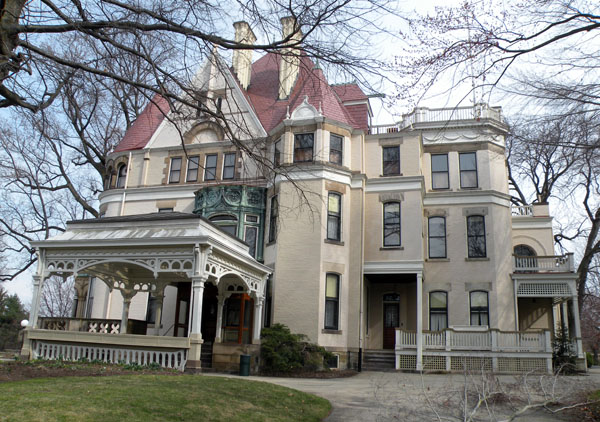
Picture of the Henry Clay Frick Mansion, or "Clayton", located at 7200 Penn Avenue, Point Breeze, Pittsburgh, PA, March 21, 2010. (Lee Paxton via Wikipedia). Released to public domain via CC-SA-3.0.

Picture of the Henry Clay Frick Mansion, or “Clayton”, located at 7200 Penn Avenue, Point Breeze, Pittsburgh, PA, March 21, 2010. (Lee Paxton via Wikipedia). Released to public domain via CC-SA-3.0.

They had invited me a week earlier, a few days before my Spencer Foundation Fellowship application went from no-go to a go. I thought about saying no, but generally, I didn’t do anything on Easter Sundays, anyway. Even as a member of Covenant Church of Pittsburgh, the one Sunday I didn’t attend church was Easter Sunday. It the holiest of days, like Passover, and for so many people, the only day all year they attended church. For so many, it was show-off-my-new-spring-clothes day, not Jesus’ Resurrection Day. I didn’t like the overcrowded-ness that came with an Easter Sunday or Christmas service. It smacked of hypocrisy, my own included.

So I decided for one Sunday to attend a Seder prepared by folks who’d only known themselves as Jews both ethnically and religion-wise their whole lives. Except the stern, orthodox, full of bitterness and tears, joy and triumph that were the Seders of my Hebrew-Israelite days was a lighthearted affair. It was as unorthodox a Seder as could’ve expected, with lots of conversation about grad school, about my dissertation fellowship, about life and sports and music in general. No raw horseradish, but lots of chicken liver paste. No Manischewitz, but some Mogen David, along with more traditional red and white wines, and an empty seat for Elijah.

Manischewitz wine, in bottle and a wine glass, September 11, 2012. (http://tabletmag.com/).

Manischewitz wine, in bottle and a wine glass, September 11, 2012. (http://tabletmag.com/).

Carl and Alan, of course, expressed surprise when I did ask questions or make comments. Like about the kosher-ness of eating mashed-up chicken livers, or the differences in taste between the traditional Pesach beverages, or how peanut butter and jelly went well with matzo crackers. Alan, about to be a one-year-and-done CMU history doctoral student, did ask me, “Where did you learn about Passover?” I said, “This is my fourth Seder.”

I knew better than to fully unlock everything I knew about Pesach, Judaism, Jewish history, the Ten Lost Tribes, being a Hebrew-Israelite, and the racial privileging that I had observed growing up in Mount Vernon between “real” Jews and us “weird” (read “not White”) Jews. For a few hours, though, I had to confront a part of my past that I’d all but locked away by the beginning of ’90. Not just locked away. I’d taken everything from between April 13, ’81 and July 23, ’89, wrapped it in Saran Wrap, put that in a Ziploc bag, thrown it in a safe, locked it, and then built a force field to keep out intruders.

I was relieved when I finally left Carl and Alan’s Easter Sunday/Passover Seder and walked back to my apartment in East Liberty. I wasn’t ready yet to take a look back at what I lived through during the Reagan Years. I was all about moving forward, and the previous days and weeks of dissertation research followed by a major-league dissertation fellowship made me feel like the completely different person that I believed I actually was. At least ninety-five percent of the time.

Fake Booms, or a Tide That Raises a Few Yachts

02 Thursday Apr 2015

Posted by decollins1969 in 1, Christianity, culture, Eclectic, Patriotism, Politics, Pop Culture, race, Religion, Work

≈ Leave a comment

Tags

Big Lies, Debt, Dot.com Boom, Dot.com Bust, Economic Inequality, Fake Boobs, Fake Booms, Gospel of Prosperity, Great Recession, Housing Boom, Housing Bust, Lies, Middle Class, Net Worth, Plutocracy, Prosperity Gospel, Racial Inequality, Rising Tide, Shrinking Middle Class, Struggling Middle Class, Yachts


"Rising Tide Leaves Workers Behind" cartoon, St. Louis Post-Dispatch, September 5, 2006. (R.J. Matson). Qualifies as fair use due to lower resolution and relevance to topic.

“Rising Tide Leaves Workers Behind” cartoon, St. Louis Post-Dispatch, September 5, 2006. (R.J. Matson). Qualifies as fair use due to lower resolution and relevance to topic.

It’s been a week and a half since my last post, mostly because I’ve been busy with other projects. Kind of like the American aristocracy, as they continue to distract us plebes with controversies over “religious freedom” laws and undisclosed emails while continuing to hoard trillions in wealth.

Not that these controversies are just abstract distractions, but they follow a pattern of division, deception, and misdirection. Our nation’s elite impose their views of the country and the world in such a way as the truth itself becomes a lie. Apparently for them, the First Amendment to the US Constitution’s a lie, since this first of these Bill of Rights guarantees “Congress shall make no law respecting an establishment of religion, or prohibiting the free exercise thereof.” This Establishment Clause has NEVER been absolute, especially in cases in which religious practice violates or interferes with others’ civil and constitutional rights.

Michaelangelo's The Creation of Adam via Sistine Chapel ceiling paintings (1508-1512), with America's Prosperity Gospel stuck in between, September, 2009. (http://www.thegospelcoalition.org/).

Michelangelo’s The Creation of Adam via Sistine Chapel ceiling paintings (1508-1512), with America’s Prosperity Gospel stuck in between, September, 2009. (http://www.thegospelcoalition.org/).

But for the purposes of my post today, this truth-as-lie isn’t the biggest one the American plutocracy has pulled on us in the past forty years. Not even close. You see, the biggest lie they’ve sold us as truth is the idea that the US has been going through bust and boom cycles as normal for any wealthy capitalist democracy since the 1970s. That with every recession, or period of inflation, or deflation, or job stagnation, or changes in the economy, that a period of unbridled growth and social mobility has followed, keeping the American middle class the richest of the middle classes on Earth, indeed, in the history of the world!

Let’s start with the reality that median income has declined enough to show evidence of a shrinking American middle class. This decline isn’t a recent phenomenon. Since the end of World War II, there have been two lengthy patterns. One is a pattern of great economic growth, coinciding with America’s dominance of the global economy between 1945 and 1973. This growth of median income by a factor of six (from $2,379 in 1945 to $12,050 in 1973) was a reflection of the US economy’s glory years. The other is the current pattern of a slow, sometimes meandering but steady decline of economic dominance. All during a period of greater competition from Europe and Asia, job outsourcing, and a reduced industrial base, the last the heart of America’s economic growth before 1973.

Median Income Since 1945, Calculated in Actual/2013 Dollars

Year

Median Income

Median Income in 2013 $

1945

$2,379

$30,699

1963

$6,200

$46,826

1973

$12,050

$65,099

1983

$24,580

$57,824

1993

$31,241

$50,549

2003

$43,318

$55,060

2012

$51,017

$51,906

Sources: US Census Bureau, Current Population Reports, P60-002, P60-043, P60-097 , P60-146, P60-188, P60-226, P60-245, Consumer Income (now Income, Poverty and Health Insurance Coverage): 1948, 1964, 1975, 1985, 1995, 2004, 2013. (http://www2.census.gov/prod2/popscan/ and http://www.census.gov/prod/). Calculations based on CPI Inflation Calculator via the Bureau of Labor Statistics and DollarTimes.com, using 2013 as the most recent calendar year baseline (http://data.bls.gov/ and http://www.dollartimes.com/).

Median income in 1973 was 20.1 percent higher ($65,000) than it is today ($52,000). In the intervening years, median income never grew enough to match or exceed the growth that occurred during the peak of the middle class’ development. Not in the years after the double-dip recession of the early 1980s. Not even after the Information Revolution under the business and credit-friendly Clinton years of the 1990s.

The dot.com boom-turned-bust, April 2, 2015. (http://www.sf-info.org/).

The dot.com boom-turned-bust, April 2, 2015. (http://www.sf-info.org/).

Keep in mind, too, that the 400 wealthiest households in the wealthiest nation of all time hold a net worth that exceeds the net worth of the bottom fifty percent of all US households. It’s simple math, really — 400 > ~100,000,000 households or roughly 155 million people with kids and other relatives. Or, $1.5 trillion for 400 > $1.4 trillion for 155,000,000.

The best measure the US currently has for different socioeconomic classes that isn’t from a complex university study or an ideological think-tank is the experimental Supplemental Poverty Measure, developed jointly by the US Census Bureau and the Bureau of Labor Statistics. The AP and dozens of other news outlets first reported the use of the SPM after the two agencies developed a report on Americans in poverty and with low-income with it in November 2011. Taking into account tax credits, non-cash benefits (e.g., SNAP or food stamps), out-of-pocket medical expenses, and other in-kind contributions, the Census and BLS constructed a Ratio of Income/Resource to Poverty matrix that accounted for both the official calculations of poverty (which the federal government originally developed in 1964) and calculations done with the SPM. The news media headlined the December 2011 results with “1 in 2 People Are Poor or Low-Income.”

As sobering as this is, it’s not the whole story, not for those Americans working under the assumption that they are middle class. According to the Census’ latest report using the SPM (November 2013), 16 percent of Americans (49.7 million) live at or below the poverty threshold of $23,000 in income/resources per year, while another 31.2 percent (97.1 million) have at most $46,000 a year in income/resources, fitting the SPM definition of low-income. Another 107.6 million Americans have incomes/resources that are between two and four times the national poverty threshold (or between $46,000 and $92,000 in total resources per year), while the top 56.6 million of Americans (18.2 percent) have annual incomes/resources above $92,000.

Large saline and silicone breast implants -- could easily be, housing boom (1999-2008), dot.com boom (1994-2001), credit boom (1973-?), April 2, 2015. (http://medcitynews.com).

Large saline and silicone breast implants — could easily be, housing boom (1999-2008), dot.com boom (1994-2001), credit boom (1973-?), April 2, 2015. (http://medcitynews.com).

There are two really simple reasons why most Americans don’t see the plutocratic lie of “prosperity for everyone” despite all evidence of the truth. One is because they believe in that dangled carrot of somehow becoming rich, through hard work, prayer, giving out of need, or sheer luck, despite the debt it takes to remain even somewhat middle class. Two is because most believe they’re prospering whenever the Dow Jones’ Industrial Average breaks 10,000 or 15,000, or because the media faithfully reports monthly declines in unemployment, or because the average White family has a net worth that’s eight times that of Black and Latino families.

And those beliefs are reinforced by the societal taboo of rarely, if ever, talking about our income, our net worth or lack thereof, by acting as if the poverty or prosperity conversation violates the US Constitution. Without this serious conversation, how can we really claim that any tide of economic prosperity has lifted any boats other than those of the yacht-owning set since 1973?

Boy @ The Window Origins: Meltzer Conversations

14 Saturday Mar 2015

Posted by decollins1969 in 1, Academia, Boy @ The Window, Carnegie Mellon University, Christianity, culture, Eclectic, Hebrew-Israelite, Mount Vernon High School, Mount Vernon New York, Pittsburgh, Politics, Pop Culture, race, Religion, Youth

≈ Leave a comment

Tags

Benetton Group, Black Elites, Black Identity, Black Masculinity, Black Migration, Black Washington, CMU, Colorism, Dissertation, Doctoral Thesis, Harold Meltzer, Harper Stewart, Humanities, Hypermasculinity, Inequality, Internalized Racism, Logic, Manhood, Multiculturalism, Personal Insights, Race, Racial Identity, Rationalism, Self-Discovery, Social Injustice, Taye Diggs, The Best Man (1999), Washington DC, X-Men Origins: Wolverine (2009)


X-Men Origins: Wolverine (2009) scene, where Wolverine frees mutants kept as experiments by Colonel William Stryker , March 13, 2015. (http://cdn.collider.com/).

X-Men Origins: Wolverine (2009) scene, where Wolverine frees mutants kept as experiments by Colonel William Stryker , March 13, 2015. (http://cdn.collider.com/).

Of all the tangents I took related to writing Boy @ The Window, the most direct path that got me to write a memoir about the most painful period in my life was through several conversations with my dear teacher, friend and mentor in the late Harold Meltzer. I’ve discussed bits and pieces of some of those conversations here and in longer form in Boy @ The Window. It’s still worth rehashing some of those conversations, at least in terms of what was and wasn’t good advice, as well as in explaining how some of the main themes of the memoir developed over time.

As I wrote in Boy @ The Window, though my “first interview with him was in August ’02,” the first time “we discussed the possibility of me doing Boy @ The Window went back to February ’95.” Meltzer had been retired from teaching about a year and a half, while I was beginning the heavy lifting phase of my doctoral thesis, “living in DC for a couple of months while hitting the archives and libraries up for dusty information. In need of a writing break, I gave him a call on one cold and boring Saturday afternoon.”

It was in response to a letter he sent congratulating me. I’d recently published an op-ed in my hometown and county newspaper, “Solving African American Identity Crisis.” I was writing about issues like using the n-word, hypermasculinity, and internalized racism in the short and, for me at least, dummied down piece. Somehow our discussion of that piece led to a discussion of my classmate Sam. Did I really want to spend an hour and a half talking with Meltzer about Sam and some of my other Humanities classmates and their possible identity issues, considering some of my own serious growing pains — the Hebrew-Israelite years, my suicide attempt, my Black masculinity and manhood issues? Absolutely not!

But I learned quite a bit about how I might want to approach writing Boy @ The Window through that phone call. Not because Meltzer had given me any sage advice, which he didn’t, or because he revealed things to me that I shouldn’t have come to learn during our conversation, which he definitely did.

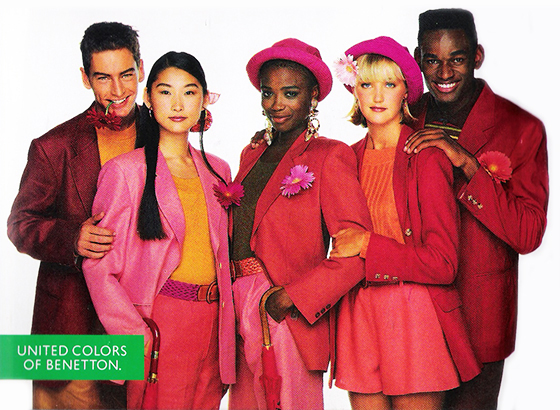
Benetton ad, 1980s, January 2013. (http://fashionfollower.com/).

Benetton ad, 1980s, January 2013. (http://fashionfollower.com/).

No, it was the idea that a lot of the things that I had pursued as a historian and researcher were things that came out of my experiences growing up. Multiculturalism as a historical phenomenon (at least if one linked it to cultural pluralism)? Can anyone say Humanities Program, or, what I used to call “Benetton Group” when we were at A.B. Davis Middle School? Writing about African American identity issues? Obviously related to living in Mount Vernon, the land where any hint of weakness translated into me being called a “faggot” or a “pussy.”

And what about any scholarly concerns with racial and socioeconomic inequality and Black migration? Anyone ever meet my Mom and my father Jimme, 1960s-era migrants from Arkansas and Georgia/Florida respectively? An examination of the Black Washingtonian elite and their looking down upon ordinary Blacks because of their own colorism or the latter’s lack of education? Come on down, Estelle Abel and any number of well-established Black Mount Vernon-ites who never gave me the time of day! As much as academia had been an escape for me, into a world of rationalism and logic, a place of dispassionate scholarship, it was all personal for me, without realizing it until that phone conversation with Meltzer.

Fast-forward to November ’02, the last interview I did with Meltzer before his death two months later. We spent the last couple of hours on that brisk fall Thursday discussing the book idea that would become Boy @ The Window. Meltzer thought that it should be a work of fiction, “based on the real flesh and blood folks in my life, but with different names of course to protect me from any potential lawsuits. He did make me rethink the project from a simple research study of my high school years into narrative nonfiction or a memoir.” 

Screen shot of fictional character Harper Stewart's bestselling novel nfinished Business, from The Best Man (1999), March 14, 2015. (hitchdied via http://s785.photobucket.com/).

Screen shot of fictional character Harper Stewart’s bestselling novel Unfinished Business, from The Best Man (1999), March 14, 2015. (hitchdied via http://s785.photobucket.com/).

Was Meltzer correct? Should I have done a Harper Stewart — played by actor Taye Diggs in The Best Man (1999)? Should I have fictionalized all of my experiences and those of my family, teachers, administrators and classmates? I’m not sure if it would’ve made a difference. Stories of fiction tend to have a tight symmetry to them. Or, the theme of “what goes around comes around” is usually a big one in any novel. You can’t leave too many loose threads or unresolved issues, even if the novel is part of a series. For my purposes, since my life remains a work in progress, a story of relative — not obvious or absolute — success, telling it as fiction would hardly ring true to me, much less to any group of readers.

Whatever else anyone wants to say about the late Harold Meltzer, the dude got me to think about difficult things until I was no longer comfortable in leaving my uncomfortable experiences and assumptions unchallenged. The very definition of a mentor, the very purpose of Boy @ The Window.

On Kicking My Damsel-in-Distress Syndrome

07 Saturday Mar 2015

Posted by decollins1969 in 1, Boy @ The Window, Christianity, culture, Eclectic, Hebrew-Israelite, Jimme, Marriage, Mount Vernon New York, My Father, Pittsburgh, Politics, Pop Culture, Religion, Youth

≈ Leave a comment

Tags

"Ballerina Wendy", Atlas, Burdens, Child Abuse, Chivalry, Crush #1, Damsel-in-Distress, Damsel-in-Distress Syndrome, Domestic Violence, Father-Son Relationship, Feminism, Love, Misogyny, Misty Copeland, Mother-Son Relationship, Pitt, Resentment, Sexism, Wendy, Womanism


Chivalry with a suit blazer,   March 7, 2015. (http://genius.com)/

Chivalry with a suit blazer, March 7, 2015. (http://genius.com)/

This week marked thirty-three years since the fight that led to a crush that led to me falling in love for the first time, via a ballerina in training. The three-month period between March and June ’82 shaped how I dealt with teenage girls and women between the time I turned twelve and my mid-thirties. The crush on “Ballerina Wendy” and its mutation because of my stepfather’s knocking out of my Mom in front of me helped shaped my feminism, my womanism and my sexist damsel-in-distress syndrome.

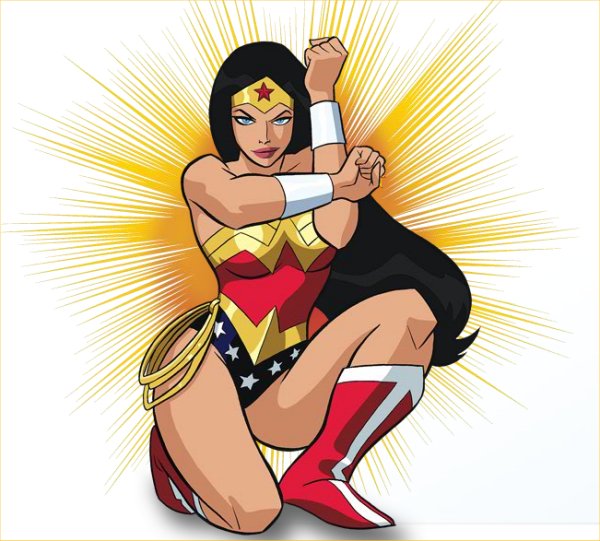
Wonder Woman, October 30, 2012. (http://tvequals.com).

Wonder Woman, October 30, 2012. (http://tvequals.com).

It was the beginning of my damsel-in-distress syndrome. Though it was triggered by the Memorial Day incident, my damsel-in-distress syndrome had been latent for years. I was in fact a mama’s boy, tempered by living at 616 and in Mount Vernon. I’d always been enamored by strong, athletic women (or at least, actresses with that role), going back to Lynda Carter as Wonder Woman. Yet I’d also been surrounded by sexism and misogyny, from my father calling my Mom a “Black bit'” since I was four to my stepfather’s constant quoting of the Torah to justify his laying of violent hands and feet on my Mom.

What I did in response was to help my Mom in every way I could, and in ways I never should’ve. Calling up Con Ed and Ma Bell to pay the electric and telephone bills. Listening to years of conversations about her failed marriages, about my father’s alcoholic failings, about her bills, about the burdens we as her children had put on her. Washing clothes for the house every weekend from October ’82 through August ’87 and anytime I was home for the summer and for the holidays once I went off to college. Going to the store as many as five times in a single afternoon and evening because my Mom forgot that she needed diapers or cigarettes. Hunting my father down for money even on weekends I didn’t want to be bothered because we were out of food for my younger siblings. Taking a fist-filled beating here or there from my stepfather to take the pressure off of my Mom. Promising my Mom that after I finished my degree, I’d come back to New York to work and help her out financially.

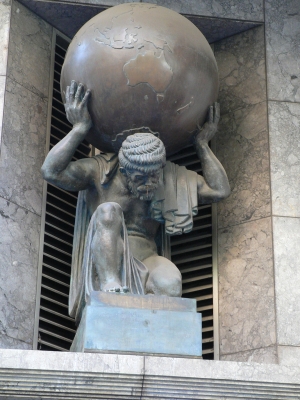
Atlas supports the terrestrial globe on a building in Collins Street, Melbourne, Australia, October 9, 2006. (Biatch via Wikipedia). Released to the public domain.

Atlas supports the terrestrial globe on a building in Collins Street, Melbourne, Australia, October 9, 2006. (Biatch via Wikipedia). Released to the public domain.

On that last promise especially, I reneged. I changed my major from computer science to history, and decided to stay at Pitt, to go to graduate school, to earn a PhD, to start writing, both in the academic world and a bit as a freelancer, to teach for a living. It was the basis, I think, for her falling out with me in ’97, and why our relationship remains limited.

My Mom was hardly the only woman in my life in which I wanted to assist. Some of my Pitt friends can certainly attest to this fact, that sometimes I was there to help too often. To the point where once I realized I was overburdened or when that other person had become too reliant on me, it pretty much killed that friendship. Either way, I was angry, and sometimes felt used, while some of my Pitt friends were either confused or angry themselves.

I’ve had to learn over the years to say no, even to my wife, when I realized that one too many logs on the fire will actually put that fire out. It started with everything high-tech. Every computer glitch, every printer error, every Internet issue, and I was there like Clark Kent, ready to help. But by the time I hit thirty-five, I was just too tired and felt too burdened to be that on all the time. I finally stopped helping my wife with her tech issues. I stopped offering to help, and have only interjected when the issue actually affects all of our equipment.

The irony is, my wife is a stronger person than my Mom, stronger in many ways than how I perceived Wendy as a person so many years ago. It’s not as if my wife doesn’t need or appreciate the help. But, as I’ve learned over the years, too, sometimes, help is just emotional support, a hug or a joke. Or, when I’m ready to, simply listening without feeling the need to use a quadratic equation to solve the problem.

American Ballet Theater soloist Misty Copeland in a promotional photo via her Under Armour ad deal, January 30, 2014. (Under Arnour via Huffington Post).

American Ballet Theater soloist Misty Copeland in a promotional photo (cropped) via her Under Armour ad deal, January 30, 2014. (Under Arnour via Huffington Post).

Damsel-in-distress syndrome, as chivalrous as it is, can also be extremely sexist, for both women and men and girls and boys. It means constantly attempting to help people who may or may not want your help, especially in cases where it is clear that they may need help. It means taking on emotional and psychological burdens that otherwise should only belong to the person you’re trying to support. It means, sadly, providing advice and knowing answers and solutions that may not be answers or solutions at all.

The Memorial Day ’82 incident with my mother changed what was an otherwise innocent crush and love into something contradictory even as it became more meaningful. It made me appreciate women who could and can kick some ass, whose strength would be obvious to all. And it made me think women who weren’t like that — women like my Mom — needed constant help from people like me. Wendy defended herself thirty-three years ago. My Mom tried and couldn’t. Life and strength for us, male and female and transgender, though, has never been that simple. And though I have saved quite a few damsels in distress over the years, it isn’t my eternal burden to carry.

Carnegie Library of Pittsburgh and My Own Prison

16 Monday Feb 2015

Posted by decollins1969 in 1, Academia, Boy @ The Window, Carnegie Mellon University, Christianity, culture, Eclectic, eclectic music, music, Pittsburgh, Politics, Pop Culture, race, Religion, Work, Youth

≈ Leave a comment

Tags

"My Own Prison" (1998), Bill & Melinda Gates Foundation, Carnegie Library of Pittsburgh, CMU, Creed, Dissertation, Dissertation Committee, Duquesne University College of Education, Foundation World, God's Lessons, Humble, Humiliation, Humility, Joblessness, Joe Trotter, Legacy, Mother-Son Relationship, Nonprofit World, Self-Reflection, Sycophants, Underemployment, unemployment


East Library branch of Carnegie Library of Pittsburgh, before (the version I worked in) and after renovation, October 4, 2006 and September 25, 2011. (http://popcitymedia.com and http://eastliberty.org).

East Library branch of Carnegie Library of Pittsburgh, before (the version I worked in) and after renovation, October 4, 2006 and September 25, 2011. (http://popcitymedia.com and http://eastliberty.org).

On February 17th seventeen years ago, we opened one of the first community-based computer labs in the US at the East Liberty branch of the Carnegie Library of Pittsburgh. What was once known as the Microsoft Library Fund (which later became the Gates Library Foundation, and then became part of the Bill & Melinda Gates Foundation) had provided the initial $110,000 to place this computer lab in one of the East Library branches resource rooms. I guess it could’ve been a proud moment for me. If I hadn’t earned my PhD the year before, only to face unemployment for three months during the summer of ’97 and underemployment in the five months since taking the Carnegie Library job. But this was a humiliating moment, not one of pride or, at least, taking comfort in a job done well. It was a learning moment at a time when I thought I already knew what I need to move forward with my career and life.

The dissertation process, my battles with Joe Trotter, the truth about my relationship with my Mom, had all taken a heavy toll on my heart and mind by the time Memorial Day ’97 rolled around. So much so that I lived between moments of humility (which is different from humiliation) and moments of rage in the sixteen months between May ’97 and the fall of ’98. I was living on fumes from my last Carnegie Mellon paycheck when I began working for Carnegie Library the day after Labor Day that year. I’d been conditioned, though, to think that everything happens for a reason. So I assumed that God was attempting to teach me a lesson, that I needed to give more out of the needs I had in my life in order for the things I thought I deserved to come my way.

John Wooden saying on being humble, February 16, 2015. (https://pbs.twimg.com).

John Wooden saying on being humble, February 16, 2015. (https://pbs.twimg.com).

There was a bit of a flaw in my logic around God’s lessons. For one, the idea that I wasn’t finding work in academia because I hadn’t been a giver was ridiculous. Between volunteering for soup kitchens, tutoring high school students, tithing at church, and so many other things, it was dumb to think that not enough humility was the reason I didn’t get the job at Teachers College or had trouble finding adjunct work in the fall of ’97. Or rather, it was dumb not to think that bigger issues — like my dissertation committee abandoning me when I needed them the most — played a greater role in my not finding full-time work in my chosen profession than any inability to serve others.

The Carnegie Library job provided a part-time stop-gap for my income while I attempted to figure out how to move forward without my advisor and my committee and move on with the knowledge that my relationship with my Mom would never be the same. I figured that the job gave me the opportunity to help others and to do good, and that it was a good first foray into the nonprofit world, especially with money from the world of Microsoft.

Boy, I couldn’t have been more wrong! I had a co-worker who was jealous of my degree and attempted to undermine the work of putting together the lab and the class materials for teaching patrons how to use the computers at every turn. I figured out that the bosses at the central branch in Oakland had essentially pocketed some of the funding for the lab to cover the costs of new computers for their own personal use, and had underfunded both my position and my co-worker’s position as part of the grant.

Album cover for Creed's My Own Prison (includes title track), released August 26, 1997. (Jasper the Friendly Punk via Wikipedia). Qualifies as fair use under US copyright laws to illustrate title and theme of this blog post.

Album cover for Creed’s My Own Prison (includes title track), released August 26, 1997. (Jasper the Friendly Punk via Wikipedia). Qualifies as fair use under US copyright laws to illustrate title and theme of this blog post.

But I didn’t learn all of this until June. By February ’98, I began to realize that, more than anything else, I needed to free myself from my own prison of an idea, that I’d done anything wrong or sinful to end up running a computer lab project at twenty-eight when I had done much of this same work at nineteen years old. I had to begin to find prominent people in my field(s) to support me in finding work, even if none of them were on my dissertation committee. I still needed to apply for academic jobs, even if my status meant than some would reject me because of my issues with my advisor. I even needed to explore the idea of jobs outside academia, in the nonprofit and foundation worlds, where my degrees and my ideas about education policy and equity might still matter.

It definitely helped when Duquesne hired me in April to teach graduate-level education foundations courses in History of American Education and Multicultural Education. It helped even more, though, when I decided in August to quit the Carnegie Library job. Between the Microsoft folks and the sycophants at Carnegie Library who were willing to do almost anything for a few extra dollars — anything other than serve their neighborhoods, that is — I’d had enough of duplicitous people. Who knew that my first job with sycophants and Gates money would come back to haunt me in the seventeen years since!

Vicarious Valentine’s Day

14 Saturday Feb 2015

Posted by decollins1969 in 1, Boy @ The Window, Christianity, culture, Eclectic, Jimme, Mount Vernon High School, Mount Vernon New York, Movies, My Father, New York City, Politics, Pop Culture, race, Religion, Youth

≈ Leave a comment

Tags

616, 616 East Lincoln Avenue, Capitalism, Christian Persecution, Commercialism, Crush #1, Interracial Relationships, JD, Love, Lust, Martyrs, Observation Mode, Rita Moreno, Romance, St. Valentine, The Contrarian One, Transactional Relationships, Valentine's Day, Vicarious Living, Wendy, West Side Story (1961)


Fringe Observer 'September,' played by Michael Cerveris, circa 2013. (John Milton via Pinterest.com).

Fringe Observer ‘September,’ played by Michael Cerveris, circa 2013. (John Milton via Pinterest.com).

A couple of alternate titles could be “A Little Ditty About ‘Jack and Diane’,” or “The Legend of Crush #1 and The Contrarian One.” Really, though, I’ve never given much thought to Valentine’s Day, even in dating and marriage, mostly because until I turned twenty-five, I never had money to waste on such an aimless, unbelievably overhyped and commercialized “holiday.”

Few understand that the Catholic holy day of St. Valentine was about a Christian martyred in the midst of a period of Roman persecution under the emperor Aurelian, outside Rome, on February 14, 273 CE. Or that when combined with the St. Valentine’s Day massacre on February 14, 1929, the only heart truly associated with the day has been one punctured by a sword or a bullet, a blood-soaked one. Plus, it’s not as if I need capitalism to tell me whom to show my romantic side, with cards and flowers and chocolate, no less. Still, as a married man, I participate, although not with Western ideals of masculinity and romance in my head, if only to ensure my wife doesn’t feel left out.

But I must rewind about three decades, because while I don’t appreciate the fakery that comes with celebrating some candy-coated version of romance without actually celebrating St. Valentine, I did learn a thing or two about watching relationships bloom from afar. It was around this time thirty years ago that I noticed that Wendy and the contrarian one were dating, whatever that term means in the context of high school. Both would tell me that their relationship only began in high school, but my own recollections dispute that somewhat, if only because they shared roughly the same level of dislike for me during seventh grade!

Bloody woodchipper scene from Fargo (1996), February 14, 2015. (http://youtube.com).

Bloody woodchipper scene from Fargo (1996), February 14, 2015. (http://youtube.com).

The main point is, while for most of my classmates, it would’ve only been obvious in our junior year that Crush #1 and JD were together, I sensed it by the middle of tenth grade. If I’d been the exact same person I’d been during seventh and eighth grade, one head-over-heels in love with Wendy, I would’ve put my heart in a woodchipper, shot it all over a field, gathered it up again, and then put it into a mortar shell to explode into the sky to rain down all over Mount Vernon.

But I wasn’t that person in 7S, and hadn’t been for quite a while. My focus for most of tenth grade had been on living a sin-free Christian life, a transactional relationship with God that consisted of making good things happen for myself by prayer, fasting, and reading my Bible everywhere I went. Between that and my routine of watching younger siblings, washing clothes, tracking down my father Jimme, surviving another year of Humanities, running to the store two or three times every day, and so many other tasks, romance and dating might as well have been in an alternate universe. Even if I did feel envious, it would’ve been over not having money or a car or good food in my belly. Pining over Wendy — or any other girl or woman, for that matter — didn’t fit with any coping strategy that I had to get out of Mount Vernon as soon as my high school diploma and a college acceptance would allow me. At least prior to Crush #2.

What was more interesting to me, and what I knew was more interesting to my classmates, was the fact that Wendy and the contrarian one were dating, and in fact, an interracial couple, one a Black female (or, as some classmates still believed, biracial), the other a White male. I was interested only as an observer of people, because by tenth grade I’d actually grown to like JD and could be around Crush #1 without being conscious of the fact that she used to be my crush. I was interested in that the reactions of the folks at MVHS varied from my own “no surprise here” to dagger-eyed intolerance or head-shaking shame expressed by students across all cliques and most racial lines.

Black and White shortbread (or what President Barack Obama coined a "Unity Cookie" in 2008), July 23, 2007. (Punkitra via http://commons.wikimedia.org). Released to public domain.

Black and White shortbread (or what President Barack Obama coined a “Unity Cookie” in 2008), July 23, 2007. (Punkitra via http://commons.wikimedia.org). Released to public domain.

I’ve certainly known and know plenty of other people involved in interracial relationships and marriages since the spring of ’85. Some where only racial politics and stereotypes mattered, some where love and social justice mattered much more. In the case of my class’ Juliet and Romeo, maybe my crush took advantage of some of the racial politics involved with dating someone White, while my contrarian friend obviously doesn’t prefer blondes, and hasn’t in the years since. From my observer’s perch, though, there was much more to their relationship than racial preferences.

It was the first time I’d seen or heard about any interracial coupling beyond movies like West Side Story (I still love Rita Moreno, even at eighty-three) or in others telling me about them third-hand, after it was already over. To me, it was always a good fit and fitting, despite the racial politics playing out at school, not to mention the identity issues that had to be playing out between Wendy and JD, even unconsciously. What I gleaned from two and a half years of the two of them dating, though, was that they had found a world unto themselves, one which must’ve made MVHS a much easier hellhole to navigate, if nothing else.

← Older posts
Newer posts →

Boy @ The Window: A Memoir

Boy @ The Window: A Memoir

Places to Buy/Download Boy @ The Window

There's a few ways in which you can read excerpts of, borrow and/or purchase and download Boy @ The Window. There's the trade paperback edition of Boy @ The Window, available for purchase via Amazon.com at http://www.amazon.com/Boy-Window-Donald-Earl-Collins/dp/0989256138/

There's also a Kindle edition on Amazon.com. The enhanced edition can be read only with Kindle Fire, an iPad or a full-color tablet. The links to the enhanced edition through Apple's iBookstore and the Barnes & Noble NOOK edition are below. The link to the Amazon Kindle version is also immediately below:

scr2555-proj697-a-kindle-logo-rgb-lg

Boy @ The Window on Amazon.com: http://www.amazon.com/Boy-The-Window-Memoir-ebook/dp/B00CD95FBU/

iBookstore-logo-300x100

Boy @ The Window on Apple's iBookstore: https://itunes.apple.com/us/book/boy-the-window/id643768275?ls=1

Barnes & Noble (bn.com) logo, June 26, 2013. (http://www.logotypes101.com).

Boy @ The Window on Barnes & Noble: http://www.barnesandnoble.com/w/boy-the-window-donald-earl-collins/1115182183?ean=2940016741567

You can also add, read and review Boy @ The Window on Goodreads.com. Just click on the button below:

Boy @ The Window

Twitter Updates

Tweets by decollins1969
  • RSS - Posts
  • RSS - Comments

Archives

  • June 2025
  • April 2023
  • September 2022
  • August 2022
  • July 2022
  • June 2022
  • May 2022
  • April 2022
  • March 2022
  • January 2022
  • December 2021
  • November 2021
  • October 2021
  • September 2021
  • August 2021
  • July 2021
  • June 2021
  • April 2021
  • March 2021
  • February 2021
  • January 2021
  • December 2020
  • November 2020
  • October 2020
  • September 2020
  • August 2020
  • July 2020
  • May 2020
  • April 2020
  • March 2020
  • January 2020
  • December 2019
  • November 2019
  • August 2019
  • July 2019
  • June 2019
  • May 2019
  • April 2019
  • March 2019
  • February 2019
  • January 2019
  • December 2018
  • November 2018
  • October 2018
  • September 2018
  • August 2018
  • July 2018
  • June 2018
  • May 2018
  • March 2018
  • February 2018
  • January 2018
  • December 2017
  • November 2017
  • October 2017
  • September 2017
  • August 2017
  • July 2017
  • June 2017
  • May 2017
  • April 2017
  • March 2017
  • February 2017
  • January 2017
  • December 2016
  • November 2016
  • October 2016
  • September 2016
  • August 2016
  • July 2016
  • June 2016
  • May 2016
  • April 2016
  • March 2016
  • February 2016
  • January 2016
  • December 2015
  • November 2015
  • October 2015
  • September 2015
  • August 2015
  • July 2015
  • June 2015
  • May 2015
  • April 2015
  • March 2015
  • February 2015
  • January 2015
  • December 2014
  • November 2014
  • October 2014
  • September 2014
  • August 2014
  • July 2014
  • June 2014
  • May 2014
  • April 2014
  • March 2014
  • February 2014
  • January 2014
  • December 2013
  • November 2013
  • October 2013
  • September 2013
  • August 2013
  • July 2013
  • June 2013
  • May 2013
  • April 2013
  • March 2013
  • February 2013
  • January 2013
  • December 2012
  • November 2012
  • October 2012
  • September 2012
  • August 2012
  • July 2012
  • June 2012
  • May 2012
  • April 2012
  • March 2012
  • February 2012
  • January 2012
  • December 2011
  • November 2011
  • October 2011
  • September 2011
  • August 2011
  • July 2011
  • June 2011
  • May 2011
  • April 2011
  • March 2011
  • February 2011
  • January 2011
  • December 2010
  • November 2010
  • October 2010
  • September 2010
  • August 2010
  • July 2010
  • June 2010
  • May 2010
  • April 2010
  • March 2010
  • February 2010
  • January 2010
  • December 2009
  • November 2009
  • October 2009
  • September 2009
  • August 2009
  • July 2009
  • June 2009
  • May 2009
  • April 2009
  • March 2009
  • February 2009
  • January 2009
  • December 2008
  • November 2008
  • October 2008
  • September 2008
  • August 2008
  • July 2008
  • June 2008
  • May 2008
  • April 2008
  • March 2008
  • February 2008
  • January 2008
  • December 2007
  • November 2007
  • October 2007
  • September 2007
  • August 2007
  • July 2007
  • June 2007

Recent Comments

MaryPena's avatarMaryPena on My Day of Atonement/Bitter Hat…
decollins1969's avatardecollins1969 on No Good Teaching Deed Goes…
Mary Rose O’Connell's avatarMary Rose O’Connell on No Good Teaching Deed Goes…

NetworkedBlogs on Facebook

NetworkedBlogs
Blog:
Notes From a Boy @ The Window
Topics:
My Life, Culture & Education, Politics & Goofyness
 
Follow my blog

616 616 East Lincoln Avenue A.B. Davis Middle School Abuse Academia Academy for Educational Development AED Afrocentricity American Narcissism Authenticity Bigotry Blackness Boy @ The Window Carnegie Mellon University Child Abuse Class of 1987 CMU Coping Strategies Crush #1 Crush #2 Death Disillusionment Diversity Domestic Violence Economic Inequality Education Family Friendship Friendships Graduate School Hebrew-Israelites High-Stakes Testing Higher Education History Homelessness Humanities Humanities Program Hypocrisy Internalized Racism Jealousy Joe Trotter Joe William Trotter Jr. K-12 Education Love Manhood Maurice Eugene Washington Maurice Washington Misogyny Mother-Son Relationship Mount Vernon High School Mount Vernon New York Mount Vernon public schools Multiculturalism MVHS Narcissism NFL Pitt Pittsburgh Politics of Education Poverty President Barack Obama Race Racial Stereotypes Racism Relationships Self-Awareness Self-Discovery Self-Reflection Sexism Social Justice Teaching and Learning University of Pittsburgh Violence Whiteness Writing

Top Rated

Blog at WordPress.com.

  • Subscribe Subscribed
    • Notes from a Boy @ The Window
    • Join 103 other subscribers
    • Already have a WordPress.com account? Log in now.
    • Notes from a Boy @ The Window
    • Subscribe Subscribed
    • Sign up
    • Log in
    • Report this content
    • View site in Reader
    • Manage subscriptions
    • Collapse this bar
 

Loading Comments...