• About Me
  • Other Writings
  • Interview Clips
  • All About Me: American Racism, American Narcissism, and the Conversation America Can’t Have
  • Video Clips
  • Boy @ The Window Pictures
  • Boy @ The Window Theme Music

Notes from a Boy @ The Window

~

Notes from a Boy @ The Window

Category Archives: Politics

The Unbearable Whiteness of White Proximity Fuses, Part I

03 Saturday Jul 2021

Posted by decollins1969 in 1, Boy @ The Window, earth, wind & fire, Eclectic, eclectic music, Marriage, Mount Vernon New York, Politics, Pop Culture, race, Youth

≈ Leave a comment

Tags

Coping Strategies, Cross-Racial Adoptions, Crush #1, Eclecticisms, Exoticism, Parenting, Racism, Rebecca Carroll, Wendy, White Proximity


A field of allegedly civilian-friendly land mines (cropped), September 14, 2018. (https://www.popularmechanics.com/military/weapons/a25064634/better-land-mine-us-army-gator/; Andrew Renneisen, Getty Images)

I just finished reading Rebecca Carroll’s diary-esque gem of a memoir, Surviving the White Gaze. It is 313 pages of fearlessness in presenting people as they are, and not as one would like them to be, especially when it comes to parents and parent figures. Like with so many books I’ve read in the past six years, I laughed, I cried, I got angry at Carroll, I got angry for her as well. If you want to learn all the ways not to parent an adopted Black/biracial child in lily-white New Hampshire during Generation X’s growing-up years, then Surviving the White Gaze is definitely for you.

As someone born at the end of 1969, the fact that Carroll is only seven months older than me immediately stood out. And because I often think through time in music, her occasional name-dropping made me think of the eclectic music I grew up around. A Steely Dan reference here, a David Bowie reference there for her. But because of her almost hermetically-sealed experience in everyday proximity to White folk, there weren’t any references to Alice Coltrane or Al Green, Earth, Wind & Fire or Marvin Gaye or Aretha Franklin. My three years of fractured relations to pop culture as a result of the Hebrew-Israelite years (abuse aside) have nothing on Carroll’s growing-up years in endless, toxic whiteness, musically and otherwise.

Still, there are layers to Carroll’s life and book that I do understand because of my own proximity to whiteness growing up, and my proximity to two people who may and may not have benefited from such proximity. One was Wendy, my first true crush, my first real and unrequited love. I commented on this in Boy @ The Window, partly because Wendy brought it up during my interviews with her over two days in 2006, and partly because I observed this behavior first hand over our years in middle school and high school.

A couple of crazy rumors emerged. None of which I could believe in their entirety. One was that she was part White and Black – or ‘mixed’ or ‘Oreo’ as the rumors about Wendy’s background were worded – especially from ___. It was based mostly on sightings of her eventual stepfather, who was White. I thought it was part of the reason some of my affluent White classmates found Wendy interesting. There were times I thought Wendy took advantage of the assumptions made about her at the same time. She was invited to their homes, occasional parties, and was a part of a circle that I called ‘the Benetton Group,’ the true cool of Humanities…

I do not think that either Wendy or Carroll were completely conscious of their desire to take advantage of the exoticism that their white classmates ascribed to them. I think that every child has a desire to be liked, and if the reason is embedded in lighter skin, or othering, or proximity to whiteness, then so be it. Even if there’s a great price to pay in one’s understanding of their identity (or lack thereof), especially later on in life. 

Carroll is extremely clear about how fractured her mirror became as she transitioned from child to teenager to young woman, courtesy of her biological white mother Tess. The kindest way to describe Tess is that she’s a piece of work. Really, I can think of few parents more emotionally and psychologically abusive than Carroll’s biological mother. It’s not like I don’t speak from the experience of having a mom hell-bent to make me and my siblings hypermasculine foot-soldiers for an anti-queer patriarchy and misogyny. Having an alcoholic father and a stepfather that beat me up a few times? I’d still take that over Carroll’s bio-mom Tess, who only saw Carroll as a sexual being or a potential one, at 10 years old, because that’s how Carroll’s bio-mom saw Black men and Latinx men, possibly even Carroll’s half siblings, too. 

Carroll’s adoptive parents weren’t much better, taking a “you’ll figure it out” approach to parenting that fell below the already low bar of GenXers being “latch-key kids” as a result of parents adulting their children at ages 6, 7, 8, and 9. None of them protected Carroll from sexual abuse, or prepared her to understand her Blackness. As Carroll wrote, they tried to “erase” her Blackness. I’d go a step further, though. The three of them attempted to make Carroll raceless, white without being white, an exotic extension of their white-bred lives.
In Cicadas and Graduation Years

02 Wednesday Jun 2021

Posted by decollins1969 in 1, Boy @ The Window, culture, Eclectic, eclectic music, music, Politics, Pop Culture, Youth

≈ Leave a comment

Tags

Cicadas Cycle, Graduation, Growing Older, Growing Up, High School Graduation, Rite of Passage


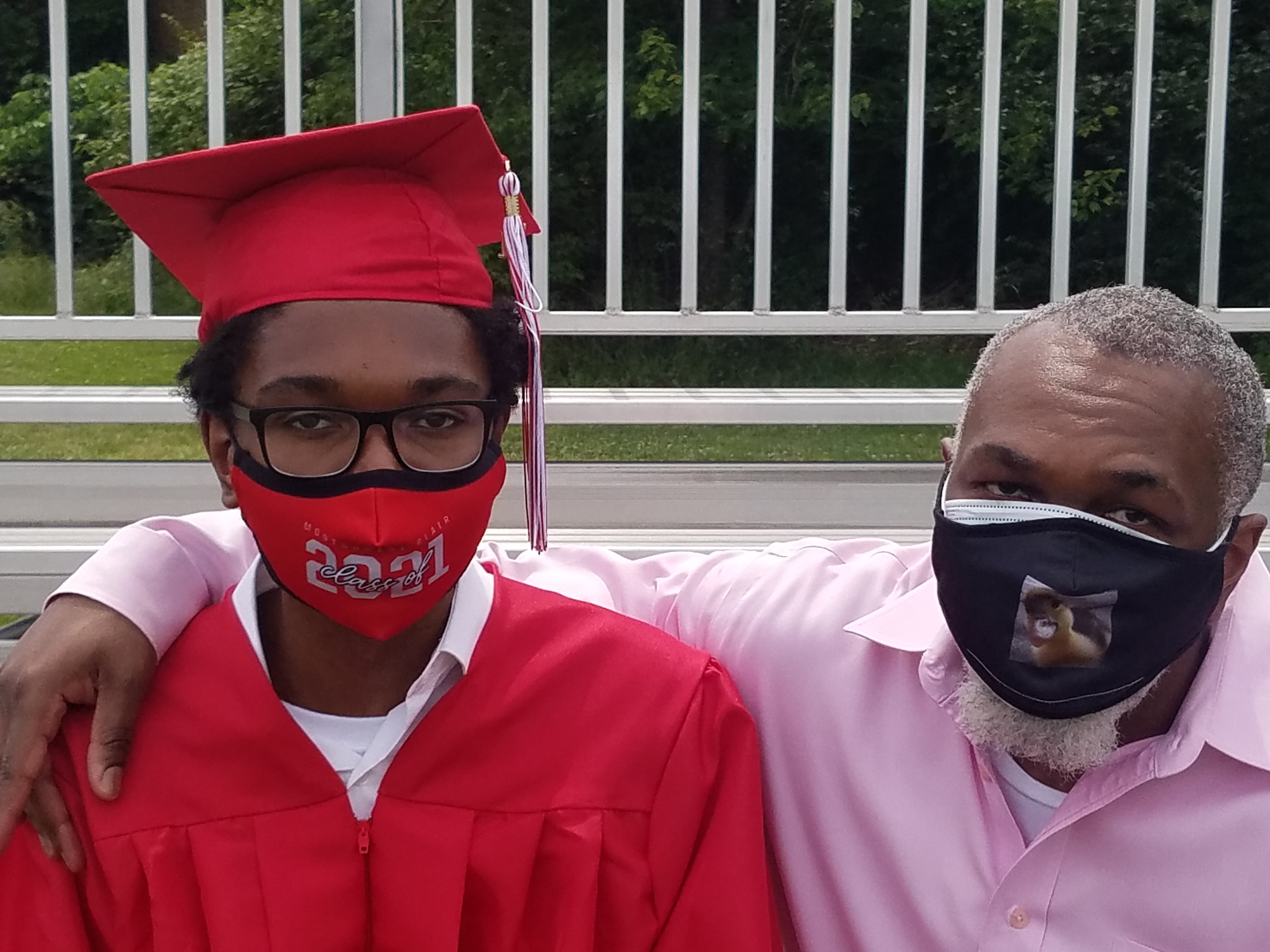
Noah and me, stuck in a post-graduation moment, Montgomery Blair HS, Silver Spring, MD, June 2, 2021. (Angelia N. Levy)

Hard to believe but still true. Today, our son graduates from high school, nearly 34 years after my own high school graduation, or three cicadas cycles (1987, 2004, and 2021). In between has been “my second childhood” of Pittsburgh, undergrad and grad. In between was learning how to be comfortable in my own skin, dating, marrying. In between was my beginning to reject so much of the fear and bs that my parents and idiot guardian and others fed to me. Otherwise there would be no graduation of our soon-to-be 18-year-old son to celebrate, no reason to work to be an example to him about building and walking a path, no misogynoir or misogyny to give up.

I have only been alive for four cicadas cycles (1970, 1987, 2004, 2021), our son in the middle of number two. Most humans in this part of the world don’t get to see more than five cycles (I’d have to make it to 85 to see my sixth cycle, and who knows what the US would be like by then). 

But there’s symmetry here. I was in my first year of life when I likely saw but could not possibly remember my first cicadas. So was our son in the late spring of ‘04. I graduated high school in the middle of the cicadas’ mating season in ‘87. I vaguely remember them. I walked so far and so fast in those days. My headphones and my Walkman were practically glued to my ears and left hip and belt. I may have noticed the unceasing chirring and flying and crunches a time or two. But I walked at Warp Factor 3 or 5 blasting Genesis, White Snake, Whitney Houston, or U2 through your ears down one Mount Vernon street or in Co-Op City or somewhere in between. The cicadas’ were mostly a crunch speed bump on my way to obsessive heartbreak and on my way to college and Pittsburgh.

Our son’s path has been bumpy, and not just because he walks at a tortoise’s pace. He’s not a big fan of school. Nor does he have the fight-or-flight instincts I had when I was his age, well-honed from years of trauma and living in a place where no one cared how broken I was. His musical tastes barely register on the decibel meter. He often claims he likes “nothing,” but I’ve found him bopping to The Brothers Johnson’s “Strawberry Letter 23” and Hall & Oates’ “Private Eyes” and Haddaway’s “What Is Love” in recent years. He apparently does like one indie rock band, Bloc Party, a UK group.

Music has changed so much over the past three cicadas cycles. So has our world. When I graduated nearly 34 years ago, Cameo’s “Candy” and “Word Up,” Geto Boys’ “Mind Playing Tricks On Me,” U2’s “With Or Without You,” Luther’s “Stop To Love,” Europe’s “Final Countdown,” and Whitney’s “I Wanna Dance With Somebody” were the sappy hits of the moment. Yet some songs were subversive, and deliberately so, like “With Or Without You” (who thought this song was about romantic love? — certainly not me!), Genesis’ “Land of Confusion,” and Prince’s “Sign O’ The Times.” And there was the music that as a 51-year-old I’ll admit I knew was wack and lame even at the time, including anything by Glass Tiger or Starship. The cicadas must have loved it when I warped by blasting this schlock.

Our son might not like much music, but it isn’t because we don’t play any at home or in the car. We play the music we grew up around, the music of our adult choices, the music we listened to despite and because of our parents. Blues, gospel, real R&B, rap, hip-hop soul, punk rock, heavy metal, ‘80s pop, ‘90s pop, grunge, jazz, smooth jazz, emo, country (that’s my spouse, definitely not me), and yes, even BTS. All are welcome to the eclectic music party. Maybe that’s why he doesn’t feel the need to pick a genre. Our family is a jukebox, er, iPod, no, um, iPhone and Spotify of sounds. That’s not something a Walkman or 700 billion cicadas can duplicate.

But I also keep in mind two things. One is that from our son’s perspective, JLo’s On The 6, Coldplay’s “Clocks,” even Kanye’s The College Dropout is the growing-up-as-a-zillennial equivalent of The Beatles’ “Let It Be,” Diana Ross & The Supremes’ version of “Ain’t No Mountain High Enough” (Tammi Terrell and Marvin Gaye did the original), and Marvin Gaye’s “Inner City Blues” via his What’s Going On album was for me at 17. It took me years to appreciate the music, understand what it was always trying to say to me. Hopefully, with enough luck and time, our son will get there. Hopefully with enough cicadas cycles, so will our world.

Especially with the second issue. Have you heard the music of the past decade? BTS is fine, but will peak as all glambands do at some point. Between SZA and RZA and Sia and H.E.R. and Lizzo and J. Cole and Lil Nas X (love him, btw) and so many others, I’m longing for the days of Solange. I know, so five years ago. No instruments, no good lyrics, and aside from Lil Nas X and The Weeknd, not much subversiveness, either. A wall of sound that seems indecipherable, like the cicadas this morning. Hopefully, our son will decipher it all, for himself, if not for any of us.

The Start of the “Shalom Aleichem” Years

13 Tuesday Apr 2021

Posted by decollins1969 in 1, Boy @ The Window, Christianity, culture, Eclectic, eclectic music, Hebrew-Israelite, Jimme, Marriage, Mount Vernon New York, music, New York City, Politics, Pop Culture, race, Religion, Youth

≈ Leave a comment

Tags

Boy @ The Window Years, Cults, Family Drama, Friendships, Social Suicide


Primary Names of God in Hebrew, October 2018. (https://www.chabad.org).

This week 40 years ago brought an avalanche of changes to my already unstable world. I wouldn’t have noticed the instability, though. I believed my bubble of Mount Vernon and the NYC was pretty stable back in mid-April 1981. I had friends who I could talk to and debate with all day. I saw my father about once every three weeks. I was starting to get into mainstream popular music, and had some interest in sports. I liked a few girls here and there. I was doing well in school. I was doing well in general, with my stepfather separated from my mother for the previous six months. So well that I’d forgotten my sexual assault trauma from 1976. So well that even the bullies around my block hadn’t tried to stone me to death or beat my face in for nearly seven months.

But Maurice came back as “Judah ben Israel,” and the brief years of worldly enlightenment came to a crashing halt. I tell this story in Boy @ The Window this way:

This was the religion my stepfather converted to after he and Mom had separated. In the period before his return, my stepfather had been working on Mom, attempting to convince her that he was now a good man and could be trusted as the man of our house. He loved Jehovah, had stopped smoking, and had learned how to love himself. And he had changed his name to Judah ben Israel, not legally, mind you. The name literally means ‘Lion of God and of Israel,’ and referred to my stepfather as a royal descendant of Jacob/Israel, the immediate father of the Israelite people. It was in this context that my stepfather gained a sense of himself and control over his world, which was what convinced Mom to end her separation from him.

I was so confused that my brain felt like it was on a carnival ride. Really? This is what we are doing now? We’re still a family? What about my dad?, I thought. But people desperate for an identity that defies the beliefs of White folk often take desperate, cultist measures.

This week 40 years ago, Maurice worked on me and my brother Darren to take this Hebrew-Israelite bullshit seriously, which meant threatening us with ass-whuppins if he found out we weren’t wearing our kufis or yarmulkes at school.

The next step, of course, was our acceptance of the Hebrew-Israelite religion. This wasn’t exactly a process in which free will was involved. Our mother told us that this would be our religion ‘for the rest of our lives.’ Then our stepfather came to explain this ‘way of life’ to us, and we put on our white, multi-holed, circular kufis for the first time. I had no idea what Mom and Maurice had pushed us into. A part of me was on the outside looking in, thinking, This is crazy! But as nutty as this sudden conversion seemed, I convinced myself into acceptance. We were already the children of one divorce, and I wasn’t sure if I wanted to see another one so soon. Darren, to his credit, played along as if being a Hebrew-Israelite was just a role in a school play.

I went to the school the following Monday with my bright white kufi on top of my head for the first time. Talk about committing social suicide! The expressions on my friends’ faces, from completed stunned and disgusted to eyes that revealed what their set faces attempted to conceal. I was immediately an outcast, especially as far as my best friend Starling was concerned. Once I explained to some of them what had occurred the week before, they seemed to get it, even if they kept me at ulna’s length. They still said “Hey Donald. Wassup?” the way they did before.

Not Starling and some of our mutuals. He saw it as my betrayal, not just of him, but of God himself. Such are the inflated egos of children of preacher-men. His weeks of silence led to a fight (which he won) and the end of our two-year friendship.

But the friendships and my within-normal-levels weirdness came to a crashing halt the moment I decided to allow myself to be a canvas my mother and stepfather used to express their eccentric yearnings for identity. It was the worst three and a half years of my life, with child abuse, another sexual assault, the fall into welfare poverty, suicidal ideations and one suicide attempt included.

My brother Darren handled the situation so much better than me. “Darren, to his credit, played along as if being a Hebrew-Israelite was just a role in a school play,” is what I wrote. He only wore his kufi at 616 and whenever he was out and visible to my stepfather’s peeps. Otherwise, the hat was off his head. But then again, Darren attended The Clear View School, where no one would have cared what he wore.

Yes, it is important to remember the past. If only because it is a reminder that, pandemic or not, there have been worse times in my life. I’m so glad that I haven’t worn a kufi in nearly 37 years.

Michael Clayton vs. Jerome Kersey

14 Sunday Mar 2021

Posted by decollins1969 in 1, Boy @ The Window, culture, Eclectic, Movies, Politics, Pop Culture, race, Sports, Work

≈ Leave a comment

Tags

Basketball Skills, Bassey Ikpi, Colson Whitehead, George Clooney, Jerome Kersey, Kiese Laymon, Michael Clayton (2007), Portland Trail Blazers, Roxane Gay, Slashers, Tressie McMillan Cottom, Walter Mosley, Writing Approaches, Writing Styles


Then Blazer Jerome Kersey slashing his way to a lay-up past Laker Magic Johnson and Byron Scott, n.d., but likely pre-1991-92 season. (Mike Powell, Getty Images; https://www.blazersedge.com/2015/2/18/8066753/jerome-kersey-dead-portland-trail-blazers-legend)

A few years ago, I declared myself the writer equivalent of the fictional character Michael Clayton, whom George Clooney played in a movie of the same name in 2007. Like Clayton, who straddled the worlds of police officers, attorneys, and fixers, I found myself a misfit between academia and writing, journalism and writing, and professional writing. Despite whatever successes I have had in recent years (if one can call them that), I do not think this equation has changed. I still often find myself pounding on the walls of stone temples, a world of white folks who would just as soon spit on me and my manuscripts as they would ignore my queries. Such is the world in which I inhabit as one of the Black folx.

But I am not just Michael Clayton. I am also like the late Jerome Kersey (1962-2015) (may his body rest in peace while his spirit takes a moment to read me out — hopefully). At least as a writer. The six-seven small forward who came from a one-time Division II school and played the bulk of his career with the Portland Trail Blazers was one of the best slashers and one of the better defenders in the NBA in the late-1980s and in the 1990s. Kersey was especially adept at weak-side defense and playing passing lanes, great at finishing off of full-court fast breaks, and could beat defenders off of give-and-gos in the half-court set with ease. His J (if one could call it that) was serviceable at best. Anything outside 12-15 feet was a risky proposition, especially in close playoff games. But if you needed a weak-side rebound and put-away dunk, Kersey was the man.

In his prime, he was a necessary asset as part of the Blazers’ runs to the NBA Finals in 1990 and 1992, part of Clyde “The Glide” Drexler’s underrated band of brothers who entertained us. At least until they ran into teams that liked beating up on their opponents, like the Detroit Pistons in 1990 and MJ and the Chicago Bulls in 1992. When Drexler left in a mid-season trade to the Houston Rockets in 1995, obviously hungry for a ring, I knew Kersey’s days as a Blazer were numbered. They still had the great Cliff Robinson, so they would be a playoff team for years to come, but not a championship team.

I think I write the same way Kersey approached basketball. I am not someone who can take on a team one-on-three or one-on-five. I am a good passer, but the Chris Webber no-looks or LBJ pocket passes, okay, but nothing to wax braggadocious about, either. But if I get one step past a defender, good luck in keeping me from making a lay-up. Also, don’t leave me wide-open from three. I’ll make at least one for every three I take on my best days. I will fight for rebounds while taking elbows to my cheeks and jaw and eye socket, while knocking knees and shins, and will fall to the ground to get the ball.

That’s how I write. I am straightforward in my approach, hoping that my wit, my goofiness, and my knowledge bleed through. But I am also counterintuitive, and will take big ideas and try to break them down in ways no one else I know in the writing world is doing (that’s how I’ve managed to publish the pieces I have over the past six years, hitting the occasional 3). I write like I defend, as if my life depends on it, precisely because it does.

And yes, this leaves me vulnerable. In today’s NBA, even in Kersey’s NBA, one cannot just put their head down to the floor and drive to the basket without looking cross-court for an open teammate. Or, in case a defender plants themselves firmly to the wood, waiting to take an offensive foul or to block your shot. That’s where Kersey’s slash-to-the-hoop game often worked against him, especially once the injuries piled up, as his first step became slower.

So, I might not have the slow yet deliberate pick-apart-a-defense moves of an all-time great like Walt “Clyde” Frazier, or can staccato through defenses like the Celtics’ Jaylen Brown, Kawhi Leonard, or current Blazer Damian Lillard, the equivalent of the way poetry slammer and author Bassey Ikpi writes. Nor do I have the quantum-level precision of pouring in points, beating defenses off the dribble, or making turn-around jumpers like Bernard King once did and MJ did with cold-blooded lethality, the way Colson Whitehead and Kiese Laymon weigh every single word, every phrase, every sentence, and every paragraph. Nor do I have the ability to flash killer smiles while also killing you with my post-up game, the way Magic Johnson once did and future WNBA hall-of-famer Candice Parker still does, which is how I see Roxane Gay, Tressie McMillan Cottom, and Walter Mosley (most of the time) as writers.

Kersey had a 17-year NBA career, won a title with the San Antonio Spurs in 1999 (against my Knicks), and is in the top-3 or top-5 in most team statistics all-time as a result of his 11 years in Portland with the Blazers. Maybe I am not a hall-of-fame writer. But my writer game as Jerome Kersey might make me a long-hauler in this calling. Even if agents and editors, journalists and academicians still only see me as Michael Clayton.

Poverty Wages

20 Saturday Feb 2021

Posted by decollins1969 in 1, Academia, Boy @ The Window, Carnegie Mellon University, culture, Eclectic, High Rise Buildings, New York City, Pittsburgh, Politics, Pop Culture, race, University of Pittsburgh, Work, Youth

≈ Leave a comment

Tags

Academia, Bruce Anthony Jones, Elitism, Narcissism, Nonprofit World, Pitt, Politics of Academia, Poverty, Poverty Wages, Teachers College, Work


“How We Slice the Pie in the USA” editorial cartoon (cropped), September 19, 2011 (David Horsey/Hearst Newspapers; https://catherineandojaswi.weebly.com/document-ten.html)

It’s hard for me to believe sometimes how blissfully ignorant I used to be about the fourscore-and-three-layers’ worth of elitist bullshit there are to the nature of academic — and American — life. Even in the months after reading Derrick Bell’s Faces at the Bottom of the Well, even after reading Jonathan Kozol’s Savage Inequalities, I still believed that my talent and my production alone would win the day over having the right connections in my circle. What a dumb-ass chump I was, in 1993, and as recently as 2013.

But at least in 1993, my 23-year-old behind could be excused for simply not knowing enough about the world that I inhabited. I was a quick study, academically, but not so quick socially, only four-and-a-half-years removed from homelessness and not trusting humans at all. My tutor, my unofficial advisor about the professional worlds that would take up the next 28 years of my life, was one Bruce Anthony Jones. I have talked about Bruce in the past, about how he quietly dumped me and all of his Pitt grad students upon leaving for University of Missouri-Columbia in 1996. That’s near the end of this story, though, not it’s beginning.

It was the year after I did an independent study on the literature of multicultural education in the US, Canada, and the UK with him as a master’s student. I was working with Bruce again, this time to learn more about curricula decision-making and cultural bias among the multicultural education and Afrocentricity set. He knew this was likely my last semester at the University of Pittsburgh. I had tired of White professors and their withering White gaze, and of Larry not quite keeping up with my work, even though he was my history advisor.

So it was in late February 1993 that he invited me out to dinner to discuss my next moves. We ate at some high-end Chinese restaurant in downtown Pittsburgh on or off Grant Street. It was just a few blocks from where Bruce lived, his mini-penthouse on one-and-a-half floors (the 11th and 12th) in The Pennsylvanian, situated on a hill overlooking downtown. It was once the station building for all passenger trains in and out of Pittsburgh, having been converted into a luxury apartment building the year I arrived for undergrad at Pitt, in 1987.

As someone whose moments of interaction with affluence and luxury were few, the dinner meeting and discussion was dizzying. We had a five-course meal, sat and talked for two hours about grad school, the dissertation process, finding work in higher education, the crock of the tenure clock and tenure process, and so much more. Bruce really helped me demystify the cloistered world of academia that night.

But, between the end of that dinner, the walk over to Bruce’s penthouse apartment, and the conversation we had about his work, the high wore off. When we got to talking about salaries, he began to bitch and moan about his own lot as an assistant professor in the School of Education at Pitt. “Well, how much are you making as an assistant professor?,” I asked rather courageously (this isn’t something grad students were supposed to ask, my mutuals had told me, but you don’t get anywhere by not asking questions). “Forty-five thousand. But them’s poverty wages,” Bruce said matter-of-factly, his “Lon-Guy-Land” (Long Island, New York) accent kicking in more fully as he spoke.

In the back of my mind, I’m thinking, Arrogant asshole, the most I’ve ever made in a year is $11,000, and you talkin’ poverty wages to me? I’ve grown up without food, without any amenities beyond the basics, and you live in a 1.5-floor penthouse? Really? I don’t know how well I hid my envy and my rage after hearing Bruce’s complaints about his salary. I let him continue his monologue.

It turned out that Bruce’s time at Teachers College was about more than earning his doctorate. It was also an opportunity for him to earn money, really good money, through his connections at Teachers College and at Columbia University as a whole. Including one with Charles V. Hamilton, the co-author of Black Power: The Politics of Liberation (originally written with one Kwame Ture, née Stokely Carmichael in 1967).

The Pennsylvanian, near downtown Pittsburgh, PA, circa 2012.

I cannot recall if Hamilton was on his dissertation committee or not, but no matter. Apparently connections with Hamilton and others had helped Bruce find work as an education consultant with the Ford Foundation, among several other private foundations. In the two years leading to his PhD and the year before landing his Pitt faculty position, this was his other professional life. “I make double as a consultant than I do as a professor (really “professa,” the way it rolled off Bruce’s Long Island tongue), and for half the work,” I remember Bruce saying.

“What would I have to do to get into that kind of work?,” I asked once I got over the shock of calculating that Bruce was pulling in between $130,000 and $150,000 a year while living in a 1,500-square-foot penthouse that cost $1,350 per month. Bruce should’ve said, “With help from people like me, lifting as we climb.” But instead, he made it sound like he just lucked out, somehow, like he just happened to be walking down a random hallway when leading Black scholars at Teachers College and Columbia offered lucrative consulting gigs on a Friday at the end of a school year.

A bit more than four years later, the summer of 1997, I found myself without work post-PhD. Teachers College had just rejected me for an assistant professorship in social foundations of education. I was literally a month or two away from being completely out of funds. I could pay my rent, but that was about all I could do until I found more work. I hated to do this, but I ended up contacting Bruce for help, either in finding work or in lending me money until I could pay him back.

Bruce returned my call, and was very stern on the phone with me. “I usually don’t lend students money,” he said, as if I was just some random person who reached out to him out of nowhere. But he offered to write me a check for $100. “Now I expect you to pay me back,” Bruce said, as if he was being magnanimous. That was when I finally, really, truly understood. My time with Bruce was about making him feel like a powerful person in academia. It was never about mentoring or helping me at all.

Between 1997 and 2000, I continued writing my own letters of recommendation with Bruce’s name on them, a practice we had developed while I was still a grad student. Only, I also used one of Bruce’s old signatures and some University of Missouri-Columbia letterhead to make his letters written by me on my behalf look more authentic. After I turned down a job at Howard in June 2000, I wrote Bruce a check for $100 and wondered, Should I include interest in the total, and if so, how much? That was the last time I used Bruce’s letter, the last time I contacted him.

In the years since, I’ve worked jobs that paid $70,000 and $80,000 a year, charged as much as $550-per-day as a consultant, and turned down jobs paying $100K in areas that were too expensive for that salary (like the Bay Area, for example). I’ve also had a couple of years where I’ve barely earned $20,000 as an adjunct (those were years I also consulted, so). I know damn fucking well what a real poverty wage looks like. The closest Bruce has been to socioeconomic poverty was probably the night he sat across from me at dinner all those years ago. Intellectual, social, and spiritual poverty have been Bruce’s close companions, I’d bet, for many years. For such are the wages of narcissism.

Do Public Ass-Whuppins Really Work?

24 Sunday Jan 2021

Posted by decollins1969 in 1, Boy @ The Window, culture, Eclectic, Marriage, Mount Vernon High School, Mount Vernon New York, New York City, Politics, Pop Culture, race, Sports, Youth

≈ 2 Comments

Tags

616 East Lincoln Avenue, Ass-Whuppin', Brawls, Corporal Punishment, Dr. Smalls, Educators, Home Life, Insurrectionists, January 6 Insurrection, lunch, Mrs. O'Daniel, Ms. Bracey, Restorative Justice, Teacher-Parent Relationship, Teacher-Student Relationship, William H. Holmes Elementary


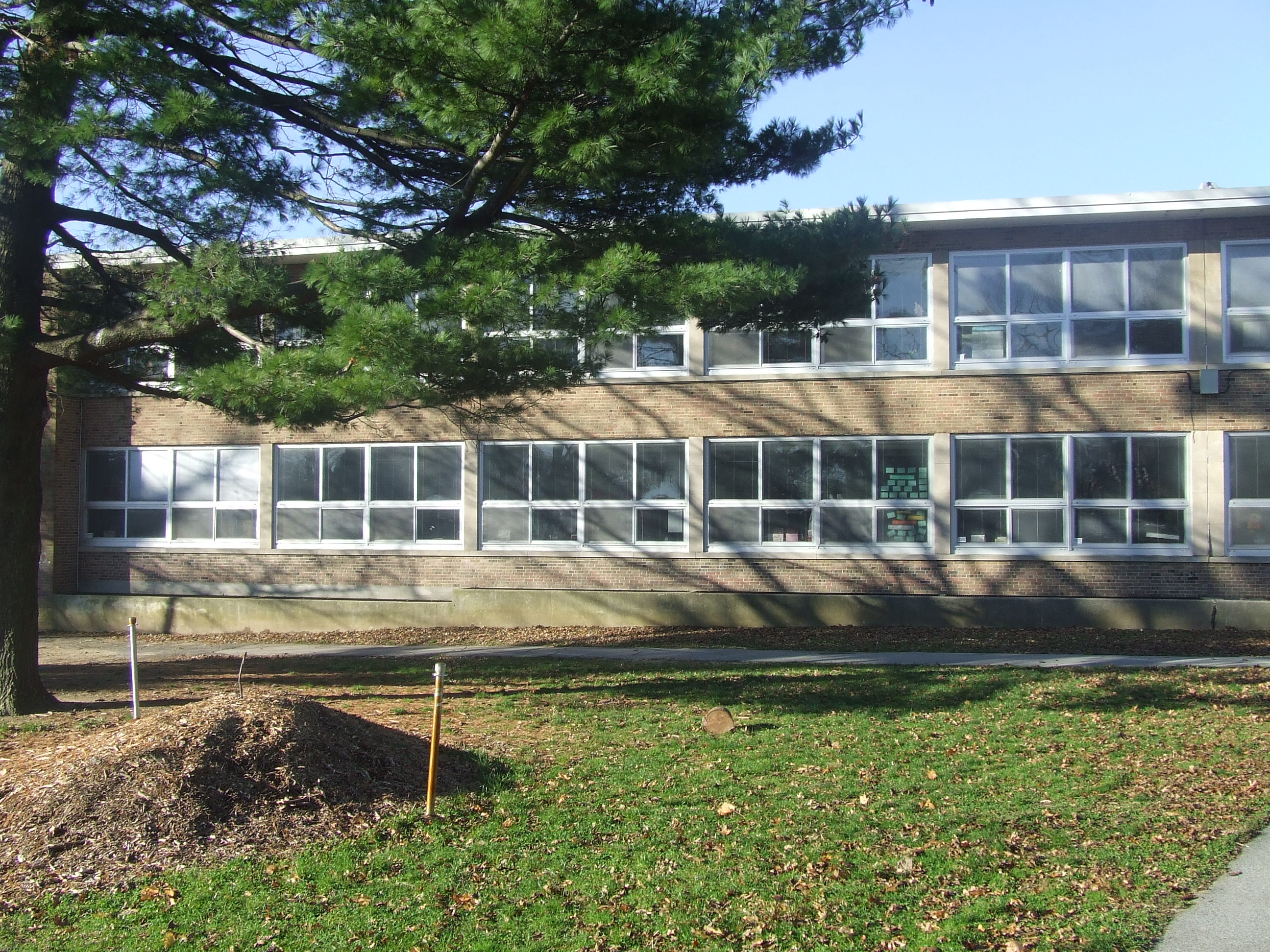
William H. Holmes Elementary (near the southeast corner). Top left corner was Mrs. Pierce’s classroom in 1978-79 year, November 22, 2006. (Donald Earl Collins).

It was the first Friday of May 1980. I was in fifth grade. As part of my ritual that had been my routine since the start of third grade, after the 11:35 am bell, I walked the seven blocks from William H. Holmes Elementary School home for lunch. I made my standard lunch on that day, a slice of fried beef bologna with two slices of Home Pride white bread with Miracle Whip man-naise. The way the grease from frying the bologna would soak into the bread, combining with catching ten or 15 minutes of The Price Is Right and (if I lingered longer) a few minutes of the 12 noon news on WCBS-2 or WNBC-4. It made the almost one-and-half-miles of midday walking five days a week worth it.

Especially since I could count on my pre-Hebrew Israelite stepfather either being out of the apartment or snoring away, my mother at work at Mount Vernon Hospital on her 7 am-3 pm shift, Darren at Clear View in Dobbs Ferry (the school’s now in Briarcliff Manor), and baby Maurice with the babysitting family the floor above. Those days were the most stable (if one could call it that) of my growing up years. I failed to see the duct tape holding up the stack of playing cards back then.

It was on that bright and sunny spring day where coming back to Holmes for the second half of the day brought chaos. As I rounded the southeast corner of the school for the remaining 15 minutes of recess on the dirt softball fields and the long asphalt pavement adjacent to it, I witnessed the tail end of a brawl. Something like twenty of my male classmates were fighting where they normally played a friendly game of softball. It was often broken down between the two fifth grade classes, Mrs. O’Daniel’s and Ms. Bracey’s. Because there were other fields, the fourth and sixth grader boys (and a few girls) could also play softball and football. The girls usually double-dutched, raced each other, played hopscotch, or just talked in their groups along the asphalt L along the west side and back southern end of the Holmes complex.

For two years, I had wanted to stay at school for lunch in the spring, just to play some softball. But on this day, I was more than happy to have not been a part of the melee. I remember my friend Starling excitedly updating me on how both teams had spent part of the morning and the early part of lunch preparing to “throw down.” Someone was hit by a pitch, and then a fight between batter and pitcher turned into our school’s version of a brawl between the Yankees and the Red Sox, or the Yankees and the Royals (take your pick).

I only saw the last minute or so. But dirt, grass, spit, snot, and even blood embedded in boys’ clothes, faces, and hair. Me, Starling, Anthony, and maybe two other boys between the fifth grade classes were the only boys who weren’t a part of the fight.

Mrs. O’Daniel and Ms. Bracey both witnessed the fight. Mrs. O’Daniel saw everything from her window on the second floor, which faced out to the back of the school. Ms. Bracey was on the playground when the brawl broke out, and attempted to break it up, but got hit herself in the process.

They, along with our principal Dr. Smalls, decided to mete out the only punishment they thought fit the crime of riotous insurrection. Public ass-whuppins. Yep. After lunch, Ms. Bracey read her class the riot act. She was so loud that Mrs. O’Daniel didn’t begin her quiet chastisement of the boys’ behavior until after Ms. Bracey has stopped yelling and came over to our classroom next door.

After the two had their say, they began taking the boys, one at a time, to the boys bathroom down the hall. From 1 pm until 2:55, they took turns beatin’ ass with Mrs. O’Daniel’s “board of education,” three yardstick rulers taped together for dispensing punishment. She had rapped my knuckles once for talking to a neighbor in class way back in September or October. That was enough for me.

Some of the boys cried well before they were taken into the bathroom for their paddling. The older boys in my classroom, at least, the full-on 12 and 13-years-old (we had three that age in Mrs. O’Daniel’s class in fifth grade), were more stoic. Unlike the other boys, they did not cry, or if they did, they did theirs quietly. They didn’t yell out or whimper like the 10 and 11-year-old when the “board of education” met bare ass.

Then, both teachers gave our classes the “don’t you ever do this again” speech, and then, “Have a good weekend.”

Honestly, it was truly an awkward day for me. I wasn’t sure even at ten whether it was kosher for teachers to whup students’ asses. But I also knew not to question it. I knew what my classmates did was wrong and wrongheaded. “That’s what they get for fighting. Them teachers did the right thing,” my mom said emphatically when I told her what had happened that afternoon.

As an educator, I know none of this would fly now. Even if approved by all the parents, the principal, and the teachers, as it actually was in 1980. Heck, if William Prattella and the Mount Vernon Board of Education had known about this in 1980, the incident would have made its way to The New York Times and the Mount Vernon Daily Argus. The Board of Education would have faced lawsuits and been paying off parents and their kids for trauma for the next five years. The teachers and the principal would have been out of jobs, probably out of education altogether, plausibly then and most definitely in the 41 years since.

But we were a nearly 99 percent Black school with a Black principal and more than a few Black teachers. Many of them and us had ties to a culture where corporal punishment was the response for high-level offenses at home and at school. We lived in a violent world, where White cops and White vigilantes wouldn’t just stop with a “board of education” and five or six licks to the buttocks.

Still, long term, it didn’t work. Many of my peers would end up in brawls after school, off school grounds, to avoid this kind of punishment. Or, they and others whom I never got to know would end up in fights on school grounds, at Davis Middle School (for some), at Hamilton Middle School, at Mount Vernon High School, and certainly in other schools in Westchester County and in the Bronx. I witnessed so many fights, boy-on-boy, girl-on-girl, girl-on-boy. I was part of a few myself, if only to defend myself.

Restorative justice is the idea that schools take a 360-degree approach to changing behaviors. One that allows victims of violence and other violations to experience some form of justice, and those who have victimized others the counseling and help they need so that they can embody behaviors that are healing and not hurting. Most school districts remain uninterested in such approaches, as they are too closely tied to the racist police state that most schools are for most students Black, Indigenous, and Brown. Perhaps the namby-pamby White middle-class parents who want schools to reopen should consider the harm that schools to students of color. The ass-whuppins that students of color — who are the majority of students in public schools these days — may be rhetorical and by statute, but they are just as emotionally and psychologically scarring.

Bloodied bust of President Zachary Taylor, Statuary Hall, US Capitol, January 6, 2021. (Frank Thorp V/NBC News).

But for the 7,000 or 8,000 Maga-insurrectionists who tried to overthrow the vote, kidnap, beat up, and possibly kill members of Congress, all to keep one Donald J. Trump in power beyond January 20? Maybe an ass-whuppin’ is what all of them should get. Right outside on the west side of the US Capitol. Have a big strong man, like say Eugene Goodman, or former Pittsburgh Steeler linebacker James Harrison, beat them with the House of Representatives’ gavel on their pale and flat asses. That would be the easy way out. Watching them cry and holler, though, would make my weekend

What should really happen is time for the ringleaders — murderous treason is about as high as crime as it can get — in prison or in a place where can no longer make attempts at bringing a full-blown autocracy to the US. What should really happen is that the rest of the cabal should contribute to a reparations fund, like a quarter of their wealth or something. What they need is years of group therapy to uncover their narcissism. What we need is a government that is worth protecting from insurrectionists mobs moving forward. Otherwise, the US may well get an ass-whuppin’ from which it won’t recover. An ass-whuppin’ from within.

The Things I’d Like to Give for the Holidays, But Can’t

27 Sunday Dec 2020

Posted by decollins1969 in 1, Boy @ The Window, Christianity, culture, Eclectic, Hebrew-Israelite, Marriage, Mount Vernon New York, My Father, New York City, Pittsburgh, Politics, Pop Culture, race, Religion, University of Pittsburgh, Work, Youth

≈ Leave a comment

Tags

616, 616 East Lincoln Avenue, Books, Cards, Chanukah, Christmas, Connectedness, Deesha Philyaw, Disconnection, Family, Gifting, Gifts, Kwanzaa, Presents, Sarah Broom, The Secret Lives of Black Church Ladies (2020), The Yellow House (2019), Xmas


My copies of Sarah Broom’s The Yellow House (2019) and Deesha Philyaw’s The Secret Lives of Church Ladies (2020), December 26, 2020. (Donald Earl Collins).

The holiday season is a time for giving unto others (apparently unlike the other 11 to eleven-and-a-half months out of the year, when it is your right under capitalism to give to yourself every single day). Except when your own life has shown time and time again that gift-giving without resources is hard. It has meant going years without receiving a gift, without your parents or guardian even buying any of us a card. It is doubly difficult when your birthday is in the middle of the holiday season, two days after Christmas, the second day of Kwanzaa, and at least one year where lunar calendar for Chanukah and my born date aligned.

But, as an adult, I made the most of trying to give to family and sometimes friends. I started buying my mother birthday and Christmas cards when I was 14. I began to buy my siblings cards and presents in 1989, just as I was turning 20. Over the years, I have bought video game systems and clothes, replaced TVs, given money, special-ordered flowers, taken my younger siblings to movies, Toys “R” Us, and other comical holiday ventures for a young man without a car.

Starting in the late 1990s, I began to switch to books as gifts. I figured that to really help my family and to get through to my sibs, books were key. They had been for me, and I assumed that it would be the same for them. I was so wrong! If the books got read by them at all, they generally didn’t say, or they said that they didn’t like them. When I finally got around to buying books for my Mom, she’d say, “What I need this for? I know all about racism already. I done lived it.” I guess my thirty-something years, and not my expertise on the topic, should have been sufficient for me, too.

As with all issues related to my Mount Vernon family, this giving issue became tortuous. It is hard buying gifts for people who only talk to you when they have to or when they want something from me. As adults, I have gotten to know very few of their likes, dislikes, and habits and wants and needs. Also, I found myself in the boom-and-bust cycles of teaching and consulting during the Great Recession years (especially between 2010 and 2015). So, I either sent holiday cards with gift cards or just cards.

But then it dawned on me right about my 45th birthday that none of my younger sibs had ever sent me anything. Yes, I know that gifting need not be transactional or reciprocal. Still, I had struggled every year to remember birthdays, special occasions, and Christmases to send them something from the heart. They never saw me as someone to give unto, as if my degrees and relative career stability made me not need and not want, materially, emotionally, or otherwise.

So in 2015, I stopped with the giving. Except for my older brother Darren and my Mom. And even then I mostly send cards and the occasional gift card. The latter gets reactions like, “What I’m gonna do with this?” It was my Mom’s gut punch to the cliché, “it’s the thought that counts.”

One thing I’d like to do again with family in New York is to send books that I’d think they’d enjoy, books that I found entertaining and educational, books that set my mind and spirit in order. Especially in this year of pandemic-driven isolation and putting my and my family’s safety over travel, my recent excursion to Pittsburgh to help make funeral arrangements for my mother-in-law excepted.

The last two books I have completed in recent weeks stand out because of the things I observed and experienced growing up and growing into grown-ass adulthood, between Mount Vernon, New York, Pittsburgh, and my first three years in DC and Silver Spring, Maryland. The two books happen to be Sarah Broom’s The Yellow House and Deesha Philyaw’s The Secret Lives of Church Ladies. Both books are by Black women who grew up in the Deep South but sojourned their way to cold Northern cities like New York and Pittsburgh, just like my Mom. And with those physical and spiritual journeys, family and the connections with family were big themes for them both. Or, really, the fault lines and the disconnection that can and does happen over time. Being unmoored, an outsider to one’s own family, Broom and Philyaw cover so well in their books.

Yes, I know that Broom’s National Book Award winner is both genealogy and memoir at the same time, carefully not revealing certain things about herself until her Acknowledgments. Yes, I know Philyaw’s NBA finalist is a collection of short stories connected by the theme of The Church and hypocrisy, fictionalized but with elements of the author’s life that she unveils anyway. The two books are quite different in their approaches to history and family, but they both address history and family anyway.

And it is how they handle family and family secrets that propelled me through both books. Broom is extremely circumspect about what and whom she does put in The Yellow House, explaining why and her conflict about doing so throughout (she makes me look like a gossip by comparison in Boy @ The Window). “Why do I sometimes feel that I do not have the right to the story of the city I come from? Why, when I want to get down to it, just say the damned thing, do the thoughts pool and ring out in a loop in my head a childish chorus of ‘Oh, oh, oh, don’t tell on your place.’ Telling on. Like giving it all away. Giving what away?,” Broom writes on page 329.

I completely understand, between the Mount Vernonites who have declared my growing-up experiences invalid because I was “weird” and family members who have all but stopped talking to me because I unearthed something they didn’t like about themselves. That, and Broom’s use of “The Water” to demarcate the East New Orleans of her, her family’s, and her ancestors’ lives and the East New Orleans after Katrina in 2005. It was the fire of 1995 that was the break between the chaos of 616 and the life of uncomfortable distance between me and family for me. Broom being unmoored caused her to eventually seek deeper bonds. I tried too many times to count, and failed. But then again, family ain’t just blood, and it’s way deeper than the roots of any marriage.

Philyaw’s collection conjured memories of my Black evangelical Christianity years (and so did Broom’s chapters about her feeling the spirit, speaking in other tongues, and passing out in self-induced trances that lasted for hours, but I digress) and my unfortunate Hebrew-Israelite years. Years where Black patriarchy and toxic hypermasculinity ruled the roost. Some of these men practically dripped pre-cum while preaching the promise of Jesus and Yahweh in those days of temple and Covenant Church of Pittsburgh. Philyaw gets at this in so many ways. For so many of her readers, the stories “Peach Cobbler” and “When Eddie Levert Comes” were their favorites. The amount of behind-the-scenes cheating and familial conflict is enough for anyone on the fence to declare themselves an atheist.

For my money, though, “Jael” is the story that will stay with me. I knew at least one, maybe two Jaels while growing up in the New York City area. One of them tried to molest me when I was 12. I somehow knew — despite forgetting about the particulars of my previous sexual assault until this time six years ago — that telling my Mom, my idiot stepfather Maurice, or my father about this was out of the question. But she was a Jael, alright, another traumatized kid, like me, yet willing to prey on others as a coping strategy.

Even though I wasn’t a Jael, my Mom prayed over me like I could be one, in order “to make a man out of you,” as she used to say. That she could actually say the words, “Or you could be a rapist” to me the same month I’d end up homeless at Pitt for five days was so telling. It told me that my Mom didn’t know me very well after all. Philyaw has me considering the possibility that with family, anyone could be a Jael, even the folks responsible for raising us.

Here’s what I know, though. No matter how I’d couch it, most of my family wouldn’t read a single word from The Yellow House or The Secret Lives of Church Ladies. Queerness, hypocrisy, intersectionality, symbolism, stories that parallel their own? I might as well be sending my Mom a stereotypical Hollywood version of a voodoo doll with pins for her to push in it. For my younger siblings, a steaming hot plate of fried beef liver and kidneys smothered in onions and gravy over rice would be more appealing. So this post will have to do. A gift, I suppose.

← Older posts
Newer posts →

Boy @ The Window: A Memoir

Boy @ The Window: A Memoir

Places to Buy/Download Boy @ The Window

There's a few ways in which you can read excerpts of, borrow and/or purchase and download Boy @ The Window. There's the trade paperback edition of Boy @ The Window, available for purchase via Amazon.com at http://www.amazon.com/Boy-Window-Donald-Earl-Collins/dp/0989256138/

There's also a Kindle edition on Amazon.com. The enhanced edition can be read only with Kindle Fire, an iPad or a full-color tablet. The links to the enhanced edition through Apple's iBookstore and the Barnes & Noble NOOK edition are below. The link to the Amazon Kindle version is also immediately below:

scr2555-proj697-a-kindle-logo-rgb-lg

Boy @ The Window on Amazon.com: http://www.amazon.com/Boy-The-Window-Memoir-ebook/dp/B00CD95FBU/

iBookstore-logo-300x100

Boy @ The Window on Apple's iBookstore: https://itunes.apple.com/us/book/boy-the-window/id643768275?ls=1

Barnes & Noble (bn.com) logo, June 26, 2013. (http://www.logotypes101.com).

Boy @ The Window on Barnes & Noble: http://www.barnesandnoble.com/w/boy-the-window-donald-earl-collins/1115182183?ean=2940016741567

You can also add, read and review Boy @ The Window on Goodreads.com. Just click on the button below:

Boy @ The Window

Twitter Updates

Tweets by decollins1969
  • RSS - Posts
  • RSS - Comments

Archives

  • June 2025
  • April 2023
  • September 2022
  • August 2022
  • July 2022
  • June 2022
  • May 2022
  • April 2022
  • March 2022
  • January 2022
  • December 2021
  • November 2021
  • October 2021
  • September 2021
  • August 2021
  • July 2021
  • June 2021
  • April 2021
  • March 2021
  • February 2021
  • January 2021
  • December 2020
  • November 2020
  • October 2020
  • September 2020
  • August 2020
  • July 2020
  • May 2020
  • April 2020
  • March 2020
  • January 2020
  • December 2019
  • November 2019
  • August 2019
  • July 2019
  • June 2019
  • May 2019
  • April 2019
  • March 2019
  • February 2019
  • January 2019
  • December 2018
  • November 2018
  • October 2018
  • September 2018
  • August 2018
  • July 2018
  • June 2018
  • May 2018
  • March 2018
  • February 2018
  • January 2018
  • December 2017
  • November 2017
  • October 2017
  • September 2017
  • August 2017
  • July 2017
  • June 2017
  • May 2017
  • April 2017
  • March 2017
  • February 2017
  • January 2017
  • December 2016
  • November 2016
  • October 2016
  • September 2016
  • August 2016
  • July 2016
  • June 2016
  • May 2016
  • April 2016
  • March 2016
  • February 2016
  • January 2016
  • December 2015
  • November 2015
  • October 2015
  • September 2015
  • August 2015
  • July 2015
  • June 2015
  • May 2015
  • April 2015
  • March 2015
  • February 2015
  • January 2015
  • December 2014
  • November 2014
  • October 2014
  • September 2014
  • August 2014
  • July 2014
  • June 2014
  • May 2014
  • April 2014
  • March 2014
  • February 2014
  • January 2014
  • December 2013
  • November 2013
  • October 2013
  • September 2013
  • August 2013
  • July 2013
  • June 2013
  • May 2013
  • April 2013
  • March 2013
  • February 2013
  • January 2013
  • December 2012
  • November 2012
  • October 2012
  • September 2012
  • August 2012
  • July 2012
  • June 2012
  • May 2012
  • April 2012
  • March 2012
  • February 2012
  • January 2012
  • December 2011
  • November 2011
  • October 2011
  • September 2011
  • August 2011
  • July 2011
  • June 2011
  • May 2011
  • April 2011
  • March 2011
  • February 2011
  • January 2011
  • December 2010
  • November 2010
  • October 2010
  • September 2010
  • August 2010
  • July 2010
  • June 2010
  • May 2010
  • April 2010
  • March 2010
  • February 2010
  • January 2010
  • December 2009
  • November 2009
  • October 2009
  • September 2009
  • August 2009
  • July 2009
  • June 2009
  • May 2009
  • April 2009
  • March 2009
  • February 2009
  • January 2009
  • December 2008
  • November 2008
  • October 2008
  • September 2008
  • August 2008
  • July 2008
  • June 2008
  • May 2008
  • April 2008
  • March 2008
  • February 2008
  • January 2008
  • December 2007
  • November 2007
  • October 2007
  • September 2007
  • August 2007
  • July 2007
  • June 2007

Recent Comments

decollins1969's avatardecollins1969 on No Good Teaching Deed Goes…
Mary Rose O’Connell's avatarMary Rose O’Connell on No Good Teaching Deed Goes…
Lyndah McCaskill's avatarLyndah McCaskill on The Raunchiest of Them Al…

NetworkedBlogs on Facebook

NetworkedBlogs
Blog:
Notes From a Boy @ The Window
Topics:
My Life, Culture & Education, Politics & Goofyness
 
Follow my blog

616 616 East Lincoln Avenue A.B. Davis Middle School Abuse Academia Academy for Educational Development AED Afrocentricity American Narcissism Authenticity Bigotry Blackness Boy @ The Window Carnegie Mellon University Child Abuse Class of 1987 CMU Coping Strategies Crush #1 Crush #2 Death Disillusionment Diversity Domestic Violence Economic Inequality Education Family Friendship Friendships Graduate School Hebrew-Israelites High-Stakes Testing Higher Education History Homelessness Humanities Humanities Program Hypocrisy Internalized Racism Jealousy Joe Trotter Joe William Trotter Jr. K-12 Education Love Manhood Maurice Eugene Washington Maurice Washington Misogyny Mother-Son Relationship Mount Vernon High School Mount Vernon New York Mount Vernon public schools Multiculturalism MVHS Narcissism NFL Pitt Pittsburgh Politics of Education Poverty President Barack Obama Race Racial Stereotypes Racism Relationships Self-Awareness Self-Discovery Self-Reflection Sexism Social Justice Teaching and Learning University of Pittsburgh Violence Whiteness Writing

Top Rated

Blog at WordPress.com.

  • Subscribe Subscribed
    • Notes from a Boy @ The Window
    • Join 103 other subscribers
    • Already have a WordPress.com account? Log in now.
    • Notes from a Boy @ The Window
    • Subscribe Subscribed
    • Sign up
    • Log in
    • Report this content
    • View site in Reader
    • Manage subscriptions
    • Collapse this bar
 

Loading Comments...