• About Me
  • Other Writings
  • Interview Clips
  • All About Me: American Racism, American Narcissism, and the Conversation America Can’t Have
  • Video Clips
  • Boy @ The Window Pictures
  • Boy @ The Window Theme Music

Notes from a Boy @ The Window

~

Notes from a Boy @ The Window

Monthly Archives: May 2014

Where 1 PhD = A Second High School Diploma

14 Wednesday May 2014

Posted by decollins1969 in 1, Academia, Boy @ The Window, Carnegie Mellon University, culture, Eclectic, Mount Vernon High School, Mount Vernon New York, New York City, Pittsburgh, Pop Culture, race, University of Pittsburgh, Youth

≈ Leave a comment

Tags

Associate's Degree, CMU, High School Diploma, Homelessness, Jealousy, job search, Lame Jokes, Mother-Son Relationship, PhD Graduation, Pitt, Subway, Teachers College, Westchester Business Institute, White Plains New York, Yonkers


Absurditty (or an Absurd Ditty, deliberately misspelled), where $100 = 2 quarters, May 14, 2014. (Donald Earl Collins).

Absurditty (or an Absurd Ditty, deliberately misspelled), where $100 = 2 quarters, May 14, 2014. (Donald Earl Collins).

I could’ve just as easily titled this post, “Road to Boy @ The Window, Part 5: My Mother and My Doctoral Graduation.” Precisely because any chance I had of immediately getting over the psychological and emotional hump of finishing a doctorate while dealing with the betrayals of an advisor and dissertation committee was gone by the end of my graduation day, the third Sunday in ’97 (anniversary number seventeen, just four days away). That process opened me up to looking at my past, to figuring out how someone like me could go on to do a PhD, to teach, to write, to learn, all well beyond the expectations of my parents and my classmates.

The process of feeling uneasy about my relationship with my Mom, though, had begun the day after my interview at Teachers College. That Tuesday, May 13th, I left the Hotel Beacon, made my way down to the 66th Street stop, and caught the 1 train to The Bronx and Van Cortlandt Park. I then caught a Westchester Bee-Line Bus up Broadway and crossed the Yonkers-Bronx border, where I got off to walk up a one-block-long hill.

I arrived at my Mom’s temporary place on Bruce Avenue. This was where she and my younger siblings had been living since the end of ’95, as a result of an electrical fire that swept through two floors of 616. Not to mention, an incompetent Mount Vernon Fire Department that did more damage by flooding two of the three buildings on the property in the process of putting the fire out. It was a sparse place that made 616 look like a luxury high-rise by comparison. There were holes in the walls because my younger siblings Yiscoc and especially Eri had punched through the cheap plaster and nonexistent sheet rock in their teenage anger and rage.
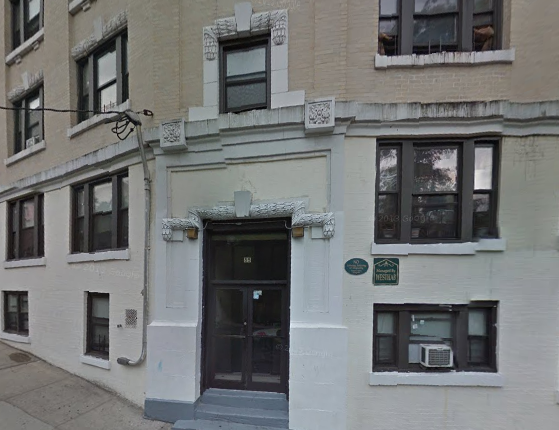
Front door of 85 Bruce Avenue, Yonkers, NY (screen shot), taken in October 2007. (Google Maps).

Front door of 85 Bruce Avenue, Yonkers, NY (screen shot), taken in October 2007. (Google Maps).

It was in the midst of all of this that my Mom was finally graduating from Westchester Business Institute with her associate’s. I was happy for her. The only thing that concerned me was the kind of work she could find with the degree. I was willing to help her in any way I could, including coming up and spending a few days in Yonkers to attend her ceremony in White Plains that Tuesday evening. I wanted to continue to provide my Mom the emotional support that I thought she wanted.

That began to change the morning after her graduation ceremony. We were sitting down at this cafeteria bench that served as the kitchen table, with her drinking cream-infused tea from a chipped white flower mug and eating a piece of toast while I contemplated walking down the hill for some yogurt. We’d been talking about looking for work, about her moving out and finding a place in White Plains, or even moving back to a fully renovated 616. I brought up the real possibility that if I got the Teachers College job, I would move back to the New York area (though not Mount Vernon — out of the question).

This was when my Mom said, “You know, you were in school so long, you could’ve had another high school diploma.” It was out of the blue, and caught me completely off guard. It was quiet for a moment, with me in a deep frown, and my Mom sitting there for a few seconds. Then she forced a laugh. “It’s a joke,” she said, as if I was supposed to be oblivious to the nonverbal displays of disdain for nearly a decade’s worth of my work. And, what was the joke? My degree, or the amount of time and energy I spent in earning it?

I sort of ignored what my Mom had said at first. But really, how could I? Mom had told the lamest of jokes over the years — like about how diarrhea “was like ‘dying in the rear’,”  she’d say as if she heard the joke from someone else. But no matter how I looked at it, comparing everything I went through from August ’87 up to that point to a diploma that I earned while living in two hells — 616 and Mount Vernon High School — wasn’t a joke. Not for either of us.

My Mother's Associate's Degree Photo, Westchester Business Institute, May 12, 1997.

My Mother’s Associate’s Degree Photo, Westchester Business Institute, May 12, 1997.

My Mom disappointed me a day later, as she said, “I don’t have to tell you that I’m proud of you. I tell other folks, just not you.” It was in response to me saying that I thought her joke wasn’t one at all. But she hadn’t sealed our fates as a mother and son in a long-term strained relationship, at least not yet. That would occur a few days later.

Even under the strictest of measures, comparing a PhD to a high school diploma is ridiculous. It’s like comparing the buying power of Oprah to an ant colony. But I figured out a long time ago, long before starting my master’s program in history at Pitt, that a degree is only worth anything if you use it to enhance your life, advance your career, or pursue your calling. Even with all my qualms. About academia, about the publish-or-perish model, about the not-for-profit profit world, even about myself as a writer. It was all worth it.

One thing I did learn, though, about my Mom, maybe for the first time. I’d always wondered about the saying, “I love you, but I don’t like you.” I hadn’t really understood what that meant until the week of my doctoral graduation.

AP US History Exam Day & Harold Meltzer

13 Tuesday May 2014

Posted by decollins1969 in 1, Boy @ The Window, culture, Eclectic, eclectic music, Mount Vernon High School, Mount Vernon New York, music, Politics, Pop Culture, race, Youth

≈ Leave a comment

Tags

AP, AP American History, AP US History, AP US History Exam, Appreciation, College Board, Coping Strategies, ETS, Exam Day, Harold Meltzer, Kaplan, Mentoring, Photographic Memory, Princeton Review, Privilege, Self-Discovery, Teaching and Learning


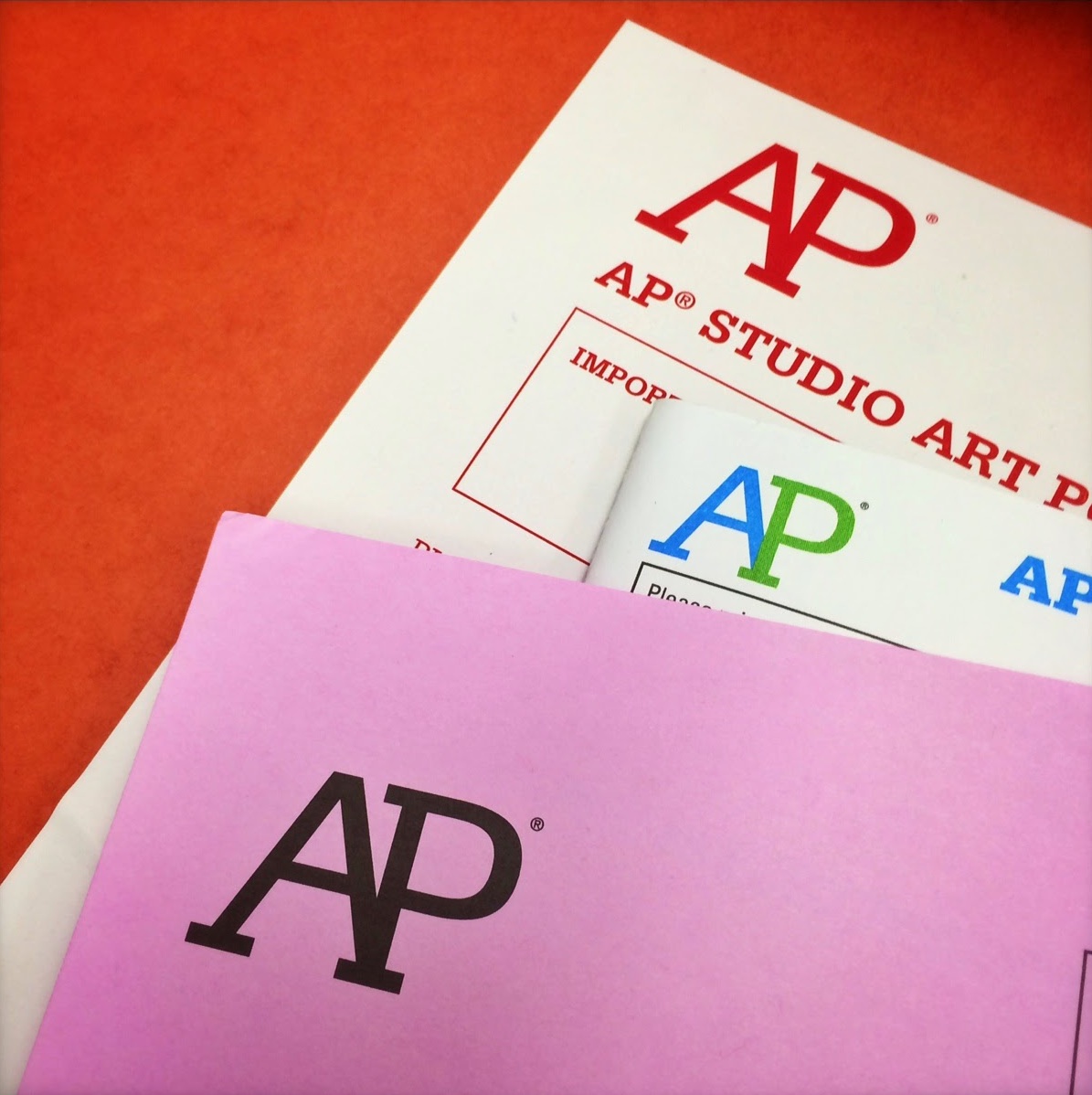
AP Day (cropped), May 9, 2014. (Tim Needles/http://artroom161.blogspot.com/).

AP Day (cropped), May 9, 2014. (Tim Needles/http://artroom161.blogspot.com/).

Twenty-eight years ago on this day/date, I was on my way to Mount Vernon High School, listening to Mr. Mister, Simple Minds, Sting and Whitney along the way. I was a few minutes away from a three-hour exam that could change my future. It wasn’t exactly the sunniest or warmest of days, though. That second Tuesday in May ’86 was brisk and heavy with clouds, a high of only 52°F. Still, with the way I felt that morning, May 13th might as well have been sunny with a high of seventy-two. 

I’ve written about my AP US History exam experience and Harold Meltzer ad nauseum here in this blog, as well as in Boy @ The Window. How I felt in the months and weeks before the exam. My expectations for a “5” and what that meant in comparison to taking something much less representative of the college experience, like the SAT. My perspective on my AP classmates and the general sense of obnoxious whining that permeated our classroom in throughout March and April ’86, and in whispers the following year. The keys to my academic success, and me being conscious of those keys, for the very first time. And, of course, the mentoring and tutelage of the late Harold Meltzer, the only teacher after elementary school who took a genuine interest in my development as a human being, not just in my grades or in my intellectual abilities.

I was a high school junior whom, at sixteen years old, had more wisdom about what would leave me well prepared for college than most parents, teachers and so-called education reformers possessed in ’86 or in 2014. Taking Algebra in eighth grade, AP courses in eleventh and twelfth grade, accelerated math and science classes all through high school. I knew even then that the APUSH exam was far more representative of my academic preparation than any SAT score would indicate, no matter how high.

AP US History For Dummies cover (2008), May 13, 2014. (http://bookoutlet.com/).

AP US History For Dummies cover (2008), May 13, 2014. (http://bookoutlet.com/).

Yet I’ve found myself in debates with folks in recent months over an issue that’s been well settled in the education world for more than a decade. Over a single four-digit score that many thought should be the difference between going to an elite school and attending a no-name local technical institute. These folks refused to recognize what even the College Board and ETS recognize. That social class and racial privilege have been infused in the SAT process for years, with so many students taking SAT-prep courses at Princeton Review and Kaplan being all the prima facie evidence I need.

Now, this doesn’t mean that Advanced Placement (or International Baccalaureate, for that matter) is much better. But in terms of the actual amount of time spent in direct preparation, with the right teacher, even an impoverished Black kid like I was could attend a public school with a magnet program and earn a “5” — without spending $1,500 on Kaplan or Princeton Review. 

Enough on that. Today, I can truly say that AP US History Exam ’86 Day was a fundamentally important milestone for me. It sealed the deal I made for myself in the midst of the summer of abuse, to get out of 616, out of Mount Vernon, and into college. Thanks Humanities. Thanks, Mr. Meltzer. Thanks, classmates. And, thank God!

My First Adult Job Interview, Teachers College

12 Monday May 2014

Posted by decollins1969 in 1, Academia, Boy @ The Window, Carnegie Mellon University, culture, Eclectic, eclectic music, Mount Vernon New York, New York City, Pittsburgh, Politics, Pop Culture, race, Upper West Side, Work, Youth

≈ Leave a comment

Tags

Barnes & Noble, Beacon Theater, Calling, CMU, Disillusionment, Finishing Second, Hotel Beacon, job interview, Job Talk, Joe William Trotter Jr., PTSD, Racial Harassment, Rage, Steven Schlossman, Teachers College, Walking While Black, Writer, Writing


Teachers College today, West 120th (between Broadway and Amsterdam), New York, NY, April 15, 2014. (http://ccnmtl.columbia.edu/).

Teachers College today, West 120th (between Broadway and Amsterdam), New York, NY, April 15, 2014. (http://ccnmtl.columbia.edu/).

Seventeen years ago this week (check the calendar – the days and dates coincide with the week of May 12-18, ’97) was perhaps one of the most euphoric and bitterly disappointing weeks in my entire adult life. It was such a strange week that it forced me into second guessing myself and my path in life for many years afterward.

But it didn’t start out that way. On Monday, May 12th, I did my very first post-doctoral interview, for an assistant professor position at Teachers College (Columbia’s school of education) in Morningside Heights (West Harlem, really). I’d flown in from Pittsburgh the evening before, and stayed at the Hotel Beacon at Teachers College’s expense, because Monday was going to be a very long day. It was loud that Sunday night, as there was some event at the Beacon Theater. But somehow, I had just enough discipline and memories of New York’s smells and sounds to fall asleep comfortably.

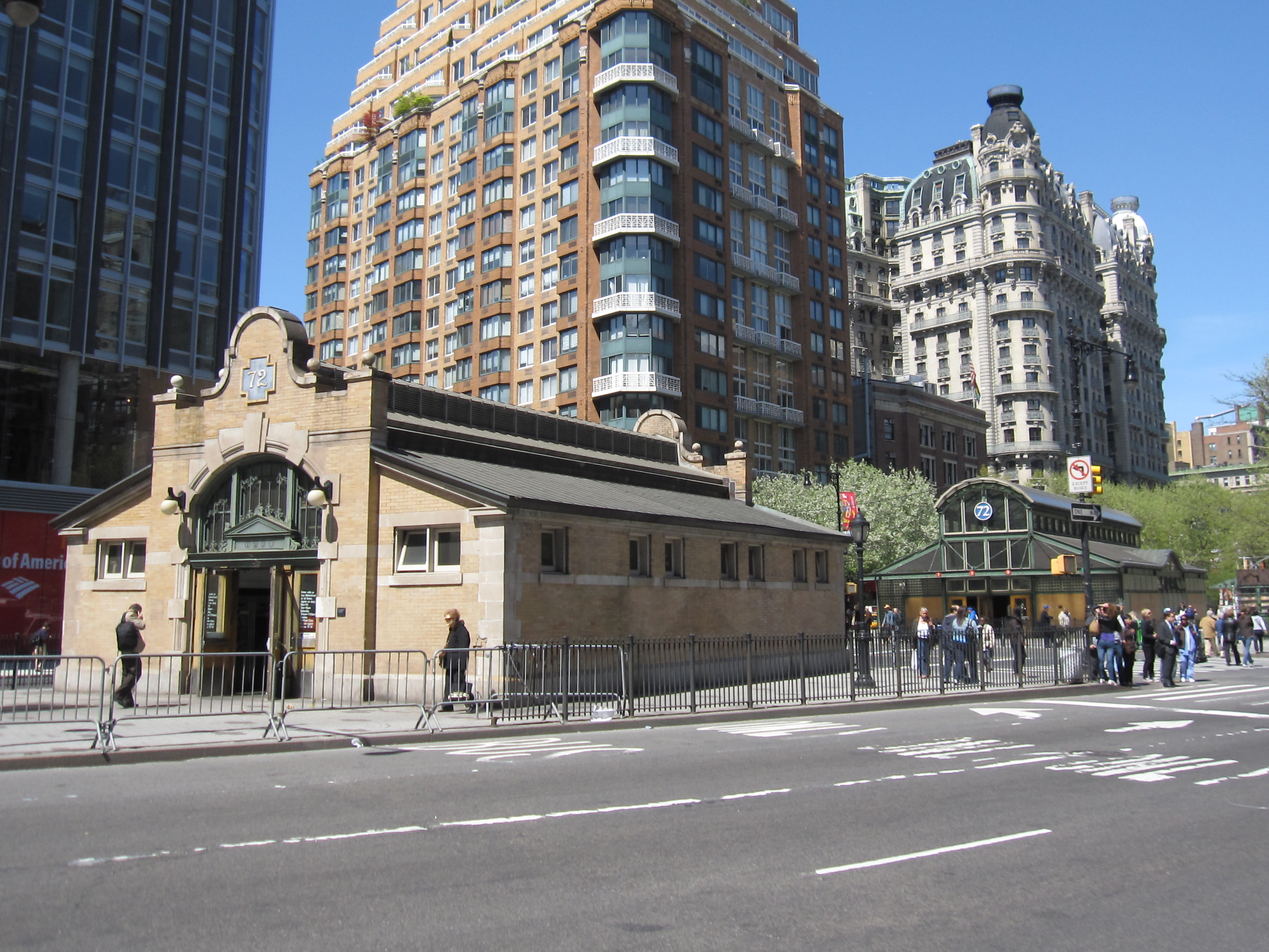
My day started at 8:30 am, so of course, I was up before seven. I put on my one and only suit — at least, the only suit I owned that fit my six-three, 215-pound frame — went over my job talk on multiculturalism, and went on my pensive way to the 72nd Street Subway entrance on Broadway. It was a meat-packed ride to 125th Street, where I had to get off (I had forgotten to walk down to 66th Street to catch the local 1 instead of the express 2 train) and walk the six or so blocks to Teachers College.

Original control house (left) and newer control house, on opposite sides of 72nd Street  (IRT Broadway – Seventh Avenue Line), New York, NY, April 13, 2010. (Gryffindor via Wikipedia). Released to public domain via CC-SA-3.0.

Original control house (left) and newer control house, on opposite sides of 72nd Street (IRT Broadway – Seventh Avenue Line), New York, NY, April 13, 2010. (Gryffindor via Wikipedia). Released to public domain via CC-SA-3.0.

After that, my day was an eight-hour blur, meeting with faculty, grad students and deans. Making sure not to eat too much while being grilled with questions over lunch. Giving my job talk and making sure to tell jokes, to bring up facts relevant to this history of education job, and, of course, to smile. Talking with grad students about how I finished my 505-page dissertation in twenty-seven months, about my teaching style and about growing up in Mount Vernon. It was as intense a process as I had expected it to be, but I felt at the end that I’d done everything possible to get the job.

I knew that I was one out of only five candidates invited to interview, out of over 500 applicants. I even had the chair of the History Department, Steve Schlossman, lobby on my behalf for the job, prior to my interview. And, despite my former advisor in Joe Trotter, I’d managed to put together a group of letters from folks that should’ve passed muster. All I could do after the interview was wait.

But life didn’t wait to intervene. After leaving the interview for the hotel, I changed into my more casual clothing, jeans and a long-sleeve t-shirt, and went off to Tower Records and Barnes & Noble on 66th and Broadway, and later, Haagan Dazs (that last one was a big gastrointestinal mistake!).  

From the moment I walked in the door at Barnes & Noble until I left a half-hour later, a Latino security guard tailed me as I perused books in the African American nonfiction, Cultural Studies and Music sections of the store, across three floors. As I walked out, I walked up to the guard and said

“While you were stalking me, you probably let half a dozen White folks slip out of here with books and CDs. Did you learn anything while you were watching me?”

“I was just doing my job,” the dumb-ass security guard said in response.

“Well, if following a Black guy around for thirty minutes is part of your job, you deserve to lose your job,” I said to him as I walked out.

It was a bit of a harbinger of things to come. I was more pissed off about these everyday slights — or, rather, microaggressions — than I’d been before Trotter and my doctorate. And I was less patient about waiting for what I wanted than I’d been as a grad student.

What your second-place prize often looks like, May 12, 2014. (http://www.wmciu.org.uk/).

What your second-place prize often looks like, May 12, 2014. (http://www.wmciu.org.uk/).

Three weeks later, I received a reimbursement check for my travel and other expenses, and within twenty-four hours, a call from the search committee chair. I’d finished second for the job. Second! To whom, I still don’t know. The chair kept telling me, “you didn’t do anything wrong…you did a very good set of interviews,” as if those compliments would pay my rent next month. I was disappointed, hopeful, but disappointed. It was my first shot, my best shot, and I’d given my best effort. “What now?,” I thought.

It’s a question that I still must ask seventeen years, two books and two careers later. I’ve long since realized that the question of what my life would’ve been like if I’d gotten the Teachers College job was moot, because my issues were about more than finding work. I still would’ve been unhappy, with a New York-esque rage to go with it.

So I counted my blessings, and I count them still. Not getting this particular job bought me the time and energy I needed. I needed that time, to see myself as the writer I also wanted to be, not just the educator and thinker I already knew I was. A better, more personable, more revealing and feeling writer than the cold and metallic one that grad school and Trotter helped turn me into by the end of ’96.

Last Dance, The Last Class

09 Friday May 2014

Posted by decollins1969 in 1, Academia, Carnegie Mellon University, culture, Eclectic, Pittsburgh, Politics, Pop Culture, University of Pittsburgh, Work, Youth

≈ Leave a comment

Tags

"Last Dance" (1979), Boredom, CMU, Coming-of-Age, Coursework, Department of HIstory, Donna Summer, Grad School, Growing Up, Loneliness, Pitt, Single-Minded, Student Life


The late Donna Summer, album cover, circa 1979, May 9, 2014. (http://digboston.com/).

The late Donna Summer, album cover, circa 1979, May 9, 2014. (http://digboston.com/).

Twenty years ago on this date was my last formal class as a formal student, a grad course at Carnegie Mellon with Kate Lynch on Comparative Urban History. I spent that evening of my last day of classes polishing up a twenty-five page research essay that compared the development of public housing practices in Toronto, Berlin and Chicago. It was too ambitious a paper, especially given that I did all the research for it in the final four weeks of that semester, after spending a week at AERA (American Educational Research Association) in New Orleans presenting on a panel and networking, and two days meeting the Gill side of my extended family for the first time. I just wanted to get it done, though.

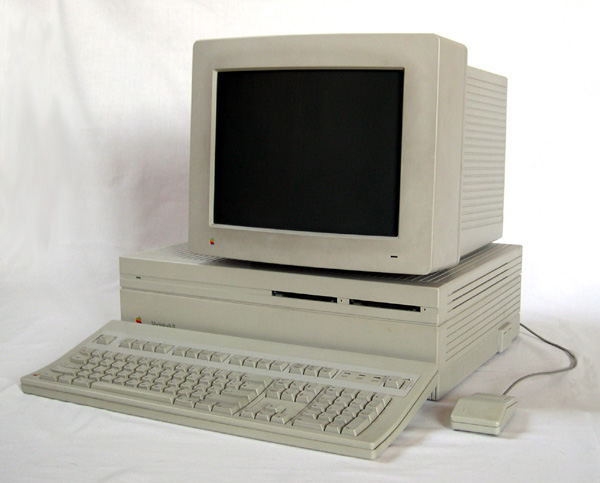
I made my final edits to my introduction and argument and to a few of my citations and references just before 9:30 pm that second Monday in May ’94. I was working in a computer lab in Wean Hall, using one of the rare PCs on campus. Rare because Carnegie Mellon had made a ridiculous deal with Apple back in ’83 to be a Macintosh campus — a terrible move if you were using Macs in the 1990s.

Apple Macintosh II Computer, April 15, 2004. (Alexander Schaelss via Wikipedia). Released via GNU FDL/CC-SA-3.0.

Apple Macintosh II Computer, April 15, 2004. (Alexander Schaelss via Wikipedia). Released via GNU FDL/CC-SA-3.0.

Normally I wrote my papers on the University of Pittsburgh’s campus, as my alumnus status gave me access to computers and Hillman Library. Plus, it took Pitt almost a year to shut down my grad school accounts, allowing me to make thousands of copies of materials that I would’ve needed a month’s worth of my stipend to make at Carnegie Mellon’s Hunt Library. And, even after a year of torture and courses, nearly all of my friends and interests remained across the bridge connecting Oakland and Pitt with Schenley Park and the southern end of Carnegie Mellon’s campus.

Once I completed my paper, I walked over to Baker Hall, went up to the second floor, and dropped it off for Lynch to review and grade. It was all over but the dissertation overview defense and the dissertation itself. I was happy, but I was more relieved than happy. The last year of transferring to and doing coursework at Carnegie Mellon had taken a toll on me. For the first time ever, I found myself actually hating classes and school in general. Sure, there were individual teachers and professors I despised. Dr. Demontravel. David Wolf. Estelle Abel. Dick Ostreicher. But not the formal process of classroom learning itself. It took a year of redundant courses at CMU at the insistence of the powers that were to steal that immutable joy of learning from me. At least, temporarily.

I thought about it the next day. My first day of kindergarten was September 8, ’74, which meant that I had experienced twenty school years between the ages of four and twenty-four. For virtually all of my life, I’d been a student, from kindergarten to PhD, between Presidents Nixon and Ford and Bill Clinton. I had done several thousand assignments, hundreds of exams, and dozens of papers and essays. Combining undergrad and grad school, I’d taken fifty-eight (58) courses. It’s a wonder I hadn’t tired of listening to mercurial professors any sooner.

Keep Calm and Hate School poster, May 9, 2014. (http://keepcalmstudios.com).

Keep Calm and Hate School poster, May 9, 2014. (http://keepcalmstudio.com).

I spent the next few days doing something I normally didn’t have time for. I slept in late, took lots of naps, and watched my Knicks play and struggle with the Jordan-less Bulls in the NBA’s second round of playoffs. It would be the most rest I’d have for the rest of ’94.

Two decades later, and I’ve taught nearly as many courses as I took to earn my bachelors, masters and doctorate. I do like the view of a classroom — in-person or virtual — from the instructor’s perspective. But I learned so much about being a teacher, too, from what to do and what not to do, long before my final semesters at Carnegie Mellon. Ms. Griffin, Mrs. Shannon, Mrs. O’Daniel, Mrs. Bryant, Harold Meltzer were great counterbalances to the teachers/professors who were as inspiring as watching paint dry in a desert.

There Are No White Liberals — Really

07 Wednesday May 2014

Posted by decollins1969 in 1, Christianity, culture, Eclectic, Pittsburgh, Politics, Pop Culture, race, Religion

≈ 2 Comments

Tags

Affirmative Action, Anti-Racism, Centrism, Colorblindness, Conservatives, Egalitarianism, Jessie Daniels, Joe Feagin, Mark Naison, Progressives, Race Card, Racism, Radical Conservatism, Right Wing, Social Justice, Tim Wise, White Liberals


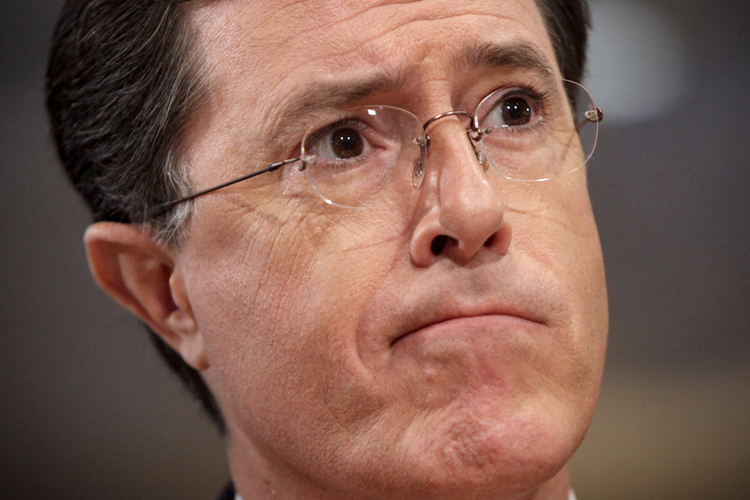
Stephen Colbert meets with members of the Federal Election Commission (FEC), Washington, DC, June 30, 2011. (Yuri Gripas via http://slate.com).

Stephen Colbert meets with members of the Federal Election Commission (FEC), Washington, DC, June 30, 2011. (Yuri Gripas via http://slate.com).

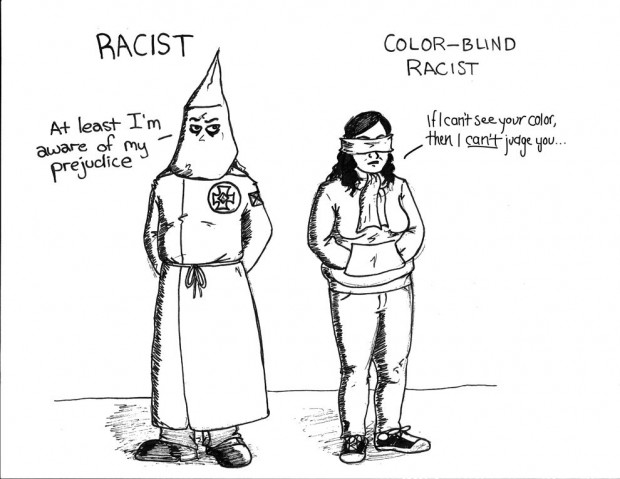
What I’ve learned in recent months from Twitter, Facebook, The Atlantic and The New York Times, from recent Supreme Court decisions, and from attempts to justify oligarchy and bigotry, is the following. That the term “White liberal” is a media falsehood, meant to create a distinction without any significant differences. That most White liberals are “liberal” by default, only because they’re not conservative — or really, reactionary — enough. That most Whites who see themselves as liberal also believe in colorblindness as a racial philosophy or refuse to acknowledge their own privilege of Whiteness and structural racism as major obstacles on the path toward an egalitarian society. And that people who look and write like me can and should be ignored, precisely because I’m Black and underprivileged by default.

There are in fact Whites who do acknowledge the privilege of their own Whiteness, who do understand the gigantic barriers of structural racism, institutional and individual racism. Some of those are leftists, many more, though, are racists who have fully embraced Whiteness as their cloak of superiority. Hence Donald Trump, Donald Sterling (heck, maybe even Donald Duck), Paul Ryan, Cliven Bundy, Tom Perkins, and, if you’re aware of recent racism rows in the UK, Jeremy Clarkson.

There are the rare handful, though, who are leftist enough to have also become active on the anti-racism front. I’m lucky to count quite a few of them as friends, or at least, colleagues. Some of these folks, whether Tim Wise or Mark Naison, Jessie Daniels or Joe Feagin, sure enough, do acknowledge that their rare enlightenment has its limits, that they, too, can and do get it wrong sometimes in discussing race and racism. They even acknowledge that they have Whiteness and other -isms, that they aren’t perfect or in need of a pedestal because they’ve managed to look past their privilege to be radical leftists.

Colorblind racism cartoon, February 27, 2013. (Gabriel Ivan Orendain-Necochea/Daily Sundial via http://sundial.csun.edu).

Colorblind racism cartoon, February 27, 2013. (Gabriel Ivan Orendain-Necochea/Daily Sundial via http://sundial.csun.edu).

That leaves this fairly large plurality of Whites who see themselves as “liberals,” but refuse to realize that they are liberals because they aren’t fearful or hateful enough to be right-wingers. Politically, they’re basically centrists, folks who don’t want to rock the boat on any issues involving social class, social mobility or structural inequality. They may care about a green planet, recognize that evolution is real and climate change is man-made, but will still see racism as an individual issue, and not one baked into the bricks and mortar of our society and its institutions.

These are the media standard “White liberals,” ones who care more about an individual White guy who uses the N-word on TV than they do about a White supremacist terrorist shooting up a community center or a place of worship. In fact, the media and these liberals will all but refuse to use the word “terrorist” in reference to systemic White violence against communities of color or those of different religious backgrounds. They’ll be the ones who’ll start with the sentence, “I don’t care if you’re black, white, green or red…,” as if racism were a simple matter of melanin, and not material and psychological advantages that begin at conception and end well after death. Not to mention, there aren’t any actual “green” or “red” skin-colored humans.

Yet, despite their colorblindness, they couldn’t possibly conceive of Blacks and Latinos smart enough to make it to an elite college without the handout of affirmative action, or of large numbers of people of color in positions of leadership in business and in  politics, or of a feminism without the contradiction of femininity. For that matter, so-called colorblind White “liberals” still find it easy to call race a “card” that people of color pull out only when it’s somehow convenient for us, or lament the need for historically Black colleges and universities or other Black institutions. Some have even argued for a White History Month, which is ridiculous, considering how Whiteness is ever-present (kind of like the way the most religious of Christians think about God).

So, after four and a half decades as a born and bred American, I’ve realized that the average White liberal is not only not a leftist, Marxist or an anti-racist. That not only that the media labels them as “liberals” by default. But that they are as much to blame for our sorry state of affairs regarding race in America as Frazier Glenn Miller, Wade Michael Page, the NYPD, the LAPD, evangelical Christianity and those Southern Democrats who became Republicans between 1964 and 1994.

When Nightmares Go Nuclear

03 Saturday May 2014

Posted by decollins1969 in 1, Academia, Boy @ The Window, Christianity, culture, earth, wind & fire, Eclectic, Hebrew-Israelite, High Rise Buildings, Mount Vernon New York, Movies, music, New York City, Pittsburgh, Politics, Pop Culture, Religion, Youth

≈ Leave a comment

Tags

"99 Luftballons" (1983), Dreams, Ebony Pictorial History of Black America (1974), Lerone Bennett, Mrs. O'Daniel, Nena, Nightmares, Nuclear Annihilation, Nuclear War, Post-Traumatic Stress Disorder, PTSD, Subliminal Messages, Terminator 2 (1991), Textbooks, The Day After (1983), Whiteness


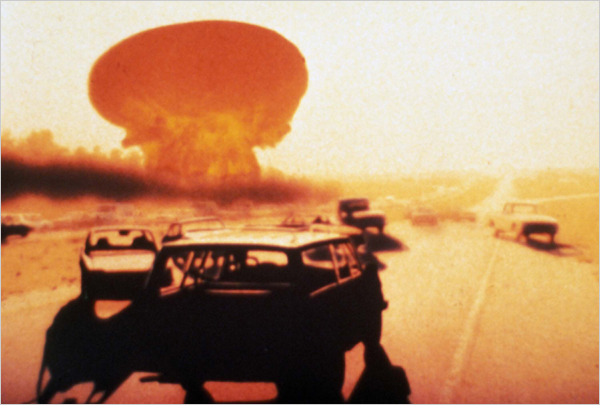
Color version of mushroom cloud over Nagasaki, Japan, August 9, 1945. (http://www.mphpa.org via US Army Air Force). In public domain.

Color version of mushroom cloud over Nagasaki, Japan, August 9, 1945. (http://www.mphpa.org via US Army Air Force). In public domain.

I find myself seeing bright orange, yellow and white lights filling the sky and obscuring everything around me. It doesn’t matter whether I’m above ground, at home, at school or work, or on a Subway platform underground in New York. Once these lights hit, it’s over. I find myself no longer in my body, for it no longer exists. Yet I still have eyes with which to witness. Through a purple haze, the intense heat, literally searing, melting and vaporizing flesh and bone. A shock wave, crushing and churning the world all at once. Spirits once safely in bodies are now on the same plane of this new existence with me, all watching as the light, the heat and the supersonic shock wave tear into our former world. Where do we go from here, as the world is no more?

That’s a milder version of a nightmare that has been with me now off and on for thirty-four years. I’m sure that I was among the hundreds of millions of folks in the West whom dreamt often of a nuclear nightmare. It was during the final phase of the Cold War, with Soviet and American aggressions, Reagan’s presidency, and a renewed arms race. All made the prospect of “99 Luftballons” (1983) and the launch of 1,000 nuclear tipped ICBMs and SLBMs and one billion or more dead a dreadful, gnawing fact that I couldn’t do a damn thing about.

Screen shot from The Day After (November 1983) ABC movie, presumably suburban Kansas City, MO/KS, October 21, 2007. (Stout/NY Times).

Screen shot from The Day After (November 1983) ABC movie, presumably suburban Kansas City, MO/KS, October 21, 2007. (Stout/NY Times).

The very first time I fully understood the dangerous and fatal that defined this world was toward the end of fifth grade, in May ’80. It was an early May Thursday in Mrs. O’Daniel’s classroom at William H. Holmes Elementary in Mount Vernon, New York, a bright, sunny spring day. We were in independent reading mode, and Mrs. O’Daniel had given me permission to read ahead in our social studies textbook, which focused on American history.

We had left off with the Great Depression and all of the suffering that came with it. Of course, this was a collective history, one which didn’t even have the special sufferings of people of color or women in blue boxes — yet. So Whites represented all Americans. This wasn’t something I picked up on in ’80, at least consciously. But luckily, between Lerone Bennett’s edited three-volume Ebony Pictorial History of Black America (1974) at home and Mrs. O’Daniel constantly supplementing our knowledge at school, I was more aware of the deficiencies of textbooks long before I could articulate them.

As I turned the pages and read about the great battles of World War II, the horrors of Pearl Harbor and the gathering of the righteous power of the US to win the war, I suddenly saw something that shook me to my core. It was the picture of the atomic bomb’s mushroom cloud hovering over Nagasaki like death itself. It was in full color, bright and yellow and white, and obviously hot and broiling. The camera shot had managed to capture some of the landscape below, the area surrounding Nagasaki an August summer green. As I read about the 70,000 killed instantly at Hiroshima, an area the size of Mount Vernon completely flattened by a bomb that at its core had only a few pounds of weapons-grade uranium, I was frightened. I could be dead at a moment’s notice, or worse, suffer from radiation burns and sickness, in which case I’d truly be among the walking dead.

But this was only one phase of my nightmare. As things at 616 went from stable to completely out of control, my nuclear nightmares became more frequent. It seemed like there was a nuke for every day of the week during my last year as a Hebrew-Israelite. Watching The Day After on ABC in November ’83 didn’t help matters, but I also couldn’t help myself. I was both repulsed by and attracted to the idea of nuclear annihilation and survival. Maybe because I was already living through one hell of a disaster at 616.

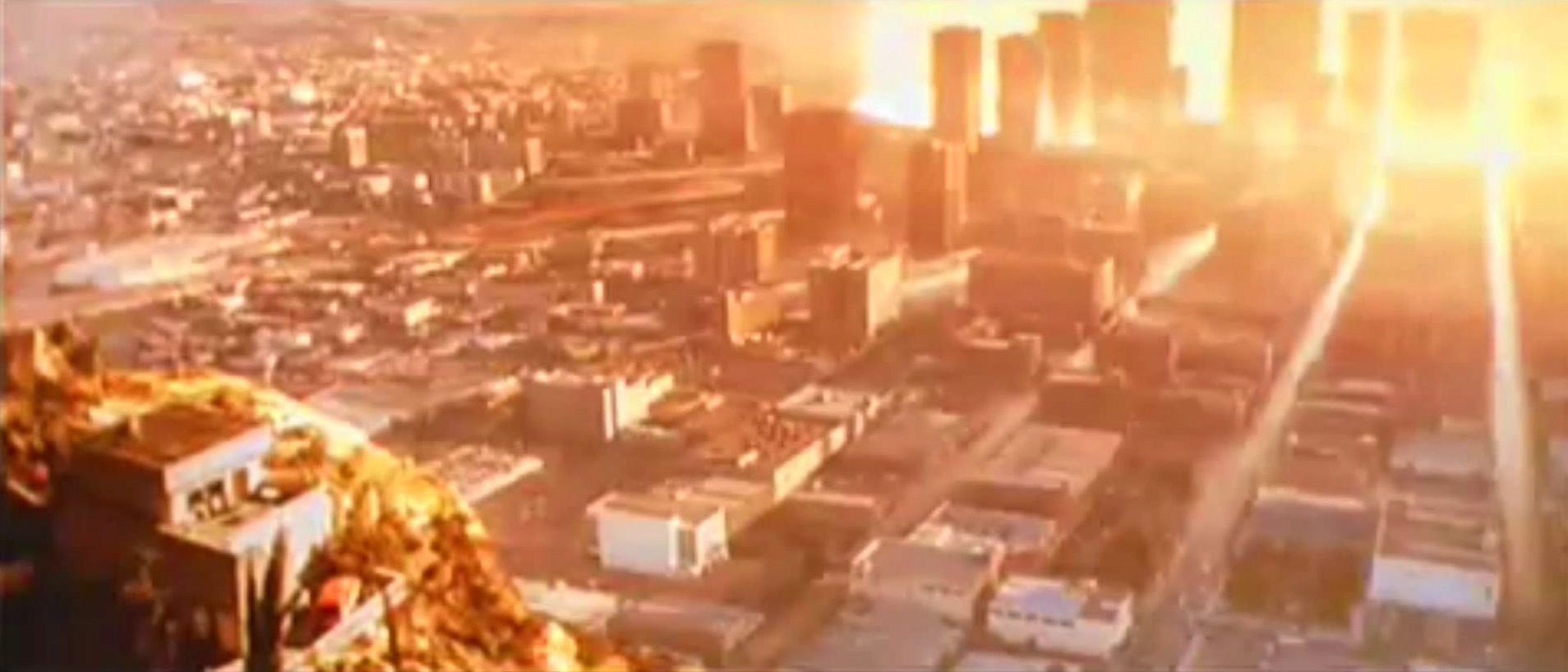
Cropped screen shot of Los Angeles at beginning of nuclear strike, from Terminator 2 (1991), May 3, 2014. (http://youtube.com).

Cropped screen shot of Los Angeles at beginning of nuclear strike, from Terminator 2 (1991), May 3, 2014. (http://youtube.com).

My nuclear nightmares continued at nearly daily pace until after I saw Terminator 2 in June ’91. At that point, I realized that my nightmares weren’t so much about the plausibility of surviving a nuclear holocaust as they were about surviving my own preteen and teenage years. It occurred to me there are worse things in life than dying, and like surviving nuclear war, surviving a violent and unstable childhood like mine has significant side effects. I could be occasionally be up, I was much more frequently down, I could occasionally fly into a rage. And I could have recurring nightmares of me murdering my now dead ex-stepfather. All signs of PTSD.

Realizing this, I took control over my dream world, and managed to push my plutonium-tipped dreams into a box, along with so many things from my decade of evangelistically twisted fire and brimstone from two religions. I still watch end-of-the-world movies, though without the extreme fervor of dream-based certainty of suffering a lingering death. Though I do often find it funny how White fears permeate these movies.

Newer posts →

Boy @ The Window: A Memoir

Boy @ The Window: A Memoir

Places to Buy/Download Boy @ The Window

There's a few ways in which you can read excerpts of, borrow and/or purchase and download Boy @ The Window. There's the trade paperback edition of Boy @ The Window, available for purchase via Amazon.com at http://www.amazon.com/Boy-Window-Donald-Earl-Collins/dp/0989256138/

There's also a Kindle edition on Amazon.com. The enhanced edition can be read only with Kindle Fire, an iPad or a full-color tablet. The links to the enhanced edition through Apple's iBookstore and the Barnes & Noble NOOK edition are below. The link to the Amazon Kindle version is also immediately below:

scr2555-proj697-a-kindle-logo-rgb-lg

Boy @ The Window on Amazon.com: http://www.amazon.com/Boy-The-Window-Memoir-ebook/dp/B00CD95FBU/

iBookstore-logo-300x100

Boy @ The Window on Apple's iBookstore: https://itunes.apple.com/us/book/boy-the-window/id643768275?ls=1

Barnes & Noble (bn.com) logo, June 26, 2013. (http://www.logotypes101.com).

Boy @ The Window on Barnes & Noble: http://www.barnesandnoble.com/w/boy-the-window-donald-earl-collins/1115182183?ean=2940016741567

You can also add, read and review Boy @ The Window on Goodreads.com. Just click on the button below:

Boy @ The Window

Twitter Updates

Tweets by decollins1969
  • RSS - Posts
  • RSS - Comments

Archives

  • June 2025
  • April 2023
  • September 2022
  • August 2022
  • July 2022
  • June 2022
  • May 2022
  • April 2022
  • March 2022
  • January 2022
  • December 2021
  • November 2021
  • October 2021
  • September 2021
  • August 2021
  • July 2021
  • June 2021
  • April 2021
  • March 2021
  • February 2021
  • January 2021
  • December 2020
  • November 2020
  • October 2020
  • September 2020
  • August 2020
  • July 2020
  • May 2020
  • April 2020
  • March 2020
  • January 2020
  • December 2019
  • November 2019
  • August 2019
  • July 2019
  • June 2019
  • May 2019
  • April 2019
  • March 2019
  • February 2019
  • January 2019
  • December 2018
  • November 2018
  • October 2018
  • September 2018
  • August 2018
  • July 2018
  • June 2018
  • May 2018
  • March 2018
  • February 2018
  • January 2018
  • December 2017
  • November 2017
  • October 2017
  • September 2017
  • August 2017
  • July 2017
  • June 2017
  • May 2017
  • April 2017
  • March 2017
  • February 2017
  • January 2017
  • December 2016
  • November 2016
  • October 2016
  • September 2016
  • August 2016
  • July 2016
  • June 2016
  • May 2016
  • April 2016
  • March 2016
  • February 2016
  • January 2016
  • December 2015
  • November 2015
  • October 2015
  • September 2015
  • August 2015
  • July 2015
  • June 2015
  • May 2015
  • April 2015
  • March 2015
  • February 2015
  • January 2015
  • December 2014
  • November 2014
  • October 2014
  • September 2014
  • August 2014
  • July 2014
  • June 2014
  • May 2014
  • April 2014
  • March 2014
  • February 2014
  • January 2014
  • December 2013
  • November 2013
  • October 2013
  • September 2013
  • August 2013
  • July 2013
  • June 2013
  • May 2013
  • April 2013
  • March 2013
  • February 2013
  • January 2013
  • December 2012
  • November 2012
  • October 2012
  • September 2012
  • August 2012
  • July 2012
  • June 2012
  • May 2012
  • April 2012
  • March 2012
  • February 2012
  • January 2012
  • December 2011
  • November 2011
  • October 2011
  • September 2011
  • August 2011
  • July 2011
  • June 2011
  • May 2011
  • April 2011
  • March 2011
  • February 2011
  • January 2011
  • December 2010
  • November 2010
  • October 2010
  • September 2010
  • August 2010
  • July 2010
  • June 2010
  • May 2010
  • April 2010
  • March 2010
  • February 2010
  • January 2010
  • December 2009
  • November 2009
  • October 2009
  • September 2009
  • August 2009
  • July 2009
  • June 2009
  • May 2009
  • April 2009
  • March 2009
  • February 2009
  • January 2009
  • December 2008
  • November 2008
  • October 2008
  • September 2008
  • August 2008
  • July 2008
  • June 2008
  • May 2008
  • April 2008
  • March 2008
  • February 2008
  • January 2008
  • December 2007
  • November 2007
  • October 2007
  • September 2007
  • August 2007
  • July 2007
  • June 2007

Recent Comments

decollins1969's avatardecollins1969 on No Good Teaching Deed Goes…
Mary Rose O’Connell's avatarMary Rose O’Connell on No Good Teaching Deed Goes…
Lyndah McCaskill's avatarLyndah McCaskill on The Raunchiest of Them Al…

NetworkedBlogs on Facebook

NetworkedBlogs
Blog:
Notes From a Boy @ The Window
Topics:
My Life, Culture & Education, Politics & Goofyness
 
Follow my blog

616 616 East Lincoln Avenue A.B. Davis Middle School Abuse Academia Academy for Educational Development AED Afrocentricity American Narcissism Authenticity Bigotry Blackness Boy @ The Window Carnegie Mellon University Child Abuse Class of 1987 CMU Coping Strategies Crush #1 Crush #2 Death Disillusionment Diversity Domestic Violence Economic Inequality Education Family Friendship Friendships Graduate School Hebrew-Israelites High-Stakes Testing Higher Education History Homelessness Humanities Humanities Program Hypocrisy Internalized Racism Jealousy Joe Trotter Joe William Trotter Jr. K-12 Education Love Manhood Maurice Eugene Washington Maurice Washington Misogyny Mother-Son Relationship Mount Vernon High School Mount Vernon New York Mount Vernon public schools Multiculturalism MVHS Narcissism NFL Pitt Pittsburgh Politics of Education Poverty President Barack Obama Race Racial Stereotypes Racism Relationships Self-Awareness Self-Discovery Self-Reflection Sexism Social Justice Teaching and Learning University of Pittsburgh Violence Whiteness Writing

Top Rated

Blog at WordPress.com.

  • Subscribe Subscribed
    • Notes from a Boy @ The Window
    • Join 103 other subscribers
    • Already have a WordPress.com account? Log in now.
    • Notes from a Boy @ The Window
    • Subscribe Subscribed
    • Sign up
    • Log in
    • Report this content
    • View site in Reader
    • Manage subscriptions
    • Collapse this bar
 

Loading Comments...