• About Me
  • Other Writings
  • Interview Clips
  • All About Me: American Racism, American Narcissism, and the Conversation America Can’t Have
  • Video Clips
  • Boy @ The Window Pictures
  • Boy @ The Window Theme Music

Notes from a Boy @ The Window

~

Notes from a Boy @ The Window

Tag Archives: Rage

Conversations With M² About “Big Foot”

15 Friday Mar 2013

Posted by decollins1969 in 1, Boy @ The Window, culture, Eclectic, Pop Culture, race, Youth

≈ Leave a comment

Tags

" "Should've Known Better, "Don't Shed A Tear, Abe Vigoda, Anger, Channeling Emotions, Crush #2, Geology, Manhood, Masculinity, M², Paul Carrack, Pitt, Rage, Richard Marx, Self-Discovery, Sexuality, University of Pittsburgh
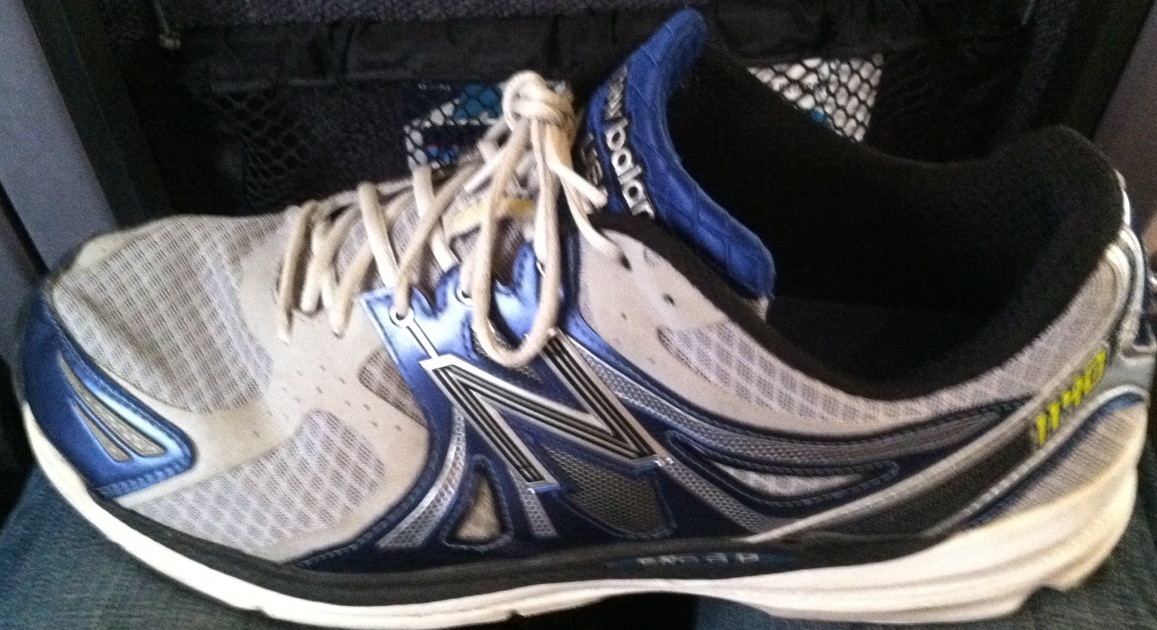

My left foot (excuse movie pun), size 14 4W, March 15, 2013. (Donald Earl Collins).

My left foot (excuse movie pun), size 14 4W, March 15, 2013. (Donald Earl Collins).

Sometimes in my life, my anger and rage are a driver toward the better. Usually it’s because I channel that negative energy into something positive, like writing, running, praying and forgiving. In the case of the year after Crush #2 crushing me emotionally and psychologically, it was school and needing to pull my grades up that gave me a place to channel my anger and rage. But with a twist. I deliberately decided that it was the older students at Pitt that I’d befriend my second semester, shunning all but a few classmates under the age of twenty-two.

In Geology that Winter ’88 semester, I had a professor who sounded like Abe Vigoda from Barney Miller and looked like he’d been digging up shale every time he lectured in class. The class was pretty easy, all multiple choice. The main issue of significance wasn’t the class, though. It was M². I had met her at the Cathedral lab the previous semester. She always came to the lab with her boyfriend, and always somehow found something she needed help with. She made almost every girl I went to high school with, well, look like they were girls by comparison.
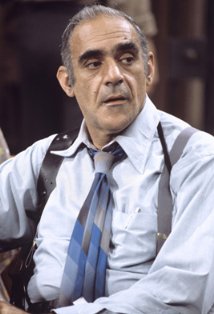
A "young" Abe Vigoda, Barney Miller, circa 1978, March 15, 2013. (http://notalwaysaboutmonkeys.com).

A “young” Abe Vigoda, Barney Miller, circa 1978, March 15, 2013. (http://notalwaysaboutmonkeys.com).

We were in this Geology class together, which apparently gave her a ready-made excuse for toying with me off and on that semester. As sexy and attractive as she was, I was ill-equipped for any drama between her and her boyfriend. M² was twenty-four, her boyfriend twenty-two and six-two at that. He looked like he worked out, or had at least filled out, in ways that I knew I hadn’t yet.

So at first I kept my distance, not wanting any part of what was going on in M²’s head. I bumped into her one day while getting lunch at the Cathedral of Learning, in the Roy Rogers restaurant on the ground floor. She asked me to sit down and eat with her, and for once, I didn’t refuse. We started talking, or rather, M² started talking about her boyfriend and how she felt about their relationship, particularly their sex life. I really didn’t want to know anything about it, but my ears perked up when she said, “You’d think that as tall as he is he would be bigger down there.” That was definitely too much information.

“You know what they say about men with big feet?,” M² asked next.

I really didn’t know. I guessed that I was about to talk my way into a punchline.

“What?”

“Big feet equals a big you-know-what,” she answered while pointing to my size thirteens and then looking at my face.

“You’re blushing,” M² said with a coy smile.

Of course I was blushing. It wasn’t every day that someone six years older than me hinted that they might want to have sex with me, boyfriend or no boyfriend.
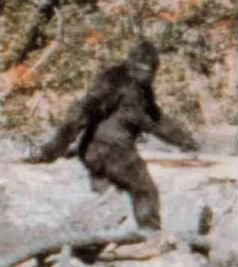
Frame 352 from Patterson-Gimlin film, claiming to show Bigfoot, October 20, 1967. (Beao via Wikipedia). Qualifies as fair use under US Copyright laws - low resolution picture.

Frame 352 from Patterson-Gimlin film, claiming to show Bigfoot, October 20, 1967. (Beao via Wikipedia). Qualifies as fair use under US Copyright laws – low resolution picture.

For what it was worth, a gorgeous Black woman in her mid-twenties flirting with and insinuating that she wanted to have sex with me did give me a confidence boost that slowly wore away the anger I started the year with. What also helped was a battery of new music that helped focus my anger and reinvigorate my imagination. Richard Marx’s “Should’ve Known Better” and Paul Carrack’s “Don’t Shed a Tear” were two songs that were close enough in lyrics, meaning and emotion to my situation with Crush #2 that I smiled a silly smile every time I heard or played them both.For the first time in two years, I started paying attention to rap again. Rob Base, Salt ’n Pepa, Big Daddy Kane, and Public Enemy all began to seep into my consciousness that winter and spring. Geto Boys’ “Mind Playin’ Tricks on Me” would’ve been nice to hear six or eight months before, when I was waist deep in obsession over Crush #2.

Still, M² helped me realize, maybe for the very first time, that as much of a mess I was back then, that I was attractive — or at least handsome –in my own right. And that a goodly portion of my former Humanities classmates were assholes.
Kufi Battles

15 Friday Feb 2013

Posted by decollins1969 in 1, Boy @ The Window, culture, Eclectic, Hebrew-Israelite, Mount Vernon High School, Mount Vernon New York, Movies, Pop Culture, race, Religion, Youth

≈ Leave a comment

Tags

"The Man In Black", A.B. Davis Middle School, Abuse, Bigotry, Bullying, Esau and Jacob, Fights, Geometry, Intimidation, Intolerance, Italian Club, Kufi, Lost (2004-10), Louis Cuglietto, Masculinity, Multicultural Education, Puberty, Rage, Tackles, The Matrix Revolutions (2003)


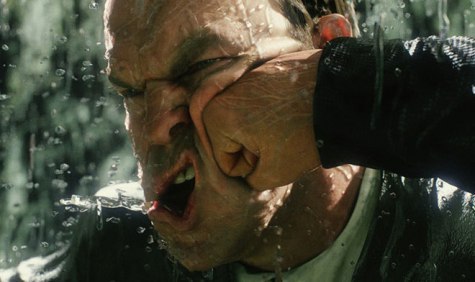
Slow-motion punch frame from Matrix Revolutions (2003), February 15, 2013. (http://theathleticnerd.com/).

Slow-motion punch frame from The Matrix Revolutions (2003), February 15, 2013. (http://theathleticnerd.com/).

My days as a kufi-wearing Hebrew-Israelite at school is one of those things I don’t spend much time on this blog talking about. Mostly because it involved defending myself to protect a piece of clothing and a religion in which I never fully believed, especially after early ’83. Plus, it involved fairly rare attempts in which dumb asses attempted to bully me. Compared to my now deceased idiot ex-stepfather’s abuse, no kid or wannabe thug after the summer of ’82 really stood a chance.

There were three incidents in eighth and ninth grade in which a kid got into a scuffled with me over my kufi, for whatever reason they’d invented in their head. The first was in February ’83, as one Black kid — probably about fifteen — snatched my kufi from my head and started to run up the basement hallway with it at Davis Middle School. The incident occurred as I, A and another member of A’s “Italian Club” entourage were in the middle of an errand for a teacher. I immediately ran the boy down, knocked him to the floor, dusted off my kufi, and put it back on my head. The boy got up and threatened to beat me up. It was at this point that A intervened, saying that he would “have to take us all on” if he wanted to fight me. A’s moment of support notwithstanding, I would’ve beaten the kid in the face as many times as it would’ve taken to get my kufi back.

Pittsburgh Steelers' James Harrison sacks Baltimore Ravens QB Joe Flacco, AFC Division Round, January 15, 2011. (http://espn.go.com).

Pittsburgh Steelers’ James Harrison sacks Baltimore Ravens QB Joe Flacco, AFC Division Round, January 15, 2011. (http://espn.go.com).

The second incident occurred a month later, prior to the opening morning bell at Davis. Out of the blue, “Little J” picked a fight with me, calling me a “dickweed” and a “shithead” for no reason at all. I hardly knew the Jewish kid, who immediately came at me to push, shove, throw punches, and grab at my kufi. It really was crazy for Little J to think that he had a shot at doing any damage. I was already five-eight. He was lucky if he was four-eleven and one hundred pounds after a potato latkes breakfast.

This wasn’t a fight. It was a pushing and shoving match, with me doing all of the pushing and shoving and Little J landing in bushes or on his ass. For seven minutes, he kept running at me, trying to throw a punch or kick me. I caught or blocked his attempts, grabbed him, and shoved him into the bushes near the boys’ entrance to Davis. By the sixth time, Little J was crying and his cheeks were fire truck-red, I was laughing and shaking my head, and the other Black boys at Davis were asking me what was going on. When I told them, they started laughing as well.

Beyond him grabbing at me and my kufi, I never knew what Little J wanting to fight me was all about. My guess then was that Little J was playing the role of Esau (the hairy brother of Jacob from the Bible, Torah and Qur’an) and didn’t like the fact that I claimed to be a descendant of the father of ancient Israel and his people.

The Man In Black (presumably Esau; played by Titus Welliver) with Jacob (Mark Pellegrino), from TV series Lost (2009-10), February 15, 2013. (http://magiclamp.org).

The Man In Black (presumably Esau; played by Titus Welliver) with Jacob (Mark Pellegrino), from TV series Lost (2009-10), February 15, 2013. (http://magiclamp.org).

Incident Three occurred on my second day at Mount Vernon High School. After a day of assignments and learning the names of our new teachers, I went to Louis Cuglietto’s eighth-period Geometry class. It was on the first floor of the school, just to the right of the front entrance and the cafeteria. As I milled around the classroom looking to take my seat, my Latino classmate “N” came out of nowhere and snatched my kufi off my head.

“Give it back now!,” I yelled.

“Make me!,” N responded with a bit of sarcasm.

Just as he was about to throw it to another classmate. I grabbed N and knocked him to the floor. There we were, on the floor by the dark green chalkboard, me on top of N, who was struggling to hold on to my kufi. I lay on top of him, punched him in the face a couple of times, and took my kufi back from him just before Cuglietto came into the room. By this time everyone in our class had formed a circle to watch the spectacle. I don’t remember all of what Cuglietto said, but he did ask, “Do you want to get suspended?” After we dusted ourselves off, we went to our desks and got back to work.

For me, the incident marked a transition point in my life at school. This would be the last fight I’d have in school. Some people continued to try to verbally intimidate me. But they left it at that, probably because my height and my face said “Don’t mess with me” before I’d say anything.

The more immediate result was that I began to question more consciously my motives for defending myself as a Hebrew-Israelite. “Why do I care if N snatches my kufi from me?,” I said to myself on the way home from school that day. It wasn’t as if I truly believed in any of the teachings anymore. I definitely didn’t want anyone messing with me at home or in school. At the same time, I didn’t want to use up energy defending something in which I didn’t believe.

The Emotional, The Personal and Black History

01 Friday Feb 2013

Posted by decollins1969 in 1, Academia, Boy @ The Window, culture, Eclectic, Movies, Patriotism, Politics, Pop Culture, race, Youth

≈ 3 Comments

Tags

A Lynching in Marion, African American History, Anger, Black History, Black History Month, Carnegie Mellon University, Comparative Slavery, Emotions, Fear, Fogel and Engerman, Grief, Indiana (1995), Irony, Jim Crow, Larry Glasco, Laurence Glasco, Learning, Lynching, Pitt, Racism, Rage, Roots (1977), Sarcasm, Seymore Drescher, Slavery, Students, Sy Drescher, Teaching and Learning, Time on the Cross (1974), UMUC, University of Pittsburgh


Black History Month 2013 electronic poster, February 1, 2013. (http://dclibrary.org).

Black History Month 2013 electronic poster, February 1, 2013. (http://dclibrary.org).

After all of these years — and thirty-seven years’ worth of Black History Months — I sometimes forget how emotionally charged Black history can be. After all, I’m an academically trained historian, one whose emotional range varies from sarcastic to ironic with most things US, World and African American history. But ever so often, I’m reminded by my students about the sadness and pain involved in learning history. I surprise myself sometimes at how passionate or angry I can become in revisiting a piece of history that I otherwise would show no emotion for on most days.

Black history, though, can bring out both the water works and the daggered eyes. My African American history students at Carnegie Mellon University surprised me one day in October ’96 during a discussion I tried to have about lynching and the KKK. It was based on the Indiana PBS documentary, A Lynching in Marion, Indiana, about the lynching of two Black men and the almost lynching of a young Black male for allegedly killing and robbing a White male and raping a young White female in 1930.

The forty-five minute documentary showed clips of defaced and emasculated Black men hung from trees, beaten beyond recognition and even burned postmortem. It also showed films of KKK rallies in the 1920s and early 1930s Indianapolis and other towns in the state, as well as pictures from the Marion lynching itself. The young Black man in Marion, one James Cameron, was only saved from lynching because a member of White mob actually protected him. It turned out, per usual, that the alleged murder and rape was a false accusation, but Cameron still had to spend four years in jail for a crime he didn’t commit.

Thomas Shipp and Abram Smith, lynched in Marion, IN, August 7, 1930. (Lawrence H. Beitler). Qualifies as fair use under US Copyright laws, as It is the only image known to depict this hanging, and is used here to illustrate the event.

Thomas Shipp and Abram Smith, lynched in Marion, IN, August 7, 1930. (Lawrence H. Beitler via Wikipedia). Qualifies as fair use under US Copyright laws, as It is the only image known to depict this hanging, and is used here to illustrate the event.

My students could barely speak to me or each other after the film, much less be part of a dispassionate discussion of the film. My Black students were tearful and angry, and my White students were pale and scared. I let them express their emotions for about ten minutes, but waited until the next class to draw out a more comprehensive discussion. As this was the first standalone class I’d taught as an adjunct professor, I was a bit unprepared for the how emotional my students became, how personally they took the film and its content.

But I should’ve been better prepared, especially given my own emotions about Black and other histories over the years. I remember the first time I watched Roots, along with millions of other Americans, in February ’77. I cried or was stunned that whole week. Twelve years later, in my undergraduate readings seminar for History majors at Pitt, I found myself angry with my classmates. My eventual first graduate advisor Larry Glasco was leading a discussion on slavery and the Middle Passage. I didn’t know why, but I was angry that whole class. It wasn’t just a knee-jerk anger. It was a low-heat rage, beyond anything my idiotic classmates were saying about slavery in the eventual US not being as brutal as slavery in the Caribbean or Brazil.

The following semester, I took my first graduate course as a Pitt junior, Comparative Slavery with Sy Drescher. We got into a discussion of Fogel and Engerman’s Time on the Cross (1974), a study in which the authors tried to show scientifically that slavery wasn’t as bad for Africans in the US as it was for Africans in the Caribbean and Brazil. Using records from one plantation, Fogel and Engerman tried to show that since few slaves were whipped, that therefore slavery wasn’t brutal for my African ancestors. I was pissed when some of the grad students in my class defended Time on the Cross  idea that 1,800 calories a day was sufficient for the average slave. It pissed me off so much that I had to leave the seminar room for five minutes to make sure I didn’t punch someone.

Me really pissed, at CMU PhD graduation, Pittsburgh, PA, May 18, 1997. (Angelia N. Levy).

Me really pissed, at CMU PhD graduation, Pittsburgh, PA, May 18, 1997. (Angelia N. Levy).

I see some of this in my UMUC students sometimes. Students who turn every issue in US history into a referendum on race. “Immigrants exploited? Well, not compared to African Americans as sharecroppers!” Or “Jim Crow was really a second slavery,” some of my students have said emphatically, as if Blacks did nothing during Reconstruction or Jim Crow to make their lives better. They feel, and rightfully so for the most part, that Blacks have gotten a raw deal throughout American history, and that it is my job to expose the hypocrisy of racism in every lecture and discussion.

It’s emotional and it’s personal. But it’s also historical, which means not so much putting emotions or personal investment aside as much as it does putting these emotions and personal investments in perspective. I’ve never been dispassionate about history – I’ve just learned how to use my New York-style sarcasm to hide my passion pretty well.

After The Fall

18 Friday May 2012

Posted by decollins1969 in 1, Academia, Boy @ The Window, Eclectic, Mount Vernon New York, New York City, Politics, race, Youth

≈ Leave a comment

Tags

6007 Penn Circle South, Angelia N. Levy, Betrayal, Bitterness, Carnegie Mellon University, Contaminated Food, Disappointment, Emotional Wreck, Gastrointestinal Illness, Heartbroken, Joe Trotter, Maurice Eugene Washington, Maurice Washington, My Mother, PhD Graduation, Pittsburgh, Rage, Summer of Abuse


The planet Caprica under nuclear attack, Battlestar Galactica (2003), September 28, 2011. (Gary Hutzel/SyFy Channel via http://soundonsight.org). Qualifies as fair use under US Copyright laws because of low resolution of picture.

Fifteen years ago this date, I officially graduated from Carnegie Mellon University with my PhD, no thanks to Carnegie Mellon itself (see my post “The Audacity of Youth, Grad School Style” from August ’11). I’d been done with the dissertation since the Friday before Thanksgiving ’96, so the ceremony itself was anticlimactic. The week of my graduation, though, revealed more about my mother and the ugly truth about how conditional our relationship was than I knew or thought possible (see my post “My Post-Doctoral Life” from May ’08 for much more).

All of that was on top of a week that included doing an interview at Teachers College, going to my mother’s associate’s degree graduation and being followed while Black at the Barnes & Noble that used to be on 66th and Broadway in Manhattan. That week came on the heels of recovering from the ordeal that was the political struggle over my dissertation process with Joe Trotter (see my “You’re Not Ready” and “Running Interference” posts from November ’08 and April ’11).

By the time I went back into town with my girlfriend (now wife of twelve years) Angelia from Pittsburgh International Airport, I was in a space I hadn’t been in since the late spring and summer of ’82. The “summer of abuse” at 616, as I call it now (see my “To My Ex-Stepfather” post from July ’09).  My pursuit of higher education, then advanced degrees and career options, and all of the success — direct, collateral and otherwise — that came with that striving and those triumphs was apparently a lot of what had kept me grounded for the previous fifteen years.

Lava lake, Mount Nyiragongo (volcano), Virunga National Park, Democratic Republic of Congo, May 7, 2011. (Cai Tjeenk Willink via Wikipedia). Released to public domain via cc-Attribution-Share Alike 3.0 license.

Now that I was done, and I was able to see people for who they really were, I found myself unbound. A deep well of rage — along with a bucket of betrayal with which to haul it up — was suddenly available to me, and would remain so for years to come. For the first time since the beginning of my sophomore year at Pitt, I felt despair, as if I was homeless and sleeping on a stairwell landing in Forbes Quadrangle again. I spent that cab ride back to East Liberty in an emotional fog, somewhere between tearing up and ready to beat someone half to death.

Angelia brought me back to her place, made me sit down, and insisted that she make dinner for me. She pulled out of her freezer some leftover stir-fry vegetables and turkey from Thanksgiving ’96, and made it into a stir-fry over rice. I was about halfway through this meal before my brain began receiving messages from my normally precise palate. “Stop eating!,” my synapses started screaming. The food I’d eaten had probably gone bad long before Angelia had frozen it. And despite the sweet and sour and soy sauces, it also became apparent that the meat had experienced severe freezer burn.

Within a few minutes, I had severe bloating and pain in my stomach, and Angelia had given me water and Pepto Bismol to settle my stomach. She apologized, “Sorry, Donald,” with an ironic laugh, adding, “This just isn’t your day.” I went back to my studio apartment on Penn Circle South that evening, in pain in many more ways than one.

My intestinal pains became worse over the next three days. I wasn’t eating much to begin with, and what I

Chemical structure of bismuth subsalicylate, aka, Pepto Bismol, September 5, 2007. (Edgar181 via Wikipedia). In public domain.

had in my system as a result of Angelia’s poisonous gruel had resulted in an intestinal blockage. A clear-headed person would’ve gone to the ER and had himself checked out. But my brain was about as clear as a mushroom cloud in the middle of Central Park. I could barely move, it hurt just sitting up, and I cried, sometimes in my sleep. At some point, the pain in my gastrointestinal tract and the pain from my graduation ceremony merged as one and the same.

Was I experiencing some psychosomatic trauma? It wouldn’t have been the first time my emotional flaying manifested itself in my G/I tract. Angelia’s food may have been the catalyst, but the realization that my mother was never really on my side — along with my advisor and some of my friends — was the root cause.

By that Friday, I was able to eat again. But like my relationship with my mother, my intestinal tract has never been the same. Betrayal and loss of trust — and faith — will do that to the most confident of us.

Almost Doesn’t Count

24 Saturday Mar 2012

Posted by decollins1969 in 1, Academia, culture, Eclectic, Politics, Pop Culture, race

≈ Leave a comment

Tags

Arrogance, Burnout, Carnegie Mellon University, Dissertation, Joe Trotter, Joe William Trotter Jr., Multiculturalism, New York University Press, Niko Pfund, NYU Press, Publishing, Publishing World, Rage, Rejection, Steven Schlossman, Trust


LA Lakers Shannon Brown's missed dunk in Game 1 of NBA Western Conference Finals vs. Phoenix Suns, May 17, 2010. (Getty Images).

The title for this post could also be “It Was Never Almost.” I had one of my best chances at publishing my dissertation on multiculturalism and mid-twentieth century Black Washington, DC (now the book Fear of a “Black” America) in March ’97. But not knowing the publishing world, combined with PTDD (post-traumatic dissertation disorder) from the past year of surviving Joe Trotter and my dissertation committee (see my “’It Is Done’” – 15 Years Later” post from November ’11 and “Letter of Recommendation (or “Wreck-o-Mendation)” post from September ’10) made this three-week period of negotiations a total communications mash-up.

I was in an “I’ll show them” mode in the months after my committee approved my dissertation “‘A Substance of Things Hoped For’: Multiculturalism, Desegregation, and Identity in African American Washington, DC, 1930-1960” at the end of November ’96. Within a month, I made some minor revisions to the 505-page tome, and worked on some query letters for academic publishing houses about turning the dissertation into a book.

I contacted Oxford University Press, Cambridge University Press, Princeton University Press and a few others. I also sent a query to New York University Press. Their acquisitions editor responded enthusiastically, and asked for a copy of the manuscript, which I dutifully sent their way in mid-February ’97.

And that’s when the communications about converting my doctoral thesis into a book went haywire. What was unknown to me was that Steven Schlossman, the chair of the history department at Carnegie Mellon, had been in contact with Niko Pfund, the then head of NYU Press (now president of Oxford University Press), about my dissertation. Three weeks after sending out my manuscript, I received a rejection letter from NYU Press, saying that while my manuscript was worthy of publication, that my “anachronistic use” of multiculturalism to describe the ideas and activities of Black intellectuals and educators in Washington, DC didn’t fly for them.

That same week, I received a telephone call from Schlossman asking me to meet about the dissertation. At his office, I not only learned that he had been in contact with Pfund and NYU Press. I also found out that he had sent them the first fifty pages or so of my dissertation without my permission. I told Schlossman about the fact that I’d already been in contact with NYU Press and that they had rejected the manuscript. But he insisted that his way of going through this process was the best way to go.

I was incensed at the idea that folks were working to publish my dissertation without my input. Especially someone like Schlossman, whom I knew didn’t understand why or how I had planned to use multiculturalism from a historical perspective for a book. I didn’t understand what I planned to do yet, but Schlossman could explain it? I left his office, upset and confused about the lack of communication between me and my department, and within NYU Press itself.

NYU Press-Niko Pfund Letter from March 1997, March 24, 2012. (Donald Earl Collins).

A few days later, I received a letter and then a telephone call from Niko Pfund. In the letter, he expressed interest in my manuscript, and wanted me to send in the whole thing. But his assistant had already done an extensive review of the partial manuscript they had received from Schlossman. It was one that was mixed, but it leaned slightly toward rejection because they didn’t get the term “multiculturalism” in the context of “Black history.”

I complained that I was getting mixed signals from Pfund and NYU Press. I’d been rejected, yet this was the second time I’d been invited to submit the same manuscript. The folks there didn’t understand why I used the term multiculturalism in my dissertation, yet never discussed the issue with me directly, just with Schlossman. Someone did a decidedly thorough yet biased review of a portion of my manuscript, yet never had the chapter in hand that was specifically about why multiculturalism has a history.

All I heard from Pfund were excuses, that Schlossman sought them out, that I was being offered an opportunity here for review, but certainly not for publication, because the NYU Press has “high standards.” I rejected him and his unapologetic bull crap on the spot. I decided that I couldn’t work with a place where the director didn’t even know that his acquisitions editor had rejected my manuscript, nor had the common sense to contact a potential author directly to clear up contradictory communications.

It turned out that Pfund and NYU Press weren’t my best opportunities for publishing my first book. But it would’ve been the best time to publish it, within months of completing the dissertation. It would’ve remained a timely topic, with President Bill Clinton’s Commission on Race commencing the following year.

It just wouldn’t have been the best time for me. I was pissed with the world, and burned out to boot. There really wasn’t anyone in my life who could’ve given me sage advice about the publishing process, and I certainly didn’t and couldn’t trust anyone in Carnegie Mellon’s history department to play that role. That much, I was certain about.

The Fight (Again)

18 Saturday Feb 2012

Posted by decollins1969 in 1, Boy @ The Window, culture, Eclectic, Hebrew-Israelite, Mount Vernon New York, Politics, race, Youth

≈ Leave a comment

Tags

616, A.B. Davis Middle School, Adolescent Psychology, Contrarian, Fighting, Fights, Humanities, Preteen, Rage, Renewal, Resistance


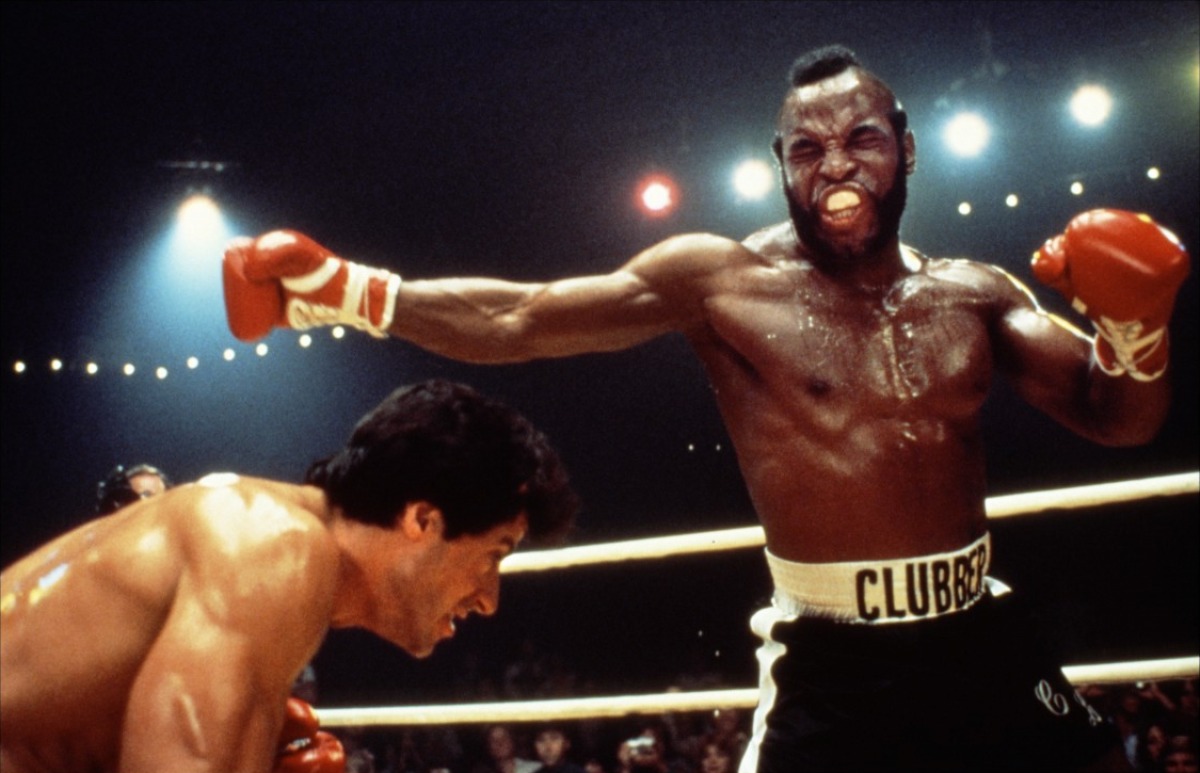
Clubber Lang vs. Rocky in Rocky III (screen shot), 1982, February 18, 2012. (http://media.comicvine.com).

The fight that changed my approach to Humanities and put me back in a determined frame academically happened on this date thirty years ago. After all of these years, I find it awfully strange to look back and find that some of my more poignant moments growing up were ones of rage, resistance and renewal. All either around abuse, muggings or fights with classmates.

Strange because I’d never seen my immature and thin-skinned self as much of a fighter before that day in February ’82 (see my post earlier this week, “Quitting Before a Fight“). Strange because it often takes something only indirectly related to my struggles to cause me to regroup and fight for what I want. Strange in the ways that all immature preteen boys and girls who get into fights always are.

It had gotten so bad that month that folks who wouldn’t have dared to mess with me at the beginning of the year — guys significantly shorter than me and guys who were so superior to me that they didn’t even notice me — started messing with and threatening me. JD (see my “The Contrarian One” post from February ’11) was one of those classmates. The week before the mid-February winter break, our homeroom/English teacher Mrs. Sesay was home with the flu. Our substitute’s idea of managing a classroom was reading a newspaper while the class engaged in verbal and physical combat. It seemed that no one was safe from strife that week, including me.

JD decided that it was his turn to give me a hard time. A ten-second scuffle took place on Tuesday over the usual tweener issues of communism versus capitalism, or to use more sophisticated language, neo-Marxism versus Keynesian economics. He also didn’t like that I had corrected him the month before about Australia’s official language, which he said was “Australian.” I learned that day that you should never correct a preteen contrarian when they think that they’re right.

When I walked into the boys’ locker room for gym class that Thursday afternoon thirty years ago, I was greeted with two punches to my chin and face. He walked away and went through the green double doors to his locker, arrogant enough to think I wouldn’t respond. He muttered “stupid” as he walked away. I think it was the combination of being caught by surprise and being called “stupid” by JD that got the better of me. Or maybe it was five months of enduring public humiliation combined with the sense that things at 616 were spinning out of control.

Whatever it was, I finally snapped. I stared blankly at the red lockers, green doors, and depleted beige-colored walls for a couple of seconds, and then my mind exploded in violent colors. I threw my entire being into JD as he had started to undress at his locker, knocking him to the floor.

I choked and punched him until I had bloodied his mouth and made his nose turn red. JD attempted to fight back to no avail, as I kept my weight on his legs while I head-locked him with my left arm and wailed away with my right hand. Just as I began to run out of energy, the gym teacher came in to break us up. He yelled at us and asked “Do you want to be suspended?” When I got off the floor to go my locker, I almost couldn’t believe that I had won that fight. I went into the break with an emotional boost, one that I hoped would lead to better things for me at school.

You could say that only a nerdy preteen boy like myself would find academic motivation in a fight. That’s definitely true. But, not just someone like me. Every kid who’s trying to find their way can only work with what he or she knows or what he or she is presented with. I could’ve either decided to keep being a punching bag — literally, figuratively and academically — or decided that whatever else I wanted to be, I needed to stand up for myself and fight.

So yes, winning that fight with JD sent me into that winter break as if I’d thrown a Hail Mary to Hakeem Nicks just before halftime for a touchdown. It provided the inspiration I needed that I wasn’t getting from Humanities, A.B. Davis Middle School or 616. Where else would I have found it in February ’82?

Sometimes, I Am Walter White

17 Sunday Jul 2011

Posted by decollins1969 in 1, Boy @ The Window, culture, Eclectic, eclectic music, Pop Culture, Work

≈ Leave a comment

Tags

"If Today Was Your Last Day", Albuquerque, AMC, Breaking Bad, Bruce Banner, Bryan Cranston, Crystal Meth, Drug Dealer, Hard Work, Midlife Crisis, Nickelback, Over-Educated, Rage, Rajon Rondo, Stage 3 Cancer, The Hulk, Underachieving, Walter White


Bryan Cranston as Walter White Screen Shot, Breaking Bad, Season 1, Episode 1. Qualifies as fair use under US copyright laws because picture is part of post describing the character and series.

Season Four of Breaking Bad begins tonight at 10 pm EDT on AMC in my part of the world. I’m a late comer to the show, and only because my wife had sat on her Netflix delivery of the first two disks of the first season back in March. But boy did I catch up, watching the first two seasons in a span of ten days! Overall, I find the first six episodes of Breaking Bad the most intriguing. Those episodes provide me the reasons for why I support Walter White (the main character played by Bryan Cranston), because I can see some of myself and my life in his.

For those of you who haven’t watched or aren’t fans, Walter White is a brilliant yet foolish has-been-who-really-should’ve-been-somebody high school chemistry teacher in Albuquerque, New Mexico. He’s fifty years old, married for seventeen years, with a fifteen-year-old who has cerebral palsy, and with a surprise baby well on the way, as his wife’s in her third trimester. When he discovers after collapsing at his other job (at the local car wash) that he has advanced lung cancer and maybe six months to live, he decides through serendipity to use his training as a biochemist to produce high-grade methamphetamine, or crystal meth, in order to provide for his family before kicking the bucket.

I’m not terminally ill, at least as far as I know. Nor am I a biochemist. But like Walter White, I am an over-educated person with tons of skills and experience, but woefully under-applying them in my current work as an adjunct professor and consultant. I wasn’t pushed out of a venture with a biotech company in which the other partners made billions of dollars off of my ideas. But I’ve had people in my life who’ve attempted to keep me from expressing my ideas, from getting a job, even made up stories to derail my career.

Unlike Walter White, I’m at least teaching college students, if only in the technical sense that the students I teach are in college. Although, given the sporadic nature of my consulting when combined with my teaching, it may be time to do like Walter White and obtain certification to teach high school social studies. For unlike in Albuquerque, teaching at the high school level out here often pays better than being a college professor, and can yield better results academically for the students involved.

Given where Walter could’ve been in life by the time he reached middle age, it’s small wonder that he has a

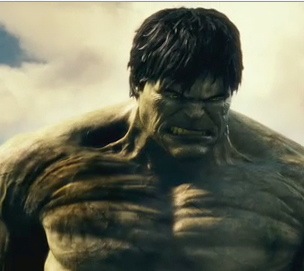
The Hulk Screen Shot, May 1, 2008. (Source:Lawrence Cohen/http://www.apple.com/trailers/universal/theincrediblehulk/large.html). Qualifies as fair use under US copyright laws because its a low-resolution depiction of a character as described in this post.

deep well of pent-up rage to draw from throughout the series. I understand that rage because I’ve seen it in myself over the years. But my rage comes from a life of deprivation and working my ass off to overcome it, only to feel as if there’s still tons’ more work to do. With the struggle to become a successful writer, and not just an academic one with a book and a couple dozen articles to my credit, I’m already tired. But the struggle for more work in a field in which you know you’re well qualified and already have done a ton of work can lead to Walter White rages. Or, for that matter, Bruce Banner each time he turned into Hulk.

Really, I realize that on the whole, I’m not Walter White. I’ve been written off too often in life to see myself that way. But I can understand after spending the better part of three decades working to turn “No!” into “Yes!,” to prove myself as a thinker, educator, historian, manager and writer. Not only to myself, but to my God, and those manning the gates to jobs, publishing, grants and degrees. I get it as to how and why rage can build up. I guess that if I found myself with Stage 3 lung cancer, I could use my talents to write other people’s books and dissertations, or even to write scripts for porn, but that wouldn’t exactly be me.

No, under Walter White’s circumstances, I’d probably call in every favor that I’ve been owed since seventh grade. I’d contact every writer that I’m a fan of, every contact I know associated with publishing books, magazines, scholarly journals, and make myself a royal pain in the ass. That is, until getting a book contract for Boy @ The Window, publishing several pieces I’ve been working on with occasional bursts of writing for the past two or three years. I’d do whatever I could to make sure that Noah and Angelia were taken care of before I passed.

Come to think of it, what I’ve just written should be my mantra, impending death or otherwise. As Nickelback says in “If Today Was Your Last Day,” “against the grain should be a way of life.” That’s been me for the past thirty years. So I’m really only sometimes Walter White.

Rajon Rondo, ultimate against the grain drive before hard foul, 2010 NBA Eastern Conference Finals, May 1, 2010. (Photo by Nathaniel S. Butler/NBAE via Getty Images).

Newer posts →

Boy @ The Window: A Memoir

Boy @ The Window: A Memoir

Places to Buy/Download Boy @ The Window

There's a few ways in which you can read excerpts of, borrow and/or purchase and download Boy @ The Window. There's the trade paperback edition of Boy @ The Window, available for purchase via Amazon.com at http://www.amazon.com/Boy-Window-Donald-Earl-Collins/dp/0989256138/

There's also a Kindle edition on Amazon.com. The enhanced edition can be read only with Kindle Fire, an iPad or a full-color tablet. The links to the enhanced edition through Apple's iBookstore and the Barnes & Noble NOOK edition are below. The link to the Amazon Kindle version is also immediately below:

scr2555-proj697-a-kindle-logo-rgb-lg

Boy @ The Window on Amazon.com: http://www.amazon.com/Boy-The-Window-Memoir-ebook/dp/B00CD95FBU/

iBookstore-logo-300x100

Boy @ The Window on Apple's iBookstore: https://itunes.apple.com/us/book/boy-the-window/id643768275?ls=1

Barnes & Noble (bn.com) logo, June 26, 2013. (http://www.logotypes101.com).

Boy @ The Window on Barnes & Noble: http://www.barnesandnoble.com/w/boy-the-window-donald-earl-collins/1115182183?ean=2940016741567

You can also add, read and review Boy @ The Window on Goodreads.com. Just click on the button below:

Boy @ The Window

Twitter Updates

Tweets by decollins1969
  • RSS - Posts
  • RSS - Comments

Archives

  • June 2025
  • April 2023
  • September 2022
  • August 2022
  • July 2022
  • June 2022
  • May 2022
  • April 2022
  • March 2022
  • January 2022
  • December 2021
  • November 2021
  • October 2021
  • September 2021
  • August 2021
  • July 2021
  • June 2021
  • April 2021
  • March 2021
  • February 2021
  • January 2021
  • December 2020
  • November 2020
  • October 2020
  • September 2020
  • August 2020
  • July 2020
  • May 2020
  • April 2020
  • March 2020
  • January 2020
  • December 2019
  • November 2019
  • August 2019
  • July 2019
  • June 2019
  • May 2019
  • April 2019
  • March 2019
  • February 2019
  • January 2019
  • December 2018
  • November 2018
  • October 2018
  • September 2018
  • August 2018
  • July 2018
  • June 2018
  • May 2018
  • March 2018
  • February 2018
  • January 2018
  • December 2017
  • November 2017
  • October 2017
  • September 2017
  • August 2017
  • July 2017
  • June 2017
  • May 2017
  • April 2017
  • March 2017
  • February 2017
  • January 2017
  • December 2016
  • November 2016
  • October 2016
  • September 2016
  • August 2016
  • July 2016
  • June 2016
  • May 2016
  • April 2016
  • March 2016
  • February 2016
  • January 2016
  • December 2015
  • November 2015
  • October 2015
  • September 2015
  • August 2015
  • July 2015
  • June 2015
  • May 2015
  • April 2015
  • March 2015
  • February 2015
  • January 2015
  • December 2014
  • November 2014
  • October 2014
  • September 2014
  • August 2014
  • July 2014
  • June 2014
  • May 2014
  • April 2014
  • March 2014
  • February 2014
  • January 2014
  • December 2013
  • November 2013
  • October 2013
  • September 2013
  • August 2013
  • July 2013
  • June 2013
  • May 2013
  • April 2013
  • March 2013
  • February 2013
  • January 2013
  • December 2012
  • November 2012
  • October 2012
  • September 2012
  • August 2012
  • July 2012
  • June 2012
  • May 2012
  • April 2012
  • March 2012
  • February 2012
  • January 2012
  • December 2011
  • November 2011
  • October 2011
  • September 2011
  • August 2011
  • July 2011
  • June 2011
  • May 2011
  • April 2011
  • March 2011
  • February 2011
  • January 2011
  • December 2010
  • November 2010
  • October 2010
  • September 2010
  • August 2010
  • July 2010
  • June 2010
  • May 2010
  • April 2010
  • March 2010
  • February 2010
  • January 2010
  • December 2009
  • November 2009
  • October 2009
  • September 2009
  • August 2009
  • July 2009
  • June 2009
  • May 2009
  • April 2009
  • March 2009
  • February 2009
  • January 2009
  • December 2008
  • November 2008
  • October 2008
  • September 2008
  • August 2008
  • July 2008
  • June 2008
  • May 2008
  • April 2008
  • March 2008
  • February 2008
  • January 2008
  • December 2007
  • November 2007
  • October 2007
  • September 2007
  • August 2007
  • July 2007
  • June 2007

Recent Comments

decollins1969's avatardecollins1969 on No Good Teaching Deed Goes…
Mary Rose O’Connell's avatarMary Rose O’Connell on No Good Teaching Deed Goes…
Lyndah McCaskill's avatarLyndah McCaskill on The Raunchiest of Them Al…

NetworkedBlogs on Facebook

NetworkedBlogs
Blog:
Notes From a Boy @ The Window
Topics:
My Life, Culture & Education, Politics & Goofyness
 
Follow my blog

616 616 East Lincoln Avenue A.B. Davis Middle School Abuse Academia Academy for Educational Development AED Afrocentricity American Narcissism Authenticity Bigotry Blackness Boy @ The Window Carnegie Mellon University Child Abuse Class of 1987 CMU Coping Strategies Crush #1 Crush #2 Death Disillusionment Diversity Domestic Violence Economic Inequality Education Family Friendship Friendships Graduate School Hebrew-Israelites High-Stakes Testing Higher Education History Homelessness Humanities Humanities Program Hypocrisy Internalized Racism Jealousy Joe Trotter Joe William Trotter Jr. K-12 Education Love Manhood Maurice Eugene Washington Maurice Washington Misogyny Mother-Son Relationship Mount Vernon High School Mount Vernon New York Mount Vernon public schools Multiculturalism MVHS Narcissism NFL Pitt Pittsburgh Politics of Education Poverty President Barack Obama Race Racial Stereotypes Racism Relationships Self-Awareness Self-Discovery Self-Reflection Sexism Social Justice Teaching and Learning University of Pittsburgh Violence Whiteness Writing

Top Rated

Blog at WordPress.com.

  • Subscribe Subscribed
    • Notes from a Boy @ The Window
    • Join 103 other subscribers
    • Already have a WordPress.com account? Log in now.
    • Notes from a Boy @ The Window
    • Subscribe Subscribed
    • Sign up
    • Log in
    • Report this content
    • View site in Reader
    • Manage subscriptions
    • Collapse this bar
 

Loading Comments...