• About Me
  • Other Writings
  • Interview Clips
  • All About Me: American Racism, American Narcissism, and the Conversation America Can’t Have
  • Video Clips
  • Boy @ The Window Pictures
  • Boy @ The Window Theme Music

Notes from a Boy @ The Window

~

Notes from a Boy @ The Window

Tag Archives: Poverty

Holiday Traditions (really, not having any)

12 Saturday Dec 2015

Posted by decollins1969 in 1, Boy @ The Window, Christianity, culture, Hebrew-Israelite, Marriage, Mount Vernon New York, My Father, Pittsburgh, Pop Culture, race, Religion, Work, Youth

≈ Leave a comment

Tags

616, 616 East Lincoln Avenue, Abuse, Chanukah, Chiropractor, Christmas, Domestic Violence, Family, Giving, Haves and Have-Nots, Holiday Traditions, Maurice Eugene Washington, Mom, Mother-Son Relationship, Poverty, Receiving, Suicide, Womanizing


Christmas Holiday and Traditions Around The World ornament bulb, December 12, 2015. (http://johnseville.benchmark.us).

Christmas Holiday and Traditions Around The World ornament bulb, December 12, 2015. (http://johnseville.benchmark.us).

At my chiropractic appointment yesterday morning, my bone-cracking doctor of fourteen years and I got into a discussion of our holiday plans over the next couple of weeks. Her and her family will visit with extended kin in Virginia, while we’re heading to Pittsburgh to see my in-laws. During our conversation, my chiropractor brought up some of the family traditions she’s preserved with her handful of Christmases with her young daughter and two sons. Traditions like Danish pork roast for dinner, ornaments and other hand-me-downs from her grandparents and other ancestors as part of trimming the tree.

“I wouldn’t know anything about traditions. Matter of fact, there were eight years growing up where we didn’t even celebrate Christmas,” I said, with no forethought about what her reaction might be.

“Oh, I’m so sorry,” my chiropractor said in a quiet yet somewhat shocked tone, as if I’d ruined the Christmas spirit for her kids.

“That’s what happens when you go up in poverty,” I said apologetically, realizing that I might have cost my chiropractor some peace of mind this holiday season.

Even at nearly forty-six, I can still say things without thinking, causing others to have to think more than they normally would. Sometimes, it’s without intent or malice, sometimes it’s because I don’t give a crap what people may think. Regardless, it’s certainly not because I want people to feel sorry for me or to give me a hug.

The truth is, the only holiday traditions I have come either from my wife or her family or were born out of my circumstances. Like making super-sweet, two-packs of Fruit Punch Kool-Aid and mixing it with either ginger ale or Sierra Mist for either Thanksgiving or Christmas. Or getting our son’s Christmas presents ready for him without him knowing the night before. Or me making some holiday/birthday cake for me and us (since my birthday is two days after Christmas). And often going to a soup kitchen, homeless shelter or other venue to give away clothes, toys, money, my time in knowing that no matter how I might feel about my life, plenty others have it much worse.

The truth is also more complicated than simple poverty. Up until my eighth birthday in ’77, my Mom and me and Darren (with either my father or my idiot stepfather) celebrated Darren’s birthday, Christmas and my birthday as separate or nearly separate events. Some of my best times growing up were those days. Then, when the hyperinflation of the late-1970s kicked in — along with a second marriage and two more mouths to feed — Christmases ’78 and ’79 consisted of a fake two-foot table tree, a new shirt or sweater and a new pair of slacks. There were no birthday celebrations for me.

A contemporary Candelabrum in the style of a traditional Menorah. United Kingdom, Chanukah service, December 2014. (Gil Dekel; http://www.poeticmind.co.uk; via 39james via Wikipedia). Released to public domain via CC-SA-4.0.

A contemporary Candelabrum in the style of a traditional Menorah. United Kingdom, Chanukah service, December 2014. (Gil Dekel; http://www.poeticmind.co.uk; via 39james via Wikipedia). Released to public domain via CC-SA-4.0.

Between Christmas ’80 and Christmas ’88, we didn’t even have the fake dwarf tree. Of course, four of those years we were Hebrew-Israelites. But there is this holiday known as Chanukah that also occurs in December, in which Torah believers celebrate the Festival of Lights with eight days of gifts and giving. But these were also the worst of our poverty-stricken years, and we could barely afford one candle for the menorah, much less eight or nine. The best gift I got those years was my idiot stepfather being out the apartment at 616 and on the prowl for other victims for his fast-talking nonsense about making money and living a godly way-of-life. I also attempted suicide on my fourteen birthday, not exactly a tradition worth repeating.

Finally, in December ’89, we had our first Christmas at 616 with my Mom having divorced my now idiot ex-stepfather. She bought a fake full-sized tree. I bought my four younger siblings gifts big and small for the holiday. My mom even made me a Duncan Hines chocolate cake with vanilla icing for my twentieth birthday that year. We didn’t have much, but what we did that year meant so much as we moved into the 1990s.

In all of my adult Christmases, I’ve actually only done one in Pittsburgh prior to our trip coming up in eleven days. It was Christmas ’98. That week, perhaps the only important tradition I’ve ever been a part of began. I moved in with my then girlfriend Angelia, mostly as a cost-cutting measure, partly out of love and concern for our respective futures. We’ve been living together and celebrating the holidays ever since!

Aside

Leaving Mount Vernon

26 Wednesday Aug 2015

Posted by decollins1969 in 1, Boy @ The Window, Christianity, culture, Eclectic, eclectic music, High Rise Buildings, Jimme, Mount Vernon High School, Mount Vernon New York, music, My Father, New York City, Pittsburgh, Politics, Pop Culture, race, Religion, University of Pittsburgh, Work, Youth

≈ Leave a comment

Tags

"Emotion (Ain't Nobody)" Remix (2014), "Swimming Pools (Drank)" (2012), Child Abuse, College, Domestic Violence, Emotions, Family, Kendrick Lamar, Leaving, Loneliness, Maverick Sabre, Moving, Pitt, Politics of Respectability, Poverty, Respectability Politics, Self-Awareness, Self-Discovery


I left for Pittsburgh and for the University of Pittsburgh on this day/date twenty-eight years ago, my first trip on my own. It was my first trip out-of-state since my Mom took me and my brother Darren on a bus trip to Pennsylvania Amish country in June ’78, nine years earlier. At 5:51 am on the last Wednesday in August ’87, with my older brother Darren’s help — and with my Mom and three of four younger siblings watching us from the living room window — I packed my luggage, Army sack, and two boxes of bedding and materials into a Reliable Taxi. We headed for East 241st to meet up with my dad. From there, we took the 2 Subway all the way to Penn Station, with enough time to board and get all of my stuff on the 7:50 am Pennsylvanian train to the ‘Burgh. For the second time in a row, my dad was sober, and gave me a glassy-eyed hug and shoulder squeeze. Darren was both sad and happy to see me go.

Amtrak's Pennsylvanian train pulling out of Altoona, PA station, heading east for Philly, NYC, uploaded February 2013. (Dustin F.; http://www.northeastrailfans.com/).

Amtrak’s Pennsylvanian train pulling out of Altoona, PA station, heading east for Philly, NYC, uploaded February 2013. (Dustin F.; http://www.northeastrailfans.com/).

I’ve gone over the trip to Pittsburgh and my transformation from a seventeen-year-old with the pent-up emotions of someone who hadn’t left May 31, 1982 behind throughout my eight years of blogging and through my memoir. I’ve written about moving on to Pittsburgh before. What I haven’t really written about fully is how I thought and felt in leaving Mount Vernon, New York behind. The short answer is, I was somewhere between terrified, joyous, embittered, and sad to go, and all at once.

I was terrified. It was my first trip on my own, to a city I’d never been to before, to a university I never visited prior to saying yes. I could meet people who might catch on that I was someone who had spent the previous six years with few acquaintances, much less friends. I was hopeful, but had zero idea what to expect.

But I really was happy to leave. Between my decade living at 616, the abuse, the poverty, the Hebrew-Israelite years, the constant ridicule, the years in Humanities, the constant work of watching after Mom, my dad, my siblings, I was through. Throw in a summer of obsession with and emasculation by Phyllis, and five years of realizing that I needed to get out, and going to Pittsburgh was a no-brainer. Heck, if I’d been a bit smarter about my application process, I could’ve just as easily applied to the University of Washington, Stanford, Northwestern, Georgetown, Michigan, University of Toronto and UPenn and almost certainly gotten in. It didn’t matter where I was going, really. I just needed to go and find my myself, and my education with that.

That last year or so in Mount Vernon had let me know that even with an academic scholarship (after a private investigation) from Columbia, staying would’ve been a huge mistake. Between the silent disdain and snickering of Black teachers at Mount Vernon High School around my sullen presence and the whole Estelle Abel episode at the end of four years of torment. Add to that the years of Black middle class folk talking at me about how my life was so much better because they marched or protested somewhere before I was conceived, or because they prayed for me. Add to that this insistence that I “give back to the community.” As if Black Mount Vernon had given me anything but a hard way to go since I was knee-high to a boil weevil.

Viewing and wake service for Heavy D, Grace Baptist Church, Mount Vernon, NY, November 17, 2011. (Mike Coppola/Getty Images; https://cbsnewyork.files.wordpress.com/).

Viewing and wake service for Heavy D, Grace Baptist Church, Mount Vernon, NY, November 17, 2011. (Mike Coppola/Getty Images; https://cbsnewyork.files.wordpress.com/).

As I saw it, the only difference between the vapid, seething facade of White liberalism among paternalistic White Mount Vernonites and the false smiles and frequent excoriations of Mount Vernon’s Black middle class was skin color. They drank deep from swimming pools full of what we now call respectability politics, born out of a need to be good examples to the world, like Kendrick Lamar described in “Swimming Pools” (2012). (Pour up [drank], head shot [drank]…faded [drank]). This isn’t the same as doing the right thing at the right time or speaking truth to power. You make money, wear nice clothes, drive a nice car, stand up straight, look a White man in the eye while firmly grasping his hand. And apologize for not being as assimilable as you pretend. It was 100%, USDA-approved bullshit, and it smelled like it a lot of days, too.

I was sad to leave, too. There was a part of me that still wanted to fit in, out of loneliness, if nothing else. I still liked Clover Donuts and some of the breakfast places on the South Side. I longed for some sort of acceptance, an acknowledgment that I was a real person, even though that would’ve required being around real people at 616, and in Humanities, and in the rest of Mount Vernon. I knew that I’d miss the close proximity to The City. I’d put my hopes and dreams in a place in which I knew I couldn’t afford to stay, literally and figuratively. That longing would come to haunt me in the coming year, but I’d eventually learn, I could always visit New York.

Aside

Part of My Real-Life Hunger Games

24 Wednesday Jun 2015

Posted by decollins1969 in 1, Boy @ The Window, Christianity, culture, Eclectic, eclectic music, Mount Vernon High School, Mount Vernon New York, music, Pop Culture, race, Religion, Youth

≈ Leave a comment

Tags

"Things Can Only Get Better" (1985), 10th Grade, 616, 616 East Lincoln Avenue, Addie Viggiano, Authority Figures, Chemistry, Disillusionment, Harold Meltzer, Howard Jones, Humanities, hunger, Iced Fudge Nut Brownie, Italian, MVHS, New York State Regents Exams, Paul Lewis, Poverty, Sara Lee, Trigonometry


Consequences of hunger in schools, NOKID Hunger, January 2015. (http://www.youthonassignment.org/).

Consequences of hunger in schools, NOKID Hunger, January 2015. (http://www.youthonassignment.org/).

This time three decades ago I’d started to recover from a week of seemingly endless tests and Regents exams at Mount Vernon High School, which couldn’t have come at a worse time for me. The cupboards and fridge at 616 were as bare as they had been since the days before my Mom had gone on welfare. There was only enough milk for my younger siblings, and besides cornbread and cabbage, we were SOL. That Monday we had our exams in World History and English. Tuesday was the Trig Regents, which I started preparing for at the end of February because our teacher Ms. Viggiano didn’t know the difference between sine, cosine and tangent. All of those went pretty well.

Then we ran out of food Tuesday night. I woke up the next morning with water, milk, ice and freeze-dried meat as my choices for breakfast and 50 cents in my pocket. I chose water and only water for the morning. And Wednesday was the busiest day of all. There were two Regents exams, one that morning in Italian, the other in Chemistry. I went to school feeling like I could overcome my hunger and do decently on the test. After all, I had been taking Italian since seventh grade, and I already knew I had scored an eight out of ten on the oral part of this exam. But deep down, I knew I just didn’t have the energy to get through the exam. I had a headache from the lack of food, which grew worse as I started to forget the difference between Italian in past, present, future and present perfect tense. I finished the exam and found myself just hoping for a 70 (anything below a 65 was an F, and the exam counted for a third of my total grade for the course).

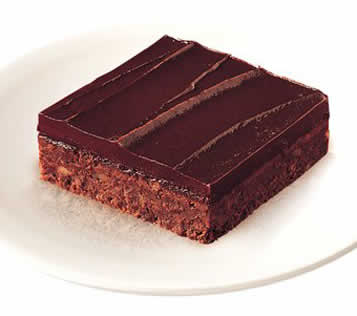
Sara Lee Iced Fudge Nut Brownie (yes, they still make them), 2014. (http://saraleefoodservice.com/).

Sara Lee Iced Fudge Nut Brownie (yes, they still make them), 2014. (http://saraleefoodservice.com/).

I went to lunch and walked over to Chester Heights (Eastchester) to a deli and bought the only thing I could think of to eat: one Sara Lee Brownie. It cost 45 cents, and it was probably the best investment I had made up to this point in my life. I walked back to MVHS, slowly ate the brownie to make it last, and had just enough time to drink some more water before we sat down to take the Chemistry Regents.

When I opened up the exam booklet I started laughing. Our idiot Chemistry teacher Mr. Lewis had told us the month before to “not worry” about organic chemistry as part of the Regents exam even though he had never covered it in class. Listening to him had me averaging a C in his class all year, with my highest exam grade an 87. So I bought a Barron’s Chemistry Regents test prep book the weekend after his pronouncement, and did nothing but study organic chemistry for this exam. It turned out that the first ten questions on the exam were organic chemistry ones, and something like thirty-five out of 100 total covered organic chem. With my brownie digesting, I was ready to kick some butt. I left that afternoon knowing that I did pretty well. But after that shaky morning, I found myself still wondering, did I do well, or was my malnourished mind playing tricks on me?

I found out on Friday, June 21st that I had failed the Italian Regents, with a total score of 45 — I’d only earned a 37 out of 90 on the written party of the exam (I’d taken the oral part with Ms. Maldonado a couple of weeks earlier). On the Chemistry Regents, I had the third highest score in the school — a 95 out of 100. I was bummed, ecstatic, pissed and disillusioned with my teachers and with myself, all at the same time. The goofy-assed Howard Jones tune “Things Can Only Get Better,” a hit at that time, popped into my head from that morning and off and on for the rest of June.

Luckily on the Friday we found out our scores was also the same day we were to meet our AP US History teacher. I’ve already described my late friend and mentor in a previous post. But it’s worth mentioning again how he broke down my protective wall to talk to me about things I’d never discuss with my classmates or my Mom or Jimme. One of those issues was hunger. Not just my constant need for food even when there was food at 616. My hunger, my drive for something better in life. Meltzer noticed it, and gradually got me to exhibit that side of myself in class.

NO KID Hungry campaign logo, Share Our Strength, June 24, 2015. (https://www.nokidhungry.org/).

NO KID Hungry campaign logo, Share Our Strength, June 24, 2015. (https://www.nokidhungry.org/).

For years after AP, Meltzer would say, over and over again, “You know, I never worried about you.” I guess it was because I didn’t take the world around me at face value. I had a healthy disdain for authority figures and the daily bullshit that the world attempted to feed my mind with every day. I wasn’t intimidated by my classmates, and I wasn’t going to allow myself to engage in worrying about grades and pleasing teachers the ways in which they did.

Meltzer picked up on this, and laughed about it all the time. He said that I had that one-of-a-kind look of a student who wasn’t just hungry for good grades, but hungry for knowledge, hungry for something to make sense of a senseless world. I guess that this is all true. Boy, it’s remembering days of hunger past that I miss people like Meltzer the most.

The Importance of The Great Society, 50 Years Later

10 Friday Apr 2015

Posted by decollins1969 in 1, Academia, Boy @ The Window, Eclectic, Patriotism, Pittsburgh, Politics, Pop Culture, race, Work, Youth

≈ Leave a comment

Tags

13th Amendment, Appomattox, Back To The Future (1985), Claiborne Pell, Elementary and Secondary Education Act of 1965, ESEA, Great Society, HEA, Higher Education Act of 1965, Juneteenth, LBJ, Legacy, Michelle Rhee, Poverty, President Lyndon Baines Johnson, Public Education Costs, Racial Discrimination, Racism, Roland Fryer Jr., Segregation, Technocrats, The Great Society, UN Conference on Women, Vietnam War, Voting Rights Act of 1965, War on Poverty, Wendy Kopp


Cartoon about American politics and the economy during the Great Recession, May 9, 2010. (Mike Luckovich, Atlanta Journal-Constitution). Qualifies as fair use under copyright laws (low resolution, relevance to subject matter).

Cartoon about American politics and the economy during the Great Recession, May 9, 2010. (Mike Luckovich, Atlanta Journal-Constitution). Qualifies as fair use under copyright laws (low resolution, relevance to subject matter).

This weekend marks a half-century since President Lyndon Baines Johnson signed the first series of bills into law that signified his Great Society/War on Poverty work. We won’t hear much about this, though. Not with 2015 being a benchmark year for commemorating and celebrating so much else. The Voting Rights Act of 1965. The 70th anniversary of the end of World War II. Appomattox at 150, along with President Lincoln’s assassination, Juneteenth, and the ratification of the 13th Amendment to the US Constitution, ending legal slavery (except for prisoners, of course). The trench warfare of World War I, and the Battle of Gallipoli (if one’s a real war trivia buff). Even the 30th anniversary of Back To The Future and the UN Conference on Women, which gathered in Nairobi, Kenya in the fall of 1985, will likely get more air time, cyber time, and ink than the first of LBJ’s Great Society programs.

But the Great Society was supposed to be a grand experiment and experience. It was supposed to wipe out poverty, end all legal forms of discrimination and segregation, and make the opportunity to achieve the modern American Dream of a middle-class life or better a reality for almost everyone. And it would’ve worked, too, if it weren’t for those pesky kids, um, LBJ’s pesky decisions to go escalate the Vietnam War. The war cost $269 billion in 1970 dollars, or, $1.7 trillion in 2015 money.

What $1 trillion looks like,  January 2012. (http://usdebt.kleptocracy.us/ via Elsolet Joubert).

What $1 trillion looks like, January 2012. (http://usdebt.kleptocracy.us/ via Elsolet Joubert).

Yet it’s not exactly true that it would’ve worked, or that it didn’t work. You see, despite the best efforts of an elitist, right-wing and ineffectual federal government corrupted by plutocrats and its military-industrial complex, the Great Society programs are still with us. For starters, there’s the Elementary and Secondary Education Act (ESEA) of 1965 and Higher Education Act (HEA) of 1965, the first one LBJ signed into law on April 11, fifty years ago on this date.

Without these laws, the modern era of educating millions of children whom states, colleges and universities and local school districts had shut out of K-12 and higher education wouldn’t have occurred at all. With federal government dollars and regulations, not to mention a foundation in the form of the Civil Rights Act of 1964, ESEA and HEA in its initial years provided real hope for “an equal opportunity for all.”

This wasn’t and isn’t just about Jim Crow and racial discrimination and segregation, whether de jure in the South or de facto via residential segregation and redlining in cities outsider the South. This became about opening doors for whole classes of children and adults that had been steel-reinforced-concrete walls before.

Harvard Economics Professor Roland Fryer at American Enterprise Institute, Washington, DC, July 16, 2007. (http://aei.org).

Harvard Economics Professor Roland Fryer at American Enterprise Institute, Washington, DC, July 16, 2007. (http://aei.org).

Technocrats and other public education crises gurus of the likes of Michelle Rhee, Wendy Kopp, and Roland Fryer would have us think that the $600 billion that states and the federal government via ESEA spend on public education each year is all wasteful spending. They say that we have about the same number of students in schools today (about 50 million) as we did in 1970.

Of course, they don’t tell the whole story, leaving out a lot of truth for us. For in my lifetime, students with disabilities (cognitive, physical, emotional) have gone from shutout to included in public schools as part of the Americans with Disabilities Acts of 1989 and 1992, and of course, ESEA. Students with language proficiency issues became part of the public education fabric under the Lau v. Nichols Supreme Court decision in 1974, with funds provided out of ESEA. Charter schools, magnet programs, school counseling, and so many other things that have made public education more inclusive and also more expensive wouldn’t have been possible without ESEA. Meaning, technocrats, that public education was severely underfunded and exclusionary prior to 1965.

The HEA hasn’t had the same effect, primarily because we as a society tend to think of higher education as a luxury and not a right, and have fought hard to make many colleges and universities the exclusive domain of “the worthy.” Still, without HEA and the Pell Grants (named after former Sen. Claiborne Pell (D-RI, 1961-97), the Supplemental Educational Opportunity Grant, the Direct Student Loan Program, and the Supplemental Loan Program, a whole generation of low-income and middle-income families wouldn’t have been able to send their kids to college. They were often the first in their families, as Blacks, as women, as Black and Latino women, as working-class Whites with only a steel mill or automobile plant in their future. At least back then.

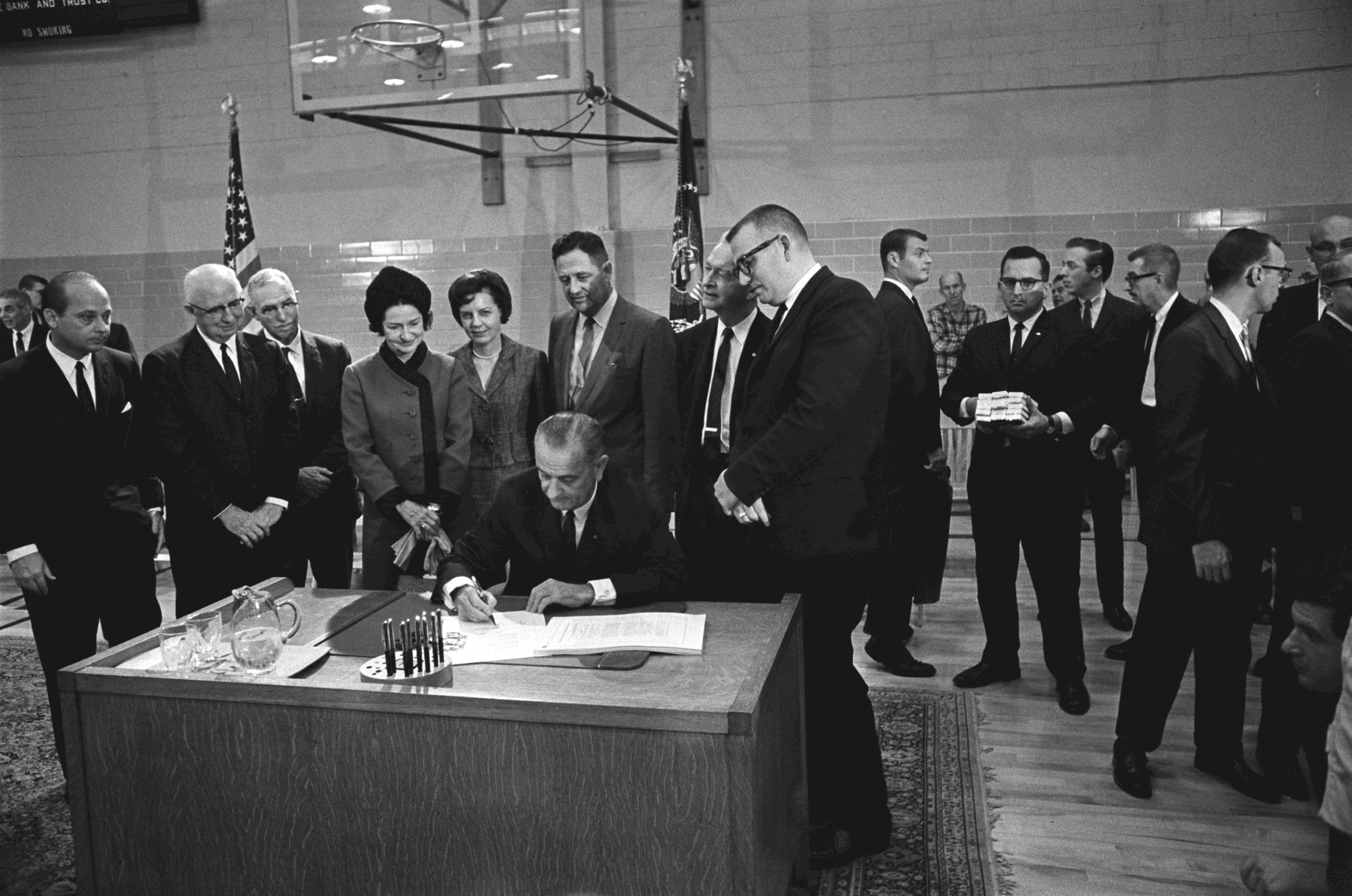
President Lyndon Johnson signing the Higher Education Act of 1965, Master's Gymnasium, Texas State University, San Marcos, TX, November 8, 1965. (http://smmercury.com/). In public domain.

President Lyndon Johnson signing the Higher Education Act of 1965, Master’s Gymnasium, Texas State University, San Marcos, TX, November 8, 1965. (http://smmercury.com/). In public domain.

There’s also the National Endowment for the Arts and the National Endowment for the Humanities, the Head Start program, and Congress passing Medicaid and Medicare, providing health coverage for the elderly and deeply poor for the first time. And all in 1965.

What does all of this mean in 2015? That despite the mountains of books written on LBJ and the failures of the War on Poverty and the Great Society, that these programs worked and work in ameliorating poverty and expanding opportunities for all, even across racial lines. Would they have been more effective with more investment, especially in those initial years, when Vietnam became more of a priority? No doubt.

That’s just it, though. Most Americans — who despite the fears of Ted Cruz and Rudy Giuliani, remain White — didn’t care about poverty and racism and the structures that supported it then, and they mostly don’t care now. They want Congress to work, just not on issues that would permanently unbalance the social hierarchy that they’ve assumed as their birthright for two centuries.

Hence the constant one-two punch of a relationship they see with poverty and those with black and brown skin. Hence the constant carping about taxes and needless spending on food stamps and welfare, even though the true face of government assistance in the US has always been a haggard White one. Hence the constant media tropes about hard work and so-called self-made men worth billions making their money without holding a college degree, who somehow can tell the rest of us how to live. The Great Society, for all of LBJ’s foibles and its weaknesses, remains a great legacy of what America could be, and at times, has been, but overall, refuses to be.

Technocrats, Journalists, and Statistical Orgies

25 Sunday Jan 2015

Posted by decollins1969 in 1, Academia, Boy @ The Window, culture, Eclectic, eclectic music, High Rise Buildings, Politics, Pop Culture, race, Work, Youth

≈ Leave a comment

Tags

Black-White Wealth Gap, Closing the Achievement Gap, Culture of Poverty, Journalists, Michael A. Fletcher, Misery Statistics, Objectivity, Orgy, Poverty, Prince George's County, Racial Disparities, Racism, Rich-Poor Wealth Gap, Statistical Orgy, Statistics, Technocrats, The Washington Post


Front page of The Washington Post, January 25, 2015. (http://newseum.org).

Front page of The Washington Post, January 25, 2015. (http://newseum.org).

There are times when I wonder if exposing racial and socioeconomic disparities is really an eye-opening and life-changing exercise. Or, does the exposure merely serve to confirm the racial and socioeconomic stereotypes that Americans hold against each other? In today’s Washington Post, on the front page and above the fold, there’s an article titled “A Shattered Foundation,” with the smaller type “African Americans who bought homes in Prince George’s [County] have watched their wealth vanish.”

Above the title and subtitle are a series of charts and statistics noting the national chasm of a gap in total wealth accumulation between Black families ($95,300) and White families ($678,800). The theme here is that since the housing bust and subsequent Great Recession, the burgeoning Black middle class of PG County has fallen on desperate times, as home equity — their main means for accumulating wealth — for tens of thousands of these families caved in on them.

Michael A. Fletcher’s article is pretty even-handed. But this is kind of tangential to my larger point. In any given three-month period of my life, for nearly as long as the forty years and two months I’ve known how to read in full sentences, I could’ve scanned at least one article or book about the cruelties of structural racism and capitalism. Even if I’d never grown up in poverty or experienced racial discrimination, there have been enough articles, op-eds, books, book chapters, poems, short stories, plays, letters to the editor and scripts written about disparities to cover the US a mile deep in paper. The fact is, no statistics on growing wealth gaps and persistent racial gaps in wealth and education have led to lasting changes in policies, politics or institutional structures substantial enough to end poverty or ameliorate the most vicious forms of racism in this country.

Hand reaches out from big heap of crumpled papers, January 25, 2015. (http://galleryhip.com).

Hand reaches out from big heap of crumpled papers, January 25, 2015. (http://galleryhip.com).

Then again, there are some folks whose business depends on mantras like the “growing wealth gap” or “closing the achievement gap…as the civil rights issue of our time.” Technocrats in corporate education reform, social scientists in the world of conservative and “libertarian” think-tanks, neoliberals and so-called American liberals in search of compromises to strengthen the American middle class. They all turn to these statistics to tell their stories, to sell their experiments and their research, to promote their politics. It’s as if the statistics on racial and socioeconomic gaps in wealth and education provided a high, like crystal meth or a speedball. In some ways, for these groups, a five-story brothel in which they practiced S&M would be more appropriate for their use of misery statistics.

I am hardly suggesting The Washington Post‘s Fletcher or I or any other journalist, academician or writer should cease making their points with statistics about racial and socioeconomic disparities. But America’s poor and poor people of color or falling-through-the-cracks middle class are far more than “statistics on a government chart” (to quote The Police’s “Invisible Sun“). These are real people with families and lives, people who represent generations of lives in which this construct of racial capitalism has limited their choices and their opportunities, whether they believe in fate or not. So-called objectivity has never been sufficient, and neither have been statistics. What we need is a revolution in thought and in action, quiet or otherwise.

The Comedy of a Tragic Upbringing

10 Saturday Jan 2015

Posted by decollins1969 in 1, Academia, Boy @ The Window, Christianity, culture, Eclectic, Hebrew-Israelite, Jimme, Mount Vernon High School, Mount Vernon New York, Movies, My Father, New York City, Politics, Pop Culture, race, Religion, Youth

≈ Leave a comment

Tags

616, 616 East Lincoln Avenue, Alchemy, Alcoholism, Autobiography, Child Abuse, Comedy, D.L. Hughley, Dave Chappelle, Domestic Violence, Eddie Murphy, Evangelical Christianity, Father-Son Relationships, Fatism, Ghetto Klown (2014), John Leguizamo, Lewis Black, Mother-Son Relationship, Neglect, Physical Violence, Playwright, Poverty, Psychological Abuse, Respectability Politics, Richard Pryor, Rodney Dangerfield, Routines, Stand-Up Comedy, Tragedy, Transmutation


John Leguizamo playing 'Abuelo' in Tales from a Ghetto Klown, PBS Arts Festival, July 2012. (http://www.pbs.org).

John Leguizamo playing ‘Abuelo’ in Tales from a Ghetto Klown, PBS Arts Festival, July 2012. (http://www.pbs.org).

Over New Year’s weekend, I watched John Leguizamo’s HBO comedy special Ghetto Klown (2014), based on one of his one-man autobiographical Broadway shows. I don’t think of Leguizamo as funny in the same way I think of Lewis Black or Dave Chappelle or Eddie Murphy. The sweet spot for me in terms of what is funny or not funny is a routine that makes me think for a second or two, not just laugh out of sheer expectations for a funny delivery or line. Otherwise, I’d think of D.L. Hughley as a great comedian, instead of as a vile one with equally vile opinions on race and culture.

Leguizamo’s hardly the funniest comedian. But then again, he’s always been more than one thing. He’s essentially a playwright, an actor, and comedian, which means Leguizamo’s a very elaborate storyteller. In most of his work, a nonfiction storyteller. I’ve seen some of his other one-man work before. With Ghetto Klown, though, I saw and felt the sense of tragedy and regret that I hadn’t seen in his other plays and specials. Especially when it came to his family — specifically his father — and his closest friends.

When Leguizamo went through his routine about how his mother and father were upset with him about he had portrayed them in his plays as somewhat selfish and oftentimes neglectful and abusive, I understood. I’ve only written one book about my life, and my Mom and dad have both been offended by the idea that I could write about them without their permission or blessings. Leguizamo used them as bits for his comedy and Broadway stage routines for years. That’s a lot of courage, and it’s a lot of tragedy to expose, too.

Transmutation of lead bars into gold, March 2013. (http://quazoo.com).

Transmutation of lead bars into gold, March 2013. (http://quazoo.com).

I’ve thought about it a few times over the past fifteen years. What if I decided to do a stand-up routine that included elements of my upbringing? How would I do that? How would I make domestic violence and child abuse and poverty funny?

I’d start with my father, who I’d call Jimme and my father interchangeably, since that’s been the nature of our relationship for forty-five years. I’ve been able to imitate his language, his drunken stupor, his evil meanness and off-kilter mannerisms since I was fifteen. It would be easy enough to do all of his “po’ ass muddafucka…” insults in bar scenes, all while getting robbed and beaten up by other alcoholics.

I could also do my now deceased ex-stepfather Maurice, especially his constant threats to put me in the hospital or kill me. “Watch dat base in yo’ voice, boy, ‘fore I cave yo’ chest in!,” he started saying to me once my voice changed with puberty. I could imitate Maurice when he weighed over 400 pounds and wore size-54 Fruit-of-the-Loom briefs around 616, with enough fat and dinginess to make me wanna puke.

I could even imitate my Mom, at least on the threatening front. If I argued with her too long about something important that she didn’t want to talk about (like paying bills, for instance), she’d tell me, “Shut up o’ I’ma gonna cut the piss out of you.” Or I could run around a stage singing at the top of my lungs to evangelical Christian music while also acting like my younger brothers, who’d get into knockdown fights in the living room while my Mom was in her spiritual zone.

The fact is, some of the best comedy grows out of tragedy. It may not be funny to the respectable middle class types or the respectability politics types. They both would prefer people “forget about” their pasts and “just move on,” as if these issues are taboo. But you can’t be a very good comedian or writer without confronting your upbringing in some way.

Richard Pryor doing stand up, posted August 11, 2014. (http://deadline.com).

Richard Pryor doing stand up, posted August 11, 2014. (http://deadline.com).

I attempted at times in Boy @ The Window to inject some sarcasm or comedy in many of the tragic scenes in the book. Because they reflecting my thinking in the moments in which they occurred, whether in ’82 or ’88. The few people who commented on this aspect of the memoir didn’t like the comedy or the language. It was because they couldn’t reconcile the mild-mannered version of myself that I presented to the world in high school or in academia with the way in which I grew up.

Watching Leguizamo in Ghetto Klown reminded me of what I learned in watching Rodney Dangerfield (who himself was sexually abused and neglected by his parents growing up) and Richard Pryor (the son of an active and neglectful prostitute) over the years. We all have baggage and demons to deal with every day of our lives. We ignore that past and those evils at risk to ourselves and every person we’ve ever loved. We must turn the tragedy of our upbringing into something that isn’t just a cancer of pain. Be it through storytelling, autobiography, even the kind of comedy that those whose lives were much more stable growing up can appreciate but can never fully understand.

A Weak Legacy: The Acts of the Civil Rights Apostles at 50

24 Friday Oct 2014

Posted by decollins1969 in 1, Academia, Boy @ The Window, culture, Eclectic, eclectic music, Mount Vernon New York, Politics, Pop Culture, race, Work, Youth

≈ Leave a comment

Tags

"The Way It Is" (1986), AERA, American Educational Research Association, Brown Lecture, Brown v. Board of Education (1954), Bruce Hornsby and The Range, Civil Rights Act of 1964, Class Inequality, Color Bar, Derrick Bell, Inequality, Jesse B. Semple, Legacy, Mother-Son Relationship, Poverty, Racial Inequality, Racism, Symbols, The Acts of the Apostles, Voter Disenfranchisement, Voting Rights Act of 1965


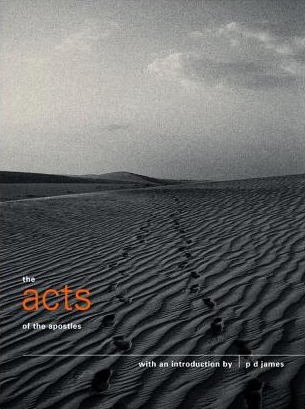
The Acts of the Apostles (book cover), 1999. (http://books.google.com).

The Acts of the Apostles (book cover), 1999. (http://books.google.com).

Yesterday evening, I attended the eleventh annual Brown lecture hosted by the American Educational Research Association at the Ronald Reagan Building here in DC. The great scholar James Anderson talked for about an hour about the connections between voter disenfranchisement and state policies that created systems of educational inequality for Blacks as part of the Jim Crow era. Anderson wondered aloud that with the recent efforts to restrict voting and with the Supreme striking down Section 4(b) (and essentially Section 5) of the Voting Rights Act of 1965 if this meant a return of gross educational inequality on the basis of race and class in 2014. As if the trends of inequality only rise and fall with well protected or unprotected voting rights. Voting rights enforcement is a good barometer, but hardly the only one. The last twenty years of high-stakes testing and corporate education reform provide evidence of a trend of educational inequality that has occurred despite and (in many cases) precisely because of voter participation across all racial lines.

The following, though, is my full response, to Anderson, AERA and all of those in legacy-celebration mode with the Brown decision and the Acts in 2014 and 2015. What was true in 1964 and 1965 remains true fifty years later. The Civil Rights and Voting Rights Acts have been much more lightbulbs on a symbol of real progress — the Civil Rights Movement — than it has been an actual marker of progress. At least for those poor, Black and of color. For Whites, though, the Acts have been the sign of a post-racial America without having to work at it or talk about it. But for the adults I grew up around in Mount Vernon, New York in the 1970’s, there was a lingering hopefulness about race relations and racial equality in America that is absent these days. I don’t know if I felt it because of Archie Bunker and All In The Family or because of all those reproductions I saw of the late Martin Luther King, John F. Kennedy and Robert F. Kennedy together in the same painting over so many living-room mantles when I was six years old. Yet no matter how down or how out, so many poorer Blacks I knew back then had hope for a brighter present and future.

Jesse Jackson, an Obama election sign, and the American flag -- three symbols in one picture, July 2008. (http://plus.google.com).

Jesse Jackson, an Obama election sign, and the American flag — three symbols in one picture, July 2008. (http://plus.google.com).

It wasn’t as if they contemplated Title VII of the Civil Rights Act or Section 2 of the Voting Rights Act at the disco house parties my mother would take me and my older brother to, playing with other kids while the adults danced away their troubles. No, it was the idea that finally, Blacks who looked like us could pry open a door and get an opportunity to succeed in America. Or, to quote The Jeffersons‘ theme song, to “gettin’ our turn at bat.” It didn’t matter to them that the Civil Rights Act, even with all its enforcement teeth, would benefit White women and those lucky enough to be part of Black middle class more than us poor Black folk. Or if the Voting Rights Act could be thwarted by gerrymandering and state decisions to make voting harder for us. The Acts crystallized hope, symbolized a chance, however small, for a better education, a better job, and a better life, for themselves and their families.

The adults in my life were putting on a good face, though, as I came to realize when I was a preteen. My mother had once held the hope that me and my older brother would “make it” by going to college and finding “good-paying jobs.” But by the start of the Reagan Revolution, she no longer spoke in such lofty terms. My mother was hardly alone. By 1979, Blacks like Florence Grier in Bob Blauner’s oral history book Black Lives, White Lives (1989) were saying, to “tell you the truth, I’m not hopeful that we’re going to progress in the eighties as fast as we progressed from the sixties to the seventies.”

Polling back then also reflected this sense of frustration about race and over racial discrimination among Blacks, in contrast to the White sentiment that America had move beyond its racist past. In March 1981, ABC News and The Washington Post conducted their first combined poll on the state of race relations in the US. While 73 percent of Blacks in the poll saw “deep rooted continuing racial problems and blame them on discrimination…only 46 percent of the Whites agreed.”

First page of the Civil Rights Act of 1964 (bent and warped), July 8, 1964. (http://www.ourdocuments.gov/document_data/pdf/doc_097.pdf). In public domain.

First page of the Civil Rights Act of 1964 (bent and warped), July 8, 1964. (http://www.ourdocuments.gov/document_data/pdf/doc_097.pdf). In public domain.

The hopes and aspirations that the Civil Rights Act symbolized have eroded with the Act itself, and are all but absent for younger generations of Americans. An MTV and David Binder Research poll from early 2014 found that 48 percent of White millennials believe anti-White discrimination is as significant as discrimination against people of color, while 65 percent of the people of color they polled believe that Whites have more opportunities for success. Even my own eleven-year-old son reflects this trend. “People were more stupid back then,” my son said to me recently while we talked about the Civil Rights Movement and White resistance to integration, as if racial inequality ended with the movement.Thanks in no small part to the success of the neoconservative movement in declaring the death of racism in the 1980s and 1990s, the generation born after 1981 does not see the federal government as the catalyst for a better life or as a leveler of any playing field.

Bruce Hornsby and The Range’s lyrics from their hit “The Way It Is” summed up the weaknesses of the Civil Rights Act and its legacy well, for us in 1986 as well as today:

Well, they passed a law in ’64

To give those who ain’t got a little more

But it only goes so far

Cause the law don’t change another’s mind…

Nor, apparently, does it create a lasting legacy of racial equality and social mobility.

← Older posts
Newer posts →

Boy @ The Window: A Memoir

Boy @ The Window: A Memoir

Places to Buy/Download Boy @ The Window

There's a few ways in which you can read excerpts of, borrow and/or purchase and download Boy @ The Window. There's the trade paperback edition of Boy @ The Window, available for purchase via Amazon.com at http://www.amazon.com/Boy-Window-Donald-Earl-Collins/dp/0989256138/

There's also a Kindle edition on Amazon.com. The enhanced edition can be read only with Kindle Fire, an iPad or a full-color tablet. The links to the enhanced edition through Apple's iBookstore and the Barnes & Noble NOOK edition are below. The link to the Amazon Kindle version is also immediately below:

scr2555-proj697-a-kindle-logo-rgb-lg

Boy @ The Window on Amazon.com: http://www.amazon.com/Boy-The-Window-Memoir-ebook/dp/B00CD95FBU/

iBookstore-logo-300x100

Boy @ The Window on Apple's iBookstore: https://itunes.apple.com/us/book/boy-the-window/id643768275?ls=1

Barnes & Noble (bn.com) logo, June 26, 2013. (http://www.logotypes101.com).

Boy @ The Window on Barnes & Noble: http://www.barnesandnoble.com/w/boy-the-window-donald-earl-collins/1115182183?ean=2940016741567

You can also add, read and review Boy @ The Window on Goodreads.com. Just click on the button below:

Boy @ The Window

Twitter Updates

Tweets by decollins1969
  • RSS - Posts
  • RSS - Comments

Archives

  • June 2025
  • April 2023
  • September 2022
  • August 2022
  • July 2022
  • June 2022
  • May 2022
  • April 2022
  • March 2022
  • January 2022
  • December 2021
  • November 2021
  • October 2021
  • September 2021
  • August 2021
  • July 2021
  • June 2021
  • April 2021
  • March 2021
  • February 2021
  • January 2021
  • December 2020
  • November 2020
  • October 2020
  • September 2020
  • August 2020
  • July 2020
  • May 2020
  • April 2020
  • March 2020
  • January 2020
  • December 2019
  • November 2019
  • August 2019
  • July 2019
  • June 2019
  • May 2019
  • April 2019
  • March 2019
  • February 2019
  • January 2019
  • December 2018
  • November 2018
  • October 2018
  • September 2018
  • August 2018
  • July 2018
  • June 2018
  • May 2018
  • March 2018
  • February 2018
  • January 2018
  • December 2017
  • November 2017
  • October 2017
  • September 2017
  • August 2017
  • July 2017
  • June 2017
  • May 2017
  • April 2017
  • March 2017
  • February 2017
  • January 2017
  • December 2016
  • November 2016
  • October 2016
  • September 2016
  • August 2016
  • July 2016
  • June 2016
  • May 2016
  • April 2016
  • March 2016
  • February 2016
  • January 2016
  • December 2015
  • November 2015
  • October 2015
  • September 2015
  • August 2015
  • July 2015
  • June 2015
  • May 2015
  • April 2015
  • March 2015
  • February 2015
  • January 2015
  • December 2014
  • November 2014
  • October 2014
  • September 2014
  • August 2014
  • July 2014
  • June 2014
  • May 2014
  • April 2014
  • March 2014
  • February 2014
  • January 2014
  • December 2013
  • November 2013
  • October 2013
  • September 2013
  • August 2013
  • July 2013
  • June 2013
  • May 2013
  • April 2013
  • March 2013
  • February 2013
  • January 2013
  • December 2012
  • November 2012
  • October 2012
  • September 2012
  • August 2012
  • July 2012
  • June 2012
  • May 2012
  • April 2012
  • March 2012
  • February 2012
  • January 2012
  • December 2011
  • November 2011
  • October 2011
  • September 2011
  • August 2011
  • July 2011
  • June 2011
  • May 2011
  • April 2011
  • March 2011
  • February 2011
  • January 2011
  • December 2010
  • November 2010
  • October 2010
  • September 2010
  • August 2010
  • July 2010
  • June 2010
  • May 2010
  • April 2010
  • March 2010
  • February 2010
  • January 2010
  • December 2009
  • November 2009
  • October 2009
  • September 2009
  • August 2009
  • July 2009
  • June 2009
  • May 2009
  • April 2009
  • March 2009
  • February 2009
  • January 2009
  • December 2008
  • November 2008
  • October 2008
  • September 2008
  • August 2008
  • July 2008
  • June 2008
  • May 2008
  • April 2008
  • March 2008
  • February 2008
  • January 2008
  • December 2007
  • November 2007
  • October 2007
  • September 2007
  • August 2007
  • July 2007
  • June 2007

Recent Comments

MaryPena's avatarMaryPena on My Day of Atonement/Bitter Hat…
decollins1969's avatardecollins1969 on No Good Teaching Deed Goes…
Mary Rose O’Connell's avatarMary Rose O’Connell on No Good Teaching Deed Goes…

NetworkedBlogs on Facebook

NetworkedBlogs
Blog:
Notes From a Boy @ The Window
Topics:
My Life, Culture & Education, Politics & Goofyness
 
Follow my blog

616 616 East Lincoln Avenue A.B. Davis Middle School Abuse Academia Academy for Educational Development AED Afrocentricity American Narcissism Authenticity Bigotry Blackness Boy @ The Window Carnegie Mellon University Child Abuse Class of 1987 CMU Coping Strategies Crush #1 Crush #2 Death Disillusionment Diversity Domestic Violence Economic Inequality Education Family Friendship Friendships Graduate School Hebrew-Israelites High-Stakes Testing Higher Education History Homelessness Humanities Humanities Program Hypocrisy Internalized Racism Jealousy Joe Trotter Joe William Trotter Jr. K-12 Education Love Manhood Maurice Eugene Washington Maurice Washington Misogyny Mother-Son Relationship Mount Vernon High School Mount Vernon New York Mount Vernon public schools Multiculturalism MVHS Narcissism NFL Pitt Pittsburgh Politics of Education Poverty President Barack Obama Race Racial Stereotypes Racism Relationships Self-Awareness Self-Discovery Self-Reflection Sexism Social Justice Teaching and Learning University of Pittsburgh Violence Whiteness Writing

Top Rated

Blog at WordPress.com.

  • Subscribe Subscribed
    • Notes from a Boy @ The Window
    • Join 103 other subscribers
    • Already have a WordPress.com account? Log in now.
    • Notes from a Boy @ The Window
    • Subscribe Subscribed
    • Sign up
    • Log in
    • Report this content
    • View site in Reader
    • Manage subscriptions
    • Collapse this bar
 

Loading Comments...