• About Me
  • Other Writings
  • Interview Clips
  • All About Me: American Racism, American Narcissism, and the Conversation America Can’t Have
  • Video Clips
  • Boy @ The Window Pictures
  • Boy @ The Window Theme Music

Notes from a Boy @ The Window

~

Notes from a Boy @ The Window

Tag Archives: Pitt

Eric The Red

27 Monday Sep 2021

Posted by decollins1969 in 1, Academia, Boy @ The Window, culture, Eclectic, Pittsburgh, Politics, Pop Culture, race, University of Pittsburgh, Youth

≈ Leave a comment

Tags

Breaking Bad, Colleagues, Eric, Graduate School, Indoctrination, Marxism, Mentoring, Pitt, Politics of Academia, Racism, Walter White, White Privilege


Bryan Cranston as Walter White (“bald” edition) in AMC’s Breaking Bad (screen shot, cropped), August 2011.

All these years with this blog and I’ve never written about the first of the people who came into my life and decided that I needed their tutelage about grad school and life in general. Because of people like him, despite their helpfulness, I always have found myself leery about people telling me that they will “mentor me” or about calling myself a mentor of any kind. It should be the type of process that happens organically, based on mutual respect and trust, and not just because one person is a generation or more older than the other person.

The first person to volunteer themselves as a mentor during my first year as a graduate school in the University of Pittsburgh’s History department was Eric, who was 42 or 43 to my 21 year-old self in September 1991. A year and a half earlier, Eric was the teaching assistant for my upper-level American Working-Class History course with Dick Oestreicher. We had exactly two interactions that semester. One was when Eric had scored my midterm exam short essays an 89. I asked him, “So, what’s the difference between an 89 and a 90 on this exam, anyway?” His mouth fell open, because he didn’t have an answer. He changed my grade to a 90 on the spot. Two was at a going-away party for my TA from my Western Civ II course my first year at Pitt, Paul Riggs. Paul was headed to Edinburgh, Scotland on fellowship to explore the height, weight, and diet differences among 18th and early 19th century European men in connection to a larger econometrics dissertation. (I still don’t quite know what Paul’s dissertation was about, beyond half-starve British and French soldiers hoping to grow to five-three before dying from bayonets or typhoid during the Napoleonic Wars.)

It just happened that when administrators assigned me a cubby hole for a desk my first year in grad-school-land, that it was in the same part of the department as Eric’s cubicle. His spot included a window that looked out from the third floor of Forbes Quadrangle (now Wesley Posvar Hall) to the open space below, as well as to Hillman Library, David Lawrence Hall, and if you tilted your head to the right, Carnegie Library of Pittsburgh and the lower floor of the Cathedral of Learning. It was a prime spot, and Eric never hesitated to let me or anyone else know that he had earned it.

Eric had, in fact, earned it. He became a grad student in the department at the same time Pitt had awarded me an academic scholarship to attend as an undergrad, in 1987. He bragged about the fact that he had gone from having “only an Associate’s Degree to ABD in just three years.” Pitt had also rewarded Eric an Andrew W. Mellon Dissertation Fellowship in 1990, making it seem he was on “cruise control” for finishing his doctorate in a couple of years.

What I’d learn about Eric over the next two years was that he was also a very active Marxist, a card-carrying member of the Community Party USA (or, maybe, if I’m remembering it wrong, the Socialist Party USA), and a trained actor who had made documentaries and written for news rags about union-busting, union-organizing, and class struggle since the mid-1970s. This would appeal to the powers that were in the department (including Oestreicher, his dissertation advisor), a place that privileged Marxist and neo-Marxist thought above all else. 

The acting and other public-facing work made Eric a stand-out pontificator, but was also where his open declaration of his “mentoring” of me irritated me a helluva lot. Many times during our two years together in the same department, Eric would interrupt me in the middle of a conversation with a peer, or when reading a book before class, or when I was prepping to TA, or otherwise just working away on a research project. It was usually with articles on a topic different from my research on multiculturalism or with an issue he wanted to debate me on. Sometimes, these interruptions and distractions I welcomed, maybe even, needed. But so many times, not so much.

Eric accused me on several occasions of having “a chip on [my] shoulder.” Maybe I did have one, mostly about the erasure of anything on American race and racism by the Marxist set in the department. Eric, though, was the proverbial pot-meet-kettle type. His chip made mine look like a speck. Looking back, Eric reminds me a bit of Bryan Cranston’s Walter White from Breaking Bad. Both he and the fictionalized White could not see how their sense of white male privilege shaped their worldview and their interactions with people. In my case, Eric assumed that I sometimes asked him a question or sought his advice as a sign that I needed mentoring, when in my mind, I was just asking a question or seeking an opinion from whomever was around at 9 pm on a Thursday night. 

But nothing piqued Eric’s interest in me more than his attempts to make me into a Marxist. “Racism is a byproduct of dialectic materialism” or “capitalism,” Eric would sometimes say (or at least, as much as I can remember him saying). This line of whitemansplaining I had heard in less sophisticated circles years ago. I never told Eric about all my arguments over the years with my Humanities classmate JD, but it probably wouldn’t have mattered if I had. Eric was deep into his cups of Marxist wisdom, deep enough to ignore my counterarguments. “You cannot understand inequality in America without also accounting for racism,” I often said. I did enjoy these debates, at least at first. By my second semester, and especially by my second year, I was weary. 

I didn’t see Eric much the second half of the 1992-93 school year (this as I prepared to transfer from Pitt to Carnegie Mellon to battle with privileged-white-privileged, ass-kissing center-right fake Marxists). I guess that was when he finally sat down to write his dissertation, though it would be a number of years before Eric would complete it to his doctoral thesis committee’s satisfaction. 

I wouldn’t have learned about the good qualities of Rolling Rock or explored hard apple cider without his encouragement. But, as intriguing as these arguments with Eric could sometimes be, I longed for being understood, for people who took the centrality of racism to everything that is the US and the West seriously. It would be a long time before I’d find people like me in this life.

The Unbearable Whiteness of White Proximity Fuses, Part II

03 Saturday Jul 2021

Posted by decollins1969 in 1, Academia, Boy @ The Window, Carnegie Mellon University, culture, eclectic music, Pittsburgh, Politics, Pop Culture, race, University of Pittsburgh, Work, Youth

≈ Leave a comment

Tags

Blackness, Colorism, Juan Mezzich, Pitt, Privilege & White Proximity, Publishing World, Rebecca Carroll, Self-Discovery, Surviving the White Gaze, Western Psychiatric Institute & Clinic, Whiteness


Front cover of my copy of Rebecca Carroll’s Surviving the White Gaze, July 3, 2021. (Donald Earl Collins)

The other and more direct parallel with Carroll’s journal in Surviving the White Gaze that comes to mind was someone I worked and went to school with at the University of Pittsburgh. For the sake of simplicity, let’s call her Heather, because I can no longer recall her name. She was a Black/biracial young woman from Erie, Pennsylvania, adopted by a white couple as a baby. I met her my third year at Pitt in 1989, when she was a freshman. We worked together for a while on a psychological epidemiology project that the great Juan Mezzich ran, as part of a larger project to revise the Diagnostic and Statistical Manual of Mental Disorders (turning the then-DSM-IIIR into the DSM-IV) and the International Classification of Diseases (turning the ICD-9 into the ICD-10). Aside from the fact that I thought Heather was cute, the first thing I noticed about her was her hair. It had been straightened, permed, and blown out beyond all recognition of a curl. Even at 19, I knew immediately that she was biracial, and didn’t have a Black woman who knew how to do her hair in her life.

I didn’t say a word. It wouldn’t have mattered if I did. Heather was very much standoff-ish, to me and the couple of other Black and Brown students who staffed up the project. She got along extremely well with the White students and staff, though. She rarely said hello when I saw her outside of Western Psych, on or off campus. Honestly, I felt sorry for her.

In the summer of 1991, when I became a full-time staff member on another of Mezzich’s projects, I worked with Heather for a few weeks. This was when I learned more about her upbringing and extremely limited exposure to Black folk. The questions she would ask about what I listened to on my Walkman, songs by Anita Baker, PE, Earth, Wind & Fire, even Phil Collins. She was maybe two years younger than me, and only knew ‘70s and ‘80s rock. Wow.

But, one day, Heather or another staff member had asked me a question — I don’t remember who asked, or what the question was. It one with a historical component, which I answered in typical granular exactitude, because, me. “Are you autistic or something?,” Heather immediately blurted out, as if I had some disease she had yet to see first-hand. “If by autistic, you mean the Rain Man movie? No, I just have a very good memory,” I answered back, rhetorically, with irritation and a bit of side eye. “Oh, I didn’t mean to offend you,” Heather continued, and then she went on for several minutes about why she thought I was autistic. 

I was gobsmacked by Heather’s entitled ignorance and by the racist and ableist implications of her questions and response. Seriously? I’ve been living on my own, mostly successfully navigating the world since I was 17, adulting since I was 12, and somehow I’m Dustin Hoffman with the most serious form of this neuro-social illness, all because my memory is stronger than a bank vault made of titanium and cobalt? And all this because I’m probably the first Black guy you’ve met with a bachelor’s degree from anywhere other than podunk Western Pennsylvania? All this and more ran like a chyron in my brain as I listened to Heather, now sensing my ire, stumbling over her words to make herself sound like she knew what she was talking about.

There were more than a few places in Carroll’s book where I saw the girl and the young woman that I saw in Heather, taking all of her assumptions about Blackness, about Black people, about whiteness and race, and applying them, often in damaging ways. I was absolutely disgusted at what Carroll and Tess did to her one-time English professor and advisor at the University of New Hampshire. I literally stopped reading Surviving the White Gaze for a week afterward. How could you?!?, I thought. Even with zero exposure to Black men, you had to know you put this man’s job in jeopardy over a minor utterance. You had to know that Tess’ vitriol toward him was about him not finding her intellectually interesting, or worse still, rebuffing potential flirtations. As a professor teaching mostly white students off and on for nearly three decades, I know this part all too well.

Carroll gradually embraced and uncovered her Blackness, over time, through years of alcoholism and eating disorders and fresh traumas from folks White and Black in her life. Her experience, though, is all too uniquely common from where I sit. There is the all too common story of someone the product of a Black-White relationship stumbling through life to discover their true selves and their Blackness, a story that is sadly still so easy to sell to a white-dominated book publishing industry and to a white-reading audience. But even for this sub-genre, Carroll’s willingness to reveal more than she conceals is really necessary, even as it feeds the beast, because she is still a work-in-progress at 52. 

There is also the all-too-common assumption that Black folk who aren’t raised by white parents or the product of a biracial pairing somehow don’t have any identity issues at all. Seriously? Anyone ever read Toni Morrison’s The Bluest Eye? We live in a white-dominant society, with white supremacy and white-ways as its main, everyday features. While most Black folk know and love their Blackness, it does not mean there isn’t a struggle to secure our identities as Black folk. Proximity to white people, class privilege, gender, age, and more play a role into the growing-pains-trajectory of how each of us gets to be comfortable in our own skin (or not). 

As for Wendy and Heather, it’s difficult to say where they are on their own trajectories. I haven’t spoken to either of them in years, decades in Heather’s case. But last time I saw Heather, it was May 1995 at a Pharmor store in the East Liberty section of Pittsburgh. I had just received my Spencer Fellowship award to write my dissertation. Heather was different, too. Her hair had gloss and curls, and her clothes fit better. We ended up talking for a few minutes, with me wishing her well. In thinking about this moment, I’ve wondered if Heather ever fully embraced her Blackness. In my imaginations, I think of her as having done so.

BA Collins, 30 Years Ago

27 Tuesday Apr 2021

Posted by decollins1969 in 1, Academia, Boy @ The Window, Christianity, culture, Eclectic, Mount Vernon New York, New York City, Pittsburgh, Pop Culture, race, Religion, University of Pittsburgh, Work, Youth

≈ Leave a comment

Tags

"Hail to Pitt", Graduation, Looking Back, Pitt, Self-Reflection


Pitt logo, the one closest to what was on their brochures in April 1986, April 12, 2016. (http://pitt.edu).

As I have said in a couple of places this week, this time three decades ago I completed my bachelor’s degree at the University of Pittsburgh. My major was History, with minors in Mathematics (courtesy of my 1.5 years working toward a Comp Sci degree) and Black Studies (before the powers that were changed the name of the degree to Africana Studies). Yay me!

My degree is nine years older than my marriage, between five and 10 years older than most of my students. Goofy semi-asexual me was more than 12 years away from becoming a father. It seems surreal to look back at myself from 30 years ago. Especially when there had been so many years before Saturday, April 27, 1991 when I didn’t think I’d make it to 30.

If I could somehow get a message to my 21-year-old self, and only one message, what would it be? Trust God? Write as if your life depends on it, because it will, and sooner than you think? Take time off after finishing the master’s next year? Move back to NY, so that you can please your Mom? Don’t try to date E, it will go badly?

No, no, no. None of those will do. Find your true self. Find your core beliefs. Admit your loves, your disdains, your anxieties, and your fears. You do that, you will be the writer and the person you always wanted to be. That’s what my dreams and my multiple muses have been saying for years. I’ve heard them, but only in bits and pieces, since I was in my teens.

Well, better lately than never, and better late than Laettner, as I say.

Poverty Wages

20 Saturday Feb 2021

Posted by decollins1969 in 1, Academia, Boy @ The Window, Carnegie Mellon University, culture, Eclectic, High Rise Buildings, New York City, Pittsburgh, Politics, Pop Culture, race, University of Pittsburgh, Work, Youth

≈ Leave a comment

Tags

Academia, Bruce Anthony Jones, Elitism, Narcissism, Nonprofit World, Pitt, Politics of Academia, Poverty, Poverty Wages, Teachers College, Work


“How We Slice the Pie in the USA” editorial cartoon (cropped), September 19, 2011 (David Horsey/Hearst Newspapers; https://catherineandojaswi.weebly.com/document-ten.html)

It’s hard for me to believe sometimes how blissfully ignorant I used to be about the fourscore-and-three-layers’ worth of elitist bullshit there are to the nature of academic — and American — life. Even in the months after reading Derrick Bell’s Faces at the Bottom of the Well, even after reading Jonathan Kozol’s Savage Inequalities, I still believed that my talent and my production alone would win the day over having the right connections in my circle. What a dumb-ass chump I was, in 1993, and as recently as 2013.

But at least in 1993, my 23-year-old behind could be excused for simply not knowing enough about the world that I inhabited. I was a quick study, academically, but not so quick socially, only four-and-a-half-years removed from homelessness and not trusting humans at all. My tutor, my unofficial advisor about the professional worlds that would take up the next 28 years of my life, was one Bruce Anthony Jones. I have talked about Bruce in the past, about how he quietly dumped me and all of his Pitt grad students upon leaving for University of Missouri-Columbia in 1996. That’s near the end of this story, though, not it’s beginning.

It was the year after I did an independent study on the literature of multicultural education in the US, Canada, and the UK with him as a master’s student. I was working with Bruce again, this time to learn more about curricula decision-making and cultural bias among the multicultural education and Afrocentricity set. He knew this was likely my last semester at the University of Pittsburgh. I had tired of White professors and their withering White gaze, and of Larry not quite keeping up with my work, even though he was my history advisor.

So it was in late February 1993 that he invited me out to dinner to discuss my next moves. We ate at some high-end Chinese restaurant in downtown Pittsburgh on or off Grant Street. It was just a few blocks from where Bruce lived, his mini-penthouse on one-and-a-half floors (the 11th and 12th) in The Pennsylvanian, situated on a hill overlooking downtown. It was once the station building for all passenger trains in and out of Pittsburgh, having been converted into a luxury apartment building the year I arrived for undergrad at Pitt, in 1987.

As someone whose moments of interaction with affluence and luxury were few, the dinner meeting and discussion was dizzying. We had a five-course meal, sat and talked for two hours about grad school, the dissertation process, finding work in higher education, the crock of the tenure clock and tenure process, and so much more. Bruce really helped me demystify the cloistered world of academia that night.

But, between the end of that dinner, the walk over to Bruce’s penthouse apartment, and the conversation we had about his work, the high wore off. When we got to talking about salaries, he began to bitch and moan about his own lot as an assistant professor in the School of Education at Pitt. “Well, how much are you making as an assistant professor?,” I asked rather courageously (this isn’t something grad students were supposed to ask, my mutuals had told me, but you don’t get anywhere by not asking questions). “Forty-five thousand. But them’s poverty wages,” Bruce said matter-of-factly, his “Lon-Guy-Land” (Long Island, New York) accent kicking in more fully as he spoke.

In the back of my mind, I’m thinking, Arrogant asshole, the most I’ve ever made in a year is $11,000, and you talkin’ poverty wages to me? I’ve grown up without food, without any amenities beyond the basics, and you live in a 1.5-floor penthouse? Really? I don’t know how well I hid my envy and my rage after hearing Bruce’s complaints about his salary. I let him continue his monologue.

It turned out that Bruce’s time at Teachers College was about more than earning his doctorate. It was also an opportunity for him to earn money, really good money, through his connections at Teachers College and at Columbia University as a whole. Including one with Charles V. Hamilton, the co-author of Black Power: The Politics of Liberation (originally written with one Kwame Ture, née Stokely Carmichael in 1967).

The Pennsylvanian, near downtown Pittsburgh, PA, circa 2012.

I cannot recall if Hamilton was on his dissertation committee or not, but no matter. Apparently connections with Hamilton and others had helped Bruce find work as an education consultant with the Ford Foundation, among several other private foundations. In the two years leading to his PhD and the year before landing his Pitt faculty position, this was his other professional life. “I make double as a consultant than I do as a professor (really “professa,” the way it rolled off Bruce’s Long Island tongue), and for half the work,” I remember Bruce saying.

“What would I have to do to get into that kind of work?,” I asked once I got over the shock of calculating that Bruce was pulling in between $130,000 and $150,000 a year while living in a 1,500-square-foot penthouse that cost $1,350 per month. Bruce should’ve said, “With help from people like me, lifting as we climb.” But instead, he made it sound like he just lucked out, somehow, like he just happened to be walking down a random hallway when leading Black scholars at Teachers College and Columbia offered lucrative consulting gigs on a Friday at the end of a school year.

A bit more than four years later, the summer of 1997, I found myself without work post-PhD. Teachers College had just rejected me for an assistant professorship in social foundations of education. I was literally a month or two away from being completely out of funds. I could pay my rent, but that was about all I could do until I found more work. I hated to do this, but I ended up contacting Bruce for help, either in finding work or in lending me money until I could pay him back.

Bruce returned my call, and was very stern on the phone with me. “I usually don’t lend students money,” he said, as if I was just some random person who reached out to him out of nowhere. But he offered to write me a check for $100. “Now I expect you to pay me back,” Bruce said, as if he was being magnanimous. That was when I finally, really, truly understood. My time with Bruce was about making him feel like a powerful person in academia. It was never about mentoring or helping me at all.

Between 1997 and 2000, I continued writing my own letters of recommendation with Bruce’s name on them, a practice we had developed while I was still a grad student. Only, I also used one of Bruce’s old signatures and some University of Missouri-Columbia letterhead to make his letters written by me on my behalf look more authentic. After I turned down a job at Howard in June 2000, I wrote Bruce a check for $100 and wondered, Should I include interest in the total, and if so, how much? That was the last time I used Bruce’s letter, the last time I contacted him.

In the years since, I’ve worked jobs that paid $70,000 and $80,000 a year, charged as much as $550-per-day as a consultant, and turned down jobs paying $100K in areas that were too expensive for that salary (like the Bay Area, for example). I’ve also had a couple of years where I’ve barely earned $20,000 as an adjunct (those were years I also consulted, so). I know damn fucking well what a real poverty wage looks like. The closest Bruce has been to socioeconomic poverty was probably the night he sat across from me at dinner all those years ago. Intellectual, social, and spiritual poverty have been Bruce’s close companions, I’d bet, for many years. For such are the wages of narcissism.

I Was Never Good at the Popularity Contest

17 Tuesday Nov 2020

Posted by decollins1969 in 1, Academia, Boy @ The Window, culture, Eclectic, Hebrew-Israelite, Mount Vernon New York, New York City, Pittsburgh, Politics, Pop Culture, race, Religion, University of Pittsburgh, Work, Youth

≈ Leave a comment

Tags

616 East Lincoln Avenue, Afrocentric Education, Afrocentricity, Authentic Blackness, Authenticity, Black Action Society, Marc, Molefi Asante, Multicultural Education, Multiculturalism, Pitt, Popularity Contests, Temple University, Writing


Molefi Asante speech, Philadelphia, PA, September 13, 2014. (AP photo/file).

If I so chose, I could be a jealous-hearted bastard, and look at every achievement of all the folk in my life as, “Well, good for you, asshole!” But I learned a long time ago, maybe even when I was at high school’s end, that the main person I have to compete and contend with is me, that I am exhausting enough. Vying for popularity, kudos, or power was never a big thing for me. It was a game I’d almost always lose, for enough reasons to make my pre-Christian and depressed self actually jump off that bridge and end it all. What I learned by my mid-twenties was to allow myself a moment or two of envy, to feel like life was easier for those who achieved what seemed like cheap and easy success and fame. And then I’d think, But that’s not what I want for me. That’s their path, not mine, no matter how many parallels and similarities there may be between them and me.

What helped me get there is a story of plagiarism, of ideas, if not of actual words. It’s a story of my first attempt to publish an article as an adult, my first foray into the world of popularity, of ideas, of writing, and of extreme disappointment. It began the summer before grad school at Pitt in 1991. My friend Elaine egged me into this work, after a long and hard final semester of undergrad and three weeks on a starvation diet while working full time that April and May (I stretched $30 over 20 days). I began work on what I hoped would be my first article, comparing ideas around Afrocentric education with the broader idea of multicultural education.

The piece was originally to be her and my response to what was then a major controversy involving research into the revision of New York State’s social studies curriculum. The New York State Department of Education had given a committee the task of figuring out how to make the state’s K-12 curriculum more inclusive and representative of the state’s tremendous racial, ethnic and other forms of diversity. 

By July, I had gone from disinterested to fully engaged, minus the young woman in whom I no longer had an interest, now working on a piece that had become much more academic than we had originally intended. By then, I’d already learned the names Leonard Jeffries, Asa Hilliard III and Arthur Schlesinger, Jr. I’d read articles from the New York Times and The Wall Street Journal about Jeffries’ name-calling, Schlesinger’s incredulousness about calling slaves “enslaved persons,” and about the committee in general getting along like hyenas tearing at a dead wildebeest.

By the end of September, they would produce One Nation, Many Peoples: A Curriculum of Inclusion: Report of the Commissioner’s Task Force on Minorities: Equity and Excellence. With all my revisions out of the way, I’d produce my first publishable document since elementary school. I titled it “Comparing Afrocentric and Multicultural Education: Why American Education Needs Both.” I had reviewed much of the leading literature in the field at that point, between James A. Banks, Cherry McGee Banks, Christine Sleeter, Robert Slavin, Maulana Karenga, Frances Cress Welsing, 

I mailed it to three journals, including the Journal of Black Studies. It was then that I realized that one of the folks whose writing and research I had referred to in my review was also the editor of the journal. It was the one and only Molefi Kete Asante. He was also the founder and chair of the Department of Afro-American Studies (now Africology and African American Studies) at Temple University in Philadelphia. His The Afrocentric Idea (1987) was half the basis for my understanding what Afrocentricity could look like as pedagogy at the K-12 level.

But I had problems with that pedagogy. I chafed at the idea that there was any litmus test to what was and was not authentically Black or African. No, I’m not sure if “chafed” is the right word. The idea that anyone — including folks like Asante, Karenga, Welsing, Jeffries, and John Henry Clarke — could arbitrarily decided that ragtime isn’t authentically Black or African, while say, rap and hip-hop was definitively so? It seemed like a bunch of bullshit to me.

I knew why reading Asante’s work made me feel that way, too. Those three-and-a-half years spent living in a Hebrew-Israelite household. Those times were with a man who claimed to be my stepfather, the one who could quote the Torah. All while eating squid and crabs and lobster tails, cheating on my Mom while begetting other kids he never fed, and beating on his “womens”, too.

That’s ultimately what I saw in Asante’s work, hell, in the work of the Afrocentric set across the board. That none of them grew up in Accra, Lagos, Dar es Salaam, Gaborone, Nairobi, or Jo’Burg or were Africanists who spent years and years living somewhere on the continent before committing to this litmus test. Intellectually, it made as much sense as a “reincarnated” Balkis Makeda in her 70s living in my Mom’s master bedroom at 616 in 1984 while we eight lived by rules like me cooking for the family at 14 because Mom had “unclean issues of blood.” Or, this fake-ass Balkis Makeda telling us that we could no longer use Ivory soap because she dreamt about rats gnawing on it. Authenticity has its costs, no?    

I didn’t write all this in my essay, though. I merely wrote that between an authentic African-centered education and an authentic multicultural curriculum, the latter made the most sense in a multicultural nation like the US, in a multicultural state like New York. I justified this because I only grew up in New York State, in and around New York City. I justified it because the fact was and remains, American Black folx are, well, Americans, who have cobbled together a culture of resistance, and joy within that, both multicultural American with shards and pieces of African Blackness, and all at the same time.

Nearly two months pass. The Black Action Society at Pitt had brought in Asante to speak, a week and a half before Thanksgiving. The ballroom BAS used in William Pitt Union was jam-packed. BAS heads Justin and Doug looked so proud of themselves that evening. And Asante was just as full of himself. He spoke for between 45 minutes and an hour, about Eurocentricity, about Afrocentricity, about creating a path where Black boys (and sometimes, girls) could become proud Afrocentric men (and sometimes women). Really, it wasn’t much different than anything I heard from temple during my Hebrew-Israelite years.

Then, he turned to multiculturalism and the controversy over the revisions to the New York State global studies curriculum. Unbeknown to the nearly 300 students in the room — aside from yours truly — he began parroting my submitted article. Not quite word-for-word, though. You see, he used my arguments as fodder for sarcasm while on stage, to point to “how the poison” of Eurocentricity “flows” in multicultural curriculum across the US. Asante believed that multicultural education was a mere euphemism to disguise the “Eurocentric in the multicultural.”

“He stole my ideas. He quoted me to crush me,” I told my friend Marc, who attended the talk with me that evening. Marc thought I was wrong, that Asante wasn’t quoting me at all. Yeah, sure Marc, I thought.

Two months later, I received my first article rejection. It was a week after I finally got my driver’s license, and two weeks before I published my first piece, a book review for a small scholarly journal. It was from Journal of Black Studies. I do not remember what the rejection letter said, but I read it as, “Nice try, but you’re not Black enough for this publication.”

This was my first foray — but hardly my last — into this world, where popularity mattered more than reality, perception more than evidence, and power more than anything.

But I do consider myself lucky. A few months later, I presented another paper at a conference at Lincoln University. Bettye Collier-Thomas was in attendance, and we ended up in a conversation. She invited me to apply for the PhD program in history, where I could work with her and esteemed people like Asante. I listened and respectfully declined. 

A year later was my joint article with Marc about the pitfalls of Afrocentricity. And with it, two months of Asante’s sycophants, er, students sitting in seminar rooms writing scathing rebuttal letters questioning if between the two of us we had enough brainpower to spell Black. To learn from one of his former students in 2007 that my imaginations of what could have happened in Asante’s seminars was actually true? Well, I was so glad he had used my words as a baseball bat to my head back in 1991.

I grew up with phony proselytizers. I didn’t need to follow another one. Plus, where’s my Afrocentric gravy? Does it go with my Jollof and Brussels sprouts, too?

Constantine’s, No Longer Around, Missed Anyway

19 Wednesday Aug 2020

Posted by decollins1969 in 1, Academia, Boy @ The Window, culture, Eclectic, eclectic music, music, Pittsburgh, Pop Culture, race, Religion, University of Pittsburgh, Youth

≈ Leave a comment

Tags

1990s Hip-Hop/R&B, 1990s Rap, Coming-of-Age, Constantine's, Dance, Dancehall, East Liberty, Fights, Grad School Days, Graduate School, Hypermasculinity, Misogyny, Observation, PE, People-Watching, Pitt, Public Enemy, Reggae, Self-Reflection, Sexuality, Voyeurism


The East Liberty CVS on Penn Avenue (where Constantine’s once stood), August 2017. (Itay Gabay via Google Maps).

“Last call for the alcohol!,” the half-bartender, half-bouncer would yell about 20 minutes before the two o’clock closing of the hole-in-the-wall joint that spend a few too many Wednesdays, Fridays, and Saturdays in between the summer of 1991 and January 1995. It was my time “bein’ around my peeps,” sitting around to nurse two or three drinks, dance, people-watch, and occasionally go back home with a patron. It was my time to not think about what I feared, especially God and graduate school. It was my time to forget that I was the second of six kids who had the triple responsibility of father figure, oldest brother, and caregiver. Mostly, it was just a place to allow my horny and bored-with-the-world ass hang out and not be so intellectual and weird all the time.

Constantine’s was where the East Liberty CVS on Penn Avenue in Pittsburgh now sits. It was less than two blocks from where I lived on Penn Circle South, my first on-my-own flat that I didn’t have to share with no one. I have no idea what was there in that rickety and beaten up old one-floor building before Constantine’s. Maybe it had always been a bar or a club, one that had seen better days in the decade or two before I was born. Maybe it was once a hardware store or a dry cleaners. Who knows?

All I knew was, in the month or two after I moved into my Penn Circle South studio apartment, I stumbled onto the place. It would’ve been October 1990, just cool enough for Pittsburghers to start wearing winter gear, Steelers jerseys, and enough Steelers and Pirates pleather and leather to scare a herd of charging bulls. A group of 20-somethings were packing their way through Constantine’s front door. There was a bouncer, I guess, checking IDs to make sure everyone was over 21. Judging by the way some of the youngest women were made up, though, I didn’t think the bouncer was consistently checking folks.

I didn’t go in that day. Too many bills, not enough money, and too many thoughts about What would Mom think? and What temptations would harm my soul? So I forgot about the place for the remainder of my senior year at Pitt.

It wasn’t until I started having problems with my friend E during my first full summer living in the ‘Burgh in ’91 that I started carving out me-time at Constantine’s. I went in on a sweltering mid-June Wednesday, and as would become ritual over the next 3.5 years, the so-called bouncer didn’t check me for ID. The joint was tacky as hell. The tables and chairs on the left were either plastic or plywood, Kelly green or harsh white.

Ving Rhames in Dave (1993), Screen Shot, August 17, 2020. (https://MovieActors.com).

The barstools on the right were of better quality, up against a bar with a prickly middle-aged-looking Black dude who maintained his fresh Ving Rhames-in-Dave (1993) haircut under any and all circumstances serving drinks. He was so mercurial. He could be, “Wassup man? How you be?” one Saturday, and “We don’t serve your kind!” another. One Friday, I ordered a screwdriver (Vodka and O.J.) without any pushback. The next Friday, he was all like, “Muthafucka, just call it a vodka and orange juice! I don’t mix screwdrivers here!”

There was a well-proportioned Black woman who always, always, always, sat in the middle of seven barstools, just to the right of the cash register. She was maybe about five-two, skin the color of mahogany, her hair in a ’90s-style perm or in ruffles. She either wore skin-tight dresses or jeans with a revealing blouse, never danced, and rarely greeted anyone. I figured she was either the gruff bartender’s girlfriend or that Constantine’s was her favorite watering hole. Whatever. She probably could drink the entire group of men (and sometimes women) who hit on her every night under the table and under the concrete foundation, too.

Much of what remember from my Constantine’s outings were the fights. There were so many fights. Fights between two guys over a woman would break out in the middle of the dance floor one Friday or Saturday after another. I once saw a guy beaten until there was a pool of blood in the center of the floor, with a trail of blood leading into the alleyway that led to the side entrance of my apartment building. It wasn’t unusual for women to throw down either, knocking each other out somewhere between PE’s “Can’t Truss It” and Daddy Freddy’s “We Are The Champions.”

Speaking of the music, it was the early ’90s, so the vibe went from New Jack Swing, Babyface and Tony! Toni! Toné! to Jodeci, MJB, and PE, with bits of Kriss Kross, Tribe Called Quest, Naughty By Nature, TLC, Dre, MC Lyte, and LL Cool J thrown in. But it was reggae — specifically dancehall — and gansta rap that was mostly in our ears at Constantine’s for most of my time attending. Shabba Ranks was so big at Constantine’s. So was Patra and Buju Banton and fake raggamuffin Shaggy. Outside of Pitt, I didn’t know African Caribbeans lived in Pittsburgh until I started sipping drinks at Constantine’s.

I also didn’t really know how to dance until I started hanging out at this smoked-filled and slick-floored destination. I went on the floor maybe once every three trips. Sometimes I was more interested in observing than in participating. Sometimes I was too stressed and horny to do anything else but stare at faces, breasts, hips, and asses for a few hours. But I did dance, at least, as best as I could. I used my halfway decent post-up moves from the basketball court as the basis for decent footwork. But, as I began realizing that some of the women wanted to grind, I learned how to do that too.

I had some awkward moments. Like the time my Swahili instructor and I found ourselves at Constantine’s one really warm Wednesday night in the fall of ’91. He had a woman on each arm. All three of them were from Tanzania, not the typical group of Constantine attendees. We greeted each other, and proceeded to ignore each other the rest of the night. Class the next afternoon was pretty much about my and his after-hours habits.

Sometimes I almost got into it with a guy here or a woman there because I looked at them the wrong way, said the wrong thing, sounded too educated or “White,” or because someone’s conversation with me ran on too long. In 1992, one woman laughed at me and kicked me in my rear on my way out the door after I revealed that I was “also working on my master’s” — she obviously didn’t believe me. Until she saw me on campus a week later. After that, I lied, and told folks who asked that I was a “part-time college student.”

I was too young, stressed about grad school and life, and excited and aroused to be scared. I should’ve been. On two occasions, someone threw a large liquor bottle in my direction when I was on my way out of Constantine’s. One other time, I swear, a bullet whizzed past me and into the window of a parked car.

The last time I went to Constantine’s was the beginning of February ’95. I kid you not, they were running the place with a portable electric generator plugged into an outdoor outlet — someone hadn’t paid their Duquesne Light bill. It kept the lights even dimmer than normal. There was no heat. This is a bar in Pittsburgh, before climate change made American winters into the wet season in Guyana. It was 15 degrees Fahrenheit that day, and it felt like it at Constantine’s that night, even with nearly 30 dumbasses like me in the bar that night. I left after 45 minutes.

Three days later, I was in Washington, DC, working on my dissertation project. When I returned at the end of March, Constantine’s was gone, bulldozed to make way for East Liberty’s first CVS.

Truly, if my field had been sociology, cultural anthropology, or social psychology, creative nonfiction writing, my times at Constantine’s would’ve made a great project, with me as subject, too. The misogyny, transphobia, homophobia, and hypermasculinity on display, side-by-side with intersectionality, feminism, sexuality, all in the midst of the beginning of this neighborhood’s gradual shift toward gentrification. It was, well, fascinating. Thankful, though, to not feel that awkward at this stage of life.

Having a Fake Ass ‘Mick Hucknall’ as a TA

23 Thursday Jul 2020

Posted by decollins1969 in 1, Academia, Boy @ The Window, culture, Eclectic, music, Politics, Pop Culture, race, Religion, University of Pittsburgh, Youth

≈ Leave a comment

Tags

Anti-Theism, Atheism, Bad Teaching Habits, Existential Philosophy, Karma, Mick Hucknall, Pitt, Simply Red, TA, Teaching and Learning, Teaching Assistant


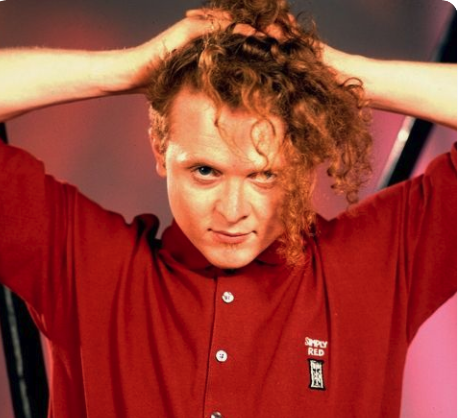
Mick Hucknall of Simply Red, circa 1989. (https://pinterest.com via Rolling Stone)

I have talked quite extensively about the nature and evolution of my own teaching, about the best and worst teachers I remember from K-12, about my profs and their teaching (or lack thereof) more than a little bit while on this blog. But, outside of Paul Riggs, I have not written much about TAs and the good, bad, and ugly there. I haven’t really discussed my own times as a TA, except to point out the pushback I’d sometimes had to deal with from students, the emasculation I had to deal with from my professors who “supervised” me.

Trying to learn how to teach and evaluate students while taking grad-level courses and preparing for oral exams, writing dissertation proposals, doing conference presentations, writing the occasional publication, and serving as a gofer for professors working on their own projects is overwhelming. Add the personal and familial to it, and it’s a wonder than anyone who isn’t from a family with a net worth of at least half-a-mil still decides to earn an advanced degree and teaches along the way. And all for less than peanuts, not even close to a living wage.

All of this is context for my one-time TA from my Existential Philosophy course from Spring 1989 at the University of Pittsburgh. You see, he was the polar opposite of the professor who taught this course. The newly-minted PhD and assistant professor for Existential Philosophy (and soon to jump ship for Georgetown that year) was a dynamic, exciting, and insightful thinker in his mid-30s, one who could take the thickest philosophical text and break it down for even students who didn’t care about the philosophical at all. The sandy-blonde version of the lead singer for Simply Red, by comparison, was boring beyond belief, and could make even the most obvious interpretations of Nietzche, Kierkegaard, and Camus sound like some theoretical mathematics he barely understood and could hardly articulate. It made our required discussion sections on Thursday afternoons a form of torture.

Mr. Australian version of Mick Hucknall, though, also had an agenda, the kind that most progressives would call problematic in 2020. He reined it in somewhat most Thursdays, but on at least two of our days, he couldn’t control himself. It didn’t really matter what the topic was, but frequently the TA would turn the discussion toward anti-theism. This was more than just atheism. One can certainly not believe in God for themselves and still respect those who do. But anti-theism is more along the lines of a Christopher Hitchens or a Bill Maher, people who love to loathe higher-power worshippers, with bits of Islamophobia and racism thrown in.

An example of fake-ass Simply Red’s behavior, courtesy of Boy @ The Window

He spent discussion after discussion railing on Christians as “people who refuse to believe that God doesn’t exist.” One of our discussions was so anti-anything other than atheism that I found it just as bigoted as anything I’d heard from Hebrew-Israelites or out of a televangelist’s mouth, and said as much. I was ignored.

But it wasn’t just the ideological bent that was obvious in this discussion section. It was the racial component. Me and the other three Black students in the section — all three were Black women — were usually quiet when sandy blonde Mick Hucknall described religion as “nonsense.” But the White students who were anti-theists chimed in like they had been suppressed by the Roman Catholic Church’s Inquisition for the past 500 years.

One class in March was really awful. It was after the professor had lectured about Kierkegaard and the “teleological suspension of the ethical” in his consideration of Abraham’s moment of decision between obeying Yahweh and killing his five-year-old son Isaac or not. Right from the start of our 50 minutes, the TA went after religion like he literally hated worshippers. He referred to monotheists as “fools” and “crazy.” The White students talked about “not putting up with religious oppressors anymore” and being “tired of [us] flaunting our Christianity in their faces.” If it had been even a year later in my education, I probably would have gone directly to the professor or the Philosophy department about this very biased form of education occurring in this classroom.

I was so glad when I didn’t have to be in sandy-blonde-Simply-Red’s discussion section anymore. But that wasn’t the last time I saw him. For at least two years afterward, I’d see him on campus, usually outside Hillman Library or the Cathedral of Learning taking a drag on a cigarette, and he recognized me, but never said hello (thank God). But, after I began grad school at Pitt, the aging fake Mick Hucknall didn’t seem to recognize me at all.

It was interesting that as I got older and made more steps to my PhD, his run toward his own must’ve stalled. The last time I saw him at Pitt was in 1998. I overheard him complaining to another grad student about his committee still not ready to declare him done with his dissertation. As burned out as I was from my own dissertation process, at least I was already done.

At that moment, I thought about saying, Ain’t karma a bitch? But I didn’t, mostly because I didn’t see the point. The golden rule of “do unto others as you would have others do unto you” applies to the just and the unjust, the believers, the non-believers, and even the anti-believers. Or, to quote Simply Red, “I, oh I, oh I, I’m gonna do the right thing.” Still, a bemused smile did make its way on my face, because he was such a terrible instructor, and likely one who had traumatized hundreds of students over the years.

← Older posts
Newer posts →

Boy @ The Window: A Memoir

Boy @ The Window: A Memoir

Places to Buy/Download Boy @ The Window

There's a few ways in which you can read excerpts of, borrow and/or purchase and download Boy @ The Window. There's the trade paperback edition of Boy @ The Window, available for purchase via Amazon.com at http://www.amazon.com/Boy-Window-Donald-Earl-Collins/dp/0989256138/

There's also a Kindle edition on Amazon.com. The enhanced edition can be read only with Kindle Fire, an iPad or a full-color tablet. The links to the enhanced edition through Apple's iBookstore and the Barnes & Noble NOOK edition are below. The link to the Amazon Kindle version is also immediately below:

scr2555-proj697-a-kindle-logo-rgb-lg

Boy @ The Window on Amazon.com: http://www.amazon.com/Boy-The-Window-Memoir-ebook/dp/B00CD95FBU/

iBookstore-logo-300x100

Boy @ The Window on Apple's iBookstore: https://itunes.apple.com/us/book/boy-the-window/id643768275?ls=1

Barnes & Noble (bn.com) logo, June 26, 2013. (http://www.logotypes101.com).

Boy @ The Window on Barnes & Noble: http://www.barnesandnoble.com/w/boy-the-window-donald-earl-collins/1115182183?ean=2940016741567

You can also add, read and review Boy @ The Window on Goodreads.com. Just click on the button below:

Boy @ The Window

Twitter Updates

Tweets by decollins1969
  • RSS - Posts
  • RSS - Comments

Archives

  • June 2025
  • April 2023
  • September 2022
  • August 2022
  • July 2022
  • June 2022
  • May 2022
  • April 2022
  • March 2022
  • January 2022
  • December 2021
  • November 2021
  • October 2021
  • September 2021
  • August 2021
  • July 2021
  • June 2021
  • April 2021
  • March 2021
  • February 2021
  • January 2021
  • December 2020
  • November 2020
  • October 2020
  • September 2020
  • August 2020
  • July 2020
  • May 2020
  • April 2020
  • March 2020
  • January 2020
  • December 2019
  • November 2019
  • August 2019
  • July 2019
  • June 2019
  • May 2019
  • April 2019
  • March 2019
  • February 2019
  • January 2019
  • December 2018
  • November 2018
  • October 2018
  • September 2018
  • August 2018
  • July 2018
  • June 2018
  • May 2018
  • March 2018
  • February 2018
  • January 2018
  • December 2017
  • November 2017
  • October 2017
  • September 2017
  • August 2017
  • July 2017
  • June 2017
  • May 2017
  • April 2017
  • March 2017
  • February 2017
  • January 2017
  • December 2016
  • November 2016
  • October 2016
  • September 2016
  • August 2016
  • July 2016
  • June 2016
  • May 2016
  • April 2016
  • March 2016
  • February 2016
  • January 2016
  • December 2015
  • November 2015
  • October 2015
  • September 2015
  • August 2015
  • July 2015
  • June 2015
  • May 2015
  • April 2015
  • March 2015
  • February 2015
  • January 2015
  • December 2014
  • November 2014
  • October 2014
  • September 2014
  • August 2014
  • July 2014
  • June 2014
  • May 2014
  • April 2014
  • March 2014
  • February 2014
  • January 2014
  • December 2013
  • November 2013
  • October 2013
  • September 2013
  • August 2013
  • July 2013
  • June 2013
  • May 2013
  • April 2013
  • March 2013
  • February 2013
  • January 2013
  • December 2012
  • November 2012
  • October 2012
  • September 2012
  • August 2012
  • July 2012
  • June 2012
  • May 2012
  • April 2012
  • March 2012
  • February 2012
  • January 2012
  • December 2011
  • November 2011
  • October 2011
  • September 2011
  • August 2011
  • July 2011
  • June 2011
  • May 2011
  • April 2011
  • March 2011
  • February 2011
  • January 2011
  • December 2010
  • November 2010
  • October 2010
  • September 2010
  • August 2010
  • July 2010
  • June 2010
  • May 2010
  • April 2010
  • March 2010
  • February 2010
  • January 2010
  • December 2009
  • November 2009
  • October 2009
  • September 2009
  • August 2009
  • July 2009
  • June 2009
  • May 2009
  • April 2009
  • March 2009
  • February 2009
  • January 2009
  • December 2008
  • November 2008
  • October 2008
  • September 2008
  • August 2008
  • July 2008
  • June 2008
  • May 2008
  • April 2008
  • March 2008
  • February 2008
  • January 2008
  • December 2007
  • November 2007
  • October 2007
  • September 2007
  • August 2007
  • July 2007
  • June 2007

Recent Comments

decollins1969's avatardecollins1969 on No Good Teaching Deed Goes…
Mary Rose O’Connell's avatarMary Rose O’Connell on No Good Teaching Deed Goes…
Lyndah McCaskill's avatarLyndah McCaskill on The Raunchiest of Them Al…

NetworkedBlogs on Facebook

NetworkedBlogs
Blog:
Notes From a Boy @ The Window
Topics:
My Life, Culture & Education, Politics & Goofyness
 
Follow my blog

616 616 East Lincoln Avenue A.B. Davis Middle School Abuse Academia Academy for Educational Development AED Afrocentricity American Narcissism Authenticity Bigotry Blackness Boy @ The Window Carnegie Mellon University Child Abuse Class of 1987 CMU Coping Strategies Crush #1 Crush #2 Death Disillusionment Diversity Domestic Violence Economic Inequality Education Family Friendship Friendships Graduate School Hebrew-Israelites High-Stakes Testing Higher Education History Homelessness Humanities Humanities Program Hypocrisy Internalized Racism Jealousy Joe Trotter Joe William Trotter Jr. K-12 Education Love Manhood Maurice Eugene Washington Maurice Washington Misogyny Mother-Son Relationship Mount Vernon High School Mount Vernon New York Mount Vernon public schools Multiculturalism MVHS Narcissism NFL Pitt Pittsburgh Politics of Education Poverty President Barack Obama Race Racial Stereotypes Racism Relationships Self-Awareness Self-Discovery Self-Reflection Sexism Social Justice Teaching and Learning University of Pittsburgh Violence Whiteness Writing

Top Rated

Blog at WordPress.com.

  • Subscribe Subscribed
    • Notes from a Boy @ The Window
    • Join 103 other subscribers
    • Already have a WordPress.com account? Log in now.
    • Notes from a Boy @ The Window
    • Subscribe Subscribed
    • Sign up
    • Log in
    • Report this content
    • View site in Reader
    • Manage subscriptions
    • Collapse this bar
 

Loading Comments...