• About Me
  • Other Writings
  • Interview Clips
  • All About Me: American Racism, American Narcissism, and the Conversation America Can’t Have
  • Video Clips
  • Boy @ The Window Pictures
  • Boy @ The Window Theme Music

Notes from a Boy @ The Window

~

Notes from a Boy @ The Window

Tag Archives: Pitt

Carnegie Mellon Stamp of Approval

17 Monday Mar 2014

Posted by decollins1969 in 1, Academia, Boy @ The Window, Carnegie Mellon University, culture, Eclectic, Pittsburgh, Pop Culture, race, University of Pittsburgh, Work, Youth

≈ Leave a comment

Tags

Advice, Barbara Lazarus, Book Reviews, CMU, Coursework, Doctoral Completion, Graduate School, Hazing, Joe William Trotter Jr., John Modell, Oral Comprehensive Exams, PhD, Pitt, Politics of Academia, Prayer, Stamp of Approval, Steve Schlossman, Sycophants, Torture


Approved rubbed stamp in green, March 17, 2014. (http://depositphotos.com).

Approved rubbed stamp in green, March 17, 2014. (http://depositphotos.com).

Two decades ago on this date, I took my oral PhD comprehensive exam. It was on a cloudy Thursday, a day after a late afternoon shower had left a rainbow over the otherwise dreary campus. Like the day after that rainbow, the exam was anticlimactic, more indicative of what I’d learned in two years as a grad student at Pitt than in my two semesters at Carnegie Mellon.

Getting to this exam was sheer torture. Not because I didn’t understand historiography, or hadn’t read at least 230 books and countless articles since my first day of grad school. No, it was torturous because the powers that were had insisted to make my schedule more like the one of a first-semester grad student the previous fall.

I ended up with two courses that I didn’t want and didn’t need, especially since the History Department at CMU had told me that they had accepted all of my master’s and PhD credits from the University of Pittsburgh. Though I had taken four grad seminars in US history (not to mention CMU Professor Joe Trotter’s grad seminar in African American history the year before), I was taking a first-year student’s grad seminar in US history – again! I also had to take comparative working-class history seminar with a combination of anti-race Marxists and brown-nosing sycophants more interested in an A than in actual evidence-based historical interpretation.

Prostate exam from Family Guy (1999-2003, 2005-present) screen shot, July 17, 2013. (http://chattanoogaradiotv.com).

Prostate exam from Family Guy (1999-2003, 2005-present) screen shot, July 17, 2013. (http://chattanoogaradiotv.com).

That, and being broke for most of the ’93-’94 school year — I took what amounted to a $2,000 stipend cut in my transfer from Pitt to CMU — made me pretty cranky my first six months at the home of elitist lily-Whiteness. There were days in those courses where I wanted to literally strangle some of my fellow grad students for being so dense (in the case of first-years) or for being so obviously fake in their praise of a given professor’s argument (in the case of two sycophants in particular). Only the late Barbara Lazarus and Trotter kept me grounded enough so that I didn’t spend every moment of Fall ’93 making voodoo dolls out of Steve Schlossman and John Modell for putting me through the hazing process.

Somewhere around the beginning of November ’93 — after some much-needed time in prayer — I began to realize a few things. One, that I’d already done so much reading on topics like immigration, industrialization, slavery and the connections between race and class (and race, class and gender). So much so that unless it was an author of major interest, I could skim or skip the reading, or even find a few book reviews and compare them to my extensive library of notes on the other authors in a given subfield or field.

Two, that my time outside of class was still my time. I knew that I wanted to do multiculturalism as a dissertation topic, and that I wanted to do it in the context of Black Washington, DC. So I began ordering microfilm of Black weekly newspapers like the Washington Tribune and Washington Bee (going back as far as 1915) to look at as much material as possible. It calmed me to know that I was working on my dissertation topic nearly a year before Trotter and my committee would official approve it.

Three, I knew by January ’94 that Schlossman, et al. had agreed that the Spring ’94 semester would be my last one in coursework. I still had to take Modell’s goofy Historical Methodologies course, but having to do things like my oral comprehensives made going to class just bearable enough.

Acting a part quotes from actors, March 17, 2014. (http://thepeopleproject.com/actors/quotes).

Acting a part quotes from actors, March 17, 2014. (http://thepeopleproject.com/actors/quotes).

Finally, I took out a loan. I’d only taken out one student loan since finishing undergrad in ’91, but it was obvious I couldn’t live off of a $7,500-per-year stipend. Really, no one could, not without rooming with another student or having a spouse with a real income. The money came in at the beginning of March, making my march to become ABD that year that much easier.

By the time I walked into the second-floor conference room in Baker Hall to take my orals, I knew there wasn’t a question about what I knew and how well I knew it. It was about whether I could show the folks at CMU that I could play along with them in their version of grad school, which wasn’t any different from any other history doctoral program’s version. And I did play along, for two hours, more than long enough to move on to the dissertation proposal round.

When I said years later to my friend Laurell that Humanities and Mount Vernon High School had prepared me more for grad school than it did for undergrad at Pitt, this was what I meant!

When Work Really Is Too Much

27 Monday Jan 2014

Posted by decollins1969 in 1, Carnegie Mellon University, culture, High Rise Buildings, Jimme, My Father, New York City, Pittsburgh, Politics, Pop Culture, race, University of Pittsburgh, Work, Youth

≈ Leave a comment

Tags

Bigotry, Burnout, CIS, Computer and Information Systems, Hard Work, Hard Work Mythology, Jay Wickliff, Long Hours, Pitt, Presidential Classroom, Racism, Sexual Harassment, Sleep Deprivation, Workplace Harassment


From "How to Do More Work in Less Time" article, Forbes Magazine, February 28, 2012. (Deborah L. Jacobs/http://forbes.com).

From “How to Do More Work in Less Time” article, Forbes Magazine, February 28, 2012. (Deborah L. Jacobs/http://forbes.com).

I’ve been working for a paycheck in some capacity since September ’84, when me and my brother Darren began working with our father Jimme down in Upper West/East Side and Midtown Manhattan. Back then, we cleaned the floors of corporate offices, the carpets of condos and co-ops, and endured Jimme’s alcoholic ups and downs. There was one lesson, though, that stuck with me in the year or so that we worked for our father, one that extended the lesson we observed from our Mom before we fell into welfare in April ’83. That we wouldn’t get far without hard work or without having work, and that if we wanted to avoid the work of a low-paying, back-breaking job like buffing and waxing floors, we also needed to work smart, to use our brains and our muscles

Since then, the longest I’ve been without a job has been ten months, between August ’86 and June ’87. I worked all the way through undergrad at Pitt and was a grad assistant and teaching assistant throughout grad school (with the exception of my time as a Spencer Foundation Dissertation Fellow in ’95-’96, and even then, I worked on two of Joe Trotter’s research projects). I’ve faced periods of unemployment and longer periods where I’ve cobbled together part-time and full-time work, as well as held stable full-time work in the nonprofit and higher education worlds.

Working long hours, January 23, 2014. (Mark Holder/http://www.findersandsellers.com).

Working long hours, January 23, 2014. (Mark Holder/http://www.findersandsellers.com).

In all that time, I’ve only held two jobs where I’d been overwhelmed with work. Not the actual act of performing the duties of these jobs, mind you. The number of hours in which I had to show up for work was what eventually made these jobs overwhelming. My first time experiencing full-time work outside of a summer job was in the middle of my Winter/Spring ’89 semester. I worked for Pitt’s Computer and Information Systems’ (CIS) computer labs back then. I had requested more hours, and had gone from twelve to twenty to thirty-six between the beginning of January and the second-half of February, covering for folks who had moved on to real full-time work after graduating.

This was a seven-week period in which I averaged 36 hours per week while taking sixteen credits — five classes — and all while facing sexual harassment from my co-worker Pam, harassment tacitly sanctioned by our boss and her friend Cindy. Despite it all and my $4.15/hour salary, I focused on the work, the need for extra cash, and my friends, and came out the other side, and hoped to avoid a situation like that again.

I stumbled my way into a worse situation in my first full-time work after earning my doctorate, with the now out-of-business Presidential Classroom. My official title was Director of Curriculum, but that was my main job for only nine months out of the year. Because Presidential Classroom had dedicated itself to edu-tainment with a full-time staff of only a dozen, this meant that all full-time staff were also part of what we called Program. Fifteen weeks during the winter, early spring and summer, one group of 300-400 high school juniors and seniors from across the country (and Puerto Rico and outside the US/commonwealth) after another would spend a week in DC learning about “how government and politics work on Capitol Hill.” Or, as our brochures would say, “Not your typical week in Washington.”

One version of Presidential Classroom logo, January 27, 2014. (http://congressionalaward.org).

One version of Presidential Classroom logo, January 27, 2014. (http://congressionalaward.org).

I worked on-site at the Georgetown University Conference Center (where Marriott had a hotel, primarily for families visiting their hospitalized loved ones at Georgetown University Hospital) for seven of those weeks. I supervised interns, so-called faculty (some of whom were government employees who seemed more interested in chasing skirts than in sharing their experiences) and worked with other staff while watching over these groups of students roaming all over DC and Northern Virginia week after week.

One week in February ’00, I counted up, and found that I’d worked 120 hours in all. This included a 21-hour-day, in which I’d caught a boy in a girls’ hotel room, and then proceeded to contact his parents and expel him from the program. Between that and the bigoted staff I worked with — including my boss, the ED, who once told the joke that “slavery was a hoax” — I knew that putting in 100+ hours per week and sleeping in lumpy beds for $35,000 a year wasn’t worth it. By the last week of June ’00, I was severely sleep-deprived and ready to run my co-workers through with a long spear.

The lesson here was that we all need work, and we all need to work hard in order to guarantee success. But working hard also requires hard thinking and decision-making. It required me to say “No” to things that I had said “Yes” to when I was younger and more desperate for any job. What’s the damnable misery of it, though, is knowing that there are millions of people stuck in jobs that require so much more of them than they should be willing to give.

No job should require the kind of hours I put in combined with harassment and bigotry unless the salary is in the six-figure range, and even then, it’s not worth it. It won’t be worth the loss of self-esteem, the sleep deprivation, the sudden weight gain, the irritability and the temptation to turn to forms of self-medication. It wasn’t worth it for me in ’89 or in ’00, as I’m sure it isn’t for those of you in jobs like this now.

In Denigration of the Black and Accomplished

20 Monday Jan 2014

Posted by decollins1969 in 1, Academia, Carnegie Mellon University, culture, Eclectic, Pittsburgh, Politics, Pop Culture, race, University of Pittsburgh, Work

≈ 1 Comment

Tags

Abuse, Academic Culture, Academic Politics, Accomplishments, Achievements, Black Milwaukee, CMU, Denigration, Joe Trotter, Joe William Trotter Jr., Larry Glasco, Laurence Glasco, Meritocracy, Neglect, Pitt, Richard Oestreicher, Running Interference, Scholarship, Whiteness


Screenshot of Richard Sherman post-game interview with Erin Andrews, NFC Championship Game, Seattle, WA, January 19, 2014. (http://msn.foxsports.com).

Screenshot of Richard Sherman post-game interview with Erin Andrews, NFC Championship Game, Seattle, WA, January 19, 2014. (http://msn.foxsports.com).

I plan half of my blog posts in advance. At the beginning of every year, I make up a list of topics that I intend to cover, listed by month, and then go through that list. For the other half, I take advantage of relevant news stories or sudden life experiences that also seem relevant. Screen shot 2014-01-20 at 9.25.25 AM

Today’s post is a combination of planning and the impromptu. I’d already planned to write about the tightrope of being Black and accomplished — actually, more like the noose of it. But thanks to @profragsdale’s tweet, aka, Rhonda Ragsdale, an Associate Professor of History at Lone Star College-North Harris (Houston, Texas) and a PhD candidate at Rice University, I started on this topic a day early. Her tweet was the kick-off to eight hours of tweets about the cold and often cold-shoulder reception women — and Black male and LGBT — faculty and grad students receive when bringing up, discussing or even promoting themselves and their accomplishments.

Only to see more of these tweets and thoughts confirmed in another arena. The response of the racist, George-Zimmerman-set to Richard Sherman’s post-game interview with Erin Andrews on FOX within a couple of moments after he made the play to seal the game for his Seattle Seahawks to go play in Super Bowl XLVIII. You, Black man, can’t have a flash of anger and moment of passion on TV after playing in the NFC Championship Game, for then your accomplishments will be used against you. (Sarcasm aside, Sherman’s taunting will likely result in a fine, but that’s the NFL).

Single Drum Rollers with Rock Crushing Drum crushing soil and rocks (similar to how Whiteness can crush Black accomplishments), January 20, 2014. (http://bomag.com).

Single Drum Rollers with Rock Crushing Drum crushing soil and rocks (similar to how Whiteness can crush Black accomplishments), January 20, 2014. (http://bomag.com).

My post is much, much closer to home. I had the blessing and the curse of having two Black males as my official advisors while in grad school at Pitt and Carnegie Mellon, Larry Glasco for two years at Pitt, and Joe Trotter for four years at CMU. My gripes and complaints about their neglect, selective attentions to my development, and, in Trotter’s case, harassment and psychological torture I’ve already documented well here. What I haven’t discussed is that they were part of a cycle of academic abuse that they passed down to my generation of grad students, and likely some of my colleagues are passing on to their grad students as I write today.

My best example of how denigration in academia works was a conversation I had with Dick Oestreicher, a Pitt professor for my grad seminar in American Working-Class History in Fall ’92. I was in Trotter’s African American History seminar at CMU at the same time. Oestreicher asked me what else I was taking that semester, I guess because I’d proven resistant to the idea that social class had primacy over all forms of inequality, even in the US (a neo-Marxist to the core, I guessed).

When I told him I was in Trotter’s seminar, Oestreicher said, “Oh, I’ve heard of him,” with the disdain a fashion designer usually reserved for suits off Sears’ rack. You’ve “heard of him?” Really? Trotter, an award-winner scholar and author with a groundbreaking book on Black migration, urbanization and class formation in Black Milwaukee: The Making of an Industrial Proletariat, 1915-1945 (1985; 2007), and you’ve heard of him? A colleague only three blocks and one bridge away, and you’ve heard of him? Even now, the only word I have to that is, “Wow!”

If Oestreicher was the only one to do that, and only to Trotter, then my observations here would be suspect. But I witnessed this same kind of thing from other White history professors at Pitt and CMU toward Trotter and Glasco during my grad school years. Heck, one of the reasons I left for CMU in the first place was because I knew several of the most powerful professors in the Pitt history department didn’t respect Glasco’s work, and by extension, my own progress and work.

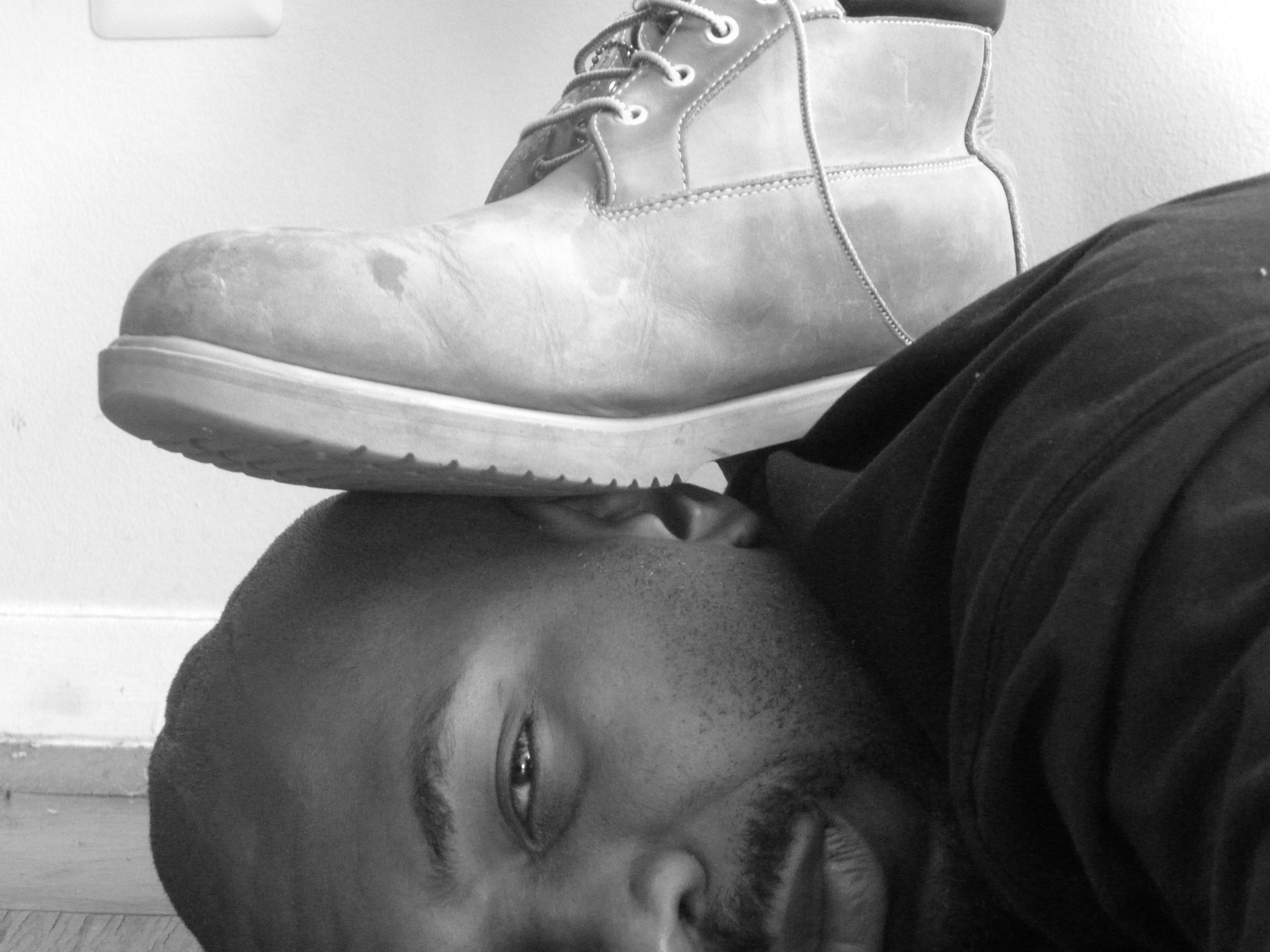
Foot On My Neck & Head, symbolic of my years as a Hebrew-Israelite (also of grad school), April 18, 2011. (Donald Earl Collins).

Foot On My Neck & Head, symbolic of my years as a Hebrew-Israelite (also of grad school), April 18, 2011. (Donald Earl Collins).

Maybe that was part of the reason why Trotter would constantly “run interference” on my behalf, to protect my “interests” during my four years there. Because, despite all the long hours, the sweat, tears and blood, there were folks at CMU who just saw him as a mere Black man, not a colleague or scholar every bit their equal. Given the books, the articles, the grants and so many other accomplishments, Trotter was easily the most productive professor in the department.

None of this justified how Trotter treated me when I was his student. I was semi-aware of the racial politics of accomplishment denial that folks around us practiced. I often chalked it up to jealousy or stress, thinking that the quality of my work or — to use Trotter’s terminology — my scholarship would show the academic world my worth. What White disdain toward Glasco and Trotter — and Trotter’s harassment of me — taught me, though, is that I’d have to be White in order for my accomplishments to seriously matter in academia, and I wasn’t planning on being White in my lifetime. And, that intellectual Whiteness can be nurtured and grown into Black professors.

In the years since finishing my own PhD, I’ve faced my own dilemmas around my achievements. I’ve at times attempted to fit in by downplaying my publications, by not bringing up my degrees, by not talking about my fellowship awards. What have I learned? To deny myself of my own accomplishments is like making a fine wine but not even daring to take a sip. White accomplishment deniers be damned.

Who I Was Thankful For In ’88 — Ron Slater

28 Thursday Nov 2013

Posted by decollins1969 in 1, Academia, Boy @ The Window, culture, Eclectic, Pop Culture, race, University of Pittsburgh, Youth

≈ Leave a comment

Tags

Break Point, College Success, Money, Money Problems, Pitt, Ron Slater, Self-Reflection, Sera-Tec, Student Aid, Thanksgiving, Thanksgiving 1988, Trust


Stretching the dollar, November 28, 2013. (http://kidminspiration.files.wordpress.com/2012/11/stretching-dollar.jpg).

Stretching the dollar, November 28, 2013. (http://kidminspiration.files.wordpress.com/2012/11/stretching-dollar.jpg).

From September 6, ’88 through the beginning of Thanksgiving week twelve weeks later, I had a grand total of $335 to work with. That included money for food, rent and washing clothes. It included the $75 I made over three weeks and six sessions with Sera-Tec donating plasma. It wasn’t the first time I’d tortured dollars into submission, and it’s hardly been the last. But it was the first time in my life I reached out for help beyond myself and family.

From Boy @ The Window:

Despite these acts of generosity and my acts of desperation, I knew that I’d probably starve before the semester was over. I had less than ten dollars to work with after the first week in November. I went to Thackeray Hall to register for classes for next semester. While there, it occurred to me to go upstairs to see one of the financial aid counselors, an older Black woman named Beverly who’d been really nice to me while working through my bill issues earlier in the semester. I told her in detail what was going on. “You need to talk to Ron,” she said, referring to Ron Slater, the university ombudsman, the person who normally resided over tuition payment issues. So there I was the next day, explaining to the ombudsman my situation.

“We’ll take care of this, we’ll find you some extra money. Just hang in there for a few days,” he said. Slater actually offered me money right out of his wallet.

“No thanks, I’ll be all right,” I said, my voice starting to crack because I was so grateful that anyone cared enough to help me through my dire straits. I somehow found a way not to cry right there on the spot.

Hypodermic needles used for donating blood or plasma (note the gauge or thickness), November 28, 2013. (http://dmplgrl.blogspot.com).

Hypodermic needles used for donating blood or plasma (note the gauge or thickness), November 28, 2013. (http://dmplgrl.blogspot.com).

The week before Thanksgiving, I went to check in with Beverly. “I’ve got good news for you, but you’ll have to wait a few days.” Through the ombudsman, the university had recalculated my financial aid package, increasing my Pell to the maximum amount allowed, and added the federal SEOG grant (Supplemental Educational Opportunity Grants) to my aid menu. Both gave me an extra $800 to work with. After that weekend, one where Regis’ potatoes became a part of my diet, I bummed five dollars off of one of my classmates from General Writing. The next day I got my check from the ombudsman. “I’m so glad to have been of help. It’s part of my job. I just wish you’d come to me earlier,” Slater said. Hearing that did make me tear up. I was in the spirit of the season already. It was two days before Thanksgiving. I spent that holiday at Melissa’s house with her and her father, an ailing contractor in his early-sixties.

Slater’s wasn’t the only act of generosity I was thankful for that semester. Between my friends Regis and Marc and Melissa, I didn’t starve in those last couple of weeks before Thanksgiving. But Slater’s job, his work had made it so that I could graduate, not just eat peanut butter crackers, horrible tuna sandwiches and pork neck bones and rice into that December.That was a quarter-century ago.

Fast-forward nine years. My then girlfriend and now wife also ended up seeking help from Slater, as she could not finish her degree because she owed several thousand dollars to Pitt in tuition. I encouraged her to write and meet with Slater. He deferred her tuition payments for the upcoming spring semester so that she could graduate in April ’98.

It’s not every day that I get to thank someone for not only helping me, but others in my life as well. I don’t know where Ron Slater is now, but I am truly, truly thankful that our paths crossed in the fall of ’88.

Fall & Thanksgiving 1988

Fall & Thanksgiving 1988

Ambient Hero

18 Monday Nov 2013

Posted by decollins1969 in 1, Academia, Boy @ The Window, Carnegie Mellon University, culture, Eclectic, Pittsburgh, Pop Culture, University of Pittsburgh, Youth

≈ Leave a comment

Tags

AMB, Breaking Up, Dating, Hero Complex, Kiss of the Spider Woman, Long Distance Relationships, Maturity, Oscillating Relationships, Pitt, Relationships, Smallville, Superman, Tom Welling, U Maryland, University of Maryland, Vanessa Williams


Tom Welling as Clark Kent/The Blur (almost Superman) from Smallville series, November 18, 2013. (http://latimesherocomplex.files.wordpress.com/).

Tom Welling as Clark Kent/The Blur (almost Superman) from Smallville series, April 2011. (http://latimesherocomplex.files.wordpress.com/).

In the years between the chronological end of Boy @ The Window (February ’90) and when I began dating my wife (December ’95) of now thirteen and a half years, my relationship life was hit and miss, at times in a silo, and for two of those years, almost completely nonexistent. Grad school took up much of my time and energy, and there were times I barely had the money to catch a bus to campus at Pitt or Carnegie Mellon, much less go out for a dinner and a movie.

It was at the end of ’94, after becoming ABD (All But Dissertation for those not pursuing PhDs) that I felt I finally had the time to take my dating life more seriously. I realized that I’d been separating my sex life from my wanting-a-more-serious-relationship-life. Casual sex was fine, but I still found it more daunting to be in a relationship when I wanted more. So did the women in my life back then.

These realizations came to a head in my relationship with a woman I’ll call AMB for the purposes of this post. I’d known AMB off and on since ’90, as a result of a mutual friend whom I’d worked with during my Western Psych job years. By ’95, she was in grad school herself at the University of Maryland, working on her master’s degree in history. It was a different area in the field, luckily, so no frequent debates about how many historians can dance on the head of a pin.

During that summer and into the fall, we began seeing each other off and on. I found it wonderful at first. After years of grad school, of not even being remotely attracted to anyone who was a historian, I could have a conversation with someone about my doctoral thesis research and about my family at the same time. And all without having to explain it as if I were teaching a class or their eyes glazing over!

But there were issues right from the start. At the time, AMB lived with her mother in Maryland, and with me not owning a car, it was a four-and-a-half-hour trip by bus, longer by train, and costly on a grad school budget if I planned on renting a car. My dissertation research, though, brought me to the DC area frequently. So I visited her in August, October and November, while she came to visit me in July and October as well.

Oscillating balls hitting each other, November 18, 2013. (http://www.burbuja.info).

Oscillating balls hitting each other, November 18, 2013. (http://www.burbuja.info).

There was also the matter of her little one. At the time, I couldn’t have imagined working on an M.A. or PhD with a young son or daughter to raise. And although I admired how AMB was juggling, she was also struggling with this as well. Between her ex and the psychological abuse that came with him, her daughter, her mother and grad school, it was no wonder that our phone conversations could turn from boyfriend-girlfriend to psychologist-client on a dime.

The biggest issue, though, was defining the nature of our more-than-friendship as it began to evolve after July ’95. Depending on the week and what set of friends were around, AMB either introduced me as her “boyfriend” or as her “friend.” The first time this occurred, we were around a group of her U Maryland friends during my October visit, the weekend before the Million Man March. But one-on-one or over the phone, she didn’t slip up. I found it a bit strange, even as someone who didn’t date between December ’92 and October ’94.

Then, on AMB’s last visit with me in Pittsburgh, at the end of October ’95, she did it again, at Hillman Library, among a group of our mutual acquaintances and friends. What really clinched it for me, though, was when she added that I was her “hero.” That was a record scratcher for me. Really? How many lives had I saved? Could I shoot laser beams out of my eyes or phase through walls? After having put two younger women on a pedestal in my previous life (Crush #1 and Crush #2, Wendy and Phyllis — see blog), I couldn’t — no, I wouldn’t — allow someone to do the same to me. Especially someone with much more serious issues in her life than dating and high school.

So when AMB invited her up to her hotel room, I came up, but I definitely wasn’t in any mood for anything other than an explanation. She didn’t really give me one then. And three weeks later, after ditching our date to see the Kiss of the Spider Woman musical (it was playing in Baltimore at the time, headlined by Vanessa Williams) by going to see it with her friends two days earlier (all without telling me in advance), I’d had enough.

Vanessa Williams in Kiss of the Spider Woman poster, circa 1994. (http://geminibroadway.com).

Vanessa Williams in Kiss of the Spider Woman poster, circa 1994. (http://geminibroadway.com).

On this date eighteen years ago, we had a two-hour phone conversation, where I broke up with AMB. I told her that I’d tired of our “oscillating relationship, where I was just a ‘friend’ one minute, and a ‘boyfriend’ the next.” I told her that she needed to figure out herself and her relations with her ex, her daughter and her mother if she really wanted a more meaningful relationship in the future.

I’d broken off relationships before, but not like this. Mostly, I’d just ignore phone calls and email, or say something so sarcastic that the woman would get the message. This was hard. I was destroying AMB’s image of me as a hero, not just agreeing not to kiss or hug her anymore. Or maybe, just maybe, I was doing what a real hero does, which in this case meant not taking advantage of another human being at their most vulnerable.

On Maturity and Writing In Text Message Form

11 Monday Nov 2013

Posted by decollins1969 in 1, Boy @ The Window, culture, Eclectic, eclectic music, Mount Vernon High School, Mount Vernon New York, music, Pop Culture, race, University of Pittsburgh, Youth

≈ 1 Comment

Tags

"I Would Die 4 U" (1984), Anger, Black Masculinity, Crush #1, Crush #2, Depression, Disillusionment, Emasculation, Maturity, Objectification, Obsession, Pedestal, Phyllis, Pitt, Prince, Rejection, Sexism, Text Messaging, Wendy, White Plains Galleria


Dulcesita, "i would die for you," November 11, 2013. (http://www.myxer.com).

Dulcesita, “i would die for you,” November 11, 2013. (http://www.myxer.com).

In Boy @ The Window, I have a chapter on my first year at Pitt and the baggage I carried from my last months in Mount Vernon, New York, Phyllis (a.k.a., Crush #2) included. I haven’t discussed Phyllis much in the six and a half years I’ve been running this blog on all things related to my memoir. Mostly because once I got over my crush-turned-internalized-obsession, I realized that she wasn’t really all that as a person. Still, given the number of posts I’ve done on my Mom, my late idiot ex-stepfather Maurice and Wendy (a.k.a., Crush #1), Phyllis does deserve some mention, along with my stumbled-filled transition to manhood that went with the years between December ’85 and August ’88.

A key point for me in this transition was in October and early November ’87. I finally worked up the courage to write Phyllis a note about an incident earlier that summer, one in which she all but emasculated me at the White Plains Galleria. As I wrote in Boy @ The Window:

Crushing walnuts in plastic bag, November 11, 2013. (http://2.bp.blogspot.com/).

Crushing walnuts in plastic bag, November 11, 2013. (http://2.bp.blogspot.com/).

I got the address, bought her a card for her eighteenth birthday, and sat down and wrote her. About how I liked her and wanted to know if she “ever liked me.” I needed to know if she and her sister really were talking about me at the bus stop that day, “one way or the other.” I wanted to know what she thought I needed in order to impress someone like her in the future. Then I added “Happy 18th Birthday!” I sent the card off on the second week in October, just a few days before her birthday.

On the second of November, I got her response. It was in purple ink, with heart shapes and circles for dots over “i”s. Reading her letter was like reading the liner notes off of a Prince album. Like the song “I Would Die 4 U,” Phyllis had decided to limit her English skills to the ’80s equivalent of sign language on paper, a real “revolution” on both their parts. I remember she started, “Thank U 4 your card 2day,” an insult to my intelligence. She would’ve been better off with, “Yo nigga, ’s up wit’ ya sweatin’ me?” She wrote indirectly that she did like me at one point in time, but added “but we’re in college now . . . around lots of nu people” She admitted that I was her and Claudia’s topic of conversation that day, but “I needed 2 get over that.” She hinted that I shouldn’t write her again, and that was it. No apologies, no attempt to understand how I felt…

After Phyllis’ wonderful response, I all but stopped going to class. I missed most of my classes the month of November, only showing up for exams or if my mood had let up long enough to allow me to function like normal. The weekend before Thanksgiving, I allowed my dorm mates to cheer me up by getting a couple of cases of Busch Beer. These were the Pounder type, sixteen-ounce cans. After getting Mike to get us the cases, we went back to Aaron’s room and started drinking. I downed four cans in fifteen minutes, and was drunk within a half hour. I started throwing around the word “bitch.” Anytime anyone mentioned Phyllis’ name – or any woman’s name for that matter — one of us said the B-word and we’d guzzle down some beer.

In today’s world of text messaging, I would’ve found Phyllis’ response so ridiculous that I probably would’ve shared it with close friends and laughed about it for weeks afterward. But as someone with the emotional and psychological maturity of a twelve-year-old in the fall of ’87, Phyllis’ response really, really, really hurt. Her letter shattered the pedestal on which I had placed her, and reaffirmed every negative thing I’d felt about myself for the previous half decade.

Depression image, Carroll College, Counseling Services, November 11, 2013. (http://www.carroll.edu).

Depression image, Carroll College, Counseling Services, November 11, 2013. (http://www.carroll.edu).

It also left me so depressed that I finished that semester with a 2.63 GPA. That, and spending the holidays at 616, made me determined to use the anger I felt toward myself and Phyllis as fuel for the next semester. And even though that worked so well that I made Dean’s List, I still hadn’t really gotten over Phyllis’ rejection by the time the school year was over in April ’88.

It took one last look at that letter — that unbelievably trifling and simple letter — to realize that even under the best of circumstances, Phyllis and I would’ve been a match made only in a mad scientist’s laboratory. I’d never be interested in a human being who talked down to me, as if I was unworthy of anything other than some simple shorthand language. Or in any woman whose expectations of men were about as objectifying as Mike Tyson’s views of women. I realized that I had finally gotten to know the real Phyllis, and in the process, had begun to know the real me, and what I needed to change about myself in order to build a better, 2.0 version of me. With that, like so much from my freshman dorm at Lothrop Hall, Phyllis’ letter became part of my garbage pile.

Letters of Recommendation (or Wreck-o-mendation) Addendum

24 Tuesday Sep 2013

Posted by decollins1969 in 1, Academia, Boy @ The Window, culture, Eclectic, Pittsburgh, Politics, race, University of Pittsburgh, Youth

≈ Leave a comment

Tags

Admissions Process, George Reid Andrews, Graduate School, Law School, Letters of Recommendation, Pitt, Politics of Academia, Transparency


A car wreck on Jagtvej, a road in Copenhagen, Denmark, May 24, 2005. (Thue via Wikipedia). Released to public domain.

A car wreck on Jagtvej, a road in Copenhagen, Denmark, May 24, 2005. (Thue via Wikipedia). Released to public domain.

Three years ago, I wrote a post about my various not-so-good to horrible experiences in getting my then professors to write letters of recommendation for me for grad school, for fellowships and for the academic job market between ’90 and ’99. Over the course of the past three years, this post has been one of my ten most popular ones, garnering comments, emails and mostly positive feedback about what to do (and not) in seeking letters from the professoriate for graduate and professional education and for a real career.

In June, however, Reid Andrews, one of my former professors at the University of Pittsburgh, sent me a rather terse email about my recollections from the 1990-91 school year. He had served as one of my examples of what not to do in terms of seeking a letter of recommendation (like getting a look at the letter first, putting aside the false notion of academic objectivity in the process) as well as in terms of what may or may not have been in the letter itself. In the email, Andrews wrote that my blog “contains false and defamatory material about [him]” and demanded that I “remove [his] photo and all mention of [him] from [my] blog immediately.” Of course, I didn’t remove the blog, or Andrews from it, which earned me a reply in which he called me a “back-stabber,” referencing something I had said about my letter writers in general.

But I did get something in return. Andrews’ letter of recommendation, allegedly from December 1, ’90. Andrews was right. It was hardly a terrible letter, as he described me as “‘exceptionally talented,’ rank[ed] [me] ‘among the ten best undergraduates that [he] ha[d] taught in [his] ten years at Pitt’ and [gave me his  ‘strongest recommendation.'”

But I am actually more right. For there are any number of indications that Andrews’ letter, while not nearly as loopy or as detrimental as some from my former dissertation committee members at Carnegie Mellon, doesn’t in fact provide a strong recommendation at all. For starters, the letter is one long paragraph and a short one that actually takes away from the strength of Andrews’ recommendation.

He also brought to the class an unusually strong command (for an undergraduate) of US and world history, which was helpful both for the purposes of comparison, and for setting the Latin American revolutions in broader context.

How strong was my command? Why was this unusual? Why throw in the “for an undergraduate” at all as a dampener? Did this mean that I wasn’t ready for graduate school material? The long paragraph is about my performance in his Latin American Revolutions course, common for many a recommendation. The lack of specificity, though, would signal to any professor or administrator on any admissions committee that Andrews really knew very little of me as a student and a person. Despite the part about “the ten best undergraduates,” the first paragraph would read like a form letter.

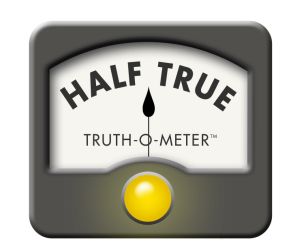
Half True vs. half-hearted, September 24, 2013. (Politifact.com).

Half True vs. half-hearted, September 24, 2013. (http://Politifact.com).

Then there’s Andrews’ shorter second paragraph, the one that made it sound like I was equally interested in going to law school as I was in going into a master’s program in history. I had all of one conversation with Andrews about my forks in the road after undergrad at Pitt. As I told anyone who knew me between May and October ’90, I was “sixty percent in favor of grad school, thirty in favor of law school, and ten in favor of working full-time.” Andrews, however, wrote of me

As of last year his plan was to proceed to law school. However, his talent for history [and]…his enthusiasm for it were so striking that I urged him to consider graduate school in this area, and he has decided to apply both to law schools and to several graduate schools.

I had, in fact, decided by October ’90 not to apply to law schools at all (while applying to six universities for grad school), and communicated that to all of my letter writers at the time. To an admissions committee, this paragraph would make me appear indecisive, and likely to not be as passionate about the prospect of the hard work of academic history as I would be about the law and making money.

In light of everything else I said in my original blog post about letters of recommendation, Andrews’ letter actually proves almost all of my points. That “it’s important to get to know a person, to gain some sense of trust from them, before asking for a letter or a reference.” That “the process of providing a letter of recommendation or a reference ought to be transparent, so that the student or employee can be confident that they’re not being back-stabbed by the same people in which they’re placing significant trust.” Writing a letter of recommendation should always be a serious undertaking, as I’ve learned over the years. Sometimes it’s best to say “No” than to do it in a Freudian-slip fashion.

Freudian "Slip" (2012) by Nathan Davis, September 24, 2013. (http://redbubble.com). Qualifies as fair use - low resolution and subject matter related to post.

Freudian “Slip” (2012) by Nathan Davis, September 24, 2013. (http://redbubble.com). Qualifies as fair use – low resolution and subject matter related to post.

On the “one A in one course does not make for a good recommendation” rule, this has turned out to be inadvertently true. Even if Andrews had intended to write me a glowing letter of recommendation, his feelings about me as a student — ones that he verbalized to me on several occasions between ’90 and ’95 — may well have influenced his rather bland and half-hearted effort at that “good “letter that he supposedly wrote for me in December ’90.

“It was never a question I dared asked — to see my letter of recommendation — before I’d reached the final stages of grad school,” I wrote three years ago. Now that I apparently have Andrews’ letter from twenty-three years ago, my sage advice from three years ago rings as true now as it did then. Maybe even more so.

← Older posts
Newer posts →

Boy @ The Window: A Memoir

Boy @ The Window: A Memoir

Places to Buy/Download Boy @ The Window

There's a few ways in which you can read excerpts of, borrow and/or purchase and download Boy @ The Window. There's the trade paperback edition of Boy @ The Window, available for purchase via Amazon.com at http://www.amazon.com/Boy-Window-Donald-Earl-Collins/dp/0989256138/

There's also a Kindle edition on Amazon.com. The enhanced edition can be read only with Kindle Fire, an iPad or a full-color tablet. The links to the enhanced edition through Apple's iBookstore and the Barnes & Noble NOOK edition are below. The link to the Amazon Kindle version is also immediately below:

scr2555-proj697-a-kindle-logo-rgb-lg

Boy @ The Window on Amazon.com: http://www.amazon.com/Boy-The-Window-Memoir-ebook/dp/B00CD95FBU/

iBookstore-logo-300x100

Boy @ The Window on Apple's iBookstore: https://itunes.apple.com/us/book/boy-the-window/id643768275?ls=1

Barnes & Noble (bn.com) logo, June 26, 2013. (http://www.logotypes101.com).

Boy @ The Window on Barnes & Noble: http://www.barnesandnoble.com/w/boy-the-window-donald-earl-collins/1115182183?ean=2940016741567

You can also add, read and review Boy @ The Window on Goodreads.com. Just click on the button below:

Boy @ The Window

Twitter Updates

Tweets by decollins1969
  • RSS - Posts
  • RSS - Comments

Archives

  • June 2025
  • April 2023
  • September 2022
  • August 2022
  • July 2022
  • June 2022
  • May 2022
  • April 2022
  • March 2022
  • January 2022
  • December 2021
  • November 2021
  • October 2021
  • September 2021
  • August 2021
  • July 2021
  • June 2021
  • April 2021
  • March 2021
  • February 2021
  • January 2021
  • December 2020
  • November 2020
  • October 2020
  • September 2020
  • August 2020
  • July 2020
  • May 2020
  • April 2020
  • March 2020
  • January 2020
  • December 2019
  • November 2019
  • August 2019
  • July 2019
  • June 2019
  • May 2019
  • April 2019
  • March 2019
  • February 2019
  • January 2019
  • December 2018
  • November 2018
  • October 2018
  • September 2018
  • August 2018
  • July 2018
  • June 2018
  • May 2018
  • March 2018
  • February 2018
  • January 2018
  • December 2017
  • November 2017
  • October 2017
  • September 2017
  • August 2017
  • July 2017
  • June 2017
  • May 2017
  • April 2017
  • March 2017
  • February 2017
  • January 2017
  • December 2016
  • November 2016
  • October 2016
  • September 2016
  • August 2016
  • July 2016
  • June 2016
  • May 2016
  • April 2016
  • March 2016
  • February 2016
  • January 2016
  • December 2015
  • November 2015
  • October 2015
  • September 2015
  • August 2015
  • July 2015
  • June 2015
  • May 2015
  • April 2015
  • March 2015
  • February 2015
  • January 2015
  • December 2014
  • November 2014
  • October 2014
  • September 2014
  • August 2014
  • July 2014
  • June 2014
  • May 2014
  • April 2014
  • March 2014
  • February 2014
  • January 2014
  • December 2013
  • November 2013
  • October 2013
  • September 2013
  • August 2013
  • July 2013
  • June 2013
  • May 2013
  • April 2013
  • March 2013
  • February 2013
  • January 2013
  • December 2012
  • November 2012
  • October 2012
  • September 2012
  • August 2012
  • July 2012
  • June 2012
  • May 2012
  • April 2012
  • March 2012
  • February 2012
  • January 2012
  • December 2011
  • November 2011
  • October 2011
  • September 2011
  • August 2011
  • July 2011
  • June 2011
  • May 2011
  • April 2011
  • March 2011
  • February 2011
  • January 2011
  • December 2010
  • November 2010
  • October 2010
  • September 2010
  • August 2010
  • July 2010
  • June 2010
  • May 2010
  • April 2010
  • March 2010
  • February 2010
  • January 2010
  • December 2009
  • November 2009
  • October 2009
  • September 2009
  • August 2009
  • July 2009
  • June 2009
  • May 2009
  • April 2009
  • March 2009
  • February 2009
  • January 2009
  • December 2008
  • November 2008
  • October 2008
  • September 2008
  • August 2008
  • July 2008
  • June 2008
  • May 2008
  • April 2008
  • March 2008
  • February 2008
  • January 2008
  • December 2007
  • November 2007
  • October 2007
  • September 2007
  • August 2007
  • July 2007
  • June 2007

Recent Comments

MaryPena's avatarMaryPena on My Day of Atonement/Bitter Hat…
decollins1969's avatardecollins1969 on No Good Teaching Deed Goes…
Mary Rose O’Connell's avatarMary Rose O’Connell on No Good Teaching Deed Goes…

NetworkedBlogs on Facebook

NetworkedBlogs
Blog:
Notes From a Boy @ The Window
Topics:
My Life, Culture & Education, Politics & Goofyness
 
Follow my blog

616 616 East Lincoln Avenue A.B. Davis Middle School Abuse Academia Academy for Educational Development AED Afrocentricity American Narcissism Authenticity Bigotry Blackness Boy @ The Window Carnegie Mellon University Child Abuse Class of 1987 CMU Coping Strategies Crush #1 Crush #2 Death Disillusionment Diversity Domestic Violence Economic Inequality Education Family Friendship Friendships Graduate School Hebrew-Israelites High-Stakes Testing Higher Education History Homelessness Humanities Humanities Program Hypocrisy Internalized Racism Jealousy Joe Trotter Joe William Trotter Jr. K-12 Education Love Manhood Maurice Eugene Washington Maurice Washington Misogyny Mother-Son Relationship Mount Vernon High School Mount Vernon New York Mount Vernon public schools Multiculturalism MVHS Narcissism NFL Pitt Pittsburgh Politics of Education Poverty President Barack Obama Race Racial Stereotypes Racism Relationships Self-Awareness Self-Discovery Self-Reflection Sexism Social Justice Teaching and Learning University of Pittsburgh Violence Whiteness Writing

Top Rated

Blog at WordPress.com.

  • Subscribe Subscribed
    • Notes from a Boy @ The Window
    • Join 103 other subscribers
    • Already have a WordPress.com account? Log in now.
    • Notes from a Boy @ The Window
    • Subscribe Subscribed
    • Sign up
    • Log in
    • Report this content
    • View site in Reader
    • Manage subscriptions
    • Collapse this bar
 

Loading Comments...