• About Me
  • Other Writings
  • Interview Clips
  • All About Me: American Racism, American Narcissism, and the Conversation America Can’t Have
  • Video Clips
  • Boy @ The Window Pictures
  • Boy @ The Window Theme Music

Notes from a Boy @ The Window

~

Notes from a Boy @ The Window

Tag Archives: Joe William Trotter Jr.

A Little Diddy About Madison Jack

08 Friday Apr 2016

Posted by decollins1969 in 1, Academia, Carnegie Mellon University, culture, Eclectic, New York City, Pittsburgh, Pop Culture, race, Youth

≈ Leave a comment

Tags

Academic Competition, Academic Conferences, AERA, American Educational Research Association, Burnout, CMU, Collegiality, Conferences, Harvey Kantor, Jack, Joe William Trotter Jr., Michael Fultz, Milford Plaza, Mom, Narcissism, Obsequious, Self-Awareness, Spencer Foundation, University of Wisconsin-Madison, Yonkers


Jack-In-The-Box 3D model, April 5, 2016. (http://turbosquid.com).

Jack-In-The-Box 3D model, April 5, 2016. (http://turbosquid.com).

Jack-o’-Lantern, Jack-in-the-Box, Monterey Jack, Colby Jack, and jackknife all have something in common with the Jack I’m writing about in this post. They’re all the kinds of Jacks that I’m not a fan of or outright dislike. They also tend to surprise me at precisely the wrong place and at precisely the wrong time. My Jack, the Jack who finished a doctorate in the School of Education at UWisconsin-Madison in the late-1990s, was one of the most competitive and obsequious humans I had ever met. What made my knowing him worse was that he never had to be cutthroat in the first place.

I first “met” Madison Jack the summer of ’95, via telephone and email. My favorite benefactor at the Spencer Foundation in Catherine Lacey had provided Jack my information. It made sense at the time. Both Jack’s dissertation and my own discussed the process of Black migration, White flight, and school desegregation, though his work involved Milwaukee and mine was on DC. Jack had gotten a small Spencer grant, and I had a Spencer Dissertation Fellowship.

Most importantly, Madison Jack wanted to put together a panel presentation for the April 1996 American Educational Research Association (AERA) Annual Meeting in New York. The panel would involve a group of Spencer-funded folk working on various angles of school desegregation, involving community control, racial discrimination, White anti-desegregation protests, and ideas like my own on multiculturalism and diversity. Over a three-week period between mid-July and early August ’95, we put together a panel of five presenters and a moderator. The moderator was none other than Jack’s dissertation advisor Michael Fultz. Two presenters were 1995 Spencer Dissertation Fellows (including me), and two others would become Dissertation Fellows in 1996 (including Madison Jack).

It could’ve been a powerful panel under the right set of conditions. But it was to be underwhelming by default. We had at least two too many people on the panel. Our panel’s presentation date and time in New York was on the last day of the conference, Friday, April 12th, at 8:15 am, both too early and too late at the same time. With my own troubles with my HNIC advisor in Joe Trotter — not to mention a dissertation nearly complete — AERA wasn’t exactly my primary focus. Plus, visiting my home area with my family living in temporary housing in Yonkers post-616 fire didn’t exactly help with my concentration.

A five-inch folding jackknife, perfect for ingratiating back-stabbers, April 5, 2016. (http://www.lifesupportintl.com/).

A five-inch folding jackknife, perfect for ingratiating back-stabbers, April 5, 2016. (http://www.lifesupportintl.com/).

But it was Madison Jack’s obsessive competition that reared its ugly head and left a raw horseradish taste in my mouth. It was that much more disgusting because I knew it would be my last conference presentation as a graduate student. Jack and I had agreed that all five of us would have twelve minutes apiece for our presentations, leaving time for audience questions. On that brisk spring morning after a rough night at the Milford Plaza, I began the panel with my talk timed for exactly twelve minutes. With my Mom having not yet arrived and only six people in the room to start, I muddled through as if I needed a cup of coffee just to know that I needed to wake up. Mom arrived five minutes into the second presentation, one by my fellow 1995 Spencer Dissertation Fellow, where she used the term “a cacophony of voices” in describing the different sides involved in the 1968 Ocean Hill-Brownsville (Queens) controversy over community control and racial inequality. Two scholars I knew well were in the audience — including one who was a one-time professor at Carnegie Mellon’s Heinz School (now Heinz College). She said to Harvey Kantor, “This presentation’s ‘caca’ all right” and they both laughed, loud enough for my sleep-deprived mind to notice.

Madison Jack was the last to present. My co-organizer broke our agreed-upon rules. He spoke for more than twenty minutes, all to garner more attention for his work over myself and the other three panelists. Jack also used a slide show, another thing that we had agreed we wouldn’t do, mostly because of the time constraints on the panel. It was a classic example of narcissistic behavior at the doctoral level. By the time Jack had finished — combined with his advisor’s ten minutes of droning commentary — there were only six minutes left for questions from an audience of nearly twenty people, most of whom had missed the first four presentations. Jack fielded all but one of the audience’s questions. If I’d been in my right frame of mind, I would’ve jammed a slide down Jack’s obsequious throat.

Fast-forward nearly a decade to the 2004 AERA conference in San Diego. It was my first time attending the conference since grad school. I decided to go to the Spencer-sponsored talk (an annual tradition), to see if any of my fellow Fellows from 1995 would also be there. A couple of them did show up, which was the good part about this gathering. But so did Madison Jack. He made a bee-line toward me. I made a point of not making eye contact until he was nearly in my face with his grizzly beard and outstretched hand. I shook it as hard as I could, feeling my right hand squeeze his knuckles into each other.

A block of Monterey Jack in all its bland whiteness, January 13, 2015. (Mitch Mandel via http://menshealth.com).

A block of Monterey Jack cheese in all its bland whiteness, January 13, 2015. (Mitch Mandel via http://menshealth.com).

After I let him talk for three minutes about his professorship at some small New England liberal arts college, about his first book, and after introducing me to his wife, he wanted to know how I was doing. Or rather, if I had bested him in my career up to that point. I didn’t take the bait. Knowing that a couple of big wigs had just walked into the room, I started with small talk about my wife and newborn son. I knew. Madison Jack being Madison Jack, I knew he would walk away, with me in mid-sentence, seeking to soak wisdom and advancement out of his next unknowing victims.

With colleagues and friends like Madison Jack, who needed enemies? What made his sycophantic displays and overt attempts at dominance so pitiful was that I never cared. I was too ambivalent about my place in academia and too much in turmoil about myself as a writer to ever care. Fighting over a job or a book with a scholarly publisher? To me in 1996 and in 2004, it was a waste of time and energy.

To me in 2016, it’s also a waste of potential friendships and connections beyond the “what’s in it for me?” perspective. I know lots of folks, but few I count as friends, and only a small number of those are in academia. While much of my work is independent of others, it isn’t work I do or think about alone. Madison Jack probably knows tons of folk in high places. But with an approach to career that is me first, me foremost, and me last, I’m pretty sure that he repels more true connections in his world than he attracts. Kind of like smelling week-old Monterey Jack that’s been left out in the sun too long.

Marya’s World

28 Sunday Feb 2016

Posted by decollins1969 in 1, Academia, Carnegie Mellon University, culture, Eclectic, Pittsburgh, Politics, Pop Culture, race, Work, Youth

≈ Leave a comment

Tags

Admiration, African American History, Afrocentricity, Black Washington DC, Catherine Lugg, Community Space, Dissertation, Earl Lewis, Friendship, Joe William Trotter Jr., Leisure, Marya McQuirter, Multiculturalism, Public Historian, Research, Saab 900 GLE, Self-Discovery, Self-Reflection, Spencer Foundation Dissertation Fellowship Program, Temple University, University of Michigan, Veganism


Marya McQuirter, circa 2011. (http://twitter.com).

Marya McQuirter, circa 2011. (http://twitter.com).

The most fun part of grad school for me was once I officially began my dissertation research and writing. Especially when I was on the road, or stuck in at the Library of Congress, or meeting folks at conferences or other events. Otherwise, as I’ve written about here many times, it was a single-minded, often solitary pursuit, with known and unknown enemies either trying to put me in a box or rooting for my failure. Really, if a university as a whole could be any less supportive of their students’ success than Carnegie Mellon University, it’s probably a for-profit institution with a nine (9) percent graduation rate.

That’s how my CMU experience had been even before the Spencer Foundation had awarded me my dissertation fellowship in April ’95. But I did take advantage of one generous dispensation by my department chair Steven Schlossman. My becoming ABD within a year of transferring from Pitt to CMU made me eligible for a one-semester sabbatical from teaching to pursue my dissertation research while still on my $4,000-per-semester stipend, starting in January ’95. I made sure to use it, borrowing $4,000 in student loans for that semester as well, so that I could live in DC without living in a box on a corner for a month or two.

That fall, my advisor through one of his colleagues at the University of Michigan had given me the name of a promising doctoral candidate, one who was from DC and also doing her dissertation research on Black DC. I had first called her in October ’94, to learn that her research was on leisure activities and public history in Black Washington, DC in the first half of the twentieth century. It sounded more interesting than my own research on multiculturalism in Black DC, but there were parallels. So many leisure opportunities for Blacks who lived in Uptown communities like U Street and Le Droit Park included public works on Black history, on the connections between Black history and US history. It meant that our projects were actually more connected than not.

Saab 900 GLE, 1st generation (made between 1983 and 1993), UK, May 3, 2012. (SilkTork via Wikipedia). Released to public domain via CC-SA-3.0.

Saab 900 GLE, 1st generation (made between 1983 and 1993), UK, May 3, 2012. (SilkTork via Wikipedia). Released to public domain via CC-SA-3.0.

So once I came down to DC to work like a monk in archives scattered across the area in February ’95, I contacted her. I’d meet her for the first time about three weeks into my eight-week stay in the area, near the end of February. Between my first few days staying with a former high school classmate and meeting a stranger-peer, I had nearly two-and-a-half weeks of eating, sleeping, and drinking dissertation, with a few moments in a shared kitchen listening to older men talk like we were in a barber shop about exploits and life’s lessons.

When we finally met that last Saturday in February, it was a welcome change. It helped that the doctoral candidate had her own car, a used any pretty worn blue-gray, two-door, stick-shift Saab 900 that had seen better days in the 1980s. For her part, despite grad school, the twenty-nine year-old looked younger than my twenty-five years. At five-eight and change, I wouldn’t have to look down at her in order to see the top of her head.

What impressed me the most about Marya, though, was that I could have a conversation with her about my dissertation research without her eyes glazing over, knowing full well that she understood every word coming out of my mouth. Even most of my fellow grad students at CMU and Pitt didn’t really understand my approach to multiculturalism, Black DC and African American history, and education policy. But she got it immediately.

I loved talking to Marya about her research, though. Looking at leisure and the use of space in Black communities for leisure, for everything from reading newspapers and used libraries, to literally how people walked and conversed in public. I found her work, and the way she talked about her work, fascinating. I wondered if I could ever be in love with a topic as much as her. It wasn’t that I didn’t like writing about multiculturalism. I just wasn’t star-crossed over it.

I learned so much not only during my first time hanging out with Marya, but over the next few years. I really didn’t know DC’s neighborhoods and the history of individual neighborhoods until she came along. She introduced me to the Smithsonian’s Anacostia Museum on local Black DC history. She took me to the Washington Historical Society off Dupont Circle, where I found additional materials on Black activities that were educational but outside the formal structure of Howard University and the segregated DC Public Schools.

Smithsonian Anacostia Community Museum, SE Washington, DC, February 28, 2016. (http://www.thecapitalnews.com).

Smithsonian Anacostia Community Museum, SE Washington, DC, February 28, 2016. (http://www.thecapitalnews.com).

She also introduced me to a vegan lifestyle, one that actually seemed sustainable. Matter of fact, when I stayed with Marya for three days in August ’95, I was on a vegan diet. I saw the appeal, but my gastrointestinal tract, well on its way to IBS-land, could only handle but so much in raw fruits and vegetables. Still, Marya introduced me to so many neighborhoods and restaurants, to Ethiopian food in Adams Morgan, to vegan Chinese food in Rockville, to fellow grad students worked on public history dissertations, to young, intellectual DC in general.

Marya also unintentionally helped me see a side of Black thought that I hadn’t seen before. That she survived the Afrocentricity wars at Temple University while earning her master’s there made her tough but also made me weary of discussing my many criticisms of Molefi Asante and his grand entourage of followers. I was so relieved to learn that though she liked some aspects of Afrocentricity, Marya didn’t follow it blindly like so many others I knew in the ’90s. I’d met someone who also marched to the beat of her own drum.

Maybe I would’ve met these folks, made these connections, and gone to these places anyway. Maybe not. But if the former, it would’ve happened much more slowly and cautiously. Marya, for better and for worse, might have been one reason I thought of the DC area as a potential home after more than a decade living and earning degrees in Pittsburgh. Marya McQuirter, though, enriched my life in the years in which I needed it most. I’ve always admired her and her work, and will always see her as a friend.


Aside

Past Labor’s Opportunities Lost

07 Monday Sep 2015

Posted by decollins1969 in 1, Academia, Boy @ The Window, Carnegie Mellon University, culture, Eclectic, Pittsburgh, Politics, Pop Culture, race, Work, Youth

≈ Leave a comment

Tags

Advisor-Student Relationships, Anger, CMU, Dissertation Completion, Howard University, Jealousy, job search, Joe William Trotter Jr., Labor Day, Mentoring, NYU, Post-Docs, Rage, Running Interference, Spencer Foundation, Spencer Foundation Dissertation Fellowship Program, Steven Schlossman, University of Maryland, University of Wisconsin-Madison


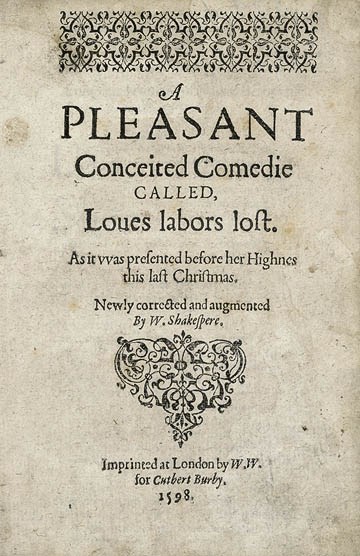
Title page of the first quarto of William Shakespeare's Love's Labour's Lost (1598), uploaded May 2, 2011 (Tom Reedy via Wikipedia). In public domain.

Title page of the first quarto of William Shakespeare’s Love’s Labour’s Lost (1598), uploaded May 2, 2011 (Tom Reedy via Wikipedia). In public domain.

One of the more gut-wrenching periods of my career began right after Labor Day 1995. In some respects, that period of my career has left a stain over the past two decades. Not so much in terms of what I have done or in what I’m doing now, as much as in setting limits on the range of possible outcomes with which I could’ve begun my career.

Right after Labor Day, I saw an ad in The Chronicle of Higher Education for an open-ranked (tenured or tenure-stream) position at NYU’s school of education in US education history. I hadn’t thought about teaching in a school of education before, but after meeting my friend Cath and having received my Spencer Foundation fellowship, I understood that this was likely a better choice for me than a history department. I wasn’t the only one who thought so. My department chair Steven Schlossman had received a letter and a telephone call from his equivalent peer at NYU asking if there were any graduate students in the pipeline who could apply for the position. Schlossman apparently told that department chair about me and my multiculturalism dissertation, and caught up with me that same week to give me a copy of the letter and encouraged me to apply for the job.

I was two-and-a-half chapters into my planned eight-chapter dissertation, and I still had some US Census data to look at and interviews to conduct as part of the process. I knew that my advisor Joe Trotter wouldn’t be happy about the idea of me applying for a job so soon into the process, but Schlossman and I also knew that the job — if I somehow got it — wouldn’t start for eleven months. That was more than enough time for me to write, revise, revise again, polish up and defend my dissertation. I was on a Spencer fellowship, after all!

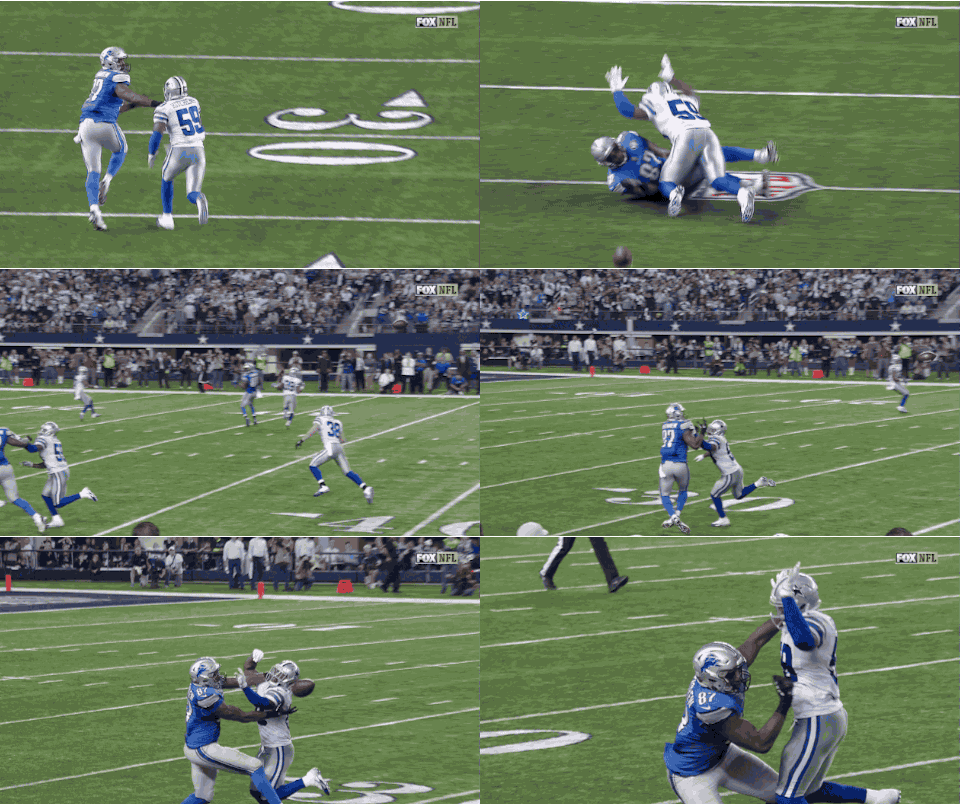
A defensive pass interference penalty not called, Detroit Lions v. Dallas Cowboys Wildcard Game, January 4, 2015. (http://bleacherreport.com/articles/2319198-refs-pick-up-flag-after-pass-interference-on-cowboys-in-4th-quarter; FOX Sports).

A defensive pass interference penalty not called, Detroit Lions v. Dallas Cowboys Wildcard Game, January 4, 2015. (http://bleacherreport.com/articles/2319198-refs-pick-up-flag-after-pass-interference-on-cowboys-in-4th-quarter; FOX Sports).

Of course Trotter thought otherwise. He was incensed that Schlossman had discussed the NYU job with me, that I hadn’t talked with him about the position first. Of course Trotter said that he needed to “run interference” on my behalf, to protect me and my career. By “running interference,” Trotter meant that he would not write a letter of recommendation on my behalf. He told me to put the job out of my mind, to focus on my dissertation, and that we could revisit the prospect of apply for jobs when I was much further along.

A few months later, in February ’96, I saw another job ad in the Chronicle, this one for a history of education assistant professorship at University of Wisconsin-Milwaukee. Schlossman saw that ad as well, but I was still the dutiful ABD student with Trotter as my patron. I decided this time to approach Trotter before meeting with Schlossman about the job. Trotter flipped out again, telling me, “you’re not ready,” that he had seen too many of his own peers not finish dissertations when taking jobs, only to end up unemployed. Keep in mind, I had written six of my eight chapters at this point, and had started working on number seven that month.

Trotter’s “you’re not ready” pronouncements rang even more hollow in March, when I requested a letter from him to apply for a post-doctoral fellowship in African American Studies at University of Maryland, College Park. He refused at first, then agreed, with the caveat that he would write in his letter his belief that  I wouldn’t complete my dissertation in time to begin the fellowship at the end of August ’96. With that kind of endorsement, of course I didn’t apply!

When we finally had our blow-out argument that April 4th, I was frustrated, he was actually angry, for reasons I didn’t put together until I considered my age and his HNIC status and age later on. Most of Trotter’s stonewalling occurred after he found out that I was still only about to turn twenty-six at the time of the NYU job prospect. Between that and the limited mileage remaining in his proletarianization hypothesis, I was working for and with an advisor who was giving me mixed signals and mediocre advice. Both were based in part on jealousy, and in part on Trotter’s own bad experiences at University of Minnesota and on the job front in the 1970s and early 1980s.

Danger Bad Advice Ahead fake sign, September 7, 2015. (http://wordspicturesweb.com).

Danger Bad Advice Ahead fake sign, September 7, 2015. (http://wordspicturesweb.com).

Trotter didn’t understand that in blocking my first attempts to begin my career, he had helped set up a struggle for me to have even a semblance of a career before I had completed the first draft of my dissertation. As it was, I finished the first draft in June ’96, the second at the end of July, and polished it up before Labor Day Weekend ’96. That fact that I was done with all major revisions to my dissertation in time for any job that year made ready to strangle Trotter at that point.

Still, it would be only fair to say that my career moves — good and bad, smart and stupid — have mainly been of my own making. It would also be unfair to blame Trotter for any moves that I have made or didn’t make that didn’t work out after 1996-97. But every career has a beginning. And in the beginning, Trotter was there, making a mess of my first steps. It took until the spring of 2000 before Howard University offered me a tenure-track position in Afro-American Studies, to which I did say no. I didn’t need any more Joe Trotter’s in my life at that point, and working in the nonprofit world paid my bills better than teaching at that time.

My overall advice would be to make damn sure that you choose an advisor who cares about your whole career and about you as a person. Don’t choose someone to advise and mentor you out of convenience, and make sure that your advisor isn’t someone who just wants to mold you into a mediocre version of themselves. After all, it’s not their career trajectory or reputation that’s on the line. It’s yours.

The Long Road Home

19 Tuesday May 2015

Posted by decollins1969 in 1, Academia, Boy @ The Window, Carnegie Mellon University, culture, Eclectic, Jimme, Pittsburgh, Politics, Pop Culture, race, Work, Youth

≈ Leave a comment

Tags

"Thriving as a Freelance Academic", Academia, Academic Writing, Bruce Anthony Jones, Career, Career Decisions, Career Development, Career Options, CMU, Disillusionment, Joe William Trotter Jr., Katie Rose Guest Pryal, Peter Stearns, Politics of Academia, Politics of the Foundation World, Self-Awareness, Self-Determination, Self-Discovery, Social Justice, Teaching and Learning, The Chronicle of Higher Education, Troublemaker, Writing


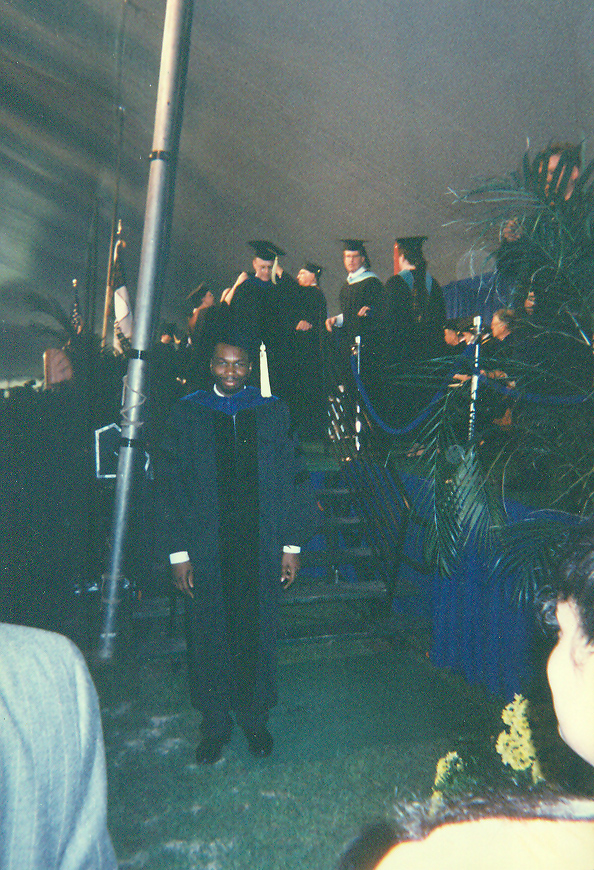
My stressed-out PhD walk photo, Carnegie Mellon University, May 18, 1997. (Angelia N. Levy).

My stressed-out PhD walk photo, Carnegie Mellon University, May 18, 1997. (Angelia N. Levy).

It’s been eighteen years and nearly a day since I had to shake then Carnegie Mellon Dean Peter Stearns’ hand on stage as part of the PhD portion of the 100th commencement ceremony for graduates, that third sweltering Sunday in May ’97. I’ve talked about the ceremony, my Mom’s jealousy and issues about my degree, Peter Stearns, Joe Trotter, Bruce Anthony Jones, and what happened before and after the degree ceremonies on that fateful day.

But time and enlightenment — especially the latter — has allowed me to take a step back from the events leading to a new wave of disillusionment in my life. If I really think about it, my struggles with where I wanted to go with my career go as far back as ’81, in the months after my first accolades as a writer, to the time when at eleven, I already had an encyclopedic knowledge of history, basic science, and technology. Heck, I already knew some of the historiography around World War II, the Cold War, American slavery and civil rights, long before I ever knew the definition for historiography. Not to mention, I was already living what we now call migration studies, thanks to my Mom and dad.

But my Boy @ The Window years did their damage to me. By the time I turned twenty at the end of the ’80s, I wasn’t fully clear of the array of choices I had for a career or set of careers. I knew I could write, and often write well. Yet I had stopped seeing myself as a writer by the time I went through my summer of abuse in ’82. I knew that I was a historian, because I asked the kinds of questions about history that only trained historians would. Yet I hated the idea that I was supposed to write only one way, using words like synergistic and interstitial (at an esoteric minimum) along the way. I toyed with the idea of going to law school in ’90, even going so far as to take the LSAT, scoring a then-50th percentile 31 on the exam in my one-and-only try.

Arthur Wesley Dow (1857-1922), The Long Road--Argilla Road, Ipswich, circa 1898, April 28, 2010. (BrooklynMuseumBot via Wikipedia). In public domain.

Arthur Wesley Dow (1857-1922), The Long Road–Argilla Road, Ipswich, circa 1898, April 28, 2010. (BrooklynMuseumBot via Wikipedia). In public domain.

I struggled for years with my fundamental question: “Am I an academic historian who’s also a writer? Am I a writer who’s also a historian? Can I be both?” I realized about a decade ago the question was moot. I am both. The real question really has been, will the working world allow me to operate as both without giving me grief and a hard way to go? (By the way, if I ever were to do a second, post-Boy @ The Window memoir, this would be one of that book’s big themes.)

I can safely say as a mildly successful freelance writer that the answer for many in this world of singularities is no. The working world puts up a fight, has and will continue to try to force me and others with multiple talents to choose one path, to do one thing, and one thing only, ideally for all time.

Academicians only think about each other via teaching duties or well-placed articles and books in scholarly journals and scholarly publishing houses. Higher education administrators believe that the only way to understand their work is through the lens of their specific university, as if universities and colleges aren’t similar from a management standpoint. Nonprofit organizations

A male mallard duck, a bird's triple threat (can walk, swim under water and fly), Saint-Eustache, Quebec, Canada, November 19, 2007. (Acarpentier via Wikipedia). Released to public domain via CC-SA-3.0.

A male mallard duck, a bird’s triple threat (can walk, swim under water and fly), Saint-Eustache, Quebec, Canada, November 19, 2007. (Acarpentier via Wikipedia). Released to public domain via CC-SA-3.0.

discount teaching and higher education administrator positions because finding money or managing students isn’t exactly the same as managing staff. Foundations who use your salary history instead of your scope of programs developed, people reached, and money raised as a barometer for even granting you an interview. All would prefer that you be quiet about injustices, especially ones in which their institution, organization, or foundation might well be complicit.

For me in the past couple of decades, though, I’ve worked in and with academicians, higher education administrators, nonprofit organizations, and private foundations. I’ve helped raise $3 million over the years, managed as many as twenty-five staff members, organized four-day conferences with a couple hundred attendees, worked with as many as 500 students at any given time, and taught undergraduate and graduate courses. I’ve written scholarly articles, published in scholarly journals, presented at a couple dozen conferences, and consulted for nonprofit organizations and foundations. To think of myself as only one thing is beyond ridiculous given my by-necessity-and-neglect careers so far.

Yesterday, The Chronicle of Higher Education posted the article “Thriving as a Freelance Academic” by Katie Rose Guest Pryal. In it, Pryal interviewed three White women about their experiences freelancing in the academic world. The women interviewed found a singular niche, found steady work through that niche, and otherwise didn’t question the idea of freelancing in a world in which freelancing is a rare career choice.

A square peg hammered into a round hole, May 2014. (http://joshbrahm.com/).

A square peg hammered into a round hole, May 2014. (http://joshbrahm.com/).

All that is fine. Except there was little soul-searching in Pryal’s piece. The women interviewed might as well have decided to go on a global trek or rock climbing, given their lack of ambivalence about academia or deliberate lack of specifics and dryness about the work they actually do. I don’t doubt that one can freelance in academia. I doubt, though, that one can do it without personal relationships with a specific university or alma mater, or with a specific higher education administrator or prominent professor. Why pick on this piece? Because there are far more people like me in and out of academia, who’ve consulted and freelanced and worked and stitched together a career, then there are the people represented in Pryal’s boutique article.

There is a lesson here besides the reality that life is a journey, and to get it right, we need to understand that it can and will be a roller-coaster-ride of a journey. The lesson, for me at least, is that while being true to myself has sometimes had consequences in terms of immediate victories and easy financial gains, it does mean I get to have success, and sometimes, even lasting success.

Merit-hypocrisy in the Air

18 Saturday Apr 2015

Posted by decollins1969 in 1, Academia, Boy @ The Window, Carnegie Mellon University, Christianity, culture, Eclectic, Mount Vernon New York, Movies, Pittsburgh, Politics, Pop Culture, race, Religion, University of Pittsburgh, Work, Youth

≈ Leave a comment

Tags

"Who-You-Know" World, Academia, Ageism, Bruce Anthony Jones, Daniel P. Resnick, Dick Oestreicher, Envy, Hard Work, Hypocrisy, Jay Wickliff, Jealousy, Jelani Cobb, Joe William Trotter Jr., Ken Williams, Meritocracy, Nepotism, New Voices, New Voices Fellowship Program, Nonprofit World, Presidential Classroom, Racism, Wendy Goldman


Meritocracy cartoon, October 29, 2010 (Josh C. Lyman via http://www.clibsy.com/).

Meritocracy cartoon, October 29, 2010 (Josh C. Lyman via http://www.clibsy.com/).

One of the hardest ideals for me to give up on in all of my life has been the idea of meritocracy. Even when I couldn’t spell the word, much less define it or use it in a sentence, I believed in this ideal. It was the driving force behind my educational progression from the middle of fourth grade in January ’79 until I finished my doctorate in May ’97. The meritocratic ideal even guided me in my career, in both academia and in the nonprofit world. Only to realize by the end of ’09 what I suspected, but ignored, for many years. My ideal of a meritocracy is shared by only a precious few, and the rest give lip service to it before wiping it off their mouths, concealing their split lips and forked tongue with nepotism instead.

Being the historian I am — whom people like Jelani Cobb joked about on Twitter as a curse — I am programmed to look back at situations in my own life to look for root causes, to understand what I can do to not repeat my own mistakes, my not-so-well-planned decisions. I’ve thought about my advisor Joe Trotter and my dissertation committee of Trotter, Dan Resnick (husband of education researcher Lauren Resnick) and Bruce Anthony Jones. The biggest mistake I made was in putting this hodgepodge committee of a HNIC advisor, racial determinist and closeted wanderer together to help guide me through my dissertation and then into my first postdoctoral job.

Aaron Eckhart as main character in movie I, Frankenstein (2014), August 12, 2013. (http://sciencefiction.com/).

Aaron Eckhart as main character in movie I, Frankenstein (2014), August 12, 2013. (http://sciencefiction.com/).

Of course, I didn’t know enough about these men to describe them this way, certainly not until I’d graduated and couldn’t find full-time work for more than two years. The signs, though, were there. Trotter’s unwillingness to recommend me for any job before my completed first draft of my dissertation was really complete (it took me two weeks to revise my dissertation from first to final draft). Resnick calling my dissertation writing “journalistic” and saying that my nearly 2,000 endnotes and thirty pages of sources was “insufficient.” Bruce pulling back on his schedule with me even before taking the job at University of Missouri at Columbia in July ’96.

None of this had anything to with my work. It was about me, whether I as a twenty-six year-old had suffered enough, had gone through enough humiliation, to earn a simple letter of recommendation for a job. When Trotter finally decided it was time to write me a letter of recommendation, it was December ’96, and the job was University of Nebraska-Omaha, “subject to budget considerations,” meaning that it could (and it did) easily fall through. Resnick flat-out refused to share anything he wanted to write about me, with all his “confidentiality” concerns, while I wrote all my letters for myself for Bruce. It was a disaster, and none of it had anything to do with the quality of my work as a historian, educator, or academic writer.

The work I ended up getting after Carnegie Mellon was the result of my dissertation, my teaching experiences, and my networking. The idea that I’d earned my spot, though, was still lacking in the places in which I worked. Particularly at Presidential Classroom, where I was the token highly-educated Negro on staff, and working at Academy for Educational Development with the New Voices Fellowship Program. In both cases, I had bosses whose racial biases only became clear once I began working with them. The then executive director Jay Wickliff never cared about the quality of my work or my degrees. Wickliff’s only concern was that I should keep my mouth shut when he acted or spoke in a racist manner.

My immediate supervisor Ken, on the other hand, wanted all the credit for work I did under him, except in cases when he deemed my methods “not diplomatic enough.” Even before his bipolar disorder led him to a psychological breakdown, Ken regularly accused me of gunning for his position, sometimes turning red whenever he heard about my latest publication, teaching assignment or conference presentation. I had to fight to keep my job and to move on within AED in those final months of ’03 and early ’04, a fight that had zero to do with merit.

Dixie Biggs, Lip Service teapot, April 19, 2015. (http://pinterest.com).

Dixie Biggs, Lip Service teapot, April 19, 2015. (http://pinterest.com).

I say all this because the one thing that every one of these folks had in common is their lip service to the belief that hard work and results are the keys to success and career advancement. Yet for every one of them, the merit that I had earned didn’t matter. My relative youth, my age, my race, my heterosexual orientation, even my achievements, either scared them or gave them reason to have contempt for me.

I say all of this because in the past eleven years, I have been very careful about the company I keep, about the mentors I seek, about the friends I make, personally and professionally. I went from not trusting anyone as a preteen and teenager to trusting a few too many folks in my twenties and early thirties. All because I believed that my hard working nature and talent mattered more than anything else. What has always mattered more is who you know, especially in high places like academia and with large nonprofits and foundations. So, please, please, please be careful about the supposedly great people you meet. Many of them aren’t so great at all.

That’s why the idea that academia is a place full of progressive leftists is ridiculous. Yes, people like Dick Oestreicher, Wendy Goldman, Joe Trotter and so many others wrote and talked about progressive movements and ideals while I was their student. But fundamentally, they couldn’t have cared less about the actual human beings they worked with and advised, particularly my Black ass. Their ideals stopped the moment they ended their talk at a conference or wrote the last sentence of a particular book. They only cared about people that they could shape and mold into their own image. And that’s not meritocracy. That’s the ultimate form of nepotism.

Before and After Spencer

14 Tuesday Apr 2015

Posted by decollins1969 in 1, Academia, Boy @ The Window, Carnegie Mellon University, Christianity, culture, Eclectic, High Rise Buildings, Pittsburgh, Politics, Pop Culture, race, Religion, Work, Youth

≈ Leave a comment

Tags

Academia, Ambivalence, Barbara B. Lazarus, Catherine Lacey, CMU, Faith, Hypocrisy, Joe William Trotter Jr., John Hinshaw, Multiculturalism, Selection Committee, Self-Discovery, Self-Reflection, Sign from God, Spencer Foundation, Spencer Foundation Dissertation Fellowship Program


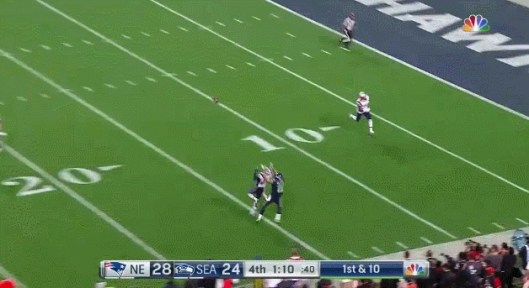
Seattle Seahawks' Jerome Kearse making great catch off tipped ball while on the ground on final drive of Super Bowl XLIV, Tucson, AZ, February 2, 2015. (http://reddit.com).

Seattle Seahawks’ Jerome Kearse making great catch off tipped ball while on the ground on final drive of Super Bowl XLIV, Tucson, AZ, February 2, 2015. (http://reddit.com).

This week marks twenty years since the now-retired Catherine Lacey called me up on a Friday morning while I was brushing my teeth to tell me that I’d been selected to be a Spencer Foundation Dissertation Fellow for the 1995-96 year.  I’d hoped and prayed for that day for more than twenty months, after my fellowship and teaching plans for the summer of ’93 fell through. But I’ve talked about Catherine Lacey and some of my Spencer experiences already, as well as about the reaction of Joe Trotter and some of my Carnegie Mellon grad school mates to this news.

This post is about the days before I received Lacey’s call, before I knew that I would be on the fast track to a doctorate. Because before I’d been selected for the Spencer Dissertation Fellowship, the selection committee had rejected me, with a 6-1-1 vote (that’s six in favor, one not in favor, and one abstaining). I knew this because Catherine had sent me a rejection letter with a handwritten note at the bottom of it, one that I received after two months away in DC doing my dissertation research. My suspicion was that most of the Fellows had received an 8-0 or 7-1 selection vote.

That was all on March 31, ’95. Catherine’s note, though, was encouraging. She said to “stay tuned,” that she was “looking into other alternatives.” So there was still a chance that I’d get the fellowship. Still, I didn’t want to do what I did two years earlier, when assumptions and hope led me to six weeks of joblessness and an eviction notice.

John Hancock Center, Downtown Chiicago - The Spencer Foundation is on the 39th Floor, April 14, 2015. (http://milenorthhotel.com).

John Hancock Center, Downtown Chiicago – The Spencer Foundation is on the 39th Floor, April 14, 2015. (http://milenorthhotel.com).

So I did what I’ve done best throughout my work experiences. I scrambled to make sure I had work during the summer and upcoming school year. I didn’t want to be stuck borrowing more in student loans or teaching more of Peter Stearns’ version of World History courses — really, World Stereotypes — for entitled CMU freshmen.

I talked with both then associate provost (and also an eventual) mentor) Barbara Lazarus and fellow but further along grad student in John Hinshaw about me taking his job as a part-time assistant to Barbara. John really wanted to finish his dissertation and move on (who could blame him, given that Trotter was his advisor as well), and Barbara would’ve liked me for the job. So I gave them both a tentative yes, knowing that the job was contingent on John’s timetable for leaving it and finding an academic job elsewhere, all while completing his dissertation.

The thought occurred to me, though, that I may need more than a 15-20-hour-per-week job to get through the dissertation stage. Especially if I was to avoid teaching for the mercurial Stearns again. So I scheduled a meeting with Trotter to see if he any research project he needed help with.

We met at 2 pm on Thursday, April 13. Trotter was as excited about us meeting as he had been when I first decided to transfer to Carnegie Mellon to work with him as my advisor two and a half years earlier. He had at least three migration studies projects with which he wanted my labor. All the projects were about extending his grand proletarianization thesis. All would be dreadfully boring drudgery compared to my dissertation, but would keep me in additional pay checks for a year or two. I faked a smile, and tentatively said yes to Trotter as well.

Dikembe Mutumbo putting the wood to the. LA Laker Andrew Bynum, April 14, 2015. (http://fortheloveofgif.tumblr.com).

Dikembe Mutumbo putting the wood to the. LA Laker Andrew Bynum, April 14, 2015. (http://fortheloveofgif.tumblr.com).

Eighteen hours later came Catherine’s call about me being offered the Spencer Fellowship! I took it as a sign from God, that at the very least, I’d finish my dissertation and my doctorate without the need for working on it an extra two or three years. Unfortunately, neither John Hinshaw nor Joe Trotter saw my great fortune the way I did. When John found out, which was a week later, he didn’t talk to me for nearly three years. And from reading my previous blog posts, you all already know how my work with Trotter devolved after the Spencer award announcement.

The one thing that fellowship did for me as a person — and not just as an academician, researcher or education — was to give me the space to question academia and my role in it. Even two decades later, I’m still ambivalent about the academic method of obtaining tenure, of the publish-or-perish paradigm, of the hypocrisy that exists in such a cloistered world. Even as I still hold a job and play a role in this world.

What I’ve come to learn is that hypocrisy is everywhere, in the nonprofit world, in romance, and in academia, too. We could all start with, “Did you hear the one joke about how merit and hard work alone can lead to a prosperous life?” That’s the hypocrisy that I had to learn to see in academia, and began to, thanks to the space that the Spencer Dissertation Fellowship gave me that year. More on that later.

Killing Joe Trotter

10 Tuesday Jun 2014

Posted by decollins1969 in 1, Academia, Boy @ The Window, Carnegie Mellon University, Christianity, culture, Eclectic, Hebrew-Israelite, Mount Vernon New York, Pittsburgh, Politics, Pop Culture, race, Religion, Youth

≈ Leave a comment

Tags

Advisor-Student Relationships, Burnout, Child Abuse, CMU, Dissertation, Dissertation Committee, Dreams, Emotional Baggage, Father Figures, Forgive and Forget, Forgiveness, Graduate School, Guerilla Warfare, Hatred, Imagination, Joe Trotter, Joe William Trotter Jr., Mental Health, Murder, Paternalism, PhD, Psychological Baggage, PTSD, Self-Awareness, Self-Defense, Un-father Figures


Yeah, I did it. I killed the man who kinged himself mentor over me. I took some piano wire, tightened it around my hands while listening to him yammer on an on about “running interference” to protect “my interests.

As the pointy-headed, smoothly bald and mahogany man gazed at my thesis, myopically gazing into nowhere, I pounced. I quickly jumped out of my seat and took Trotter from behind. He clutched at the wire with his elderly left hand as I pulled and tugged, hoping to prolong the bloody agony for as long as I could. Trotter choked for air, then choked for real, as spit, bile, blood and tongue all became his substitute for oxygen. Then, with one bicep curl and pull, I garroted his throat, and watched as his already dead eyes turned lifeless. All as his burgundy blood poured down his white shirt and gray suit. It collected into a small pond, where his pants crotch and his mahogany office chair met. Trotter’s was a chair that was now fully endowed all right. Thanks to my righteous stand.

=======================

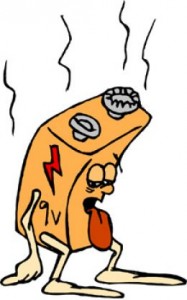
Tired, mentally drained, battery, March 2014. (http://blog.batterysharks.com/).

Tired, mentally drained, battery, March 2014. (http://blog.batterysharks.com/).

First, a disclaimer. I am in no way advocating killing Joe Trotter, or any other professor, whether they’re a great advisor or a terrible one (except perhaps in the case of literal self-defense). This was how I imagined what I could do to Trotter in the spring and summer of ’96, as our battles over my dissertation and my future turned from typical to ugly. By mid-July ’96, after his handwritten all-caps comments telling me to disregard my evidence on Black migration to DC during the Great Migration period (1915-30) — or really, the lack of evidence — I was mentally drained. I went back to our first big arguments over my future, the “you’re not ready” meetings from November ’95 and April ’96, and thought about what I could’ve done if I’d stayed in his office five minutes longer. That’s when I imagined killing my advisor for the first time.

By the time Trotter and my dissertation committee had approved my magnum opus, the week before Thanksgiving in ’96, I’d played that scenario in my head at least a dozen times. That’s when I knew I was burned out from the whole process. I may have become Dr. Collins, but I might as well have been my younger and abused self, the one who had to wade through five years of suffering at 616 and in Mount Vernon just to get to college.

Four months ago, I actually dreamed about killing Joe Trotter, exactly as described above, in his office, on a warm spring day like I imagined eighteen years ago. Keep in mind, I don’t think about Trotter much these days, other than when I write a blog post or am in a discussion of worst dissertation advisors ever. So when I woke up from this old-imagination-turned-dream, I had a Boy @ The Window moment and revelation. Did my struggles with Trotter open up old wounds, unearth my deliberately buried past? Did I see my fight with Trotter over my dissertation in the same light as my guerrilla warfare with my abusive and manipulative ex-stepfather?

I obviously brought baggage into my doctoral process that I’d hidden from everyone, including myself, and hadn’t fully resolved. The fact that Trotter was at times tyrannical, deceitful and paternalistic didn’t help matters. In some ways, then, Trotter must’ve morphed into Maurice Washington during the dissertation process, with me only half-realizing it once I was freshly minted.

Emotional and psychological baggage, January 2014. (http://www.projecteve.com/).

Emotional and psychological baggage, January 2014. (http://www.projecteve.com/).

I actually went to Trotter’s office a few weeks after I graduated, to apologize for how our relationship devolved, and to grant him my forgiveness as well. Arrogant as my act was, I needed to make the gesture, to at least begin my healing process. I knew Trotter was beyond surprised, but he shook my hand anyway. I also knew, as I walked away from his Baker Hall office, that other than a letter of recommendation, Trotter no longer had anything to offer me. At least, anything that would help me resolve some deep, underlying issues.

It’s safe to say that of all the reasons that led to me writing Boy @ The Window, my problems with Trotter in ’95 and ’96 were near the top of the list. Still, I needed to kill the idea that Trotter was an indispensable part of my present and future, if I were to ever resolve the issues from my growing-up past.

← Older posts
Newer posts →

Boy @ The Window: A Memoir

Boy @ The Window: A Memoir

Places to Buy/Download Boy @ The Window

There's a few ways in which you can read excerpts of, borrow and/or purchase and download Boy @ The Window. There's the trade paperback edition of Boy @ The Window, available for purchase via Amazon.com at http://www.amazon.com/Boy-Window-Donald-Earl-Collins/dp/0989256138/

There's also a Kindle edition on Amazon.com. The enhanced edition can be read only with Kindle Fire, an iPad or a full-color tablet. The links to the enhanced edition through Apple's iBookstore and the Barnes & Noble NOOK edition are below. The link to the Amazon Kindle version is also immediately below:

scr2555-proj697-a-kindle-logo-rgb-lg

Boy @ The Window on Amazon.com: http://www.amazon.com/Boy-The-Window-Memoir-ebook/dp/B00CD95FBU/

iBookstore-logo-300x100

Boy @ The Window on Apple's iBookstore: https://itunes.apple.com/us/book/boy-the-window/id643768275?ls=1

Barnes & Noble (bn.com) logo, June 26, 2013. (http://www.logotypes101.com).

Boy @ The Window on Barnes & Noble: http://www.barnesandnoble.com/w/boy-the-window-donald-earl-collins/1115182183?ean=2940016741567

You can also add, read and review Boy @ The Window on Goodreads.com. Just click on the button below:

Boy @ The Window

Twitter Updates

Tweets by decollins1969
  • RSS - Posts
  • RSS - Comments

Archives

  • June 2025
  • April 2023
  • September 2022
  • August 2022
  • July 2022
  • June 2022
  • May 2022
  • April 2022
  • March 2022
  • January 2022
  • December 2021
  • November 2021
  • October 2021
  • September 2021
  • August 2021
  • July 2021
  • June 2021
  • April 2021
  • March 2021
  • February 2021
  • January 2021
  • December 2020
  • November 2020
  • October 2020
  • September 2020
  • August 2020
  • July 2020
  • May 2020
  • April 2020
  • March 2020
  • January 2020
  • December 2019
  • November 2019
  • August 2019
  • July 2019
  • June 2019
  • May 2019
  • April 2019
  • March 2019
  • February 2019
  • January 2019
  • December 2018
  • November 2018
  • October 2018
  • September 2018
  • August 2018
  • July 2018
  • June 2018
  • May 2018
  • March 2018
  • February 2018
  • January 2018
  • December 2017
  • November 2017
  • October 2017
  • September 2017
  • August 2017
  • July 2017
  • June 2017
  • May 2017
  • April 2017
  • March 2017
  • February 2017
  • January 2017
  • December 2016
  • November 2016
  • October 2016
  • September 2016
  • August 2016
  • July 2016
  • June 2016
  • May 2016
  • April 2016
  • March 2016
  • February 2016
  • January 2016
  • December 2015
  • November 2015
  • October 2015
  • September 2015
  • August 2015
  • July 2015
  • June 2015
  • May 2015
  • April 2015
  • March 2015
  • February 2015
  • January 2015
  • December 2014
  • November 2014
  • October 2014
  • September 2014
  • August 2014
  • July 2014
  • June 2014
  • May 2014
  • April 2014
  • March 2014
  • February 2014
  • January 2014
  • December 2013
  • November 2013
  • October 2013
  • September 2013
  • August 2013
  • July 2013
  • June 2013
  • May 2013
  • April 2013
  • March 2013
  • February 2013
  • January 2013
  • December 2012
  • November 2012
  • October 2012
  • September 2012
  • August 2012
  • July 2012
  • June 2012
  • May 2012
  • April 2012
  • March 2012
  • February 2012
  • January 2012
  • December 2011
  • November 2011
  • October 2011
  • September 2011
  • August 2011
  • July 2011
  • June 2011
  • May 2011
  • April 2011
  • March 2011
  • February 2011
  • January 2011
  • December 2010
  • November 2010
  • October 2010
  • September 2010
  • August 2010
  • July 2010
  • June 2010
  • May 2010
  • April 2010
  • March 2010
  • February 2010
  • January 2010
  • December 2009
  • November 2009
  • October 2009
  • September 2009
  • August 2009
  • July 2009
  • June 2009
  • May 2009
  • April 2009
  • March 2009
  • February 2009
  • January 2009
  • December 2008
  • November 2008
  • October 2008
  • September 2008
  • August 2008
  • July 2008
  • June 2008
  • May 2008
  • April 2008
  • March 2008
  • February 2008
  • January 2008
  • December 2007
  • November 2007
  • October 2007
  • September 2007
  • August 2007
  • July 2007
  • June 2007

Recent Comments

decollins1969's avatardecollins1969 on No Good Teaching Deed Goes…
Mary Rose O’Connell's avatarMary Rose O’Connell on No Good Teaching Deed Goes…
Lyndah McCaskill's avatarLyndah McCaskill on The Raunchiest of Them Al…

NetworkedBlogs on Facebook

NetworkedBlogs
Blog:
Notes From a Boy @ The Window
Topics:
My Life, Culture & Education, Politics & Goofyness
 
Follow my blog

616 616 East Lincoln Avenue A.B. Davis Middle School Abuse Academia Academy for Educational Development AED Afrocentricity American Narcissism Authenticity Bigotry Blackness Boy @ The Window Carnegie Mellon University Child Abuse Class of 1987 CMU Coping Strategies Crush #1 Crush #2 Death Disillusionment Diversity Domestic Violence Economic Inequality Education Family Friendship Friendships Graduate School Hebrew-Israelites High-Stakes Testing Higher Education History Homelessness Humanities Humanities Program Hypocrisy Internalized Racism Jealousy Joe Trotter Joe William Trotter Jr. K-12 Education Love Manhood Maurice Eugene Washington Maurice Washington Misogyny Mother-Son Relationship Mount Vernon High School Mount Vernon New York Mount Vernon public schools Multiculturalism MVHS Narcissism NFL Pitt Pittsburgh Politics of Education Poverty President Barack Obama Race Racial Stereotypes Racism Relationships Self-Awareness Self-Discovery Self-Reflection Sexism Social Justice Teaching and Learning University of Pittsburgh Violence Whiteness Writing

Top Rated

Blog at WordPress.com.

  • Subscribe Subscribed
    • Notes from a Boy @ The Window
    • Join 103 other subscribers
    • Already have a WordPress.com account? Log in now.
    • Notes from a Boy @ The Window
    • Subscribe Subscribed
    • Sign up
    • Log in
    • Report this content
    • View site in Reader
    • Manage subscriptions
    • Collapse this bar
 

Loading Comments...