• About Me
  • Other Writings
  • Interview Clips
  • All About Me: American Racism, American Narcissism, and the Conversation America Can’t Have
  • Video Clips
  • Boy @ The Window Pictures
  • Boy @ The Window Theme Music

Notes from a Boy @ The Window

~

Notes from a Boy @ The Window

Tag Archives: Black Masculinity

My One Drunk Moment, An Un-Sober Mind

21 Saturday Nov 2015

Posted by decollins1969 in 1, Academia, Boy @ The Window, culture, Eclectic, High Rise Buildings, Jimme, Mount Vernon High School, Mount Vernon New York, My Father, Pittsburgh, Politics, Pop Culture, race, University of Pittsburgh, Youth

≈ Leave a comment

Tags

Antisocial Behavior, Authentic Blackness, Black Masculinity, Blackness, Busch Beer, Coping Strategies, Crush #2, Disidentification Hypothesis, Drunk, Internalized Racism, Invisibility, Jealousy, Lothrop Hall, Misogyny, MVHS, Phyllis, Pitt, Self-Discovery, Self-Loathing, Self-Reflection, Sexism, Underage Drinking


16-ounce "Pounder" can of Busch Beer, November 19, 2012. (http://price2watch.com)

16-ounce “Pounder” can of Busch Beer, November 19, 2012. (http://price2watch.com)

As the son of an alcoholic father (the latter who’s been on the wagon for more than seventeen years now), I have almost always maintained control over my own alcohol intake. I’m always the designated driver, and rarely will I have three beers in one year, much less in one evening. My favorite drink is cranapple juice mixed with Disaronno, followed by Angry Orchard hard apple cider.

I have also always believed that I should be the same person, sober, buzzed, drunk and otherwise. If I’m generally a feminist on my best behavior in the classroom or at work, then I should be the same way at a dive bar on my second screwdriver. My low tolerance for bullshit — including and especially my own — should always be on display.

Both of these strands of how I’ve lived my life met a weekend of contradictions on this day/date twenty-eight years ago. In the wake of my Phyllis (Crush#2) crash-and-burn obsession and subsequent depression, I began hanging out with dorm mates at Lothrop Hall who were already dropping out of college socially by Week 11 of the Fall ’87 semester. That was a mistake of epic proportions.

Lothrop Hall (we lived on the fourth floor in 1987-88), University of Pittsburgh, June 8, 2008. (TheZachMorrisExperience via Wikipedia). Released to the public domain via CC-SA-3.0.

Lothrop Hall (we lived on the fourth floor in 1987-88), University of Pittsburgh, June 8, 2008. (TheZachMorrisExperience via Wikipedia). Released to the public domain via CC-SA-3.0.

My downward spiral was made worse a week earlier with a burglary on a Monday night at the end of October. While I took a bathroom break at the computer lab, someone stole my Calculus textbook. I felt violated, especially since it happened at work. It made me more distrustful of the people I worked with and of Pitt students in general. And after Phyllis’ wonderful response, I all but stopped going to class. I missed most of my classes the month of November, only showing up for exams or if my mood had let up long enough to allow me to function like normal. The weekend before Thanksgiving, I allowed my dorm mates to cheer me up by getting a couple of cases of Busch Beer. These were the Pounder type, sixteen-ounce cans. After getting Mike to get us the cases, we went back to Aaron’s room and started drinking. I downed four cans in fifteen minutes, and was drunk within a half hour. I started throwing around the word “bitch.” Anytime anyone mentioned Phyllis’ name — or any woman’s name for that matter — one of us said the B-word and we’d guzzle down some beer. I was drunk, but not so drunk I didn’t know what was going on around me. That night, my geeky acquaintances started calling me “Don” and “Don Ho,” since I was the life of that illegal party. I would’ve been better off smoking some cheap herb with Todd and Ollie. I recovered from my bender in time to go home for Thanksgiving, but I was in a fog for the rest of the semester.

This was how the end of my 2.63 first semester at Pitt unfolded. But that was hardly the only thing that came out of last weeks of ’87. For a long time, I was angry with myself. About Phyllis. About allowing Phyllis, my dorm mates — anyone, really — affect my emotions, my thinking, and actions over any significant period of time. So for about three months, I put everyone in my life into two categories. Men were “assholes, women were “bitches,” and I was done with humanity. And all by my eighteenth birthday.

I wasn’t just being sexist. I was being downright antisocial. I had internalized issues, about where I fit in this new world of college. I would never be man enough, Black enough, “White” enough, smart enough, athletic enough, or cool enough. At least that’s what I thought in late-November ’87.
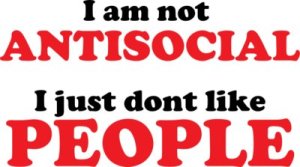
Antisocial bumper sticker, November 21, 2015. (http://www.quotationof.com/).

Antisocial bumper sticker, November 21, 2015. (http://www.quotationof.com/).

I look back at that time and realize how stupid I was twenty-eight years ago. To think that I could go out in the world, attend a four-year institution, and not have my assumptions about the world, about people, and about myself challenged. That’s like going overseas to visit some ruins, but never meeting the people who live there (Or, in this case, like rich White Americans doing Sandals and other brown-skinned service-based vacations).

Phyllis and my dorm mates at Lothrop Hall weren’t even the first step of that process. They were the last step of a process of controlling and protecting myself from my years of living in the shadows in Mount Vernon, New York. The coping strategies I had honed for five years to survive 616 and Humanities and MVHS had barely worked. By the end of my first semester, they were completely useless. I came to realize that a strategy to seal myself up from all criticism and praise, to keep humanity out of my life, was doomed to fail. There was no way to keep the world from forming a first impression of me, no matter how many layers of invisibility I attempted to wear. But there was a way to reshape how I saw myself and the world.
Fifteen Years + 1 Million Men Equals?

16 Friday Oct 2015

Posted by decollins1969 in 1, Academia, Boy @ The Window, culture, Eclectic, Politics, Pop Culture, race, Religion

≈ Leave a comment

Tags

African American Men, Authenticity, Black Leadership, Black Males, Black Masculinity, Black Men, Exclusion, Inspiration, Louis Farrakhan, Million Man March, Nation of Islam, National Mall, October 16 1995, Race, Symbolism, Symbols, Washington DC


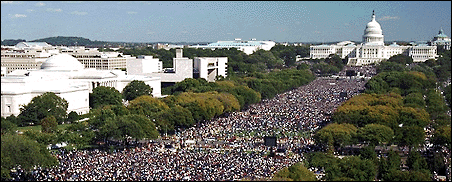
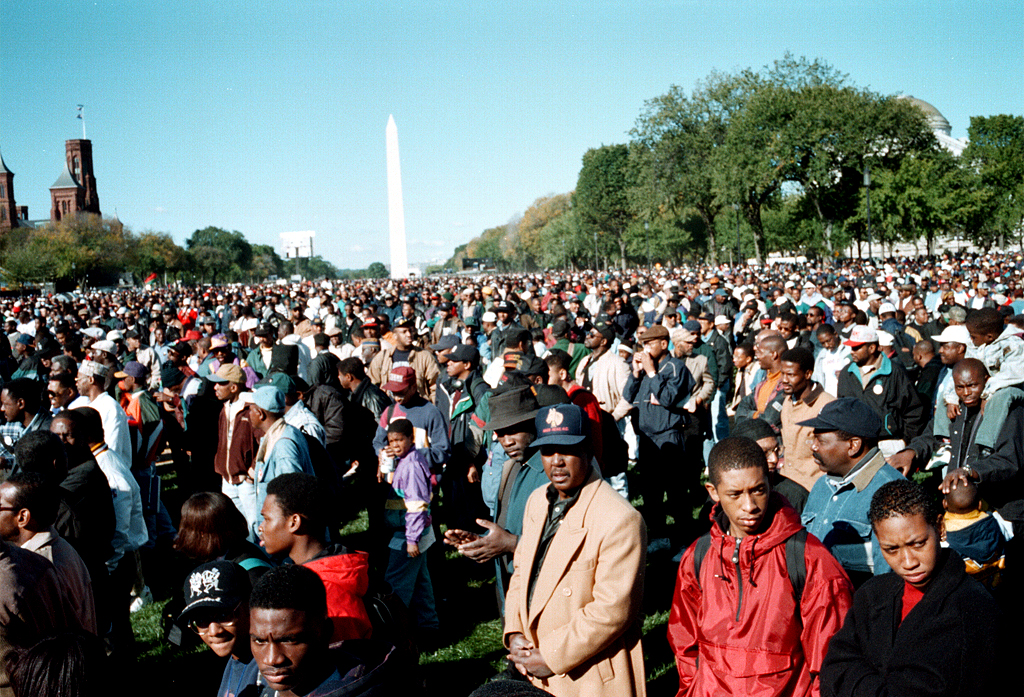
Million Man March, Washington, DC, October 16, 1995. Source: http://www.flickr.com/photos/yoke_mc/12469525/flick.com This file is licensed under the Creative Commons Attribution 2.0 Generic license.

I wrote this five years ago, but the same questions can be asked, for better and worse, with an addendum. That in the light of what Black men should do and shouldn’t, should expect and shouldn’t expect — of themselves and of the world — this is a very narrow-minded way of thinking. Concentrating on some limited definition of Black masculinity neglects the need to address inequality, systemic racism, the theft of hopes and dreams, not to mention, relationships and the intersection of race, class, gender, sexual orientation, religion, and everything else (though Black women and women of color have to deal with intersectionality every day, the issue goes mostly neglected and — if ever thought about — misunderstood by Black men).

If the past five years have shown anything, the issues addressing Black men have never existed in a vacuum. Police brutality and regular killings, White vigilantism, joblessness, debt, a dismantling of already under-resourced public schools, mass incarceration. These cannot ever be divorced from the issues facing Black women, women of color, the Black LGBT community, Latinos and Latinas, Native Americans, the poor and low-wage workers of color. Nor should they have been twenty years ago.

=====================================================

Today’s date has meaning for millions of people. Forty-one years ago, the New York Mets won their first World Series, beating the heavily favored Baltimore Orioles in five games. Crush #2 was also born forty-one years ago on this date (Happy Birthday!). But for a select group of African Americans — especially for over a million on the National Mall — today’s date marks fifteen years since the Million Man March.

I was there, though not among the million or so on the Mall that cold, windy and sunny day. I was in DC, on the Mall two hours before the gathering. I watched the highlights on CNN on the University of Maryland’s campus, all but completely clear of Black men under the age of thirty that afternoon. I met up with many a Black guy before and after the march, on the Metro as young men had taken the day off from work, school or college classes to go. On my bus back to Pittsburgh as older men talked of their broken lives, their remaining hopes and dreams. Most of all, I heard many speak of how inspired they were to go, as if God was calling them down to the Mall to find their true selves.

I didn’t go because I’d come down to the area that weekend for my dissertation research (including interviews) and to spend time with my long-distance girlfriend, who was a grad student at University of Maryland at the time. While I had some regrets about not attending, it’d been a while since I’d been involved with anyone on more than a passing occasion. Plus, I figured that my doctoral thesis on Black Washington and multiculturalism provided a significant intellectual exception to attending.

Louis Farrakhan, Million Man March, Washington, DC, October 16, 1995. Source: http://www.africawithin.com

Maybe I wasn’t being truly and authentically Black because I didn’t attend the march live, because I refused to stand in a sea of bodies to hear Louis Farrakhan’s voice encouraging Black men to take charge over themselves, their lives, their families. Maybe I did see myself as being above the fray because I saw all of this as a whole bunch of sound and fury signifying nothing but symbols. Maybe, in the end, being around so many Black men doing the same thing at the same time made me uncomfortable, just because I wasn’t sure what they expected to get out of the march after it was over.

Of course, symbols and inspiration are important, because without them, there is no action, no activism, no movement toward a goal that will ultimately change our lives, individually or collectively. But in listening to dozens of men who did attend the Million Man March that day and in the weeks that followed (as I traveled back to Pittsburgh, then to Minneapolis, then back to Pittsburgh, then DC, then New York in the month after the march), I realized that symbols and inspiration was all they expected out of the march.

Fifteen years later, the realization that nothing has really changed in the lives of many, if not most, of the million-plus men that attended the march on this date is disheartening. Those in poverty on that date may well still be in poverty. Those with years of addiction, or lives of crime, or without the compassion and skills necessary for fatherhood, all still struggling with these issues. That the cultural gap between Black men and Black women has widened since ’95 is obvious.

Yet there’s always hope, inspiration, and symbols that show that not all was for naught on Monday, October 16, ’95. It brought major issues facing African American males front and center to America and African America, and inspired many to work for social change and social justice for Blacks and for Black males in particular. Even if the messages of Farrakhan and company were mixed, contradictory, hypocritical, even sexist and bigoted. The march at least provided the realization that many Blacks cared deeply about finding themselves and finding solutions to issues that haunted them then, and haunt us still. Symbols are a powerful thing, even if it means we need many more of them before change can truly take hold.

Million Man March (Wide Above Shot), October 16, 1995. Source: Smithsonian Institution-http://photo2.si.edu/mmm/mmm08.gif


Not Finding My Musical Center

16 Tuesday Jun 2015

Posted by decollins1969 in 1, Boy @ The Window, culture, Eclectic, eclectic music, Mount Vernon High School, Mount Vernon New York, music, My Father, New York City, Politics, Pop Culture, race, Religion, Youth

≈ 1 Comment

Tags

616, 616 East Lincoln Avenue, Authentic Blackness, Authenticity, Bad Ideas, Bad Music, Black Masculinity, Columbia House, Coping Strategies, Crush #2, Dahlia, David Wolf, Escapism, Estelle Abel, Glass Tiger, Honors Convocation 1987, MVHS, Phyllis, Richard Capozzola, Self-Discovery, Silent Treatment, Sylvia Fasulo, Terre Haute, Thompson Twins, Tower Records


Glass Tiger, The Thin Red Line (1986) album cover, June 6, 2015. (http://www.amazon.ca).

Glass Tiger, The Thin Red Line (1986) album cover, June 6, 2015. (http://www.amazon.ca).

June ’15’s calendar is exactly the same as the one I lived through in June ’81, June ’87, June ’98, and June ’09 (you can look it up). But June ’87’s the month I graduated from Mount Vernon High School. At seventeen, my Blackness, my authenticity as a young man and as a Black man, my place in the world, all were question marks. Between Black administrators like Estelle Abel and Brenda Smith (not to mention White ones like Richard Capozzola and Carapella), teachers like David Wolf and my guidance counselor Sylvia Fasulo, plus the fifty or so “cool” kids with their ’80s pre-Nu Jack Swing/post-Purple Rain Prince look, I might as well have been an alien from another planet. That’s not even counting my strange and out-of-character incident with Dahlia, the humiliation of the Sam and Laurell Awards Show, the dissonance of dealing with Mom, my idiot stepfather Maurice and my siblings at 616, my father Jimme’s drinking, and the run-ins with not-so-normal Crush #2 in Phyllis.

The day I realized most how differently the world outside of Mount Vernon viewed me from how I viewed myself came the day after graduation at Tower Records on West 66th and Broadway. I’ve told this story before, here and in Boy @ The Window, about how some NYPD officers working security there accosted me and accused me of stealing tapes that I had bought the previous week. What I have left out, though, was my state of mind in the two-week period prior to this incident. As I said in the memoir

I had my latest Walkman, my first Sony Walkman, actually, and my book bag with my recent tape investments, including a few I’d bought at Tower Records the previous Friday. Investments like Fleetwood Mac’s Tango In The Night, Genesis’ Invisible Touch, Whitney Houston’s Whitney and Glass Tiger. Glass Tiger, by the way, was a good indication of my state of mind. Boy was I pathetic!

Here I was, attempting to discover myself through what was then my normal coping strategy of escapism via eclectic music. Given my long periods of deprivation from pop culture between religion, abuse and poverty, I’d really only been at this discovering music thing for a little more than three years. I was basically a preteen in terms of pop culture and musical development outside of choir in elementary and middle school and playing the trombone and fife.

Seriously, I look at this Canadian group Glass Tiger’s ’86 album cover The Thin Red Line now and think, “this stuff isn’t even Michael Bolton worthy!” Songs like “Don’t Forget Me (When I’m Gone)” and “Someday” were actual Billboard chart-toppers in ’87, though, and because I had no friends in whom I placed trust, I trusted my coping strategies and Casey Kasem.

That, and Columbia Record Club, which I signed up for off and on between ’86 and ’89, with my high point for using their Terra Haute, Indiana mailing operation being the spring and summer of ’87. I could use them to find music I wouldn’t dare buy even at Tower Records or Crazy Eddie’s. I bought new age music by Phillip Glass, took a hand at jazz with Dizzy Gillespie, bought Van Halen’s 1984 and 5150 (California-crazy me), and went for it with Big Daddy Kane, MC Lyte and Salt ‘n Pepa.

Thompson Twins, Here's to Future Days (1985) album cover, June 6, 2015. (http://audiokarma.com).

Thompson Twins, Here’s to Future Days (1985) album cover, June 6, 2015. (http://audiokarma.com).

But for every Simple Minds‘ Once Upon A Time (1985), there was Toto’s The Seventh One (1988), or Thompson Twins’ anything, really. For every song that stuck with me, like Sting’s “Be Still My Beating Heart” (1987) or Anita Baker’s “No One In The World” (1986), there was Whitney Houston’s “Love Is A Contact Sport” (1987) — one of the worst songs I’ve ever heard a voice as awesome as Whitney’s sing — and Howard Jones’ “Things Can Only Get Better” (1985). “Things Can Only Get Better,” by the way, is in my iPod’s random rotation, as I have come around to it again in the past decade.

I was trying to figure out what I liked and didn’t like musically on the fly, having lost a significant amount of time growing up for the triviality of enjoying music. This was hard to do, though, in a world in which my peers and many adults assumed that I knew myself well at the ripe old age of seventeen. No matter what my IQ score was in ’87 (about a 130, for the eugenicists out there), my emotional and psychological development probably put me about five years behind my now former classmates.

So my music tastes varied from genius to God-awful. They still do. The difference is, I recognize I may be the only one who listens to DMX for comic relief, because there’s no way to take him or his rap seriously. Or that I find Tupac and Eminem equally compelling and equally problematic. I still

Taco Bell's Waffle Taco w/ syrup, sausage, eggs and cheese, March 27, 2014. (http://vice.com).

Taco Bell’s Waffle Taco w/ syrup, sausage, eggs and cheese, March 27, 2014. (http://vice.com).

don’t understand the genius of Miles Davis, no matter how many times jazz enthusiasts like my friend Marc try to convince me to keep listening. Still, half of my music comes from the period between May ’87 and October ’97, and the rest crosses boundaries in time, genre, race and language (Deep Forest, anyone?).

I also recognize complete schlock, too. Unfortunately, commercial music these days is about as emotionally and mentally nutritious as a McDonald’s Big Mac and a Taco Bell Gordita combined. I try every few weeks to find out about the latest artists, just in case my son ever becomes interested in music again. Thank goodness, though, there’s no Lil’ Wayne, Rick Ross, or Iggy Izalea in our house! I’ll take my Glass Tiger (not really) any day over that!

Boy @ The Window Origins: Meltzer Conversations

14 Saturday Mar 2015

Posted by decollins1969 in 1, Academia, Boy @ The Window, Carnegie Mellon University, Christianity, culture, Eclectic, Hebrew-Israelite, Mount Vernon High School, Mount Vernon New York, Pittsburgh, Politics, Pop Culture, race, Religion, Youth

≈ Leave a comment

Tags

Benetton Group, Black Elites, Black Identity, Black Masculinity, Black Migration, Black Washington, CMU, Colorism, Dissertation, Doctoral Thesis, Harold Meltzer, Harper Stewart, Humanities, Hypermasculinity, Inequality, Internalized Racism, Logic, Manhood, Multiculturalism, Personal Insights, Race, Racial Identity, Rationalism, Self-Discovery, Social Injustice, Taye Diggs, The Best Man (1999), Washington DC, X-Men Origins: Wolverine (2009)


X-Men Origins: Wolverine (2009) scene, where Wolverine frees mutants kept as experiments by Colonel William Stryker , March 13, 2015. (http://cdn.collider.com/).

X-Men Origins: Wolverine (2009) scene, where Wolverine frees mutants kept as experiments by Colonel William Stryker , March 13, 2015. (http://cdn.collider.com/).

Of all the tangents I took related to writing Boy @ The Window, the most direct path that got me to write a memoir about the most painful period in my life was through several conversations with my dear teacher, friend and mentor in the late Harold Meltzer. I’ve discussed bits and pieces of some of those conversations here and in longer form in Boy @ The Window. It’s still worth rehashing some of those conversations, at least in terms of what was and wasn’t good advice, as well as in explaining how some of the main themes of the memoir developed over time.

As I wrote in Boy @ The Window, though my “first interview with him was in August ’02,” the first time “we discussed the possibility of me doing Boy @ The Window went back to February ’95.” Meltzer had been retired from teaching about a year and a half, while I was beginning the heavy lifting phase of my doctoral thesis, “living in DC for a couple of months while hitting the archives and libraries up for dusty information. In need of a writing break, I gave him a call on one cold and boring Saturday afternoon.”

It was in response to a letter he sent congratulating me. I’d recently published an op-ed in my hometown and county newspaper, “Solving African American Identity Crisis.” I was writing about issues like using the n-word, hypermasculinity, and internalized racism in the short and, for me at least, dummied down piece. Somehow our discussion of that piece led to a discussion of my classmate Sam. Did I really want to spend an hour and a half talking with Meltzer about Sam and some of my other Humanities classmates and their possible identity issues, considering some of my own serious growing pains — the Hebrew-Israelite years, my suicide attempt, my Black masculinity and manhood issues? Absolutely not!

But I learned quite a bit about how I might want to approach writing Boy @ The Window through that phone call. Not because Meltzer had given me any sage advice, which he didn’t, or because he revealed things to me that I shouldn’t have come to learn during our conversation, which he definitely did.

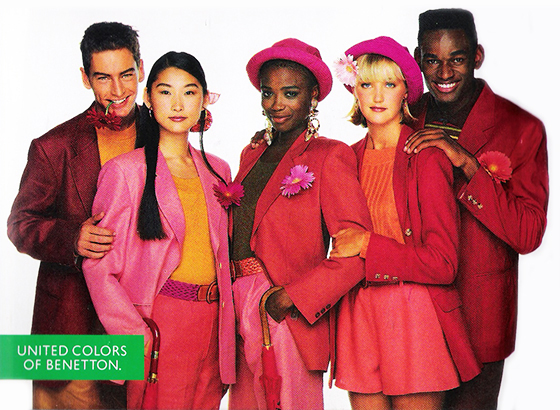
Benetton ad, 1980s, January 2013. (http://fashionfollower.com/).

Benetton ad, 1980s, January 2013. (http://fashionfollower.com/).

No, it was the idea that a lot of the things that I had pursued as a historian and researcher were things that came out of my experiences growing up. Multiculturalism as a historical phenomenon (at least if one linked it to cultural pluralism)? Can anyone say Humanities Program, or, what I used to call “Benetton Group” when we were at A.B. Davis Middle School? Writing about African American identity issues? Obviously related to living in Mount Vernon, the land where any hint of weakness translated into me being called a “faggot” or a “pussy.”

And what about any scholarly concerns with racial and socioeconomic inequality and Black migration? Anyone ever meet my Mom and my father Jimme, 1960s-era migrants from Arkansas and Georgia/Florida respectively? An examination of the Black Washingtonian elite and their looking down upon ordinary Blacks because of their own colorism or the latter’s lack of education? Come on down, Estelle Abel and any number of well-established Black Mount Vernon-ites who never gave me the time of day! As much as academia had been an escape for me, into a world of rationalism and logic, a place of dispassionate scholarship, it was all personal for me, without realizing it until that phone conversation with Meltzer.

Fast-forward to November ’02, the last interview I did with Meltzer before his death two months later. We spent the last couple of hours on that brisk fall Thursday discussing the book idea that would become Boy @ The Window. Meltzer thought that it should be a work of fiction, “based on the real flesh and blood folks in my life, but with different names of course to protect me from any potential lawsuits. He did make me rethink the project from a simple research study of my high school years into narrative nonfiction or a memoir.” 

Screen shot of fictional character Harper Stewart's bestselling novel nfinished Business, from The Best Man (1999), March 14, 2015. (hitchdied via http://s785.photobucket.com/).

Screen shot of fictional character Harper Stewart’s bestselling novel Unfinished Business, from The Best Man (1999), March 14, 2015. (hitchdied via http://s785.photobucket.com/).

Was Meltzer correct? Should I have done a Harper Stewart — played by actor Taye Diggs in The Best Man (1999)? Should I have fictionalized all of my experiences and those of my family, teachers, administrators and classmates? I’m not sure if it would’ve made a difference. Stories of fiction tend to have a tight symmetry to them. Or, the theme of “what goes around comes around” is usually a big one in any novel. You can’t leave too many loose threads or unresolved issues, even if the novel is part of a series. For my purposes, since my life remains a work in progress, a story of relative — not obvious or absolute — success, telling it as fiction would hardly ring true to me, much less to any group of readers.

Whatever else anyone wants to say about the late Harold Meltzer, the dude got me to think about difficult things until I was no longer comfortable in leaving my uncomfortable experiences and assumptions unchallenged. The very definition of a mentor, the very purpose of Boy @ The Window.

What A Fool (Make) Believes

31 Saturday Jan 2015

Posted by decollins1969 in 1, Boy @ The Window, culture, Eclectic, eclectic music, Mount Vernon High School, Mount Vernon New York, music, Pop Culture, Religion, Sports, University of Pittsburgh, Youth

≈ Leave a comment

Tags

"Born In The U.S.A.", "What A Fool Believes" (1979), Black Masculinity, Blocked Shot, Bruce Springsteen, Crush #1, Crush #2, Disillusion, Doobie Brothers, Emasculation, Fantasy, Inception (2010), Kenny Loggins, Make Believe, Manchild, Michael McDonald, MVHS, Naivete, Nightmare, Patrick Ewing, Pitt, Reality, Romantic Crushes, Self-Discovery, Self-Reflection, Sentimental Fool, Stupidity


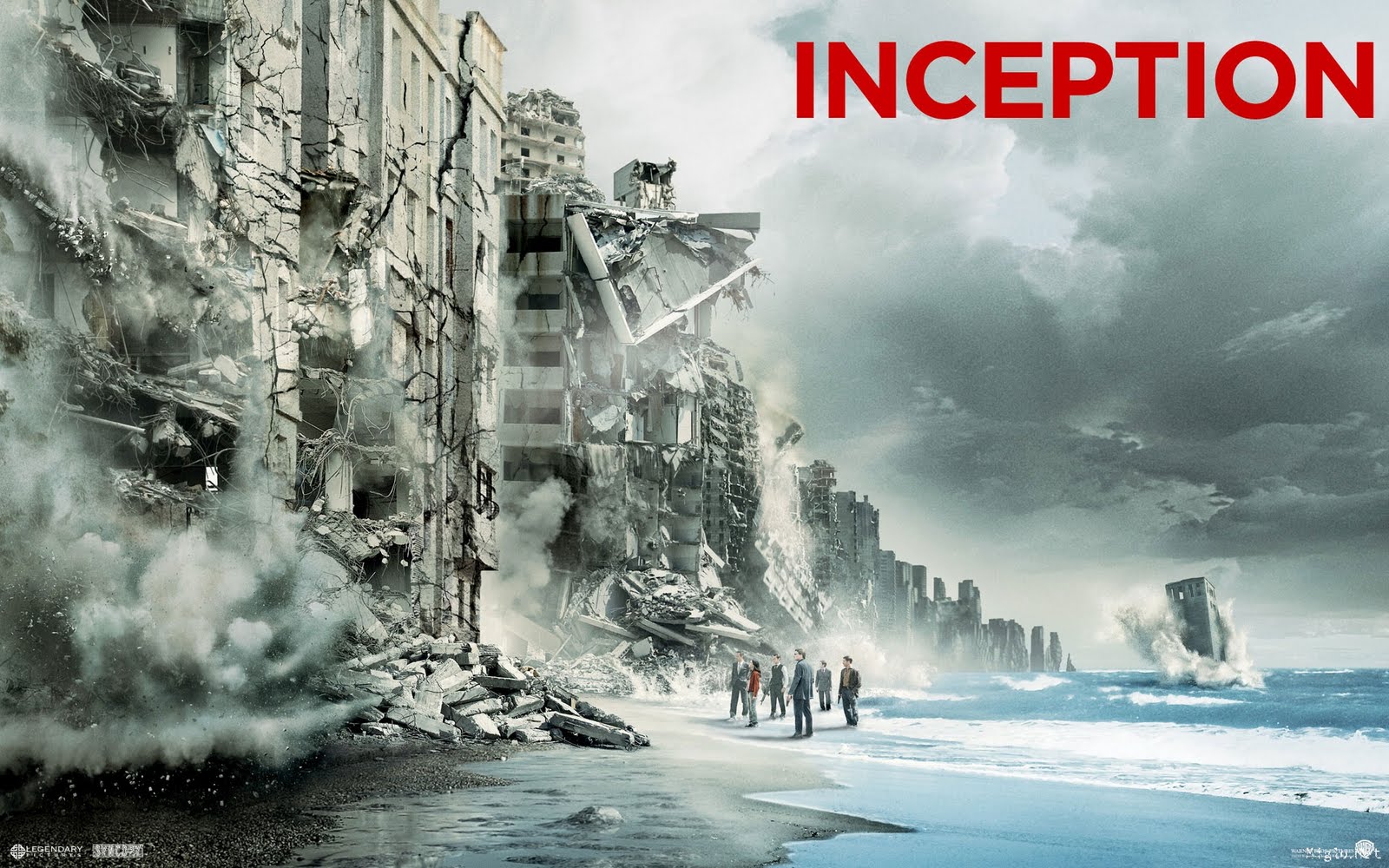
Inception (2010) movie wallpaper (scene of falling  too deep in a dream to come out of it), January 31, 2015. (http://www.alphatucana.co.uk/).

Inception (2010) movie wallpaper (scene of falling too deep in a dream to come out of it), January 31, 2015. (http://www.alphatucana.co.uk/).

I am a firm believer in the idea that just about everything in our lives happens for a reason, even if the reason involves multiple layers of chance adding up to a certainty. Meaning even the unexplainable, given enough time, study and webs of connections, can add up to a certain amount of truth, even if we as humans cannot except that limited truth.

Orange Crush can crushed, June 8, 2012. (Susan Murtaugh via Flickr.com).

Orange Crush can crushed, June 8, 2012. (Susan Murtaugh via Flickr.com).

The beginning of ’87 put me in the middle of that scenario regarding my masculinity and my relationships with everyone in my life. I knew that at seventeen that I’d already been an adult of sorts, with everything that was going on with my family at 616. But while I might have been an overburdened high school senior with adult responsibilities and adult-level decisions to make, psychologically and emotionally, I was still a twelve-year-old. One damaged by bearing witness to my stepfather beating up my Mom on Memorial Day ’82, the abuse I’d suffered at his hands afterward, and my ostracism my first years in Humanities in seventh and eighth grade. I was “a dog that been beat too much” by my senior year at Mount Vernon High School, and I’d started wondering if I had stayed one year too long before heading off to college, because my last year of K-12 wasn’t going so well either.

I was also in the middle of my second classmate crush in five years. I was more than three years removed from my most intense feelings for Crush #1 (outed at Wendy in Boy @ The Window), only to feel stomach flutters for the young woman who’d been my Crush #2 (Phyllis) for about thirteen months. Except I was too scared to tell anyone, including myself, of how I felt about her.

Nor did I really understand why I felt the way I did when I was around her. With Wendy, I could point to personality, intellect, quirkiness, among other attributes, and the fact that prior to seventh grade, I’d never met anyone like her. Phyllis, though, I’d known for more than five years, and while she was attractive and smart, it wasn’t as if she was so unique.

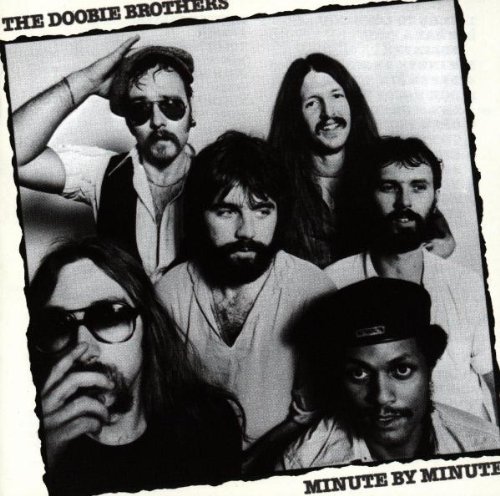
Doobie Brothers, Minute By Minute (1979) album (with "What A Fool Believes" on Track 2), January 31, 2015. (http://amazon.com).

Doobie Brothers, Minute By Minute (1979) album (with “What A Fool Believes” on Track 2), January 31, 2015. (http://amazon.com).

Still, even in the back of my more mature and emotionally cold part of my mind, I knew what it really was. Phyllis had made this beaten and abused dog feel better about himself in the worst of times, between seventh and tenth grade, back in his Hebrew-Israelite days. Even if that emotional altruism was more about saving me from hell in this life and the next, and less about liking me, her actions tugged my deeply bruised heart strings. Not Phyllis’ fault by any stretch. Just a reality. I was a “sentimental fool…tryin’ hard to recreate what had yet to be created,” like the fictional man in Doobie Brothers’ “What A Fool Believes” (1979).

By my senior year, I thought about Phyllis from afar, just like I’d done with Wendy nearly five years earlier. With my imagination, I could almost imagine anything. Including all of the indicators of romance, from dating and joking to kissing, to getting together during holiday and summer breaks during college. Everything, except anything sexual. It wasn’t because I didn’t know how. It was because in the conscious side of my mind in which my emotional age remained at twelve, I couldn’t see any young woman my age as having a carnal side, of being anything other than a near-perfect being. Phyllis may as well have been a nymph or angel, and not a real person.

Somehow I knew I was setting myself up for a year of hurt. I knew that I had to grow up, to “be a man,” to find a way to actually say that I liked Phyllis, if only for myself to hear. And I did tell it, to myself, to her, to people I came for a time to trust. I even sent a letter to Phyllis after the fact, only to be hurt even more, just like the dumb ass Michael McDonald and Kenny Loggins described in “What A Fool Believes.” “As he rises to her apology, anybody else would surely know…,” as the song goes. Only in my case, to crash and burn like the Hindenburg in New Jersey did in 1938.

Patrick Ewing blocking a Scottie Pippen shot, United Center, Chicago, March 14, 1996. (http://chicago.cbslocal.com).

Patrick Ewing blocking a Scottie Pippen shot, United Center, Chicago, March 14, 1996. (http://chicago.cbslocal.com).

By the end of ’88, though, I realized the truth. That my crush on Crush #2 wasn’t a real crush at all. It was my crutch, my coping strategy to deal with the fact that I really hadn’t felt anything about anyone in my life since those heady Wendy days. Those were my final days of childhood, those days before I’d learn for the second time in my first twelve and a half years how little control I had over my life, how little love and affection there was to find. As the song of that phase of my life went, I “never came near what [I] wanted to say, only to realize it never really was.” I never made Crush #1 “think twice,” and made Crush #2 reject me like Patrick Ewing in his prime smacking a basketball into the fifth row of Madison Square Garden.

I suppose that this happens to all boys and girls, men and women and transgender at some point or another in their lives. At twelve, it felt glorious, while at seventeen, it was painful and embarrassing. I’m just glad that I made it through that year, 1987 — though hardly happy to go and grow through the process — and came out on the other side of it ready to grow, risk and protect my heart again.

Head Over Heels

03 Tuesday Dec 2013

Posted by decollins1969 in 1, Boy @ The Window, culture, earth, wind & fire, Eclectic, eclectic music, High Rise Buildings, Mount Vernon High School, Mount Vernon New York, music, Pop Culture, race, Youth

≈ Leave a comment

Tags

"Head Over Heels" (1985), Authenticity, Black Masculinity, Blackness, Crush, Crush #2, December, December to Remember, Phyllis, Self-Discovery, Snow, Snow Showers, Tears for Fears, Walking


http://vimeo.com/29807866

December is both my most and least favorite month of the year. I was born at the end of this month, but only two days after Christmas. I’ve run away from home and been mugged, suicidal and inspired this month. Not to mention burned out and homesick and heartbroken. But I’ve found myself and experienced renewal on this least sunlit of months as well.

Twenty-eight years ago today was the day my crush on Phyllis, a.k.a. “Crush #2” began. It wasn’t a crush of epic love, but it would affect how I viewed myself and the young women in my life for the next two and a half years. As I wrote in Boy @ The Window:

It was the third of December, a cold and frosty Tuesday that would make someone think twice about going outside. It was after school, and I happened to be on my way to the library. I stopped home first to grab a bite to eat, to see if Mom wanted anything from the store after my time at the library, and to listen to some music. The last song I heard before walking out the door was Tears for Fears’ “Head Over Heels,” their third major hit in the US in ’85. The hard tones of their synthesized piano were hypnotic for me. “Head Over Heels” reminded me of my own failed attempts to get past myself when it came to saying more than “Hi” to any woman or girl whom I thought interesting. Besides having a family that I saw as an embarrassment, I simply didn’t have the tools of “cool” necessary to break through with any female. My voice usually cracked under the stress of not knowing what to say, and when it didn’t crack, the slow catch in my voice made everything I said sound like it was deliberately at half-speed. My ineptitude also included my automatically taking anything a girl did say about liking me as if it were a sick and twisted joke.

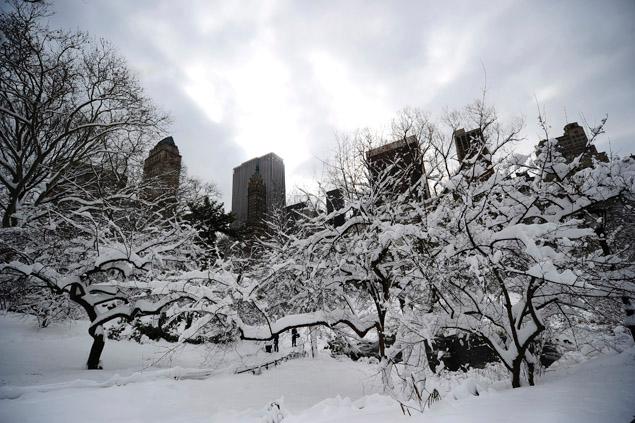
Snow covers trees in Central Park after a storm, New York City, December 28, 2013. (Emmanuel Dunand/AFP/Getty Images via http://www.nydailynews.com).

Snow covers trees in Central Park after a storm, New York City, December 28, 2013. (Emmanuel Dunand/AFP/Getty Images via http://www.nydailynews.com).

That’s what “Head Over Heels” had conjured up in my mind as I walked down East Lincoln toward Lorraine. For whatever reason my thoughts turned to Phyllis. I thought about her smile, her always-wearing-a-skirt style, her standing as a popular student at MVHS. She was always nice to me, always friendly, to the point of being coy about it. The brief flash of Phyllis’ face and smile put a smile on my own as I started singing to “Head Over Heels” out loud. “I wanted to be with you alone, and talk about the weather . . .” was coming out of my mouth in high falsetto as snow started to fall. My thoughts had turned to the cold, the snow flakes and the stark bareness of the wintry landscape as I reached the corner of East Lincoln and Darwood. I was singing “something happens and I’m head over heels . . . don’t break my heart, don’t take my heart, don’t, don’t, don’t throw it away.” Just as was I was about to cross the street, a black two-door Mercury Topaz, circa ’84 or ’85, pulled up, with Phyllis’ mother driving and Phyllis in the front passenger seat. Phyllis’ sister Claudia was in the back. Phyllis mouthed a “Hi” and waved at the same time as the light turned green for their car. What I remember as they pulled away was the smile that she flashed me. It didn’t seem fake. It looked like an I-really-like-you kind of smile to me. I was caught completely off guard!

I spent the rest of the walk to the library debating whether the smile was genuine or a nicety, what the smile meant for her, and how I felt about it. By the time I got to the library, I could only reach one conclusion. I liked Phyllis, and not in an “I like her but only as a friend way.” I liked the girl, simple as that. Those lips and that smile were worth at least a thousand kisses a day!

As I’ve noted in the book and here in the blog, my instincts about Phyllis’ smile turned about to be correct on both counts. Too bad I wasn’t listening to Alexander O’Neal’s “Fake” or Mr. Mister’s “Broken Wings” when I walked out the door to our 616 apartment at 4:30 that afternoon. Still, for that moment, at least, all seemed possible in my little world.

On Maturity and Writing In Text Message Form

11 Monday Nov 2013

Posted by decollins1969 in 1, Boy @ The Window, culture, Eclectic, eclectic music, Mount Vernon High School, Mount Vernon New York, music, Pop Culture, race, University of Pittsburgh, Youth

≈ 1 Comment

Tags

"I Would Die 4 U" (1984), Anger, Black Masculinity, Crush #1, Crush #2, Depression, Disillusionment, Emasculation, Maturity, Objectification, Obsession, Pedestal, Phyllis, Pitt, Prince, Rejection, Sexism, Text Messaging, Wendy, White Plains Galleria


Dulcesita, "i would die for you," November 11, 2013. (http://www.myxer.com).

Dulcesita, “i would die for you,” November 11, 2013. (http://www.myxer.com).

In Boy @ The Window, I have a chapter on my first year at Pitt and the baggage I carried from my last months in Mount Vernon, New York, Phyllis (a.k.a., Crush #2) included. I haven’t discussed Phyllis much in the six and a half years I’ve been running this blog on all things related to my memoir. Mostly because once I got over my crush-turned-internalized-obsession, I realized that she wasn’t really all that as a person. Still, given the number of posts I’ve done on my Mom, my late idiot ex-stepfather Maurice and Wendy (a.k.a., Crush #1), Phyllis does deserve some mention, along with my stumbled-filled transition to manhood that went with the years between December ’85 and August ’88.

A key point for me in this transition was in October and early November ’87. I finally worked up the courage to write Phyllis a note about an incident earlier that summer, one in which she all but emasculated me at the White Plains Galleria. As I wrote in Boy @ The Window:

Crushing walnuts in plastic bag, November 11, 2013. (http://2.bp.blogspot.com/).

Crushing walnuts in plastic bag, November 11, 2013. (http://2.bp.blogspot.com/).

I got the address, bought her a card for her eighteenth birthday, and sat down and wrote her. About how I liked her and wanted to know if she “ever liked me.” I needed to know if she and her sister really were talking about me at the bus stop that day, “one way or the other.” I wanted to know what she thought I needed in order to impress someone like her in the future. Then I added “Happy 18th Birthday!” I sent the card off on the second week in October, just a few days before her birthday.

On the second of November, I got her response. It was in purple ink, with heart shapes and circles for dots over “i”s. Reading her letter was like reading the liner notes off of a Prince album. Like the song “I Would Die 4 U,” Phyllis had decided to limit her English skills to the ’80s equivalent of sign language on paper, a real “revolution” on both their parts. I remember she started, “Thank U 4 your card 2day,” an insult to my intelligence. She would’ve been better off with, “Yo nigga, ’s up wit’ ya sweatin’ me?” She wrote indirectly that she did like me at one point in time, but added “but we’re in college now . . . around lots of nu people” She admitted that I was her and Claudia’s topic of conversation that day, but “I needed 2 get over that.” She hinted that I shouldn’t write her again, and that was it. No apologies, no attempt to understand how I felt…

After Phyllis’ wonderful response, I all but stopped going to class. I missed most of my classes the month of November, only showing up for exams or if my mood had let up long enough to allow me to function like normal. The weekend before Thanksgiving, I allowed my dorm mates to cheer me up by getting a couple of cases of Busch Beer. These were the Pounder type, sixteen-ounce cans. After getting Mike to get us the cases, we went back to Aaron’s room and started drinking. I downed four cans in fifteen minutes, and was drunk within a half hour. I started throwing around the word “bitch.” Anytime anyone mentioned Phyllis’ name – or any woman’s name for that matter — one of us said the B-word and we’d guzzle down some beer.

In today’s world of text messaging, I would’ve found Phyllis’ response so ridiculous that I probably would’ve shared it with close friends and laughed about it for weeks afterward. But as someone with the emotional and psychological maturity of a twelve-year-old in the fall of ’87, Phyllis’ response really, really, really hurt. Her letter shattered the pedestal on which I had placed her, and reaffirmed every negative thing I’d felt about myself for the previous half decade.

Depression image, Carroll College, Counseling Services, November 11, 2013. (http://www.carroll.edu).

Depression image, Carroll College, Counseling Services, November 11, 2013. (http://www.carroll.edu).

It also left me so depressed that I finished that semester with a 2.63 GPA. That, and spending the holidays at 616, made me determined to use the anger I felt toward myself and Phyllis as fuel for the next semester. And even though that worked so well that I made Dean’s List, I still hadn’t really gotten over Phyllis’ rejection by the time the school year was over in April ’88.

It took one last look at that letter — that unbelievably trifling and simple letter — to realize that even under the best of circumstances, Phyllis and I would’ve been a match made only in a mad scientist’s laboratory. I’d never be interested in a human being who talked down to me, as if I was unworthy of anything other than some simple shorthand language. Or in any woman whose expectations of men were about as objectifying as Mike Tyson’s views of women. I realized that I had finally gotten to know the real Phyllis, and in the process, had begun to know the real me, and what I needed to change about myself in order to build a better, 2.0 version of me. With that, like so much from my freshman dorm at Lothrop Hall, Phyllis’ letter became part of my garbage pile.

← Older posts
Newer posts →

Boy @ The Window: A Memoir

Boy @ The Window: A Memoir

Places to Buy/Download Boy @ The Window

There's a few ways in which you can read excerpts of, borrow and/or purchase and download Boy @ The Window. There's the trade paperback edition of Boy @ The Window, available for purchase via Amazon.com at http://www.amazon.com/Boy-Window-Donald-Earl-Collins/dp/0989256138/

There's also a Kindle edition on Amazon.com. The enhanced edition can be read only with Kindle Fire, an iPad or a full-color tablet. The links to the enhanced edition through Apple's iBookstore and the Barnes & Noble NOOK edition are below. The link to the Amazon Kindle version is also immediately below:

scr2555-proj697-a-kindle-logo-rgb-lg

Boy @ The Window on Amazon.com: http://www.amazon.com/Boy-The-Window-Memoir-ebook/dp/B00CD95FBU/

iBookstore-logo-300x100

Boy @ The Window on Apple's iBookstore: https://itunes.apple.com/us/book/boy-the-window/id643768275?ls=1

Barnes & Noble (bn.com) logo, June 26, 2013. (http://www.logotypes101.com).

Boy @ The Window on Barnes & Noble: http://www.barnesandnoble.com/w/boy-the-window-donald-earl-collins/1115182183?ean=2940016741567

You can also add, read and review Boy @ The Window on Goodreads.com. Just click on the button below:

Boy @ The Window

Twitter Updates

Tweets by decollins1969
  • RSS - Posts
  • RSS - Comments

Archives

  • June 2025
  • April 2023
  • September 2022
  • August 2022
  • July 2022
  • June 2022
  • May 2022
  • April 2022
  • March 2022
  • January 2022
  • December 2021
  • November 2021
  • October 2021
  • September 2021
  • August 2021
  • July 2021
  • June 2021
  • April 2021
  • March 2021
  • February 2021
  • January 2021
  • December 2020
  • November 2020
  • October 2020
  • September 2020
  • August 2020
  • July 2020
  • May 2020
  • April 2020
  • March 2020
  • January 2020
  • December 2019
  • November 2019
  • August 2019
  • July 2019
  • June 2019
  • May 2019
  • April 2019
  • March 2019
  • February 2019
  • January 2019
  • December 2018
  • November 2018
  • October 2018
  • September 2018
  • August 2018
  • July 2018
  • June 2018
  • May 2018
  • March 2018
  • February 2018
  • January 2018
  • December 2017
  • November 2017
  • October 2017
  • September 2017
  • August 2017
  • July 2017
  • June 2017
  • May 2017
  • April 2017
  • March 2017
  • February 2017
  • January 2017
  • December 2016
  • November 2016
  • October 2016
  • September 2016
  • August 2016
  • July 2016
  • June 2016
  • May 2016
  • April 2016
  • March 2016
  • February 2016
  • January 2016
  • December 2015
  • November 2015
  • October 2015
  • September 2015
  • August 2015
  • July 2015
  • June 2015
  • May 2015
  • April 2015
  • March 2015
  • February 2015
  • January 2015
  • December 2014
  • November 2014
  • October 2014
  • September 2014
  • August 2014
  • July 2014
  • June 2014
  • May 2014
  • April 2014
  • March 2014
  • February 2014
  • January 2014
  • December 2013
  • November 2013
  • October 2013
  • September 2013
  • August 2013
  • July 2013
  • June 2013
  • May 2013
  • April 2013
  • March 2013
  • February 2013
  • January 2013
  • December 2012
  • November 2012
  • October 2012
  • September 2012
  • August 2012
  • July 2012
  • June 2012
  • May 2012
  • April 2012
  • March 2012
  • February 2012
  • January 2012
  • December 2011
  • November 2011
  • October 2011
  • September 2011
  • August 2011
  • July 2011
  • June 2011
  • May 2011
  • April 2011
  • March 2011
  • February 2011
  • January 2011
  • December 2010
  • November 2010
  • October 2010
  • September 2010
  • August 2010
  • July 2010
  • June 2010
  • May 2010
  • April 2010
  • March 2010
  • February 2010
  • January 2010
  • December 2009
  • November 2009
  • October 2009
  • September 2009
  • August 2009
  • July 2009
  • June 2009
  • May 2009
  • April 2009
  • March 2009
  • February 2009
  • January 2009
  • December 2008
  • November 2008
  • October 2008
  • September 2008
  • August 2008
  • July 2008
  • June 2008
  • May 2008
  • April 2008
  • March 2008
  • February 2008
  • January 2008
  • December 2007
  • November 2007
  • October 2007
  • September 2007
  • August 2007
  • July 2007
  • June 2007

Recent Comments

decollins1969's avatardecollins1969 on No Good Teaching Deed Goes…
Mary Rose O’Connell's avatarMary Rose O’Connell on No Good Teaching Deed Goes…
Lyndah McCaskill's avatarLyndah McCaskill on The Raunchiest of Them Al…

NetworkedBlogs on Facebook

NetworkedBlogs
Blog:
Notes From a Boy @ The Window
Topics:
My Life, Culture & Education, Politics & Goofyness
 
Follow my blog

616 616 East Lincoln Avenue A.B. Davis Middle School Abuse Academia Academy for Educational Development AED Afrocentricity American Narcissism Authenticity Bigotry Blackness Boy @ The Window Carnegie Mellon University Child Abuse Class of 1987 CMU Coping Strategies Crush #1 Crush #2 Death Disillusionment Diversity Domestic Violence Economic Inequality Education Family Friendship Friendships Graduate School Hebrew-Israelites High-Stakes Testing Higher Education History Homelessness Humanities Humanities Program Hypocrisy Internalized Racism Jealousy Joe Trotter Joe William Trotter Jr. K-12 Education Love Manhood Maurice Eugene Washington Maurice Washington Misogyny Mother-Son Relationship Mount Vernon High School Mount Vernon New York Mount Vernon public schools Multiculturalism MVHS Narcissism NFL Pitt Pittsburgh Politics of Education Poverty President Barack Obama Race Racial Stereotypes Racism Relationships Self-Awareness Self-Discovery Self-Reflection Sexism Social Justice Teaching and Learning University of Pittsburgh Violence Whiteness Writing

Top Rated

Blog at WordPress.com.

  • Subscribe Subscribed
    • Notes from a Boy @ The Window
    • Join 103 other subscribers
    • Already have a WordPress.com account? Log in now.
    • Notes from a Boy @ The Window
    • Subscribe Subscribed
    • Sign up
    • Log in
    • Report this content
    • View site in Reader
    • Manage subscriptions
    • Collapse this bar
 

Loading Comments...