
• About Me
  • Other Writings
  • Interview Clips
  • All About Me: American Racism, American Narcissism, and the Conversation America Can’t Have
  • Video Clips
  • Boy @ The Window Pictures
  • Boy @ The Window Theme Music

Notes from a Boy @ The Window

~

Notes from a Boy @ The Window

Category Archives: University of Pittsburgh

Agents and Not Agents, The Hard Way

10 Tuesday Aug 2021

Posted by decollins1969 in 1, Academia, Boy @ The Window, Carnegie Mellon University, culture, Eclectic, music, New York City, Patriotism, Pittsburgh, Politics, Pop Culture, race, University of Pittsburgh, Work, Youth

≈ Leave a comment

Tags

Barbara Sizemore, Book Publishing, Claudia Menza, Failure, Fear of a "Black" America, Joe William Trotter Jr., Literary Agents, Mistakes, The Business of Writing, The Hard Way, Writing


Agents from The Matrix (1999) screenshot (cropped), August 8, 2021. (https://matrix.fandom.com)

This is the second of several posts I’ve put together about my journeys as a writer. Please laugh when and where appropriate.


“You always gotta do things the hard way, don’t you?” my one-time professor Barbara Sizemore said with some sighed frustration. It was in response to me telling her I had decided to stay at Pitt, to pursue my history doctorate at the University of Pittsburgh and possibly transfer to Carnegie Mellon to complete it. It was April 1992. We were standing in the main corridor of the third floor of Wesley Posvar Hall (née Forbes Quadrangle), I was on my way back to my grad student cubicle in the History Department. Sizemore was heading back to her office in the adjacent Africana Studies Department. If I had known this would be my last conversation with the prickly educator, her of squinty eyes and well-manicured afro, before she return to Chicago, took a position at DePaul, and passed away in 2004, I would have done more than given Sizemore a blank stare. As the tall, lanky, and sarcastic 23-year-old I was, I probably would’ve said, “Why yes, professor, I really do!”

I knew what Sizemore was really saying. It was about attending a lily-white university, where there were only four tenured Black professors out of 800 total faculty. My advisor Joe William Trotter, Jr. was one of them. Sizemore assumed that going to Ohio State or Temple to earn a doctorate in Black studies would have been my best move. But even though Sizemore was incorrect about my education decision, she was definitely correct about me taking “always doing things the hard way” paths toward so many of my goals.

Claudia Menza became my first (and so far, only) literary agent in July 1999. The idea of finding a literary agent to help me publish my first book was something I had played with as an idea for nearly a year. At least once I had begun to emerge from my state of rage, depression, and sheer burnout from my years finishing my doctorate at Carnegie Mellon and having Professor “running interference” Trotter as my advisor. I made the decision to turn my doctoral thesis into a book that would straddle the fence between the scholarly and the general. I wanted to publish what would become Fear of a “Black” America for a larger audience, to include both the academic and the personal in the same book. No one told me this was impossible. No one said this was the harder road for a first-time book author. I owned books by scholars that had mainstream imprints and labels. And many, if not most of them, had an agent helping them.

Soon after I finally found my full-time gig with the nonprofit Presidential Classroom in the DMV, I went ahead, did some research in those big, thick books on books and lit agents at Pitt’s Hillman Library, and wrote pitch letters to seven of them. Three weeks later, Menza wrote me back offering to represent me.

She started querying publishing house editors in October 2000, just as I was leaving Presidential Classroom for a higher paying nonprofit job working in social justice in DC. I was so busy with work and my New York family and with married life that I took my eye off the process. One year went by, with a few rejection letters here and there. Then 9/11 happened. I met up with Menza in New York six weeks later. I was already there to do a site visit with a social justice fellow. That’s when I learned Menza at this stage of her time as an agent predominantly represented fiction and poetry. Still, she had some high-powered authors under her belt. I remained confident in her and the mysterious process of finding an editor willing to publish me, in between bites of delicious pasta at a wonderful Italian bistro in the Village.

Two more years went by after that. I received rejections from Basic Books, Random House, Palgrave, Oxford University Press, Farrar, Straus, and Giroux, among others. Some stood out because the acquiring editors met to debate the merits for my book before ultimately rejecting it. Some stood out for being two-sentence rejections. I remember Menza saying, “I don’t understand why they don’t want your book.” That was at the end of 2002. By then, even though I remained outwardly confident, I had given up on finding a mainstream commercial publisher. “Maybe I need to go learn how to write again,” I said to my partner more than once. This, just after she became pregnant with our first and only egg.

With the ugly transition between jobs within my nonprofit organization and the birth of and caring for our one and only son, I knew I didn’t have it in me to continue the process of pitch-and-reject with Menza. I was also thinking about writing a memoir, something that could explain how I got to be me. I wrote Menza in March 2004, formally cutting ties with her as my agent. “I wish it had all worked out,” she wrote back.

That July, with some encouragement from my new boss and from my significant other, I decided to look at Fear of a “Black” America one last time, but this time, to self-publish. I went and found a house that did its own reviews of manuscripts and provided adequate enough copyediting to make sure I didn’t embarrass myself. Sometime in that process, Barbara Sizemore died. I read about her death in a nicely done obituary DePaul University put out (The Washington Post obit, not so nice about her years as DC Public Schools chancellor). I imagined Sizemore looking down at me that July and August, shaking her head.

The book came out at the end of August. Somehow, despite myself, I sold over a thousand copies in 16 months, did radio and newspaper interviews and talks and signings all over the DMV. I was happy and a bit bitter, like a cup of black coffee not sugary enough for my taste buds. This book could’ve been so much more, I thought so many times in 2004 and 2005.

But none of this is Menza’s fault, or Trotter’s, or even my fault, not in any direct sense. The world of book writing is more mysterious than the cloistered world of academia, and much more mercurial, too. It’s a popularity contest cloaked in American -isms, especially individualism and elitism (which of course contains racism and misogyny, too). It puts all the effort and blame on you and me. In my case, for not having a job in academia that lined up with my expertise in writing Fear of a “Black” America. For not having a degree from an Ivy League institution, or for not having enough successful writer contacts in my genre(s) or in general. For not living in New York as a writer. Maybe even for not being light enough or good-looking enough.

And, even in the four-and-a-half years of having an agent, for not paying close enough attention to how the industry had become a set of six monopolies. All with independent presses being squeezed, to sell out, to fold, to become niches for a small group of aspiring authors. It went from being an industry where you could pitch your books directly to publishers with or without an agent to “Get outta here!” unless you do have an agent. So many agents would prefer DIY schlock or books that easily fit the tastes of elite or hokey white readers than to ever read a query from me. I’m too eclectic, too determined to write for Black folk and beat up on white ways of thinking. I received more than 130 rejections from agents for my memoir Boy @ The Window, between 2007 and 2011, including one that read, “Alas, another book on childhood abuse!”

So, is it really me making it more difficult, because I like to “do things the hard way?” Is it because I have frequently put the need to pay bills and eat over pursuing my art and craft first? Is it because my writing sucks and agents see that immediately? Is it because I don’t know what I’m doing, or because of all of the above? Well, fam, what I do know is that I need help. I don’t quite know what I need to know to navigate this strange world of finding representation. I don’t quite know what I need to know to make publishing with a reputable press work without representation. Kenny Loggins says “when you can’t give love, you give out advice.” Advice with love is preferable, and usually, specific to where I am.

The Sacrifice of the Lambdas

28 Wednesday Jul 2021

Posted by decollins1969 in 1, Academia, Boy @ The Window, Cleaning, culture, Eclectic, Jimme, My Father, New York City, Pittsburgh, Politics, Pop Culture, race, University of Pittsburgh, Work

≈ Leave a comment

Tags

Careers, Contingent Faculty, Erasure, Higher Education, Isolation, Job Loss, Ostracism, Sacrifice, Sacrificial Lamb, Sanity, Systemic Racism


Lambs from living to skewered (cropped and collaged), July 27, 2021. (Donald Earl Collins, via https://www.mygreekdish.com/recipe/greek-lamb-souvlaki-recipe-skewers-with-pita-bread/ and © Alison Toon/Adobe stock)

Most people I’ve met and known over the past 30 years have no clue as to what it is to teach high school, college, master’s and doctoral students. None. They think we who are serious educators just wing it and lecture to death, with no preparation at all. They have no inkling of what it takes to research topics, write articles for different audiences, to work on a book-length manuscript, or to publish one. Nor do they understand the job market — any job market, not just in higher education — or the psychological and emotional burden of holding students’ trust, or the constancy of systemic elitism, racism, sexism, in these elite white and elite Black spaces. 

I know my mom and dad never have. “You might as well have another high school diploma,” my mom said of my 10-year pursuit of my bachelor’s, master’s, and PhD, on the week of my doctoral graduation at Carnegie Mellon University. It was the day after she had finished her associate’s, a ten-year trek on her part.

My dad during one drunken stupor accused me of lying about having earned my master’s in barely two semesters. “Anybody coulda gone somewhere and made up a fake one,” he said in 1992 during my summer visit to New York, when I showed him my actual degree from the University of Pittsburgh. A few weeks later, after talking with his two white bosses, the Levi brothers, my now hungover dad admitted, “they say you can get a master’s in a year.” I said in response, “Really? I had no idea!”

But that’s only the beginning of the sacrifices people like me with advanced degrees and training make in earning these degrees and pursuing careers related to them. I know people whose first jobs were in weird and not-quite-ideal places. University of Maine at Machias. Austin College in North Texas. North Dakota State University. Washington State University. University of Maryland Eastern Shore. Sam Houston State University. University of Mary Washington. Northern Illinois. Illinois State.

Now, before anyone says, “Why, these seem like good places to work,” my response is, “Sure, if you are white!” Yes, I said it. If you are Black, Brown, Indigenous, man, woman, or transgender, most of these are between weird and horrible places to work. The communities around many of these campuses could be or would have once been sundown towns. Or, one could be a place where they tried to lynch someone like me 10 or 20 years earlier. The only people on many of these campuses who know your needs for culture and community play Division I sports or are the other three or four colleagues who aren’t white. To go through two, even three jobs to land at a place that provides one a tenure-line or tenured position — this is a massive sacrifice.

It means living a sort-of half-life, of only focusing on your professional development, or of partners putting their lives on hold so that you can build your career. And all while dealing with an everyday deluge of direct racism, isolation, marginalization, and erasure on the job. If one is lucky, you find community off campus in some of these places. In more white-bred (or more accurately, white-corn-fed) communities, that deluge can turn into a tsunami, and might force you to stay at home and away from these racist and misogynistic and homophobic Children-of-the-Corn-types as much as humanly possible.

There are those like me who never fully believed in making these kinds of sacrifices in order to publish a scholarly article or book, just so that we could get the plum job at a major university. But that choice means sacrifices, too. Like leaving your research and writing behind for a steadier and better-paying gig. But, at least in my case, I couldn’t ask my partner to drop her own aspirations while I took a job in the middle of Nowheresville (Colgate University, Slippery Rock, and Northern Illinois all come to mind here). 

So my first post-PhD job search between 1997 and December 2000 was an urban, mostly East Coast one. I turned down as many job interviews as I took on. I ended up in the nonprofit world in the DC area, though, and the abject racism I faced there was still not as bad as the elitism I dealt with during a job interview I had at Howard University. I said no to the only tenure-track job I was ever offered, with few regrets. But it still meant that I would lack the job stability necessary to build my writing career and to keep a steady paycheck. Not all sacrifices turn out the way any of us expect. 

My parents and other people born before 1955 have had the tendency to say to me in one version or another, “See, that’s why all that book learnin’ aint all that good for you. Better to do work with your hands. That’s how you become a man.” It wouldn’t have mattered if I’d become an award-winning author and full professor, or a senior program officer at the Ford Foundation. As far as they have always been concerned, I was sacrificing my mind to “useless facts.” If I had become divorced or homeless because of my path, on the other hand, they would’ve said, “I told you so.”

For the rest of folks in my life, mine is a “lazy” life, where my liberal butt “gets paid a lot of money to sit around and indoctrinate students.” All built on the fact that I and other faculty only teach for a few hours a week, instead of working from 8:30 to 5 like real Americans. They have no idea that I’ve given up ten years worth of weekends and holidays to prepare for my classes, review papers, grade assignments, to write a piece, to work on a manuscript or a new project, just in the past 13 years alone. Or, to meet with students struggling in the classroom or in life in general. The emotional toll of learning about some student or colleague’s trauma or abuse is incalculable. But, yeah, I’m “lazy” when I take a nap in the middle of the day, because it’s the only way I can get to seven hours of sleep in a 24-hour period five days out of seven.

They have never experienced what it is like to have the same qualifications and make some of the same sacrifices as my more successful colleagues, and not get a specific job or a particular grant. Just recently, I learned that I will not get interviewed for a term faculty position in my department at American University. The job is the same job as the one I have worked at AU for the past three years, but as contingent faculty. Patting me on my head to tell me that I’ve made “valuable contributions to the university,” to students, and to the department does not make up for my sacrifices as a writer, as an educator, and as a historian.

And I still have it much easier than my less lucky colleagues, who may be working at three or even five universities to generate a full-time-equivalent income. Or those who have had nervous breakdowns from the brutal conditions of working for abusive institutions within the nested doll of this matrix of elitism, racism, misogynoir, and other -isms and -phobias that is the United States. Or those who are burned out husks of the educators and writers they used to be. Or still, others who’ve died because of their sacrifice. 

Not all sacrifices are worth it. Then again, assuming my mind and spirit remain intact, I might be able to drill NBA-range 3s and run faster than most of my students until my 75th birthday.

The Unbearable Whiteness of White Proximity Fuses, Part II

03 Saturday Jul 2021

Posted by decollins1969 in 1, Academia, Boy @ The Window, Carnegie Mellon University, culture, eclectic music, Pittsburgh, Politics, Pop Culture, race, University of Pittsburgh, Work, Youth

≈ Leave a comment

Tags

Blackness, Colorism, Juan Mezzich, Pitt, Privilege & White Proximity, Publishing World, Rebecca Carroll, Self-Discovery, Surviving the White Gaze, Western Psychiatric Institute & Clinic, Whiteness


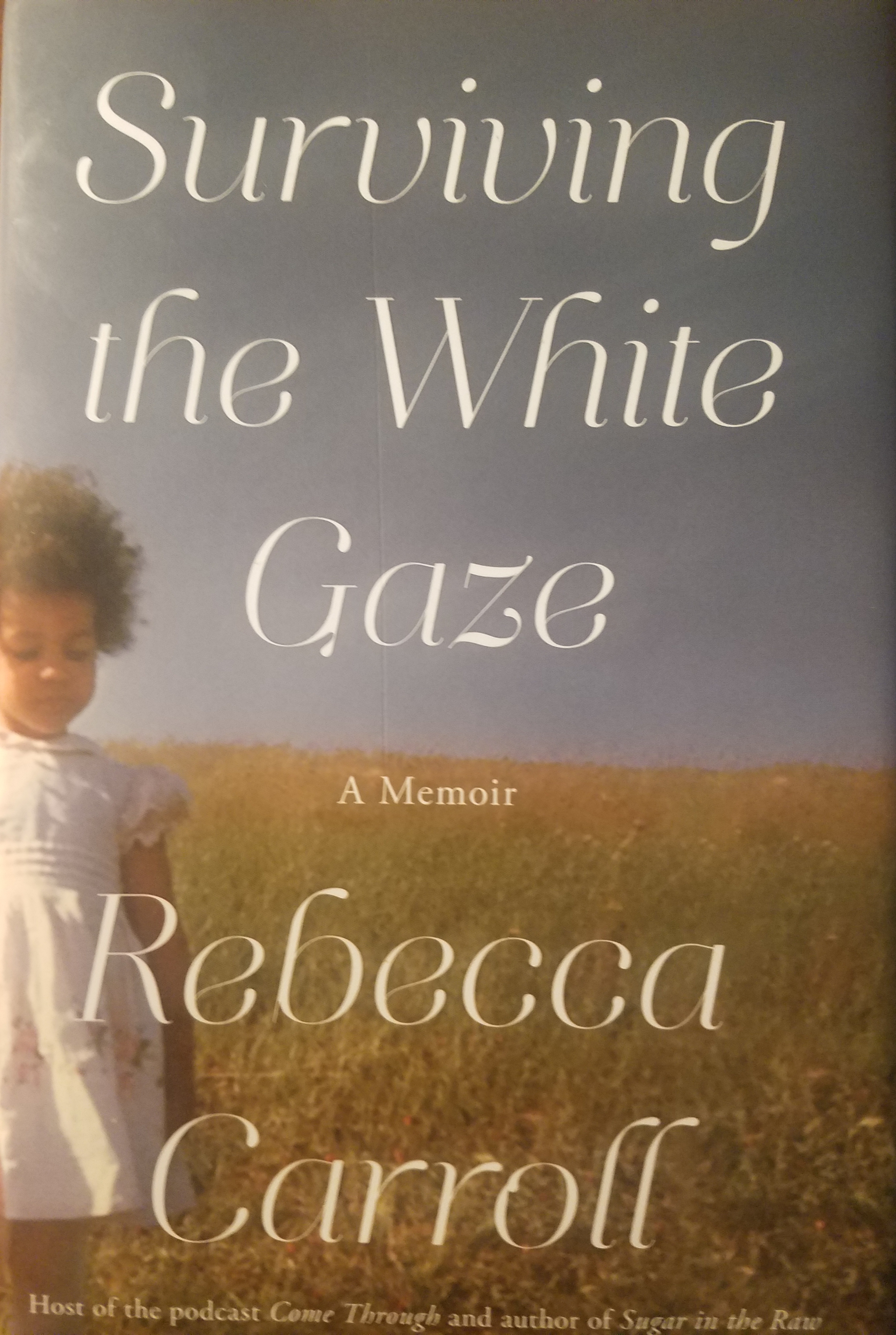
Front cover of my copy of Rebecca Carroll’s Surviving the White Gaze, July 3, 2021. (Donald Earl Collins)

The other and more direct parallel with Carroll’s journal in Surviving the White Gaze that comes to mind was someone I worked and went to school with at the University of Pittsburgh. For the sake of simplicity, let’s call her Heather, because I can no longer recall her name. She was a Black/biracial young woman from Erie, Pennsylvania, adopted by a white couple as a baby. I met her my third year at Pitt in 1989, when she was a freshman. We worked together for a while on a psychological epidemiology project that the great Juan Mezzich ran, as part of a larger project to revise the Diagnostic and Statistical Manual of Mental Disorders (turning the then-DSM-IIIR into the DSM-IV) and the International Classification of Diseases (turning the ICD-9 into the ICD-10). Aside from the fact that I thought Heather was cute, the first thing I noticed about her was her hair. It had been straightened, permed, and blown out beyond all recognition of a curl. Even at 19, I knew immediately that she was biracial, and didn’t have a Black woman who knew how to do her hair in her life.

I didn’t say a word. It wouldn’t have mattered if I did. Heather was very much standoff-ish, to me and the couple of other Black and Brown students who staffed up the project. She got along extremely well with the White students and staff, though. She rarely said hello when I saw her outside of Western Psych, on or off campus. Honestly, I felt sorry for her.

In the summer of 1991, when I became a full-time staff member on another of Mezzich’s projects, I worked with Heather for a few weeks. This was when I learned more about her upbringing and extremely limited exposure to Black folk. The questions she would ask about what I listened to on my Walkman, songs by Anita Baker, PE, Earth, Wind & Fire, even Phil Collins. She was maybe two years younger than me, and only knew ‘70s and ‘80s rock. Wow.

But, one day, Heather or another staff member had asked me a question — I don’t remember who asked, or what the question was. It one with a historical component, which I answered in typical granular exactitude, because, me. “Are you autistic or something?,” Heather immediately blurted out, as if I had some disease she had yet to see first-hand. “If by autistic, you mean the Rain Man movie? No, I just have a very good memory,” I answered back, rhetorically, with irritation and a bit of side eye. “Oh, I didn’t mean to offend you,” Heather continued, and then she went on for several minutes about why she thought I was autistic. 

I was gobsmacked by Heather’s entitled ignorance and by the racist and ableist implications of her questions and response. Seriously? I’ve been living on my own, mostly successfully navigating the world since I was 17, adulting since I was 12, and somehow I’m Dustin Hoffman with the most serious form of this neuro-social illness, all because my memory is stronger than a bank vault made of titanium and cobalt? And all this because I’m probably the first Black guy you’ve met with a bachelor’s degree from anywhere other than podunk Western Pennsylvania? All this and more ran like a chyron in my brain as I listened to Heather, now sensing my ire, stumbling over her words to make herself sound like she knew what she was talking about.

There were more than a few places in Carroll’s book where I saw the girl and the young woman that I saw in Heather, taking all of her assumptions about Blackness, about Black people, about whiteness and race, and applying them, often in damaging ways. I was absolutely disgusted at what Carroll and Tess did to her one-time English professor and advisor at the University of New Hampshire. I literally stopped reading Surviving the White Gaze for a week afterward. How could you?!?, I thought. Even with zero exposure to Black men, you had to know you put this man’s job in jeopardy over a minor utterance. You had to know that Tess’ vitriol toward him was about him not finding her intellectually interesting, or worse still, rebuffing potential flirtations. As a professor teaching mostly white students off and on for nearly three decades, I know this part all too well.

Carroll gradually embraced and uncovered her Blackness, over time, through years of alcoholism and eating disorders and fresh traumas from folks White and Black in her life. Her experience, though, is all too uniquely common from where I sit. There is the all too common story of someone the product of a Black-White relationship stumbling through life to discover their true selves and their Blackness, a story that is sadly still so easy to sell to a white-dominated book publishing industry and to a white-reading audience. But even for this sub-genre, Carroll’s willingness to reveal more than she conceals is really necessary, even as it feeds the beast, because she is still a work-in-progress at 52. 

There is also the all-too-common assumption that Black folk who aren’t raised by white parents or the product of a biracial pairing somehow don’t have any identity issues at all. Seriously? Anyone ever read Toni Morrison’s The Bluest Eye? We live in a white-dominant society, with white supremacy and white-ways as its main, everyday features. While most Black folk know and love their Blackness, it does not mean there isn’t a struggle to secure our identities as Black folk. Proximity to white people, class privilege, gender, age, and more play a role into the growing-pains-trajectory of how each of us gets to be comfortable in our own skin (or not). 

As for Wendy and Heather, it’s difficult to say where they are on their own trajectories. I haven’t spoken to either of them in years, decades in Heather’s case. But last time I saw Heather, it was May 1995 at a Pharmor store in the East Liberty section of Pittsburgh. I had just received my Spencer Fellowship award to write my dissertation. Heather was different, too. Her hair had gloss and curls, and her clothes fit better. We ended up talking for a few minutes, with me wishing her well. In thinking about this moment, I’ve wondered if Heather ever fully embraced her Blackness. In my imaginations, I think of her as having done so.

BA Collins, 30 Years Ago

27 Tuesday Apr 2021

Posted by decollins1969 in 1, Academia, Boy @ The Window, Christianity, culture, Eclectic, Mount Vernon New York, New York City, Pittsburgh, Pop Culture, race, Religion, University of Pittsburgh, Work, Youth

≈ Leave a comment

Tags

"Hail to Pitt", Graduation, Looking Back, Pitt, Self-Reflection


Pitt logo, the one closest to what was on their brochures in April 1986, April 12, 2016. (http://pitt.edu).

As I have said in a couple of places this week, this time three decades ago I completed my bachelor’s degree at the University of Pittsburgh. My major was History, with minors in Mathematics (courtesy of my 1.5 years working toward a Comp Sci degree) and Black Studies (before the powers that were changed the name of the degree to Africana Studies). Yay me!

My degree is nine years older than my marriage, between five and 10 years older than most of my students. Goofy semi-asexual me was more than 12 years away from becoming a father. It seems surreal to look back at myself from 30 years ago. Especially when there had been so many years before Saturday, April 27, 1991 when I didn’t think I’d make it to 30.

If I could somehow get a message to my 21-year-old self, and only one message, what would it be? Trust God? Write as if your life depends on it, because it will, and sooner than you think? Take time off after finishing the master’s next year? Move back to NY, so that you can please your Mom? Don’t try to date E, it will go badly?

No, no, no. None of those will do. Find your true self. Find your core beliefs. Admit your loves, your disdains, your anxieties, and your fears. You do that, you will be the writer and the person you always wanted to be. That’s what my dreams and my multiple muses have been saying for years. I’ve heard them, but only in bits and pieces, since I was in my teens.

Well, better lately than never, and better late than Laettner, as I say.

Poverty Wages

20 Saturday Feb 2021

Posted by decollins1969 in 1, Academia, Boy @ The Window, Carnegie Mellon University, culture, Eclectic, High Rise Buildings, New York City, Pittsburgh, Politics, Pop Culture, race, University of Pittsburgh, Work, Youth

≈ Leave a comment

Tags

Academia, Bruce Anthony Jones, Elitism, Narcissism, Nonprofit World, Pitt, Politics of Academia, Poverty, Poverty Wages, Teachers College, Work


“How We Slice the Pie in the USA” editorial cartoon (cropped), September 19, 2011 (David Horsey/Hearst Newspapers; https://catherineandojaswi.weebly.com/document-ten.html)

It’s hard for me to believe sometimes how blissfully ignorant I used to be about the fourscore-and-three-layers’ worth of elitist bullshit there are to the nature of academic — and American — life. Even in the months after reading Derrick Bell’s Faces at the Bottom of the Well, even after reading Jonathan Kozol’s Savage Inequalities, I still believed that my talent and my production alone would win the day over having the right connections in my circle. What a dumb-ass chump I was, in 1993, and as recently as 2013.

But at least in 1993, my 23-year-old behind could be excused for simply not knowing enough about the world that I inhabited. I was a quick study, academically, but not so quick socially, only four-and-a-half-years removed from homelessness and not trusting humans at all. My tutor, my unofficial advisor about the professional worlds that would take up the next 28 years of my life, was one Bruce Anthony Jones. I have talked about Bruce in the past, about how he quietly dumped me and all of his Pitt grad students upon leaving for University of Missouri-Columbia in 1996. That’s near the end of this story, though, not it’s beginning.

It was the year after I did an independent study on the literature of multicultural education in the US, Canada, and the UK with him as a master’s student. I was working with Bruce again, this time to learn more about curricula decision-making and cultural bias among the multicultural education and Afrocentricity set. He knew this was likely my last semester at the University of Pittsburgh. I had tired of White professors and their withering White gaze, and of Larry not quite keeping up with my work, even though he was my history advisor.

So it was in late February 1993 that he invited me out to dinner to discuss my next moves. We ate at some high-end Chinese restaurant in downtown Pittsburgh on or off Grant Street. It was just a few blocks from where Bruce lived, his mini-penthouse on one-and-a-half floors (the 11th and 12th) in The Pennsylvanian, situated on a hill overlooking downtown. It was once the station building for all passenger trains in and out of Pittsburgh, having been converted into a luxury apartment building the year I arrived for undergrad at Pitt, in 1987.

As someone whose moments of interaction with affluence and luxury were few, the dinner meeting and discussion was dizzying. We had a five-course meal, sat and talked for two hours about grad school, the dissertation process, finding work in higher education, the crock of the tenure clock and tenure process, and so much more. Bruce really helped me demystify the cloistered world of academia that night.

But, between the end of that dinner, the walk over to Bruce’s penthouse apartment, and the conversation we had about his work, the high wore off. When we got to talking about salaries, he began to bitch and moan about his own lot as an assistant professor in the School of Education at Pitt. “Well, how much are you making as an assistant professor?,” I asked rather courageously (this isn’t something grad students were supposed to ask, my mutuals had told me, but you don’t get anywhere by not asking questions). “Forty-five thousand. But them’s poverty wages,” Bruce said matter-of-factly, his “Lon-Guy-Land” (Long Island, New York) accent kicking in more fully as he spoke.

In the back of my mind, I’m thinking, Arrogant asshole, the most I’ve ever made in a year is $11,000, and you talkin’ poverty wages to me? I’ve grown up without food, without any amenities beyond the basics, and you live in a 1.5-floor penthouse? Really? I don’t know how well I hid my envy and my rage after hearing Bruce’s complaints about his salary. I let him continue his monologue.

It turned out that Bruce’s time at Teachers College was about more than earning his doctorate. It was also an opportunity for him to earn money, really good money, through his connections at Teachers College and at Columbia University as a whole. Including one with Charles V. Hamilton, the co-author of Black Power: The Politics of Liberation (originally written with one Kwame Ture, née Stokely Carmichael in 1967).

The Pennsylvanian, near downtown Pittsburgh, PA, circa 2012.

I cannot recall if Hamilton was on his dissertation committee or not, but no matter. Apparently connections with Hamilton and others had helped Bruce find work as an education consultant with the Ford Foundation, among several other private foundations. In the two years leading to his PhD and the year before landing his Pitt faculty position, this was his other professional life. “I make double as a consultant than I do as a professor (really “professa,” the way it rolled off Bruce’s Long Island tongue), and for half the work,” I remember Bruce saying.

“What would I have to do to get into that kind of work?,” I asked once I got over the shock of calculating that Bruce was pulling in between $130,000 and $150,000 a year while living in a 1,500-square-foot penthouse that cost $1,350 per month. Bruce should’ve said, “With help from people like me, lifting as we climb.” But instead, he made it sound like he just lucked out, somehow, like he just happened to be walking down a random hallway when leading Black scholars at Teachers College and Columbia offered lucrative consulting gigs on a Friday at the end of a school year.

A bit more than four years later, the summer of 1997, I found myself without work post-PhD. Teachers College had just rejected me for an assistant professorship in social foundations of education. I was literally a month or two away from being completely out of funds. I could pay my rent, but that was about all I could do until I found more work. I hated to do this, but I ended up contacting Bruce for help, either in finding work or in lending me money until I could pay him back.

Bruce returned my call, and was very stern on the phone with me. “I usually don’t lend students money,” he said, as if I was just some random person who reached out to him out of nowhere. But he offered to write me a check for $100. “Now I expect you to pay me back,” Bruce said, as if he was being magnanimous. That was when I finally, really, truly understood. My time with Bruce was about making him feel like a powerful person in academia. It was never about mentoring or helping me at all.

Between 1997 and 2000, I continued writing my own letters of recommendation with Bruce’s name on them, a practice we had developed while I was still a grad student. Only, I also used one of Bruce’s old signatures and some University of Missouri-Columbia letterhead to make his letters written by me on my behalf look more authentic. After I turned down a job at Howard in June 2000, I wrote Bruce a check for $100 and wondered, Should I include interest in the total, and if so, how much? That was the last time I used Bruce’s letter, the last time I contacted him.

In the years since, I’ve worked jobs that paid $70,000 and $80,000 a year, charged as much as $550-per-day as a consultant, and turned down jobs paying $100K in areas that were too expensive for that salary (like the Bay Area, for example). I’ve also had a couple of years where I’ve barely earned $20,000 as an adjunct (those were years I also consulted, so). I know damn fucking well what a real poverty wage looks like. The closest Bruce has been to socioeconomic poverty was probably the night he sat across from me at dinner all those years ago. Intellectual, social, and spiritual poverty have been Bruce’s close companions, I’d bet, for many years. For such are the wages of narcissism.

The Things I’d Like to Give for the Holidays, But Can’t

27 Sunday Dec 2020

Posted by decollins1969 in 1, Boy @ The Window, Christianity, culture, Eclectic, Hebrew-Israelite, Marriage, Mount Vernon New York, My Father, New York City, Pittsburgh, Politics, Pop Culture, race, Religion, University of Pittsburgh, Work, Youth

≈ Leave a comment

Tags

616, 616 East Lincoln Avenue, Books, Cards, Chanukah, Christmas, Connectedness, Deesha Philyaw, Disconnection, Family, Gifting, Gifts, Kwanzaa, Presents, Sarah Broom, The Secret Lives of Black Church Ladies (2020), The Yellow House (2019), Xmas


My copies of Sarah Broom’s The Yellow House (2019) and Deesha Philyaw’s The Secret Lives of Church Ladies (2020), December 26, 2020. (Donald Earl Collins).

The holiday season is a time for giving unto others (apparently unlike the other 11 to eleven-and-a-half months out of the year, when it is your right under capitalism to give to yourself every single day). Except when your own life has shown time and time again that gift-giving without resources is hard. It has meant going years without receiving a gift, without your parents or guardian even buying any of us a card. It is doubly difficult when your birthday is in the middle of the holiday season, two days after Christmas, the second day of Kwanzaa, and at least one year where lunar calendar for Chanukah and my born date aligned.

But, as an adult, I made the most of trying to give to family and sometimes friends. I started buying my mother birthday and Christmas cards when I was 14. I began to buy my siblings cards and presents in 1989, just as I was turning 20. Over the years, I have bought video game systems and clothes, replaced TVs, given money, special-ordered flowers, taken my younger siblings to movies, Toys “R” Us, and other comical holiday ventures for a young man without a car.

Starting in the late 1990s, I began to switch to books as gifts. I figured that to really help my family and to get through to my sibs, books were key. They had been for me, and I assumed that it would be the same for them. I was so wrong! If the books got read by them at all, they generally didn’t say, or they said that they didn’t like them. When I finally got around to buying books for my Mom, she’d say, “What I need this for? I know all about racism already. I done lived it.” I guess my thirty-something years, and not my expertise on the topic, should have been sufficient for me, too.

As with all issues related to my Mount Vernon family, this giving issue became tortuous. It is hard buying gifts for people who only talk to you when they have to or when they want something from me. As adults, I have gotten to know very few of their likes, dislikes, and habits and wants and needs. Also, I found myself in the boom-and-bust cycles of teaching and consulting during the Great Recession years (especially between 2010 and 2015). So, I either sent holiday cards with gift cards or just cards.

But then it dawned on me right about my 45th birthday that none of my younger sibs had ever sent me anything. Yes, I know that gifting need not be transactional or reciprocal. Still, I had struggled every year to remember birthdays, special occasions, and Christmases to send them something from the heart. They never saw me as someone to give unto, as if my degrees and relative career stability made me not need and not want, materially, emotionally, or otherwise.

So in 2015, I stopped with the giving. Except for my older brother Darren and my Mom. And even then I mostly send cards and the occasional gift card. The latter gets reactions like, “What I’m gonna do with this?” It was my Mom’s gut punch to the cliché, “it’s the thought that counts.”

One thing I’d like to do again with family in New York is to send books that I’d think they’d enjoy, books that I found entertaining and educational, books that set my mind and spirit in order. Especially in this year of pandemic-driven isolation and putting my and my family’s safety over travel, my recent excursion to Pittsburgh to help make funeral arrangements for my mother-in-law excepted.

The last two books I have completed in recent weeks stand out because of the things I observed and experienced growing up and growing into grown-ass adulthood, between Mount Vernon, New York, Pittsburgh, and my first three years in DC and Silver Spring, Maryland. The two books happen to be Sarah Broom’s The Yellow House and Deesha Philyaw’s The Secret Lives of Church Ladies. Both books are by Black women who grew up in the Deep South but sojourned their way to cold Northern cities like New York and Pittsburgh, just like my Mom. And with those physical and spiritual journeys, family and the connections with family were big themes for them both. Or, really, the fault lines and the disconnection that can and does happen over time. Being unmoored, an outsider to one’s own family, Broom and Philyaw cover so well in their books.

Yes, I know that Broom’s National Book Award winner is both genealogy and memoir at the same time, carefully not revealing certain things about herself until her Acknowledgments. Yes, I know Philyaw’s NBA finalist is a collection of short stories connected by the theme of The Church and hypocrisy, fictionalized but with elements of the author’s life that she unveils anyway. The two books are quite different in their approaches to history and family, but they both address history and family anyway.

And it is how they handle family and family secrets that propelled me through both books. Broom is extremely circumspect about what and whom she does put in The Yellow House, explaining why and her conflict about doing so throughout (she makes me look like a gossip by comparison in Boy @ The Window). “Why do I sometimes feel that I do not have the right to the story of the city I come from? Why, when I want to get down to it, just say the damned thing, do the thoughts pool and ring out in a loop in my head a childish chorus of ‘Oh, oh, oh, don’t tell on your place.’ Telling on. Like giving it all away. Giving what away?,” Broom writes on page 329.

I completely understand, between the Mount Vernonites who have declared my growing-up experiences invalid because I was “weird” and family members who have all but stopped talking to me because I unearthed something they didn’t like about themselves. That, and Broom’s use of “The Water” to demarcate the East New Orleans of her, her family’s, and her ancestors’ lives and the East New Orleans after Katrina in 2005. It was the fire of 1995 that was the break between the chaos of 616 and the life of uncomfortable distance between me and family for me. Broom being unmoored caused her to eventually seek deeper bonds. I tried too many times to count, and failed. But then again, family ain’t just blood, and it’s way deeper than the roots of any marriage.

Philyaw’s collection conjured memories of my Black evangelical Christianity years (and so did Broom’s chapters about her feeling the spirit, speaking in other tongues, and passing out in self-induced trances that lasted for hours, but I digress) and my unfortunate Hebrew-Israelite years. Years where Black patriarchy and toxic hypermasculinity ruled the roost. Some of these men practically dripped pre-cum while preaching the promise of Jesus and Yahweh in those days of temple and Covenant Church of Pittsburgh. Philyaw gets at this in so many ways. For so many of her readers, the stories “Peach Cobbler” and “When Eddie Levert Comes” were their favorites. The amount of behind-the-scenes cheating and familial conflict is enough for anyone on the fence to declare themselves an atheist.

For my money, though, “Jael” is the story that will stay with me. I knew at least one, maybe two Jaels while growing up in the New York City area. One of them tried to molest me when I was 12. I somehow knew — despite forgetting about the particulars of my previous sexual assault until this time six years ago — that telling my Mom, my idiot stepfather Maurice, or my father about this was out of the question. But she was a Jael, alright, another traumatized kid, like me, yet willing to prey on others as a coping strategy.

Even though I wasn’t a Jael, my Mom prayed over me like I could be one, in order “to make a man out of you,” as she used to say. That she could actually say the words, “Or you could be a rapist” to me the same month I’d end up homeless at Pitt for five days was so telling. It told me that my Mom didn’t know me very well after all. Philyaw has me considering the possibility that with family, anyone could be a Jael, even the folks responsible for raising us.

Here’s what I know, though. No matter how I’d couch it, most of my family wouldn’t read a single word from The Yellow House or The Secret Lives of Church Ladies. Queerness, hypocrisy, intersectionality, symbolism, stories that parallel their own? I might as well be sending my Mom a stereotypical Hollywood version of a voodoo doll with pins for her to push in it. For my younger siblings, a steaming hot plate of fried beef liver and kidneys smothered in onions and gravy over rice would be more appealing. So this post will have to do. A gift, I suppose.

“Let Me Tell You About Ms. Martha…”

10 Thursday Dec 2020

Posted by decollins1969 in 1, Academia, Boy @ The Window, Carnegie Mellon University, Christianity, culture, Eclectic, Jimme, Marriage, Mount Vernon New York, My Father, Pittsburgh, Politics, Pop Culture, race, Religion, University of Pittsburgh, Youth

≈ Leave a comment

Tags

Conversations, Death, Life, Living, Martha Levy, Mom-in-Law, Mother-Son Relationship, Ms. Martha


Ms. Martha with her grandson, Silver Spring, MD, December 25, 2009. (Donald Earl Collins)

I’ve been reluctant to write this post. Not because I have nothing good to say about my late mom-in-law, someone I’d known for nearly half my 51 years. I have nothing but good things to write about her. Not because I’m grieving. I often write when I’m in an altered state emotionally or psychologically. No, I’m a bit nervous because this will be my first blog post about any specific member of my wife’s family, Thanksgiving 2001 excepted. I’m mostly concerned that some will see what I have to write about my mom-in-law as an indirect slap toward my own mother and parents/guardian in general.

Trust me, it’s not. That I first met Martha Mae Guinn Levy (1931-2020) a month after my twenty-sixth birthday meant the nature of this relationship was never going to be strictly parent-to-child or mother-to-son.

The truth is, Ms. Martha really did treat me that way. But not just that. Sometimes our conversations could be contentious, like professor-student, or like two bickering friends, or brother-sister. The woman had nearly 39 years on me, but the battle-axe of a geezer could just as quickly be affectionate and a never-ending fountain of love and optimistic clichés. There are so many conversations, so many arguments, so many moments I could discuss that made me see all the facets and contradictions of my mom-in-law.

Ms. Martha made herself available for nearly every important event in my life since my then girlfriend introduced us on the last Saturday in January 1996. She attended my doctoral graduation at Carnegie Mellon the following year. She drove me and her daughter to the Greyhound bus station in “dahntahn Picksburgh” in August 1999, so that we could begin our 20-plus years of living in the DMV, the Washington DC area. She shared a hotel room with my mom in 2000, just a few months after me and her daughter eloped. She came here to Silver Spring and watched at Sibley Hospital in DC as my wife gave birth to her one and only grandchild in 2003. She stayed with us for six weeks to watch her grandson in November and December of the same year, so that my wife could go back to work, and just before our son would start daycare.

But there’s one conversation that really and truly encompassed the evolution of our relationship over the years. It was in December 2013, just a few months after I had self-published Boy @ The Window. A week earlier, I had called my father about his yearly Christmas ritual of sending barely cashable Western Union money orders to give to his grandson for the holiday season. Instead, he mumbled and gave gruff one-word answers to my questions. “What’s wrong?,” I asked. “I told you not to put me in your book,” he said, sounding hurt and embarrassed. “I didn’t want nothing to do with your book. You shoulda left the past in the past.” My dad actually hadn’t said any of these things in the seven years between first sentence and the rough final draft I ended up publishing that April. I had been completely open about what I was going to write and why. I guess having a paperback copy of Boy @ The Window in his hands to leaf through was too much for him.

The weekend before Christmas 2013, Ms. Martha called. She dialed up my partner on her cell phone to talk to me (mind you, she had my direct number, but called her daughter first). When I picked up Angelia’s phone, I heard “Hey Donald” in Ms. Martha’s gravelly voice. After a brief exchange, she said, “I wanna talk to you about your book.” I mailed Ms. Martha a copy of Boy @ The Window, along with my dad and a few others, but I hadn’t expected her to read it, at least not so quickly.

“I started reading and I didn’t wanna put it down,” Ms. Martha said. I was surprised. Really, I was dumbstruck. I hadn’t expected this response at all. Not because Ms. Martha didn’t read. I figured, Oh, she’s just being polite, especially after hearing from my dad a little more than a week earlier.

We talked about my book for nearly an hour and a half on my wife’s iPhone. I might as well have been doing a book talk as conversation with my mom-in-law. Ms. Martha asked questions about my Boy @ The Window years, wanting more details beyond the stories I did include. There were a lot of “I didn’t know…” and “I couldn’t believe…” comments about what I and my family lived through. She asked at least a dozen questions about my mom and her decision-making, about my brothers and sister, about my asshole classmates.

Mostly, she doted on me. “Oh boy! I liked this sentence here…,” Ms. Martha said while reading me back to me a number of times. When I explained away my accomplishments or challenges, she’d say, “…as far as that matter goes…” to remind me that what was normal for me was not normal for most tweeners or teenagers, not even Black ones living with poverty. “This was a joy to read,” she said so many times. She said she laughed and cried while reading the book, and laughed and cried while talking to me about it.

I ended that conversation with Ms. Martha thinking, Wow! This tough old woman really loves me! It made me feel better about writing Boy @ The Window. It made me feel better at a time when I felt low, about my writing, about switching careers, about life in general.

And yes, I truly loved and love Ms. Martha. I will miss our conversations, our rational disagreements, our out-of-nowhere arguments, our hugs, our embraces, and her love for me, her daughters, her grandson, for family and community more broadly. I will miss your presence and your voice in my life. May God bless you and keep you…and give you peace, in your life after life.

← Older posts
Newer posts →

Boy @ The Window: A Memoir

Boy @ The Window: A Memoir

Places to Buy/Download Boy @ The Window

There's a few ways in which you can read excerpts of, borrow and/or purchase and download Boy @ The Window. There's the trade paperback edition of Boy @ The Window, available for purchase via Amazon.com at http://www.amazon.com/Boy-Window-Donald-Earl-Collins/dp/0989256138/

There's also a Kindle edition on Amazon.com. The enhanced edition can be read only with Kindle Fire, an iPad or a full-color tablet. The links to the enhanced edition through Apple's iBookstore and the Barnes & Noble NOOK edition are below. The link to the Amazon Kindle version is also immediately below:

scr2555-proj697-a-kindle-logo-rgb-lg

Boy @ The Window on Amazon.com: http://www.amazon.com/Boy-The-Window-Memoir-ebook/dp/B00CD95FBU/

iBookstore-logo-300x100

Boy @ The Window on Apple's iBookstore: https://itunes.apple.com/us/book/boy-the-window/id643768275?ls=1

Barnes & Noble (bn.com) logo, June 26, 2013. (http://www.logotypes101.com).

Boy @ The Window on Barnes & Noble: http://www.barnesandnoble.com/w/boy-the-window-donald-earl-collins/1115182183?ean=2940016741567

You can also add, read and review Boy @ The Window on Goodreads.com. Just click on the button below:

Boy @ The Window

Twitter Updates

Tweets by decollins1969
  • RSS - Posts
  • RSS - Comments

Archives

  • June 2025
  • April 2023
  • September 2022
  • August 2022
  • July 2022
  • June 2022
  • May 2022
  • April 2022
  • March 2022
  • January 2022
  • December 2021
  • November 2021
  • October 2021
  • September 2021
  • August 2021
  • July 2021
  • June 2021
  • April 2021
  • March 2021
  • February 2021
  • January 2021
  • December 2020
  • November 2020
  • October 2020
  • September 2020
  • August 2020
  • July 2020
  • May 2020
  • April 2020
  • March 2020
  • January 2020
  • December 2019
  • November 2019
  • August 2019
  • July 2019
  • June 2019
  • May 2019
  • April 2019
  • March 2019
  • February 2019
  • January 2019
  • December 2018
  • November 2018
  • October 2018
  • September 2018
  • August 2018
  • July 2018
  • June 2018
  • May 2018
  • March 2018
  • February 2018
  • January 2018
  • December 2017
  • November 2017
  • October 2017
  • September 2017
  • August 2017
  • July 2017
  • June 2017
  • May 2017
  • April 2017
  • March 2017
  • February 2017
  • January 2017
  • December 2016
  • November 2016
  • October 2016
  • September 2016
  • August 2016
  • July 2016
  • June 2016
  • May 2016
  • April 2016
  • March 2016
  • February 2016
  • January 2016
  • December 2015
  • November 2015
  • October 2015
  • September 2015
  • August 2015
  • July 2015
  • June 2015
  • May 2015
  • April 2015
  • March 2015
  • February 2015
  • January 2015
  • December 2014
  • November 2014
  • October 2014
  • September 2014
  • August 2014
  • July 2014
  • June 2014
  • May 2014
  • April 2014
  • March 2014
  • February 2014
  • January 2014
  • December 2013
  • November 2013
  • October 2013
  • September 2013
  • August 2013
  • July 2013
  • June 2013
  • May 2013
  • April 2013
  • March 2013
  • February 2013
  • January 2013
  • December 2012
  • November 2012
  • October 2012
  • September 2012
  • August 2012
  • July 2012
  • June 2012
  • May 2012
  • April 2012
  • March 2012
  • February 2012
  • January 2012
  • December 2011
  • November 2011
  • October 2011
  • September 2011
  • August 2011
  • July 2011
  • June 2011
  • May 2011
  • April 2011
  • March 2011
  • February 2011
  • January 2011
  • December 2010
  • November 2010
  • October 2010
  • September 2010
  • August 2010
  • July 2010
  • June 2010
  • May 2010
  • April 2010
  • March 2010
  • February 2010
  • January 2010
  • December 2009
  • November 2009
  • October 2009
  • September 2009
  • August 2009
  • July 2009
  • June 2009
  • May 2009
  • April 2009
  • March 2009
  • February 2009
  • January 2009
  • December 2008
  • November 2008
  • October 2008
  • September 2008
  • August 2008
  • July 2008
  • June 2008
  • May 2008
  • April 2008
  • March 2008
  • February 2008
  • January 2008
  • December 2007
  • November 2007
  • October 2007
  • September 2007
  • August 2007
  • July 2007
  • June 2007

Recent Comments

MaryPena's avatarMaryPena on My Day of Atonement/Bitter Hat…
decollins1969's avatardecollins1969 on No Good Teaching Deed Goes…
Mary Rose O’Connell's avatarMary Rose O’Connell on No Good Teaching Deed Goes…

NetworkedBlogs on Facebook

NetworkedBlogs
Blog:
Notes From a Boy @ The Window
Topics:
My Life, Culture & Education, Politics & Goofyness
 
Follow my blog

616 616 East Lincoln Avenue A.B. Davis Middle School Abuse Academia Academy for Educational Development AED Afrocentricity American Narcissism Authenticity Bigotry Blackness Boy @ The Window Carnegie Mellon University Child Abuse Class of 1987 CMU Coping Strategies Crush #1 Crush #2 Death Disillusionment Diversity Domestic Violence Economic Inequality Education Family Friendship Friendships Graduate School Hebrew-Israelites High-Stakes Testing Higher Education History Homelessness Humanities Humanities Program Hypocrisy Internalized Racism Jealousy Joe Trotter Joe William Trotter Jr. K-12 Education Love Manhood Maurice Eugene Washington Maurice Washington Misogyny Mother-Son Relationship Mount Vernon High School Mount Vernon New York Mount Vernon public schools Multiculturalism MVHS Narcissism NFL Pitt Pittsburgh Politics of Education Poverty President Barack Obama Race Racial Stereotypes Racism Relationships Self-Awareness Self-Discovery Self-Reflection Sexism Social Justice Teaching and Learning University of Pittsburgh Violence Whiteness Writing

Top Rated

Blog at WordPress.com.

  • Subscribe Subscribed
    • Notes from a Boy @ The Window
    • Join 103 other subscribers
    • Already have a WordPress.com account? Log in now.
    • Notes from a Boy @ The Window
    • Subscribe Subscribed
    • Sign up
    • Log in
    • Report this content
    • View site in Reader
    • Manage subscriptions
    • Collapse this bar
 

Loading Comments...