• About Me
  • Other Writings
  • Interview Clips
  • All About Me: American Racism, American Narcissism, and the Conversation America Can’t Have
  • Video Clips
  • Boy @ The Window Pictures
  • Boy @ The Window Theme Music

Notes from a Boy @ The Window

~

Notes from a Boy @ The Window

Category Archives: Sports

Sports and “The -tions”

22 Saturday Dec 2012

Posted by decollins1969 in 1, Academia, culture, Eclectic, High Rise Buildings, Politics, Pop Culture, race, Sports, Work

≈ Leave a comment

Tags

"Social Political Economic", African American History, De-industrialization, Declining Cities, Economic Inequality, Gentrification, High School Social Studies Teaching Formula, Higher Education, History, History of American Sports, History of Education, Immigration, Industrialization, Migration, social mobility, Suburbanization, Teaching History, The -tions, Urbanization, US History, World History


Gentrification via sports collage, December 22, 2012. [Includes aerial view of location of new DC baseball stadium site, June 22, 2006, http://www.wreckingcorp.com; Nationals Park Greeting Card; Baseball Stadium Price Tag cartoon, March 27, 2008 (Nate Beeler/Washington Examiner)]

Gentrification via sports collage, December 22, 2012. [Includes aerial view of location of new DC baseball stadium site, June 22, 2006, http://www.wreckingcorp.com; Nationals Park Greeting Card; Baseball Stadium Price Tag cartoon, March 27, 2008 (Nate Beeler/Washington Examiner)]

Off and on for the past twenty years, I’ve attempted to wean my students off the ridiculous high school social studies formula for addressing an essay question or writing a history paper. Thinking about history — particularly modern world history or US history — purely in social, political and economic terms misses so much. History is about patterns, trends and dynamic processes involving people and human tendencies. So in my discussion sections for US History Since 1877 in the fall of ’92, I began to discuss the idea that you can better understand history through applying what I started to call “the -tions” as a series of trends, processes and patterns.

I did this because I’d already grown tired of students who had adopted “the formula.” The formula goes something like this. First, write an introduction (usually, without mention of the need for a clear thesis statement). Then, put facts, events, ideas and evidence in the social, political and economic changes silos (it always has to be these three). Then, write a conclusion that restates the introduction, with a “my essay/paper has proven” sentence.

Steel grain silos, Ralls, Texas, October 12, 2010. (Leaflet via Wikipedia). In public domain.

Steel grain silos, Ralls, Texas, October 12, 2010. (Leaflet via Wikipedia). In public domain.

It’s a terrible way to teach history, and a terrible way to write about it. It leaves so much out, including the idea that history is a constantly evolving process, not a static picture of events involving larger-than-life individuals herding billions of people through one period of history or another. So I decided to make immigration, industrialization, urbanization, and migration (sometimes called internal migration) a bigger focus with my students my second year of graduate school at Pitt. Some liked it, some didn’t, and some just kept writing their formulaic five-paragraph essays for their midterm and final exams. Oh well.

So, in expanding my list of -tions to include de-industrialization, suburbanization, globalization and gentrification over the years, I’ve begun to see patterns beyond what I typically teach or even write about. The rise and decline of American cities are a case in point. Especially if one compares this to the rise and decline of mainstream American team sports over time. That baseball, football and basketball have all been the nation’s first or second most popular sports at one point or another since the 1890s is a reflection of the leisure activities available to ordinary Americans living in growing or declining cities.

Of course, I could also include boxing (as this was America’s most popular sport through the first four decades of the twentieth century). But as an individual sport wrought with even more racial overtones than baseball, boxing deserves a separate discussion. For team sports, though, their rise or decline in popularity seems to have followed a number of trends related to the -tions.

Baseball was the nation’s most popular team sport from the 1890s through the 1950s, mirroring the growth of American cities (urbanization) during the same period. Immigrants from Southern and Eastern Europe helped grow these cities, as they left behind rural poverty, religious persecution and pogroms for industrial exploitation here in the US. Native-born Whites, already enamored with baseball, essentially introduced these immigrant groups to the sport, which in turn made it more popular. Of course, many sons of these immigrants became great baseball players. Blacks migrating to cities such as New York, Pittsburgh, Kansas City and Chicago also adopted the pastime. Every -tion is involved, at least, that’s my argument.

As we well know, though, baseball has declined in popularity since the 1950s, as the professional game became an integrated sport, and as millions of Whites began moving to the suburbs, taking millions of jobs with them. Blacks underwent a second massive wave of migration after 1940 that grew during the 1950s and 1960s.

During this transition, basketball and football (especially the latter) became more popular sports. Both were sports whose history and records were less revered than those in baseball, and at least appeared to be more welcoming of athletes of color than baseball. In the migration of Whites from cities to suburbs and Blacks to cities, the shuffling of team sports’ popularity and their locations began.

Pittsburgh's Civic Arena under demolitiion, March 11, 2012 (AVPHOTOGRAPHICS PGH via Flickr.com). In public domain. The "Igloo" (home of the Pittsburgh Penguins) itself was built after the demolition of the Lower Hill District between 1958 and 1961, displacing thousands of Blacks in the process.

Pittsburgh’s Civic Arena under demolition, March 11, 2012. (AVPHOTOGRAPHICS PGH via Flickr.com). In public domain. The “Igloo” (home of the Pittsburgh Penguins) itself was built after the demolition of the Lower Hill District between 1958 and 1961, displacing thousands of Blacks.

Once the US economy began to decline, and then de-industrialize, in the 1970s, 1980s, and 1990, the role of declining cities attempting to hold on to their sports franchises became a new theme. Declining post-industrial cities like Baltimore, Detroit and Cleveland lost their teams entirely to other cities, or lost them to the suburbs. While Sunbelt cities like Dallas-Fort Worth, Atlanta, Phoenix, Denver and Houston have picked up some of these pieces.

Gentrification, backed by a politically conservative model for economic growth and nary a concern for the declining income of city residents, has led to a return of professional sports teams to city centers. Billions of taxpayer dollars have gone into sports arenas and stadiums in Washington, DC, Brooklyn, Seattle, Detroit, Boston, San Jose, and so many other places across the country. But with little to no benefit for the people living in these cities, especially the poor. As a result of the inflation that came with gentrification and these commercial building ventures, millions of America’s poor have been forced to move out into poorer suburban communities that often border major cities.

Maybe it’s just me. I just don’t find much to celebrate about the business side of sports today, because it reflects the trends of growing economic inequality and much more difficult social mobility. It shows how desperate the mayors of declining cities are for growing their municipalities, without regard for its poor and working-class residents. It’s emblematic of our culture’s inability to see that the shift from industrial work to service industry work has left millions without the ability to live decent lives in city or suburb, whether they migrate to Houston or stay in New York. Sports is a reflection of these trends, but they also exacerbate them as well.
Coping in the Boy @ The Window World

06 Saturday Oct 2012

Posted by decollins1969 in 1, Boy @ The Window, Christianity, culture, earth, wind & fire, Eclectic, eclectic music, Marriage, Mount Vernon High School, Mount Vernon New York, music, Politics, Pop Culture, race, Religion, Sports, Youth

≈ 1 Comment

Tags

"Owner Of A Lonely Heart", Battlestar Galactica, Battlestar Galactica (2004 series), Coping Strategies, Fantasy, Football, Humanities, Imagination, Inner Vision, Inner World, New York Giants, New York Knicks, New York Mets, Psychology, Self-Discovery, Touré, Who's Afraid of Post-Blackness (2011), Yes


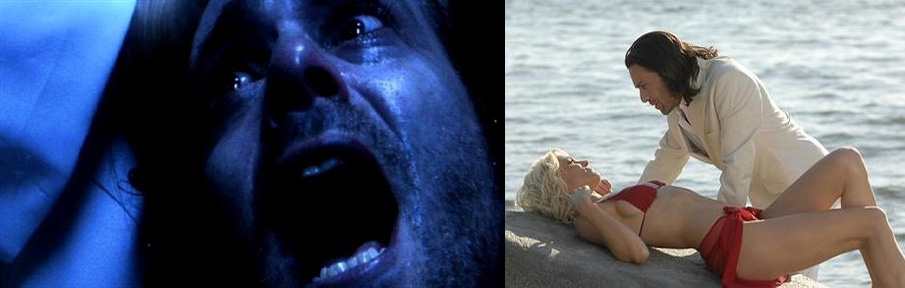
Gaius Baltar tortured/in imagination (merged pics), Battlestar Galactica, October 6, 2012. Qualifies as fair use under US Copyright laws – low res (1st picture) and merged rendering.

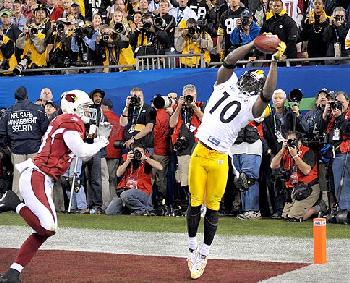
“A wide receiver tiptoeing the sideline of a football field after making an acrobatic catch, barely keeping his left foot in-bounds by tapping his big toe in the two inches of space between the grass and the thick white line in front of him. A note in a song that is so inspiring, so well-balanced between rhythm and harmony, so well sung that the hairs on my neck stand up and my spirit feels like soaring.” This is what I wrote in the first paragraph of the preface (which I need to revise yet again, by the way) to my Boy @ The Window manuscript.

In context, I was writing about the infinitesimal decisions and actions that could’ve added up to success or failure for me growing up in those dismal days and years. But I could’ve just as easily been writing about what imaginations and fantasies went through my head growing up to make my inner world more powerful than anything I saw and experienced in the real world. Much of Boy @ The Window is about how I coped, good, bad and ugly (see my posts “Peanuts Land” from April ’12 and “Mr. Mister’s ‘Kyrie’” from March ’11 for more).

How I coped through imagination, inner projection and fantasy changed during the worst of my preteen and post-puberty years. I went from imagining and acting out an entire city, nation-state and culture in my room to the need for an internal world that couldn’t be taken apart by abuse, poverty and isolation. Ultimately it came for me in the form of the everyday things I either already liked or was on the cusp of liking. I already enjoyed a wide variety of music by the fall of ’82. Once I became a sports fan and occasional sports participant, those images and achievements became part of my inner movie and soundtrack.

It became a partnership that I eventually learned to conjure up at will, that became part of my residual sleeping state, that made the madness of 616, MVHS and Mount Vernon, New York dissolve into background noise.

Santonio Holmes’ Super Bowl XLIII game-winning catch, Tampa, FL, February 1, 2009. (http://bleacherreport.com).

It meant, though, that watching a Mets, Giants or Knicks game or listening to Earth, Wind & Fire wasn’t a simple casual experience. It involved rooting for the underdog, which in turn meant rooting for myself. It included the synching of home runs, touchdown passes and three-pointers to guitar riffs, crescendos and other highlights in a particular song or series of songs. It meant that my imagination became itself a fully dedicated line for coping with stress, checking anger, solving problems, and seeing my world the way I chose to see it, rather than the way my world actually was.

Take one of my favorite songs as a teenager, Yes’ “Owner Of A Lonely Heart” (1983). It wasn’t just the fact that I actually felt lonely and could relate to the song. When I heard the song, I could see myself running a screen play in football, following a group of well set-up blockers all the way to the end zone for a touchdown. I could relate emotionally, because the song was about me as an underdog, because of my unrequited love for Crush #1, because I now knew what a screen pass was. It made existential philosophy easier for me to understand my senior year of high school in my AP English and Philosophy classes.

“Owner Of A Lonely Heart” also reminded me to never “concede my free will,” even when my now ex-stepfather Maurice’s fists met my face and teeth and ribs at fifteen and sixteen. Like a scene from the ’00s Battlestar Galactica involving Gaius Baltar or Caprica Six, I often projected a view of the world I wanted over whatever was going on in reality. Going the mile or so between 616 and the C-Town in Pelham could either be a chance for me to catch a long touchdown pass or for me to figure out to which colleges I should apply.

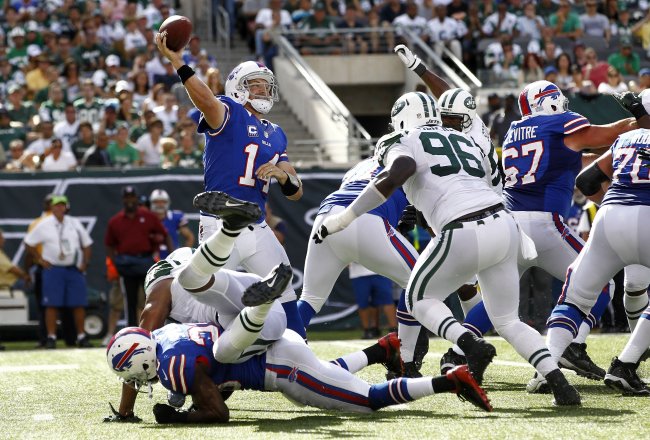
Ryan Fitzpatrick of Buffalo Bills v. NY Jets, in rare protection against blitz while in pocket, October 6, 2012. (http://bleacherreport.com).

Sometimes, if I allowed myself to slip deeply enough, like, in the moments before an exam, I could use a buildup point in the song to bring in an extra blocking tight end to run a max-protect play. I’d snap the ball, send three receivers on one side of the defense, and wait just long enough for one to cross before delivering a perfect pass that allowed my receiver to split the secondary for a long score. All while taking a hit in my right ribs and being knocked down to the turf, just a quarter-second after my index finger’s come off the ball, giving it a smoother spiral rotation while in flight. And so many times, that re-visioning of my world made it so that my natural ability to remember everything and discern many things resulted in very good grades, solid performances, and a balancing act that made life at 616 and MVHS just bearable enough.

I was reminded of how often my mind went down this road by Touré’s Who’s Afraid of Post-Blackness (which I blogged about earlier this week), particularly his chapter on imagination and art, “Keep It Real Is a Prison.” Except that my mind does still go there sometimes. Usually as I’m about to give a speech, or while running a five-miler, drilling a three or driving. Or in writing something for publication, like Boy @ The Window.

Hatin’ the Player Over the Game – Repost (w/ On Ex-Gladiators)

04 Friday May 2012

Posted by decollins1969 in 1, culture, Eclectic, Pop Culture, Sports

≈ Leave a comment

Tags

Ben Roethlisberger, Brain Chemistry, Brian Cushing, Crafted Image, Culture, Entitlement, Football, Gladiators, Image, Junior Seau, Lawrence Taylor, Neurology, New England Patriots, NFL, Pro Football, San Diego Chargers, Sports, Suicide, Violence


Junior Seau (New England Patriots linebacker at the time) during a game against the Oakland Raiders, December 14, 2008. (JJ Hall via Wikipedia/Flickr.com). In public domain via cc.-Attribution 2.0 Generic license.

I originally wrote the post below in May ’10, with off-the-field incidents involving Ben Roethlisberger, my man Lawrence Taylor, and Brian Cushing in mind. Not to mention our secret (or not-so-secret) lust for violence in professional football in mind. I post it again, now shocked, saddened and even mortified over Junior Seau’s suicide on Wednesday. As Paul Daugherty wrote in his SI.com column yesterday, most of us “don’t know athletes. We like to think we do,” but “we just don’t know.”

The fact is, given all we can and should know about neuroscience and brain chemistry by now, it’s clear that not only is professional football right on par with hockey as the most brutal and violent sports on the planet. It’s that the sport itself can and does alter an individual’s brain chemistry, their long-term neurology, especially if played for a serious period of time. It’s the American empire’s equivalent of a gladiatorial sport, where the stars play for keeps, live hard (albeit in the most dark and secret of ways sometimes) off the field, and obviously die even harder as well. And like the gladiators of ancient Rome, there are substantial rewards that come with the life of the NFL, including the ability to craft an image that’s larger than oneself.
The problem for NFL stars is that the career does end, begrudgingly and relentlessly so. But the violence that the mind becomes accustomed to — along with the accolades — does not and cannot, at least, not without help. For whatever reason, Junior Seau didn’t have that kind of help in his life. Seau, like so many of us, couldn’t reconcile his image with his reality, and obviously took his life in no small part because of it. As a fan, I can’t allow this to continue without saying or doing something, hence this repost.
———————-

Lawrence Taylor

Let’s see now. Big Ben Roethlisberger, the great LT and Brian Cushing have all found themselves in trouble in recent weeks. With the law, with the NFL and with fans from all over Football Land. The Fourth Estate and the 4.5 Estate (bloggers) have gone on, and on, and on about how these guys lack discipline, are entitled whiners and complainers, and believe that they can get away with anything. These pop-psychology ruminations are much more pop than social psychology, with some being down-right idiotic. The bottom line is, at the bottom of their tax returns, where the IRS asks for your profession, these players (or their tax preparers) write or type “Football Player” in that spot. And that’s all the explanation you need when it comes to criminal behavior, criminal-esque behavior, and just plain bad behavior.

To be sure, many of these players — and not just in the NFL — are spoiled, entitled, whiny, and do think that they can get away with more than an ordinary American. Sure, some of our reaction to think is colored by race, as the majority of players of two of the three major team sports in this country are Black. But while race is a factor in perception and entitlement a factor in general, the real problem with professional football players is the nature of the game itself, especially in terms of violent crimes.

We somehow expect people who’ve spent a significant amount of their time playing a sport like football to somehow turn off all of the intensity, adrenaline and violence that comes with playing the game and then act like normal everyday people. Most players in the NFL have been playing the sport at least since the age of thirteen or fourteen, with many starting as early as six or eight. Then, with college and the pros, tack on at least eight years of play with hits that would put the average person in the ICU. Yet, once their career is over, or at least, during the off-season, these same players must then become model citizens. Are you kidding me?

For most Americans, few things in our lives are more violent than watching a football game. Police officers, soldiers in combat, and boxers are the only ones who may well experience more violence. And all available research shows how difficult it is for a human being to constantly engage in violent acts and then adjust to a normal life setting (whatever that means). So it should be obvious that a professional football player would have the same kind of troubles, as say, a retired boxer or an undercover detective in

Donte’ Stallworth Hit

transitioning between his world and ours.

In many ways, the most popular sport in our country gives us as much of a fix as it does for the players engaged in the sport. In this sense, there isn’t much of a difference between being an NFL player or being a gladiator during the times of the Roman Empire. Both celebrated, both reviled, both part of our societal hypocrisy over their criminal acts (alleged and actual). Ben will be forgiven once the Steelers start living again, while Cushing’s use of HCG will be forgotten by training camp. LT will at least be defended by many until actual proof is provided of guilt or innocent.

Brian Cushing (Houston Texans)

I’m hardly condoning anyone’s actions, on or off the field of play. But, as long as we keep buying the tickets, jerseys, cable packages, and the beer, all we’ll be doing is supporting the violent and sometimes bloody business of professional football. We can’t have our cake and then eat it too, especially in these cases, even though we’re trying to.

Prom-Ethos

02 Wednesday May 2012

Posted by decollins1969 in 1, Boy @ The Window, culture, Eclectic, Mount Vernon High School, Mount Vernon New York, Movies, Pop Culture, Sports, Youth

≈ 1 Comment

Tags

Cliques, College Planning, Crush #2, Dating, Ethics, Ethos, Humanities, Humanities Program, Manhood, MVHS, New York Giants, New York Mets, Prom, Prometheus, Relationships, Senior Prom, Senioritis


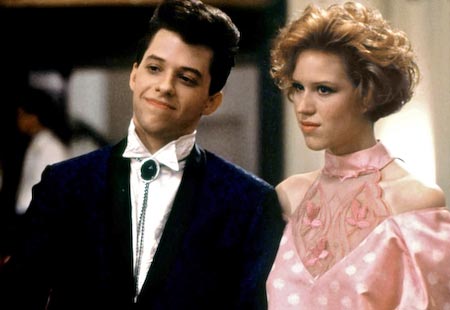
Jon Cryer and Molly Ringwald as Duckie and Andie in Pretty In Pink (1986), May 2, 2012. (http://bing.com). Qualifies as fair use under US Copyright laws because of low resolution.

I can’t believe that it’s been a quarter-century since I made the decision to go to my senior prom and to ask someone to go with me in the process. The fact that both happened should say that the things my classmates thought about me at the time were simply untrue, which also showed how little they thought of me to begin with. The fact that I stumbled my way to the prom, though, would say even more about the six years’ worth of isolation that I’d experienced between 616 and Humanities than anything else.

My senior year at Mount Vernon High School was hardly easy, between college preparations, senioritis, three AP courses (English, Calculus and Physics, no less), my classmates in constant conflict (see my post “The Audacity of Low Expectations/Jealousy” from September ’11), and my ever-growing list of adult responsibilities at 616. Not to mention checking out the months of October ’86 and January ’87 to watch my Mets and Giants win a World Series and a Super Bowl.

With all of that going on, I made a couple of decisions. One was to escape from MVHS as frequently as possible, which meant spending more time in the library or on the Subway or at 241st’s magazine shop, where I could find every conceivable porn magazine at the time. The second was that I wasn’t going to my senior prom. I couldn’t be so bothered as to get caught up in senior-year drama birthed from of six or more years of stress and trauma.

Several things changed my attitude, at least around the prom. With the end of my half-year of Philosophy and Humanities Music meant some more free time to turn around my grades (I had a 1.95 GPA during my second marking period) and to think about the immediate future of college. Most importantly, I realized that there were a few people around me who cared, if only in a feeling-sorry-for-me way. By the beginning of February, I decided to go to my prom, even if it meant going by myself, and to do what I could to salvage the school year, if only by a little bit.

But in making that first decision, I put off looking for a date in a serious way for the prom until I knew for

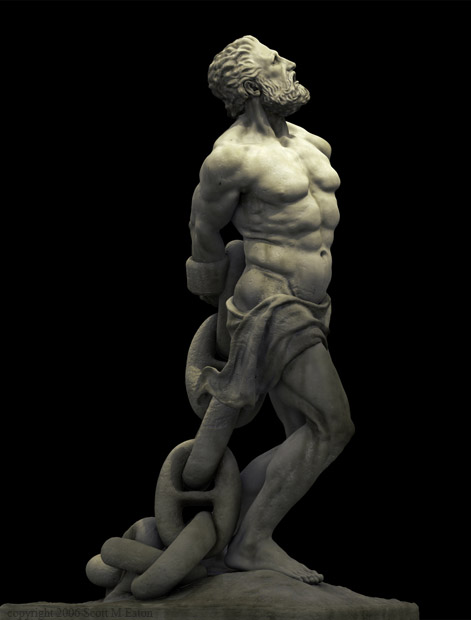
Prometheus Bound (1996), by Scott Eaton, March 3, 2010. (Scott Eaton via Wikipedia). Released to public domain via CC-Attribution 2.5 Generic license.

sure if Crush #2 had one. Through idle chatter with her and some of her friends one day in the hallway
outside of the Music Department, I knew she had a date, with whom I was never able to find out. I learned all of this by the middle of April. I wasn’t shocked by any stretch. I just felt like a dumb and bumpy toad wishing and hoping for something to happen instead of making something happen.

Another classmate (one whom I’ll call “H” for the purposes of this post) was my next and best potential prom date. In H’s case, I assumed that she was dating someone, likely a former upperclassman now in college, so my hopes weren’t high to begin with. Plus it would’ve been a friendly date, no out-of-whack emotions to hide or control, no expectations beyond a friendly hug. Other young women who were in their various cliques and relationships had their prom dates lined up months ago, whether they seriously liked the person or not.

I didn’t want this to be a big deal. I just wanted to go so that when I got older I wouldn’t regret not going. So I decided to ask “J,” if only because she was a friendly acquaintance whom I thought would help make the evening fun. J agreed to go to the prom with me, which was nice, if only because it might my decision to go a less stressful one.

Even in the midst of suddenly finding the emotional strength of a typical seventeen-year-old to take this step, I made several incorrect assumptions and errors in tripping my way into something as cliquish and social as a prom. Among others:

Ethos (2011) movie poster, cropped and altered, May 2, 2012. (http://www.amazon.com). Qualifies as fair use under US Copyright laws because of low resolution and alterations.

1. My main reason for going to my prom was because I didn’t want to look back at my time in school later on and regret not going. I don’t regret going. But, in the end, it probably would’ve better for me to have hung out with folks at a Mets game or gone to a Broadway play, if only because the food may have been better.

2. Once I made the decision to go, I simply should’ve asked Crush #2 if she had a date or not for the prom. Period. Even if she had said “No,” it would’ve given me more time to ask other folks, or even to decide to go by myself.

3. I knew on some level as soon as I asked J that despite our agreement that this was a friendly date, that at least for her, it was more than that. A more mature person — me after ’90, for example — would’ve been vocal enough to let J know that I saw her as a friend, nothing more, and that I had other interests at the time (of course, it’s hard for forty-two year-olds to be that brutally honest, but a more honest approach would’ve been better).

My lack of same-age social activities over the previous six years left me only semi-prepared for all of the emotional and psychological torture that I’d be in for not only for the prom, but also for the summer to come. My social ethos was only beginning to evolve.

Was I Really In Love In 7th Grade?

03 Saturday Mar 2012

Posted by decollins1969 in 1, Boy @ The Window, culture, Eclectic, eclectic music, Mount Vernon New York, Pop Culture, Sports, Youth

≈ Leave a comment

Tags

7S, A.B. Davis Middle School, Coldplay, Crush #1, First Love, Humanities, Love, Mount Vernon New York, Muse, Music, New York Giants, Patrick Ewing, U2


Emotional Highs

Emotional Highs

Tomorrow will mark thirty years since I began an emotional journey the likes of which I’ve only approximated maybe three other times since. In the three decades since, I’ve learned that I was actually in love for the first time. Not just a crush, or puppy love, or some preteen infatuation. Love, actually and truly. But as a person of deep thought, a boy surrounded by sexism and misogyny, and a lonely and semi-ostracized twelve-year-old, I didn’t have the thoughts, much less the words, to describe what I felt between March 4 and May 30 of ’82 (see my “On Women and Wired Weirdness” post from March ’11).

To think that this all pretty much started because I picked a fight with Crush #1 at the end of class on the first Thursday in March in 7S. Almost all of my extracurricular incidents that year began or ended in our homeroom with our homeroom/English teacher Mrs. Sesay. The incident began because Crush #1 asked a question about a subject that Mrs. Sesay had spent the entire week going over, a concept that Sesay would test us on that Friday. I laughed out loud — thinking that I was only snickering — after Crush #1 asked that question.

Thinking nothing of it, I began to pack up after the 2:15 pm bell rang. Crush #1 came up to me and pushed me from behind.

“You’re an ugly, arrogant asshole!” she said with the distaste of a ballerina being asked for money by a junkie.

I called her “stupid” and then said something else stupid. “You’re an idiot!,” Crush #1 yelled as she threw two punches into my chest and a third at my jaw.

The fight lasted about fifteen or twenty seconds, but after landing a punch on her left boob and nipple, I stopped fighting, already descending into the land of the idiot romantic, as in The Doobie Brothers “What A Fool Believes” (1979). All while Crush #1 kept hitting me, then being pulled away from me by a couple of her friends. One of them, the recently deceased Brandie Weston, called me a “pervert” as they exited the classroom.

I know that I wasn’t the first boy in history to start a fight with a girl who I’d come to like or love, but I do think that boys who do that have a lot of weird in them. Mind you, I hadn’t quite hit puberty yet, so my testosterone levels weren’t high enough yet to be the cause of my brain malfunction. No, my very sexism and her fierce sense of tomboyish feminism was why I liked her in the first place, and I drank deep from that well for the next three months.

I’ve had thirty years to reflect on this incident and the three months of school-day dreaming that followed. There are only a handful of childhood memories I’ve thought about more. For years, though, I’d packed my emotions away. Through high school and Crush #1’s first dating experiences, through my own high school and 616 trials and tribulations, through college and graduate school and my years of dating and then marriage to my wife of twelve years.

Then, as I began work on Boy @ The Window six years ago, I opened up that dusty box of memories and emotions, to find them almost as strange at thirty-six as they had been at twelve. But unlike in ’82, I shared it with a bunch of friends, and especially my wife. After telling the story of me and Crush #1, my wife said, she was my “first love. It doesn’t matter if she didn’t reciprocate.” Or, for that matter, if she didn’t know. It was the first time it dawned on me that I really had fallen in love before I’d learned how to love. Wow.

It explained why after so many years, through all of my ups and downs, and despite the love I do feel, have and show to family and friends in my life, that Crush #1 would show up in my dreams. It helped me understand why I found few girls, young women and women attractive prior to going to college, and even then, they didn’t compare. It also let me know that a feeling like that can’t die, doesn’t die. If anything, it allows room for more love, and more understanding for how to love in the process.

The video above is about the best way I can express what I felt in ’82, without the complete sappiness of an incurable romantic, or worse yet, a tragic one. Like Professor Snape (as played by Alan Rickman) in the Happy Potter movies, or worse still, Ralph Fiennes’ character in The English Patient (1996). Combining music and two of my three favorite sports (the other one’s golf, but Tiger’s inappropriate for this theme), it’s a mere approximation for how I felt back then.

There’s plenty of other music I could’ve used (see my “The Ultimate Crush” post from March ’08 and “Desert Rose” post from April ’09), other themes like figure skating or ballet that would better show what I saw and felt in Crush #1, and what I see and sometimes feel in my dreams on occasion now. I guess that I really was in love. But there’s at least one thing I can do now. I can be there for Noah when it happens to him for the first time.

End of An Era

29 Wednesday Feb 2012

Posted by decollins1969 in 1, Boy @ The Window, culture, Eclectic, Politics, Pop Culture, race, Sports

≈ 2 Comments

Tags

ESPN 980, Georgetown University, John Thompson, John Thompson Show, Men's Basketball, Message, NBA on TNT, Personality


Coach John Thompson, John Thompson Show, ESPN 980 AM, Washington, DC, February 29, 2012. (http://espn980.com).

It’s Leap Year Day, so in light of having the first February 29 in four years, I want to take a different tack today. For it just so happens that today is John Thompson’s last day on the air on ESPN 980 AM in Washington, DC. The legendary former Georgetown University men’s basketball coach will air his final radio show this afternoon.

Thompson has had this show for about thirteen years, and I’ve listened off and on now for seven of them. What has made him interesting to listen to over the years has been his ability to be ornery, light-hearted, downright goofy and insightful, and all at the same time — whether I agreed with him or not. That the seventy-year-old Thompson has managed to maintain a solid audience across all demographics has been a sign of his ability to be a man with an old-school philosophy without become an old man. It’s a fine balance that Thompson maintained show after show, regardless of the outrageous calls he responded to time and again.

I’ve been a fan of Coach Thompson’s since I was in high school. Back then, he had Patrick Ewing and later Alonzo Mourning as part of his vaunted Hoya Paranoia defense. They won it all in ’84, only to be done in by Villanova’s raining of shots from all angles in the NCAA Championship Game in ’85. Despite his normally gruff demeanor, Thompson handled the loss with the graciousness and sportsmanship that was rare even then, and almost impossible to find now.

I came to like Thompson even more when he was an analyst on TNT’s NBA games in the early ’00s. I used to call him “Sugar Bear” because of the way in which he delivered his take on players and coaches. It was through that context that I learned of The John Thompson Show, and began listening nearly seven years ago.

More than anything else, I appreciated the fact that many segments of his show had little or nothing to do with sports. Even as uncomfortable as he may have been about the topic, he discussed race, poverty, crime, relationship, the Black church, public education and higher education. I think that this diversity of ideas and topics is what I’ll miss the most. That Thompson used his show to educate his listeners — as well as educate himself — about much more than sports speaks to him as the educator he has been for most of his adult life.

I don’t know if I could’ve ever played for Thompson — between my relative lack of talent and my ears being burned from his yelling at me on every possession. But I have enjoyed listening to him and his show.

Virtual Linsanity

25 Saturday Feb 2012

Posted by decollins1969 in 1, Academia, Boy @ The Window, culture, Eclectic, eclectic music, New York City, Pop Culture, race, Sports, Youth

≈ 2 Comments

Tags

Basketball, Cultural Stereotypes, ESPN, Hype, Jason Whitlock, Jeremy Lin, Knicks, Linsanity, NBA, New York City, New York Knicks, Patrick Ewing, Racial Stereotypes, Racism, Stereotype Threat, Stereotypes, Twitter


Jeremy Lin (Knicks) beating Matt Barnes (Lakers) in the paint for a layup, Madison Square Garden, February 10, 2012. (AP).

As a New York Knicks fan since my mother’s third trimester with me (the fall of ’69, the season the Knicks won their first of two NBA titles) here hasn’t been much to be excited about since Patrick Ewing popped his Achilles’ tendon in between Games 2 and 3 of the ’99 Eastern Conference Finals.

Enter Jeremy Lin, the sensation that’s sweeping the NBA Nation. When he scored 28 points in his first game as a starter nearly three weeks ago, my only thoughts were, “Finally, we have a real point guard who can get the ball to Stoudamire and Carmelo.” Beyond that, I thought of one of my high school students from the JSA-Princeton University Summer Program in which I taught in ’09, because they have the same first and last name. My former student, though, is still in college, and not at Harvard, either.

Patrick Ewing raising the roof after a dunk in Game 7 of the 1994 NBA Eastern Conference Finals against the Indiana Pacers, June 5, 1994. (AP).

Leave it to ESPN, the New York media and the motley crew of naysayers, though, to raise Lin to celebrity status faster than the USS Enterprise-D could reach maximum warp. The fact that Lin plays for the Knicks, a franchise in a decade-long search for respectability, and decades-long search for its lost glory, is reason enough for me to see their perspectives on the point guard as more than slightly skewed. I mean, New York’s the reason why sports fan still think the sun shines out of every Yankees’ behind, even Don Mattingly’s.

Not that Lin’s good and often very good play didn’t warrant attention. But if you could dig deeper into all the attention, it was as if the sports and entertainment worlds were shocked — actually shocked — that Lin could start and play with all the precision and poise of an above-average NBA player. What would bring this kind of outpouring of skepticism wrapped in somewhat exaggerated hype? The fact that Lin went to Harvard? The fact that he’s just under six-foot-three? What, pray tell, has been the key to this burst of attention?

Could it be, could it possibly be, about race? Really? After two decades of international competitions between Chinese and American basketball players? Really. By the time some of the shock jocks and uncouth commentators began to spread their versions of Lin-adjectives, Lin-verbs and Lin-phrases, it was obvious that the shock went something like this: “Oh my God! An Asian guy from Harvard can play professional basketball? Bring on the MSG!”

It all crystallized in one stupid, and yes, racist tweet on the part of a “journalist” I used to respect, Jason Whitlock. “Some lucky lady in NYC is gonna feel a couple of inches of pain tonight,” Whitlock tweeted while Lin scored 38 points against the Lakers on February 10. At the very least, this is a sign of some deep-seated insecurity being pushed upon Lin as a proxy for two stereotypes rolled into one. At worst, Whitlock was merely expressing what many White and Black folks feel about some Asian American guy excelling in an allegedly “Black” sport. Either way, it’s almost as disgusting as ESPN’s “Chink In The Armor” headlines from

Jay Kay in Jamiroquai's "Virtual Insanity" (1997) music video screen shot, January 6, 2006. (via Wikipedia). Qualifies as fair use under US Copyright laws because of picture's low resolution and relevance to blog post.

the Knicks’ February 17 loss to the New Orleans Hornets.

I don’t understand the exaggerated hype and the subsequent race-baiting, playa hatin’ comments in mass and social media around Lin since the middle of Black History Month. I played tons of pickup games at Pitt and Carnegie Mellon when I was in graduate school, and a good portion of the folks I played with were Asian or Asian American. Like the Whites, Blacks and Latinos I played with, some of them could really play basketball, and some couldn’t dribble three steps without bouncing the ball off their foot. Some could shoot from seventeen feet blindfolded, and others had the accuracy of a Scud missile.

Lin, as good as he is now, can and should get better. How good is anyone’s guess, but we shouldn’t be comparing him to Steve Nash or Magic Johnson quite yet. Nor should we write him off when he faces a team like the Miami Heat and turns the ball over five times in a three-minute span. We shouldn’t celebrate a media that apparently has bipolar disorder when it comes to anyone whose body of work cuts against stereotypes.

Lin’s success shouldn’t threaten anyone’s Blackness, sense of manhood or intelligence or the world view of American sports journalists. At least no more than my having a PhD or being a writer on race, education reform and diversity should threaten higher education or anyone’s Whiteness. But, then again…

← Older posts
Newer posts →

Boy @ The Window: A Memoir

Boy @ The Window: A Memoir

Places to Buy/Download Boy @ The Window

There's a few ways in which you can read excerpts of, borrow and/or purchase and download Boy @ The Window. There's the trade paperback edition of Boy @ The Window, available for purchase via Amazon.com at http://www.amazon.com/Boy-Window-Donald-Earl-Collins/dp/0989256138/

There's also a Kindle edition on Amazon.com. The enhanced edition can be read only with Kindle Fire, an iPad or a full-color tablet. The links to the enhanced edition through Apple's iBookstore and the Barnes & Noble NOOK edition are below. The link to the Amazon Kindle version is also immediately below:

scr2555-proj697-a-kindle-logo-rgb-lg

Boy @ The Window on Amazon.com: http://www.amazon.com/Boy-The-Window-Memoir-ebook/dp/B00CD95FBU/

iBookstore-logo-300x100

Boy @ The Window on Apple's iBookstore: https://itunes.apple.com/us/book/boy-the-window/id643768275?ls=1

Barnes & Noble (bn.com) logo, June 26, 2013. (http://www.logotypes101.com).

Boy @ The Window on Barnes & Noble: http://www.barnesandnoble.com/w/boy-the-window-donald-earl-collins/1115182183?ean=2940016741567

You can also add, read and review Boy @ The Window on Goodreads.com. Just click on the button below:

Boy @ The Window

Twitter Updates

Tweets by decollins1969
  • RSS - Posts
  • RSS - Comments

Archives

  • June 2025
  • April 2023
  • September 2022
  • August 2022
  • July 2022
  • June 2022
  • May 2022
  • April 2022
  • March 2022
  • January 2022
  • December 2021
  • November 2021
  • October 2021
  • September 2021
  • August 2021
  • July 2021
  • June 2021
  • April 2021
  • March 2021
  • February 2021
  • January 2021
  • December 2020
  • November 2020
  • October 2020
  • September 2020
  • August 2020
  • July 2020
  • May 2020
  • April 2020
  • March 2020
  • January 2020
  • December 2019
  • November 2019
  • August 2019
  • July 2019
  • June 2019
  • May 2019
  • April 2019
  • March 2019
  • February 2019
  • January 2019
  • December 2018
  • November 2018
  • October 2018
  • September 2018
  • August 2018
  • July 2018
  • June 2018
  • May 2018
  • March 2018
  • February 2018
  • January 2018
  • December 2017
  • November 2017
  • October 2017
  • September 2017
  • August 2017
  • July 2017
  • June 2017
  • May 2017
  • April 2017
  • March 2017
  • February 2017
  • January 2017
  • December 2016
  • November 2016
  • October 2016
  • September 2016
  • August 2016
  • July 2016
  • June 2016
  • May 2016
  • April 2016
  • March 2016
  • February 2016
  • January 2016
  • December 2015
  • November 2015
  • October 2015
  • September 2015
  • August 2015
  • July 2015
  • June 2015
  • May 2015
  • April 2015
  • March 2015
  • February 2015
  • January 2015
  • December 2014
  • November 2014
  • October 2014
  • September 2014
  • August 2014
  • July 2014
  • June 2014
  • May 2014
  • April 2014
  • March 2014
  • February 2014
  • January 2014
  • December 2013
  • November 2013
  • October 2013
  • September 2013
  • August 2013
  • July 2013
  • June 2013
  • May 2013
  • April 2013
  • March 2013
  • February 2013
  • January 2013
  • December 2012
  • November 2012
  • October 2012
  • September 2012
  • August 2012
  • July 2012
  • June 2012
  • May 2012
  • April 2012
  • March 2012
  • February 2012
  • January 2012
  • December 2011
  • November 2011
  • October 2011
  • September 2011
  • August 2011
  • July 2011
  • June 2011
  • May 2011
  • April 2011
  • March 2011
  • February 2011
  • January 2011
  • December 2010
  • November 2010
  • October 2010
  • September 2010
  • August 2010
  • July 2010
  • June 2010
  • May 2010
  • April 2010
  • March 2010
  • February 2010
  • January 2010
  • December 2009
  • November 2009
  • October 2009
  • September 2009
  • August 2009
  • July 2009
  • June 2009
  • May 2009
  • April 2009
  • March 2009
  • February 2009
  • January 2009
  • December 2008
  • November 2008
  • October 2008
  • September 2008
  • August 2008
  • July 2008
  • June 2008
  • May 2008
  • April 2008
  • March 2008
  • February 2008
  • January 2008
  • December 2007
  • November 2007
  • October 2007
  • September 2007
  • August 2007
  • July 2007
  • June 2007

Recent Comments

MaryPena's avatarMaryPena on My Day of Atonement/Bitter Hat…
decollins1969's avatardecollins1969 on No Good Teaching Deed Goes…
Mary Rose O’Connell's avatarMary Rose O’Connell on No Good Teaching Deed Goes…

NetworkedBlogs on Facebook

NetworkedBlogs
Blog:
Notes From a Boy @ The Window
Topics:
My Life, Culture & Education, Politics & Goofyness
 
Follow my blog

616 616 East Lincoln Avenue A.B. Davis Middle School Abuse Academia Academy for Educational Development AED Afrocentricity American Narcissism Authenticity Bigotry Blackness Boy @ The Window Carnegie Mellon University Child Abuse Class of 1987 CMU Coping Strategies Crush #1 Crush #2 Death Disillusionment Diversity Domestic Violence Economic Inequality Education Family Friendship Friendships Graduate School Hebrew-Israelites High-Stakes Testing Higher Education History Homelessness Humanities Humanities Program Hypocrisy Internalized Racism Jealousy Joe Trotter Joe William Trotter Jr. K-12 Education Love Manhood Maurice Eugene Washington Maurice Washington Misogyny Mother-Son Relationship Mount Vernon High School Mount Vernon New York Mount Vernon public schools Multiculturalism MVHS Narcissism NFL Pitt Pittsburgh Politics of Education Poverty President Barack Obama Race Racial Stereotypes Racism Relationships Self-Awareness Self-Discovery Self-Reflection Sexism Social Justice Teaching and Learning University of Pittsburgh Violence Whiteness Writing

Top Rated

Blog at WordPress.com.

  • Subscribe Subscribed
    • Notes from a Boy @ The Window
    • Join 103 other subscribers
    • Already have a WordPress.com account? Log in now.
    • Notes from a Boy @ The Window
    • Subscribe Subscribed
    • Sign up
    • Log in
    • Report this content
    • View site in Reader
    • Manage subscriptions
    • Collapse this bar
 

Loading Comments...