• About Me
  • Other Writings
  • Interview Clips
  • All About Me: American Racism, American Narcissism, and the Conversation America Can’t Have
  • Video Clips
  • Boy @ The Window Pictures
  • Boy @ The Window Theme Music

Notes from a Boy @ The Window

~

Notes from a Boy @ The Window

Category Archives: Pittsburgh

Viewing World AIDS Day From the Cheap Seats

01 Saturday Dec 2018

Posted by decollins1969 in 1, Boy @ The Window, Christianity, culture, Eclectic, eclectic music, High Rise Buildings, Jimme, Marriage, Mount Vernon High School, Mount Vernon New York, My Father, New York City, Pittsburgh, Politics, Pop Culture, race, University of Pittsburgh, Youth

≈ Leave a comment

Tags

"Shout" (1985), 616, ACT UP, Greyhound, Hard Luck Life, HIV/AIDS, Homophobia, Hypermasculinity, Misogyny, NYPD, Port Authority, Prostitution, Sex Work, STDs, Systemic Racism, Tears for Fears, World AIDS Day


World AIDS Day 2018 logo, November 30, 2018. (http://hiv.gov).

Today and this weekend mark 30 years since the first World AIDS Day. Unlike three decades ago, I seldom give HIV/AIDS any thought at all. Where did it go? Has anyone actually died from AIDS recently? Do people still have to worry about HIV/AIDS? I know the answers are, nowhere, yes, most definitely, and hell yes, dumb ass.

But 30 years ago, I worried about HIV/AIDS the same way I worried about the Soviet nuclear threat, my Mom still living with my idiot stepfather, and dying if I wasn’t part of some evangelical Christian rapture. I pretty much worried about everything back then. In the context of my heterosexuality and mostly burying it for fear of intimacy, pregnancy, and bodily fluids, though, I worried that with my luck, any sex at all would lead to the STD to beat all STDs.

So when my dad went out of his way to get me a prostitute (we didn’t use the term “sex worker” then, I think) for my seventeenth birthday in December 1986, a young woman I knew to have been a fellow Mount Vernon High School student the year before, I didn’t hesitate to say no. I preferred Jimme calling me “faggat” to doing the equivalent of Spike Lee’s character in School Daze, a form of meat-market sex approaching (but not quite) rape.

I knew, down to my bones, despite the ACT UP crowd of relatively well-off gay White male activists on MTV and elsewhere, despite the dome of Black hypermasculine homophobia found in Mount Vernon and in the city, that HIV/AIDS wasn’t a “gay disease.” Basic biology would dictate that viruses don’t make left turns based on sexual orientation, class, gender, or race. So, hell yes, I was scared, for quite some time, from the prospect of living with a disease that has killed more than 35 million people worldwide since 1979.

The dangers of sex work, of casual unprotected sex, and of HIV/AIDS were made clear to me on my trip to Pittsburgh in August 1990 to secure what would be my studio apartment living for the next eight and a half years. It started at the Port Authority Bus Terminal on 41st on Friday night, August 3. It was going to be my second trip ever on Greyhound, catching the 11 pm red-eye, nonstop bus from Manhattan to downtown Pittsburgh. As the 40 of us stood in line to catch the bus, I saw a woman around my age wandering between the men’s room and the waiting areas, talking to different guys, with one or two jumping out of line for a few minutes.

Port Authority Bus Terminal entrance, New York, NY, October 22, 2015. (Ilana Gold/CBS2; https://newyork.cbslocal.com/2015/10/22/port-authority-bus-terminal-plan/).

As she drew closer to my line, I recognized her. She was someone I knew to be the cousin of one of my neighbors on the third floor of 616. By then, I also saw a Black guy in his mid or late-twenties, standing near the men’s room, keeping a close eye on her. It was like the cogs of my mind moved in slow motion as it became clear that this person I knew was a sex worker and the guy was her pimp.

A few minutes later, the pimp bellowed, “Five-O! Five-O!.” The all-too-familiar woman took off. She booked out the terminal doors and toward the streets around Times Square. The Port Authority police and two NYPD cops had grabbed the pimp, put him on the ground, handcuffed him, and took him away.

I was so surprised and sad after that, at least as we boarded the bus and weaved our way through New Jersey. I hadn’t seen this woman since 1986 or 1987, when I was a senior in high school. Over the years, she had come over to her cousin’s place to visit, and maybe to stay (at least temporarily). She had mostly teased me about my “White music,” except for Tears for Fears in the summer of 1985 (their “Shout” had been turned into some hip-hop urban mix on WBLS).

She had asked me on more than one occasion, “Do you like girls?” I mostly ignored her, saw her as just another person at 616 and in Mount Vernon who saw me as something to kick around. I didn’t consider her attractive because of how she talked to me, but looking back, she was. At five-seven or five-nine, she was a yellowish-brown skinned woman, with some freckles, a nice smile, shortish hair, and a nice proportionate shape. She could be witty, in a New Yorker’s sarcastic sort of way. But between Wendy, Phyllis, and my march to college, nothing and no one in Mount Vernon could compete for my attention in that way back then.

A week later, I came back from my Pittsburgh trip, on another Greyhound non-stopper, only to realize at 8:30 on Saturday, August 11 that I needed to take a dump. As I’ve said elsewhere, I tried and failed to take one at Grand Central, as the basement restrooms were full of broken toilets, boarded up stalls, and at least one person with obvious signs of Kaposi’s Sarcoma, a sign of full-blown AIDS. I don’t know how I managed to hold my shit until I made it back to 616.

I learned from my Mom twelve or thirteen years ago that my former neighbor and teaser had died from AIDS-related complications, leaving two children behind. Even though I didn’t know her very well — didn’t want to know her, really — I was still heartbroken for her and her kids. All I could think was, what an awful life, what an awful way to die! Who’s going to raise her kids?

But really, I couldn’t help but go back to that Friday night in August 1990. I observed from up close, what the limited choices in a world of capitalism, patriarchy, misogynoir, and racism left people like this young woman. I observed, from afar, how this world can make something as destructive as HIV/AIDS a movement for gay White males, and a silent way of killing Black women at the same time.

Thanks, Away From Home

27 Tuesday Nov 2018

Posted by decollins1969 in 1, Academia, Boy @ The Window, Christianity, culture, Eclectic, Mount Vernon New York, Movies, Pittsburgh, Politics, Pop Culture, Religion, University of Pittsburgh, Youth

≈ Leave a comment

Tags

American University, Away From Home, Beverly, Depression, Family, Financial Woes, Food, Friends, Grinding Poverty, hunger, Kindness of Strangers, Loneliness, Malnourishment, Melissa, Pitt, Ron Slater, Thanksgiving


Thank You — paying it forward, March 3, 2017. (Catlane/iStock; http://digital.vpr.net/)

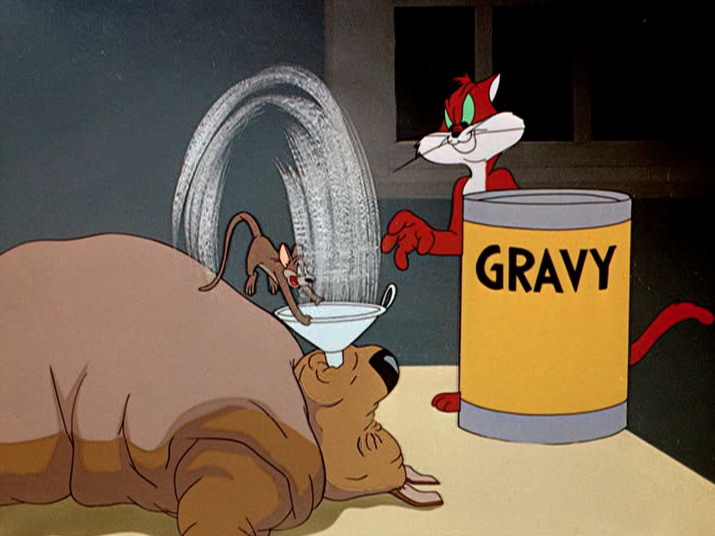
Yet another Thanksgiving has come and gone. The holiday is problematic for so many reasons, between the erasure, cultural exploitation, and dehumanizing mythology of indigenous Americans and the climate-change-defying national pig-out that begins every late-November Thursday, and continues for weeks afterward, year after year. But the fact that the days off around Thanksgiving gives us worker bees time to spend with family, friends, and those we seriously like and love can’t be ignored.

Sure. At least for those of us who have such people in our lives with whom to share our time off from work, school, and life’s constant treadmill. My American University students reminded me of the allegedly normal ritual of returning home to eat and spend time with family, et al., this past week. Half of them contacted me to let me know they weren’t going to attend the two classes immediately before Thanksgiving, even after learning I wasn’t granting them an excused absence for the holiday week. All so that they could have a few extra days away from the stresses of higher education and the classroom. I envied them, just an iota, if only because they presumably had good reason to spend time with their families and loved ones. I also figured that not everyone in my class was going home to a welcoming environment, or really, going home at all.

“And this time, we didn’t forget the gravy” Looney Tunes “Chow Hound” episode of bullying, greed, and gluttony, originally aired June 16, 1951. (WB; http://tralfaz.blogspot.com/).

That last one was certainly the case for me during my student days. Growing up the way we grew up, in Mount Vernon, at 616, a good Thanksgiving was one where we had a regular meal to eat. Even before the Hebrew-Israelite years of 1981-84, our Thanksgivings weren’t seven-course eat-a-thons. We were lucky if my Uncle Sam came over to eat with us (which after 1978, was pretty rare), and we didn’t spend time around my Mom’s friends once we dived into being Black Jews and fell into grinding welfare poverty.

After I went off to the University of Pittsburgh in August 1987, I only came home to Mount Vernon and 616 one time for Thanksgiving, three months later. My Mom made the biggest Thanksgiving meal I’d seen her make since 1975. I remember mostly the mashed potatoes and gravy. But it wasn’t a family affair, not really. I was home mostly because I had grown used to the well-worn grooves of poverty, abuse, and adult-level responsibilities that had been my life since the fall of 1982. The food, while the first home-cooked meal I’d eaten in three months, was an escape from my normal attempts at escape.

Twelve months later, after six weeks of depression, getting over my Phyllis obsession, a semester of graduate school-like concentration, a summer of unemployment, a week of homelessness, and three months of financial woes and malnourishment, Thanksgiving 1988 had arrived. Between Ron Slater, Beverly, and finally having enough money to not worry about eating or bills for the first time in almost a year, it felt weird, only having gratitude as my companion for a few years.

But life got even weirder for me, as my friend Melissa had invited me to her father’s house for Thanksgiving. This was not a date of any kind, certainly not from my perspective. I think that Melissa sensed how rough my year had been, knew that I wasn’t going home to New York to see family, and did the Christian thing of looking after one’s neighbors. This even though things weren’t exactly great for her and her father at the time. Melissa’s father was an ailing contractor in his early sixties. I really don’t remember much about that Thanksgiving in terms of the food. I think there may have been dinner rolls or candied yams. What I do remember is the two-and-a-half hours I talked with Melissa and her father, about politics, the “Stillers,” Christianity, and Pitt. It was the most thankful holiday I’d ever experienced, and my first Thanksgiving seeing what Thanksgiving was like for family members who enjoyed each other’s company.

It was the first of seven straight Thanksgivings either spent with friends like Melissa, Howard, Kenny, the Gants and their families, or by myself. The “by myself” Thanksgiving was in 1990. It was a cold and rainy day, where I did nothing but watch football, made myself two double cheeseburgers, and found a nearly usable director’s chair outside a vintage furniture gallery in East Liberty. Even then, folks looked out for me. The next day, two of my older Swahili classmates swung by my apartment to bring me Thanksgiving leftovers. They brought me cornbread, dinner rolls, ham, turkey, mashed potatoes, dressing and stuffing, greens, and candied yams with marshmallows. I had tried to say no, but neither of the women would let me. It was really hard for me not to cry while being thankful for such generosity.

It seems like it’s been a lifetime since those naive and cynical days, where I didn’t trust anyone in my life. The bout with homelessness and the financial straits that followed changed my life in ways that I notice even today. Even with the years of working long hours and fighting for my career as a writer and an educator, I realize that I wouldn’t be here doing any of what I’m able to do today without the kindness of strangers and friends, the ability to weigh, sift, and analyze myself and my past or the sense that God had a purpose for me, a reason for living and being. Even after 30 years, I have this and so much else to be thankful for.

The Journey of My Red Towel, 30 Years in the Making

10 Monday Sep 2018

Posted by decollins1969 in 1, Boy @ The Window, culture, Eclectic, Pittsburgh, Pop Culture, race, Sports, University of Pittsburgh, Work, Youth

≈ Leave a comment

Tags

Beach Towel, Budgeting, Coping Strategies, EKCO, Financial Crunch, Kauffman's, Mets, Pirates, Pitt, Poverty, Resilience, Sera-Tec


My red beach bath towel (and EKCO knife), still around after three decades, September 9, 2018. (Donald Earl Collins).

There are so many things I could think about regarding my cosmic jump into independent adulthood in the fall of 1988. The five days of homelessness, almost ending college for me right at the start of my sophomore year at the University of Pittsburgh. The nearly three months of financial crises that followed, including six weeks of giving plasma to Sera-Tec for an extra $25 per week (it left a scar in my right elbow-bend vein that most medical professionals interpreted as me having been a drug user — talk about racism and assumptions!). The end of my eating things like tuna fish sandwiches and pork neck bones and rice, and drinking grape Kool-Aid. My changing my major from computer science to history, to my mom’s disapproval.

But another way to look at my journey would be to look at the two items in my life that survived that fall. A red beach bath towel, and an EKCO steak knife. The towel I bought on Labor Day 1988, after my Mets beat the Pirates at Three Rivers Stadium. Darryl Strawberry hit two home runs that game, after a thirty-minute rain delay, in which the upper deck folks dumped beers on some of us (not me, though) in one of the mezzanine sections behind the wall in left center field.

I had walked the four miles or so between where I lived in South Oakland (off Bayard Street and Welsford Avenue) to the stadium, getting rained on along the way. On my way back, I noticed the Downtown Kauffman’s was still open for its Labor Day sale. I went in and walked around for twenty minutes, mostly to longingly look at all the things I couldn’t afford. But I did know to go into the baths section, and saw that the beach towels were on sale for $17.99.

I thought about buying a wash cloth, but after rent and the game, I only had  $50 on me at the time, and no bank account or credit cards. I thought about buying an “in-between wash cloth,” which was what I called hand towels back then (I thought they were bigger towels for people with bigger hands, like me!). It would be a few days before I got my refund money from Pitt, but I knew I was in need of a shower after the homelessness ordeal and the Pirates game.

I bought the towel, and spend the rest of the fall using it for everything. Especially after that second Friday in September, when Pitt, after deducting nearly $900 of my refund for last year’s room and board charges. After accounting for my books, I had $205 left to work with for at least the next two months.

So I budgeted down to the penny. After I cashed my refund at Pittsburgh National Bank, I went downtown to Ralph’s Discount Store, across from Kauffman’s. I bought a Sony Walkman on sale for $55, the most I’d spend on anything other than rent for the next two and a half months. I then caught a bus back to Oakland, and went to the South Oakland Giant Eagle (yes, post-millennials, South Oakland used to have its own Giant Eagle, on Forbes Avenue, where CVS and Jimmy Johns are today). That’s where I bought an orange creamsicle plastic plate, a soup spoon, a dinner fork, and that EKCO steak knife, for something like eight or nine dollars. That would have to do.

Closeup of my red towel, September 9, 2018. (Donald Earl Collins

My red towel did the work of two tea towels, a wash cloth, a hand towel, a half roll of paper towels, and a dozen napkins every week through the end of 1988. I’d shower with it, of course. But I also used a corner of it for washing up. If I made a heavy dinner, like spaghetti and meat sauce (with a pot and iron skillet I saved from my freshman year), I used the towel to dry my pot, pan, dish, and utensils. It was my go-to for everything. I had to wash it every week, because how I was using the towel back then was nothing short of disgusting.

I finally bought two wash cloths and a hand towel in 1989. But the red towel remained my one and only bathing towel. I didn’t buy a second one until the summer of 1994.

After that, my reliance on old reliable declined. Once I moved in with my eventual wife at the end of 1998, my red towel became part of a rotation. It still had enough heft to be reasonably good at drying me off from a shower. It had shrunk a bit from its original 30″ x 54″ size, though. By now, I would have gotten rid of it. But my red towel reminded me so much of what I had overcome. It was my tangible link to an unbelievably shaky past.

My red towel got more use when my son hit school age in 2008. For the next nine years, Noah would use the towel for showers and baths. A “Made in the U.S.A.” towel manufactured during Reagan’s last year in office was still in use in the age of Obama, and my son, born in the early 2000s, was the one using it! Life is funny.

Now sad and worn to the thickness of cheesecloth, part of me knows the red towel is no longer of any use. I mean, I still use the EKCO knife, mostly for cleaning and cutting up chicken. I’m not sure the red towel could dry the baby version of Noah anymore. But it doesn’t matter. Because it was there for me when I needed it the most.

Charlatans United

20 Monday Aug 2018

Posted by decollins1969 in 1, Boy @ The Window, culture, Eclectic, Mount Vernon New York, New York City, Pittsburgh, Politics, Pop Culture, race, Religion, University of Pittsburgh, Work, Youth

≈ Leave a comment

Tags

American Racism, Black Women, Charlatans, False Accusations, Law Enforcement, Long-Term Unemployment, Maurice Eugene Washington, Misogynoir, Pitt, Rape, Respectability Politics, Rev. Al Sharpton, Stepfather, Summer of 1988, Tawana Brawley, Trust, unemployment


The Rev. Al Sharpton, et al., at a press conference providing an update regarding the Tawana Brawley rape case, Queens, NY, 1988. (http://www.wbur.org/; AP)

If I have to pick a point in my life where I began to realize how hypocritical humans could be, my second summer after high school would be such a time. The long, hot summer of ’88, of nearly 50 consecutive days of highs in the Triple-H (hot, hazy, and humid) 90s in New York and its immediate suburbs. It was my first summer after starting college at the University of Pittsburgh, and if it weren’t for sheer determination, it would have been my only year at Pitt.

News wise, there were two local events that dominated my summer of unemployment in Mount Vernon and The City. One was the Tawana Brawley story. Between the end of November of the previous year and the end of June, the Rev. Al Sharpton and his entourage used the bully pulpit of the fourth estate to generate outrage and consternation regarding the alleged rape of one Tawana Brawley. A month or so before her sixteenth birthday, good samaritans found Brawley outside an apartment building in which her family had once lived, lying in a garbage bag, covered in dog feces and with racial slurs written on her body. Brawley had been missing for four days.

There wasn’t much agreement on anything else beyond these facts. Brawley claimed that three White men had repeatedly raped and sexually assaulted her, including a local police officer, then later denied being raped, but remained adamant about other forms of sexual assault. At one point, a cop who had recently killed himself was a suspect in the alleged Brawley rape. At another point, Sharpton and company accused the Dutchess County Assistant DA Steven Pagones of being one of Brawley’s three rapist (he later sued Brawley and Sharpton for defamation). Sharpton claimed throughout to believe Brawley, but others in his group later disclosed that the blowhard had his own doubts about Brawley’s story a few weeks after agreeing to represent her in the public eye.

Wappingers Falls is in Dutchess County, just two counties north of Westchester County and Mount Vernon, a hour-and-thirty-minute drive from Manhattan (give or take). After Eleanor Bumpurs and Michael Stewart, I rarely believed authority figures regarding their crime reportage. But by June, I also realized that not everything is a conspiracy, and that even racists can occasionally be on the right side of the law. I learned, above all else, that Sharpton was a charlatan. He used Brawley’s true life story of familial abuse and misogynoir and fear of more abuse to raise his profile on the New York and national stage. Especially in this case, as Brawley’s mother and stepfather took a dim view on Brawley’s time out with boys, a view shared by Whites all too willing to see Black girls and women as over-sexualized playthings.

If Brawley wasn’t raped or sexual assaulted, she was certainly abused physically and psychologically. It was bad enough that her name was out there and known (a violation of her rights as a potential rape survivor), especially since Brawley was still a minor. It was bad enough that there was a significant racial gap, where six out of every seven Whites polled believed she was lying (versus only half of African Americans polled). That Sharpton put Brawley’s name in the public arena for months with additional and unsubstantiated accusations? He took advantage of her for months, adding another layer of abuse to this teenager’s life. It’s practically unforgivable. And no, Sharpton’s work to get Trayvon Martin’s murder in 2012 the attention it and he deserved and his self-serving eulogy at Michael Brown’s funeral in 2014 do not make up for his original media sins.

The other charlatan I had to deal with that summer was my idiot stepfather and another one of his get-rich-quick schemes. He had spent nearly all of 1988 unemployed and lying around at 616, between losing his car salesman job and burning out the engine of his green 1976 Cadillac Coupe de Ville. It made my summer at 616 almost unbearable. I hadn’t spent this much time around the asshole since my summer of abuse.

In July and August, Maurice had the wonderful idea of starting his own limo service. One of our neighbors on the second floor had moved from driving a limo to starting his own service over the previous eight years. Maurice wanted in.

As I wrote in Boy @ The Window:

Afterward, Maurice went to his once well-off friend, who had survived a three-year period of very local and very public court battles and prison time over alleged incidents of child abuse and molestation at her daycare in Mount Vernon. The woman and her husband were financially ruined in the process, even though neither of them were directly involved in the incidents that occurred at the daycare. Somehow Maurice managed to get $1,000 out of his friend for his limo idea, likely some of the last money she lent anyone before her death in 1989. It’s more likely that “Hebrew-Israelite” Maurice bought lobster tails and moo shu pork at a Chinese restaurant with the money than attempted in any way to use it as collateral to get the downstairs neighbor to give him a shot at driving a limo.

By this time 30 years ago, I had already had my fill of hucksters between Sharpton and Maurice. Their misogyny, their need to use others, their harebrained ideas for fortune and fame. Maybe that’s why I never bought my stepfather’s act when he was dating my mom as a seven-year-old. Maybe that’s why I never, ever, found 45 appealing from the first time I read about him in the New York Daily News in 1984.

On Wet Rags and Crocodile Tears

30 Saturday Jun 2018

Posted by decollins1969 in 1, Boy @ The Window, culture, Eclectic, Mount Vernon High School, Mount Vernon New York, Pittsburgh, Politics, Pop Culture, race, University of Pittsburgh, Youth

≈ Leave a comment

Tags

Academia, Allison Ettel, Black Feminism, Brittney Cooper, Caitriona Balfe, Claire, Crocodile Tears, Femininity, Feminism, Hypermasculinity, Kyle Stephens, Legitimate Tears, Lifetime, Misogyny, Outlander, Pitt, Racism, Ruby Hamad, Sexism, Shay Stewart Bouley, Wet Rags, White Women's Tears, White-Girl Tears, Workplace Issues


The tears of Allison Ettel, a.k.a., #PermitPatty, NBC’s The Today Show (cropped), June 26, 2018. (http://bet.com).

I’ve been thinking about this post for a while, probably for at least two years. But it does help when others closer to the subject write about it as well. Between @ProfessorCrunk Brittney Cooper’s chapter “White-Girl Tears” in her hard-hitting Black feminist primer Eloquent Rage (2018), @blackgirlinmain Shay Stewart Bouley’s recent blog post “Weapon of lass destruction: The tears of a white woman,” and Ruby Hamad’s piece in The Guardian, “How white women use strategic tears to silence women of colour,” what can I really add? (Everyone who believes in feminism and wants to support women of color writers ought to read these essays, by the way). Oh, just the idea that men of color deal with White women’s/girl’s tears as well. And that some of us have been just anti-sexist enough to recognize how our Whiteness and patriarchal-dominated society privileges and legitimizes such tears, often to our detriment.

Over the years, I’ve taken to calling those who cry over the least amount of adversity and stress wet rags, and those instances in which sobbing becomes a central theme “wet-rag episodes.” This started for me in the late-1990s, when my then girlfriend (now wife of eighteen years) would spent upwards of 12 hours of her Saturdays watching Lifetime movies (some of which were originally NBC, ABC, or CBS specials, before the dominant return of reality TV in the double aughts). At first, I did a play on Lifetime‘s slogan back then, “Lifetime: Television for Women,” adding, “not for men” whenever the tag line appeared during commercials.

But Lifetime is an addiction, if you sit there long enough watching the ups and downs of romances, the constant threat of stalkers, date rape, teenage pregnancy, and drugs, and the upbeat endings and vindication at the end of every two-hour movie. What I noticed most of all, though, were the waterworks. Everyone from Lynda Carter to Lindsay Wagner, from Elizabeth Montgomery to Jaclyn Smith could cry at the sound of a book drop!

Cartoon character from Fairly Odd Parents crying an ocean of tears (cropped), June 30, 2018. (http://fairlyoddfanon.wikia.com).

Admittedly, I cry very easily while watching emotional and gut-wrenching scenes. I cried when I saw Viola Davis take on Denzel Washington’s character in Fences (2016) over his years of cheating and his secret family. Especially when Davis blew a snot bubble in the middle of the scene. I was through for the next three minutes!

With Lifetime movies, though, I stopped crying for these White women over the twists and turns in their lives. I watched one scene in one movie where the main character broke out and cried at her dining room table in her laid-out, five-bedroom home when she realized she only had $10,000 left in her bank account. I didn’t just laugh. I howled. As someone for whom poverty and financial struggles have been a constant companion, having that much money in any account at any time has always been a time of celebration. “You shouldn’t laugh. Poverty is relative,” Angelia said while also laughing. “No, it isn’t. She’s a wet rag!” I responded. I’ve spent a good portion of my career proving this point, too.

That scene took me back to so many wet-rag episodes in my life. Like when my high school valedictorian classmate cried angry tears over a 67 on an English essay exam our junior year, losing 25 points because she didn’t underline James Baldwin’s book title Notes from a Native Son in her essay. I didn’t feel sorry for her, Ms. 5.45 GPA, not one bit (it’s all in Boy @ The Window).

Or, during my second year in grad school at Pitt, when a student in one of my US History to 1877 sections tried to proposition me to raise her C- average. When that didn’t work, a fountain of tears poured out. I handed her a tissue, but said, “Your tears in no way are a substitute for studying and working harder in this class.” She didn’t exactly give me 5’s on her evaluations of me in the course at the end of that semester.

Ten years later, I had White women as co-workers and students who could cry about almost anything. My one-time boss Ken blamed me for making a former co-worker cry because I refused to take her “I hope you had a wonderful vacation!” the week after 9/11 in stride. Yeah, sure. It was a week in which I was stuck in Atlanta for four days after a one-day work trip and had to take Greyhound for 15 hours back to DC, not knowing if my older brother was dead or alive. I said as much to my co-worker, and she ran away from me crying.

A student in my History of American Education Reform graduate course cried when I refused to change her grade from an A- to an A. I was in the middle of explaining how she could revise her research paper and still end up with an A. It was just before Thanksgiving, and until that moment, I had thought that this was one of the best courses I’d ever taught, with one of the best group of students I had had in one of my courses. Her sudden sobbing actually pissed me off. I tried not to show it. But I did say, “What are you crying about? There’s nothing about your standing in this course for you to be crying about.” I said it in a tone that I’d only find again once my son became a preteen.

Caitriona Balfe as Claire wailing over the loss of Jamie and the Battle of Culloden, July 9, 2016. (http://www.bookbub.com).

It’s to the point now that I don’t even watch wet-rag shows anymore, at least once the character becomes one. For example, I watched the split first season of Starz’s Outlander with Caitriona Balfe as Claire, and found it mostly enjoyable. Until she began turning on the waterworks in practically every episode. My wife continues to watch, but laughs every time I ask, “What happened on Wet Rag this week?”

I know that White women and White girls, like all human beings, have plenty good reason to cry. Every time I saw video of Kyle Stephens‘ sentencing-phase testimony about what convicted rapist and felon Larry Nassar starting doing to her when she was five years old, I cried for her and with her. Trauma and tragedy are good reasons to cry, wail, sob, and weep. But, so many wet-rag tears are drop-of-the-hat, crocodile tears. About getting caught in lies, about making racist and anti-poverty and anti-women-of-color statements that don’t go over well, about anything that would otherwise paint them as narcissistic and not-so-smart brats.

While I know I don’t have as difficult a row to hoe as so many women of color in the public sphere, one thing I know I’m not allowed to do in a hyper-masculine world of Whiteness and patriarchy is cry. I got hit with the f-bomb so many times growing up, from Black boys, Black men, and Black women, and faced threats of violence as a result. I would’ve been recommended for psychotherapy if I had ever cried over an A-, and been laughed at for complaining about my workplace conditions. Women of color can lose careers over their tears. Black boys and men have lost their freedom and lives over them. One isn’t less damaged over the delegitimization of our tears, but the damage can be differential, depending on gender, class, sexual orientation, and the level of toxic hyper-masculinity surrounding you.

That is why I can’t stand wet rags. Their tears fill the world with concern and fear, and marginalize and dehumanize the rest of us. I have no sympathy for crocodile tears. I don’t know if I’ve ever had sympathy for them.

It’s Been A While Since I’ve Been a Sports “Fan”

03 Thursday May 2018

Posted by decollins1969 in 1, Boy @ The Window, culture, Eclectic, Mount Vernon New York, New York City, Pittsburgh, Politics, Pop Culture, race, Sports, University of Pittsburgh, Youth

≈ Leave a comment

Tags

DC, Disillusionment, DMV, Escapism, Evolution, Fandom, Misogyny, Narcissism, Pitt, Politics and Sports, Racism, Sports


Cropped image of seven year-old Linus Van Pelt sucking his thumb and holding his security blanket (like the average American sports fan), May 3, 2018. (http://amazon.com).

If my 25 year-old self and my 48 year-old self met in the same hotel bar on Rolling Rock Beer and Wings night in Pittsburgh, Buffalo, or Cleveland, they would have so much in common (or explode space-time). But they would have one hell of a disagreement about the quality, purpose, and feeling of being a sports fanatic. We’d both be ex-baseball fans, courtesy of the sports’ over-inflated view of itself, its long history of racism, exclusion, and paternalism, and George Will’s ludicrous books on America’s so-called pastime. We’d both watch NBA basketball, NHL hockey, a fútbol match or a tennis tournament or a golf major here and there. But the reasons for watching, the rationale for whom to root for and why, the purpose for either of us to indulge in such athletic delights? We would be at an obtuse angle, at least 120 degrees apart.

My history of sports fandom began pretty much in middle school, even though I’d been exposed to all of New York’s underdog teams from the womb. Mets, Jets, and Knicks (Mom still doesn’t watch or understand hockey, by the way) were her teams by the time she and my dad conceived me. But me being me, I reinvented the wheel between the end of ’81 and the spring of ’84. I watched/listened to Yankees and Mets games, as well as the Knicks and Nets, the Islanders, Rangers, and Devils, and the Jets and Giants.

I picked my childhood teams based on low expectations, the balance between them being underdogs and being doormats, the players I’d most likely would want to emulate if I ever wanted to be a professional athlete. And, mostly important, based on that team’s ability to help me forget about all that was wrong in my world, for at least three hours per day (in baseball), or six hours a week (between the other sports combined).

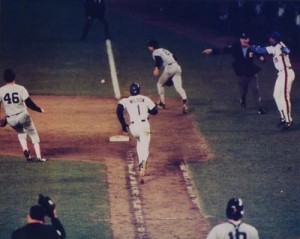
The Mookie Wilson-Bill Buckner connection, Game 6, 1986 World Series, Bottom 10th, Shea Stadium, Queens, NY, October 25, 1986. (http://halloffamememorabilia.net).

That gradually began to change once my teams started winning championships, or at least, regularly competing for them. The change accelerated once I left the New York area for Pittsburgh and its Western Pennsylvania ways. Between my Mets winning a World Series and my Giants winning two Super Bowls between ’86 and ’91, I found myself no longer a fan of hometown underdog teams. Sports weren’t an escape from my reality anymore. Especially as I began regularly working out and playing sports myself.

But I still saw sports fandom as a good thing, something that could unite people and cross the barriers of racism, classism, and even sexism (depending on the sport). That was my next phase of fandom, beginning around ’93. This view was what fueled my divorce from baseball after the ’94 MLB strike and lockout, and what caused me to begin watching more golf and international soccer, and not just falling asleep to it.

I still rooted for my Giants, Rangers, and especially the Knickerbockers. Too bad only the Rangers broke through in the ’90s, although the Knicks had their chances between ’93 and ’99. With living in Pittsburgh, though, I also began to cheer for the Steelers, the Penguins (except when they played the Rangers), and sometimes the Pirates.

But even in this phase of my fandom, I recognized the basic truth. I was cheering for athletes and their talent and will to shine in competition. That they happened to be a linebacker for the Giants or a pitcher for the Mets was a bonus, but I would’ve enjoyed their talent on other teams and in other athletic contexts anyway. I recognized this already with Reggie Jackson and Dave Winfield in the ’80s, and I saw another glimpse of it in ’96, when Dwight Gooden, at this point with the Yankees, finally threw a no-hitter. I wasn’t even a baseball fan anymore, but I was so happy for the diminished Gooden to achieve this feat.

Venus hitting a backhand against Elise Mertens in 1st round of Wimbledon, Wimbledon, England, UK, July 3, 2017. (https://www.telegraph.co.uk/; John Walton/PA).

I think that’s why I started rooting for Venus (who does not get nearly enough credit for being an elite athlete and tennis player) and Serena Williams, Tiger Woods, Kevin Garnett, LeBron James, and so many others while they were still in their teens. I’m sure that’s why I stopped putting up with cockamamie excuses from other fans about too much money in professional sports, about free agency, about the difficulties of running a franchise, when I’d see the same teams losing year after year. It didn’t help that the athletes I rooted for growing up or in the ’90s began to retire, often with a vocal and unappreciative fan base trying to shove them out to door.

Most importantly, I saw the greed and narcissism and conservative politics and racism and misogyny and homophobia that is embedded in the ownership of teams and in the building of franchises. That sports are no more divorced from the politics and malignancies in society than our choices in food and clothing, or the decision of most Americans to berate the poor for their poverty. That sports teams and franchises are about as “clean” and “merit-based” as legacies in college admissions (the ultimate form of affirmative action) and the American election process at any and all levels. Despite this, a hundred million people still entertain this naive view that sports fandom is an essential good, a form of escape, a place for camaraderie. It is not. It’s escapism, a form a narcissism that allows millions to feel a bit better about their lives without doing anything to change their lives and the lives of untold others for the better.

Maybe my jadedness comes from nearly two decades in the DC area, where I regularly root for the local teams to fail, because I love it when the fans here are disillusioned. Maybe it’s because of the poor quality of most of the sports I watch (or in the case of the NFL, have stopped watching for going on three years now). Or, maybe it’s because my Knicks haven’t a title since Nixon was president! Whatever it is, I will continue to root for athletes, but not for teams. Especially those who take a stand, those who have a purpose beyond their athleticism, those whose bodies make me a bit envious, but only envious enough to keep working out, to keep running, to keep draining Js. Also, the NFL is still blackballing Colin Kaepernick!


Rich, Lorde, and What I Care/Don’t Care About

20 Tuesday Mar 2018

Posted by decollins1969 in 1, Boy @ The Window, Christianity, culture, Eclectic, Hebrew-Israelite, Mount Vernon High School, Mount Vernon New York, music, Pittsburgh, Politics, Pop Culture, race, Religion, University of Pittsburgh, Youth

≈ Leave a comment

Tags

Adrienne Rich, Audre Lorde, General Writing, Intersectionality, Pitt, Poetry, Poets, Positioning, Privilege, Sexual Orientation, The Last Poets


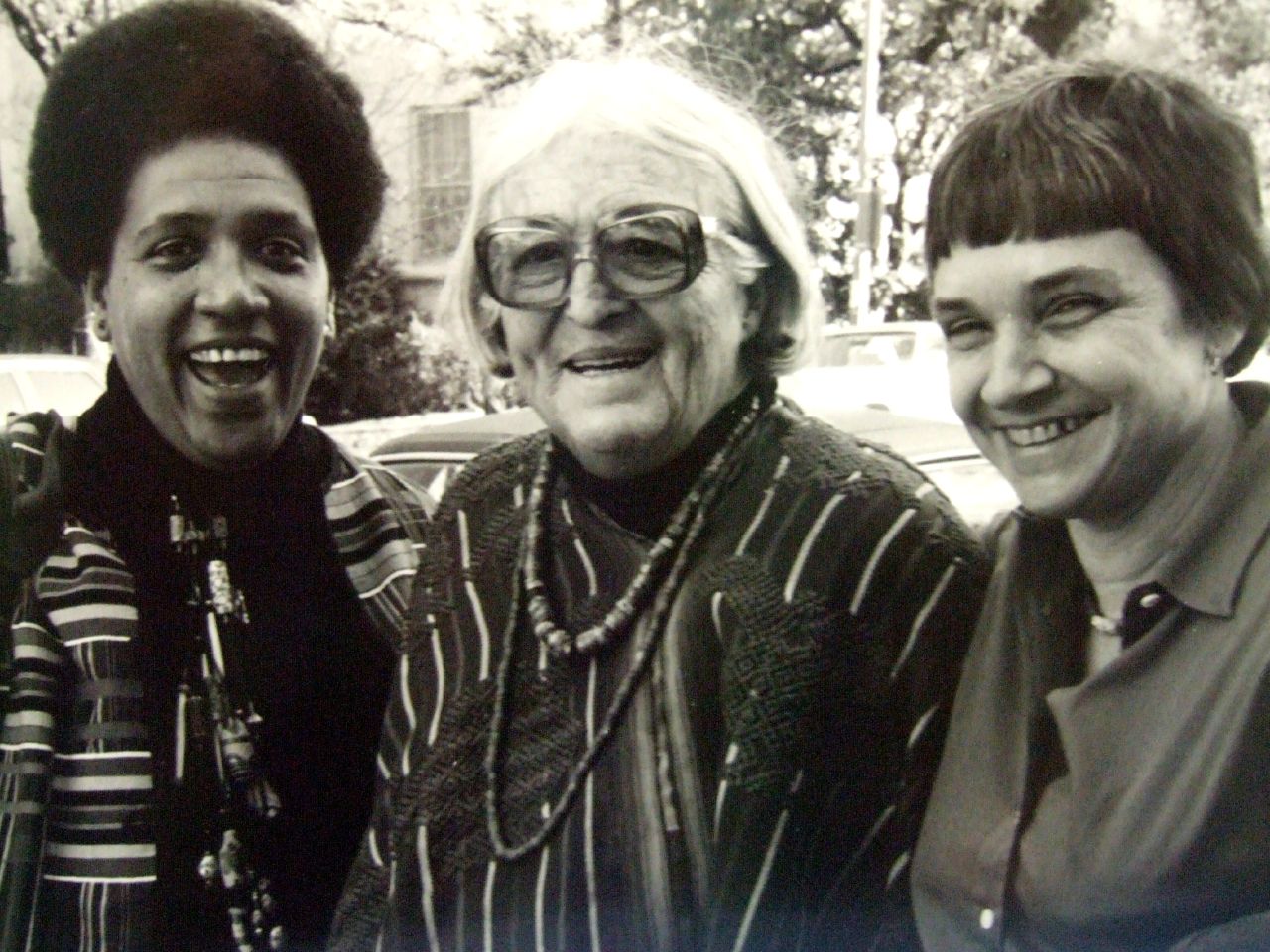
Audre Lorde, Meridel Lesueur, and Adrienne Rich after leading a writing workshop, Austin, TX, 1980. (K. Kendall/Flickr, July 15, 2007). Released to the public domain via CC-SA-2.0.

Among the literary arts, poetry is somewhere between okay and blech for me. At least most of the time. That doesn’t mean I hate all poetry or all poets. I fully appreciate the rhyme and meter (and lack thereof) of so many, from James Weldon Johnson and Archibald MacLeish to Phillis Wheatley and Langston Hughes. I love the emotional layering in the choice of the words, and in more modern times, the delivering of such words, with The Last Poets, with Gil Scott-Heron, and of course, Maya Angelou. Rap legends like Tupac, Nas, Eminem, Public Enemy have lyrics that are essentially spoken-word poetry put to bass, beats, and music loops. Heck, I’ve even enjoyed W. E. B. DuBois’ forays in the art in my scholarly research (when I more regularly did it) over the years.

But as a writer of prose (and often, long-winded prose), I also find the form of poetry ill-fitting. For me, it’s like being a home-run hitter in baseball playing hard-court tennis. It’s not that I can’t hit a baseline winner or an ace. But for every one of those, I could easily hit four tennis balls in a row out of the court, and literally onto the roof of a house half a block away. I prefer the ability to lay out my thoughts and explain them in full sentences, without worrying over every single word and the rhythm that a sequence of carefully chosen words may or may not bring.

I barely read any poetry during my Humanities years, unless my English classes forced me to. Emily Dickinson, Edgar Allan Poe, John Keats, Alexander Pope, all for 10th grade English, and with the exception of Pope’s “The Rape of the Lock,” not particularly entertaining. I was convinced after high school in ’87 that I’d never read poetry again.

What brought on a new interest in poetry came from my sophomore year at Pitt. I had to take a General Writing class in Fall 1988. I had to because if I wanted to take upper-level History classes as a History major, this general education requirement needed to be knocked off.  But I had an enthusiastic graduate student as my instructor. When I say enthusiastic, I mean someone who knew their students wouldn’t be, but whose passion for teaching and literature of all kinds made the class and the readings more interesting. She told me early on, after reading one of my first essays, that I should’ve been able to pass out of General Writing through the diagnostic tests Pitt gave my freshman year. “I wasn’t exactly awake when I took it last year,” I said in response.

Ways of Reading anthology book (2nd edition), used in 1988. (http://ebay.ca).

When we got to the poetry portion of the course, I thought at first I was going to die from boredom. But our instructor didn’t assign us the usual suspects. The main poet we read that week was Adrienne Rich. She was someone I’d heard of growing up, but that was about it. Until the assignment of reading both Rich’s poetry and her essay “When We Dead Awaken: Writing as Re-Vision,” that is.

There were three things I’d never considered before reading Rich. One was the idea that writing was both art and craft, and that most writing was editing and re-envisioning one’s work. Two was the notion of transforming and being transformed through the writing process, and all as a proxy for a meaningful life. Three was the positioning of poets and other writers in literature, the privileging of men over women, of White males over feminists, of White heterosexual feminists over lesbian feminists, and especially Black lesbian feminists.

That last one about power, privilege, and positioning, it really grabbed me. So much so that I read more Rich that October weekend, in between pangs of hunger from lack of money and my Saturday evening shift at the Cathedral of Learning computer lab.

And the more I read of Rich, the more I decided to read about one of Rich’s contemporaries. I moved on to Audre Lorde the following week. She wasn’t among the long list of readings we had for General Writing, but she should’ve been. I couldn’t believe that someone who lived only miles away from my growing up experience in Mount Vernon and in New York could yet have such a vastly different experience with the city and the area.

I picked up Sister Outsider (1984) for the first time near the end of that fall semester. Lorde’s collection of essays about civil rights, about Black feminism (or womanism), about what we now call intersectionality, opened my eyes to how even Rich’s brand of feminism could be problematic. But more than that. Lorde, along with Rich, helped me realize, and not for the first time, that I didn’t care if the person I read or learned from was straight or gay, male or female (or later on, transgender), Black, Brown, or White. This despite what the Hebrew-Israelites and the evangelicals tried to teach me. They just had to be excellent in their work.

Excerpt of Audre Lorde’s Power (1978) (screenshot). (http://poetryfoundation.org).

Sister Outsider also opened up my eyes to the possibility that even my poetry-loathing ass could appreciate a true master at work in the art. So early on the following semester, I read Lorde’s poetry for the first time, likely some poems from her Coal (1976). Lorde talking about her upbringing, her relationship with her mother, and her issues with her own skin color, resonated with me.

But that was it with poetry for me until I borrowed my friend E’s recording of The Lost Poets 1971 album, and then read Angelou’s poetry, both in the summer of ’91. By then, I knew that while I’d never be a full-fledged fan of it, I could still appreciate the work, the art, and the layering of ideologies, emotions, and ideas contained in the best of poetry.

← Older posts
Newer posts →

Boy @ The Window: A Memoir

Boy @ The Window: A Memoir

Places to Buy/Download Boy @ The Window

There's a few ways in which you can read excerpts of, borrow and/or purchase and download Boy @ The Window. There's the trade paperback edition of Boy @ The Window, available for purchase via Amazon.com at http://www.amazon.com/Boy-Window-Donald-Earl-Collins/dp/0989256138/

There's also a Kindle edition on Amazon.com. The enhanced edition can be read only with Kindle Fire, an iPad or a full-color tablet. The links to the enhanced edition through Apple's iBookstore and the Barnes & Noble NOOK edition are below. The link to the Amazon Kindle version is also immediately below:

scr2555-proj697-a-kindle-logo-rgb-lg

Boy @ The Window on Amazon.com: http://www.amazon.com/Boy-The-Window-Memoir-ebook/dp/B00CD95FBU/

iBookstore-logo-300x100

Boy @ The Window on Apple's iBookstore: https://itunes.apple.com/us/book/boy-the-window/id643768275?ls=1

Barnes & Noble (bn.com) logo, June 26, 2013. (http://www.logotypes101.com).

Boy @ The Window on Barnes & Noble: http://www.barnesandnoble.com/w/boy-the-window-donald-earl-collins/1115182183?ean=2940016741567

You can also add, read and review Boy @ The Window on Goodreads.com. Just click on the button below:

Boy @ The Window

Twitter Updates

Tweets by decollins1969
  • RSS - Posts
  • RSS - Comments

Archives

  • June 2025
  • April 2023
  • September 2022
  • August 2022
  • July 2022
  • June 2022
  • May 2022
  • April 2022
  • March 2022
  • January 2022
  • December 2021
  • November 2021
  • October 2021
  • September 2021
  • August 2021
  • July 2021
  • June 2021
  • April 2021
  • March 2021
  • February 2021
  • January 2021
  • December 2020
  • November 2020
  • October 2020
  • September 2020
  • August 2020
  • July 2020
  • May 2020
  • April 2020
  • March 2020
  • January 2020
  • December 2019
  • November 2019
  • August 2019
  • July 2019
  • June 2019
  • May 2019
  • April 2019
  • March 2019
  • February 2019
  • January 2019
  • December 2018
  • November 2018
  • October 2018
  • September 2018
  • August 2018
  • July 2018
  • June 2018
  • May 2018
  • March 2018
  • February 2018
  • January 2018
  • December 2017
  • November 2017
  • October 2017
  • September 2017
  • August 2017
  • July 2017
  • June 2017
  • May 2017
  • April 2017
  • March 2017
  • February 2017
  • January 2017
  • December 2016
  • November 2016
  • October 2016
  • September 2016
  • August 2016
  • July 2016
  • June 2016
  • May 2016
  • April 2016
  • March 2016
  • February 2016
  • January 2016
  • December 2015
  • November 2015
  • October 2015
  • September 2015
  • August 2015
  • July 2015
  • June 2015
  • May 2015
  • April 2015
  • March 2015
  • February 2015
  • January 2015
  • December 2014
  • November 2014
  • October 2014
  • September 2014
  • August 2014
  • July 2014
  • June 2014
  • May 2014
  • April 2014
  • March 2014
  • February 2014
  • January 2014
  • December 2013
  • November 2013
  • October 2013
  • September 2013
  • August 2013
  • July 2013
  • June 2013
  • May 2013
  • April 2013
  • March 2013
  • February 2013
  • January 2013
  • December 2012
  • November 2012
  • October 2012
  • September 2012
  • August 2012
  • July 2012
  • June 2012
  • May 2012
  • April 2012
  • March 2012
  • February 2012
  • January 2012
  • December 2011
  • November 2011
  • October 2011
  • September 2011
  • August 2011
  • July 2011
  • June 2011
  • May 2011
  • April 2011
  • March 2011
  • February 2011
  • January 2011
  • December 2010
  • November 2010
  • October 2010
  • September 2010
  • August 2010
  • July 2010
  • June 2010
  • May 2010
  • April 2010
  • March 2010
  • February 2010
  • January 2010
  • December 2009
  • November 2009
  • October 2009
  • September 2009
  • August 2009
  • July 2009
  • June 2009
  • May 2009
  • April 2009
  • March 2009
  • February 2009
  • January 2009
  • December 2008
  • November 2008
  • October 2008
  • September 2008
  • August 2008
  • July 2008
  • June 2008
  • May 2008
  • April 2008
  • March 2008
  • February 2008
  • January 2008
  • December 2007
  • November 2007
  • October 2007
  • September 2007
  • August 2007
  • July 2007
  • June 2007

Recent Comments

MaryPena's avatarMaryPena on My Day of Atonement/Bitter Hat…
decollins1969's avatardecollins1969 on No Good Teaching Deed Goes…
Mary Rose O’Connell's avatarMary Rose O’Connell on No Good Teaching Deed Goes…

NetworkedBlogs on Facebook

NetworkedBlogs
Blog:
Notes From a Boy @ The Window
Topics:
My Life, Culture & Education, Politics & Goofyness
 
Follow my blog

616 616 East Lincoln Avenue A.B. Davis Middle School Abuse Academia Academy for Educational Development AED Afrocentricity American Narcissism Authenticity Bigotry Blackness Boy @ The Window Carnegie Mellon University Child Abuse Class of 1987 CMU Coping Strategies Crush #1 Crush #2 Death Disillusionment Diversity Domestic Violence Economic Inequality Education Family Friendship Friendships Graduate School Hebrew-Israelites High-Stakes Testing Higher Education History Homelessness Humanities Humanities Program Hypocrisy Internalized Racism Jealousy Joe Trotter Joe William Trotter Jr. K-12 Education Love Manhood Maurice Eugene Washington Maurice Washington Misogyny Mother-Son Relationship Mount Vernon High School Mount Vernon New York Mount Vernon public schools Multiculturalism MVHS Narcissism NFL Pitt Pittsburgh Politics of Education Poverty President Barack Obama Race Racial Stereotypes Racism Relationships Self-Awareness Self-Discovery Self-Reflection Sexism Social Justice Teaching and Learning University of Pittsburgh Violence Whiteness Writing

Top Rated

Blog at WordPress.com.

  • Subscribe Subscribed
    • Notes from a Boy @ The Window
    • Join 103 other subscribers
    • Already have a WordPress.com account? Log in now.
    • Notes from a Boy @ The Window
    • Subscribe Subscribed
    • Sign up
    • Log in
    • Report this content
    • View site in Reader
    • Manage subscriptions
    • Collapse this bar
 

Loading Comments...