• About Me
  • Other Writings
  • Interview Clips
  • All About Me: American Racism, American Narcissism, and the Conversation America Can’t Have
  • Video Clips
  • Boy @ The Window Pictures
  • Boy @ The Window Theme Music

Notes from a Boy @ The Window

~

Notes from a Boy @ The Window

Category Archives: New York City

Aside

“White Privilege,” “Privileged Whites,” and Other Clarifications

01 Saturday Aug 2015

Posted by decollins1969 in 1, culture, Eclectic, New York City, Patriotism, Politics, Pop Culture, race, Religion

≈ Leave a comment

Tags

American Exceptionalism, Bigotry, Black Reconstruction (1935), Central Park, Colorblindness, Egalitarianism, Homelessness, Privileged Whites, Psychological Wages, Public Wages, Race, Racism, Socioeconomic Status, W. E. B. Du Bois, Wages of Whiteness, White Privilege, Whiteness


"White Privilege-Amex," April 2014. (http://theblacksphere.net/).

“White Privilege-Amex,” in black and white, April 2014. (http://theblacksphere.net/).

It is hard to discuss race. It is definitely so in the US, where virtually everyone believes that their individual good intentions mean more than systemic oppression and ugly truths. And it is really hard on people of color when they/we discuss race with most Whites and some people of color (e.g., Black conservatives, the elite of color, those with internalized racism issues), as their belief in American exceptionalism and individualism is so strong that any evidence to the contrary must be wrong. Especially if the person providing the evidence is Black, Latino, Native American or Asian, and even more so if they are women of color.

One thing that’s been on my mind lately is the lazy use of terms by the media around race. And their laziness is our collective and individual laziness as well. So much so that most Americans use the terms for discussing race about the same way most Americans eat — they say “gimme lots of fat” while refusing the vegetables and healthy, but “put everything on it” at the same time.
Mr. Moneybags of Monopoly (1934) fame, July 31, 2015. (http://streetsmartbrazil.com/).

Mr. Moneybags of Monopoly (1934) fame, July 31, 2015. (http://streetsmartbrazil.com/).

For example, most Whites see the terms White privilege and privileged Whites and assume they mean the same thing. They don’t and can’t. White privilege refers to both systemic and individual racial discrimination and disparities that almost no one White would ever have to deal with in most circumstances. It has little to do with socioeconomic standing, level of education, social networks, or any other variable to which most Americans who play devil’s advocate often refer. Privileged Whites, though, refers to the fact that this socioeconomic group is either upper middle class or wealthy, often with high education levels. The latter can also refer to White privilege, but then again, that’s already assumed in America’s racial construction of itself.

Anyone who is White and poor and also assumes that White privilege (or, to use W.E.B. Du Bois’ term, Whiteness) is ascribing to them a socioeconomic status that they do not possess, that’s just incorrect. As Du Bois wrote in Black Reconstruction (1935), even the poorest Whites received societal compensation, at least in part, through a “public and psychological wage.” In Jim Crow times, it was one in which poor Whites “were given public deference…were admitted freely…to public functions and public parks.” At the same time, the “police were drawn from their ranks and the courts, dependent on their votes, treated them with leniency” (pp. 700-01). Come to think of it, much of this still applies in 2015, even though the Civil Rights Movement dismantled Jim Crow, no?

But it’s not just terms like White privilege and privileged Whites that throws off all but a small minority of Americans. Most use terms like race, racism and bigotry interchangeably, as if they work at an Apple factory in the Longhua Subdivision of Shenzhen, in Guangdong Province, China (it’s outside Hong Kong) making iPhones and iPads. Race is a construct and not a biological fact in the case of Homo sapiens, since humans are all part of one species, albeit with some rather interesting surface variations. Racism is the result of a construct to justify social and economic advantages in the US and all over the globe, as well as the systemic construction and maintenance of such advantages. Bigotry, though, is something we as individuals all possess, regardless of race, gender, ideology, religion, atheism, or any other variable. There’s more, but I’ve already written a post about this.

A clip from The Colbert Report in a segment about the end of stop and frisk in New York City, August 2013. (http://globalgrind.com via http://billmoyers.com).

A clip from The Colbert Report in a segment about the end of stop and frisk in New York City, August 2013. (http://globalgrind.com via http://billmoyers.com).

And there’s this whole notion of color blindness, the idea that millions of Americans who see everything in color can claim that they’re colorblind to race. “I don’t care if you’re white, black, red, green or purple. It doesn’t matter to me,” most Americans often say. There’s two problems with this statement and these phrases. One is that unless someone is actually, physically and neurologically colorblind, what one is doing is choosing to ignore differences, which is completely different from tolerating, accepting or embracing difference. One might as well say that they don’t see the homeless in the middle of Central Park in New York, that’s how ridiculous — maybe even tone-deaf and callous — this idea is.

Two is that there aren’t any green, purple, blue or other weird hues of humanity anywhere on this planet. Heck, technically, Whites are pink, Blacks are varying shades of brown, Native Americans have reddish undertones (and then only some), and so on. The point is, this idea of color blindness to race is straight horse manure, allowing many Americans to feel good about their views on race, racism and bigotry without any serious thought about their country or the people in it at all.

And that is why conversations on race in the US remain a pipe dream for some, and raise the fear of the specter of Judgment Day for others.

Aside

Finding A Memory, Knowing the Whole Truth

16 Thursday Jul 2015

Posted by decollins1969 in 1, Boy @ The Window, culture, Eclectic, Jimme, Marriage, Mount Vernon New York, My Father, New York City, Patriotism, Politics, Pop Culture, Youth

≈ Leave a comment

Tags

1976, 425 South Sixth Avenue, 616, 616 East Lincoln Avenue, Bicentennial, Big Wheel, Child Abuse, Child Neglect, Diana, Eidetic Memory, First Grade, Mother-Son Relationship, Mount Vernon Hospital, Nathan Hale Elementary, Photographic Memory, Playground, Repressed Memories, Sarai Washington, Sexual Abuse, Sexual Assault


From Cam Jansen Mysteries, a series of children's books about a girl with a photographic memory who would solve mysteries and take pictures in her mind of the clues, August 9, 2012. (http://appraisingpages.com).

From Cam Jansen Mysteries, a series of children’s books about a girl with a photographic memory who would solve mysteries and take pictures in her mind of the clues, August 9, 2012. (http://appraisingpages.com).

No one’s memories — even those whom are eidetic or whose memories can be near photographic — are perfect, especially over the long haul. As far as the scientific community knows, there are no exceptions. I include myself in that category. This despite having a memory cycle that has seldom let me down. Since August 8, 1974, there have been only a few gaps of any major significance. I might not be able to tell you exactly what I had for dinner on July 16, ’85, but my guess would include either chicken and dumplings or $5 spaghetti with meat sauce and frozen chopped broccoli, both courtesy of my shopping at C-Town in Pelham, New York almost every day (it was a welcome relief from the heat of sitting home at 616, anyway).

One area where my memory had let me down was parts of the summer of ’76, the bicentennial summer. I could vague remember being down in the city for some of the festivities that July 4th, followed by a long sleep on the free Metro-North ride that day, only to end up in New Haven, CT because my father had been drinking and sleeping on the train, too. I remembered my Mom buying a Polaroid and taking pictures of herself and us and her new furniture at 425 South Sixth at the beginning of the month.

And I remembered that this had occurred a couple of weeks later:

My first memories playing with a group of Black males in Mount Vernon, New York are all negative. When I was six in ’76, a group of preteens on the neighborhood playground near Nathan Hale Elementary on South 6th Avenue tried to force me into sucking one of their dicks, practically sticking it in my face to do so. I got away before being truly scarred for life.

But I knew that I couldn’t remember what occurred beyond that, not only for the rest of that day, but for the next three weeks afterward. It had bothered me for years that I couldn’t remember beyond the flash of images I did write down.

Even in writing Boy @ The Window (which thankfully wasn’t about my earliest years growing up), as much as I drilled down into my past, I couldn’t fully conjure the memory of this incident. And when I did try, I ended up inducing headaches.

It was the year after publishing my memoir that I realized my headaches weren’t just because I needed new pillows for my neck. I had a repressed memory, maybe even more than one. I didn’t try to find a way to un-repress the memory, though. I figured that if I concentrated on other memories from the spring and summer of ’76, it would manifest itself, one way or the other. The key was my Big Wheel, the only toy I truly loved growing up, and my first “girlfriend” in Diana, who moved away at the end of first grade. Those memories helped me conjure up the buried memories I needed to fill in the blanks.

Cecil Parker Elementary School (formerly Nathan Hale ES), Mount Vernon, NY,  November 23, 2006. (Donald Earl Collins).

Cecil Parker Elementary School (formerly Nathan Hale ES), Mount Vernon, NY, November 23, 2006. (Donald Earl Collins).

Over the course of a couple of weeks between Thanksgiving and Christmas last year, I either had dreams or wide-awake flashbacks that filled in my blanks. I was in fact sexually assaulted, by a light-skinned thirteen or fourteen-year-old. With the help of two of his friends, he had gotten his penis in my mouth while I was being held down to the ground on the rain-soaked, asphalt, Nathan Hale playground. I only got away because his friends were laughing after I spit his penis out of my mouth, laughing so hard that they were no longer holding me down.

I did a bit of digging into July ’76. I already knew from my memories it had rained on a Tuesday or Wednesday the week after July 4th. Turns out on that Wednesday, July 14, a quarter-inch of rain fell on the New York City area, as there was thundershower activity and high winds that afternoon, with a high of 78°F. That, unfortunately, confirmed everything.

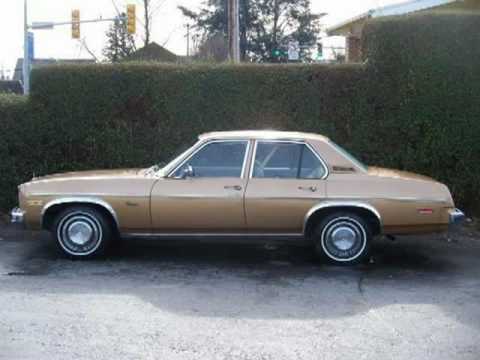
1976 Chevrolet Nova, Seattle, WA area (not the right color, but the right model), July 16, 2015. (http://youtube.com).

1976 Chevrolet Nova, Seattle, WA area (not the right color, but the right model), July 16, 2015. (http://youtube.com).

What I remembered next after was probably just as horrific. I didn’t tell my Mom about my incident for weeks, because I was supposed to stay home while she went to work at Mount Vernon Hospital that day. I did tell her, though, about three weeks later, on the first Saturday in August, as she and my father were arguing as usual. And, my Mom being my Mom, she didn’t believe me, leading to my first attempt at taking my own life. I ran out of 425 South Sixth, straight into the street, and waited to be run down by an older Black guy in a Chevy Nova (more on that at a later date).

But maybe what triggered these repressed memories in the first place was the trauma of losing my sister Sarai in July ’10. After all, that’s also the week I learned that one of my younger brothers had been raped by a short Black guy in his early twenties while pursuing his video game addiction via arcades at the age of nine. As traumatic as that revelation was, it was my Mom’s response that was the most chilling. “It serves you right. I told you to stay away from that man,” my Mom said in response.

Maybe it was too much for my Mom to hear on the same week as her only daughter’s death. Then again, from what I’ve come to remember now, finding out about any one of her children being abused was always too much for my Mom to bear. As for me, knowing the whole truth has made sleeping much easier, my dreams more peaceful, and my headaches all about stress and neck tension.

Aside

A Family, A Man In Uniform, A War In Continuum

07 Tuesday Jul 2015

Posted by decollins1969 in 1, Boy @ The Window, culture, Eclectic, Jimme, Mount Vernon New York, My Father, New York City, Patriotism, Politics, Pop Culture, race, Youth

≈ Leave a comment

Tags

" Wino Park, "Napalm Girl", "The Redcatchers, 199th Light Infantry Brigade, 616 East Lincoln Avenue, Alcoholism, BBQ restaurant, Collins Family, Demond Harris, Falon Collins, Family History, Felton Collins, Howard University, Kim Phuc, Lamont Sanford, MSW, Nick Ut, Post-Traumatic Stress Disorder, PTSD, Sanford and Son, Vietnam War, Violence, War


Extended Collins family photo (top row down, l-to-r: me,  Jasmine, Uncle Felton, Falon, my dad, Aunt Christene, my son Noah), West Hyattsville, MD, May 8, 2015. (Donald Earl Collins).

Extended Collins family photo (top row down, l-to-r: me, Jasmine, Uncle Felton, Falon, my dad, Aunt Christene, my son Noah), West Hyattsville, MD, May 8, 2015. (Donald Earl Collins).

Two months ago, I met portions of my extended Collins family in Maryland for the first time. I had no idea that my father had a younger brother, nor that his name was Felton, until I had received a call in August 2013 from my uncle about spotting him and his older daughter Falon a place to stay while she found a place to live here in suburban Maryland. My first cousin moved to the area to begin work on her MSW at Howard University’s School of Social Work. We couldn’t accommodate such a last-minute request, unless my uncle and first cousin had been willing to sleep on the floor.

When Falon graduated in May, I finally had the chance to meet this younger part of the Collins family, as well as an aunt I hadn’t seen since I was five (more on this next month). Among the things that came out of these meetings and our dinner together was that my Uncle Felton was not only a military veteran, but a Vietnam veteran with the 199th Light Infantry Brigade (“The Redcatchers”) between 1967 and 1969, no less. I knew that somehow the federal government managed to overlook my uncles on my mother’s side and not draft them for the Vietnam war effort (a “miracle” of rural Arkansas segregation, I assumed). So this was a lot of new information to take in.

Kim Phuc with her then infant son, Ontario, Canada, 1995. (Joe McNally/Time & Life Pics). Qualifies as fair use under US copyright laws -- photo illustrative of subject/ for educational purposes only.

Kim Phúc with her then infant son, Ontario, Canada, 1995. (Joe McNally/Time & Life Pics). Qualifies as fair use under US copyright laws — photo illustrative of subject/ for educational purposes only.

But then again, it shouldn’t have been new information at all. Except for the fact that my father had spent the first thirty years of my life too inebriated or caught up in New York City life to remember to hand down basic family history to me and my older brother Darren.

I was really almost too young to remember Vietnam, but with my ability to observe and remember going back to Nixon’s resignation and the OPEC oil crises, I had noticed a few things. Like some of the news clips of the end of the war in ’75, of refugees on aircraft carriers, pictures of B-52s destroying village after village and city after city. Not to mention, the iconic, Pulitzer Prize-winning 1972 photo “The Terror of War” by Nick Ut (also known as “Napalm Girl”), depicting a then nine-year-old, severely burned Kim Phúc, which I asked my Mom about a couple of years later. She didn’t give me an answer.

That’s what I knew in my little seven-year-old mind about Vietnam prior to moving to 616 in ’77. In the corner of our tripartite apartment building, living in a basement apartment of the “B” building, was a man who looked like Lamont Sanford to me. Except he wore a beat-up green Army jacket and green hat on his head most of the time. I often saw him come and go, where I didn’t know. I also saw parents who warned their kids to stay away from him, some young Turks who occasionally stopped the man to make fun of him, and kids who sometimes teased him for having served in Vietnam, parroting their parents, I guess.

The Vietnam veteran couldn’t have been more than thirty, but he moved like he was at least a decade older. It was as if he was afraid to move, to be outside, to be around life, the way he moved, or rather, lurked in his comings and goings. I mostly felt sad for him, because it seemed like no one wanted to bother themselves with his existence.

Demond Harris as Lamont Sanford standing next to Redd Foxx as Fred Sanford in midst of faux heart attack, Sanford and Son (1972-77), July 8. 2015. (http://gawker.com).

Demond Harris as Lamont Sanford standing next to Redd Foxx as Fred Sanford in midst of faux heart attack, Sanford and Son (1972-77), July 8. 2015. (http://gawker.com).

I witnessed his infrequent sojourns from his 616 apartment and back until sometime in late ’79, or early ’80, when I realized he had moved out. Given that I was hardly outside lurking myself those years, between being on lockdown for running away and Darren’s Clear View summer camps, it was amazing that I noticed his absence at all.

At the same time, during our (me and my older brother Darren’s) outings with my father between ’79 and ’81, I noticed that in his occasional stops at “Wino Park” (a mini-park on the corner of South Fulton and East Third in Mount Vernon), there were quite a few veterans in their late twenties or early thirties there. A typical Friday evening or Saturday afternoon outing could be spent watching Jimme and his drunk friends eat food they bought from the pit bbq joint across the street from the park while drinking beer, malt liquor, hard liquor, and cheap wine from paper bags. All while they took turns peeing on the rock face that jutted out on the side of the park, or around one of a handful of barren trees nearby.

The Vietnam veterans were the quietest people in the group. They were the ones who could laugh, but often didn’t, and rarely smiled. Sometimes, having to spend as long as an hour watching my father hang with these men, I found myself wondering about the man in his post-war uniform who used to live at 616. What happened to him? Did he take drugs? Was he really crazy? Did he drink in a semi-sullen silence and watch older drunks like my father make fools of themselves?

When there’s only either Wino Park or 240 East Third with Ida and Callie Mae to look forward to, wondering what happened to a silent veteran seemed like a much more useful activity. Of course, now we celebrate every veteran as a hero. Yet we don’t do nearly enough for veterans — for any Americans, really, much less the damage we do to the rest of the world in the name of America — who suffer from the wounds of war and life. We prefer to glorify or shun them all without thought, like the little narcissists we all are.

Aside

“Back In The Summer of ’85”

04 Saturday Jul 2015

Posted by decollins1969 in 1, Boy @ The Window, culture, Eclectic, eclectic music, High Rise Buildings, Jimme, Mount Vernon New York, music, My Father, New York City, Pop Culture, race, Sports, Upper East Side, Upper West Side, Work, Youth

≈ Leave a comment

Tags

"Summer of '69" (1985), All-Nighter, Atlanta Braves, Back To The Future (1985), Bryan Adams, Darryl Strawberry, Davey Johnson, Dwight Gooden, Eleanor Bumpurs, Escapism, Fireworks, Gary Carter, Howard Johnson, Independence Day, It Takes A Nation of Millions To Hold Us Back (1988), Jesse Orosco. Cy Young Award, Keith Hernandez, Lenny Dystra, Michael Stewart, Mookie Wilson, New York Mets, Public Enemy, Rafael Santana, Ron Darling, Tom Gorman, Wally Backman


Dwight Gooden in 1985, 24-4, 1.53 ERA, 268Ks, Cy Young Award winner, intimidator. (Ronald C. Modra/Getty Images; http://espn.go.com).

Dwight Gooden in 1985, 24-4, 1.53 ERA, 268Ks, Cy Young Award winner, intimidator. (Ronald C. Modra/Getty Images; http://espn.go.com).

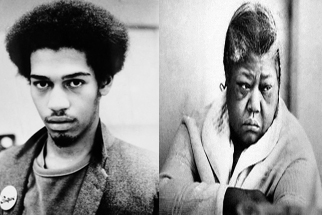
Michael Stewart (1958-1983) and Eleanor Bumpurs (1918-1984) had me thinking about police brutality long before my first Walking While Black encounter, July 4, 2015 (via Adobe Photoshop).

Michael Stewart (1958-1983) and Eleanor Bumpurs (1918-1984) had me thinking about police brutality long before my first Walking While Black encounter, July 4, 2015 (via Adobe Photoshop).

Since this is Independence Day Weekend, it makes thirty years since the official release of Back To The Future. And with me beyond the forty-five-and-a-half year mark, I am officially middle-aged. Funny, though. I don’t feel that different. My knees ached when I was fifteen sometimes, and so also did my feet. We had gas-guzzling cars in ’85, and we still have plenty of them on the road in ’15. White Americans treated Black lives cheaper than manure in ’85 (e.g., Michael Stewart in ’83 and Eleanor Bumpurs in ’84), and evidence from the police shootings and acts of White terrorism — especially in South Carolina — in recent years/days show that it still “takes a nation of millions to hold” Blacks back because of their indifference in ’15.

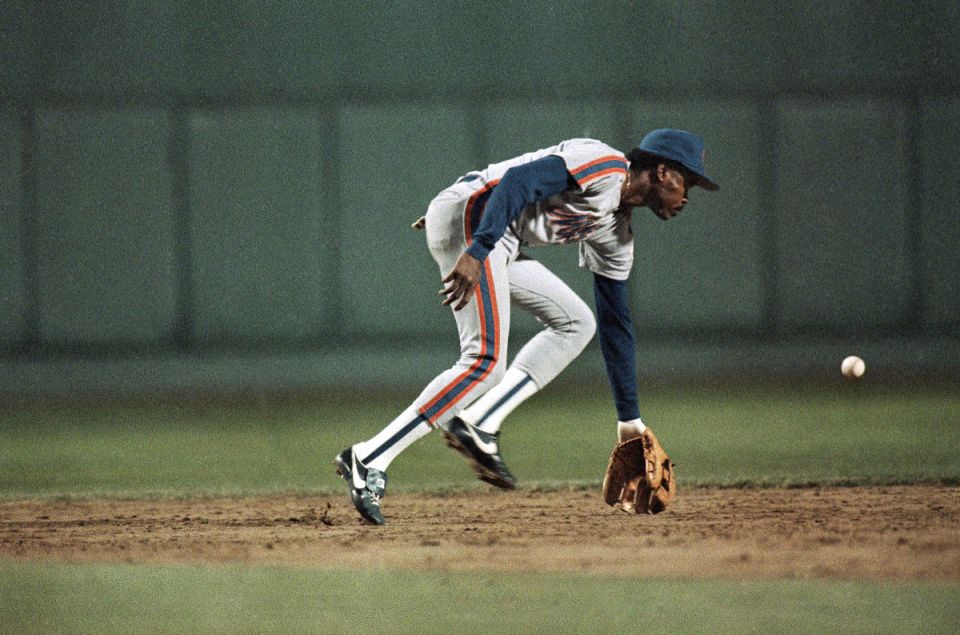
Rafael Santana, Mets shortstop from 1984-87, 1986 World Series, Boston's Fenway Park. (AP; http://www.newsday.com/ ).

Rafael Santana, Mets shortstop from 1984-87, 1986 World Series, Boston’s Fenway Park. (AP; http://www.newsday.com/ ).

One thing that has changed in the past three decades has been me as a fan. I loved — I mean, LOVED — the New York Metropolitans in ’85. I was a baseball fan through and through, and had become a diehard Mets fans by the time I finished my first stage of pubescent growth in the spring of ’84. I read the Daily News for box scores. I would get peeved hearing bad commentary on WABC-AM 770 — from listening to the late Art Rust, Jr.’s show — about the terrible hitting of shortstop Rafael Santana or the constant criticism of Darryl Strawberry (they were the Yankees radio station). I’d schedule my spring and summer afternoons and evenings around whomever the Mets played that day.

The summer of ’85 didn’t truly start for me until June 11, when the Mets proceeded to lose a game to the Phillies by the score of 26-7. I’d been working with my older brother Darren for my father down in the city, and was on the 2 Subway and on my way home before I learned of the news. They were down 16-0 after two innings, with Mike Schmidt, Juan Samuel, Von Hayes and company having had as many as three or four at-bats in those couple of innings. The Mets managed seven runs in the third, fourth and fifth innings but with our then weak bullpen, had no chance to hold the Phillies the rest of the way. “If only I’d been home to listen to the game from the beginning,” I thought. “Then maybe they wouldn’t have been down so many runs.” Those are the thoughts of a fan whom lived and died with his team. I’m sure my blood pressure went up to 135/80 (mind you, I was fifteen, still a teenager) on days like that day.

But as I wrote in Boy @ The Window, that was hardly the end of my second full summer of Mets, Mets, and more Mets.

After the hungry end to tenth grade and three weeks of torture with my father, I had more important things to do. Watching Dwight Gooden pitch the Mets into a pennant race they’d almost fallen out of, for starters. I either listened to or watched Gooden win sixteen straight decisions between May and the end of August. And the Mets…made the ’85 season one to remember. Despite working nights, I managed to watch a rain-delayed Independence Day game with the Mets playing the Braves in Atlanta at the old Fulton County Stadium. The Mets won in nineteen innings, 19-16. The game ended at 4:05 am on the fifth of July, and the Braves still set off their fireworks at the end of the game.

Actually, the final score was 16-13 in nineteen innings (will correct in an eventual new edition). Originally scheduled for a 7:35 pm start, the game had been delayed by thunderstorms in Atlanta for nearly an hour and a half. There were at least two other rain delays during the game. Gooden was the Mets original starter that Thursday, but after two and a third innings, had stiffness in his throwing arm, had left some runners on, and left the game. The rest of the game was a roller coaster ride, as the Mets jumped out to a 7-4 lead thanks to Keith Hernandez’s cycle, then Jesse Orosco, our shutdown closer, gave up four runs in the bottom of the eighth to yield the lead to the Braves. Then the Mets scored a run in the top of the ninth to send the game to extra innings.

Scoring runs in the 13th and 18th innings didn’t help, as the Braves matched the Mets run for run, thanks in part to a pitcher with a .060 career batting average who hit a home run. When I saw Ron Darling (whom had started two nights earlier) warming up in the bullpen around 3:30 am, I knew this game had been on too long. I stayed up just long enough to watch the Mets score five more runs in the 19th inning, then dozed up until the fireworks went off at the end of the game.

(Note: just watch the first four minutes, including Marv Albert’s ’80s hair while still doing sports anchor work for WNBC-4 in New York)

Bryan Adams, "Summer of '69" (1985), December 6, 2006. (Purdy via Wikipedia, originally A&M Records). Qualifies as fair use, as image is low-resolution and for illustrative purposes only.

Bryan Adams, “Summer of ’69” (1985), December 6, 2006. (Purdy via Wikipedia, originally A&M Records). Qualifies as fair use, as image is low-resolution and for illustrative purposes only.

I’d never been up that late into the next day before. Since no one at 616 was up with me, I’d been able to do for once what I’ve done most nights as an adult in the nearly three decades since. I thought about the future, and laid down some plans to ensure it. In this case, I planned to keep working for my father so that I could escape more into the world of the diehard Mets fan. I hoped that Bryan Adams was wrong, that the days of my Mom’s second trimester with me, the “Summer of ’69,” (a bit hit in the summer of ’85) weren’t “the best days of my life.”

But, as I correctly wrote in the memoir

Yeah, you could say that my summer was going better than expected, having worked and watched my Mets play quality baseball in July and into August. I had my usual set of chores to be sure, runs to the store, weekly washings of clothes and watching after the kids. I took Maurice and Yiscoc out for walks, would sometimes respond to the occasional bill collector on Mom’s behalf, would check the mail and give Sarai and Eri baths. I’d cook weekend brunches of fried beef bologna, scrambled eggs and grits and occasional spaghetti and broccoli dinners for my siblings. I’d long since known that I’d become the first-born of the family, in that I was filling Darren’s role on so many levels.

Hence, the welcome relief of Gary Carter, Keith Hernandez, Howard Johnson, Gooden, Strawberry, Fernandez, and the rest of the ’85 Mets crew. While I may not like everything going on in my life and world now, I don’t need to escape it through baseball — or any other form of entertainment, really — to deal these days. At least there’s that.


Not Finding My Musical Center

16 Tuesday Jun 2015

Posted by decollins1969 in 1, Boy @ The Window, culture, Eclectic, eclectic music, Mount Vernon High School, Mount Vernon New York, music, My Father, New York City, Politics, Pop Culture, race, Religion, Youth

≈ 1 Comment

Tags

616, 616 East Lincoln Avenue, Authentic Blackness, Authenticity, Bad Ideas, Bad Music, Black Masculinity, Columbia House, Coping Strategies, Crush #2, Dahlia, David Wolf, Escapism, Estelle Abel, Glass Tiger, Honors Convocation 1987, MVHS, Phyllis, Richard Capozzola, Self-Discovery, Silent Treatment, Sylvia Fasulo, Terre Haute, Thompson Twins, Tower Records


Glass Tiger, The Thin Red Line (1986) album cover, June 6, 2015. (http://www.amazon.ca).

Glass Tiger, The Thin Red Line (1986) album cover, June 6, 2015. (http://www.amazon.ca).

June ’15’s calendar is exactly the same as the one I lived through in June ’81, June ’87, June ’98, and June ’09 (you can look it up). But June ’87’s the month I graduated from Mount Vernon High School. At seventeen, my Blackness, my authenticity as a young man and as a Black man, my place in the world, all were question marks. Between Black administrators like Estelle Abel and Brenda Smith (not to mention White ones like Richard Capozzola and Carapella), teachers like David Wolf and my guidance counselor Sylvia Fasulo, plus the fifty or so “cool” kids with their ’80s pre-Nu Jack Swing/post-Purple Rain Prince look, I might as well have been an alien from another planet. That’s not even counting my strange and out-of-character incident with Dahlia, the humiliation of the Sam and Laurell Awards Show, the dissonance of dealing with Mom, my idiot stepfather Maurice and my siblings at 616, my father Jimme’s drinking, and the run-ins with not-so-normal Crush #2 in Phyllis.

The day I realized most how differently the world outside of Mount Vernon viewed me from how I viewed myself came the day after graduation at Tower Records on West 66th and Broadway. I’ve told this story before, here and in Boy @ The Window, about how some NYPD officers working security there accosted me and accused me of stealing tapes that I had bought the previous week. What I have left out, though, was my state of mind in the two-week period prior to this incident. As I said in the memoir

I had my latest Walkman, my first Sony Walkman, actually, and my book bag with my recent tape investments, including a few I’d bought at Tower Records the previous Friday. Investments like Fleetwood Mac’s Tango In The Night, Genesis’ Invisible Touch, Whitney Houston’s Whitney and Glass Tiger. Glass Tiger, by the way, was a good indication of my state of mind. Boy was I pathetic!

Here I was, attempting to discover myself through what was then my normal coping strategy of escapism via eclectic music. Given my long periods of deprivation from pop culture between religion, abuse and poverty, I’d really only been at this discovering music thing for a little more than three years. I was basically a preteen in terms of pop culture and musical development outside of choir in elementary and middle school and playing the trombone and fife.

Seriously, I look at this Canadian group Glass Tiger’s ’86 album cover The Thin Red Line now and think, “this stuff isn’t even Michael Bolton worthy!” Songs like “Don’t Forget Me (When I’m Gone)” and “Someday” were actual Billboard chart-toppers in ’87, though, and because I had no friends in whom I placed trust, I trusted my coping strategies and Casey Kasem.

That, and Columbia Record Club, which I signed up for off and on between ’86 and ’89, with my high point for using their Terra Haute, Indiana mailing operation being the spring and summer of ’87. I could use them to find music I wouldn’t dare buy even at Tower Records or Crazy Eddie’s. I bought new age music by Phillip Glass, took a hand at jazz with Dizzy Gillespie, bought Van Halen’s 1984 and 5150 (California-crazy me), and went for it with Big Daddy Kane, MC Lyte and Salt ‘n Pepa.

Thompson Twins, Here's to Future Days (1985) album cover, June 6, 2015. (http://audiokarma.com).

Thompson Twins, Here’s to Future Days (1985) album cover, June 6, 2015. (http://audiokarma.com).

But for every Simple Minds‘ Once Upon A Time (1985), there was Toto’s The Seventh One (1988), or Thompson Twins’ anything, really. For every song that stuck with me, like Sting’s “Be Still My Beating Heart” (1987) or Anita Baker’s “No One In The World” (1986), there was Whitney Houston’s “Love Is A Contact Sport” (1987) — one of the worst songs I’ve ever heard a voice as awesome as Whitney’s sing — and Howard Jones’ “Things Can Only Get Better” (1985). “Things Can Only Get Better,” by the way, is in my iPod’s random rotation, as I have come around to it again in the past decade.

I was trying to figure out what I liked and didn’t like musically on the fly, having lost a significant amount of time growing up for the triviality of enjoying music. This was hard to do, though, in a world in which my peers and many adults assumed that I knew myself well at the ripe old age of seventeen. No matter what my IQ score was in ’87 (about a 130, for the eugenicists out there), my emotional and psychological development probably put me about five years behind my now former classmates.

So my music tastes varied from genius to God-awful. They still do. The difference is, I recognize I may be the only one who listens to DMX for comic relief, because there’s no way to take him or his rap seriously. Or that I find Tupac and Eminem equally compelling and equally problematic. I still

Taco Bell's Waffle Taco w/ syrup, sausage, eggs and cheese, March 27, 2014. (http://vice.com).

Taco Bell’s Waffle Taco w/ syrup, sausage, eggs and cheese, March 27, 2014. (http://vice.com).

don’t understand the genius of Miles Davis, no matter how many times jazz enthusiasts like my friend Marc try to convince me to keep listening. Still, half of my music comes from the period between May ’87 and October ’97, and the rest crosses boundaries in time, genre, race and language (Deep Forest, anyone?).

I also recognize complete schlock, too. Unfortunately, commercial music these days is about as emotionally and mentally nutritious as a McDonald’s Big Mac and a Taco Bell Gordita combined. I try every few weeks to find out about the latest artists, just in case my son ever becomes interested in music again. Thank goodness, though, there’s no Lil’ Wayne, Rick Ross, or Iggy Izalea in our house! I’ll take my Glass Tiger (not really) any day over that!

Didn’t We Never Have It All

04 Thursday Jun 2015

Posted by decollins1969 in 1, Boy @ The Window, Christianity, culture, Eclectic, eclectic music, Hebrew-Israelite, Marriage, Mount Vernon New York, My Father, New York City, Pop Culture, race, Religion, Work, Youth

≈ Leave a comment

Tags

"Why Women Still Can't Have It All", Anne-Marie Slaughter, Arkansas, Black Migration, Bradley Arkansas, Conservatism, Evangelical Christianity, Hats, Judah ben Israel, Maurice Eugene Washington, Melissa Harris-Perry, Mother-Son Relationship, Mount Vernon Hospital, MSNBC, Perfectionism, Self-Awareness, Self-Loathing, Self-Sufficiency, Self-Worth, Strikebreaker, Tenant Farming, Vanity, Wear and Tear, Welfare, Welfare Poverty, Xenophobia


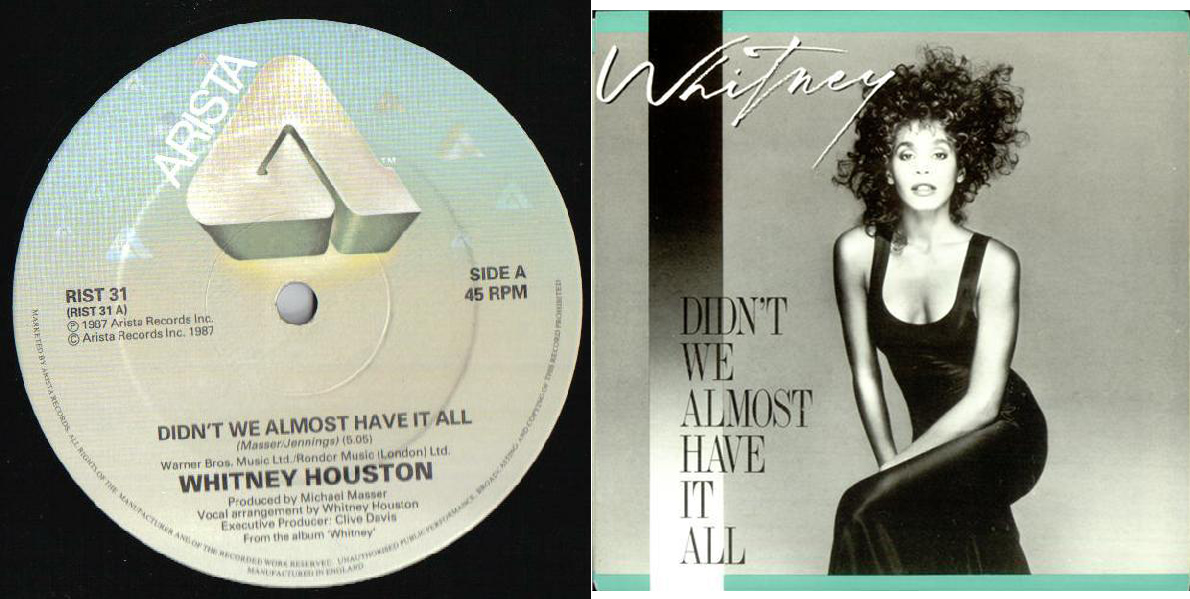
Whitney Houston, "Didn't We Almost Have It All" (released August 1987) Single 45rpm, from 2nd Whitney album (not exactly a favorite), June 4, 2015. (combined/cropped by Donald Earl Collins; http://musicstack.com and http://rapgenius.com).

Whitney Houston, “Didn’t We Almost Have It All” (released August 1987) Single 45rpm, from 2nd Whitney album (not exactly a favorite), June 4, 2015. (combined/cropped by Donald Earl Collins; http://musicstack.com and http://rapgenius.com).

I’ve been thinking about this for nearly a year. It started for me last August. Melissa Harris-Perry had a segment on her MSNBC show regarding the multiple hats women of color have worn over the years in taking care of their families, immediate, extended and non-biological. In response to Anne-Marie Slaughter’s July/August 2012 piece in The Atlantic about “Why Women Still Can’t Have It All,” Harris-Perry and her guests made the point that feminism for women of color has been about far more than having a successful, sexist-free career. That throughout American history, women of color have found themselves wearing multiple hats as primary breadwinners, primary caretakers and primary childrearers, often in ways that traditional feminists don’t discuss or recognize. All without fanfare and with many setback along the way.

What I’ve witnessed and been a part of in my own life reflects much of the conversation that Harris-Perry led on her show. The physical, mental and psychological scars from caring for family, friends and children, while struggling financially and dealing with racism and misogyny often manifests in disease and depression for so many women of color. There’s so much more, though, in terms of how my own mother’s multiple hats and habits led me to so many of my own. All initially to help her, but in the end, helping myself become self-sufficient. Not to mention making myself more understanding of where all the wear, tear and lack of care that wearing so much for so long can lead.

My Mom’s Hats and Habits:

The Anne-Marie Slaughter image of multitasking/wearing multiple hats (just think what this is like for poor, low-income, women of color), February 4, 2015. (ALAMY; http://telegraph.co.uk).

The Anne-Marie Slaughter image of multitasking/wearing multiple hats (just think what this is like for poor, low-income, women of color), February 4, 2015. (ALAMY; http://telegraph.co.uk).

Before I turned thirteen years old, my mother had been far more than my Mom. She’d been a dietary supervisor at Mount Vernon Hospital, just outside New York City, since 1968, the year before I was born. She had been a high school basketball player, a caregiver to her eleven brothers and sisters, and a cotton-picking breadwinner for her family in segregated southwestern Arkansas, an area located in the Red River Valley, part of the larger Mississippi Delta region. She had become our family’s primary breadwinner in the years after she gave birth to my older brother and me. Not to mention a married young woman now living a thirty-minute train ride from Midtown Manhattan, between the Hudson and Hutchinson Rivers, on the border between affluent Westchester County and the Bronx.

Life didn’t treat my Mom too kindly once she married my alcoholic father in 1971. And it actually went from bad to worse as she divorced him for my stepfather in 1978. By then, she had become a cigarette smoker, a one-time adulterer, and an abuse survivor. My Mom did everything she could to shield my older brother and me from her habits and the realities of our tough life in Mount Vernon in the 1970s and early 1980s. But by the end 1982, as I turned thirteen, all the hats my Mom had worn began to fall to the ground. In taking on the role of a strikebreaker, all of our lives would change forever.

In response to concessions made to the union, who left her unprotected, Mount Vernon Hospital cut her from full-time to part-time. My Mom became the besieged one. She was the old woman in the shoe, with six kids — including four under the age of five — and a cheating, abusive, unemployed, sometimes-at-home husband. It was my Mom’s job to take care of us all. Yet no longer was she a breadwinner. My Mom had become one of Reagan’s alleged welfare queens, pulling in $16,600 in AFDC payments per year from April 1983 until I left for college in August 1987. With all of that, I became a hat juggler myself.

Once Her Hats Became My Own:

For a while during my teenage years, my Mom had been my friend, one in which I could usually confide, albeit out of anger and frustration. All while taking on more and more of what had been her duties, including the brunt of her second husband’s rage and fists. I’d become an everyday grocery shopper, a frequent family cook, and a sometimes provider, the last mostly through tracking down my own father for a few extra dollars every Friday or Saturday at one of his favorite bars. Or, by the time I was sixteen, through working part-time. I provided childcare on afternoons, evenings and weekends. I washed clothes with my older brother on Saturdays or Sundays every week without fail from October 1982 on.

Hat stall at a Sunday fair, Amsterdam, The Netherlands, August 31, 2008. (Jorgeroyan via Wikipedia). Released to public domain via CC BY-SA 3.0.

Hat stall at a Sunday fair, Amsterdam, The Netherlands, August 31, 2008. (Jorgeroyan via Wikipedia). Released to public domain via CC BY-SA 3.0.

By the end of high school, I realized too who my Mom wasn’t, maybe for the first time. She wasn’t an encourager, a person who pushed her kids to pursue their dreams. With so many “Are you sure…?” questions my last two years of high school, it’s a wonder I applied to any colleges at all. Mom wasn’t a nurturer either, especially after I became a teenager. My Mom had only said “I love you” to me two times between my twelfth and nineteenth birthdays, including at my high school graduation ceremony in June 1987. She also wasn’t easygoing. Any mistake with money or my time would get a “Serves you right…” sermon about never screwing up.

The Toll Caring For Others Can Take:

All of this has made my Mom a conservatively cautious perfectionist, one living with depression and in constant denial about our shared past. I guess that it was all too much for her, like reaching the Jordan River, but not being allowed to cross it. Our shared experiences had also made me cautious and perfectionistic in my dealings with myself and the world, as I had to wear so many of my Mom’s hats and cross so many of those rivers with her. My mother tried to be all things to me and my older brother especially, and failed more than she succeeded in the process. For that and so many other reasons, despite her mistakes, I love her very much.

It’s been more than twenty-seven years since I moved away for the greener pastures of the University of Pittsburgh. Yet it’s only been in the past decade that I’ve learned to stop striving for perfection in all the things I say and do. It ultimately takes a lifetime to unlearn all the bad habits and prejudices and give up on juggling all the ideas and roles that our parents have put on us. My journey with and without my Mom has been no different. Now that my Mom’s in her late sixties, I just hope that the only hat she tries to wear these days is one to keep her head warm on the coldest of days.

Why Boston U Isn’t For Me, and Shouldn’t Be For You

26 Sunday Apr 2015

Posted by decollins1969 in 1, Academia, Carnegie Mellon University, culture, Eclectic, High Rise Buildings, Jimme, Mount Vernon New York, My Father, New York City, Politics, Pop Culture, race, Upper East Side, Upper West Side, Work, Youth

≈ Leave a comment

Tags

616, 616 East Lincoln Avenue, Academic-Speak, Boston U, Boston University, BU, Checkbox, CMU, Cosmetic Diversity, Disillusionment, Institutional Racism, Jimme, Linda Sarsour, Meritocracy, Nepotism, Office of the Provost, Racism, Rev. Dr. Martin Luther King Jr., Righteous Indignation, Robert Turri Vise, Structural Racism, Suzanne C. Kennedy, Timothy Barbari, Tokenism


The main classroom buildings for the College of Arts and Sciences at Boston University, with the BU East 'T' stop in the foreground, July 18, 2010. (Fletcher6 via Wikipedia). Released to the public domain via CC-SA-3.0.

The main classroom buildings for the College of Arts and Sciences at Boston University, with the BU East ‘T’ stop in the foreground, July 18, 2010. (Fletcher6 via Wikipedia). Released to the public domain via CC-SA-3.0.

Since my first job working for my father in Manhattan in ’84, I’ve probably done over 200 interviews. By telephone, through Skype or WebEx or Adobe Connect, at conferences and in person. Probably about a third of those interviews have occurred with colleges and universities, for academic and administrator-level positions. For the most part, whether the interviews went well or when I didn’t have my “A-game,” my experiences have been pleasant ones. But, after two different interview processes five years apart with Boston University — one in October ’10, the other last month — there is a higher education institution that I will not work for, will not send my son, and will not recommend for anyone I know, under nearly any circumstances.

There are only a few institutions that have been so bad that they’ve moved from my [expletive] list to my permanently-banned-from-my-life list. Even Carnegie Mellon isn’t on the latter list, and I’ve talked about their conservatism and weirdness around diversity before here. But Boston University’s treatment of me as a potential employee, well, it took my breath away without putting me in an NYPD chokehold.

Round 1, Boston University, August-October 2010

Let me rephrase. I was never a “potential employee,” because on the two occasions I interviewed for jobs there, Boston University in the end treated me as a checkmark interviewee. In the fall of ’10, I emerged for them as a candidate for the director of their Washington, DC program. They interviewed me three times: at the American Political Science Association conference in DC in August, at their old DC program headquarters (while also showing me their new one, still under construction) in September, and in person on the main Boston University campus in late October.

For that last interview, they pulled out all the stops. They flew me in, put me up in a nearby hotel the night before, and even took me to lunch. Of course, they also had someone give me a two-hour guided tour of the campus that morning, after one morning meeting, on a day with thirty mile-per-hour winds coming off the Charles River as we walked from one end of the campus to the other. It’s funny. Up until then, I never thought of a campus tour as sinister. But then I realized, if I’m spending two hours during the heart of the workday doing a campus tour with a twenty-four year-old BU grad in forty-five degree weather, what did that mean for my real chances at that job?

My final meeting was with a professor who advised political science and history major in the DC program. That meeting ended at 5 pm on October 22, with which I knew that they were supposed to make a final decision in a week or so. Despite a thank-you email and two follow-up emails, I didn’t hear from Boston University again until November 29. Roberta Turri Vise, the point person for my interview process, didn’t explain why the final decision took more than five weeks. Nor did she explain why after six weeks of correspondence, no response from my requests were returned by her or anyone else in her office.

Round 2, Boston University, January-March 2015

I decided that this was a one-off thing, that with our generation of job searches occurring in a buyer’s market, that some folks really don’t care about being professionals in their dealing with interviewees. Boy was I wrong! Even in a market where people ignore applicant materials and send mass rejection emails without a candidate’s name on it (or worse, with someone else’s name), Boston University claimed a unique crown.

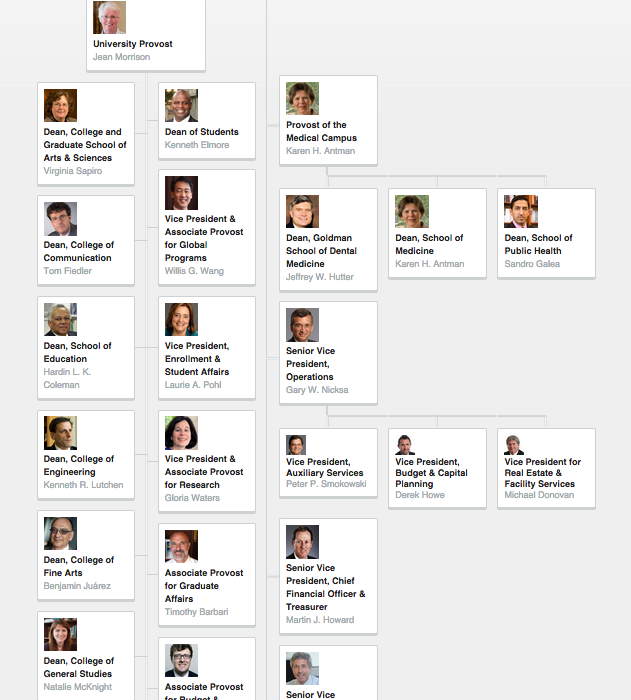
Hierarchy tree of Boston University's leadership team via the Provost's Office, April 26, 2015. (http://www.bu.edu/info/about/admin/).

Hierarchy tree of Boston University’s leadership team via the Provost’s Office, April 26, 2015. (http://www.bu.edu/info/about/admin/).

I interviewed with them again in January and at the beginning of March. This was for a position in their provost’s office, a director position managing undergraduate and graduate fellowship opportunities and advising students via those opportunities. The position was a bit beneath my experience, but they seemed interested, and I already knew from some initial research that it was a new position, so I went ahead and applied for it. My first interview was by telephone, with Suzanne Kennedy, the assistant provost for academic affairs at Boston University. It was a pleasant but underwhelming interview, and I actually didn’t expect a call back. So I kept up with my usual work of teaching, consulting, and looking for more consulting opportunities.

I received an email five weeks later asking me to come up to Boston for a second, in-person interview. I gave it the go-ahead, although the length of time between first interview and correspondence concerned me. So too, did my back and forth with Kennedy’s assistant over travel, as she had initially booked me at times that were very inconvenient for interviewing purposes. Not to mention, the major snow issues that Boston experienced in February.

The interview on March 4 was honestly one of the worst experiences I’ve ever had interviewing for any job. I’m including an interview in which I discovered the place was a sweatshop in Chinatown, during my summer of unemployment in New York in ’88. I had three meetings in all, one over lunch with Kennedy, and two with the two associate provosts at Boston University in academic affairs (one undergraduate, one graduate). Over lunch, the conversation was going well, until I asked the question about the level of diversity with applicant pools for Fulbrights, Trumans, Borens, and Rhodes’ scholarships and fellowships. I kid you not, Kennedy’s eyes literally glazed over as soon as I asked about diversity. Keep in mind, I had asked about socioeconomic diversity — I hadn’t touched racial or gender diversity yet. After lunch, I didn’t see Kennedy again for the rest of the interview process.

My second sign came from my third meeting. I met with Timothy Barbari, associate provost for graduate affairs. It was obvious that Barbari hadn’t even looked at my CV before I walked into his office. The first thing Barbari says to me, with him pushing his body into the back of his chair so far that his attempt to be at ease looked more like a rocket revving to take off — “so, you have a rather interesting CV.” I may not have earned all of my money as an academician, but I’ve been around academic-speak long enough to know that interesting can mean a lot of different things, mostly bad. In this context, interesting meant “not straightforward, not linear in progression, not typical in terms of whom we typically hire.”

I was already feeling a bit like a checkmark or token interviewee by the time I left Barbari’s office for Logan. But after USAirways canceled all their flights to DC that evening due to a snowstorm that wouldn’t drop a snowflake for another twelve hours, it got worse. I notified Kennedy through her assistant that I was stuck in Boston overnight from Logan, and left a message the next morning that the Amtrak to DC was my only option, as more flights had been canceled. No word, not even a “I’m sorry that you have to go through this” response. It wasn’t until mid-afternoon that Friday, nearly a day after I returned to DC, and after a third message about them needing to reimburse me, that I heard from Kennedy’s assistant.

At that point, I wouldn’t have taken the job even if they had offered it to me. As it was, I didn’t hear from Kennedy again until April 7, five weeks after a second interview, and despite a check-in to find out what happened with this director position. It’s this kind of calloused approach that leaves folks shaking their head.

Shaking Off The Dirt

I’ve made a few determinations based on these experiences. For one, if this is the way that treat job candidates who look like me, how well do they pay and treat their service staff, the most vulnerable people on their campus? Not well, at least from what I saw and have experienced. For two, the fact that for both interviews, their top concern seemed to be about competing with “schools across the Charles River” — i.e., Harvard, MIT, Tufts — was somewhere between disconcerting and ridiculous.

An elephant shaking off the dirt, circa 2012. JD Rucker via Pinterest.com).

An elephant shaking off the dirt, circa 2012. (JD Rucker via Pinterest.com).

The fact that with tuition, books, and room and board it would run the average BU student $60,000 per year also told me what I needed to know. Boston University is a place that wants elite status and elite students, and in pursuit of this Pollyanna goal, wants to hire people they feel fit the bill. As long as those people look like everyone else running the university — mostly White, with a few people of color lightly sprinkled in leading positions at the institution. Because Boston University has what activist Linda Sarsour (Twitter, @lsarsour) calls cosmetic diversity, a genuine attempt at diversity across socioeconomic, racial and gender lines is unnecessary, at least for the powers whom run the institution.

Aside from Martin Luther King, Jr., who earned his doctorate in divinity at Boston University in the early 1950s, I’ve known or known of only one person of color with a degree from BU. She was a neighbor at 616 East Lincoln, a few years younger. Based on her description of more than two decades ago, I’d have to say that Boston University has changed for the worst. Like most universities, they seem more interested in prestige and raising money than in fulfilling their mission.

And with that being the case, why send your kid to Boston University? Especially when, for the same amount of money or less, every other school in the Boston area is either better, or at least, cares more about diversity and learning beyond the cosmetic.

← Older posts
Newer posts →

Boy @ The Window: A Memoir

Boy @ The Window: A Memoir

Places to Buy/Download Boy @ The Window

There's a few ways in which you can read excerpts of, borrow and/or purchase and download Boy @ The Window. There's the trade paperback edition of Boy @ The Window, available for purchase via Amazon.com at http://www.amazon.com/Boy-Window-Donald-Earl-Collins/dp/0989256138/

There's also a Kindle edition on Amazon.com. The enhanced edition can be read only with Kindle Fire, an iPad or a full-color tablet. The links to the enhanced edition through Apple's iBookstore and the Barnes & Noble NOOK edition are below. The link to the Amazon Kindle version is also immediately below:

scr2555-proj697-a-kindle-logo-rgb-lg

Boy @ The Window on Amazon.com: http://www.amazon.com/Boy-The-Window-Memoir-ebook/dp/B00CD95FBU/

iBookstore-logo-300x100

Boy @ The Window on Apple's iBookstore: https://itunes.apple.com/us/book/boy-the-window/id643768275?ls=1

Barnes & Noble (bn.com) logo, June 26, 2013. (http://www.logotypes101.com).

Boy @ The Window on Barnes & Noble: http://www.barnesandnoble.com/w/boy-the-window-donald-earl-collins/1115182183?ean=2940016741567

You can also add, read and review Boy @ The Window on Goodreads.com. Just click on the button below:

Boy @ The Window

Twitter Updates

Tweets by decollins1969
  • RSS - Posts
  • RSS - Comments

Archives

  • June 2025
  • April 2023
  • September 2022
  • August 2022
  • July 2022
  • June 2022
  • May 2022
  • April 2022
  • March 2022
  • January 2022
  • December 2021
  • November 2021
  • October 2021
  • September 2021
  • August 2021
  • July 2021
  • June 2021
  • April 2021
  • March 2021
  • February 2021
  • January 2021
  • December 2020
  • November 2020
  • October 2020
  • September 2020
  • August 2020
  • July 2020
  • May 2020
  • April 2020
  • March 2020
  • January 2020
  • December 2019
  • November 2019
  • August 2019
  • July 2019
  • June 2019
  • May 2019
  • April 2019
  • March 2019
  • February 2019
  • January 2019
  • December 2018
  • November 2018
  • October 2018
  • September 2018
  • August 2018
  • July 2018
  • June 2018
  • May 2018
  • March 2018
  • February 2018
  • January 2018
  • December 2017
  • November 2017
  • October 2017
  • September 2017
  • August 2017
  • July 2017
  • June 2017
  • May 2017
  • April 2017
  • March 2017
  • February 2017
  • January 2017
  • December 2016
  • November 2016
  • October 2016
  • September 2016
  • August 2016
  • July 2016
  • June 2016
  • May 2016
  • April 2016
  • March 2016
  • February 2016
  • January 2016
  • December 2015
  • November 2015
  • October 2015
  • September 2015
  • August 2015
  • July 2015
  • June 2015
  • May 2015
  • April 2015
  • March 2015
  • February 2015
  • January 2015
  • December 2014
  • November 2014
  • October 2014
  • September 2014
  • August 2014
  • July 2014
  • June 2014
  • May 2014
  • April 2014
  • March 2014
  • February 2014
  • January 2014
  • December 2013
  • November 2013
  • October 2013
  • September 2013
  • August 2013
  • July 2013
  • June 2013
  • May 2013
  • April 2013
  • March 2013
  • February 2013
  • January 2013
  • December 2012
  • November 2012
  • October 2012
  • September 2012
  • August 2012
  • July 2012
  • June 2012
  • May 2012
  • April 2012
  • March 2012
  • February 2012
  • January 2012
  • December 2011
  • November 2011
  • October 2011
  • September 2011
  • August 2011
  • July 2011
  • June 2011
  • May 2011
  • April 2011
  • March 2011
  • February 2011
  • January 2011
  • December 2010
  • November 2010
  • October 2010
  • September 2010
  • August 2010
  • July 2010
  • June 2010
  • May 2010
  • April 2010
  • March 2010
  • February 2010
  • January 2010
  • December 2009
  • November 2009
  • October 2009
  • September 2009
  • August 2009
  • July 2009
  • June 2009
  • May 2009
  • April 2009
  • March 2009
  • February 2009
  • January 2009
  • December 2008
  • November 2008
  • October 2008
  • September 2008
  • August 2008
  • July 2008
  • June 2008
  • May 2008
  • April 2008
  • March 2008
  • February 2008
  • January 2008
  • December 2007
  • November 2007
  • October 2007
  • September 2007
  • August 2007
  • July 2007
  • June 2007

Recent Comments

MaryPena's avatarMaryPena on My Day of Atonement/Bitter Hat…
decollins1969's avatardecollins1969 on No Good Teaching Deed Goes…
Mary Rose O’Connell's avatarMary Rose O’Connell on No Good Teaching Deed Goes…

NetworkedBlogs on Facebook

NetworkedBlogs
Blog:
Notes From a Boy @ The Window
Topics:
My Life, Culture & Education, Politics & Goofyness
 
Follow my blog

616 616 East Lincoln Avenue A.B. Davis Middle School Abuse Academia Academy for Educational Development AED Afrocentricity American Narcissism Authenticity Bigotry Blackness Boy @ The Window Carnegie Mellon University Child Abuse Class of 1987 CMU Coping Strategies Crush #1 Crush #2 Death Disillusionment Diversity Domestic Violence Economic Inequality Education Family Friendship Friendships Graduate School Hebrew-Israelites High-Stakes Testing Higher Education History Homelessness Humanities Humanities Program Hypocrisy Internalized Racism Jealousy Joe Trotter Joe William Trotter Jr. K-12 Education Love Manhood Maurice Eugene Washington Maurice Washington Misogyny Mother-Son Relationship Mount Vernon High School Mount Vernon New York Mount Vernon public schools Multiculturalism MVHS Narcissism NFL Pitt Pittsburgh Politics of Education Poverty President Barack Obama Race Racial Stereotypes Racism Relationships Self-Awareness Self-Discovery Self-Reflection Sexism Social Justice Teaching and Learning University of Pittsburgh Violence Whiteness Writing

Top Rated

Blog at WordPress.com.

  • Subscribe Subscribed
    • Notes from a Boy @ The Window
    • Join 103 other subscribers
    • Already have a WordPress.com account? Log in now.
    • Notes from a Boy @ The Window
    • Subscribe Subscribed
    • Sign up
    • Log in
    • Report this content
    • View site in Reader
    • Manage subscriptions
    • Collapse this bar
 

Loading Comments...