• About Me
  • Other Writings
  • Interview Clips
  • All About Me: American Racism, American Narcissism, and the Conversation America Can’t Have
  • Video Clips
  • Boy @ The Window Pictures
  • Boy @ The Window Theme Music

Notes from a Boy @ The Window

~

Notes from a Boy @ The Window

Category Archives: music

Teaching Migration, In Song

17 Friday Oct 2014

Posted by decollins1969 in 1, Academia, Boy @ The Window, culture, Eclectic, eclectic music, High Rise Buildings, Jimme, Marriage, Mount Vernon New York, music, My Father, New York City, Politics, Pop Culture, race, Religion, Upper East Side, Upper West Side, Work, Youth

≈ Leave a comment

Tags

"(Sittin' On) The Dock of the Bay" (1968), "Living For The City" (1973), African American History, Africana Studies, Arrested Development, Black Boy (1945), Black History, Black Migration, Bruce Springsteen, Cities, Gil Scott-Heron, Gladys Knights and The Pips, Great Migration, Isabel Wilkerson, James Grossman, Joblessness, John Mellencamp, Kate Bush, Land of Hope (1989), Marvin Gaye, Mary Patillo, Migration, Nas, Nicholas Lemann, Nina Simone, Otis Redding, Peter Gabriel, Poverty, Richard Wright, Stevie Wonder, Teaching and Learning, The Promised Land (1991), The Warmth of Other Suns (2010), Tracy Chapman, Tupac, Urban America, urban blight


Stevie Wonder and Wonderlove, live performance of "Living For The City," circa 1974.  (http://youtube.com).

Stevie Wonder and Wonderlove, live performance of “Living For The City,” circa 1974. (http://youtube.com).

If I ever had the chance to teach a course specifically on the history of Black migration in America, I already know what books I’d use. Isabel Wilkerson’s The Warmth of Other Suns (2010); Nicholas Lemann’s The Promised Land (1991); James Grossman’s Land of Hope (1989); Mary Patillo’s Black Picket Fences (1999); even Richard Wright’s Black Boy (1945) and Maya Angelou’s I Know Why the Caged Bird Sings (1969). All have moved beyond the statistics of some seven or eight million Blacks moving from the rural Jim Crow South to America’s cities, North, Midwest, West and South for the first three-quarters of the twentieth century.
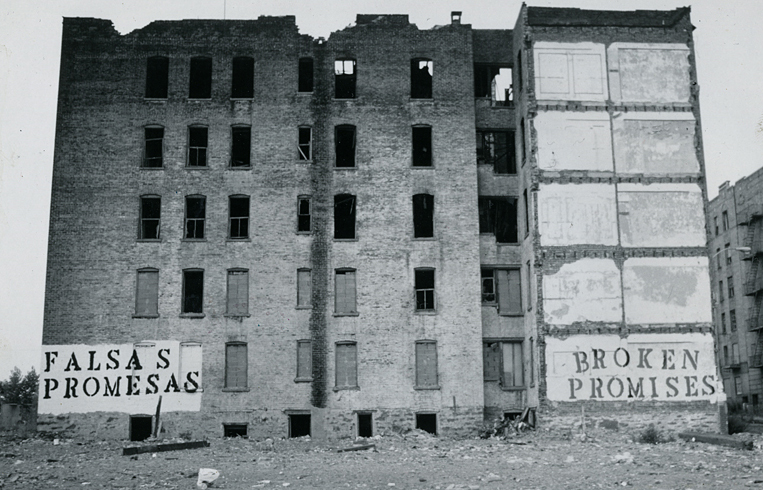
Falsas Promesas Broken Promises, taken by John Fekner, Charlotte Street Stencils, South Bronx, New York. 1980. (Liftarn via Wikipedia). Released to public domain via CC-SA-3.0.

Falsas Promesas Broken Promises, taken by John Fekner, Charlotte Street Stencils, South Bronx, New York. 1980. (Liftarn via Wikipedia). Released to public domain via CC-SA-3.0.

But that wouldn’t be near enough to communicate the range of emotions, the psychological states and the pressures that these people faced in leaving their homes for the not-so-bright lights of America’s big cities, not to mention what they faced in the days and years after they arrived. I should know. I’m the nearly forty-five year-old son of a mother originally from Bradley, Arkansas (population 500) and a father from Harrison, Georgia. They moved to New York City in the ’60s (specifically, the Tremont section of the Bronx), then to the South Side of Mount Vernon, New York (just outside the Bronx), hooked up, and sired me and my older brother Darren between December 1967 and January 1970.

That short summary is hardly the story, though. For me — like with so many other things in my life — music tells the story, emotions and psychology beyond what words on a page alone can approximate, but not fully duplicate. Music communicates the stories, emotions and psychology of those who migrated and stayed (or didn’t) in cities across the US better than Census data or a hypothesis on proletarianization. I wanted music from my own lifetime (or at least, within a few years of it) — not just folk songs or Blind Willie Johnson or Duke Ellington — music that fit my family’s transition from migration to our current times of racism and urban poverty.

Easily the top two songs on my list to play in class would be:

Trade ad for Otis Redding's single "Try a Little Tenderness," January 7, 1967. (Viniciusmc via Wikipedia/Billboard Magazine, page 7). In public domain).

Trade ad for Otis Redding’s single “Try a Little Tenderness,” January 7, 1967. (Viniciusmc via Wikipedia/Billboard Magazine, page 7). In public domain).

1. Otis Redding, “(Sittin’ On) the Dock of the Bay,” (1968), released after Redding’s death in a plane crash in Madison, Wisconsin; and

2. Stevie Wonder, “Living For The City,” (1973).

Both songs run the full emotional and psychological gamut. From hopefulness to oblivion, from delusion to despair, from rage and anger to resignation. The melancholy of Redding’s “It’s two thousand miles I roamed/Just to make this dock my home” (in reference to the distance from Georgia to San Francisco Bay) juxtaposed with Wonder’s bitterness and anger:

“His hair is long, his feet are hard and gritty
He spends his life walkin’ the streets of New York City
He’s almost dead from breathin’ in air pollution
He tried to vote but to him there’s no solution…”

It communicates so much beyond the lyrics and liner notes, a reminder for those of us who find America and its cities unforgiving today just how relentless it must’ve been for our parents and uncles and aunts and grandparents forty or more years ago.

There are other songs that I’d put on this playlist. Some are directly related to Black migration, some try to bridge the gap between the abundance of music on “the ghetto” and urban poverty and chaos and the lack of music from my own lifetime on migration.

3. Gladys Knight and the Pips, “Midnight Train to Georgia” (1973).
4. Marvin Gaye, “Inner City Blues” (1971).
5. Gil Scott-Heron, “95 South (All of The Places We’ve Been)” (1977).
6. Tracy Chapman, “Fast Car” (1987).
7. Nas (featuring Olu Dara, his father), “Bridging the Gap” (2004).
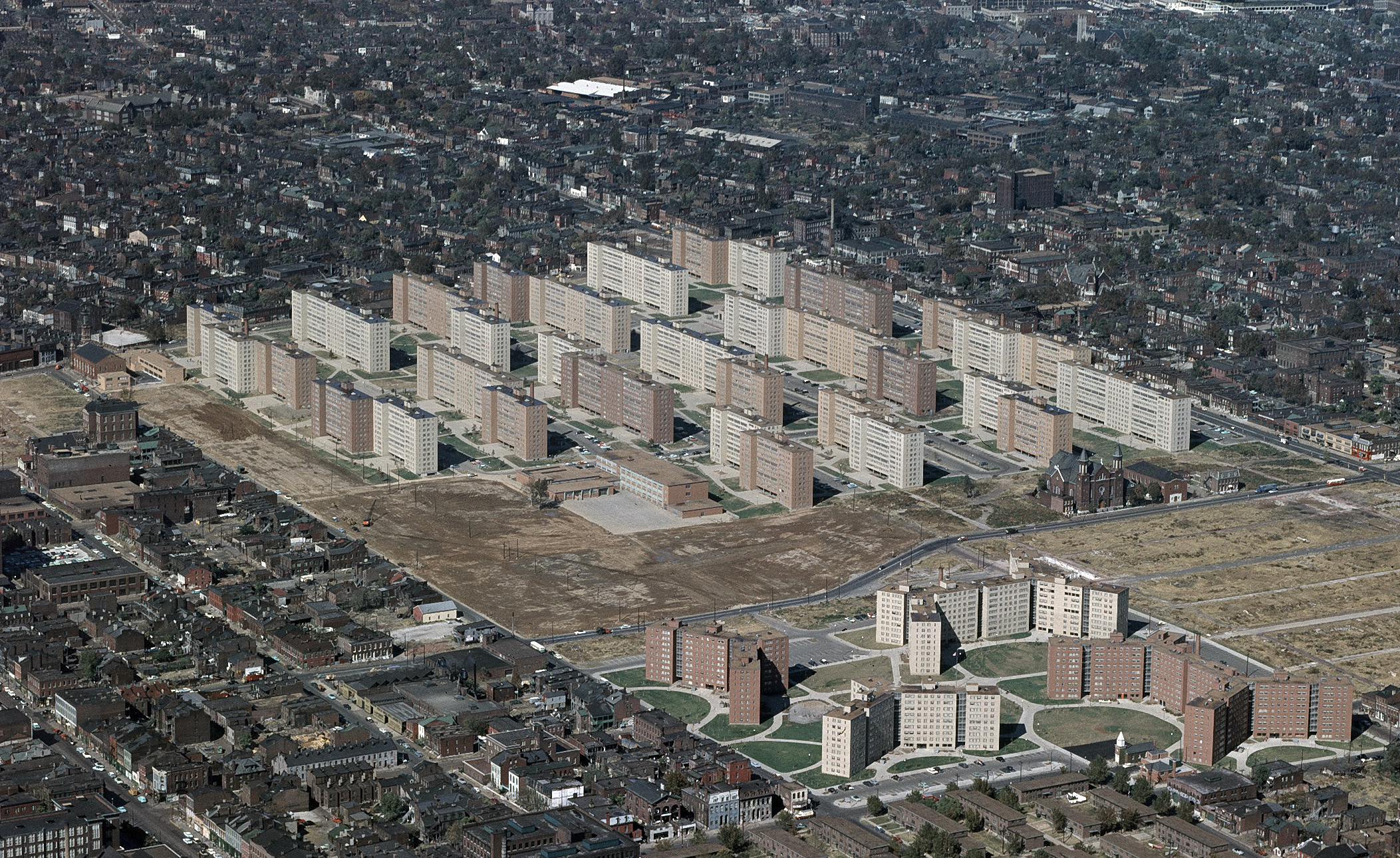
Pruitt–Igoe public housing projects, St. Louis, Missouri, circa 1967. This late-1950s "urban renewal" project was built, but  failed and was razed in the 1970s. (Cadastral via Wikipedia/US Geological Survey). In public domain.

Pruitt–Igoe public housing projects, St. Louis, Missouri, circa 1967. This late-1950s “urban renewal” project was built, but failed and was razed in the 1970s. (Cadastral via Wikipedia/US Geological Survey). In public domain.

That most of these songs come from the period between 1967 and 1974 isn’t an accident. It was the height of the Civil Rights Movement, combined with the Black Power Movement and the “Black is Beautiful” campaign, the beginning of the White backlash against civil rights — including Dr. Martin Luther King, Jr.’s assassination — and the Anti-War Movement was in full swing. It was a good time to take a look at the present and recent past to reconnect with hopes and dreams in the midst of the nightmare of urban poverty.

After ’73 was the beginning of the dance and disco era, as well as a focus on the urban, on crime, on drugs, on poverty  — but not in a “let’s try to solve it” kind of way. This was where rap, hip-hop, some R&B and early forms of what we now call neo-soul picked up, with little reflection on this once prominent past.

Still, there would be some honorable mentions for this migration course, music that could evoke some aspect of the Black migration, of the hope that took a downward turn, of the poverty and joblessness that have permeated America, Black and White and Brown, since the ’70s.

8.  Arrested Development, “Tennessee” (1992).
9. Tina and Ike Turner (and Credence Clearwater Revival), “Proud Mary” (1970).
10. Nina Simone, “The Backlash Blues” (1967).
11. NWA, “Straight Outta Compton” (1989).
12. Tupac, “Cradle 2 the Grave” (1994).
13. John Mellencamp, “Pink Houses” (1983).
14. Bruce Springsteen, “Born In The U.S.A..” (1984). [the song’s release was thirty years ago this month, by the way]
15. Peter Gabriel and Kate Bush, “Don’t Give Up” (1986)
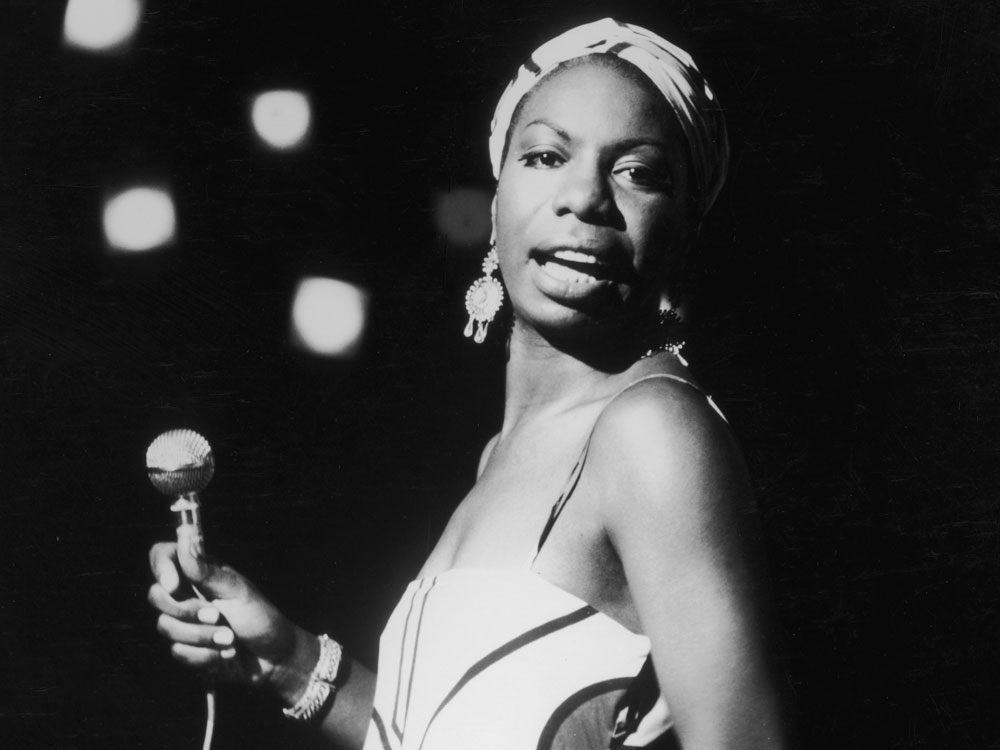
Nina Simone performs at a concert in 1964. (http://npr.org, via Hulton Archive/Stringer/Getty Images).

Nina Simone performs at a concert in 1964. (http://npr.org, via Hulton Archive/Stringer/Getty Images).

Through music, I’d hope to have a course and discussion about Black migration that reaches beyond the words origin and destination, that migration has merely been a physical manifestation of a difficult and seemingly unending cultural and spiritual journey in the US. That Black migration can also easily include the parallel journeys of those of the African or Afro-Caribbean diaspora, not to mention those from Latin America.

For me, though, a course like this would be a personal foray into all the things that have made me who I’ve been for nearly four and a half decades — a person better than the sum of America’s parts and racist, sexist, homophobic and evangelical assumptions.

A Children’s Crusade

02 Saturday Aug 2014

Posted by decollins1969 in 1, Academia, Boy @ The Window, Christianity, culture, Eclectic, eclectic music, music, Patriotism, Politics, Pop Culture, race, Religion, Youth

≈ 1 Comment

Tags

"Children's Crusade" (1984), 100th Anniversary, Aggression, Colonialism, Culture of Imperialism, Dehumanization, Ethnic Cleansing, Ethnocentrism, First World War, Genocide, Imperialism, Nationalism, Parallels, Religious Nationalism, Settler Colonialism, Sting, The Dream of the Blue Turtles, War, Western Culture, World History, World Powers, World War I


Living among the dead, Flanders, Belgium, most likely during Second Battle of Ypres, April 21-May 25, 1915. (http://www.flandersfieldsmusic.com/).

Living among the dead, Flanders, Belgium, most likely during Second Battle of Ypres, April 21-May 25, 1915. (http://www.flandersfieldsmusic.com/).

World War I reached its 100th anniversary on Monday. One hundred years ago this week, European imperialism, nationalism, and Social Darwinism/scientific racism all led to what was once known as the Great War. It was a war that would leave ten million soldiers, sailors and airmen dead, another seven million civilians dead from military action, malnutrition and disease, and another 23 million wounded in action on both sides.

A British Mark V tank coming out of a trench, France, circa 1917. (Imperial War Museum via http://i.dailymail.co.uk/i/pix/2013/10/05/).

A British Mark V tank coming out of a trench, France, circa 1917. (Imperial War Museum via http://i.dailymail.co.uk/i/pix/2013/10/05/).

That war, a mostly European war of the great world powers, was itself based in the idea that Western culture and technologies would make this a quick and winnable war of dominance, for Germany, Britain, France and possibly Russia. The first war planes, the first tanks, the first submersibles, along with mustard and chlorine gas, nests of machine guns and trench warfare. It’s amazing how small-minded these so-called great powers were a full century ago, and so remarkable that we’ve grown beyond this thinking today!

Actually, not so fast! Our world seems to have learned little from the lessons of the First World War, repeating practices that leave the globe perpetually on the brink of chaos and potentially in peril of annihilation. We’ve seen this with the Second World War, with the Cold War and its myriad proxy wars in the Global South, with post-Cold War aggression in the Balkans, the Middle East, Sub-Saharan Africa, and with US preemptive aggressions in the Muslim world. Ethnocentrism and ethnic cleansing in the name of a religion (or a lack thereof, in a couple of cases) or nationalism has been a part of modern war since World War I.

Poppies in field between Kelling and Weybourne, North Norfolk, England, UK,  June 2002. (John Beniston via Wikipedia). Released to public domain via CC-SA-3.0.

Poppies in field between Kelling and Weybourne, North Norfolk, England, UK, June 2002. (John Beniston via Wikipedia). Released to public domain via CC-SA-3.0.

Imperialism and colonialism and resistance to both in the name of freedom, or too frequently, another form of ethnocentrism and religious nationalism. Name a given nation, and you have some strain of Western imperialism and colonization, resistance and ethnocentrism and nationalism (religious, anti-religious or otherwise) running through their recent history. India, Pakistan, the former Soviet Union, Nazi Germany, the former Yugoslavia, Perón’s Argentina, Pinochet’s Chile, the Khmer Rouge and Cambodia, South Africa and apartheid, Israel and Zionism and settler colonialism, Japan and its military occupation of China, just to name a few. The First World War unleashed these forces this week one hundred years ago, a Pandora’s box that we will need to destroy, for it’s obviously too late to close it.

One of Sting’s songs from his first solo album, The Dream of the Blue Turtles, is titled “Children’s Crusade” (1984). It’s the story of Britain’s blind march into the First World War, the wasting of a generation of youth in the name of the empire, juxtaposed with the UK’s heroin and drug epidemic of the early 1980s.

Young men and soldiers, Nineteen Fourteen
Marching through countries they’d never seen
Virgins with rifles, a game of charades
All for a Children’s Crusade

Pawns in the game are not victims of chance
Strewn on the fields of Belgium and France
Poppies for young men, death’s bitter trade
All of those young lives betrayed

Though not his best work, Sting’s “Children’s Crusade” has made me think more than once about the brutality of humanity and this inherent need to dominate other human beings, as well as the lands and resources for which vulnerable people have been cleansed and displaced. He should update it for 2014 this way:

Midnight in Gaza, Twenty Fourteen
Bombed and shelled hospitals, pawns in the game
Ashes and sackcloth, death’s bitter trade
All of those young lives betrayed

And all for a century-old crusade of nationalistic paranoia, imperialistic abuse, and dehumanizing ethnocentric warfare.

Brother, Can You Spare Me A Job?

26 Saturday Jul 2014

Posted by decollins1969 in 1, Academia, Boy @ The Window, culture, Eclectic, eclectic music, Mount Vernon High School, Mount Vernon New York, music, Pittsburgh, Politics, Pop Culture, race, University of Pittsburgh, Work, Youth

≈ Leave a comment

Tags

"Brother Can You Spare a Dime" (1932), Al Jolson, Booker T. Washington, Corporate Responsibility, Gender Discrimination, General Foods, Hard Work Mythology, My Brother's Keeper, My Brother's Keeper Initiative, Operation Opportunity, Paternalism, Philanthropy, Poverty, President Barack Obama, Race, Racial Paternalism, White House


Screenshot from "Brother, Can You Spare Me a Dime" video/song (song originally recorded in 1932), July 26, 2014. (http://youtube.com).

Screenshot from “Brother, Can You Spare a Dime” video/song (song originally recorded in 1932), July 26, 2014. (http://youtube.com).

In the past five months, there’s been much debate and derision over the White House’s My Brother’s Keeper Task Force and Initiative. Most of it has centered around the exclusion of girls and young women of color from the initiative, as if the problems affecting Black and Latino males aren’t the same ones affecting Black and Latino females. Poverty, a resource-poor education, lack of entry-level jobs leading to careers, woeful access to higher education, lack of access to public services. These effects may lead to different responses from boys/young men of color and girls/young women of color, but the problems that effect vulnerable populations of color are no respecter of gender.

There’s other problems with the initiative, even if President Barack Obama and the White House were to ensure the inclusion of Black and Latino females in the My Brother’s Keeper Initiative tomorrow. It’s an extremely racially paternalistic initiative. On the face of things, it’s not much different from the work Booker T. Washington did a century ago via the William McKinley and Teddy Roosevelt administrations and with money from White philanthropists such as Henry Huttleston Rogers (Standard Oil), Julius Rosenwald (Sears), and George Eastman (Kodak).

Sure, in the case of Washington, The Rosenwald Fund built a few thousand schools, and the philanthropists contributed money to Washington that would build an endowment for Tuskegee. Still, that money came with strings attached. Most of the schools built weren’t high schools, were geared toward what we would call low-level vocational education today, and certainly weren’t part of any agenda to end Jim Crow. For all the good Washington was able to do through these robber-baron era philanthropists — especially in reducing Black illiteracy — it took Black migration out of the South to lead to lasting changes around notions of racial progress and the idea of segregation as the norm for a representative democracy.

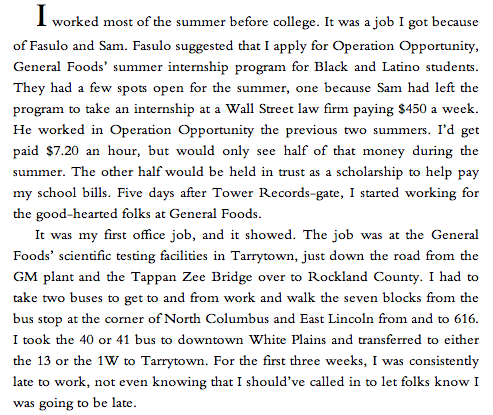
As for My Brother’s Keeper, I am reminded of a passage from my Boy @ The Window about my very first full-time “office” job in the summer of ’87, in between my graduation from Mount Vernon High School and my freshman year at the University of Pittsburgh. It’s about my working for General Foods (now Kraft Foods) in Tarrytown, New York as part of their Operation Opportunity program.

Screen shot 2014-07-26 at 11.10.49 AM

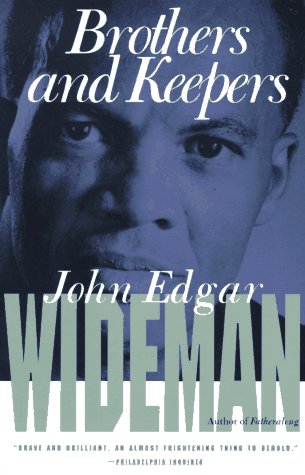
John Edgar Wideman, Brothers and Keepers (originally published in 1984), July 26, 2014. (http://goodreads.com).

John Edgar Wideman, Brothers and Keepers (originally published in 1984), July 26, 2014. (http://goodreads.com).

Beyond the $1,022 the program saved on my behalf — which would go toward room, board and two textbooks for my second semester at Pitt — there really wasn’t much about this program that was opportunity-inducing. Operation Opportunity seemed like it was a checkmark that General Foods could put in its “doing good” column. It provided an opportunity to observe others and do menial tasks without actually promising anything that would help me even a year later, as I went through the summer of ’88 unemployed, and the first week of my sophomore year at Pitt homeless. Not to mention, I picked up a terrible cold in the heat of a 98-degree-July day while spending two hours in a meat-locker-of-a-trailer doing measurements on Jell-O pudding pops!

Now I have no idea what the Annie E. Casey Foundation, the W.K. Kellogg Foundation or Magic Johnson Enterprises intends to do to be keepers of brothers, or brothas, for that matter. But all too frequently, these efforts turn into one-time experiments or corporate-responsibly checkmarks. As my friend and colleague Catherine Lugg has said more than once over the years (albeit, on education research, not specifically on this), social change and diversity efforts are far more than just “bringing a pet to class.” The idea that we need to learn how to work hard is yet another myth that this initiative will perpetuate, whether it’s a success or a failure.

It’s not hard to figure that poor children and young adults of color need more access to public health services, more resources in their formal education, more and better quality food to eat, and more nurturing. Whether any of these kids or young adults — male or female — can obtain these resources without racial paternalism, experimentation or other strings attached, I for one remain extremely skeptical.

Visiting My Uncle Paul in Georgia

31 Saturday May 2014

Posted by decollins1969 in 1, Academia, Boy @ The Window, Carnegie Mellon University, culture, earth, wind & fire, Eclectic, eclectic music, Marriage, Mount Vernon New York, music, Pittsburgh, Pop Culture, race, Sports, Work, Youth

≈ Leave a comment

Tags

40th Anniversity of Brown v. Board of Education, Allergies, Atlanta, Basketball, Conference, Delta Airlines, Family, Georgia Dome, Gill Family, Gwinnett County, Hartsfield International Airport, ITT Technical Institute, Joe Trotter, Laser Light Shows, Self-Discovery, Self-Reflection, Stone Mountain, The Gill Family, UGA, Uncle George, Uncle Paul, Uncle Robert, Uncle Sam, University of Georgia


Stone Mountain Park, lake side view/photo (was within visual range on the road side view of Confederate-ana back in '94), Stone Mtn, GA, May 31, 2014. (http://new.gwinnetteconomicdevelopment.com/).

Stone Mountain Park, lake side view/photo (was within visual range on the road side view of Confederate-ana back in ’94), Stone Mtn, GA, May 31, 2014. (http://new.gwinnetteconomicdevelopment.com/).

The second leg of what would eventually be five visits with my extended Gill and Collins families as an adult occurred the month after meeting much of my extended Gill family in Houston in April ’94. This second visit was very different from the first. It was part of a three-city trip, between research for my dissertation in DC (and a visit with my friend Laurell in the process) and going up to Mount Vernon to visit my Mom and siblings. Plus, like the Houston-New Orleans trip, I’d come to the Atlanta area to present at a conference, one at the University of Georgia on the 40th Anniversary of the Brown v. Board of Education decision.

I’d been invited to talk about multiculturalism as it related to desegregation in terms of curriculum by Layli Phillips, then an Assistant Professor in African American Studies and Psychology at the Athens campus, about sixty miles from my uncle’s place in Gwinnett County. It was an invite and acceptance my advisor Joe Trotter wasn’t happy about, as it was “too soon” for me to discuss my topic “in front of strangers.” But Phillips had already bought the round-trip tickets for me to fly from DC to Atlanta, and then from Atlanta to LaGuardia, per my request. Oh well!

I came to Hartsfield all tired and stuffed up from hay-fever-heavy DC that Saturday afternoon in mid-May, a couple of days before my UGA presentation. There, I met my Uncle Paul right at the gate, along with his seventeen-year-old son. Like my Uncles Sam and Robert, Uncle Paul was taller than me, a still wiry six-five at thirty-eight, still fit enough to stop, pop and hit a J despite his swollen knees. His son was built just like him, and a star basketball player at his high school in Gwinnett County.

They didn’t give me any time to rest. I was immediately taken to their two-bedroom apartment in some off-the-main route beaten path, a gated community with stucco walls and plastic pink flamingos to boot. There, I’d also meet one of my uncle’s girlfriends, an older woman who apparently understood that my Uncle Paul wasn’t exactly ready to settle down.

My Uncle Paul’s playing days in Houston (college and NBA) and overseas had ended long before I’d learn how to shoot a J myself. He’d gone back to school — specifically ITT Technical Institute — in the mid-1980s and become an A/V expert who specialized in special effects, including laser lights, smoke and other technologies meant to enhance the concert-going experience. He’d worked before on tours, with Earth, Wind + Fire (when Maurice White was still healthy enough to tour) and New Edition. That’s how our family learned that Johnny Gill was a distant cousin, as his great-grandmother and my great-grandmother were sisters, one staying in the Texas-Arkansas area, the other moving to Seattle for some reason or other.

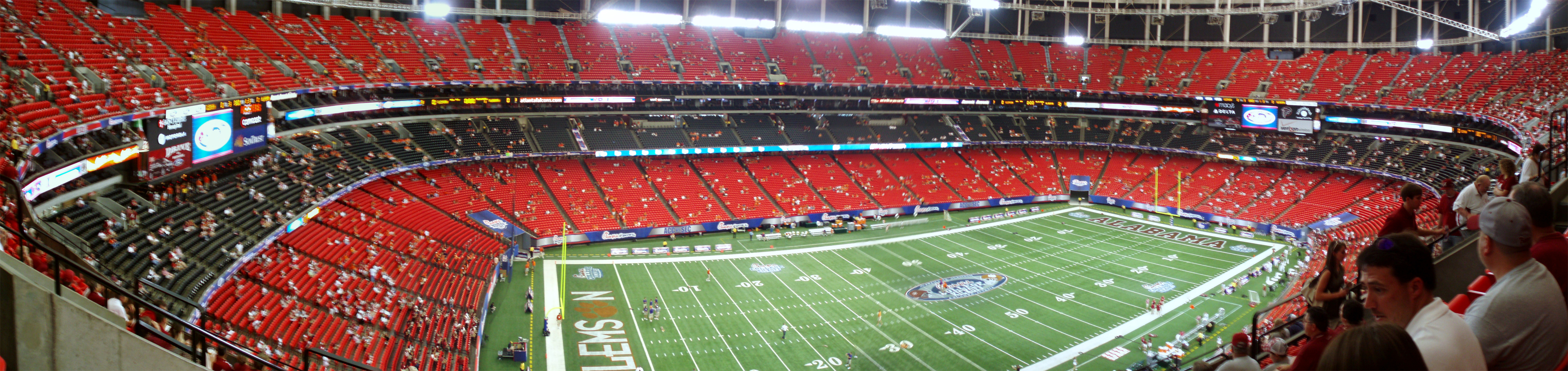
Panoramic pic of the Georgia Dome, Atlanta, GA (where was on the left of the field back in '94), August 30, 2008. (Latics via Wikipedia). Released to  public domain via CC-SA-3.0.

Panoramic pic of the Georgia Dome, Atlanta, GA (where was on the left of the field back in ’94), August 30, 2008. (Latics via Wikipedia). Released to public domain via CC-SA-3.0.

There was a jazz and blues extravaganza going on at the Georgia Dome in downtown Atlanta that evening, and so within hours of landing, we were back in the heart of the city, setting up equipment on what normally was the playing field for the Atlanta Falcons. I was so mesmerized thinking about losing a football in the lights of the Georgia Dome that my uncle yelled at me to “get my ass in gear,” because he needed help unloading some heavy equipment. I wasn’t the biggest fan of the quality of music, but having a backstage view of the whole thing, and to see what my uncle Paul did for a living, I was truly, truly impressed.

That Sunday I spent in my uncle’s home, hearing about his playing days, his knee issues, his knowledge of basketball as a game, his travels to play in Europe, and indirectly, his sexual conquests. That last part I could’ve done without — I’d spent two days hearing the same thing from my other uncles the month before. Then he grilled me with questions about Mount Vernon, about New York, about why I didn’t play sports, about “the chicks in college.” My Uncle Paul assumed, incorrectly, that living in New York was heaven compared to being tenant farmers in southwestern Arkansas, and that I was in grad school for the sex. “I wouldn’t have made it to where I am if that was what it was all about,” I said in shocked response.

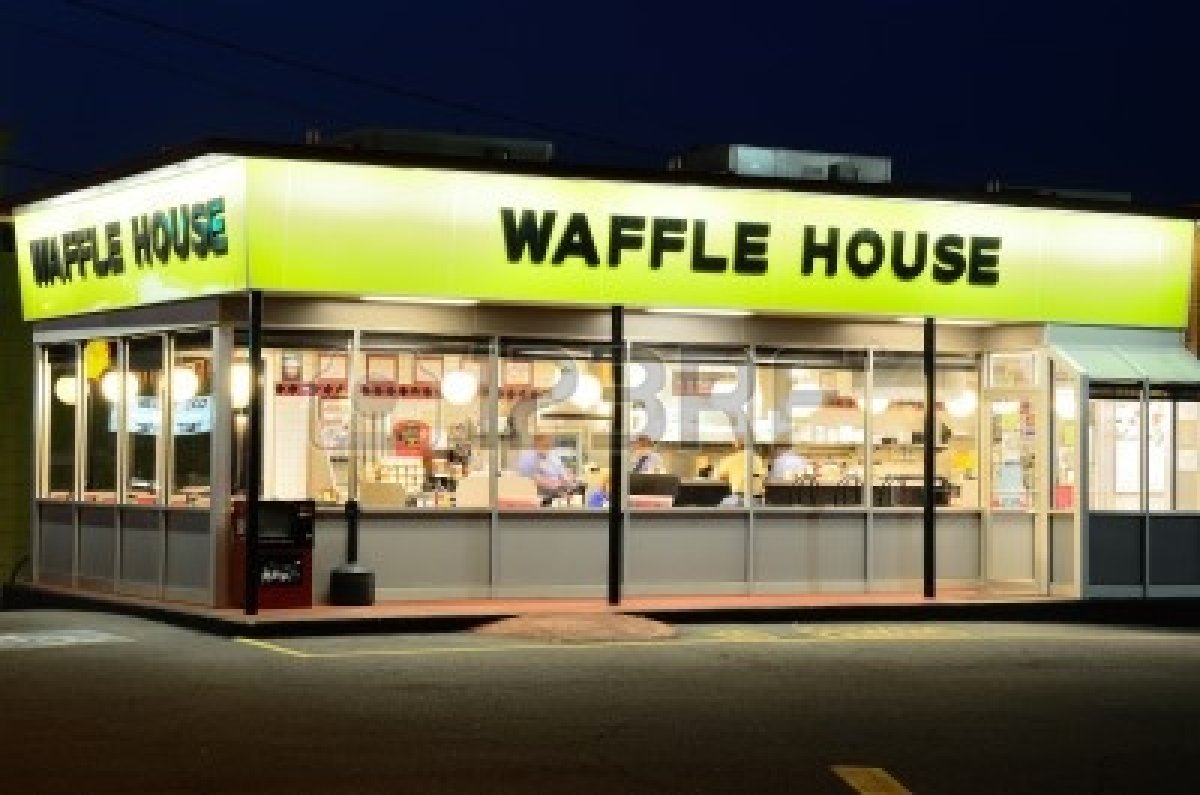
Waffle House, off UGA's main campus (and across street from seedy motel I stay in night before conference), Athens, GA, June 1, 2011. (http://www.123rf.com).

Waffle House, off UGA’s main campus (and across street from seedy motel I stay in night before conference), Athens, GA, June 1, 2011. (http://www.123rf.com).

He made a jambalaya dinner for us and his lady friend, all the while talking about each other’s work. My uncle’s son was bored to tears. Then, after dinner, and after his girlfriend had left and his son had gone to hang out with friends, my uncle took me out in his vintage Porsche 911 (it had been covered in the parking lot up to that point) to some high-class, late-night, members-only club somewhere in Gwinnett. Between him doing somewhere around eighty in a fifty-five and taking me to this place to “meet a girl,” I was in more shock. “I like looking for women on my own, thank you very much,” I yelled through the Mary J. Blige at one point.

I went off that Monday morning to Athens for the Brown Decision conference, and was gone for thirty hours. I did get a ride back from a presenter, and then a ride back my uncle’s place. That’s when I walked into the place to see my cousin on the black-leather living room couch, stripped down and on top of a young woman. He only stopped when I yelled for a second time, “I’m back!” Then, the proverbial scattering of two youngins’ caught up in lust occurred. They left, presumably to finish what they had started.

I left for New York that Wednesday morning, having enjoyed my time with my Uncle Paul, but also seeing some downside to a lifestyle that left him busy and his son without supervision. That some dumb thug killed my cousin four years later was still very much a surprise, as he wasn’t a violent person, at least the person I met in ’94. I felt so horrible for him and for my Uncle Paul, as I couldn’t imagine the totality of the pain of such a tragedy.

But good, bad or otherwise, it felt good to get to know my people, my family. I’d grown up with a family that was one in name only. Poverty, religion, abuse had all rendered the meaning of family useless for me growing up, and seeing more examples of the same thing in my time in Mount Vernon didn’t help. I knew that my Uncle Paul wasn’t perfect. Nor were my uncles in Houston. But I knew they loved each other, had dreams and plans for their lives, and had acted on many of these things in living their lives. I knew that I needed to keep doing the same.

AP US History Exam Day & Harold Meltzer

13 Tuesday May 2014

Posted by decollins1969 in 1, Boy @ The Window, culture, Eclectic, eclectic music, Mount Vernon High School, Mount Vernon New York, music, Politics, Pop Culture, race, Youth

≈ Leave a comment

Tags

AP, AP American History, AP US History, AP US History Exam, Appreciation, College Board, Coping Strategies, ETS, Exam Day, Harold Meltzer, Kaplan, Mentoring, Photographic Memory, Princeton Review, Privilege, Self-Discovery, Teaching and Learning


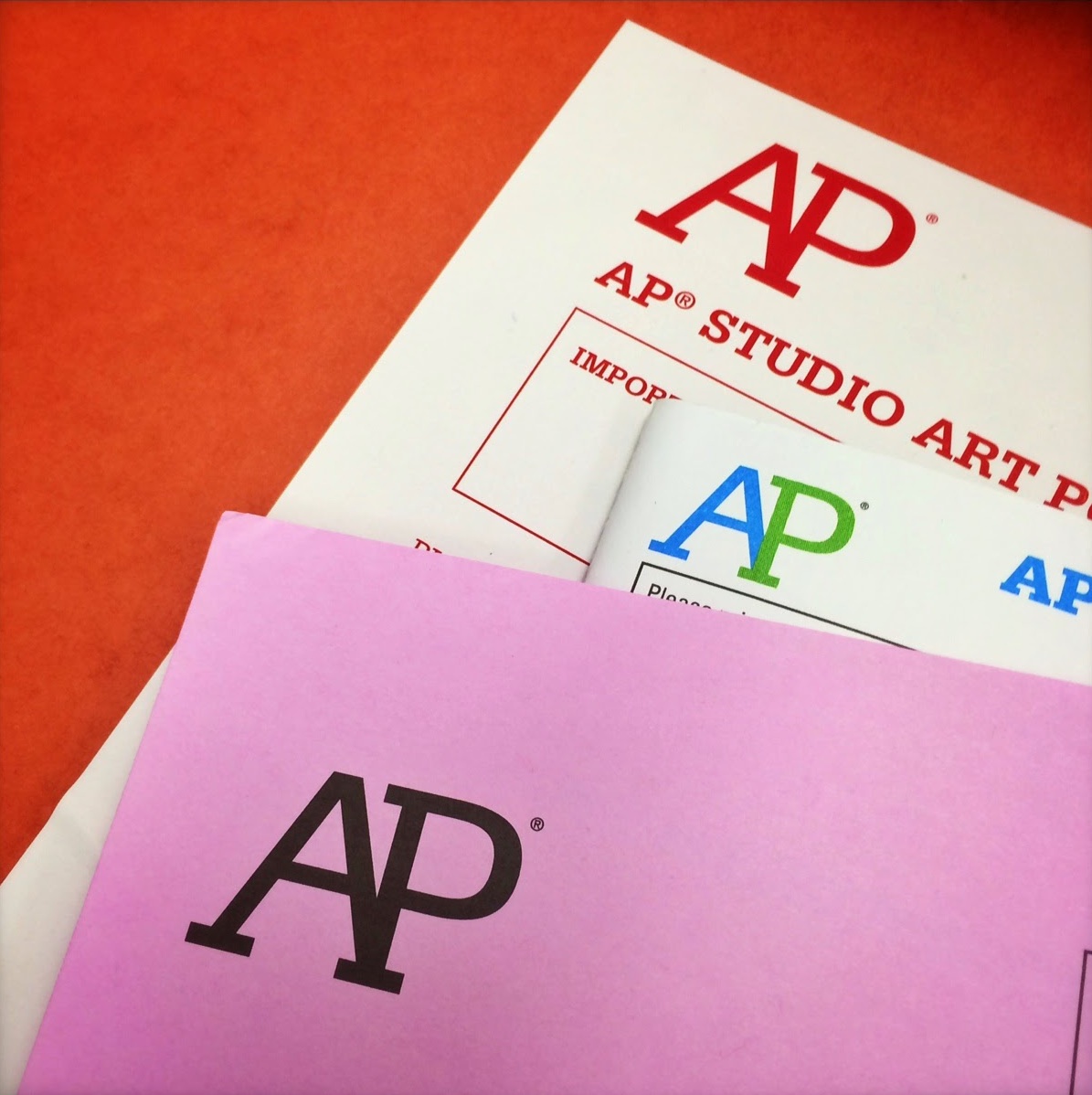
AP Day (cropped), May 9, 2014. (Tim Needles/http://artroom161.blogspot.com/).

AP Day (cropped), May 9, 2014. (Tim Needles/http://artroom161.blogspot.com/).

Twenty-eight years ago on this day/date, I was on my way to Mount Vernon High School, listening to Mr. Mister, Simple Minds, Sting and Whitney along the way. I was a few minutes away from a three-hour exam that could change my future. It wasn’t exactly the sunniest or warmest of days, though. That second Tuesday in May ’86 was brisk and heavy with clouds, a high of only 52°F. Still, with the way I felt that morning, May 13th might as well have been sunny with a high of seventy-two. 

I’ve written about my AP US History exam experience and Harold Meltzer ad nauseum here in this blog, as well as in Boy @ The Window. How I felt in the months and weeks before the exam. My expectations for a “5” and what that meant in comparison to taking something much less representative of the college experience, like the SAT. My perspective on my AP classmates and the general sense of obnoxious whining that permeated our classroom in throughout March and April ’86, and in whispers the following year. The keys to my academic success, and me being conscious of those keys, for the very first time. And, of course, the mentoring and tutelage of the late Harold Meltzer, the only teacher after elementary school who took a genuine interest in my development as a human being, not just in my grades or in my intellectual abilities.

I was a high school junior whom, at sixteen years old, had more wisdom about what would leave me well prepared for college than most parents, teachers and so-called education reformers possessed in ’86 or in 2014. Taking Algebra in eighth grade, AP courses in eleventh and twelfth grade, accelerated math and science classes all through high school. I knew even then that the APUSH exam was far more representative of my academic preparation than any SAT score would indicate, no matter how high.

AP US History For Dummies cover (2008), May 13, 2014. (http://bookoutlet.com/).

AP US History For Dummies cover (2008), May 13, 2014. (http://bookoutlet.com/).

Yet I’ve found myself in debates with folks in recent months over an issue that’s been well settled in the education world for more than a decade. Over a single four-digit score that many thought should be the difference between going to an elite school and attending a no-name local technical institute. These folks refused to recognize what even the College Board and ETS recognize. That social class and racial privilege have been infused in the SAT process for years, with so many students taking SAT-prep courses at Princeton Review and Kaplan being all the prima facie evidence I need.

Now, this doesn’t mean that Advanced Placement (or International Baccalaureate, for that matter) is much better. But in terms of the actual amount of time spent in direct preparation, with the right teacher, even an impoverished Black kid like I was could attend a public school with a magnet program and earn a “5” — without spending $1,500 on Kaplan or Princeton Review. 

Enough on that. Today, I can truly say that AP US History Exam ’86 Day was a fundamentally important milestone for me. It sealed the deal I made for myself in the midst of the summer of abuse, to get out of 616, out of Mount Vernon, and into college. Thanks Humanities. Thanks, Mr. Meltzer. Thanks, classmates. And, thank God!

When Nightmares Go Nuclear

03 Saturday May 2014

Posted by decollins1969 in 1, Academia, Boy @ The Window, Christianity, culture, earth, wind & fire, Eclectic, Hebrew-Israelite, High Rise Buildings, Mount Vernon New York, Movies, music, New York City, Pittsburgh, Politics, Pop Culture, Religion, Youth

≈ Leave a comment

Tags

"99 Luftballons" (1983), Dreams, Ebony Pictorial History of Black America (1974), Lerone Bennett, Mrs. O'Daniel, Nena, Nightmares, Nuclear Annihilation, Nuclear War, Post-Traumatic Stress Disorder, PTSD, Subliminal Messages, Terminator 2 (1991), Textbooks, The Day After (1983), Whiteness


Color version of mushroom cloud over Nagasaki, Japan, August 9, 1945. (http://www.mphpa.org via US Army Air Force). In public domain.

Color version of mushroom cloud over Nagasaki, Japan, August 9, 1945. (http://www.mphpa.org via US Army Air Force). In public domain.

I find myself seeing bright orange, yellow and white lights filling the sky and obscuring everything around me. It doesn’t matter whether I’m above ground, at home, at school or work, or on a Subway platform underground in New York. Once these lights hit, it’s over. I find myself no longer in my body, for it no longer exists. Yet I still have eyes with which to witness. Through a purple haze, the intense heat, literally searing, melting and vaporizing flesh and bone. A shock wave, crushing and churning the world all at once. Spirits once safely in bodies are now on the same plane of this new existence with me, all watching as the light, the heat and the supersonic shock wave tear into our former world. Where do we go from here, as the world is no more?

That’s a milder version of a nightmare that has been with me now off and on for thirty-four years. I’m sure that I was among the hundreds of millions of folks in the West whom dreamt often of a nuclear nightmare. It was during the final phase of the Cold War, with Soviet and American aggressions, Reagan’s presidency, and a renewed arms race. All made the prospect of “99 Luftballons” (1983) and the launch of 1,000 nuclear tipped ICBMs and SLBMs and one billion or more dead a dreadful, gnawing fact that I couldn’t do a damn thing about.

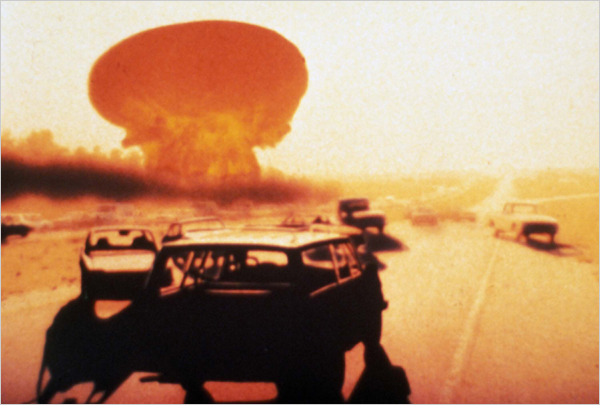
Screen shot from The Day After (November 1983) ABC movie, presumably suburban Kansas City, MO/KS, October 21, 2007. (Stout/NY Times).

Screen shot from The Day After (November 1983) ABC movie, presumably suburban Kansas City, MO/KS, October 21, 2007. (Stout/NY Times).

The very first time I fully understood the dangerous and fatal that defined this world was toward the end of fifth grade, in May ’80. It was an early May Thursday in Mrs. O’Daniel’s classroom at William H. Holmes Elementary in Mount Vernon, New York, a bright, sunny spring day. We were in independent reading mode, and Mrs. O’Daniel had given me permission to read ahead in our social studies textbook, which focused on American history.

We had left off with the Great Depression and all of the suffering that came with it. Of course, this was a collective history, one which didn’t even have the special sufferings of people of color or women in blue boxes — yet. So Whites represented all Americans. This wasn’t something I picked up on in ’80, at least consciously. But luckily, between Lerone Bennett’s edited three-volume Ebony Pictorial History of Black America (1974) at home and Mrs. O’Daniel constantly supplementing our knowledge at school, I was more aware of the deficiencies of textbooks long before I could articulate them.

As I turned the pages and read about the great battles of World War II, the horrors of Pearl Harbor and the gathering of the righteous power of the US to win the war, I suddenly saw something that shook me to my core. It was the picture of the atomic bomb’s mushroom cloud hovering over Nagasaki like death itself. It was in full color, bright and yellow and white, and obviously hot and broiling. The camera shot had managed to capture some of the landscape below, the area surrounding Nagasaki an August summer green. As I read about the 70,000 killed instantly at Hiroshima, an area the size of Mount Vernon completely flattened by a bomb that at its core had only a few pounds of weapons-grade uranium, I was frightened. I could be dead at a moment’s notice, or worse, suffer from radiation burns and sickness, in which case I’d truly be among the walking dead.

But this was only one phase of my nightmare. As things at 616 went from stable to completely out of control, my nuclear nightmares became more frequent. It seemed like there was a nuke for every day of the week during my last year as a Hebrew-Israelite. Watching The Day After on ABC in November ’83 didn’t help matters, but I also couldn’t help myself. I was both repulsed by and attracted to the idea of nuclear annihilation and survival. Maybe because I was already living through one hell of a disaster at 616.

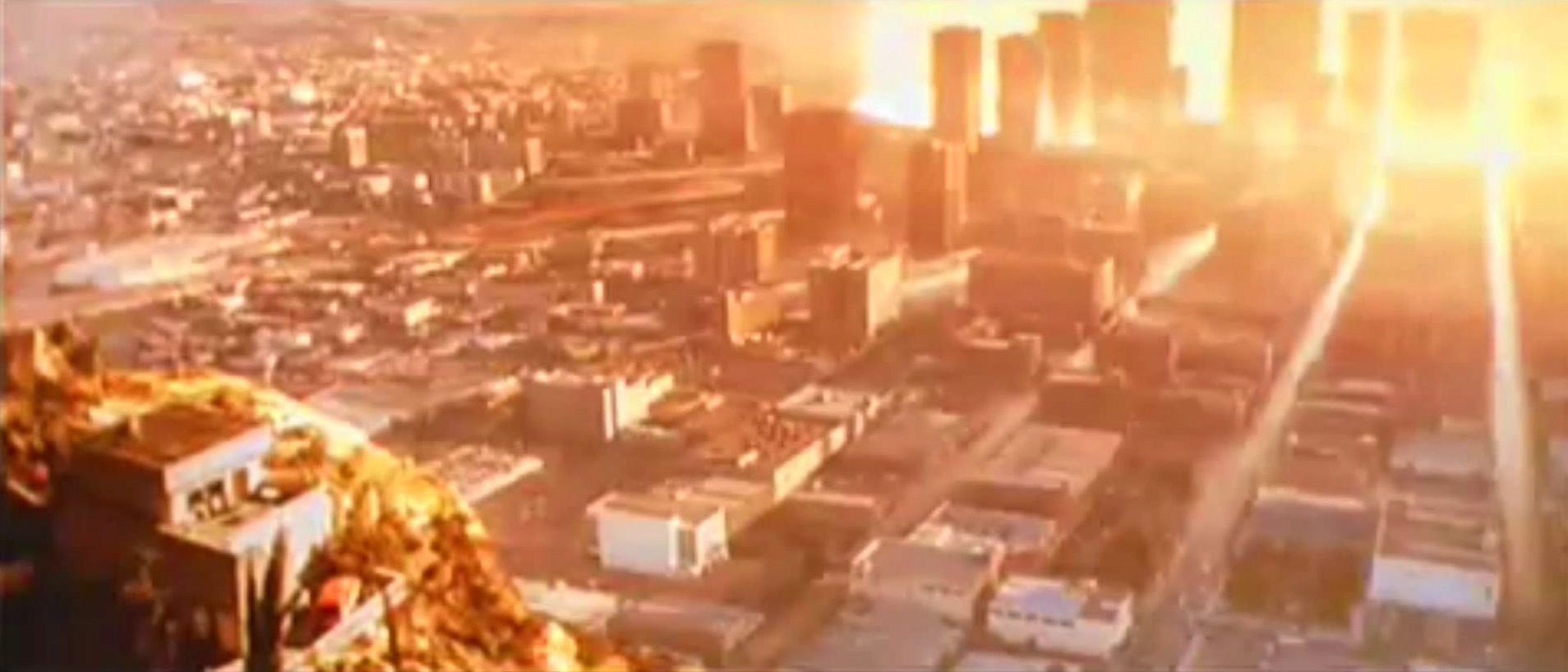
Cropped screen shot of Los Angeles at beginning of nuclear strike, from Terminator 2 (1991), May 3, 2014. (http://youtube.com).

Cropped screen shot of Los Angeles at beginning of nuclear strike, from Terminator 2 (1991), May 3, 2014. (http://youtube.com).

My nuclear nightmares continued at nearly daily pace until after I saw Terminator 2 in June ’91. At that point, I realized that my nightmares weren’t so much about the plausibility of surviving a nuclear holocaust as they were about surviving my own preteen and teenage years. It occurred to me there are worse things in life than dying, and like surviving nuclear war, surviving a violent and unstable childhood like mine has significant side effects. I could be occasionally be up, I was much more frequently down, I could occasionally fly into a rage. And I could have recurring nightmares of me murdering my now dead ex-stepfather. All signs of PTSD.

Realizing this, I took control over my dream world, and managed to push my plutonium-tipped dreams into a box, along with so many things from my decade of evangelistically twisted fire and brimstone from two religions. I still watch end-of-the-world movies, though without the extreme fervor of dream-based certainty of suffering a lingering death. Though I do often find it funny how White fears permeate these movies.

Why I Waited 9 Months to Watch 12 Years A Slave

20 Sunday Apr 2014

Posted by decollins1969 in 1, Academia, Boy @ The Window, Christianity, culture, Eclectic, eclectic music, Hebrew-Israelite, Movies, music, Politics, Pop Culture, race, Religion, Youth

≈ Leave a comment

Tags

12 Years A Slave (2013), African American History, Black Heritage, Chiwetel Ejiofor, Father-Son Relationships, Growing Pains, Growing Up, Inhumanity, Late Bloomer, Learning About Race, Lupita Nyong'o, Michael Fassbender, Slavery, Solomon Northrup, Steve McQueen, US History


Chiwetel Ejiofor in 12 Years A Slave (2013) screen shot, January 17, 2014. (http://blog.sfgate.com/). Qualifies as fair use under US copyright laws -- it illustrates subject of piece.

Chiwetel Ejiofor in 12 Years A Slave (2013) screen shot, January 17, 2014. (http://blog.sfgate.com/). Qualifies as fair use under US copyright laws — it illustrates subject of piece.

I’m usually late to the game. That’s been a running theme in my life since the early ’80s, when, as a result of my Hebrew-Israelite years, I found myself often years behind on pop culture trends. New books, new music, new dance moves, new colloquialisms, new movies. I might as well declared myself as an adult in April ’81, at least as far as the ’80s were concerned. Yet I did catch up, sometimes taking as long as a decade to get a punchline to a joke that my nemesis and classmate Alex made in seventh grade.

But not following the herd has its benefits, too. For one, I’ve gotten to look at things from a fresh perspective (some would even say as an outsider — that’s accurate as well), without succumbing to hype or groupthink about a piece of culture. Waiting also has meant that I’ve often read reviews of movies but managed to miss content-based details and that I’ve read books without forming an opinion based on its popularity ahead of my read (it’s also true about my path to Christianity). Being forced by circumstance to wait has meant that I am less apt to make sweeping declarations like “I grew up on hip-hop” when I in fact grew up with it, not on it like a drug.

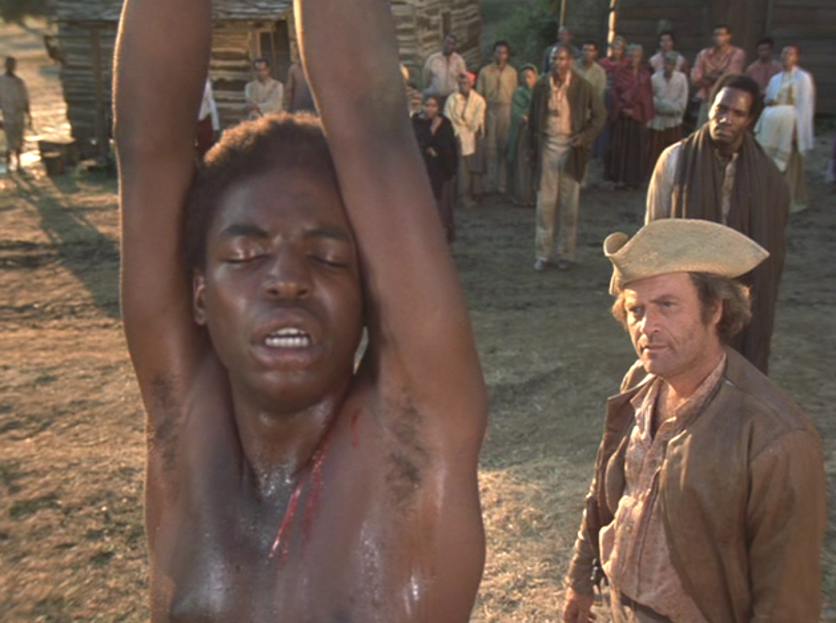
Kunta Kinte being whipped, Roots (1977) screenshot, July 6, 2012. (http://irvine.wikis.gdc.georgetown.edu). Qualifies as fair use under US Copyright laws because of screenshot's low resolution.

Kunta Kinte being whipped, Roots (1977) screenshot, July 6, 2012. (http://irvine.wikis.gdc.georgetown.edu). Qualifies as fair use under US Copyright laws because of screenshot’s low resolution.

With 12 Years A Slave (2013), though, I wanted to see it even before it came out here in the DC area in August. I’d heard about this film for months even before it was out in “select cities” in the US. Between Chiwetel Ejiofor and Michael Fassbender — two supreme British actors — I knew the film would be good. And depressing. And sad. And anger-inducing. And stomach churning. It would be an emotional roller-coaster-ride akin to my introduction to Roots on ABC in February ’77, when I was only seven years old.

So what stopped me from seeing it? My ten-year-old son. I wanted him to see the film with me. But I also knew that he would have a lot of questions. Outside of family and his visits to watch me teach my American and World History classes, my son has had little exposure to race in popular culture in an obvious sense. Most of his friends in our suburban, middle-class Silver-Spring-world are White, and his other Black friends have even less exposure to race than our deliberate injections (or inoculations) for our son.

I decided not to take him to see 12 Years A Slave because it would’ve been two hours of questions in a crowded theater, with those sitting around us ready to strangle us for ruining their watching experience. But I did queue it via Netflix weeks before it came out on DVD, with the expectation that we would watch it during his Spring Break, Easter Week.

As soon as I told my son that we were watching 12 Years A Slave last week, he became whiny and upset. Whiny because his time away from anime and Disney shows would be interrupted with parenting. Upset because of the movie title and its implications. As my son said to me when he was upset, “You made me watch Roots last year!” Well, we watched three hours of it, enough for him to see the sequence of kidnapping, the Middle Passage, slave auctions, running away, rape, whippings, and Kunta Kinte’s foot cut off. I guess the message of slavery and history really did stick with him!

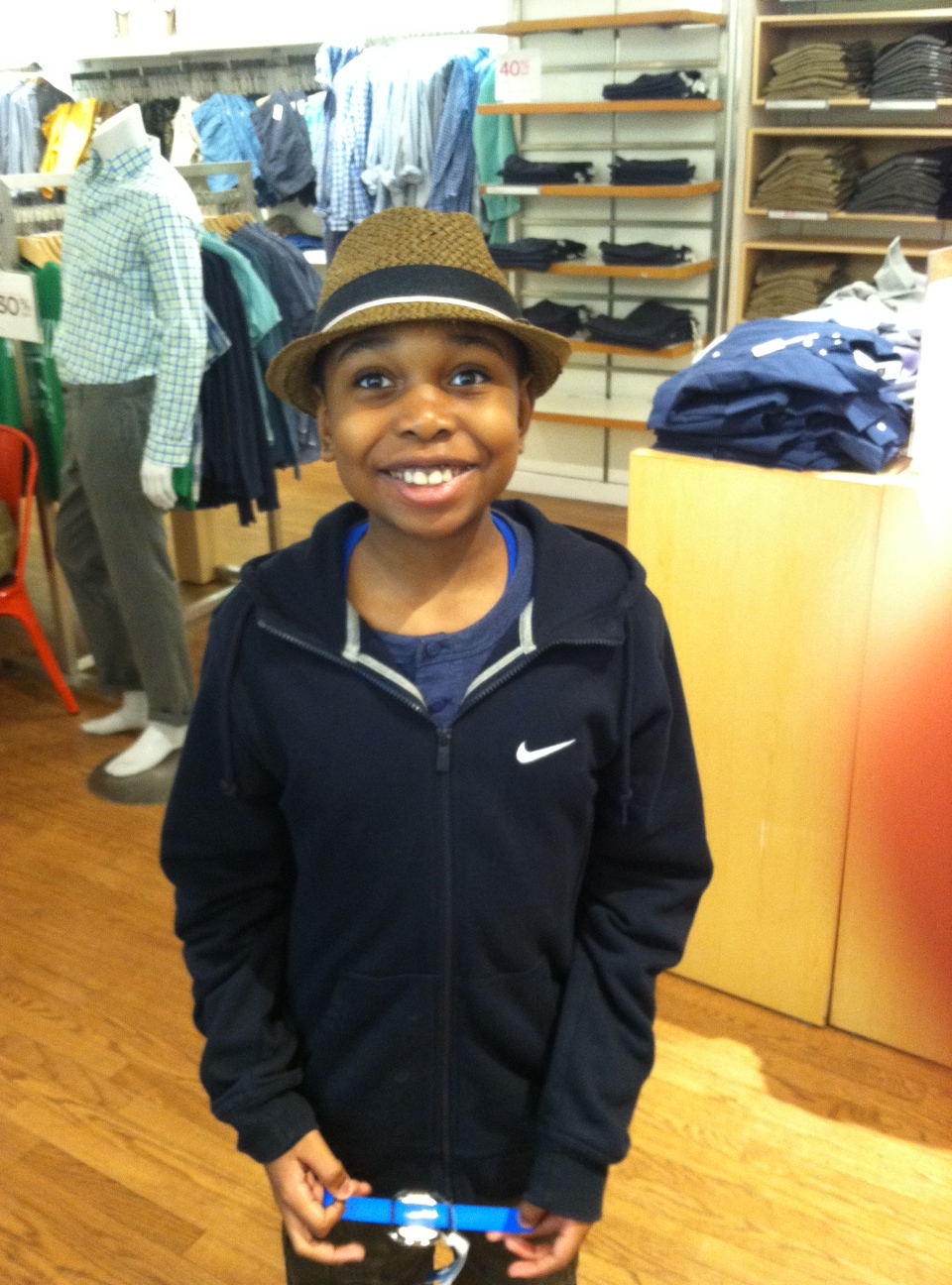
Noah trying to look cool at  The Gap store, Chevy Chase, MD, March 28, 2014. (Donald Earl Collins).

Noah trying to look cool at The Gap store, Chevy Chase, MD, March 28, 2014. (Donald Earl Collins).

We finally sat down and watched 12 Years A Slave Thursday evening. And yes, Noah did have a ton of questions, about Solomon Northrup, about free Blacks, kidnapping, mistreatment and the concept of property, about race, sexual attraction and rape, and about the rule of law. But I was more surprised about two things. One, my son sat through most of the two-and-a-quarter hour film, and only got up twice. Two, he paid serious attention in a way that he hadn’t appeared to in watching serious films before.

Still, my son was more than happy to return to his Nintendo 3DS and the land of Disney shows before bedtime that evening. The fact that he fell asleep right after bedtime, though, made it obvious, at least to me, that we’d given him more thought for food about history, race, and his own heritage.

And though I don’t think the movie was as epic as the hype-meisters have presented it to be, it was a great film, with great acting — I’m not sure if todays American actors could’ve pulled off Ejiofor’s, Fassbender’s or Lupita Nyong’o’s roles. 12 Years A Slave is also an important film, at least in terms of interrogating the meaning of race and inhumanity in this world. I just hope that those messages made it into my son’s conscious thinking. Time will tell, but enlightenment is a journey, not a race.

← Older posts
Newer posts →

Boy @ The Window: A Memoir

Boy @ The Window: A Memoir

Places to Buy/Download Boy @ The Window

There's a few ways in which you can read excerpts of, borrow and/or purchase and download Boy @ The Window. There's the trade paperback edition of Boy @ The Window, available for purchase via Amazon.com at http://www.amazon.com/Boy-Window-Donald-Earl-Collins/dp/0989256138/

There's also a Kindle edition on Amazon.com. The enhanced edition can be read only with Kindle Fire, an iPad or a full-color tablet. The links to the enhanced edition through Apple's iBookstore and the Barnes & Noble NOOK edition are below. The link to the Amazon Kindle version is also immediately below:

scr2555-proj697-a-kindle-logo-rgb-lg

Boy @ The Window on Amazon.com: http://www.amazon.com/Boy-The-Window-Memoir-ebook/dp/B00CD95FBU/

iBookstore-logo-300x100

Boy @ The Window on Apple's iBookstore: https://itunes.apple.com/us/book/boy-the-window/id643768275?ls=1

Barnes & Noble (bn.com) logo, June 26, 2013. (http://www.logotypes101.com).

Boy @ The Window on Barnes & Noble: http://www.barnesandnoble.com/w/boy-the-window-donald-earl-collins/1115182183?ean=2940016741567

You can also add, read and review Boy @ The Window on Goodreads.com. Just click on the button below:

Boy @ The Window

Twitter Updates

Tweets by decollins1969
  • RSS - Posts
  • RSS - Comments

Archives

  • June 2025
  • April 2023
  • September 2022
  • August 2022
  • July 2022
  • June 2022
  • May 2022
  • April 2022
  • March 2022
  • January 2022
  • December 2021
  • November 2021
  • October 2021
  • September 2021
  • August 2021
  • July 2021
  • June 2021
  • April 2021
  • March 2021
  • February 2021
  • January 2021
  • December 2020
  • November 2020
  • October 2020
  • September 2020
  • August 2020
  • July 2020
  • May 2020
  • April 2020
  • March 2020
  • January 2020
  • December 2019
  • November 2019
  • August 2019
  • July 2019
  • June 2019
  • May 2019
  • April 2019
  • March 2019
  • February 2019
  • January 2019
  • December 2018
  • November 2018
  • October 2018
  • September 2018
  • August 2018
  • July 2018
  • June 2018
  • May 2018
  • March 2018
  • February 2018
  • January 2018
  • December 2017
  • November 2017
  • October 2017
  • September 2017
  • August 2017
  • July 2017
  • June 2017
  • May 2017
  • April 2017
  • March 2017
  • February 2017
  • January 2017
  • December 2016
  • November 2016
  • October 2016
  • September 2016
  • August 2016
  • July 2016
  • June 2016
  • May 2016
  • April 2016
  • March 2016
  • February 2016
  • January 2016
  • December 2015
  • November 2015
  • October 2015
  • September 2015
  • August 2015
  • July 2015
  • June 2015
  • May 2015
  • April 2015
  • March 2015
  • February 2015
  • January 2015
  • December 2014
  • November 2014
  • October 2014
  • September 2014
  • August 2014
  • July 2014
  • June 2014
  • May 2014
  • April 2014
  • March 2014
  • February 2014
  • January 2014
  • December 2013
  • November 2013
  • October 2013
  • September 2013
  • August 2013
  • July 2013
  • June 2013
  • May 2013
  • April 2013
  • March 2013
  • February 2013
  • January 2013
  • December 2012
  • November 2012
  • October 2012
  • September 2012
  • August 2012
  • July 2012
  • June 2012
  • May 2012
  • April 2012
  • March 2012
  • February 2012
  • January 2012
  • December 2011
  • November 2011
  • October 2011
  • September 2011
  • August 2011
  • July 2011
  • June 2011
  • May 2011
  • April 2011
  • March 2011
  • February 2011
  • January 2011
  • December 2010
  • November 2010
  • October 2010
  • September 2010
  • August 2010
  • July 2010
  • June 2010
  • May 2010
  • April 2010
  • March 2010
  • February 2010
  • January 2010
  • December 2009
  • November 2009
  • October 2009
  • September 2009
  • August 2009
  • July 2009
  • June 2009
  • May 2009
  • April 2009
  • March 2009
  • February 2009
  • January 2009
  • December 2008
  • November 2008
  • October 2008
  • September 2008
  • August 2008
  • July 2008
  • June 2008
  • May 2008
  • April 2008
  • March 2008
  • February 2008
  • January 2008
  • December 2007
  • November 2007
  • October 2007
  • September 2007
  • August 2007
  • July 2007
  • June 2007

Recent Comments

MaryPena's avatarMaryPena on My Day of Atonement/Bitter Hat…
decollins1969's avatardecollins1969 on No Good Teaching Deed Goes…
Mary Rose O’Connell's avatarMary Rose O’Connell on No Good Teaching Deed Goes…

NetworkedBlogs on Facebook

NetworkedBlogs
Blog:
Notes From a Boy @ The Window
Topics:
My Life, Culture & Education, Politics & Goofyness
 
Follow my blog

616 616 East Lincoln Avenue A.B. Davis Middle School Abuse Academia Academy for Educational Development AED Afrocentricity American Narcissism Authenticity Bigotry Blackness Boy @ The Window Carnegie Mellon University Child Abuse Class of 1987 CMU Coping Strategies Crush #1 Crush #2 Death Disillusionment Diversity Domestic Violence Economic Inequality Education Family Friendship Friendships Graduate School Hebrew-Israelites High-Stakes Testing Higher Education History Homelessness Humanities Humanities Program Hypocrisy Internalized Racism Jealousy Joe Trotter Joe William Trotter Jr. K-12 Education Love Manhood Maurice Eugene Washington Maurice Washington Misogyny Mother-Son Relationship Mount Vernon High School Mount Vernon New York Mount Vernon public schools Multiculturalism MVHS Narcissism NFL Pitt Pittsburgh Politics of Education Poverty President Barack Obama Race Racial Stereotypes Racism Relationships Self-Awareness Self-Discovery Self-Reflection Sexism Social Justice Teaching and Learning University of Pittsburgh Violence Whiteness Writing

Top Rated

Blog at WordPress.com.

  • Subscribe Subscribed
    • Notes from a Boy @ The Window
    • Join 103 other subscribers
    • Already have a WordPress.com account? Log in now.
    • Notes from a Boy @ The Window
    • Subscribe Subscribed
    • Sign up
    • Log in
    • Report this content
    • View site in Reader
    • Manage subscriptions
    • Collapse this bar
 

Loading Comments...