• About Me
  • Other Writings
  • Interview Clips
  • All About Me: American Racism, American Narcissism, and the Conversation America Can’t Have
  • Video Clips
  • Boy @ The Window Pictures
  • Boy @ The Window Theme Music

Notes from a Boy @ The Window

~

Notes from a Boy @ The Window

Category Archives: music

Revealing in Cloaked Blindness/I Heart Kendzior’s Work

30 Thursday Apr 2020

Posted by decollins1969 in 1, Academia, Boy @ The Window, culture, Eclectic, eclectic music, Mount Vernon New York, music, New York City, Pittsburgh, Politics, Pop Culture, race, Religion, Work, Youth

≈ Leave a comment

Tags

American Dream, American Nightmare, Autocracy, Book Review, Both-And, Critique, George W. Bush, Glide Path, Great Writing, Hiding in Plain Sight (2020), History, Kleptocracy, Political Analysis, President Donald J. Trump, Sarah Kendzior


Front cover of Hiding in Plain Sight: The Invention of Donald Trump and the Erosion of America (2020), by Sarah Kendzior, April 30, 2020. (Donald Earl Collins).

In the past four years, I have read so many good and great books, fiction, nonfiction, and mixed genre. Black and Brown writers — especially Black women and Latinas — have written nearly all of them. Brittney Cooper (crunk, crunk!), Chimamanda Ngozi Adichie, Colson Whitehead (masterclass!), Crystal Marie Fleming, Darnell Moore, Bassey Ikpi (poetic masterclass!), Erica Armstrong Dunbar (literally brought together the academic with creative nonfiction) , Ijeoma Oluo, Kiese Laymon (Black abundance and excellence, of course!), Mona Eltahawy, Morgan Jerkins, Patricia J. Williams, the ever-great Roxane Gay,  Tressie McMillan Cottom, Raquel Cepeda (a New Yorker after my own heart!), Imani Perry (3 books in two years — this woman has range!), Leta Hong Fincher, Jose Antonio Vargas, Alondra Nelson, Mycheal Denzel Smith, and likely another ten or fifteen I can’t remember by name.

All of them (really, all of y’all, since I have had conversations with you all in person, on social media, or in my head since 2016) have confirmed so many of my ideas around racism and narcissism, about the use of the interdisciplinary, about the hard-nosed work of writing. They have strengthened my voice around Black feminism, critical race theory, Afrofuturism (a term I was chagrin to use about my own writing this time seven years ago), and queer studies. They all have shown what I have been teaching since I was a PhD student in 1993 — the connections between -isms-laden ideas and deliberately punitive policies meant to cower the ordinary and crush the marginalized.

Sarah Kendzior has done so much on this last theme, uncloaking the connections between the ambitions of brazenly craven rich White guys (and some women) to enrich and empower themselves while destroying the US that came to be with FDR, the New Deal, and the post-World War II superpower boom. And Kendzior does so unassumingly, with bits of memoir that parallels the US glide path toward naked autocracy since the mid-1970s.

I’ve been reading Kendzior since her freelancing days with Al Jazeera, so, somewhere around 2012 or 2013. So many of the themes in Hiding in Plain Sight are familiar, if only because those themes of a hollowed-out St. Louis, a systemically racist and autocratic government, where corrupt and unaccountable leaders are front and center in nearly everything that Kendzior writes. Plus, I am a half-century old Black man and historian who grew up in malnourished welfare poverty and around eschatological cults in Mount Vernon, New York and in New York City. Everything Kendzior has written over the years, I know down to my bones and veins.

Because of that, I wasn’t sure if I wanted to buy Hiding in Plain Sight, forget about reading it. But Kendzior uses her book to build a case better than Perry Mason and Jack McCoy (of Law & Order lore, played by Sam Waterston) could on their best days. Kendzior’s thesis is that Trump as POTUS was inevitable, as the “elite criminal network” of which Trump is a part “has been building for decades.” This network includes “right-wing Republican extremists, apocalyptic religious movements of varied faiths, social media corporations, advocacy groups like the National Rifle Association, and part of the mainstream media.” According to Kendzior, what makes them new and lethal to the US is their “transactional nature and reliance on non-state actors.” Ultimately, this cabal “will take your money, they will steal your freedom, and if they are clever, they will eliminate any structural protections you had before the majority realizes the extent of the damage.” Along the way, they are transitioning the US “from a flawed democracy to a burgeoning autocracy” (pp. 8-9).

Kendzior skillfully uses her own growing up and adult experiences and the places she’s inhabited in building the interconnections between Trump’s lifetime of enabled narcissism and criminality and the rise of the American autocracy. She starts where she usually does, in Missouri, “the bellwether state turned corruption capital, the broken heartland that got the sneak preview to the national shitshow” (p. 20). Kendzior makes the case that Missouri and St. Louis even more specifically represents well the erosion of democracy all over the US with the infusion of dark money and out-of-state money and operators in state and local elections. I do think that she oversells the assumption of Missourian and Rust Belt irrelevance here, if only because every White American actor attempts a Missourah or Midwestern accent in the standard movie, TV show, or internet series not centered in New York.

But I digress. The gutting of Missouri and the rest of the Midwest between St. Louis and Pittsburgh (although so many cities outside the Rust Belt could say the same, like my own original hometown) was a deliberate one, meant to destroy unions, to line politicians’ pockets, and to enrich already filthy-rich folk. People like one Donald J. Trump.

Kendzior again builds a Mayan-step-pyramid-of-evidence to show how Trump had aspirations toward the presidency at least since the 1980s, and had gotten away with grifting projects and Ponzi schemes since the 1970s. And with those twin motivations, how Trump could easily become comrades with Russian mobsters and the likes of the infamous Roy Cohn, with Paul Manafort, with Roger Stone, and the rest of this crew of the craven. And Kenzior ties this one up with a macabre dystopian bow, bracketing Trump’s almost inevitable rise with the story of how her mother taught her about George Orwell’s 1984, a timeline her “mother laughingly assured [her] did not exist” (p. 76). “We are living in the future Orwell warmed about” now, Kendzior wrote.

Among the more heartbreaking vignettes in Hiding in Plain Sight is the story of Kendzior’s own personal experience with the new normal of constant job and financial insecurity born from a false Great Recession recovery in the years after 2008. The collective we have often looked back at the Obama years with fondness. But all the while, the US kept rolling down the same road to autocratic perdition, chewing up everyone not affluent along the way. Kendzior’s experience is no different from my own, and no different from at least 150 million others.

For over a year I would wake up shaking. The economic nightmare I had documented for years as a journalist had finally gotten me, like a monster I had tracked but failed to slay…It made no difference what we could offer the world. We only knew what the world could take away…The rage, though — that stays with you. (pp. 133-135).

Kendzior wrote a book that few who truly understand the nature of the evil that has infected the US since the 1970s could argue is incorrect. Her analysis is nearly as excellent as the prose, to be sure.

I do have a few bones to pick. Mostly because I had a hard time figuring out the audience Kendzior was attempting to reach. Was it other journalists? The broader American public? Anyone who needs a Laurence Fishburne-style “Wake up!!!” call from School Daze?

I landed on nearly-disillusioned-White-Americans as Kendzior’s audience, the ones still clinging to the hope of the American Dream with their fingernails, the ones who all but realize that the Dream is a lie and a nightmare for almost all of us. “I am trying to show them [her children] our country was always vulnerable, always flawed, but that people fought back. We’ve survived as long as we have due to self-criticism and sacrifice, a willingness to examine our faults and try to fix them,” Kendzior wrote (p. 213).

I’m sorry, but this is the America I read about in a Harcourt, Brace and Jovanovich textbook from fifth grade in 1980, not the America in which I have lived for 50 years, worked in since I was 14, and studied for three decades. This is a part of the American mythology, this idea of self-correction. The only times the US has changed to mete out symbolic half-measures toward its ideals has been when the marginalized through years and even decades of resistance have forced it to. Full stop. To suggest otherwise would be to suggest a land that believes in anti-racism, Black feminism, reproductive rights, non-binary sexuality, and democratic socialism. Where is this US? I am still looking.

Another criticism is around Trump himself, and about the arc of the autocratic glide path of the US since 1968. Yes, just as Kendzior and others have written, I have also written that Trump was an inevitable consequence of rampant criminality and grifting, of lying in the same bed with mobsters and autocrats from Russia, Israel, Saudi Arabia, and the US. But really, in a country as racist, misogynistic, and narcissistic as the US has always been, someone like Trump was always the danger, and has happened on some level in the past (see Andrew Jackson, see James Buchanan, see Teddy Roosevelt, see even FDR’s four terms in office, as good as his New Deal policies were). The US is just two months removed from Mike “will get it done” Bloomberg running for president, a much more competent billionaire and grifter, with his own ideas for autocratic rule. It ended up being Trump, but it could have been any of a dozen aspirants we’ve seen from the top 1% over the past three decades, starting with Ross Perot.

Kendzior’s centering of Trump is disturbing because the “burgeoning autocracy” has always been an autocracy for Blacks and for indigenous Americans, going back to the days before the US even existed. In modern politics, the dividing line isn’t Trump or the Great Recession. It’s Vietnam and Richard Nixon and his “Southern Strategy” in 1968. It’s the Reaganomics and the corporate deregulation of the 1980s, followed up with gutting the social welfare state that has occurred with every president since Reagan, including Mr. “Mend it, don’t end it” himself, Bill Clinton. As Malcolm X said in his “The Ballot or the Bullet” speech at King Solomon Baptist Church in Detroit, Michigan in 1964, “Oh, I say you been misled. You been had. You been took.” But not by Trump, at least not just. Trump was the one Kendzior and so many others saw coming, but could do nothing about, because Trump wasn’t the first.

“The Bush Legacy” editorial cartoon, Nate Beeler, January 13, 2009. (https://www.dailykos.com/stories/2010/11/13/919739/-; Washington Examiner). Fair use applies due to low resolution of screen shot and subject matter.

And if Trump was inevitable, then what does that say about our first family of autocrats, George H. W. Bush and George W. Bush? The amount of international meddling in which these two presidents engaged? The trillions spent on wars, all for more access to Saudi Arabian oil, their autocracy, and their money, and all to line their pockets and the pockets of cronies, especially those within the military-industrial complex? Dubya and Cheney used 9/11 to push the Patriot Act in Congress, the single biggest autocratic move in American history since the Electoral College? The players on the US side of the table may be different in 2020, but the evidence gathered in the years since 2000 show significant foreign interference and at least one rigged election. But I’m supposed to believe that Trump’s version of autocracy is worse because his corruption is much more obvious and because his flaunts it with buffoonery and a deluge of lies? Anyone remember a Dubya presser between 2000 and 2009?

I am a big believer in both-ands. Binary either-or explanations may be simple, but they are usually incomplete. Kendzior argues that Trump’s a master of using buffoonery and deception to bamboozle an audience and distract them from his daily crimes. Most of the rest of us think Trump is as dumb as shit. But why can’t he be both? Mussolini, Stalin, and Hitler are all proof-positive that one does not need great analytical power to be savvy, brazen, and bullying enough to make one’s stupidity work for them. And when someone like Trump comes from money, it is that much easier.

There’s this song “Silent Running” by the ensemble pop/rock group Mike + The Mechanics — with Mike Rutherford of Genesis, Paul Carrack of Squeeze, B. A. Robertson, et al. — from 1985-86. Kendzior may have heard it growing up. The music is eerie and an homage to resisting totalitarianism. The lyrics, though, so poignant, both to Hiding in Plain Sight and to where my mindset has been about the US since the 1980s.

Take the children and yourself
And hide out in the cellar
By now the fighting will be close at hand
Don’t believe the church and state
And everything they tell you
Believe in me, I’m with the high command…

Swear allegiance to the flag
Whatever flag they offer
Never hint at what you really feel
Teach the children quietly
For some day sons and daughters
Will rise up and fight while we stand still

That’s what I hope my descendants (literal and figurative) will take with them, and that’s what I hope for Kendzior’s children. Anything about a primrose American past in the time before cronyism and Coronavirus, though, would belie this “Silent Running” truth. I strongly urge everyone I know to read Kendzior’s book. Just be sure to find the words “Bush,” “Dubya,” and “both-and” along the way.
How Did I Know I Was Heterosexual?

09 Saturday Mar 2019

Posted by decollins1969 in 1, Boy @ The Window, Christianity, culture, Eclectic, eclectic music, Hebrew-Israelite, Jimme, Mount Vernon New York, music, My Father, New York City, Pop Culture, race, Religion, Upper East Side, Upper West Side, Work, Youth

≈ Leave a comment

Tags

Asexuality, Attraction, Bible, Chastity, Colorism, Evangelical Christianity, Heterosexism, Hypermasculinity, Misogynoir, Misogyny, Self-Realization, Self-Reflection, Sexual Orientation, Sexuality, Teenage Angst


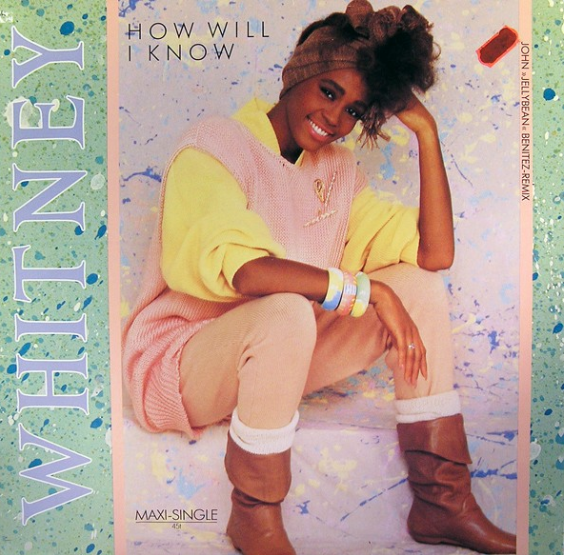
Whitney Houston’s “How Will I Know” 45 single sleeve, circa 1986. (https://medium.com)

This is more than just whether I knew I liked teenage girls and women by the time I was my son’s current age of fifteen, though. Between humping older women’s legs when I was three or four years old (too much information, I suppose), me and Diana slobbering on each other in first grade, and my crush on Ms. Shannon in third grade, that would be enough for most kids to know their orientation. But because I wasn’t “hard” like the boys I lived around at 616 and 630 East Lincoln and the young Turks who lived in public housing on Pearsall Drive, I was often the neighborhood “pussy” or “faggot.” I was mugged four times between April 1979 and the end of 1983. I spent more than one weekend dodging a hail of pebbles and rocks that the neighborhood kids pelted me with. That, and the then buried sexual assault I endured when I was six left me questioning my own sexuality, and with that, my place in the world in terms of friendships and relationships.

The whole Hebrew-Israelite thing, and the additional layers of abuse, hypermasculinity, and misogyny that came with it didn’t help my evolution one bit. One would think that a months-long crush on — really, love for — Wendy in the spring of 1982 would once and for all settle this issue. It didn’t. It didn’t because even I recognized that my love for Wendy was for the version of her who took up space in my imagination. She had become ethereal, and was detached from the flesh-and-blood human being with whom I shared little more than the confines of the classroom in the years between 1981 and 1987. I found her attractive, but had already judged myself unworthy.

Puberty, rebellion, and my switch to Christianity in 1984, and the contradictions that came with this switch over the next year, would tell me more about who I was. This was the beginning of my years of relative asexuality, at least as I presented myself in public. Since I dedicated my life to Jesus, every potential carnal thought I had or action I could take was met with self-doubt and loathing. Mostly, though, I feared for my newborn soul. I feared that somehow, I would go back to being suicidal, Hebrew-Israelite-and-going-to-Hell Donald, the one that got clowned and stoned before reaching six-foot-one.

One of my many attempts at being chaste between September 1984 and May 1985 involved toting my Bible everywhere and breaking it out to read during every idle moment. At school, which got me in trouble with my 10th grade history teacher, Ms. Zini. At home, when I wasn’t distracted by music, my younger siblings, or our fucked up living arrangement with one Balkis Makeda. As sanctimonious as it was, I was really trying to learn, to receive revelation, to understand how this 66-book, 1300-page document could transform me and my mini-apocalyptic world.

I also rode the buses and subways around the city with my red-covered Bible in hand. On many Fridays and Saturdays, whether working for my dad or hunting him down for money, or just because I needed to get away, I’d take the 2 from East 241st in the Bronx to 72nd in Manhattan, or further down, to Times Square, or sometimes, all the way out to Flatbush in Brooklyn.

No matter where I or we (when my older brother Darren would tag along) went, the most interesting part of these outings usually were the people who would be in the cars with me/us. Drunkards who reminded me of Jimme. Older Jamaican women on their way to do domestic work. Middle-aged, haggard-looking White guys who dressed twenty years too young for their faces.

Screenshot from “I Wonder If I Take You Home” video, Lisa Lisa & Cult Jam (1984/85). (https://imgue.com).

Frequently, Nuyorican or Dominican girls and young women would board somewhere between 180th and East Tremont and 149th and Grand Concourse (though because of the ethnic tensions I didn’t understand at the time, certainly not at the same time). I would look up from reading II Chronicles or Esther or Ephesians, and before I could comprehend the people my eyes took in, my dick responded. At 15, I already knew that even a mildly warm breeze was enough for me to get a hard on. I didn’t know that four or six young Latinas on a train wearing bright, tight clothes, makeup, lipstick, and perfume, and heels that would accentuate their breasts, hips, and round butts would completely counter my asexual front. Luckily for me, the Bible-toting phase of my life was during wintertime, and I could cover up my woody with my jacket.

Of course, it felt sinful, and I felt ashamed, that a second and a half of staring up from my Bible would lead to carnal stirrings. But it also gave me a sense of who I was and wasn’t attracted to, really and truly. When White girls with their voluminous ’80s hair got on the train, I hardly noticed. They were trying too hard, and their flat butts did nothing for me. When single Black women in their twenties and thirties would board, I noticed, too. I didn’t have what I would learn later to be colorism issues.

Of course, I learned that I was heterosexual, which I knew would please my Mom to no end. Which actually pissed me off. So, if I had discovered I was gay, she wouldn’t accept me? Wow!, I thought one April Saturday on way back to East 241st. At that point, my evangelical zeal for setting myself apart from the rest of world with my Bible as a baseball bat had waned. I was nowhere near ready to be involved in any kind of relationship that would lead to sex. But, I was ready to drop the idea that my eternal life completely depended on me ignoring both women and my attraction to women. I would remain publicly asexual for a few more years and endure f-bombs from my dad. Truly, it took until I was twenty to understand that whatever my orientation, no one has the right to tell me that my sexuality was anathema to my Christianity.

Year 50 (So It Begins…)

05 Saturday Jan 2019

Posted by decollins1969 in 1, Boy @ The Window, culture, Eclectic, eclectic music, Jimme, Mount Vernon High School, Mount Vernon New York, music, My Father, Pop Culture, race, Religion, Work, Youth

≈ Leave a comment

Tags

"Let It Be" (song), "To 'Joy My Freedom", 1969, Accomplishments, Birth Year, Career, Falling Short, Family, Future, Living This Long, Marriage, Mortality, Self-Criticism, Self-Reflection, Tera Hunter, The Beatles, Unfinished Business


US Route 50 sign, August 26, 2017. (Fredddie, originally SPUI, via http://wikipedia.com). In public domain

As I’ve said in other settings and on my blog, I never dreamed of making it to 30 growing up. Fifty might as well have been 150 for me when I was in the middle of my Boy @ The Window years! But, with my forty-ninth birthday and the calendar change to 2019, I’m here anyway. A half-century (starting sometime in March) between conception and me being just old enough for my son and my students to see me as a fossil. To think that I was Egg #3 in one of my Mom’s ovaries this time 50 years ago? I’m sure I just creeped myself and a large number of you out with that strand of my imagination!

But this isn’t just my Year 50. There are some 500 people I know from my Mount Vernon public schools days, from my years at the University of Pittsburgh and Carnegie Mellon, and from other settings who’ll turn 50 this year. Among the Mount Vernonites and New Yorkers I’ve known directly, between a handful who graduated with the Class of ’86, and with the exception of a couple who graduated with my class in ’87 a year early, almost all from my high school days will turn 50 between now and January 2, 2020 (One notable exception is a classmate whose forty-ninth birthday isn’t until April, but…).

What does all of this really mean, anyway? Have I used up more than half of my youth? Will I shrink immediately? Will my joints, which only ache on occasion, grind me into oblivion and infinite pain at the same time? Will my steel-trap mind become mush? Or, will I finally harness my lost dunking ability, in one last grand gesture of youth, getting my head above the rim one last time, before crashing down to earth and fracturing my metatarsals? Who knows!

What I do know is that I’ve been keenly aware of my mortality since my summer of abuse in ’82, and off and on since the summer of ’76. With a milestone such as this, and the average life expectancy of Black males at 64.5 years, I can’t help but think it. Will I make it through middle age? Heck, will I make it long enough to see my son graduate from high school and earn a higher education degree? Will my wife outlive me (probably), and if so, by how much?

Mostly, though, I’ve had dreams about the plausibility that I haven’t done enough in my life, and what little I have achieved could be turned to ash in an instant. Especially by an indifferent-to-openly-hostile and virulently racist nation-state. I’ve had dreams about losing my jobs because I was forty-five minutes late to lecture for one of my classes. I’ve worried about whether I could ever publishing another article again, even though my track record the past four years has been at least pretty good. I’ve worried about never publishing a book in the mainstream, about leaving my son and wife with nothing, about the possibility that not everything will work out, for me and for us. I also worry about not doing enough to support my family, my friends, even strangers, knowing that I can barely save myself in the here and now, much less anyone else.

But perhaps God has more in store for me beyond Year 50. Dare I hope to be healthy and relatively youthful and around long enough to live past 70, 80, even 90? My grandfathers lived until they were 90 and 97, my aunts on my father’s side are both in their late eighties, and my father (despite a 40-year battle with the bottle) is nearly 80 himself. We’ll see.

I just hope that my youth battery is on the plus side of fifty percent, and not on the minus side. Part of me feels like I’ve only just started living, not out of mission, faithful desperation, or obligation, but out of a sense of it all being worth it, of me actually being worth it. I’ve traveled all over the US, to Alaska during the summer solstice, to Canada, to the US-Mexican border. But it was all for work, to present at conferences, to visit family, to give my son a sense of the world. Except for my honeymoon and other marital excursions, I’ve only traveled a couple of times just to experience the world. Despite my disdain for humanity, I still want that, for me and for my family. I can’t get there, though, on my current double-adjunct, full-time equivalent salaries. This must change.

If it all continues to work out, let it be this year, my God, let it be, let it be. For “there will be an answer, let it be” — eeeeee! (It’s not so interesting to quote a song from The Beatles final studio album, the title song released when I was just a bit more than two months old.) To misquote Princeton professor Tera Hunter’s 1996 book, let it be that I “‘joy my freedom,” that I give myself permission to do so, that my life gives me more opportunities to do so. Let Year 50 be about more than just Nixon and Vietnam, the Moon landing and the FBI’s infiltration of the Black Panther Party, about Woodstock and the Jets and Mets winning titles. Let it be that I have as keen an understanding of my future as I do of the past.

The Sweet Consolation of Suicide

27 Thursday Dec 2018

Posted by decollins1969 in 1, Academia, Boy @ The Window, Carnegie Mellon University, Christianity, culture, Eclectic, eclectic music, Hebrew-Israelite, Mount Vernon High School, Mount Vernon New York, music, Pittsburgh, Pop Culture, race, Religion, University of Pittsburgh, Youth

≈ Leave a comment

Tags

"I Still Haven't Found What I'm Looking For" (1987), Birthday, Brittney Cooper, Contemplation, Darnell Moore, Depression, Eloquent Rage (2018), God, Heavy (2018), Kiese Laymon, Living, No Ashes in the Fire (2017), Questioning, Self-Policiing, Self-Reflection, Self-Revelation, Suicidal Ideations, Suicide, Suicide Attempt, The Joshua Tree (1987), U2


Sweet-and-sour-chicken, 2011. Source: http://www.foodnetwork.com

Well, not exactly sweet to be thinking about what you have thought about and attempted to act out in the past. In the next few hours, I turn 49, which is to say that I begin year fifty on Planet Earth. “Yay me!,” right?

Not so much this time 35 years ago. My suicidal ideations had gone on in December 1983 for nearly three weeks before my fourteenth birthday, in the aftermath of my fourth mugging in four years. That Tuesday, December 27, at 2:30 pm, coming home from C-Town in Pelham, standing on the parapet of that stone bridge overlooking the Hutchinson River Parkway, I had every intention of jumping. I played it out in my head all the different possibilities. At first, it was going to be like the second between taking a deep breath plunging myself underwater and holding my breath while feeling the pressure build up all around my head, eyes, and ears. Except that I imagined a screech, a pop of a hit, and the world turning into stars before I escaped into eternal darkness.

But then, I thought about the plausibility of surviving the 13-foot jump, only to get hit by a car or truck flying down the parkway at 60 or more. Paralyzed, brain-damaged, trapped for days, months, years, decades even, in a body that defied me once again. At this point, my knees were already bent, pretty much ready to push off the stones I stood upon anyway. The possibility of survival and suffering, though, stopped me short of taking that leap. That, and wanting sweet revenge on the stepfather and others who had driven me to this moment.

It’s all in Boy @ The Window. What isn’t in the book is that I couldn’t imagine living past my thirtieth birthday, much less to 49. What isn’t in the book is that I have had other episodes where I either attempted to take my own life via car accident or had suicidal ideations (anywhere between 1982 and 1988, as well as in the late-1990s). This isn’t the same as contemplating my own mortality or considering how much more I may be worth dead than alive (at least I think it isn’t the same, anyway). If someone had put a gun to my head, and asked me why I should keep living, I probably would’ve told them to pull the trigger. I really didn’t have any answers when I got low enough to consider best suicidal practices.

Sure, in the process of working through my own trauma while in progress, I found God, I found Jesus, I read my Bible, I embraced the Holy Spirit. But as the U2 song goes, “I still haven’t found what I’m looking for,” at least not during my Boy @ The Window years, or in the years after my doctorate, or even after a decade in the nonprofit world. Heck, I’m still a work in progress, and not quite sure what’s around the corner for me (although I’m cautiously hopeful, with fingers and toes crossed, and knocking on wood in my mind’s eye as I type this). But a focus on escape isn’t enough. Striving for perfection — including perfect chastity — wasn’t enough. Even writing my fifty-to-100-pages-too-long memoir wasn’t enough.

Two things in the past decade have been enough. One was to admit, and not for the first time, that I controlled nothing, not even my own body, and certainly not all of my thoughts. For a person who’s policed himself as much as I have over the years, this was a hard truth to finally and fully accept, and that was a little more than four years ago. Two was that I needed to let out my thoughts and feelings, no matter how fucked up or how revealing or embarrassing they could be for me. Some of that has worked through this blog and Boy @ The Window. The rest has been as a result of social media, freelance writing, and otherwise remembering that though I may be truly weird, I am also truly human.

Maybe that’s why in the past couple of years I’ve mostly read Black women writers on their trauma and intersectional experiences, between Brittney Cooper, Morgan Jerkins, Roxane Gay, Crystal Fleming, Patricia J. Williams, and a host of others. Maybe that’s why I found more solace in Kiese Laymon’s Heavy than I ever did with any of my history monographs. Maybe this is why I’m convinced that to be a better writer, I had to become an even better reader, and read across genres and disciplines like I never had before. Maybe, too, this is why I as an educator have committed to use a wider variety of materials to reach my students, even if one or two want to only read mainstream history texts and don’t want to engage in “literary analysis.”

I finished Darnell Moore’s No Ashes in the Fire two days ago. Despite his stepping out of narrative to preach “Black radical love” at least three too many times, Moore’s book reminded me of what all the other wonderful books I’ve read in the past three years have told me. Share your truth, so that others may see, hear, or react to it. Tell your story, ‘cuz ain’t no one else gonna tell it for ya. Talk about it, if only to yourself, so that you know you’re not crazy. There’s bravery in putting in words your pain, your joy, your sense of the world and sense of self, your need for a higher power (or lack thereof). There’s courage in pointing to your unique sameness relative to humanity, and your need to crystallize the dominance of systemic racism, heteronormative patriarchy, and narcissistic worshipping of dollars and billionaire elitism that is this warped-assed world.

None of this may convince someone from taking their own life. I don’t pretend that I have any specific answers, because I don’t. But many times, living begins with one question, then another, then another. Living for me is about finding the best questions to answer, to turn the embers of what was once a wall of bullshit into a forest fire of questions, for me and others. This world will never give us the right to question it, which is why we who might want to live another day must wrest that right for ourselves, every single day.

Coming From Where I’m From

30 Monday Jul 2018

Posted by decollins1969 in 1, Boy @ The Window, culture, Eclectic, eclectic music, Jimme, Mount Vernon New York, music, My Father, New York City, Politics, Pop Culture, race, Youth

≈ Leave a comment

Tags

"Comin' From Where I'm From", "Money Earnin' Mount Vernon, "Why I Don't Understand the Black Affluent Class", Al B. Sure, Al Jazeera, Anthony Hamilton, Audre Lorde, Civility, Denzel Washington, Elitism, Histrionics, Inferiority Complex, Narcissism, Respectability Politics


A week and a half ago, I received an email from a reader in response to my latest Al Jazeera piece, “Why I Don’t Understand the Black Affluent Class.” She congratulated me on the article, and agreed with most of my sentiments in the piece. She also revealed that she had spent a decade living in Mount Vernon, NY.

It turned out that this reader lived five blocks from me during my Boy @ The Window years, right off East Lincoln Avenue! Part of my follow-up included, “[m]aybe our paths crossed, maybe they didn’t. But I’m sure my growing up years helped shape some of what went into my Al Jazeera piece from last week.”

I was mildly excited that someone from Mount Vernon had read one of my mainstream articles, and not just the blog. But, even with some shared ideas and a common point of reference, the reader’s response actually reflected some of what I critiqued in the article. She agreed that “Money Earnin’ Mount Vernon” had helped shape my views around the buying in of a relatively materially privileged class into White patriarchial and supremacist ideas like civility and respectability politics. Then she immediately veered toward identifying the great Mount Vernonites — “Denzel Washington, Al B Sure, Heavy D, Sidney Poitier, etc.”

What is it about smaller cities not blessed with the narcissistic largesse of a New York, L.A., or DC that causes people to fall back on the “but we have successful people from here, too” trope? Not only is this not necessary. It points to a sense of competing for attention and importance in a way that can be a bit unseemly, a way of countering a negative narrative from a crowd of self-centered media elites with one that’s just as narcissistic and needy.

The fact is, pick a spot on a map where at least 1,000 people live, and guess what? Someone rich and/or famous either grew up there or lived there for a time. Even if those individuals aren’t nationally known, one can guess that they’re known in that region or state. Dean Martin’s from Steubenville, Ohio. The opera singer Leontyne Price is originally from Laurel, Mississippi. Mr. “The Price Is Right” Bob Barker is from Darrington, Washington. Stand-up comedian Lewis Black’s from Silver Spring (where I’ve lived for nearly 20 years now). I bumped into former NFL player and sports broadcaster Ahmad Rashad at my local pizza shop in 1989. Heck, the Black feminist lesbian poet Audre Lorde worked for years at Mount Vernon Public Library. None of this could possibly change how I saw my original home base, not in 1976, not in 1987, and certainly not in 2018.

It’s not that I didn’t know the Delaney sisters lived off South Columbus Avenue, or that Stephanie Mills had a house somewhere between Mount Vernon High School and the Mount Vernon-Bronxville border. But what did that really mean to my day-to-day when I was going from one end of Mount Vernon to the other for groceries, for piece of mind, and sometimes, to avoid more physical and emotional abuse at home? How did knowing that a classmate was in a scene on the soap opera General Hospital change the fact that I still needed to hunt down my alcoholic father on Friday for enough money to cover the cost of my AP English exam? What did Al B. Sure or Heavy D’s success in the 1980s have to do with my striving for a college education, or my five days of homelessness in 1988? Nothing, of course, absolutely nothing.

It’s good to know that there are notable people, Black, Afro-Caribbean, African, Latino, Nuyorican, Italian, male, female, transgender, gay, lesbian, bisexual, dead, old, young, and alive, from Mount Vernon. But a community doesn’t hang its hat on notable people or the rich and successful. Its lifeblood is the ordinary, of activists, artists, and educators, students and librarians and postal workers, the grandparent here, the friend of the family there, who takes a real interest in your development and success. For that reason, Denzel doesn’t really matter to me. I can’t tell you how I feel about Albert Brown night and day, because I’ve hardly given his music a thought since Quincy Jones’ 1989 album Back on the Block (the song “The Secret Garden” makes me gag). Sidney Poitier living in Mount Vernon for a time? And?

For me, for better and for worse, it was the crossing guard at the corner of Esplanade and East Lincoln when was at William H. Holmes. Or, it was my mom and dad’s friends (drinking buddies, really), Ms. Pomalee, Ida, Callie Mae, Lo, and Arthur. Or, it was my mom’s Mount Vernon Hospital friends, especially Billie. It was my Uncle Sam. It was Ms. Griffin, Mrs. Shannon, Mrs. O’Daniel, Mrs. Bryant, my school teachers before Humanities and Meltzer. Whatever lessons I learned about aspirations, civility, and respectability politics, and the idea that these ideas aren’t all good or set in stone, they helped me in that process. These were the people who mattered to me outside of 616 and off the street of Mount Vernon.

Today Was A Good Day (sometimes)…

04 Wednesday Jul 2018

Posted by decollins1969 in 1, Boy @ The Window, culture, Eclectic, High Rise Buildings, Mount Vernon New York, music, Pop Culture, Sports, Work, Youth

≈ Leave a comment

Tags

"Dr. K", "It Was A Good Day", 4th of July, 7 Train, AP US History Exam, Ass-Whuppin', Dwight Gooden, Ice Cube, Maturity, Metro-North, Mets, Mrs. Ralph, Shea Stadium


Shea Stadium, second level, behind visitors dugout, Flushing Meadow, Queens, NY, 2008. (http://www.bloggingmets.com/)

Of all my Independence Days growing up, two stand out above the rest. One was Friday, July 4, 1986. It was the grand re-opening of the Statue of Liberty, courtesy of one-time Chrysler head Lee Iacocca and The Statue of Liberty-Ellis Island Foundation, which had raised hundreds of millions to restore both symbols of American inclusion (via European immigrants, at least) to museum-quality glory.

Not so for me. I took my older brother Darren, and my then near-seven year-old brother Maurice and nearly five year-old brother Yiscoc to Shea Stadium to watch the Mets play. It was either a 1:05 pm or 1:35 pm start, I don’t remember. It was a beautiful eighty-five degree afternoon, beautiful because it wasn’t particularly humid, and there were no storm clouds to be found that Friday. Dwight Gooden was on the mound for the Mets, starting against the all-time great Nolan Ryan. It was built up to be a duel, and it was.

Keith Hernandez drove in a run in the first, and that was it until the top of the seventh inning, when Dr. K gave up a home run to Kevin Bass. Other than that, fly balls, walks, double-plays, and strikeouts were the order of the day. Lenny Dykstra drove in the game-winning run with a double to right-center field at the bottom of the seventh inning off of a reliever, as Ryan was out after beginning the bottom of the sixth giving up a walk and a hit. Despite giving up five walks and only striking out four, Gooden got a complete-game, 2-1 win, and 30,000 saw the Mets go to 54-21, well on their way toward their World Series title for 1986.

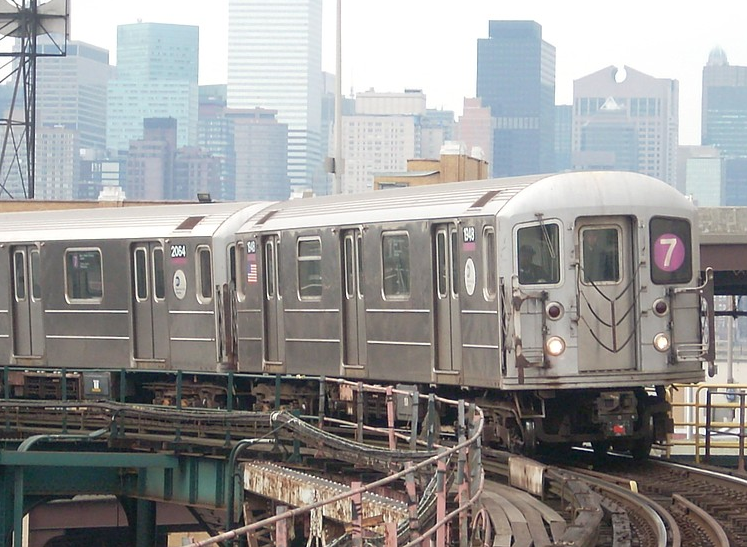
NYC’s MTA 7 train rolling into Queens (Wikipedia), July 4, 2018. (http://amsterdamnews.com).

But that day was so much better with three of my brothers there, away from 616 and Mount Vernon, hanging out, without an adult to supervise, or rather, abuse us in some way. It was one of the first times I actually felt like a fully responsible adult. I took the four of us down to the city on Metro-North at the Pelham stop, rode into grimy Grand Central, took the Shuttle train to Times Square, and then the 7 Subway to Shea. Maurice and Yiscoc were so enamored with the trains and the city that it seemed all they did was stare out at skyscrapers and out of train windows when we weren’t at the game. Darren, though mostly quiet, at least wasn’t staring off into space plotting some revenge on me for my “5” on the AP US History Exam while doing the Wave.

It was so cheap to do what we did that day. The four upper-deck, slightly left-of-home plate tickets we bought cost $4 each, but each hot dog was $3, and the sodas were $2. apiece Given my $3.40-per-hour job with Technisort, though, the $50 excursion wasn’t so cheap that I wasn’t thinking about sneaking a Sabrett hot dog from a street vendor in before we got to the stadium. To be sure, the hot dogs at Shea were better than my usual fare on the street or at Gray’s Papaya.

It was probably the best day I had during my Boy @ The Window years. There were others to be sure, especially in 1986, including my Mets winning the World Series that October and my AP US History exam results. But on this day, I was with innocent family members, watching my favorite team and one of my favorite players. I was lost in the humongous human mob of New York on a double-whammy of an Independence Day weekend. I slept well that evening, knowing that I’d drawn a 10 am-2 pm shift that Saturday. I planned on buying a new Walkman at the Cross County Mall in Yonkers that afternoon. A normal three-day weekend for many sixteen-year-olds was a small eye-wall in the chaotic hurricane that was my life back then.

Contrast this with Wednesday, July 4th, 1979. My mom’s friend Mrs. Ralph was hosting a 4th of July party at her house off Wilson’s Woods in Mount Vernon, with kids included. She had hamburgers and hot dogs on the grill, tons of ice cream and drinks, and an ice cream cake to top it all off.

I just couldn’t help myself. I became a nine-year-old version of Pac-Man. I devoured two hamburgers and two hot dogs, had some red drink, and a slice or two of the vanilla ice cream cake. All within the first half-hour of us getting to Ms. Ralph’s house.

I couldn’t have been higher if they had injected me with heroin and then had me snort some Oxycodone. I was running around the house and laughing for no reason whatsoever, my older brother Darren staring at me like I was an alien. My mom had grabbed me by my shoulders at one point. “Stop acting up!” she said.

Looney Tunes’ Tazmanian Devil in the midst of an eat-a-thon, July 4, 2018. (Catherine Babey
via http://pinterest.com).

But I didn’t stop. At least not until I ran into one of Ms. Ralph’s dividers in her living room, knocking it down along with some half-empty cups and plates on an adjacent table.

My mom took off one of her square-heeled flats and proceeded to beat my ass with it for the next minute, in front of a crowd of twenty or twenty-five guests. The ass-whuppin’ hurt, of course. The fact that it was a public one hurt even more. I was crying well after the party went back to normal. Ms. Ralph, though, came over to me later, reminded me that what I did was wrong, and then gave me a hug and told me that she loved me.

Looking back, I definitely deserved some punishment, maybe even an ass-whuppin’. The public spectacle and the shoe was probably a bit excessive. Was it a good day? No. But it was a day that made the 4th of July 1986 and so many other days easier to appreciate and savor.

Rich, Lorde, and What I Care/Don’t Care About

20 Tuesday Mar 2018

Posted by decollins1969 in 1, Boy @ The Window, Christianity, culture, Eclectic, Hebrew-Israelite, Mount Vernon High School, Mount Vernon New York, music, Pittsburgh, Politics, Pop Culture, race, Religion, University of Pittsburgh, Youth

≈ Leave a comment

Tags

Adrienne Rich, Audre Lorde, General Writing, Intersectionality, Pitt, Poetry, Poets, Positioning, Privilege, Sexual Orientation, The Last Poets


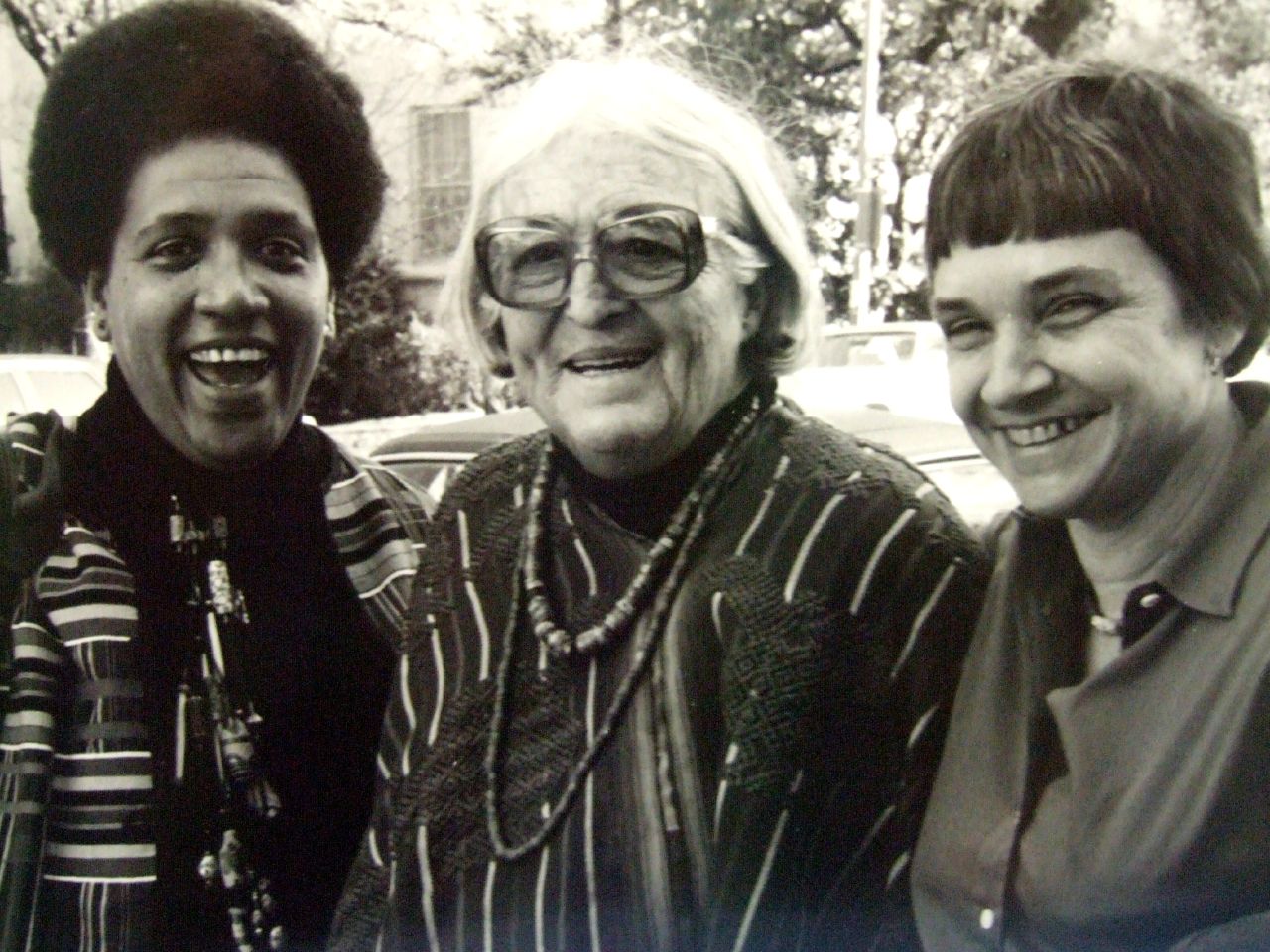
Audre Lorde, Meridel Lesueur, and Adrienne Rich after leading a writing workshop, Austin, TX, 1980. (K. Kendall/Flickr, July 15, 2007). Released to the public domain via CC-SA-2.0.

Among the literary arts, poetry is somewhere between okay and blech for me. At least most of the time. That doesn’t mean I hate all poetry or all poets. I fully appreciate the rhyme and meter (and lack thereof) of so many, from James Weldon Johnson and Archibald MacLeish to Phillis Wheatley and Langston Hughes. I love the emotional layering in the choice of the words, and in more modern times, the delivering of such words, with The Last Poets, with Gil Scott-Heron, and of course, Maya Angelou. Rap legends like Tupac, Nas, Eminem, Public Enemy have lyrics that are essentially spoken-word poetry put to bass, beats, and music loops. Heck, I’ve even enjoyed W. E. B. DuBois’ forays in the art in my scholarly research (when I more regularly did it) over the years.

But as a writer of prose (and often, long-winded prose), I also find the form of poetry ill-fitting. For me, it’s like being a home-run hitter in baseball playing hard-court tennis. It’s not that I can’t hit a baseline winner or an ace. But for every one of those, I could easily hit four tennis balls in a row out of the court, and literally onto the roof of a house half a block away. I prefer the ability to lay out my thoughts and explain them in full sentences, without worrying over every single word and the rhythm that a sequence of carefully chosen words may or may not bring.

I barely read any poetry during my Humanities years, unless my English classes forced me to. Emily Dickinson, Edgar Allan Poe, John Keats, Alexander Pope, all for 10th grade English, and with the exception of Pope’s “The Rape of the Lock,” not particularly entertaining. I was convinced after high school in ’87 that I’d never read poetry again.

What brought on a new interest in poetry came from my sophomore year at Pitt. I had to take a General Writing class in Fall 1988. I had to because if I wanted to take upper-level History classes as a History major, this general education requirement needed to be knocked off.  But I had an enthusiastic graduate student as my instructor. When I say enthusiastic, I mean someone who knew their students wouldn’t be, but whose passion for teaching and literature of all kinds made the class and the readings more interesting. She told me early on, after reading one of my first essays, that I should’ve been able to pass out of General Writing through the diagnostic tests Pitt gave my freshman year. “I wasn’t exactly awake when I took it last year,” I said in response.

Ways of Reading anthology book (2nd edition), used in 1988. (http://ebay.ca).

When we got to the poetry portion of the course, I thought at first I was going to die from boredom. But our instructor didn’t assign us the usual suspects. The main poet we read that week was Adrienne Rich. She was someone I’d heard of growing up, but that was about it. Until the assignment of reading both Rich’s poetry and her essay “When We Dead Awaken: Writing as Re-Vision,” that is.

There were three things I’d never considered before reading Rich. One was the idea that writing was both art and craft, and that most writing was editing and re-envisioning one’s work. Two was the notion of transforming and being transformed through the writing process, and all as a proxy for a meaningful life. Three was the positioning of poets and other writers in literature, the privileging of men over women, of White males over feminists, of White heterosexual feminists over lesbian feminists, and especially Black lesbian feminists.

That last one about power, privilege, and positioning, it really grabbed me. So much so that I read more Rich that October weekend, in between pangs of hunger from lack of money and my Saturday evening shift at the Cathedral of Learning computer lab.

And the more I read of Rich, the more I decided to read about one of Rich’s contemporaries. I moved on to Audre Lorde the following week. She wasn’t among the long list of readings we had for General Writing, but she should’ve been. I couldn’t believe that someone who lived only miles away from my growing up experience in Mount Vernon and in New York could yet have such a vastly different experience with the city and the area.

I picked up Sister Outsider (1984) for the first time near the end of that fall semester. Lorde’s collection of essays about civil rights, about Black feminism (or womanism), about what we now call intersectionality, opened my eyes to how even Rich’s brand of feminism could be problematic. But more than that. Lorde, along with Rich, helped me realize, and not for the first time, that I didn’t care if the person I read or learned from was straight or gay, male or female (or later on, transgender), Black, Brown, or White. This despite what the Hebrew-Israelites and the evangelicals tried to teach me. They just had to be excellent in their work.

Excerpt of Audre Lorde’s Power (1978) (screenshot). (http://poetryfoundation.org).

Sister Outsider also opened up my eyes to the possibility that even my poetry-loathing ass could appreciate a true master at work in the art. So early on the following semester, I read Lorde’s poetry for the first time, likely some poems from her Coal (1976). Lorde talking about her upbringing, her relationship with her mother, and her issues with her own skin color, resonated with me.

But that was it with poetry for me until I borrowed my friend E’s recording of The Lost Poets 1971 album, and then read Angelou’s poetry, both in the summer of ’91. By then, I knew that while I’d never be a full-fledged fan of it, I could still appreciate the work, the art, and the layering of ideologies, emotions, and ideas contained in the best of poetry.

← Older posts
Newer posts →

Boy @ The Window: A Memoir

Boy @ The Window: A Memoir

Places to Buy/Download Boy @ The Window

There's a few ways in which you can read excerpts of, borrow and/or purchase and download Boy @ The Window. There's the trade paperback edition of Boy @ The Window, available for purchase via Amazon.com at http://www.amazon.com/Boy-Window-Donald-Earl-Collins/dp/0989256138/

There's also a Kindle edition on Amazon.com. The enhanced edition can be read only with Kindle Fire, an iPad or a full-color tablet. The links to the enhanced edition through Apple's iBookstore and the Barnes & Noble NOOK edition are below. The link to the Amazon Kindle version is also immediately below:

scr2555-proj697-a-kindle-logo-rgb-lg

Boy @ The Window on Amazon.com: http://www.amazon.com/Boy-The-Window-Memoir-ebook/dp/B00CD95FBU/

iBookstore-logo-300x100

Boy @ The Window on Apple's iBookstore: https://itunes.apple.com/us/book/boy-the-window/id643768275?ls=1

Barnes & Noble (bn.com) logo, June 26, 2013. (http://www.logotypes101.com).

Boy @ The Window on Barnes & Noble: http://www.barnesandnoble.com/w/boy-the-window-donald-earl-collins/1115182183?ean=2940016741567

You can also add, read and review Boy @ The Window on Goodreads.com. Just click on the button below:

Boy @ The Window

Twitter Updates

Tweets by decollins1969
  • RSS - Posts
  • RSS - Comments

Archives

  • June 2025
  • April 2023
  • September 2022
  • August 2022
  • July 2022
  • June 2022
  • May 2022
  • April 2022
  • March 2022
  • January 2022
  • December 2021
  • November 2021
  • October 2021
  • September 2021
  • August 2021
  • July 2021
  • June 2021
  • April 2021
  • March 2021
  • February 2021
  • January 2021
  • December 2020
  • November 2020
  • October 2020
  • September 2020
  • August 2020
  • July 2020
  • May 2020
  • April 2020
  • March 2020
  • January 2020
  • December 2019
  • November 2019
  • August 2019
  • July 2019
  • June 2019
  • May 2019
  • April 2019
  • March 2019
  • February 2019
  • January 2019
  • December 2018
  • November 2018
  • October 2018
  • September 2018
  • August 2018
  • July 2018
  • June 2018
  • May 2018
  • March 2018
  • February 2018
  • January 2018
  • December 2017
  • November 2017
  • October 2017
  • September 2017
  • August 2017
  • July 2017
  • June 2017
  • May 2017
  • April 2017
  • March 2017
  • February 2017
  • January 2017
  • December 2016
  • November 2016
  • October 2016
  • September 2016
  • August 2016
  • July 2016
  • June 2016
  • May 2016
  • April 2016
  • March 2016
  • February 2016
  • January 2016
  • December 2015
  • November 2015
  • October 2015
  • September 2015
  • August 2015
  • July 2015
  • June 2015
  • May 2015
  • April 2015
  • March 2015
  • February 2015
  • January 2015
  • December 2014
  • November 2014
  • October 2014
  • September 2014
  • August 2014
  • July 2014
  • June 2014
  • May 2014
  • April 2014
  • March 2014
  • February 2014
  • January 2014
  • December 2013
  • November 2013
  • October 2013
  • September 2013
  • August 2013
  • July 2013
  • June 2013
  • May 2013
  • April 2013
  • March 2013
  • February 2013
  • January 2013
  • December 2012
  • November 2012
  • October 2012
  • September 2012
  • August 2012
  • July 2012
  • June 2012
  • May 2012
  • April 2012
  • March 2012
  • February 2012
  • January 2012
  • December 2011
  • November 2011
  • October 2011
  • September 2011
  • August 2011
  • July 2011
  • June 2011
  • May 2011
  • April 2011
  • March 2011
  • February 2011
  • January 2011
  • December 2010
  • November 2010
  • October 2010
  • September 2010
  • August 2010
  • July 2010
  • June 2010
  • May 2010
  • April 2010
  • March 2010
  • February 2010
  • January 2010
  • December 2009
  • November 2009
  • October 2009
  • September 2009
  • August 2009
  • July 2009
  • June 2009
  • May 2009
  • April 2009
  • March 2009
  • February 2009
  • January 2009
  • December 2008
  • November 2008
  • October 2008
  • September 2008
  • August 2008
  • July 2008
  • June 2008
  • May 2008
  • April 2008
  • March 2008
  • February 2008
  • January 2008
  • December 2007
  • November 2007
  • October 2007
  • September 2007
  • August 2007
  • July 2007
  • June 2007

Recent Comments

MaryPena's avatarMaryPena on My Day of Atonement/Bitter Hat…
decollins1969's avatardecollins1969 on No Good Teaching Deed Goes…
Mary Rose O’Connell's avatarMary Rose O’Connell on No Good Teaching Deed Goes…

NetworkedBlogs on Facebook

NetworkedBlogs
Blog:
Notes From a Boy @ The Window
Topics:
My Life, Culture & Education, Politics & Goofyness
 
Follow my blog

616 616 East Lincoln Avenue A.B. Davis Middle School Abuse Academia Academy for Educational Development AED Afrocentricity American Narcissism Authenticity Bigotry Blackness Boy @ The Window Carnegie Mellon University Child Abuse Class of 1987 CMU Coping Strategies Crush #1 Crush #2 Death Disillusionment Diversity Domestic Violence Economic Inequality Education Family Friendship Friendships Graduate School Hebrew-Israelites High-Stakes Testing Higher Education History Homelessness Humanities Humanities Program Hypocrisy Internalized Racism Jealousy Joe Trotter Joe William Trotter Jr. K-12 Education Love Manhood Maurice Eugene Washington Maurice Washington Misogyny Mother-Son Relationship Mount Vernon High School Mount Vernon New York Mount Vernon public schools Multiculturalism MVHS Narcissism NFL Pitt Pittsburgh Politics of Education Poverty President Barack Obama Race Racial Stereotypes Racism Relationships Self-Awareness Self-Discovery Self-Reflection Sexism Social Justice Teaching and Learning University of Pittsburgh Violence Whiteness Writing

Top Rated

Blog at WordPress.com.

  • Subscribe Subscribed
    • Notes from a Boy @ The Window
    • Join 103 other subscribers
    • Already have a WordPress.com account? Log in now.
    • Notes from a Boy @ The Window
    • Subscribe Subscribed
    • Sign up
    • Log in
    • Report this content
    • View site in Reader
    • Manage subscriptions
    • Collapse this bar
 

Loading Comments...