• About Me
  • Other Writings
  • Interview Clips
  • All About Me: American Racism, American Narcissism, and the Conversation America Can’t Have
  • Video Clips
  • Boy @ The Window Pictures
  • Boy @ The Window Theme Music

Notes from a Boy @ The Window

~

Notes from a Boy @ The Window

Category Archives: Mount Vernon High School

Humanities: 26 Years On

18 Tuesday Jun 2013

Posted by decollins1969 in 1, Academia, Boy @ The Window, Carnegie Mellon University, culture, Eclectic, Mount Vernon High School, Mount Vernon New York, Pittsburgh, University of Pittsburgh, Youth

≈ 3 Comments

Tags

A.B. Davis Middle School, Academic Competition, College Access and Success, College Retention, Gifted, Graduating, High-Stakes Testing, Humanities, Humanities Program, Talented, Well-Rounded Students
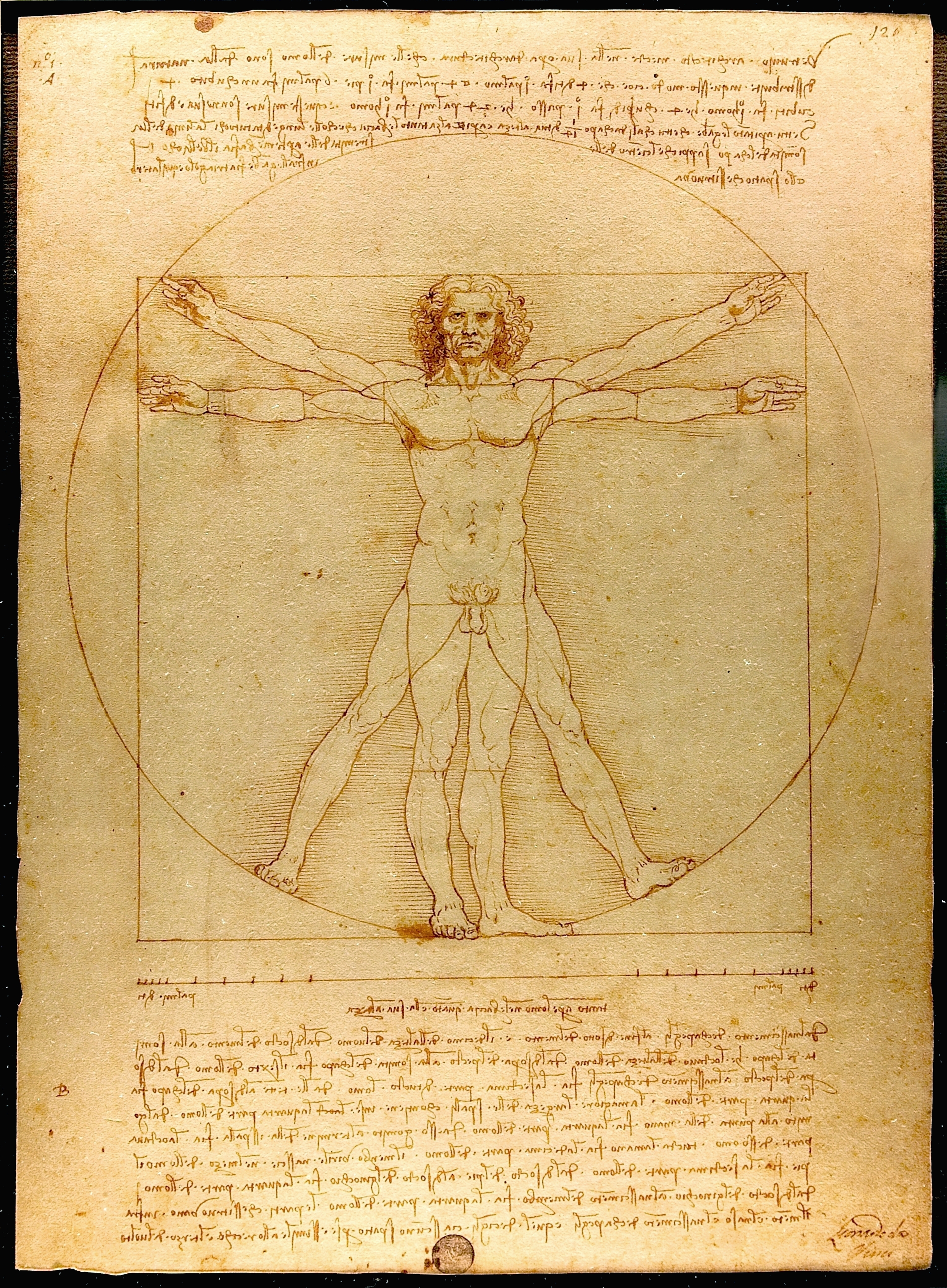

Leonardo di Vinci's Human Body sketch, June 18, 2013. (Wikipedia).

Leonardo di Vinci’s Vitruvian Man (human body sketch, 1485-90), June 18, 2013. (Flickr.com).

Today marks anniversary number twenty-six since the Class of ’87 spent two hours sweating in our polyester caps and gowns on a triple-H summer evening at Memorial Field in Mount Vernon, New York. Oh yeah – and graduated from Mount Vernon High School. Not a big year to mark an anniversary, for sure. But still important for me to remember. After all, I’ve just published a book in which I spend a significant amount of time talking about myself and my former classmates whom help comprise this Class of ’87.

Today I want to say a few positive things about this class, particularly the Humanities Program members of this class. Not that this isn’t in Boy @ The Window as well. But it does help me to reiterate both the obvious and the hidden. Without Humanities, I wouldn’t have taken the path that led me to become the writer, historian, thinker or man that I am today, good, bad and occasionally even ugly. Period.

Not that every high-achieving student in A.B. Davis Middle School or Mount Vernon High School was in Humanities. Some of the more creative and musically-talented folks I’d either met or knew of were in what what I call “gen pop” and not in Humanities. But being someone who on his best days can barely hold a baritone tune (in the same way that an experimental fusion reactor produces energy for only a few seconds), Humanities gave me a chance to do some of what I did best on a platform that could occasionally allow me to maximize my academic gifts.

After ten years of undergrad and grad school at the University of Pittsburgh and Carnegie Mellon, and years of teaching at places as different as Pitt, CMU, Duquesne University School of Education and George Washington University GSEHD, my former classmates remain among the highest academic achievers I’ve ever met. As a group, that is. I’ve met many super-talented and highly creative individuals since ’87. Some of whom were literal geniuses as musicians, actors, studio artists or writers. Students whose academic and athletic prowess would’ve made their peers think about how unfair life can be.

But the one boon (and one criticism too) of Humanities for me was the competition it inadvertently sanctioned. That competition made me a better student, one who could actually focus on the long-term implications for any course I took and how it would apply to what I’d need to do in college. Some of my classes I realized were bullshit (see Andy Butler’s eleventh grade “Higher Math” as prima facie evidence), but I found something useful in most of my courses for my years at Carnegie Mellon, if not at Pitt.

Mount Vernon High School graduation ceremony, June 24, 2009. (http//education.lohudblogs.com).

Mount Vernon High School graduation ceremony, June 24, 2009. (Carucha L. Meuse/The Journal News; http//education.lohudblogs.com).

I think that this competition made us all better students, even as it often didn’t make us better human beings. After all, out of my immediate circle of the top twenty students in the Class of ’87, three of us have doctorates (history, psychology and mathematics education), two have medical degrees, and seventeen of us have earned at least a bachelor’s degree. I’m sure that some of us would’ve done well in college, grad school and our careers even without Humanities. But I’m also sure that the poorest among us – yours truly included – would’ve struggled mightily in college (even if we found a way to graduate) without such a focus on the academic in the first place.

I’ve taught high school students whose skills readily approached my own and those of my classmates from a quarter-century ago, particularly in versions of the AP US History course I taught at Princeton in ’08 and ’09. I’ve also served on the curriculum committee at my son’s school here in Montgomery County, Maryland for the past three years. These students – some more talented than anyone I knew in Humanities – have one thing in common. For the most part, they aren’t challenged by their schools, teachers or curriculum to be competitive, to be well-rounded academically, to strive to be both better students and develop creative talent simultaneously.

Many of these students already feel a sense of academic fatigue, partly because of constant yet meaningless testing, and partly because of a concentration on STEM (Science, Technology, Engineering and Mathematics) fields. Both have led to the near-total exclusion of extensive work on reading and writing skills (even though picking apart STEM field problems requires good reading and analysis skills). Not to mention the slashing of budgets for physical education and art, music and chorus, theater and so many other things that would push them to be better students, to be competitive – in a healthy way, that is.

There are nearly 120,000 words in Boy @ The Window, about 60,000 of them dedicated to my years between the end of sixth grade and the beginning of my junior year at Pitt. Many of them describe all that I remember about being in Humanities. It’s not a pretty picture overall. Despite this, without the likes of Laurell and Sam, Brandie and Bobby, Alex and Allison, Dahlia and Dara, Phyllis and Wendy and JD, Joe and Danny, Suzanne and Denise and Mandume and Rhonda and Kim and so many others, I’d still be living in Mount Vernon right now. I’d be lucky to have a minimum-wage job and a one-room flat in someone’s dilapidated house on the South Side. It’s just that simple.

Road to My Memoir, Part 2: Multiculturalism

08 Saturday Jun 2013

Posted by decollins1969 in 1, Academia, Boy @ The Window, Carnegie Mellon University, culture, Eclectic, Mount Vernon High School, Mount Vernon New York, New York City, Pittsburgh, Politics, Pop Culture, race, University of Pittsburgh, Youth

≈ Leave a comment

Tags

Ability Grouping, Academic Historian, Academic Writing, Afrocentricity, Barbara Sizemore, Comparative Slavery, Elaine, Humanities, Jeannie Oakes, Joyce Harrington, Keeping Track (1985), Multicultural Education, Multiculturalism, Pitt, Pittsburgh Public Schools, Sociology, Tracking


Why Boy @ The Window, Part 2

Why Boy @ The Window, Part 2

When I wrote about this long path to Boy @ The Window last month, I figured that it would take three posts in all to discuss the path. But the road’s shown itself to be longer — and more convoluted — than I anticipated.

So I never did write my book about being on welfare, dehumanization and welfare policy. I found a much more interesting subject to take up the following year, in the summer of ’90. I decided to take the late Barbara Sizemore’s research methods course in Black Studies that fall, to move beyond my history courses, as I’d already taken enough of them to have fulfilled my major.

I wanted to look at the re-segregation of desegregated schools through tracking or ability grouping, specifically in Mount Vernon’s public schools. The book that brought me to this topic was Jeannie Oakes’ masterpiece Keeping Track: How School Structure Inequality (1985). It had begun to turn my mind away from slavery as a long-term history project (perhaps one I would’ve pursued in doing my master’s papers or doctoral research) and toward history of education and racial inequality.

Oakes’ main argument was that school desegregation was a mixed bag of success and failure precisely because of the fact that with tracking by academic “ability,”disadvantaged Black students and advantaged White students would seldom meet in the same classrooms. That made me think of my still recent experiences with the Humanities Program in middle school and high school. After all, a school district that was three-quarters Black, Afro-Caribbean and Hispanic had a magnet program that was about sixty percent White during my six years in Humanities.

I spent that summer — when I wasn’t working — at Mount Vernon Public Library, NYU’s Bobst Library, and New York Public Library giving myself a stronger background on this topic. I met with the former MVHS Humanities coordinator Joyce Flanagan (who had become Harrington by then) about getting more specific demographic data about the program by class year and school (Pennington-Grimes ES, A.B. Davis Middle School and MVHS). Much of the data had already been destroyed, Harrington confided. The data she did give me, while informative, wasn’t enough to do even a watered down version of what Oakes did for Keeping Track (she interviewed 14,000 students and teachers in all).

I ended up doing my research project on Pittsburgh Public Schools and their International Baccalaureate programs at Schenley and Allderdice HS. It was a solid paper, an easy A compared to my comparative slavery paper for Drescher’s graduate course the semester before. But it wasn’t enough for me.

In the course of building up my knowledge on segregation, suburban schools, urban school districts, and community control, I stumbled onto books about multicultural education. I wanted to learn more, so I took a sociology course my final undergraduate semester on the sociology of race and ethnicity (there weren’t any education courses that focused on either race or multiculturalism at Pitt in ’91).

The turning point came with my friend Elaine, who knew of my interest in the topic. She was the one who had informed me of a growing controversy with New York State’s newly proposed history curriculum, one in which the ideas of multicultural education had played a key role. That work the summer before grad school, that work to understand why there was any controversy at all, led me to finding out more about cultural pluralism and its history. This then led to the role of Black intellectuals and educators in applying cultural pluralism, the differences between multiculturalism, multicultural education and Afrocentricity.

I had my dissertation topic in broad strokes before I’d taken any courses as a master’s student (not counting the comparative slavery class). But in the process of moving from re-segregation and Jeannie Oakes to multiculturalism, I’d moved from a wide-eyed student of everything that related to my life at age twenty to an aspiring academician, a historian of educational and cultural ideas.

I’d taken the first steps to bury myself in academic writing and thinking, without fully understanding why I cared about multiculturalism in the first place. It took me a decade to figure out that the lack of understanding of diversity in Humanities was part of what made it a bittersweet experience for me, an experience that drove me toward multiculturalism as a research topic. It took ten years before I realized that my pursuit of multiculturalism in Black Washington, DC was my way of dealing with my own past without any emotion. Multiculturalism took me further away from the writer (and historian) I wanted to be, even as I earned my doctorate on the topic.

Afrocentricity and the Writing Bug

15 Wednesday May 2013

Posted by decollins1969 in 1, Academia, Boy @ The Window, Carnegie Mellon University, Christianity, culture, eclectic music, Hebrew-Israelite, Mount Vernon High School, Mount Vernon New York, music, Pittsburgh, Politics, Pop Culture, race, Religion, University of Pittsburgh, Youth

≈ Leave a comment

Tags

Africana Studies, Afrocentric Education, Afrocentric Idea (1987), Afrocentricity, Authentic Blackness, Authenticity, Black Action Society, Black Issues in Higher Education, Black Studies, Blackness, Cool, Coolness, Litmus Test, Marc Hopkins, Maulana Karenga, Molefi Asante, Pitt, Temple University, Writing, Writing Bug


A ladybug, often a symbol for the writing “bug,” May 15, 2013. (http://flickr.com). In public domain.

This time two decades ago, I was already a bit desperate for work. In transferring from Pitt to Carnegie Mellon, I’d left myself without any financial coverage for the summer of ’93 (see my post “The Arrogance of Youth, Grad School Style” from June ’12). I had applied for several fellowships, summer teaching gigs, even some nonprofit work. But as of the middle of that May, nothing had come through. I’d already spent $200 on a root canal that occurred on the same day as my written PhD comps at CMU (see my post “Facing the Tooth” from May ’12).

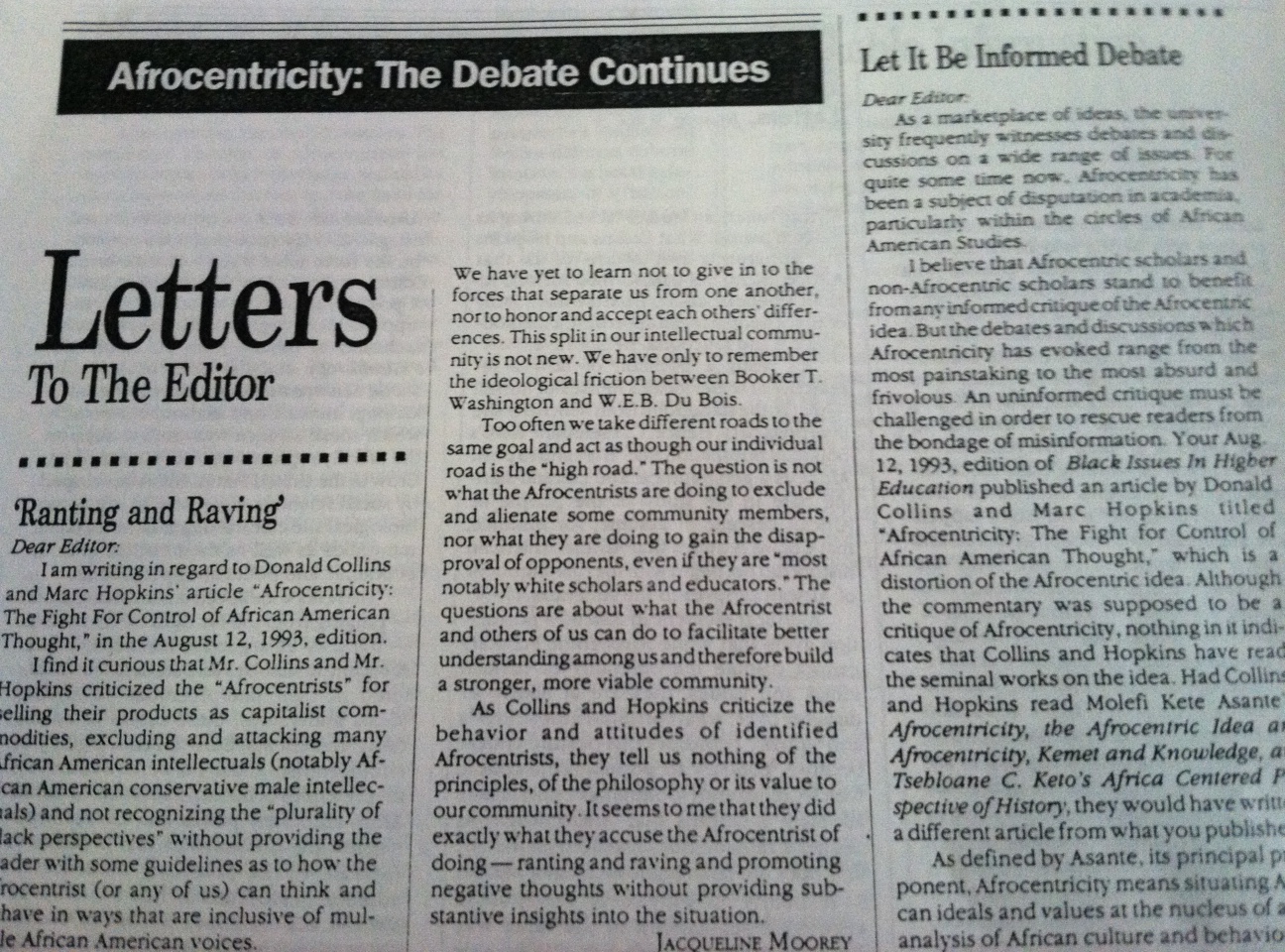
Even before my comps and my surprise root canal, I had talked with my friend Marc about writing a joint article about the false litmus test of Blackness that Afrocentricity had come to represent in our minds. Between Molefi Asante’s students at Temple — not to mention the overtly Afrocentric turn of both the Black Action Society and the Black Studies department (which had changed its name to Africana Studies) in the previous eighteen months — both of us felt we needed to provide an alternate perspective.

On that third Saturday in May (and the day after my comps and root canal surgery), we worked for five hours in putting together what amounted to a 1,200-word opinion piece against the belief system and authenticity test that Afrocentricity (and Afrocentric education) had become. By some folks’ definition, we realized that jazz, Miles Davis and John Coltrane would fail the authentically Black test of a Molefi Asante’s wonderful Afrocentric Idea (1987) and of Maulana Karenga as well.

Frances Cress Welsing's The Isis Papers (1991), [about as authentic as auto-tunes], May 15, 2015. (http://amazon.com).

Frances Cress Welsing’s The Isis Papers (1991), [about as authentic as auto-tunes], May 15, 2015. (http://amazon.com).

Now I’m pretty sure why Marc had problems with Afrocentricity. As a Christian and a jazz aficionado, Marc likely saw Afrocentricity as something somewhere between a misguided way of thinking about Blackness and complete and utter bull crap. His goal was to “add to the debate” and “educate” those who weren’t Asante or Karenga apostles and disciples. A laudable — if somewhat naive about the politics of academia and race — goal.

As for me, beyond the academic superficiality of having a litmus test on what is and isn’t Black, I had at least two unconscious reasons for writing my first crossover piece. One had to do with my sense that too many young folks were all too interested in doing the cool thing and not the right thing. Afrocentricity was cool, just like all rap and hip-hop was cool, just like giving libations to ancestors was cool.

Being cool had always meant following a crowd and seldom saying anything that would dig more than a nanometer beyond the surface. Or saying a critical thing about the cool thing that everyone in the same crowd otherwise takes in without a critical thought. I went to a high school full of people like that, and loathed being around people like that when I’d been a part of the Black Action Society at Pitt.

Unconscious reason number two had something to do with my Hebrew-Israelite days. Again, I gave this zero direct thought during my grad school days. But the given the trauma I’d suffered through during my three years of kufi-dom, it had to affect my thinking about Afrocentricity. The Black folk I knew who were part of the Hebrew-Israelite religion were much more obvious about what they did and didn’t consider Black or kosher. Yet, it was so obvious that they constantly contradicted themselves, in terms of food or music, how they treated their wives or children. Most important for me, though, was the fact that they tried to live separate and apart from other Blacks, yet seemed no more different beyond the kufis, veils and kosher meats from other Blacks (or Jews, for that matter).

I saw Afrocentricity as bullshit, and still see the fact that so many folks who get caught up in this sense of authenticity around Blackness as folks falling for bullshit. If I hadn’t lived as a Hebrew-Israelite between the ages of eleven and fifteen, perhaps I wouldn’t see Afrocentricity this way. If I hadn’t been around the “Party All The Time” folks in high school and the “Black Panther Party” posers at Pitt, maybe Afrocentricity would’ve been more appealing to me.

Letters to the Editor, Black Issues in Higher Education, September 9, 1993. (Donald Earl Collins).

Letters to the Editor, Black Issues in Higher Education, September 9, 1993. (Donald Earl Collins).

But at twenty-three years old, I was already tired of the pursuit of coolness and authenticity. That hasn’t changed in the past two decades. I’m sure the letters that called Marc and I “Uncle Toms” after our piece was published in Black Issues in Higher Education were from folks who thought we weren’t cool, and thought they had the answers to life itself.

I wonder how those folks back then would see the academics who believe that hip-hop can explain everything in the social sciences and humanities who are prominent today. Perhaps some of these people today were the Afrocentric followers of twenty years ago. Perhaps not. All I know is, I haven’t stopped writing since that cloudy day in mid-May.

Boy @ The Window Update

03 Friday May 2013

Posted by decollins1969 in 1, Boy @ The Window, culture, Eclectic, Mount Vernon High School, Mount Vernon New York, Pittsburgh, Pop Culture, University of Pittsburgh, Youth

≈ Leave a comment

Tags

Apple iBookstore, Breaking News, iTures, Publishing, self-publishing, Smashwords.com, Third Party Distribution


iBookstore-logo-300x100

Final Cover

Latest news: Boy @ The Window is now available in enhanced digital (i.e., video, pictures and links) mode, via Apple’s iBookstore (through iTunes). Yay me!!!

Also, I’ve dropped Smashwords.com as a third-party distributor. Unlike many authors, I understand html/css code, and I have time to review and fill out contracts. Plus, getting support from Smashwords was like pulling teeth out of an elephant’s mouth with a teaspoon.

You can purchase Boy @ The Window for $4.99 through this link: https://itunes.apple.com/us/book/boy-the-window/id643768275?ls=1. And, it’s also available for the Kindle world on Amazon.com. Enjoy!

scr2555-proj697-a-kindle-logo-rgb-lg

Boy @ The Window Is Live!

16 Tuesday Apr 2013

Posted by decollins1969 in 1, Boy @ The Window, Christianity, culture, Eclectic, eclectic music, Hebrew-Israelite, Jimme, Mount Vernon High School, Mount Vernon New York, Movies, music, My Father, New York City, Pittsburgh, Pop Culture, race, Religion, Sports, University of Pittsburgh, Work, Youth

≈ 3 Comments

Tags

E-Book, ebook, PDF edition, Publishing


Final Cover

Final Cover

Well, “it is done,” as my former graduate advisor Joe Trotter used to say. Boy @ The Window is now a published book. For now, it’s an e-book, available on Amazon.com through Kindle Books (as Boy @ The Window: A Memoir) and through Smashwords.com (which will then ensure that the book makes its way to iBooks, Apple’s bookstore, as well as Barnes & Noble.com). I also have a free PDF edition of Boy @ The Window (text only) available on this blog site (in the sidebar to the right), at least for the next three months.

I anticipate putting out a trade paperback edition in the next few months, either in July or in the fall. But with more than forty percent of the book market now in the e-book realm, it made far more sense to start with the fastest growing part of the market first. It’s a bit weird not holding a copy of Boy @ The Window in my hands, being able to leaf through the paper pages. It’s been on my iPad, though, for a couple of days, and seeing it there in 100 percent working order has been a pretty good feeling.

For me, at least, incidents like the Boston Marathon bombing yesterday — and so many other tragedies and dastardly events in the seven years and four months since I first began writing my book — are a reminder to live every day like there may not be a next one. After years of work and waiting for the commercial market to say “yes” to Boy @ The Window, I knew I didn’t want to wait forever to put this work of mine out into the world. So, “hello, world!”

Colorism and the Enduring Power of School Daze

11 Monday Mar 2013

Posted by decollins1969 in 1, Academia, Boy @ The Window, culture, Eclectic, Jimme, Mount Vernon High School, Mount Vernon New York, Movies, My Father, Politics, Pop Culture, race, Youth

≈ Leave a comment

Tags

Brown Paper Bag Rule, Cafe au Lait, Color Struck, Colorism, Dark-Skinned, Fraternities, Giacarlo Esposito, Hazing, HBCUs, Hedonism, High Yellow, Internalized Racism, Intrarace Relations, Laurence Fishburne, Light-Skinned, Mo' Better Blues (1990), Pitt, Redbone, School Daze (1988), Shunning, Sororities, Spike Lee, Tar Baby, The Silent Treatment, Tisha Campbell, University of Pittsburgh, Wesley Snipes


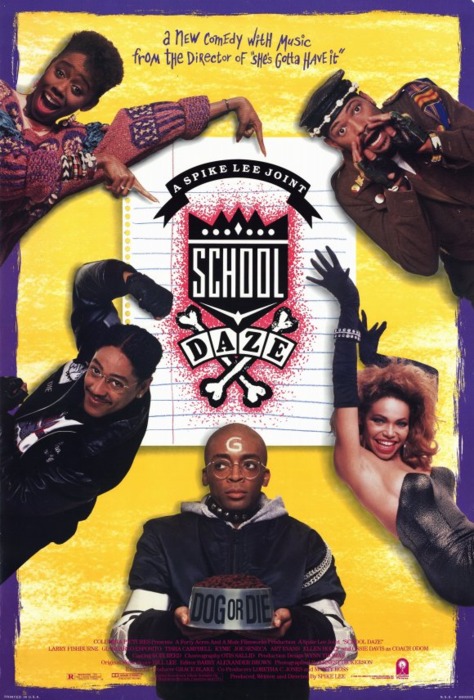
School Daze (1988) movie poster, September 17, 2012. (QuasyBoy via Wikipedia). Qualifies as fair use under US Copyright laws, as depicts subject of blog, is scaled-down and is of low-resolution.

School Daze (1988) movie poster, September 17, 2012. (QuasyBoy via Wikipedia). Qualifies as fair use under US Copyright laws, as depicts subject of blog, is scaled-down and is of low-resolution.

One of the few films I saw soon after it came out in theaters during my Boy @ The Window years was School Daze. It was in fact on this date twenty-five years ago that I went to the old theater in Pittsburgh that once was on Forbes Avenue near the Oakland Primanti Bros. sandwich place to see the film. It gave me some serious food for thought that Spring Break Friday evening, so much so that the lessons of School Daze have stayed with me to this day. Considering that I turned down a date with an upperclassman not interested in seeing the film in the process, School Daze was more than worth it.

The biggest lesson for me was on colorism. Not the macabre hazing of Q-dog frat boys and the cliquish AKA and Delta soros. Not the lack of care for the academic or the step-show battles. Not the hedonist behavior of Black middle class Gen Xers hell-bent on doing everything other than graduating from college. I already knew students like this at Pitt. Really, I already knew former classmates from Mount Vernon High School who attended HBCU’s like Howard, Morehouse, Hampton and Spelman, the kind of people who’d be perfect candidates for this Spike Lee joint. That they would psychologically and physically abuse each other in bed and on campus didn’t surprise me in the least.

"Good and Bad Hair" scene, School Daze (1988), March 10, 2013. (Donald Earl Collins via YouTube). Qualifies as fair use (see previous picture).

“Good and Bad Hair” scene, School Daze (1988), March 10, 2013. (Donald Earl Collins via YouTube). Qualifies as fair use (see previous picture).

No, it was the issue of being color-struck that was truly eye-opening for me. For I think I always knew on a semi-conscious level that colorism was alive and well among Black folks I’d come to know in Mount Vernon and in my first year at Pitt. It was frequently subtle, but also occasionally out in the open. With terms like “café au lait,” “redbone,” “mocha,” “caramel,” light-skinned,” “high yeller,” “dark-skinned,” “tar baby,” “chocolate-brown,” “good hair,” “nappy head,” “paper-bag brown,” and “light, bright and almost White,” among others. With obvious preferences among my male and female counterparts for young Black women and (sometimes) young Black men who passed the brown-paper-bag rule. (For those unfamiliar, if a Black male or female’s skin color was lighter than a brown paper bag, they were light enough to be attractive and acceptable by others. In terms of beauty, sometimes in pledging to a sorority or fraternity, often in terms of being part of a popular and better connected circle of Black folk.)

I certainly saw it with my father Jimme, who threw around the word “redbone” in my last year of high school as if the only young women in my NYC-area universe were light, bright and almost White. But I also saw it in the cliquishness and popularity of some of my classmates and other MVHS attendees and alumni. The most prominent of them at the time was Albert Brown, aka, Al B. Sure. Despite the uni-brow and limited talent, he went a long way in terms of popularity with his Class of ’86 and in the years immediately after high school. But there were others, classmates with bit-role appearances on ABC’s All My Children, folks whose entire circle of so-called close friends met some internalized color line.

It’s safe to say that by the time I left the theater — about 9 pm that Friday — I was actually angry. I wanted to take Giancarlo Esposito behind a building and beat him into another world. But more than that, it put some of the issues I had with high school and my first year at the University of Pittsburgh in perspective. Obvious and subtle forms of bigotry, individual racism and institutional/structural racism are all things I expected to face. This internalized bigotry on the basis of skin color, though, explained some of the shunning that I’d faced in my last couple of years of high school (see my post “The Silent Treatment” from June ’11) especially.

Hazing scene from School Daze (1988), March 10, 2013. (http://tumbler.com). Qualifies as fair use (see previous picture).

Hazing scene from School Daze (1988), March 10, 2013. (http://tumbler.com). Qualifies as fair use (see previous picture).

Yeah, I was weird because I was in a weird place in terms of domestic violence, child abuse and welfare poverty in those years. I didn’t help matters by being down with Tears for Fears and Sting and Mr. Mister and by often walking at Warp Factor Three or higher to cover the twenty-acre school between classes. But being poor and looking poor and a darker shade of brown was the first thing the Rick James-Eddie Murphy “Party All The Time” set saw, even before I turned into a blur walking past them every day.

A few years after School Daze, I went to David Lawrence Hall to watch the Pitt Film Club’s showing of Mo’ Better Blues (1990) with Denzel Washington and Wesley Snipes. A decidedly light-skinned underclassman (who was in my easy-A Intro to Black Studies course – I was a senior at Pitt by this time) – let’s call her ‘R’ – saw me and decided to sit with me to watch the film. Every time Wesley Snipes was on the screen, she commented on how dark he was. Making me uncomfortable, to say the least.

I finally asked, “Well, what about me?,” given her obvious distaste for Snipes. “Oh, you’re fine. Wesley’s just too dark,” R responded. I did a double-take, realizing that her perspective on skin color was just too odd for words. A quarter-century later, and my guess is that there are Black folks (and Whites who love “dark”-skinned Blacks) who still need to “WAAAAKKKKKE UUUUUUPPPPPPP!”

Kufi Battles

15 Friday Feb 2013

Posted by decollins1969 in 1, Boy @ The Window, culture, Eclectic, Hebrew-Israelite, Mount Vernon High School, Mount Vernon New York, Movies, Pop Culture, race, Religion, Youth

≈ Leave a comment

Tags

"The Man In Black", A.B. Davis Middle School, Abuse, Bigotry, Bullying, Esau and Jacob, Fights, Geometry, Intimidation, Intolerance, Italian Club, Kufi, Lost (2004-10), Louis Cuglietto, Masculinity, Multicultural Education, Puberty, Rage, Tackles, The Matrix Revolutions (2003)


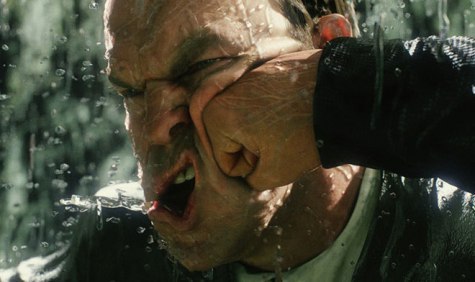
Slow-motion punch frame from Matrix Revolutions (2003), February 15, 2013. (http://theathleticnerd.com/).

Slow-motion punch frame from The Matrix Revolutions (2003), February 15, 2013. (http://theathleticnerd.com/).

My days as a kufi-wearing Hebrew-Israelite at school is one of those things I don’t spend much time on this blog talking about. Mostly because it involved defending myself to protect a piece of clothing and a religion in which I never fully believed, especially after early ’83. Plus, it involved fairly rare attempts in which dumb asses attempted to bully me. Compared to my now deceased idiot ex-stepfather’s abuse, no kid or wannabe thug after the summer of ’82 really stood a chance.

There were three incidents in eighth and ninth grade in which a kid got into a scuffled with me over my kufi, for whatever reason they’d invented in their head. The first was in February ’83, as one Black kid — probably about fifteen — snatched my kufi from my head and started to run up the basement hallway with it at Davis Middle School. The incident occurred as I, A and another member of A’s “Italian Club” entourage were in the middle of an errand for a teacher. I immediately ran the boy down, knocked him to the floor, dusted off my kufi, and put it back on my head. The boy got up and threatened to beat me up. It was at this point that A intervened, saying that he would “have to take us all on” if he wanted to fight me. A’s moment of support notwithstanding, I would’ve beaten the kid in the face as many times as it would’ve taken to get my kufi back.

Pittsburgh Steelers' James Harrison sacks Baltimore Ravens QB Joe Flacco, AFC Division Round, January 15, 2011. (http://espn.go.com).

Pittsburgh Steelers’ James Harrison sacks Baltimore Ravens QB Joe Flacco, AFC Division Round, January 15, 2011. (http://espn.go.com).

The second incident occurred a month later, prior to the opening morning bell at Davis. Out of the blue, “Little J” picked a fight with me, calling me a “dickweed” and a “shithead” for no reason at all. I hardly knew the Jewish kid, who immediately came at me to push, shove, throw punches, and grab at my kufi. It really was crazy for Little J to think that he had a shot at doing any damage. I was already five-eight. He was lucky if he was four-eleven and one hundred pounds after a potato latkes breakfast.

This wasn’t a fight. It was a pushing and shoving match, with me doing all of the pushing and shoving and Little J landing in bushes or on his ass. For seven minutes, he kept running at me, trying to throw a punch or kick me. I caught or blocked his attempts, grabbed him, and shoved him into the bushes near the boys’ entrance to Davis. By the sixth time, Little J was crying and his cheeks were fire truck-red, I was laughing and shaking my head, and the other Black boys at Davis were asking me what was going on. When I told them, they started laughing as well.

Beyond him grabbing at me and my kufi, I never knew what Little J wanting to fight me was all about. My guess then was that Little J was playing the role of Esau (the hairy brother of Jacob from the Bible, Torah and Qur’an) and didn’t like the fact that I claimed to be a descendant of the father of ancient Israel and his people.

The Man In Black (presumably Esau; played by Titus Welliver) with Jacob (Mark Pellegrino), from TV series Lost (2009-10), February 15, 2013. (http://magiclamp.org).

The Man In Black (presumably Esau; played by Titus Welliver) with Jacob (Mark Pellegrino), from TV series Lost (2009-10), February 15, 2013. (http://magiclamp.org).

Incident Three occurred on my second day at Mount Vernon High School. After a day of assignments and learning the names of our new teachers, I went to Louis Cuglietto’s eighth-period Geometry class. It was on the first floor of the school, just to the right of the front entrance and the cafeteria. As I milled around the classroom looking to take my seat, my Latino classmate “N” came out of nowhere and snatched my kufi off my head.

“Give it back now!,” I yelled.

“Make me!,” N responded with a bit of sarcasm.

Just as he was about to throw it to another classmate. I grabbed N and knocked him to the floor. There we were, on the floor by the dark green chalkboard, me on top of N, who was struggling to hold on to my kufi. I lay on top of him, punched him in the face a couple of times, and took my kufi back from him just before Cuglietto came into the room. By this time everyone in our class had formed a circle to watch the spectacle. I don’t remember all of what Cuglietto said, but he did ask, “Do you want to get suspended?” After we dusted ourselves off, we went to our desks and got back to work.

For me, the incident marked a transition point in my life at school. This would be the last fight I’d have in school. Some people continued to try to verbally intimidate me. But they left it at that, probably because my height and my face said “Don’t mess with me” before I’d say anything.

The more immediate result was that I began to question more consciously my motives for defending myself as a Hebrew-Israelite. “Why do I care if N snatches my kufi from me?,” I said to myself on the way home from school that day. It wasn’t as if I truly believed in any of the teachings anymore. I definitely didn’t want anyone messing with me at home or in school. At the same time, I didn’t want to use up energy defending something in which I didn’t believe.

← Older posts
Newer posts →

Boy @ The Window: A Memoir

Boy @ The Window: A Memoir

Places to Buy/Download Boy @ The Window

There's a few ways in which you can read excerpts of, borrow and/or purchase and download Boy @ The Window. There's the trade paperback edition of Boy @ The Window, available for purchase via Amazon.com at http://www.amazon.com/Boy-Window-Donald-Earl-Collins/dp/0989256138/

There's also a Kindle edition on Amazon.com. The enhanced edition can be read only with Kindle Fire, an iPad or a full-color tablet. The links to the enhanced edition through Apple's iBookstore and the Barnes & Noble NOOK edition are below. The link to the Amazon Kindle version is also immediately below:

scr2555-proj697-a-kindle-logo-rgb-lg

Boy @ The Window on Amazon.com: http://www.amazon.com/Boy-The-Window-Memoir-ebook/dp/B00CD95FBU/

iBookstore-logo-300x100

Boy @ The Window on Apple's iBookstore: https://itunes.apple.com/us/book/boy-the-window/id643768275?ls=1

Barnes & Noble (bn.com) logo, June 26, 2013. (http://www.logotypes101.com).

Boy @ The Window on Barnes & Noble: http://www.barnesandnoble.com/w/boy-the-window-donald-earl-collins/1115182183?ean=2940016741567

You can also add, read and review Boy @ The Window on Goodreads.com. Just click on the button below:

Boy @ The Window

Twitter Updates

Tweets by decollins1969
  • RSS - Posts
  • RSS - Comments

Archives

  • June 2025
  • April 2023
  • September 2022
  • August 2022
  • July 2022
  • June 2022
  • May 2022
  • April 2022
  • March 2022
  • January 2022
  • December 2021
  • November 2021
  • October 2021
  • September 2021
  • August 2021
  • July 2021
  • June 2021
  • April 2021
  • March 2021
  • February 2021
  • January 2021
  • December 2020
  • November 2020
  • October 2020
  • September 2020
  • August 2020
  • July 2020
  • May 2020
  • April 2020
  • March 2020
  • January 2020
  • December 2019
  • November 2019
  • August 2019
  • July 2019
  • June 2019
  • May 2019
  • April 2019
  • March 2019
  • February 2019
  • January 2019
  • December 2018
  • November 2018
  • October 2018
  • September 2018
  • August 2018
  • July 2018
  • June 2018
  • May 2018
  • March 2018
  • February 2018
  • January 2018
  • December 2017
  • November 2017
  • October 2017
  • September 2017
  • August 2017
  • July 2017
  • June 2017
  • May 2017
  • April 2017
  • March 2017
  • February 2017
  • January 2017
  • December 2016
  • November 2016
  • October 2016
  • September 2016
  • August 2016
  • July 2016
  • June 2016
  • May 2016
  • April 2016
  • March 2016
  • February 2016
  • January 2016
  • December 2015
  • November 2015
  • October 2015
  • September 2015
  • August 2015
  • July 2015
  • June 2015
  • May 2015
  • April 2015
  • March 2015
  • February 2015
  • January 2015
  • December 2014
  • November 2014
  • October 2014
  • September 2014
  • August 2014
  • July 2014
  • June 2014
  • May 2014
  • April 2014
  • March 2014
  • February 2014
  • January 2014
  • December 2013
  • November 2013
  • October 2013
  • September 2013
  • August 2013
  • July 2013
  • June 2013
  • May 2013
  • April 2013
  • March 2013
  • February 2013
  • January 2013
  • December 2012
  • November 2012
  • October 2012
  • September 2012
  • August 2012
  • July 2012
  • June 2012
  • May 2012
  • April 2012
  • March 2012
  • February 2012
  • January 2012
  • December 2011
  • November 2011
  • October 2011
  • September 2011
  • August 2011
  • July 2011
  • June 2011
  • May 2011
  • April 2011
  • March 2011
  • February 2011
  • January 2011
  • December 2010
  • November 2010
  • October 2010
  • September 2010
  • August 2010
  • July 2010
  • June 2010
  • May 2010
  • April 2010
  • March 2010
  • February 2010
  • January 2010
  • December 2009
  • November 2009
  • October 2009
  • September 2009
  • August 2009
  • July 2009
  • June 2009
  • May 2009
  • April 2009
  • March 2009
  • February 2009
  • January 2009
  • December 2008
  • November 2008
  • October 2008
  • September 2008
  • August 2008
  • July 2008
  • June 2008
  • May 2008
  • April 2008
  • March 2008
  • February 2008
  • January 2008
  • December 2007
  • November 2007
  • October 2007
  • September 2007
  • August 2007
  • July 2007
  • June 2007

Recent Comments

decollins1969's avatardecollins1969 on No Good Teaching Deed Goes…
Mary Rose O’Connell's avatarMary Rose O’Connell on No Good Teaching Deed Goes…
Lyndah McCaskill's avatarLyndah McCaskill on The Raunchiest of Them Al…

NetworkedBlogs on Facebook

NetworkedBlogs
Blog:
Notes From a Boy @ The Window
Topics:
My Life, Culture & Education, Politics & Goofyness
 
Follow my blog

616 616 East Lincoln Avenue A.B. Davis Middle School Abuse Academia Academy for Educational Development AED Afrocentricity American Narcissism Authenticity Bigotry Blackness Boy @ The Window Carnegie Mellon University Child Abuse Class of 1987 CMU Coping Strategies Crush #1 Crush #2 Death Disillusionment Diversity Domestic Violence Economic Inequality Education Family Friendship Friendships Graduate School Hebrew-Israelites High-Stakes Testing Higher Education History Homelessness Humanities Humanities Program Hypocrisy Internalized Racism Jealousy Joe Trotter Joe William Trotter Jr. K-12 Education Love Manhood Maurice Eugene Washington Maurice Washington Misogyny Mother-Son Relationship Mount Vernon High School Mount Vernon New York Mount Vernon public schools Multiculturalism MVHS Narcissism NFL Pitt Pittsburgh Politics of Education Poverty President Barack Obama Race Racial Stereotypes Racism Relationships Self-Awareness Self-Discovery Self-Reflection Sexism Social Justice Teaching and Learning University of Pittsburgh Violence Whiteness Writing

Top Rated

Blog at WordPress.com.

  • Subscribe Subscribed
    • Notes from a Boy @ The Window
    • Join 103 other subscribers
    • Already have a WordPress.com account? Log in now.
    • Notes from a Boy @ The Window
    • Subscribe Subscribed
    • Sign up
    • Log in
    • Report this content
    • View site in Reader
    • Manage subscriptions
    • Collapse this bar
 

Loading Comments...