• About Me
  • Other Writings
  • Interview Clips
  • All About Me: American Racism, American Narcissism, and the Conversation America Can’t Have
  • Video Clips
  • Boy @ The Window Pictures
  • Boy @ The Window Theme Music

Notes from a Boy @ The Window

~

Notes from a Boy @ The Window

Category Archives: Mount Vernon High School

Boy @ The Window, Now in Paperback

20 Wednesday Nov 2013

Posted by decollins1969 in 1, Boy @ The Window, Christianity, Eclectic, eclectic music, Hebrew-Israelite, High Rise Buildings, Jimme, Marriage, Mount Vernon High School, Mount Vernon New York, music, My Father, New York City, Pittsburgh, Politics, Pop Culture, race, Religion, Sports, University of Pittsburgh, Upper East Side, Upper West Side, Youth

≈ 2 Comments


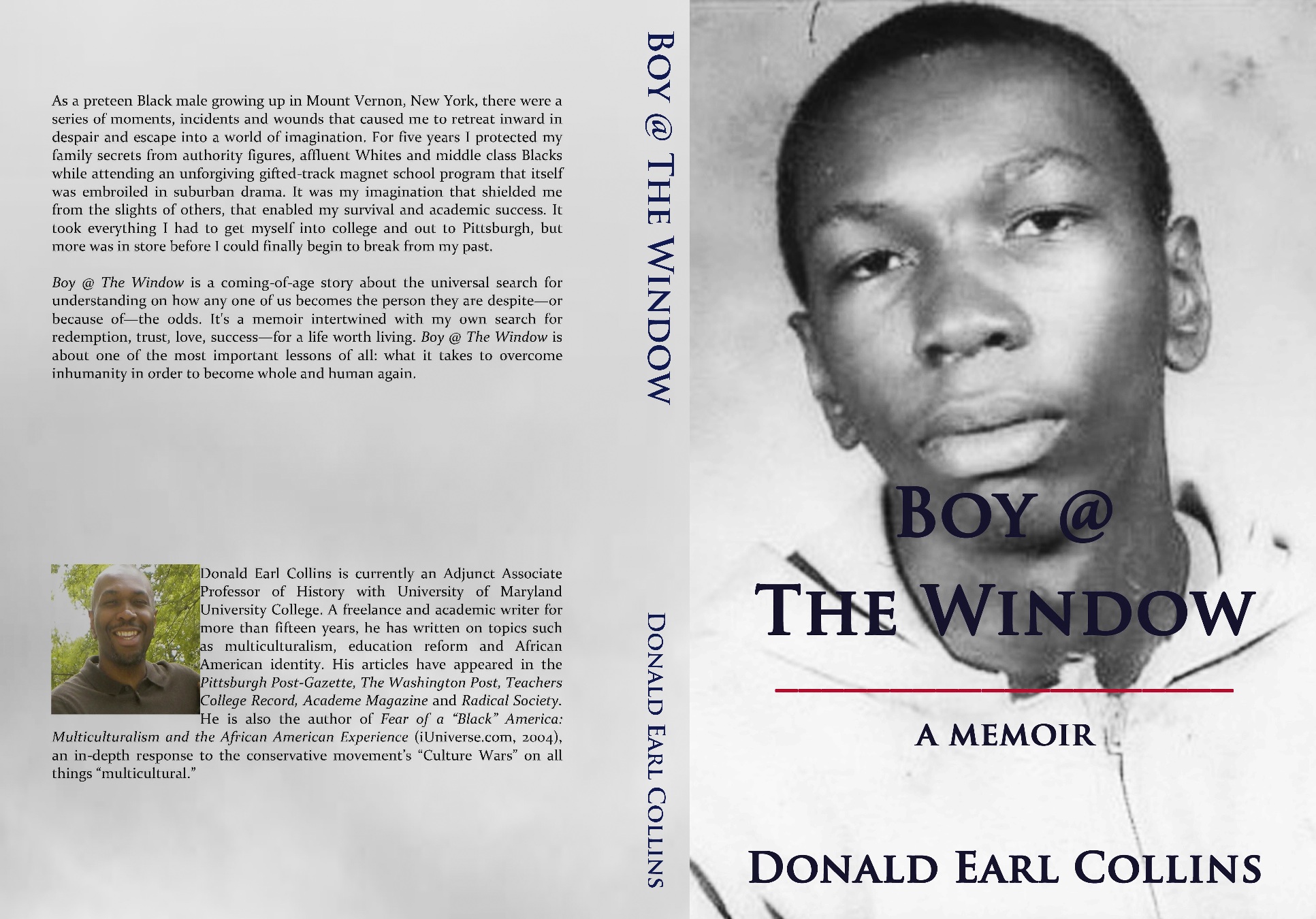
Boy @ The Window, front and back cover, and side, November 11, 2013. (Donald Earl Collins).

Boy @ The Window, front/back cover, and side, November 11, 2013. (Donald Earl Collins).

I have some really good news. My book Boy @ The Window is not just an e-book anymore. I now have a trade paperback edition, out and available through Amazon.com as of yesterday (via http://www.amazon.com/Boy-Window-Donald-Earl-Collins/dp/0989256138/). You can also order and buy Boy @ The Window the old-fashioned way — directly through your local bookstore.

Please take a look, support, buy, read, comment and share. I will post as reviews and opportunities to talk about the book arise. Thanks to all of you who’ve supported my blog and the path to Boy @ The Window over the past six years!

On Maturity and Writing In Text Message Form

11 Monday Nov 2013

Posted by decollins1969 in 1, Boy @ The Window, culture, Eclectic, eclectic music, Mount Vernon High School, Mount Vernon New York, music, Pop Culture, race, University of Pittsburgh, Youth

≈ 1 Comment

Tags

"I Would Die 4 U" (1984), Anger, Black Masculinity, Crush #1, Crush #2, Depression, Disillusionment, Emasculation, Maturity, Objectification, Obsession, Pedestal, Phyllis, Pitt, Prince, Rejection, Sexism, Text Messaging, Wendy, White Plains Galleria


Dulcesita, "i would die for you," November 11, 2013. (http://www.myxer.com).

Dulcesita, “i would die for you,” November 11, 2013. (http://www.myxer.com).

In Boy @ The Window, I have a chapter on my first year at Pitt and the baggage I carried from my last months in Mount Vernon, New York, Phyllis (a.k.a., Crush #2) included. I haven’t discussed Phyllis much in the six and a half years I’ve been running this blog on all things related to my memoir. Mostly because once I got over my crush-turned-internalized-obsession, I realized that she wasn’t really all that as a person. Still, given the number of posts I’ve done on my Mom, my late idiot ex-stepfather Maurice and Wendy (a.k.a., Crush #1), Phyllis does deserve some mention, along with my stumbled-filled transition to manhood that went with the years between December ’85 and August ’88.

A key point for me in this transition was in October and early November ’87. I finally worked up the courage to write Phyllis a note about an incident earlier that summer, one in which she all but emasculated me at the White Plains Galleria. As I wrote in Boy @ The Window:

Crushing walnuts in plastic bag, November 11, 2013. (http://2.bp.blogspot.com/).

Crushing walnuts in plastic bag, November 11, 2013. (http://2.bp.blogspot.com/).

I got the address, bought her a card for her eighteenth birthday, and sat down and wrote her. About how I liked her and wanted to know if she “ever liked me.” I needed to know if she and her sister really were talking about me at the bus stop that day, “one way or the other.” I wanted to know what she thought I needed in order to impress someone like her in the future. Then I added “Happy 18th Birthday!” I sent the card off on the second week in October, just a few days before her birthday.

On the second of November, I got her response. It was in purple ink, with heart shapes and circles for dots over “i”s. Reading her letter was like reading the liner notes off of a Prince album. Like the song “I Would Die 4 U,” Phyllis had decided to limit her English skills to the ’80s equivalent of sign language on paper, a real “revolution” on both their parts. I remember she started, “Thank U 4 your card 2day,” an insult to my intelligence. She would’ve been better off with, “Yo nigga, ’s up wit’ ya sweatin’ me?” She wrote indirectly that she did like me at one point in time, but added “but we’re in college now . . . around lots of nu people” She admitted that I was her and Claudia’s topic of conversation that day, but “I needed 2 get over that.” She hinted that I shouldn’t write her again, and that was it. No apologies, no attempt to understand how I felt…

After Phyllis’ wonderful response, I all but stopped going to class. I missed most of my classes the month of November, only showing up for exams or if my mood had let up long enough to allow me to function like normal. The weekend before Thanksgiving, I allowed my dorm mates to cheer me up by getting a couple of cases of Busch Beer. These were the Pounder type, sixteen-ounce cans. After getting Mike to get us the cases, we went back to Aaron’s room and started drinking. I downed four cans in fifteen minutes, and was drunk within a half hour. I started throwing around the word “bitch.” Anytime anyone mentioned Phyllis’ name – or any woman’s name for that matter — one of us said the B-word and we’d guzzle down some beer.

In today’s world of text messaging, I would’ve found Phyllis’ response so ridiculous that I probably would’ve shared it with close friends and laughed about it for weeks afterward. But as someone with the emotional and psychological maturity of a twelve-year-old in the fall of ’87, Phyllis’ response really, really, really hurt. Her letter shattered the pedestal on which I had placed her, and reaffirmed every negative thing I’d felt about myself for the previous half decade.

Depression image, Carroll College, Counseling Services, November 11, 2013. (http://www.carroll.edu).

Depression image, Carroll College, Counseling Services, November 11, 2013. (http://www.carroll.edu).

It also left me so depressed that I finished that semester with a 2.63 GPA. That, and spending the holidays at 616, made me determined to use the anger I felt toward myself and Phyllis as fuel for the next semester. And even though that worked so well that I made Dean’s List, I still hadn’t really gotten over Phyllis’ rejection by the time the school year was over in April ’88.

It took one last look at that letter — that unbelievably trifling and simple letter — to realize that even under the best of circumstances, Phyllis and I would’ve been a match made only in a mad scientist’s laboratory. I’d never be interested in a human being who talked down to me, as if I was unworthy of anything other than some simple shorthand language. Or in any woman whose expectations of men were about as objectifying as Mike Tyson’s views of women. I realized that I had finally gotten to know the real Phyllis, and in the process, had begun to know the real me, and what I needed to change about myself in order to build a better, 2.0 version of me. With that, like so much from my freshman dorm at Lothrop Hall, Phyllis’ letter became part of my garbage pile.

My One and Only College Visit Before College

05 Tuesday Nov 2013

Posted by decollins1969 in 1, Boy @ The Window, culture, Eclectic, eclectic music, Mount Vernon High School, Mount Vernon New York, music, Pittsburgh, Pop Culture, race, University of Pittsburgh, Youth

≈ Leave a comment

Tags

"Party All The Time" (1985), Black Males, Class of '87, Class of 1987, Classmates, College Visits, Concordia College, Eddie Murphy, HBCUs, Humanities, Rick James, Self-Discovery, Walks


Concordia College, Bronxville, NY, November 5, 2013. (http://concordia-ny.edu).

Concordia College, Bronxville, NY, November 5, 2013. (http://concordia-ny.edu).

One of the many pitfalls of poverty in the midst of striving toward college was that I didn’t do a single formal college visit prior to taking the Amtrak to Pittsburgh in late-August ’87. (Ironic, then, that I’ve been on at least sixty college campuses to teach or lecture, for graduate school, for conferences, talks, interviews and other events in the past quarter-century). The only options for doing any college visits at all while at Mount Vernon High School (NY) were either the schools in the area or to go on the HBCU college visit trips to Howard and Hampton University. I had no interest in applying to an HBCU (which I’ll talk about later), and the prospect of visiting Columbia or NYU never really occurred to me until years later.

But I did have one inadvertent encounter with a college campus prior to arriving at Lothrop Hall on the University of Pittsburgh’s campus in ’87. It was in the fall of ’85. As I wrote in Boy @ The Window:

I discovered something rather interesting about myself toward the end of the year. I understood, maybe for the first time, how much walking and nocturnal self-pleasure had replaced sitting on the radiator at the living room window as my after school and weekend distraction. Walking allowed me to continue to contemplate my future, to make sense of my senseless world. Very early on in my junior year, I went on a Saturday walk straight up Route 22, from East Lincoln and North Columbus. I ended up at Concordia College in Bronxville, a small liberal arts school in the middle of one of the richest towns in America. It was a cloudy and crisp early fall day, those first series of gray days you experience after a long, hot summer. I wore my gray hooded and zippered sweat jacket with my beat-up multi-colored and checkered long-sleeve shirt and some cheap, made-in-Taiwan blue jeans.

Even with that and my tall, Black male self on a mostly White campus, I seemed to blend in. Not a single person looked at me as if I didn’t belong there. Some of the students actually said “Hi” to me, and not that overly enthusiastic greeting, either. I walked across the campus, walked into some of the buildings and walked around some of the empty classrooms. After a bit more wandering around, I ended up at the library. It was surprisingly small, but the books it did have were the kinds I used to like reading. Old and dusty historical texts and subjects of interest only to old writers and historians. I saw students at tables studying or talking softly while studying. Then it dawned on me why the students didn’t automatically assume that I wasn’t a college student. I was dressed like they were, or,I guess, they dressed like me. Sloppy, but not too sloppy. It also dawned on me that you needed a college ID on the campus in case the guards suspected that you weren’t a college student. So I made my way from the campus and trekked back home.

This was my first and only college visit. And though I hadn’t stopped by the admissions office or spoken with a financial aid counselor, my wandering walk gave me much food for thought. The visit reinforced my thinking on what I needed to do in eleventh grade to guarantee both college acceptance and a scholarship. I assumed an academic scholarship, but an athletic one was still in the realm of possibility. I knew, again, that this was my make-or-break year to bring my grades up as far as possible. I had no idea what my class ranking was, but I assumed that I needed to be in the top fifteen or twenty to have my best shot. So I set the largest goal possible – making it to the top ten of my class.

Eddie Murphy (with Rick James), "Party All The Time" (1985) video (screen shot), November 5, 2013. (http://vimeo.com).

Eddie Murphy (with Rick James), “Party All The Time” (1985) video (screen shot), November 5, 2013. (http://vimeo.com).

In the back of my mind, I knew even then that I didn’t want to attend a school with any of my classmates or with any reminders of Mount Vernon. So many of my Black classmates were already talking about attending HCBUs or New York area school. I knew that despite their relative maturity as eleventh graders, I didn’t want to be in classroom settings with the Rick James “Party All The Time” set or with White and Black classmates who thought of me as a caricature of a human being or Black male.

That walk to Concordia reminded me of a simple fact. That my path to college was my path, not to be determined by anyone else, and certainly not the people I didn’t even trust with a smile.

Why Students Need Teachers Who Look Like Them

24 Thursday Oct 2013

Posted by decollins1969 in 1, Boy @ The Window, culture, Eclectic, Mount Vernon High School, Mount Vernon New York, Politics, Pop Culture, race, Youth

≈ Leave a comment

Tags

Black Teachers, Diane Ravitch, Diversity, Education Reform, High-Stakes Testing, Mount Vernon public schools, Nathan Hale Elementary, Reign of Error (2013), Teach for America, Teachers of Color, Teaching, Wendy Kopp, William H. Holmes Elementary


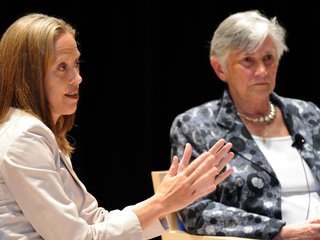
Wendy Kopp and Diane Ravitch head-to-head, Aspen Ideas Festival, Aspen, CO, June 28, 2011. (http://www.aspenideas.org/).

Wendy Kopp and Diane Ravitch head-to-head, Aspen Ideas Festival, Aspen, CO, June 28, 2011. (http://www.aspenideas.org/).

Not exactly the most precise title I’ve ever written. But it does get to a sensitive point for many involved in education and so-called  reform. Between Wendy Kopp and Diane Ravitch — especially since the publication of Ravitch’s latest and most comprehensive salvo Reign of Error a couple of months ago — it’s been hard for anyone to get a word on K-12 education into the national dialogue. Kopp’s running around ringing the educational Armageddon bell, while Ravitch has all but revealed the likes of Kopp, Michelle Rhee and Dr. Steve Perry as money-hungry reformers who wouldn’t know reform if it bit them in their derrieres.

The debate over high-stakes testing and anti-union teacher effectiveness models has put aside so many other conversations on improving K-12 education. So many that the average person may think that test scores and teacher training are the only issues on the table for reform, whether from the perspective of false prophets like Kopp or actual experts like Ravitch. For me, the one effort that has been neglected over the past decade and a half has been one to diversify the teaching profession, on the basis of race, gender and even levels of expertise.

It’s taken my son’s five-plus years of education in Montgomery County Public Schools to fully appreciate how unique my own time in an integrated school setting in Mount Vernon, New York truly was. From first through sixth grade, at Nathan Hale and William H. Holmes Elementary Schools, four of my six teachers were African American. But it wasn’t just that they were Black. The one thing that Ms. Griffin, Mrs. Shannon, Mrs. O’Daniel and Mrs. Bryant all had in common was their high expectations of me and my classmates. They were kind, but also no-nonsense teachers. They gave me a hug when I needed one, and a slap on the butt (in O’Daniel’s case, nearly literally) when I needed it.  By the way, they frequently made school fun, too.

No reflection of self in the mirror, October 24, 2013. (http://mailfeed.blogspot.com/).

No reflection of self in the mirror, October 24, 2013. (http://mailfeed.blogspot.com/).

They also dared to venture beyond the state-mandated curriculum to infuse it with materials about everything from Black history to the Maya, from reading our standard textbooks to encouraging us to discuss the Camp David accords (Menachem Begin, Anwar Sadat and President Jimmy Carter) and the Iran hostage crisis. Mostly, I learned more about what I’d face from the world in terms of race, gender and class from these teachers than from all the rest of my teachers combined (other than Harold Meltzer).

I would’ve liked some more male teachers of color, particularly once I became part of Humanities at A.B. Davis Middle School in seventh grade. In fact, between Dr. Larry Spruill and Dr. Hosea Zollicoffer, they were really the only Black male teachers/administrators I saw between end of sixth grade and my junior year at the University of Pittsburgh, a span of almost nine years. As it was, administrators and teachers like my seventh grade math teacher Ms. Simmons, along with Brenda Smith, Spruill and the handful of other I encountered often looked at me as if I was the cursed Son of Ham, or, rather, some weird version of whom they considered Black. At least, respectable and Black. Still, they served as reminders that not all teachers were White and female, if only that. (But, I digress…)

Now, I know what some of you may say. It shouldn’t matter what the race of the teacher or administrator is, as long as they care about the students. That The New Teacher Project (founded by Rhee) and Teach for America (founded by Kopp) provide alternative opportunities for professionals of color to enter the teaching profession. No they don’t. Not really. They provide an elitist version of Peace Corps for impoverished urban and rural school districts for folks who often do not stay in teaching for the long-term (beyond four or five years), only to then move on to graduate school, law school or Wall Street.
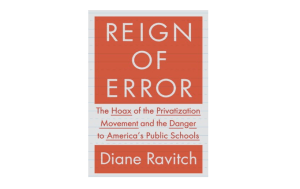
Reign of Error (2013) by Diane Ravitch, front cover. (http://bn.com).

Reign of Error (2013) by Diane Ravitch, front cover. (http://bn.com).

My teachers to a person remained teachers until they received promotions, retired or passed away. But they could stay teachers (and later become administrators) because they weren’t trying to reform education. They saw themselves as part of a larger community, helping to nurture children, not just educate them. They had the autonomy and parental support necessary to do so. And they didn’t have an atmosphere where they lived in fear of their jobs in case the students’ SRA scores dropped between 1979 and 1980 or between 1980 and 1981.

Despite my experiences and the experiences of my generation of students, the money grubbers of K-12 education reform will continue to insist that public education is at Def Con 1, and that we should launch our proverbial nukes in a pre-emptive strike to reform it. The sad truth is, in places like Texas and Philly and Chicago, their warheads have already gone off, irradiating school districts, poor students and students of color alike. And all without dealing with issues involving poverty and diversity in the process.

On Regrets and Forgiveness

22 Tuesday Oct 2013

Posted by decollins1969 in 1, Boy @ The Window, Christianity, culture, Eclectic, Hebrew-Israelite, Jimme, Mount Vernon High School, Mount Vernon New York, New York City, Pop Culture, race, Religion, Youth

≈ Leave a comment

Tags

Child Abuse, Domestic Violence, Forgiveness, Indecision, Love, Maurice Eugene Washington, Maurice Washington, Mother-Son Relationship, Regret, Regrets, Second-Guessing, Self-Reflection, Unforgiveness


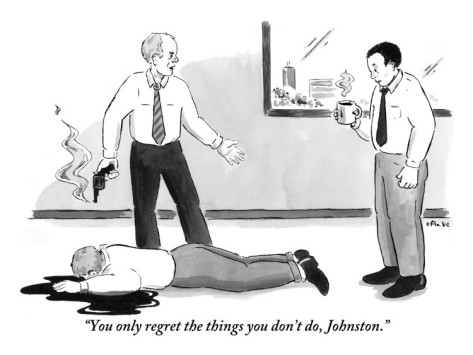
Emily Flake's "You only regret the things you don't do, Johnston," February 28, 2011. (http://newyorker.com)

Emily Flake’s “You only regret the things you don’t do, Johnston,” February 28, 2011. (http://newyorker.com)

One of the things I’ve read and heard from others so far about Boy @ The Window since April has been about catharsis. As in, “this book must’ve been cathartic for you.” I’ve said in response, “Yeah, it sure has.” But that’s not been the whole truth. In more than a few respects, Boy @ The Window has opened up a Pandora’s box of wounds I’d kept locked for years and years.

This might surprise some folks, especially the ones who attended Mount Vernon public schools, Humanities and specifically Mount Vernon High School with me. But there is a dark side to being me. Beneath my well wishes, good graces and generic smile has also been a person with deep regret, repressed anger, smoldering rage over what by far were the worst years of my life. All of which has translated into a person whose worst days since are days of blame — almost always of and for myself. I can forgive almost anyone or anything — my late idiot ex-stepfather, my father Jimme and his years of alcoholism, friends or superiors who’ve attempted to take advantage of me.

The Physics of a Bottomless Pit, February 27, 2013. (MatsuKami of deviantART via http://www.scienceblogs.com).

The Physics of a Bottomless Pit, February 27, 2013. (MatsuKami of deviantART via http://www.scienceblogs.com).

Yet there’s one person I’ve found very hard to forgive — myself. I hold myself to such high standards that it would be impossible for anyone other than Jesus to meet. And God knows I’m not perfect. But in looking at my past, my growing up years in Boy @ The Window, I’ve found that so much of my life’s force and energy has gone into redeeming myself for having to live through those terrible, terrible years. Even though I’ve been at a place in my life in which I’ve pretty much known myself, my passions, my calling, my abilities and limitations, for the better part of twenty years. Until recently, though, I hadn’t given myself any breaks from my past. Putting it under lock and key obviously didn’t work, and airing it for the world to read — while beneficial — had brought with it a truck-load of emotions that I had yet to work through.

As I wrote at the end of Boy @ The Window:

I can say without a doubt that Humanities did make a difference in my life. I wouldn’t be the person I am today without those six bittersweet and indifferent years. It makes any setback I might suffer today seem small and laughable by comparison. There are things I wish would’ve happened, things that would’ve made it easier to enjoy life and savor glorious moments even now. I wish Humanities had been as serious about developing me as a writer as it was about accelerated math and science classes. I regret not asking Phyllis out for a date. I lament not revealing more about the tragedies of my family life or my keen sense of humor to the few classmates and teachers I had some bond with, however weak. I wish I had trusted my instincts and never worn that kufi to Holmes or Davis. I know I should’ve stayed with football or tried out for basketball. And I wish I had the opportunity as a twelve-year-old to kiss Wendy one time. Admittedly, there’s a part of me that wishes I could kiss her now.

I imagine that if I had done all of these things, I would’ve been even more bruised up (especially in the case of Wendy), but at least I could’ve said I tried. Instead of looking back at my past and picking it apart like a forensic vulture.

But my deepest regret, and one that I hadn’t forgiven myself for, at least until recently, was for not calling the cops on my then stepfather after he beat up Mom on Memorial Day, Monday, May 31, ’82. Between my near-photographic memory and my training as an academic historian, it’s been hard to look at my past without reliving it.

How do you mend a broken heart?, 2005, October 22, 2013. (digitalman via deviantART at http://deviantart.net).

How do you mend a broken heart?, 2005, October 22, 2013. (digitalman via deviantART at http://deviantart.net).

I hadn’t figured out that I hadn’t forgiven myself until a few weeks ago. I realized that I hadn’t let go of the worst of my past. Now, letting go doesn’t mean that you forget your past, bury it or repress it emotionally. For me, it simply means not reliving the moment as if it happened last week instead of thirty-one years ago. To treat the moment as a memory, an important reminder that I am not Superman, that I couldn’t have saved my Mom from domestic violence anymore than I could’ve saved myself from poverty as a twelve-year-old.

You know, when I was younger, I thought that I didn’t have any regrets, any resentment or any dark side from growing up the way I did. We all tend to believe that pushing forward to a brighter future will take care of our past. That’s simply not true. We need to live in the present in order to achieve that brighter future. That means working through our pasts, and then letting it go. I should know.

“I Am Become Columbus, Destroyer of Worlds”

14 Monday Oct 2013

Posted by decollins1969 in 1, Academia, Boy @ The Window, Christianity, culture, Eclectic, Mount Vernon High School, Patriotism, Politics, Pop Culture, race, Religion, Youth

≈ 1 Comment

Tags

American Indians, Christopher Columbus, Columbus Day, Diseases, Enslavement, Exploitation, Genocide, History, Indigenous Groups, J. Robert Oppenheimer, Native Populations, Teaching and Learning


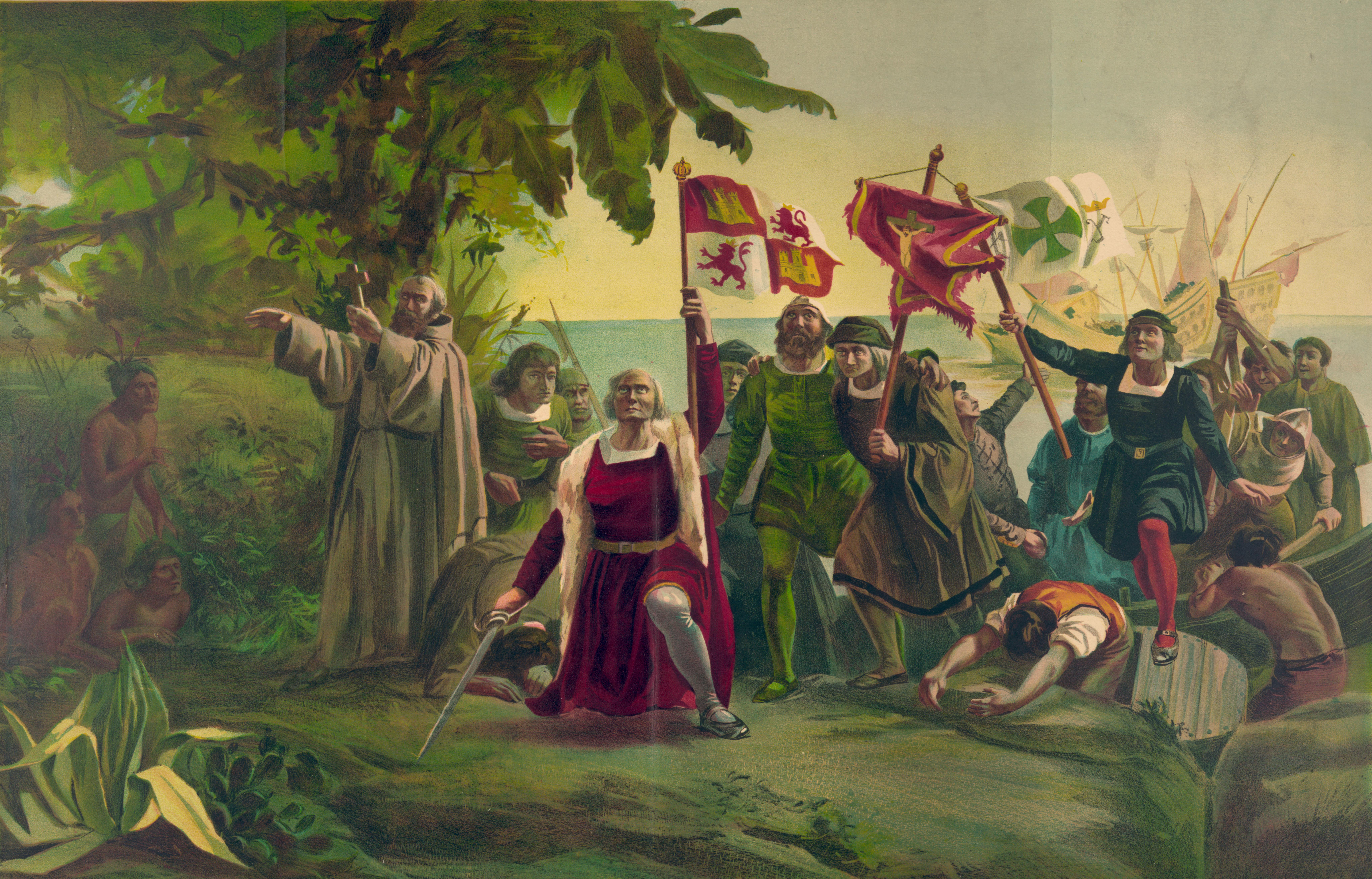
Dióscoro Teófilo Puebla Tolín, First landing of Columbus on the shores of the New World, at San Salvador, West Indies, 1862 (published 1892, Currier& Ives). (Dantadd via Wikipedia). In public domain.

Dióscoro Teófilo Puebla Tolín, First landing of Columbus on the shores of the New World, at San Salvador, West Indies, 1862 (published 1892, Currier& Ives). (Dantadd via Wikipedia). In public domain.

The title kind of says it all, no? On this Columbus Day, 2013, we should all acknowledge this as the beginning of the inadvertent (and frequently deliberate) genocide conducted against the indigenous groups that made up the Western Hemisphere as of October 12, 1492. The day that Christopher Columbus “discovered” America — as if First Nation tribes or Native Americans or American Indians were looking to be discovered — was the first day of more than half a millennium’s worth of physical and psychological assault on the peoples of the Western Hemisphere.

I talk about this in all of my courses — US History, World History (when I get to 1500 CE), and African American History. I describe how this notion of discovery was pretty much invented in the nineteenth century, to create a mythology about the greatness of God-fearing Europeans (and, in the US context, Americans) and their pre-ordained but altruistic triumph over the heathen Indians, those “noble savages.” I go over the fact that the Eurasian diseases that the Spaniards and other Europeans brought with them to the Western Hemisphere wiped out tens of millions of the indigenous between 1492 and 1700. Smallpox, measles, mumps, rubella, bubonic plague, chicken pox all helped reduce a population that experts have estimated to have been between 70 and 100 million at the time of first contact to between seven and 10 million by the end of the seventeenth century.

Drawing accompanying text in Book XII of the 16th-century Florentine Codex (compiled by Fray Bernardino de Sahagún, 1540–1585), showing Nahuas of conquest-era Central Mexico suffering from smallpox, September 11, 2009. (Wikipedia). In public domain.

Drawing in Book XII of Florentine Codex (compiled by Fray Bernardino de Sahagún, 1540–1585), showing Nahuas of Central Mexico suffering from smallpox, September 11, 2009. (Wikipedia). In public domain.

I talk about Columbus’ second voyage, where he helped establish the first European settlement in what is now Haiti and then in the Dominican Republic, all while searching for gold, enslaving Arawak Indians and engaging in full-fledged battles. Just a year and a half after the first, glorious “discovery!”

The justification, of course, was and often remains that Europeans were civilized Catholic Christians, whereas these half-dressed natives were hedonistic polytheists. Even now, we often get caught up in the human sacrifice rituals of the Maya and Aztecs and somehow use that as justification for exploitation, slavery, and the inadvertent wiping out of whole cultures — worlds, if you will. It’s a justification that should make any believer in a higher power queasy, and any non-believer extremely angry.

I’m disappointed. We still sugarcoat the real meaning of Columbus Day for people of all ages. I began to learn about all of this in fifth grade (thank you, Mrs. O’Daniel), in October ’79. But I didn’t come to know most of the full story until high school. Even then, no one — not Flanagan, Zini or Meltzer — mentioned disease, exploitation, slavery and warfare as the genocidal combination that essentially handed Western Europeans the Western Hemisphere. I guess they either didn’t know or thought that it would be too painful a lesson to teach fourteen-to-eighteen year-olds.

As J. Robert Oppenheimer said in ’65, twenty years after the Manhattan Project’s success in creating the world’s first nuclear bomb, “Now I am become Death, the destroyer of worlds.” Well, one doesn’t have to have God-like powers or be a Hindu deity to create large-scale human suffering, as was the case with Columbus. All one really needs is the conviction necessary to treat other humans as if they are only meat with brains and eyes.

God, Graviano and Darwin

10 Thursday Oct 2013

Posted by decollins1969 in 1, Boy @ The Window, Christianity, culture, Eclectic, Hebrew-Israelite, Mount Vernon High School, Mount Vernon New York, Politics, Pop Culture, race, Religion, Youth

≈ Leave a comment

Tags

Atheism, Biology, Charles Darwin, Creationism, Evangelical Christianity, Evolution, God, Higher Power, Identity, John Graviano, Politics of Religion, Salvation, Self-Discovery, Self-Reflection, The Universe


Galaxies in clusters/ superclusters of  dark matter filaments,  as part of Pan-STARRS sky survey, July 17, 2010. (Boylan-Kolchin/The Virgo Consortium/Durham University/PA Wire)

Tens of thousands of galaxies in clusters/superclusters of dark matter filaments, as part of Pan-STARRS sky survey, July 17, 2010. (Boylan-Kolchin/The Virgo Consortium/Durham University/PA Wire)

From Boy @ The Window, circa October ’83:

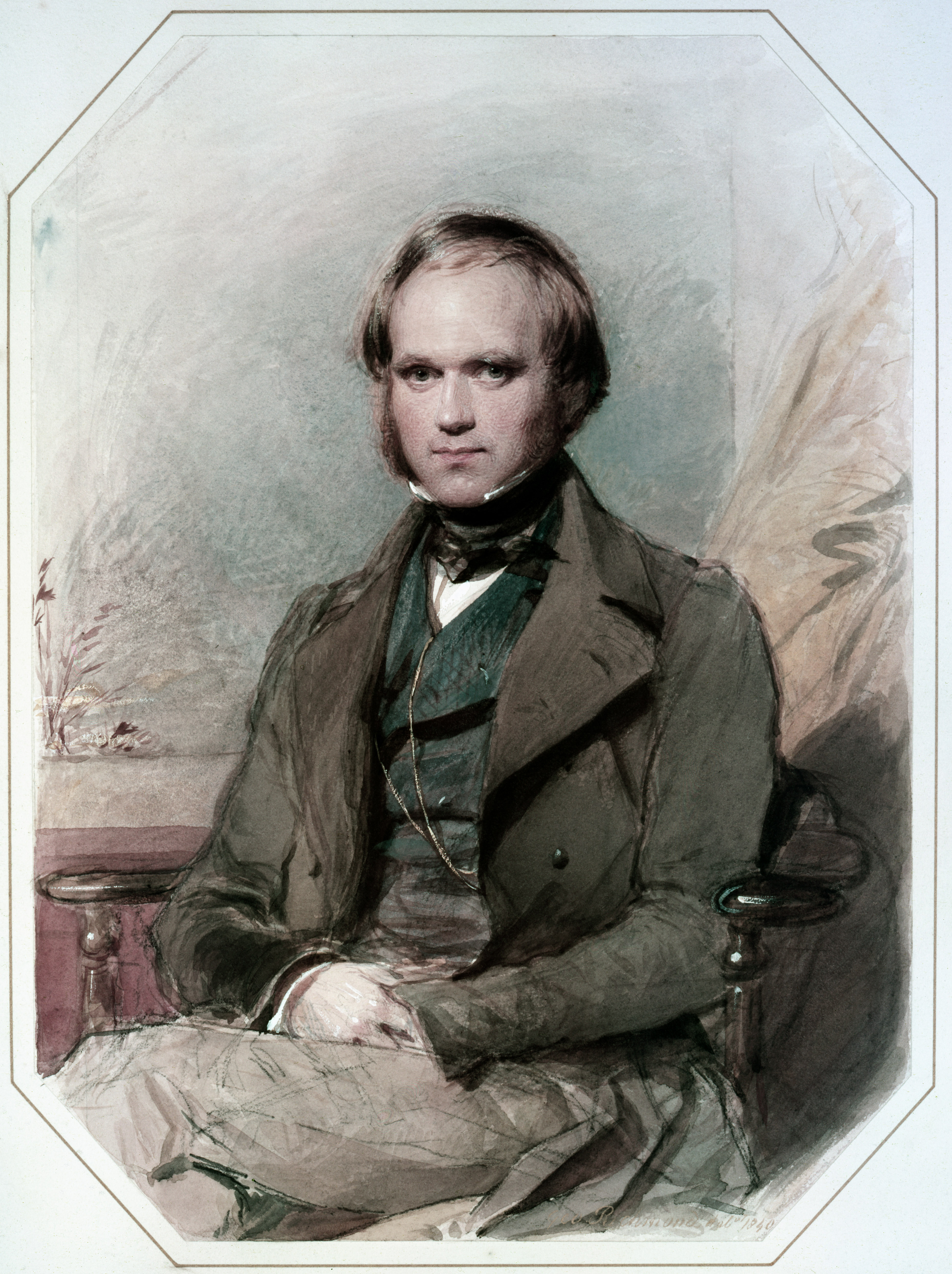
Bio with Mr. Graviano did provide some answers for me beyond the science. The man was also an assistant coach for MVHS’ basketball team. Although I know he loved basketball, Graviano was a heck of a science teacher. He didn’t do anything particularly exciting. He just made it seem as if we were learning how to tie our shoes when he was teaching us binomial nomenclature or the difference between mitosis and meiosis. Graviano began the year with Charles Darwin’s trip aboard the HMS Beagle to South America and the Galapagos Islands in the 1830s, observing finches and developing his theory of natural selection. We were learning about Darwin and evolution, something I knew flew in the face of my family’s Hebrew-Israelite beliefs. Despite that, what I learned in Biology every day made more sense to me than attempting to interpret the first chapter of Genesis or Balkis Makeda’s dreams warning us against the imperfect science of intellectual types like Darwin. What surprised me more was the fact that no one in our class questioned Graviano or the fact that he was teaching evolution, at least not in the open.

Biology gave me food for thought. I understood the science, the process of natural selection and mutation, the reality that over numerous eons life gradually evolved on earth to include intelligent mammals, primates, and humans. At the same time, we were being taught in temple that God had created or reclaimed (depending on interpretation) the earth in six days or six thousand years. The reclamation interpretation left room for everything that science said had occurred prior to the ascent of modern humans. The creation story obviously didn’t. I was confused, having to reconcile the scientific method with religious beliefs. I solved the problem in my own mind by choosing to stand on the reclamation interpretation of Genesis’ first chapter. But that didn’t completely satisfy me.

It was part of a long but interesting period that led me to become a plain old, nondenominational Christian by April ’84. But at this point in the Boy @ The Window story, I was literally caught between the stupidity of being a Hebrew-Israelite and the idea that there wasn’t a higher power at all.

Yet, despite Graviano’s class, I couldn’t wrap my head around the idea that evolution was a random process. To me, that seemed to approach the ridiculous. Biological evolution’s hardly been perfect. But one completely random set of changes built upon another set of completely random changes over three or four billion years likely doesn’t yield life on this planet in its current state. Too many patterns for me reflected in biology, mathematics and — as I’d learn in a couple of years — physics to accept evolution as a completely random process.

Portrait of Charles Darwin, by George Richmond (circa 1838), October 15, 2012. (Jdcollins13 via Wikipedia). In public domain.

Portrait of Charles Darwin, by George Richmond (circa 1838), October 15, 2012. (Jdcollins13 via Wikipedia). In public domain.

That was really my only sticking point. For my ninth and tenth-grade classmates, though, I couldn’t believe their stone-faced silences over the Darwin story. I knew that some of them held beliefs that ran completely counter to the idea of evolution. Some, even, were likely what we now call evangelical, literal-interpretation-of-the-Bible Christians. Yet they were as silent as comatose patients for most of the first marking period. What I learned a little later on in life was that silence was as much a form of protest or disapproval as outright vocal opposition.

As for me, I found the processes of mutation, mitosis and meiosis fascinating. I felt as if I was learning a small but important secret about God and the universe. That both — if one believes in God and has some understanding of the universe — have intellectual and scientific minds. Graviano, through his mechanical teaching style, was at least able to convey that to us, if any of us paid close enough attention.

If Graviano opened my eyes to modern science and the understanding of life on its most basic level, Yom Kippur ’83 opened me up to understanding why I no longer put my trust in Maurice’s God.

I guess if I hadn’t already been in the midst of a spiritual identity crisis, I wouldn’t have used my classes in ninth grade as my way of figuring out how to rebuild my identity, and in the process, figure out what and in whom I wanted to believe. Too bad folks who now run things in this country never took one moment’s time to do the same.

← Older posts
Newer posts →

Boy @ The Window: A Memoir

Boy @ The Window: A Memoir

Places to Buy/Download Boy @ The Window

There's a few ways in which you can read excerpts of, borrow and/or purchase and download Boy @ The Window. There's the trade paperback edition of Boy @ The Window, available for purchase via Amazon.com at http://www.amazon.com/Boy-Window-Donald-Earl-Collins/dp/0989256138/

There's also a Kindle edition on Amazon.com. The enhanced edition can be read only with Kindle Fire, an iPad or a full-color tablet. The links to the enhanced edition through Apple's iBookstore and the Barnes & Noble NOOK edition are below. The link to the Amazon Kindle version is also immediately below:

scr2555-proj697-a-kindle-logo-rgb-lg

Boy @ The Window on Amazon.com: http://www.amazon.com/Boy-The-Window-Memoir-ebook/dp/B00CD95FBU/

iBookstore-logo-300x100

Boy @ The Window on Apple's iBookstore: https://itunes.apple.com/us/book/boy-the-window/id643768275?ls=1

Barnes & Noble (bn.com) logo, June 26, 2013. (http://www.logotypes101.com).

Boy @ The Window on Barnes & Noble: http://www.barnesandnoble.com/w/boy-the-window-donald-earl-collins/1115182183?ean=2940016741567

You can also add, read and review Boy @ The Window on Goodreads.com. Just click on the button below:

Boy @ The Window

Twitter Updates

Tweets by decollins1969
  • RSS - Posts
  • RSS - Comments

Archives

  • June 2025
  • April 2023
  • September 2022
  • August 2022
  • July 2022
  • June 2022
  • May 2022
  • April 2022
  • March 2022
  • January 2022
  • December 2021
  • November 2021
  • October 2021
  • September 2021
  • August 2021
  • July 2021
  • June 2021
  • April 2021
  • March 2021
  • February 2021
  • January 2021
  • December 2020
  • November 2020
  • October 2020
  • September 2020
  • August 2020
  • July 2020
  • May 2020
  • April 2020
  • March 2020
  • January 2020
  • December 2019
  • November 2019
  • August 2019
  • July 2019
  • June 2019
  • May 2019
  • April 2019
  • March 2019
  • February 2019
  • January 2019
  • December 2018
  • November 2018
  • October 2018
  • September 2018
  • August 2018
  • July 2018
  • June 2018
  • May 2018
  • March 2018
  • February 2018
  • January 2018
  • December 2017
  • November 2017
  • October 2017
  • September 2017
  • August 2017
  • July 2017
  • June 2017
  • May 2017
  • April 2017
  • March 2017
  • February 2017
  • January 2017
  • December 2016
  • November 2016
  • October 2016
  • September 2016
  • August 2016
  • July 2016
  • June 2016
  • May 2016
  • April 2016
  • March 2016
  • February 2016
  • January 2016
  • December 2015
  • November 2015
  • October 2015
  • September 2015
  • August 2015
  • July 2015
  • June 2015
  • May 2015
  • April 2015
  • March 2015
  • February 2015
  • January 2015
  • December 2014
  • November 2014
  • October 2014
  • September 2014
  • August 2014
  • July 2014
  • June 2014
  • May 2014
  • April 2014
  • March 2014
  • February 2014
  • January 2014
  • December 2013
  • November 2013
  • October 2013
  • September 2013
  • August 2013
  • July 2013
  • June 2013
  • May 2013
  • April 2013
  • March 2013
  • February 2013
  • January 2013
  • December 2012
  • November 2012
  • October 2012
  • September 2012
  • August 2012
  • July 2012
  • June 2012
  • May 2012
  • April 2012
  • March 2012
  • February 2012
  • January 2012
  • December 2011
  • November 2011
  • October 2011
  • September 2011
  • August 2011
  • July 2011
  • June 2011
  • May 2011
  • April 2011
  • March 2011
  • February 2011
  • January 2011
  • December 2010
  • November 2010
  • October 2010
  • September 2010
  • August 2010
  • July 2010
  • June 2010
  • May 2010
  • April 2010
  • March 2010
  • February 2010
  • January 2010
  • December 2009
  • November 2009
  • October 2009
  • September 2009
  • August 2009
  • July 2009
  • June 2009
  • May 2009
  • April 2009
  • March 2009
  • February 2009
  • January 2009
  • December 2008
  • November 2008
  • October 2008
  • September 2008
  • August 2008
  • July 2008
  • June 2008
  • May 2008
  • April 2008
  • March 2008
  • February 2008
  • January 2008
  • December 2007
  • November 2007
  • October 2007
  • September 2007
  • August 2007
  • July 2007
  • June 2007

Recent Comments

decollins1969's avatardecollins1969 on No Good Teaching Deed Goes…
Mary Rose O’Connell's avatarMary Rose O’Connell on No Good Teaching Deed Goes…
Lyndah McCaskill's avatarLyndah McCaskill on The Raunchiest of Them Al…

NetworkedBlogs on Facebook

NetworkedBlogs
Blog:
Notes From a Boy @ The Window
Topics:
My Life, Culture & Education, Politics & Goofyness
 
Follow my blog

616 616 East Lincoln Avenue A.B. Davis Middle School Abuse Academia Academy for Educational Development AED Afrocentricity American Narcissism Authenticity Bigotry Blackness Boy @ The Window Carnegie Mellon University Child Abuse Class of 1987 CMU Coping Strategies Crush #1 Crush #2 Death Disillusionment Diversity Domestic Violence Economic Inequality Education Family Friendship Friendships Graduate School Hebrew-Israelites High-Stakes Testing Higher Education History Homelessness Humanities Humanities Program Hypocrisy Internalized Racism Jealousy Joe Trotter Joe William Trotter Jr. K-12 Education Love Manhood Maurice Eugene Washington Maurice Washington Misogyny Mother-Son Relationship Mount Vernon High School Mount Vernon New York Mount Vernon public schools Multiculturalism MVHS Narcissism NFL Pitt Pittsburgh Politics of Education Poverty President Barack Obama Race Racial Stereotypes Racism Relationships Self-Awareness Self-Discovery Self-Reflection Sexism Social Justice Teaching and Learning University of Pittsburgh Violence Whiteness Writing

Top Rated

Blog at WordPress.com.

  • Subscribe Subscribed
    • Notes from a Boy @ The Window
    • Join 103 other subscribers
    • Already have a WordPress.com account? Log in now.
    • Notes from a Boy @ The Window
    • Subscribe Subscribed
    • Sign up
    • Log in
    • Report this content
    • View site in Reader
    • Manage subscriptions
    • Collapse this bar
 

Loading Comments...