• About Me
  • Other Writings
  • Interview Clips
  • All About Me: American Racism, American Narcissism, and the Conversation America Can’t Have
  • Video Clips
  • Boy @ The Window Pictures
  • Boy @ The Window Theme Music

Notes from a Boy @ The Window

~

Notes from a Boy @ The Window

Category Archives: Mount Vernon High School

The Meaning of Chicken McNuggets

23 Monday Jun 2014

Posted by decollins1969 in 1, Boy @ The Window, culture, Eclectic, Mount Vernon High School, Mount Vernon New York, Pittsburgh, Pop Culture, University of Pittsburgh, Youth

≈ Leave a comment

Tags

616, 616 East Lincoln Avenue, Chicken McNuggets, Class of '87, Contaminated Food, Coping Strategies, Distractions, Food, Food Critic, Food Justice, Food Policy, Food Politics, General Foods, McDonald's, MVHS, Operation Opportunity, Pink Slime, Self-Discovery, Self-Reflection, Sweet and Sour Sauce, Vanilla Milkshake


McDonald's Chicken McNuggets with Sweet and Sour Sauce, November 17, 2006. (The Food Pornographer via Flickr). In public domain.

McDonald’s Chicken McNuggets with Sweet and Sour Sauce, November 17, 2006. (The Food Pornographer via Flickr). In public domain.

I’ve found it amazing over the years how much my diet and palate has changed, and how my cooking has changed with it. Once upon a time, I thought that Burger King, Arthur Treacher’s, and (to go more local) Mount Vernon’s Papa Wong’s and Clover Donuts had the best food in the world. I knew no other way of preparing fish other than frying it in oil and coating it with a combination of flour and corn meal. And any meal that cost more than $10 — whether eating out or in buying the ingredients to make a meal for my 616 party-of-eight — was a real luxury.

By the summer of ’87 — the summer between the end of high school and the beginning of my college journey at Pitt — I was working for General Foods (now Kraft Foods) in Tarrytown, New York as part of the minority access program Operation Opportunity (the details are all in Boy @ The Window). After work, I often stopped in White Plains at or near The Galleria to switch buses, since it took two buses and a three-quarters-of-a-mile walk to get from 616 and Mount Vernon to the company’s testing facilities down the road from the Tappan Zee Bridge. I also stopped at The Galleria to avoid the hum-drum grind of poverty and chaos at home, to get something substantial to eat, to check out and/or buy the latest tune. And, to feel like a normal seventeen-year-old, and not the boy-man who always felt as if he was part of some epic struggle.

As I described it in Boy @ The Window:

Screen shot 2014-06-23 at 7.32.17 AM

And it was a heaven, a haven, a distraction, if only temporarily, from all of my terrors and fears. Of being permanently alone, of not being able to establish real, lasting friendships, of not being able to love, of only being able to evaluate myself through the eyes of women who saw me as a boring automaton. Not to mention, of having yet another incident with my idiot stepfather Maurice over my refusal to submit to him as “Dad.”

It was also really my first time on my own for more than a few hours without the crutch of high school and Humanities, without the constant noise of my younger siblings tearing up the apartment like it was the Daytona 500. So with every bite of those six orange-yellow McNuggets and every slurp of that fake vanilla milkshake, I savored my quieter mind. I may have looked to others as if I was woofing down the food faster than Scooby Doo and Shaggy in the middle of a food orgy. But for me, those five or six minutes lasted more like twenty, as if I was in deep meditation or watching a bird flap its wings in slow-motion.

Mechanically processed chicken, the key ingredient in McDonald's Chicken McNuggets, pouring out into small tubs, October 5, 2010. (http://huffingtonpost.com).

Mechanically processed chicken, the key ingredient in McDonald’s Chicken McNuggets, pouring out into small tubs, October 5, 2010. (http://huffingtonpost.com).

Twenty seven years later, and I can barely stand the sight or smell of anything McDonald’s — or any fast food in general. Thank you, by the way, Eric Schlosser and your Fast Food Nation (2002) book for making my stomach churn with every fast-food smell my nose can detect! I even make my own pizzas most of the time now! I buy my son Noah and my wife (on occasion) Mickey D’s, mostly McNuggets, and lately, with milkshakes that apparently now contain some dairy-like substances. As for me, I do sometimes eat a couple of fries, but my near-middle-aged tongue and stomach limits my ability to push down the food.

My palate after thirty years of cooking and progressing from $5 spaghetti meals for eight to broiling sockeye salmon in olive oil with a from-scratch fettuccine dish is far more sophisticated now. I no longer can lose myself in food in order to de-stress from carrying the weight of my world. Cooking, however, has been my one of my cathartic exercises for the past twenty years. It’s sometimes even more of a remedy than writing. Too bad there was never any hemp in those McNuggets, though!

Mothers’ Meeting Day, 1997

17 Saturday May 2014

Posted by decollins1969 in 1, Academia, Boy @ The Window, Carnegie Mellon University, Cleaning, culture, Eclectic, Jimme, Marriage, Mount Vernon High School, Mount Vernon New York, My Father, Pittsburgh, Pop Culture, race, University of Pittsburgh, Youth

≈ Leave a comment

Tags

Abuse, Alcoholism, Baggage, Betrayal, CMU, Insomnia, LaGuardia Airport, Laurell, Misogyny, Mother's Day, Mother-in-Law, Mother-Son Relationship, PhD Graduation, Pitt, US Air, US Airways


A Mother’s Revisions

A Mother’s Revisions

Normally I do a post every May 18th on a topic related to my PhD graduation ceremony at Carnegie Mellon. They usually revolve around two subjects: Joe Trotter and my Mom, betrayal and burnout. For once, I have no intention of doing a post on the seventeenth anniversary of officially becoming “Dr. Collins” and all of the baggage that I brought/came with that. Instead, today’s post is about the day before, Saturday, May 17 ’97. It was the day that my Mom and my future mother-in-law would meet each other for the first time, during my Mom’s one-and-only visit to Pittsburgh during my twelve years there.

I covered the cost of my Mom’s round-trip flight on US Air from LaGuardia to Pittsburgh, knowing that she wouldn’t have been able — or, as it turned out, willing — to see me graduate otherwise. That Friday evening, May 16th, was my Mom’s first time on an airplane since she was pregnant with me, the summer of ’69, when she visited her family in Arkansas. She’d already missed my ceremonies at Pitt for my bachelor’s and master’s in ’91 and ’92 respectively, and, as a result, I hadn’t gone to my graduations those years either.

So I made it easy for her this time around. Or rather, me and my then girlfriend Angelia made it easy for her. I gave up my studio apartment that weekend, because my Mom wasn’t comfortable with me putting her up in a hotel. Angelia cleaned my apartment from top to bottom — including the moulding at the bottom of my apartment’s walls. The place wasn’t this clean the day I’d moved in back in ’90!

But with so many other things that week, my Mom showed little appreciation for the significance of this trip, or for what we were doing to make this trip as convenient for her as possible. I went through Friday night and Saturday at Angelia’s apartment on the edge of East Liberty, about a twelve-minute walk away, where I hadn’t done an overnight before. I spent the first half of the next day going back and forth between my Mom, Angelia, my high school friend Laurell and her sister Naomi and unofficial surrogate (who were all staying at the Downtown Marriott).  I took my Mom to both Pitt and CMU, to show her the place of my ten years’ working toward something much more important than a second high school diploma. I might as well have been taking my son to both campuses when he was a newborn!

Around 2:30 pm, I realized we needed to get to Angelia’s mother’s place in Homewood for a mid-afternoon meal. That was next on the schedule. I think we took the bus, the 71D from a block off CMU to Homewood, and walked the three blocks up a steep hill to Monticello Street. There, Angelia’s mom extended a long greeting, a hug for which my Mom hardly seemed prepared. Angelia was also there, and had bought a KFC bucket meal for the four of us to share.

After a few pleasantries, it started. How my mother and eventual mother-in-law, in their first-ever meeting, spent three hours discussing their failed marriages and the horrible nature of Black men the day before my graduation, I really don’t know. I was in a fog, worn out from a week’s worth of insomnia and from the growing realization that my Mom didn’t really care about my journey or accomplishments.

I stayed and respected my elders, maybe too much. Three hours listening to stories I already knew, between my first-hand knowledge of my father Jimme and my idiot ex-stepfather Maurice, not to mention the stories Angelia had told me about her mother’s trials (luckily, Angelia never witnessed these, because her mother’s marriage was over by the time she’d turned two). A concussion here, a bruised lip there. A broken jaw, a fractured arm. Alcoholism and abuse, and men, working or unemployed, not paying any bills. “Men are no good,” my Mom said over and over again.

Of course, I didn’t count, for as far as my Mom was concerned, I wasn’t a man, because I’d spent the previous decade as a student. But that wasn’t the worst part. My Mom did a bunch of revisionist history in telling the story of “raisin’ six kids” and her doomed two marriages, somehow writing me and Darren and the decisions she had some degree of control over out of this story.

I’d never been part of a conversation like this as an adult. As a six or ten-year-old kid on The Avenue in Mount Vernon with my Mom and her hospital friends, yes, but not since those times. I felt as if I might as well found some stoop outside, sat down with a 40, and fallen into a deep sleep.

Even Angelia’s mom wanted to change the subject by the middle of hour number three. Instead, she used her elderly-ness as a excuse to beg off more conversation on the topic of misogyny, told me that she was proud of me, said that she was excited about going to the CMU ceremony, and retired for the evening. I wish I could’ve gone upstairs with her and done the same. I instead had the distinction of dropping my Mom off at my apartment, picking up Angelia and going down to Station Square to eat dinner with Laurell, Naomi and Archie. And that was all the day before the graduation ceremony!

Where 1 PhD = A Second High School Diploma

14 Wednesday May 2014

Posted by decollins1969 in 1, Academia, Boy @ The Window, Carnegie Mellon University, culture, Eclectic, Mount Vernon High School, Mount Vernon New York, New York City, Pittsburgh, Pop Culture, race, University of Pittsburgh, Youth

≈ Leave a comment

Tags

Associate's Degree, CMU, High School Diploma, Homelessness, Jealousy, job search, Lame Jokes, Mother-Son Relationship, PhD Graduation, Pitt, Subway, Teachers College, Westchester Business Institute, White Plains New York, Yonkers


Absurditty (or an Absurd Ditty, deliberately misspelled), where $100 = 2 quarters, May 14, 2014. (Donald Earl Collins).

Absurditty (or an Absurd Ditty, deliberately misspelled), where $100 = 2 quarters, May 14, 2014. (Donald Earl Collins).

I could’ve just as easily titled this post, “Road to Boy @ The Window, Part 5: My Mother and My Doctoral Graduation.” Precisely because any chance I had of immediately getting over the psychological and emotional hump of finishing a doctorate while dealing with the betrayals of an advisor and dissertation committee was gone by the end of my graduation day, the third Sunday in ’97 (anniversary number seventeen, just four days away). That process opened me up to looking at my past, to figuring out how someone like me could go on to do a PhD, to teach, to write, to learn, all well beyond the expectations of my parents and my classmates.

The process of feeling uneasy about my relationship with my Mom, though, had begun the day after my interview at Teachers College. That Tuesday, May 13th, I left the Hotel Beacon, made my way down to the 66th Street stop, and caught the 1 train to The Bronx and Van Cortlandt Park. I then caught a Westchester Bee-Line Bus up Broadway and crossed the Yonkers-Bronx border, where I got off to walk up a one-block-long hill.

I arrived at my Mom’s temporary place on Bruce Avenue. This was where she and my younger siblings had been living since the end of ’95, as a result of an electrical fire that swept through two floors of 616. Not to mention, an incompetent Mount Vernon Fire Department that did more damage by flooding two of the three buildings on the property in the process of putting the fire out. It was a sparse place that made 616 look like a luxury high-rise by comparison. There were holes in the walls because my younger siblings Yiscoc and especially Eri had punched through the cheap plaster and nonexistent sheet rock in their teenage anger and rage.

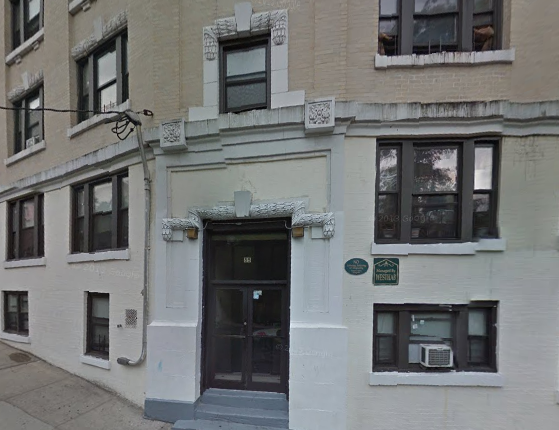
Front door of 85 Bruce Avenue, Yonkers, NY (screen shot), taken in October 2007. (Google Maps).

Front door of 85 Bruce Avenue, Yonkers, NY (screen shot), taken in October 2007. (Google Maps).

It was in the midst of all of this that my Mom was finally graduating from Westchester Business Institute with her associate’s. I was happy for her. The only thing that concerned me was the kind of work she could find with the degree. I was willing to help her in any way I could, including coming up and spending a few days in Yonkers to attend her ceremony in White Plains that Tuesday evening. I wanted to continue to provide my Mom the emotional support that I thought she wanted.

That began to change the morning after her graduation ceremony. We were sitting down at this cafeteria bench that served as the kitchen table, with her drinking cream-infused tea from a chipped white flower mug and eating a piece of toast while I contemplated walking down the hill for some yogurt. We’d been talking about looking for work, about her moving out and finding a place in White Plains, or even moving back to a fully renovated 616. I brought up the real possibility that if I got the Teachers College job, I would move back to the New York area (though not Mount Vernon — out of the question).

This was when my Mom said, “You know, you were in school so long, you could’ve had another high school diploma.” It was out of the blue, and caught me completely off guard. It was quiet for a moment, with me in a deep frown, and my Mom sitting there for a few seconds. Then she forced a laugh. “It’s a joke,” she said, as if I was supposed to be oblivious to the nonverbal displays of disdain for nearly a decade’s worth of my work. And, what was the joke? My degree, or the amount of time and energy I spent in earning it?

I sort of ignored what my Mom had said at first. But really, how could I? Mom had told the lamest of jokes over the years — like about how diarrhea “was like ‘dying in the rear’,”  she’d say as if she heard the joke from someone else. But no matter how I looked at it, comparing everything I went through from August ’87 up to that point to a diploma that I earned while living in two hells — 616 and Mount Vernon High School — wasn’t a joke. Not for either of us.

My Mother's Associate's Degree Photo, Westchester Business Institute, May 12, 1997.

My Mother’s Associate’s Degree Photo, Westchester Business Institute, May 12, 1997.

My Mom disappointed me a day later, as she said, “I don’t have to tell you that I’m proud of you. I tell other folks, just not you.” It was in response to me saying that I thought her joke wasn’t one at all. But she hadn’t sealed our fates as a mother and son in a long-term strained relationship, at least not yet. That would occur a few days later.

Even under the strictest of measures, comparing a PhD to a high school diploma is ridiculous. It’s like comparing the buying power of Oprah to an ant colony. But I figured out a long time ago, long before starting my master’s program in history at Pitt, that a degree is only worth anything if you use it to enhance your life, advance your career, or pursue your calling. Even with all my qualms. About academia, about the publish-or-perish model, about the not-for-profit profit world, even about myself as a writer. It was all worth it.

One thing I did learn, though, about my Mom, maybe for the first time. I’d always wondered about the saying, “I love you, but I don’t like you.” I hadn’t really understood what that meant until the week of my doctoral graduation.

AP US History Exam Day & Harold Meltzer

13 Tuesday May 2014

Posted by decollins1969 in 1, Boy @ The Window, culture, Eclectic, eclectic music, Mount Vernon High School, Mount Vernon New York, music, Politics, Pop Culture, race, Youth

≈ Leave a comment

Tags

AP, AP American History, AP US History, AP US History Exam, Appreciation, College Board, Coping Strategies, ETS, Exam Day, Harold Meltzer, Kaplan, Mentoring, Photographic Memory, Princeton Review, Privilege, Self-Discovery, Teaching and Learning


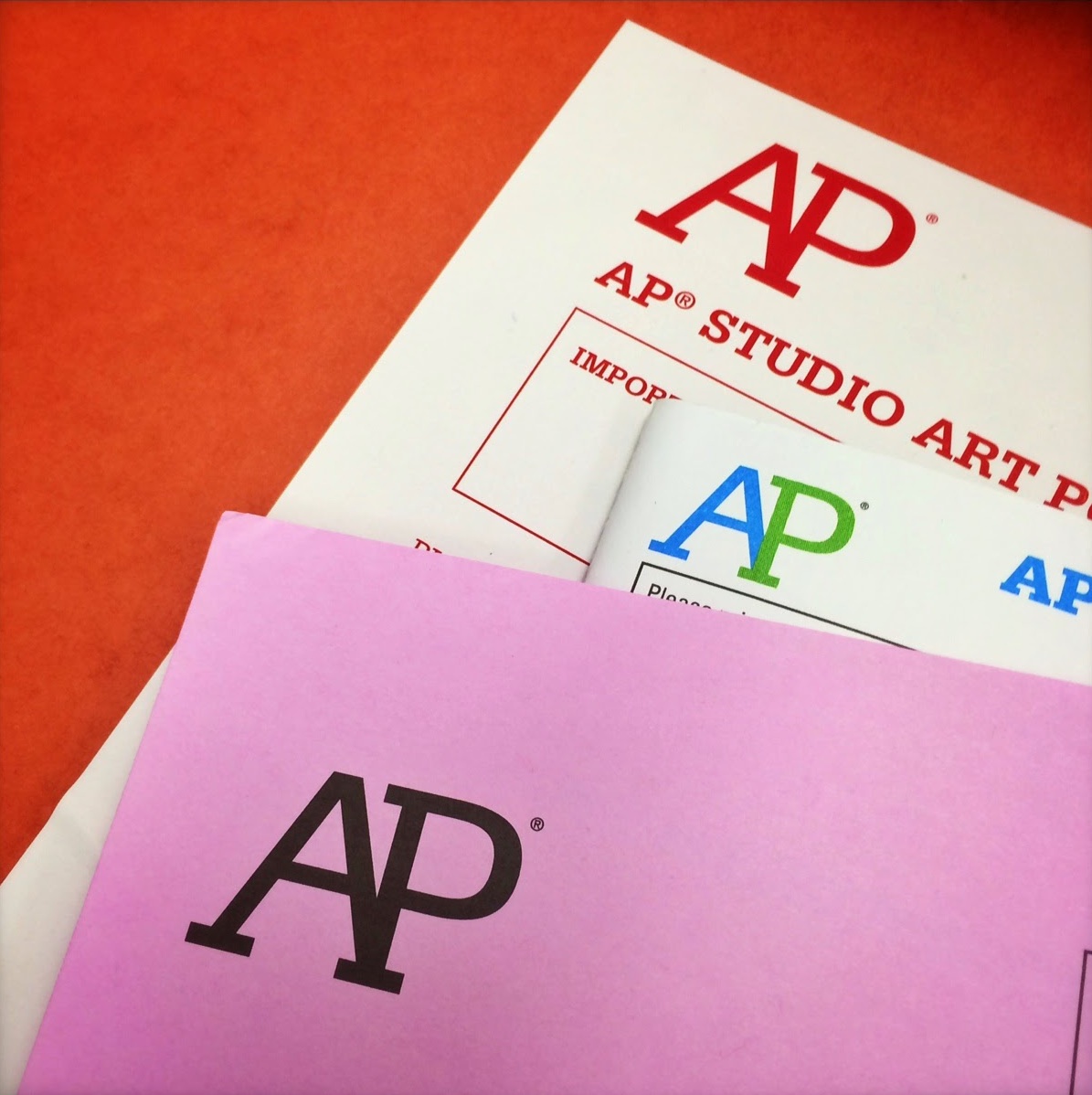
AP Day (cropped), May 9, 2014. (Tim Needles/http://artroom161.blogspot.com/).

AP Day (cropped), May 9, 2014. (Tim Needles/http://artroom161.blogspot.com/).

Twenty-eight years ago on this day/date, I was on my way to Mount Vernon High School, listening to Mr. Mister, Simple Minds, Sting and Whitney along the way. I was a few minutes away from a three-hour exam that could change my future. It wasn’t exactly the sunniest or warmest of days, though. That second Tuesday in May ’86 was brisk and heavy with clouds, a high of only 52°F. Still, with the way I felt that morning, May 13th might as well have been sunny with a high of seventy-two. 

I’ve written about my AP US History exam experience and Harold Meltzer ad nauseum here in this blog, as well as in Boy @ The Window. How I felt in the months and weeks before the exam. My expectations for a “5” and what that meant in comparison to taking something much less representative of the college experience, like the SAT. My perspective on my AP classmates and the general sense of obnoxious whining that permeated our classroom in throughout March and April ’86, and in whispers the following year. The keys to my academic success, and me being conscious of those keys, for the very first time. And, of course, the mentoring and tutelage of the late Harold Meltzer, the only teacher after elementary school who took a genuine interest in my development as a human being, not just in my grades or in my intellectual abilities.

I was a high school junior whom, at sixteen years old, had more wisdom about what would leave me well prepared for college than most parents, teachers and so-called education reformers possessed in ’86 or in 2014. Taking Algebra in eighth grade, AP courses in eleventh and twelfth grade, accelerated math and science classes all through high school. I knew even then that the APUSH exam was far more representative of my academic preparation than any SAT score would indicate, no matter how high.

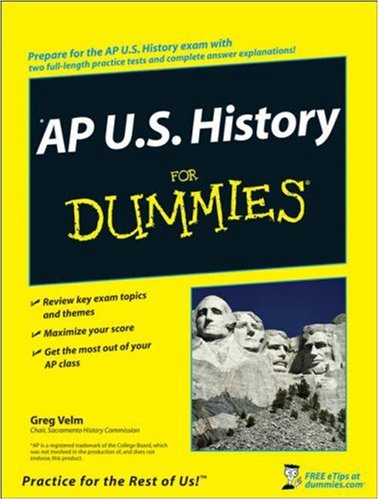
AP US History For Dummies cover (2008), May 13, 2014. (http://bookoutlet.com/).

AP US History For Dummies cover (2008), May 13, 2014. (http://bookoutlet.com/).

Yet I’ve found myself in debates with folks in recent months over an issue that’s been well settled in the education world for more than a decade. Over a single four-digit score that many thought should be the difference between going to an elite school and attending a no-name local technical institute. These folks refused to recognize what even the College Board and ETS recognize. That social class and racial privilege have been infused in the SAT process for years, with so many students taking SAT-prep courses at Princeton Review and Kaplan being all the prima facie evidence I need.

Now, this doesn’t mean that Advanced Placement (or International Baccalaureate, for that matter) is much better. But in terms of the actual amount of time spent in direct preparation, with the right teacher, even an impoverished Black kid like I was could attend a public school with a magnet program and earn a “5” — without spending $1,500 on Kaplan or Princeton Review. 

Enough on that. Today, I can truly say that AP US History Exam ’86 Day was a fundamentally important milestone for me. It sealed the deal I made for myself in the midst of the summer of abuse, to get out of 616, out of Mount Vernon, and into college. Thanks Humanities. Thanks, Mr. Meltzer. Thanks, classmates. And, thank God!

Boy @ The Window – 1st Anniversary!

17 Thursday Apr 2014

Posted by decollins1969 in 1, Boy @ The Window, Christianity, culture, Eclectic, Hebrew-Israelite, High Rise Buildings, Jimme, Marriage, Mount Vernon High School, Mount Vernon New York, My Father, New York City, Pittsburgh, Pop Culture, race, Religion, Sports, University of Pittsburgh, Youth

≈ Leave a comment

Tags

Book Promotions, BookExpo America 2014, Positive Feedback, Publishing Business


Boy @ The Window 1st Anniversary

Boy @ The Window 1st Anniversary

Nope, no balloons or streamers for this one, the one-year anniversary since I put out the first e-book version of Boy @ The Window on Amazon Kindle. Yay, me! It’s been a pretty good twelve months, one of a few highs and a bunch of lows in selling and promoting the book, in moving forward with a plan, only to have tossed it aside for a new set of plans for the remainder of 2014 and 2015.

The bit of encouraging news — aside from some royalties for Boy @ The Window so far — is that there are a couple of places reviewing it now (finally), and I’m finally moving along with promoting the book. Beyond that, there are few things tougher psychologically than book promotions. This is why folks hire publicists — emotional distance can be helpful in reaching out to friends and strangers.

But, from the feedback (mostly through email and Facebook) I’ve gotten so far, people really like Boy @ The Window. Trust me, when a reader tells you they couldn’t put the book down once they started to read it, that’s an emotional boost! It’s part of what has enabled me to keep going on this venture into the cyclone of the publishing world.

I’ve planned for attending BookExpo America for the first time at the end of next month in New York. It’ll likely be a gigantic sea of authors, publishers, editors and others looking for an edge. I just hope that it’s worth the money I’m about to spend there.

One thing that I should note, though, as I continue to write on my blog and proceed with Boy @ The Window promotions. There are plenty of posts here that aren’t in the memoir, and plenty of stories in Boy @ The Window that I haven’t posted here. You can get some idea of what’s in the book from reading my posts, but it would be far from a complete picture. Buy a copy. Take it for a spin. It’ll make you laugh and cry, angry and hopeful, and all at times in the same paragraph.

Stinking Up The Joint

15 Tuesday Apr 2014

Posted by decollins1969 in 1, Boy @ The Window, culture, Eclectic, Jimme, Mount Vernon High School, Mount Vernon New York, New York City, Pop Culture, race, Youth

≈ Leave a comment

Tags

Brandon Lee, Classmates, Deodorant, Geometry, Gym Class, Humanities, Looney Tunes, Louis Cuglietto, Pepe Le Pew, Poverty, Puberty, Smell, Speed Stick Deodorant, Stench, Stick, Swimming, The Crow (1994), Tough-Love, Underarm Stench, Underarms


Pepe Le Pew stinking up the flowers, April 15, 2014. (Chuck Jones/WB, via http://www.animationartwork.com/). Qualifies as fair use because of picture's low resolution and related subject matter.

Pepe Le Pew stinking up the flowers, April 15, 2014. (Chuck Jones/WB, via http://www.animationartwork.com/). Qualifies as fair use because of picture’s low resolution and related subject matter.

Puberty is often a confusing and scatterbrained time even for the most well-adjusted of folks. Changes in body chemistry, hair growth, body parts, height, weight and sleep patterns are all part of this excruciating rite of passage. When thrown in with the realities of poverty and the cruelty of Humanities and Mount Vernon High School, puberty was also a long march of embarrassing moments.

One of my last embarrassing moment strictly thanks to puberty came around this time three decades ago. It was an unusually warm early April Tuesday in ’84, one in which I was hardly prepared. I’d just started using deodorant the year before, once spring had sprung in ’83, with basketball and softball as a regular part of gym class. In gym for ninth grade, we were in the swimming pool for March and April.

We just happened to be out of deodorant at 616 while I was in the midst of this class. It wouldn’t have been much of a problem, except for the fact that the cool weather of early spring had given way to a sudden heatwave, bringing temps into the upper seventies the second week in April. On that fateful Tuesday, I tried one of my Mom’s home remedies, and put a baking soda paste on my armpits, hoping to conceal my still new manly smell.

Well, it actually did work, at least from periods one through six. Then it was time for gym. I didn’t count on the fact that the high level of chlorine in the pool would completely wash away my makeshift deodorant. Nor did I consider that the swimming pool area would be about ten degrees warmer than it was outdoors. Nor did I think about the fact that we ordinary students weren’t allowed to shower after swimming or any other gym activity, for that matter. That was reserved for the school’s athletes — equipment must be protected from the “animals,” as some administrators and parents saw fit to describe us.

Speed Stick (green) deodorant by Mennen, 1980s edition (en Español), April 15, 2014. (http://www.b2bsupply.co/).

Speed Stick (green) deodorant by Mennen, 1980s edition (en Español), April 15, 2014. (http://www.b2bsupply.co/).

So, no deodorant, in a hot area of an already warm school with the air conditioning turned off, and with no opportunity to rinse off — what do you think happened eighth period? I went to Geometry class, completely unable to conceal my underarm stench. From about the second minute on, my equally sweaty classmates complained about “the smell” and “the stink,” all the while, fanning themselves with manila folders. Even with Mr. Louis Cuglietto’s windows open, it didn’t help — there was no wind to speak of.

But of all the sweat and smells, mine was the one that stood out most. Why? Because, despite it all, I remained an engaged student, and raised my right hand to answer questions. Which meant that I raised my right arm, and anyone within a six-foot radius could smell me. After ten minutes of complaints, I put my arms down, and held them close to my body for the remainder of class, looking forward to the end of the school day.

After class, Cuglietto pulled me aside to tell me, “You’re a man now. You need to get some deodorant,” as if he was offering sage advice or tough love. This wasn’t the first time Cuglietto played his version of poor assumptions about race, class and gender, and it wouldn’t be his last. I ignored him, and went on my way home.

But I didn’t stop there. I went over to Jimme’s on South 10th that evening. It was the middle of the week, a time of hungover sobriety for my father, which meant he would be home early from work. I bummed $20 off him while taking a stick of his surplus Speed Stick with me.

Is there a lesson here? Remember to keep deodorant in stock no matter what? Don’t swim with baking-soda-for-deodorant under your arms? That some teachers and classmates wouldn’t understand a moment of my life even if I passed it onto them like Brandon Lee’s character from the movie The Crow (1994)? That I was poor and in puberty, and things like this sometimes happen? Yeah, sure, I guess. The real lesson here is to remember, not for revenge or retribution, but so that younger others like me know that they’re not alone, so that the story can be told, later and better.

My and Diane Ravitch’s Path to Reign of Error

11 Tuesday Mar 2014

Posted by decollins1969 in 1, Academia, Boy @ The Window, Carnegie Mellon University, culture, Eclectic, Mount Vernon High School, Mount Vernon New York, New York City, Patriotism, Pittsburgh, Politics, Pop Culture, race, Upper East Side, Youth

≈ Leave a comment

Tags

Bill & Melinda Gates Foundation, Book Review, Corporate Education Reform, Diane Ravitch, Fear of a "Black" America (2004), High-Stakes Testing, Humanities Program, Institutional Racism, Michelle Rhee, Multiculturalism, Neoconservative Movement, Politics of Education, Poverty, Privatization, Racial Segregation, Racism, Reign of Error (2013), Social Injustice, Social Justice, Teach for America, Writing Passion


Reign of Error (2013) by Diane Ravitch, front cover. (http://bn.com).

Reign of Error (2013) by Diane Ravitch, front cover. (http://bn.com).

I first began reading Diane Ravitch in July 1990, the summer before my senior year at the University of Pittsburgh. It was the summer in which I became interested in understanding magnet programs and their relationship with desegregation and diversity efforts, courtesy of my own experience with Mount Vernon, New York public schools and its now defunct Humanities Program. I read both The Great School Wars: New York City, 1805-1973 (1974) and The Troubled Crusade: American Education, 1945-1980 (1985) that summer, with education scholar and Ford Foundation director Jeanne Oakes’ Keeping Track: How Schools Structure Inequality (1985) sandwiched in between.

It was the beginning of a twenty-year period of constantly intellectual disagreement between me and Ravitch. Oakes’ work captured inequality in terms of race and socioeconomics so much better than Ravitch, whose writings back then often treated these inequalities and distinctions as afterthoughts. When I shifted my research area to multicultural education and multiculturalism, though, that was when I found Ravitch’s absolutist defense of so-called traditional American democratic education and all things e pluribus unum unbelievably stifling. With all Ravitch knew about the politics of education, in New York and with the US Department of Education, how could she possibly defend a system that did as much to control and exclude students as it did to provide something akin to an equal opportunity?

I chalked Ravitch up to being another out-of-touch neoconservative, scared to death of race and diversity and multiculturalism. I said as much at conferences like the American Educational Research Association meeting and other conferences. I wrote as much in my dissertation and in my first book, Fear of a “Black” America: Multiculturalism and the African American Experience (2004). Through it all, I always found Ravitch’s writing compelling, but her conclusions wanting, because they lacked perspective and empathy in the context of public schools and diversity.

Then, Ravitch wrote Left Back: A Century of Battles Over School Reform in 2000. Though it contained some of her common themes — overemphasis on the mantra of reform, the need for more testing, support for school choice, denigration of a multicultural curriculum — Ravitch showed growth in this book. She was less hostile to a more progressive curriculum and seemed, for the first time, really, to understand how much race and poverty had shaped the direction and the harshness of school reform going back to 1900. I happily used Ravitch’s Left Back in my History of American Education Reform course at George Washington in 2002. For her book provided a comprehensive and even-handed overview of the politics of K-12 education in a way that any educator of any American ideological perspective could understand.

I’ve finally read Ravitch’s Reign of Error: The Hoax of the Privatization Movement and the Danger to America’s Public Schools (2013). Reign of Error is Ravitch at her most passionate and energized. If I hadn’t read a couple dozen of Ravitch’s articles from the 1980s and 1990s and four of her previous books, I would think that this was her first book, as there is sense of urgency in Reign of Error that can seldom be found outside of epic memoirs and epic fiction novels.

Ravitch’s argument in Reign of Error is a simple one. Corporate education reform, if allowed to continue unfettered, will destroy public education in the US, and in the process, American democracy. Privatizing public schools (i.e., turning them into “public” charter schools), destroying teacher’s unions, constant high-stakes testing, bypassing school boards and forgetting about racial segregation and poverty — that’s corporate education reform’s agenda. As Ravitch said in Chapter 12 on the fallacies of merit pay for teachers, “Merit pay is the idea that never works and never dies (p. 119).” She could have also substituted the words “school choice,” “creationism,” “standardized testing,” “closing schools,” and “privatization” for “merit pay.”

But Ravitch goes further in her 400-page treatise. That though public education in the US has had its share of problems — the need for more teacher training and time for professional development, racial segregation and high levels of poverty while underfunded — that corporate education reform has compounded these problems several times over. That with corporate education reform, teachers, parents and students will have no say in public education, at least the ones without their own personal foundation with which to endow their own public charter school.

From a writer’s standpoint, this wasn’t Ravitch’s best effort. Her argument is repetitive, one where she likely could’ve cut the main chapters by a quarter (about 100 pages) and made the same points. I likely could’ve become inebriated if I had a shot of vodka every time the words “poverty,” “Gates,” “Walton,” “Broad,” “high-stakes testing,” and “corporate education reform” come up. But given my history with reading Ravitch and with this topic, of course Reign of Error was repetitive — it was like reading my own words on this same topic.

Ultimately, Ravitch’s Reign of Error is a primer for anyone interested in averting the social injustice that is the corporate education reform tyranny of wealthy philanthropists, money-grubbing entrepreneurs and politicians across America’s limited ideological spectrum. For those whom up to now this issue has been of limited interest, or for those who’ve felt the change in public education but haven’t quite been able to articulate those feelings, Reign of Error is for you.

For educators, parents and even students already involved in writing about or protesting against corporate education reform, this book is still for you. Ravitch provides so much ammunition that Reign of Error can be applied in numerous ways to numerous situations. At school board meetings. With #AskMichelleRhee hash tags on Twitter. In job interviews with Teach for America and with the Bill & Melinda Gates Foundation. In letters to the editor of the mainstream newspapers and in comments to mainstream TV and radio newscasters. In arguments with neoconservative parents who send their kids to private schools.

“Protecting our public schools against privatization and saving them for generations of American children is the civil rights issue of our time (p. 325).” is how Ravitch ended her Reign of Error. It’s not an exaggeration. But it does beg a question. If we can successfully fend off corporate education reform — and assume that the country will continue to ignore the poverty and racial segregation that Ravitch desperately wants addressed — can she and I then spend five minutes discussing multiculturalism?

← Older posts
Newer posts →

Boy @ The Window: A Memoir

Boy @ The Window: A Memoir

Places to Buy/Download Boy @ The Window

There's a few ways in which you can read excerpts of, borrow and/or purchase and download Boy @ The Window. There's the trade paperback edition of Boy @ The Window, available for purchase via Amazon.com at http://www.amazon.com/Boy-Window-Donald-Earl-Collins/dp/0989256138/

There's also a Kindle edition on Amazon.com. The enhanced edition can be read only with Kindle Fire, an iPad or a full-color tablet. The links to the enhanced edition through Apple's iBookstore and the Barnes & Noble NOOK edition are below. The link to the Amazon Kindle version is also immediately below:

scr2555-proj697-a-kindle-logo-rgb-lg

Boy @ The Window on Amazon.com: http://www.amazon.com/Boy-The-Window-Memoir-ebook/dp/B00CD95FBU/

iBookstore-logo-300x100

Boy @ The Window on Apple's iBookstore: https://itunes.apple.com/us/book/boy-the-window/id643768275?ls=1

Barnes & Noble (bn.com) logo, June 26, 2013. (http://www.logotypes101.com).

Boy @ The Window on Barnes & Noble: http://www.barnesandnoble.com/w/boy-the-window-donald-earl-collins/1115182183?ean=2940016741567

You can also add, read and review Boy @ The Window on Goodreads.com. Just click on the button below:

Boy @ The Window

Twitter Updates

Tweets by decollins1969
  • RSS - Posts
  • RSS - Comments

Archives

  • June 2025
  • April 2023
  • September 2022
  • August 2022
  • July 2022
  • June 2022
  • May 2022
  • April 2022
  • March 2022
  • January 2022
  • December 2021
  • November 2021
  • October 2021
  • September 2021
  • August 2021
  • July 2021
  • June 2021
  • April 2021
  • March 2021
  • February 2021
  • January 2021
  • December 2020
  • November 2020
  • October 2020
  • September 2020
  • August 2020
  • July 2020
  • May 2020
  • April 2020
  • March 2020
  • January 2020
  • December 2019
  • November 2019
  • August 2019
  • July 2019
  • June 2019
  • May 2019
  • April 2019
  • March 2019
  • February 2019
  • January 2019
  • December 2018
  • November 2018
  • October 2018
  • September 2018
  • August 2018
  • July 2018
  • June 2018
  • May 2018
  • March 2018
  • February 2018
  • January 2018
  • December 2017
  • November 2017
  • October 2017
  • September 2017
  • August 2017
  • July 2017
  • June 2017
  • May 2017
  • April 2017
  • March 2017
  • February 2017
  • January 2017
  • December 2016
  • November 2016
  • October 2016
  • September 2016
  • August 2016
  • July 2016
  • June 2016
  • May 2016
  • April 2016
  • March 2016
  • February 2016
  • January 2016
  • December 2015
  • November 2015
  • October 2015
  • September 2015
  • August 2015
  • July 2015
  • June 2015
  • May 2015
  • April 2015
  • March 2015
  • February 2015
  • January 2015
  • December 2014
  • November 2014
  • October 2014
  • September 2014
  • August 2014
  • July 2014
  • June 2014
  • May 2014
  • April 2014
  • March 2014
  • February 2014
  • January 2014
  • December 2013
  • November 2013
  • October 2013
  • September 2013
  • August 2013
  • July 2013
  • June 2013
  • May 2013
  • April 2013
  • March 2013
  • February 2013
  • January 2013
  • December 2012
  • November 2012
  • October 2012
  • September 2012
  • August 2012
  • July 2012
  • June 2012
  • May 2012
  • April 2012
  • March 2012
  • February 2012
  • January 2012
  • December 2011
  • November 2011
  • October 2011
  • September 2011
  • August 2011
  • July 2011
  • June 2011
  • May 2011
  • April 2011
  • March 2011
  • February 2011
  • January 2011
  • December 2010
  • November 2010
  • October 2010
  • September 2010
  • August 2010
  • July 2010
  • June 2010
  • May 2010
  • April 2010
  • March 2010
  • February 2010
  • January 2010
  • December 2009
  • November 2009
  • October 2009
  • September 2009
  • August 2009
  • July 2009
  • June 2009
  • May 2009
  • April 2009
  • March 2009
  • February 2009
  • January 2009
  • December 2008
  • November 2008
  • October 2008
  • September 2008
  • August 2008
  • July 2008
  • June 2008
  • May 2008
  • April 2008
  • March 2008
  • February 2008
  • January 2008
  • December 2007
  • November 2007
  • October 2007
  • September 2007
  • August 2007
  • July 2007
  • June 2007

Recent Comments

decollins1969's avatardecollins1969 on No Good Teaching Deed Goes…
Mary Rose O’Connell's avatarMary Rose O’Connell on No Good Teaching Deed Goes…
Lyndah McCaskill's avatarLyndah McCaskill on The Raunchiest of Them Al…

NetworkedBlogs on Facebook

NetworkedBlogs
Blog:
Notes From a Boy @ The Window
Topics:
My Life, Culture & Education, Politics & Goofyness
 
Follow my blog

616 616 East Lincoln Avenue A.B. Davis Middle School Abuse Academia Academy for Educational Development AED Afrocentricity American Narcissism Authenticity Bigotry Blackness Boy @ The Window Carnegie Mellon University Child Abuse Class of 1987 CMU Coping Strategies Crush #1 Crush #2 Death Disillusionment Diversity Domestic Violence Economic Inequality Education Family Friendship Friendships Graduate School Hebrew-Israelites High-Stakes Testing Higher Education History Homelessness Humanities Humanities Program Hypocrisy Internalized Racism Jealousy Joe Trotter Joe William Trotter Jr. K-12 Education Love Manhood Maurice Eugene Washington Maurice Washington Misogyny Mother-Son Relationship Mount Vernon High School Mount Vernon New York Mount Vernon public schools Multiculturalism MVHS Narcissism NFL Pitt Pittsburgh Politics of Education Poverty President Barack Obama Race Racial Stereotypes Racism Relationships Self-Awareness Self-Discovery Self-Reflection Sexism Social Justice Teaching and Learning University of Pittsburgh Violence Whiteness Writing

Top Rated

Blog at WordPress.com.

  • Subscribe Subscribed
    • Notes from a Boy @ The Window
    • Join 103 other subscribers
    • Already have a WordPress.com account? Log in now.
    • Notes from a Boy @ The Window
    • Subscribe Subscribed
    • Sign up
    • Log in
    • Report this content
    • View site in Reader
    • Manage subscriptions
    • Collapse this bar
 

Loading Comments...