• About Me
  • Other Writings
  • Interview Clips
  • All About Me: American Racism, American Narcissism, and the Conversation America Can’t Have
  • Video Clips
  • Boy @ The Window Pictures
  • Boy @ The Window Theme Music

Notes from a Boy @ The Window

~

Notes from a Boy @ The Window

Category Archives: eclectic music

What I Didn’t Know (in ’81, in ’97, in ’13)…

18 Saturday May 2013

Posted by decollins1969 in 1, Academia, Boy @ The Window, Carnegie Mellon University, Christianity, culture, Eclectic, eclectic music, Hebrew-Israelite, Mount Vernon New York, Movies, music, Pittsburgh, Politics, Pop Culture, race, Religion, University of Pittsburgh, Work, Youth

≈ Leave a comment

Tags

616 East Lincoln Avenue, Anticipation, Back Stabbers, Bruce Anthony Jones, Child Abuse, CMU, Domestic Violence, Family, Hustling, Joe Trotter, Joe William Trotter Jr., Not Knowing, O'Jays, Pitt, Poverty, Publishing, Success, The Matrix (1999), Welfare Poverty, Wisdom, Writing


Noah with me, January 3, 2004 [he was five months old]. (Angelia N. Levy).

Noah with me, February 28, 2004 [he was seven months old]. (Angelia N. Levy).

What I didn’t know across the past thirty-two years could be another book for me. I assume that would be the case for anyone would could look back across their life and second-guess themselves over that long a period of time. For me, though, the significance of today comes out of my mathematics background. You see, today’s my sixteenth PhD graduation anniversary. Not all that significant, I suppose. Except that I’m as far away from the end of my graduate school days at Carnegie Mellon today as I was from the first days of being a Hebrew-Israelite and watching my family fall into welfare poverty when I graduated in ’97.

100th Commencement Ceremony program, Carnegie Mellon University, May 18, 1997. (Donald Earl Collins).

100th Commencement Ceremony program, Carnegie Mellon University, May 18, 1997. (Donald Earl Collins).

Two things will hurt your success in this life. One is not acting on the things you know you should or must do. I learned that hard lesson from watching my mother make the decision to not make any decisions until it was too late, all while growing up at 616. Two is the enormous danger of not knowing, and therefore, not being able to act or respond to new or damaging situations as they arise. I’ve learned that lesson pretty well, too. Sometimes the hard way, through really bad experiences or decisions I didn’t play out like a game of eleventh-dimension chess. Sometimes through insight, foresight, even divine inspiration, anticipating what I didn’t know ahead of time.

And even with anticipation, you still might not be able to do anything about what you do and don’t know, simply because you’re not in any position to change things. That was especially true in ’81. I knew that my now deceased idiot ex-stepfather Maurice Washington was no good. But when my Mom decided to end her six months’ separation from him, there was nothing I could really do about it. I knew that with inflation rates of 14.5 percent in ’79 and 11.8 percent in ’80 (thank you, Scholastic Weekly Reader) and my Mom income of roughly $15,000 per year that we had less and less to work with at home. Again, not much I could do about that, either. Even paper boy jobs were drying up by the time I turned twelve!
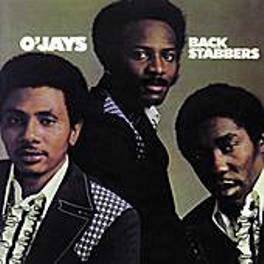
O'Jays Back Stabbers (1972) album cover, November 10, 2011. (Dan56 via Wikipedia). Qualifies as fair use as low-resolution illustration of subject matter.

O’Jays Back Stabbers (1972) album cover, November 10, 2011. (Dan56 via Wikipedia). Qualifies as fair use as low-resolution illustration of subject matter.

What I didn’t know was how quick and violent the shift into poverty would be. What I didn’t know was that Maurice would use his/our conversion as Hebrew-Israelites as justification for abusing my Mom and me. What I didn’t know was that my Mom would have three more kids by this man between July ’81 and May ’84. What I didn’t know was that I would feel so low about the loss of my best friend and my sense of self that I’d attempt to take my own life on my fourteenth birthday, at the end of ’83.

But when I looked back on this in ’97, I mostly thought about the good things that had occurred in the fifteen years between the domestic violence my Mom endured on Memorial Day ’82 and my doctoral graduation ceremony. My independent conversion to Christianity in ’84. Knocking out a 5 on my AP US History exam without ever cracking open Morison and Commager. Overcoming poverty and my lack of self-esteem to build a life at Pitt and in Pittsburgh between ’88 and ’97.

Still, I’d already been wounded, badly. By the things I knew but did nothing about. By those things I could’ve anticipated but my efforts to counteract were insufficient. By those things I couldn’t have known at all. I knew I’d have problems with my “running interference” advisor Joe Trotter coming down the dissertation stretch. Yet because of departmental politics and my need to be done sooner rather than later, I did nothing about this until I was six chapters into an eight-chapter dissertation. I knew my mentor and committee member Bruce Anthony Jones could sometimes be unreliable. Yet I had no idea that he would completely abandon me and his other doctoral students the moment he signed his name to my and their dissertations.

My dissertation's signature page, May 18, 2013. (Donald Earl Collins),

My dissertation’s signature page, May 18, 2013. (Donald Earl Collins),

Most of all, I never anticipated that my Mom would actually be jealous of me, and would spend a whole week with me at 616 and in Pittsburgh doing and saying things to completely disparage what I’d worked so hard for. For me, for her, for my family. That was hard to get over. There are times I’m not sure if I’m entirely over this yet.

What I’m sure of in ’13, though, is what I do know, don’t know, and can only anticipate with the wisdom of experience and wisdom beyond my experience. I know that I love my wife, that there’s a lot in common between her and Crush #1 (for those of you who’ve read Boy @ The Window so far, the implications should be obvious), real and from my own imagination. I didn’t know that I’d have a kid, a son who at nearly ten is both wonderful and perplexing, and hopefully, off to a much better start in life than I ever got. I suspect that one of my references for jobs and consulting gigs has been undermining my efforts over the past five years, and have thus removed her as a reference.

What I don’t know — but can only hope and work like a dog toward — is whether Boy @ The Window will be a success. I’m not sure if quantifying it would help. I sold a thousand copies of Fear of a “Black” America between August ’04 and January ’07, without the benefit of this blog, Twitter, Facebook or the e-book platforms. How long before I sell my first hundred, thousand, 5,000 or more? I have no idea. But as they say, I “must walk the path, not just know it.”

Afrocentricity and the Writing Bug

15 Wednesday May 2013

Posted by decollins1969 in 1, Academia, Boy @ The Window, Carnegie Mellon University, Christianity, culture, eclectic music, Hebrew-Israelite, Mount Vernon High School, Mount Vernon New York, music, Pittsburgh, Politics, Pop Culture, race, Religion, University of Pittsburgh, Youth

≈ Leave a comment

Tags

Africana Studies, Afrocentric Education, Afrocentric Idea (1987), Afrocentricity, Authentic Blackness, Authenticity, Black Action Society, Black Issues in Higher Education, Black Studies, Blackness, Cool, Coolness, Litmus Test, Marc Hopkins, Maulana Karenga, Molefi Asante, Pitt, Temple University, Writing, Writing Bug


A ladybug, often a symbol for the writing “bug,” May 15, 2013. (http://flickr.com). In public domain.

This time two decades ago, I was already a bit desperate for work. In transferring from Pitt to Carnegie Mellon, I’d left myself without any financial coverage for the summer of ’93 (see my post “The Arrogance of Youth, Grad School Style” from June ’12). I had applied for several fellowships, summer teaching gigs, even some nonprofit work. But as of the middle of that May, nothing had come through. I’d already spent $200 on a root canal that occurred on the same day as my written PhD comps at CMU (see my post “Facing the Tooth” from May ’12).

Even before my comps and my surprise root canal, I had talked with my friend Marc about writing a joint article about the false litmus test of Blackness that Afrocentricity had come to represent in our minds. Between Molefi Asante’s students at Temple — not to mention the overtly Afrocentric turn of both the Black Action Society and the Black Studies department (which had changed its name to Africana Studies) in the previous eighteen months — both of us felt we needed to provide an alternate perspective.

On that third Saturday in May (and the day after my comps and root canal surgery), we worked for five hours in putting together what amounted to a 1,200-word opinion piece against the belief system and authenticity test that Afrocentricity (and Afrocentric education) had become. By some folks’ definition, we realized that jazz, Miles Davis and John Coltrane would fail the authentically Black test of a Molefi Asante’s wonderful Afrocentric Idea (1987) and of Maulana Karenga as well.

Frances Cress Welsing's The Isis Papers (1991), [about as authentic as auto-tunes], May 15, 2015. (http://amazon.com).

Frances Cress Welsing’s The Isis Papers (1991), [about as authentic as auto-tunes], May 15, 2015. (http://amazon.com).

Now I’m pretty sure why Marc had problems with Afrocentricity. As a Christian and a jazz aficionado, Marc likely saw Afrocentricity as something somewhere between a misguided way of thinking about Blackness and complete and utter bull crap. His goal was to “add to the debate” and “educate” those who weren’t Asante or Karenga apostles and disciples. A laudable — if somewhat naive about the politics of academia and race — goal.

As for me, beyond the academic superficiality of having a litmus test on what is and isn’t Black, I had at least two unconscious reasons for writing my first crossover piece. One had to do with my sense that too many young folks were all too interested in doing the cool thing and not the right thing. Afrocentricity was cool, just like all rap and hip-hop was cool, just like giving libations to ancestors was cool.

Being cool had always meant following a crowd and seldom saying anything that would dig more than a nanometer beyond the surface. Or saying a critical thing about the cool thing that everyone in the same crowd otherwise takes in without a critical thought. I went to a high school full of people like that, and loathed being around people like that when I’d been a part of the Black Action Society at Pitt.

Unconscious reason number two had something to do with my Hebrew-Israelite days. Again, I gave this zero direct thought during my grad school days. But the given the trauma I’d suffered through during my three years of kufi-dom, it had to affect my thinking about Afrocentricity. The Black folk I knew who were part of the Hebrew-Israelite religion were much more obvious about what they did and didn’t consider Black or kosher. Yet, it was so obvious that they constantly contradicted themselves, in terms of food or music, how they treated their wives or children. Most important for me, though, was the fact that they tried to live separate and apart from other Blacks, yet seemed no more different beyond the kufis, veils and kosher meats from other Blacks (or Jews, for that matter).

I saw Afrocentricity as bullshit, and still see the fact that so many folks who get caught up in this sense of authenticity around Blackness as folks falling for bullshit. If I hadn’t lived as a Hebrew-Israelite between the ages of eleven and fifteen, perhaps I wouldn’t see Afrocentricity this way. If I hadn’t been around the “Party All The Time” folks in high school and the “Black Panther Party” posers at Pitt, maybe Afrocentricity would’ve been more appealing to me.

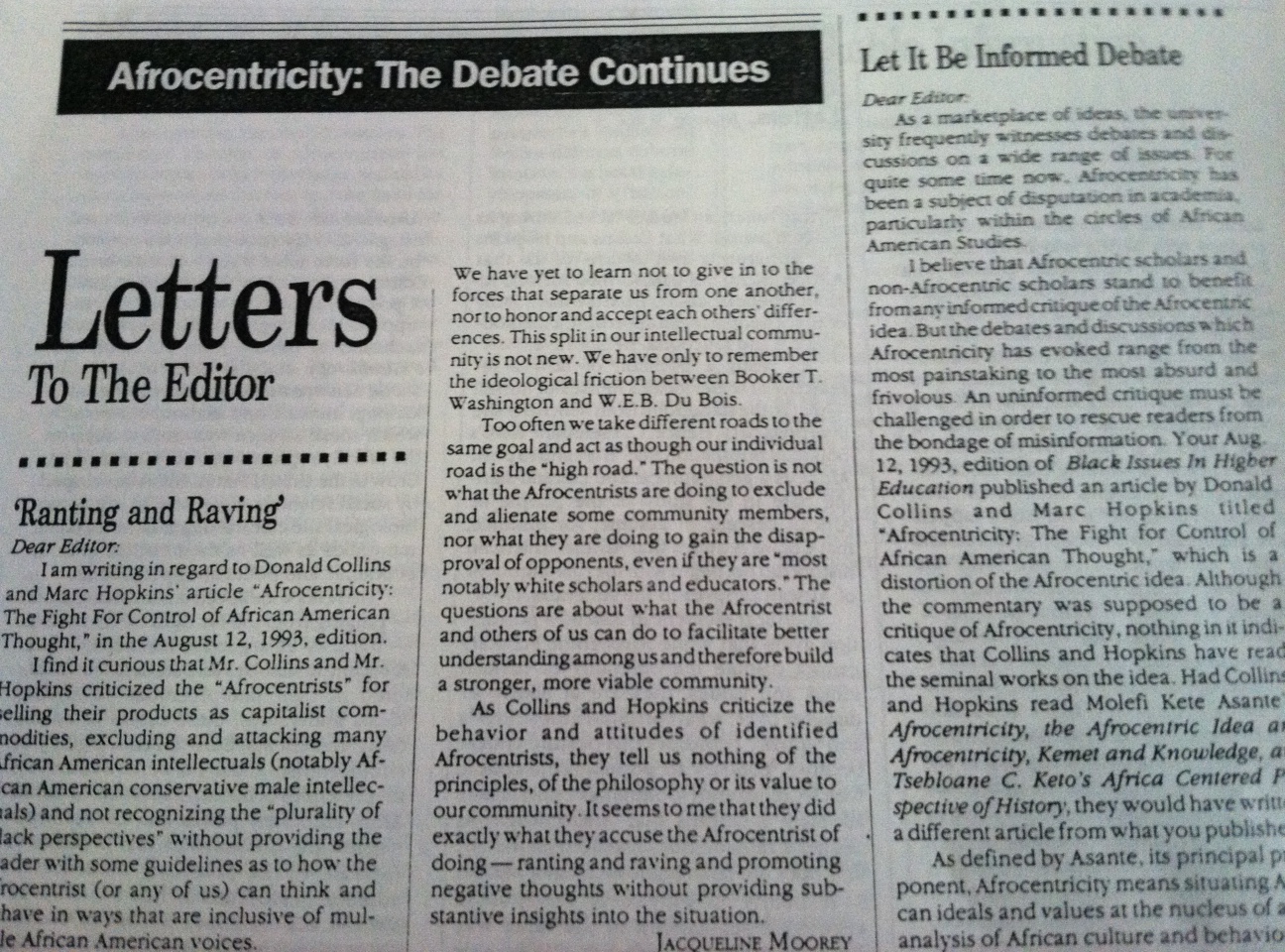
Letters to the Editor, Black Issues in Higher Education, September 9, 1993. (Donald Earl Collins).

Letters to the Editor, Black Issues in Higher Education, September 9, 1993. (Donald Earl Collins).

But at twenty-three years old, I was already tired of the pursuit of coolness and authenticity. That hasn’t changed in the past two decades. I’m sure the letters that called Marc and I “Uncle Toms” after our piece was published in Black Issues in Higher Education were from folks who thought we weren’t cool, and thought they had the answers to life itself.

I wonder how those folks back then would see the academics who believe that hip-hop can explain everything in the social sciences and humanities who are prominent today. Perhaps some of these people today were the Afrocentric followers of twenty years ago. Perhaps not. All I know is, I haven’t stopped writing since that cloudy day in mid-May.

My Trouble w/ the Lauryn Hill Reaction

09 Thursday May 2013

Posted by decollins1969 in 1, culture, Eclectic, eclectic music, music, Pop Culture, race

≈ Leave a comment

Tags

"Ready or Not" (1996), Afrocentricity, Class Privilege, Criminal Justice System, Crying, Die Hard (1988), Federal Government, Hip-Hop, Income Tax Evasion, IRS, Lauryn Hill, Music and Politics, New Jersey, Newark New Jersey, Sentencing, Sobbing, Speaker John Boehner


House Speaker John Boehner sobbing in public (again), May 8, 2013. (http://www.goodbye-blue-monday.com/).

House Speaker John Boehner sobbing in public (again), May 8, 2013. (http://www.goodbye-blue-monday.com/).

I am by no means a supporter of our slanted US justice system. It’s all too often slanted against the poor, of color and male. But I can’t sit around and watch folks gnash their teeth over the federal court in New Jersey sentencing her to three months in jail for over $1 million in income tax evasion.

Sure, it’s not fair. Perhaps even very unfair. We must keep in mind the simple fact that the IRS, et al. take years attempting to work with the rich (and yes, Lauryn Hill is a rich person) before putting a case together for the federal courts. It’s not as if the feds immediately swooped in, tasered Hill and then dragged her  through the streets in chains on the way to court. After all, she didn’t file federal or state income tax returns on $2.3 million in income from ’05 through ’09 — for five years! Heck, if Willie Nelson could figure out a way to stay out of federal courts and prison while paying off $17 million in back taxes, then surely Hill could’ve done the same at some point.

Lauryn Hill in court for one of her sentencing hearings, April 22, 2013 (Eduardo Munoz/Reuters). Qualifies as fair use under US Copyright laws, given subject matter and public hearing.

Lauryn Hill in court for one of her sentencing hearings, April 22, 2013. (Eduardo Munoz/Reuters). Qualifies as fair use under US Copyright laws, given subject matter and public hearing.

Those who’ve compared drug-addled celebs like Lindsey Lohan to Lauryn Hill as a case of Black versus While and the criminal justice system are missing a couple of valuable points. One, Lohan’s cases have never been federal, with mandatory sentences included. Two, and this is way more important, the feds tend to be pretty unforgiving once they do bring a case against a rich person for income tax evasion (e.g., Al Capone, Wesley Snipes, Leona Helmsley).

As much as I like Lauryn Hill’s music, I may feel bad for her, but I’m not going to make a federal case out of her serving three months in a federal prison for tax evasion. She’s not Mumia Abu Jamal, Angela Davis, Assata Shakur or even Tupac Shakur. Maybe Hill should’ve heeded lyrics straight from The Fugees, adapted federal government-style: “Ready or not, here [they] come, you can’t hide (uhhhh-huhhh) /gonna find you, and take it slowly…” As for the “find you” part, I also have to misquote Die Hard (1988) here, courtesy of the character Hans Gruber: “when you steal $600, you can just disappear. When you steal [one] million, they will find you, unless they think you’re already dead.”

I’ll take crap for writing this I’m sure. But Hill will be breathing free air again before Columbus Day, if not sooner.

All The Media’s Stereotypes

21 Sunday Apr 2013

Posted by decollins1969 in 1, culture, Eclectic, eclectic music, Patriotism, Politics, Pop Culture, race, Religion, Youth

≈ 1 Comment

Tags

"Dirty Laundry" (1982), 9/11. Jingoism, Boston, Boston Marathon Bombing, Branch Davidian Compound, Breaking News, Centrism, Chechnya, CNN, Cultural Stereotypes, Don Henley, Dzhokhar Tsarnaev, FOX News, Immigrants, Immigration, Islam, Jihadists, John King, Jonathan Capehart, Lockdown, Media Bias, New York Post, Oklahoma City Bombing, Police Chase, Racial Stereotypes, Racism, Stereotypes, Tamerlane Tsarnaev, Terrorism, Terrorized, Waco, Washington Post, West Texas Fertilizer Plant Explosion, Xenophobia


Dzhokhar & Tamerlan Tsarnaev in Boston Marathon crowd moments before bomb blasts, April 15, 2013. (http://www.mirror.co.uk)

Dzhokhar & Tamerlan Tsarnaev in Boston Marathon crowd moments before bomb blasts, April 15, 2013. (http://www.mirror.co.uk)

The mainstream American media was just one big, almost unbelievable fail this past week. Between the Boston Marathon bombing and the subsequent hunt for brothers Dzhokhar and Tamerlan Tsarnaev, the ricin letters to Mississippi GOP politicians and President Obama and the fertilizer plant explosion in West, Texas. In the last case, the one that killed and injured more people than two dumb asses in Boston. Yet, somehow, in a world in which the best answer should be “I don’t know” or “We don’t know yet,” media folks and their experts have been tweeting and reporting at the level of gossip for the past five or six days.

Usually a fairly careful journalist/columnist, Jonathan Capehart of The Washington Post tweeting three hours after the Boston Marathon bombing on April 15, “April 19: Anniversary of storming of Branch Davidian compound & the Okla. City bombing.” At that point, we didn’t even know the number of people killed, maimed or injured. Nor did we know the number of bombs that had exploded in Copley Square. Think, man, think!

The more famous comments of the week came out of CNN’s shop, though. John King had breaking news Wednesday afternoon that law enforcement officials had identified a “dark-skinned male” suspect. Being a White guy working in mainstream media means that you never have to say “I’m sorry,” apparently. Especially when all of his “breaking news” reporting turned out to be completely wrong.

Let’s not really analyze the so-called reporting of FOX News or the New York Post. You’d get more truth from a psychic doing a Vulcan mind-meld with Tamerlan Tsarnaev’s brain right now than you could from Murdoch’s news media world in a year.

Let’s also not forget many of the so-called terrorism experts whom guessed wrong about race, immigrant status and so many other details this past week. Not to mention reports whom apparently couldn’t find Chechnya on a map if the republic were blown up to 100x normal map size and they put a floodlight on it.

But the most disturbing — yet not very surprising — thing about the past seven days has been how the US media has engaged in a near-endless campaign of racial stereotypes, immigrant stereotypes, terrorism stereotypes, religious stereotypes, patriotism stereotypes, and hyperbole that attempts to defy history. A simple list should help:

  • Terrorist(s) = Arab Muslims
  • Males from the Caucasus = Caucasians, but not White
  • Muslims who commit a violent act = terrorists
  • Violent criminals = anyone not White (especially Blacks & Latinos)
  • Violent mass-murdering Whites = mentally disturbed (i.e., NOT terrorists)
  • Arab Muslims = immigrants, NOT US citizens
  • Indo-Europeans who are White (phenotypically) & citizens but not born in US = Immigrants
  • Boston = city terrorized like no city ever before

On this last one, I must put on my academic historian hat. As in — are you kidding me? Anyone ever hear of Boston in the years before and during the American Revolution? Or, in more recent times, the Oklahoma City bombing in ’95, 9/11 and Lower Manhattan, the DC sniper rampage in ’02? Or, if the idea here is that terrorism should only be viewed through the prism of those who feel terrorized, what about poor Blacks on the South Side of Chicago, in SE Washington, DC, or poor Latinos in cities like Albuquerque and Phoenix? Or, for that matter, innocent civilians in Yemen and Pakistan attempting to avoid being among the “collateral damage” caused by our drone wars for terrorist scalps?

And then, there was the need for release, for yelps of relief and cheers of joy over the successful capture of Dzhokhar Tsarneav late Friday evening, with chants of “USA! USA! USA!” included. Of course people should feel relief for the end of a tense situation. But let’s not get carried away with the tide here.

Stereotype quote taken from Annie Murphy Paul article (May 1998) in Psychology Today, January 16, 2011. (http://nwso.net/). In public domain.

Stereotype quote taken from Annie Murphy Paul article (May 1998) in Psychology Today, January 16, 2011. (http://nwso.net/). In public domain.

We know nothing of motive, but we do know that the police will return to its regularly scheduled racial and socioeconomic profiling in the coming days. We can’t wrap our collective heads around the idea that two assimilated White American immigrants decided to kill runners at the Boston Marathon. Yet we also somehow decided to culturally and legally un-Americanize them — something we didn’t do with Timothy McVeigh. Chants patriotic might be a way to show solidarity, but we refuse to come to grips with the racial/xenophobic and anti-Muslim psychology that comes with these impromptu outbreaks of so-called unity.

Don Henley’s “Dirty Laundry” remains just as relevant now as his tune about the American news media was three decades ago. Still, the completely centrist and biased, always-concerned-about-the-bottom-line media is a mere reflection of our narcissistic and imperialistic selves.

Boy @ The Window Is Live!

16 Tuesday Apr 2013

Posted by decollins1969 in 1, Boy @ The Window, Christianity, culture, Eclectic, eclectic music, Hebrew-Israelite, Jimme, Mount Vernon High School, Mount Vernon New York, Movies, music, My Father, New York City, Pittsburgh, Pop Culture, race, Religion, Sports, University of Pittsburgh, Work, Youth

≈ 3 Comments

Tags

E-Book, ebook, PDF edition, Publishing


Final Cover

Final Cover

Well, “it is done,” as my former graduate advisor Joe Trotter used to say. Boy @ The Window is now a published book. For now, it’s an e-book, available on Amazon.com through Kindle Books (as Boy @ The Window: A Memoir) and through Smashwords.com (which will then ensure that the book makes its way to iBooks, Apple’s bookstore, as well as Barnes & Noble.com). I also have a free PDF edition of Boy @ The Window (text only) available on this blog site (in the sidebar to the right), at least for the next three months.

I anticipate putting out a trade paperback edition in the next few months, either in July or in the fall. But with more than forty percent of the book market now in the e-book realm, it made far more sense to start with the fastest growing part of the market first. It’s a bit weird not holding a copy of Boy @ The Window in my hands, being able to leaf through the paper pages. It’s been on my iPad, though, for a couple of days, and seeing it there in 100 percent working order has been a pretty good feeling.

For me, at least, incidents like the Boston Marathon bombing yesterday — and so many other tragedies and dastardly events in the seven years and four months since I first began writing my book — are a reminder to live every day like there may not be a next one. After years of work and waiting for the commercial market to say “yes” to Boy @ The Window, I knew I didn’t want to wait forever to put this work of mine out into the world. So, “hello, world!”

“The Dying of Black Women’s Children”

27 Wednesday Mar 2013

Posted by decollins1969 in 1, Academia, Boy @ The Window, Carnegie Mellon University, culture, Eclectic, eclectic music, music, Pittsburgh, Politics, Pop Culture, race, University of Pittsburgh, Youth

≈ Leave a comment

Tags

"A Substance of Things Hoped For", "Sittin' on the Dock of the Bay", "The Evidence of Things Not Seen", Black Migrants, Black Migration, C. Matthew Hawkins, Census Data, Child Mortality, Child Mortality Rates, Correlation, Infant Mortality, Infant Mortality Rates, Joe William Trotter Jr., Julie Saville, Larry Glasco, Laurence Glasco, Lotus 1-2-3, Otis Redding, Pitt Honors Convocation 1994, Public Health Records, Quantitative Analysis, Quantitative Methods, SPSS, University of Chicago, Women Studies Program Award


Infant mortality rates by country (2004), March 27, 2013. (http://www.mchb.hrsa.gov/). In public domain.

Infant mortality rates by country (2004), March 27, 2013. (http://www.mchb.hrsa.gov/). In public domain.

That was the title of a research paper I wrote for an independent study course I did with my former Pitt advisor Larry Glasco. It was a paper I wrote during my last semester at the University of Pittsburgh, undergrad and grad school. It was the last paper I would write for any professor at Pitt. But it was a paper that would address a bunch of common themes about me as a historian and scholar knowingly, and a writer unknowingly.

I began this paper without a course and on my own time in the Fall ’92 semester (see my post “December Doctoral Decisions” from last year). I had to fulfill a quantitative methods requirement in order to take my PhD comprehensive examinations at the end of my coursework, which at my pace would’ve meant taking them in the fall of ’93 at Pitt. Why they never included a qualitative methods requirement, I’ll never know. Of course, this digital humanities movement of quantifying the heretofore unquantifiable was but an embryo in the early ’90s.

With my language requirement taken care of the year before, I had no choice but to build on my existing statistical knowledge. Luckily, I’d inadvertently minored in mathematics and had been a computer science major before switching to history. I’d already decided on the topic of comparing infant/child mortality rates among White and Black Pittsburghers between 1900 and 1920, coinciding with the Great Migration period for Blacks. This meant census data from 1900, 1910 and 1920. This meant public health records from the same twenty-year stretch. It meant looking at neighborhoods like the Lower Hill District and Bloomfield, the occupations of the men and (in the case of Blacks) women living in these communities.

And it meant that I had to learn how to use SPSS, the most powerful number-crunching statistical software package on the planet. At least as far as I was concerned. It took me from September ’92 until the end of January ’93 to get comfortable enough with SPSS to plot and correlate different points of data. By then, I could generate reports and make sense of them. I knew that race, poverty/neighborhood and occupation (in that order) correlated best to the 2.5 to 1 ratio between infant/child mortality (death between child birth and the age of five) rates for Black families versus White families.

I used Lotus 1-2-3 to construct the tables, charts and graphs for my statistical correlations and data. Why Lotus 1-2-3? Their charts and graphs looked like “arts and crafts,” to steal a phrase from David Letterman. SPSS’s visuals were boring. Between the numbers crunching, the translation of correlation data into Lotus, and the actual writing of this paper, I completed my work for this independent study and quantitative methods requirement at the end of February ’93.

By then, I had two issues. One, I didn’t know what to title my paper. Most of my titles were inspired by cultural references from music, sports, TV shows, catch commercial jingles. I’d titled one paper “‘Sittin’ On The Dock of The Bay’,” an homage to Otis Redding and in reference to the topic of Black migrants finding permanent economic degradation after leaving the Jim Crow South for places like New York, Chicago and L.A. Another one, which I’d presented at several conferences, was “‘The Evidence of Things Not Seen’,” a prelude to my “‘A Substance of Things Hoped For'” dissertation (thanks to Hebrews 11:1 and James Baldwin).

Pitt Honors Convocation program, (March 1, 1994), March 27, 2013. [Ironic, given that I received this honor when I was at CMU]. (Donald Earl Collins).

Pitt Honors Convocation program, (March 1, 1994), March 27, 2013. [Ironic, given that I received this honor when I was at CMU]. (Donald Earl Collins).

I solved this title problem while simultaneously dealing with the second issue, which was that I knew I was about to transfer to Carnegie Mellon to complete the doctorate. Joe Trotter had invited me to attend the job talks of a young professor who had recently earned tenure at the University of Chicago, I believe. I remember her being fairly attractive and found her work interesting, if not fascinating. While we walked up and down the factory floor, um, second-floor corridors of Baker Hall, I walked by a flyer for an upcoming talk on “The Dying of Young Women’s Children.” I decided that this would be the scaffolding for my paper’s title, right then and there. Only, I’d change “Young” to “Black” and give a footnote of credit to the flyer title.

I submitted my paper to Larry for my independent study, which I was now taking purely as pass/fail (or satisfactory/unsatisfactory), and not for a specific grade. After Larry learned of my departure, he never gave me feedback on the paper. As the end of the semester approached — and I became short on cash — I submitted the paper to the Women’s Studies Program’s Student Research (undergraduate and graduate) contest.

Pitt's Women's Studies Program Annual Prize for Student Research on Women and Gender, June 1993, March 27, 2013. (Donald Earl Collins).

Pitt’s Women’s Studies Program Annual Prize for Student Research on Women and Gender, June 1993, March 27, 2013. (Donald Earl Collins).

Two months later, in June ’93, I learned that I’d finished second in the graduate student category, and earned a check for $75, a week’s worth of groceries! My friend Matt, upon learning of my good fortune, said, “You won that prize because of that title,” adding that I “stole it” from a flyer.

Matt was right, of course. But I also learned something important through “The Dying of Black Women’s Children.” That all writers borrow from others’ words and ideas, and then make them their own.

Toto’s “Africa” & “Reading” Too Much Into It

02 Saturday Mar 2013

Posted by decollins1969 in 1, Boy @ The Window, culture, Eclectic, eclectic music, Hebrew-Israelite, Mount Vernon New York, music, Politics, Pop Culture, race, Religion, Sports, Youth

≈ Leave a comment

Tags

"Africa" (1982), "The Catch", A.B. Davis Middle School, Africa, C-Town, Dwight Clark, Fever, Football, Herschel Walker, Humanities, Imagination, Joe Montana, NFL, Pelham, Puberty, Racialism, Reading, Self-Discovery, Self-Reflection, Tarzan, The Jungle (1906), Toto, Toto IV, Upton Sinclair, USFL, Whiteness, Writing


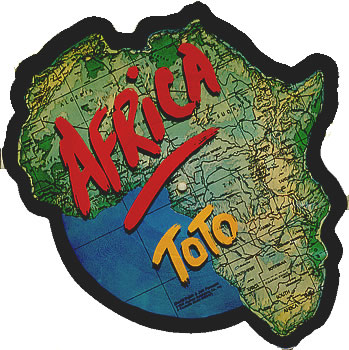
Toto's "Africa" (1982) Singles Sleeve, March 1, 2013. (http://eil.com).

Toto’s “Africa” (1982) Singles Sleeve, March 1, 2013. (http://eil.com).

There are as many reasons my musical tastes are eclectic as there are songs that I like and love. I can’t explain it. There’s no way I can explain why I think one song sounds as unimaginative and boring as Drake’s “Started From The Bottom,” while Nickleback’s “If Today Was Your Last Day” has been one of my favorite songs over the past three and a half years.

My imagination could take the corniest song and make it epic, a mantra, my theme music. Even a song like Toto’s “Africa” (’82-’83), a song that could be interpreted as reflecting White racialism as it related to Tarzan movies of a not-so-bygone era. Yet I’ve seen their video, and probably heard the song at least 3,000 times. It ain’t that deep, but it’s still a song I like.

So, a bit of context. My grades in the early Reagan years — especially in ’82-’83, when I was in eighth grade — didn’t at all reflect our family’s slide into welfare poverty, my ongoing issues with my idiot stepfather, my suicidal struggles or my search for a real relationship with God. What I had to lean on, more than my amazing memory or World Book Encyclopedia, my parents or even God, was my imagination.

The Spark of Imagination (via x-ray), March 1, 2013. (http://esquire.com).

The Spark of Imagination (via x-ray), March 1, 2013. (http://esquire.com).

With puberty and what would turn into a ten-inch growth spurt in a span of twenty months, I became enamored with sports. And the sport I became most interested in early on was football. The strike-shortened ’82 NFL season combined with the formation of the USFL and the coming-out party for soon-to-be draft pick Herschel Walker to get my attention. The vicious hits, the acrobatic catches, the powerful throws were things that I’d seen before. I saw them through the lens of an underdog now, a downtrodden member of an abandoned family who wanted to see folks who’d overcome impossible circumstances achieve great things.

The first person who represented that for me in sports was Joe Montana, quarterback for the San Francisco 49ers. The only ending to a football game I’d ever watched was the end of the NFC Championship Game the year before, with the play known as “The Catch.” I didn’t even know who Joe Montana was, even after watching Dwight Clark go up and catch a ball that was only meant for him.

He was the kind of person I wanted and needed to be in order to overcome what I thought was an impossible deficit. As far as I was concerned, I had to score about a hundred touchdowns to go from welfare to college, let alone anything after college. Yet it didn’t stop me from dreaming about rolling out right to the sidelines on fourth down, sucking in Dallas’ defense, and throwing a ball toward the right-side of end zone, toward the back line, just high enough for Clark to catch and Emerson Walls not to.

It was a dream that required some theme music, and luckily for me it was ’83. Michael Jackson’s Thriller had come out at the start of eighth grade, The Police were big, Toto and Rick Springfield were at their peak, and New Edition had put out there first hit, a Jackson 5 remake. All of it gave me something more modern to move forward with, to get silly about, to “march down field” to when I needed to gear up to get an important A. I’d accidentally found a way to escape my life without ever leaving Mount Vernon.

The Jungle (1906), by Upton Sinclair, 1st Edition, March 31, 2011. (GrahamHardy via Wikipedia). In public domain.

The Jungle (1906), by Upton Sinclair, 1st Edition, March 31, 2011. (GrahamHardy via Wikipedia). In public domain.

Demontravel’s and Carraccio’s classes were the first two places in which I applied this approach to my life and studies. In Carraccio’s case, it was the reading and essay assignment for Upton Sinclair’s The Jungle (1906) a muckraking tale of first-generation, Eastern European, Chicago meatpackers who worked and lived in grueling conditions and where some of them gave their lives — and livers — to Swift and other companies. I’d caught a cold, had a fever, was going to the store for Mom, and had just heard Toto’s “Africa” playing at C-Town in nearby Pelham.

The song served as my background music, giving me the energy and drive I needed to finish the book. I read The Jungle in one night, three hundred pages of it in four hours. I think Carraccio gave me a 95 on my essay. She pulled me aside to say, “You know, if you wanted, you could be a really good writer.” It might’ve been the only thing she said that I thought was right on the mark all year.

Yeah, you could say that I was seriously music deprived, didn’t understand the cultural symbolism or archetypes in the song or video, or simply had and have bad tastes. Y’all may be right, too. But for me, Toto’s “Africa” struck the right note, lifted my imagination, and found the goofball within.

← Older posts
Newer posts →

Boy @ The Window: A Memoir

Boy @ The Window: A Memoir

Places to Buy/Download Boy @ The Window

There's a few ways in which you can read excerpts of, borrow and/or purchase and download Boy @ The Window. There's the trade paperback edition of Boy @ The Window, available for purchase via Amazon.com at http://www.amazon.com/Boy-Window-Donald-Earl-Collins/dp/0989256138/

There's also a Kindle edition on Amazon.com. The enhanced edition can be read only with Kindle Fire, an iPad or a full-color tablet. The links to the enhanced edition through Apple's iBookstore and the Barnes & Noble NOOK edition are below. The link to the Amazon Kindle version is also immediately below:

scr2555-proj697-a-kindle-logo-rgb-lg

Boy @ The Window on Amazon.com: http://www.amazon.com/Boy-The-Window-Memoir-ebook/dp/B00CD95FBU/

iBookstore-logo-300x100

Boy @ The Window on Apple's iBookstore: https://itunes.apple.com/us/book/boy-the-window/id643768275?ls=1

Barnes & Noble (bn.com) logo, June 26, 2013. (http://www.logotypes101.com).

Boy @ The Window on Barnes & Noble: http://www.barnesandnoble.com/w/boy-the-window-donald-earl-collins/1115182183?ean=2940016741567

You can also add, read and review Boy @ The Window on Goodreads.com. Just click on the button below:

Boy @ The Window

Twitter Updates

Tweets by decollins1969
  • RSS - Posts
  • RSS - Comments

Archives

  • June 2025
  • April 2023
  • September 2022
  • August 2022
  • July 2022
  • June 2022
  • May 2022
  • April 2022
  • March 2022
  • January 2022
  • December 2021
  • November 2021
  • October 2021
  • September 2021
  • August 2021
  • July 2021
  • June 2021
  • April 2021
  • March 2021
  • February 2021
  • January 2021
  • December 2020
  • November 2020
  • October 2020
  • September 2020
  • August 2020
  • July 2020
  • May 2020
  • April 2020
  • March 2020
  • January 2020
  • December 2019
  • November 2019
  • August 2019
  • July 2019
  • June 2019
  • May 2019
  • April 2019
  • March 2019
  • February 2019
  • January 2019
  • December 2018
  • November 2018
  • October 2018
  • September 2018
  • August 2018
  • July 2018
  • June 2018
  • May 2018
  • March 2018
  • February 2018
  • January 2018
  • December 2017
  • November 2017
  • October 2017
  • September 2017
  • August 2017
  • July 2017
  • June 2017
  • May 2017
  • April 2017
  • March 2017
  • February 2017
  • January 2017
  • December 2016
  • November 2016
  • October 2016
  • September 2016
  • August 2016
  • July 2016
  • June 2016
  • May 2016
  • April 2016
  • March 2016
  • February 2016
  • January 2016
  • December 2015
  • November 2015
  • October 2015
  • September 2015
  • August 2015
  • July 2015
  • June 2015
  • May 2015
  • April 2015
  • March 2015
  • February 2015
  • January 2015
  • December 2014
  • November 2014
  • October 2014
  • September 2014
  • August 2014
  • July 2014
  • June 2014
  • May 2014
  • April 2014
  • March 2014
  • February 2014
  • January 2014
  • December 2013
  • November 2013
  • October 2013
  • September 2013
  • August 2013
  • July 2013
  • June 2013
  • May 2013
  • April 2013
  • March 2013
  • February 2013
  • January 2013
  • December 2012
  • November 2012
  • October 2012
  • September 2012
  • August 2012
  • July 2012
  • June 2012
  • May 2012
  • April 2012
  • March 2012
  • February 2012
  • January 2012
  • December 2011
  • November 2011
  • October 2011
  • September 2011
  • August 2011
  • July 2011
  • June 2011
  • May 2011
  • April 2011
  • March 2011
  • February 2011
  • January 2011
  • December 2010
  • November 2010
  • October 2010
  • September 2010
  • August 2010
  • July 2010
  • June 2010
  • May 2010
  • April 2010
  • March 2010
  • February 2010
  • January 2010
  • December 2009
  • November 2009
  • October 2009
  • September 2009
  • August 2009
  • July 2009
  • June 2009
  • May 2009
  • April 2009
  • March 2009
  • February 2009
  • January 2009
  • December 2008
  • November 2008
  • October 2008
  • September 2008
  • August 2008
  • July 2008
  • June 2008
  • May 2008
  • April 2008
  • March 2008
  • February 2008
  • January 2008
  • December 2007
  • November 2007
  • October 2007
  • September 2007
  • August 2007
  • July 2007
  • June 2007

Recent Comments

MaryPena's avatarMaryPena on My Day of Atonement/Bitter Hat…
decollins1969's avatardecollins1969 on No Good Teaching Deed Goes…
Mary Rose O’Connell's avatarMary Rose O’Connell on No Good Teaching Deed Goes…

NetworkedBlogs on Facebook

NetworkedBlogs
Blog:
Notes From a Boy @ The Window
Topics:
My Life, Culture & Education, Politics & Goofyness
 
Follow my blog

616 616 East Lincoln Avenue A.B. Davis Middle School Abuse Academia Academy for Educational Development AED Afrocentricity American Narcissism Authenticity Bigotry Blackness Boy @ The Window Carnegie Mellon University Child Abuse Class of 1987 CMU Coping Strategies Crush #1 Crush #2 Death Disillusionment Diversity Domestic Violence Economic Inequality Education Family Friendship Friendships Graduate School Hebrew-Israelites High-Stakes Testing Higher Education History Homelessness Humanities Humanities Program Hypocrisy Internalized Racism Jealousy Joe Trotter Joe William Trotter Jr. K-12 Education Love Manhood Maurice Eugene Washington Maurice Washington Misogyny Mother-Son Relationship Mount Vernon High School Mount Vernon New York Mount Vernon public schools Multiculturalism MVHS Narcissism NFL Pitt Pittsburgh Politics of Education Poverty President Barack Obama Race Racial Stereotypes Racism Relationships Self-Awareness Self-Discovery Self-Reflection Sexism Social Justice Teaching and Learning University of Pittsburgh Violence Whiteness Writing

Top Rated

Blog at WordPress.com.

  • Subscribe Subscribed
    • Notes from a Boy @ The Window
    • Join 103 other subscribers
    • Already have a WordPress.com account? Log in now.
    • Notes from a Boy @ The Window
    • Subscribe Subscribed
    • Sign up
    • Log in
    • Report this content
    • View site in Reader
    • Manage subscriptions
    • Collapse this bar
 

Loading Comments...