• About Me
  • Other Writings
  • Interview Clips
  • All About Me: American Racism, American Narcissism, and the Conversation America Can’t Have
  • Video Clips
  • Boy @ The Window Pictures
  • Boy @ The Window Theme Music

Notes from a Boy @ The Window

~

Notes from a Boy @ The Window

Author Archives: decollins1969

More Confessions From an Educated Fool

03 Tuesday Aug 2021

Posted by decollins1969 in 1, Boy @ The Window, Cleaning, culture, Eclectic, Hebrew-Israelite, Mount Vernon New York, New York City, race, Religion, Youth

≈ Leave a comment

Tags

Calling, Careers, Educated Fool, Failure, Foolery, Gift, Jobs, Journeys, Writing


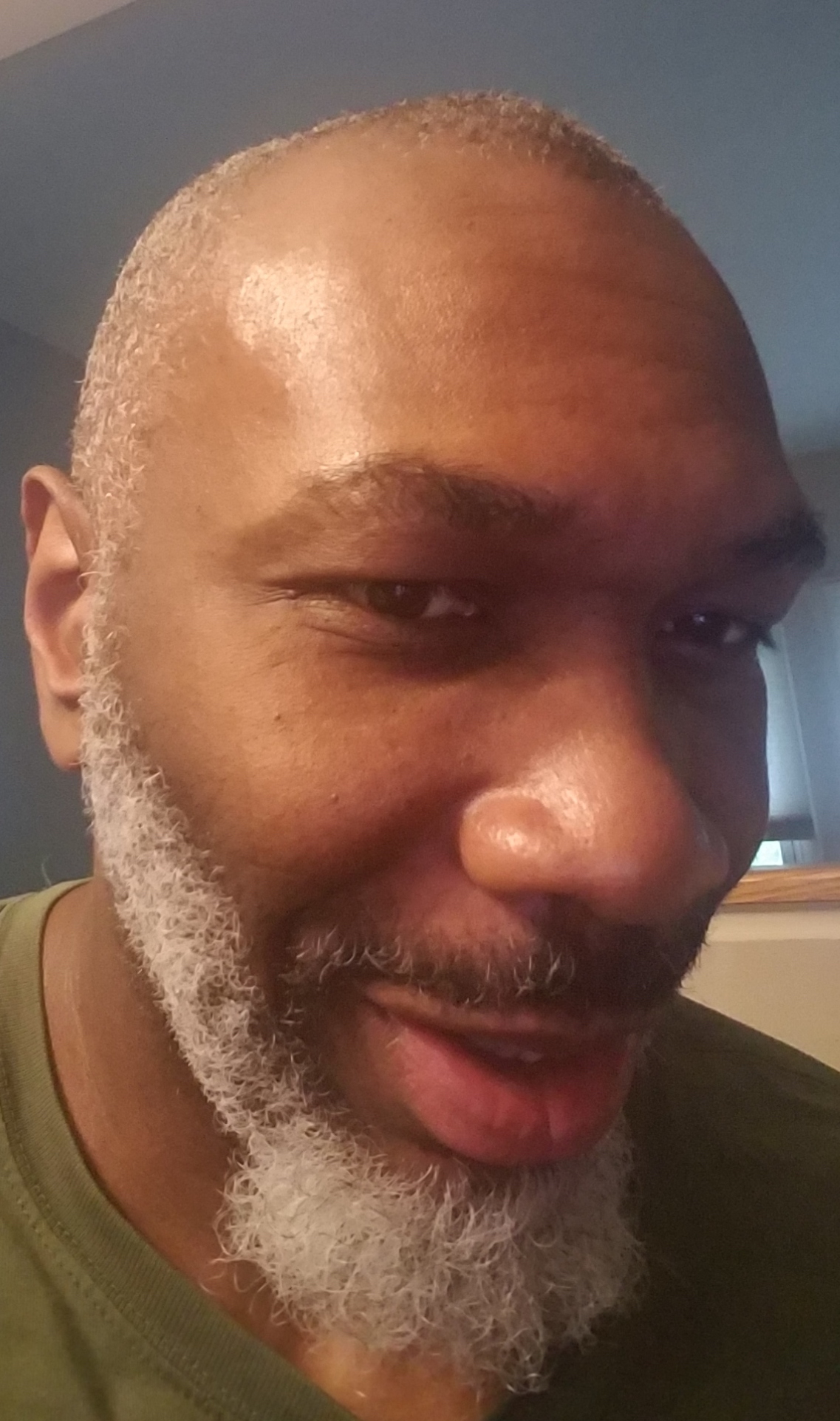
Me and my receding hairline, May 22, 2020 (Donald Earl Collins)

This is the first of a series of essays and posts that I am doing this month about my journey as a writer, an educator, and a fool over the past four decades, simultaneously between Medium and my blog. I hope to educate, to entertain, to make people laugh and cry laughing, but (hopefully) not to feel too sorry for me. I am who I am, a work still in progress, even as my knees and my neck ache, even as my mind and spirit are exhausted. Still, I want to fly. “Ain’t that crazy?,” to quote music artist Seal, this as his song “Crazy” turns 30 this week.

—

Serving as a contingent faculty member at two different universities with few benefits, few avenues for promotion, and having lived through one obsequious toad for a supervisor after another year after year? This was not how I imagined my life would end up by the time I reached middle age. I didn’t even think I’d make it to 30 when I was a fourteen-year-old, so there’s that. But when I was 11 in 1981, I did discover my first true calling. I wanted to be a writer, what kind of a writer, I wasn’t sure. But after two years of reading World Book Encyclopedia and more than 40 college-level or higher books on World War II — mostly by British authors — I was ready to write something. That spring, I wrote a 500-word essay as part of a city-wide writing contest in Mount Vernon, New York, back in the days when this New York City suburb had its own separate newspaper, the Mount Vernon Daily Argus. I don’t remember what they asked us K-12 students to write about, probably something civic-minded and somewhat trite. But I finished second overall out of hundreds of entries. The first-place winner was a high school junior. I won something, on my first try, too. Yay, me!

I got a note in the Daily Argus, along with an invitation to an awards ceremony at A. B. Davis Middle School that June, where a photographer took my picture and a representative from the newspaper handed me a $15 check. Technically, this was the first time someone paid me for my writing. This wouldn’t happen again until I was a doctoral student at the University of Pittsburgh. Between that and me introducing the keynote speaker for our graduating class of sixth-graders earlier that morning — the eventual Mount Vernon mayor Ernest Davis — I was truly inspired. I thought, for the first time in my life, This is MY gift! I want to write! I want to be a writer!

I went for it a week after graduation. I decided that I would write a book about the latest in American military hardware and how this would create the most efficient killing machine “in the history of mankind.” I wrote about the prototypes of the B1 and B2 bomber and bomber-fighter planes. I wrote about the prototype of the original M1 Abrams tank, which had recently come into service. I even jotted down paragraphs on ICBMs (Inter-Continental Ballistic Missiles) MX and MX2s and SLBMs (Submarine-Launched Ballistic Missiles), the Trident-class missiles and the Ohio-class submarines being built to house them. Unbelievably, I wrote a letter to the Pentagon to get pictures of these machines of destruction, and they obliged me with more than a dozen color photos a month later. I was sure that at least two pictures were classified.

By the time my mom had birthed my then youngest sibling Yiscoc (this is a form of Hebrew for Isaac), and my next youngest brother Maurice had turned two, both at the end of July, I had written 48 pages of what was to be a nearly 100-page book. It wasn’t a children’s book. I wrote about the modern United States military and its ability to wage a traditional war and a tactical nuclear war, and what that meant for the rest of the world. And then I hit a wall, and fell into a sinkhole somewhere in Florida. I couldn’t reconcile my fascination with these weapons and the tens of millions of people who could be killed by such weapons. My 11-year-old mind could not grapple with the real-life consequences of such expensive and deadly military hardware. And as a still immature preteen, I didn’t want to consider the vaporizing and pulverizing ugly side of military weaponry. After more than a week of trying to move into another section of this book, I stopped at 52 hand-written pages. It was mid-August, and middle school and all the hell that would come with it was just three weeks away.

Did I mention that as I wrote my first book in the summer of 1981, my stepfather had converted me and my siblings and my mother to Judaism, making us Hebrew-Israelites, without asking me or my 13-year-old older brother Darren for our opinion? Or that I was a month away from social suicide in the classroom, in the magnet program I would be a part of for the next six years, all because I had to wear a kufi outside our two-bedroom apartment? Or that the Carter-Reagan years and two more kids had left my mom broke, and us without food in the house on the regular? All of this was in process even as I was writing my summer away. It would be one of the only times in my life where being blissfully ignorant of the future while pursuing my gift as a writer with all of my heart and mind was such luxurious joy. Where time itself was as abundant as all the atoms in the universe.

I lost my way after that. The growing-up years had already been brutal, between a sexual assault I endured at six and a half, a suicide attempt, and years of therapy my mom administered with homophobia and a belt. With us sinking into welfare poverty, no food at home a third of the time, and my bullying, constant threatening no-good stepfather, my childhood love for reading and writing would take a beating. And still, when I emerged from the eight years of constant abuse to see my true face in my mind’s mirror, I still saw a writer. And then I lost my way, again. This time, to academia, to career-chasing, to chasing dollars, to the responsibilities of living an adult life.

My story is one of constantly denying who I am as a writer, and paying for it with blood, tears, and a damaged spirit, every single time. It doesn’t matter if I am a particularly good writer or a mediocre and overwrought one. After all, there are horrible writers who’ve published best-selling books, and great writers who’ve died before their work was ever read by more than a handful of family members or friends.

No, my story is about how the pursuit of all America pretends to offer can really fuck up one’s priorities. My story is about the spiral of falling in and falling out of love with life and the pursuit of making one’s life better, the illusion of choices, and the hypocrisy of the US, embedded in all of its institutions. My story is about the elliptical ebbs and flows of life, about my journeys as a writer, and how much of an educated fool I have been in these journeys. I promise laughter, sadness, and anger, and joy and victories, too.

The Sacrifice of the Lambdas

28 Wednesday Jul 2021

Posted by decollins1969 in 1, Academia, Boy @ The Window, Cleaning, culture, Eclectic, Jimme, My Father, New York City, Pittsburgh, Politics, Pop Culture, race, University of Pittsburgh, Work

≈ Leave a comment

Tags

Careers, Contingent Faculty, Erasure, Higher Education, Isolation, Job Loss, Ostracism, Sacrifice, Sacrificial Lamb, Sanity, Systemic Racism


Lambs from living to skewered (cropped and collaged), July 27, 2021. (Donald Earl Collins, via https://www.mygreekdish.com/recipe/greek-lamb-souvlaki-recipe-skewers-with-pita-bread/ and © Alison Toon/Adobe stock)

Most people I’ve met and known over the past 30 years have no clue as to what it is to teach high school, college, master’s and doctoral students. None. They think we who are serious educators just wing it and lecture to death, with no preparation at all. They have no inkling of what it takes to research topics, write articles for different audiences, to work on a book-length manuscript, or to publish one. Nor do they understand the job market — any job market, not just in higher education — or the psychological and emotional burden of holding students’ trust, or the constancy of systemic elitism, racism, sexism, in these elite white and elite Black spaces. 

I know my mom and dad never have. “You might as well have another high school diploma,” my mom said of my 10-year pursuit of my bachelor’s, master’s, and PhD, on the week of my doctoral graduation at Carnegie Mellon University. It was the day after she had finished her associate’s, a ten-year trek on her part.

My dad during one drunken stupor accused me of lying about having earned my master’s in barely two semesters. “Anybody coulda gone somewhere and made up a fake one,” he said in 1992 during my summer visit to New York, when I showed him my actual degree from the University of Pittsburgh. A few weeks later, after talking with his two white bosses, the Levi brothers, my now hungover dad admitted, “they say you can get a master’s in a year.” I said in response, “Really? I had no idea!”

But that’s only the beginning of the sacrifices people like me with advanced degrees and training make in earning these degrees and pursuing careers related to them. I know people whose first jobs were in weird and not-quite-ideal places. University of Maine at Machias. Austin College in North Texas. North Dakota State University. Washington State University. University of Maryland Eastern Shore. Sam Houston State University. University of Mary Washington. Northern Illinois. Illinois State.

Now, before anyone says, “Why, these seem like good places to work,” my response is, “Sure, if you are white!” Yes, I said it. If you are Black, Brown, Indigenous, man, woman, or transgender, most of these are between weird and horrible places to work. The communities around many of these campuses could be or would have once been sundown towns. Or, one could be a place where they tried to lynch someone like me 10 or 20 years earlier. The only people on many of these campuses who know your needs for culture and community play Division I sports or are the other three or four colleagues who aren’t white. To go through two, even three jobs to land at a place that provides one a tenure-line or tenured position — this is a massive sacrifice.

It means living a sort-of half-life, of only focusing on your professional development, or of partners putting their lives on hold so that you can build your career. And all while dealing with an everyday deluge of direct racism, isolation, marginalization, and erasure on the job. If one is lucky, you find community off campus in some of these places. In more white-bred (or more accurately, white-corn-fed) communities, that deluge can turn into a tsunami, and might force you to stay at home and away from these racist and misogynistic and homophobic Children-of-the-Corn-types as much as humanly possible.

There are those like me who never fully believed in making these kinds of sacrifices in order to publish a scholarly article or book, just so that we could get the plum job at a major university. But that choice means sacrifices, too. Like leaving your research and writing behind for a steadier and better-paying gig. But, at least in my case, I couldn’t ask my partner to drop her own aspirations while I took a job in the middle of Nowheresville (Colgate University, Slippery Rock, and Northern Illinois all come to mind here). 

So my first post-PhD job search between 1997 and December 2000 was an urban, mostly East Coast one. I turned down as many job interviews as I took on. I ended up in the nonprofit world in the DC area, though, and the abject racism I faced there was still not as bad as the elitism I dealt with during a job interview I had at Howard University. I said no to the only tenure-track job I was ever offered, with few regrets. But it still meant that I would lack the job stability necessary to build my writing career and to keep a steady paycheck. Not all sacrifices turn out the way any of us expect. 

My parents and other people born before 1955 have had the tendency to say to me in one version or another, “See, that’s why all that book learnin’ aint all that good for you. Better to do work with your hands. That’s how you become a man.” It wouldn’t have mattered if I’d become an award-winning author and full professor, or a senior program officer at the Ford Foundation. As far as they have always been concerned, I was sacrificing my mind to “useless facts.” If I had become divorced or homeless because of my path, on the other hand, they would’ve said, “I told you so.”

For the rest of folks in my life, mine is a “lazy” life, where my liberal butt “gets paid a lot of money to sit around and indoctrinate students.” All built on the fact that I and other faculty only teach for a few hours a week, instead of working from 8:30 to 5 like real Americans. They have no idea that I’ve given up ten years worth of weekends and holidays to prepare for my classes, review papers, grade assignments, to write a piece, to work on a manuscript or a new project, just in the past 13 years alone. Or, to meet with students struggling in the classroom or in life in general. The emotional toll of learning about some student or colleague’s trauma or abuse is incalculable. But, yeah, I’m “lazy” when I take a nap in the middle of the day, because it’s the only way I can get to seven hours of sleep in a 24-hour period five days out of seven.

They have never experienced what it is like to have the same qualifications and make some of the same sacrifices as my more successful colleagues, and not get a specific job or a particular grant. Just recently, I learned that I will not get interviewed for a term faculty position in my department at American University. The job is the same job as the one I have worked at AU for the past three years, but as contingent faculty. Patting me on my head to tell me that I’ve made “valuable contributions to the university,” to students, and to the department does not make up for my sacrifices as a writer, as an educator, and as a historian.

And I still have it much easier than my less lucky colleagues, who may be working at three or even five universities to generate a full-time-equivalent income. Or those who have had nervous breakdowns from the brutal conditions of working for abusive institutions within the nested doll of this matrix of elitism, racism, misogynoir, and other -isms and -phobias that is the United States. Or those who are burned out husks of the educators and writers they used to be. Or still, others who’ve died because of their sacrifice. 

Not all sacrifices are worth it. Then again, assuming my mind and spirit remain intact, I might be able to drill NBA-range 3s and run faster than most of my students until my 75th birthday.

The White-Boy Logic of Supernatural

15 Thursday Jul 2021

Posted by decollins1969 in 1, Christianity, culture, Eclectic, eclectic music, Hebrew-Israelite, Movies, Politics, Pop Culture, Religion

≈ 1 Comment

Tags

"White Discussion", "Carry On Wayward Son", "Under The Bridge", Arrogance, Daily Routines, Dean Winchester, Grunge, Jared Padalecki, Jensen Ackles, Kansas, Live, Misogyny, Monsters, Narcissism, Racism, Red Hot Chili Peppers, Sam Winchester, Saving the World, Supernatural, TV Shows, White Male Angst, White Savior Complex, Whitemansplaining


Jensen Ackles and Jared Padalecki as Dean and Sam Winchester in Supernatural, Season 9, Episode 13 (“The Purge”) screenshot. Originally aired February 4, 2014.

One of the benefits of working from home for years is the ability to take in copious amounts of popular culture in passive and subliminal ways. For more than a decade before the pandemic, my daily schedule included a multitasking routine of writing, teaching, grading, working-out, napping, running errands, and getting my son off to school and my partner off to her job. All the while, I am consuming news and pop culture. BBC World News from 6 or 7 am until I go to the car to drive my spouse to the Metro stop or run errands, sometimes longer. In the Honda Element, listening to my tunes or ESPN 980 (before Dan Synder sold the station two years ago) or WAMU/NPR. And, bouncing from show to show while writing, grading, working out, making lunch, prepping dinner, sometimes taking a brief nap between 1:30 and 2:45 (when my son returned home from school) or between 3:45 and 6 pm (when it was time to pick my significant other up from the Metro). 

Of all the TNT reruns I’d put on in the midday slot over the years, between Bones, Castle, Arrow, and Law & Order, the one that has stuck with me the longest is Supernatural. Its final episode aired at the end of this past year. Perhaps it’s because it’s such a white boy’s show, or because it’s about as American as a show filmed in Vancouver, British Columbia can get. Whatever it was, I went from calling the show “Brooders” and “White Males Brooding” to actually enjoying the series, a not-so-guilty pleasure in between grading, writing, and revising, and yoga poses, planks, pushups, crunches, free weights, and plyometrics.

That doesn’t mean I’ve watched it with an uncritical mind. Just like with what I’ve called “white male angst music” in the 1990s — alt rock and grunge (think Pearl Jam and Live here) — Supernatural is a tour-de-force of whitemansplaining the world. Jensen Ackles and Jared Padalecki as Dean and Sam Winchester might play classic ‘70s rock in their legendary 1967 black Chevy Impala, but they are all “White, Discussion” and Red Hot Chili Peppers’ “Under The Bridge” in their attitudes. Seriously, how do two white dudes get away with mass murder while they constantly “save the world” with the “family business” of “hunting and killing monsters”?

The premise of the show, for the generation of folks who haven’t watched the 15 seasons of episodes between 2005 and 2020 (I watched my first episode in 2012, so there’s that), is that the Winchesters have to fight monsters born of supernatural forces while hunting for a yellow-eyed demon who killed their mother, and eventually, their father. In between bouts with demons, angels, archangels, Lucifer, Leviathans, Knights of Hell, Princes of Hell, the King of Hell, and God, er, “Chuck” himself, the Winchesters battled the usual. Ghosts, vampires, werewolves, skinwalkers, jinns, Greco-Roman, Norse, Incan, and Mayan gods, witches, and whatever other supernatural monster one could imagine. Supernatural was at its absolute best when the focus was on the ancient lore around cultural considerations of the metaphysical.  

But the overarching theme of Dean and Sam Winchester “saving the world” is the great white man’s white lie. How does anyone get credit for “saving the world” when they broke the world, the natural order, multiple times. Here’s a short list of the Winchester’s thirst for revenge leading to Armageddon:

– the father John Winchester selling his soul to the “yellow-eyed demon” to save Dean’s life (Season 1)

– Dean selling his soul to the same demon to save Sam’s life (Season 2)

– Sam drinking demon blood to kill a Princess of Hell and Dean torturing damned souls in Hell, breaking the last and the first of 66 seals to unleash Lucifer and the Four Horsemen on the planet (Season 4)

– Dean not allowing Sam to die after finishing the three trials to forever seal up the gates of Hell, and then tricking Sam into allowing a rogue angel possess him for months afterward (Seasons 8 and 9)

– Dean taking on the Mark of Cain, becoming a demon in the process, and Sam freeing Dean from the Mark, unleashing the Darkness (think if so-called dark matter was God’s sister here) and another universe-destroying force (Seasons 9, 10, and 11)

– The Winchesters allowing a nephilim to live and its power to open up a rift between alternative Earths, a rift that threatened both versions of the planet in the process (Seasons 12 and 13)

– Engaging in a all-out war with God, ending only when they resurrect the nephilim Jack from the Empty, as he become the new God, and the old God becomes just Chuck, “just a slob like one of us,” ala 1990s rocker Joan Osborne (Seasons 14 and 15).

Dean and Sam die and go to Hell, Heaven, and Purgatory multiple times in this series. How narcissistic do even white guys — get to be when they assume that they can come back to life over and over again in order to “save” their brother while also saving the world? Especially when they sacrifice other family and friends to keep each other living and hunting monsters? So many die in this show because of their ignorance, so many who didn’t have to. When you take apart the context of their “jobs” as hunters involves hustling pool tables, identity theft and hacking credit cards, stealing cars, and regularly killing people who’ve turned into monsters or in the midst of demon possession. Any two of these gets Black and Brown and Indigenous folks a one-way ticket to prison or a grave, with no chance for resurrection.

It’s hilariously macabre and the height of arrogance of two white guys believing they are doing more good than harm. But isn’t Supernatural really just a parable about how white guys see themselves in the world? Everything is there for the taking, it’s all about us and our lives. Between the drugs, the boozing, the meaningless misogynistic sex, the endless buffet of death by food, Supernatural is the ultimately expression of white male-dominance, or at least, the quest for it, from two average Joes.

Near the end of Season 9, Episode 13 (“The Purge”), Dean and Sam talk, not for the last time, about putting their need to save each other from certain death above the needs and lives of everyone else. Sam has a moment of complete clarity, one that fades away by the end of Season 10 (see the list above). 

You think you’re my savior, my brother, the hero. You swoop in, and even when you mess up, you think what you’re doing is worth it, because you’ve convinced yourself you’re doing more good than bad…but you’re not…What is the upside of me being alive?

Dean’s response:

You kidding me? You and me — fighting the good fight — together.

It never occurred to these characters, and perhaps, even the actors, producers, directors, and writers for Supernatural, that Dean and Sam Winchester are the real monsters here. Two everyday white guys who think that killing monsters and a host of supernatural entities is the solution to everything. Did they even consider that killing monsters might be the reason they need to keep hunting, because they create more each time they kill one? Or that maybe because the US is a place full of kidnapping, rape, enslavement, genocide, and murder, this nation is a natural incubator of supernatural hauntings and possessions, a place where all monsters can thrive? Did they ever see themselves as the humans they never seem to understand in the show? Probably not until the final episode in Season 15, when Dean and Sam finally die — this time for good, and for good. 

I never wanted them to “Carry On Wayward Son,” as Kansas sang it in 1976, as a choir of white girls sang it Season 10, Episode 5. As sad as it was to see the final finale of Dean and Sam Winchester, we need a world without the hundreds of millions of Dean and Sam Winchesters around us, an anti-racist world. A world without these narcissistic and yes, racist and misogynistic and homophobic monsters who see themselves as do-gooders.

The Unbearable Whiteness of White Proximity Fuses, Part II

03 Saturday Jul 2021

Posted by decollins1969 in 1, Academia, Boy @ The Window, Carnegie Mellon University, culture, eclectic music, Pittsburgh, Politics, Pop Culture, race, University of Pittsburgh, Work, Youth

≈ Leave a comment

Tags

Blackness, Colorism, Juan Mezzich, Pitt, Privilege & White Proximity, Publishing World, Rebecca Carroll, Self-Discovery, Surviving the White Gaze, Western Psychiatric Institute & Clinic, Whiteness


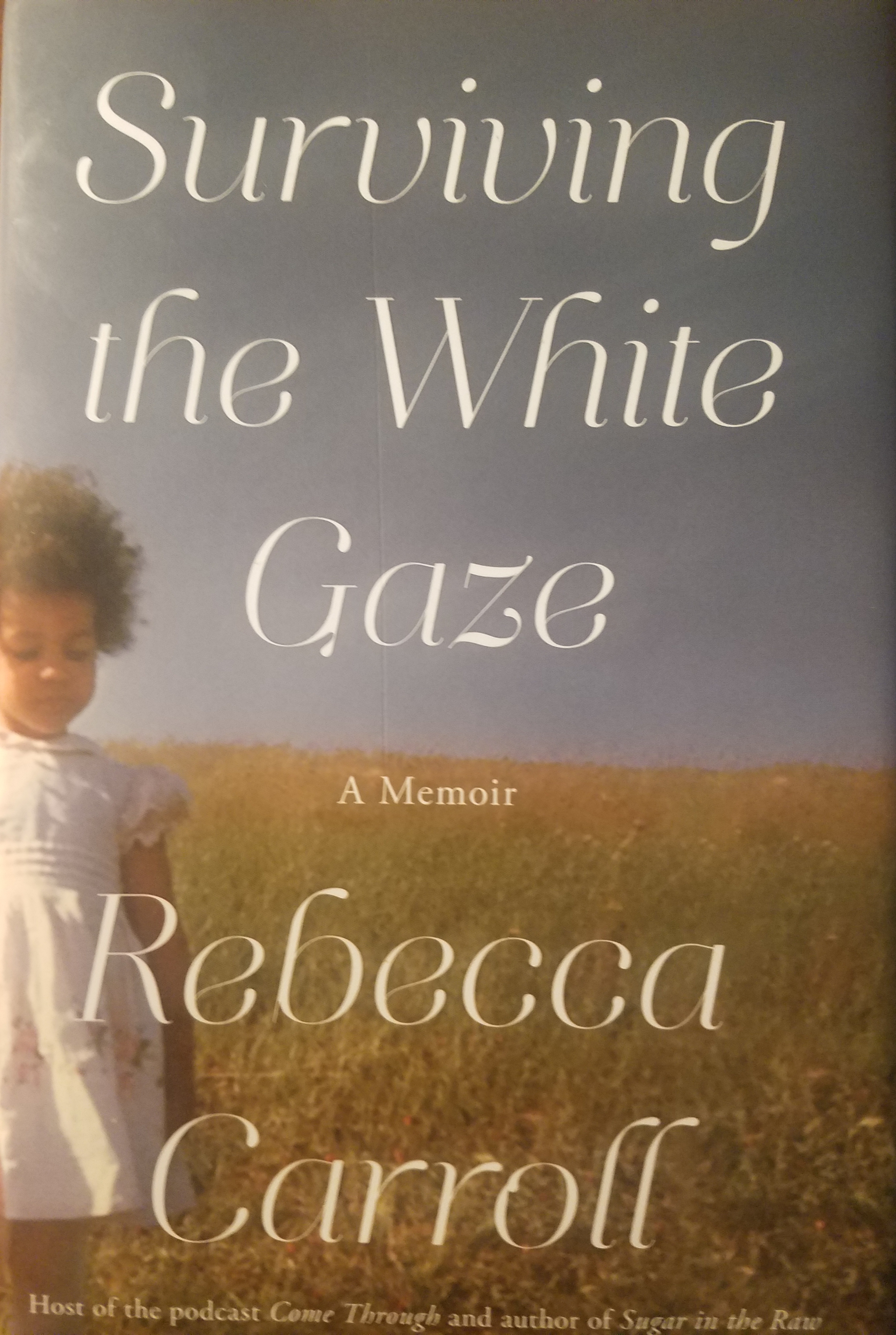
Front cover of my copy of Rebecca Carroll’s Surviving the White Gaze, July 3, 2021. (Donald Earl Collins)

The other and more direct parallel with Carroll’s journal in Surviving the White Gaze that comes to mind was someone I worked and went to school with at the University of Pittsburgh. For the sake of simplicity, let’s call her Heather, because I can no longer recall her name. She was a Black/biracial young woman from Erie, Pennsylvania, adopted by a white couple as a baby. I met her my third year at Pitt in 1989, when she was a freshman. We worked together for a while on a psychological epidemiology project that the great Juan Mezzich ran, as part of a larger project to revise the Diagnostic and Statistical Manual of Mental Disorders (turning the then-DSM-IIIR into the DSM-IV) and the International Classification of Diseases (turning the ICD-9 into the ICD-10). Aside from the fact that I thought Heather was cute, the first thing I noticed about her was her hair. It had been straightened, permed, and blown out beyond all recognition of a curl. Even at 19, I knew immediately that she was biracial, and didn’t have a Black woman who knew how to do her hair in her life.

I didn’t say a word. It wouldn’t have mattered if I did. Heather was very much standoff-ish, to me and the couple of other Black and Brown students who staffed up the project. She got along extremely well with the White students and staff, though. She rarely said hello when I saw her outside of Western Psych, on or off campus. Honestly, I felt sorry for her.

In the summer of 1991, when I became a full-time staff member on another of Mezzich’s projects, I worked with Heather for a few weeks. This was when I learned more about her upbringing and extremely limited exposure to Black folk. The questions she would ask about what I listened to on my Walkman, songs by Anita Baker, PE, Earth, Wind & Fire, even Phil Collins. She was maybe two years younger than me, and only knew ‘70s and ‘80s rock. Wow.

But, one day, Heather or another staff member had asked me a question — I don’t remember who asked, or what the question was. It one with a historical component, which I answered in typical granular exactitude, because, me. “Are you autistic or something?,” Heather immediately blurted out, as if I had some disease she had yet to see first-hand. “If by autistic, you mean the Rain Man movie? No, I just have a very good memory,” I answered back, rhetorically, with irritation and a bit of side eye. “Oh, I didn’t mean to offend you,” Heather continued, and then she went on for several minutes about why she thought I was autistic. 

I was gobsmacked by Heather’s entitled ignorance and by the racist and ableist implications of her questions and response. Seriously? I’ve been living on my own, mostly successfully navigating the world since I was 17, adulting since I was 12, and somehow I’m Dustin Hoffman with the most serious form of this neuro-social illness, all because my memory is stronger than a bank vault made of titanium and cobalt? And all this because I’m probably the first Black guy you’ve met with a bachelor’s degree from anywhere other than podunk Western Pennsylvania? All this and more ran like a chyron in my brain as I listened to Heather, now sensing my ire, stumbling over her words to make herself sound like she knew what she was talking about.

There were more than a few places in Carroll’s book where I saw the girl and the young woman that I saw in Heather, taking all of her assumptions about Blackness, about Black people, about whiteness and race, and applying them, often in damaging ways. I was absolutely disgusted at what Carroll and Tess did to her one-time English professor and advisor at the University of New Hampshire. I literally stopped reading Surviving the White Gaze for a week afterward. How could you?!?, I thought. Even with zero exposure to Black men, you had to know you put this man’s job in jeopardy over a minor utterance. You had to know that Tess’ vitriol toward him was about him not finding her intellectually interesting, or worse still, rebuffing potential flirtations. As a professor teaching mostly white students off and on for nearly three decades, I know this part all too well.

Carroll gradually embraced and uncovered her Blackness, over time, through years of alcoholism and eating disorders and fresh traumas from folks White and Black in her life. Her experience, though, is all too uniquely common from where I sit. There is the all too common story of someone the product of a Black-White relationship stumbling through life to discover their true selves and their Blackness, a story that is sadly still so easy to sell to a white-dominated book publishing industry and to a white-reading audience. But even for this sub-genre, Carroll’s willingness to reveal more than she conceals is really necessary, even as it feeds the beast, because she is still a work-in-progress at 52. 

There is also the all-too-common assumption that Black folk who aren’t raised by white parents or the product of a biracial pairing somehow don’t have any identity issues at all. Seriously? Anyone ever read Toni Morrison’s The Bluest Eye? We live in a white-dominant society, with white supremacy and white-ways as its main, everyday features. While most Black folk know and love their Blackness, it does not mean there isn’t a struggle to secure our identities as Black folk. Proximity to white people, class privilege, gender, age, and more play a role into the growing-pains-trajectory of how each of us gets to be comfortable in our own skin (or not). 

As for Wendy and Heather, it’s difficult to say where they are on their own trajectories. I haven’t spoken to either of them in years, decades in Heather’s case. But last time I saw Heather, it was May 1995 at a Pharmor store in the East Liberty section of Pittsburgh. I had just received my Spencer Fellowship award to write my dissertation. Heather was different, too. Her hair had gloss and curls, and her clothes fit better. We ended up talking for a few minutes, with me wishing her well. In thinking about this moment, I’ve wondered if Heather ever fully embraced her Blackness. In my imaginations, I think of her as having done so.

The Unbearable Whiteness of White Proximity Fuses, Part I

03 Saturday Jul 2021

Posted by decollins1969 in 1, Boy @ The Window, earth, wind & fire, Eclectic, eclectic music, Marriage, Mount Vernon New York, Politics, Pop Culture, race, Youth

≈ Leave a comment

Tags

Coping Strategies, Cross-Racial Adoptions, Crush #1, Eclecticisms, Exoticism, Parenting, Racism, Rebecca Carroll, Wendy, White Proximity


A field of allegedly civilian-friendly land mines (cropped), September 14, 2018. (https://www.popularmechanics.com/military/weapons/a25064634/better-land-mine-us-army-gator/; Andrew Renneisen, Getty Images)

I just finished reading Rebecca Carroll’s diary-esque gem of a memoir, Surviving the White Gaze. It is 313 pages of fearlessness in presenting people as they are, and not as one would like them to be, especially when it comes to parents and parent figures. Like with so many books I’ve read in the past six years, I laughed, I cried, I got angry at Carroll, I got angry for her as well. If you want to learn all the ways not to parent an adopted Black/biracial child in lily-white New Hampshire during Generation X’s growing-up years, then Surviving the White Gaze is definitely for you.

As someone born at the end of 1969, the fact that Carroll is only seven months older than me immediately stood out. And because I often think through time in music, her occasional name-dropping made me think of the eclectic music I grew up around. A Steely Dan reference here, a David Bowie reference there for her. But because of her almost hermetically-sealed experience in everyday proximity to White folk, there weren’t any references to Alice Coltrane or Al Green, Earth, Wind & Fire or Marvin Gaye or Aretha Franklin. My three years of fractured relations to pop culture as a result of the Hebrew-Israelite years (abuse aside) have nothing on Carroll’s growing-up years in endless, toxic whiteness, musically and otherwise.

Still, there are layers to Carroll’s life and book that I do understand because of my own proximity to whiteness growing up, and my proximity to two people who may and may not have benefited from such proximity. One was Wendy, my first true crush, my first real and unrequited love. I commented on this in Boy @ The Window, partly because Wendy brought it up during my interviews with her over two days in 2006, and partly because I observed this behavior first hand over our years in middle school and high school.

A couple of crazy rumors emerged. None of which I could believe in their entirety. One was that she was part White and Black – or ‘mixed’ or ‘Oreo’ as the rumors about Wendy’s background were worded – especially from ___. It was based mostly on sightings of her eventual stepfather, who was White. I thought it was part of the reason some of my affluent White classmates found Wendy interesting. There were times I thought Wendy took advantage of the assumptions made about her at the same time. She was invited to their homes, occasional parties, and was a part of a circle that I called ‘the Benetton Group,’ the true cool of Humanities…

I do not think that either Wendy or Carroll were completely conscious of their desire to take advantage of the exoticism that their white classmates ascribed to them. I think that every child has a desire to be liked, and if the reason is embedded in lighter skin, or othering, or proximity to whiteness, then so be it. Even if there’s a great price to pay in one’s understanding of their identity (or lack thereof), especially later on in life. 

Carroll is extremely clear about how fractured her mirror became as she transitioned from child to teenager to young woman, courtesy of her biological white mother Tess. The kindest way to describe Tess is that she’s a piece of work. Really, I can think of few parents more emotionally and psychologically abusive than Carroll’s biological mother. It’s not like I don’t speak from the experience of having a mom hell-bent to make me and my siblings hypermasculine foot-soldiers for an anti-queer patriarchy and misogyny. Having an alcoholic father and a stepfather that beat me up a few times? I’d still take that over Carroll’s bio-mom Tess, who only saw Carroll as a sexual being or a potential one, at 10 years old, because that’s how Carroll’s bio-mom saw Black men and Latinx men, possibly even Carroll’s half siblings, too. 

Carroll’s adoptive parents weren’t much better, taking a “you’ll figure it out” approach to parenting that fell below the already low bar of GenXers being “latch-key kids” as a result of parents adulting their children at ages 6, 7, 8, and 9. None of them protected Carroll from sexual abuse, or prepared her to understand her Blackness. As Carroll wrote, they tried to “erase” her Blackness. I’d go a step further, though. The three of them attempted to make Carroll raceless, white without being white, an exotic extension of their white-bred lives.

In Cicadas and Graduation Years

02 Wednesday Jun 2021

Posted by decollins1969 in 1, Boy @ The Window, culture, Eclectic, eclectic music, music, Politics, Pop Culture, Youth

≈ Leave a comment

Tags

Cicadas Cycle, Graduation, Growing Older, Growing Up, High School Graduation, Rite of Passage


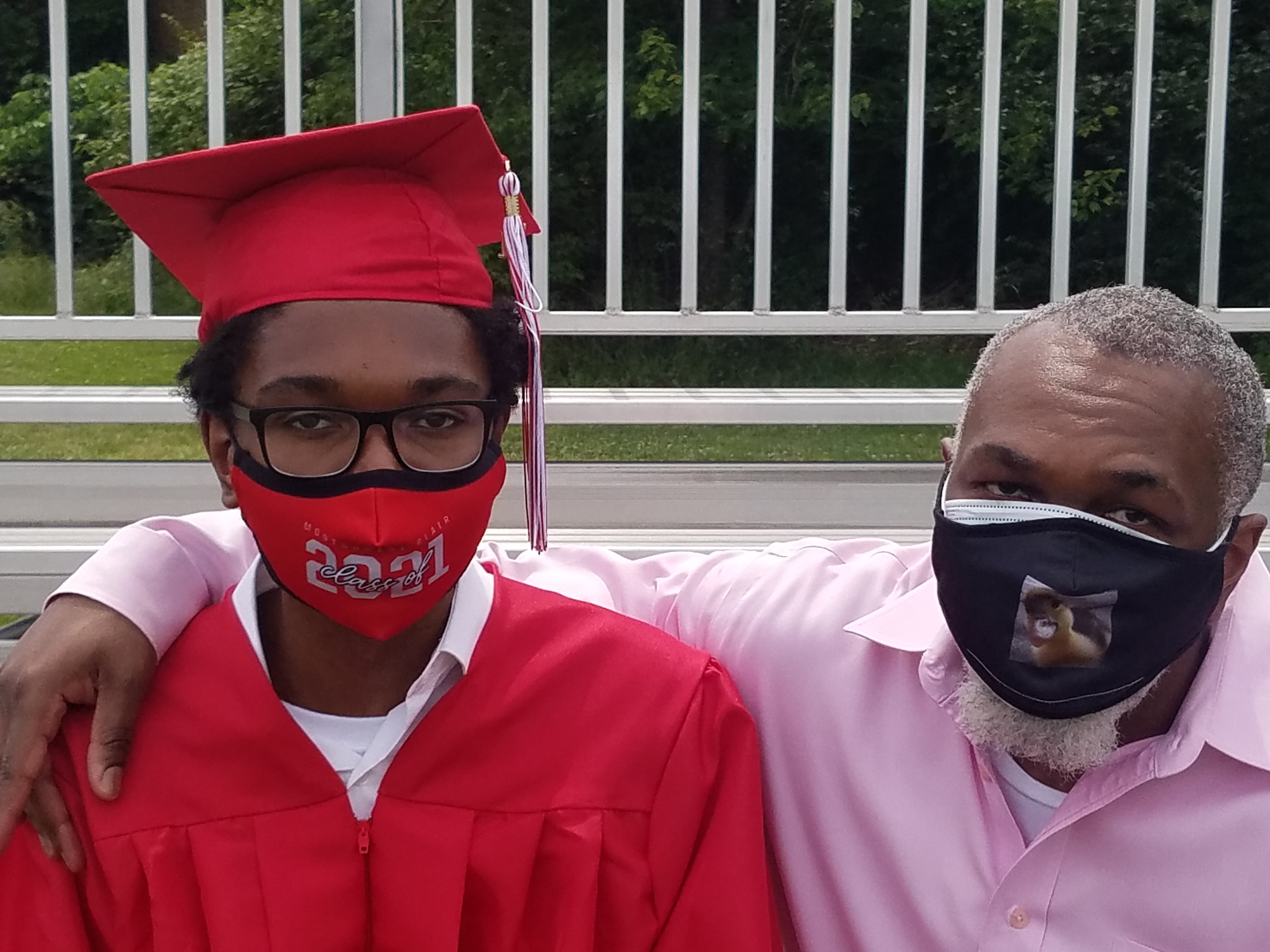
Noah and me, stuck in a post-graduation moment, Montgomery Blair HS, Silver Spring, MD, June 2, 2021. (Angelia N. Levy)

Hard to believe but still true. Today, our son graduates from high school, nearly 34 years after my own high school graduation, or three cicadas cycles (1987, 2004, and 2021). In between has been “my second childhood” of Pittsburgh, undergrad and grad. In between was learning how to be comfortable in my own skin, dating, marrying. In between was my beginning to reject so much of the fear and bs that my parents and idiot guardian and others fed to me. Otherwise there would be no graduation of our soon-to-be 18-year-old son to celebrate, no reason to work to be an example to him about building and walking a path, no misogynoir or misogyny to give up.

I have only been alive for four cicadas cycles (1970, 1987, 2004, 2021), our son in the middle of number two. Most humans in this part of the world don’t get to see more than five cycles (I’d have to make it to 85 to see my sixth cycle, and who knows what the US would be like by then). 

But there’s symmetry here. I was in my first year of life when I likely saw but could not possibly remember my first cicadas. So was our son in the late spring of ‘04. I graduated high school in the middle of the cicadas’ mating season in ‘87. I vaguely remember them. I walked so far and so fast in those days. My headphones and my Walkman were practically glued to my ears and left hip and belt. I may have noticed the unceasing chirring and flying and crunches a time or two. But I walked at Warp Factor 3 or 5 blasting Genesis, White Snake, Whitney Houston, or U2 through your ears down one Mount Vernon street or in Co-Op City or somewhere in between. The cicadas’ were mostly a crunch speed bump on my way to obsessive heartbreak and on my way to college and Pittsburgh.

Our son’s path has been bumpy, and not just because he walks at a tortoise’s pace. He’s not a big fan of school. Nor does he have the fight-or-flight instincts I had when I was his age, well-honed from years of trauma and living in a place where no one cared how broken I was. His musical tastes barely register on the decibel meter. He often claims he likes “nothing,” but I’ve found him bopping to The Brothers Johnson’s “Strawberry Letter 23” and Hall & Oates’ “Private Eyes” and Haddaway’s “What Is Love” in recent years. He apparently does like one indie rock band, Bloc Party, a UK group.

Music has changed so much over the past three cicadas cycles. So has our world. When I graduated nearly 34 years ago, Cameo’s “Candy” and “Word Up,” Geto Boys’ “Mind Playing Tricks On Me,” U2’s “With Or Without You,” Luther’s “Stop To Love,” Europe’s “Final Countdown,” and Whitney’s “I Wanna Dance With Somebody” were the sappy hits of the moment. Yet some songs were subversive, and deliberately so, like “With Or Without You” (who thought this song was about romantic love? — certainly not me!), Genesis’ “Land of Confusion,” and Prince’s “Sign O’ The Times.” And there was the music that as a 51-year-old I’ll admit I knew was wack and lame even at the time, including anything by Glass Tiger or Starship. The cicadas must have loved it when I warped by blasting this schlock.

Our son might not like much music, but it isn’t because we don’t play any at home or in the car. We play the music we grew up around, the music of our adult choices, the music we listened to despite and because of our parents. Blues, gospel, real R&B, rap, hip-hop soul, punk rock, heavy metal, ‘80s pop, ‘90s pop, grunge, jazz, smooth jazz, emo, country (that’s my spouse, definitely not me), and yes, even BTS. All are welcome to the eclectic music party. Maybe that’s why he doesn’t feel the need to pick a genre. Our family is a jukebox, er, iPod, no, um, iPhone and Spotify of sounds. That’s not something a Walkman or 700 billion cicadas can duplicate.

But I also keep in mind two things. One is that from our son’s perspective, JLo’s On The 6, Coldplay’s “Clocks,” even Kanye’s The College Dropout is the growing-up-as-a-zillennial equivalent of The Beatles’ “Let It Be,” Diana Ross & The Supremes’ version of “Ain’t No Mountain High Enough” (Tammi Terrell and Marvin Gaye did the original), and Marvin Gaye’s “Inner City Blues” via his What’s Going On album was for me at 17. It took me years to appreciate the music, understand what it was always trying to say to me. Hopefully, with enough luck and time, our son will get there. Hopefully with enough cicadas cycles, so will our world.

Especially with the second issue. Have you heard the music of the past decade? BTS is fine, but will peak as all glambands do at some point. Between SZA and RZA and Sia and H.E.R. and Lizzo and J. Cole and Lil Nas X (love him, btw) and so many others, I’m longing for the days of Solange. I know, so five years ago. No instruments, no good lyrics, and aside from Lil Nas X and The Weeknd, not much subversiveness, either. A wall of sound that seems indecipherable, like the cicadas this morning. Hopefully, our son will decipher it all, for himself, if not for any of us.

BA Collins, 30 Years Ago

27 Tuesday Apr 2021

Posted by decollins1969 in 1, Academia, Boy @ The Window, Christianity, culture, Eclectic, Mount Vernon New York, New York City, Pittsburgh, Pop Culture, race, Religion, University of Pittsburgh, Work, Youth

≈ Leave a comment

Tags

"Hail to Pitt", Graduation, Looking Back, Pitt, Self-Reflection


Pitt logo, the one closest to what was on their brochures in April 1986, April 12, 2016. (http://pitt.edu).

As I have said in a couple of places this week, this time three decades ago I completed my bachelor’s degree at the University of Pittsburgh. My major was History, with minors in Mathematics (courtesy of my 1.5 years working toward a Comp Sci degree) and Black Studies (before the powers that were changed the name of the degree to Africana Studies). Yay me!

My degree is nine years older than my marriage, between five and 10 years older than most of my students. Goofy semi-asexual me was more than 12 years away from becoming a father. It seems surreal to look back at myself from 30 years ago. Especially when there had been so many years before Saturday, April 27, 1991 when I didn’t think I’d make it to 30.

If I could somehow get a message to my 21-year-old self, and only one message, what would it be? Trust God? Write as if your life depends on it, because it will, and sooner than you think? Take time off after finishing the master’s next year? Move back to NY, so that you can please your Mom? Don’t try to date E, it will go badly?

No, no, no. None of those will do. Find your true self. Find your core beliefs. Admit your loves, your disdains, your anxieties, and your fears. You do that, you will be the writer and the person you always wanted to be. That’s what my dreams and my multiple muses have been saying for years. I’ve heard them, but only in bits and pieces, since I was in my teens.

Well, better lately than never, and better late than Laettner, as I say.

← Older posts
Newer posts →

Boy @ The Window: A Memoir

Boy @ The Window: A Memoir

Places to Buy/Download Boy @ The Window

There's a few ways in which you can read excerpts of, borrow and/or purchase and download Boy @ The Window. There's the trade paperback edition of Boy @ The Window, available for purchase via Amazon.com at http://www.amazon.com/Boy-Window-Donald-Earl-Collins/dp/0989256138/

There's also a Kindle edition on Amazon.com. The enhanced edition can be read only with Kindle Fire, an iPad or a full-color tablet. The links to the enhanced edition through Apple's iBookstore and the Barnes & Noble NOOK edition are below. The link to the Amazon Kindle version is also immediately below:

scr2555-proj697-a-kindle-logo-rgb-lg

Boy @ The Window on Amazon.com: http://www.amazon.com/Boy-The-Window-Memoir-ebook/dp/B00CD95FBU/

iBookstore-logo-300x100

Boy @ The Window on Apple's iBookstore: https://itunes.apple.com/us/book/boy-the-window/id643768275?ls=1

Barnes & Noble (bn.com) logo, June 26, 2013. (http://www.logotypes101.com).

Boy @ The Window on Barnes & Noble: http://www.barnesandnoble.com/w/boy-the-window-donald-earl-collins/1115182183?ean=2940016741567

You can also add, read and review Boy @ The Window on Goodreads.com. Just click on the button below:

Boy @ The Window

Twitter Updates

Tweets by decollins1969
  • RSS - Posts
  • RSS - Comments

Archives

  • June 2025
  • April 2023
  • September 2022
  • August 2022
  • July 2022
  • June 2022
  • May 2022
  • April 2022
  • March 2022
  • January 2022
  • December 2021
  • November 2021
  • October 2021
  • September 2021
  • August 2021
  • July 2021
  • June 2021
  • April 2021
  • March 2021
  • February 2021
  • January 2021
  • December 2020
  • November 2020
  • October 2020
  • September 2020
  • August 2020
  • July 2020
  • May 2020
  • April 2020
  • March 2020
  • January 2020
  • December 2019
  • November 2019
  • August 2019
  • July 2019
  • June 2019
  • May 2019
  • April 2019
  • March 2019
  • February 2019
  • January 2019
  • December 2018
  • November 2018
  • October 2018
  • September 2018
  • August 2018
  • July 2018
  • June 2018
  • May 2018
  • March 2018
  • February 2018
  • January 2018
  • December 2017
  • November 2017
  • October 2017
  • September 2017
  • August 2017
  • July 2017
  • June 2017
  • May 2017
  • April 2017
  • March 2017
  • February 2017
  • January 2017
  • December 2016
  • November 2016
  • October 2016
  • September 2016
  • August 2016
  • July 2016
  • June 2016
  • May 2016
  • April 2016
  • March 2016
  • February 2016
  • January 2016
  • December 2015
  • November 2015
  • October 2015
  • September 2015
  • August 2015
  • July 2015
  • June 2015
  • May 2015
  • April 2015
  • March 2015
  • February 2015
  • January 2015
  • December 2014
  • November 2014
  • October 2014
  • September 2014
  • August 2014
  • July 2014
  • June 2014
  • May 2014
  • April 2014
  • March 2014
  • February 2014
  • January 2014
  • December 2013
  • November 2013
  • October 2013
  • September 2013
  • August 2013
  • July 2013
  • June 2013
  • May 2013
  • April 2013
  • March 2013
  • February 2013
  • January 2013
  • December 2012
  • November 2012
  • October 2012
  • September 2012
  • August 2012
  • July 2012
  • June 2012
  • May 2012
  • April 2012
  • March 2012
  • February 2012
  • January 2012
  • December 2011
  • November 2011
  • October 2011
  • September 2011
  • August 2011
  • July 2011
  • June 2011
  • May 2011
  • April 2011
  • March 2011
  • February 2011
  • January 2011
  • December 2010
  • November 2010
  • October 2010
  • September 2010
  • August 2010
  • July 2010
  • June 2010
  • May 2010
  • April 2010
  • March 2010
  • February 2010
  • January 2010
  • December 2009
  • November 2009
  • October 2009
  • September 2009
  • August 2009
  • July 2009
  • June 2009
  • May 2009
  • April 2009
  • March 2009
  • February 2009
  • January 2009
  • December 2008
  • November 2008
  • October 2008
  • September 2008
  • August 2008
  • July 2008
  • June 2008
  • May 2008
  • April 2008
  • March 2008
  • February 2008
  • January 2008
  • December 2007
  • November 2007
  • October 2007
  • September 2007
  • August 2007
  • July 2007
  • June 2007

Recent Comments

MaryPena's avatarMaryPena on My Day of Atonement/Bitter Hat…
decollins1969's avatardecollins1969 on No Good Teaching Deed Goes…
Mary Rose O’Connell's avatarMary Rose O’Connell on No Good Teaching Deed Goes…

NetworkedBlogs on Facebook

NetworkedBlogs
Blog:
Notes From a Boy @ The Window
Topics:
My Life, Culture & Education, Politics & Goofyness
 
Follow my blog

616 616 East Lincoln Avenue A.B. Davis Middle School Abuse Academia Academy for Educational Development AED Afrocentricity American Narcissism Authenticity Bigotry Blackness Boy @ The Window Carnegie Mellon University Child Abuse Class of 1987 CMU Coping Strategies Crush #1 Crush #2 Death Disillusionment Diversity Domestic Violence Economic Inequality Education Family Friendship Friendships Graduate School Hebrew-Israelites High-Stakes Testing Higher Education History Homelessness Humanities Humanities Program Hypocrisy Internalized Racism Jealousy Joe Trotter Joe William Trotter Jr. K-12 Education Love Manhood Maurice Eugene Washington Maurice Washington Misogyny Mother-Son Relationship Mount Vernon High School Mount Vernon New York Mount Vernon public schools Multiculturalism MVHS Narcissism NFL Pitt Pittsburgh Politics of Education Poverty President Barack Obama Race Racial Stereotypes Racism Relationships Self-Awareness Self-Discovery Self-Reflection Sexism Social Justice Teaching and Learning University of Pittsburgh Violence Whiteness Writing

Top Rated

Blog at WordPress.com.

  • Subscribe Subscribed
    • Notes from a Boy @ The Window
    • Join 103 other subscribers
    • Already have a WordPress.com account? Log in now.
    • Notes from a Boy @ The Window
    • Subscribe Subscribed
    • Sign up
    • Log in
    • Report this content
    • View site in Reader
    • Manage subscriptions
    • Collapse this bar
 

Loading Comments...