• About Me
  • Other Writings
  • Interview Clips
  • All About Me: American Racism, American Narcissism, and the Conversation America Can’t Have
  • Video Clips
  • Boy @ The Window Pictures
  • Boy @ The Window Theme Music

Notes from a Boy @ The Window

~

Notes from a Boy @ The Window

Tag Archives: Self-Reflection

A List of the Unwritten Rules I Wish I Had Known, in 1990, 2000, and 2010

19 Tuesday May 2020

Posted by decollins1969 in 1, Academia, Boy @ The Window, Carnegie Mellon University, culture, Eclectic, Mount Vernon New York, New York City, Pittsburgh, Politics, Pop Culture, race, University of Pittsburgh, Work, Youth

≈ Leave a comment

Tags

Academia, CMU, Educated Fool, Failure, Pitt, Self-Reflection, Success, Teaching and Learning, Unwritten Rules


Me, 23 years after my PhD graduation, May 18, 2020. (Donald Earl Collins).

As a confessed educated fool, I readily admit that there are a ton of things I understood but did not act on. But I also know that there are solar system loads of unwritten rules that I didn’t and couldn’t possibly have known going into my professional future toward the end of my undergrad days at the University of Pittsburgh. And, there’s the stuff that falls in between. The rules that are not hard rules, ones that can be bent, twisted into pretzels, and/or broken or even shattered. The things that I didn’t know I knew, the ideas and principles that are ingrained or splinters in my mind, but not quite accessible until the moment I needed them, or, even worse, right after I really could’ve used that extra bit of knowledge and wisdom.

This list is merely the beginning of the most important rules I could impart to my younger self, at 20, 30, and yes, 40 years old. Donald’s 1.0, 1.5, 2.0, and 2.5 all believed that his mind, his imagination, his hard work and achievements would all carry the day, would win him a slice of prosperity, a sliver of intellectual respectability, a piece of popularity, even. All to have moments and flashes of all three, but not usually at the same time, and all to realize that talent and hard work for Black folx in a Whiteness world matter not. Not even among most Black elites. I could list 1,000 unwritten rules and other ideas that I wish I had known or — if I did somehow already know — taken advantage of. But the real theme here is that the meritocracy is a lie. Whether in the form of rugged individualism or a belief in K-16 education as a social mobility equalizer, merit through talent and hard work is an American mythology like Abraham Lincoln “freeing the slaves” and America as always good and righteous.

1. You are a writer. Whatever the job, whatever the career path, whatever the familial and relationship and marital responsibilities, you are a writer. Yes, despite it all, your calling is to write about it all. Period. It does not matter if you think most of your writing is crap. All writers think their writing is crap. It does not matter if you’re really good at organizing conferences, retreats, and learning institutes. Or, if you are excellent at curriculum design, a tough but caring history and education professor, a science nerd and a talented computer science geek. Nearly every writer has another set of jobs and careers besides writing. Just because your co-workers, colleagues, and even family might not see you as a writer first, does not mean that you are not a writer.

And, here’s the real deal. Not everyone needs to know that you are a writer. Some dumb muthafuckas will use your expressed calling against you, especially if and when they do find out about your creative side and your one troy ounce of success. Some of your enemies, nemeses, and family members and friends will literally laugh in your face when you discuss your aspirations with them. You have to know whom to trust and not trust with this truth about yourself. You will learn, in time, to keep your own counsel, to not let everyone in your world in on your not-so-secret secret.

And you will learn that to write is not just putting pen to paper or fingers and thumbs to a MacBook keyboard. It’s reading, beyond the academic tome, beyond the occasional novel or Walter Mosley detective mystery. It’s reading folx who’ve struggled with writing just like you. It’s people-watching on trains and the Metro. It’s listening in Univision or Telemundo programs while folding clothes at a laundromat with a mostly Salvadoran, Nicaraguan, Nuyorican or Dominicanyorka audience. It’s thinking of an idea while cleaning chicken thighs for dinner or on the occasions you end up jacking off for lack of sleep. It’s all the vivid dreams and nightmares — really, visions — that you’ve had of present, future, past, past-future, future-present, and ever-present, about escape, about overcoming, about being trapped. That’s all a part of the process.

2. Degrees matter, and yet, degrees don’t matter for shit. I cannot believe that your dumb-ass self believed for years that getting the “PhD would be a passport for doing what [you] wanted to do in [your] life.” You must have said this to 50 of your closest friends, acquaintances, and even a couple of folks who you eventually realized were your enemies back between 1990 and 1997. At your most stressed times, those sudden, bolting-upright-in-the-bed-at-3am moments, with your heart thumping like you were Bugs Bunny ogling Lola Bunny, you believed the doctorate was the ticket. You kept telling yourself this, even as you had doubts about what the degree meant as you finished your coursework in 1994. You cast yourself atop this hill, especially after becoming a Spencer Dissertation Fellow in 1995, even though you and many in your cohort were all obvious misfits in the grad school system.

Yes, in the narrow sense of job qualifications, degrees matter. But, you earned your master’s degrees in History in April 1992. At 22 years old! You were all-but-dissertation at 24. 24! You could’ve taken time off, earned a teaching certificate in a year, gone on to teach at public, private, or parochial school, or even earned a degree in a more practical field, like psychology, social work, education, journalism, creative nonfiction, or sociology. So admit it, damn you! You were attracted to some aspects of the tenured faculty lifestyle. Not most of it, to be sure. Yet the idea of having a schedule where you spent lots of time doing research and writing. You secretly craved being paid to write whatever you wanted to write. Even though you already knew that you could only do this if you willing to write like a cold, dispassionate White guy well-off enough to not care about reaching an audience outside of his extremely narrow field.

So you convinced yourself for nearly two decades that you could do and be both. A writer for mainstream organs and readers and a writer for academe. You weren’t wrong. Your eclectic writing style can accommodate complex scholarly ideas and personal tales and dramas, even creative techniques to transition between them. But the world of the privileged rarely allows for the crossover-dribble equivalent for writers. With a doctorate, you are an egg-headed scholar to the average editor, and cannot possibly write in any other way. For journal editors, your style was never gonna be scholarly enough. For newspaper and magazine editors, your style was always too cerebral. And, despite your degree, you had a hard time convincing others of your expertise. You only earned a PhD in History from Carnegie Mellon University, okay? Not from UCLA or Berkeley or Stanford, or certainly not from Harvard, Yale, or Princeton, or even UPenn, Georgetown, or Columbia. Your years of published works and a couple of self-published books would be barely enough to convince Ebony to take a look at your work when you hit your mid-40s. Forget about trying to bifurcate and make your degrees work for you. Get a good job, and just find more and more ways to keep writing, and hopefully, you won’t be dead before people start reading your stuff.

3. Academia, the nonprofit world, and the writing world only make room for Blacks and other people of color when then either completely conform to its -isms (tokens), or when we prove ourselves to at least be moderately successful mavericks. There is no in between, there is no best-of-both-worlds, or straddling the fence, or finding yourself as the Emissary that can cross between worlds. You are not Avatar Aang, the Last Airbender or Captain Benjamin Sisko of DS9. Even among other Black folks, like when I was offered a tenure-stream position in the Department of Africana Studies (née Afro-American Studies) at Howard University in 2000, it came with the implicit stipulation that I needed to conform, to always respect my elders — no matter how elitist and exclusionary I thought they were. At nearly every job I have held since 1996, I have been hired as a token toward diversity with the added benefit of my degree and/or specific expertise, or because I went against the grain to do or write something counterintuitively.

But if that were all, you may have figured some aspect of this out during the Reagan years. The layers of intersectional elitism, from whole institutions like lily-White, College Republican, and two-comma-kid Carnegie Mellon, to department-level beliefs of assuming that you as someone who grew up with poverty would somehow survive summer after summer without financial support. There were also the professors, who to a person assumed that “a few years of hazing will be good for you,” as if you grew up without a material care in the world. After all, how could a Black guy from Mount Vernon, New York with your familial and socioeconomic background find themselves in the hallowed halls of major universities?

Yeah, man. There are almost as many layers of elitism in the working world as there are folds in the gray matter of an alleged Mensa genius. Racial paternalistic elitism, neo-Marxist elitism, misogynist elitism, Marxist elitism, socialist elitism, misogynoir elitism, White feminist elitism, Afrocentric elitism, corporate elitism, technocratic elitism. There’s also Ivy League elitism, HBCU elitism, country-club elitism, affluent Black elitism, African Black elitism, Afro-Caribbean elitism, Puerto Rican elitism, and biracial elitism. And lest I forget, there’s that from-the-5-boroughs-New Yorker elitism, served-in-the-Peace-Corps elitism, revolutionary elitism, anti-revolutionary elitism, and even contrarian elitism. Cutting through all these layers over several decades might leave you in a rage, ready to holler at a moment’s notice, and with some bouts of exhaustion and high blood pressure. But the truth is, none of these dumb asses know how deep in The Matrix they are, putting on enough airs to crush entire cities into oblivion.

4. You will have moments of serious doubt. You will have days, weeks, months where you will be depressed. You will have “waiting for the other shoe to drop” emotions, even when everything is going well professionally. You will feel that you do not belong. Not in academia. Not in the nonprofit world. Not as a writer. Not as an American. Sometimes, not even as a Black American. You will have bouts with what we call imposter syndrome. And yes, you do not fit in easily anywhere, because you have spent so much of your life trying to learn how to cope in places and spaces that never wanted you. Your experiences with millennialist religions, with poverty, with Blackness, with growing up in Mount Vernon/New York City, will help you cope. But you will never be a fit in any place you inhabit in this lifetime.

And, you need to know that this will be perfectly fine. Fitting in never brings you the material and psychological benefits you will seek for yourself and your loved ones. Fitting in only brings you headaches on the regular, endless cycles of diarrhea and constipation, a nearly permanent insomnia. Fitting in makes you almost forget your training as an African American historian and your expertise in understanding the human condition. Fitting in nearly kills the writer you so desperately need to become before you even fully acknowledge that you are one.

So, do not ever fit in. Do not even try. Be you. Be your best you. If that isn’t enough, that’s the problem of a world full of bullies, Head-Negro-in-Charge micromanagers, White moderates, paternalistic White women, and other who would prefer brown-nosers to free thinkers. Not to mention, the armies of sycophants these assholes tend to hire.

So, the meritocracy is a neoliberal lie, and a debt-ridden deadly one. You might never break through as a writer in all the ways that matter to you. Or you just might. Or, you may fully break through, only to find out that you are so much more than the writer you will eventually become. But do not look for approval. Especially not from the US academic and literati set. Let them continue to eat their shitty cake.

Ugly

12 Sunday Jan 2020

Posted by decollins1969 in 1, Boy @ The Window, culture, Eclectic, Mount Vernon High School, Mount Vernon New York, New York City, Politics, Pop Culture, race, University of Pittsburgh, Youth

≈ Leave a comment

Tags

616 East Lincoln Avenue, Anti-Blackness, Ari Lennox, Beauty and Truth, Blue Ivy, Bria Myles, Child Abuse, Colorism, Domestic Violence, Finding Forrester (2000), Lizzo, Moonlight (2016), Nemeses, Poverty, Racism, Self-Discovery, Self-Doubt, Self-Reflection, Suicide Attempt, Toxic Masculinity, Ugly


Me in April 1975, Sears Picture Studio, Mount Vernon, NY. (Cropped/Donald Earl Collins).

Another title for this could be “Ugly Donald,” an homage toward Ugly Betty. But one word should cover it!

All this talk over the past few weeks about who is and who isn’t “ugly,” or “fat,” or just “too dark” take me back to how I felt about myself for most of the 1980s, and sometimes even as I gotten older over the 30 years since the Reagan decade. Honestly, I don’t think I’ve been in a camp of vipers like this since my preteen and early puberty years, where I definitely had my own excited utterances toward Black boys and girls in particular (also, the occasionally flat-butt White girl and bed-headed White boy, but I digress). So I never understood the need for deliberate meanness toward people over something that they would have to spend tens of thousands of dollars to fix for a group of misogynoirist assholes who aren’t worth a nanosecond of thought.

Whether Lizzo, Blue Ivy Carter, Bria Myles, Ari Lennox, or Teyana Taylor, these mofos who made fun of their looks, or called them a “rottweiler/German shepherd mix” (sic), or told them to workout to lose weight are such boring-ass losers. These women are beautiful. Black women are beautiful. Full stop. You got time to waste running down an active entertainer over your bullshit? Your ugliness is the kind that takes years of therapy, prayer, active listening, and educational reprogramming (i.e., reading lots of books on Blackness, Black feminisms, and intersectionality) to overcome, if you overcome it at all.

I have a bit of experience with ugly over the years. Usually from family and classmates throwing it in my direction. “Whatcha makin’ that ugly face for?,” my mom would say to me many, many times growing up. “You ugly, faggot!,” I remember hearing from folx in around the 616 and 630 apartment buildings on East Lincoln in Mount Vernon from the time I was nine. “Ain’t no one gonna eva wanna be with your ugly ass!,” an older girl who once attempted to molest me said to me when I was 12. I was ugly, alright. I felt ugly, living with poverty and abuse and anti-Black ugliness in the many places I went in Mount Vernon. It was probably why I felt more comfortable around my father, especially when in the Bronx or down in Manhattan doing work. The anonymity of the city meant that for hours or even days at a time, the centrality of my ugliness could disappear.

I felt so ugly inside and out that I wanted to take my own life at 14. I was so ugly that it scared me to look at myself in the mirror for more than a few seconds, mostly to make sure toothpaste or dried drool or eye crust was off my face. I kept my face as blank as I could, like Jamal Wallace (played by Rob Brown) in Finding Forrester, just so I wouldn’t have to endure more put-downs about my tall, lanky ass and my ugly features on top of that.

Me at Prom Dinner, White Plains, NY, May 21, 1987. (Suzanne Johnson neè De Feo).

But the worst of all this was my senior year at Mount Vernon High School. My final days took an ugly turn the moment my classmates learned I was ranked 14th out of 545 students (509 of us eventually graduated in June 1987). I’ve written ad nauseam about how my White Humanities classmates responded to my ranking, as if I threatened their worldview of them being more intelligent than the Black folx they went to school with every day. Months before my soon-to-be former Black classmates began to stare through me like I was a ghost, they began to clown me. I’d blow by them in the hallways, and they’d bust out laughing. They’d comment on my ugly, brittle hair, talking about how my “hair could break picks.” They’d talk about my “cheap clothes from Taiwan” — which they were from, by the way (how did they know that?). Or, they’d simply shake their heads, as if my existence was a “shaking my head” moment on par with Raven-Symoné declaring herself “not Black.”

Clyde was among that group of Black guys and gals who made a point of telling me I was ugly throughout my senior year. He did it so many times that somewhere around February of that school year, I lost track of the number. “You ugly. There ain’t nothin’ in the world that’s gonna fix that,” Clyde said to me once. Most days, I ignored it, because what would have been the point? We were graduating, and my plans for college were bigger than any insult any asshole could muster. But, one day before winter break, Clyde just said, “You ugly, Donald. You ugly.” It took every bit of the low energy I had to not cry, and not pick up a desk and tear his fucking head off with it, like the chair revenge scene in Moonlight.

It took getting away and going to college for me to stop seeing myself and my own unique blend of Blackness as not ugly, even handsome. A bout of homelessness here and months of struggling to pay rent and eat there will begin to harden you against the bullshit of muthafuckas who would prefer to tear you down rather than build something for themselves or others. As Flavor Flav from PE would say, “Motherfuck them any damn way!”

After those days of sleeping on concrete slabs or eating tuna fish out of a can until I could eat it anymore, it didn’t matter how the Clydes, Gordons, and Tomikas saw me. I saw myself clearly, for the very first time. And I clearly saw my naysayers, too, as the short-in-body and in mind, coloristic, Blackness-but-only-so-much, racist, sexist, and homophobic pieces of shit for whom they were. Why should it have ever mattered what they thought of me?

One Saturday in early February 1989 in the shared bathroom in the Fu rowhouse on Welsford Avenue in South Oakland, I looked at myself in the mirror. I had just finished washing up. I was six-two, maybe 175 pounds, and six weeks past my 19th birthday, with barely enough facial hair to clog up my right nostril. I must’ve stood there staring at every angle of my face for two or three minutes. Then I chuckled. “You’re an okay-looking guy. You’re not Billy Dee or Denzel, but you’re not bad-looking at all.” Nor am I Idris Elba. But being me since has almost always been okay enough. The truth is, it always should been, for any of us.

My Whole Self At 50

27 Friday Dec 2019

Posted by decollins1969 in 1, Academia, Boy @ The Window, Carnegie Mellon University, Christianity, culture, Eclectic, Hebrew-Israelite, Mount Vernon High School, Mount Vernon New York, My Father, New York City, Pittsburgh, Politics, Pop Culture, race, Religion, University of Pittsburgh, Work, Youth

≈ Leave a comment

Tags

Academic Writing, Achievements, Betrayal, Calling, CMU, Crew, Domestic Violence, DV, Failures, Family, Fears, Love, Misfits, Misogynoir, Ostracism, Patriarchy, Pitt, Purpose, Self-Reflection, Setbacks, Toxic Masculinity, Turning 50, Writing


Selfie of me at 50, December 27, 2019. (Donald Earl Collins)

The title could just as easily be, “Confessions From an Educated Fool.” After all, I am highly educated, and have done more than my share of dumb-ass bullshit over the years to avoid certain truths about myself.

I have no idea what turning 50 really means. For Black men, the average life expectancy of 64.5 years makes me worry about every ache and every anomaly. Based on my family genetics, I have at least 30 years where my age will in no way be reflected in my height, weight, athleticism, sex drive, or other general health issues. My mind should remain sharp until I am in my late-80s or early 90s, if not longer. As of now, I know I am in better overall shape than I was this time 10 years ago, but lack the running stamina I developed during most of my 40s. On the other hand, my knees have been thanking me for the past 17 months since I stopped running 300-plus miles a year.

Depending on how I look at my life, I am a scrambler who has turned an Olympic-size swimming pool full of diarrhea with turd chunks into two kilos of gold. Or, I am a once brilliant and talented young Black man whose temper and impatience fucked up his future. Two things can be true, sometimes equally so, and at the same time. That is, if I don’t account for upbringing, systemic racism, extreme poverty, the violence of misogynoir and toxic masculinity, and a host of other burdens that my differential equation mind could not factor into my life’s calculus. Much less control or counteract with respectability or kindness or the Golden Rules of Christianity.

Some context. When I was 11, I participated in my first writing contest and came in second place among the dozens of K-12 students who submitted to the local newspaper, the Mount Vernon Daily Argus. By then, I had long buried the sexual assault I endured and the subsequent suicide attempt from five years earlier. I graduated 14th in a class of 509 in 1987, only to spend my last days of high school and the year after my enrollment at Pitt treated as if I were an invisible ghost by many of my former classmates. At 25, I earned a Spencer Foundation Dissertation Fellowship. But the entire time I was in commune with “my fellow Fellows,” as I used to say, I was ambivalent about my prospects, in and out of academia. At 26, in part because of the Spencer fellowship, I completed my dissertation. Yet my advisor’s petty jealousies and psychological abuse burned me out, just as my dissertation committee’s subsequent abandonment of me once I graduated left me feeling burned.

I was a young prospect with a doctorate from Carnegie Mellon, but with little in financial support or connections to continue to spin shit into gold. After two years, I left the wonderful world of adjunct teaching for a civic education job with the center-right organization Presidential Classroom. My boss was both extremely paranoia about terrorist attacks on DC and openly racist, referring to Asians as “Orientals” and making comments like “Slavery was a hoax.” After seven job interviews for academic positions over three years, Howard University offered me a tenure-stream assistant professorship in June 2000. I said no. At the time, I told my significant other, two months into our marriage, “I do not like working for racists, but at least I know where I stand. With Howard’s constant elitism, I’d likely lose it and pop one of my colleagues in the mouth for saying something elitist and stupid.” I was averaging 100-to-110 hours of work per week and about five hours of broken sleep at night when I made this decision.

Sometimes I think it’s the dumbest adult decision I ever made. Most of time, though, I think about the broom closet that they offered me as an office. I remember the urinals in the Founders Library that dated back to the tenure of Mordecai Johnson (1926-1960). I ruminate on rough attitudes of my one-time colleagues (I eventually taught there as an adjunct in 2007). And through all this, I remind myself that it was okay to say no. Especially to colorism, respectability politics, and a campus that has been in need of a total gutting and a top-down renovation at least since I began visiting in 1993.

My career has been one of wandering by necessity. I have never been a complete fit anywhere. Damn sure not in academia. Definitely not in the nonprofit world. Certainly not in consulting. And not quite as a freelance writer and author. I have had to bend and break so many rules and norms, just to survive, that to mold and shape myself like a shapeshifter would nearly always lead to me feeling at constant war, with myself and my work.

Selfie of me post-workout, December 24, 2019. (Donald Earl Collins).

Especially since so much of this war was over who I am. I am a writer, damn it! I love teaching — most of the time. I like managing projects, and was fairly good at raising money. I am an excellent cook (just ask anyone other than my Mom). I am a pretty good basketball player even now, and could’ve made a D1 college squad back in the day. I once considered stripping to make ends meet after finishing my doctorate (my eventual wife talked me out of it, a lot, while I gunned for a six-pack). But since at least the spring of 1981 (maybe, with Peanuts Land, the spring of 1979), I have been a storytelling, introspective, imagining-of-alternative-worlds-and-lives, mixing-fictional-techniques-with-my-real-life writer. It took me 21 years to admit that I was a writer, another decade to see myself as a writer first and foremost. That no matter the job or my roles in that job, that I was, am, and will always be a writer.

That was what motivated me to write Fear of a “Black” America and Boy @ The Window and then self-publish them, even as the process of researching and writing Boy @ The Window led me to uncover so many uncomfortable truths about me, my family, and the people I grew up around. Including the truth about my greatest failure, my refusal to dig out the splinter in my mind. The dual decision to not see myself as a writer and then to not dedicate myself spirit, soul, and body to my craft and calling until after turning 45. That’s my biggest regret, my daily frustration, my constant companion, buried just a few millimeters between my flesh and my bones.

Even when I finally push through, break through, blow up, and have any modest level of success as an author of x-number of books — and I will, because, me — I will continue to carry this deep well of what coulda and shoulda been. My need to credential myself, to make up for the loss of my childhood to poverty and domestic violence and child abuse, my desire for worth and work, my simple arrogance of youth. It nearly squeezed out the divine voice of purpose in my mind. More than once, it all drove me to the edge of the galaxy, where rage against the world, a lust for lust and self-destruction, and the sheer drop into the abyss of depression all intersect into a nebula of desperate insanity.

This is precisely why it is so important to have a crew, a group of folx who will not jump into the void with you, but instead will support you with critique and encouragement, and yes, love. Of course, I could not have transitioned from the burnout of the nonprofit world and the constant search for money to “change the world” into the constant search for income through freelance writer and teaching social justice through history and education without my wife. After years of watching bosses and co-workers get down on their knees to beg for money while they morphed the grassroots and systemic social justice work they really wanted to do into inchworm-paced “social change” models, I wanted out. I figured, consulting, occasionally teaching, and doing the work I truly wanted to do would be better.

Then, the Great Recession hit, and did a number on my permanent job prospects and consulting work. If someone had told me on verge of my 40th birthday that I would spend the next decade primarily working as contingent faculty at not one but two universities, I would have laughed until I cried. I would’ve also predicted that my wife would’ve handed me divorce papers. I didn’t die from woeful laughter, and my beloved did not demand that I move on.

But we did argue. One of those arguments led me to a “Fuck It” realization at the end of 2014. No one would ever offer me a permanent position at a university as faculty, not without offering me an administrator position first. And since the unofficial rules of the academy have never really applied to me and my writing, I had the right to publish anywhere, on any topic, even if and when other academicians — including some whom I had trained — looked at me like I was some tragic figure.

Along with some counterintuitive thinking about my eclectic writing skills and queer approaches to understanding the application of history and education in mainstream journalism, this new truth has been my resurrection and insurrection as a writer. Between The Guardian and Seven Scribes, The Atlantic, Huffington Post, and The Washington Post, and especially Al Jazeera English, I have come closest to being my truest and whole self outside of marriage, friendship, parenting, and my many moments in prayer.

I owe my wife for allowing me the space necessary to finally access my calling. But I also owe my small inner circle of folx who may not have always understood my journey and the decisions I made that led me to where I am at half-century. They’ve read my horrific drafts, heard my most hare-brained ideas, smiled through my most ludicrous of plans both before and during this bitter slog of a rollercoaster ride. I’m more than sure that some in my circle still don’t understand my end game. Mostly because there is some aspect of my whole self that I haven’t shared with them. Not only my desire as a writer. But my general desire to be excellent at everything, my quest to know everything, and my contradictory default of being scared of nearly everything, especially of whatever good moments I have had. Too many times, I have seen the anvil drop on or near me all too soon after drilling a three.

I think I have one more big run in me left. The proverbial they say that life is a marathon and not a sprint. They are wrong. Life is like a continuous basketball game, where one can be overmatched, but can take timeouts and make a series of 12-0 or 30-13 runs to tie the game or take the lead. I am in the midst of a run right now, as unexpected as living past the age of 30 was for me when I almost jumped off a bridge on my 14th birthday, 36 years ago.

I need the crew I have, and I could use some help from a few more folx who may want to join me on my journey into decade six. I’m gunning for a book contract for my American narcissism and American racism work. I’m looking for some career stability that takes advantage of my work in academia, in nonprofits, and in freelance writing. I’m looking to make sure that my son becomes the whole person he needs to be without spending the next 20 or 30 years kvetching about everything in the universe. I’m looking forward to spending more time traveling outside the US with him, with my wife, with others, and with myself. It’s time. It’s been time for 50 years.

Toronto and Miscellaneous Items

26 Sunday May 2019

Posted by decollins1969 in 1, Academia, culture, Eclectic, Mount Vernon New York, Patriotism, Pittsburgh, Politics, Pop Culture, race, Religion, Sports, University of Pittsburgh, Youth

≈ Leave a comment

Tags

Canada, College Graduation, Columbine, Freedom, Pitt, Self-Reflection, Toronto, Toronto Raptors


Yonge Street in downtown Toronto, ON, Canada, March 20, 2017. (https://torontostoreys.com).

I meant to write about this a month ago, but after the Toronto Raptors’ not-so-surprising Game 6 win against the Milwaukee Bucks to make it to the NBA Finals for the first time, it’s still relevant. Last month made 20 years since the last time I’ve been north of the border (but not in Alaska, as I was in 2001). Last month was also the 28th anniversary of me finishing my bachelor’s degree at the University of Pittsburgh, and the subsequent decision to spend my first post-baccalaureate summer in Pittsburgh working and securing funding for my first year of graduate school. April 20 also marked two decades since Columbine, something that was very much on my mind during that Toronto trip and presentation at OAH there in 1999.

I can say that there are only a handful of times in my life since the end of first grade and being sexually assaulted in the summer of ’76 that I have felt “free.” By that, I mean free from the toxicity that is the US, on race, on gender, on class, on religion, on family, on friendships, on breathing, on eating, on walking, on daydreaming, on talking, on being contemplative, on laughing, on merely being myself. Those five days in Toronto to present my research on multiculturalism, to meet up with a couple of friends, to hang out in different neighborhoods and catch their subway. That was one of those times. Maybe the six months my Mom and my deceased idiot ex-stepfather Maurice spent separated between October 2, 1980 and April 13, 1981 was one of those times. Certainly when I proposed to my wife and then moved to DC and Silver Spring later on in 1999 was another. And, how can I forget the sheer ecstasy of watching my son emerge from my wife’s womb in 2003 at Sibley Hospital?

But while all of those and more experiences brought happiness, even orgasmic joy, I’ve spent more than 40 years of nearly 50 looking over my shoulder. In the back of my mind, the idea that the other shoe’s going to drop is never that far away. Even with the lack of American toxicity during my times in Toronto, I knew that this cosmopolitan city had its own unique edge. This despite the poutine, maple syrup, and Molson’s.

Plus, even with going to vegan restaurants, confirming my 1994 research on public housing policies in Toronto, seeing the diversity and freedom of movement sans the gaze of American Whites, it was still a very White city. And that Canadian Whiteness left room for a different (or really, indifferent) kind of gaze. It meant dealing with questions about Columbine and gun violence as if I could explain the actions of narcissistic White males steeped in patriarchy and entitlement. It meant remembering in subtle ways that while Canadians I met were both far nicer and kinder than most Whites in the US, they were still White. And Whiteness, like Arya Stark’s many-faced god, takes numerous forms.

I was free in ways that I couldn’t have been in the States. I walked in White neighborhoods without police following me around. I noticed how most folks didn’t lock their doors at night. I sensed that no one looked over their shoulders for a mugger. Everything was written in metric-system English, which I was happy to use in real life for the first time. It was just different, as if White Canadians hadn’t spent four centuries sitting around and figuring out even more ways to grind down Black people. I sensed that this wasn’t the case with White Canadians and First Nation tribes, though.

I didn’t feel anywhere near this free when I graduated with Degree #1 in April 1991. The immediate need of reporting to my $5.20 per hour job at Western Psych, three weeks of starvation, and the miracle that Dr. Jack Daniel performed meant that I was pensive and then relieved by May 26. I knew more twists and turns awaited me.

I want to visit again, this time with my son, and hopefully before the Fall Semester begins. I want him to see Caribana there, to breathe freer air, and to get away from the Lower 48, if only for a few days. But that’s not all. I want him to go overseas, to visit South Africa, and Nigeria, and Tanzania, and Ghana, and Mali, to see himself in everyone around him.

As for the Raptors, congrats on drudging your way to the Finals! Your organization is finally free to play for an NBA title. With Kawhi Leonard, I wouldn’t bet against you. But I’m not exactly rooting for you, either. Know that win or lose, I love your city, and the questions about freedom that it generates for me.

How Did I Know I Was Heterosexual?

09 Saturday Mar 2019

Posted by decollins1969 in 1, Boy @ The Window, Christianity, culture, Eclectic, eclectic music, Hebrew-Israelite, Jimme, Mount Vernon New York, music, My Father, New York City, Pop Culture, race, Religion, Upper East Side, Upper West Side, Work, Youth

≈ Leave a comment

Tags

Asexuality, Attraction, Bible, Chastity, Colorism, Evangelical Christianity, Heterosexism, Hypermasculinity, Misogynoir, Misogyny, Self-Realization, Self-Reflection, Sexual Orientation, Sexuality, Teenage Angst


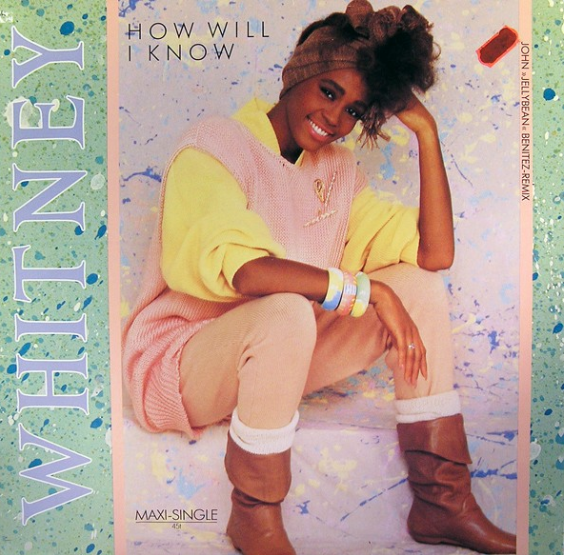
Whitney Houston’s “How Will I Know” 45 single sleeve, circa 1986. (https://medium.com)

This is more than just whether I knew I liked teenage girls and women by the time I was my son’s current age of fifteen, though. Between humping older women’s legs when I was three or four years old (too much information, I suppose), me and Diana slobbering on each other in first grade, and my crush on Ms. Shannon in third grade, that would be enough for most kids to know their orientation. But because I wasn’t “hard” like the boys I lived around at 616 and 630 East Lincoln and the young Turks who lived in public housing on Pearsall Drive, I was often the neighborhood “pussy” or “faggot.” I was mugged four times between April 1979 and the end of 1983. I spent more than one weekend dodging a hail of pebbles and rocks that the neighborhood kids pelted me with. That, and the then buried sexual assault I endured when I was six left me questioning my own sexuality, and with that, my place in the world in terms of friendships and relationships.

The whole Hebrew-Israelite thing, and the additional layers of abuse, hypermasculinity, and misogyny that came with it didn’t help my evolution one bit. One would think that a months-long crush on — really, love for — Wendy in the spring of 1982 would once and for all settle this issue. It didn’t. It didn’t because even I recognized that my love for Wendy was for the version of her who took up space in my imagination. She had become ethereal, and was detached from the flesh-and-blood human being with whom I shared little more than the confines of the classroom in the years between 1981 and 1987. I found her attractive, but had already judged myself unworthy.

Puberty, rebellion, and my switch to Christianity in 1984, and the contradictions that came with this switch over the next year, would tell me more about who I was. This was the beginning of my years of relative asexuality, at least as I presented myself in public. Since I dedicated my life to Jesus, every potential carnal thought I had or action I could take was met with self-doubt and loathing. Mostly, though, I feared for my newborn soul. I feared that somehow, I would go back to being suicidal, Hebrew-Israelite-and-going-to-Hell Donald, the one that got clowned and stoned before reaching six-foot-one.

One of my many attempts at being chaste between September 1984 and May 1985 involved toting my Bible everywhere and breaking it out to read during every idle moment. At school, which got me in trouble with my 10th grade history teacher, Ms. Zini. At home, when I wasn’t distracted by music, my younger siblings, or our fucked up living arrangement with one Balkis Makeda. As sanctimonious as it was, I was really trying to learn, to receive revelation, to understand how this 66-book, 1300-page document could transform me and my mini-apocalyptic world.

I also rode the buses and subways around the city with my red-covered Bible in hand. On many Fridays and Saturdays, whether working for my dad or hunting him down for money, or just because I needed to get away, I’d take the 2 from East 241st in the Bronx to 72nd in Manhattan, or further down, to Times Square, or sometimes, all the way out to Flatbush in Brooklyn.

No matter where I or we (when my older brother Darren would tag along) went, the most interesting part of these outings usually were the people who would be in the cars with me/us. Drunkards who reminded me of Jimme. Older Jamaican women on their way to do domestic work. Middle-aged, haggard-looking White guys who dressed twenty years too young for their faces.

Screenshot from “I Wonder If I Take You Home” video, Lisa Lisa & Cult Jam (1984/85). (https://imgue.com).

Frequently, Nuyorican or Dominican girls and young women would board somewhere between 180th and East Tremont and 149th and Grand Concourse (though because of the ethnic tensions I didn’t understand at the time, certainly not at the same time). I would look up from reading II Chronicles or Esther or Ephesians, and before I could comprehend the people my eyes took in, my dick responded. At 15, I already knew that even a mildly warm breeze was enough for me to get a hard on. I didn’t know that four or six young Latinas on a train wearing bright, tight clothes, makeup, lipstick, and perfume, and heels that would accentuate their breasts, hips, and round butts would completely counter my asexual front. Luckily for me, the Bible-toting phase of my life was during wintertime, and I could cover up my woody with my jacket.

Of course, it felt sinful, and I felt ashamed, that a second and a half of staring up from my Bible would lead to carnal stirrings. But it also gave me a sense of who I was and wasn’t attracted to, really and truly. When White girls with their voluminous ’80s hair got on the train, I hardly noticed. They were trying too hard, and their flat butts did nothing for me. When single Black women in their twenties and thirties would board, I noticed, too. I didn’t have what I would learn later to be colorism issues.

Of course, I learned that I was heterosexual, which I knew would please my Mom to no end. Which actually pissed me off. So, if I had discovered I was gay, she wouldn’t accept me? Wow!, I thought one April Saturday on way back to East 241st. At that point, my evangelical zeal for setting myself apart from the rest of world with my Bible as a baseball bat had waned. I was nowhere near ready to be involved in any kind of relationship that would lead to sex. But, I was ready to drop the idea that my eternal life completely depended on me ignoring both women and my attraction to women. I would remain publicly asexual for a few more years and endure f-bombs from my dad. Truly, it took until I was twenty to understand that whatever my orientation, no one has the right to tell me that my sexuality was anathema to my Christianity.

Year 50 (So It Begins…)

05 Saturday Jan 2019

Posted by decollins1969 in 1, Boy @ The Window, culture, Eclectic, eclectic music, Jimme, Mount Vernon High School, Mount Vernon New York, music, My Father, Pop Culture, race, Religion, Work, Youth

≈ Leave a comment

Tags

"Let It Be" (song), "To 'Joy My Freedom", 1969, Accomplishments, Birth Year, Career, Falling Short, Family, Future, Living This Long, Marriage, Mortality, Self-Criticism, Self-Reflection, Tera Hunter, The Beatles, Unfinished Business


US Route 50 sign, August 26, 2017. (Fredddie, originally SPUI, via http://wikipedia.com). In public domain

As I’ve said in other settings and on my blog, I never dreamed of making it to 30 growing up. Fifty might as well have been 150 for me when I was in the middle of my Boy @ The Window years! But, with my forty-ninth birthday and the calendar change to 2019, I’m here anyway. A half-century (starting sometime in March) between conception and me being just old enough for my son and my students to see me as a fossil. To think that I was Egg #3 in one of my Mom’s ovaries this time 50 years ago? I’m sure I just creeped myself and a large number of you out with that strand of my imagination!

But this isn’t just my Year 50. There are some 500 people I know from my Mount Vernon public schools days, from my years at the University of Pittsburgh and Carnegie Mellon, and from other settings who’ll turn 50 this year. Among the Mount Vernonites and New Yorkers I’ve known directly, between a handful who graduated with the Class of ’86, and with the exception of a couple who graduated with my class in ’87 a year early, almost all from my high school days will turn 50 between now and January 2, 2020 (One notable exception is a classmate whose forty-ninth birthday isn’t until April, but…).

What does all of this really mean, anyway? Have I used up more than half of my youth? Will I shrink immediately? Will my joints, which only ache on occasion, grind me into oblivion and infinite pain at the same time? Will my steel-trap mind become mush? Or, will I finally harness my lost dunking ability, in one last grand gesture of youth, getting my head above the rim one last time, before crashing down to earth and fracturing my metatarsals? Who knows!

What I do know is that I’ve been keenly aware of my mortality since my summer of abuse in ’82, and off and on since the summer of ’76. With a milestone such as this, and the average life expectancy of Black males at 64.5 years, I can’t help but think it. Will I make it through middle age? Heck, will I make it long enough to see my son graduate from high school and earn a higher education degree? Will my wife outlive me (probably), and if so, by how much?

Mostly, though, I’ve had dreams about the plausibility that I haven’t done enough in my life, and what little I have achieved could be turned to ash in an instant. Especially by an indifferent-to-openly-hostile and virulently racist nation-state. I’ve had dreams about losing my jobs because I was forty-five minutes late to lecture for one of my classes. I’ve worried about whether I could ever publishing another article again, even though my track record the past four years has been at least pretty good. I’ve worried about never publishing a book in the mainstream, about leaving my son and wife with nothing, about the possibility that not everything will work out, for me and for us. I also worry about not doing enough to support my family, my friends, even strangers, knowing that I can barely save myself in the here and now, much less anyone else.

But perhaps God has more in store for me beyond Year 50. Dare I hope to be healthy and relatively youthful and around long enough to live past 70, 80, even 90? My grandfathers lived until they were 90 and 97, my aunts on my father’s side are both in their late eighties, and my father (despite a 40-year battle with the bottle) is nearly 80 himself. We’ll see.

I just hope that my youth battery is on the plus side of fifty percent, and not on the minus side. Part of me feels like I’ve only just started living, not out of mission, faithful desperation, or obligation, but out of a sense of it all being worth it, of me actually being worth it. I’ve traveled all over the US, to Alaska during the summer solstice, to Canada, to the US-Mexican border. But it was all for work, to present at conferences, to visit family, to give my son a sense of the world. Except for my honeymoon and other marital excursions, I’ve only traveled a couple of times just to experience the world. Despite my disdain for humanity, I still want that, for me and for my family. I can’t get there, though, on my current double-adjunct, full-time equivalent salaries. This must change.

If it all continues to work out, let it be this year, my God, let it be, let it be. For “there will be an answer, let it be” — eeeeee! (It’s not so interesting to quote a song from The Beatles final studio album, the title song released when I was just a bit more than two months old.) To misquote Princeton professor Tera Hunter’s 1996 book, let it be that I “‘joy my freedom,” that I give myself permission to do so, that my life gives me more opportunities to do so. Let Year 50 be about more than just Nixon and Vietnam, the Moon landing and the FBI’s infiltration of the Black Panther Party, about Woodstock and the Jets and Mets winning titles. Let it be that I have as keen an understanding of my future as I do of the past.

The Sweet Consolation of Suicide

27 Thursday Dec 2018

Posted by decollins1969 in 1, Academia, Boy @ The Window, Carnegie Mellon University, Christianity, culture, Eclectic, eclectic music, Hebrew-Israelite, Mount Vernon High School, Mount Vernon New York, music, Pittsburgh, Pop Culture, race, Religion, University of Pittsburgh, Youth

≈ Leave a comment

Tags

"I Still Haven't Found What I'm Looking For" (1987), Birthday, Brittney Cooper, Contemplation, Darnell Moore, Depression, Eloquent Rage (2018), God, Heavy (2018), Kiese Laymon, Living, No Ashes in the Fire (2017), Questioning, Self-Policiing, Self-Reflection, Self-Revelation, Suicidal Ideations, Suicide, Suicide Attempt, The Joshua Tree (1987), U2


Sweet-and-sour-chicken, 2011. Source: http://www.foodnetwork.com

Well, not exactly sweet to be thinking about what you have thought about and attempted to act out in the past. In the next few hours, I turn 49, which is to say that I begin year fifty on Planet Earth. “Yay me!,” right?

Not so much this time 35 years ago. My suicidal ideations had gone on in December 1983 for nearly three weeks before my fourteenth birthday, in the aftermath of my fourth mugging in four years. That Tuesday, December 27, at 2:30 pm, coming home from C-Town in Pelham, standing on the parapet of that stone bridge overlooking the Hutchinson River Parkway, I had every intention of jumping. I played it out in my head all the different possibilities. At first, it was going to be like the second between taking a deep breath plunging myself underwater and holding my breath while feeling the pressure build up all around my head, eyes, and ears. Except that I imagined a screech, a pop of a hit, and the world turning into stars before I escaped into eternal darkness.

But then, I thought about the plausibility of surviving the 13-foot jump, only to get hit by a car or truck flying down the parkway at 60 or more. Paralyzed, brain-damaged, trapped for days, months, years, decades even, in a body that defied me once again. At this point, my knees were already bent, pretty much ready to push off the stones I stood upon anyway. The possibility of survival and suffering, though, stopped me short of taking that leap. That, and wanting sweet revenge on the stepfather and others who had driven me to this moment.

It’s all in Boy @ The Window. What isn’t in the book is that I couldn’t imagine living past my thirtieth birthday, much less to 49. What isn’t in the book is that I have had other episodes where I either attempted to take my own life via car accident or had suicidal ideations (anywhere between 1982 and 1988, as well as in the late-1990s). This isn’t the same as contemplating my own mortality or considering how much more I may be worth dead than alive (at least I think it isn’t the same, anyway). If someone had put a gun to my head, and asked me why I should keep living, I probably would’ve told them to pull the trigger. I really didn’t have any answers when I got low enough to consider best suicidal practices.

Sure, in the process of working through my own trauma while in progress, I found God, I found Jesus, I read my Bible, I embraced the Holy Spirit. But as the U2 song goes, “I still haven’t found what I’m looking for,” at least not during my Boy @ The Window years, or in the years after my doctorate, or even after a decade in the nonprofit world. Heck, I’m still a work in progress, and not quite sure what’s around the corner for me (although I’m cautiously hopeful, with fingers and toes crossed, and knocking on wood in my mind’s eye as I type this). But a focus on escape isn’t enough. Striving for perfection — including perfect chastity — wasn’t enough. Even writing my fifty-to-100-pages-too-long memoir wasn’t enough.

Two things in the past decade have been enough. One was to admit, and not for the first time, that I controlled nothing, not even my own body, and certainly not all of my thoughts. For a person who’s policed himself as much as I have over the years, this was a hard truth to finally and fully accept, and that was a little more than four years ago. Two was that I needed to let out my thoughts and feelings, no matter how fucked up or how revealing or embarrassing they could be for me. Some of that has worked through this blog and Boy @ The Window. The rest has been as a result of social media, freelance writing, and otherwise remembering that though I may be truly weird, I am also truly human.

Maybe that’s why in the past couple of years I’ve mostly read Black women writers on their trauma and intersectional experiences, between Brittney Cooper, Morgan Jerkins, Roxane Gay, Crystal Fleming, Patricia J. Williams, and a host of others. Maybe that’s why I found more solace in Kiese Laymon’s Heavy than I ever did with any of my history monographs. Maybe this is why I’m convinced that to be a better writer, I had to become an even better reader, and read across genres and disciplines like I never had before. Maybe, too, this is why I as an educator have committed to use a wider variety of materials to reach my students, even if one or two want to only read mainstream history texts and don’t want to engage in “literary analysis.”

I finished Darnell Moore’s No Ashes in the Fire two days ago. Despite his stepping out of narrative to preach “Black radical love” at least three too many times, Moore’s book reminded me of what all the other wonderful books I’ve read in the past three years have told me. Share your truth, so that others may see, hear, or react to it. Tell your story, ‘cuz ain’t no one else gonna tell it for ya. Talk about it, if only to yourself, so that you know you’re not crazy. There’s bravery in putting in words your pain, your joy, your sense of the world and sense of self, your need for a higher power (or lack thereof). There’s courage in pointing to your unique sameness relative to humanity, and your need to crystallize the dominance of systemic racism, heteronormative patriarchy, and narcissistic worshipping of dollars and billionaire elitism that is this warped-assed world.

None of this may convince someone from taking their own life. I don’t pretend that I have any specific answers, because I don’t. But many times, living begins with one question, then another, then another. Living for me is about finding the best questions to answer, to turn the embers of what was once a wall of bullshit into a forest fire of questions, for me and others. This world will never give us the right to question it, which is why we who might want to live another day must wrest that right for ourselves, every single day.

← Older posts
Newer posts →

Boy @ The Window: A Memoir

Boy @ The Window: A Memoir

Places to Buy/Download Boy @ The Window

There's a few ways in which you can read excerpts of, borrow and/or purchase and download Boy @ The Window. There's the trade paperback edition of Boy @ The Window, available for purchase via Amazon.com at http://www.amazon.com/Boy-Window-Donald-Earl-Collins/dp/0989256138/

There's also a Kindle edition on Amazon.com. The enhanced edition can be read only with Kindle Fire, an iPad or a full-color tablet. The links to the enhanced edition through Apple's iBookstore and the Barnes & Noble NOOK edition are below. The link to the Amazon Kindle version is also immediately below:

scr2555-proj697-a-kindle-logo-rgb-lg

Boy @ The Window on Amazon.com: http://www.amazon.com/Boy-The-Window-Memoir-ebook/dp/B00CD95FBU/

iBookstore-logo-300x100

Boy @ The Window on Apple's iBookstore: https://itunes.apple.com/us/book/boy-the-window/id643768275?ls=1

Barnes & Noble (bn.com) logo, June 26, 2013. (http://www.logotypes101.com).

Boy @ The Window on Barnes & Noble: http://www.barnesandnoble.com/w/boy-the-window-donald-earl-collins/1115182183?ean=2940016741567

You can also add, read and review Boy @ The Window on Goodreads.com. Just click on the button below:

Boy @ The Window

Twitter Updates

Tweets by decollins1969
  • RSS - Posts
  • RSS - Comments

Archives

  • June 2025
  • April 2023
  • September 2022
  • August 2022
  • July 2022
  • June 2022
  • May 2022
  • April 2022
  • March 2022
  • January 2022
  • December 2021
  • November 2021
  • October 2021
  • September 2021
  • August 2021
  • July 2021
  • June 2021
  • April 2021
  • March 2021
  • February 2021
  • January 2021
  • December 2020
  • November 2020
  • October 2020
  • September 2020
  • August 2020
  • July 2020
  • May 2020
  • April 2020
  • March 2020
  • January 2020
  • December 2019
  • November 2019
  • August 2019
  • July 2019
  • June 2019
  • May 2019
  • April 2019
  • March 2019
  • February 2019
  • January 2019
  • December 2018
  • November 2018
  • October 2018
  • September 2018
  • August 2018
  • July 2018
  • June 2018
  • May 2018
  • March 2018
  • February 2018
  • January 2018
  • December 2017
  • November 2017
  • October 2017
  • September 2017
  • August 2017
  • July 2017
  • June 2017
  • May 2017
  • April 2017
  • March 2017
  • February 2017
  • January 2017
  • December 2016
  • November 2016
  • October 2016
  • September 2016
  • August 2016
  • July 2016
  • June 2016
  • May 2016
  • April 2016
  • March 2016
  • February 2016
  • January 2016
  • December 2015
  • November 2015
  • October 2015
  • September 2015
  • August 2015
  • July 2015
  • June 2015
  • May 2015
  • April 2015
  • March 2015
  • February 2015
  • January 2015
  • December 2014
  • November 2014
  • October 2014
  • September 2014
  • August 2014
  • July 2014
  • June 2014
  • May 2014
  • April 2014
  • March 2014
  • February 2014
  • January 2014
  • December 2013
  • November 2013
  • October 2013
  • September 2013
  • August 2013
  • July 2013
  • June 2013
  • May 2013
  • April 2013
  • March 2013
  • February 2013
  • January 2013
  • December 2012
  • November 2012
  • October 2012
  • September 2012
  • August 2012
  • July 2012
  • June 2012
  • May 2012
  • April 2012
  • March 2012
  • February 2012
  • January 2012
  • December 2011
  • November 2011
  • October 2011
  • September 2011
  • August 2011
  • July 2011
  • June 2011
  • May 2011
  • April 2011
  • March 2011
  • February 2011
  • January 2011
  • December 2010
  • November 2010
  • October 2010
  • September 2010
  • August 2010
  • July 2010
  • June 2010
  • May 2010
  • April 2010
  • March 2010
  • February 2010
  • January 2010
  • December 2009
  • November 2009
  • October 2009
  • September 2009
  • August 2009
  • July 2009
  • June 2009
  • May 2009
  • April 2009
  • March 2009
  • February 2009
  • January 2009
  • December 2008
  • November 2008
  • October 2008
  • September 2008
  • August 2008
  • July 2008
  • June 2008
  • May 2008
  • April 2008
  • March 2008
  • February 2008
  • January 2008
  • December 2007
  • November 2007
  • October 2007
  • September 2007
  • August 2007
  • July 2007
  • June 2007

Recent Comments

MaryPena's avatarMaryPena on My Day of Atonement/Bitter Hat…
decollins1969's avatardecollins1969 on No Good Teaching Deed Goes…
Mary Rose O’Connell's avatarMary Rose O’Connell on No Good Teaching Deed Goes…

NetworkedBlogs on Facebook

NetworkedBlogs
Blog:
Notes From a Boy @ The Window
Topics:
My Life, Culture & Education, Politics & Goofyness
 
Follow my blog

616 616 East Lincoln Avenue A.B. Davis Middle School Abuse Academia Academy for Educational Development AED Afrocentricity American Narcissism Authenticity Bigotry Blackness Boy @ The Window Carnegie Mellon University Child Abuse Class of 1987 CMU Coping Strategies Crush #1 Crush #2 Death Disillusionment Diversity Domestic Violence Economic Inequality Education Family Friendship Friendships Graduate School Hebrew-Israelites High-Stakes Testing Higher Education History Homelessness Humanities Humanities Program Hypocrisy Internalized Racism Jealousy Joe Trotter Joe William Trotter Jr. K-12 Education Love Manhood Maurice Eugene Washington Maurice Washington Misogyny Mother-Son Relationship Mount Vernon High School Mount Vernon New York Mount Vernon public schools Multiculturalism MVHS Narcissism NFL Pitt Pittsburgh Politics of Education Poverty President Barack Obama Race Racial Stereotypes Racism Relationships Self-Awareness Self-Discovery Self-Reflection Sexism Social Justice Teaching and Learning University of Pittsburgh Violence Whiteness Writing

Top Rated

Blog at WordPress.com.

  • Subscribe Subscribed
    • Notes from a Boy @ The Window
    • Join 103 other subscribers
    • Already have a WordPress.com account? Log in now.
    • Notes from a Boy @ The Window
    • Subscribe Subscribed
    • Sign up
    • Log in
    • Report this content
    • View site in Reader
    • Manage subscriptions
    • Collapse this bar
 

Loading Comments...