• About Me
  • Other Writings
  • Interview Clips
  • All About Me: American Racism, American Narcissism, and the Conversation America Can’t Have
  • Video Clips
  • Boy @ The Window Pictures
  • Boy @ The Window Theme Music

Notes from a Boy @ The Window

~

Notes from a Boy @ The Window

Tag Archives: Racism

My Private Aftermath of the O.J. Simpson Verdict 20 Years Ago

01 Thursday Oct 2015

Posted by decollins1969 in 1, Academia, Boy @ The Window, Carnegie Mellon University, culture, Eclectic, Pittsburgh, Politics, Pop Culture, race, University of Pittsburgh, Work, Youth

≈ Leave a comment

Tags

Carl, CMU, Drama, James, Media Coverage, Murder, O.J. Simpson, O.J. Simpson Trial, O.J. Simpson Verdict, OJ Simpson, Race Riots, Racial Divide, Racism, Trial, White Bronco, Whiteness


 O.J. Simpson with his attorneys F. Lee Bailey (left) and the late Johnnie Cochran (right) after being found not guilty, October 3 1995. (Myung J. Chun/Los Angeles Daily News/AP, via http://theguardian.com)

O.J. Simpson with his attorneys F. Lee Bailey (left) and the late Johnnie Cochran (right) after being found not guilty, October 3 1995. (Myung J. Chun/Los Angeles Daily News/AP, via http://theguardian.com)

To think that it’s only been two decades since the overhyped “Trial of the Century” came to a close with a clerk’s initial mispronunciation of Orenthal James Simpson’s first name. And of course, with O.J. Simpson’s acquittal. It’s amazing to think that so many would become so emotionally caught up in a double-homicide case involving what at one time was one of the world’s most recognizable faces. But it did happen, all of it in a sixteen-month span, and the reaction was as predictable as the sunrise, racial profiling, and police harassment.

During the Ford Bronco chase on I-5 on Friday, June 17 (during my Knicks’ Game 5 of the NBA Finals against the Houston Rockets), I hoped that the police wouldn’t shoot Simpson before he had a chance to go to trial. The L.A. riots were just two years before. I feared that the issue of race would be front and center, with Simpson’s issues with his now dead White ex-wife.

O.J. Simpson on the covers of Newsweek and Time Magazine, (the picture on right altered to make Simpson appear darker and caused an outcry), June 27, 1994. (Theo's Little Bot via Wikipedia). Qualifies as fair use due to low resolution of image and relevance to subject matter.

O.J. Simpson on the covers of Newsweek and Time Magazine, (the picture on right altered to make Simpson appear darker and caused an outcry), June 27, 1994. (Theo’s Little Bot via Wikipedia). Qualifies as fair use due to low resolution of image and relevance to subject matter.

I was naive, thinking that our world of ’94 would simply attempt to determine if Simpson was guilty or innocent. Instead what I saw within ten days of the Bronco chase was an artificially darkened Simpson on the cover of Time. I saw Blacks who became angrier about the coverage, even as Whites grew more confident about Simpson being convicted, losing his fortune and fame, and possibly getting the death penalty (or at least, life imprisonment). My Mom proclaimed that O.J. was innocent long before the prosecution botched the trial. Some of my grad school colleagues — all White, mind you — made all kinds of assumptions about where I stood on O.J. They didn’t like the fact that I was willing to wait until the trial to make up my mind.

When the verdict came down on Tuesday, October 3, 1995, it was stunning to watch ecstatic Blacks and angry, dejected Whites react to the “Not Guilty” verdict. And not just on TV, although it was obvious newsrooms were actively looking for a racial divide. My friend James (who’s Black, by the way) from my Pitt grad school days spent his lunch break in my apartment gritting his teeth in anger as the verdict was read. I was more shocked than anything else. I smiled, but it was one of bewilderment observing the reactions, as if we all had some deeply personal stake in the trial and verdict.

That smile disappeared as I went through my day editing and printing out chapter drafts of my dissertation. That was my real focus, not the soap opera enveloping the rest of the country. Late that afternoon, I went to Carnegie Mellon to drop off a draft of a couple of those chapters for my thesis advisor Joe Trotter. Carl, a colleague of mine, one who I had called a friend up to this point, immediately started in on me about the verdict when I reached the grad student cubicles in the History Department. He kept literally spewing the media’s line about an all-Black jury, about jury nullification, about Johnnie Cochran. Carl was in a rage, belligerent, possibly drunk, and seemingly ready to throw down. Seriously, aside from showing up to drop off dissertation chapters, what did I do?

I politely pointed out that the jury was mostly, but not all Black (at least three members were White or Latino), and that the prosecution led by Marcia Clark and Christopher Darden left the door wide open for an acquittal. Carl assumed wrongly that I wanted O.J. free regardless of his “obvious guilt.” I asked my colleague what else could the jury do, given the compelling defense put together by the late Johnnie Cochran, the mistakes with forensics, with the glove, with putting Mark Fuhrman on the stand? I said that “I don’t represent all thirty million African Americans in this country,” and that “our conversation is over.”
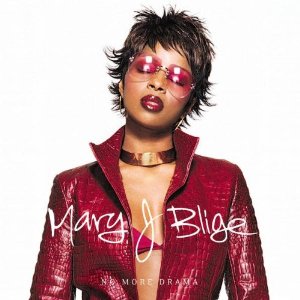
Mary J. Blige, No More Drama (with extra tracks) album cover, 2002. (http://amazon.com).

Mary J. Blige, No More Drama (with extra tracks) album cover, 2002. (http://amazon.com).

That reminded me of how irrational supposedly rational, forward-thinking Whites often are on race matters. They either ignore, deny, or when compelled by some betrayal or injustice, badger, threaten and retaliate in response. Carl that day was no exception. I found that incident unsettling because this supposed friend was one of the few folks at Carnegie Mellon who had earned my trust. It reminded me if I were to ever date or marry someone White (not exactly my plan), there would be hell to pay. I had a grand total of three conversations with Carl after that between October 3, 1995 and August 6, 1999, the latter the week before I left Pittsburgh to live in suburban DC/Maryland.

I’m sure that I wasn’t the only Black person who had to confront Whiteness in all of its angry, hurt and juvenile forms in those first two weeks of October ’95. I’m equally sure that if the O.J. Simpson trial’s verdict occurred in 2015, Carl and his like-minded ilk would’ve set off race riots the likes of which this country hasn’t seen since Detroit in 1943, Tulsa in 1921, and Chicago in 1919. You know, the kind where Whites go into segregated Black communities and rape, kill, steal and destroy as much as they can. To me, Carl just represented the White privilege and resentment of millions, smoldering yet ready to erupt at a moment’s notice. Not that many haven’t benefited from the O.J. Simpson effect in the years since.

Carl has a professorship somewhere in New York these days, and we are professional colleagues who maybe exchange an email one or twice a decade now. I’m sure, though, that he avoids the topic of race in US history like most would want to avoid catching Ebola. Especially given his reaction to one jury verdict twenty years ago.


Aside

“And There’s Winners, And There’s Losers…

19 Wednesday Aug 2015

Posted by decollins1969 in 1, Christianity, culture, Eclectic, eclectic music, New York City, Patriotism, Politics, Pop Culture, race, Religion, Work

≈ Leave a comment

Tags

"Pink Houses" (1983), 2016 Election, American Narcissism, Bankruptcy, Comb-Over, Donald Trump, FOX News Debate, Frank Sinatra, Hypocrisy, John Mellencamp, Losers, Misogyny, Narcissism, New York, New York" (1980), Racism, RNC Debate, The Donald, Trump Supporters, Winners, Xenophobia


“But they ain’t no big deal/’Cause the simple man, baby/Pays for thrills/The bills the pills that kill” – John Mellencamp, “Pink Houses” (1983).

Donald Trump’s entire campaign might as well be called “The Ultimate Narcissist Does The Pink Houses” Tour, complete with Def Leppard, his kids, and Omarosa going to bat for him on CNN. Trump and his angry band of supporters see the world in the simplest way, like an indoctrinated twelve-year-old forced to be part of a religious cult (I can definitely relate). Trump sees himself as a “winner,” the US as a country that used to be a “winner,” and anything or anyone who doesn’t fit his narrative as “losers.” Of course there’s a contradiction here. Trump doesn’t have the courage to call many of his supporters “losers,” though there are about four decades’ worth of his actions and statements that would serve as evidence of his thoughts about his base.

2016 presidential candidate Donald Trump meeting with New England Patriots owner Robert Kraft, Gillette Stadium, Foxboro, MA, October 21, 2012. (Nancy Lane/Boston Herald;http://bostonhearld.com).

2016 presidential candidate Donald Trump meeting with New England Patriots owner Robert Kraft, Gillette Stadium, Foxboro, MA, October 21, 2012. (Nancy Lane/Boston Herald;http://bostonhearld.com).

At the “Big Boys” RNC debate a couple of weeks ago, Trump couched everything in terms of “winners” and “losers.” President Obama was an “incompetent loser.” The US is “losing to China” economically. Mexican immigrants are turning the US into “a nation of losers.” The US has to “win” against ISIS (I prefer the term Islamic State or IS that most news agencies use outside the US, but that would make me a loser). Trump’s pronouncements at the debate and since have been about more than sound bites of “us” vs. “them,” as the more progressive media elements have said. It’s been about presenting himself as America’s winner, as the one at “the top of the heap, king of the hill, A-number-1.”

In a nation full of narcissists, this has a real appeal, even if the reality of Trump’s life contradicts both the winner image he portrays and the lives that most of his supporters actually live. The most obvious is Trump’s net worth being more like between $1.4 billion and $4 billion (Oprah Winfrey territory), and not the $10 billion he says it is. Or that he has — or, as Trump would say, “my companies” have — filed for Chapter 11 four times in the past quarter-century. Or his multiple divorces. Or his ridiculous comb-over in 20+mph winds.

I guess all of those falsities and setbacks should be more nuanced, as part of life’s long and bumpy journey. By Trump’s own definition, because his net worth — though envy-inducing — is hardly #1 (still between Bill Gates, Warren Buffett, and Michael Bloomberg), he should see himself as a loser. Because Trump has seen multiple business ventures crash and burn, the “loser” moniker could fit. Oh, but narcissism allows for those suffering from grandiose inflations of themselves to see their failings, their losses as mere bumps in the road, and not part of the “winners and losers” narrative.

Picture of abandoned Palma Nova mobile home park, where the last of the 900 families had been evicted in 2009, Davie, Florida, February 15, 2010. (Mike Stocker/Miami Sun-Sentinel; http://www.sun-sentinel.com/local/broward/fl-palma-nova-davie-pg-photogallery.html).

Picture of abandoned Palma Nova mobile home park, where the last of the 900 families had been evicted in 2009, Davie, Florida, February 15, 2010. (Mike Stocker/Miami Sun-Sentinel; http://www.sun-sentinel.com/local/broward/fl-palma-nova-davie-pg-photogallery.html).

The same goes for Trump’s supporters, most of whom couldn’t hope to be PTA president at their neighborhood elementary school, much less run for POTUS. The US is so replete with narcissism that it’s in the bloodstream of ordinary low-income Americans (the majority of the working population, by the way). And as such, their reasons for supporting Trump are as sad as they are predictable. They see him as a winner, even though he was born into wealth via his real estate magnate father (or as many New Yorkers saw him, slum lord), Fred Trump. The Donald was born halfway between third and home plate, and somehow ordinary Americans see him as a quintessential American?

Trump’s supporters also see him as someone who “tells it like it is.” Really? Ready to be fooled again, just like with so many numbskulls and wing-nuts who’ve sold Americans the magic of tax cuts for the rich and for corporations and endless prosperity in the past? Some of these narcissists are like gambling addicts, taking their last dollars to a slot machine on the hope of making it rich with crusty toenails. It both a real shame, and pitiful to watch.

Aside

“White Privilege,” “Privileged Whites,” and Other Clarifications

01 Saturday Aug 2015

Posted by decollins1969 in 1, culture, Eclectic, New York City, Patriotism, Politics, Pop Culture, race, Religion

≈ Leave a comment

Tags

American Exceptionalism, Bigotry, Black Reconstruction (1935), Central Park, Colorblindness, Egalitarianism, Homelessness, Privileged Whites, Psychological Wages, Public Wages, Race, Racism, Socioeconomic Status, W. E. B. Du Bois, Wages of Whiteness, White Privilege, Whiteness


"White Privilege-Amex," April 2014. (http://theblacksphere.net/).

“White Privilege-Amex,” in black and white, April 2014. (http://theblacksphere.net/).

It is hard to discuss race. It is definitely so in the US, where virtually everyone believes that their individual good intentions mean more than systemic oppression and ugly truths. And it is really hard on people of color when they/we discuss race with most Whites and some people of color (e.g., Black conservatives, the elite of color, those with internalized racism issues), as their belief in American exceptionalism and individualism is so strong that any evidence to the contrary must be wrong. Especially if the person providing the evidence is Black, Latino, Native American or Asian, and even more so if they are women of color.

One thing that’s been on my mind lately is the lazy use of terms by the media around race. And their laziness is our collective and individual laziness as well. So much so that most Americans use the terms for discussing race about the same way most Americans eat — they say “gimme lots of fat” while refusing the vegetables and healthy, but “put everything on it” at the same time.

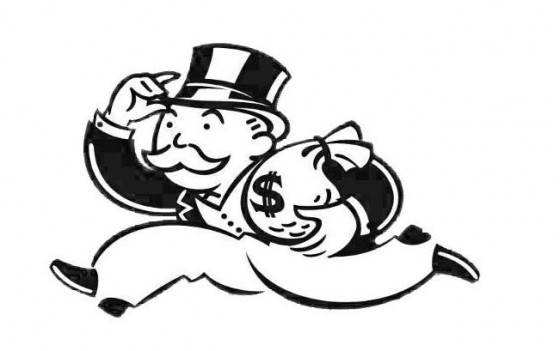
Mr. Moneybags of Monopoly (1934) fame, July 31, 2015. (http://streetsmartbrazil.com/).

Mr. Moneybags of Monopoly (1934) fame, July 31, 2015. (http://streetsmartbrazil.com/).

For example, most Whites see the terms White privilege and privileged Whites and assume they mean the same thing. They don’t and can’t. White privilege refers to both systemic and individual racial discrimination and disparities that almost no one White would ever have to deal with in most circumstances. It has little to do with socioeconomic standing, level of education, social networks, or any other variable to which most Americans who play devil’s advocate often refer. Privileged Whites, though, refers to the fact that this socioeconomic group is either upper middle class or wealthy, often with high education levels. The latter can also refer to White privilege, but then again, that’s already assumed in America’s racial construction of itself.

Anyone who is White and poor and also assumes that White privilege (or, to use W.E.B. Du Bois’ term, Whiteness) is ascribing to them a socioeconomic status that they do not possess, that’s just incorrect. As Du Bois wrote in Black Reconstruction (1935), even the poorest Whites received societal compensation, at least in part, through a “public and psychological wage.” In Jim Crow times, it was one in which poor Whites “were given public deference…were admitted freely…to public functions and public parks.” At the same time, the “police were drawn from their ranks and the courts, dependent on their votes, treated them with leniency” (pp. 700-01). Come to think of it, much of this still applies in 2015, even though the Civil Rights Movement dismantled Jim Crow, no?

But it’s not just terms like White privilege and privileged Whites that throws off all but a small minority of Americans. Most use terms like race, racism and bigotry interchangeably, as if they work at an Apple factory in the Longhua Subdivision of Shenzhen, in Guangdong Province, China (it’s outside Hong Kong) making iPhones and iPads. Race is a construct and not a biological fact in the case of Homo sapiens, since humans are all part of one species, albeit with some rather interesting surface variations. Racism is the result of a construct to justify social and economic advantages in the US and all over the globe, as well as the systemic construction and maintenance of such advantages. Bigotry, though, is something we as individuals all possess, regardless of race, gender, ideology, religion, atheism, or any other variable. There’s more, but I’ve already written a post about this.

A clip from The Colbert Report in a segment about the end of stop and frisk in New York City, August 2013. (http://globalgrind.com via http://billmoyers.com).

A clip from The Colbert Report in a segment about the end of stop and frisk in New York City, August 2013. (http://globalgrind.com via http://billmoyers.com).

And there’s this whole notion of color blindness, the idea that millions of Americans who see everything in color can claim that they’re colorblind to race. “I don’t care if you’re white, black, red, green or purple. It doesn’t matter to me,” most Americans often say. There’s two problems with this statement and these phrases. One is that unless someone is actually, physically and neurologically colorblind, what one is doing is choosing to ignore differences, which is completely different from tolerating, accepting or embracing difference. One might as well say that they don’t see the homeless in the middle of Central Park in New York, that’s how ridiculous — maybe even tone-deaf and callous — this idea is.

Two is that there aren’t any green, purple, blue or other weird hues of humanity anywhere on this planet. Heck, technically, Whites are pink, Blacks are varying shades of brown, Native Americans have reddish undertones (and then only some), and so on. The point is, this idea of color blindness to race is straight horse manure, allowing many Americans to feel good about their views on race, racism and bigotry without any serious thought about their country or the people in it at all.

And that is why conversations on race in the US remain a pipe dream for some, and raise the fear of the specter of Judgment Day for others.

Why Boston U Isn’t For Me, and Shouldn’t Be For You

26 Sunday Apr 2015

Posted by decollins1969 in 1, Academia, Carnegie Mellon University, culture, Eclectic, High Rise Buildings, Jimme, Mount Vernon New York, My Father, New York City, Politics, Pop Culture, race, Upper East Side, Upper West Side, Work, Youth

≈ Leave a comment

Tags

616, 616 East Lincoln Avenue, Academic-Speak, Boston U, Boston University, BU, Checkbox, CMU, Cosmetic Diversity, Disillusionment, Institutional Racism, Jimme, Linda Sarsour, Meritocracy, Nepotism, Office of the Provost, Racism, Rev. Dr. Martin Luther King Jr., Righteous Indignation, Robert Turri Vise, Structural Racism, Suzanne C. Kennedy, Timothy Barbari, Tokenism


The main classroom buildings for the College of Arts and Sciences at Boston University, with the BU East 'T' stop in the foreground, July 18, 2010. (Fletcher6 via Wikipedia). Released to the public domain via CC-SA-3.0.

The main classroom buildings for the College of Arts and Sciences at Boston University, with the BU East ‘T’ stop in the foreground, July 18, 2010. (Fletcher6 via Wikipedia). Released to the public domain via CC-SA-3.0.

Since my first job working for my father in Manhattan in ’84, I’ve probably done over 200 interviews. By telephone, through Skype or WebEx or Adobe Connect, at conferences and in person. Probably about a third of those interviews have occurred with colleges and universities, for academic and administrator-level positions. For the most part, whether the interviews went well or when I didn’t have my “A-game,” my experiences have been pleasant ones. But, after two different interview processes five years apart with Boston University — one in October ’10, the other last month — there is a higher education institution that I will not work for, will not send my son, and will not recommend for anyone I know, under nearly any circumstances.

There are only a few institutions that have been so bad that they’ve moved from my [expletive] list to my permanently-banned-from-my-life list. Even Carnegie Mellon isn’t on the latter list, and I’ve talked about their conservatism and weirdness around diversity before here. But Boston University’s treatment of me as a potential employee, well, it took my breath away without putting me in an NYPD chokehold.

Round 1, Boston University, August-October 2010

Let me rephrase. I was never a “potential employee,” because on the two occasions I interviewed for jobs there, Boston University in the end treated me as a checkmark interviewee. In the fall of ’10, I emerged for them as a candidate for the director of their Washington, DC program. They interviewed me three times: at the American Political Science Association conference in DC in August, at their old DC program headquarters (while also showing me their new one, still under construction) in September, and in person on the main Boston University campus in late October.

For that last interview, they pulled out all the stops. They flew me in, put me up in a nearby hotel the night before, and even took me to lunch. Of course, they also had someone give me a two-hour guided tour of the campus that morning, after one morning meeting, on a day with thirty mile-per-hour winds coming off the Charles River as we walked from one end of the campus to the other. It’s funny. Up until then, I never thought of a campus tour as sinister. But then I realized, if I’m spending two hours during the heart of the workday doing a campus tour with a twenty-four year-old BU grad in forty-five degree weather, what did that mean for my real chances at that job?

My final meeting was with a professor who advised political science and history major in the DC program. That meeting ended at 5 pm on October 22, with which I knew that they were supposed to make a final decision in a week or so. Despite a thank-you email and two follow-up emails, I didn’t hear from Boston University again until November 29. Roberta Turri Vise, the point person for my interview process, didn’t explain why the final decision took more than five weeks. Nor did she explain why after six weeks of correspondence, no response from my requests were returned by her or anyone else in her office.

Round 2, Boston University, January-March 2015

I decided that this was a one-off thing, that with our generation of job searches occurring in a buyer’s market, that some folks really don’t care about being professionals in their dealing with interviewees. Boy was I wrong! Even in a market where people ignore applicant materials and send mass rejection emails without a candidate’s name on it (or worse, with someone else’s name), Boston University claimed a unique crown.

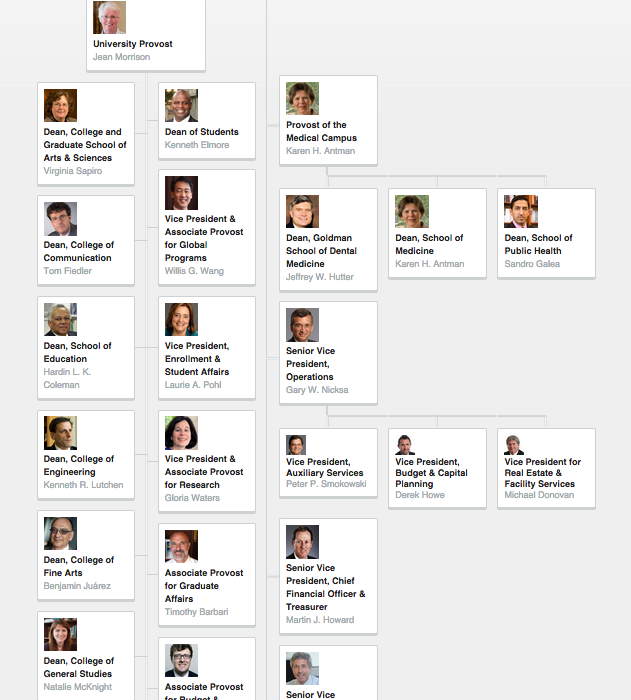
Hierarchy tree of Boston University's leadership team via the Provost's Office, April 26, 2015. (http://www.bu.edu/info/about/admin/).

Hierarchy tree of Boston University’s leadership team via the Provost’s Office, April 26, 2015. (http://www.bu.edu/info/about/admin/).

I interviewed with them again in January and at the beginning of March. This was for a position in their provost’s office, a director position managing undergraduate and graduate fellowship opportunities and advising students via those opportunities. The position was a bit beneath my experience, but they seemed interested, and I already knew from some initial research that it was a new position, so I went ahead and applied for it. My first interview was by telephone, with Suzanne Kennedy, the assistant provost for academic affairs at Boston University. It was a pleasant but underwhelming interview, and I actually didn’t expect a call back. So I kept up with my usual work of teaching, consulting, and looking for more consulting opportunities.

I received an email five weeks later asking me to come up to Boston for a second, in-person interview. I gave it the go-ahead, although the length of time between first interview and correspondence concerned me. So too, did my back and forth with Kennedy’s assistant over travel, as she had initially booked me at times that were very inconvenient for interviewing purposes. Not to mention, the major snow issues that Boston experienced in February.

The interview on March 4 was honestly one of the worst experiences I’ve ever had interviewing for any job. I’m including an interview in which I discovered the place was a sweatshop in Chinatown, during my summer of unemployment in New York in ’88. I had three meetings in all, one over lunch with Kennedy, and two with the two associate provosts at Boston University in academic affairs (one undergraduate, one graduate). Over lunch, the conversation was going well, until I asked the question about the level of diversity with applicant pools for Fulbrights, Trumans, Borens, and Rhodes’ scholarships and fellowships. I kid you not, Kennedy’s eyes literally glazed over as soon as I asked about diversity. Keep in mind, I had asked about socioeconomic diversity — I hadn’t touched racial or gender diversity yet. After lunch, I didn’t see Kennedy again for the rest of the interview process.

My second sign came from my third meeting. I met with Timothy Barbari, associate provost for graduate affairs. It was obvious that Barbari hadn’t even looked at my CV before I walked into his office. The first thing Barbari says to me, with him pushing his body into the back of his chair so far that his attempt to be at ease looked more like a rocket revving to take off — “so, you have a rather interesting CV.” I may not have earned all of my money as an academician, but I’ve been around academic-speak long enough to know that interesting can mean a lot of different things, mostly bad. In this context, interesting meant “not straightforward, not linear in progression, not typical in terms of whom we typically hire.”

I was already feeling a bit like a checkmark or token interviewee by the time I left Barbari’s office for Logan. But after USAirways canceled all their flights to DC that evening due to a snowstorm that wouldn’t drop a snowflake for another twelve hours, it got worse. I notified Kennedy through her assistant that I was stuck in Boston overnight from Logan, and left a message the next morning that the Amtrak to DC was my only option, as more flights had been canceled. No word, not even a “I’m sorry that you have to go through this” response. It wasn’t until mid-afternoon that Friday, nearly a day after I returned to DC, and after a third message about them needing to reimburse me, that I heard from Kennedy’s assistant.

At that point, I wouldn’t have taken the job even if they had offered it to me. As it was, I didn’t hear from Kennedy again until April 7, five weeks after a second interview, and despite a check-in to find out what happened with this director position. It’s this kind of calloused approach that leaves folks shaking their head.

Shaking Off The Dirt

I’ve made a few determinations based on these experiences. For one, if this is the way that treat job candidates who look like me, how well do they pay and treat their service staff, the most vulnerable people on their campus? Not well, at least from what I saw and have experienced. For two, the fact that for both interviews, their top concern seemed to be about competing with “schools across the Charles River” — i.e., Harvard, MIT, Tufts — was somewhere between disconcerting and ridiculous.

An elephant shaking off the dirt, circa 2012. JD Rucker via Pinterest.com).

An elephant shaking off the dirt, circa 2012. (JD Rucker via Pinterest.com).

The fact that with tuition, books, and room and board it would run the average BU student $60,000 per year also told me what I needed to know. Boston University is a place that wants elite status and elite students, and in pursuit of this Pollyanna goal, wants to hire people they feel fit the bill. As long as those people look like everyone else running the university — mostly White, with a few people of color lightly sprinkled in leading positions at the institution. Because Boston University has what activist Linda Sarsour (Twitter, @lsarsour) calls cosmetic diversity, a genuine attempt at diversity across socioeconomic, racial and gender lines is unnecessary, at least for the powers whom run the institution.

Aside from Martin Luther King, Jr., who earned his doctorate in divinity at Boston University in the early 1950s, I’ve known or known of only one person of color with a degree from BU. She was a neighbor at 616 East Lincoln, a few years younger. Based on her description of more than two decades ago, I’d have to say that Boston University has changed for the worst. Like most universities, they seem more interested in prestige and raising money than in fulfilling their mission.

And with that being the case, why send your kid to Boston University? Especially when, for the same amount of money or less, every other school in the Boston area is either better, or at least, cares more about diversity and learning beyond the cosmetic.

Merit-hypocrisy in the Air

18 Saturday Apr 2015

Posted by decollins1969 in 1, Academia, Boy @ The Window, Carnegie Mellon University, Christianity, culture, Eclectic, Mount Vernon New York, Movies, Pittsburgh, Politics, Pop Culture, race, Religion, University of Pittsburgh, Work, Youth

≈ Leave a comment

Tags

"Who-You-Know" World, Academia, Ageism, Bruce Anthony Jones, Daniel P. Resnick, Dick Oestreicher, Envy, Hard Work, Hypocrisy, Jay Wickliff, Jealousy, Jelani Cobb, Joe William Trotter Jr., Ken Williams, Meritocracy, Nepotism, New Voices, New Voices Fellowship Program, Nonprofit World, Presidential Classroom, Racism, Wendy Goldman


Meritocracy cartoon, October 29, 2010 (Josh C. Lyman via http://www.clibsy.com/).

Meritocracy cartoon, October 29, 2010 (Josh C. Lyman via http://www.clibsy.com/).

One of the hardest ideals for me to give up on in all of my life has been the idea of meritocracy. Even when I couldn’t spell the word, much less define it or use it in a sentence, I believed in this ideal. It was the driving force behind my educational progression from the middle of fourth grade in January ’79 until I finished my doctorate in May ’97. The meritocratic ideal even guided me in my career, in both academia and in the nonprofit world. Only to realize by the end of ’09 what I suspected, but ignored, for many years. My ideal of a meritocracy is shared by only a precious few, and the rest give lip service to it before wiping it off their mouths, concealing their split lips and forked tongue with nepotism instead.

Being the historian I am — whom people like Jelani Cobb joked about on Twitter as a curse — I am programmed to look back at situations in my own life to look for root causes, to understand what I can do to not repeat my own mistakes, my not-so-well-planned decisions. I’ve thought about my advisor Joe Trotter and my dissertation committee of Trotter, Dan Resnick (husband of education researcher Lauren Resnick) and Bruce Anthony Jones. The biggest mistake I made was in putting this hodgepodge committee of a HNIC advisor, racial determinist and closeted wanderer together to help guide me through my dissertation and then into my first postdoctoral job.

Aaron Eckhart as main character in movie I, Frankenstein (2014), August 12, 2013. (http://sciencefiction.com/).

Aaron Eckhart as main character in movie I, Frankenstein (2014), August 12, 2013. (http://sciencefiction.com/).

Of course, I didn’t know enough about these men to describe them this way, certainly not until I’d graduated and couldn’t find full-time work for more than two years. The signs, though, were there. Trotter’s unwillingness to recommend me for any job before my completed first draft of my dissertation was really complete (it took me two weeks to revise my dissertation from first to final draft). Resnick calling my dissertation writing “journalistic” and saying that my nearly 2,000 endnotes and thirty pages of sources was “insufficient.” Bruce pulling back on his schedule with me even before taking the job at University of Missouri at Columbia in July ’96.

None of this had anything to with my work. It was about me, whether I as a twenty-six year-old had suffered enough, had gone through enough humiliation, to earn a simple letter of recommendation for a job. When Trotter finally decided it was time to write me a letter of recommendation, it was December ’96, and the job was University of Nebraska-Omaha, “subject to budget considerations,” meaning that it could (and it did) easily fall through. Resnick flat-out refused to share anything he wanted to write about me, with all his “confidentiality” concerns, while I wrote all my letters for myself for Bruce. It was a disaster, and none of it had anything to do with the quality of my work as a historian, educator, or academic writer.

The work I ended up getting after Carnegie Mellon was the result of my dissertation, my teaching experiences, and my networking. The idea that I’d earned my spot, though, was still lacking in the places in which I worked. Particularly at Presidential Classroom, where I was the token highly-educated Negro on staff, and working at Academy for Educational Development with the New Voices Fellowship Program. In both cases, I had bosses whose racial biases only became clear once I began working with them. The then executive director Jay Wickliff never cared about the quality of my work or my degrees. Wickliff’s only concern was that I should keep my mouth shut when he acted or spoke in a racist manner.

My immediate supervisor Ken, on the other hand, wanted all the credit for work I did under him, except in cases when he deemed my methods “not diplomatic enough.” Even before his bipolar disorder led him to a psychological breakdown, Ken regularly accused me of gunning for his position, sometimes turning red whenever he heard about my latest publication, teaching assignment or conference presentation. I had to fight to keep my job and to move on within AED in those final months of ’03 and early ’04, a fight that had zero to do with merit.

Dixie Biggs, Lip Service teapot, April 19, 2015. (http://pinterest.com).

Dixie Biggs, Lip Service teapot, April 19, 2015. (http://pinterest.com).

I say all this because the one thing that every one of these folks had in common is their lip service to the belief that hard work and results are the keys to success and career advancement. Yet for every one of them, the merit that I had earned didn’t matter. My relative youth, my age, my race, my heterosexual orientation, even my achievements, either scared them or gave them reason to have contempt for me.

I say all of this because in the past eleven years, I have been very careful about the company I keep, about the mentors I seek, about the friends I make, personally and professionally. I went from not trusting anyone as a preteen and teenager to trusting a few too many folks in my twenties and early thirties. All because I believed that my hard working nature and talent mattered more than anything else. What has always mattered more is who you know, especially in high places like academia and with large nonprofits and foundations. So, please, please, please be careful about the supposedly great people you meet. Many of them aren’t so great at all.

That’s why the idea that academia is a place full of progressive leftists is ridiculous. Yes, people like Dick Oestreicher, Wendy Goldman, Joe Trotter and so many others wrote and talked about progressive movements and ideals while I was their student. But fundamentally, they couldn’t have cared less about the actual human beings they worked with and advised, particularly my Black ass. Their ideals stopped the moment they ended their talk at a conference or wrote the last sentence of a particular book. They only cared about people that they could shape and mold into their own image. And that’s not meritocracy. That’s the ultimate form of nepotism.

The Importance of The Great Society, 50 Years Later

10 Friday Apr 2015

Posted by decollins1969 in 1, Academia, Boy @ The Window, Eclectic, Patriotism, Pittsburgh, Politics, Pop Culture, race, Work, Youth

≈ Leave a comment

Tags

13th Amendment, Appomattox, Back To The Future (1985), Claiborne Pell, Elementary and Secondary Education Act of 1965, ESEA, Great Society, HEA, Higher Education Act of 1965, Juneteenth, LBJ, Legacy, Michelle Rhee, Poverty, President Lyndon Baines Johnson, Public Education Costs, Racial Discrimination, Racism, Roland Fryer Jr., Segregation, Technocrats, The Great Society, UN Conference on Women, Vietnam War, Voting Rights Act of 1965, War on Poverty, Wendy Kopp


Cartoon about American politics and the economy during the Great Recession, May 9, 2010. (Mike Luckovich, Atlanta Journal-Constitution). Qualifies as fair use under copyright laws (low resolution, relevance to subject matter).

Cartoon about American politics and the economy during the Great Recession, May 9, 2010. (Mike Luckovich, Atlanta Journal-Constitution). Qualifies as fair use under copyright laws (low resolution, relevance to subject matter).

This weekend marks a half-century since President Lyndon Baines Johnson signed the first series of bills into law that signified his Great Society/War on Poverty work. We won’t hear much about this, though. Not with 2015 being a benchmark year for commemorating and celebrating so much else. The Voting Rights Act of 1965. The 70th anniversary of the end of World War II. Appomattox at 150, along with President Lincoln’s assassination, Juneteenth, and the ratification of the 13th Amendment to the US Constitution, ending legal slavery (except for prisoners, of course). The trench warfare of World War I, and the Battle of Gallipoli (if one’s a real war trivia buff). Even the 30th anniversary of Back To The Future and the UN Conference on Women, which gathered in Nairobi, Kenya in the fall of 1985, will likely get more air time, cyber time, and ink than the first of LBJ’s Great Society programs.

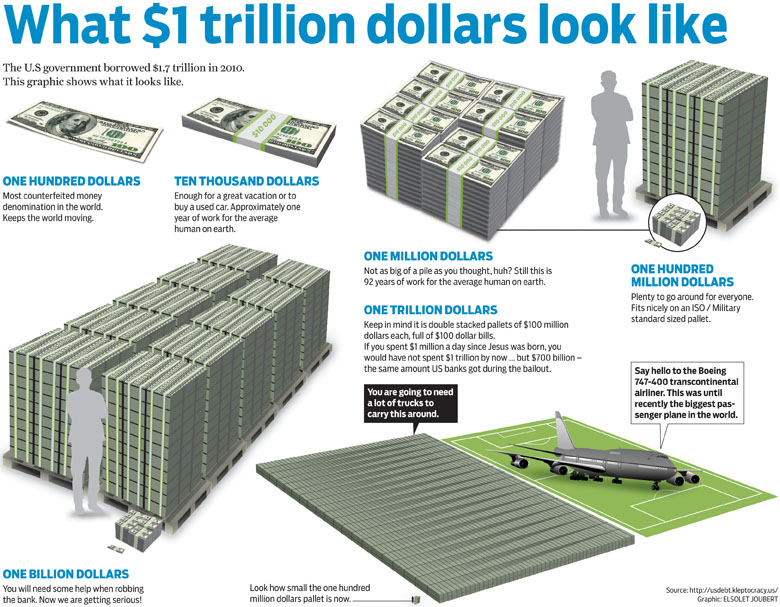
But the Great Society was supposed to be a grand experiment and experience. It was supposed to wipe out poverty, end all legal forms of discrimination and segregation, and make the opportunity to achieve the modern American Dream of a middle-class life or better a reality for almost everyone. And it would’ve worked, too, if it weren’t for those pesky kids, um, LBJ’s pesky decisions to go escalate the Vietnam War. The war cost $269 billion in 1970 dollars, or, $1.7 trillion in 2015 money.

What $1 trillion looks like,  January 2012. (http://usdebt.kleptocracy.us/ via Elsolet Joubert).

What $1 trillion looks like, January 2012. (http://usdebt.kleptocracy.us/ via Elsolet Joubert).

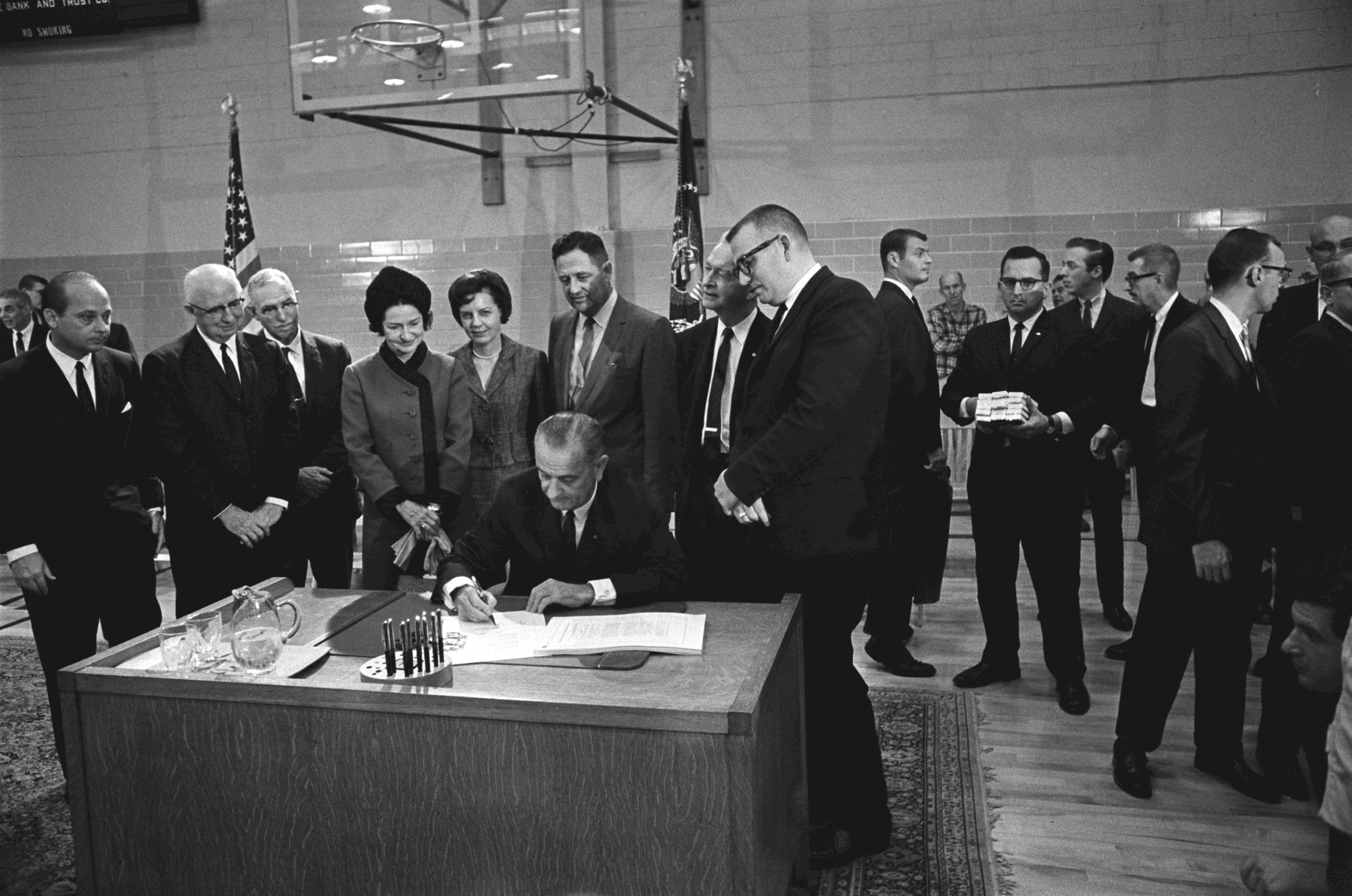
Yet it’s not exactly true that it would’ve worked, or that it didn’t work. You see, despite the best efforts of an elitist, right-wing and ineffectual federal government corrupted by plutocrats and its military-industrial complex, the Great Society programs are still with us. For starters, there’s the Elementary and Secondary Education Act (ESEA) of 1965 and Higher Education Act (HEA) of 1965, the first one LBJ signed into law on April 11, fifty years ago on this date.

Without these laws, the modern era of educating millions of children whom states, colleges and universities and local school districts had shut out of K-12 and higher education wouldn’t have occurred at all. With federal government dollars and regulations, not to mention a foundation in the form of the Civil Rights Act of 1964, ESEA and HEA in its initial years provided real hope for “an equal opportunity for all.”

This wasn’t and isn’t just about Jim Crow and racial discrimination and segregation, whether de jure in the South or de facto via residential segregation and redlining in cities outsider the South. This became about opening doors for whole classes of children and adults that had been steel-reinforced-concrete walls before.

Harvard Economics Professor Roland Fryer at American Enterprise Institute, Washington, DC, July 16, 2007. (http://aei.org).

Harvard Economics Professor Roland Fryer at American Enterprise Institute, Washington, DC, July 16, 2007. (http://aei.org).

Technocrats and other public education crises gurus of the likes of Michelle Rhee, Wendy Kopp, and Roland Fryer would have us think that the $600 billion that states and the federal government via ESEA spend on public education each year is all wasteful spending. They say that we have about the same number of students in schools today (about 50 million) as we did in 1970.

Of course, they don’t tell the whole story, leaving out a lot of truth for us. For in my lifetime, students with disabilities (cognitive, physical, emotional) have gone from shutout to included in public schools as part of the Americans with Disabilities Acts of 1989 and 1992, and of course, ESEA. Students with language proficiency issues became part of the public education fabric under the Lau v. Nichols Supreme Court decision in 1974, with funds provided out of ESEA. Charter schools, magnet programs, school counseling, and so many other things that have made public education more inclusive and also more expensive wouldn’t have been possible without ESEA. Meaning, technocrats, that public education was severely underfunded and exclusionary prior to 1965.

The HEA hasn’t had the same effect, primarily because we as a society tend to think of higher education as a luxury and not a right, and have fought hard to make many colleges and universities the exclusive domain of “the worthy.” Still, without HEA and the Pell Grants (named after former Sen. Claiborne Pell (D-RI, 1961-97), the Supplemental Educational Opportunity Grant, the Direct Student Loan Program, and the Supplemental Loan Program, a whole generation of low-income and middle-income families wouldn’t have been able to send their kids to college. They were often the first in their families, as Blacks, as women, as Black and Latino women, as working-class Whites with only a steel mill or automobile plant in their future. At least back then.

President Lyndon Johnson signing the Higher Education Act of 1965, Master's Gymnasium, Texas State University, San Marcos, TX, November 8, 1965. (http://smmercury.com/). In public domain.

President Lyndon Johnson signing the Higher Education Act of 1965, Master’s Gymnasium, Texas State University, San Marcos, TX, November 8, 1965. (http://smmercury.com/). In public domain.

There’s also the National Endowment for the Arts and the National Endowment for the Humanities, the Head Start program, and Congress passing Medicaid and Medicare, providing health coverage for the elderly and deeply poor for the first time. And all in 1965.

What does all of this mean in 2015? That despite the mountains of books written on LBJ and the failures of the War on Poverty and the Great Society, that these programs worked and work in ameliorating poverty and expanding opportunities for all, even across racial lines. Would they have been more effective with more investment, especially in those initial years, when Vietnam became more of a priority? No doubt.

That’s just it, though. Most Americans — who despite the fears of Ted Cruz and Rudy Giuliani, remain White — didn’t care about poverty and racism and the structures that supported it then, and they mostly don’t care now. They want Congress to work, just not on issues that would permanently unbalance the social hierarchy that they’ve assumed as their birthright for two centuries.

Hence the constant one-two punch of a relationship they see with poverty and those with black and brown skin. Hence the constant carping about taxes and needless spending on food stamps and welfare, even though the true face of government assistance in the US has always been a haggard White one. Hence the constant media tropes about hard work and so-called self-made men worth billions making their money without holding a college degree, who somehow can tell the rest of us how to live. The Great Society, for all of LBJ’s foibles and its weaknesses, remains a great legacy of what America could be, and at times, has been, but overall, refuses to be.

Technocrats, Journalists, and Statistical Orgies

25 Sunday Jan 2015

Posted by decollins1969 in 1, Academia, Boy @ The Window, culture, Eclectic, eclectic music, High Rise Buildings, Politics, Pop Culture, race, Work, Youth

≈ Leave a comment

Tags

Black-White Wealth Gap, Closing the Achievement Gap, Culture of Poverty, Journalists, Michael A. Fletcher, Misery Statistics, Objectivity, Orgy, Poverty, Prince George's County, Racial Disparities, Racism, Rich-Poor Wealth Gap, Statistical Orgy, Statistics, Technocrats, The Washington Post


Front page of The Washington Post, January 25, 2015. (http://newseum.org).

Front page of The Washington Post, January 25, 2015. (http://newseum.org).

There are times when I wonder if exposing racial and socioeconomic disparities is really an eye-opening and life-changing exercise. Or, does the exposure merely serve to confirm the racial and socioeconomic stereotypes that Americans hold against each other? In today’s Washington Post, on the front page and above the fold, there’s an article titled “A Shattered Foundation,” with the smaller type “African Americans who bought homes in Prince George’s [County] have watched their wealth vanish.”

Above the title and subtitle are a series of charts and statistics noting the national chasm of a gap in total wealth accumulation between Black families ($95,300) and White families ($678,800). The theme here is that since the housing bust and subsequent Great Recession, the burgeoning Black middle class of PG County has fallen on desperate times, as home equity — their main means for accumulating wealth — for tens of thousands of these families caved in on them.

Michael A. Fletcher’s article is pretty even-handed. But this is kind of tangential to my larger point. In any given three-month period of my life, for nearly as long as the forty years and two months I’ve known how to read in full sentences, I could’ve scanned at least one article or book about the cruelties of structural racism and capitalism. Even if I’d never grown up in poverty or experienced racial discrimination, there have been enough articles, op-eds, books, book chapters, poems, short stories, plays, letters to the editor and scripts written about disparities to cover the US a mile deep in paper. The fact is, no statistics on growing wealth gaps and persistent racial gaps in wealth and education have led to lasting changes in policies, politics or institutional structures substantial enough to end poverty or ameliorate the most vicious forms of racism in this country.

Hand reaches out from big heap of crumpled papers, January 25, 2015. (http://galleryhip.com).

Hand reaches out from big heap of crumpled papers, January 25, 2015. (http://galleryhip.com).

Then again, there are some folks whose business depends on mantras like the “growing wealth gap” or “closing the achievement gap…as the civil rights issue of our time.” Technocrats in corporate education reform, social scientists in the world of conservative and “libertarian” think-tanks, neoliberals and so-called American liberals in search of compromises to strengthen the American middle class. They all turn to these statistics to tell their stories, to sell their experiments and their research, to promote their politics. It’s as if the statistics on racial and socioeconomic gaps in wealth and education provided a high, like crystal meth or a speedball. In some ways, for these groups, a five-story brothel in which they practiced S&M would be more appropriate for their use of misery statistics.

I am hardly suggesting The Washington Post‘s Fletcher or I or any other journalist, academician or writer should cease making their points with statistics about racial and socioeconomic disparities. But America’s poor and poor people of color or falling-through-the-cracks middle class are far more than “statistics on a government chart” (to quote The Police’s “Invisible Sun“). These are real people with families and lives, people who represent generations of lives in which this construct of racial capitalism has limited their choices and their opportunities, whether they believe in fate or not. So-called objectivity has never been sufficient, and neither have been statistics. What we need is a revolution in thought and in action, quiet or otherwise.

← Older posts
Newer posts →

Boy @ The Window: A Memoir

Boy @ The Window: A Memoir

Places to Buy/Download Boy @ The Window

There's a few ways in which you can read excerpts of, borrow and/or purchase and download Boy @ The Window. There's the trade paperback edition of Boy @ The Window, available for purchase via Amazon.com at http://www.amazon.com/Boy-Window-Donald-Earl-Collins/dp/0989256138/

There's also a Kindle edition on Amazon.com. The enhanced edition can be read only with Kindle Fire, an iPad or a full-color tablet. The links to the enhanced edition through Apple's iBookstore and the Barnes & Noble NOOK edition are below. The link to the Amazon Kindle version is also immediately below:

scr2555-proj697-a-kindle-logo-rgb-lg

Boy @ The Window on Amazon.com: http://www.amazon.com/Boy-The-Window-Memoir-ebook/dp/B00CD95FBU/

iBookstore-logo-300x100

Boy @ The Window on Apple's iBookstore: https://itunes.apple.com/us/book/boy-the-window/id643768275?ls=1

Barnes & Noble (bn.com) logo, June 26, 2013. (http://www.logotypes101.com).

Boy @ The Window on Barnes & Noble: http://www.barnesandnoble.com/w/boy-the-window-donald-earl-collins/1115182183?ean=2940016741567

You can also add, read and review Boy @ The Window on Goodreads.com. Just click on the button below:

Boy @ The Window

Twitter Updates

Tweets by decollins1969
  • RSS - Posts
  • RSS - Comments

Archives

  • June 2025
  • April 2023
  • September 2022
  • August 2022
  • July 2022
  • June 2022
  • May 2022
  • April 2022
  • March 2022
  • January 2022
  • December 2021
  • November 2021
  • October 2021
  • September 2021
  • August 2021
  • July 2021
  • June 2021
  • April 2021
  • March 2021
  • February 2021
  • January 2021
  • December 2020
  • November 2020
  • October 2020
  • September 2020
  • August 2020
  • July 2020
  • May 2020
  • April 2020
  • March 2020
  • January 2020
  • December 2019
  • November 2019
  • August 2019
  • July 2019
  • June 2019
  • May 2019
  • April 2019
  • March 2019
  • February 2019
  • January 2019
  • December 2018
  • November 2018
  • October 2018
  • September 2018
  • August 2018
  • July 2018
  • June 2018
  • May 2018
  • March 2018
  • February 2018
  • January 2018
  • December 2017
  • November 2017
  • October 2017
  • September 2017
  • August 2017
  • July 2017
  • June 2017
  • May 2017
  • April 2017
  • March 2017
  • February 2017
  • January 2017
  • December 2016
  • November 2016
  • October 2016
  • September 2016
  • August 2016
  • July 2016
  • June 2016
  • May 2016
  • April 2016
  • March 2016
  • February 2016
  • January 2016
  • December 2015
  • November 2015
  • October 2015
  • September 2015
  • August 2015
  • July 2015
  • June 2015
  • May 2015
  • April 2015
  • March 2015
  • February 2015
  • January 2015
  • December 2014
  • November 2014
  • October 2014
  • September 2014
  • August 2014
  • July 2014
  • June 2014
  • May 2014
  • April 2014
  • March 2014
  • February 2014
  • January 2014
  • December 2013
  • November 2013
  • October 2013
  • September 2013
  • August 2013
  • July 2013
  • June 2013
  • May 2013
  • April 2013
  • March 2013
  • February 2013
  • January 2013
  • December 2012
  • November 2012
  • October 2012
  • September 2012
  • August 2012
  • July 2012
  • June 2012
  • May 2012
  • April 2012
  • March 2012
  • February 2012
  • January 2012
  • December 2011
  • November 2011
  • October 2011
  • September 2011
  • August 2011
  • July 2011
  • June 2011
  • May 2011
  • April 2011
  • March 2011
  • February 2011
  • January 2011
  • December 2010
  • November 2010
  • October 2010
  • September 2010
  • August 2010
  • July 2010
  • June 2010
  • May 2010
  • April 2010
  • March 2010
  • February 2010
  • January 2010
  • December 2009
  • November 2009
  • October 2009
  • September 2009
  • August 2009
  • July 2009
  • June 2009
  • May 2009
  • April 2009
  • March 2009
  • February 2009
  • January 2009
  • December 2008
  • November 2008
  • October 2008
  • September 2008
  • August 2008
  • July 2008
  • June 2008
  • May 2008
  • April 2008
  • March 2008
  • February 2008
  • January 2008
  • December 2007
  • November 2007
  • October 2007
  • September 2007
  • August 2007
  • July 2007
  • June 2007

Recent Comments

MaryPena's avatarMaryPena on My Day of Atonement/Bitter Hat…
decollins1969's avatardecollins1969 on No Good Teaching Deed Goes…
Mary Rose O’Connell's avatarMary Rose O’Connell on No Good Teaching Deed Goes…

NetworkedBlogs on Facebook

NetworkedBlogs
Blog:
Notes From a Boy @ The Window
Topics:
My Life, Culture & Education, Politics & Goofyness
 
Follow my blog

616 616 East Lincoln Avenue A.B. Davis Middle School Abuse Academia Academy for Educational Development AED Afrocentricity American Narcissism Authenticity Bigotry Blackness Boy @ The Window Carnegie Mellon University Child Abuse Class of 1987 CMU Coping Strategies Crush #1 Crush #2 Death Disillusionment Diversity Domestic Violence Economic Inequality Education Family Friendship Friendships Graduate School Hebrew-Israelites High-Stakes Testing Higher Education History Homelessness Humanities Humanities Program Hypocrisy Internalized Racism Jealousy Joe Trotter Joe William Trotter Jr. K-12 Education Love Manhood Maurice Eugene Washington Maurice Washington Misogyny Mother-Son Relationship Mount Vernon High School Mount Vernon New York Mount Vernon public schools Multiculturalism MVHS Narcissism NFL Pitt Pittsburgh Politics of Education Poverty President Barack Obama Race Racial Stereotypes Racism Relationships Self-Awareness Self-Discovery Self-Reflection Sexism Social Justice Teaching and Learning University of Pittsburgh Violence Whiteness Writing

Top Rated

Blog at WordPress.com.

  • Subscribe Subscribed
    • Notes from a Boy @ The Window
    • Join 103 other subscribers
    • Already have a WordPress.com account? Log in now.
    • Notes from a Boy @ The Window
    • Subscribe Subscribed
    • Sign up
    • Log in
    • Report this content
    • View site in Reader
    • Manage subscriptions
    • Collapse this bar
 

Loading Comments...