• About Me
  • Other Writings
  • Interview Clips
  • All About Me: American Racism, American Narcissism, and the Conversation America Can’t Have
  • Video Clips
  • Boy @ The Window Pictures
  • Boy @ The Window Theme Music

Notes from a Boy @ The Window

~

Notes from a Boy @ The Window

Tag Archives: Mount Vernon public schools

The Visit

18 Tuesday Oct 2011

Posted by decollins1969 in 1, Boy @ The Window, culture, Eclectic, Marriage, Mount Vernon High School, Mount Vernon New York, race, Youth

≈ Leave a comment

Tags

616, 616 East Lincoln Avenue, A.B. Davis Middle School, Boy @ The Window, Crush #1, Emotions, Humanities, Interviews, Memoirs, Memory Lane, Mount Vernon New York, Mount Vernon public schools, Relationships, Youth


Close Encounters Of The Third Kind (1977) Screen Shot, October 18, 2011. (Donald Earl Collins).

Over the course of a decade, between January ’02 and December ’09, I exchanged emails, interviewed by phone and visited nearly thirty former classmates, teachers and administrators from Mount Vernon, New York public schools for my book manuscript Boy @ The Window. Not to mention family members willing to be honest about life in Mount Vernon and 616 East Lincoln Avenue. Not to mention my family intervention nearly ten years ago. The saying “you can’t go home again” is such an understatement.

At times, my walks down memory lane have left me verklempt, or feeling that I’ve entered the Twilight Zone. Meeting with a former tormentor from my Davis Middle School days was strangely pleasant, while talking with my class’ salutatorian was both illuminating and a little weird. I met with some former Humanities classmates who seemed more ornery than former Georgetown coach John Thompson after a sleepless night dealing with idiot refs. I talked on the phone with former classmates and teachers who either couldn’t remember details about our school, or flat-out lied about some of the things they had said to me and about me twenty-five or thirty years ago.

But of all of those meetings and time machine-like encounters, none made me more nervous than my interview with Crush #1 five years ago. I was nervous for any number of reasons. I hadn’t seen her in nearly seventeen years when I went to see her in the Old South in October ’06. My plan was to be up front about my crush, my borderline love for her back in ’82, which would make anyone anxious or feel really silly, I guess.

And I was stuck at this point of my memoir, the part about how my crush on Crush #1 came about, and how abuse and domestic violence at 616 brought it to a crashing end, between March and August ’82. I knew what to write. I just didn’t want to relive all of those emotions, as they led me to seriously consider suicide within a year and half of all of that.

Salvador Dali, The Persistence of Memory (1931), October 18, 2011. (http://www.moma.org). In public domain.

What I walked into on that rainy October ’06 day mirrored my own Silver Spring, Maryland residence. It was a modern-day carpeted flat in an apartment-home townhouse, appearing as lived-in by the scattered toys in the living room and foyer. Crush #1 was making stew peas. If I’d been in another frame of mind, a look of shock would’ve come over me. Crush #1 cooking? Put that above the fold of the New York Times! Yet since I was willing to expect anything from the new Crush #1, I wasn’t all that surprised.

Her husband greeted me warmly, which was a bit of a surprise. I’ve been around enough couples to get a sense of how these kinds of interactions are supposed to work, regardless of sexual orientation. It’s where the husband or the “man of the house” sizes me up, regardless of my intentions. Crush #1 walked out of the kitchen and gave me a hug, the kind friends give each other after seventeen years apart.

Then I met her daughter, this chip off the not-so-old block, a great combination of Crush #1’s and her husband’s facial features. She was an adorable four-year-old wanting to learn about the world around her. We shook hands and made animal noises for about two minutes. I felt at home. It was as if I walked into my apartment and had to chance to see myself, my wife, and my kid in action, with sarcastic banter and silly noises included.

There was so much to discuss and so little time. So I started where the twelve-year-old in me would’ve if he had a voice. I asked about her mother, her family, her growing-up years in New York, her time in school and in Humanities. What came out was so different from what I expected because it was so similar to my experience and because our similar experiences occurred during the same time frame.

It was all so normal, so typical for people from our respective backgrounds, so, well,  human. I liked this real-life version of Crush #1, and not in that twelve-year-old, I-think-I’m-in-love kind of way. That was something else I really didn’t expect. Not only did I enjoy the visit. I enjoyed getting to know one of my ex-classmates for the first time.

Humanities: First Contact, Full Circle

09 Friday Sep 2011

Posted by decollins1969 in 1, Academia, Boy @ The Window, culture, Eclectic, Hebrew-Israelite, Mount Vernon New York, New York City, Patriotism, Politics, Pop Culture, race, Religion, Youth

≈ Leave a comment

Tags

616, 616 East Lincoln Avenue, 7S, 9/11, A.B. Davis Middle School, American Arrogance, Arrogance, Creme de la Creme, Cultural Divide, Diversity, Elistism, First Contact, Gifted Track, Hebrew-Israelite, Humanities, Humanities Program, Hyper-Patriotism, Middle School, Mount Vernon New York, Mount Vernon public schools, Naivete, Patriotism, Preteen, Racial Strife, Racial Undercurrents


Creme Anglaise in a pitcher next to a ladle, the closest thing I could find to represent my foodie image of "creme de la creme," the mantra of Humanities administrators during my six years of travails, September 9, 2011. (Source/http://recipetips.com).

It’s been thirty years exactly since I made the most horrible set of first impressions in my forty-one years of life. My first day of seventh grade at A.B. Davis Middle School in Mount Vernon, New York was also my first day in the Humanities Program, a magnet program for the gifted track (and also the way the powers that were decided to desegregate the school district in ’76).

But it was so much more than that, for better and certainly for worse, at least for me. It was the flip side of a coin that represented the worst six years of my life (the coin’s other side being my life at 616 with what can only be loosely called my family). But it was also the six years of my life that made the past three decades of success, struggle, more success, and more struggles possible.

Humanities: First Contact, Lessons

Humanities: First Contact, Lessons

After putting together Boy @ The Window — in which a large measure of text was devoted to what occurred with and around me during my time in Humanities, one question still remains. Did my time in Humanities, with my classmates, teachers, counselors and principals have to be as difficult as they were — and not just for me? There’s no real way to answer that question, because “of course” is a cold and callous answer, while “of course not” belies the important psychological changes that made me a better thinker, student, writer and person as a result. But if I could, I’d build a time machine, jump into my eleven-year-old version of myself, and make sure to have my dumb ass take my kufi off for my first day of school in 7S. At least then, I would’ve been normal-weird, instead of standoff-ish weird.

My main problem, though, was that I arrogantly believed I was the smartest person in the world. I paid dearly for having that kind of naiveté, to the point where certain classmates still see me as that idiotic preteen, and refuse to see me any other kind of way. Too bad for them, for I know I’ve long since changed.

That day, at least for the past decade, has also reminded me of another beautifully warm, powder-blue sky day that turned tragic. With two days before we reach ten years since 9/11, I think about the way I used to be, and see so many similarities to how we see ourselves as a nation. “We’re #1,” we love to say, even though we’ve long since stopped being #1 in so many respects. We have the largest economy and military, the largest debt, make the largest contribution to climate change and pollution, and complain the most about how the rest of the world isn’t like us.

Like me three decades ago, America is naive and arrogant. And unfortunately, it faces competitors — some as unfeeling as my more entitled or more unscrupulous classmates — who are clobbering us in education, economic growth, health care, social welfare, even in protecting their citizens and their citizen’s freedoms. It’s sad, because there are millions of people now experiencing the severe fall into poverty — and all of the pressures that places on marriages, parenting and children — that I faced, very unsuccessfully at first, thirty years ago.

Humanities: Full Circle, Thoughts

Humanities: Full Circle, Thoughts

I’ve come full circle. Between the struggle to find a home for Boy @ The Window and my struggle to continue to do meaningful work as a writer and educator, I find that even on my worst days, my best days thirty years ago were a thousand times worse.  My first contact with academic competition, Whiteness and diversity, racial strife, religious differences and straight-up elitism is what has given me a greater appreciation for who I’ve become since that sunny day so many years ago. As well as how much I’ve gained.

Peaking As A Sixth Grader

24 Friday Jun 2011

Posted by decollins1969 in 1, Boy @ The Window, Eclectic, race, Religion, Youth

≈ Leave a comment

Tags

616, 616 East Lincoln Avenue, 6th Grade, Ana Gasteyer, Arrogance, Celine Dion, Dental Award, Graduation Day, Hebrew-Israelites, Humanities, Humanities Program, Kufi, Mount Vernon New York, Mount Vernon public schools, Naivete, Reggie Jackson, Sixth Grade, Starling Churn, Straight-A Student, William H. Holmes Elementary, Writing


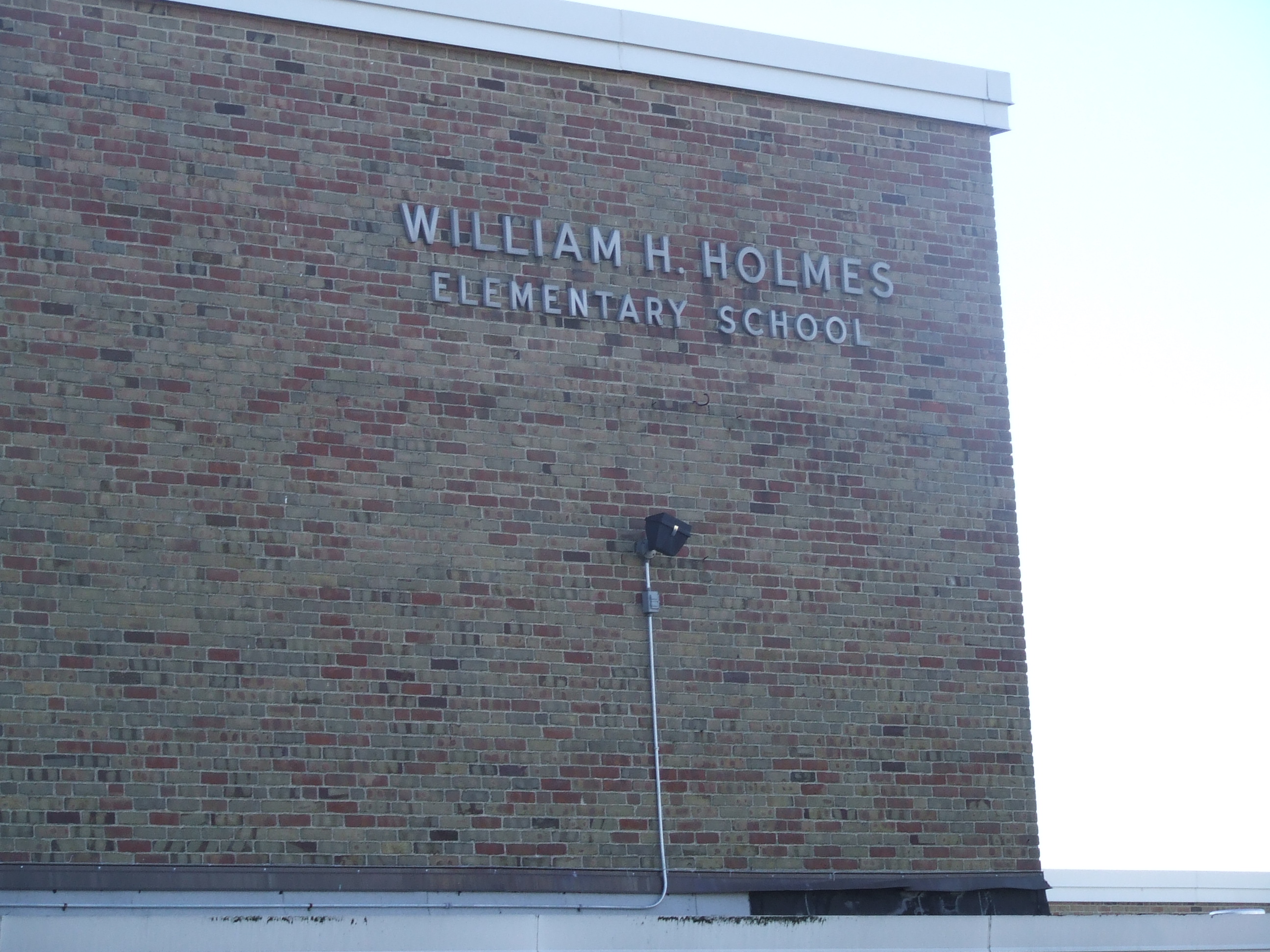
William H. Holmes Elementary, Mount Vernon, NY, November 23, 2006. Donald Earl Collins

I can’t believe that this Sunday’s the thirtieth anniversary of me and my cohort finishing sixth grade. Thirty years since I first felt that feeling of reaching the mountaintop, as if I’d accomplished something in my life. Three decades since the last time I was unknowingly naive and unnecessarily arrogant.

Combined with having become a part of a bizarre religion, I had a new point of view on my life by the time graduation day on Friday, June 26 of ’81 rolled around. My family was now two months into our serving Yahweh, and I was six weeks removed from losing my best friend Starling because of this nutty religion. It was a time in which I felt overwhelmed about my present and immediate future. Yet I acted as if I’d published a book that was both a New York Times Bestseller and a Pulitzer Prize winner. I couldn’t have been more pumped up if I’d been on Walter White’s blue crystal meth from Breaking Bad.

But I had some basis for seeing myself as great. As far as I was concerned, I was the unofficial valedictorian of my elementary school class at William H. Holmes Elementary, the ’50s structure next to the big Presbyterian church on North Columbus and East Lincoln Avenue. My teachers had chosen me out of all of my classmates to speak at our graduation ceremony. On that last Friday in June ’81, I served as the opening speaker, introducing the city councilman who served as our keynote. I even wrote the short introduction that I delivered on that wonderful day.

I firmly believed that no one in the world was smarter than me. In the three years prior to graduation, I had straight A’s. Still, that paled in comparison to my performance my last year of elementary school. I figured out that I earned an A on forty-eight out of fifty-two quizzes and tests in sixth grade. The lowest grade I earned that year was an 88 on a spelling quiz. I’d won a Dental Awareness Month award for Best Poster and came in second in a city-wide writing contest that included essays from high school students. If anyone had known how big my head had grown that year, they would’ve stuck a pin in my temple just to let the air out.

It wouldn’t have been any funnier if I’d pretended I was Mr. October himself, Reggie Jackson, saying his

Ana Gasteyer as Celine Dion, SNL, April 6, 2002. Source: http://snl.jt.org

words, “Sometimes I underestimate the magnitude of me.” Or, really, Ana Gasteyer (of SNL fame) playing Celine Dion and calling herself the “greatest singer in the world.” I wanted so badly to see myself and to be seen by others as special that I forgot about the work it had taken to move my reading and writing skills up seven grade levels in a little more than two and a half years.

It was a great day, sunny and low-eighties with cumulus clouds and low humidity. But knowing what life at 616, Mount Vernon and Humanities had in store for me over the next eight years, I should’ve smelled the ozone in the air. I should’ve looked more closely at my sky, to see the flocks of seagulls flying away from the shoreline. I should’ve sensed — and did, on a very low-frequency — the hurricane gaining strength in my life. I chose to ignore it, hoping that I could fake my way through it while resting on my laurels.

To think that it would’ve been another nine years before I felt like I could take on the world again. If someone had told me in June ’81 that I’d have to wait until my junior year at Pitt to have a straight-A semester, I would’ve grabbed a gun and shot myself through the heart with a Colt .45. And I would’ve made sure that the bullet I used had a hollow tip. If I’d known that I’d have to wait a full decade to be comfortable with myself as myself in all of my goofy-ness again, I probably would’ve cried on the spot.

All I can hope these days is that I can help my son strike a balance between being cool and being cool with himself, especially once he approaches his teenage years. I don’t want him spending a decade trying to figure himself out all by himself.

Humanities Origins: Goofball

05 Thursday May 2011

Posted by decollins1969 in 1, Boy @ The Window, culture, Eclectic, race, Religion, Youth

≈ Leave a comment

Tags

Academic Identity, Class, Della Bryant, Friendships, Growing Pains, Hebrew-Israelites, Humanities, Humanities Program, Identity, Italian, Languages, Mount Vernon New York, Mount Vernon public schools, Ostracism, Preteen, Race, Sixth Grade, SRA Test, Straight-A Student, William H. Holmes Elementary


X-Men Origins: Wolverine Poster, May 12, 2009. http://movies.yahoo.com/photos/movie-stills/gallery/1263/xmen-origins-wolverine#photo41

This week marks thirty years since I learned that my sixth grade teacher Mrs. Della Bryant had recommended me and two other classmates into Mount Vernon public schools’ Humanities Program. It was a great achievement, but it felt bittersweet at the same time. For it came a week after the end of my friendship to Starling, and three weeks into the bizarre-ness of being a Hebrew-Israelite. It was the beginning of six long years of learning life’s lessons the hard way, like a soft-shelled crab in the middle of a hailstorm.

====================

Mrs. Bryant had pushed for my acceptance into Mount Vernon’s Humanities Program at the beginning of May. Between my SRA scores (Reading, 12th grade level; Math, 11th grade level), three years as a straight-A student and her recommendation, it was pretty much a slam dunk. This meant that I could spend as much as the next six years taking accelerated courses with the brightest students in Mount Vernon. When Mrs. Bryant told me about her recommendation, I bounced the seven blocks home to tell Mom about the opportunity. Mom asked, “Are you sure about this?,” as if I was planning to become a Catholic priest. I responded with an emphatic, sportscaster Marv Albert-esque “Yes!”

Of all the things that I was first asked to do after Mrs. Bryant told me that I was in, I had to pick a language of study — for the next four years! I didn’t think much past the next couple of weeks, except when waxing philosophic, so four years might as well have been forty. I opted for Italian over Spanish and French, mostly because of my love for spaghetti and pizza and Italian cheeses, a desire to visit Little Italy, and because the other six Holmes School classmates who had been accepted into Humanities chose the other languages.

====================

But with the loss of Starling as my best friend, it was hard to celebrate without feeling lost and loss. I hoped that, at the least, that I could connect with the other kids that would make up Humanities at A.B. Davis Middle School in seventh grade. I hoped that I would do as well as I’d done between fourth and sixth grade, that I could prove myself as among the smartest — if not the smartest — kid in the program. Most of all, I hoped that I’d be challenged in ways that fourth, fifth and sixth grade hadn’t.

A.B. Davis Middle School, Humanities Wing, November 21, 2006. Donald Earl Collins.

As it turned out, I was challenged. Thoroughly. My future and now former classmates challenged all of my assumptions about people and life, about how the world works, about relationships, tolerance and acceptance. I faced challenges that I couldn’t have possibly anticipated three decades ago.

I attended William H. Holmes Elementary, a school that was 99.8 Black and Latino, with high number of kids from poor and low-income backgrounds. I assumed that with a greater degree of intelligence came a greater degree of acceptance, but I hadn’t learned anything about eugenics or Nazism as an intellectual practice yet. (Not that Humanities was an incubator of Nazism, but it shows how poor my assumptions were.) I was arguably the highest performing student in my class, but that’s like saying that I’d won a hot-dog eating contest against a two-year-old.

But that was all to come with the transition to middle school, the economic collapse of my family and the puberty process. In the moment of origin in May ’81, I was on an academic high that I wouldn’t achieve again until my junior year at the University of Pittsburgh. I was a newborn baby, beautiful yet naive, not yet ready for the torture of the growing pains that would follow.

This…Is…Jeopardy?

18 Friday Mar 2011

Posted by decollins1969 in 1, Academia, Boy @ The Window, culture, Politics, Pop Culture, Youth

≈ Leave a comment

Tags

Alex Trebek, Grading, History Trivial, Humanities, Humanities Program, Instructor, Jeopardy, Mount Vernon High School, Mount Vernon public schools, Pitt, Professor, Students, Teaching, Teaching and Learning, Teaching Assistant, Teaching History, University of Pittsburgh


This Is Jeopardy?

This Is Jeopardy?

The first class I ever taught was as a guest lecturer my first semester of grad school at Pitt. Larry Glasco, my advisor, had me take charge of his History of Black Pittsburgh course one November Thursday in ’91. It was a task made easier by the showing of the documentary Wylie Avenue Days during the two-hour and twenty-minute class. With about a quarter of the class composed of adult learners, including several who’d grown up in the Hill District during the time frame covered in the documentary, it became a real conversation about experiences with racism and inter- and intra-racial relations in Pittsburgh in the first two-thirds of the twentieth century. It was a great introduction to teaching.

In the two decades since, I’ve often wish that all of my classes had the kind of intellectual balance that my first class possessed and I as instructor helped provide. Sadly, many times in my journey as a teacher, instructor and professor, I’ve had students who showed as much interest in discussing the hows and whys of history as Glenn Beck of FOX News Channel has in science and the truth.

These students, about one out of every six I’ve taught over the past two decades (about 300 in all) have taken up an amount of my teaching time. They’ve groused about the assignments I’ve given them to do, the exam questions I’ve created to assess their knowledge. They’ve gnashed their teeth about my grading, about how tough I supposedly can be in assigning grades. With papers, short-answer exams, multiple choice tests, even fill-in-the-blank quizzes. There’s been no pleasing this group of students.

Until now. It occurred to me about a year ago. I was watching yet another episode of Jeopardy, and it swung to a history category, one that I would’ve swept if I’d been on the show that day or anytime since the show came back on the air in ’85. That then reminded me of something one of my Humanities classmates from Mount Vernon High School said to me soon after finding out that I was ranked fourteenth in the Class of ’87. “All you can do with history is play Jeopardy,” he said with derision.

That memory then reminded me of how teachers like our seventh through tenth grade social studies teachers taught us. Whether Court, Demontravel (who I’ll talk about later this year), Flanagan or Zini, the idea was to be able to spit out as many date-connected facts, names and battles as quickly and accurately as possible. With no thought about human nature, empathy with the struggles of individuals and groups, or any attempt to explain the processes behind why something happened, like slavery, Jim Crow or Indian removal, for instance.

To satisfy my students who want a high school version of history, I need to come to class next semester and draw a gigantic box on the chalkboard. In that box, I’ll draw six columns by five rows of smaller boxes within this huge box. In the top box of each column, I’ll write in a topic area, say, “Colonial America,” “Expanding Voting Rights,” “‘Eq’-words,” “Myths & Legends,” “My Founding Fathers,” and “Rebel Yell” (this on the American Revolution and the Civil War) across all six. There wouldn’t be any money values, just number values, from 1 to 5 from the easiest to most difficult questions. Daily Doubles would help struggling students make up points, while Double Jeopardy sessions would help the best students solidify their A’s.

This is a great idea, isn’t it? My least interested students can then pretend that they’re learning history by being entertained and memorizing history trivia. My students who need to learn or sharpen their critical thinking skills will find themselves sorely neglected. And my most interested students would be ready to strangle me.

In the end, it’s not worth it to turn my part in this profession into Sony Entertainment, especially for a minority of the students I’ve taught over the years. Besides, I can’t afford to buy Watson to impress my students, or at least, have someone pretend that they have the artificial intelligence of IBM’s Watson by sounding like a teraflop supercomputer.

The Contrarian One

15 Tuesday Feb 2011

Posted by decollins1969 in 1, Boy @ The Window, Christianity, culture, Eclectic, eclectic music, Mount Vernon High School, Politics, race, Religion, Youth

≈ Leave a comment

Tags

A.B. Davis Middle School, Anonymity, Contrarian, Dune, Humanities, MacGyver, Mount Vernon High School, Mount Vernon New York, Mount Vernon public schools, Privacy, Richard Dean Anderson, Sting, troubled youth


Sting as Feyd-Rautha in David Lynch's Dune, July 20, 2007. TAnthony. Qualifies as fair use under US Copyright laws because this is a low-resolution screenshot illustrating a character which is a subject in the article that uses it, and by nature no free version exists.

For the most part, I have protected the privacy of my childhood classmates and friends by not calling them by their actual names in this blog. I have used pseudonyms, code names like “Crush #1” or “Crush #2,” code letters based on their position in my cohort or how I saw them growing up. I don’t apply these rules to the adults I interacted with because they were public figures, authority figures really. That’s been one of my unofficial journalist-esque rules for this blog, and I’m sticking to it.

In this case, however, I’m pushing the envelope a bit. Even though I have no plans on using a name today, I’m using some initials of a former classmate that almost none of my readers will know. But for those that went through Humanities with me and read this post, the initials may make this person obvious. This classmate — and friend, I guess — was one of the few free thinkers I knew in my Humanities days. He wasn’t just smart — we were all smart. He fashioned himself an intellectual, someone who either thought against the grain or refused to get caught up in what he considered the daily stupid stress sandwich of grades, awards, and more grades that was our magnet program. Most of all, the kid was a contrarian, the one and only JD.

Just like with most of my classmates, I didn’t get along with him at first. He immediate came off to me as someone who saw himself above the fray, maybe even better than the rest of us. It didn’t help that JD introduced himself as “half-Russian, one-quarter French and one-quarter English” that first day of seventh grade nearly thirty years ago. For most of the first year, I thought that his persona was an act, an attempt at upper-crust coolness. I didn’t understand how girls — White and Black — liked this guy, zits and all.

Richard Dean Anderson as MacGyver, May 18, 2007. Source: http://www.just-whatever.com/2007/05/18/what-would-macgyver-do/

At various times during our Humanities days, his looks were compared to Sting, and later, MacGyver — actor Richard Dean Anderson’s most famous character. I’m sure that he liked the comparisons. If you meshed the two, you’d maybe end up with a JD, but probably about two inches shorter than the real life person.

At first, I didn’t think that he was all that smart. After all, we ended up in a fight over my outburst of laughter because he said Australians spoke “Australian” instead of English. I always wondered why we fought this week, of all weeks (twenty-nine years ago this week, by the way). It wasn’t as if we hadn’t annoyed each other before. Eventually I did begin to get Mr. OshKosh, as I called JD in my mind — and occasionally, out loud — during our Davis years. He was a deliberate individual, often trying too hard to be one. It was obvious to me that he thought the whole Humanities thing was a joke, that he found school a Sisyphean effort.

Still, even though we had fought — and I somehow managed to win against the karate kid — we’d get caught up in weird intellectual conversations about communism versus capitalism, or about America’s endless cultural corruption. JD would always take the most extreme view of America the ugly, leaving me no choice other than to argue with him or to agree with him, depending on the severity of his argument. He was a devout atheist, at least in argument, indirectly questioning my Hebrew-Israelite and, later on, early Christian beliefs. That he made me question what I thought I believed and what I actually did believe, I appreciated even at the time. I also got the sense that he was constantly questioning his world while casting doubt in my direction.

It was part of the dissatisfaction that I sensed in him all during our six years together in Mount Vernon’s schools. I didn’t know how much of it came from his home life, but my guess by the middle of high school was that we only saw a tip of a very large iceberg for six and half hours a day and five days a week. What was more obvious, at least to me, was that he seemed comfortable in his uncomfortability at Mount Vernon High School, with the flight of his White classmates in ninth and tenth grade, with the hypocrisy of Humanities as academic light in a sea of ignorance while ignoring the elephants in the room.

Despite holding many of his most private cards to his vest, JD was probably one of the five most honest people I knew in all of my education. His body language, his lack of interest in most things in the classroom, his varied cultural and intellectual interests outside of the classroom, his dating habits all but betrayed his closed-mouthness when it came to who he understood himself to be. He was, and has remained, my favorite contrarian.

The Turd Dream

24 Monday Jan 2011

Posted by decollins1969 in 1, Boy @ The Window, culture, Eclectic, Mount Vernon High School, Politics, Pop Culture, race, Religion, Youth

≈ Leave a comment

Tags

1980s culture, A.B. Davis Middle School, Board of Education, Boy @ The Window, City Hall, Coming-of-Age, Dreams, Friendship, Growing Up, Hebrew-Israelites, Interpreting Dreams, Mount Vernon public schools, Nightmares, Pittsburgh, Race, Racial Strife, Russet Potatoes, Socioeconomic Strife, University of Pittsburgh


Russet Potatoes, January 23, 2011. Source: http://www.Fotosearch.com. Qualifies as fair use under US Copyright laws because of the limited use of picture and because its use is for illustrative purposes directly related to the topic of this post.

I found myself at a party one cold and starry evening, standing in an equally cold kitchen. It was really bright in the kitchen, almost to the point of overpowering my eyes. The walls and cabinets were all-white, the counters made of formica, and the floor light blue-and-white tiled. This was in stark relief from the adjacent living room. It was in a red-brown, ’70s dimmed-light den mode, with beads hanging over the doorway leading out of the kitchen to it. It was the kind of party I never had the chance to go to in high school.

But everyone was there. Even people I hadn’t seen since my Davis Middle School days. The class valedictorian and salutatorian, the affluent and middle class types who went to Pennington Elementary, Crushes #1 and #2, members of the Italian Club, and so many others were there. Two of them were peeling potatoes and throwing them into big pots of boiling water. They started slicing and dicing them, laughing as they were throwing the pieces into the bubbling clean and clear liquid.

Except these weren’t potatoes. These were turds, each shaped like a large Russet, being peeled and chopped, looking white but quickly turning crappy-brown upon contact with the air. The two turd-peelers shared the boiled and mashed turds with my former classmates, who were smiling in glee and eating them up with delight. I then looked at this six-foot, trapezoidal pyramid of a rack in the middle of the super-bright kitchen. It was full of turds, stacked on each one of its seven levels. It was enough to feed the guests several times over.

When I sat up from this dream in my small room in a shared row house on Welsford in Pittsburgh and found myself in the present, the first Saturday of February ’90, I gave Mom a call. I told her about the dream in all of its strange details. I asked her what she thought of it. “You’re friends are full of shit,” she said. After laughing so hard that I nearly rolled out of bed, I said, “That can’t be. It’s got to be more complicated than that.”

Yet I knew that Mom was absolutely right. Most of the people I knew during my years in Humanities — classmates, teachers, administrators, family members and neighbors — were full of crap when it came to me. I certainly included myself in that category. I might’ve made sure of or accidentally given myself a couple of enemas between 7S and the University of Pittsburgh. But it would’ve been hard to stay clean around all the filth on which we dined growing up. This was thanks in large measure to our community leaders and all of the racial and socioeconomic strife that was part of everyday politics and conversations at school and at city hall.

What Mom said was ironic, too. For better and mostly for worse, Mom, father and ex-stepfather had crapped up our lives with their baggage. The turds from their lives were the reason why my dreams had grown to be so vivid, so complicated by the time I reached adulthood. Mostly, my dreams and nightmares brought me to anger, as if someone were trying to steal my life from me, which, as it turned out, was how I felt most of the time when I was awake. And that also made me resolute whenever I left my dreams for the conscious world.

This was the final break between my immediate past of Mount Vernon, the whole Hebrew-Israelite and Humanities thing, and all of the ridicule, ostracism, poverty and abuse that came with those things. My past experiences were all now a part of my dream world. It was an occasional reminder that I wasn’t really myself in the relatively recent past.

That was nearly twenty-one years ago. Except for the occasional email from an ex-teacher or ex-Humanities classmate, the only reminders I have of the time before I became myself again are my Boy @ The Window project and manuscript. And though I don’t necessarily see the people whom I grew up with and around as being full of crap these days, I do see how our collective community baggage would make it difficult for many of us to find our way, our calling. Even in the midst of the best education our city had to offer.

← Older posts
Newer posts →

Boy @ The Window: A Memoir

Boy @ The Window: A Memoir

Places to Buy/Download Boy @ The Window

There's a few ways in which you can read excerpts of, borrow and/or purchase and download Boy @ The Window. There's the trade paperback edition of Boy @ The Window, available for purchase via Amazon.com at http://www.amazon.com/Boy-Window-Donald-Earl-Collins/dp/0989256138/

There's also a Kindle edition on Amazon.com. The enhanced edition can be read only with Kindle Fire, an iPad or a full-color tablet. The links to the enhanced edition through Apple's iBookstore and the Barnes & Noble NOOK edition are below. The link to the Amazon Kindle version is also immediately below:

scr2555-proj697-a-kindle-logo-rgb-lg

Boy @ The Window on Amazon.com: http://www.amazon.com/Boy-The-Window-Memoir-ebook/dp/B00CD95FBU/

iBookstore-logo-300x100

Boy @ The Window on Apple's iBookstore: https://itunes.apple.com/us/book/boy-the-window/id643768275?ls=1

Barnes & Noble (bn.com) logo, June 26, 2013. (http://www.logotypes101.com).

Boy @ The Window on Barnes & Noble: http://www.barnesandnoble.com/w/boy-the-window-donald-earl-collins/1115182183?ean=2940016741567

You can also add, read and review Boy @ The Window on Goodreads.com. Just click on the button below:

Boy @ The Window

Twitter Updates

Tweets by decollins1969
  • RSS - Posts
  • RSS - Comments

Archives

  • June 2025
  • April 2023
  • September 2022
  • August 2022
  • July 2022
  • June 2022
  • May 2022
  • April 2022
  • March 2022
  • January 2022
  • December 2021
  • November 2021
  • October 2021
  • September 2021
  • August 2021
  • July 2021
  • June 2021
  • April 2021
  • March 2021
  • February 2021
  • January 2021
  • December 2020
  • November 2020
  • October 2020
  • September 2020
  • August 2020
  • July 2020
  • May 2020
  • April 2020
  • March 2020
  • January 2020
  • December 2019
  • November 2019
  • August 2019
  • July 2019
  • June 2019
  • May 2019
  • April 2019
  • March 2019
  • February 2019
  • January 2019
  • December 2018
  • November 2018
  • October 2018
  • September 2018
  • August 2018
  • July 2018
  • June 2018
  • May 2018
  • March 2018
  • February 2018
  • January 2018
  • December 2017
  • November 2017
  • October 2017
  • September 2017
  • August 2017
  • July 2017
  • June 2017
  • May 2017
  • April 2017
  • March 2017
  • February 2017
  • January 2017
  • December 2016
  • November 2016
  • October 2016
  • September 2016
  • August 2016
  • July 2016
  • June 2016
  • May 2016
  • April 2016
  • March 2016
  • February 2016
  • January 2016
  • December 2015
  • November 2015
  • October 2015
  • September 2015
  • August 2015
  • July 2015
  • June 2015
  • May 2015
  • April 2015
  • March 2015
  • February 2015
  • January 2015
  • December 2014
  • November 2014
  • October 2014
  • September 2014
  • August 2014
  • July 2014
  • June 2014
  • May 2014
  • April 2014
  • March 2014
  • February 2014
  • January 2014
  • December 2013
  • November 2013
  • October 2013
  • September 2013
  • August 2013
  • July 2013
  • June 2013
  • May 2013
  • April 2013
  • March 2013
  • February 2013
  • January 2013
  • December 2012
  • November 2012
  • October 2012
  • September 2012
  • August 2012
  • July 2012
  • June 2012
  • May 2012
  • April 2012
  • March 2012
  • February 2012
  • January 2012
  • December 2011
  • November 2011
  • October 2011
  • September 2011
  • August 2011
  • July 2011
  • June 2011
  • May 2011
  • April 2011
  • March 2011
  • February 2011
  • January 2011
  • December 2010
  • November 2010
  • October 2010
  • September 2010
  • August 2010
  • July 2010
  • June 2010
  • May 2010
  • April 2010
  • March 2010
  • February 2010
  • January 2010
  • December 2009
  • November 2009
  • October 2009
  • September 2009
  • August 2009
  • July 2009
  • June 2009
  • May 2009
  • April 2009
  • March 2009
  • February 2009
  • January 2009
  • December 2008
  • November 2008
  • October 2008
  • September 2008
  • August 2008
  • July 2008
  • June 2008
  • May 2008
  • April 2008
  • March 2008
  • February 2008
  • January 2008
  • December 2007
  • November 2007
  • October 2007
  • September 2007
  • August 2007
  • July 2007
  • June 2007

Recent Comments

decollins1969's avatardecollins1969 on No Good Teaching Deed Goes…
Mary Rose O’Connell's avatarMary Rose O’Connell on No Good Teaching Deed Goes…
Lyndah McCaskill's avatarLyndah McCaskill on The Raunchiest of Them Al…

NetworkedBlogs on Facebook

NetworkedBlogs
Blog:
Notes From a Boy @ The Window
Topics:
My Life, Culture & Education, Politics & Goofyness
 
Follow my blog

616 616 East Lincoln Avenue A.B. Davis Middle School Abuse Academia Academy for Educational Development AED Afrocentricity American Narcissism Authenticity Bigotry Blackness Boy @ The Window Carnegie Mellon University Child Abuse Class of 1987 CMU Coping Strategies Crush #1 Crush #2 Death Disillusionment Diversity Domestic Violence Economic Inequality Education Family Friendship Friendships Graduate School Hebrew-Israelites High-Stakes Testing Higher Education History Homelessness Humanities Humanities Program Hypocrisy Internalized Racism Jealousy Joe Trotter Joe William Trotter Jr. K-12 Education Love Manhood Maurice Eugene Washington Maurice Washington Misogyny Mother-Son Relationship Mount Vernon High School Mount Vernon New York Mount Vernon public schools Multiculturalism MVHS Narcissism NFL Pitt Pittsburgh Politics of Education Poverty President Barack Obama Race Racial Stereotypes Racism Relationships Self-Awareness Self-Discovery Self-Reflection Sexism Social Justice Teaching and Learning University of Pittsburgh Violence Whiteness Writing

Top Rated

Blog at WordPress.com.

  • Subscribe Subscribed
    • Notes from a Boy @ The Window
    • Join 103 other subscribers
    • Already have a WordPress.com account? Log in now.
    • Notes from a Boy @ The Window
    • Subscribe Subscribed
    • Sign up
    • Log in
    • Report this content
    • View site in Reader
    • Manage subscriptions
    • Collapse this bar
 

Loading Comments...