• About Me
  • Other Writings
  • Interview Clips
  • All About Me: American Racism, American Narcissism, and the Conversation America Can’t Have
  • Video Clips
  • Boy @ The Window Pictures
  • Boy @ The Window Theme Music

Notes from a Boy @ The Window

~

Notes from a Boy @ The Window

Tag Archives: Hypermasculinity

A Brief History of My “Virginity”

01 Friday Sep 2017

Posted by decollins1969 in 1, Boy @ The Window, Christianity, culture, Eclectic, Jimme, Marriage, Mount Vernon New York, Pittsburgh, Pop Culture, race, Religion, University of Pittsburgh, Youth

≈ Leave a comment

Tags

425 South Sixth Avenue, 616, 616 East Lincoln Avenue, A.C. Green, Abuse, Black Masculinity, Boyz n the Hood (1991), Cuba Gooding Jr., Dating, Evangelical Christianity, Falsehoods, Feminism, HBO, Hypermasculinity, Insecure (2016- ), Molestation, Obaa Boni, Patriarchy, Pitt, Relationships, Sensuality, Sexism, Sexuality, Tré, Virginity, Womanism, Yvonne Orji
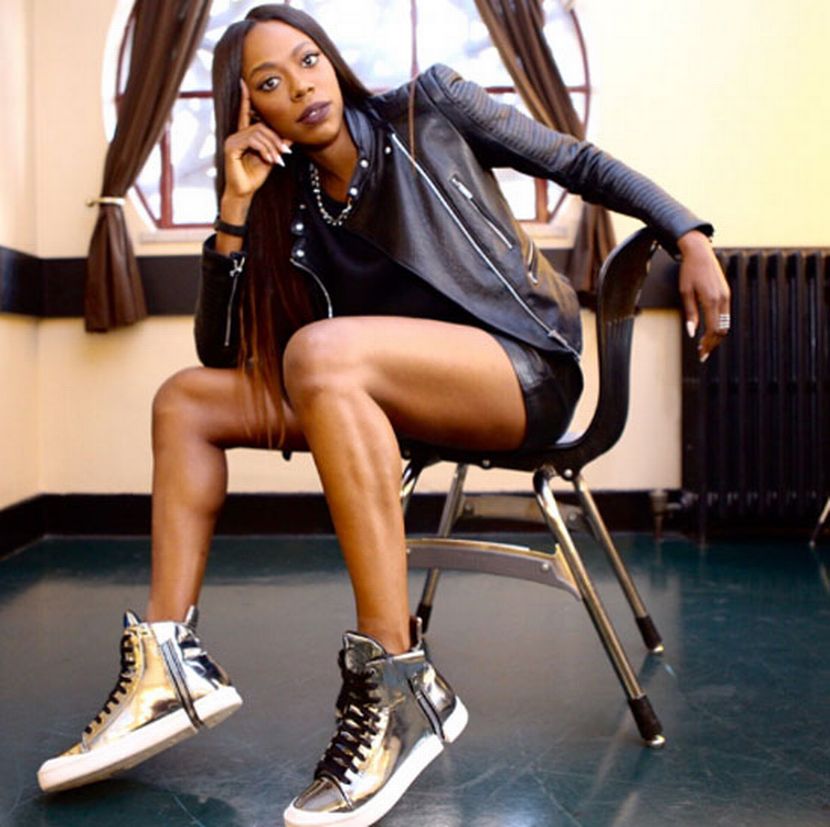

Nigerian-American actor Yvonne Orji, who plays Molly on the HBO series Insecure (2016-), August 15, 2017. (http://www.sowetanlive.co.za/).

Yvonne Orji, one of the lead actors from the HBO series Insecure, has revealed the fact that she is a thirty-three year-old virgin in recent weeks. But Orji has in fact spoken about her virginity several times over the past year, something I was surprised to learn (that she had spoken so much about it, not the fact of it). Some folks on social media have applauded Orji’s stance on her sexuality, while others like womanist Obaa Boni derided Orji’s adherence to her virginity as “patriarchal.”

Screen shot of @obaa_boni tweets re: Yvonne Orji’s virginity, August 23, 2017. (Donald Earl Collins via http://twitter.com).

Let me first say that there’s nothing wrong with virginity, celibacy, or promiscuity. So as long as it’s transparent, healthy, and done with a full understanding of why one has moved in a certain direction sexually. The problem is, people often do the wrong things for the right reasons and the wrong things for the wrong reasons. Especially in a world where gratuitous sensuality is everywhere, fake-sex-porn is ubiquitous, and social norms remain hostile and puritanical. This is especially so in the US, where the distance between healthy sexuality and where many Americans are with their sexuality is about the same as between a racism-less society and the virulent racism that is truly all-American.

I was once Yvonne Orji, believing that maintaining my virginity kept me in a state of purity, if not in a physical sense, then certainly in a spiritual one. There were several reasons beyond “being pure in God’s eyes,” or saving myself for the right person, though, that I emphasized my virginity.

Screen shot of Cuba Gooding, Jr. as Tré in Boyz n the Hood (1991). (http://mentalfloss.com).

My top two reasons were practical ones. As the second of six kids growing up at 616 in Mount Vernon (my Mom remarried and had my younger brothers and sister between the time I was nine-and-a-half and fourteen-and-a-half years old), I didn’t want to become a father, especially a teenage father. Like Tré from Boyz n the Hood (1991), I didn’t want to be stereotypically Black and male, to make a baby when I had no means to take care of it, to impregnate another person when I wasn’t sure if I’d make it to thirty. Also, STDs scared the crap out of me, especially AIDS. I was smart enough even at fifteen to know that AIDS wasn’t a “gay disease,” that it could infect anyone, especially anyone without protection.

But the fact was, I had lost pieces of my virginity long before I tried to find a state of purity. I had already been sexually molested before I hit my seventh birthday. Any number of teenage girls at 616 had attempted to come on to me before I had started my first day of high school. Heck, my father had hired a prostitute to get rid of my penetrative virginity the month of my seventeenth birthday!

Beyond that, masturbation from the time I was thirteen, porn mags between birthdays seventeen and nineteen, the occasional date at Pitt, where kisses, petting, and touching was involved. I had pretty much lost my sexual virginity by the time I was nineteen, and yet I didn’t really know how to be me sexually at all. So when I finally did start hooking up with folks for purely sexual purposes, it was an emotionally messy dance, between religious guilt, occasional actual pleasure, and lots of frustration in between. It wasn’t until I was twenty-four where I felt fully comfortable with myself sexually, and even then, I had another decade of pseudo-evangelical, patriarchal, and puritanical bullshit to get over.

Which is why I rarely gave anyone any advice about what to do or how to be on the sexual side of relationships before my mid-thirties, especially when asked. Have sex at fifteen with a partner of the same age whom cares about and respects you? Sounds fine. Stay celibate for ten years? Okay. Have fuck buddies for a couple of years? Sure! Remain a virgin like former NBA player A. C. Green until you turn thirty-eight? Whatevs!

Former NBA Ironman A.C. Green, Time Warner Cable Media Upfront Event, “Summertime is Cable Time,” Hollywood, CA, May 3, 2011. (Toby Canham/Getty Images; http://zimbio.com).

My Black masculinity shouldn’t have been defined by evangelical White Christian notions of virgin purity, any more than it should’ve been by how frequently I penetrated a woman. My relationship with God should’ve never been about some fucked up notion of sexual purity. It is way too easy to let Western culture screw each of us up, with the result that it will take way too many years to find our sexual equilibrium. For so many, that day of balance between sexual freedom and mature responsibility will never come.

Just realize that being a virgin doesn’t make one special, and having a regular rotation of trusted sexual partners doesn’t make one a slut or a stud. As a culture, we are both obese and anorexic when it comes to sexuality and sexual activity. We imagine it too much, do it too little, and often do it incorrectly and for the wrong reasons. No wonder America is such an angry place, with so many believing in an angry God!
Lit on Moonlight

16 Monday Jan 2017

Posted by decollins1969 in 1, Boy @ The Window, culture, Eclectic, Hebrew-Israelite, Jimme, Marriage, Mount Vernon High School, Mount Vernon New York, Movies, My Father, New York City, Politics, Pop Culture, race, Religion, Sports, Youth

≈ Leave a comment

Tags

A.B. Davis Middle School, Barry Jenkins, Black Males, Black Masculinity, Bullying, Chiron, Coming-of-Age, Faggot, Hypermasculinity, Italian Club, Mahershala Ali, Manhood, Moonlight (2016), Mount Vernon High School, MVHS, Rage, Sexual Orientation


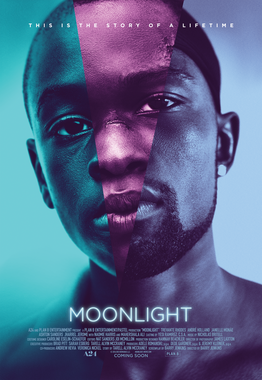
Moonlight (2016) poster, October 2016. (Film Fan via Wikipedia; orig. A24). Qualifies as fair use under US copyright law as illustration of subject/review of film.

Moonlight (2016) poster, October 2016. (Film Fan via Wikipedia; orig. A24). Qualifies as fair use under US copyright law as illustration of subject/review of film.

I finally, finally saw Moonlight with the wife and son at AFI Silver Spring yesterday, months after the in-crowd had already seen it and attempted to spoil it for the rest of us. It was excellent. The cinematography, the loud and incredible silences, the small moments, when actors just being in the moment with their facial expressions did more than any dialogue could to move me and anyone else watching. Mahershala Ali was only in five scenes. But his first scene set the tone for the whole movie. As Juan, Ali channeled both the need for hard hypermasculinity and the vulnerable fragility of such in just one scene. His time with the youngest version of Chiron made me laugh, cry, sad, and angry, and left me wondering if I’ve seen this much intimacy between Black man and Black boy on screen before. I know I have (Antwone Fisher, The Wire, even Roots comes to mind), but on-screen doesn’t reflect this anti-stereotypical slice of truth nearly as often as it should.

Moonlight snap shot (cropped), Mahershala Ali and Alex Hibbert, October 23, 2015. (http://variety.com).

Moonlight snap shot (cropped), Mahershala Ali and Alex Hibbert, October 23, 2015. (http://variety.com).

Yet I was also not as impressed as I expected to be. Not because I didn’t like the performances — I loved them. I thought every actor in the film was legit, every scene was moving in some way. Naomie Harris I’ve been fond of for years, André Holland and Janelle Monáe’s work I already knew, and Trevante Rhodes and Barry Jenkins, well, the two need bigger platforms for doing more great work. Moonlight wasn’t a film. It was a collage, a kaleidoscope of precious moments, blood-churning episodes, and tender images. Jenkins’ treatment of coming-of-age, Black boyhood into manhood, and Black masculinity, hypermasculinity, and vulnerability was avant-garde.

Still, I felt like I’d seen Moonlight before. Or, really, lived parts of Moonlight in my own past. No, I did not befriend an older, Afro-Cuban crack dealer in 1990s Miami, have a drug-addicted, abusive mother, or have a group of kids chase me around and beat me up off and on for ten years. But I didn’t look at the world the same way as my peers. I didn’t sound like a Noo Yawker, walk and talk and code switch like Denzel Washington, or try to fit in like so many of my 616 neighbors and my Mount Vernon school mates during my growing up years. And I paid for it, dearly, with few friends before I turned eleven, and no friends in the six years before I went off to the University of Pittsburgh.

But on Chiron and that most pernicious issue of hypermasculinity, the need to be hard all the time, I’ve been there too. I’d been called “faggot” (or in my father’s case, “faggat”) enough times to occasionally question my own sexual orientation growing up. My senior year at MVHS one day, I hit a three-run homer during a softball game in gym class. It wasn’t the first time I’d done that. But for one Jamaican dude, me drilling a ball 350 feet off his slow fastball was an affront. He called me a “faggot” after the game, and threatened to wait for me after school with a machete to chop me, adding “bumbaclot mon” at the end of his threat. I left school as normal and waited for him. He was lucky he didn’t show up that day.

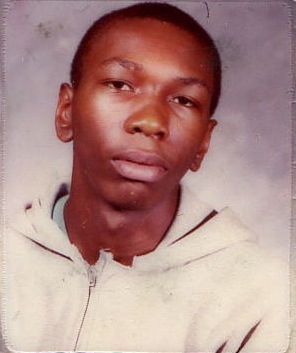
Me at 16, Mount Vernon High School ID, Mount Vernon, New York, November 1985, March 21, 2012. (Donald Earl Collins).

Me at 16, Mount Vernon High School ID, Mount Vernon, New York, November 1985, March 21, 2012. (Donald Earl Collins).

You see, my rage didn’t need years to build up. All before I’d finally lose it one day, and take out a bully with a wooden chair and break it across his back, like the way Chiron did at the end of II of Moonlight. I didn’t have bullies at school per se. There were a couple I dealt with at 616, but they weren’t regular. Many folks would make a crack, but generally left me along. Any bullying I faced in high school was completely random and momentary, because I stood up for myself. Because if I could face down a six-foot-one, Isshin-ryn black belt of an abuser in my idiot stepfather Maurice, a stupid football player was gonna get hurt trying to hurt me.

No, the bullying I faced was in middle school, from a bunch of overwhelmed and racist Italian classmates in Humanities. I’ve named them in Boy @ The Window and here in this blog before. Alex, Anthony N., Andrew, Anthony Z., etc, the Italian Club. That things were much, much worse at home meant that I saw them as background noise. There was always a part of me, though, that had enough rage, even in seventh grade, to take a desk and smash Anthony N.’s head in with it until his fuckin’ Italian brains spread out all over the floor and walls!

I ended up beating up a wannabe bully in JD that year instead. I won kufi battles in eighth and ninth grade. I wore a blank face that most of my more dumb ass classmates interpreted as a smile. I made plans to get out, because I never wanted to fit in. I was already awake, coping with the day-to-day, but in it for the long-term. I had that President Barack Obama, audacity-of-hope-beyond-failure, beyond reality thing goin’. When I saw Chiron as played by Ashton Sanders, I wanted to hug him, beat up his bullies for him, and tell him that you can love who you want to love, even if they never love you back. And to always, always be your best self, and not some “I don’t want to feel pain again” version.

A Big Wheel and Recovered Memories, Part Two

06 Saturday Aug 2016

Posted by decollins1969 in 1, Boy @ The Window, culture, Eclectic, Jimme, Marriage, Mount Vernon New York, My Father, New York City, Pop Culture, race, Youth

≈ Leave a comment

Tags

425 South Sixth Avenue, 616, 616 East Lincoln Avenue, Anti-Gay Slur, Big Wheel, c, Chevy Malibu, Dukey, Father-Son Relationship, Heterosexism, Hypermasculinity, Molestation, Mother-Son Relationship, Nathan Hale Elementary, Parenting, Pedophilia, Recovered Memories, Sexual Assault, Signs of Trauma


It took me until three weeks after the sex assault on the Nathan Hale ES playground before I told my parents. Those three weeks are a blur, but not the blur that the incident with the light-skinned teenager and his three friends would become until three weeks before my forty-fifth birthday

At the beginning of August ’76, my Mom and my dad Jimme were having another one of their vicious arguments. It was that Saturday afternoon when I finally learned that my Mom had filed for a divorce the month before. Anyway, I somehow managed to get myself in the middle of that argument. I complained that Darren’s bigger butt had been the final straw for my Big Wheel. It had broken in half after he tried to ride it earlier that week.

“I told him, it says ‘90-lb limit’,”  I said to my Mom (which I pronounced as “ninety lebs”) while pointing at the inscribed warning label on my now broken Big Wheel, crying.

“You broke that shit weeks ago!,” my Mom yelled.

“I didn’t break it. A bunch of kids did,” I said.

“And you didn’t try to stop ‘em?,” Mom asked.

“I did try to stop ‘em. But they took it and one of them stuck a pee-pee in my mouth,” I explained.

“I done told you not to leave the house when I’m not here! That’s what you get for not listenin’!,” my Mom screamed.

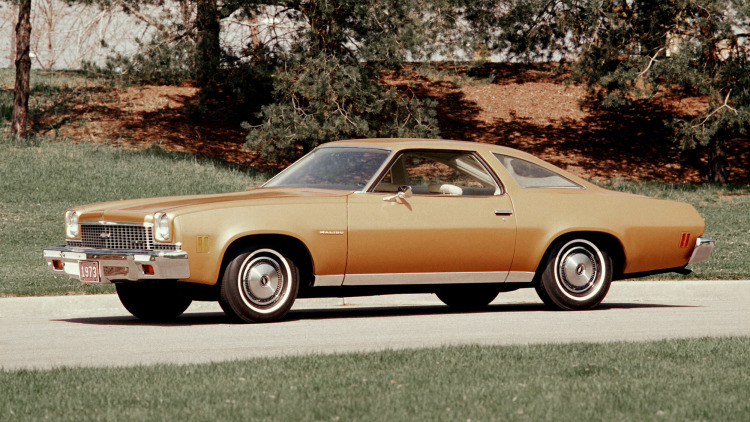
I was so shocked by how angry she was. I was mad, too. I didn’t think. I just ran out the house and out into the middle of the street. I saw a tan Chevy Malibu coming down the street and I just stood there.

1973 tan-ish Chevy Malibu, August 5, 2016. (http://www.autoblog.com).

1973 tan-ish Chevy Malibu, August 5, 2016. (http://www.autoblog.com).

The older, salt-and-pepper bearded and balding Black man didn’t slow down until he realized I wasn’t planning to move. He slammed on the brakes and came to a stop about three feet in front of me. The man put his car in park and got out. He then slammed his driver’s side door really hard, and yelled, “Boy, what’s wrong with you? Are you tryin’ to get yourself killed? Where’s your mama?”

He grabbed me by the back of my chocolate-brown t-shirt and made me show him where I lived. We marched upstairs to the second-floor, where he proceeded to explain my suicidal actions. My Mom then took the older man’s belt and beat me with it in front of him, with Darren and Jimme watching. Afterwards, she said “Thank you” to the older man, and then sent me to bed without dinner. “Don’t you EVER do that again!,” she screamed.

Nine months after that bicentennial summer, we moved across town to 616 East Lincoln, a three-in-one, five-story Tudor-style apartment complex. After a summer camp at Darren’s Clear View School in Dobbs Ferry, we went outside on 616’s grounds for the first time, in August ’77. The kids at 616 and 630 East Lincoln chased us around the vast two-building complex while throwing rocks at us. Scared, we hid behind the big, wooden, dark-brown front door and huddled, hoping that the kids wouldn’t find us.

Instead, a couple of young Black Turks saw us and took us upstairs to my Mom and my eventual stepfather Maurice. The two young men said that they saw us doing “the dukey.” I had no idea what they were talking about. All I knew was that my Mom and stepfather proceeded to whip us as if we’d gone to the grocery store and stolen $100 worth of candy and soda. Both “dukey” and “faggot” were part of my vocabulary — again.

The mind of a child is a strange place. Mine was no different. For years afterward, I’d managed to forget these most painful memories. I managed to bury them without burying all of my other memories, so many memories that I have for the last forty-one out of my forty-five years. I somehow didn’t remember the connections between my Big Wheel, the light-skinned teenager and standing in the middle of South Sixth, waiting to be run over. I didn’t remember my Mom’s response to finding out that her six-year-old son had been sexually assaulted.

It’s ironic. Ironic because I’ve already written my coming-of-age memoir in Boy @ The Window. I spent the better part of a decade researching, writing and revising it before self-publishing it in 2013. I included excruciating details about my family, my Mom, my father Jimme. I included as many relevant and embarrassing events as I could about how I became the person I always wanted to be. And with all that work, I never remembered the moment a teenager forced his penis tip into my mouth.

Buildings/dream in state of collapse, via Inception (2010), August 5, 2016. (http://www.cinemablend.com).

Buildings/dream in state of collapse, via Inception (2010), August 5, 2016. (http://www.cinemablend.com).

I only remembered during the holidays in 2014. One night in early December, I had a really bad trying-to-escape dream — again. This time, though, I remembered the taste of a penis in my mouth, and then I saw the light-skinned teenager. Even in my dream, I said, “That’s him. That’s it.”

After I woke up, a flood of images erupted in my brain. The Chevy Malibu and me standing in the street. Seeing the light-skinned kid who  assaulted me on the playground at 616 on the same day the other kids chased Darren and me around the building while pelting us with pebbles and rocks. The wall of fear that my Mom had on her face when the neighbors told her that they thought Darren and me were “faggots” because we were standing so close to each other that we looked like we were “doing the dukey.”

The now-remembered incident explained so much. My Mom’s constant fear that I’d turn out gay. My father Jimme constantly calling me a “faggat” (as he pronounced it when he was drunk) whenever I stepped out of line or looked at people the wrong way. My Mom giving my one-time idiot stepfather Maurice carte blanche to “turn” me and Darren “into men” through Isshin-ryu karate and draconian physical abuse. Me being terrified at times when around Black guys on the basketball courts or in other social setting. My looking at young women from afar, attainable and yet all but unattainable for me. The sheer desire to save the people in my life from violence and destruction, especially my Mom and Darren, but the inability to do either.

My family’s fear of the mere possibility that I or my brother Darren could be gay drove many of their measures of physical, verbal and emotional abuse. So much so that they ignored all the signs of my actual abuse. Like standing in middle of the street to get run over by a car, were just considered “defiant” or “weird.” Or with me constantly chewing my fingernails right down to nail bed. Or me constantly stuffing sandwiches and other food down into the recesses of my winter coats, having already ripped out the pockets, and leaving the food there. Or the day I stood on Nathan Hale’s playground during recess in May ’77, when I took some string from my red and blue-striped t-shirt, gradually unraveled it, and swallowed nearly a third of it. My Mom figured she could beat the “something’s wrong with you, fool” out of me. My father calling me a “faggat” from the time I turned fourteen was just tough love, not a form of abuse piled on top of abuse.

Now that I remember everything about the physical and the sexual abuse, what do I do next? It’s been forty years since I found out how horrible life could be. It’s not as if I’ll be able to track down and then beat up the light-skinned teenager, who’s now in his early fifties, assuming he’s still alive.

I could start by revising Boy @ The Window. I wasn’t just weird because I wore a kufi, spoke too slowly, or grew up with weird people. I wasn’t just a child of poverty, abuse, and divorce. I was also a sexual abuse victim, all but completely unacknowledged, and yet such a major part of the story.

Forgiving my abuser could be at the top of the list. It would be difficult to be angry at someone whom I’d forgotten about for nearly four decades. But you know what? If I could just punch him in the throat and then knee him in the balls until one fell out and rolled down the street, that would give me some satisfaction.

Mostly, I’m just satisfied that I know my past in full. I already paid the bill. Now that I know what I paid for, I can move forward. I can look at my past, present, and future with more sanity than I thought possible.

Boy @ The Window Origins: Meltzer Conversations

14 Saturday Mar 2015

Posted by decollins1969 in 1, Academia, Boy @ The Window, Carnegie Mellon University, Christianity, culture, Eclectic, Hebrew-Israelite, Mount Vernon High School, Mount Vernon New York, Pittsburgh, Politics, Pop Culture, race, Religion, Youth

≈ Leave a comment

Tags

Benetton Group, Black Elites, Black Identity, Black Masculinity, Black Migration, Black Washington, CMU, Colorism, Dissertation, Doctoral Thesis, Harold Meltzer, Harper Stewart, Humanities, Hypermasculinity, Inequality, Internalized Racism, Logic, Manhood, Multiculturalism, Personal Insights, Race, Racial Identity, Rationalism, Self-Discovery, Social Injustice, Taye Diggs, The Best Man (1999), Washington DC, X-Men Origins: Wolverine (2009)


X-Men Origins: Wolverine (2009) scene, where Wolverine frees mutants kept as experiments by Colonel William Stryker , March 13, 2015. (http://cdn.collider.com/).

X-Men Origins: Wolverine (2009) scene, where Wolverine frees mutants kept as experiments by Colonel William Stryker , March 13, 2015. (http://cdn.collider.com/).

Of all the tangents I took related to writing Boy @ The Window, the most direct path that got me to write a memoir about the most painful period in my life was through several conversations with my dear teacher, friend and mentor in the late Harold Meltzer. I’ve discussed bits and pieces of some of those conversations here and in longer form in Boy @ The Window. It’s still worth rehashing some of those conversations, at least in terms of what was and wasn’t good advice, as well as in explaining how some of the main themes of the memoir developed over time.

As I wrote in Boy @ The Window, though my “first interview with him was in August ’02,” the first time “we discussed the possibility of me doing Boy @ The Window went back to February ’95.” Meltzer had been retired from teaching about a year and a half, while I was beginning the heavy lifting phase of my doctoral thesis, “living in DC for a couple of months while hitting the archives and libraries up for dusty information. In need of a writing break, I gave him a call on one cold and boring Saturday afternoon.”

It was in response to a letter he sent congratulating me. I’d recently published an op-ed in my hometown and county newspaper, “Solving African American Identity Crisis.” I was writing about issues like using the n-word, hypermasculinity, and internalized racism in the short and, for me at least, dummied down piece. Somehow our discussion of that piece led to a discussion of my classmate Sam. Did I really want to spend an hour and a half talking with Meltzer about Sam and some of my other Humanities classmates and their possible identity issues, considering some of my own serious growing pains — the Hebrew-Israelite years, my suicide attempt, my Black masculinity and manhood issues? Absolutely not!

But I learned quite a bit about how I might want to approach writing Boy @ The Window through that phone call. Not because Meltzer had given me any sage advice, which he didn’t, or because he revealed things to me that I shouldn’t have come to learn during our conversation, which he definitely did.

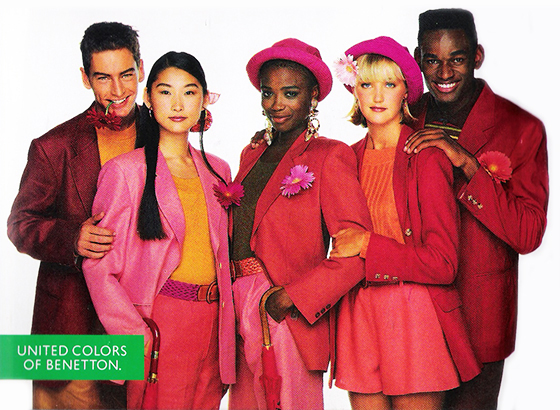
Benetton ad, 1980s, January 2013. (http://fashionfollower.com/).

Benetton ad, 1980s, January 2013. (http://fashionfollower.com/).

No, it was the idea that a lot of the things that I had pursued as a historian and researcher were things that came out of my experiences growing up. Multiculturalism as a historical phenomenon (at least if one linked it to cultural pluralism)? Can anyone say Humanities Program, or, what I used to call “Benetton Group” when we were at A.B. Davis Middle School? Writing about African American identity issues? Obviously related to living in Mount Vernon, the land where any hint of weakness translated into me being called a “faggot” or a “pussy.”

And what about any scholarly concerns with racial and socioeconomic inequality and Black migration? Anyone ever meet my Mom and my father Jimme, 1960s-era migrants from Arkansas and Georgia/Florida respectively? An examination of the Black Washingtonian elite and their looking down upon ordinary Blacks because of their own colorism or the latter’s lack of education? Come on down, Estelle Abel and any number of well-established Black Mount Vernon-ites who never gave me the time of day! As much as academia had been an escape for me, into a world of rationalism and logic, a place of dispassionate scholarship, it was all personal for me, without realizing it until that phone conversation with Meltzer.

Fast-forward to November ’02, the last interview I did with Meltzer before his death two months later. We spent the last couple of hours on that brisk fall Thursday discussing the book idea that would become Boy @ The Window. Meltzer thought that it should be a work of fiction, “based on the real flesh and blood folks in my life, but with different names of course to protect me from any potential lawsuits. He did make me rethink the project from a simple research study of my high school years into narrative nonfiction or a memoir.” 

Screen shot of fictional character Harper Stewart's bestselling novel nfinished Business, from The Best Man (1999), March 14, 2015. (hitchdied via http://s785.photobucket.com/).

Screen shot of fictional character Harper Stewart’s bestselling novel Unfinished Business, from The Best Man (1999), March 14, 2015. (hitchdied via http://s785.photobucket.com/).

Was Meltzer correct? Should I have done a Harper Stewart — played by actor Taye Diggs in The Best Man (1999)? Should I have fictionalized all of my experiences and those of my family, teachers, administrators and classmates? I’m not sure if it would’ve made a difference. Stories of fiction tend to have a tight symmetry to them. Or, the theme of “what goes around comes around” is usually a big one in any novel. You can’t leave too many loose threads or unresolved issues, even if the novel is part of a series. For my purposes, since my life remains a work in progress, a story of relative — not obvious or absolute — success, telling it as fiction would hardly ring true to me, much less to any group of readers.

Whatever else anyone wants to say about the late Harold Meltzer, the dude got me to think about difficult things until I was no longer comfortable in leaving my uncomfortable experiences and assumptions unchallenged. The very definition of a mentor, the very purpose of Boy @ The Window.

Why My Mom Stayed

11 Thursday Sep 2014

Posted by decollins1969 in 1, Boy @ The Window, culture, Eclectic, Hebrew-Israelite, Jimme, Marriage, Mount Vernon New York, My Father, Pop Culture, race, Religion, Youth

≈ Leave a comment

Tags

#WhyIStayed, 616, 616 East Lincoln Avenue, Battered Women's Syndrome, Beverly Gooden, Child Abuse, Domestic Violence, DV, Hypermasculinity, Isshin-ryu Karate, Janay Palmer Rice, Judah ben Israel, Maurice Eugene Washington, Maurice Washington, Misogyny, Ray Rice, Self-Worth, Sexism, Social Media, Twitter


My Mom at 48 years old, Yonkers, NY, December 23, 1995. (Donald Earl Collins).

My Mom at 48 years old, Yonkers, NY, December 23, 1995. (Donald Earl Collins).

I planned to write something about my Mom on her birthday again this October, focusing on her multiple roles as mother, breadwinner, domestic violence victim and evangelical Christian in that post. With the TMZ-released video of Ray Rice and the public response to the NFL’s misogynistic hypocrisy making the issue of domestic violence front and center this week, it makes sense for me to talk about my experience and my observations via my Mom this week as well.

First off, thanks to all the brave women who’ve tweeted, posted on Instagram, Facebook, WordPress and other places their experiences with domestic violence. Thanks especially to Beverly Gooden (@bevtgooden) for creating and using the hashtag #WhyIStayed in response to the barrage of criticism leveled at Janay Palmer Rice for marrying Ray Rice after his brutal act of violence against her. I know domestic violence and child abuse firsthand, as I watched my Mom experience the Isshin-ryu-Karate version of a knockout and concussion on Memorial Day ’82 at the hands of my then stepfather Maurice Washington.

Screen shot 2014-09-11 at 7.54.54 AM

Ivy_Mike_test.ogg.160p

Ivy_Mike_test.ogg.160p

This wasn’t the first time Maurice had hit my Mom, as I’d learn years later, but it was the first time I witnessed it. I’d seen my Mom attacked before, by my own father when I was little. My father was often drunk and equally incompetent during his attacks, so any physical damage that was done was from my Mom beating him up. The psychological and emotional damage, though, flowed right from her first marriage to my father to her second one with Maurice.

For seven years and sixteen days after the day my childhood ended, my Mom and Maurice lived together as husband and wife at 616. I can say with one hundred percent clarity that there wasn’t a day between Memorial Day ’82 and the final fight that led to my late ex-stepfather moving out that I didn’t feel some sort of dread, a cloud of lethargy hanging over my head, even while at college at Pitt. That was partly because I’d made a point of running interference and taking abuse to make up for not calling the police on that day of days.

I didn’t know why my Mom couldn’t find the strength to kick Maurice to the curb, at least not before the middle of ’89. But there was an incident between me and Maurice about a year before he finally moved out, one where what he said afterward gave me additional insight into my Mom’s inaction.

Screen shot 2014-09-11 at 12.52.50 PM

At least, I had to believe that, right? It just seemed we’d been through too much with a man who’d never paid a month’s rent, a phone bill, a Con Ed bill, a cable bill, and only bought Great Northern beans, rice and cabbage for his kids (my younger siblings) on the handful of days he decided to contribute to our malnourished family.

So finally, in the months after he left 616 for good, I asked. My Mom’s first answer was, “He fooled me. He fooled us all!” Her answer was completely unsatisfying, considering that I ran away from home to get away from Maurice when I was nearly nine years old.

The summer of ’89 wouldn’t be the last time I’d ask. Over the years, my Mom has given various explanations. “I thought he was a changed me,” she’d say, referencing their six-month separation in ’80-’81 and Maurice becoming a Hebrew-Israelite and “Judah ben Israel” in the interim. “What good would that done?,” my Mom would ask me in response, implying that she wanted to avoid a physical confrontation.

Really, I spent thirteen years reading in between the lines, asking relatives questions about my Mom, doing research and boning up on domestic violence and child abuse from a social science perspective, all for more substantial answers. Really, my Mom’s domestic violence experience, our fall into welfare poverty, and my child abuse experiences were the first reasons for me wanting to write what would become Boy @ The Window in the first place.

"Divorced at last" layer cake, or "Broken Marriage," March 2014. (http://www.nigeriancurrent.com/).

“Divorced at last” layer cake, or “Broken Marriage,” March 2014. (http://www.nigeriancurrent.com/).

By the time I did the family intervention in January ’02, I knew why. I knew that despite my Mom not remembering much from the beating, knockout and concussion she took in May ’82, she lived in fear. If for no other reason than from seeing the look of hurt on my face whenever the subject of her beating came up. Maybe not a constant, shaking-in-her-shoes fear, but the idea of having to force a six-one and overweight yet powerful man out of 616 probably scared my Mom. But that wasn’t her only fear. As I wrote in Boy @ The Window, “[w]e were already the children of one divorce, and I wasn’t sure if I wanted to see another one so soon.” I’m more than sure that my Mom felt the same way about herself and her relationships with my father Jimme and Maurice as well.

I also know with certainty my Mom would never want me to write about her, especially about her as a victim of domestic violence. But she wasn’t the only one to experience it. I may be able to live my life successfully despite it, but I’ll never be able to un-see what I saw nearly thirty-two and half years ago. It put me on a very long road, one that involved my own conflicting feminism and sexism (though with zero tolerance for violence against women). Or, what I call damsel-in-distress syndrome, where I always want to help, even when that help is unwelcome.

There are millions of reasons why women get married or stay in relationships and marriages, some of them rational, some based in fear, many who stay because abuse does untold damage to self-worth. I may not fully understand what it’s like to be a woman who’s been abused, but I do understand what it’s like to be the son of one. Most of us who don’t know of these horrors need to be quiet, read, and listen more.

In the Closet, On the Down Low

01 Monday Jun 2009

Posted by decollins1969 in 1, Boy @ The Window, Christianity, culture, Eclectic, Jimme, Mount Vernon High School, Mount Vernon New York, My Father, Pittsburgh, Politics, Pop Culture, race, Religion, Youth

≈ 3 Comments

Tags

Asexuality, Black Masculinity, Covenant Church of Pittsburgh, Evangelical Christianity, F-Bomb, Faggots, Gay Pride Month, Heterosexism, Heterosexuality, Hypermasculinity, LGBT rights, Masculinity, Self-Reflection, Uncomfortability


The rainbow flag waving in the wind at San Francisco's Castro District, San Francisco, CA, August 5, 2010. (Benson Kua via Wikipedia). Released to public domain via CC-SA-2.0.

The rainbow flag waving in the wind at San Francisco’s Castro District, San Francisco, CA, August 5, 2010. (Benson Kua via Wikipedia). Released to public domain via CC-SA-2.0.

It’s Gay Pride Month, or LGBT Month, or GLBT Month, I guess, depending on one’s perspective. I have nothing directly to contribute, being the semi-well-adjusted heterosexual I am. But I do have something to say about what it means to me to have moved from a world where homophobia and heterosexism was a part of everyday speech (and sometimes action) to a place where it’s actually easy for me to embrace others of a different sexual orientation. Of course, I’m not talking about the world at large. I’m talking about 616 and the folks I knew growing up in Mount Vernon.

This isn’t easy for me to discuss. It means revealing more about myself and some painful memories growing up than even I’m used to doing. Still, it’s important for me and for others to understand that uncomfortable as folks may be about the reality that some people aren’t strictly male, female or heterosexual, these so-called others exist, and are a part of our family, among our co-workers, and deserve our acceptance, love, friendship and support. Or at least, our tolerance.

This story starts with an exchange I had with my father Jimme a couple of weeks before the start of my senior year in high school, August ’86. In a summer when my sexuality was no longer a question — at least to me — my father still had his doubts. I’d hardly seen Jimme most of the summer, only coming over occasionally to see how he was doing or to bum a few bucks off of him. I saved enough money from my job to cover the cost of my three AP classes — $159 to cover the $53 fee for each of the three classes. The College Board and MVHS didn’t grant fee waivers for these courses. Even though I had put that money in my mother’s checking account, I knew that with our money issues my savings were gone. So I found Jimme one Saturday morning near the end of August hanging out on the street corner and having drunk his fill.

His mood was especially foul that day, like his body odor. He refused to give me any money. “I don’ give my money to no faggats!” Jimme yelled at me as he came walking down his block toward me. He’d seen me come out of the front yard of the house he lived in. I wasn’t in the mood for his crap. “I’m not a faggot and I’m not gay,” I yelled back. When he got closer, I could see that he’d been out too long already. Jimme’s clothes were a mess, and his face was in a twisted rage. He grabbed me by my arm.

“Did you get yo’ dict wet?,” he asked as usual.

“Even if I did, I wouldn’t tell you,” I said.

“YOU’RE A FAGGAT,” he yelled again.

I was so pissed with him that I said, “Forget it. I don’t want your money. I’ll find a job somewhere.”

That was when the conversation got ugly.

“Ain’t no one gonna giv’ a faggat like you no job.”

“You’re a drunk and you’ve had a job for years.”

“Watch who you talkin’ to bo’. I da boss of the bosses. No one tell me what to do.”

“Why should I? I’m a faggot, right? Faggots don’t have to listen to an alcoholic like you”

“I yo’ father, an’ if you want my money, you do what I say.”

“I don’t have to listen to you or anybody else.”

“Come here bo’!”

At that point, I came over and Jimme grabbed my arm. Then he tried to punch me in the face. I caught his right arm, twisted it away from me and toward him, and then pushed him away. The push sent him to the ground, tipsy as he was.

“I can’ believe you hit yo’ dad”

“I didn’t hit you, I pushed you. Besides, you tried to hit me first. You’re not acting like much of a dad right now, anyway.”

I started to walk away, only to be hit in the head with folded up money, about $200 in all. “Take it all, faggat. I don’ want you aroun’ here no more,” he said.

This time I grabbed him and stuffed half the money in his pocket.

“Don’t you still have to eat, pay rent, get some more to drink?”

I kept all of the rest because I figured I earned it that day. Darren, par for the course, just stood around and watched.

That was a scary conversation and confrontation for me. It meant seeing myself for the first time as someone not only defending myself, but defending unnamed others. I could’ve easily said that I love women, and only women, that there was something wrong with gays and being gay. But I didn’t. I guess because at least gays hadn’t chased me down the street, calling me a “faggat” in the process.

I was also ambivalent, though. My mother, for all of her quietness about my lack of dating and friends in the five years before I went off to college, would make weird statements basically daring me to say that I was gay just so she could somehow un-gay me if I was. For her, the mixed signals she received from me started when I was seven. We had just moved to 616, and after a summer camp at Darren’s Clearview School, we went outside on 616’s grounds for the first time, in August ’77. The kids at 616 and 630 harrassed us, chased us around while throwing rocks at us. Scared, we hid behind the big, wooden, dark brown front door and huddled, hoping that the kids wouldn’t find us.

Instead, a couple of young Black Turks saw us, took us to my mother and stepfather, and declared that they saw us doing “the dukey.” I had no idea what they were talking about. All I knew was that my mother and stepfather proceeded to whip us as if we’d gone to the grocery store and stolen $100 worth of candy and soda. Besides “dukey,” the only other new word I picked up that day was “faggot.” That, and an incident one year earlier, one in which an older boy attempted to force me to suck his penis, was about all I knew about how others were “different” and how others saw difference until high school. Even then, I understood at some level the difference between someone attempting to force you to into a sexual act and someone simply being themselves. It didn’t necessarily make me feel better, though.

There were others who dropped the F-bomb on me over the years. Most of them were Black and Afro-Caribbean guys whom I’d shown up in the classroom or in gym class. All of it made me feel as if there were something wrong with me, like a target had been painted on my forehead that said this fool is so different that we can see in him the worst of our homophobic fears.

Even when I started to date, and even after I started having sex, I would occassionally run into women and men who assumed I was gay. Or at least, “asexual,” “sober,” “boring.” It was partly due to my overintellectualizing sex as a distraction, combined with a well-developed habit of protecting myself emotionally, that led to others making these cosmic-leap assumptions.

By the time I had reached my junior year at Pitt, I knew full well that not only I wasn’t gay, but that I was comfortable being around gays, lesbians, even transgender folk. And that made me uncomfortable. I was also a Christian, and between my mother, televangelists like Frederick K.C. Price, Kenneth Copeland, Jimmy Swaggert, Oral Roberts, as well as some of my friends, I found it difficult to reconcile their interpretations of scripture with my own natural comfortability with people of different sexual orientations. Even in grad school, if someone asked me — I certainly didn’t volunteer this — I’d trip over my own words quoting scripture while saying that it’s none of my business what other people do in their private lives.

It took an interview I did with an office at the University of Maryland in ’98 to finally see what I was doing. They asked me flat out if I had a problem advising LGBT students. I actually didn’t, but I also didn’t want to come off as gay myself. So I kind of tripped all over the place while answering the question. Not only did I not get the job. The phone clicked about five seconds after I gave my answer.

I realized that I was still being heterosexist myself, that I had yet to confront the issues I had around sexuality growing up. I made a few decisions around this issue after that interview. One was to stop spouting out-of-context scriptural rhetoric about homosexuality, and to stop attending churches where gays and lesbian were blamed for high crime rates and poverty, like the church I used to attend in Wilkinsburg back in the ’90s. I realized that there was a higher law, one that says “judge not, lest ye be judged,” and “do unto others…” Beyond that, it’s okay to say “I don’t know” when it comes to Christianity and to say “I’m comfortable” when I’m at work or in conversation with someone who happens to be gay or lesbian.

For those wholly uncomfortable with what they’ve been reading, let me say this. Uncomfortability with someone different is hardly unusual. But your uncomfortability shouldn’t mean that someone else’s human and civil rights should be trampled in the process. On the spiritual front, we aren’t supposed to pass judgment on others because we’re uncomfortable with who they are or even how they live as Christians. What do we know, anyway? Otherwise, we’re no different from the White bigots who rapped themselves around a Confederate flag while killing, maiming and intimidating Blacks and others of color out of their rights. Oh well! I guess I’m out of the closet now myself.

Newer posts →

Boy @ The Window: A Memoir

Boy @ The Window: A Memoir

Places to Buy/Download Boy @ The Window

There's a few ways in which you can read excerpts of, borrow and/or purchase and download Boy @ The Window. There's the trade paperback edition of Boy @ The Window, available for purchase via Amazon.com at http://www.amazon.com/Boy-Window-Donald-Earl-Collins/dp/0989256138/

There's also a Kindle edition on Amazon.com. The enhanced edition can be read only with Kindle Fire, an iPad or a full-color tablet. The links to the enhanced edition through Apple's iBookstore and the Barnes & Noble NOOK edition are below. The link to the Amazon Kindle version is also immediately below:

scr2555-proj697-a-kindle-logo-rgb-lg

Boy @ The Window on Amazon.com: http://www.amazon.com/Boy-The-Window-Memoir-ebook/dp/B00CD95FBU/

iBookstore-logo-300x100

Boy @ The Window on Apple's iBookstore: https://itunes.apple.com/us/book/boy-the-window/id643768275?ls=1

Barnes & Noble (bn.com) logo, June 26, 2013. (http://www.logotypes101.com).

Boy @ The Window on Barnes & Noble: http://www.barnesandnoble.com/w/boy-the-window-donald-earl-collins/1115182183?ean=2940016741567

You can also add, read and review Boy @ The Window on Goodreads.com. Just click on the button below:

Boy @ The Window

Twitter Updates

Tweets by decollins1969
  • RSS - Posts
  • RSS - Comments

Archives

  • June 2025
  • April 2023
  • September 2022
  • August 2022
  • July 2022
  • June 2022
  • May 2022
  • April 2022
  • March 2022
  • January 2022
  • December 2021
  • November 2021
  • October 2021
  • September 2021
  • August 2021
  • July 2021
  • June 2021
  • April 2021
  • March 2021
  • February 2021
  • January 2021
  • December 2020
  • November 2020
  • October 2020
  • September 2020
  • August 2020
  • July 2020
  • May 2020
  • April 2020
  • March 2020
  • January 2020
  • December 2019
  • November 2019
  • August 2019
  • July 2019
  • June 2019
  • May 2019
  • April 2019
  • March 2019
  • February 2019
  • January 2019
  • December 2018
  • November 2018
  • October 2018
  • September 2018
  • August 2018
  • July 2018
  • June 2018
  • May 2018
  • March 2018
  • February 2018
  • January 2018
  • December 2017
  • November 2017
  • October 2017
  • September 2017
  • August 2017
  • July 2017
  • June 2017
  • May 2017
  • April 2017
  • March 2017
  • February 2017
  • January 2017
  • December 2016
  • November 2016
  • October 2016
  • September 2016
  • August 2016
  • July 2016
  • June 2016
  • May 2016
  • April 2016
  • March 2016
  • February 2016
  • January 2016
  • December 2015
  • November 2015
  • October 2015
  • September 2015
  • August 2015
  • July 2015
  • June 2015
  • May 2015
  • April 2015
  • March 2015
  • February 2015
  • January 2015
  • December 2014
  • November 2014
  • October 2014
  • September 2014
  • August 2014
  • July 2014
  • June 2014
  • May 2014
  • April 2014
  • March 2014
  • February 2014
  • January 2014
  • December 2013
  • November 2013
  • October 2013
  • September 2013
  • August 2013
  • July 2013
  • June 2013
  • May 2013
  • April 2013
  • March 2013
  • February 2013
  • January 2013
  • December 2012
  • November 2012
  • October 2012
  • September 2012
  • August 2012
  • July 2012
  • June 2012
  • May 2012
  • April 2012
  • March 2012
  • February 2012
  • January 2012
  • December 2011
  • November 2011
  • October 2011
  • September 2011
  • August 2011
  • July 2011
  • June 2011
  • May 2011
  • April 2011
  • March 2011
  • February 2011
  • January 2011
  • December 2010
  • November 2010
  • October 2010
  • September 2010
  • August 2010
  • July 2010
  • June 2010
  • May 2010
  • April 2010
  • March 2010
  • February 2010
  • January 2010
  • December 2009
  • November 2009
  • October 2009
  • September 2009
  • August 2009
  • July 2009
  • June 2009
  • May 2009
  • April 2009
  • March 2009
  • February 2009
  • January 2009
  • December 2008
  • November 2008
  • October 2008
  • September 2008
  • August 2008
  • July 2008
  • June 2008
  • May 2008
  • April 2008
  • March 2008
  • February 2008
  • January 2008
  • December 2007
  • November 2007
  • October 2007
  • September 2007
  • August 2007
  • July 2007
  • June 2007

Recent Comments

MaryPena's avatarMaryPena on My Day of Atonement/Bitter Hat…
decollins1969's avatardecollins1969 on No Good Teaching Deed Goes…
Mary Rose O’Connell's avatarMary Rose O’Connell on No Good Teaching Deed Goes…

NetworkedBlogs on Facebook

NetworkedBlogs
Blog:
Notes From a Boy @ The Window
Topics:
My Life, Culture & Education, Politics & Goofyness
 
Follow my blog

616 616 East Lincoln Avenue A.B. Davis Middle School Abuse Academia Academy for Educational Development AED Afrocentricity American Narcissism Authenticity Bigotry Blackness Boy @ The Window Carnegie Mellon University Child Abuse Class of 1987 CMU Coping Strategies Crush #1 Crush #2 Death Disillusionment Diversity Domestic Violence Economic Inequality Education Family Friendship Friendships Graduate School Hebrew-Israelites High-Stakes Testing Higher Education History Homelessness Humanities Humanities Program Hypocrisy Internalized Racism Jealousy Joe Trotter Joe William Trotter Jr. K-12 Education Love Manhood Maurice Eugene Washington Maurice Washington Misogyny Mother-Son Relationship Mount Vernon High School Mount Vernon New York Mount Vernon public schools Multiculturalism MVHS Narcissism NFL Pitt Pittsburgh Politics of Education Poverty President Barack Obama Race Racial Stereotypes Racism Relationships Self-Awareness Self-Discovery Self-Reflection Sexism Social Justice Teaching and Learning University of Pittsburgh Violence Whiteness Writing

Top Rated

Blog at WordPress.com.

  • Subscribe Subscribed
    • Notes from a Boy @ The Window
    • Join 103 other subscribers
    • Already have a WordPress.com account? Log in now.
    • Notes from a Boy @ The Window
    • Subscribe Subscribed
    • Sign up
    • Log in
    • Report this content
    • View site in Reader
    • Manage subscriptions
    • Collapse this bar
 

Loading Comments...