• About Me
  • Other Writings
  • Interview Clips
  • All About Me: American Racism, American Narcissism, and the Conversation America Can’t Have
  • Video Clips
  • Boy @ The Window Pictures
  • Boy @ The Window Theme Music

Notes from a Boy @ The Window

~

Notes from a Boy @ The Window

Tag Archives: Friendships

James and the PAGPSA

29 Thursday Nov 2012

Posted by decollins1969 in 1, Academia, Boy @ The Window, culture, Eclectic, eclectic music, Hebrew-Israelite, Politics, Pop Culture, race, Religion, Youth

≈ 1 Comment

Tags

Activism, Afrocentric, Afrocentricity, Authentic Blackness, Black Action Society, Campus Climate, Carnegie Mellon University, Community, Diversity, Friendships, Graduate School, GSPIA, Isolation, PAGPSA, Pan African Graduate and Professional Student Association, Pitt, Pittsburgh, Politics of Graduate School, Retention, Self-Discovery, University of Pittsburgh


James and the Giant Peach photo art (1996), November 29, 2012. (http://disneymania.com.br).

About this time twenty years ago, perhaps for the first time in my life, I found myself around like-minded individuals, folks who seemed to understand me on an intellectual level. The fact that these were fellow graduate students, all at Pitt and all willing to form an association that would enable us to develop real connections across the campus, was inspiring to me. After four years of off-and-on involvement in the Black Action Society, not to mention my first year in the History grad program, I’d almost given up on the idea that I could form good friendships and acquaintance-ships through any formal gatherings.

But this was especially true regarding my thinking about my fellow Black students and other students of color. For the most part, I’d been around two kinds of students of color during my first five years at the University of Pittsburgh. One group was the semi-nerdy set, folks who cared deeply about their academic performance, but were also late-bloomers socially — people like me in more than a few ways. They tended to care little, though, about campus activism around diversity, retention or campus climate issues.

The other group was the Afrocentric set, people who often reminded me of my one-time Hebrew-Israelite brethren, whose views of Blackness were so limiting that I would’ve been a traitor just for listening to Chicago or Phil Collins. Those folks had virtually taken over the Black Action Society by my senior year. Forget mentioning popular folks, like sorors, frat guys, football, basketball and track guys and gals, or those fully invested in Pitt’s Honors College. I mingled with them all, and found little in common with them, intellectually or economically.
Me with Mark James, PAGPSA meeting, GSPH building, University of Pittsburgh, February 26, 1993 (Lois Nembhard).

That changed a bit my first year of grad school. Often in my walking and running across campus, I’d bump into a Black grad student here or there. At Hillman Library, the Cathedral of Learning, William Pitt Union, the SLIS building or other places. We’d recognize each other, we said hello, we even exchanged our names. Two of them in particular — Ed and Hayley — reached out to me at the end of the Spring ’92 semester, because they wanted to put together an organization that would represent our interests as grad students of color.

In mid-August, the emails began to go back and forth in earnest to establish what we’d end up calling the Pan African Graduate and Professional Student Association (PAGPSA) that fall. Through Jack Daniel’s office (see my post “The Miracle of Dr. Jack Daniel” from May ’11), we obtained the start-up funds necessary to make the new association go.

At our founding meeting that September, there were eight of us, all highly motivated to be as inclusive as possible, all feeling suddenly less isolated than we had felt a week, month or semester earlier. We decided on the “Pan African” part of the association’s name because we wanted to welcome as many graduate students of color as possible, particularly African and Afro-Caribbean students. The terms “Black” and “African American,” we agreed, wouldn’t be inclusive enough.

We also decided that despite the political implications of our new name, that this association would primarily be about bringing students together for social gatherings, for additional information and education beyond their course work and dissertations, but not to be campus activists. So many of the Black, African and Afro-Caribbean grad students at Pitt were in fact working on master’s or other professional degrees, and wouldn’t be on campus long enough to make lasting changes through activism, strictly speaking. Plus, there was the risk that activism would be so all-consuming — especially on issues like campus climate, long-term support for research and retention rates — that folks would fail to complete the work they came to Pitt to do in the first place.
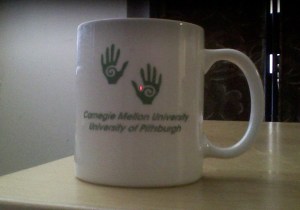
CMU-Pitt mug, from joint PAGPSA/BGSO meeting on diversity and grad school, October 1992, November 29, 2012. (Donald Earl Collins).

By the time that first meeting broke up, I was content to have met folks like Mark, Hayley, Lois, Errol, Ed, and a couple of others, to find us all on the same page about something as serious as starting a new association of a significant cross-section of Pitt’s graduate students of color. But in the process, I’d made a new friend that fall through our meetings and our joint gatherings with Carnegie Mellon’s Black Graduate Student Organization (BGSO).

James came along and challenged PAGPSA in October and November regarding our campus activism stance, arguing that being a part of any organization of students of color meant being active. Of course the leadership disagreed, but that’s how I met the man. He was a charismatic Black Iowan preacher’s son, and more politically active than anyone I’d known under the age of thirty. James had ideas about everything, from the future of hip-hop to the implications of my research on multiculturalism and Black Washington, DC.

Though he was a GSPIA (Graduate School of Public and International Affairs) master’s student and ultimately finished his degree in ’94, we would remain friends through the rest of the ’90s. Between him and Matt (see my post “My Friend Matt” from September) and PAGPSA, I remained grounded even as I became buried in the minutia of US, African American and educational policy historiography over the next half-decade. Thankfully, I no longer felt like a lone wolf. Thankfully, I knew that I wasn’t alone in a sea of graduate school and faculty White maleness after that fall.

Cath The Great

05 Monday Nov 2012

Posted by decollins1969 in 1, Academia, Boy @ The Window, culture, Eclectic, Politics, Pop Culture, race, Youth

≈ Leave a comment

Tags

Annual Meeting, Carnegie Mellon, Carnegie Mellon University, Carolina Inn, Catherine A. Lugg, Catherine Lugg, Conference, Conference Presentations, Department of HIstory, Durham North Carolina, Educational Policy, Friendship, Friendships, Graduate School, HES, History of Education Society, Pittsburgh, Politics of Education, Serendipity, Steven Schlossman, University of North Carolina


Catherine A. Lugg, circa 2009, November 5, 2012. (Catherine A. Lugg via Facebook).

I define serendipity as the ability of hard work to create what others would consider good luck, fortuitous chances, random opportunities for success. I’ve managed to do just that over and over again over the course of my life, particularly as a student and occasionally as a writer. But as a human being in search of real, positive, life-changing connections and friendships, serendipity has been very hard to make happen. When it does occur, at least for me, it becomes one of those moments that I seal in my mind, like a note in a time capsule.

The beginning of November ’94 was one of those weeks filled with serendipity. It started with the chair of the History Department at Carnegie Mellon, Steven Schlossman. He had decided that he couldn’t make it to the 1994 History of Education Society annual meeting in Chapel Hill, North Carolina. But because he had already booked a room and a flight, Schlossman apparently figured that he could simply transfer both the airline tickets and room to me instead (back in the pre-9/11 days when you could do such things without creating a potential terror alert). So Schlossman met with me a week before this conference and said that I should go “to represent the department” and because he thought it “a great opportunity” for me.

Carolina Inn at night (its better side), Chapel Hill, NC, 2007, November 5, 2012. (http://booked.com).

I wasn’t so sure, with the HES meeting being held in a mansion-turned-hotel, not quite on the University of North Carolina campus. Once I arrived from Pittsburgh on that first Wednesday in November, though, I felt at least free from the burdens of grad school at Carnegie Mellon. The weather was perfect, in the low eighties, and my World History sections for that Thursday and Friday were being covered by other teaching assistants. So I gave myself a tour of Chapel Hill, all the while wondering why didn’t I apply here for graduate school.

That was only the prelude to the four-day conference that began that Thursday. And since Schlossman had charged me to attend four sessions and to take notes on them on his behalf, I went to as many conference offerings as humanly possible. Back then, I had a much higher tolerance for boring academician-speak. So I was easily able to take detailed notes. I asked questions on topics in which I knew little. I even smiled and introduced myself to the mostly over-fifty White male crowd.

By Saturday, I had one mandatory session to attend. It was something about education in Japan and Germany post-World War II and how Japanese textbook makers left Japanese atrocities during World War II out of the nation’s history textbooks. During the Q & A, I asked what I thought was a pedestrian question, pedestrian because I forgot it five minutes after I asked it. Yet several people afterward told me that I’d asked a great question, as if I had some unique perspective or something. “It’s not even my subject matter,” I thought, adding in my mind that “Maybe some of these folks thought that the Black guy in the room didn’t really know anything.”

History of Education Society 1994 Annual Meeting program, November 3-6 1994, November 5, 2012. (Donald Earl Collins).

Or, as it turned out, my dedication to Schlossman’s charge made me seem 1,000 times as enthused about the HES meeting as anyone else attending. For two women did in fact notice me during that session. That Saturday evening, during beer, wine and spirits time in a cramped conference/ball room space, after pleasantries with a couple of older professors, I bumped into the two women again. They immediately engaged me in conversation, because they wanted to know how I managed to remain upbeat during such a boring ass conference.

Barbara and Catherine were both grad students in the School of Education at Penn State, as it turned out. Both were also PhD candidates in the midst of doctoral theses, and because of my being only twenty-four, couldn’t believe that I was a PhD candidate also. What I thought was going to be just another one of thirty conversations with older White male professors and kiss-ass grad students turned into a nearly ninety-minute discussion of research, pop culture, the HES conversation, and the ironies of life, and all with a snarkiness that only someone like me (or Rachel Maddow) could fully appreciate.

It might’ve ended there. Except that Barbara and Catherine’s research on federal education policy and achievement gap data for Latinos (especially Mexican immigrants) dovetailed pretty well with my work on multiculturalism and Black education in Washington, DC. Plus, the three of us saw an opportunity to use next year’s HES meeting as an opportunity to expose the hypocrisy of the old boys’ club and their petri-dish sense of educational issues for women, for communities of color, and for immigrants. We titled it, “Educational Historiography and Diverse Populations: Why Research Isn’t ‘Bringing a Pet to Class’.” Somehow the powers who ran HES accepted our proposal, giving us a chance to present at HES in Minneapolis in October ’95.

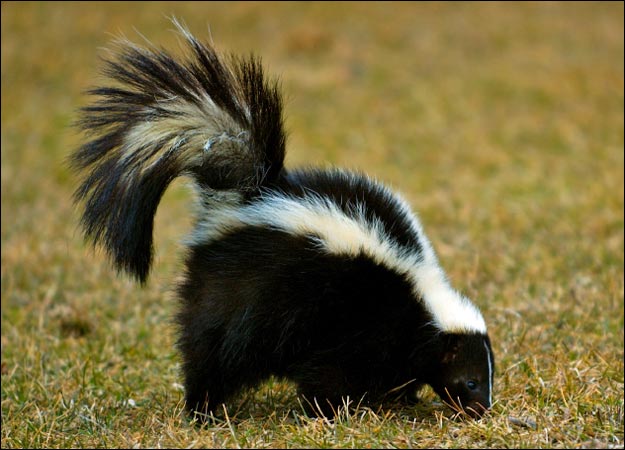
A skunk (something a teacher shouldn’t bring to class), November 5, 2012. (http://animal.discovery.com).

By that time, though, Barbara couldn’t make it, having recently married and having moved across the pond to the UK. Catherine ended up taking her place, and ended up doing two presentations in less than twenty-four hours. She’s been there for me as a genuine friend in academia and in my aspirations as a writer ever since.

The HES meetings  were the start of an eighteen-year friendship with Catherine, one that actually survived despite the tendency of the academic life to kill more friendships than one could ever start. I think we’re friends still because we share a same sense of the world, and both are willing to snark our way through the madness of it all.

Pre-Prom Paradoxes

26 Saturday May 2012

Posted by decollins1969 in 1, Boy @ The Window, culture, Eclectic, Mount Vernon High School, Mount Vernon New York, Pop Culture, Youth

≈ Leave a comment

Tags

Celebration, Class of '87, Class of 1987, Crush #1, Dating, Friendships, Humanities, Humanities Program, Irony, Muse, MVHS, My Mother, Paradoxes, Prom, Relationships, Self-Discovery


“Stop Defacing Signs,” a stop sign ironically defaced, June 24, 2011. (Scheinwerfermann via Wikipedia). Released to public domain via cc-Attribution-Share Alike 3.0 license.

This week a quarter-century ago was my Class of ’87 senior prom. Though I may tell some of the more boring and significant stories from this prom one year, this won’t be the case this year. Especially since the days before presented themselves with a theme that has remained a constant in my life for more than three decades — irony. If irony were a food, I could feed all of the Global South with it, and still have enough left to keep me in protein and P90X recovery drinks until I turn seventy.

And irony was a full-blown buffet the week before the prom. What told me that maybe my prom date “J” wanted more out of this arrangement than I did was an incident at our Humanities Program honors convocation that Tuesday evening (see my post “Prom-Ethos” from earlier this month). Mrs. Flanagan (then the Humanities Program coordinator for Mount Vernon High School) and the Mount Vernon Board of Education wanted to honor us collectively for making Humanities a grand success.

We had a keynote speaker, one who was a recent college grad and MVHS alum who had started her own business and wanted to talk to us about the value of the education we were about to pursue. It was an opportunity for our parents to share in our success.

My Mom decided to come to this event, only the second time she’d been to MVHS in four years. We got there, with Mom dressed in her best business dress, with high heels, hair done, light-brown makeup powder and black cherry-red lipstick on. I was somewhat dressed up, with a collared shirt, cheap black shoes and the polyester black pants my mother mail-ordered for me at the beginning of the year. The event was in the school cafeteria, where we were to have punch and snacks before the festivities began.

The first person I introduced my Mom to was J, whose mouth fell open like I’d slapped her in the face. She looked at Mom as if I’d been cheating on her with Lisa Lisa.  “J, this is my mother,” I said a second time. J just stood there, angry. Then she walked away in a huff.

“What’s wrong with her?,” my mother said in complete disbelief herself, with the “her” part lingering in my ear.

“I don’t know,” I said.

Clio [Muse of History] reading a scroll, (Attic red-figure lekythos, Boeotia c. 435–425 BCE), The Louvre, March 17, 2008 (Jastrow via Wikipedia). In public domain.

Crush #1 must’ve seen the whole thing unfold, because she came over right on cue, gave me a hug, and then politely introduced herself to my mother.

“Thanks,” I whispered as I walked over to talk to J while Crush #1 had a conversation with my Mom, something I’d hoped my prom date would do.

“That’s not your Mom,” J said when I reached her table. As if I would lie about something as serious as that.

“Yeah, J, she is,” I said, pissed that she’d assume that quiet me would suddenly become bold enough to bring an older women to a Humanities.

I knew Mom looked young, but she still had twenty-two years on me. Since she didn’t want to talk about it, I just walked away and joined in the conversation between my former crush and the woman who was the reason Crush #1 was my former crush.

That Crush #1 came to my rescue was ironic and poetic, given the ways in which my muse has come to my rescue over the years. That one of my nicest classmates acted a bit like an ass that evening contradicted everything I’d seen her do and say over the previous six years. That anyone would think that low-confidence me could walk into a ceremony with a thirty-nine year-old woman was both idiotic and ironic. Yeah, even in the land of friendships and emotions, irony walked with me, hand-in-hand and stride-for-stride.

A Friendship Changing Lanes

03 Monday Oct 2011

Posted by decollins1969 in 1, Boy @ The Window, Christianity, Eclectic, Mount Vernon High School, Mount Vernon New York, My Father, race, Religion

≈ Leave a comment

Tags

Education, Family, Friendship, Friendships, Humanities, Ideology, Johns Hopkins University, Mount Vernon High School, Mount Vernon New York, MVHS, Politics, Race, Religion, University of Pittsburgh, Valedictorian


Changing Lanes (Movie, 2002) Screen Shot, March 2008. (Source/http://swedenborgiancommunity.org).

Part of the problem of being me is the fact that my close friends change as I change. Meaning that there have been transitional periods throughout my life that my old friends fall away. Oftentimes I make new ones, and sometimes, like during my six years in Humanities, my best friend was my imagination. Ironically, the best friendship I had from my Humanities days came with a classmate that I hadn’t become close to until my last couple of years at Mount Vernon High School. More ironically, that friendship didn’t truly become such until we both went away for college in ’87.

I’ve written about her before, the valedictorian of my class, whom I called “V” in a previous post (see Valedictorian Blues from July ’09). To be honest, I’m not sure how our acquaintanceship ever became a friendship. Somewhere between having circumstances in which our fathers weren’t around consistently, or at least being able to relate to Billy Joel, or both of us scoring “5”s on the AP US History exam.

But really, it might’ve just come down to both of us not belonging, or facing a small degree of ostracism from our Humanities and MVHS classmates overall. I wasn’t Black and cool enough, and V, well, she was a classic White nerd, a grinder who had the gall to finish ahead of our Black male salutatorian, at least from the perspective of some authority figures and the school’s popular crowd.

The fact that we went our respective ways, to Pitt and Johns Hopkins, helped. The fact that we wrote each other about some of our social triumphs and challenges helped more. Most importantly, it helped a lot that we both were more honest about our family troubles. Everything from my mother’s need to divorce my idiot stepfather and the issues with my younger siblings to V’s mother and her health issues and struggling with burnout trying to watch over her family while going to school.

So, by the time I began my second year of grad school, we’d become fairly close. I visited her and her family in the DC area eight times during the ’90s, and went to her mother’s funeral and wake in ’96. V came to my PhD graduation ceremony the following year. By ’97, me and V had been friends for ten years, and known each other more than fifteen. For more than six years, she’d really been the only person from my Humanities and high school days with whom I’d been in regular contact.

Changing lanes, Las Vegas Strip, December 12, 2010. (Source/Bjørn Giesenbauer - http://Flickr.com).

Who knew that within four years of marching for my doctorate that our friendship would become a distant one? I think that our approaches to life was so different that we couldn’t help but become distant friends. I am one who refuses to take life on its own terms. If I had taken V’s approach, I’d still be living in Mount Vernon, New York, only with a nine-dollar-an-hour job sorting mail or flipping carcinogenic burgers. V’s was based on some sort of realism that mixed with a sense of eugenic inevitability. That one’s slot in life should remain such, and if one does make it, one must do so without ruffling any feathers.

Besides that, it was obvious that things about who we had been since the early ’80s had evolved, and was changing even more rapidly as we reached our late twenties. I was no longer the blank-faced, closed-mouthed, socially-awkward kid I was in ’82. V was no longer responsible for watching over her mother and her younger sister. We agreed to disagree on so many things. Our politics diverged. Our views on race and racism were growing further apart, as if I was Michael Eric Dyson and she was Ann Coulter.

But even with all of that, I think the seeds of it began when I started dating my future wife at the end of ’95. Something about being in a serious relationship has changed the dynamics of every friendship I had then and have now. I never thought that my friendship with V would be affected. But of course it was. We live in a world where a man and a woman can’t be close friends without it being made into something more than friendship.

Like the seasons, people change, and even if they change for the better, our change will cause our friendships to change as well. It’s just too bad that V couldn’t adapt to all of the good changes in my life like I adapted to hers.

Humanities Origins: Goofball

05 Thursday May 2011

Posted by decollins1969 in 1, Boy @ The Window, culture, Eclectic, race, Religion, Youth

≈ Leave a comment

Tags

Academic Identity, Class, Della Bryant, Friendships, Growing Pains, Hebrew-Israelites, Humanities, Humanities Program, Identity, Italian, Languages, Mount Vernon New York, Mount Vernon public schools, Ostracism, Preteen, Race, Sixth Grade, SRA Test, Straight-A Student, William H. Holmes Elementary


X-Men Origins: Wolverine Poster, May 12, 2009. http://movies.yahoo.com/photos/movie-stills/gallery/1263/xmen-origins-wolverine#photo41

This week marks thirty years since I learned that my sixth grade teacher Mrs. Della Bryant had recommended me and two other classmates into Mount Vernon public schools’ Humanities Program. It was a great achievement, but it felt bittersweet at the same time. For it came a week after the end of my friendship to Starling, and three weeks into the bizarre-ness of being a Hebrew-Israelite. It was the beginning of six long years of learning life’s lessons the hard way, like a soft-shelled crab in the middle of a hailstorm.

====================

Mrs. Bryant had pushed for my acceptance into Mount Vernon’s Humanities Program at the beginning of May. Between my SRA scores (Reading, 12th grade level; Math, 11th grade level), three years as a straight-A student and her recommendation, it was pretty much a slam dunk. This meant that I could spend as much as the next six years taking accelerated courses with the brightest students in Mount Vernon. When Mrs. Bryant told me about her recommendation, I bounced the seven blocks home to tell Mom about the opportunity. Mom asked, “Are you sure about this?,” as if I was planning to become a Catholic priest. I responded with an emphatic, sportscaster Marv Albert-esque “Yes!”

Of all the things that I was first asked to do after Mrs. Bryant told me that I was in, I had to pick a language of study — for the next four years! I didn’t think much past the next couple of weeks, except when waxing philosophic, so four years might as well have been forty. I opted for Italian over Spanish and French, mostly because of my love for spaghetti and pizza and Italian cheeses, a desire to visit Little Italy, and because the other six Holmes School classmates who had been accepted into Humanities chose the other languages.

====================

But with the loss of Starling as my best friend, it was hard to celebrate without feeling lost and loss. I hoped that, at the least, that I could connect with the other kids that would make up Humanities at A.B. Davis Middle School in seventh grade. I hoped that I would do as well as I’d done between fourth and sixth grade, that I could prove myself as among the smartest — if not the smartest — kid in the program. Most of all, I hoped that I’d be challenged in ways that fourth, fifth and sixth grade hadn’t.

A.B. Davis Middle School, Humanities Wing, November 21, 2006. Donald Earl Collins.

As it turned out, I was challenged. Thoroughly. My future and now former classmates challenged all of my assumptions about people and life, about how the world works, about relationships, tolerance and acceptance. I faced challenges that I couldn’t have possibly anticipated three decades ago.

I attended William H. Holmes Elementary, a school that was 99.8 Black and Latino, with high number of kids from poor and low-income backgrounds. I assumed that with a greater degree of intelligence came a greater degree of acceptance, but I hadn’t learned anything about eugenics or Nazism as an intellectual practice yet. (Not that Humanities was an incubator of Nazism, but it shows how poor my assumptions were.) I was arguably the highest performing student in my class, but that’s like saying that I’d won a hot-dog eating contest against a two-year-old.

But that was all to come with the transition to middle school, the economic collapse of my family and the puberty process. In the moment of origin in May ’81, I was on an academic high that I wouldn’t achieve again until my junior year at the University of Pittsburgh. I was a newborn baby, beautiful yet naive, not yet ready for the torture of the growing pains that would follow.

First Impressions and Brandie

27 Thursday May 2010

Posted by decollins1969 in 1, Eclectic

≈ Leave a comment

Tags

A.B. Davis Middle School, Brandie Weston, Etiquette, Friendships, Mount Vernon New York


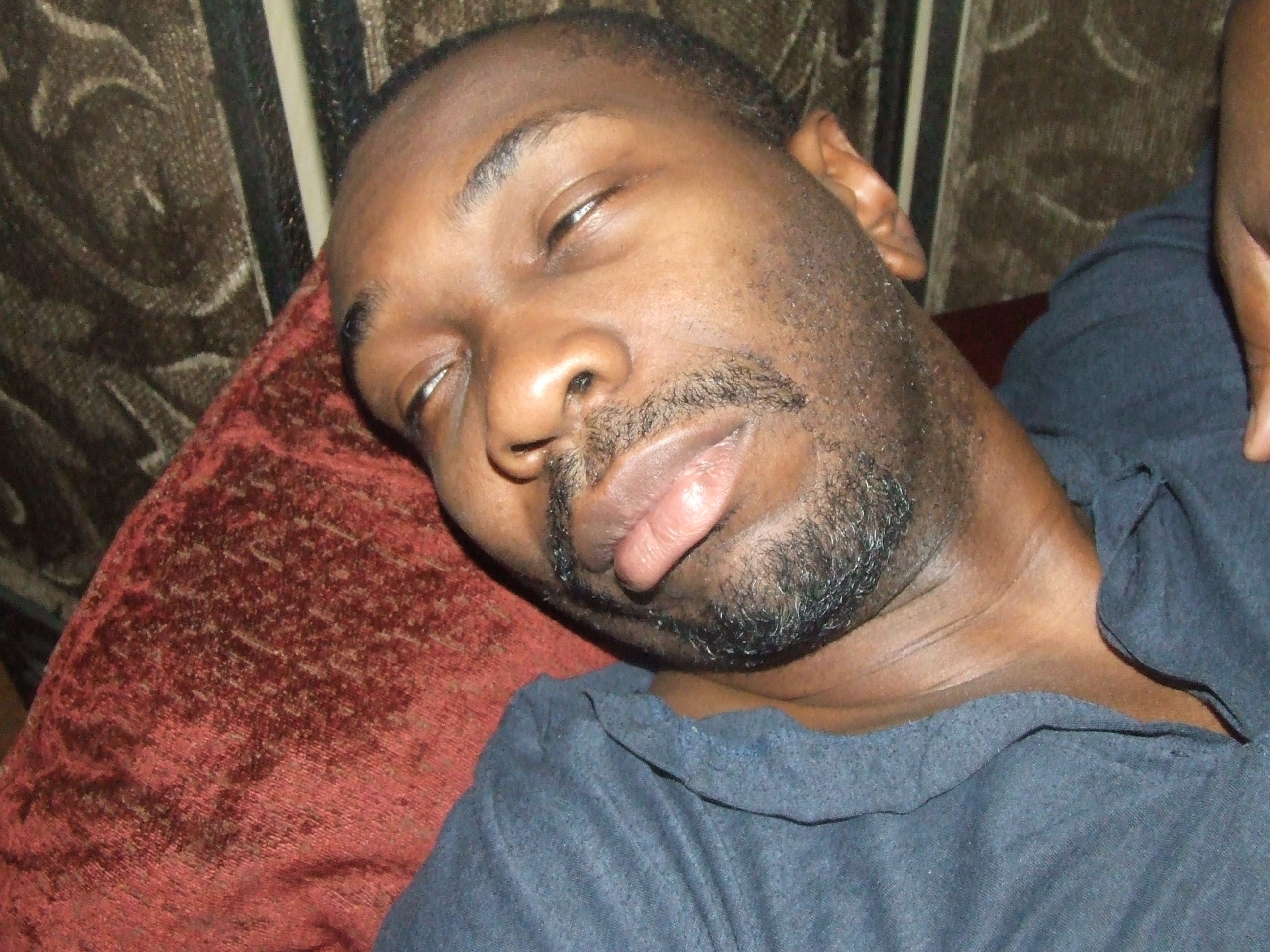
Half-Sleep Mug Shot

A year and a half before me and Brandie were together in Humanities and 7S, my father Jimme took me and my older brother Darren to his “girlfriend’s” two-bedroom apartment on Mount Vernon’s South Side. The place felt bigger to me than it actually was. Maybe it was because of the day we made this visit. It was a Saturday in May ’80, when May used to mean early spring, and not May showers, October winds, and August heat and humidity, like it does now. It was sunny, and that sunshine found its way into that apartment that day, highlighting heavily polished wood and making the yellow walls brighter. Even though Brandie’s mother and Jimme were having drinks and paid me and Darren little mind, it was nice getting out of our sparse space at 616. It was good that Jimme actually showed up this time.

About an hour into the visit, Brandie walked into the apartment door. She held several bags in her hands from shopping. All I noticed was that Brandie was taller than me, and wider too. I saw her as a woman of massive girth, somewhere nearing six feet in height, the stereotypical Black woman whom people like my mother had spent the previous decade of my life making fun of. I couldn’t resist. Like a mindless idiot, I said “Wow, she’s fat!” with glee in my eyes and a welcoming smile all over my face. For me, it was as if I had said, “Wow, you’re gorgeous, and your skin has a wonderful glow!”

Brandie’s reaction was one of stone-faced, speechless shock. Jimme gave me a semi-chuckled “Donald!” to let me know that I had said something inappropriate, but other than that, nothing. Brandie didn’t scream or holler, Brandie’s mother said nothing about it, and everyone — including Brandie — carried on with conversations until we left for home. I learned that Brandie attended Grimes and about Humanities for the first time. I didn’t know that I’d be a classmate of hers sixteen months later.

We ended up fighting inside of six weeks of being together in 7S. I thought I was the “smartest kid in the whole world,” while Brandie thought I was a “dumb ass.” After punching her in the breast, I was also a “pervert” — and pathetic me didn’t even know what “pervert” meant — for the rest of the year. Boy, I really was a dumb ass back then!

It took me until the end of high school for Brandie to see me any other way other than the idiot ten-year-old that I’d been. By then, she had changed as well, and mostly no longer cared for Mount Vernon or most of us as her classmates. But, she didn’t hate me anymore, at least. Brandie and I hugged at our high school graduation in ’87, but not before saying, “You’ve changed a lot over the years. You used to be an asshole you know!”

She was right, of course. Unfortunately, she’s not here for me to say that. Or to say that I’m sorry. Not just for calling her fat. Not just for my prejudice toward people with obesity. But for not revealing my truer self, my better self to her, not in ’80 or ’81 or ’87. Despite all evidence to the contrary, sometimes we really only get one chance to make a good impression on others.

Walls and Secrets

11 Wednesday Nov 2009

Posted by decollins1969 in 1, Boy @ The Window, culture, Eclectic, Mount Vernon High School, Mount Vernon New York, Patriotism, Politics, Pop Culture, University of Pittsburgh, Youth

≈ Leave a comment

Tags

Berlin Wall, Cold War, Coming-of-Age, Friends, Friendships, Introspection, Mihkail Gorbachev, Nuclear War, President Ronald Reagan, Self-Discovery


Crane removing part of Berlin Wall at Brandenburg Gate, December 21, 1989. (SSGT F. Lee Corkran/US Dept of Defense). In public domain.

Crane removing part of Berlin Wall at Brandenburg Gate, December 21, 1989. (SSGT F. Lee Corkran/US Dept of Defense). In public domain.

This Monday should’ve been a momentous occasion for us in the US. It was the twentieth anniversary of the tearing down of the Berlin Wall, the effective end of the Iron Curtain and the Cold War. Although it would be a bit more than two years before the Soviet Union collapsed, and with it, the Warsaw Pact. Still, it meant that the fear that I and millions of others grew up with — the one about having a day of mushroom clouds and shock waves, gamma radiation and the end of civilization — was over, or at least, abated somehow. But knowing my fellow citizens as well as I do, I know that most of us gave as much thought to this as we do to where our tap water comes from.

More of us give more serious thought to Chris Brown and Rihanna, my Pittsburgh Steelers and New York Giants, and who our friends date and break up with than we do of our world beyond ourselves. Which is sad. Because if gave the larger world even a modicum of thought, maybe we would have the better world that so many of us want, but don’t want to work for. While the idiot American media spent as much time talking about where they were when the Berlin Wall began to come down, the rest of the world, at least, spent a bit of time thinking about what’s actually happened geopolitically speaking in the past generation.

When President Reagan said, “Mr. Gorbachev, tear down this wall” in Berlin in ’87, even our bungling fortieth president was talking about more than a wall. He was speaking of a geopolitical and cultural wall between peoples who otherwise had so much in common, so much so that it was disheartening, even criminal to maintain separation because another superpower needed nation-states as buffers. Really, what Reagan was speaking of was well beyond his own neo-conservative thinking. For the wall that really needed tearing down was the one in our own minds, the one that says that we can’t do or say or be a certain way because the cultural and political norms of our society say otherwise.

It’s what I took from the fall of the Berlin Wall in ’89 and Reagan’s speech in ’87 anyway. Sometimes, though, we must put a wall around those things in our minds that would keep us from thinking, being and doing those things that others in our lives would ridicule. In my little case, it was majoring in history, finishing my degree and possibly going to grad school for more degrees that would lead to steadier employment, if not high-paying jobs. In our money-is-everything world, that’s an invitation for family and so-called friends to clown on us, to say that what were about is like spending another decade in school to “earn another high school diploma.” It’s limited thinking, the kind of thinking common behind the Iron Curtain in the Cold War era. Or at least, that’s what our leaders and the international academic community have said.

It’s tough to walk to beat of our own drums, especially if we know in our bones, minds and spirits that we were born to do and say certain things in which others in our lives vehemently disagree. And when we become side-tracked by the pressures of people and events and things of this world, it becomes doubly-hard to find our way to our proper path. Without folks in our lives who can help, or at least listen, it can be a lonely, if rewarding road.

Not too many weeks after I was swept up in end-of-the-Cold-War-fever, I realized something about the previous eight-and-a-half years of my life. That I’d been living my life for the sake of others, be it God, my mother, my younger siblings, or for the euphoria of an A or A+. That just about all of the real friends I had came out of my Pittsburgh experience. That I was no longer living in fear of having my chest caved in (as he liked to say) by my now ex-stepfather.

At the beginning of ’90, I did a bit of an experiment. I still kept in contact with about a half-dozen or so of my former classmates from my Humanities days. Which in my case meant that I wrote them far more often than they wrote or called me, if they did any of that all at. I stopped writing. I only wrote them or called if they responded in kind. I found out fairly quickly that I really only had one friend from my gifted-track days.

So I built my own wall in the first few months of the 90s. I deliberately yet unconsciously managed to put everything bad that happened between April 13 of ’81 and September 2 of ’88 inside of that wall. I only opened it up to a handful of my closest friends, and often revealed the most gut-wrenching of events in the most academic and dispassionate of ways. It worked very successfully for nearly thirteen years. But in having a child, being a married man, working with thousands of students and doing work to benefit thousands more, I realized it was time to tear down this wall.

I couldn’t write and revise Boy @ The Window without tapping into this past, and all of the emotions involved with it. For most of us, it unfortunately takes an event like the fall of the Berlin Wall for us to be introspective and conscious of the world beyond our own nose. For me, that’s an everyday thing, something I think we all should aspire to at least a few times a year.

Newer posts →

Boy @ The Window: A Memoir

Boy @ The Window: A Memoir

Places to Buy/Download Boy @ The Window

There's a few ways in which you can read excerpts of, borrow and/or purchase and download Boy @ The Window. There's the trade paperback edition of Boy @ The Window, available for purchase via Amazon.com at http://www.amazon.com/Boy-Window-Donald-Earl-Collins/dp/0989256138/

There's also a Kindle edition on Amazon.com. The enhanced edition can be read only with Kindle Fire, an iPad or a full-color tablet. The links to the enhanced edition through Apple's iBookstore and the Barnes & Noble NOOK edition are below. The link to the Amazon Kindle version is also immediately below:

scr2555-proj697-a-kindle-logo-rgb-lg

Boy @ The Window on Amazon.com: http://www.amazon.com/Boy-The-Window-Memoir-ebook/dp/B00CD95FBU/

iBookstore-logo-300x100

Boy @ The Window on Apple's iBookstore: https://itunes.apple.com/us/book/boy-the-window/id643768275?ls=1

Barnes & Noble (bn.com) logo, June 26, 2013. (http://www.logotypes101.com).

Boy @ The Window on Barnes & Noble: http://www.barnesandnoble.com/w/boy-the-window-donald-earl-collins/1115182183?ean=2940016741567

You can also add, read and review Boy @ The Window on Goodreads.com. Just click on the button below:

Boy @ The Window

Twitter Updates

Tweets by decollins1969
  • RSS - Posts
  • RSS - Comments

Archives

  • June 2025
  • April 2023
  • September 2022
  • August 2022
  • July 2022
  • June 2022
  • May 2022
  • April 2022
  • March 2022
  • January 2022
  • December 2021
  • November 2021
  • October 2021
  • September 2021
  • August 2021
  • July 2021
  • June 2021
  • April 2021
  • March 2021
  • February 2021
  • January 2021
  • December 2020
  • November 2020
  • October 2020
  • September 2020
  • August 2020
  • July 2020
  • May 2020
  • April 2020
  • March 2020
  • January 2020
  • December 2019
  • November 2019
  • August 2019
  • July 2019
  • June 2019
  • May 2019
  • April 2019
  • March 2019
  • February 2019
  • January 2019
  • December 2018
  • November 2018
  • October 2018
  • September 2018
  • August 2018
  • July 2018
  • June 2018
  • May 2018
  • March 2018
  • February 2018
  • January 2018
  • December 2017
  • November 2017
  • October 2017
  • September 2017
  • August 2017
  • July 2017
  • June 2017
  • May 2017
  • April 2017
  • March 2017
  • February 2017
  • January 2017
  • December 2016
  • November 2016
  • October 2016
  • September 2016
  • August 2016
  • July 2016
  • June 2016
  • May 2016
  • April 2016
  • March 2016
  • February 2016
  • January 2016
  • December 2015
  • November 2015
  • October 2015
  • September 2015
  • August 2015
  • July 2015
  • June 2015
  • May 2015
  • April 2015
  • March 2015
  • February 2015
  • January 2015
  • December 2014
  • November 2014
  • October 2014
  • September 2014
  • August 2014
  • July 2014
  • June 2014
  • May 2014
  • April 2014
  • March 2014
  • February 2014
  • January 2014
  • December 2013
  • November 2013
  • October 2013
  • September 2013
  • August 2013
  • July 2013
  • June 2013
  • May 2013
  • April 2013
  • March 2013
  • February 2013
  • January 2013
  • December 2012
  • November 2012
  • October 2012
  • September 2012
  • August 2012
  • July 2012
  • June 2012
  • May 2012
  • April 2012
  • March 2012
  • February 2012
  • January 2012
  • December 2011
  • November 2011
  • October 2011
  • September 2011
  • August 2011
  • July 2011
  • June 2011
  • May 2011
  • April 2011
  • March 2011
  • February 2011
  • January 2011
  • December 2010
  • November 2010
  • October 2010
  • September 2010
  • August 2010
  • July 2010
  • June 2010
  • May 2010
  • April 2010
  • March 2010
  • February 2010
  • January 2010
  • December 2009
  • November 2009
  • October 2009
  • September 2009
  • August 2009
  • July 2009
  • June 2009
  • May 2009
  • April 2009
  • March 2009
  • February 2009
  • January 2009
  • December 2008
  • November 2008
  • October 2008
  • September 2008
  • August 2008
  • July 2008
  • June 2008
  • May 2008
  • April 2008
  • March 2008
  • February 2008
  • January 2008
  • December 2007
  • November 2007
  • October 2007
  • September 2007
  • August 2007
  • July 2007
  • June 2007

Recent Comments

MaryPena's avatarMaryPena on My Day of Atonement/Bitter Hat…
decollins1969's avatardecollins1969 on No Good Teaching Deed Goes…
Mary Rose O’Connell's avatarMary Rose O’Connell on No Good Teaching Deed Goes…

NetworkedBlogs on Facebook

NetworkedBlogs
Blog:
Notes From a Boy @ The Window
Topics:
My Life, Culture & Education, Politics & Goofyness
 
Follow my blog

616 616 East Lincoln Avenue A.B. Davis Middle School Abuse Academia Academy for Educational Development AED Afrocentricity American Narcissism Authenticity Bigotry Blackness Boy @ The Window Carnegie Mellon University Child Abuse Class of 1987 CMU Coping Strategies Crush #1 Crush #2 Death Disillusionment Diversity Domestic Violence Economic Inequality Education Family Friendship Friendships Graduate School Hebrew-Israelites High-Stakes Testing Higher Education History Homelessness Humanities Humanities Program Hypocrisy Internalized Racism Jealousy Joe Trotter Joe William Trotter Jr. K-12 Education Love Manhood Maurice Eugene Washington Maurice Washington Misogyny Mother-Son Relationship Mount Vernon High School Mount Vernon New York Mount Vernon public schools Multiculturalism MVHS Narcissism NFL Pitt Pittsburgh Politics of Education Poverty President Barack Obama Race Racial Stereotypes Racism Relationships Self-Awareness Self-Discovery Self-Reflection Sexism Social Justice Teaching and Learning University of Pittsburgh Violence Whiteness Writing

Top Rated

Blog at WordPress.com.

  • Subscribe Subscribed
    • Notes from a Boy @ The Window
    • Join 103 other subscribers
    • Already have a WordPress.com account? Log in now.
    • Notes from a Boy @ The Window
    • Subscribe Subscribed
    • Sign up
    • Log in
    • Report this content
    • View site in Reader
    • Manage subscriptions
    • Collapse this bar
 

Loading Comments...