• About Me
  • Other Writings
  • Interview Clips
  • All About Me: American Racism, American Narcissism, and the Conversation America Can’t Have
  • Video Clips
  • Boy @ The Window Pictures
  • Boy @ The Window Theme Music

Notes from a Boy @ The Window

~

Notes from a Boy @ The Window

Tag Archives: A.B. Davis Middle School

Toto’s “Africa” & “Reading” Too Much Into It

02 Saturday Mar 2013

Posted by decollins1969 in 1, Boy @ The Window, culture, Eclectic, eclectic music, Hebrew-Israelite, Mount Vernon New York, music, Politics, Pop Culture, race, Religion, Sports, Youth

≈ Leave a comment

Tags

"Africa" (1982), "The Catch", A.B. Davis Middle School, Africa, C-Town, Dwight Clark, Fever, Football, Herschel Walker, Humanities, Imagination, Joe Montana, NFL, Pelham, Puberty, Racialism, Reading, Self-Discovery, Self-Reflection, Tarzan, The Jungle (1906), Toto, Toto IV, Upton Sinclair, USFL, Whiteness, Writing


Toto's "Africa" (1982) Singles Sleeve, March 1, 2013. (http://eil.com).

Toto’s “Africa” (1982) Singles Sleeve, March 1, 2013. (http://eil.com).

There are as many reasons my musical tastes are eclectic as there are songs that I like and love. I can’t explain it. There’s no way I can explain why I think one song sounds as unimaginative and boring as Drake’s “Started From The Bottom,” while Nickleback’s “If Today Was Your Last Day” has been one of my favorite songs over the past three and a half years.

My imagination could take the corniest song and make it epic, a mantra, my theme music. Even a song like Toto’s “Africa” (’82-’83), a song that could be interpreted as reflecting White racialism as it related to Tarzan movies of a not-so-bygone era. Yet I’ve seen their video, and probably heard the song at least 3,000 times. It ain’t that deep, but it’s still a song I like.

So, a bit of context. My grades in the early Reagan years — especially in ’82-’83, when I was in eighth grade — didn’t at all reflect our family’s slide into welfare poverty, my ongoing issues with my idiot stepfather, my suicidal struggles or my search for a real relationship with God. What I had to lean on, more than my amazing memory or World Book Encyclopedia, my parents or even God, was my imagination.

The Spark of Imagination (via x-ray), March 1, 2013. (http://esquire.com).

The Spark of Imagination (via x-ray), March 1, 2013. (http://esquire.com).

With puberty and what would turn into a ten-inch growth spurt in a span of twenty months, I became enamored with sports. And the sport I became most interested in early on was football. The strike-shortened ’82 NFL season combined with the formation of the USFL and the coming-out party for soon-to-be draft pick Herschel Walker to get my attention. The vicious hits, the acrobatic catches, the powerful throws were things that I’d seen before. I saw them through the lens of an underdog now, a downtrodden member of an abandoned family who wanted to see folks who’d overcome impossible circumstances achieve great things.

The first person who represented that for me in sports was Joe Montana, quarterback for the San Francisco 49ers. The only ending to a football game I’d ever watched was the end of the NFC Championship Game the year before, with the play known as “The Catch.” I didn’t even know who Joe Montana was, even after watching Dwight Clark go up and catch a ball that was only meant for him.

He was the kind of person I wanted and needed to be in order to overcome what I thought was an impossible deficit. As far as I was concerned, I had to score about a hundred touchdowns to go from welfare to college, let alone anything after college. Yet it didn’t stop me from dreaming about rolling out right to the sidelines on fourth down, sucking in Dallas’ defense, and throwing a ball toward the right-side of end zone, toward the back line, just high enough for Clark to catch and Emerson Walls not to.

It was a dream that required some theme music, and luckily for me it was ’83. Michael Jackson’s Thriller had come out at the start of eighth grade, The Police were big, Toto and Rick Springfield were at their peak, and New Edition had put out there first hit, a Jackson 5 remake. All of it gave me something more modern to move forward with, to get silly about, to “march down field” to when I needed to gear up to get an important A. I’d accidentally found a way to escape my life without ever leaving Mount Vernon.

The Jungle (1906), by Upton Sinclair, 1st Edition, March 31, 2011. (GrahamHardy via Wikipedia). In public domain.

The Jungle (1906), by Upton Sinclair, 1st Edition, March 31, 2011. (GrahamHardy via Wikipedia). In public domain.

Demontravel’s and Carraccio’s classes were the first two places in which I applied this approach to my life and studies. In Carraccio’s case, it was the reading and essay assignment for Upton Sinclair’s The Jungle (1906) a muckraking tale of first-generation, Eastern European, Chicago meatpackers who worked and lived in grueling conditions and where some of them gave their lives — and livers — to Swift and other companies. I’d caught a cold, had a fever, was going to the store for Mom, and had just heard Toto’s “Africa” playing at C-Town in nearby Pelham.

The song served as my background music, giving me the energy and drive I needed to finish the book. I read The Jungle in one night, three hundred pages of it in four hours. I think Carraccio gave me a 95 on my essay. She pulled me aside to say, “You know, if you wanted, you could be a really good writer.” It might’ve been the only thing she said that I thought was right on the mark all year.

Yeah, you could say that I was seriously music deprived, didn’t understand the cultural symbolism or archetypes in the song or video, or simply had and have bad tastes. Y’all may be right, too. But for me, Toto’s “Africa” struck the right note, lifted my imagination, and found the goofball within.
Kufi Battles

15 Friday Feb 2013

Posted by decollins1969 in 1, Boy @ The Window, culture, Eclectic, Hebrew-Israelite, Mount Vernon High School, Mount Vernon New York, Movies, Pop Culture, race, Religion, Youth

≈ Leave a comment

Tags

"The Man In Black", A.B. Davis Middle School, Abuse, Bigotry, Bullying, Esau and Jacob, Fights, Geometry, Intimidation, Intolerance, Italian Club, Kufi, Lost (2004-10), Louis Cuglietto, Masculinity, Multicultural Education, Puberty, Rage, Tackles, The Matrix Revolutions (2003)


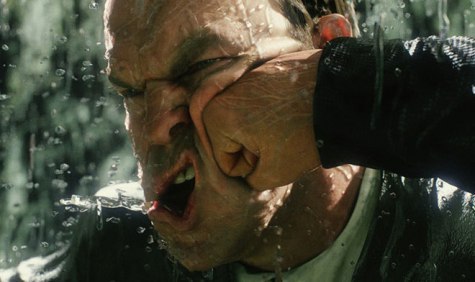
Slow-motion punch frame from Matrix Revolutions (2003), February 15, 2013. (http://theathleticnerd.com/).

Slow-motion punch frame from The Matrix Revolutions (2003), February 15, 2013. (http://theathleticnerd.com/).

My days as a kufi-wearing Hebrew-Israelite at school is one of those things I don’t spend much time on this blog talking about. Mostly because it involved defending myself to protect a piece of clothing and a religion in which I never fully believed, especially after early ’83. Plus, it involved fairly rare attempts in which dumb asses attempted to bully me. Compared to my now deceased idiot ex-stepfather’s abuse, no kid or wannabe thug after the summer of ’82 really stood a chance.

There were three incidents in eighth and ninth grade in which a kid got into a scuffled with me over my kufi, for whatever reason they’d invented in their head. The first was in February ’83, as one Black kid — probably about fifteen — snatched my kufi from my head and started to run up the basement hallway with it at Davis Middle School. The incident occurred as I, A and another member of A’s “Italian Club” entourage were in the middle of an errand for a teacher. I immediately ran the boy down, knocked him to the floor, dusted off my kufi, and put it back on my head. The boy got up and threatened to beat me up. It was at this point that A intervened, saying that he would “have to take us all on” if he wanted to fight me. A’s moment of support notwithstanding, I would’ve beaten the kid in the face as many times as it would’ve taken to get my kufi back.

Pittsburgh Steelers' James Harrison sacks Baltimore Ravens QB Joe Flacco, AFC Division Round, January 15, 2011. (http://espn.go.com).

Pittsburgh Steelers’ James Harrison sacks Baltimore Ravens QB Joe Flacco, AFC Division Round, January 15, 2011. (http://espn.go.com).

The second incident occurred a month later, prior to the opening morning bell at Davis. Out of the blue, “Little J” picked a fight with me, calling me a “dickweed” and a “shithead” for no reason at all. I hardly knew the Jewish kid, who immediately came at me to push, shove, throw punches, and grab at my kufi. It really was crazy for Little J to think that he had a shot at doing any damage. I was already five-eight. He was lucky if he was four-eleven and one hundred pounds after a potato latkes breakfast.

This wasn’t a fight. It was a pushing and shoving match, with me doing all of the pushing and shoving and Little J landing in bushes or on his ass. For seven minutes, he kept running at me, trying to throw a punch or kick me. I caught or blocked his attempts, grabbed him, and shoved him into the bushes near the boys’ entrance to Davis. By the sixth time, Little J was crying and his cheeks were fire truck-red, I was laughing and shaking my head, and the other Black boys at Davis were asking me what was going on. When I told them, they started laughing as well.

Beyond him grabbing at me and my kufi, I never knew what Little J wanting to fight me was all about. My guess then was that Little J was playing the role of Esau (the hairy brother of Jacob from the Bible, Torah and Qur’an) and didn’t like the fact that I claimed to be a descendant of the father of ancient Israel and his people.

The Man In Black (presumably Esau; played by Titus Welliver) with Jacob (Mark Pellegrino), from TV series Lost (2009-10), February 15, 2013. (http://magiclamp.org).

The Man In Black (presumably Esau; played by Titus Welliver) with Jacob (Mark Pellegrino), from TV series Lost (2009-10), February 15, 2013. (http://magiclamp.org).

Incident Three occurred on my second day at Mount Vernon High School. After a day of assignments and learning the names of our new teachers, I went to Louis Cuglietto’s eighth-period Geometry class. It was on the first floor of the school, just to the right of the front entrance and the cafeteria. As I milled around the classroom looking to take my seat, my Latino classmate “N” came out of nowhere and snatched my kufi off my head.

“Give it back now!,” I yelled.

“Make me!,” N responded with a bit of sarcasm.

Just as he was about to throw it to another classmate. I grabbed N and knocked him to the floor. There we were, on the floor by the dark green chalkboard, me on top of N, who was struggling to hold on to my kufi. I lay on top of him, punched him in the face a couple of times, and took my kufi back from him just before Cuglietto came into the room. By this time everyone in our class had formed a circle to watch the spectacle. I don’t remember all of what Cuglietto said, but he did ask, “Do you want to get suspended?” After we dusted ourselves off, we went to our desks and got back to work.

For me, the incident marked a transition point in my life at school. This would be the last fight I’d have in school. Some people continued to try to verbally intimidate me. But they left it at that, probably because my height and my face said “Don’t mess with me” before I’d say anything.

The more immediate result was that I began to question more consciously my motives for defending myself as a Hebrew-Israelite. “Why do I care if N snatches my kufi from me?,” I said to myself on the way home from school that day. It wasn’t as if I truly believed in any of the teachings anymore. I definitely didn’t want anyone messing with me at home or in school. At the same time, I didn’t want to use up energy defending something in which I didn’t believe.

School of Dreams (and Nightmares)

10 Monday Sep 2012

Posted by decollins1969 in 1, Academia, Boy @ The Window, culture, Eclectic, Mount Vernon High School, Mount Vernon New York, Politics, Pop Culture, race, Youth

≈ Leave a comment

Tags

A.B. Davis Middle School, Academic Competition, Advanced Placement, Cerritos California, Cheating, College Preparation, Edward Humes, High Ability Students, High Achieving Students, High-Stakes Testing, Humanities, Humanities Program, Magnet Programs, MVHS, Psychological Abuse, School of Dreams, Social and Psychological Development, Starbucks, Whitney High School, Zero-Sum Game


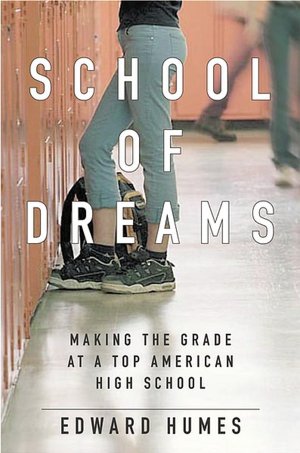
School of Dreams (2003), by Edward Humes, September 9, 2012. (Donald Earl Collins).

Yesterday was the thirty-first anniversary of my first day of seventh grade at A.B. Davis Middle School, my first day in a six-year slog in Mount Vernon public schools’ Humanities Program. The academic pressures that came with being part of a gifted-talented track magnet program were such that the lessons I learned during those years remain with me to this day. The unique lessons about who I was and whom I wanted and needed to become, though, are the kinds of lessons reserved for a memoir, like, say, Boy @ The Window.

But there are other lessons, other issues that anyone who has gone through such a program, is in one, or has kids in one, should heed. Perhaps the best book I’ve ever read about the experiences of high ability students in a gifted track middle or high school has been Edward Humes’ School of Dreams: Making the Grade at a Top American High School (2003). Despite some of the flaws in the Pulitzer-Prize winning journalist and author’s account covering a year in the life of Whitney High School in Cerritos, California, this is a book I’d use in many of my future graduate seminars in US educational history.

A particularly poignant passage was where Humes wrote, the “combination of a school built upon high expectations and a student population whose dominant culture elevates learning to a high priority—and hard work in school to an absolute necessity—makes for a kind of education echo chamber” (p. 340). Humes meant this as a positive comment on the academic culture of a public high school in Southern California.  But it also reflected a constant tension between learning and zero-sum competition.

Starbucks double chocolate chip frappucino, September 10, 2012. (htttp://wwwcoffeespitfire.blogspot.com).

Humes somehow doesn’t fully take stock of this tension beyond the context of the high school in which he embedded himself in 2000-01. There were stories, disheartening stories about seventh graders hitting up Starbucks for coffee before school, during lunch and after school to stay awake. Of parents who shunned their kids’ artistic talent and aspirations in their quest to ensure they earned a degree in a STEM (science, technology, engineering, mathematics) field. Of students taking as many as six AP (Advanced Placement) courses in a single school year, or colluding to cheat on a calculus or physics exam when the pace of study and testing proved to be too much.

Yes, despite this, Whitney has produced thousands of elite college-goers, and 4.0 is the standard, not the exception, that its students shoot for. But now, in an age in which high-stakes testing is the norm, what’s the social and psychological message that we’re communicating to the current crop of K-12 students in the US today?

For me, the best way to answer this question is to look back on my own experience and the experiences of my former Humanities classmates. Based on my own writings and findings, there’s plenty of evidence that intensive academic rigor and competition — like intensive athletic training and competition — will produce excellent students well prepared for college, but not necessarily well prepared for life. Many of my former Humanities classmates (and many of the students Humes tracked and interviewed for School of Dreams) were socially inept, put themselves under constant stress (not to mention experiencing psychological pressures from each other, their parents and teachers) and lacked the deeper critical reasoning skills necessary to make college a worthwhile experience.

The students had a “cram-and-exam” methodology to learning, spending hours learning techniques and concepts and little time in applying them beyond the classroom in the vast majority of their subjects. Often when students discovered a new talent, particularly in writing, the arts or in music, many of their parents pounced into action to admonish teachers for encouraging these developments or to force their kids into their way of thinking about their future. Bottom line: while many of these high-achievers were willing to slit each others’ throats for an A, an AP “5” or an SAT 1600, they hadn’t really made up their minds about who they wanted to be, the talents they wanted to explore, or the world in which they wanted to live.

“Nightmares & Daydreams” episode screen shot, Avatar: The Last Airbender, September 10, 2012. (Donald Earl Collins). Qualifies as fair use under US Copyright laws due to pic’s low resolution.

When I first read Humes’ School of Dreams nine years ago, it forced me to think about these parallels. I realized that if Starbucks was within a mile of either A.B. Davis Middle or Mount Vernon High School in the ’80s, our class alone would’ve spent about $160,000 a year there on coffee and pastries. That most of us were sane enough to only take three or four AP courses my senior year. That our standard for a minimally acceptable SAT score was a 1200. That, instead of kids crying or running away from home for two days over a B, attempted suicides or a turn to crystal meth would’ve been more common. I guess by Whitney’s standards, we would’ve been slackers.

Still, more than a quarter-century since my last Humanities course, with tighter budgets and far more high-stakes testing (see the correlation?), the crush of intense academic competition has made our public schools a poor place for polishing students into well-adjusted young adults. Yes, I know that this is primarily a parent’s responsibility. But then again, public schools are meant to be far more than an octagon ring with No. 2 pencils.

Lightning On A Cloudless Day

25 Monday Jun 2012

Posted by decollins1969 in 1, Boy @ The Window, culture, Eclectic, Hebrew-Israelite, Mount Vernon New York, Pop Culture, race, Religion, Youth

≈ 2 Comments

Tags

616, 616 East Lincoln Avenue, 7S, A.B. Davis Middle School, Captain Zimbabwe, Child Abuse, Crush #1, Humanities, Manhood, Mugging, Pearsall Drive, Pookie, Pool, Vernon Woods, Wilson Woods


When lightning strikes out of a blue sky, July 29, 2011. (http://news.discovery.com via Getty Images).

The worst summer of my entire life began thirty years ago on this date, within hours of having survived the worst school year I ever had. Between unrequited love and low-level ostracism, Crush #1 and Captain Zimbabwe, I made a pact with myself on the twenty-fifth of June, the last day of seventh grade, to keep the humiliation that I endured that year from ever happening again (see my post “The Legend of ‘Captain Zimbabwe’” from May ’09).

After school that balmy Friday afternoon, me, Mom, my baby brothers Maurice (or Menelek, his Hebrew-Israelite name) and Yiscoc, and my older brother Darren’s “counselor” Mrs. Karen Holtslag went to Willson’s Woods Pool. The pool and the park were about two blocks from 616, the largest park in Mount Vernon. It included large picnic areas, a children’s playground, a large municipal pool (one of the few public pools in the city), and a concessions stand.

Mom and Mrs. Holtslag met to discuss Darren’s “progress” and his psychological needs (see my post “Summer Camp” from June ’09). The rest of us were there to have fun. It was one of those rare times where I got a chance to spend time with my younger siblings without thinking about their terrible fate, to have Maurice as their biological father. It would be like having Damien from The Omen movie series as the man of the house. Baby Maurice and Yiscoc needed this time out of the house more than I did, at least that’s what I thought at the time.

Vernon Woods condo community (once public housing or projects) on Pearsall Drive, 2012. (http://trulia.com)

I witnessed their father Maurice abuse baby Maurice and neglect Yiscoc on too many occasions. My stepfather once beat the six-month-old Maurice with a belt to keep him quiet because he was trying to sleep, and would forget to change his diapers while we were in school. Mom eventually found a babysitter to watch baby Maurice, but the damage was already done. Even though nearly three years old, baby Maurice had never said a word. The eleven-month-old Yiscoc had been stunningly quiet since his birth. Maybe Mrs. Holtslag should’ve been counseling Mom about them, not Darren.

Mom gave me a $10 bill to buy some snacks at the concession stand for everyone. As I walked over dreaming of hot dogs and mini-pizzas, careless me had the bill only half in my right hand. A big kid magically materialized, ran by and snatched the money from my hand. It seemed like God suspended the rules of time as soon as it happened. The moment that the thief grabbed the bill it felt as if a lightning bolt had ripped through the clear blue sky on that bright summer day. I knew deep down that my summer would mirror the previous fall, winter, and spring.

Chris Rock as “Pookie” from New Jack City (1991), June 24, 2012. (http://truthaboutit.net)

When my stepfather found out about my tragic error, he demanded that I tell him exactly who stole the money. “I’m not sure. I think it’s some guy named ‘Pookie’,” I said. Maurice walked over to me, poked me in the chest, and told me to get the money back from Pookie in two weeks. I said, “I can get the money from Jimme,” but he didn’t want to hear that, shaking his head in the process. I pointed out that Pookie was much bigger than me, and that I didn’t know where he lived. Maurice told me to “find out where he lives!” Otherwise I would get a “whuppin’.”

I spent nearly two weeks asking questions and running around the Pearsall Drive projects (now the more affluent Vernon Woods condo community, bought from the city and converted in ’84 or ’85) looking for Pookie after that. I learned that he was sixteen years old, about five-foot-ten, and lived with his mother on the fourth floor of one of the six buildings in the project community. I hadn’t seen him once in my eleven days of snooping since the robbery. I was terrified to be at 616, and too scared to be outside. I spent my afternoons when I wasn’t out on one of my Pookie hunts in 616’s stairwells and basements crying and thinking. I thought, “Why me?”

But not-so-deep-down, I knew why. I stopped acting like Maurice was my father and a changed man after what he did to Mom. This was punishment for not fulfilling the Torah’s law regarding fathers and mothers, “Honour thy father and thy mother, that thy days be long on the land that the Lord hath giveth thee.” “Yeah, right!,” I thought. We had no land, no promised land, and no prayed-for-land either. And Maurice, well, if he was my father, then what did that mean for me, Darren, and Jimme? Torah or no Torah, I swore that I’d never call my bastard stepfather “Dad” again.

Was I Really In Love In 7th Grade?

03 Saturday Mar 2012

Posted by decollins1969 in 1, Boy @ The Window, culture, Eclectic, eclectic music, Mount Vernon New York, Pop Culture, Sports, Youth

≈ Leave a comment

Tags

7S, A.B. Davis Middle School, Coldplay, Crush #1, First Love, Humanities, Love, Mount Vernon New York, Muse, Music, New York Giants, Patrick Ewing, U2


Emotional Highs

Emotional Highs

Tomorrow will mark thirty years since I began an emotional journey the likes of which I’ve only approximated maybe three other times since. In the three decades since, I’ve learned that I was actually in love for the first time. Not just a crush, or puppy love, or some preteen infatuation. Love, actually and truly. But as a person of deep thought, a boy surrounded by sexism and misogyny, and a lonely and semi-ostracized twelve-year-old, I didn’t have the thoughts, much less the words, to describe what I felt between March 4 and May 30 of ’82 (see my “On Women and Wired Weirdness” post from March ’11).

To think that this all pretty much started because I picked a fight with Crush #1 at the end of class on the first Thursday in March in 7S. Almost all of my extracurricular incidents that year began or ended in our homeroom with our homeroom/English teacher Mrs. Sesay. The incident began because Crush #1 asked a question about a subject that Mrs. Sesay had spent the entire week going over, a concept that Sesay would test us on that Friday. I laughed out loud — thinking that I was only snickering — after Crush #1 asked that question.

Thinking nothing of it, I began to pack up after the 2:15 pm bell rang. Crush #1 came up to me and pushed me from behind.

“You’re an ugly, arrogant asshole!” she said with the distaste of a ballerina being asked for money by a junkie.

I called her “stupid” and then said something else stupid. “You’re an idiot!,” Crush #1 yelled as she threw two punches into my chest and a third at my jaw.

The fight lasted about fifteen or twenty seconds, but after landing a punch on her left boob and nipple, I stopped fighting, already descending into the land of the idiot romantic, as in The Doobie Brothers “What A Fool Believes” (1979). All while Crush #1 kept hitting me, then being pulled away from me by a couple of her friends. One of them, the recently deceased Brandie Weston, called me a “pervert” as they exited the classroom.

I know that I wasn’t the first boy in history to start a fight with a girl who I’d come to like or love, but I do think that boys who do that have a lot of weird in them. Mind you, I hadn’t quite hit puberty yet, so my testosterone levels weren’t high enough yet to be the cause of my brain malfunction. No, my very sexism and her fierce sense of tomboyish feminism was why I liked her in the first place, and I drank deep from that well for the next three months.

I’ve had thirty years to reflect on this incident and the three months of school-day dreaming that followed. There are only a handful of childhood memories I’ve thought about more. For years, though, I’d packed my emotions away. Through high school and Crush #1’s first dating experiences, through my own high school and 616 trials and tribulations, through college and graduate school and my years of dating and then marriage to my wife of twelve years.

Then, as I began work on Boy @ The Window six years ago, I opened up that dusty box of memories and emotions, to find them almost as strange at thirty-six as they had been at twelve. But unlike in ’82, I shared it with a bunch of friends, and especially my wife. After telling the story of me and Crush #1, my wife said, she was my “first love. It doesn’t matter if she didn’t reciprocate.” Or, for that matter, if she didn’t know. It was the first time it dawned on me that I really had fallen in love before I’d learned how to love. Wow.

It explained why after so many years, through all of my ups and downs, and despite the love I do feel, have and show to family and friends in my life, that Crush #1 would show up in my dreams. It helped me understand why I found few girls, young women and women attractive prior to going to college, and even then, they didn’t compare. It also let me know that a feeling like that can’t die, doesn’t die. If anything, it allows room for more love, and more understanding for how to love in the process.

The video above is about the best way I can express what I felt in ’82, without the complete sappiness of an incurable romantic, or worse yet, a tragic one. Like Professor Snape (as played by Alan Rickman) in the Happy Potter movies, or worse still, Ralph Fiennes’ character in The English Patient (1996). Combining music and two of my three favorite sports (the other one’s golf, but Tiger’s inappropriate for this theme), it’s a mere approximation for how I felt back then.

There’s plenty of other music I could’ve used (see my “The Ultimate Crush” post from March ’08 and “Desert Rose” post from April ’09), other themes like figure skating or ballet that would better show what I saw and felt in Crush #1, and what I see and sometimes feel in my dreams on occasion now. I guess that I really was in love. But there’s at least one thing I can do now. I can be there for Noah when it happens to him for the first time.

The Fight (Again)

18 Saturday Feb 2012

Posted by decollins1969 in 1, Boy @ The Window, culture, Eclectic, Hebrew-Israelite, Mount Vernon New York, Politics, race, Youth

≈ Leave a comment

Tags

616, A.B. Davis Middle School, Adolescent Psychology, Contrarian, Fighting, Fights, Humanities, Preteen, Rage, Renewal, Resistance


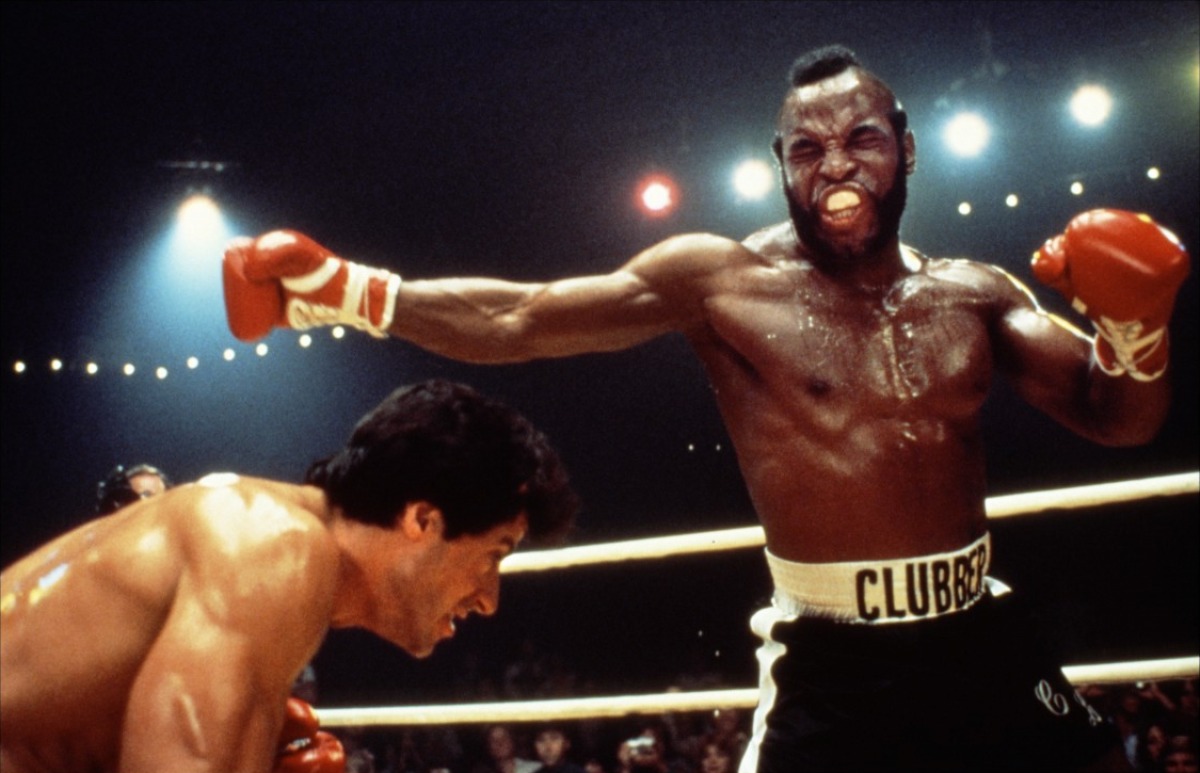
Clubber Lang vs. Rocky in Rocky III (screen shot), 1982, February 18, 2012. (http://media.comicvine.com).

The fight that changed my approach to Humanities and put me back in a determined frame academically happened on this date thirty years ago. After all of these years, I find it awfully strange to look back and find that some of my more poignant moments growing up were ones of rage, resistance and renewal. All either around abuse, muggings or fights with classmates.

Strange because I’d never seen my immature and thin-skinned self as much of a fighter before that day in February ’82 (see my post earlier this week, “Quitting Before a Fight“). Strange because it often takes something only indirectly related to my struggles to cause me to regroup and fight for what I want. Strange in the ways that all immature preteen boys and girls who get into fights always are.

It had gotten so bad that month that folks who wouldn’t have dared to mess with me at the beginning of the year — guys significantly shorter than me and guys who were so superior to me that they didn’t even notice me — started messing with and threatening me. JD (see my “The Contrarian One” post from February ’11) was one of those classmates. The week before the mid-February winter break, our homeroom/English teacher Mrs. Sesay was home with the flu. Our substitute’s idea of managing a classroom was reading a newspaper while the class engaged in verbal and physical combat. It seemed that no one was safe from strife that week, including me.

JD decided that it was his turn to give me a hard time. A ten-second scuffle took place on Tuesday over the usual tweener issues of communism versus capitalism, or to use more sophisticated language, neo-Marxism versus Keynesian economics. He also didn’t like that I had corrected him the month before about Australia’s official language, which he said was “Australian.” I learned that day that you should never correct a preteen contrarian when they think that they’re right.

When I walked into the boys’ locker room for gym class that Thursday afternoon thirty years ago, I was greeted with two punches to my chin and face. He walked away and went through the green double doors to his locker, arrogant enough to think I wouldn’t respond. He muttered “stupid” as he walked away. I think it was the combination of being caught by surprise and being called “stupid” by JD that got the better of me. Or maybe it was five months of enduring public humiliation combined with the sense that things at 616 were spinning out of control.

Whatever it was, I finally snapped. I stared blankly at the red lockers, green doors, and depleted beige-colored walls for a couple of seconds, and then my mind exploded in violent colors. I threw my entire being into JD as he had started to undress at his locker, knocking him to the floor.

I choked and punched him until I had bloodied his mouth and made his nose turn red. JD attempted to fight back to no avail, as I kept my weight on his legs while I head-locked him with my left arm and wailed away with my right hand. Just as I began to run out of energy, the gym teacher came in to break us up. He yelled at us and asked “Do you want to be suspended?” When I got off the floor to go my locker, I almost couldn’t believe that I had won that fight. I went into the break with an emotional boost, one that I hoped would lead to better things for me at school.

You could say that only a nerdy preteen boy like myself would find academic motivation in a fight. That’s definitely true. But, not just someone like me. Every kid who’s trying to find their way can only work with what he or she knows or what he or she is presented with. I could’ve either decided to keep being a punching bag — literally, figuratively and academically — or decided that whatever else I wanted to be, I needed to stand up for myself and fight.

So yes, winning that fight with JD sent me into that winter break as if I’d thrown a Hail Mary to Hakeem Nicks just before halftime for a touchdown. It provided the inspiration I needed that I wasn’t getting from Humanities, A.B. Davis Middle School or 616. Where else would I have found it in February ’82?

Quitting Before a Fight

13 Monday Feb 2012

Posted by decollins1969 in 1, Boy @ The Window, culture, Eclectic, Hebrew-Israelite, Mount Vernon New York, Pop Culture, race, Religion, Youth

≈ Leave a comment

Tags

616, 616 East Lincoln Avenue, 7S, A.B. Davis Middle School, Failure, Grades, Humanities, Humiliation, Humility, Isolation, Maturity, Mount Vernon Hospital, Mount Vernon New York, Mount Vernon public schools, Paul Court, Poverty, Quitting, The Crucible


Mike Tyson-Michael Spinks Fight, Convention Hall, Atlantic City, NJ, June 27, 1988. (http://antekprizering.com).

As a writer, I can often see my past as if it happened within the past week. As a forty-two year-old, though, it sometimes seems like my failures and pitfalls are a long-lost memory, one of a very bad dream. To think that it’s been a full thirty years since my preteen struggles with identity, purpose, and the realization that I was in an intense academic competition that I was predestined to lose. It seems like I was playing a role, acting my way through my tweener and teenage years.

But this time thirty years ago, I seriously thought about quitting the Humanities Program. It was the beginning of the third marking period in seventh grade at A.B. Davis Middle School, early February ’82. My grades were unimpressive. I struggled in every subject except social studies, where three years of reading World Book Encyclopedia and forty books of all kinds on World War II made me a nerdy standout among my mostly nerdy peers. My social studies teacher Paul Court was so much fun and so inept that he played games with us to keep our class interesting. Anyone who could find factual errors in his teachings on American history would earn twenty-five cents. I’d already earned more than three dollars by the end of the second marking period.

I barely averaged a C+ in math. My Italian teacher Ms. Fleming told me that my “Italian sounded British.” And I was averaging a C+ in art. In Art! All because Doris Mann, who was about as good an art teacher as I was at making friends, said, “I don’t give A’s for effort. I give out grades based on your ability to create good art.” I couldn’t believe that she gave me C+’s while the art world fifteen miles away cheered folks who smeared blood, paint, and feces on canvasses!

I thought that I was the only one who felt like a failure. I was certain that I was more of a failure than my Holmes School classmates or other, non-Pennington-Grimes students in Humanities, at least. If other students appeared to have problems, especially my classmates who were alumni of the Pennington-Grimes program (Mount Vernon public schools’ K-6 Humanities Program), I believed that they were faking it.

The Crucible (play), date and location unknown. (http://reyvl.com).

I had good reason to. It was around this time that one of my White female classmates from Pennington-Grimes had become anxiety-ridden prior to a test in our English class. She began to sweat, her hands and face turned colors, like one of Arthur Miller’s female characters in The Crucible, his famous Salem-Witch-Trial play.

Within a few seconds, three of her friends joined this tortured soul in this expression of fear. The one girl kept saying, over and over, “I know I’m going to fail!” The other three huddled around her and joined in séance, as if they expected God to witness this physical expression of pressurized fear and take pity on them. That this involved the Pennington-Grimes group of Humanities girls was not lost on me. They loved their grades, almost as much as they loved Jordache Jeans, The Gap or Benetton.

We received our exam grades from Mrs. Sesay a few days later. My grade: a 78. The Fear Bunch’s lowest grade: a 92. Understanding how quickly fear can destroy your confidence: priceless. Their fears had left me thinking more about failure — theirs and mine — than it did about the task at hand.

Then it was my turn to act demon-possessed. I went to the back of the classroom at the end of that day and chanted, “I’m silly, I’m stupid. I’m silly, I’m stupid. I’m silly, I’m stupid.” over and over again while pounding the back of my head into the side wall. But I learned a valuable lesson that day. That doing well required me to ignore the worries and grades of other, to concentrate on me and my own emotions on test days.

So, I spent the first two weeks in February thinking about sliding into the general population of A.B. Davis Middle School. I couldn’t do much else other than think. With the growing problems of lack of food, late rent payments and three siblings at 616, my mother’s tiny Mount Vernon Hospital paycheck, and my idiot and long-term unemployed Hebrew-Israelite of a stepfather, I had no one to talk to about school (see “Humanities: First Contact, Full Circle” from September ’11).

What I didn’t realize was that I hadn’t yet begun to fight. My efforts up to that point in Humanities — from making friends to studying — were all half-hearted at best. I was the emotional equivalent of an eight-year-old in a preteen’s body, one right at the early stages of puberty at that. With life at 616 starting to fall apart and the isolation I felt at school, I was growing up, whether I wanted to or not. All it would take was an immature spark of inspiration to prove it….

← Older posts
Newer posts →

Boy @ The Window: A Memoir

Boy @ The Window: A Memoir

Places to Buy/Download Boy @ The Window

There's a few ways in which you can read excerpts of, borrow and/or purchase and download Boy @ The Window. There's the trade paperback edition of Boy @ The Window, available for purchase via Amazon.com at http://www.amazon.com/Boy-Window-Donald-Earl-Collins/dp/0989256138/

There's also a Kindle edition on Amazon.com. The enhanced edition can be read only with Kindle Fire, an iPad or a full-color tablet. The links to the enhanced edition through Apple's iBookstore and the Barnes & Noble NOOK edition are below. The link to the Amazon Kindle version is also immediately below:

scr2555-proj697-a-kindle-logo-rgb-lg

Boy @ The Window on Amazon.com: http://www.amazon.com/Boy-The-Window-Memoir-ebook/dp/B00CD95FBU/

iBookstore-logo-300x100

Boy @ The Window on Apple's iBookstore: https://itunes.apple.com/us/book/boy-the-window/id643768275?ls=1

Barnes & Noble (bn.com) logo, June 26, 2013. (http://www.logotypes101.com).

Boy @ The Window on Barnes & Noble: http://www.barnesandnoble.com/w/boy-the-window-donald-earl-collins/1115182183?ean=2940016741567

You can also add, read and review Boy @ The Window on Goodreads.com. Just click on the button below:

Boy @ The Window

Twitter Updates

Tweets by decollins1969
  • RSS - Posts
  • RSS - Comments

Archives

  • June 2025
  • April 2023
  • September 2022
  • August 2022
  • July 2022
  • June 2022
  • May 2022
  • April 2022
  • March 2022
  • January 2022
  • December 2021
  • November 2021
  • October 2021
  • September 2021
  • August 2021
  • July 2021
  • June 2021
  • April 2021
  • March 2021
  • February 2021
  • January 2021
  • December 2020
  • November 2020
  • October 2020
  • September 2020
  • August 2020
  • July 2020
  • May 2020
  • April 2020
  • March 2020
  • January 2020
  • December 2019
  • November 2019
  • August 2019
  • July 2019
  • June 2019
  • May 2019
  • April 2019
  • March 2019
  • February 2019
  • January 2019
  • December 2018
  • November 2018
  • October 2018
  • September 2018
  • August 2018
  • July 2018
  • June 2018
  • May 2018
  • March 2018
  • February 2018
  • January 2018
  • December 2017
  • November 2017
  • October 2017
  • September 2017
  • August 2017
  • July 2017
  • June 2017
  • May 2017
  • April 2017
  • March 2017
  • February 2017
  • January 2017
  • December 2016
  • November 2016
  • October 2016
  • September 2016
  • August 2016
  • July 2016
  • June 2016
  • May 2016
  • April 2016
  • March 2016
  • February 2016
  • January 2016
  • December 2015
  • November 2015
  • October 2015
  • September 2015
  • August 2015
  • July 2015
  • June 2015
  • May 2015
  • April 2015
  • March 2015
  • February 2015
  • January 2015
  • December 2014
  • November 2014
  • October 2014
  • September 2014
  • August 2014
  • July 2014
  • June 2014
  • May 2014
  • April 2014
  • March 2014
  • February 2014
  • January 2014
  • December 2013
  • November 2013
  • October 2013
  • September 2013
  • August 2013
  • July 2013
  • June 2013
  • May 2013
  • April 2013
  • March 2013
  • February 2013
  • January 2013
  • December 2012
  • November 2012
  • October 2012
  • September 2012
  • August 2012
  • July 2012
  • June 2012
  • May 2012
  • April 2012
  • March 2012
  • February 2012
  • January 2012
  • December 2011
  • November 2011
  • October 2011
  • September 2011
  • August 2011
  • July 2011
  • June 2011
  • May 2011
  • April 2011
  • March 2011
  • February 2011
  • January 2011
  • December 2010
  • November 2010
  • October 2010
  • September 2010
  • August 2010
  • July 2010
  • June 2010
  • May 2010
  • April 2010
  • March 2010
  • February 2010
  • January 2010
  • December 2009
  • November 2009
  • October 2009
  • September 2009
  • August 2009
  • July 2009
  • June 2009
  • May 2009
  • April 2009
  • March 2009
  • February 2009
  • January 2009
  • December 2008
  • November 2008
  • October 2008
  • September 2008
  • August 2008
  • July 2008
  • June 2008
  • May 2008
  • April 2008
  • March 2008
  • February 2008
  • January 2008
  • December 2007
  • November 2007
  • October 2007
  • September 2007
  • August 2007
  • July 2007
  • June 2007

Recent Comments

MaryPena's avatarMaryPena on My Day of Atonement/Bitter Hat…
decollins1969's avatardecollins1969 on No Good Teaching Deed Goes…
Mary Rose O’Connell's avatarMary Rose O’Connell on No Good Teaching Deed Goes…

NetworkedBlogs on Facebook

NetworkedBlogs
Blog:
Notes From a Boy @ The Window
Topics:
My Life, Culture & Education, Politics & Goofyness
 
Follow my blog

616 616 East Lincoln Avenue A.B. Davis Middle School Abuse Academia Academy for Educational Development AED Afrocentricity American Narcissism Authenticity Bigotry Blackness Boy @ The Window Carnegie Mellon University Child Abuse Class of 1987 CMU Coping Strategies Crush #1 Crush #2 Death Disillusionment Diversity Domestic Violence Economic Inequality Education Family Friendship Friendships Graduate School Hebrew-Israelites High-Stakes Testing Higher Education History Homelessness Humanities Humanities Program Hypocrisy Internalized Racism Jealousy Joe Trotter Joe William Trotter Jr. K-12 Education Love Manhood Maurice Eugene Washington Maurice Washington Misogyny Mother-Son Relationship Mount Vernon High School Mount Vernon New York Mount Vernon public schools Multiculturalism MVHS Narcissism NFL Pitt Pittsburgh Politics of Education Poverty President Barack Obama Race Racial Stereotypes Racism Relationships Self-Awareness Self-Discovery Self-Reflection Sexism Social Justice Teaching and Learning University of Pittsburgh Violence Whiteness Writing

Top Rated

Blog at WordPress.com.

  • Subscribe Subscribed
    • Notes from a Boy @ The Window
    • Join 103 other subscribers
    • Already have a WordPress.com account? Log in now.
    • Notes from a Boy @ The Window
    • Subscribe Subscribed
    • Sign up
    • Log in
    • Report this content
    • View site in Reader
    • Manage subscriptions
    • Collapse this bar
 

Loading Comments...