• About Me
  • Other Writings
  • Interview Clips
  • All About Me: American Racism, American Narcissism, and the Conversation America Can’t Have
  • Video Clips
  • Boy @ The Window Pictures
  • Boy @ The Window Theme Music

Notes from a Boy @ The Window

~

Notes from a Boy @ The Window

Tag Archives: 616 East Lincoln Avenue

My Busing Blues

25 Wednesday May 2016

Posted by decollins1969 in 1, Academia, Boy @ The Window, culture, Eclectic, Jimme, Marriage, Mount Vernon New York, My Father, Pittsburgh, Politics, Pop Culture, race, University of Pittsburgh, Youth

≈ Leave a comment

Tags

425 South Sixth Avenue, 616, 616 East Lincoln Avenue, Boston, Busing, Classism, Common Ground (1985), Community, Desegregation Orders, Divorce, Economic Inequality, Educational Equity, Friendships, J. Anthony Lukas, Ms. Hirsch, Nathan Hale Elementary, Ostracism, Racism, School Desegregation, Second Grade, William H. Holmes Elementary, Youth


TFD bus (they're still around?), South Side, Mount Vernon, NY, May 25, 2016. (http://zztalon.tripod.com/).

TFD bus (they’re still around?), May 25, 2016. (http://zztalon.tripod.com/).

Schooling and friendships have been the main theme of my posts this month. I find myself in deeper reflection about my years before the Boy @ The Window years these days. Maybe because I’ve come to realize that those years between ’74 and ’81 were far more influential in how I saw the world than I’d previously given credit.

One issue that I think I’ve had insight into for years before actually becoming an educator is busing. Maybe not so much in relation to school desegregation, though. As a seven-year-old, it would’ve been in terms of friendships and belonging. The only time I faced a no-choice busing situation was my last two and a half months of second grade, between April and late-June 1977. My Mom and Maurice had moved in together and moved me and my brother Darren to North Side Mount Vernon and 616, the house of horrors that would become the central locale of my memoir.

The Soiling of Old Glory, Boston, MA, April 5, 1976. (Stanley Forman/Boston Herald American via Wikipedia). Qualifies as fair use due to historical important of photo and low resolution.

The Soiling of Old Glory, Boston, MA, April 5, 1976. (Stanley Forman/Boston Herald American via Wikipedia). Qualifies as fair use due to historical important of photo and low resolution.

The only thing I knew of busing before the move from 425 South Sixth to 616 East Lincoln was that Darren had been taking a bus to Clear View School in Dobbs Ferry every school day since my first day of kindergarten in ’74. Also, the images in my head from national news on the three main networks about Boston Public Schools and protests in ’74 and ’75. I had no idea in the spring of ’77 that many White and more than a few Black parents were fighting a desegregation order that required widespread busing in Boston. All I knew at the time was that a lot of angry people with signs and bricks and bottles were on my TV screen at the beginning of September almost every year.

My spring of busing was one of misery. Not because Mount Vernon was under any desegregation order, which it was. Mom had made the decision to not disrupt second grade for me by keeping me at Nathan Hale Elementary, the school that we had lived two doors down from prior to our 616 move. The other option was for me to start at William H. Holmes Elementary five months sooner, so that my transition to third grade would’ve been easier. Thanks, Mom.

Even at the time, I wished she had. Mom had been sick for half that school year. She and my father Jimme were in the midst of a nasty divorce. We had already moved. It made no sense for me to continue to go to Nathan Hale Elementary. I couldn’t stand my teacher Ms. Hirsch. She was the only teacher prior to Humanities, and especially Humanities at Mount Vernon HS, who thought of me and other students as essentially kids without a future. Ms. Hirsch was the only teacher prior to my senior year at MVHS who told me that I wouldn’t “amount to anything.” I hated, hated being in her classroom. It was a feeling I wouldn’t have again until David Wolf and AP Physics my senior year, and even then, that feeling only lasted for forty-five minutes, and even then, it wasn’t with me every day.

By the end of second grade, I was without any friends. Not because I did anything weird, which I’m sure I did. The constant disruptions in our living arrangements meant that I no longer played in the playground next to Nathan Hale after school, where I could hang out with other first, second, and third graders. (I was scared to go there by myself otherwise, anyway — this issue, to be continued.) A bunch of my first grade friends from Ms. Griffin’s class had left during the summer of ’76, leaving Winston, a first grader, as my only friend at Nathan Hale. Yeah, I talked to Lauren and one other girl in Ms. Hirsch’s class, but that was pretty much it.

Now and Later candies, made by Farley's and Sathers, October 26, 2010. (Evan-Amos/Vanamo Media via Wikipedia). Released to public domain.

Now and Later candies, made by Farley’s and Sathers, October 26, 2010. (Evan-Amos/Vanamo Media via Wikipedia). Released to public domain.

Taking the bus to and from school for those last fifty days or so of school was torture. Not because kids make fun of me, which they didn’t, or because I was part of some experiment related to desegregation, which I wasn’t. I hated the smell, of bubblegum and Now-&-Laters, of sweat from recess and gym, of exhaust fumes from cars because our little TFD bus wasn’t air-conditioned. Mostly, I couldn’t stand the forty-five minutes or hour that it would take to go from 616 to Nathan Hale, picking up kids all through Mount Vernon along the way.

Fourteen years later, in an upper-level US urban history undergraduate course (my last history class before grad school) at the University of Pittsburgh, one of my required readings was J. Anthony Lukas‘ Common Ground (1985), his Pulitzer Prize-winning book on busing and school desegregation in Boston. There were so many powerful parts of Lukas’ book that piqued my interest. His coverage of parents from all sides of the busing controversy. The sense that school desegregation was a bit of a Pyrrhic victory legally, but not so much culturally, because of the “hearts and minds” issues around race. What struck me, though, was the limited perspective Lukas provided on kids who had to ride these buses between Black, White, and Puerto Rican neighborhoods to get to these schools throughout Boston.

Front cover of Common Ground (1985) by J. Anthony Lukas, September 3, 2014. (http://goodreads.com).

Front cover of Common Ground (1985) by J. Anthony Lukas, September 3, 2014. (http://goodreads.com).

I imagined what it would’ve been like to bus in Boston during my K-2 years. I had it hard enough as a child of abuse and divorce, with a move to an uncertain future, and with at least one teacher who saw me as little more than human garbage. Add screaming and spit-flying from White parents raging over school desegregation? I really could’ve been written off, never having a chance to become a good student, and more importantly, a lifelong learner. Maybe the only lesson I would’ve learned from busing was that Whites against busing have serious high-blood pressure issues. Or, more realistically, that White parents didn’t want me to become friends with their kids.

Either way, Lukas helped me realize, maybe for the first time, how twisted and evil American society would have to be to expose kids to blatant racism and not-so-blatant economic inequalities as demonstrated through busing.


Fights and Friendships

05 Thursday May 2016

Posted by decollins1969 in 1, Boy @ The Window, Christianity, culture, Eclectic, eclectic music, Hebrew-Israelite, Mount Vernon New York, Politics, Pop Culture, race, Religion, Youth

≈ 2 Comments

Tags

"Friends" (1984), "Scream" (1995), 616, 616 East Lincoln Avenue, Child Abuse, Ego Inflation, Friendships, Hip-Hop, Hubris, Humanities, Intolerance, Janet Jackson, Michael Jackson, Rap, Salvation, Shunning, Starling Churn, Teenage Angst, Whodini, William H. Holmes Elementary


My friendship with my one-time best friend Starling ended on this week thirty-five years ago. It was a friendship that “began with a fight and ended with a fight,” as I wrote in Boy @ The Window. The second fight had as much to do with inflated preteen egos as it did with intolerance and ignorance. But that couldn’t be helped, given the way we were, the way our families had been back in the first days of the Reagan Years.

We’d been friends since the last third of fourth grade at William H. Holmes Elementary Most of our conversations the first year or so of our friendship had been about music, politics, history, and other things related to school or pop culture. By the time we reached Mrs. Bryant and sixth grade, a good portion of our conversations turned to Christianity. I guess that this was inevitable. Starling was the “son of a preacher man,” a Southern Baptist pastor. Starling wanted to see me become an official child of God and brother in Christ. My search was one of truth and God, and if Jesus was the one who could get me there then so be it. I didn’t feel the same sense of urgency for water immersion and John 3:16 as Starling did for me.

Back area behind William H. Holmes ES (where my two fights with Starling occurred), Mount Vernon, NY, November 22, 2006 (Donald Earl Collins).

Back area behind William H. Holmes ES (where my two fights with Starling occurred), Mount Vernon, NY, November 22, 2006 (Donald Earl Collins).

The return of my prodigal stepfather Maurice Washington/Judah ben Israel and his bringing the whole Hebrew-Israelite thing to 616 put a temporary end to my Christian enlightenment in April ’81. Him and my Mom had been separated for about six months. During that time, my idiot stepfather had discovered the ways of Yahweh and Torah and alleged that he was a changed man. So we all had to change, to stop eating pork and bloody meats, to start wearing kufis, and to somehow see this fool as our dad.

Starling stopped speaking to me immediately and entirely when I showed up on a mid-April Monday with a white kufi on my head. on the last Friday in March. Our friendship was suddenly over. This was what our second fight was about, our friendship, my bizarre religion and my acceptance of it. At least it was for me.

As I wrote in the memoir,

I guess that Starling at twelve was definitely his father’s son. I could certainly understand Starling’s perspective on this. I’d betrayed him when I came to school and professed that I was a Hebrew-Israelite. Starling had been talking to me for months about becoming a Christian, a Baptist, and now here I was embracing Afrocentric Judaism, similar in many ways to the Nation of Islam and its variants in terms of its racial politics. The practitioners I’d been around tended to see Black Christians as “weak,” out of touch with “their heritage,” and as “worshiping the wrong God.” Starling couldn’t accept this. We ended up in our second and final fight. I was fighting for our friendship, literally. Starling beat me to end it.

I felt betrayed myself. Starling had turned his back on me at a time in which I needed his input the most. I still cared about the same things, thought about the same issues, and wanted someone whom I could banter with about music and politics and religion. But given Starling’s background, even back then I realized that he thought that I was well on my way to hell. Starling and I saw ourselves as adults in many ways, so he assumed that I had made a free-will adult decision for becoming a Hebrew-Israelite when I walked into Mrs. Bryant’s class with a kufi on my head. He had no idea how much I was struggling with my mother and stepfather’s decision to make our family a Hebrew-Israelite one.

Screen Shot from Michael Jackson and Janet Jackson's "Scream" (1995) video, May 5, 2016. (http://www.vidivodo.com).

Screen Shot from Michael Jackson and Janet Jackson’s “Scream” (1995) video, May 5, 2016. (http://www.vidivodo.com).

So I projected the outward appearance of supreme confidence and faith in Jehovah and this slant on the ten Lost Tribes of Israel, to protect myself from being hurt and to see if this whole Hebrew-Israelite thing really was for me. Not a good move going into middle school and the Humanities Program later that year. I had no idea how much worse my life was about to become in the two years between the end of my friendship with Starling and my family’s fall into welfare poverty, bumps, bruises, babies and concussions along the way.

It wasn’t until the end of eighth grade that Starling and I began exchanging “Hi’s” again. Even then, this was often forced. The only conversation I had with Starling after our fight was at the end of ninth grade, with him letting me know that he was moving with his family down South. Starling Churn left with his family for Wilmington, North Carolina in the summer of ’84, still believing I was well on my way to eternal damnation.

That friendship’s rise and fall has helped me understand who friends really are. Ultimately a friend is someone who isn’t a relative but you gravitate toward and have shared interests with, a person who has sympathy and empathy for you and your life. A person who isn’t afraid to tell you when you’re fucking up and who doesn’t shun you when you lose your way. That’s a real friend. I’ve had and still have, thankfully, a core group of ride-and-thrive friends who fit (or at least come close to it) this definition.

Starling and I couldn’t. We were tweeners, after all, and pseudo-intellectual ones with inflated egos from straight-As at that. And in a country that barely tolerates anything other than blind, unthinking Christianity and a false sense of patriotism, maintaining a friendship in the midst of a major religious shift — even a childhood one — was and is nearly impossible.

End of the Dorm Room State

30 Saturday Apr 2016

Posted by decollins1969 in 1, Academia, Boy @ The Window, culture, Eclectic, Jimme, Mount Vernon New York, My Father, New York City, Pittsburgh, Pop Culture, race, University of Pittsburgh, Work, Youth

≈ Leave a comment

Tags

25 Welsford Street, 616 East Lincoln Avenue, Computing and Information Systems, Father-Son Relationship, Financial Aid, Freshman Year, Homelessness, La Guardia Airport, Lothrop Hall, Naivete, Pitt, Pork Neck Bones and Rice, South Oakland, Tuna Fish, unemployment, US Air, Western Union


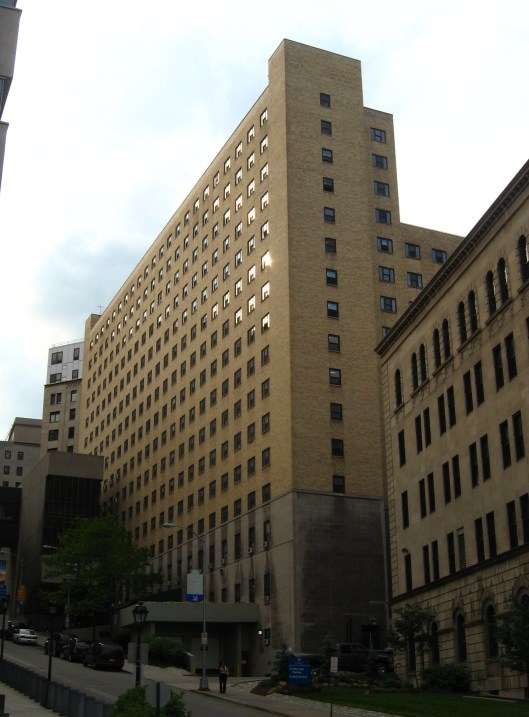
Lothrop Hall (we lived on the fourth floor in 1987-88), University of Pittsburgh, June 8, 2008. (TheZachMorrisExperience via Wikipedia). Released to the public domain via CC-SA-3.0.

Lothrop Hall (we lived on the fourth floor in 1987-88), University of Pittsburgh, June 8, 2008. (TheZachMorrisExperience via Wikipedia). Released to the public domain via CC-SA-3.0.

On this day and date twenty-eight years ago was the Saturday end to my freshman year at the University of Pittsburgh. Like today here in the DMV, it was a cool and cloudy day, a day in which I was tired from the year, but hopeful now that I had survived many of my inner doubts and outward troubles to make it to another fall of courses.

But there was a lot of unfinished business at Pitt. And, no, after my first Dean’s List, it wasn’t my grades. Six weeks earlier that year was March 15. That was the deadline for me to put down a $350 deposit to guarantee a dorm room for next year. Otherwise, I’d have to participate in a lottery for one. And the deadline for that was April 30th.

As of that morning, I had more than enough money to cover my deposit, as I’d gotten paid for my eighty or so hours of computer lab work with Pitt from the month of March. That money was way too late now. I knew that I’d have to go back to New York, to Mount Vernon, to find work for the summer, to have the money I needed to find a place to live for the fall when I’d come back to Pitt.

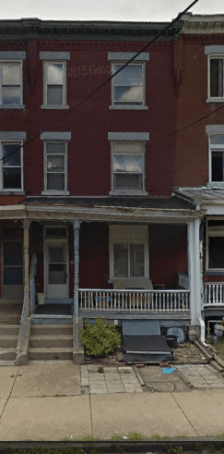
25 Welsford Street, Pittsburgh (where I lived my sophomore and junior years at Pitt), August 2015. (Google Maps).

25 Welsford Street, Pittsburgh (where I lived my sophomore and junior years at Pitt), August 2015. (Google Maps).

It wasn’t like I didn’t ask my parents. Mom didn’t have the money, between my idiot stepfather, my four younger siblings and my older brother Darren. Eight-hundred and fifty dollars of AFDC, food stamps, and WIC per month can only be stretched so far in a place as expensive as the New York metropolitan area. And my father Jimme, well, I let him know a month before the dorm reservation deadline that I needed the money. He said at least twice that he had wired me the funds via Western Union. I checked both times with the check cashing place in North Oakland, only to walk out empty-handed.

The timing just didn’t work out. That’s what I told myself, at least. I’d find a better place to live than Lothrop Hall. Between carousing Pitt basketball players, underaged boozers, the more than occasional tokers, and the terrible cafeteria food, I was probably better off living off-campus anyway.

You can convince yourself of a lot of things in the hours before a US Air flight to La Guardia when you’re staring at 120 days of living at 616 and being in Mount Vernon. Both places where I’d barely fit in before thirty-three weeks of college and relative independence. I was about to reclaim my emotionless role as the eldest son, all but running a house that was never mine to run in the first place. The fact of my questionable residential status as a sophomore at the University of Pittsburgh could wait.

Like with so many things going on in my life that leap year, I was terribly wrong. I found myself unemployed for the summer, homeless in Pittsburgh for five days, and broke and malnourished for most of the Fall ’88 semester. From April 30th to the Tuesday before Thanksgiving, I’d live with financial crisis, without a place to lay my head, and with tuna fish sandwiches and pork neck bones and rice as food for many of those days.

I did make friends my freshman year, and I did have friends my sophomore year, some of whom probably would’ve taken me in had they known about my troubles. But that’s the thing about abuse and poverty and race in a country that purports to be great and yet contradicts itself. You seldom tell anyone about anything bad in your life, out of embarrassment or out of pride, because you don’t want to be the living embodiment of a stereotype. Still, when I hinted about my lack of eats in October and November, my friends and even my classmates did help.

Fast-forward to ’92, the spring my father refused to believe that I knocked off my MA in Pitt’s history program in two semesters. He had told my brother Darren and his drinking buddies for years that he had paid my way through college. I also found out about that bit of Jimme braggadocio that spring.

Bumble Bee Tuna in oil (not water for me - still has been almost 28 years since eating), April 30, 2016. (http://www.upcitemdb.com).

Bumble Bee Tuna in oil (not water for me – still has been almost 28 years since eating), April 30, 2016. (http://www.upcitemdb.com).

When I went over to his place in late June to show him my MA degree, he even tried to tell me how he paid for my BA for four years. “What are you talking about?,” I said.

“My bachelor’s cost $32,000, and my other expenses over four years were another $20,000. In four years, you sent me $480 total,” I yelled, even though my drunk father was only a couple of feet away.

“Naw, naw, naw, I paid, I paid,” my father kept saying, with very little of the confidence than he had displayed before.

The total of my father’s payments for me and college was actually $880, including $480 he Western Union-ed to me my first three semesters. I’d forgotten the $400 I managed to get from him in August ’88 so that I could find a place to live my sophomore year in Pittsburgh. It is true, without that money, and without me surviving my first days in Pittsburgh minus a dorm room, I wouldn’t have finished college. But as a father myself, I’m not sure I’d ever claim credit for that, drunk or sober.

My Inevitable Walkman Era

05 Saturday Mar 2016

Posted by decollins1969 in 1, Academia, Boy @ The Window, Christianity, culture, Eclectic, eclectic music, High Rise Buildings, Jimme, Mount Vernon New York, music, My Father, New York City, Pittsburgh, Pop Culture, race, Religion, University of Pittsburgh, Work, Youth

≈ Leave a comment

Tags

616, 616 East Lincoln Avenue, Black Masculinity, Coping Strategies, Disillusionment, Escape, Escapism, Manhood, Masculinity, Self-Discovery, Sony Walkman, Walking, Walkman


This version was my first Sony Walkman (between May 1987 and June 1988), posted August 28, 2013. (http://ebay.ie).

This version was my first Sony Walkman (between May 1987 and June 1988), posted August 28, 2013. (http://ebay.ie).

This week marks three decades since I finally entered the ’80s technologically, buying my first portable radio/cassette player with headphones. It wasn’t the Sony Walkman — I’d get my first one of those a year later. No, it was a Taiwan-made knockoff that I got at Crazy Eddie’s on 46th and Fifth in Manhattan, on sale for $22, that was my jump into the era of the Walkman. After a year and a half of carrying around a plug-in radio, playing with records on cheap $15 turntables (that cost $130 and much more in 2016), contemplating boom boxes, and having no control over what music I listened to outside of laundromat runs and 616, I found a new way to escape.

As I wrote in my memoir, this new toy was

my passport to another world, a world where I could make anything happen and no one could hurt me. Taking the Subway to go to The Wiz or Crazy Eddie’s or Tower Records was as much a part of mine and Darren’s Saturday ritual as our tracking down of Jimme. I no longer had to wait for WPLJ or Z-100 or WBLS to play the music I wanted to hear. I could buy a cassette tape for as little as six dollars. In the month after I’d bought my Walkman I’d gone out and bought more than twenty tapes. Whitney Houston, Simple Minds, Phil Collins, Sting, The Police, Mr. Mister, Mike + The Mechanics, Tears for Fears, even Sade. All were welcome who could contribute to my all-consuming effort at conquering my courses.

I was tough on my first Walkman, though. I must’ve dropped it a dozen times in two months, as it barely made it to Memorial Day ’86. My second one was a $42 Panasonic, which I bought with my Technisort earnings, and it lasted from July 4th until the end of October. I bought a decent Aiwa knockoff of the Sony Walkman in December, and that one made it to April ’87. before I finally found the $60 I needed for my Sony Walkman the month before high school graduation.

In a span of a year, I would accumulate more than seventy tapes, covering everything from pop and hard rock to rap and R&B, new age and jazz. As anyone who knew me in the spring of ’87 could attest, I carried my tapes with me in my book bag to have at the ready, the same way in which I had toted my Bible everywhere when I became a Christian three years earlier.

I walked everywhere in the Upper Bronx and Southern Westchester County for nearly three and a half years before I bought a Walkman of any kind. But in that window between March ’86 and my college move to Pittsburgh seventeen months later, my walks became much more frequently and much more eventful. I was walking to escape, to find mental space away from the gang of under-five-year-olds that ruled the too-small, two-bedroom space of pain in which I had grown up. I walked to figure out who I was and who I wasn’t, to be angry at my family, at the world, and at myself. I walked to find meaning in a chaotic life and world. I walked because I could wear myself out with warp speed, spin moves and high-falsetto highs, with questions and emotions and sometimes even, some answers, before coming back to 616 and grabbing some sleep. I must’ve have gone on 100 or 150 walks of five miles or more in that year and a half before college.

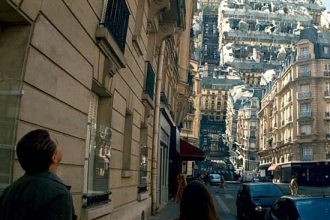
Inception (2010), Paris dream construct screen shot, April 27, 2012. (http://dpmlicious.com). Qualifies as fair use under US Copyright laws because of poor resolution of shot, not intended for distribution.

Inception (2010), Paris dream construct screen shot, April 27, 2012. (http://dpmlicious.com). Qualifies as fair use under US Copyright laws because of poor resolution of shot, not intended for distribution.

That doesn’t even count my more frequent forays into the city, not to do anything or be anything. I wasn’t working for my father anymore, and after he repeatedly called me a “Faggat” in August ’86 and tried to set me up with a prostitute in December ’86, I hardly went to see him at all until the last few weeks before leaving for Pitt. I didn’t even take Darren down to Midtown Manhattan, the Upper West Side, Harlem or Flatbush with me. That’s what I did with the spare hours I started stealing from my Mom on weekends during that year. I’d go down to the city, maybe buy a few tapes at Tower Records on 66th and Broadway (usually not, since most of my tapes came via Terra Haute, Indiana). Sometimes if I had a few dollars, I’d go to MOMA or Radio City or some other place and go into escape/observation mode there. Mostly, I walked and people watched for an hour or so, and then take the long way home between the 2 train, 241st Street and the heart of Mount Vernon.

All the while, my music was on, often at full blast. It was a coping strategy, a pain and stress reliever, my sword and my shield. It took my Phyllis obsession and my freshman year at the University of Pittsburgh to break the link between music, Walkman, and the need to escape. It took the pain of rejection, removal from an anti-Donald environment, and a bout of homelessness to make music about enjoyment and education. When that happened, sometime in ’88, I knew I couldn’t escape anymore.


The Fountain of Middle Age

27 Sunday Dec 2015

Posted by decollins1969 in 1, Boy @ The Window, Christianity, culture, Eclectic, Mount Vernon New York, Movies, New York City, Pittsburgh, Politics, Pop Culture, race, Religion, Sports, Youth

≈ Leave a comment

Tags

616, 616 East Lincoln Avenue, Aging, Back To School (1986), Beauty, Demographics, Family, Fountain of Middle Age, Fountains, Friends, Health, Philadelphia, Rodney Dangerfield, Self-Reflection, Youth


Alexander Stirling Calder's "Swann Memorial Fountain," Benjamin Franklin Parkway, Philadelphia, PA, August 18, 2012. (Donald Earl Collins).

Alexander Stirling Calder’s “Swann Memorial Fountain,” Benjamin Franklin Parkway, Philadelphia, PA, August 18, 2012. (Donald Earl Collins).

By most measures, today marks my full transition from relative youth to middle age. Although, when I really think about it, didn’t I really hit middle age in December ’07, when I turned thirty-eight? The average life expectancy of an American male is about seventy-seven, right? And for Black males, it’s barely sixty-five. Given my family history, though, I won’t hit middle age for another two years. My maternal grandfather turned ninety-six three months ago, and my paternal grandfather lived until he was ninety-six. Even my father’s still moving along at seventy-five, despite his battle with alcoholism between the ages of twenty and fifty-eight.

I do feel things in my body and mind that until a few years ago were merely minor aches and pains. My right hip is misaligned with my left hip, likely from years of walking at warp speed, lots of basketball, and six years of my running regime. My L-5 vertebrae is a bit compressed, due to years of activity, including many years hunched over a keyboard trying to make myself into a writer, author and educator. My right knee has been a bother since I was twenty-four, but the issue has gotten worse in the past two years (maybe time for some HGH or microfracture surgery?). I now have white-coat syndrome (because most doctors and nurses get on my last nerve), and I’m mildly anemic. No, folks, forty-six isn’t the new thirty-six, even if I can still run forty yards in under five seconds, pop a three over my son’s outstretched hand or leg press 360 pounds.

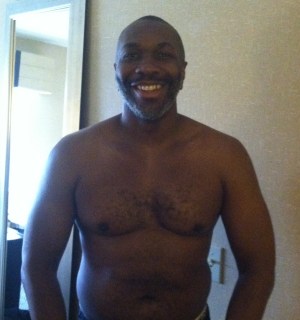
Me via Photo Booth, December 17, 2015. (Donald Earl Collins).

Me via Photo Booth, December 17, 2015. (Donald Earl Collins).

But I still have good health and a mostly healthy body and mind. Since I turned twenty-seven, my weight has never been higher than 241 pounds (including clothes, wallet, phone, and keys) or lower than 212 (I weight 229 now). I can still memorize when inspired to do so, remember virtually anything important from my life from the age of four to the present, and could still probably win at Jeopardy if I ever got the call.

What’s more impressive, though, is whom remains in my life now that I’m no longer “young” anymore. My friends live all over the map, from the DC area to Pittsburgh to the Bay Area and New York, from Atlanta to Athens and from Seattle to Shanghai. I’ve made peace (mostly) with my family and my past, even if they aren’t always at peace with me. There’s my wife and son, of course, who are mostly likely the reason I’m still “young” relative to my age. Though I remain a Christian, I do not have the blind faith or evangelical -isms of my youth, and I’m at peace with that as well. I’m probably further to the left culturally and politically than I was at sixteen, twenty-six, or thirty-six. Because I’ve learned, sadly, that so much of what I was taught or fed growing up was either incorrect or a complete lie. But even with that sad disillusionment, I’ve come to accept the possibility of change for myself and the Sisyphean task that this nation and world always has been.

Me at 45 and 364.25 days, Pittsburgh, PA, December 26, 2015. (Donald Earl Collins).

Yet even the idea of middle age has changed in the minds of capitalists as the Baby Boomer generation has begun retirement and all of them have received their first AARP cards. Before 2000, the ad folks and entertainment folks had split up adults into the age demographics of 18-34, 35-44, 45-64, and 65 and up. Now, it’s 18-24, 25-54, and 55 and up. This privileges Baby Boomers (as usual) and props up Millennials (folks who used to be Gen Y). My middle age is not the same as Baby Boomers’ middle age. Even in demographic representations, money-grubbing capitalists give us Gen Xers little respect.

Rodney Dangerfield quipped this funny line in Back to School (1986):

Coach Turnbull: What’s a guy your age doing here with these kids?
Thornton (played by Dangerfield): I’m lookin’ for the fountain of middle age.

Maybe when I’m sixty-five (like Rodney Dangerfield was in this film), I’ll be looking for the Fountain of Middle Age, too. But my choice will be to stand in it for the next thirty or forty years!

Holiday Traditions (really, not having any)

12 Saturday Dec 2015

Posted by decollins1969 in 1, Boy @ The Window, Christianity, culture, Hebrew-Israelite, Marriage, Mount Vernon New York, My Father, Pittsburgh, Pop Culture, race, Religion, Work, Youth

≈ Leave a comment

Tags

616, 616 East Lincoln Avenue, Abuse, Chanukah, Chiropractor, Christmas, Domestic Violence, Family, Giving, Haves and Have-Nots, Holiday Traditions, Maurice Eugene Washington, Mom, Mother-Son Relationship, Poverty, Receiving, Suicide, Womanizing


Christmas Holiday and Traditions Around The World ornament bulb, December 12, 2015. (http://johnseville.benchmark.us).

Christmas Holiday and Traditions Around The World ornament bulb, December 12, 2015. (http://johnseville.benchmark.us).

At my chiropractic appointment yesterday morning, my bone-cracking doctor of fourteen years and I got into a discussion of our holiday plans over the next couple of weeks. Her and her family will visit with extended kin in Virginia, while we’re heading to Pittsburgh to see my in-laws. During our conversation, my chiropractor brought up some of the family traditions she’s preserved with her handful of Christmases with her young daughter and two sons. Traditions like Danish pork roast for dinner, ornaments and other hand-me-downs from her grandparents and other ancestors as part of trimming the tree.

“I wouldn’t know anything about traditions. Matter of fact, there were eight years growing up where we didn’t even celebrate Christmas,” I said, with no forethought about what her reaction might be.

“Oh, I’m so sorry,” my chiropractor said in a quiet yet somewhat shocked tone, as if I’d ruined the Christmas spirit for her kids.

“That’s what happens when you go up in poverty,” I said apologetically, realizing that I might have cost my chiropractor some peace of mind this holiday season.

Even at nearly forty-six, I can still say things without thinking, causing others to have to think more than they normally would. Sometimes, it’s without intent or malice, sometimes it’s because I don’t give a crap what people may think. Regardless, it’s certainly not because I want people to feel sorry for me or to give me a hug.

The truth is, the only holiday traditions I have come either from my wife or her family or were born out of my circumstances. Like making super-sweet, two-packs of Fruit Punch Kool-Aid and mixing it with either ginger ale or Sierra Mist for either Thanksgiving or Christmas. Or getting our son’s Christmas presents ready for him without him knowing the night before. Or me making some holiday/birthday cake for me and us (since my birthday is two days after Christmas). And often going to a soup kitchen, homeless shelter or other venue to give away clothes, toys, money, my time in knowing that no matter how I might feel about my life, plenty others have it much worse.

The truth is also more complicated than simple poverty. Up until my eighth birthday in ’77, my Mom and me and Darren (with either my father or my idiot stepfather) celebrated Darren’s birthday, Christmas and my birthday as separate or nearly separate events. Some of my best times growing up were those days. Then, when the hyperinflation of the late-1970s kicked in — along with a second marriage and two more mouths to feed — Christmases ’78 and ’79 consisted of a fake two-foot table tree, a new shirt or sweater and a new pair of slacks. There were no birthday celebrations for me.

A contemporary Candelabrum in the style of a traditional Menorah. United Kingdom, Chanukah service, December 2014. (Gil Dekel; http://www.poeticmind.co.uk; via 39james via Wikipedia). Released to public domain via CC-SA-4.0.

A contemporary Candelabrum in the style of a traditional Menorah. United Kingdom, Chanukah service, December 2014. (Gil Dekel; http://www.poeticmind.co.uk; via 39james via Wikipedia). Released to public domain via CC-SA-4.0.

Between Christmas ’80 and Christmas ’88, we didn’t even have the fake dwarf tree. Of course, four of those years we were Hebrew-Israelites. But there is this holiday known as Chanukah that also occurs in December, in which Torah believers celebrate the Festival of Lights with eight days of gifts and giving. But these were also the worst of our poverty-stricken years, and we could barely afford one candle for the menorah, much less eight or nine. The best gift I got those years was my idiot stepfather being out the apartment at 616 and on the prowl for other victims for his fast-talking nonsense about making money and living a godly way-of-life. I also attempted suicide on my fourteen birthday, not exactly a tradition worth repeating.

Finally, in December ’89, we had our first Christmas at 616 with my Mom having divorced my now idiot ex-stepfather. She bought a fake full-sized tree. I bought my four younger siblings gifts big and small for the holiday. My mom even made me a Duncan Hines chocolate cake with vanilla icing for my twentieth birthday that year. We didn’t have much, but what we did that year meant so much as we moved into the 1990s.

In all of my adult Christmases, I’ve actually only done one in Pittsburgh prior to our trip coming up in eleven days. It was Christmas ’98. That week, perhaps the only important tradition I’ve ever been a part of began. I moved in with my then girlfriend Angelia, mostly as a cost-cutting measure, partly out of love and concern for our respective futures. We’ve been living together and celebrating the holidays ever since!

Aside

Thank You, Ms. Griffin

22 Tuesday Sep 2015

Posted by decollins1969 in 1, Boy @ The Window, culture, Eclectic, Jimme, Marriage, Mount Vernon New York, My Father, Pop Culture, race, Youth

≈ Leave a comment

Tags

#BlackWomenAreMagic, 616 East Lincoln Avenue, Angels, Dedication, Demons, Heroes, Hugs, Mom, Ms. Griffin, Nathan Hale Elementary, Nurturer, Parent-Teacher Conference, Teacher-Student Relationship, Teaching and Learning


My report card from 1st grade, Nathan Hale ES, 1975-76, and close-up of Ms. Griffin's signature, September 22, 2015. (Donald Earl Collins).

My report card from 1st grade, Nathan Hale ES, 1975-76, and close-up of Ms. Griffin’s signature, September 22, 2015. (Donald Earl Collins).

I have spent a ton of space in the blogosphere thanking teachers like Harold Meltzer for making me the thinker and writer I am today, flaws and all. Meltzer, though, was not the first teacher who ever took a deep interest in me. My elementary school teachers deserve just as much credit, if not more. For if it weren’t for the likes of Ms. Griffin at Nathan Hale ES, and Mrs. Shannon, Mrs. O’Daniel, and Mrs. Bryant at William H. Holmes ES — Black teachers all — I would’ve never made it to have Meltzer as my eleventh grade AP US History teacher in the first place.

But it all really started with Ms. Griffin. My passion for being right. My adrenaline rush with As, and eschewing of Bs and B+s. My wanting to learn more about what I getting wrong and then fixing those things. That all began for me in first grade, in September ’75.

Cecil Parker Elementary School (formerly Nathan Hale ES), Mount Vernon, NY, November 23, 2006. (Donald Earl Collins).

Cecil Parker Elementary School (formerly Nathan Hale ES), Mount Vernon, NY, November 23, 2006. (Donald Earl Collins).

At this middle-age stage of life, I don’t exactly remember every detail about Ms. Griffin, our classroom, or most of my classmates. I was five-going-on-six. Still, there were more than a few things that stood out. Ms. Griffin seemed like a tall woman to me, I mean, nearly as tall as my six-foot Mom, with similar skin tone and other features. That’s where the similarities ended. Ms. Griffin was always nice to me, very patient. Even when one of us got rowdy, she didn’t scream or holler or demean to get us to settle down. Everything with her was a teaching lesson, so even when one of us would act up, it was a teaching and learning moment.

Ms. Griffin decorated her first-floor classroom to communicate the world to us, not just to make the room pretty for a bunch of first-graders. I remember pictures of MLK and maybe Harriet Tubman on the wall. Along with standard colored digits, basic addition and subtraction problems, and lots of words to spell, read, and write neatly. From day one, Ms. Griffin was always on me for my bad penmanship (if only she had seen my father’s chicken scratch!).

I remember Ms. Griffin mostly for two things. One, she was always available for me emotionally. Once, the class had a birthday party for one of the students, which included a Pin-The-Tail-On-The-Donkey game. Ms. Griffin dutifully blindfolded me, had a couple of my classmates spin me around, and I missed pinning the tail on the donkey’s butt by a full meter. The kids all laughed. I didn’t. I got mad, balled up my fists, walked over to Ms. Griffin, and made a small kicking gesture, where I nicked her on the side of her left calf. Her response was to tug me by my right arm, tell me she understood why I was upset, but also explain with both kindness and sternness how my reaction was unacceptable. I would have to stand in the corner for five minutes after school before going home. And at the end of that day, she still gave me a hug.

Snoopy hugging Woodstock, 2011 downloaded September 22, 2015. (http://pinterest.com; © Peanuts Worldwide).

Snoopy hugging Woodstock, 2011 downloaded September 22, 2015. (http://pinterest.com; © Peanuts Worldwide).

Two, Ms. Griffin was available in ways that most teachers who would make themselves this available now would likely burnout in four or five years. I had zero chance of getting away with anything in her classroom, including kissing my girlfriend Diana in the middle of a lesson a few times. She would actually call my Mom to tell her about it! One time my father found out about me being upset about a B+ on a spelling test because Ms. Griffin bumped into him at a bar one weekend! Ms. Griffin had at least one parent-teacher conference with my parents every single marking period. It wasn’t that she just took an unusual interest in me. Ms. Griffin was interested in all of us, in wanting all of us to be prepared for the next step.

Sadly, I didn’t see much of Ms. Griffin after first grade, and completely lost touch with her once Mom and my father broke up and we moved to 616 East Lincoln. I had my own demons to deal with, so much so that only in the past year have I found them all. Ms. Griffin, thankfully, was an angel of a teacher in the midst of two big waves of hurt growing up. I’m almost certain that without her, I wouldn’t have made it through educationally or psychologically to the preteen years at all.

← Older posts
Newer posts →

Boy @ The Window: A Memoir

Boy @ The Window: A Memoir

Places to Buy/Download Boy @ The Window

There's a few ways in which you can read excerpts of, borrow and/or purchase and download Boy @ The Window. There's the trade paperback edition of Boy @ The Window, available for purchase via Amazon.com at http://www.amazon.com/Boy-Window-Donald-Earl-Collins/dp/0989256138/

There's also a Kindle edition on Amazon.com. The enhanced edition can be read only with Kindle Fire, an iPad or a full-color tablet. The links to the enhanced edition through Apple's iBookstore and the Barnes & Noble NOOK edition are below. The link to the Amazon Kindle version is also immediately below:

scr2555-proj697-a-kindle-logo-rgb-lg

Boy @ The Window on Amazon.com: http://www.amazon.com/Boy-The-Window-Memoir-ebook/dp/B00CD95FBU/

iBookstore-logo-300x100

Boy @ The Window on Apple's iBookstore: https://itunes.apple.com/us/book/boy-the-window/id643768275?ls=1

Barnes & Noble (bn.com) logo, June 26, 2013. (http://www.logotypes101.com).

Boy @ The Window on Barnes & Noble: http://www.barnesandnoble.com/w/boy-the-window-donald-earl-collins/1115182183?ean=2940016741567

You can also add, read and review Boy @ The Window on Goodreads.com. Just click on the button below:

Boy @ The Window

Twitter Updates

Tweets by decollins1969
  • RSS - Posts
  • RSS - Comments

Archives

  • June 2025
  • April 2023
  • September 2022
  • August 2022
  • July 2022
  • June 2022
  • May 2022
  • April 2022
  • March 2022
  • January 2022
  • December 2021
  • November 2021
  • October 2021
  • September 2021
  • August 2021
  • July 2021
  • June 2021
  • April 2021
  • March 2021
  • February 2021
  • January 2021
  • December 2020
  • November 2020
  • October 2020
  • September 2020
  • August 2020
  • July 2020
  • May 2020
  • April 2020
  • March 2020
  • January 2020
  • December 2019
  • November 2019
  • August 2019
  • July 2019
  • June 2019
  • May 2019
  • April 2019
  • March 2019
  • February 2019
  • January 2019
  • December 2018
  • November 2018
  • October 2018
  • September 2018
  • August 2018
  • July 2018
  • June 2018
  • May 2018
  • March 2018
  • February 2018
  • January 2018
  • December 2017
  • November 2017
  • October 2017
  • September 2017
  • August 2017
  • July 2017
  • June 2017
  • May 2017
  • April 2017
  • March 2017
  • February 2017
  • January 2017
  • December 2016
  • November 2016
  • October 2016
  • September 2016
  • August 2016
  • July 2016
  • June 2016
  • May 2016
  • April 2016
  • March 2016
  • February 2016
  • January 2016
  • December 2015
  • November 2015
  • October 2015
  • September 2015
  • August 2015
  • July 2015
  • June 2015
  • May 2015
  • April 2015
  • March 2015
  • February 2015
  • January 2015
  • December 2014
  • November 2014
  • October 2014
  • September 2014
  • August 2014
  • July 2014
  • June 2014
  • May 2014
  • April 2014
  • March 2014
  • February 2014
  • January 2014
  • December 2013
  • November 2013
  • October 2013
  • September 2013
  • August 2013
  • July 2013
  • June 2013
  • May 2013
  • April 2013
  • March 2013
  • February 2013
  • January 2013
  • December 2012
  • November 2012
  • October 2012
  • September 2012
  • August 2012
  • July 2012
  • June 2012
  • May 2012
  • April 2012
  • March 2012
  • February 2012
  • January 2012
  • December 2011
  • November 2011
  • October 2011
  • September 2011
  • August 2011
  • July 2011
  • June 2011
  • May 2011
  • April 2011
  • March 2011
  • February 2011
  • January 2011
  • December 2010
  • November 2010
  • October 2010
  • September 2010
  • August 2010
  • July 2010
  • June 2010
  • May 2010
  • April 2010
  • March 2010
  • February 2010
  • January 2010
  • December 2009
  • November 2009
  • October 2009
  • September 2009
  • August 2009
  • July 2009
  • June 2009
  • May 2009
  • April 2009
  • March 2009
  • February 2009
  • January 2009
  • December 2008
  • November 2008
  • October 2008
  • September 2008
  • August 2008
  • July 2008
  • June 2008
  • May 2008
  • April 2008
  • March 2008
  • February 2008
  • January 2008
  • December 2007
  • November 2007
  • October 2007
  • September 2007
  • August 2007
  • July 2007
  • June 2007

Recent Comments

decollins1969's avatardecollins1969 on No Good Teaching Deed Goes…
Mary Rose O’Connell's avatarMary Rose O’Connell on No Good Teaching Deed Goes…
Lyndah McCaskill's avatarLyndah McCaskill on The Raunchiest of Them Al…

NetworkedBlogs on Facebook

NetworkedBlogs
Blog:
Notes From a Boy @ The Window
Topics:
My Life, Culture & Education, Politics & Goofyness
 
Follow my blog

616 616 East Lincoln Avenue A.B. Davis Middle School Abuse Academia Academy for Educational Development AED Afrocentricity American Narcissism Authenticity Bigotry Blackness Boy @ The Window Carnegie Mellon University Child Abuse Class of 1987 CMU Coping Strategies Crush #1 Crush #2 Death Disillusionment Diversity Domestic Violence Economic Inequality Education Family Friendship Friendships Graduate School Hebrew-Israelites High-Stakes Testing Higher Education History Homelessness Humanities Humanities Program Hypocrisy Internalized Racism Jealousy Joe Trotter Joe William Trotter Jr. K-12 Education Love Manhood Maurice Eugene Washington Maurice Washington Misogyny Mother-Son Relationship Mount Vernon High School Mount Vernon New York Mount Vernon public schools Multiculturalism MVHS Narcissism NFL Pitt Pittsburgh Politics of Education Poverty President Barack Obama Race Racial Stereotypes Racism Relationships Self-Awareness Self-Discovery Self-Reflection Sexism Social Justice Teaching and Learning University of Pittsburgh Violence Whiteness Writing

Top Rated

Blog at WordPress.com.

  • Subscribe Subscribed
    • Notes from a Boy @ The Window
    • Join 103 other subscribers
    • Already have a WordPress.com account? Log in now.
    • Notes from a Boy @ The Window
    • Subscribe Subscribed
    • Sign up
    • Log in
    • Report this content
    • View site in Reader
    • Manage subscriptions
    • Collapse this bar
 

Loading Comments...